23 Small Bedroom Decorating Ideas to Maximize Style and Space
A small bedroom asks more from every inch, but small never has to mean plain. The right small bedroom decorating ideas turn tight square footage into a room that sleeps well, stores plenty, and still feels like a retreat at the end of the day. Scale, light, and a few honest edits do most of the work.
Start with the bed, since it takes the largest share of the floor, then build outward with lighting, storage, and color that earn their place. In my experience, small rooms fail on clutter long before they fail on size. The same palette first thinking behind fresh bathroom paint color ideas helps here too: choose a calm base, repeat it, and let texture carry the interest. Ahead are twenty three practical moves, each sized for real small rooms and real budgets.
Tall Headboard Illusion

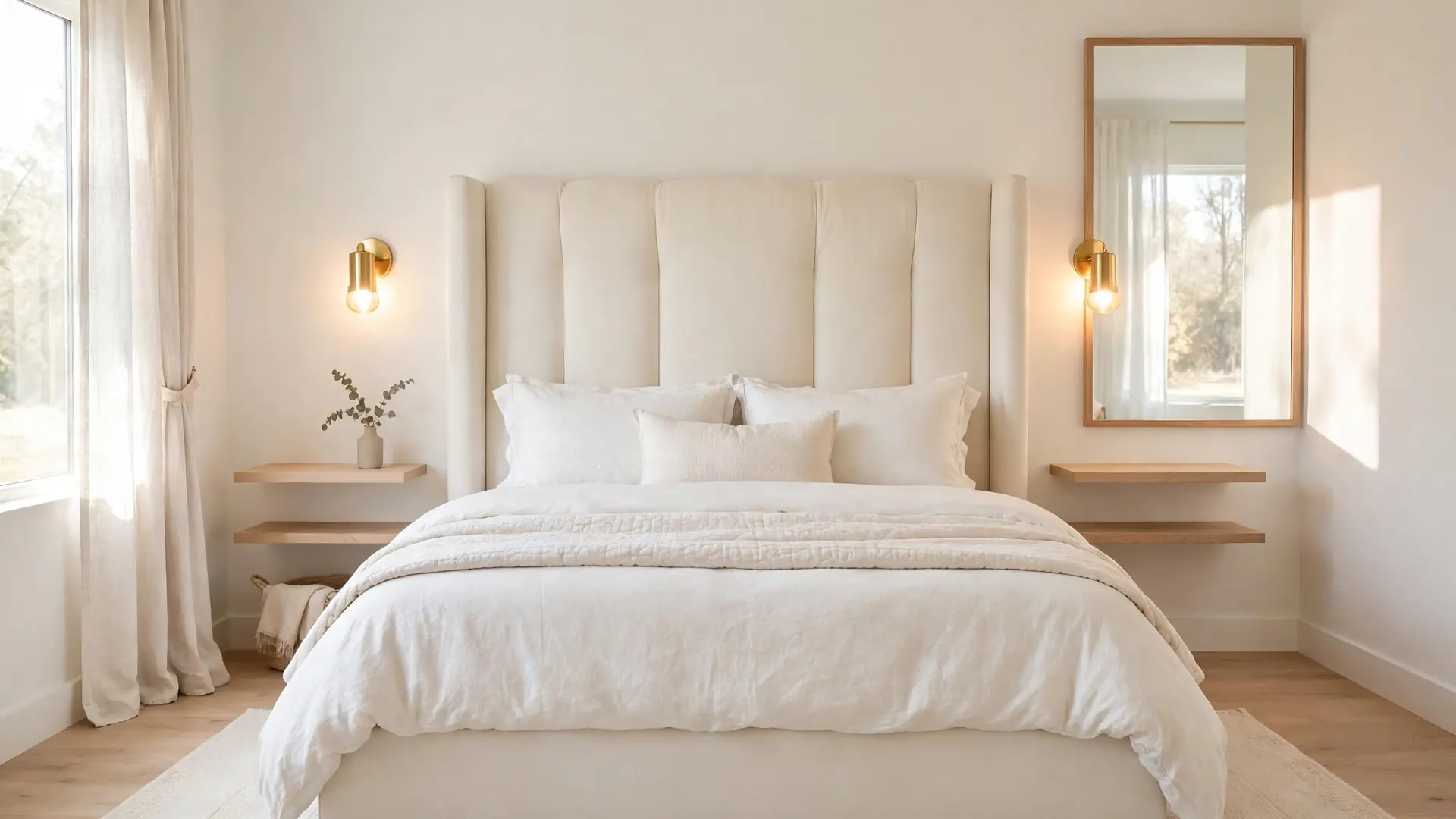
Height is free square footage, and a tall headboard spends it wisely. A headboard that climbs 48 to 54 inches pulls the eye upward, making ceilings feel higher and the bed feel grander instead of squeezed. Upholstered panels in cream linen or soft boucle read luxurious against plain walls, and they give the whole room a focal point that needs no extra art.
Renters can fake the look with two tall cushion panels hung from picture hooks, or a painted arch in a shade deeper than the wall. Keep bedding simple below that height so the silhouette stays clean. I’ve noticed tall headboards also make low ceilings feel intentional, like a boutique hotel room designed around the bed rather than apologizing for its footprint.
Wall Sconce Lighting
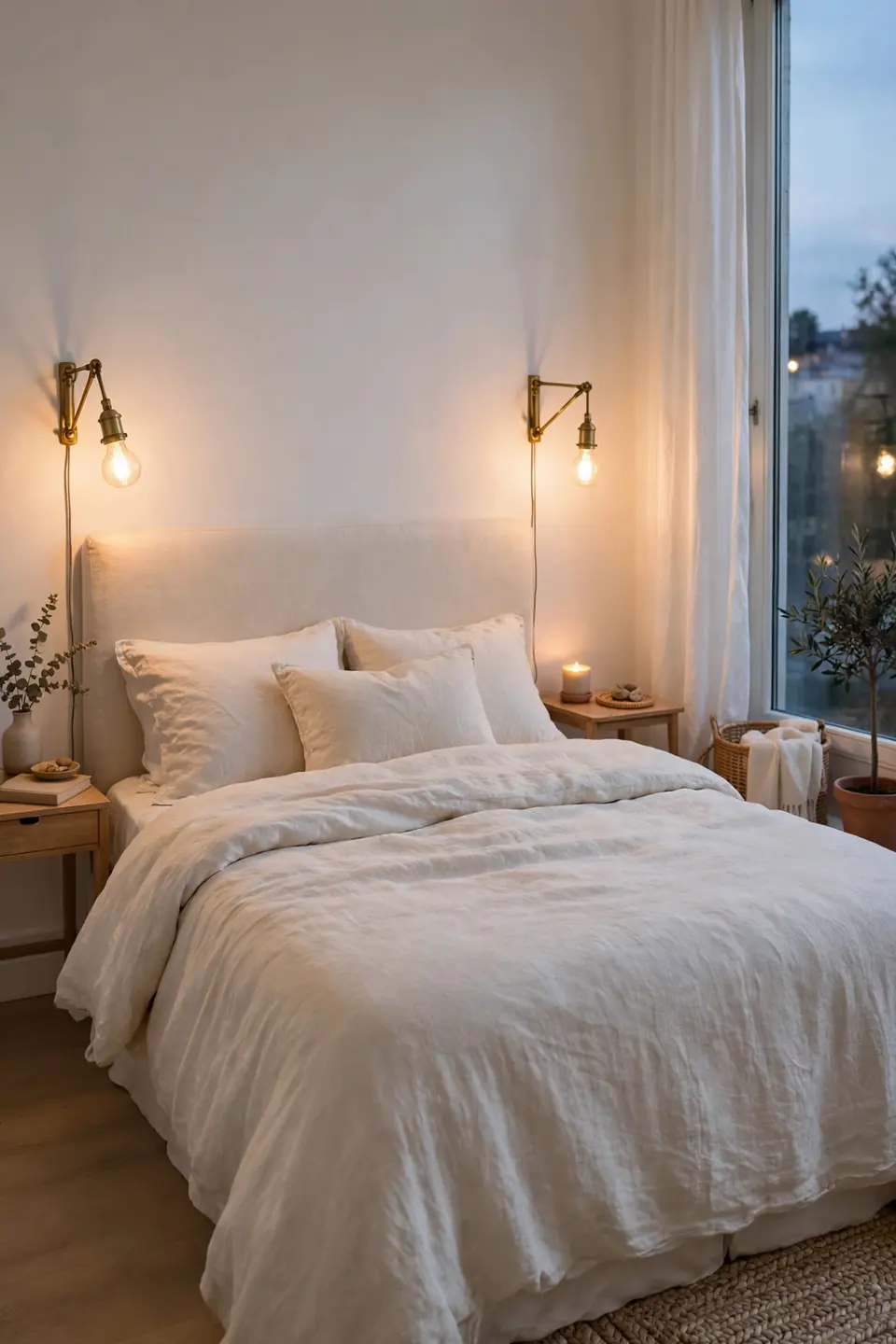
- Mount sconces beside the headboard, around 60 inches high, so light falls on pages instead of pillows.
- Swing arm styles pull close for reading, then fold flat when floor space matters more.
- Warm 2700K bulbs keep close walls from turning light into glare at night.
- Plug in models with painted cord covers give the built in look without an electrician.
Table lamps steal the exact surface a small nightstand barely has, which is why sconces change everything in a tight room. The freed surface fits a book, a glass of water, and nothing else, and that restraint is the point. Light at the wall also widens the room visually, washing the corners that overhead bulbs leave gray.
Floating Nightstand Swap

Quick Tip: Mount a floating shelf or drawer unit at mattress height, roughly 24 inches off the floor, so the top aligns with the bed and nothing tips when you reach in the dark. A 12 inch depth holds a phone, book, and water glass without crowding the walkway.
Floor legs are the enemy in a small room because they chop the floor line into segments the eye reads as clutter. A floating nightstand lets the floor run unbroken wall to wall, which quietly stretches the room. It also makes vacuuming a thirty second job, and a clean floor in a small room is half the decor.
Mirror Wall Magic
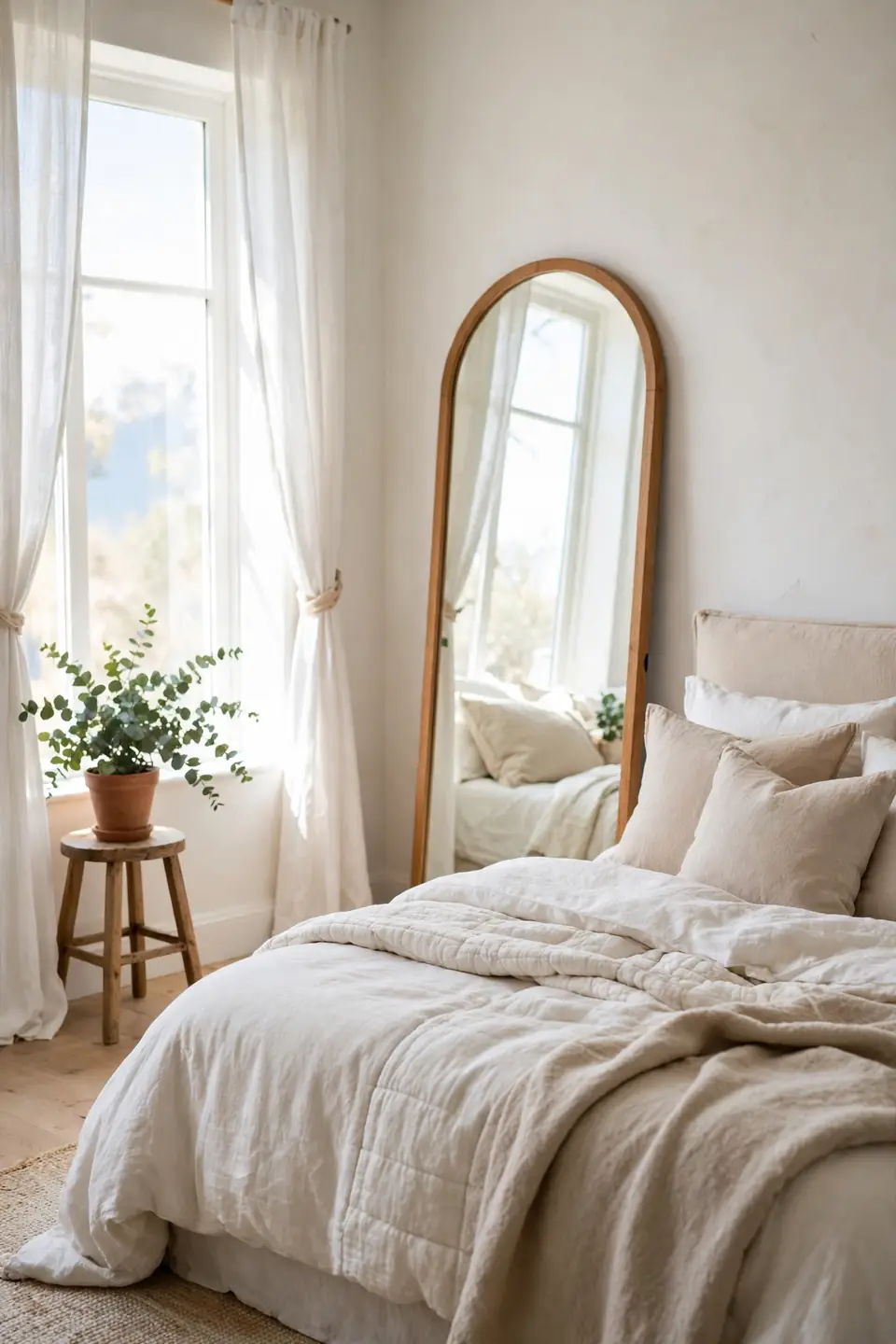
BEFORE: The room ended at the bed. One small dresser mirror caught a slice of window, walls felt close by midday, and the whole space read as a place to sleep and leave quickly.
AFTER: A tall leaning mirror opposite the window doubles the light and borrows the view, so the room feels twice as deep. The bed now anchors the space instead of filling it, and mornings start brighter without a single new lamp.
Place mirrors where they reflect something worth seeing: a window, a plant, the made bed itself. Avoid aiming one at a cluttered closet or the door, since reflections repeat whatever they face. I’ve seen this work well in many cases, especially in north facing rooms that starve for daylight.
Layered Bedding Formula
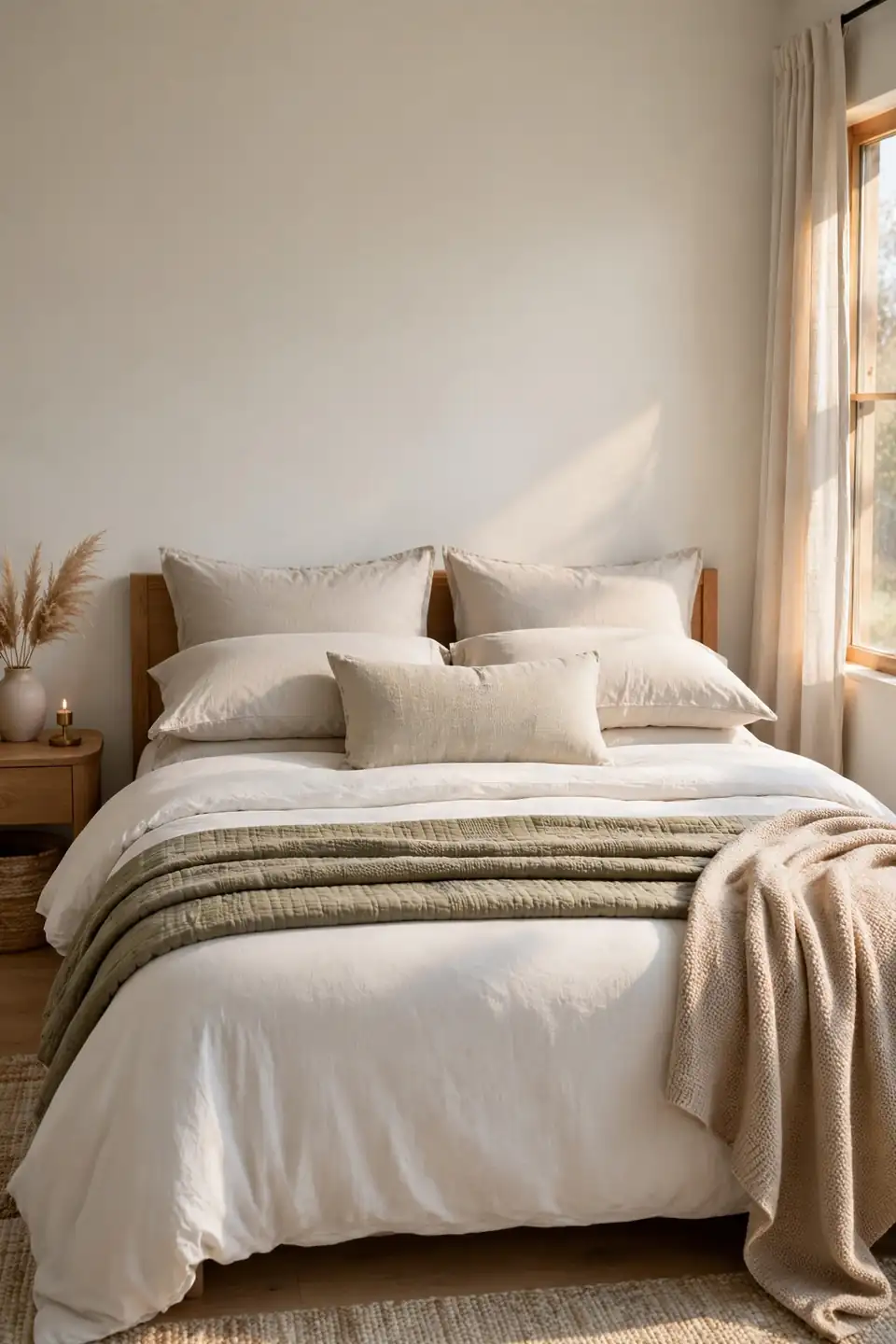
- Start with a fitted sheet and a lightweight duvet in the room’s base color, usually white, cream, or pale gray.
- Fold a second thinner quilt across the lower third of the bed for texture without bulk.
- Add two sleeping pillows, two shams, and one lumbar pillow, then stop before the pile reaches the headboard.
- Drape a throw over one corner at an angle, keeping the far side smooth and calm.
Layers add the richness people associate with big bedrooms, but in a small room every layer must stay thin. Thick comforters eat visual space and make the bed look stuffed into its corner. Thin layers, folded with intention, read as styled rather than stored, and they adjust easily when seasons change.
Daybed Versus Standard Bed
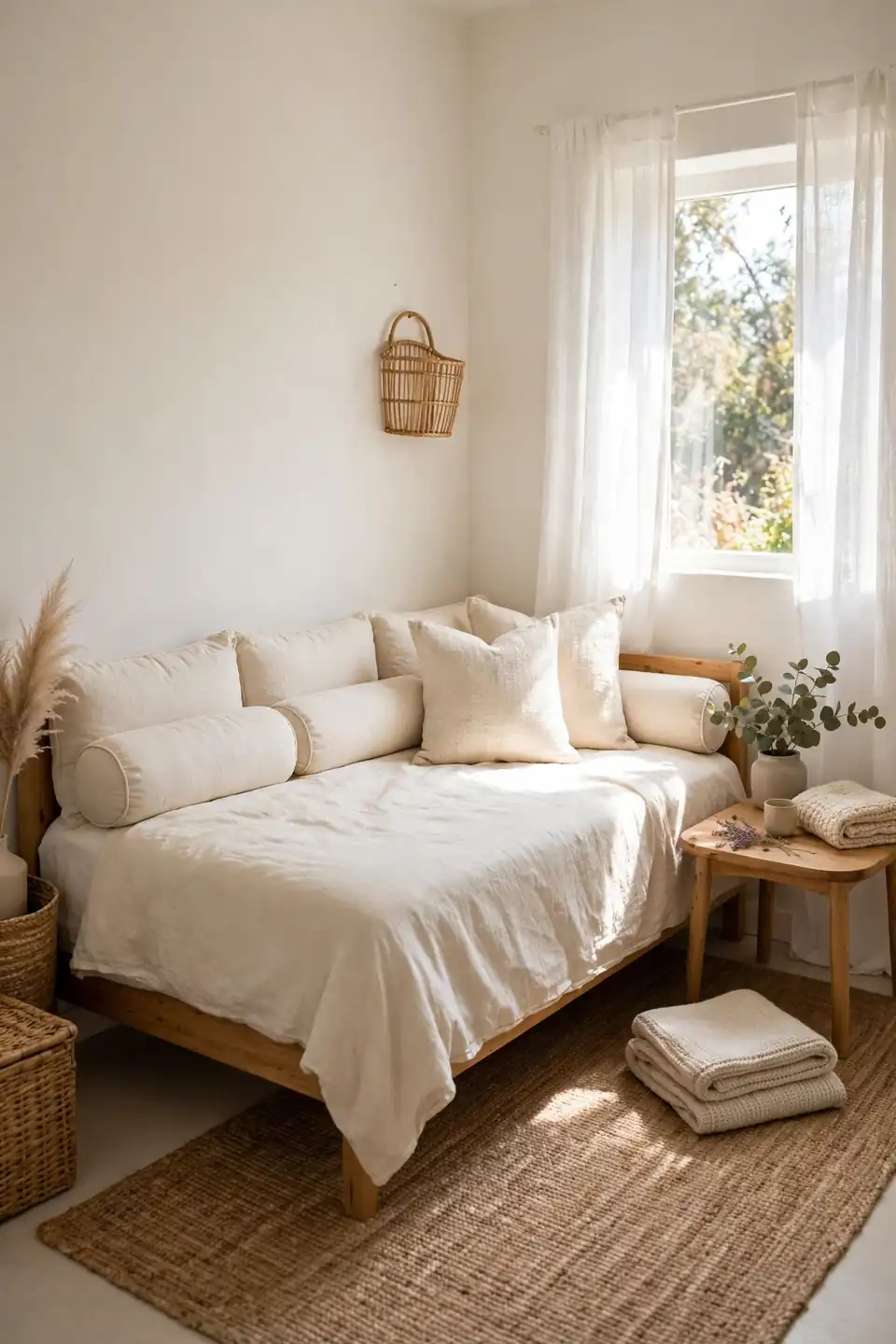
| Feature | Daybed | Standard Bed |
|---|---|---|
| Footprint | Twin depth, hugs wall | Full width, centered |
| Day Seating | Doubles as a sofa | Needs extra chairs |
| Storage | Trundle or drawers below | Open under bed space |
| Sleep Comfort | Fine for one sleeper | Better for couples |
A daybed wins when the room doubles as a guest space or study, because it returns half the floor by day. A standard bed wins when sleep quality is the whole job. Measure your doorway before choosing, since daybed frames rarely fold, and a frame stuck in the hallway helps nobody. Bolsters along the wall finish the sofa illusion and keep daytime lounging honest.
Light Color Discipline

Do:
- Paint walls, trim, and ceiling one soft color to erase visual seams.
- Keep large pieces, bedding and curtains, inside that same pale family.
- Add depth with texture, linen, weave, and wood, instead of new colors.
- Repeat one gentle accent, like sage or clay, at least three times.
Don’t:
- Scatter five unrelated accent colors across small surfaces.
- Hang dark heavy drapes that swallow the window wall.
- Mix three wood tones in furniture within one sight line.
One pale palette sounds plain until texture does the talking. Linen bedding, a woven throw, and raw wood against the same warm white create more interest than five competing colors ever will. Discipline reads as calm, and calm is the rarest luxury in a small room.
Under Bed Storage Wins

Cost: Flat bins, about $25 to $45
Time: One hour to measure and fit
Skill Level: Beginner, no tools needed
Best For: Off season clothes and spare linens
The space under a bed is the largest storage unit most small rooms own, and it usually holds dust. Low bins on wheels turn it into a quiet drawer system for off season clothes, spare linens, and gift wrap. Label the end of each bin facing the room, because a bin you cannot identify is a bin you will never open. That simple label habit is the same thinking behind tidy mudroom decorating ideas at the front door.
Corner Bed Layout
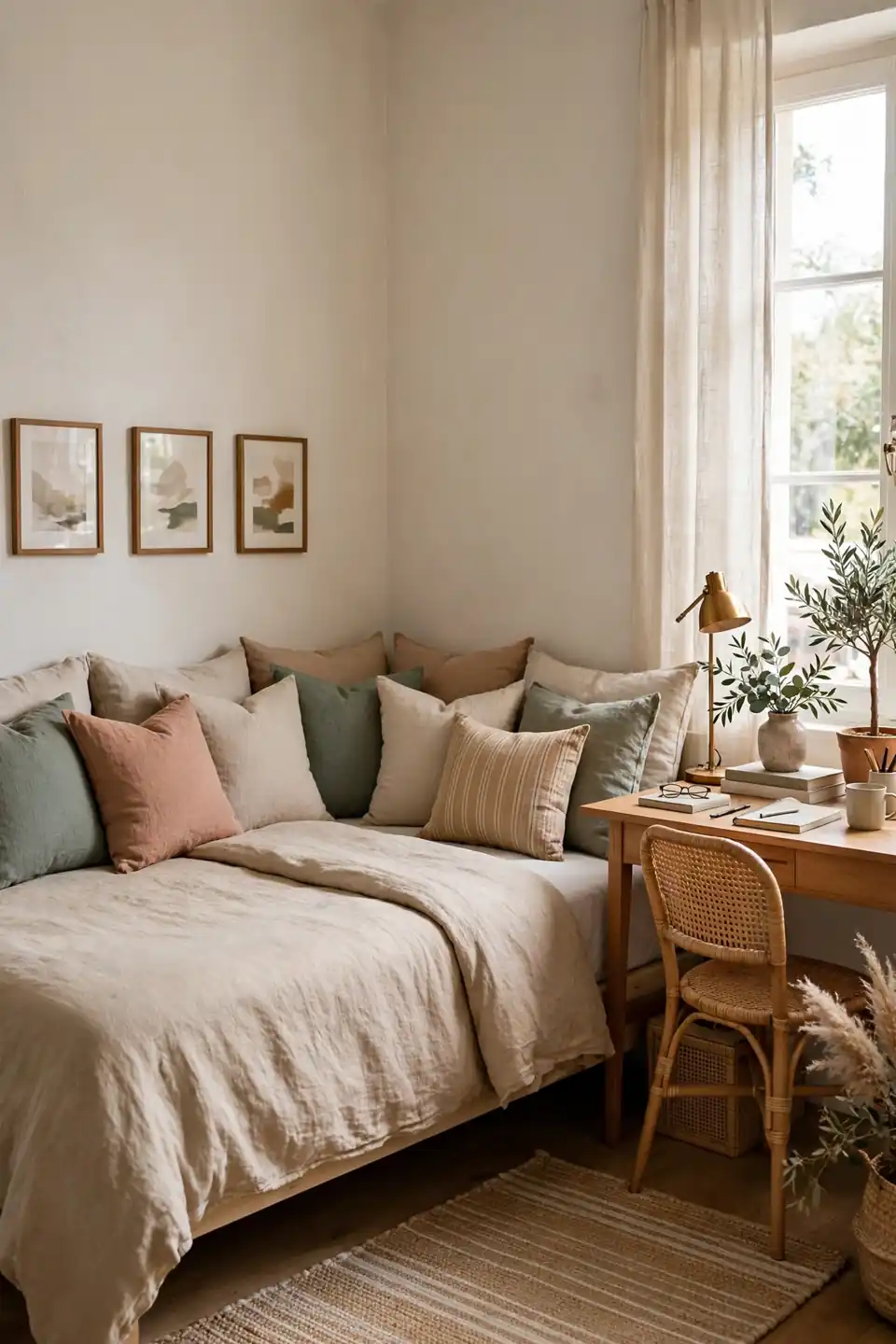
Pushing the bed into a corner feels like surrender, but done deliberately it frees a whole wall for a desk, a dresser, or breathing room. The corner placement turns the bed into a daybed style lounge, especially with cushions lined along the wall side. Long rooms and studio corners benefit most, because the freed strip becomes a walkway instead of a squeeze.
Make the corner read intentional with a rug under the open side and art hung low above the pillows. The risk is the far side bed making, which a fitted sheet and a lightweight duvet solve quickly. Of all the small bedroom decorating ideas readers test first, this layout surprises them most, because the room suddenly holds a reading chair too.
Sheer Curtain Height Trick
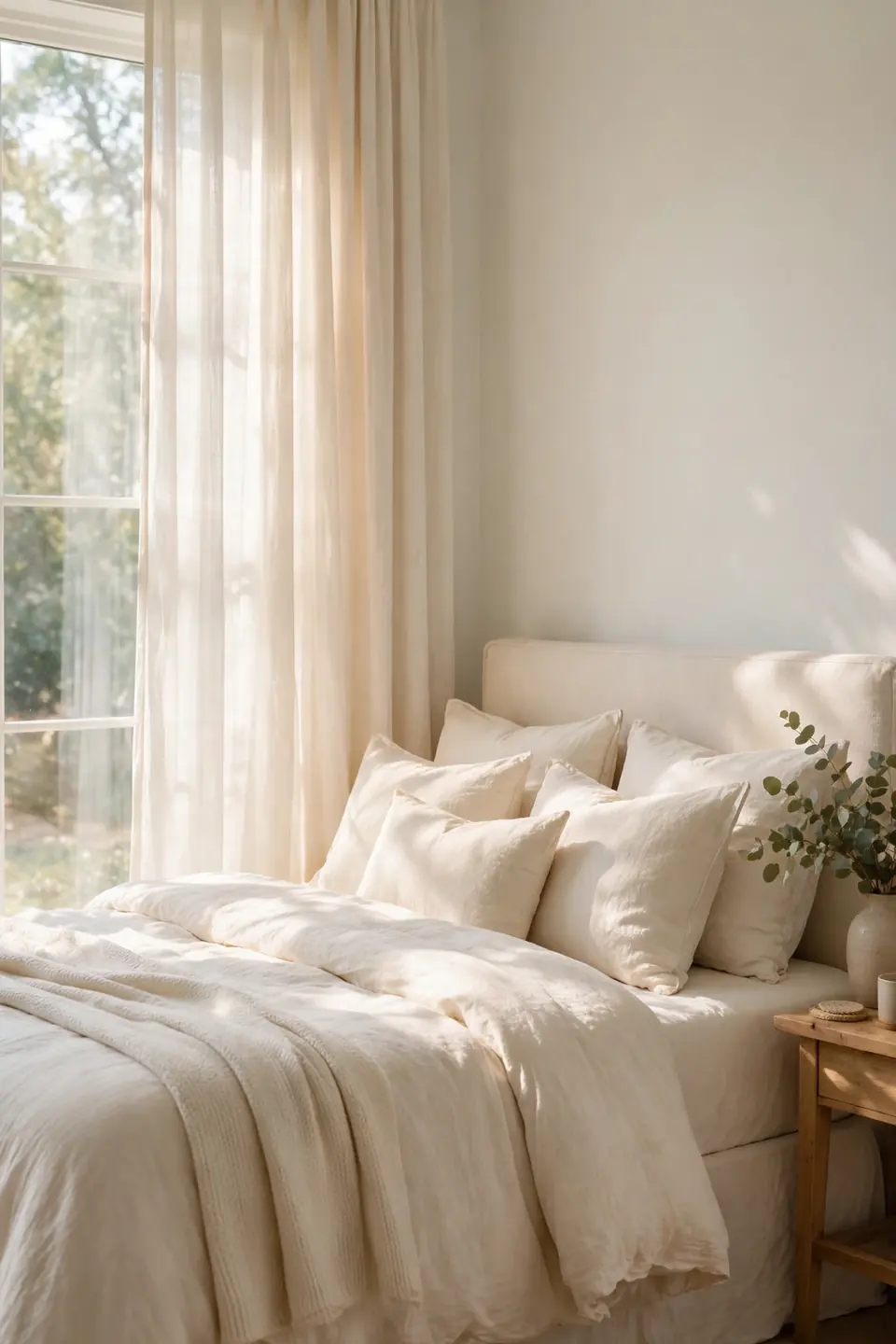
- Hang the rod four to six inches above the frame, close to the ceiling line.
- Let sheers fall to the floor or just kiss the sill in a clean line.
- Extend the rod past the frame so open panels cover wall, not glass.
- Choose warm white sheers that filter glare while keeping daylight generous.
- Skip heavy blackout layers in favor of a slim roller shade behind the sheers.
High, wide curtains borrow height from the wall and width from the corners, two cheats a small window happily accepts. Sheers keep the trick soft, glowing at noon and private at night with the roller down. The bed stays the focus, framed by light instead of fighting it.
Slim Vertical Dresser
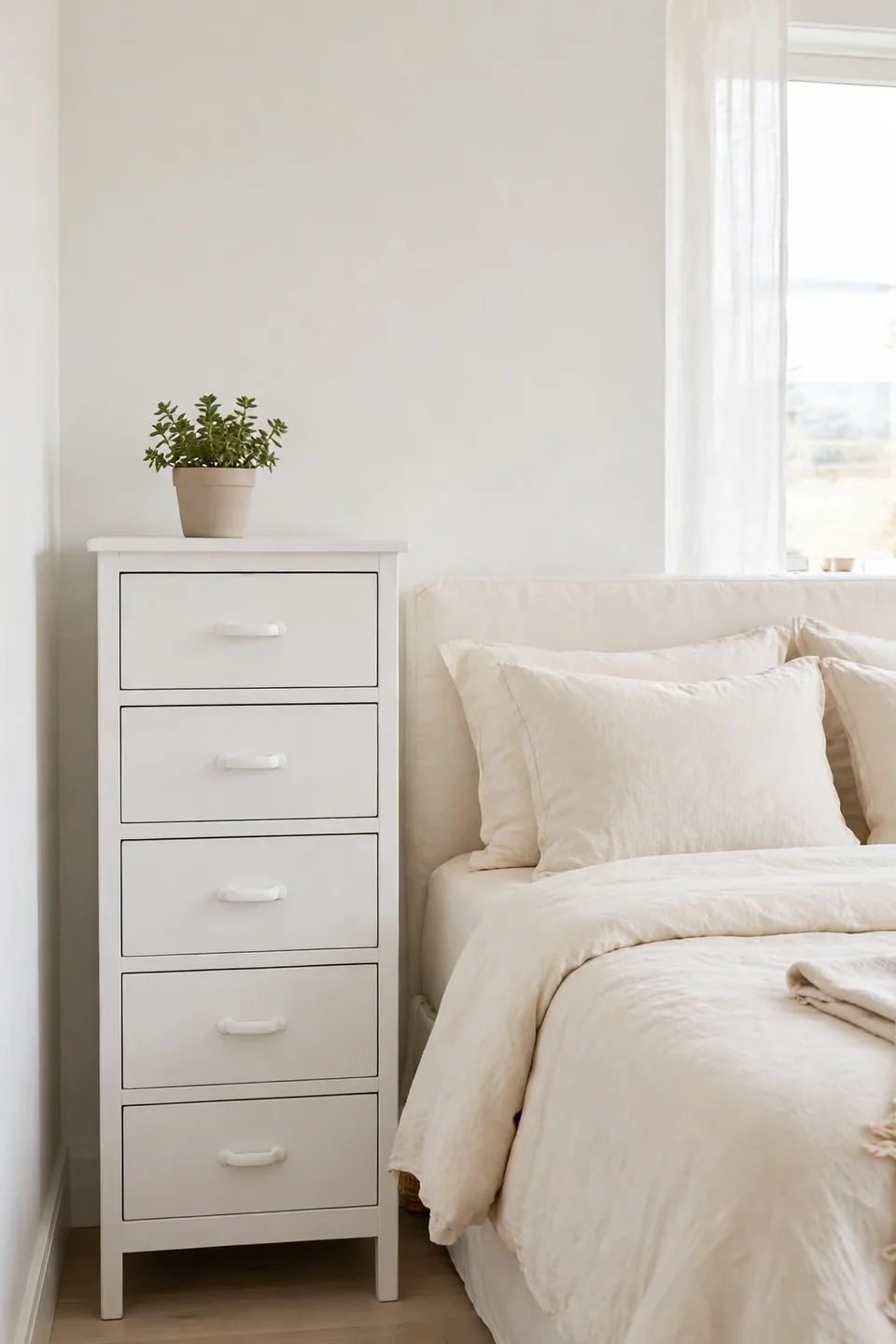
Quick Tip: Shop for a tall five drawer chest under 32 inches wide before shopping for a wide dresser. Vertical storage climbs the wall the room already owns, and drawers you can see into beat a deep closet pile every morning.
A wide dresser in a small bedroom is a landing strip for clutter and a barrier to the bed. Tall storage reads as architecture instead of furniture, especially painted to match the wall. Keep the top clear except one plant or a small lamp, because a tidy surface at eye level calms the whole room every time you walk through the door.
Rug Under Bed Rule
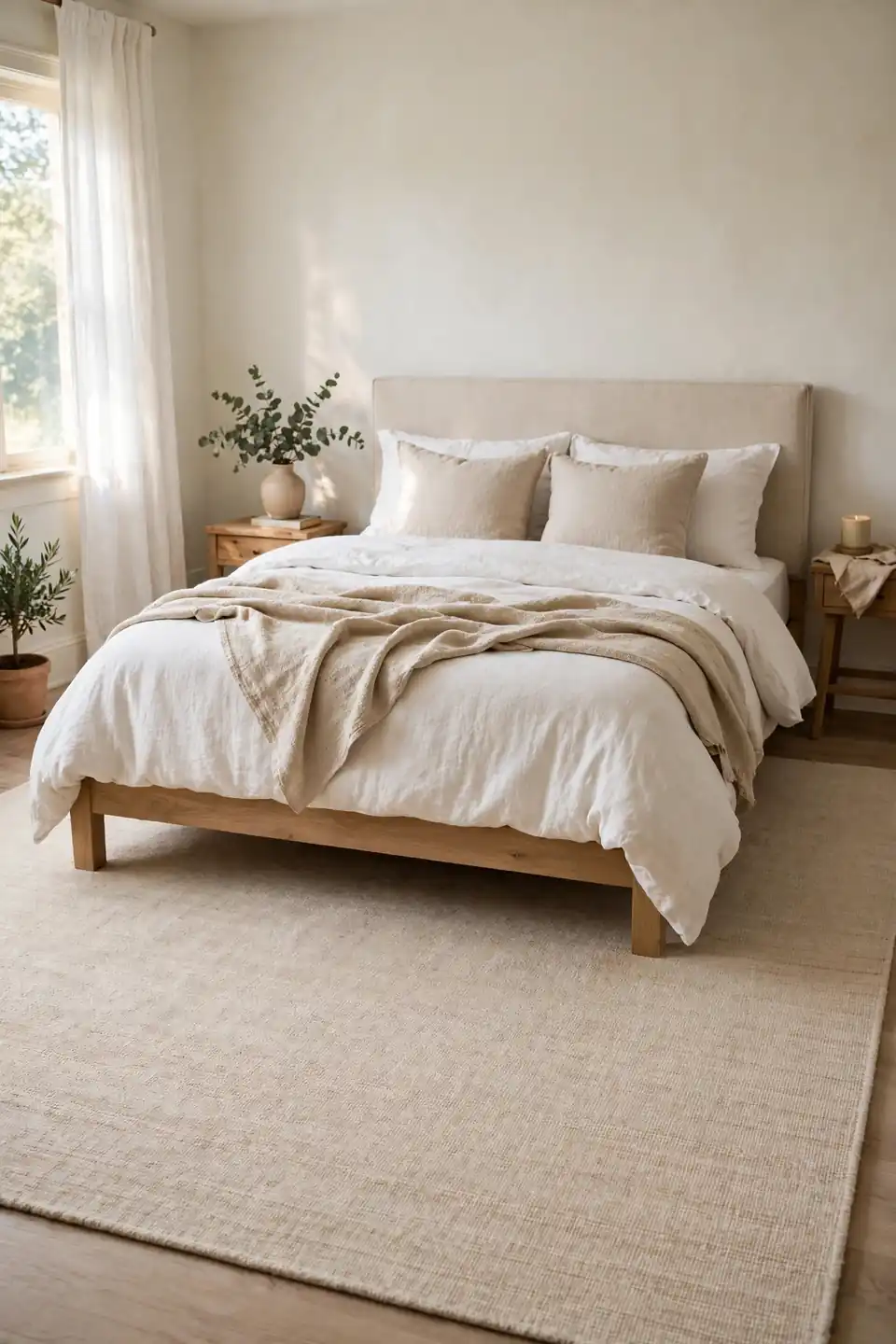
BEFORE: A small rug floated in the middle of the floor like a bath mat, the bed sat on bare boards, and every morning started with cold feet and a room that felt unfinished.
AFTER: A flat weave rug now slides under the lower two thirds of the bed and extends past both sides, so feet land on warmth and the bed zone reads as one deliberate piece.
Size is the whole secret: the rug should reach at least eighteen inches beyond the bed on each side, or skip the rug entirely. A too small rug advertises the shortage it was meant to hide. Low pile keeps doors swinging and vacuuming simple, while a pale pattern hides lint between washes.
Gallery Wall Above Bed
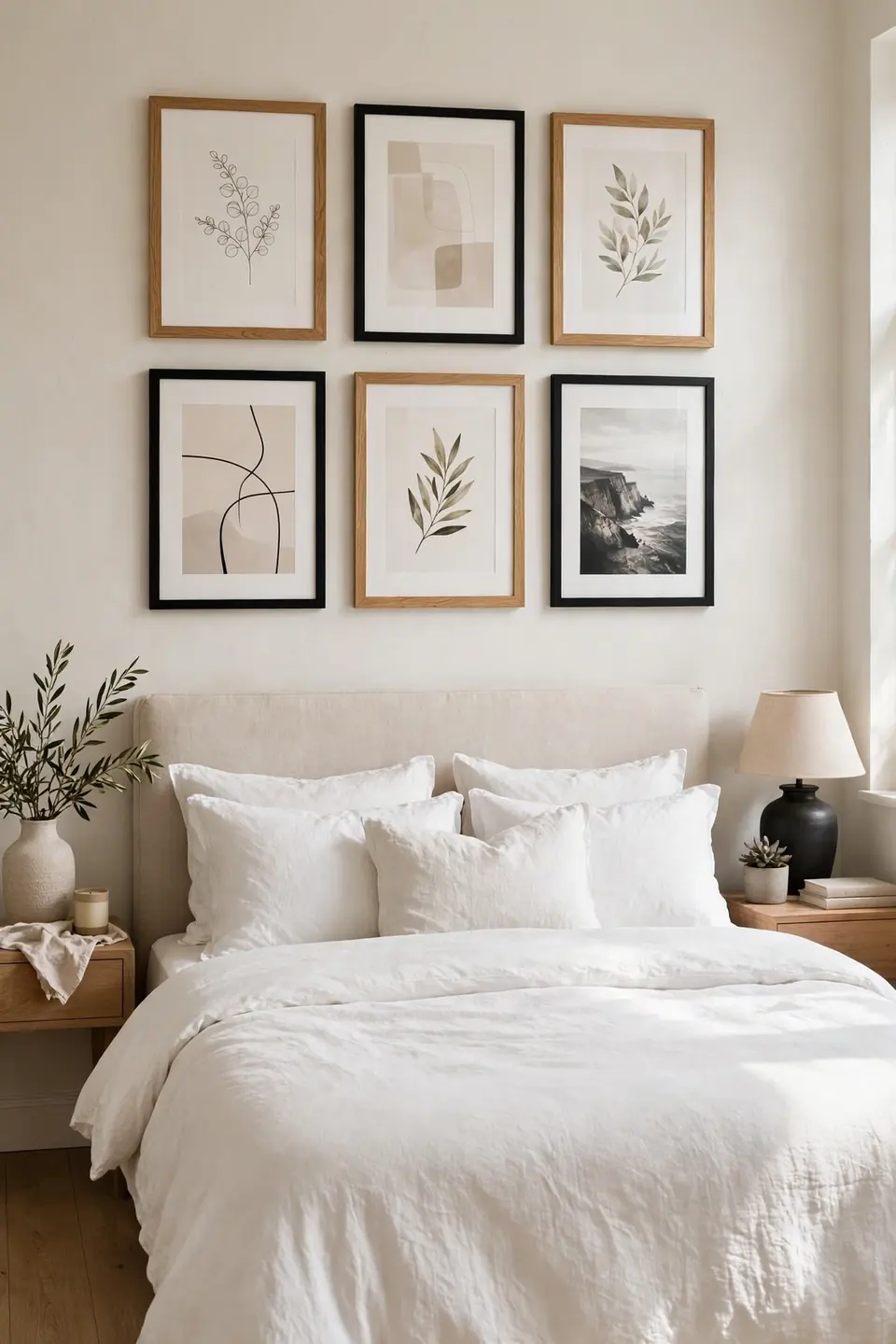
- Measure the wall width above the headboard and mark a rectangle two thirds as wide as the bed.
- Lay frames on the bed first, largest in the middle, until the arrangement feels balanced.
- Hang the center frame first at eye level from standing height, then build outward.
- Keep frames within two finishes, like oak and black, so the wall reads as one piece.
Art above the bed replaces the headboard drama a small room cannot always fit, and it costs one afternoon. Keep glass lightweight or use acrylic in rentals and earthquake zones. A single large piece also works here; the rule is scale, because tiny frames scattered wide read as noise instead of a focal point.
Low Platform Versus Box Spring
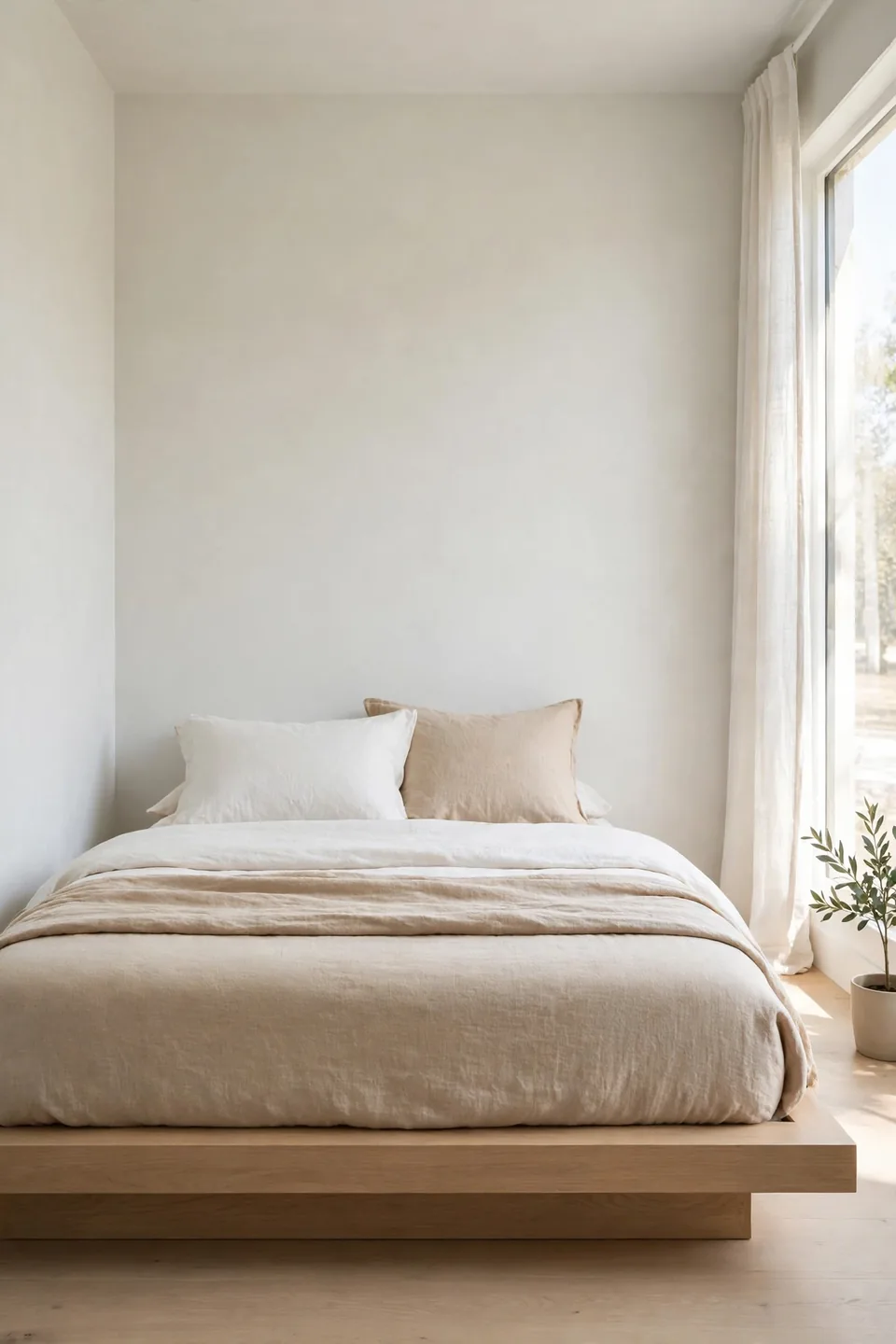
| Feature | Low Platform | Box Spring |
|---|---|---|
| Height | Low profile, modern line | Tall, traditional stance |
| Storage | Often drawers built in | Open space beneath |
| Feel | Firmer, minimal bounce | Softer, more give |
| Small Room Fit | Keeps sight lines low | Raises the bed visually |
Low frames suit small rooms because they leave more wall visible above the bed, and visible wall is what the eye counts as space. A box spring setup still wins for anyone who likes a tall, dressed bed or needs the under bed clearance for bins. Either way, measure the total sleep height before buying sheets with shallow pockets. Your knees will report the verdict daily.
Door Swing Space Savers
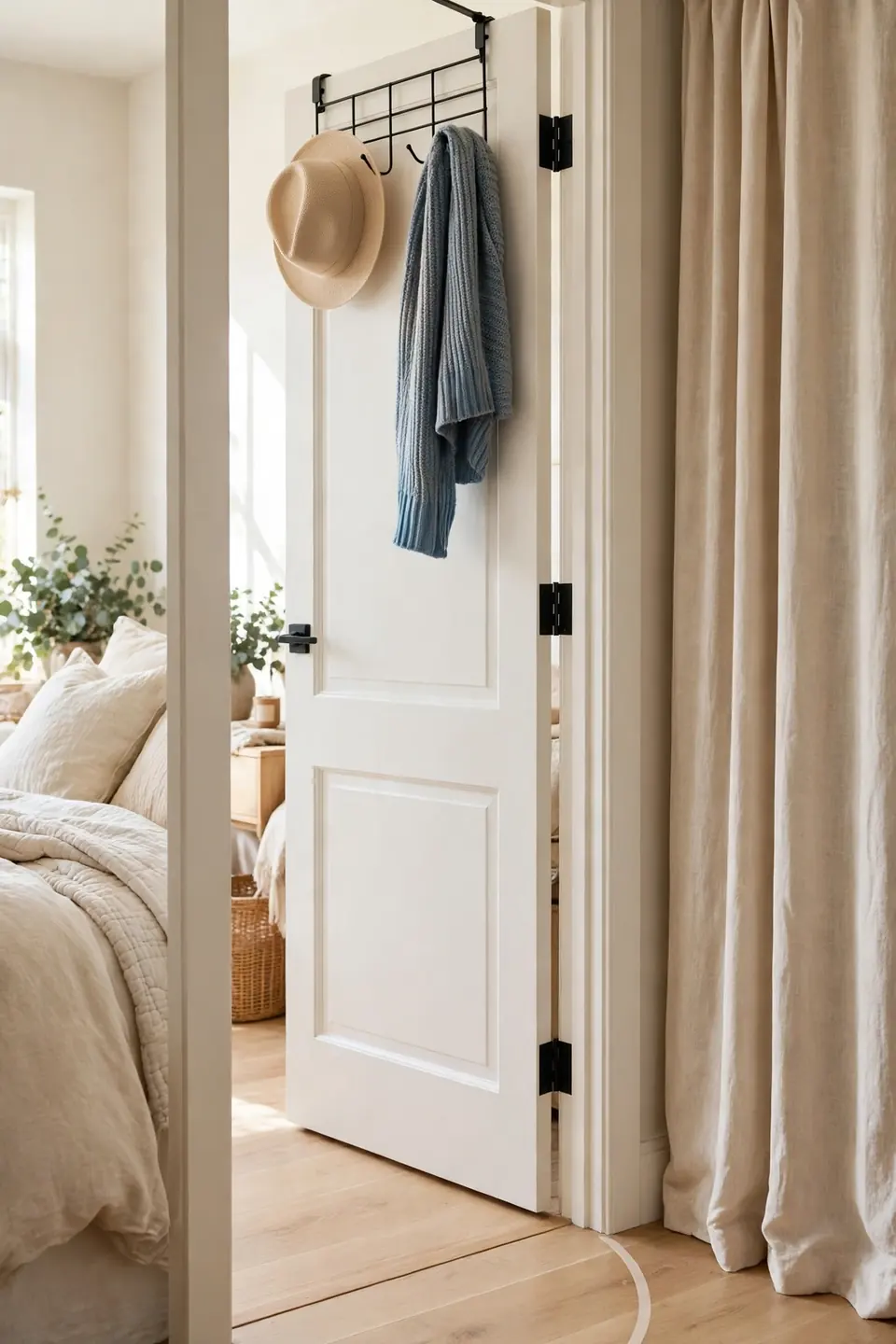
Do:
- Measure the door swing arc and keep that floor triangle clear.
- Hang a slim over door rack for scarves, bags, and daily outfits.
- Swap a swinging closet door for a curtain panel on a tension rod.
- Place the dresser on the hinge wall where the swing never reaches.
Don’t:
- Park a laundry basket inside the swing path and trip over it.
- Block the swing with a bookshelf that chips the door edge.
- Hang mirrors on the door back where slams crack them.
Every door in a small bedroom taxes the floor it sweeps, so plan around the arc like it is furniture. Rooms feel larger when nothing interrupts that swing. Pocket doors and sliders are lovely upgrades, but the clear arc habit costs nothing and starts tonight.
Fold Down Desk Nook
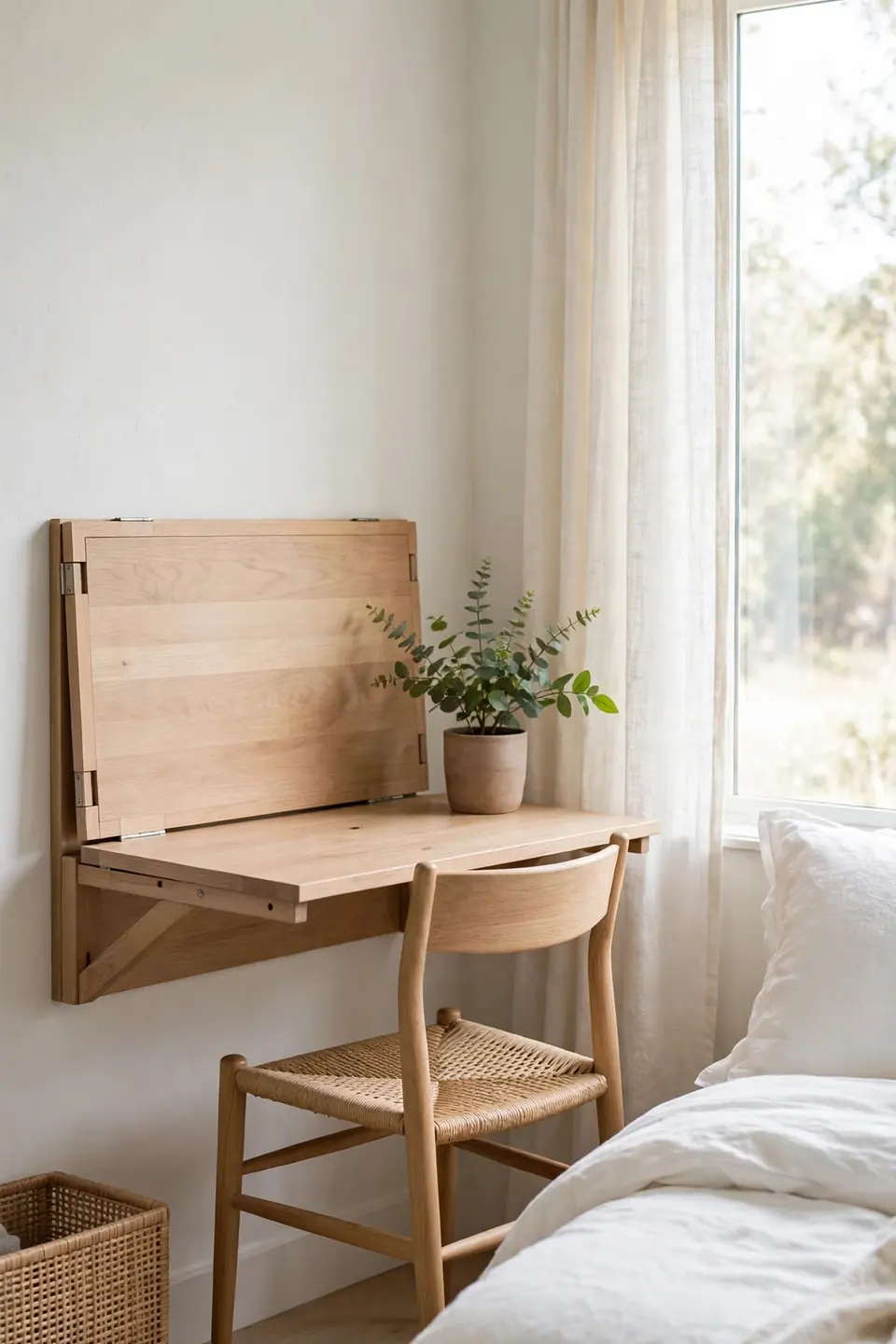
Cost: Wall desk kit, about $80 to $150
Time: One afternoon to mount
Skill Level: Intermediate, studs required
Best For: Studio bedrooms and work from home corners
A fold down desk gives a small bedroom a work zone that vanishes before bed, which protects sleep better than any candle. Mount it on the wall opposite the bed or beside a window, thirty inches high, with a chair that tucks fully under. When the flap closes, the room returns to rest mode, and that boundary matters in a one room work life. Keep the surface empty by habit, since a closed desk covered in papers is just a shelf pretending.
Monochrome Palette Calm
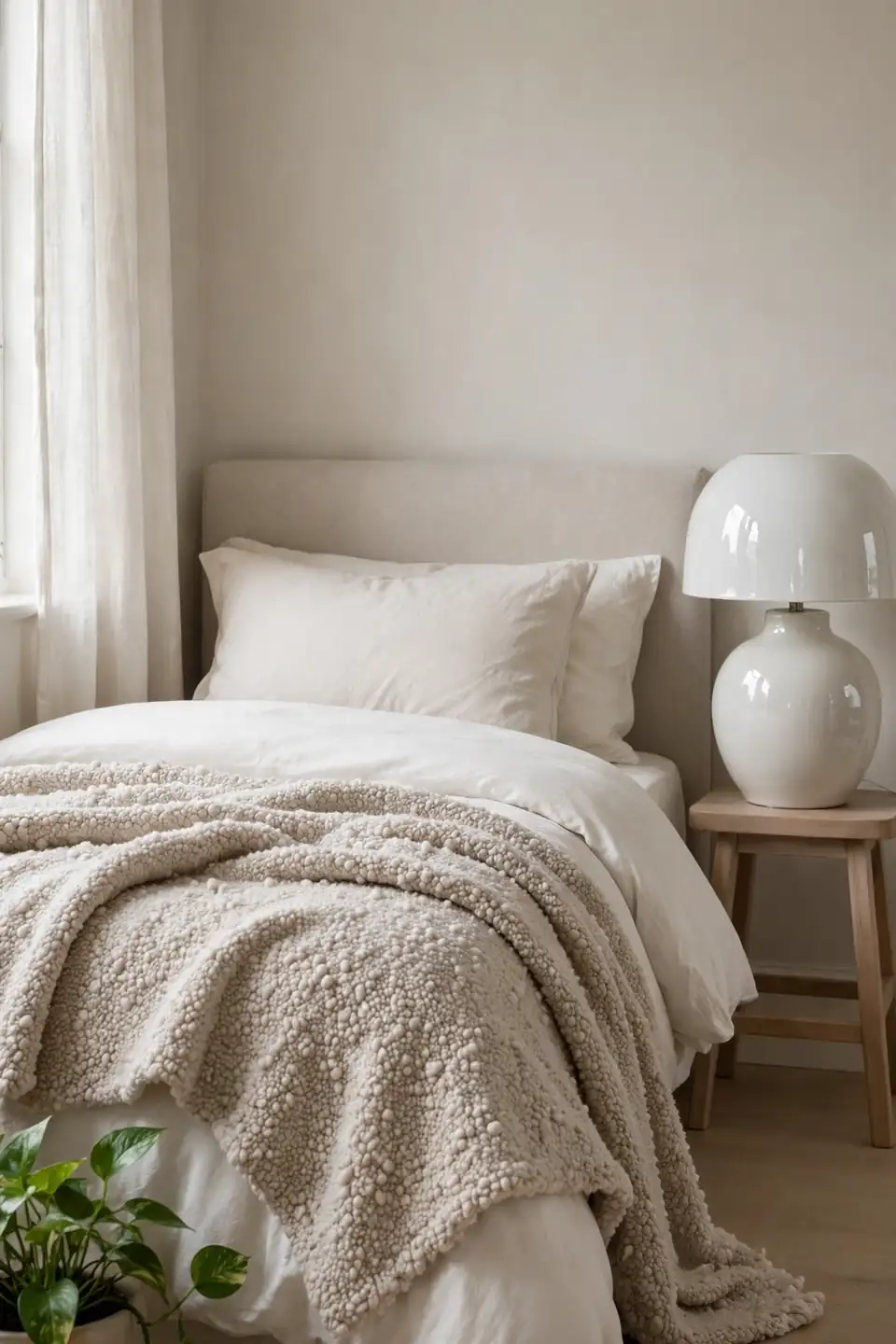
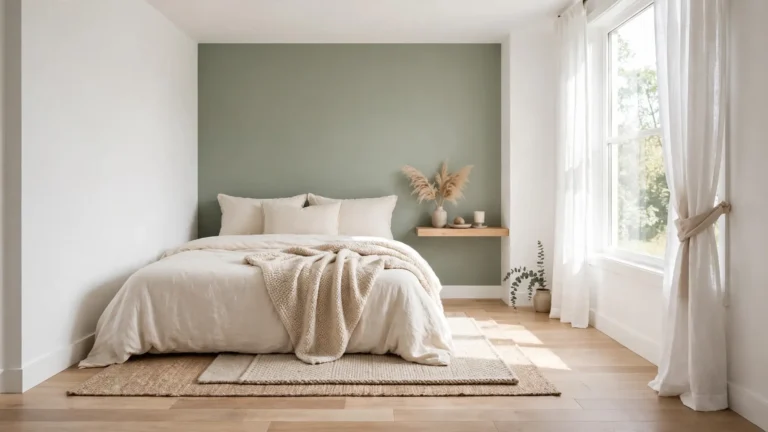
One color, many textures: that is the monochrome shortcut to a calm small room. Walls, bedding, and curtains in neighboring shades of warm white or soft greige remove the visual chop that makes small spaces feel busy. The bed becomes a soft landscape instead of a pile of separate objects, and the room exhales.
Depth comes from contrast in texture rather than color: nubby throws, smooth cotton, matte wood, a single glossy lamp. I’ve noticed monochrome rooms photograph beautifully for resale and rental listings too, because nothing dates them quickly. If the palette feels flat on day three, add one plant; green is the accent monochrome always forgives.
Open Shelf Nightstand

- Mount one sturdy shelf at mattress height and style it like a tiny mantel.
- Keep daily items in one small tray so the shelf never becomes a junk ledge.
- Route the lamp cord behind the shelf edge with two adhesive clips.
- Stack two books flat as a riser for the water glass and clock.
A shelf nightstand costs less than most furniture and returns the floor beneath it to the room. The open style forces honesty: only what earns the spot stays. That discipline suits small rooms, where every visible object either helps or argues. In my experience, one shelf per side is plenty; two shelves invite storage creep.
Bedding Color Pop
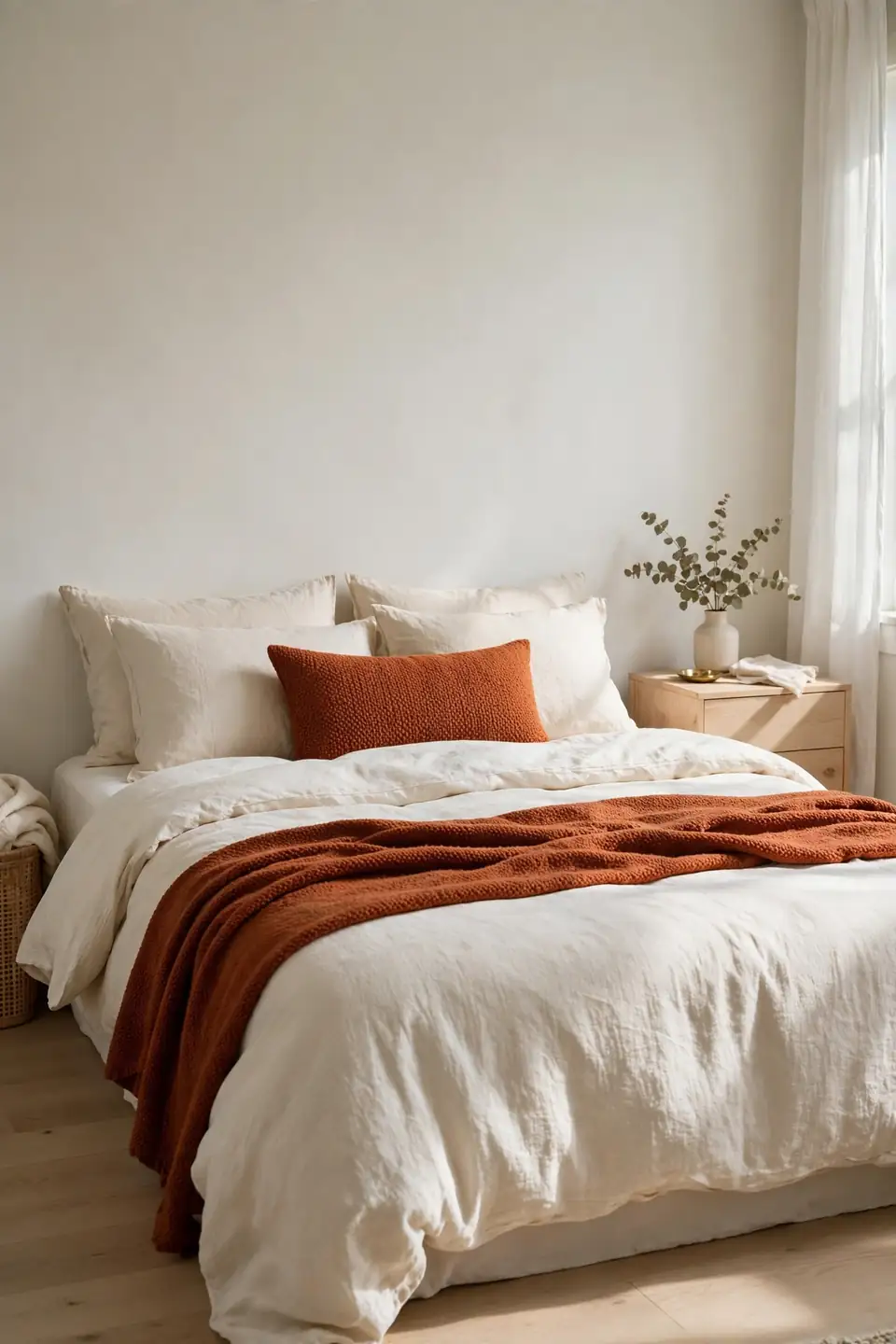
Quick Tip: Keep sheets and duvet in the room’s pale base, then spend your one bold color on the throw and lumbar pillow only. Small doses read as design; a full scarlet duvet in a tiny room reads as alarm.
One pop of color gives the eye a destination, which makes the rest of the room feel calmer by comparison. Rust, olive, and dusty blue all play well against cream bedding and survive trend cycles. When the mood shifts, the pop swaps in minutes, and the base never needs repainting or replacing to feel new again. That flexibility is worth more than any single shade.
Closet Door Removal
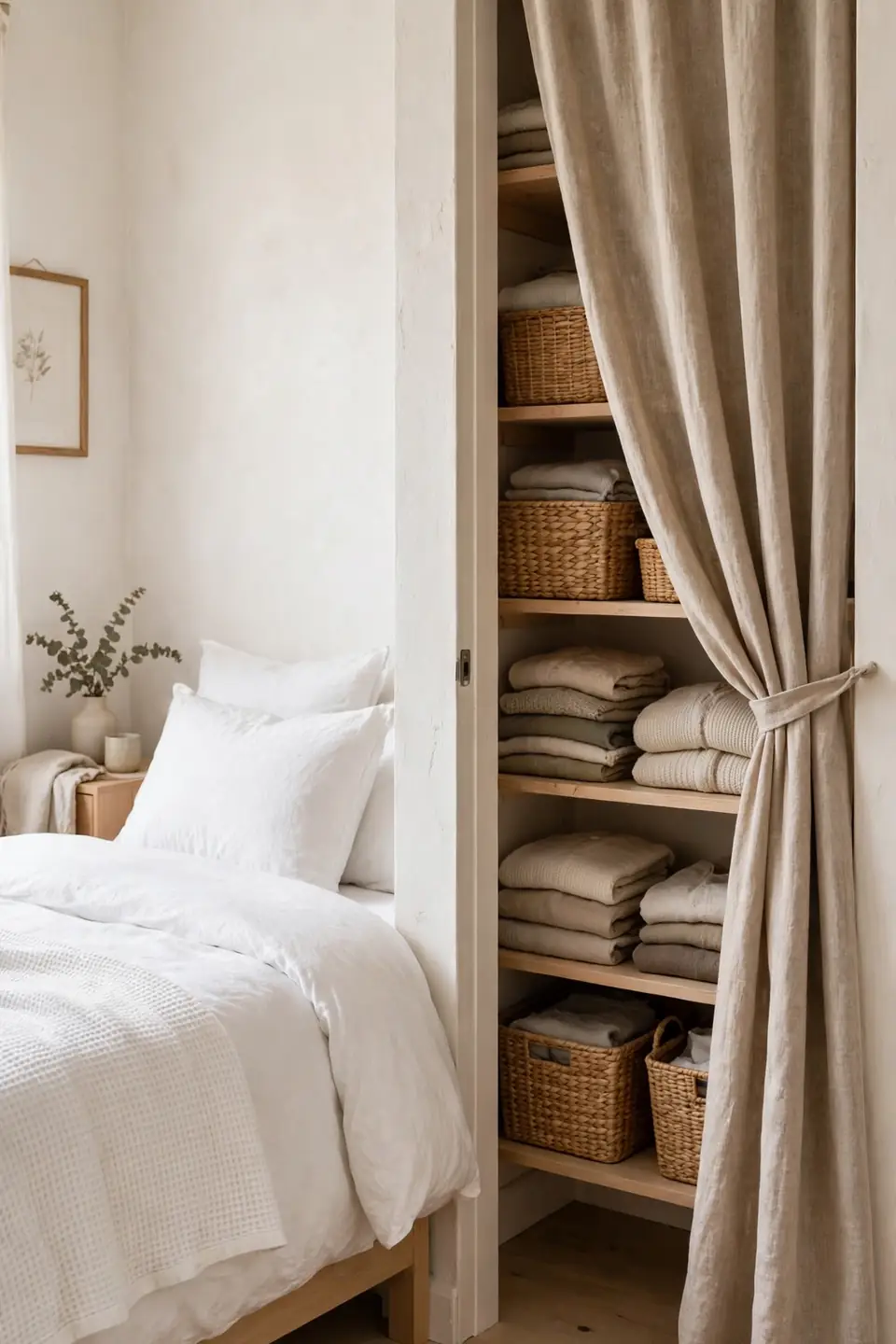
BEFORE: The closet door swung into the room’s only walkway, the closet interior stayed dark and ignored, and half the wardrobe lived in a chair pile because reaching the shelves annoyed everyone.
AFTER: The door came off its hinges and a linen curtain took its place, opening the full closet width at a glance. Shelves now hold labeled baskets, and the wardrobe finally works like storage instead of a rumor.
Removing a door is reversible, free, and strangely brave feeling the first night. A curtain softens the opening and still hides the honest mess on busy weeks. Store the door under the bed with its screws taped to the frame, and rehanging later takes ten minutes if tastes change.
Reading Light Layers
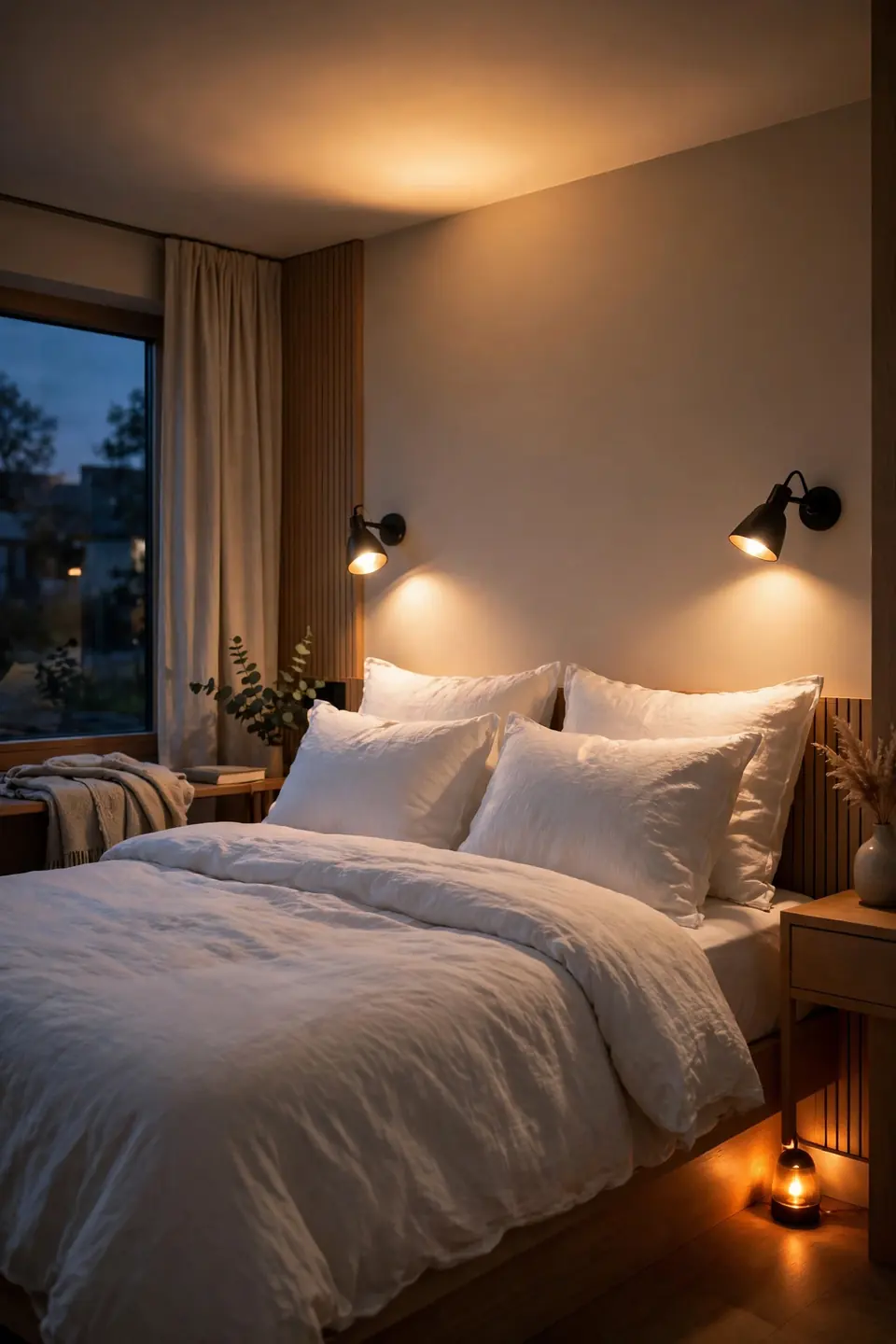
- Fit the main ceiling light with a warm dimmable bulb as the base layer.
- Add one focused reading light per pillow, sconce or clip style, aimed at page height.
- Place a small amber night light near the floor for midnight paths without glare.
- Test the layers together at night and remove any bulb that shows in the mirror.
Layered light lets a small room change jobs, from bright dressing light at dawn to a low evening glow that tells your brain to slow down. Single overhead bulbs flatten everything and make small rooms feel like waiting rooms. Three gentle sources, each aimed with purpose, cost little and flatter every other choice in the room.
Twin Versus Full Bed
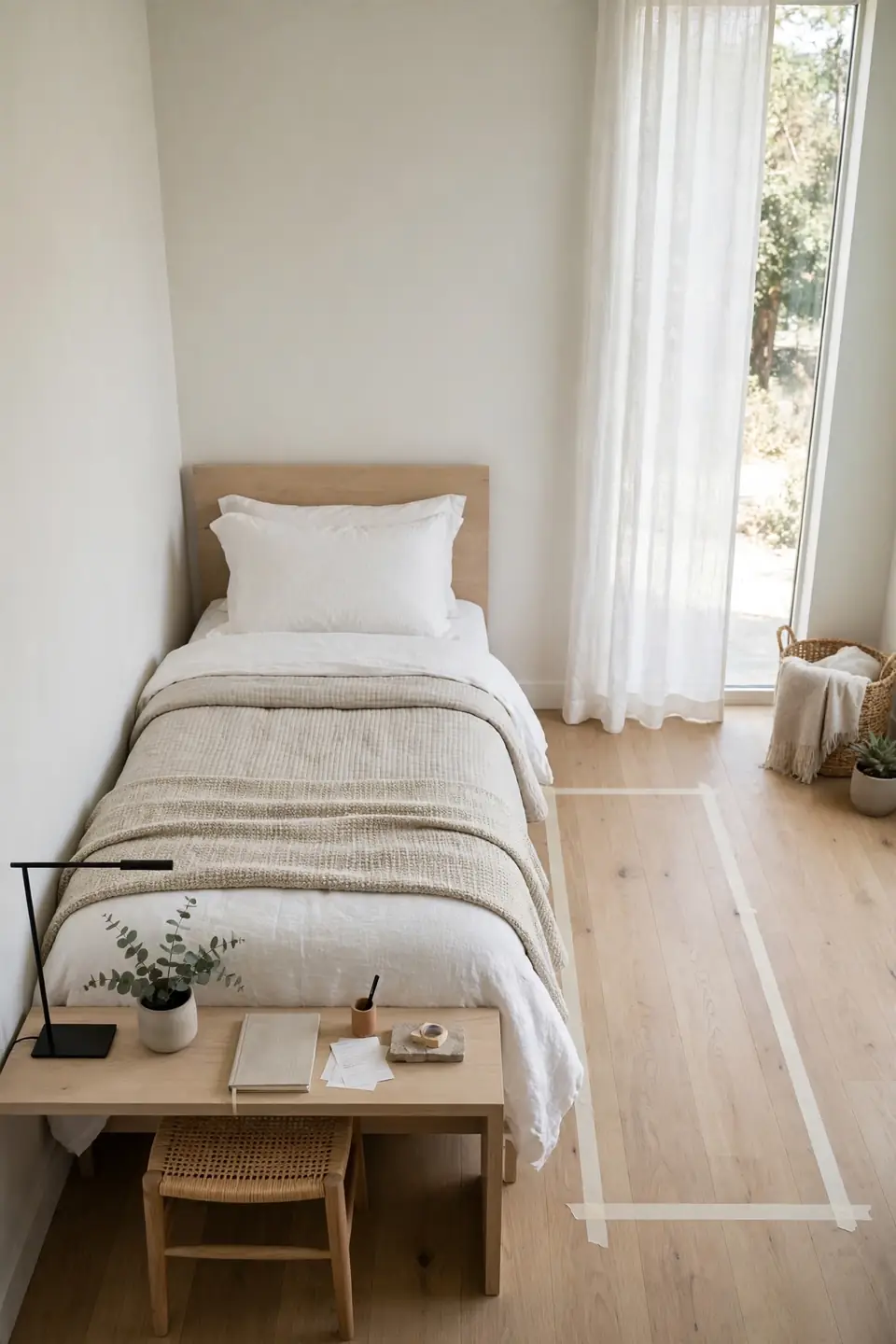
| Feature | Twin Bed | Full Bed |
|---|---|---|
| Width | 38 inches, slim fit | 54 inches, sprawling comfort |
| Room Feel | Leaves a desk zone | Fills most small rooms |
| Guests | One sleeper only | One plus a guest |
| Bedding Cost | Cheapest sets everywhere | Slightly higher, wider choice |
Singles in small rooms usually sleep better on a twin with a great mattress than on a full squeezed against two walls. The reclaimed strip fits the desk, the shelf, the life that happens outside sleep. Couples and tall sleepers should measure twice, because comfort beats cleverness when the bed is wrong every single night. A tape outline on the floor settles the argument in minutes.
Weekly Reset Habits
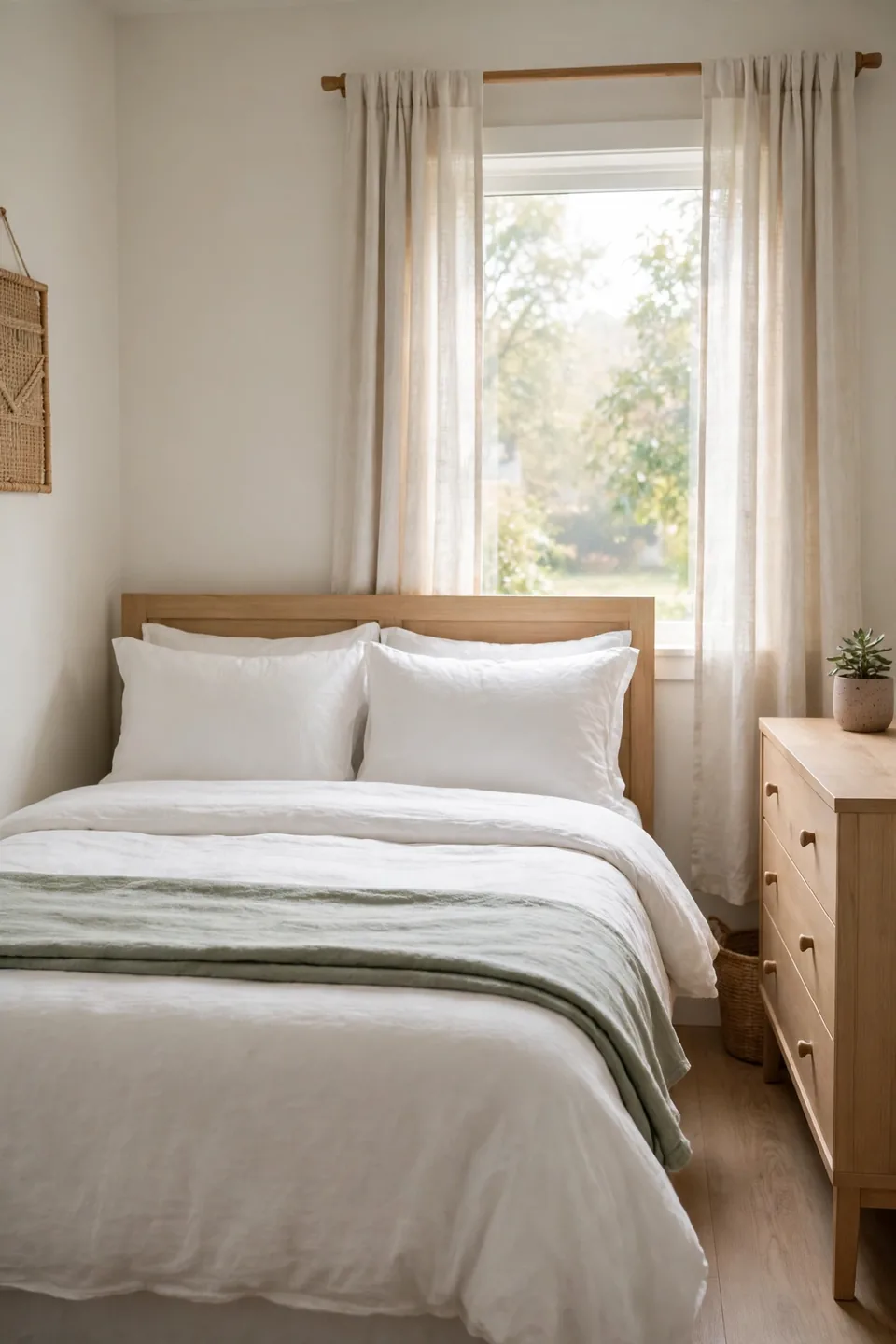
Do:
- Remake the bed fully every morning, pillows squared, throw folded once.
- Return five stray items to their homes before lights out nightly.
- Keep one empty surface rule: the dresser top clears every Sunday.
- Open curtains wide each morning to reset the room with daylight.
Don’t:
- Let laundry migrate from chair to floor to bed during the week.
- Store random boxes in corners where they breed visual noise.
- Skip the reset because guests never see the bedroom anyway.
Small rooms forgive size and punish drift, so habits are decor here. Ten minutes of reset keeps every other idea in this list working, because styled rooms stay styled only when the baseline holds. Start with the bed; the rest of the room usually follows its lead within a week.
Conclusion
A small bedroom is not a compromise; it is a room with clear priorities. Start with the bed, give it height, light, and honest storage, then let one calm palette hold everything together. None of these small bedroom decorating ideas needs a renovation, a landlord’s permission slip, or a big budget, just a free afternoon and a tape measure. Small rooms reward attention faster than any other space in the house. Yours is closer than you think. Save this pin for your next weekend reset, try two or three ideas first, and notice how quickly the room starts returning the favor.