21 Mudroom Decorating Ideas for Smart, Clutter-Free Storage
Shoes by the door, coats on the floor, backpacks dropped wherever they land. The entry takes the hardest hit in any home, yet a few smart mudroom decorating ideas can turn that chaos into the hardest working corner of the house. Benches that hide boots, hooks at the right height, and baskets that catch the small stuff change how every arrival and departure feels.
Start with storage that matches your household, not a showroom. A family of five needs different cubbies than a couple with one dog. The same layering trick that makes front porch decorating ideas work outside applies here: group by height, repeat materials, and leave room to breathe. In my experience, the mudrooms that stay tidy share one trait, everything has a home within two steps of the door. Ahead are twenty one layouts, builds, and styling moves sized for real entries and real weekends.
Built In Bench Cubbies
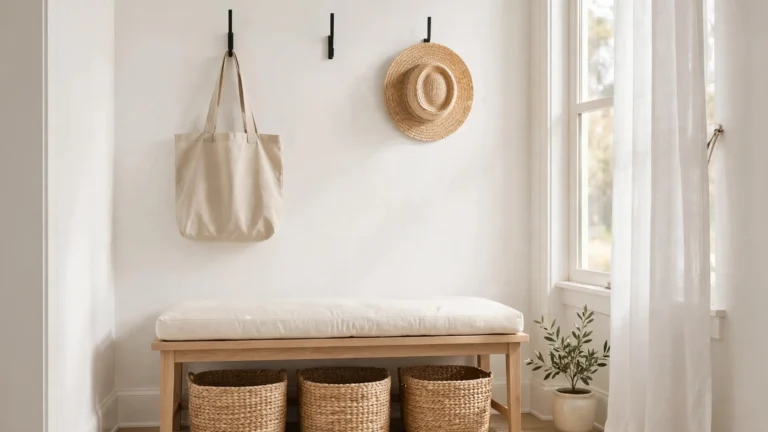
A built in bench with open cubbies underneath does three jobs at once: seat, shoe shelf, and landing strip for bags. Build the base 18 inches high and 14 inches deep, and most adult boots slide in without a fight. Leave the front edge open so wet shoes dry overnight instead of souring in a closed box.
Paint the bench the same color as your trim and it reads like architecture, not furniture. Add one cushion in a washable canvas and a basket per person on the top shelf, and every family member gets a clear boundary. I’ve noticed guests copy this setup more than any other mudroom feature.
Wall Hook Rail System
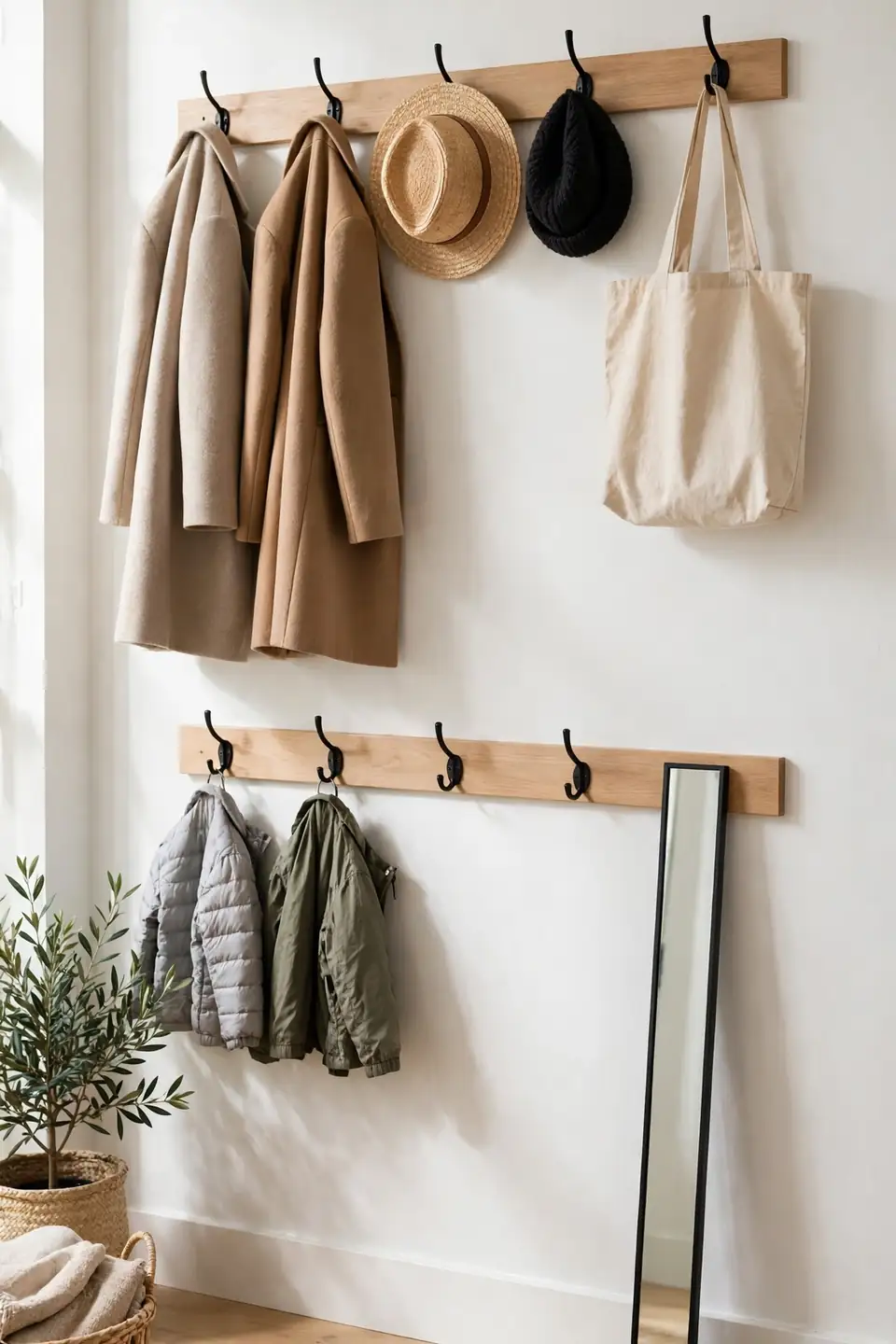
- Mount a wood rail at 60 inches for adults and a second at 40 inches for kids.
- Space double hooks 8 to 10 inches apart so bulky jackets never bunch or slide off.
- Screw into studs or use heavy duty wall anchors rated for 50 pounds each.
- Give every person one hook of their own and label the spots if sharing gets messy.
- Hang a slim mirror and key tray at the end of the rail.
Rails beat a hall closet for daily gear because nothing hides and nothing piles up behind a door. Choose black metal hooks on light wood for a farmhouse feel, or brushed brass on white painted boards for something softer. The whole wall stays visible, so a quick reset takes two minutes.
Woven Basket Storage Shelf
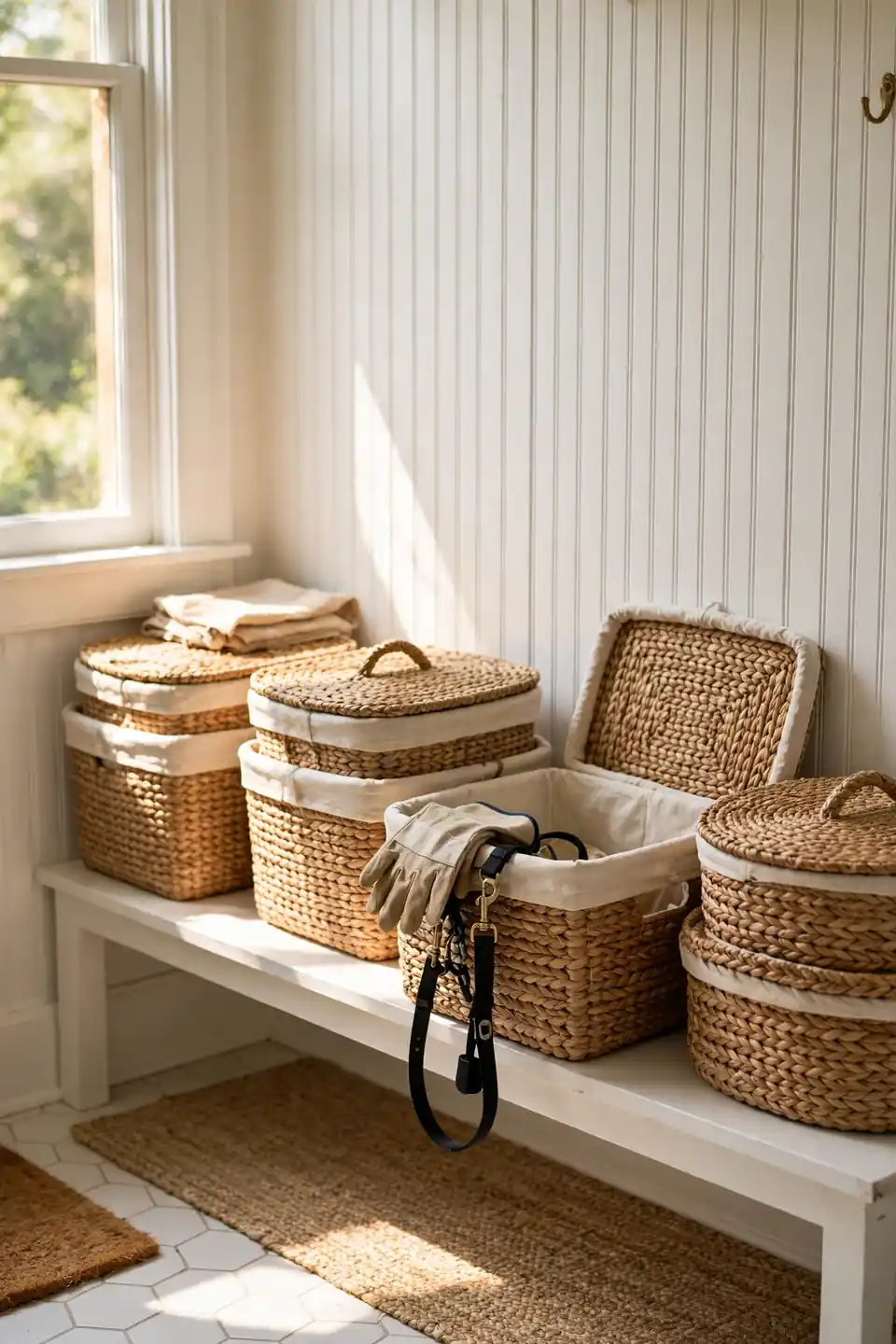
Quick Tip: Line baskets with removable cotton liners you can shake out and wash, and choose lids for anything stored below waist height. Dust and grit settle fast near the door, and a lid keeps mittens clean between snow days and muddy spring weeks.
A low shelf stacked with woven baskets sorts the small stuff that usually spreads across the floor. One basket takes gloves, one takes dog gear, one takes mail and library books waiting to go back. Seagrass and water hyacinth hold their shape for years, and the woven texture warms up a plain painted wall. Keep daily baskets at hip height so nobody has to dig.
Dated Entry Bright Makeover
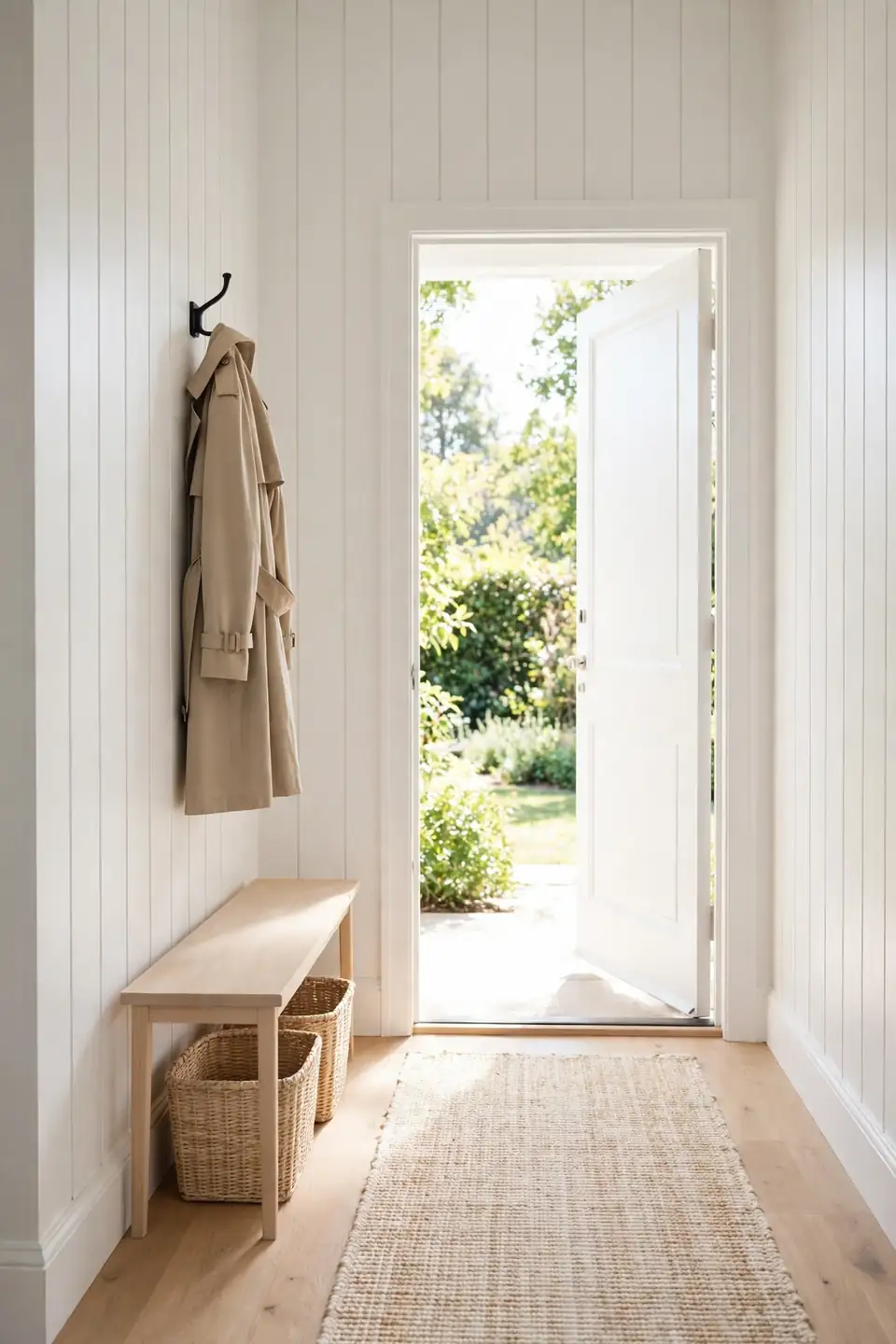
BEFORE: The entry felt like a cave. Dark paneling swallowed the light, one wobbly coat tree held twelve jackets, and shoes formed a permanent drift under the radiator. Guests squeezed sideways through the mess, and the door barely opened past ninety degrees.
AFTER: White paint on the paneling and a pale runner changed everything in one weekend. A wall rail replaced the coat tree, a slim bench with two baskets took the radiator spot, and suddenly the door swings free and the room breathes.
Paint does the heavy lifting in most entry makeovers, and it costs less than one new piece of furniture. Sand glossy panels lightly, prime with a stain blocking primer, and expect two finish coats. The bright shell makes every later choice, hooks, baskets, art, look deliberate.
Shoe Storage Bench Build

- Measure your wall run and mark a bench length that leaves the door swing fully clear.
- Build a simple box frame from 3/4 inch plywood, 18 inches high and 14 inches deep.
- Divide the inside into cubbies 12 inches wide so pairs stand upright without toppling.
- Sand every edge, fill the screw holes, and paint or stain to match your trim.
- Add a hinged top cushion in outdoor fabric for a seat that wipes clean.
A bench like this costs a fraction of a store bought unit and fits the wall exactly, corner to corner. In my experience, a hinged top beats open cubbies in homes with toddlers, since lids keep tiny shoes from migrating across the floor.
Lockers Versus Closed Cabinets
| Feature | Open Lockers | Closed Cabinets |
|---|---|---|
| Cost | Lower, simple framing | Higher, doors and hardware |
| Airflow | Wet gear dries fast | Needs vents or gaps |
| Look | Casual, busy, visible | Clean, calm, hidden |
| Best For | Kids and sports gear | Formal entries, guests |
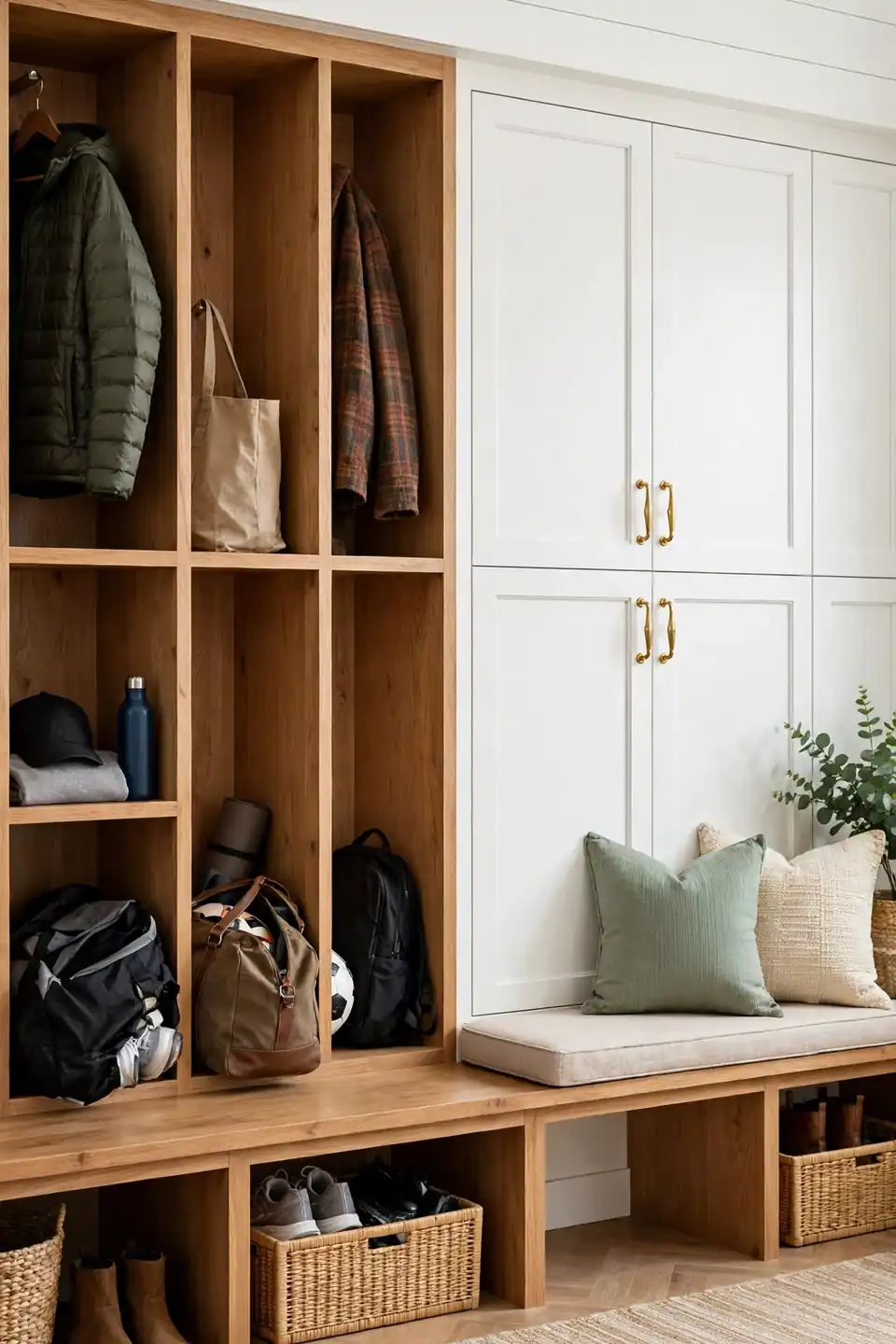
Open lockers win on drying power and price, while cabinets win on calm. A hybrid works in many homes: cabinets above for rarely used items, open lockers below for the daily rotation. Measure your bulkiest coat before choosing a depth, because a locker that cannot close around a ski jacket helps nobody. Tall households should also check hook height against the longest coat in the family rotation before drilling anything.
Family Drop Zone Rules

Do:
- Assign one hook, one basket, and one shoe spot per person.
- Keep a small trash bowl for receipts, tags, and pocket clutter.
- Reset the zone every night in a two minute sweep.
- Store this season only and move the rest upstairs.
Don’t:
- Let bags live on the floor where feet and doors collide.
- Mix cleaning supplies in with hats and gloves.
- Hang wet coats against painted walls without a rail gap.
- Skip labels in shared homes and hope for the best.
Rules only stick when the setup makes them easy, so place each person’s hook and basket along their natural path from door to kitchen. Post the two minute reset on the family calendar for the first month, and the habit usually outlives the reminder.
Mudroom Costs At A Glance
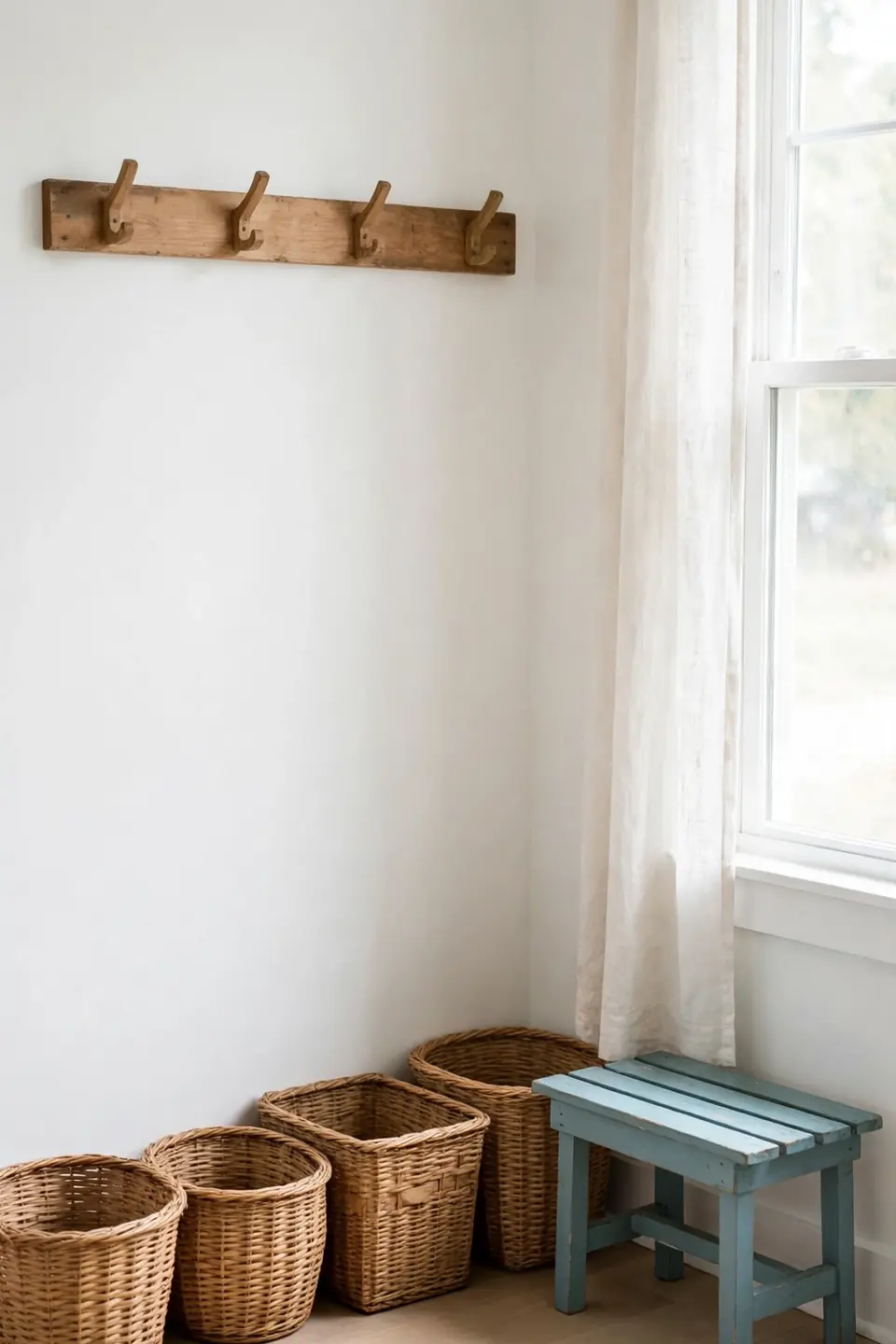
Cost: A hook rail and four baskets run about $120 to $250 total
Time: One weekend, roughly five hours with paint drying time
Skill Level: Beginner, basic drill and level work only
Best For: Renters and first time organizers on a budget
Result: A working drop zone that needs no renovation at all
Numbers stay friendly because a mudroom is furniture and paint, not plumbing and wiring. Start with the rail and baskets, live with the layout for a month, and only then decide whether built ins earn their price. Most households find the simple setup handles ninety percent of the daily load.
Sage Green Beadboard Charm
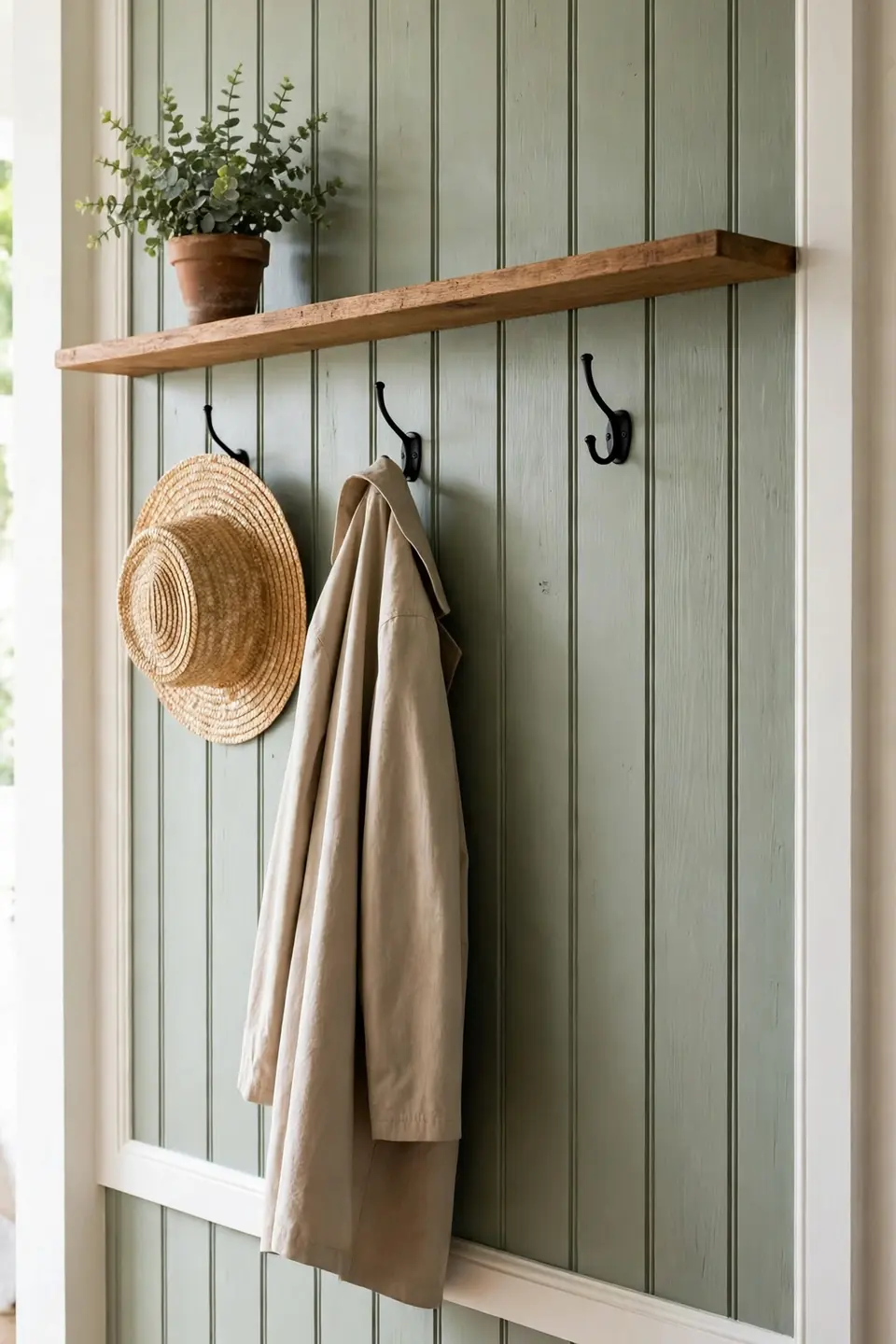
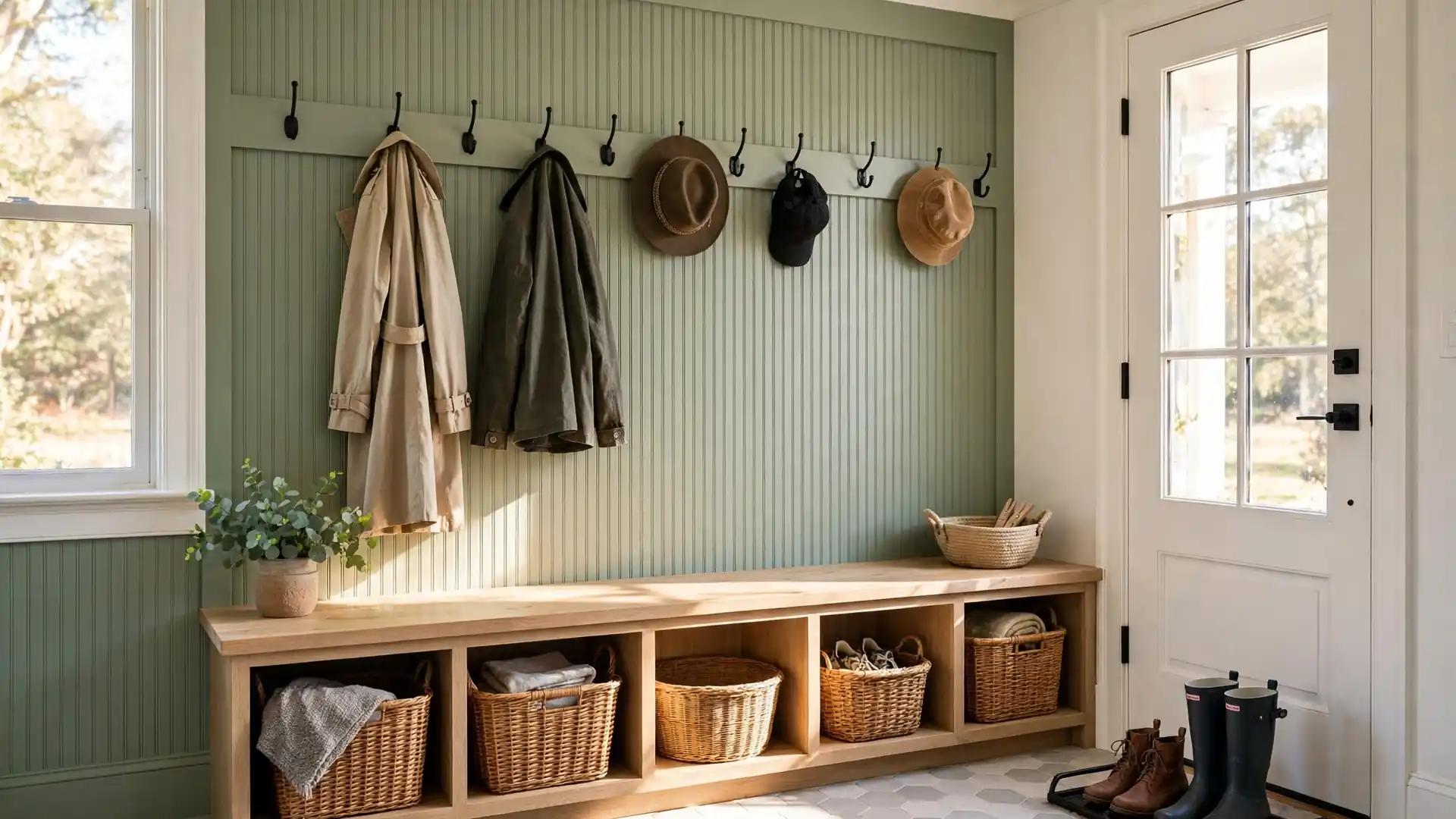
Beadboard painted soft sage turns a plain entry wall into the prettiest spot in the house. The grooves catch light and shadow through the day, and the color sits calmly between gray and green, so it flatters white trim and natural wood alike. Panels come in sheets that glue and nail up in an afternoon.
Cap the beadboard at 48 inches with a narrow ledge, and that ledge becomes a display shelf for a small plant or framed print. Hooks mount through the board into studs, so the wall takes daily abuse without dents. Scuffs wipe off satin paint in seconds, which matters when muddy paws and backpack zippers share the wall.
Boot Tray Entry Setup
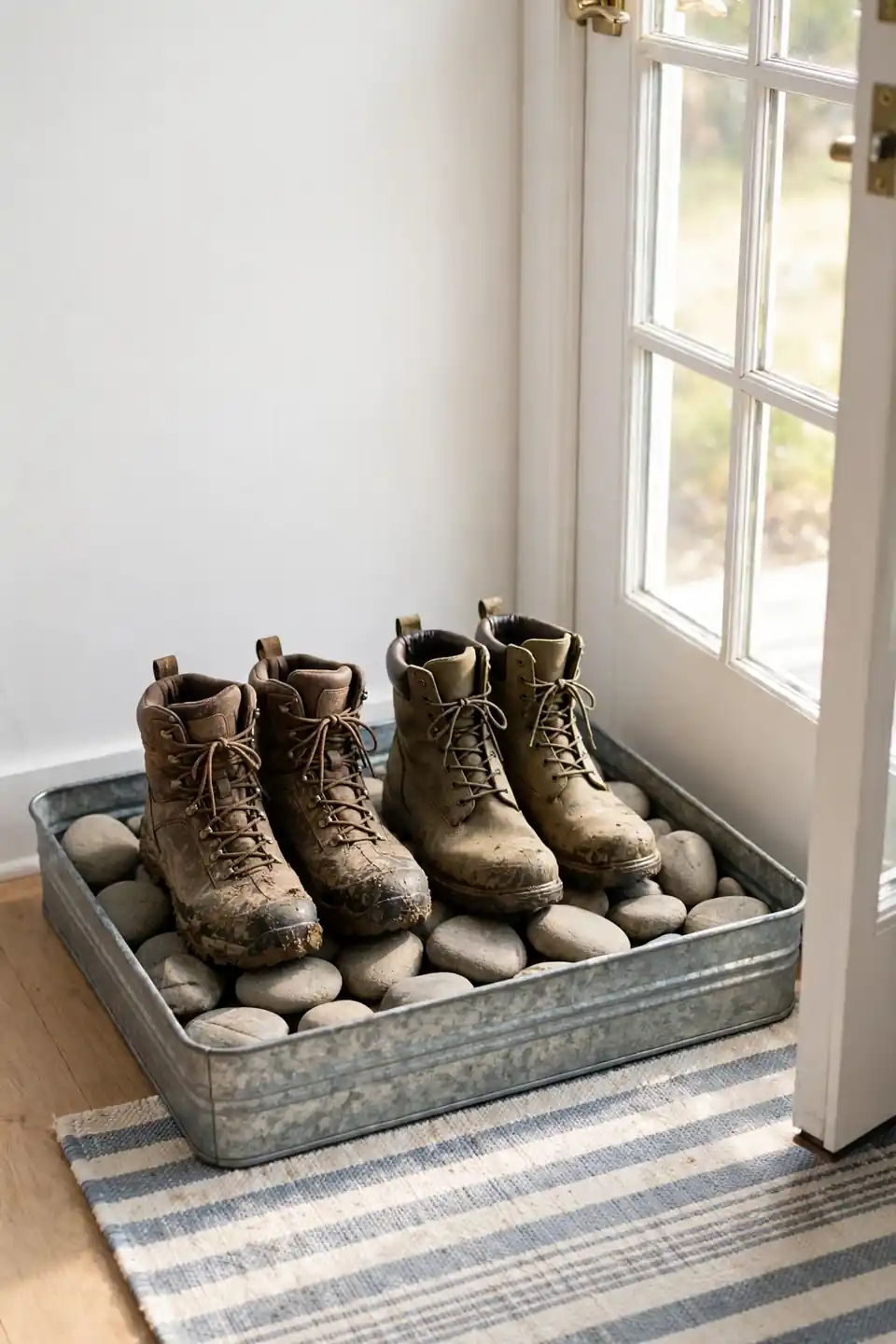
- Pick a tray with a raised lip at least one inch high to hold meltwater.
- Fill the base with smooth river stones so soles rest above the waterline.
- Size the tray for two pairs per person, no more, to force rotation.
- Set the tray on a washable mat to protect wood floors from grit.
- Rinse stones monthly in a bucket and let them dry in the sun.
A boot tray ends the puddle problem at the source, which saves the floor finish and the morning mood. Galvanized metal trays suit farmhouse entries, while molded recycled plastic shrugs off salt all winter. Place it where boots naturally land, not where a catalog photo says it should go.
Hallway Corner Mudroom Nook

Quick Tip: Borrow eighteen inches from a wide hallway and you gain a full mudroom. A corner bench, three hooks, and one shelf read as a nook rather than clutter when every piece shares the same paint color as the wall behind it. Measure your door swing twice before cutting the bench top to size.
Corners collect dead space in most hallways, so the conversion feels free. Angle the bench across the corner or run it along the shorter wall, and add a cushion in a stripe that repeats colors from the nearest room. A battery powered puck light under the shelf keeps the nook bright without an electrician.
Cramped Closet Calm Conversion

BEFORE: The hall closet swallowed coats and gave back chaos. Hangers tangled, the rod sagged, and every search for a scarf ended with three jackets on the floor. Boots blocked the door from closing, so the door stayed open for years.
AFTER: The rod came out and three painted cubbies went in, with hooks below and a shelf above. Coats hang flat against the back wall in view, and the door closes on a calm box that works like a mini mudroom.
Closet conversions top most lists of mudroom decorating ideas because they need no new square footage, just a free Saturday. The layered logic behind floating shelves for kitchen decor applies here too: use every inch, group by height, and keep daily gear in plain sight.
Tall Locker Tower Steps

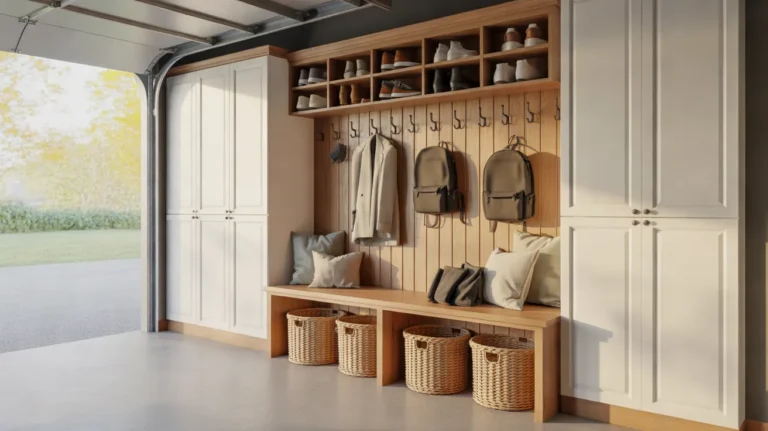
- Anchor two tall cabinets or bookcases to the wall studs at either end of the bench.
- Fit the center space with a hook rail and a mirror to bounce light around.
- Add doors to one tower for coats and leave the other open for bags and baskets.
- Run a shared crown board across the tops so the pieces read as one unit.
- Paint everything one color, including the wall behind, for a built in effect.
Towers give vertical storage to entries with no spare width, and the doors hide the visual noise that open hooks cannot. Thrifted bookcases work beautifully here once the backs are reinforced, and a weekend of paint unifies pieces that never met before.
Wood Versus Cushioned Benches
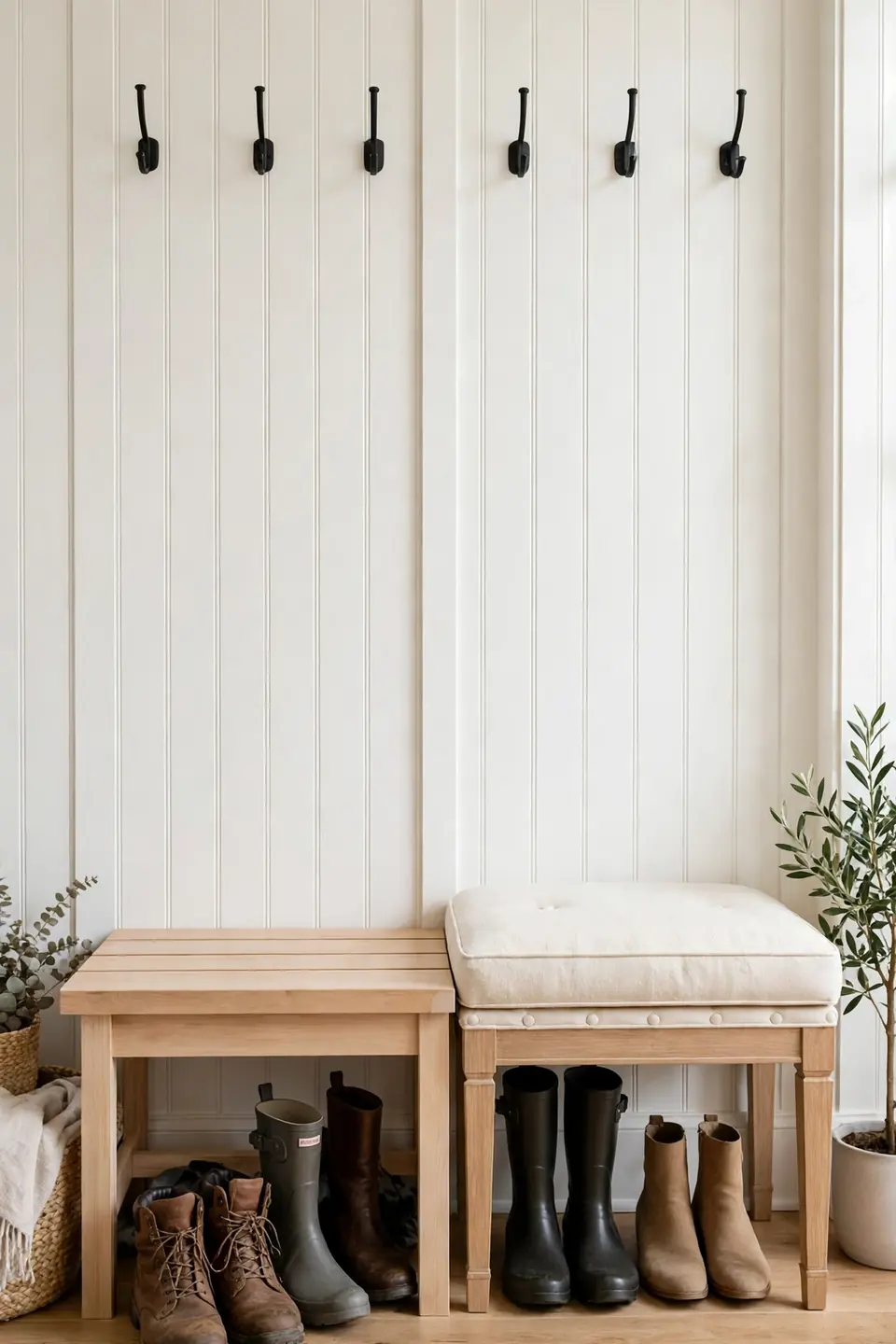
| Feature | Solid Wood Bench | Cushioned Bench |
|---|---|---|
| Comfort | Firm, cool, durable | Soft, warm, inviting |
| Upkeep | Wipe clean in seconds | Vacuum and spot clean |
| Cost | Lower, one material | Higher, foam and fabric |
| Best For | Wet boots, muddy paws | Long sits, shoe changes |
Households with dogs usually land on solid wood, while homes where grandparents lace up slowly prefer the cushion. A middle path exists: a wood bench with two loose seat pads that lift off for washing and stack away when the weather turns muddy and the whole entry needs a hose down. Price both options at your local lumber yard before deciding, since cushion foam often costs more than the bench lumber itself.
Tiny Entry Smart Rules
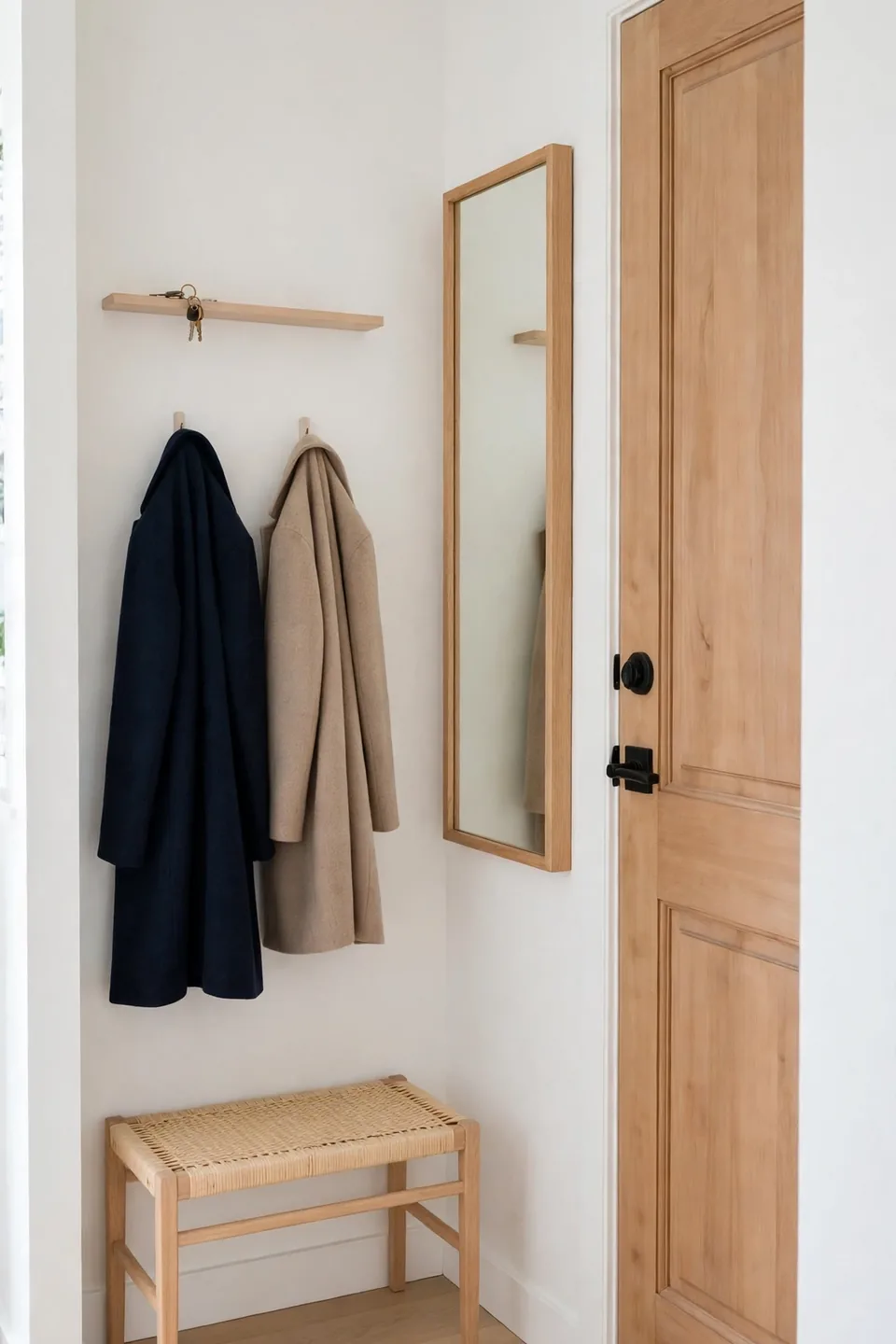
Do:
- Choose a bench under 12 inches deep so the walkway stays open.
- Hang hooks on the wall instead of using a floor standing rack.
- Pick one slim shelf for keys and mail only.
- Hang a mirror by the door to widen the space.
Don’t:
- Crowd the entry with a full size dresser or armoire.
- Leave floors bare where wet shoes drip and stain.
- Block the light switch or thermostat with tall storage.
- Store out of season gear in prime daily space.
Small entries punish every wasted inch, so vertical storage and strict rotation do the heavy lifting. I’ve seen this work well in many cases where the entry was barely four feet wide: rail high, bench low, and nothing on the floor that does not earn its spot.
Mudroom Laundry Combo Facts

Cost: Shared plumbing wall keeps a combo build near $800 to $1,500
Time: A long weekend for paint, hooks, and a folding counter
Skill Level: Confident beginner, with a plumber for hookups
Best For: Small homes where the laundry already sits by the door
Result: Dirty gear and dirty laundry land in one washable zone
Combining the two hardest working rooms saves steps and contains the mess in one washable zone. A folding counter above the machines doubles as a sorting shelf, and hooks on the opposite wall keep coats out of the laundry path. Vent the dryer well and the combo stays fresh.
Shiplap And Hook Harmony
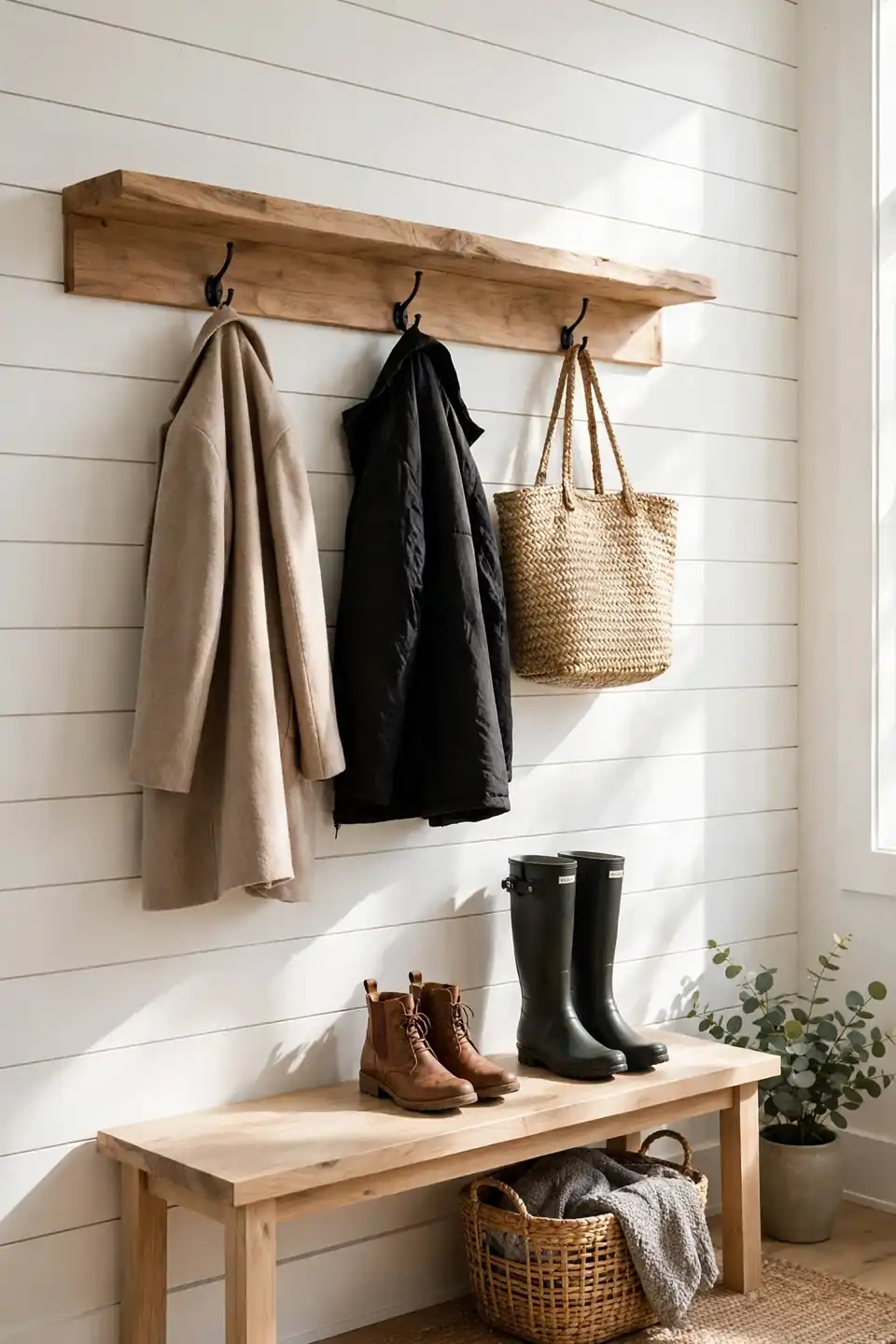
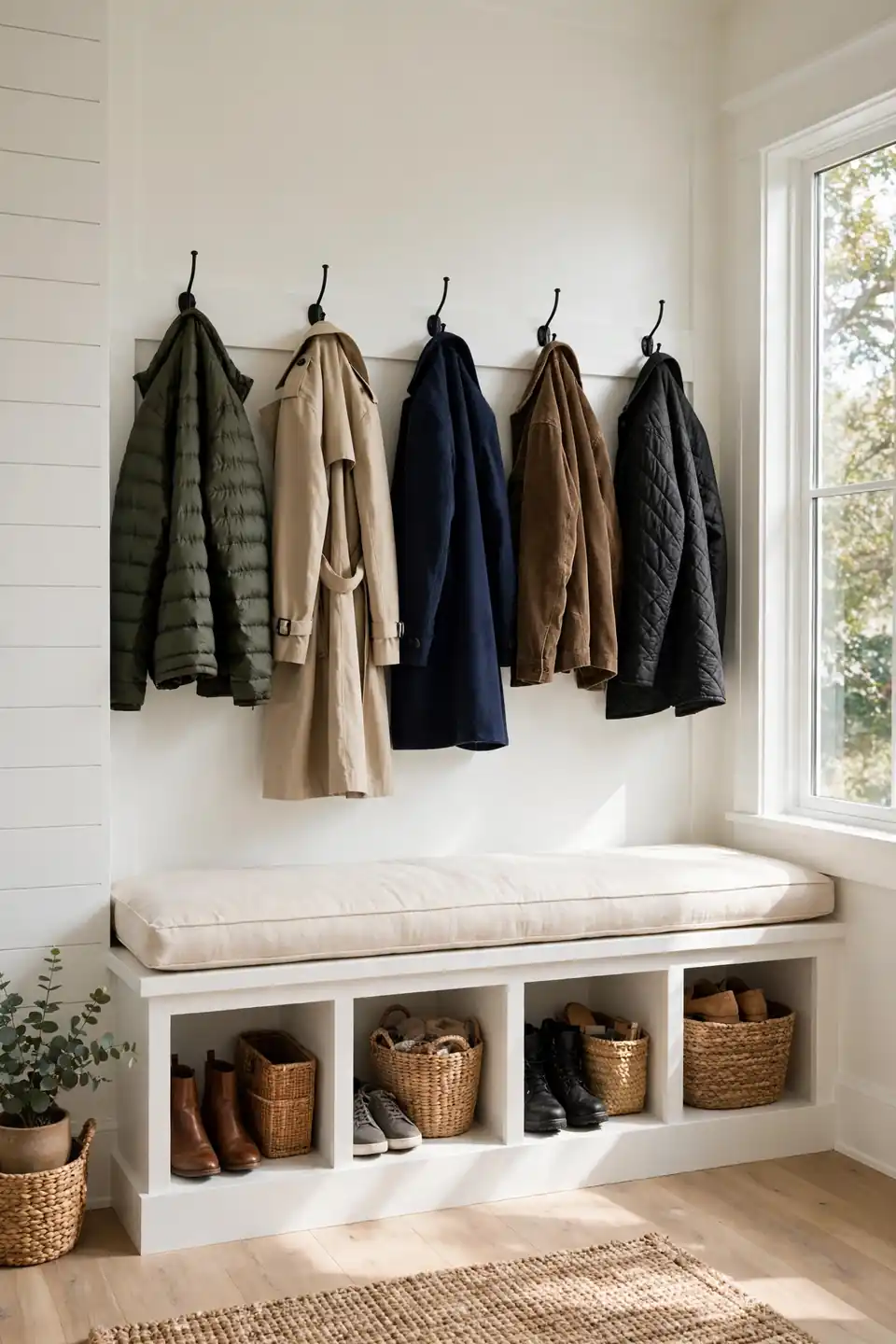
Shiplap boards give a mudroom wall the structure hooks need to look intentional. Run the boards horizontally to widen a narrow entry, paint them bright white, and mount a chunky wood rail at coat height so the hooks sit on a strong visual line. The shadow gaps between boards hide scuffs better than flat drywall ever will.
Keep the palette tight: white boards, black hooks, natural wood bench. That three tone recipe repeats across farmhouse and modern homes because it photographs clean and hides daily wear. Seal the lowest boards with an extra coat of satin paint, since boot splashes land there first and most often.
Seasonal Gear Swap Routine

- Box winter gear the first warm weekend and label every lid clearly.
- Wash coats and gloves before storing so stains never set over summer.
- Move one bin at a time to the attic, garage, or closet top.
- Bring out a slim tray and lighter hooks for sandals and hats.
- Keep one emergency layer per person in the mudroom year round.
A swap keeps the mudroom sized for today instead of four seasons at once, and it doubles as a twice yearly clean out. That’s why many experts recommend a swap weekend on the calendar: gear gets washed, broken zippers get noticed, and outgrown boots leave before they pile up.
Pet Friendly Entry Corner

Quick Tip: Mount one low hook at your dog’s shoulder height for the leash, and keep treats in a sealed jar on the shelf above. A fixed leash spot ends the frantic search while a wet dog waits by the door, shaking.
Pets track in as much grit as kids, so the corner needs a washable mat, a towel hook, and a bin for muddy toys. A low gate or a bench edge can mark the pause zone where paws get wiped before the house. Choose bin colors that match the human gear and the whole corner blends in. Wipe downs take under a minute once the supplies live within reach.
Dark Entry Light Refresh
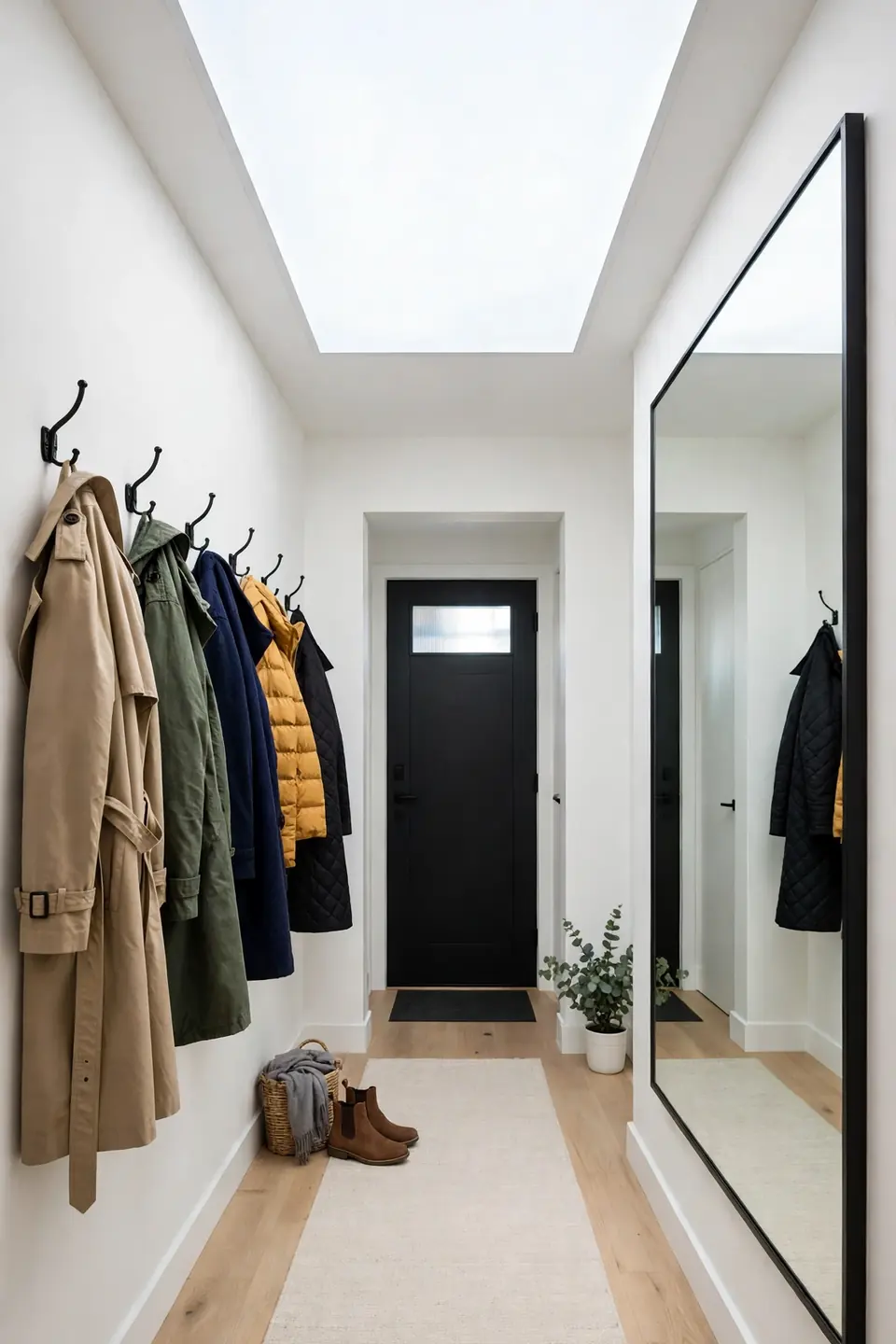
BEFORE: The back entry had no window and one yellow bulb behind a frosted cover. Coats read as black shapes, the floor vanished into shadow by four in the afternoon, and finding the right gloves meant turning on a phone flashlight.
AFTER: A daylight LED panel, white paint, and a mirror across from the hooks changed the room. Now colors read true, the mirror doubles the light, and the entry feels like a small room instead of a tunnel between house and yard.
Lighting fixes beat new furniture in dark entries every time, and most cost under fifty dollars. Swap bulbs before buying fixtures, since color temperature alone can make the same paint look gray or warm. A mirror needs no wiring and pays you back every single day.
Entry Command Center Setup

- Choose a wall stretch near the door at least 30 inches wide and clear it fully.
- Mount a cork board or magnetic board at eye level for notes and schedules.
- Add a narrow shelf below the board for mail, keys, and a phone charger.
- Hang a small calendar and a hook per person directly under the shelf.
- Set a tiny basket on the shelf for outgoing items like returns and forms.
A command center keeps paper clutter off the bench and gives every form, key, and reminder one address. Keep the board ruthlessly current with a weekly five minute purge, and the system survives the school year. Guests read it as art; the family reads it as headquarters.
Conclusion
A mudroom earns its keep every single day, in every season, for every person who walks through the door. Start with the bench or the hooks, whichever your entry begs for first, and let small wins build. Save this pin for your next free weekend, then share your before and after photos with friends planning their own entry reset. These mudroom decorating ideas work in sprawling farmhouses and four foot hallways alike, because they rest on one simple rule: everything earns its spot. I’ve seen how a calm entry changes the mood of the whole home. Start small, start this weekend.