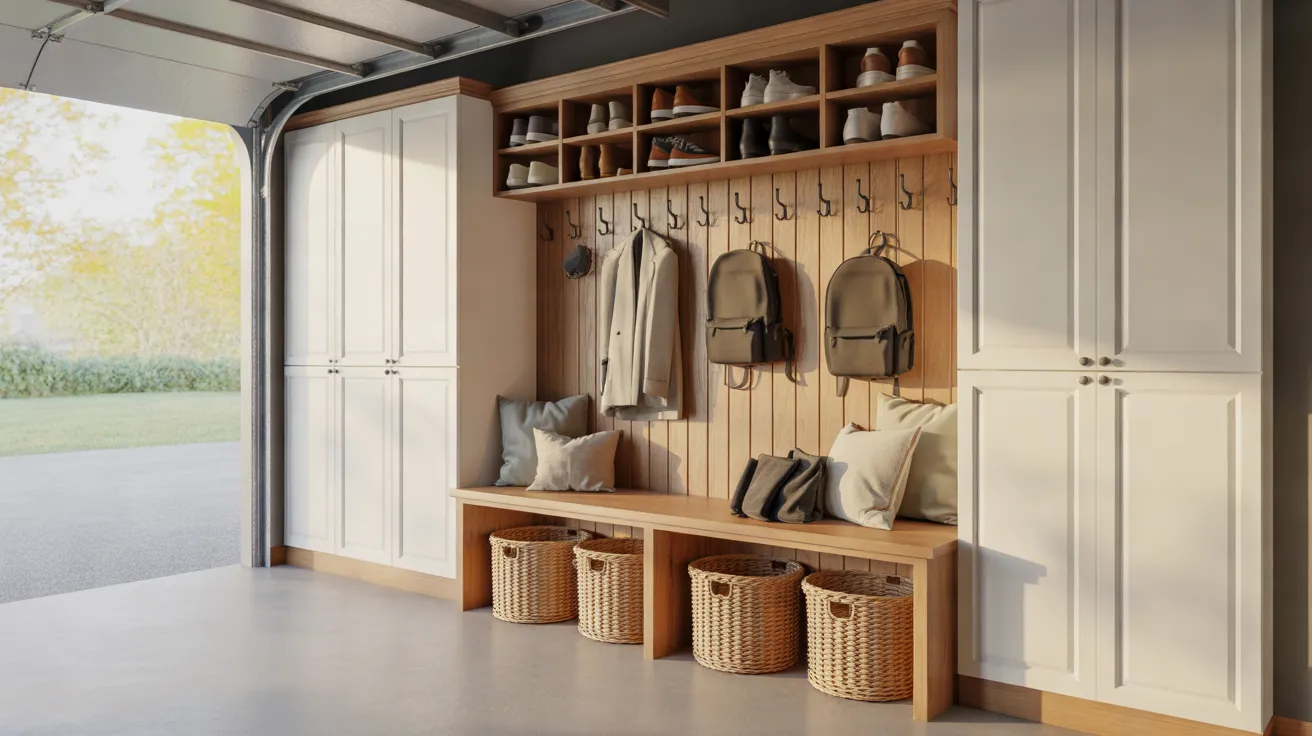
21 Garage Mudroom Ideas for Brilliant Organization
A cluttered garage entry can make the whole home feel less organized. Shoes pile up, backpacks disappear, and coats end up wherever there is an empty hook. These garage mudroom ideas turn that busy transition area into a practical storage zone that works for real life.
From built-in benches and family lockers to labeled bins, shoe storage, gear walls, and compact drop zones, these ideas cover different layouts, storage needs, and styles. You do not need a huge garage or an expensive renovation to create a better system. In my experience, the most useful spaces are often built around simple habits: giving everyday items a clear home, keeping essentials within reach, and making cleanup easy. As you explore these ideas, look for one or two setups that fit your household and available space.
Built-In Entry Bench
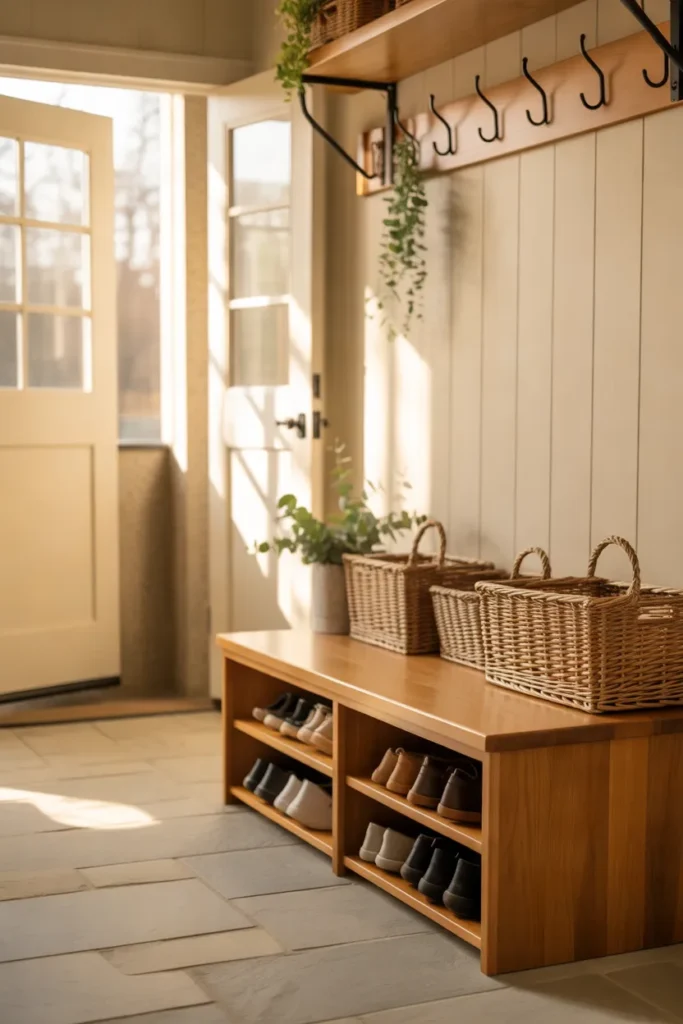
A dedicated bench with open cubbies turns a bare garage entry into a practical landing zone. Keep everyday shoes underneath, then place baskets above for gloves, hats, dog leashes, or reusable bags. A wood bench adds warmth while keeping the setup simple and easy to maintain.
Choose cubby widths based on what your household actually carries. In my experience, slightly oversized compartments stay useful longer because bulky sneakers, boots, and sports shoes fit without forcing items inside. Add washable bins for smaller belongings, and leave one section open for quick drop-offs during busy mornings.
Vertical Hook Wall
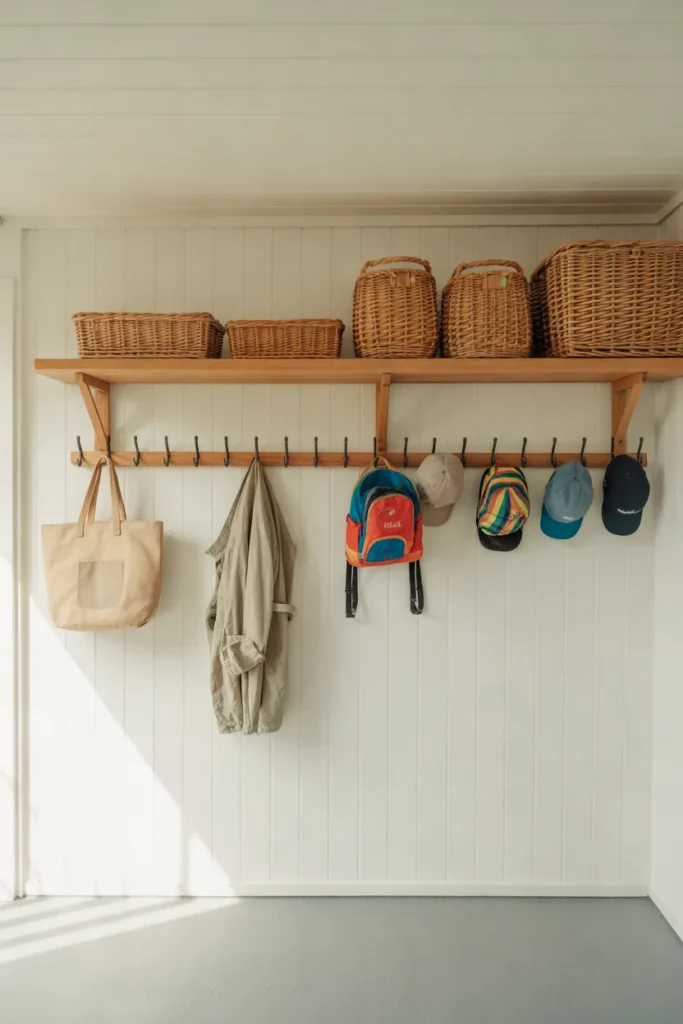
A vertical wall system makes unused garage space work harder without taking up valuable floor area.
- Mount sturdy hooks at different heights for adults and children.
- Add a narrow shelf above the hooks for seasonal accessories.
- Use labeled baskets for hats, gloves, and small outdoor items.
- Keep frequently used gear between waist and shoulder height.
- Leave enough clearance below for shoes or a slim bench.
This setup keeps coats and bags visible instead of piling them on chairs or work surfaces. For a cleaner finish, choose matching hooks and baskets in black, white, wood, or woven textures. A consistent palette makes the storage wall feel intentional rather than purely utilitarian.
Dedicated Drop Zone
Quick Tip:
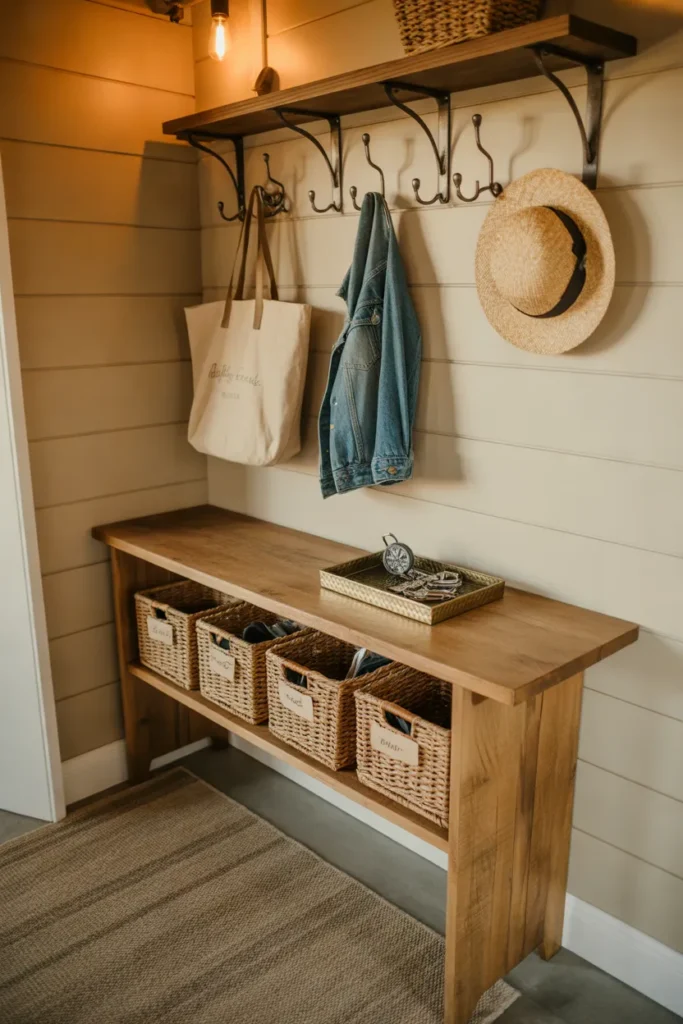
Place a durable mat directly beneath the entry bench to catch rain, mud, and road salt before they spread across the garage floor. Choose a low-profile design that can be shaken outdoors or rinsed easily.
A compact entry station works especially well beside the door connecting your garage to the house. Give each family member one hook or cubby, then reserve a small basket for shared items such as sunscreen, umbrellas, and cleaning cloths. Keeping these essentials together reduces the small piles that quickly build up near busy entrances.
Shoe Storage Drawers
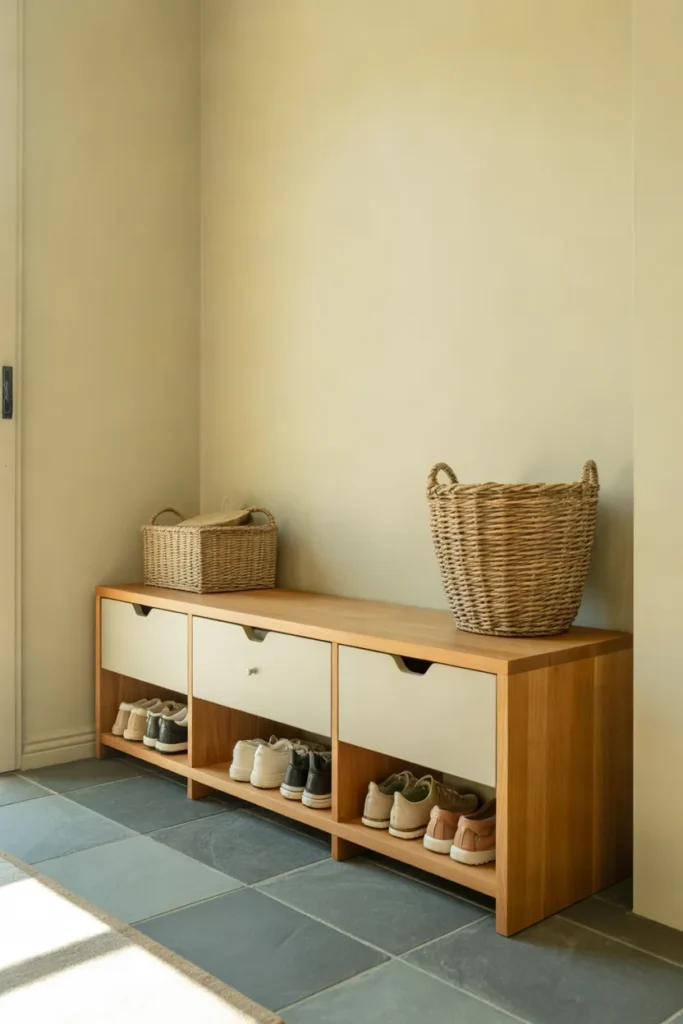
BEFORE: Shoes collect beside the garage door, creating a messy pile that blocks the walkway. Wet boots and everyday sneakers often get mixed together, making the area harder to clean.
AFTER: Low drawers keep footwear contained while preserving a tidy entry path. Each person can have one drawer, with taller compartments reserved for boots and larger shoes.
Choose ventilated or easy-clean drawers if your household regularly stores damp footwear. I’ve noticed that shallow compartments encourage better habits because shoes have a clear home without requiring extra effort. Add a washable mat underneath the bench to protect the floor from dirt and moisture.
Wall-Mounted Cubbies
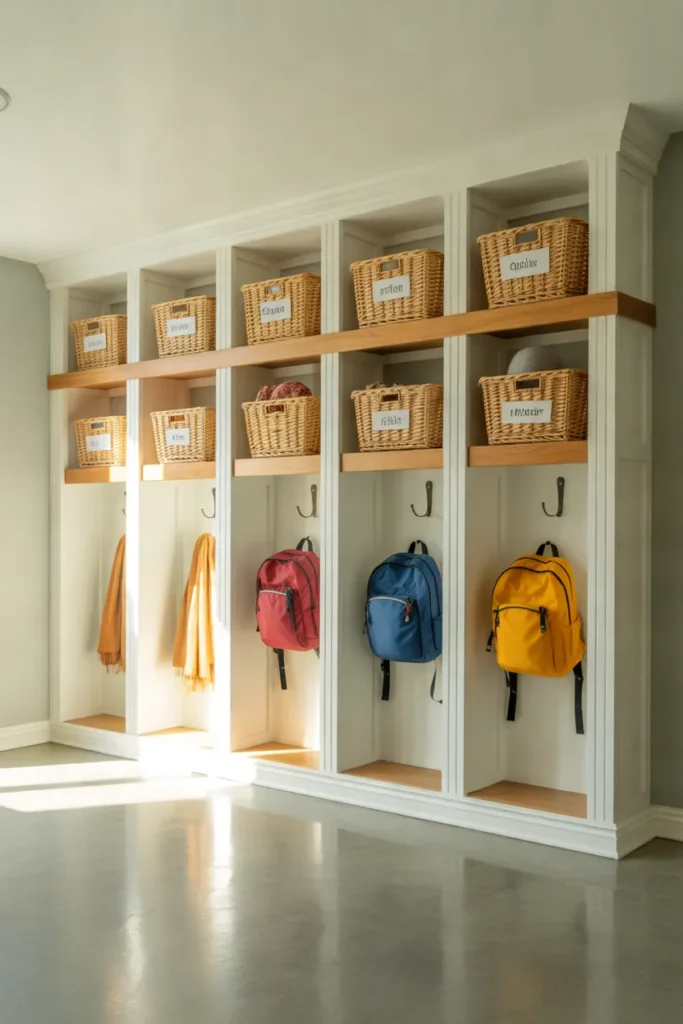
- Measure the wall: Mark the available width and keep enough clearance around the garage door and walking path.
- Mount the cubbies: Secure each unit into wall studs or use appropriate heavy-duty anchors for the wall material.
- Assign storage: Give each cubby a specific purpose, such as bags, shoes, sports equipment, or seasonal accessories.
- Add labels: Use simple labels so everyone knows where frequently used belongings belong.
Wall-mounted compartments keep storage off the floor and make cleaning much easier. Keep heavier items in lower cubbies and lighter belongings higher up. For households with children, position their everyday compartments at a reachable height so putting things away becomes part of the normal entry routine.
Open Shelving System
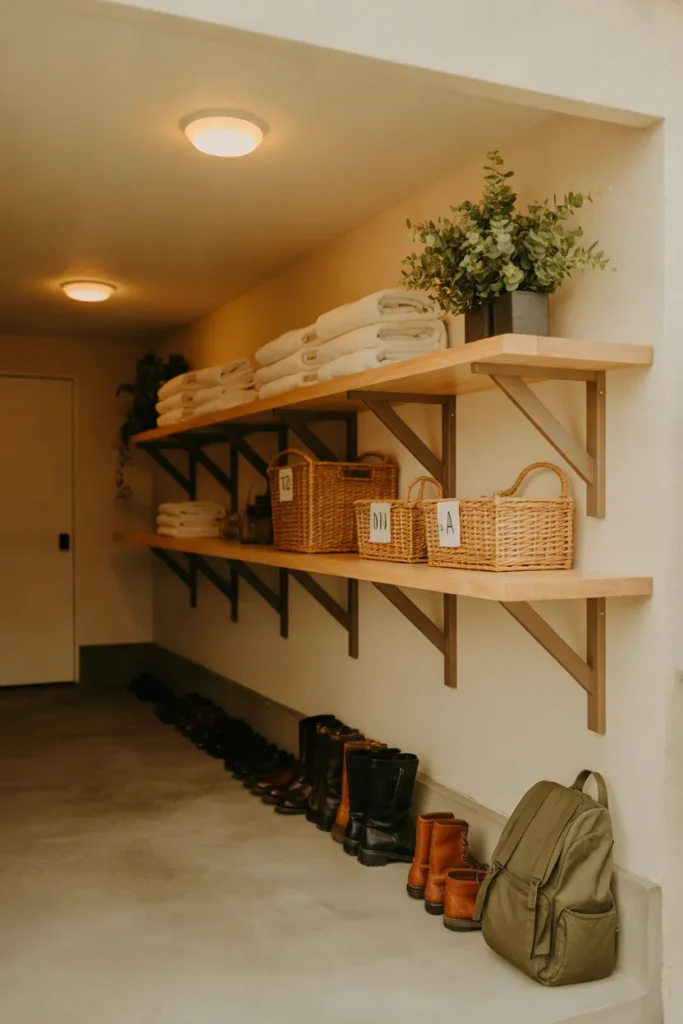
| Comparison Point | Option A: Open Shelves | Option B: Closed Cabinets |
| Access | Items are easy to grab | Doors must be opened |
| Visibility | Contents stay visible | Contents stay hidden |
| Cleaning | Easy to wipe and sort | More surfaces to maintain |
| Best Use | Daily essentials | Clutter you rarely use |
Open shelving works well for belongings that need to be reached several times a day. Reserve the easiest-to-reach shelf for keys, bags, and outdoor accessories. Use matching bins on the upper shelves to control visual clutter while keeping frequently used items within easy reach.
Labeled Storage Bins
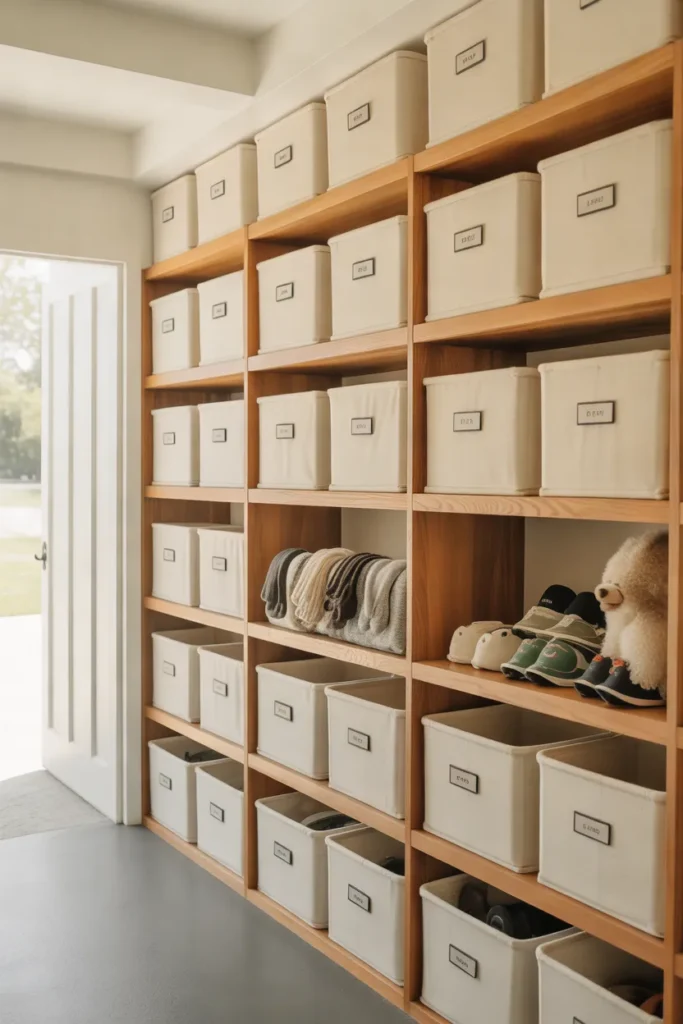
DO:
- Label bins by function, such as gloves, hats, sports gear, or pet supplies.
- Keep everyday items in the easiest-to-reach containers.
- Choose stackable bins with sturdy handles.
- Leave a little empty space for new belongings.
DON’T:
- Mix unrelated items inside one large bin.
- Fill containers so tightly that items are hard to remove.
- Use tiny labels that are difficult to read.
- Store wet items inside sealed containers.
Clear categories make a busy entry area much easier to manage. I’ve noticed that simple labels are especially helpful in shared households because everyone can return belongings without asking where they belong. Use larger bins for bulky gear and smaller containers for accessories, then review the contents seasonally.
Fold-Down Drying Rack
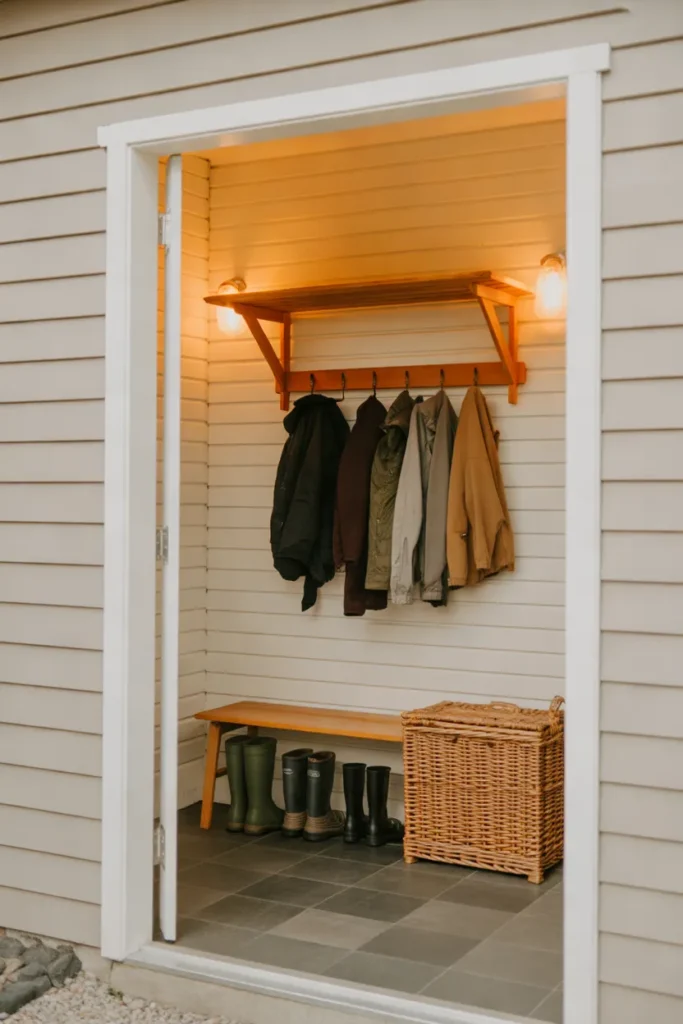
Cost: Moderate | Time: One afternoon | Skill Level: Beginner to intermediate
Best For: Wet coats, towels, sports uniforms, and rainy-day footwear
Works In: Narrow garage entries and family drop zones
Result: Faster drying with less floor clutter
A folding rack gives wet belongings a dedicated place without permanently consuming wall space. Mount it near the garage entry where airflow is good, but keep it away from vehicles and areas where doors or equipment could hit it. Add a drip tray beneath hanging footwear to protect the floor.
Charging Station Shelf
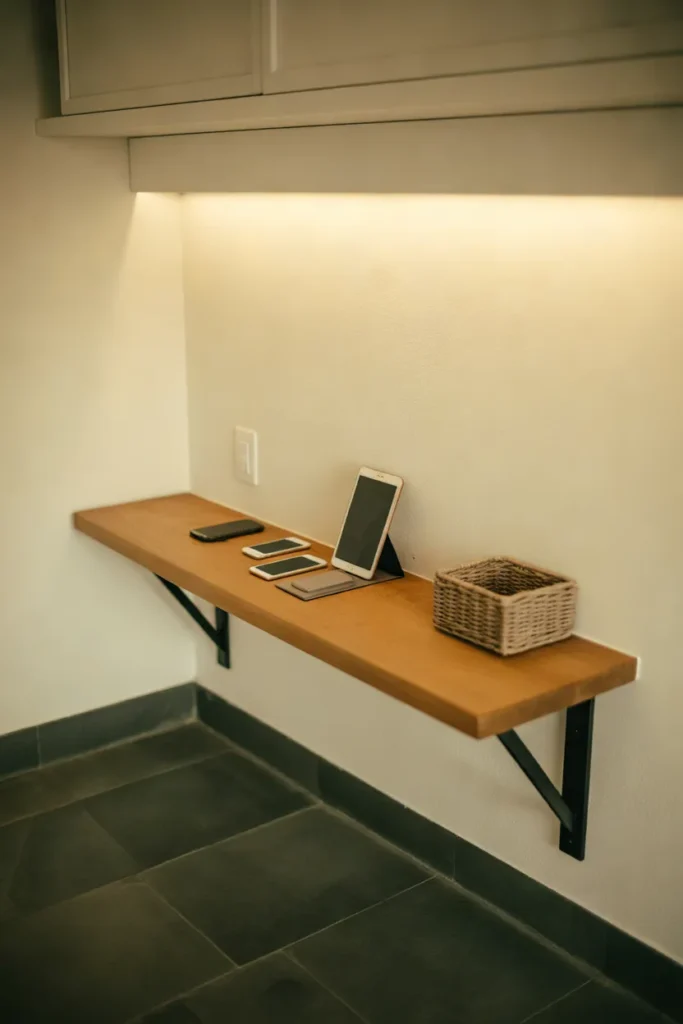
A dedicated charging shelf prevents cords and devices from spreading across benches and counters. Install a power strip inside or beneath the shelf, then use short charging cables that reach each device without creating a tangled bundle.
Keep the station away from damp shoes, cleaning supplies, and areas exposed to water. A small tray can hold earbuds, keys, and portable chargers. For households with children, placing the shelf at an accessible but supervised height keeps devices organized while maintaining a clear garage walkway.
Closed Cabinet Storage
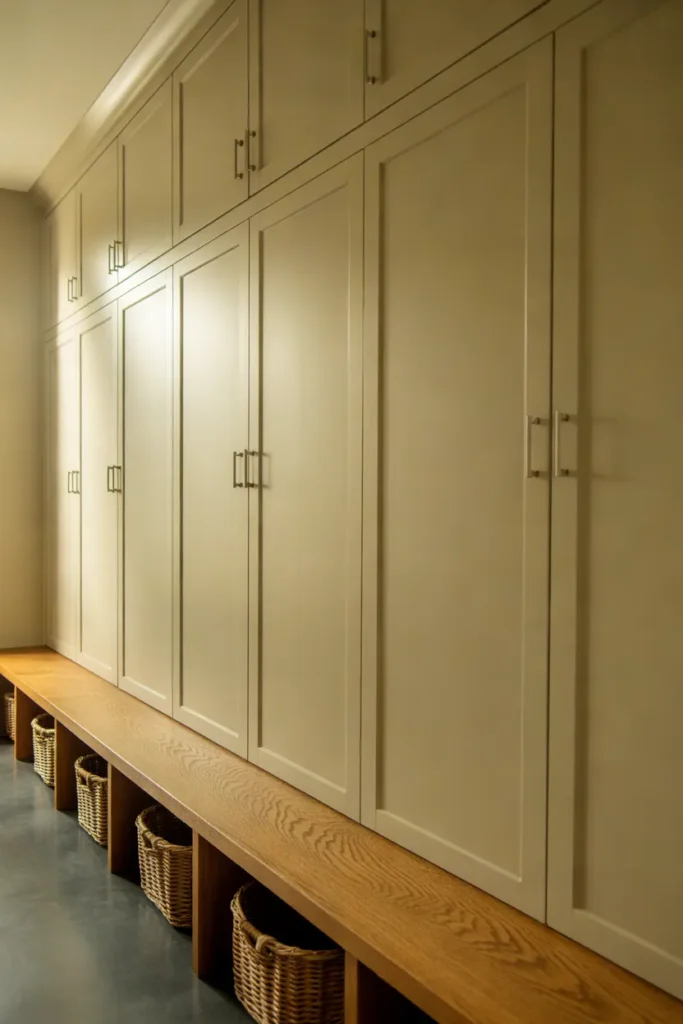
BEFORE: Bags, cleaning supplies, seasonal gear, and miscellaneous items sit openly around the entry. The area feels crowded because every object competes for attention.
AFTER: Tall cabinets hide less attractive belongings while keeping the walkway clear. Adjustable shelves allow the interior to handle everything from small baskets to bulky boots and outdoor equipment.
Choose cabinets with durable finishes that can handle dust and occasional moisture. Keep daily-use belongings between waist and eye level, while placing seasonal items higher up. A small open section near the door can hold keys and frequently used bags, combining concealed storage with quick access.
Pegboard Gear Wall
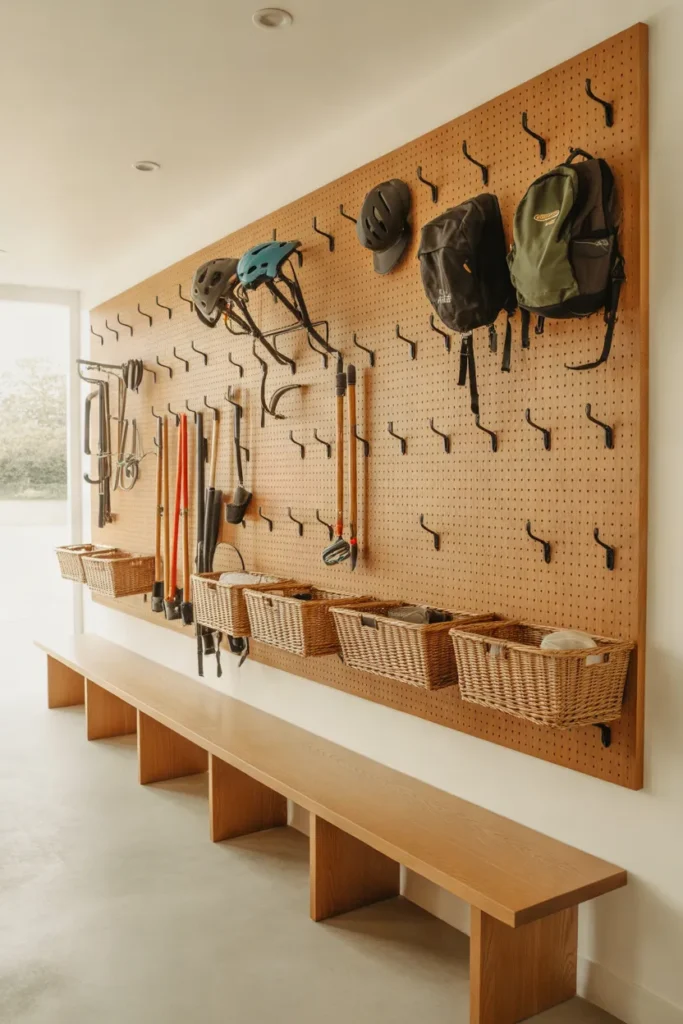
- Map the wall: Mark the section that can hold gear without interfering with doors, vehicles, or walking paths.
- Install the board: Secure the pegboard firmly using appropriate wall anchors or studs.
- Add hooks: Position hooks according to the size and weight of each item.
- Create zones: Keep sports equipment together, outdoor tools together, and everyday bags near the entrance.
- Review the layout: Move hooks whenever your storage needs change.
A pegboard makes frequently used equipment visible and adjustable. I’ve seen this work particularly well for active households because helmets, backpacks, balls, and small tools each get a defined place. Keep heavy equipment on lower hooks and lightweight accessories higher up for safer, easier access.
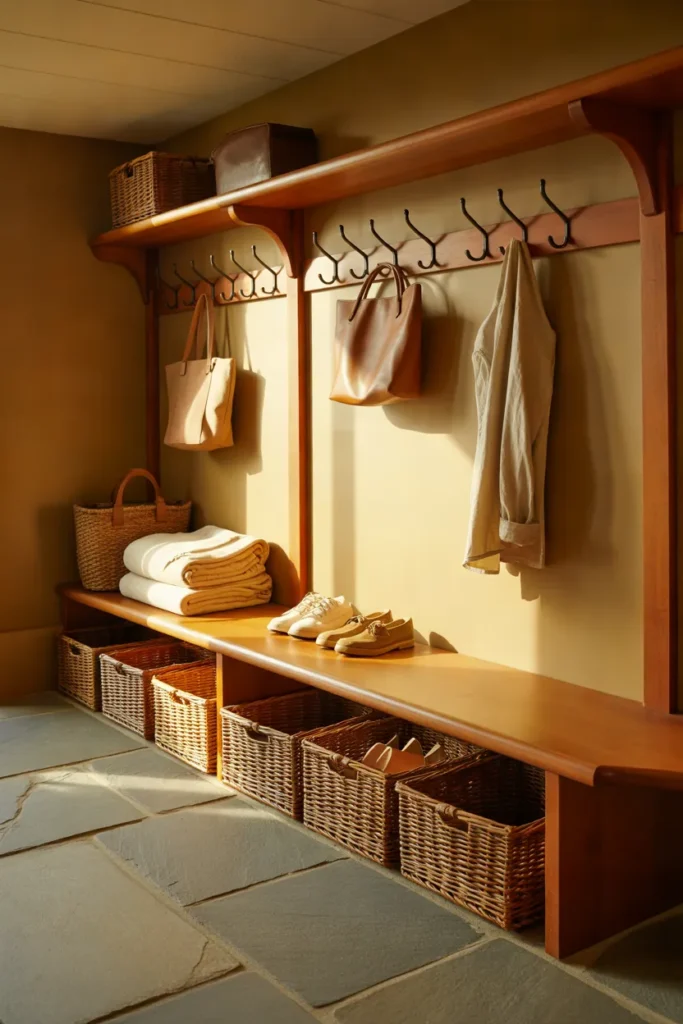
Bench With Baskets
| Storage Need | Option A: Open Baskets | Option B: Closed Drawers |
| Access | Very quick | Requires opening |
| Appearance | Adds woven texture | Creates a streamlined look |
| Flexibility | Easy to rearrange | More fixed |
| Best For | Daily accessories | Smaller personal items |
A bench paired with baskets gives the entry both seating and flexible storage. Use one basket per household member when possible, or divide them by category such as hats, gloves, pet supplies, and outdoor accessories. Leave enough space between baskets so they can slide out without catching on the bench frame.
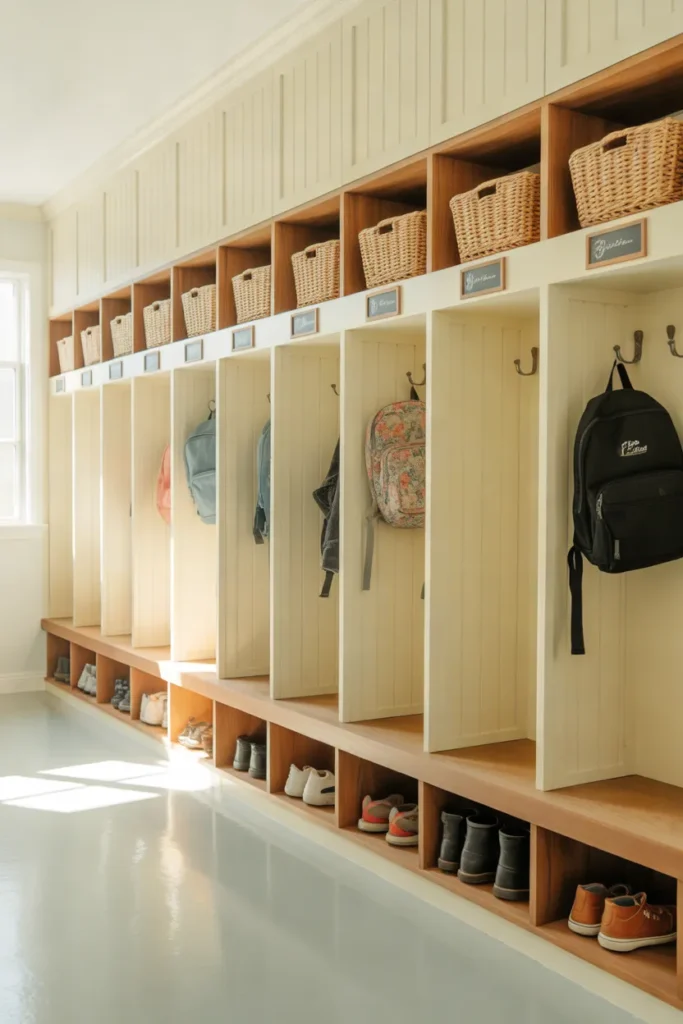
Family Locker Wall
DO:
- Assign each person a dedicated locker or vertical section.
- Add hooks at heights that match each user’s needs.
- Keep a basket or cubby below for shoes and smaller gear.
- Label sections clearly for younger children.
DON’T:
- Make every compartment identical if storage needs differ.
- Place heavy items on high shelves.
- Let unused belongings occupy prime daily-access space.
- Pack lockers so tightly that items become difficult to remove.
Individual storage gives everyone a clear responsibility for their own belongings. I’ve noticed that this approach works especially well in busy households because coats, backpacks, shoes, and outdoor gear have defined homes. Keep the most frequently used items at hand height and reserve upper compartments for seasonal pieces.
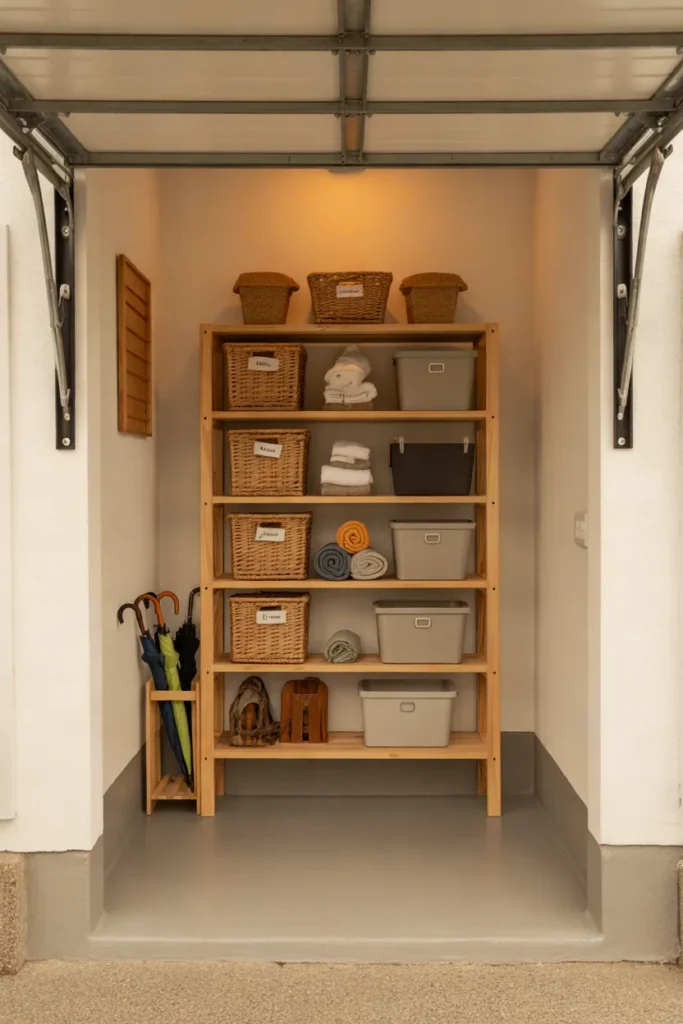
Utility Shelf Station
Cost: Low to moderate | Time: Half a day | Skill Level: Beginner
Best For: Cleaning supplies, reusable bags, umbrellas, and household extras
Works In: Small garage entrances with unused wall space
Difficulty: Easy with basic measuring and mounting tools
A simple utility shelf can absorb many small items that otherwise end up scattered around the garage. Keep frequently used supplies on the middle shelf, heavier containers lower down, and lightweight seasonal items above. Add labeled baskets to prevent loose objects from becoming another clutter pile.
Tall Boot Storage
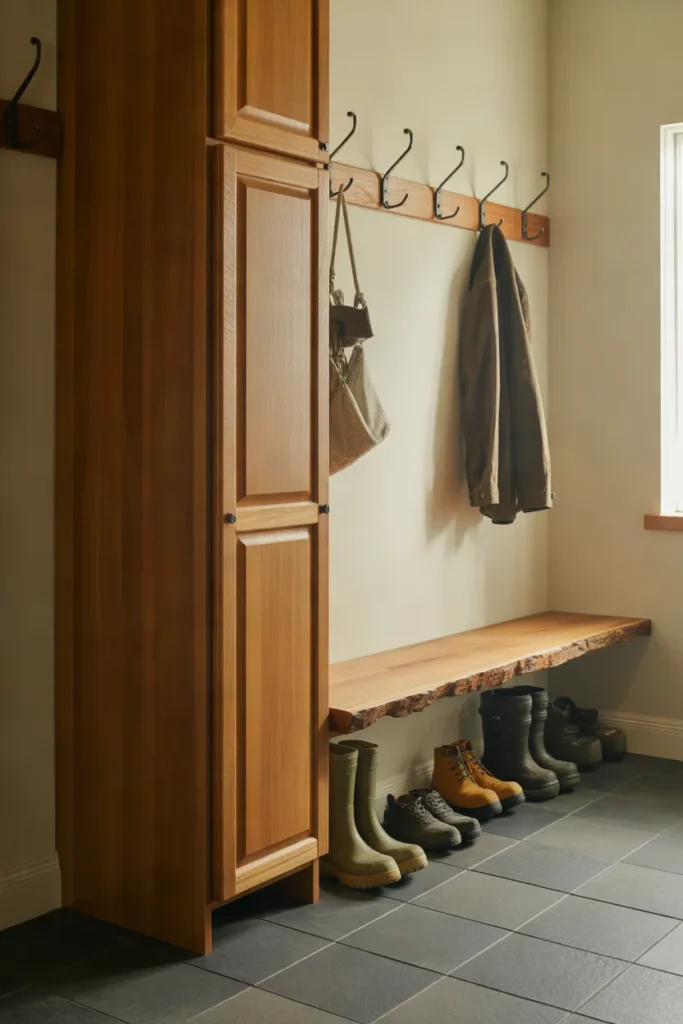
Wet and muddy footwear needs a storage spot that allows it to dry properly. A tall vertical rack keeps boots upright while using very little floor space.
Choose a tray with a raised edge underneath to catch water and dirt. For frequently worn boots, leave enough space between pairs for airflow. Shorter shoes can occupy the lower shelf, while taller compartments handle rain boots and work footwear without crowding the entry.
Pull-Out Shoe Trays
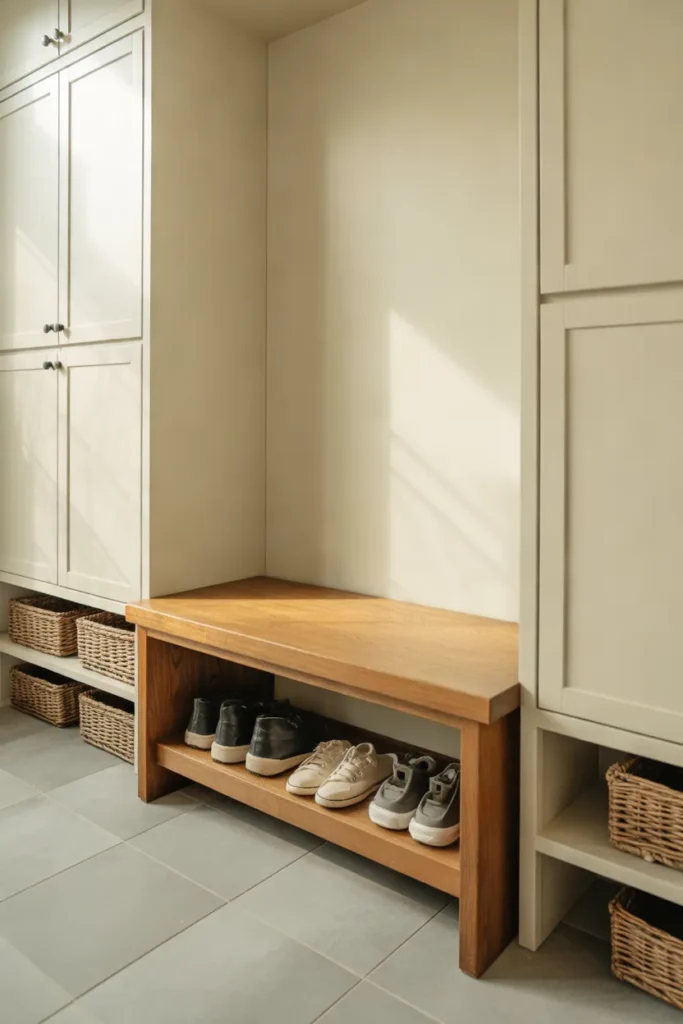
- Keep everyday footwear on the lowest trays for quick access.
- Add removable mats to catch dirt and moisture.
- Separate adult shoes from children’s footwear by tray.
- Leave extra space around bulky boots.
- Choose smooth-gliding hardware rated for repeated daily use.
Pull-out trays make deep cabinets much easier to use because nothing gets buried at the back. This setup is especially useful when several pairs need to stay accessible. A washable liner protects the cabinet base, while simple category labels help everyone return shoes to the correct location.
Wipe-Clean Storage Zone
Quick Tip:
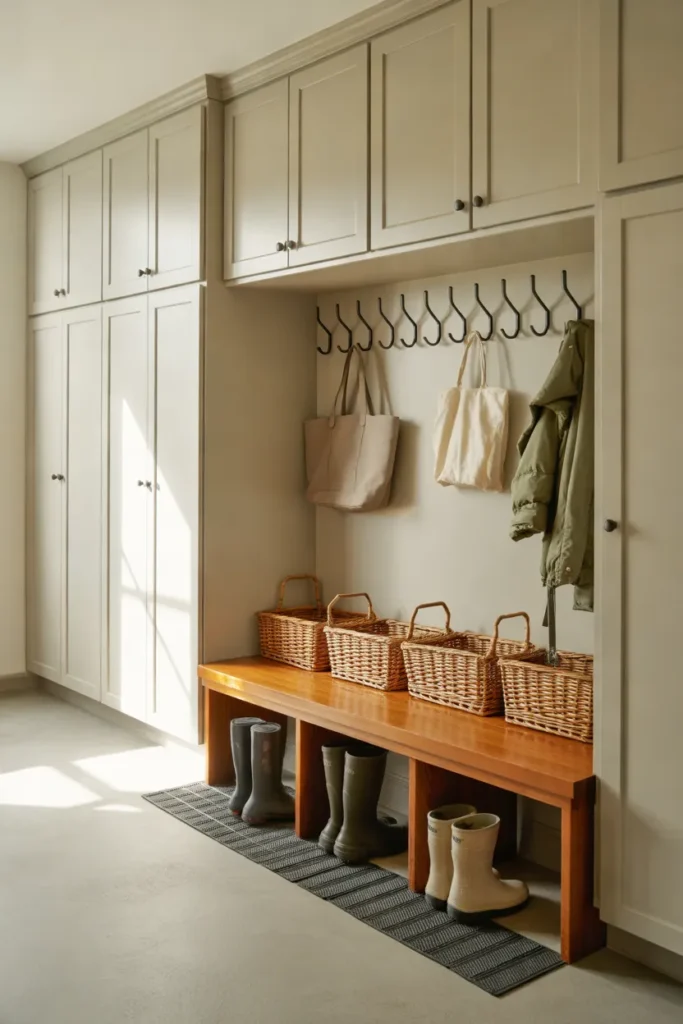
Choose moisture-resistant surfaces near the garage door, especially if your household regularly tracks in rain, mud, or snow. Keep a washable mat beneath the storage area and place a small cleaning brush nearby for quick floor touch-ups.
Durability matters as much as appearance in a busy entry. Use sealed wood, laminate, metal, or other easy-care materials where shoes and bags are handled every day. In my experience, storage that takes seconds to wipe clean is more likely to stay organized because maintenance never feels like a major chore.
Pet Gear Station
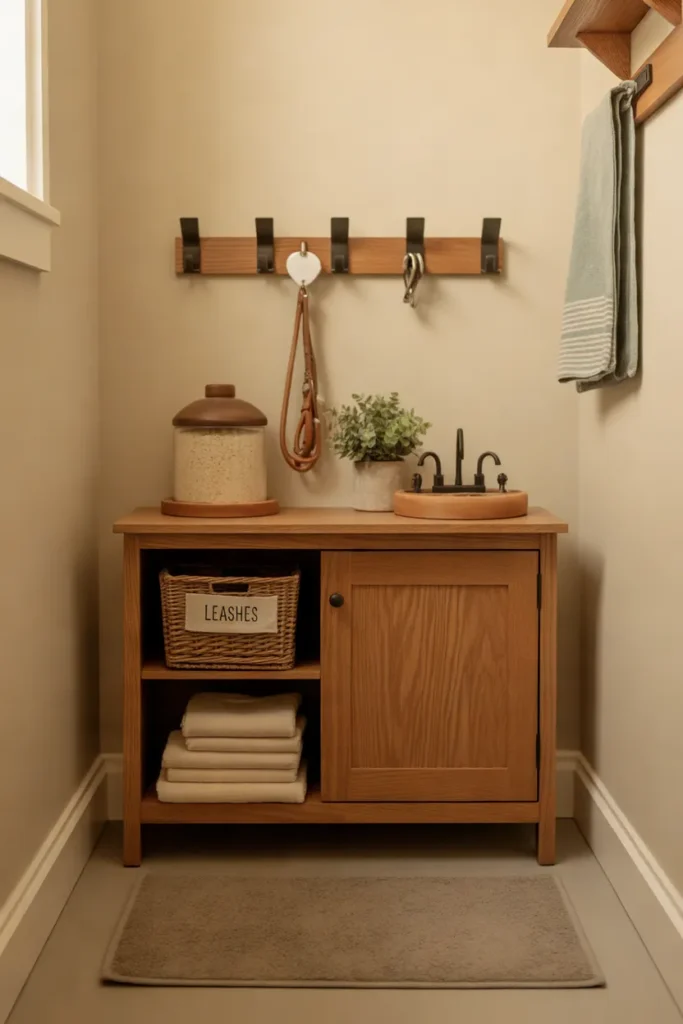
BEFORE: Leashes, towels, toys, and outdoor pet supplies gather around the garage entry. Wet paws can also leave dirt across the floor after walks.
AFTER: A dedicated pet station keeps walking essentials together and places cleaning supplies close to the door. Hooks hold leashes, while baskets contain toys and towels.
Choose a washable mat that extends beyond the pet’s usual standing area. Keep treats and food in sealed containers if they are stored nearby, and place towels within easy reach. This small zone saves time before and after walks while preventing pet supplies from spreading into other storage areas.
Seasonal Gear Rotation
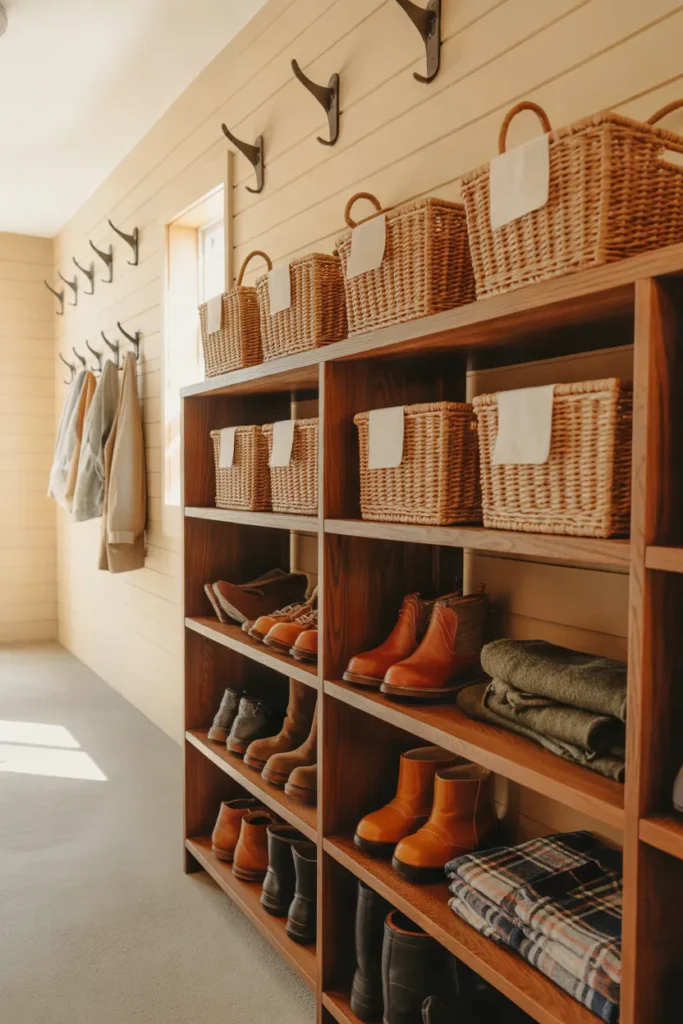
- Sort by season: Gather coats, boots, hats, gloves, beach items, and outdoor accessories that are not currently needed.
- Choose storage: Place off-season belongings in durable labeled bins with secure lids.
- Move accessible items: Keep current-season gear between waist and eye level for easy daily access.
- Store higher: Move less-used containers to upper shelves, while keeping heavier bins within safe lifting height.
Rotating seasonal gear prevents the entry from becoming overloaded. Keep one clearly marked section for current essentials and another for storage. Every few months, swap the contents rather than adding more containers. When you are preparing your home for seasonal gatherings, you can also refresh your dining space with these Thanksgiving table runners for an easy seasonal update.
Built-In Locker Bench
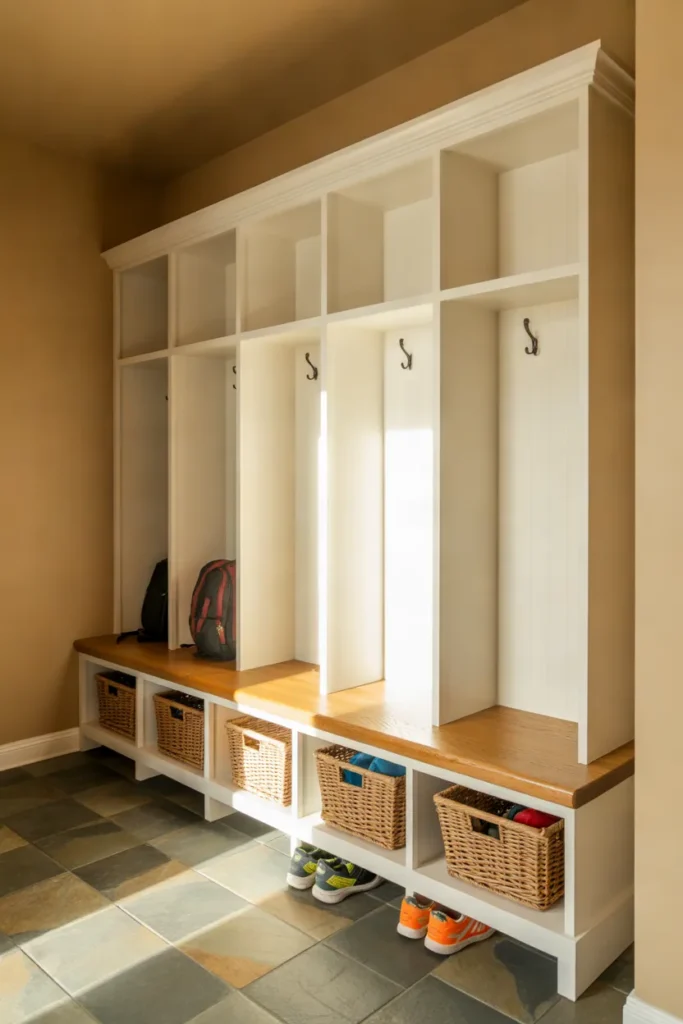
| Comparison Point | Option A: Built-In Bench | Option B: Freestanding Bench |
| Storage | Integrated cubbies and hooks | Usually requires separate pieces |
| Floor Space | Uses the wall efficiently | May need additional storage nearby |
| Appearance | Custom, unified look | More flexible and movable |
| Best For | Long-term organization | Renters or changing layouts |
A built-in bench creates a dedicated landing area for sitting, shoes, bags, and outerwear. Measure carefully before installation, especially around garage doors and vehicles. Include ventilation for enclosed shoe compartments and choose a durable bench surface that can handle daily use without requiring delicate care.
Double-Hook Storage
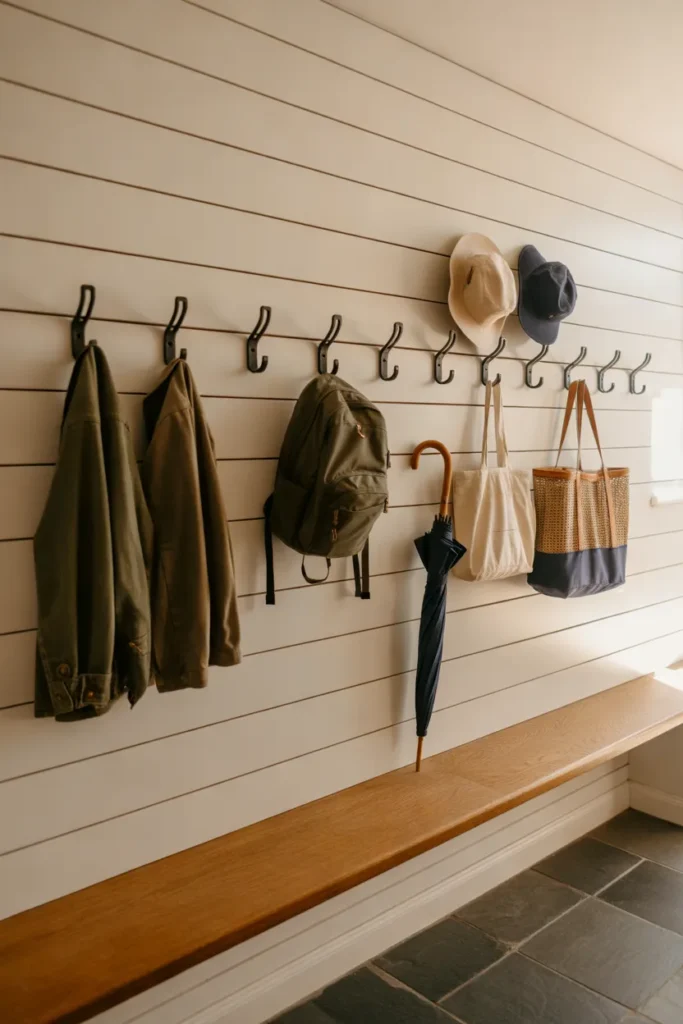
DO:
- Use double hooks to separate jackets from bags.
- Mount hooks at different heights for adults and children.
- Leave enough spacing for bulky winter coats.
- Keep the most-used hooks closest to the entry door.
DON’T:
- Overload hooks beyond their weight rating.
- Mount every hook at the same height in a family space.
- Place hooks where open car doors can hit them.
- Hang damp clothing against finished walls without airflow.
Double hooks increase hanging capacity without requiring a wider wall. This makes them useful for narrow garage entries where every inch matters. Keep heavier coats on sturdy lower hooks and lighter accessories above. A slim shelf across the top can hold baskets for gloves, hats, and other small essentials.
CONCLUSION
A well-planned garage entry can make busy mornings, school days, errands, and outdoor activities much easier to manage. These garage mudroom ideas show how benches, hooks, cabinets, baskets, shelves, and dedicated storage zones can reduce clutter while keeping everyday belongings accessible.
Start with the area causing the most frustration, then choose one practical improvement rather than changing everything at once. I’ve seen how small storage changes can completely shift the way a space feels and functions. Save this post on Pinterest for your next organization project, try an idea that fits your routine, and share it with someone who could use a tidier garage entry.
One Comment