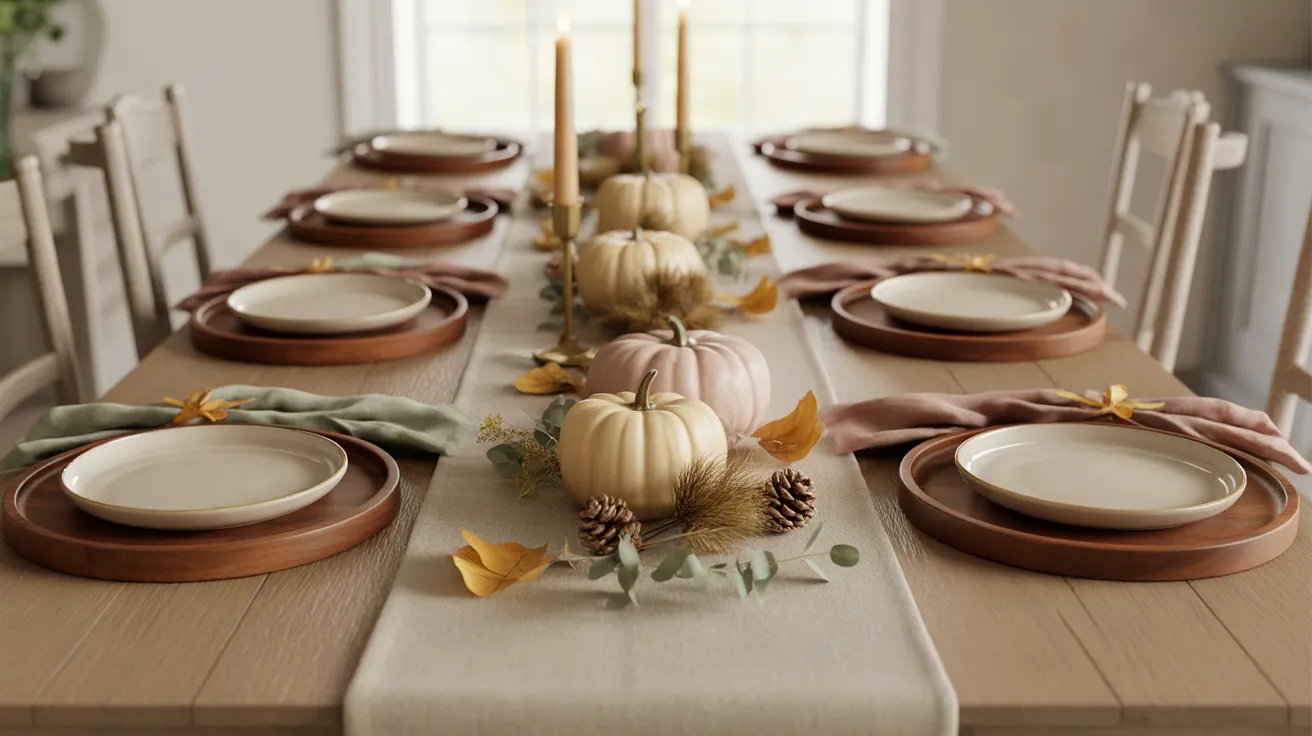
24 Thanksgiving Table Runners for a Stunning Feast
A beautiful Thanksgiving table does not need to feel complicated or expensive. The right thanksgiving table runners can instantly give your dining space a warm seasonal foundation.
Whether your style leans rustic, elegant, cozy, modern, or farmhouse, a runner helps connect your dishes, centerpiece, candles, and fall accents into one finished setting. This collection brings together 24 practical ideas using linen, cotton, plaid, jute, velvet, greenery, pumpkins, and other easy details.
You will find simple combinations you can recreate with pieces you may already have at home, plus ideas for adding texture and color without overcrowding the table. In my experience, keeping the runner simple and building around it with a few thoughtful accents often creates the most inviting result. Use these ideas as inspiration for a Thanksgiving table that feels personal, welcoming, and ready for guests.
Rustic Linen Layers
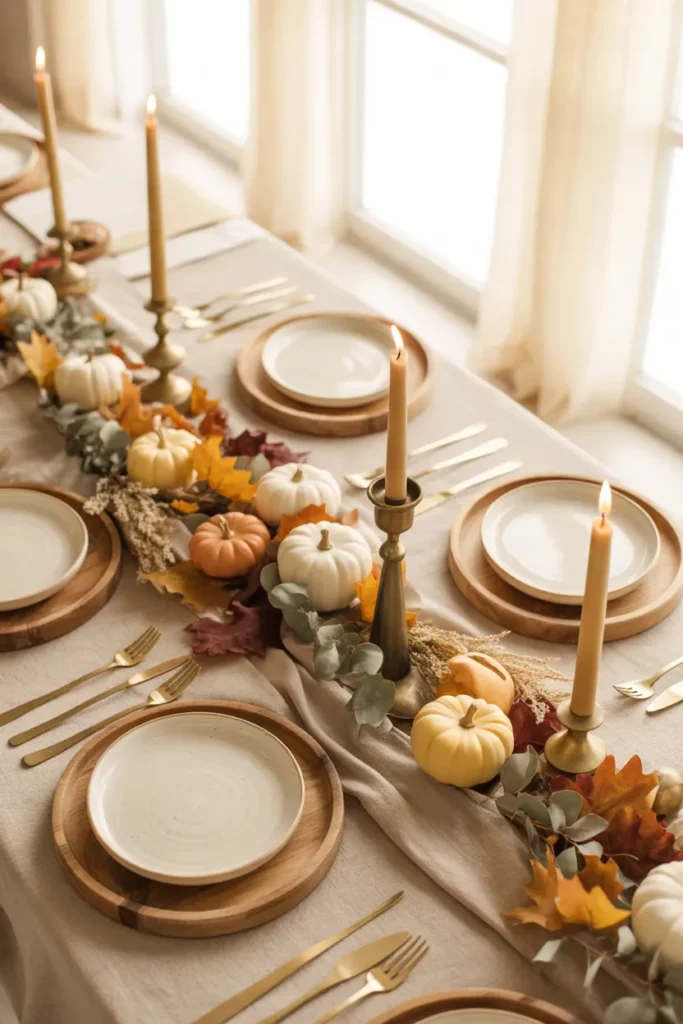
Rustic linen brings a relaxed texture to the Thanksgiving table without making the setting feel overly decorated. Choose an oatmeal, beige, or soft taupe runner and let its slightly rumpled texture add character. Pair it with simple ceramic dishes and natural wood accents for an inviting foundation.
For extra depth, layer small bundles of dried leaves, mini pumpkins, and short candleholders along the center. I’ve noticed that keeping the centerpiece low makes conversation easier while still giving the table plenty of seasonal detail. Leave some linen visible between decorations so the arrangement feels balanced rather than crowded.
Plaid Autumn Runner
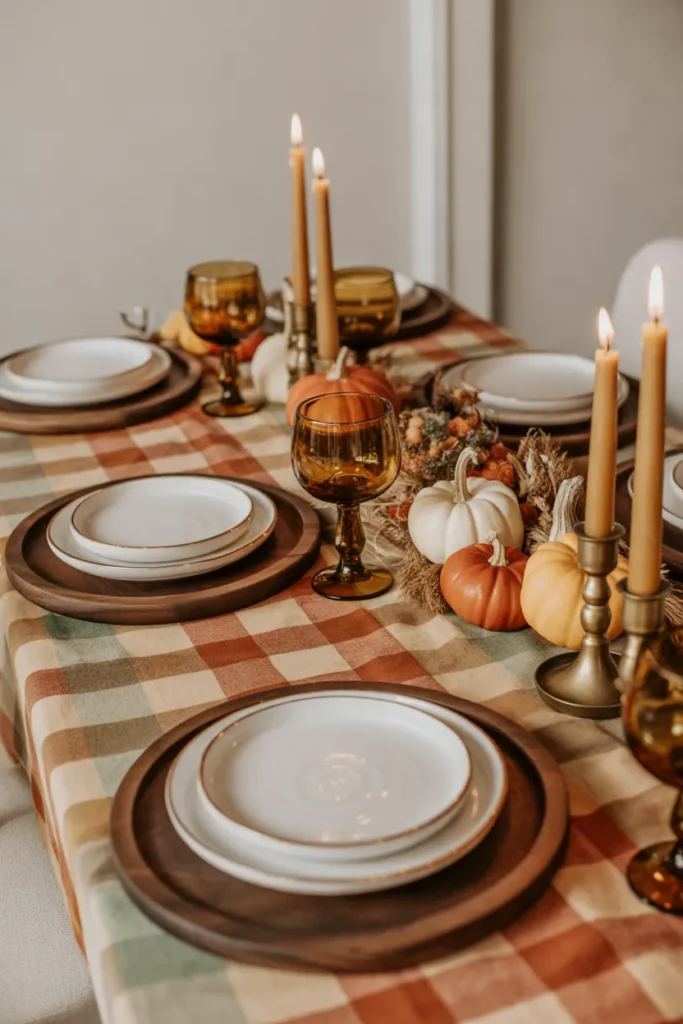
- Choose a plaid pattern with two or three autumn colors rather than several competing shades.
- Keep dinnerware simple so the runner remains the main visual layer.
- Repeat one runner color in napkins, candles, or glassware.
- Add natural wood pieces to soften the pattern.
- Leave the runner visible between each centerpiece element.
A plaid runner instantly establishes an autumn palette while giving the table a relaxed, collected feel. Rust, cream, olive, and brown work especially well together. For a smaller dining table, choose a tighter plaid pattern so the fabric adds interest without visually overwhelming the available surface.
Soft Neutral Center
Quick Tip:
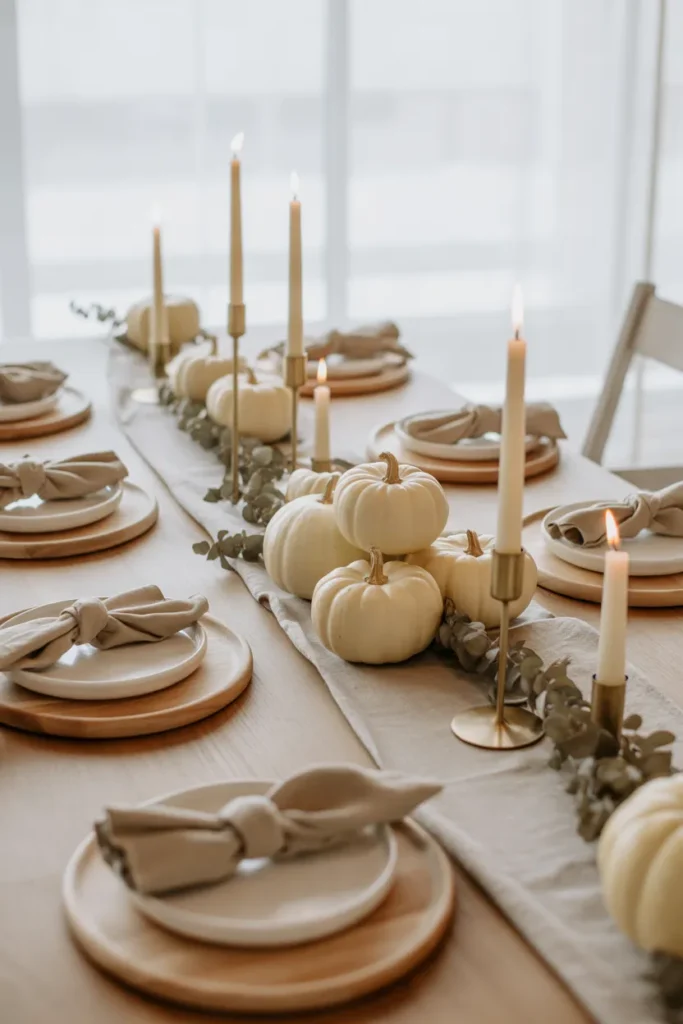
Keep the runner and tableware within the same neutral color family, then introduce contrast through texture. Mix cotton, linen, ceramic, wood, and brass rather than adding several bold colors. This creates depth while keeping the centerpiece calm and refined.
A neutral center works especially well when the room already has strong seasonal colors. Place the runner lengthwise, then arrange white pumpkins and greenery in small clusters instead of one large centerpiece. The open spaces between clusters help the table feel spacious, and guests still have clear room for plates, glasses, and serving dishes.
Candlelit Burlap
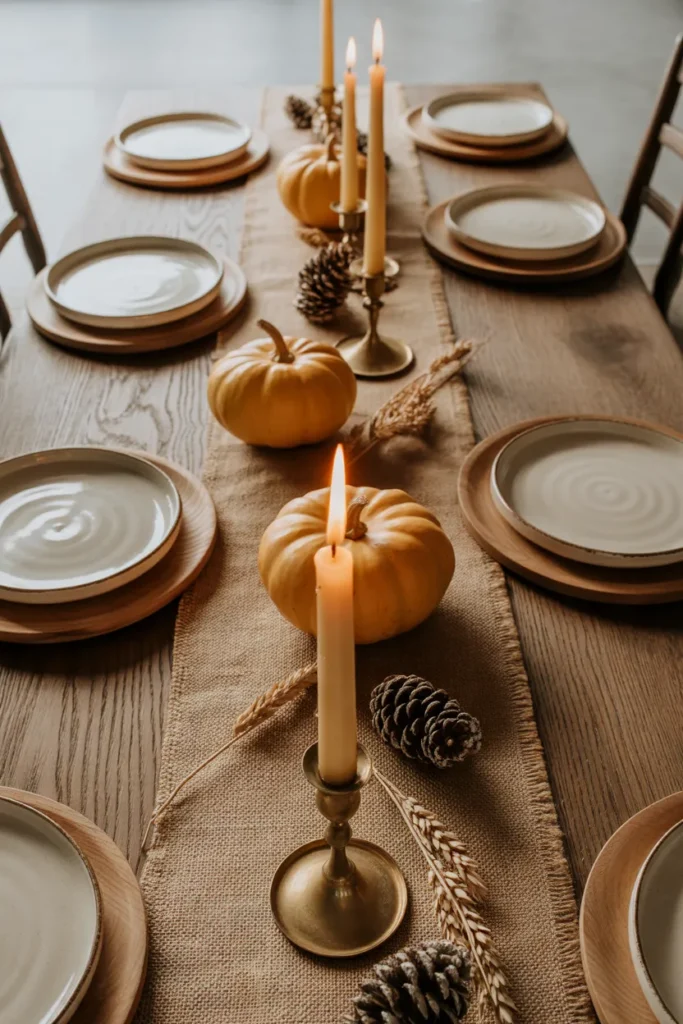
BEFORE: The table feels flat because every surface has the same smooth finish. The centerpiece also lacks height and warmth, leaving the dining area looking unfinished.
AFTER: A burlap runner adds visible texture beneath the centerpiece. Warm candles, wheat, and wooden accents create gentle contrast while keeping the arrangement relaxed and rustic.
For a polished result, choose tightly woven burlap with finished edges rather than a loose craft version. Keep the centerpiece narrow so guests can see across the table. In my experience, warm candlelight softens burlap’s rough texture and makes the entire setting feel more inviting after sunset.
Layered Harvest Stripes
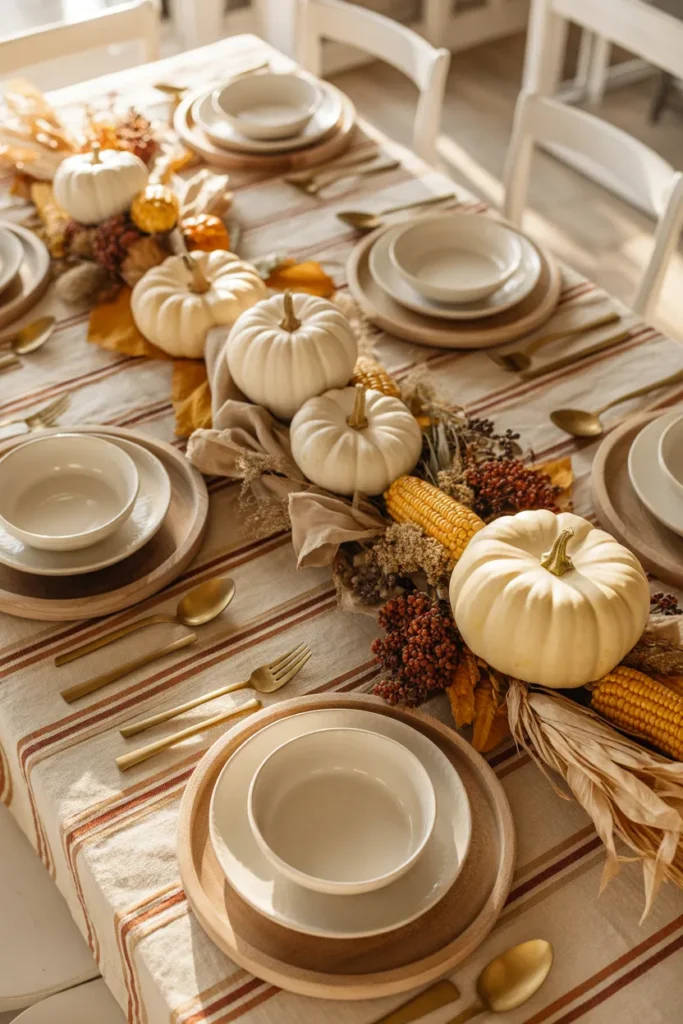
- Start with a plain linen base in cream, beige, or soft tan.
- Place a narrower striped runner directly through the center.
- Repeat one stripe color with napkins or small ceramic pieces.
- Add low pumpkins and dried wheat in loose clusters.
Layering two fabrics gives the table more dimension without requiring a large centerpiece. Keep the bottom layer wider and visually quiet, while the striped fabric provides the stronger pattern. This setup works particularly well for long dining tables because the repeated lines naturally guide the eye from one end to the other.
Velvet Rust Accent
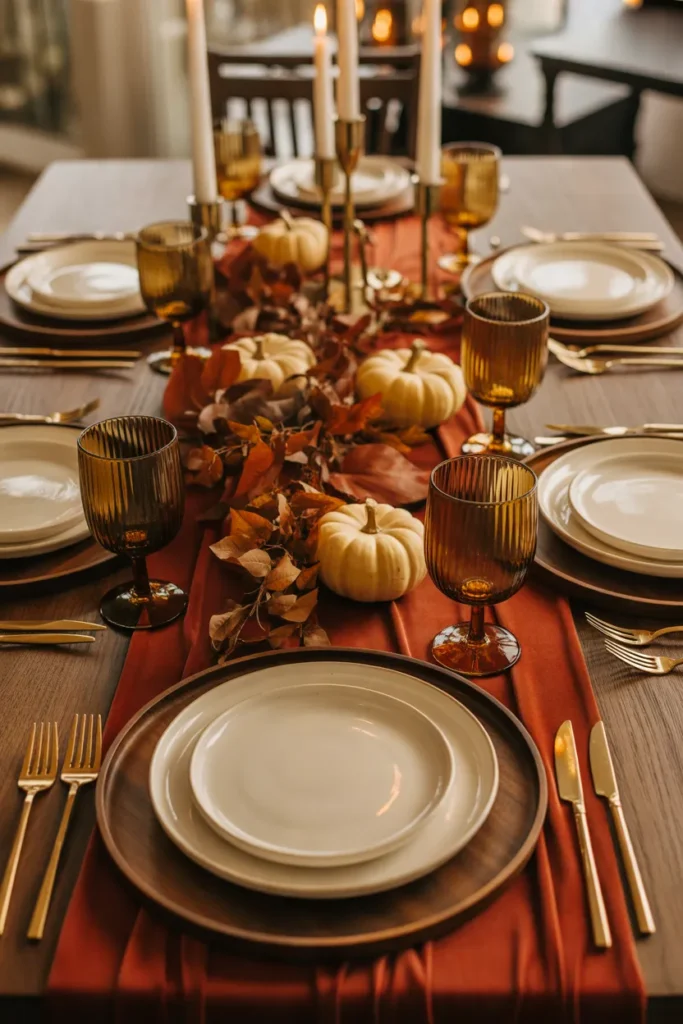
| Detail | Option A | Option B |
| Fabric | Cotton or linen | Velvet |
| Look | Relaxed and natural | Rich and refined |
| Best colors | Cream, tan, olive | Rust, burgundy, copper |
| Styling | Wood and greenery | Brass and glass |
A velvet runner adds richness without requiring elaborate decorations. Rust works especially well because it connects naturally with autumn leaves, pumpkins, and warm wood tones. Keep the surrounding pieces understated so the fabric remains the strongest texture. For evening dinners, pair it with low warm lighting to bring out the depth of the velvet.
Dried Wheat Border
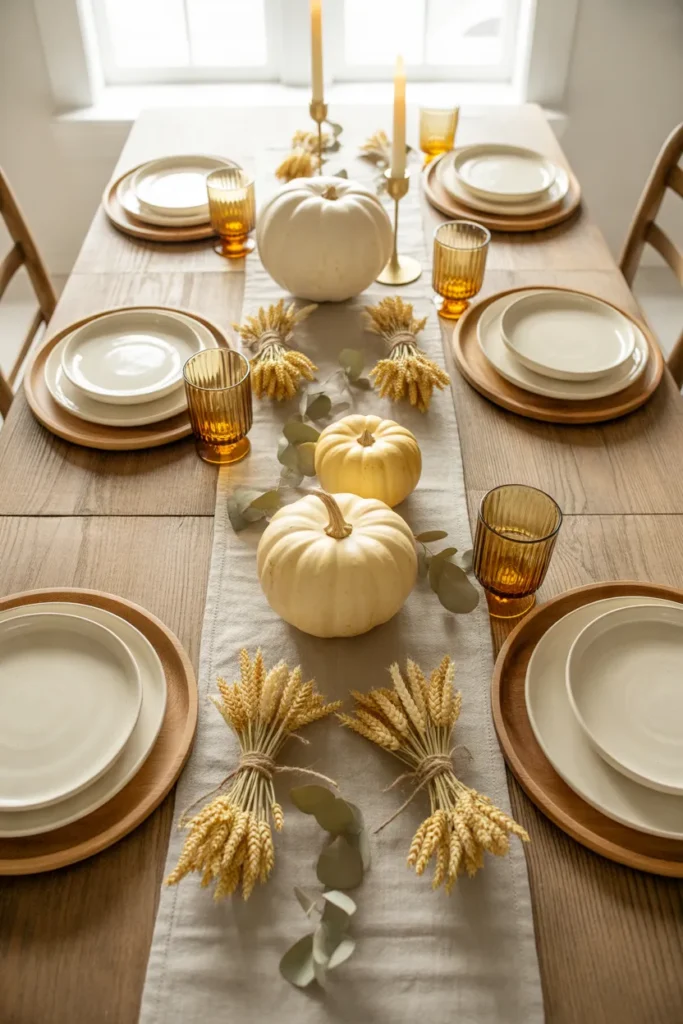
DO:
- Place small wheat bundles at even intervals along the runner.
- Secure loose stems with natural twine.
- Keep the wheat low enough for comfortable conversation.
- Pair golden stems with cream, tan, and brown accents.
DON’T:
- Use oversized bundles that crowd the dining surface.
- Mix too many bright seasonal colors.
- Let dry stems extend into place settings.
- Place wheat directly beside open flames.
A wheat border brings a simple harvest detail to the table without making the centerpiece complicated. Use three or five small bundles depending on table length, then fill the spaces with miniature pumpkins or pinecones. I’ve seen this approach work especially well on wooden tables because the golden stems complement natural grain beautifully.
Ivory Cotton Runner
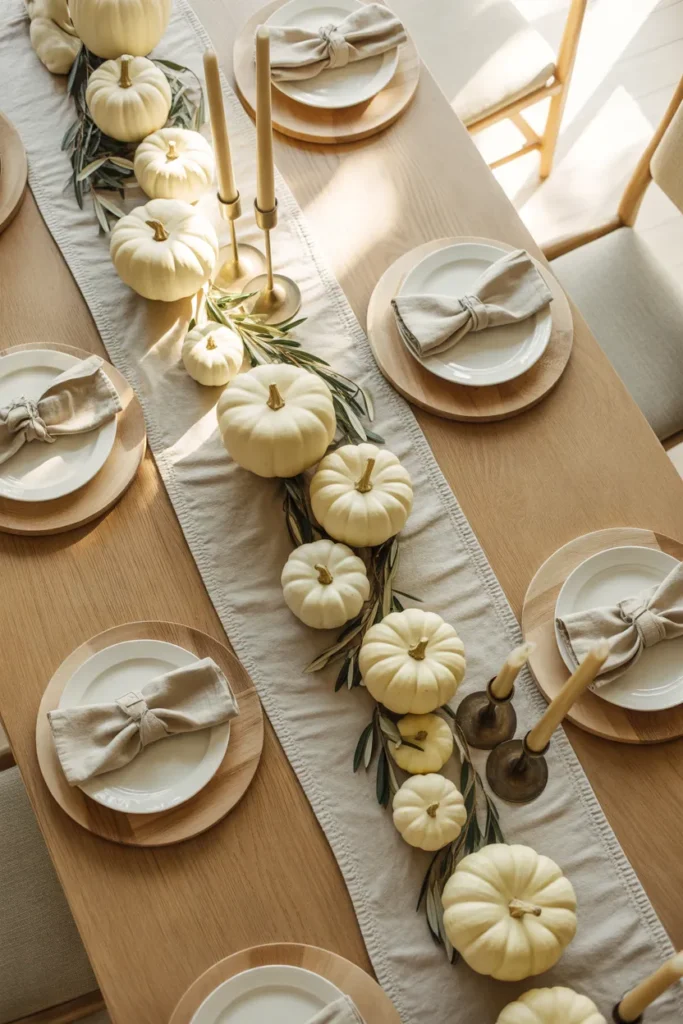
Cost: Low to moderate | Time: 15 minutes | Skill Level: Beginner
Best For: Neutral dining rooms | Works In: Farmhouse and modern settings
Result: Bright, relaxed table with soft seasonal texture
An ivory cotton runner gives colorful Thanksgiving pieces a clean backdrop. Layer it with muted greenery, tan napkins, and a few warm-toned accents for subtle contrast. This approach is especially useful when your dining room already has darker furniture because the light fabric visually opens the center of the table.
Pinecone Center Strip
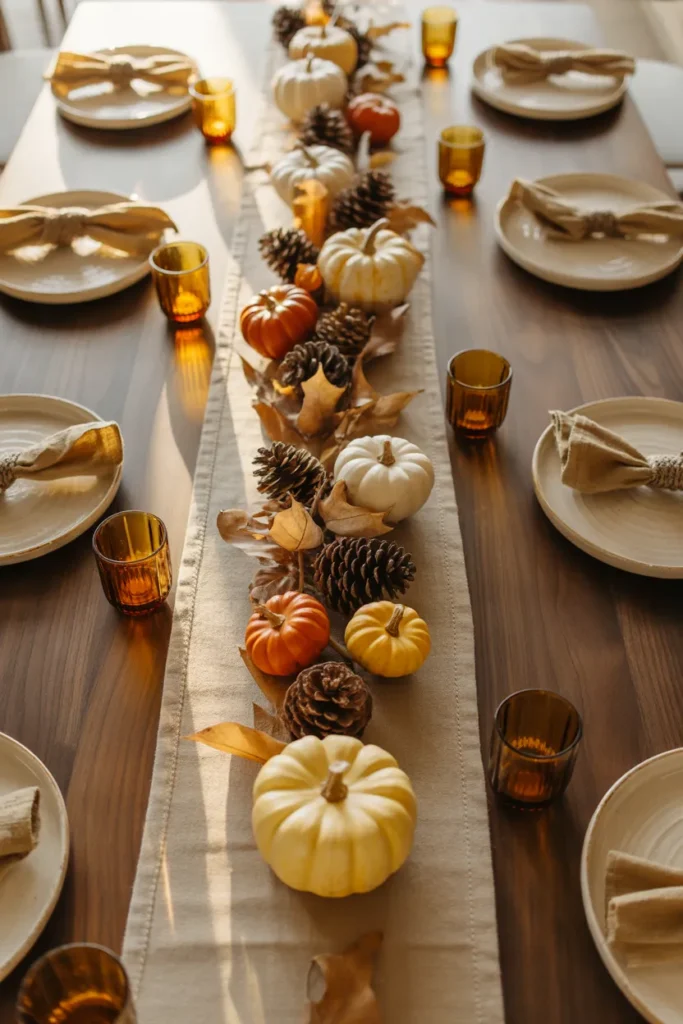
The humble pinecone can anchor a seasonal table with almost no extra styling. Scatter medium and small cones along the runner, leaving small gaps between groups so the arrangement feels intentional rather than random. Add ivory pumpkins and dried leaves for contrast, then keep candles slightly outside the main cluster for safer spacing.
Berry Toned Runner
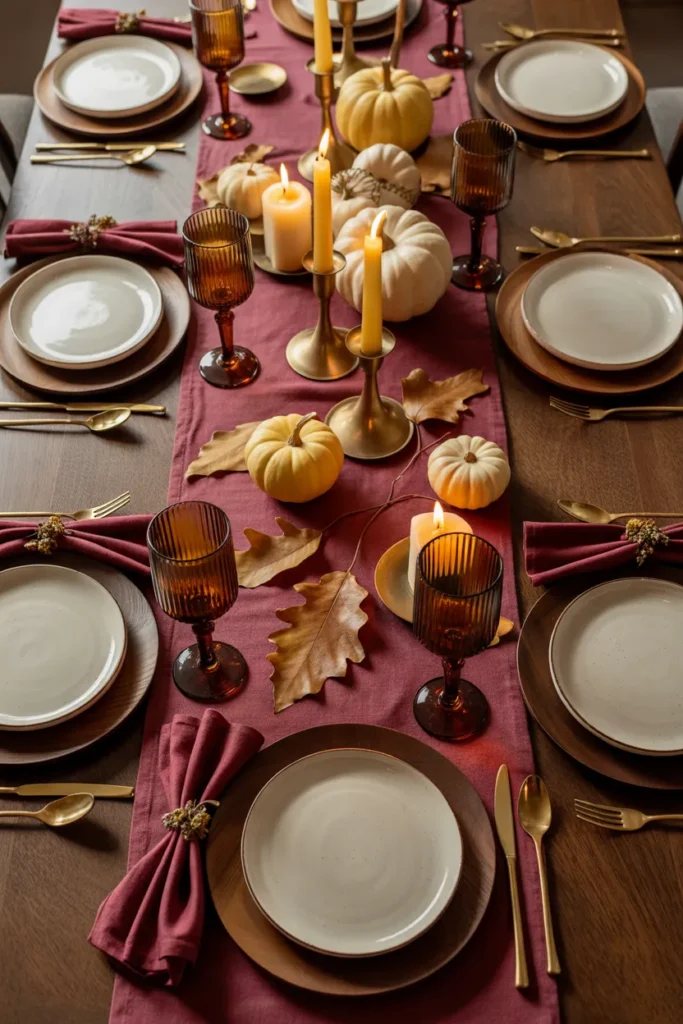
- Choose cranberry, wine, or muted berry tones for a rich autumn base.
- Balance the deep color with cream or ivory dinnerware.
- Repeat the berry shade in napkins or small decorative accents.
- Add warm wood and brass for natural contrast.
- Keep the centerpiece low to prevent the darker palette from feeling heavy.
Deep berry tones bring warmth to a Thanksgiving setting without relying on traditional orange. A cranberry runner works especially well with walnut furniture and cream dishes. For a balanced arrangement, repeat the runner color only twice elsewhere, such as in napkins and flowers, then let the remaining pieces stay neutral.
Layered Plaid Textures
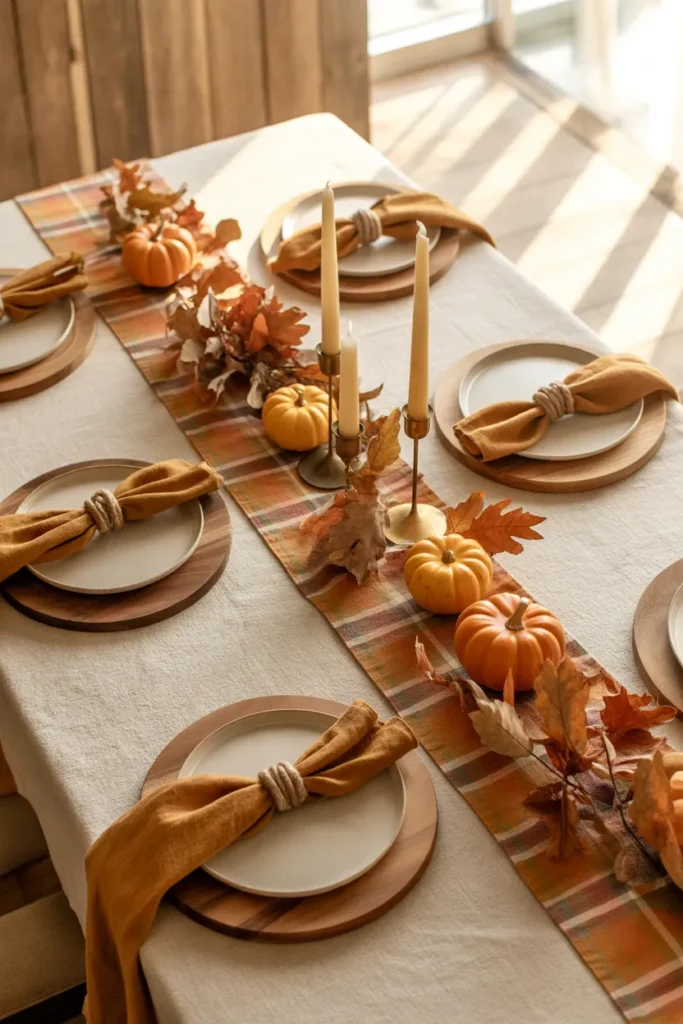
Quick Tip:
Pair one bold plaid with quieter textures instead of adding several competing patterns. A plain linen base, woven napkins, and smooth ceramic dishes give the plaid enough visual space to stand out without making the table feel busy.
For extra dimension, let the bottom fabric extend several inches beyond the narrower top layer. Add small seasonal accents directly along the center line rather than spreading decorations across the full table. This layered approach is useful for hosts who want a fuller setting while still keeping individual place settings easy to arrange.
Greenery Along The Center
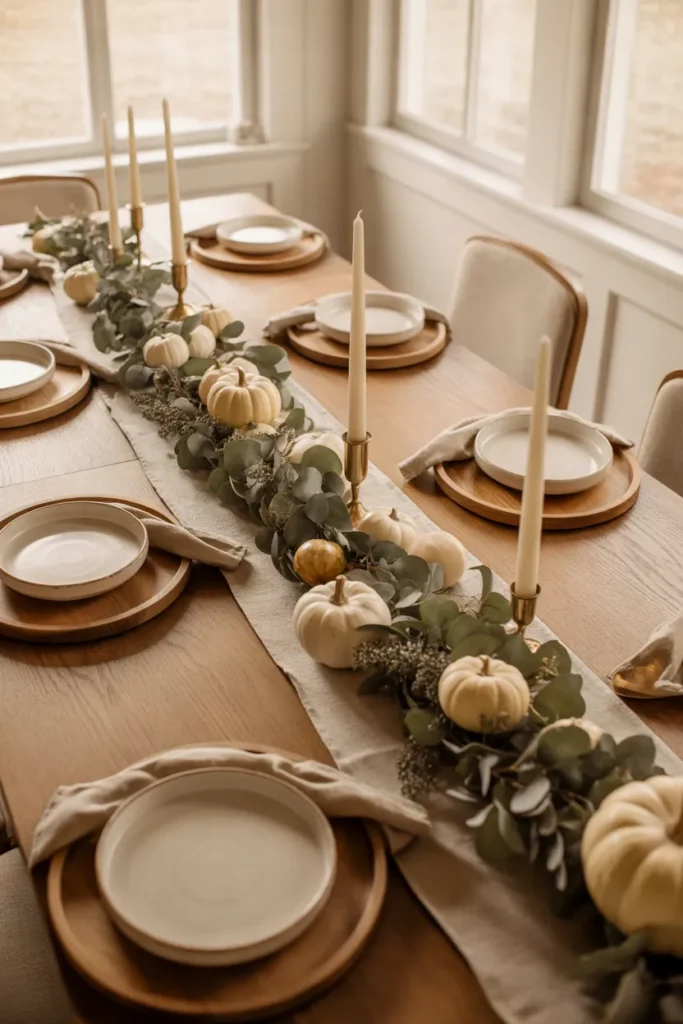
BEFORE: The table has a plain runner but little visual movement through the center. The setting feels functional, yet the large open area between place settings lacks a seasonal focal point.
AFTER: A loose greenery garland creates a natural line across the table. Small cream pumpkins and brass candleholders add warmth without hiding the runner or taking up valuable dining space.
Choose greenery with flexible stems so you can shape the arrangement around serving dishes. Trim longer branches before placing them, and keep the tallest pieces near the center rather than directly in front of guests. This setup suits both casual family dinners and more polished Thanksgiving gatherings where natural texture is the main decorative feature.
Cinnamon Stick Accents
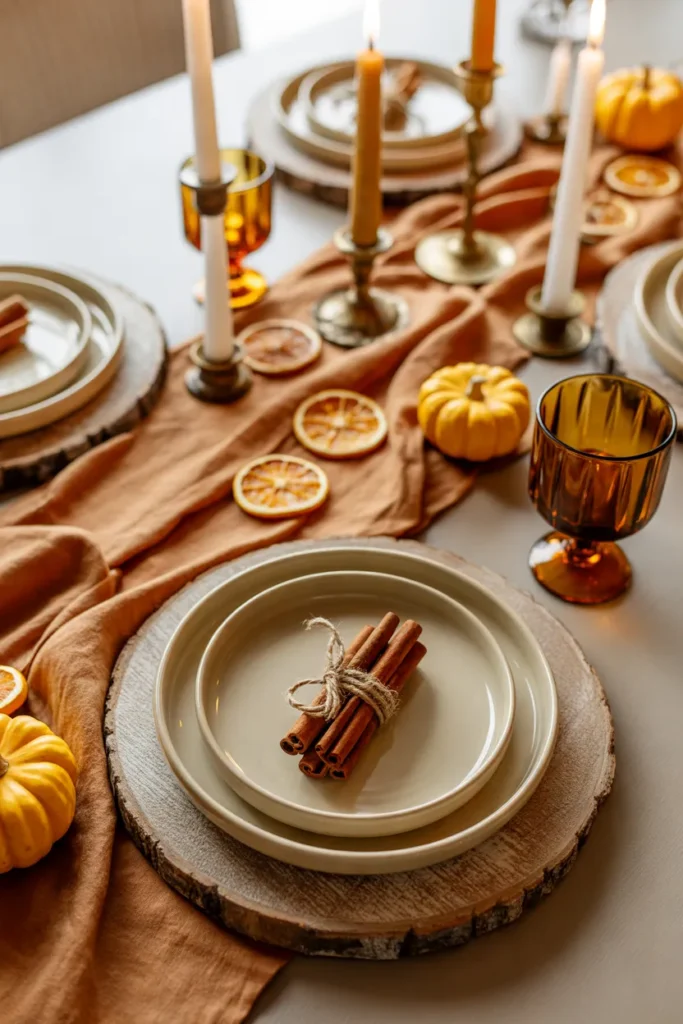
- Place the runner lengthwise down the center of the table.
- Tie small bundles of cinnamon sticks with jute or cotton twine.
- Position the bundles between pumpkins, dried leaves, or candleholders.
- Repeat the bundles at even intervals for a balanced look.
Cinnamon sticks add a subtle seasonal detail while bringing texture to an otherwise simple table. Pair them with dried orange slices for a warm harvest palette. Keep the bundles small so they act as accents rather than becoming the centerpiece. Their natural brown tones also coordinate easily with wood, linen, and ceramic pieces.
Natural Jute Runner
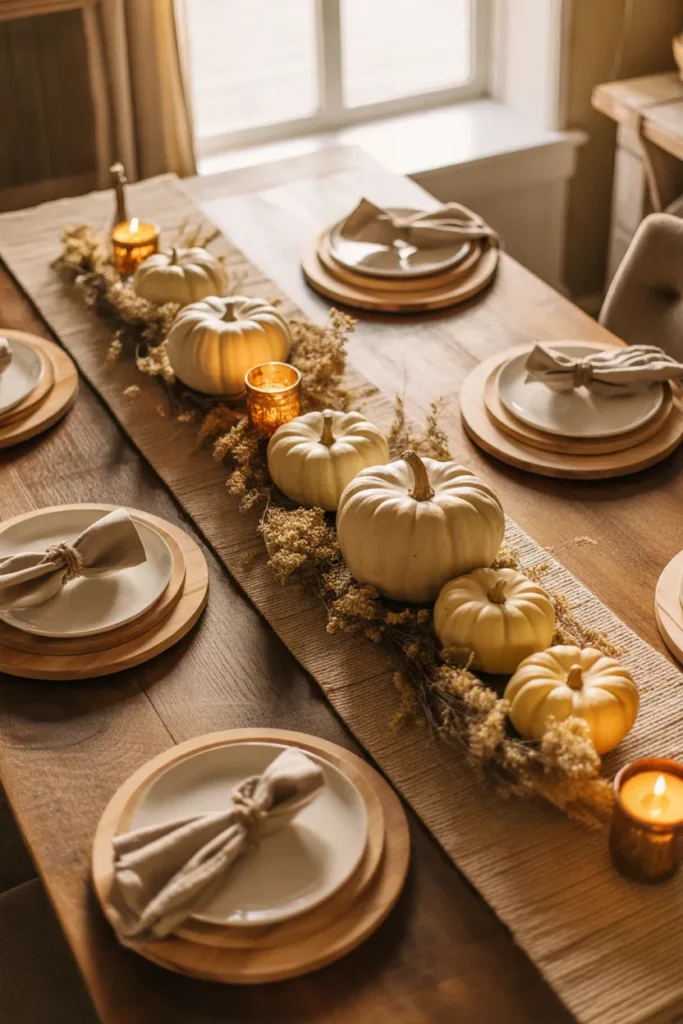
| Feature | Option A | Option B |
| Texture | Smooth linen | Coarse woven jute |
| Style | Soft and refined | Rustic and organic |
| Best pairing | Ceramic and brass | Wood and greenery |
| Maintenance | Easy to fold | Shake and spot clean |
A jute runner works especially well for casual Thanksgiving meals because its woven texture adds interest without requiring many decorations. Keep the palette grounded with cream, tan, brown, and muted green. For a cleaner finish, choose a tightly woven style with straight edges rather than an overly loose weave.
Burgundy Linen Runner
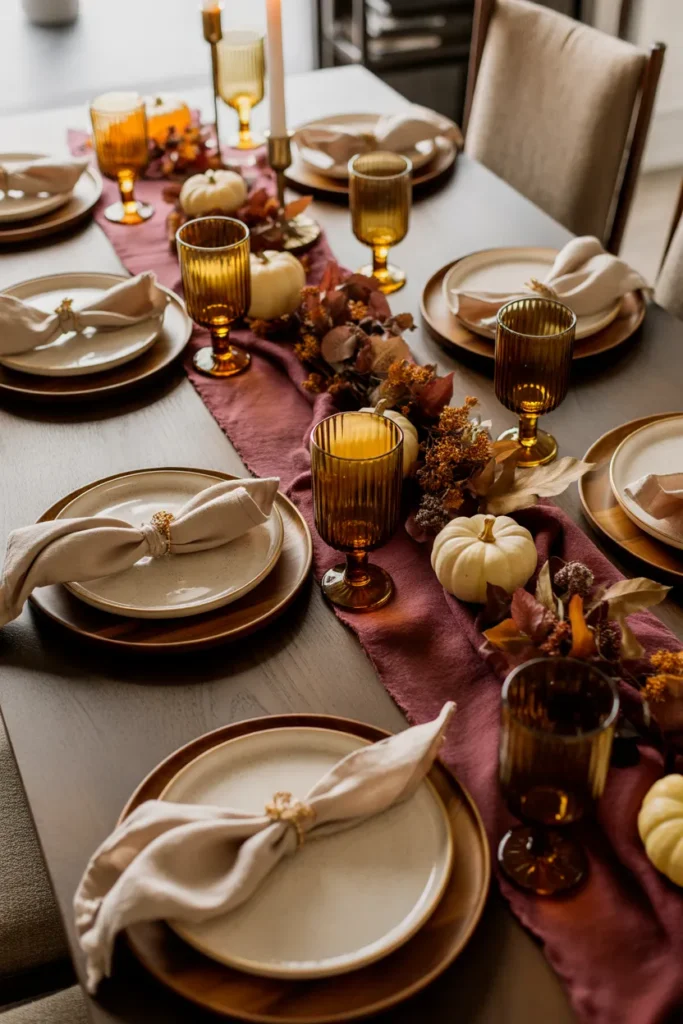
DO:
- Balance burgundy with ivory or cream dinnerware.
- Repeat the deep tone with napkins or small floral accents.
- Add walnut or dark wood for a grounded appearance.
- Use warm brass details to soften the darker palette.
DON’T:
- Pair several deep colors without a light neutral.
- Cover the runner with oversized decorations.
- Mix bright red with muted burgundy.
- Place tall arrangements directly across from diners.
A burgundy linen runner gives the Thanksgiving table a richer autumn character while remaining easy to style. Cream dishes keep the setting bright, while walnut and brass introduce warmth. I’ve noticed that darker runners look especially polished under warm evening lighting, making this combination a practical choice for dinner gatherings.
Woven Neutral Texture
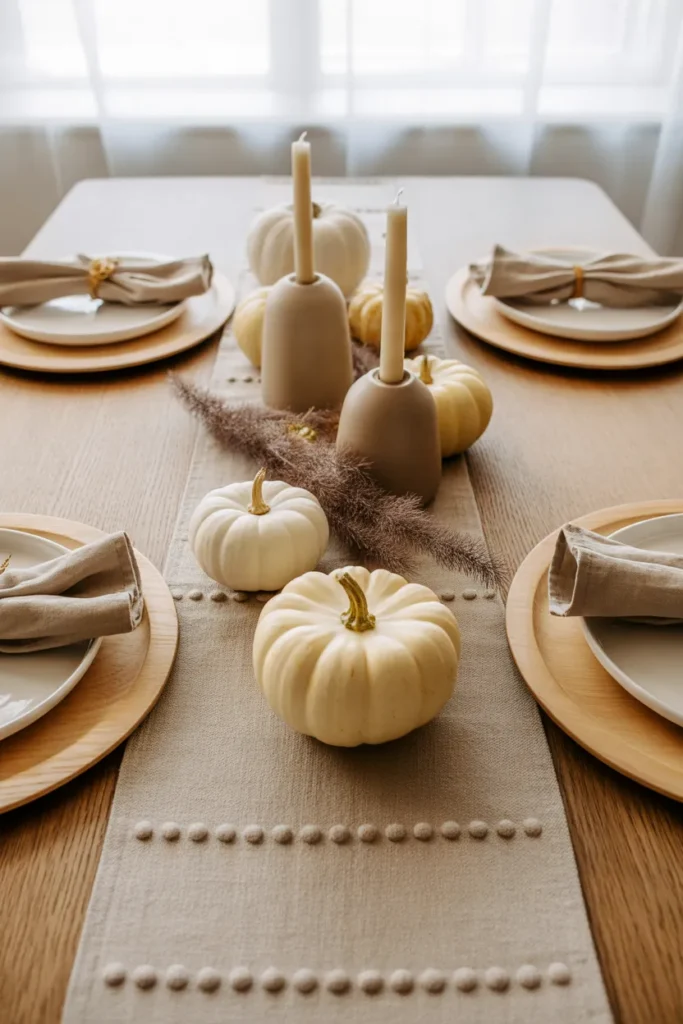
Cost: Low to moderate | Time: 10 minutes | Skill Level: Beginner
Best For: Neutral interiors | Works In: Farmhouse, rustic, modern
Result: Textured table with a calm seasonal foundation
A woven neutral runner adds depth without introducing a strong pattern. Choose beige, oatmeal, or soft taupe, then layer in creamy ceramics and natural wood. The subtle texture keeps the table visually interesting while leaving plenty of room for seasonal accents. This approach also makes changing decorations easier from year to year.
Classic Cotton Stripe
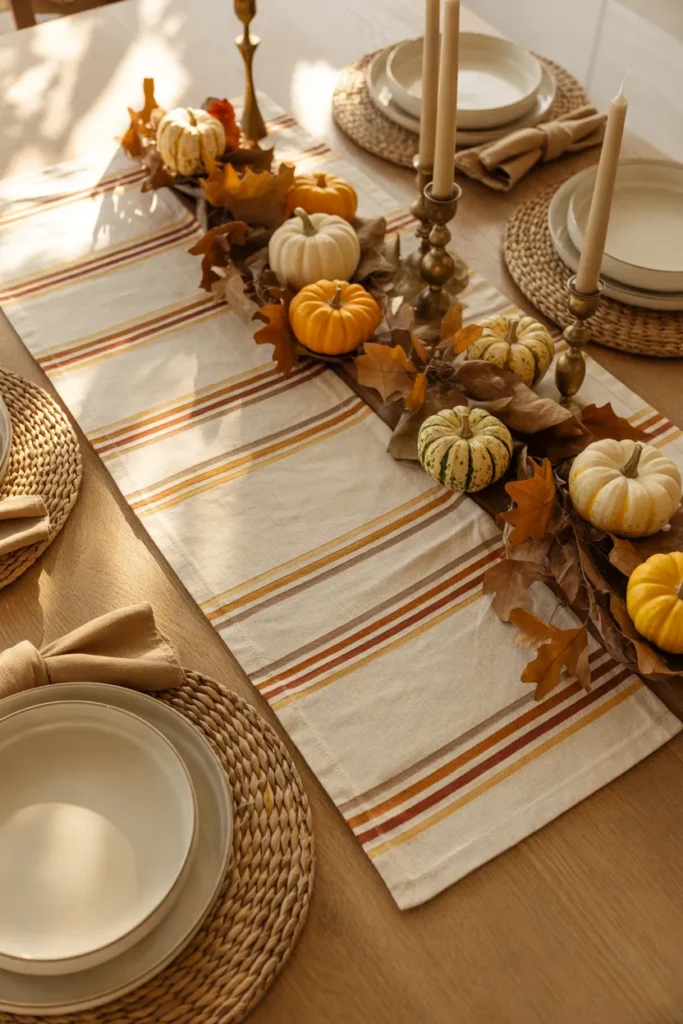
Classic stripes bring structure to a Thanksgiving setting without making the pattern feel heavy. Look for narrow lines in rust, brown, olive, or muted gold against a cream base. Pair the fabric with solid-colored napkins and simple dishes so the stripes provide definition without competing with the centerpiece.
For longer tables, align the stripes carefully down the center so the pattern creates a clean visual path. I’ve noticed that narrow stripes tend to photograph well from above, which makes this style especially useful for Pinterest-inspired table settings. Add small seasonal details in matching colors to create a connected look.
Layered Fall Fabrics
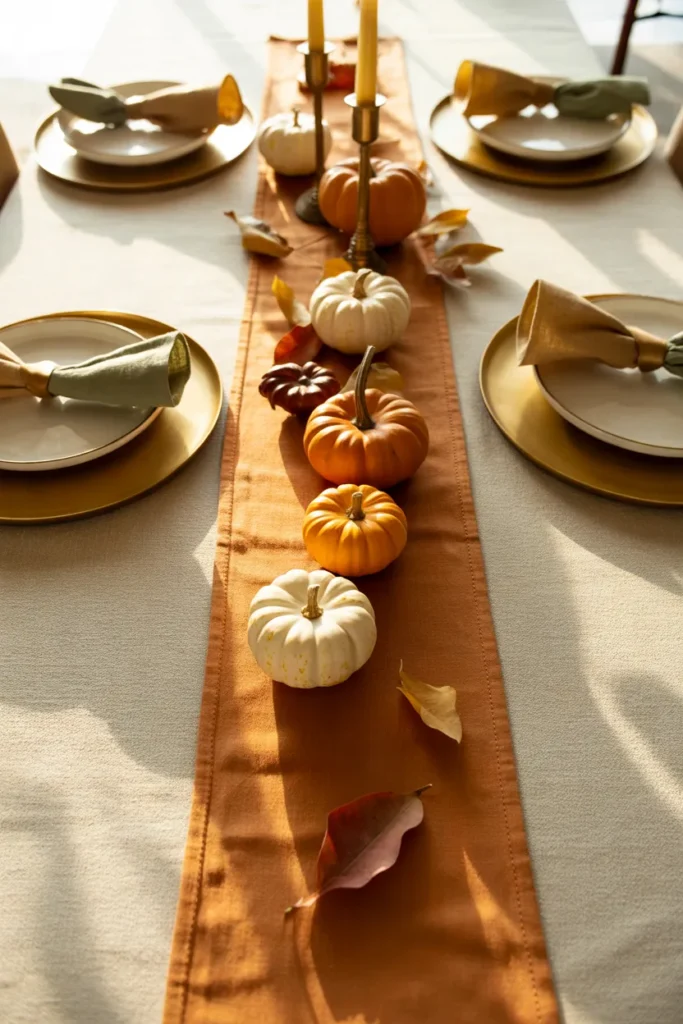
- Start with a wide neutral table runner or narrow tablecloth as the bottom layer.
- Add a shorter runner in rust, olive, plaid, or muted gold.
- Center the upper layer carefully so both sides show evenly.
- Finish with small pumpkins, leaves, or candles along the center.
Layering fabrics creates a fuller table without requiring elaborate decorations. The neutral bottom layer keeps the arrangement grounded, while the smaller seasonal runner provides color and pattern. This technique works particularly well when you already own basic linens and want to create a fresh Thanksgiving look using pieces you can reuse throughout autumn.
Olive Branch Runner
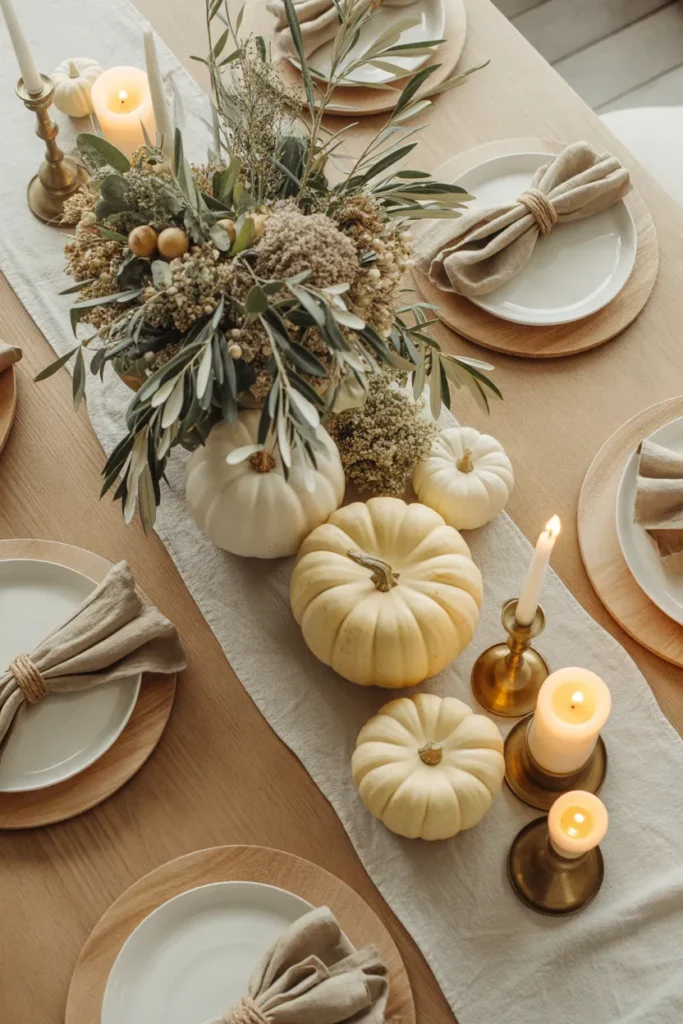
- Lay flexible olive branches in a loose line rather than a perfectly straight garland.
- Trim stems so branches stay below comfortable eye level.
- Pair muted green foliage with cream, beige, and warm wood tones.
- Add small pumpkins between branches for seasonal color.
An olive branch arrangement brings fresh-looking greenery to a Thanksgiving table without relying on bright fall colors. Place the branches along the runner and allow a few leaves to extend naturally toward the edges. For a more finished setting, repeat the muted green in napkins or small ceramic accents.
Pumpkin Trail
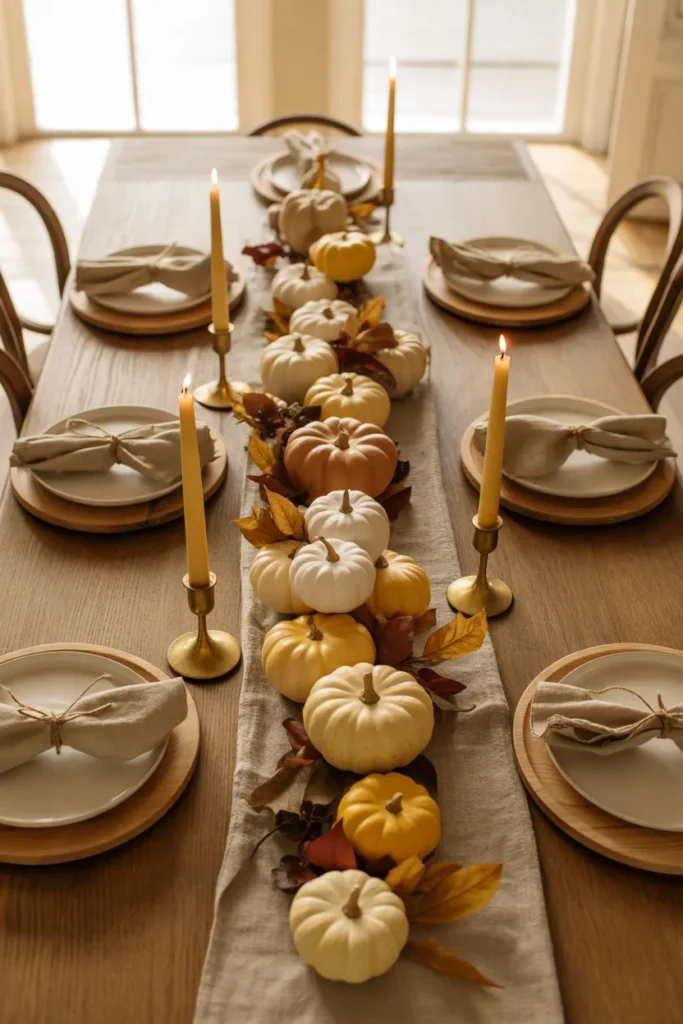
Quick Tip:
Mix three pumpkin sizes instead of placing identical pieces in a straight row. Keep the smallest pumpkins near the edges and slightly larger ones toward the center. Leave visible gaps between groups so the runner remains part of the design.
A pumpkin trail gives the table an unmistakable Thanksgiving feel while staying simple to arrange. Use cream pumpkins for a softer palette or add muted orange varieties for stronger seasonal color. I’ve seen mixed sizes create more natural movement than evenly spaced decorations, especially on long dining tables.
Black And Cream Contrast
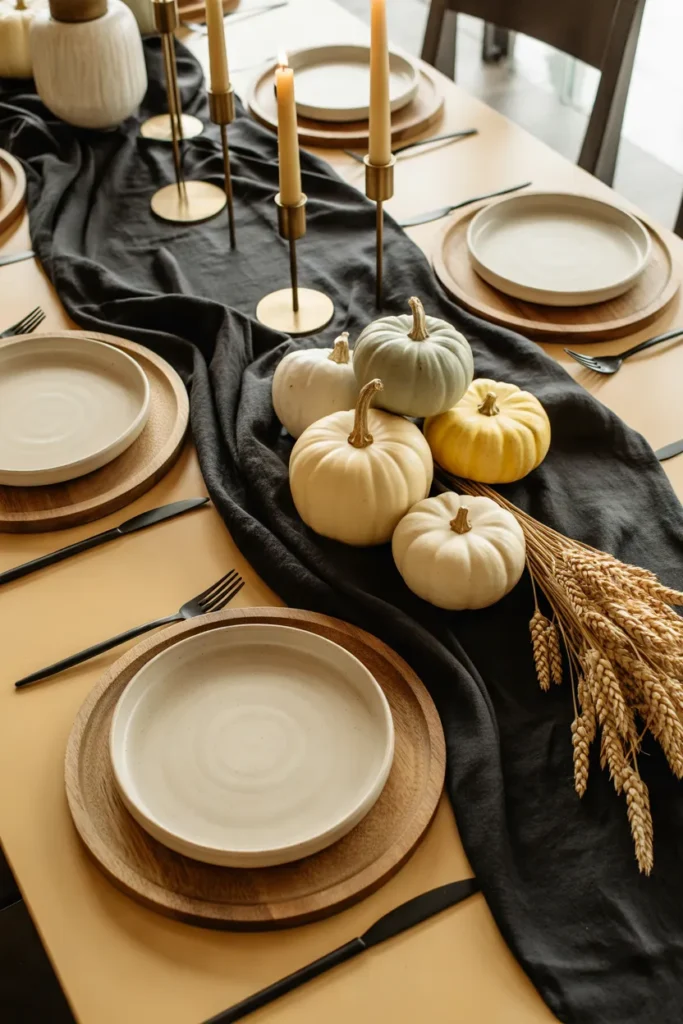
BEFORE: A neutral table can sometimes look washed out when every element uses similar beige and cream shades. The centerpiece may have seasonal details but lacks a strong visual anchor.
AFTER: A black runner creates a defined center line and gives lighter dishes room to stand out. Cream pumpkins, natural wood, and brass details soften the contrast while keeping the table sophisticated.
Keep the black fabric matte rather than glossy for a softer finish. Use warm neutrals around it so the setting does not feel too formal. This combination works particularly well in modern homes where clean lines and restrained colors already shape the dining area.
Harvest Leaf Garland
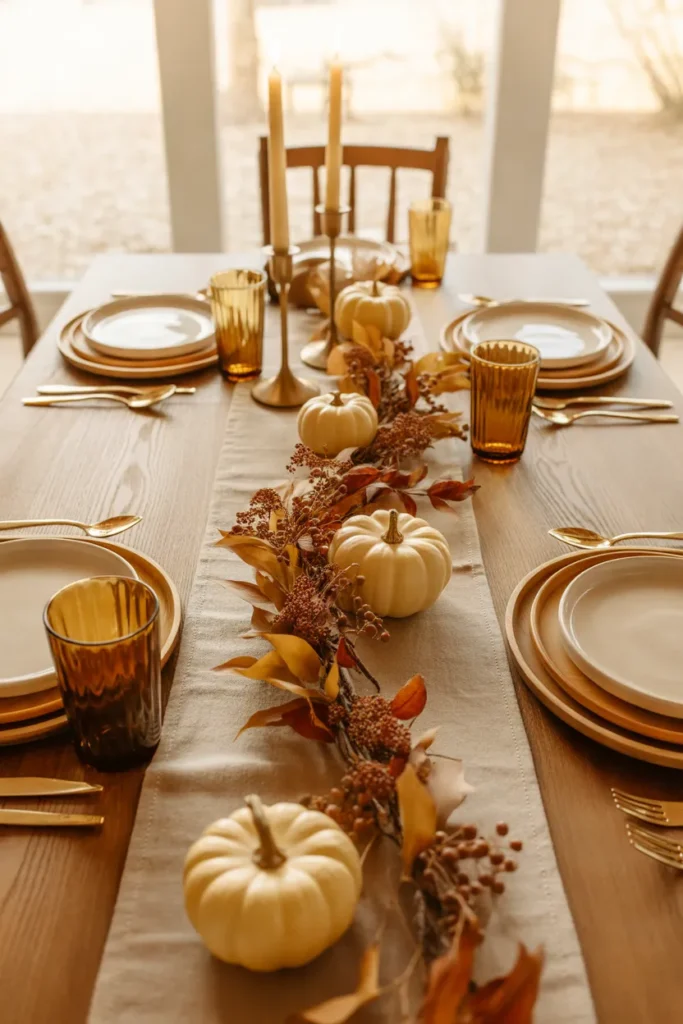
- Lay the runner straight down the center of the table.
- Arrange preserved leaves in a loose garland with stems overlapping slightly.
- Tuck small pumpkins and dried berries into open spaces.
- Add short candleholders between the foliage for gentle evening light.
A leaf garland creates a seasonal centerpiece while keeping the table visually connected from end to end. Choose leaves in rust, ochre, brown, and muted green for a natural palette. Keep the foliage low, especially if guests will sit across from one another, so the arrangement adds detail without blocking conversation.
Cranberry Red Stripe
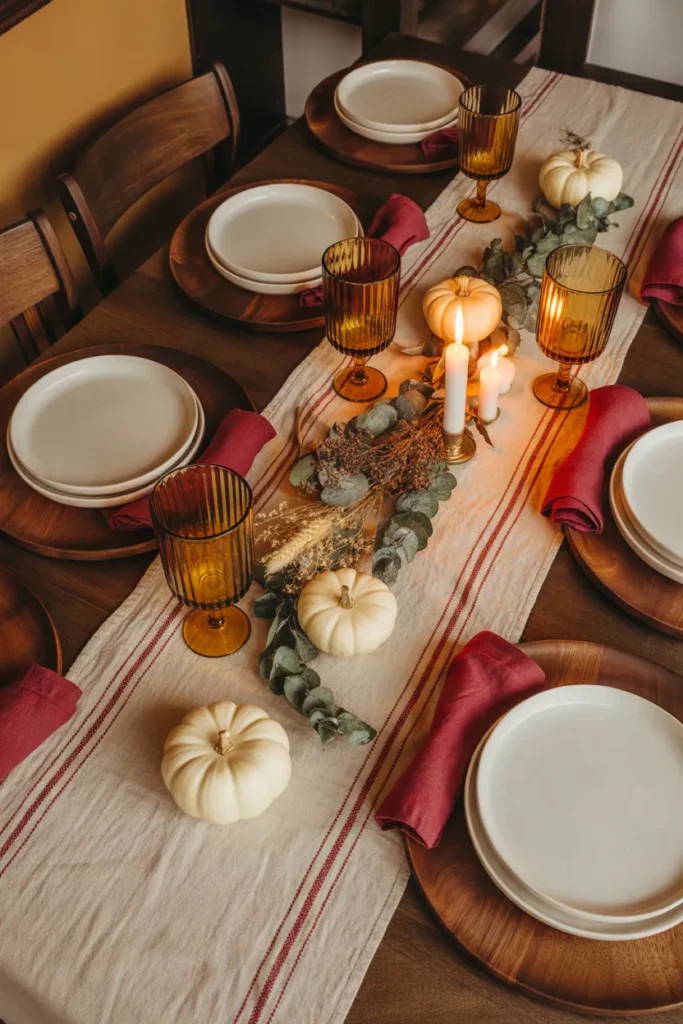
| Detail | Option A | Option B |
| Base color | Cream | Natural beige |
| Stripe color | Cranberry red | Burgundy |
| Dinnerware | White ceramic | Ivory stoneware |
| Accent material | Brass | Dark wood |
A cranberry stripe adds a traditional holiday note while keeping the overall table approachable. Repeat the red sparingly through napkins, berries, or small floral details. Too many matching accents can make the setting feel overly coordinated, so allow cream, wood, and greenery to fill most of the visual space.
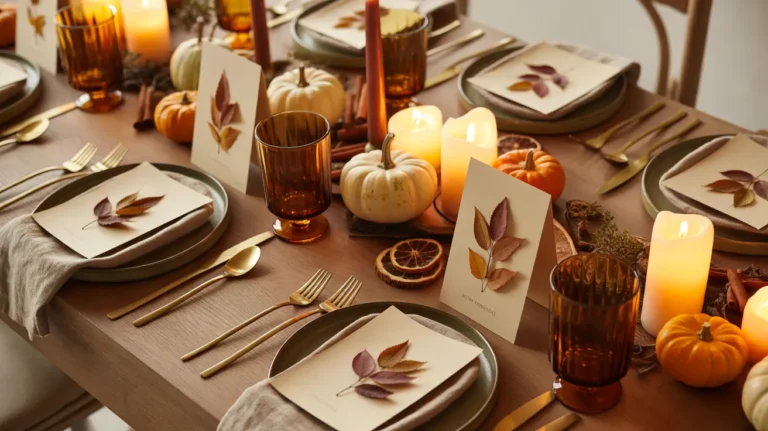
For an even more personalized table, pair your runner with simple name details at each seat. These 22 Thanksgiving Place Cards With Charming Details Today offer easy ideas using leaves, ribbons, mini pumpkins, herbs, and other seasonal touches that complement almost any Thanksgiving table runner.
Ruffled Linen Edge
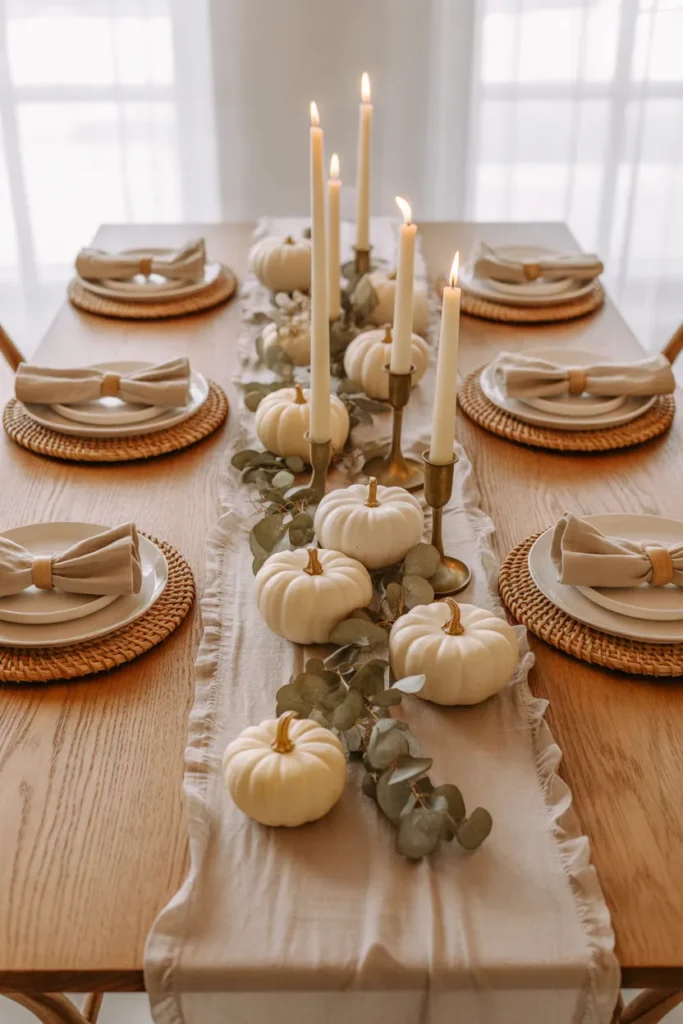
DO:
- Choose a runner with subtle, evenly finished ruffles.
- Keep the centerpiece simple so the edge remains visible.
- Pair it with smooth ceramic dishes for texture contrast.
- Use warm neutrals to maintain a soft seasonal palette.
DON’T:
- Hide the ruffled edge beneath oversized decorations.
- Mix several heavily textured fabrics.
- Use bright colors that compete with the delicate detail.
- Overcrowd the center with tall arrangements.
A ruffled linen edge adds a gentle decorative detail without requiring a patterned fabric. Let the runner’s border remain visible along the table, then use small pumpkins and greenery through the center. This style suits relaxed Thanksgiving gatherings where you want the table to feel thoughtful, comfortable, and slightly handcrafted.
Conclusion
The right table runner can give your Thanksgiving setting a clear starting point, whether you prefer soft neutrals, rich autumn colors, natural textures, or layered fabrics. These thanksgiving table runners ideas make it easier to create a table that feels warm, practical, and thoughtfully styled without overdoing the decorations.
I’ve noticed that even a small change in fabric, color, or texture can completely shift the way a dining space feels. Pick one idea that fits your style, adapt it with pieces you already own, and make it your own. Save this post on Pinterest for your next gathering, and share it with someone planning a Thanksgiving feast.
One Comment