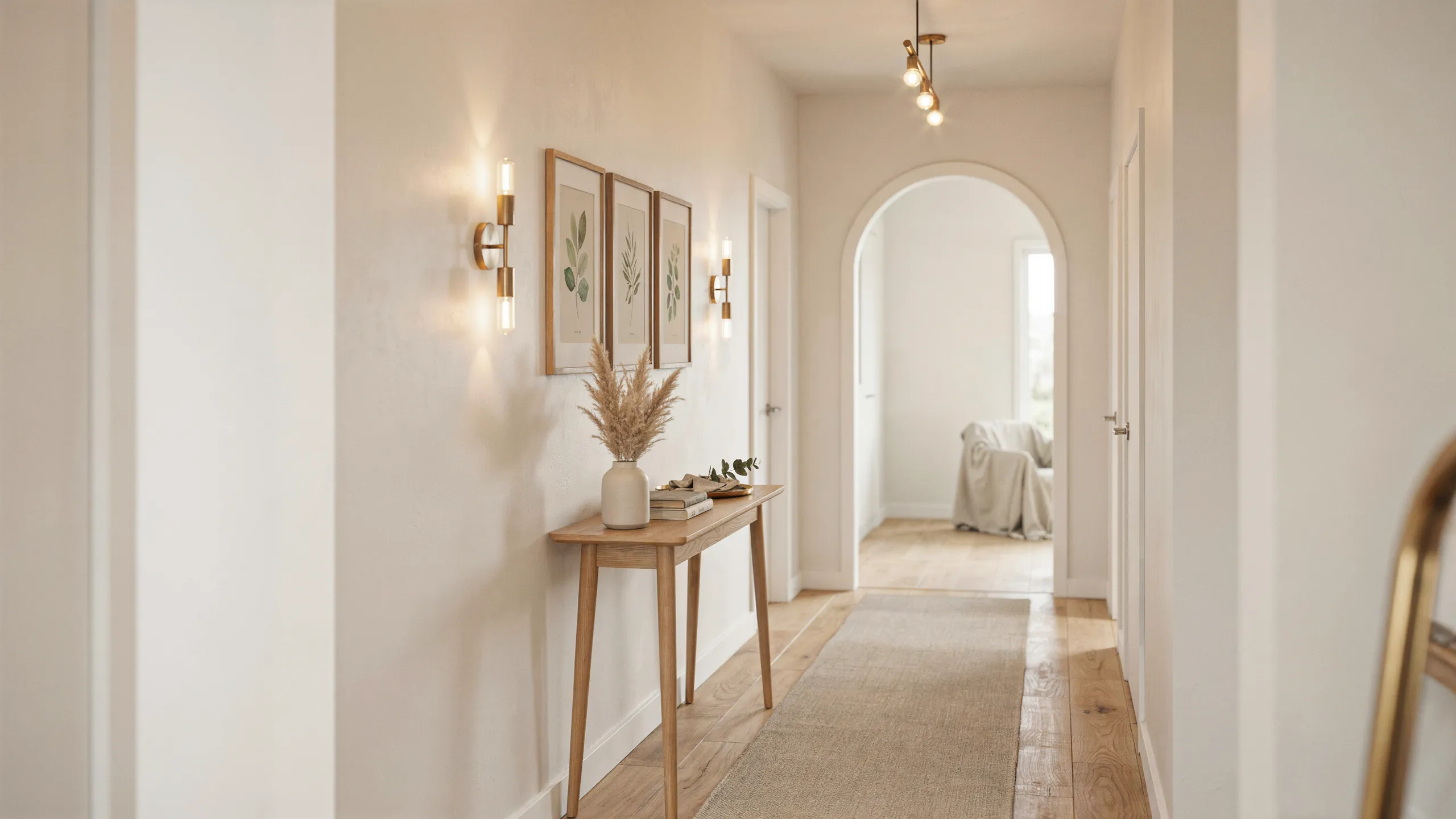
22 Hallway Lighting Ideas for a Welcoming, Radiant Glow
A dark hallway can make an entire home feel less inviting, even when the rooms around it are beautifully decorated. The right hallway lighting ideas can change that with a few thoughtful adjustments.
From warm wall sconces and glass pendants to recessed lights and soft LED accents, the right lighting can brighten awkward corners, highlight artwork, and make narrow walkways feel more balanced. This collection brings together practical options for different ceiling heights, decorating styles, and lighting needs, so you can find an approach that suits your home.
I’ve noticed that hallway lighting works best when it is planned around how the space is actually used. A busy family corridor may need even, practical illumination, while an entry hallway can benefit from softer decorative lighting. Whether you’re making a small update or planning a complete lighting refresh, these ideas will help you create a brighter, warmer, and more polished path through your home.
Warm Wall Sconces
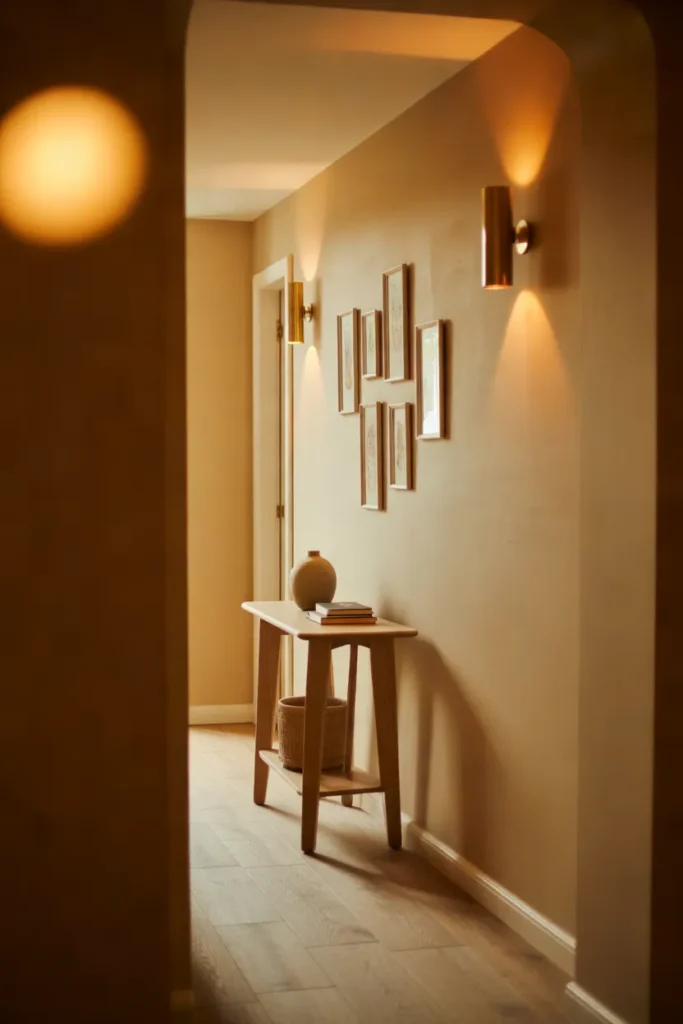
Warm wall sconces bring light closer to eye level, which helps a narrow passage feel softer and more balanced. Choose fixtures with frosted glass shades to spread illumination rather than creating harsh bright spots. Brass, aged bronze, or matte black finishes can also reinforce the decorating style already used nearby.
In my experience, sconces work especially well when a hallway has limited floor space. Mount matching fixtures at consistent intervals, keeping them high enough to avoid shoulder-level bumps. Pairing them with a simple runner and framed art creates a polished walkway without making the walls feel crowded.
Layered Ceiling Lights
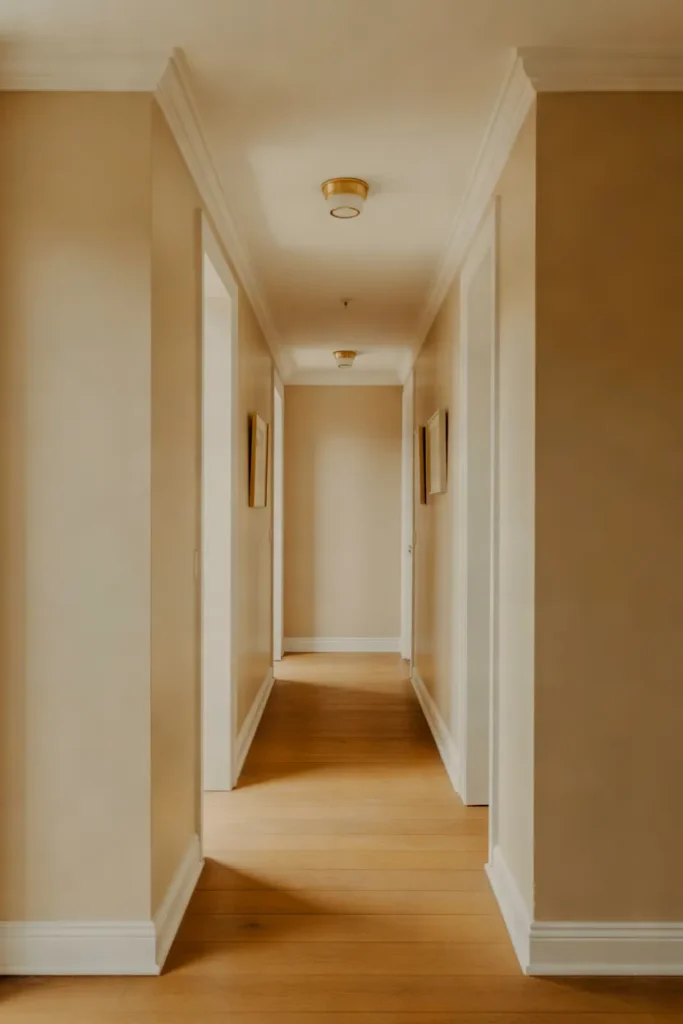
- Use two or three fixtures along a long corridor for even coverage.
- Choose warm white bulbs around 2700K to 3000K for a comfortable glow.
- Select low-profile fixtures when ceiling height is limited.
- Keep fixture finishes consistent with nearby hardware.
- Place lights evenly instead of concentrating them near one doorway.
A well-spaced ceiling plan prevents dark patches from appearing between rooms. For longer hallways, matching fixtures create visual rhythm while keeping the ceiling uncluttered. Frosted shades are especially useful because they soften the light and reduce glare. This approach also works nicely in homes where wall space is reserved for artwork or mirrors.
Mirror Light Pairing
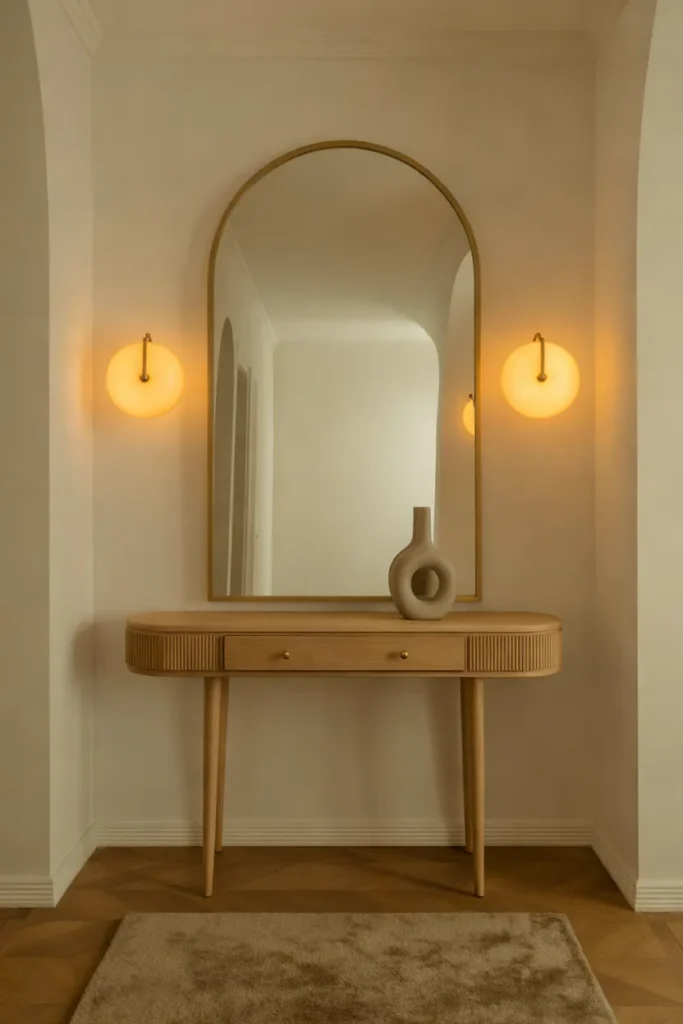
Quick Tip:
Place the light sources beside the mirror rather than directly above it when possible. Side lighting reduces strong shadows across the face and creates a more balanced reflection. Keep both fixtures at matching heights for a clean, intentional arrangement.
A mirror paired with thoughtful lighting can make a compact hallway feel brighter and more open. The reflective surface helps distribute nearby illumination while adding depth to the corridor. I’ve noticed this combination works particularly well near entryways, especially when paired with practical storage ideas from these mudrooms. A quick mirror check and welcoming light can make the entrance feel both functional and polished.
Flush Mount Fixtures
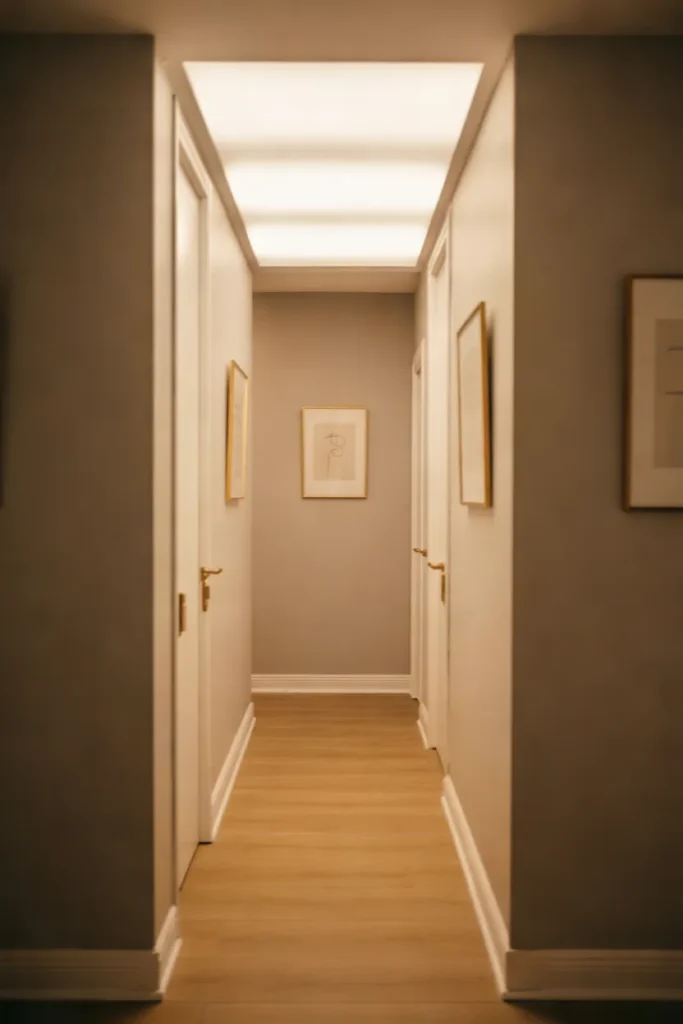
BEFORE: A low hallway ceiling can feel cramped when a bulky pendant hangs into the walking path. Dark corners may also make the corridor seem shorter and less connected to nearby rooms.
AFTER: A slim flush mount keeps the ceiling visually open while providing dependable overhead illumination. The hallway feels cleaner, brighter, and easier to navigate without sacrificing decorative style.
Choose a fixture with a diffused shade rather than exposed bulbs for softer coverage. Warm white light around 2700K to 3000K keeps the space comfortable, while a simple metal finish can echo nearby door handles, cabinet pulls, or picture frames. This setup is especially practical for low ceilings.
Picture Light Accents
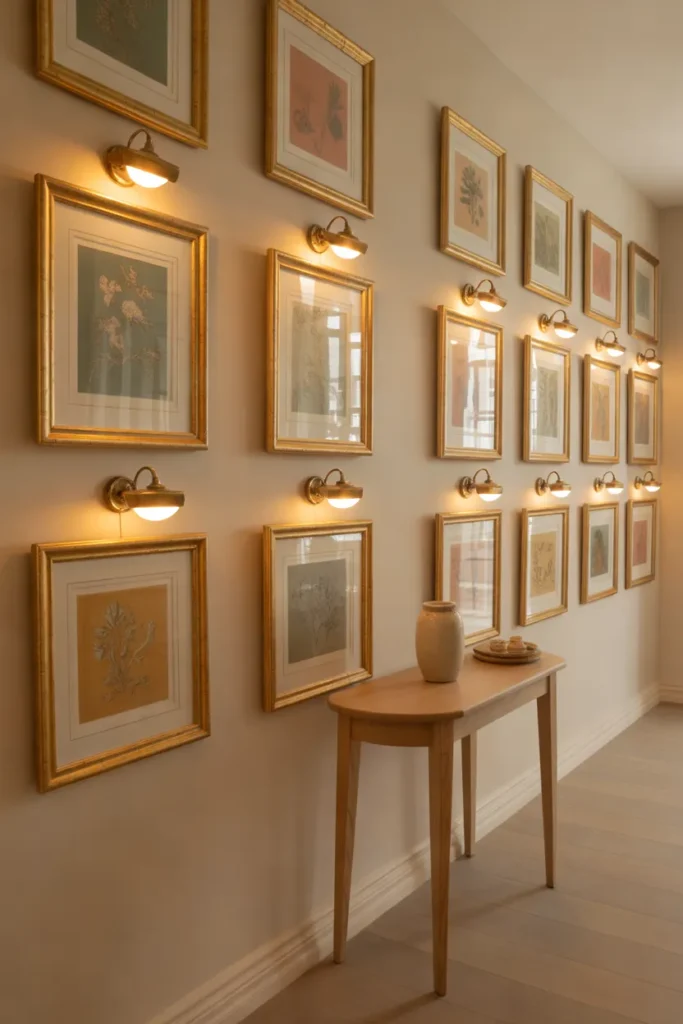
- Select artwork with enough visual weight to anchor the wall.
- Mount a picture light above each major frame or grouped artwork arrangement.
- Aim the beam toward the artwork without creating strong glare on glass.
- Use warm bulbs so the colors remain inviting rather than stark.
- Keep spacing consistent when several frames share one hallway wall.
Artwork becomes much more noticeable once focused lighting directs attention toward it. Picture lights are useful in corridors because they add a decorative layer without taking up floor or walking space. For a collected look, coordinate the fixture finish with other metals in the home instead of matching every piece exactly.
Recessed Light Rows
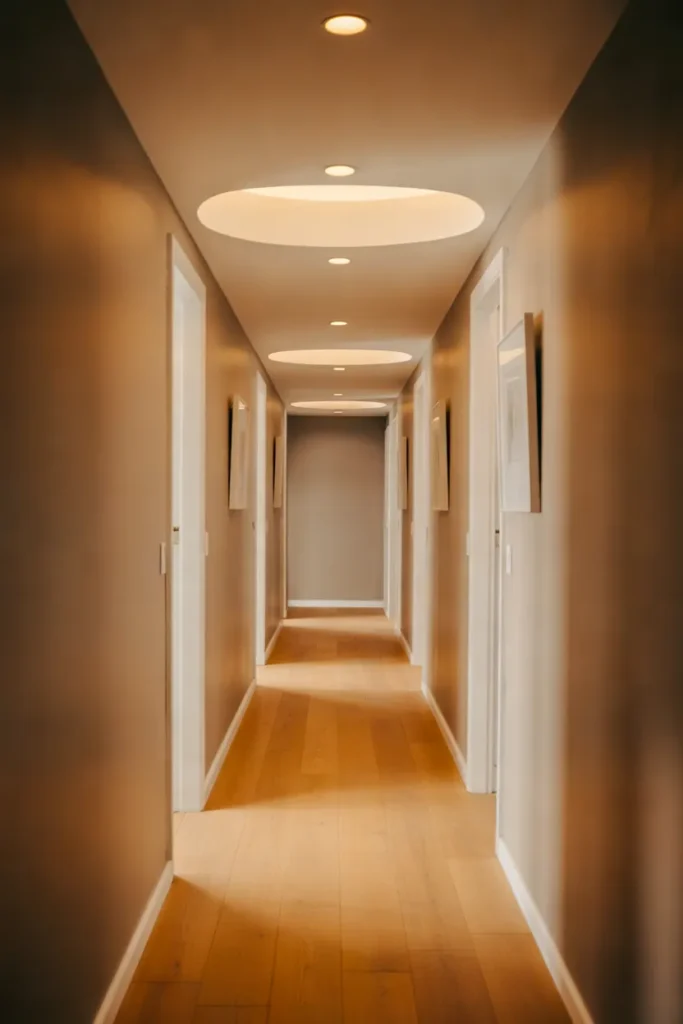
| Comparison Point | Option A: Single Light | Option B: Recessed Row |
| Coverage | Focused area | More even coverage |
| Visual Style | Simple | Clean and architectural |
| Best Use | Short hallway | Long corridor |
| Ceiling Impact | One focal point | Consistent rhythm |
Recessed lights can distribute illumination more evenly across a lengthy corridor without adding visual clutter. A row of smaller fixtures often feels less heavy than one oversized ceiling light. I’ve seen this approach work especially well in hallways with several doorways, where consistent brightness helps connect each section.
Black Metal Pendants
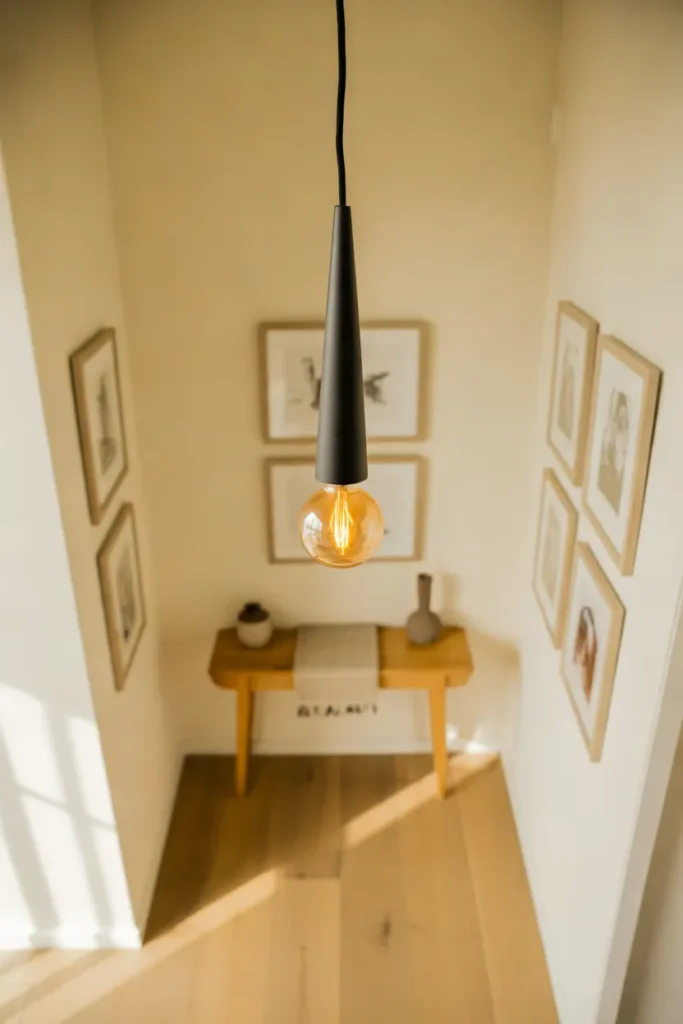
DO: Choose a narrow pendant that leaves plenty of walking clearance.
DO: Use a warm white bulb for a softer evening glow.
DO: Match the metal finish with nearby hardware or frames.
DO: Keep the shade visually proportional to the hallway width.
DON’T: Hang a low fixture where taller people could bump it.
DON’T: Choose an oversized shade for a narrow corridor.
DON’T: Use a very cool bulb that makes the hallway feel stark.
DON’T: Block sightlines between the entryway and adjoining rooms.
A pendant can introduce personality overhead while providing useful illumination along the corridor. For homes with taller ceilings, a slim black fixture creates a strong vertical detail without overwhelming the space. Keep the shape simple if the hallway already has patterned wallpaper, bold artwork, or decorative flooring.
LED Strip Under Shelves
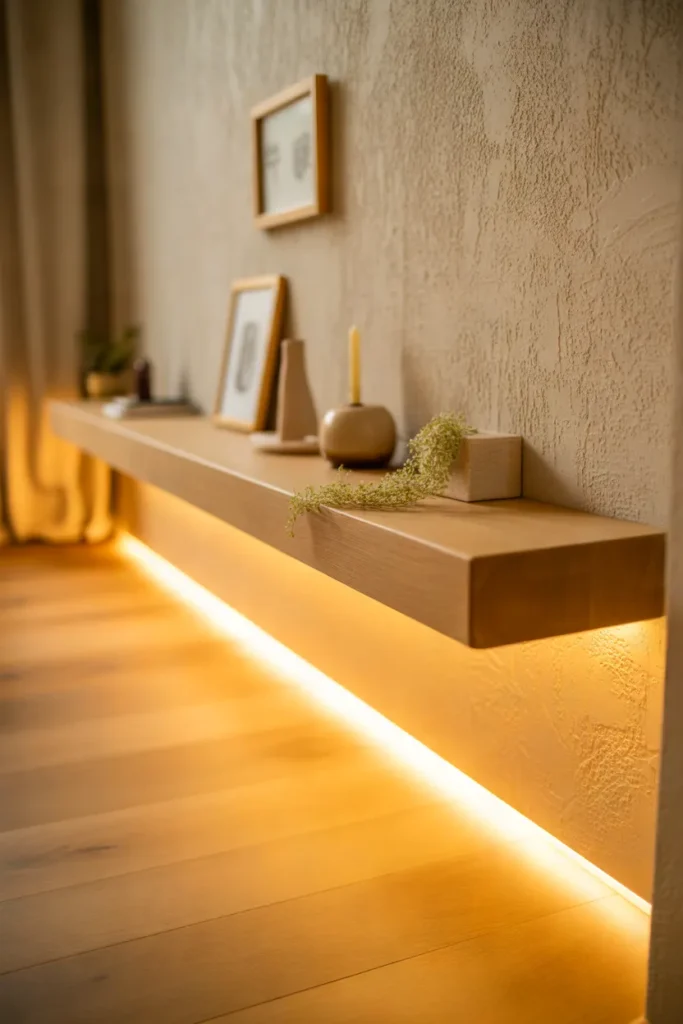
Cost: Low to moderate | Time: One afternoon | Skill Level: Beginner to intermediate
Best For: Floating shelves, ledges, and shallow display areas
Light Quality: Soft, indirect glow | Result: Subtle layered illumination
Concealed LED strips add light exactly where a hallway display needs it without taking up valuable floor space. Choose a warm white strip with a slim profile and hide the wiring behind the shelf whenever possible. A diffuser channel can soften individual LED points for a cleaner finished appearance.
Arched Ceiling Lights
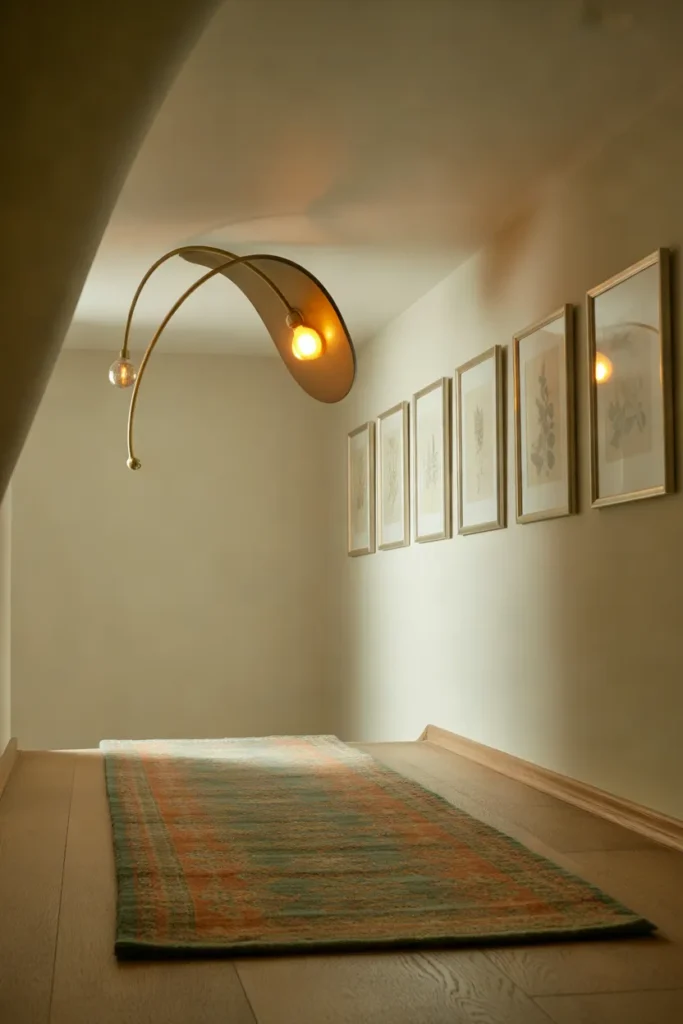
Curved lighting brings a softer shape into a hallway filled with straight doors, trim, and floorboards. A graceful arched fixture can also create a focal point without requiring additional furniture. Look for a compact design that follows the ceiling height and leaves the main walking route completely unobstructed.
Glass Globe Pendants
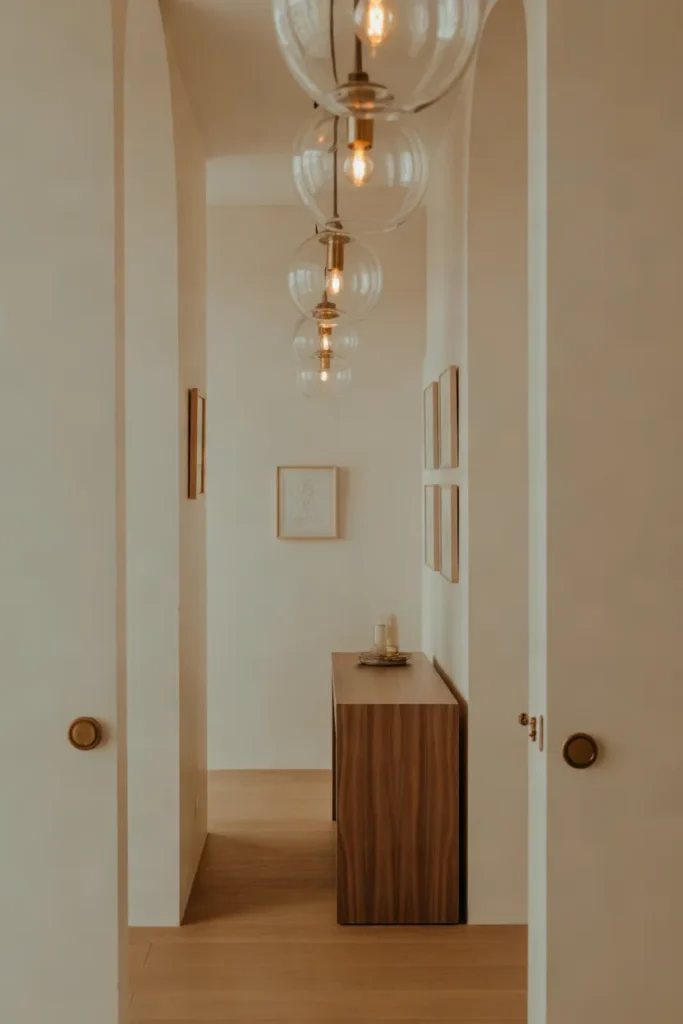
Glass globe fixtures spread light softly while adding a refined focal point overhead. Choose clear or lightly frosted glass with a rounded shape to soften the visual lines created by doors and trim. Warm bulbs work especially well here because the transparent shade allows the light source to remain part of the design.
For a longer corridor, two smaller pendants can create better visual balance than one oversized fixture. Keep their placement centered along the walking path and check the hanging height carefully. This style works particularly well in entry hallways where the ceiling fixture needs to feel decorative without making the passage look crowded.
Recessed Wall Washers
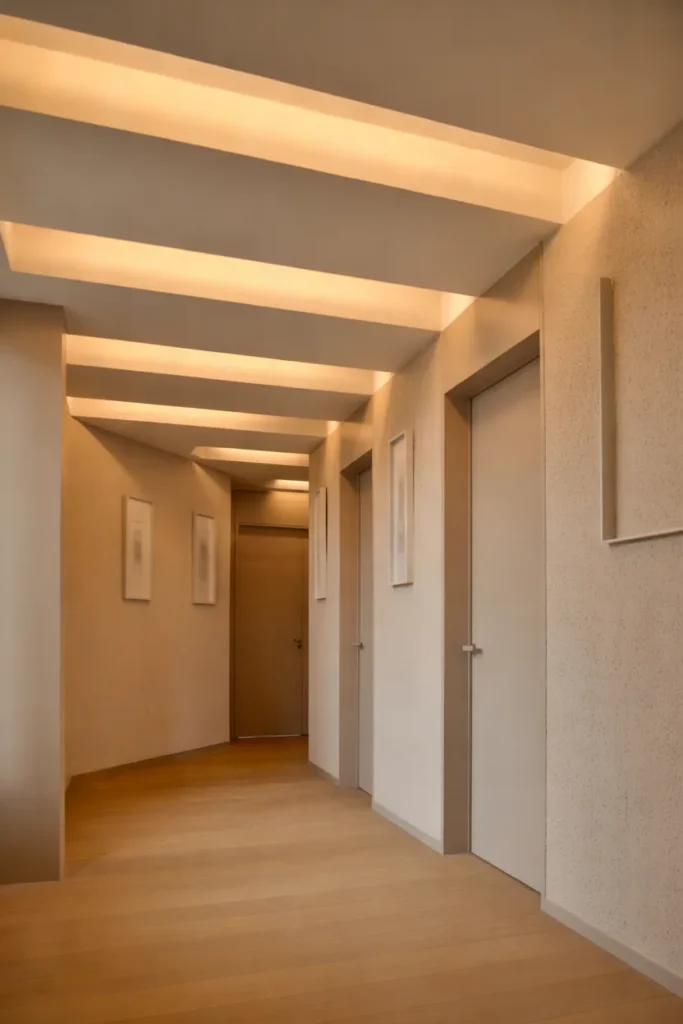
- Position each light to wash the wall rather than shine directly into the walking path.
- Use wider beam angles for broad artwork or textured surfaces.
- Keep fixtures evenly spaced along the corridor.
- Choose warm white bulbs for comfortable evening illumination.
- Coordinate the trim color with the ceiling for a discreet finish.
Wall washers are useful when the hallway itself is part of the home’s visual design. Their light can highlight artwork, textured paint, panel molding, or architectural details while providing useful ambient brightness. For a particularly narrow passage, recessed fixtures keep the walls clear and maintain an uncluttered appearance.
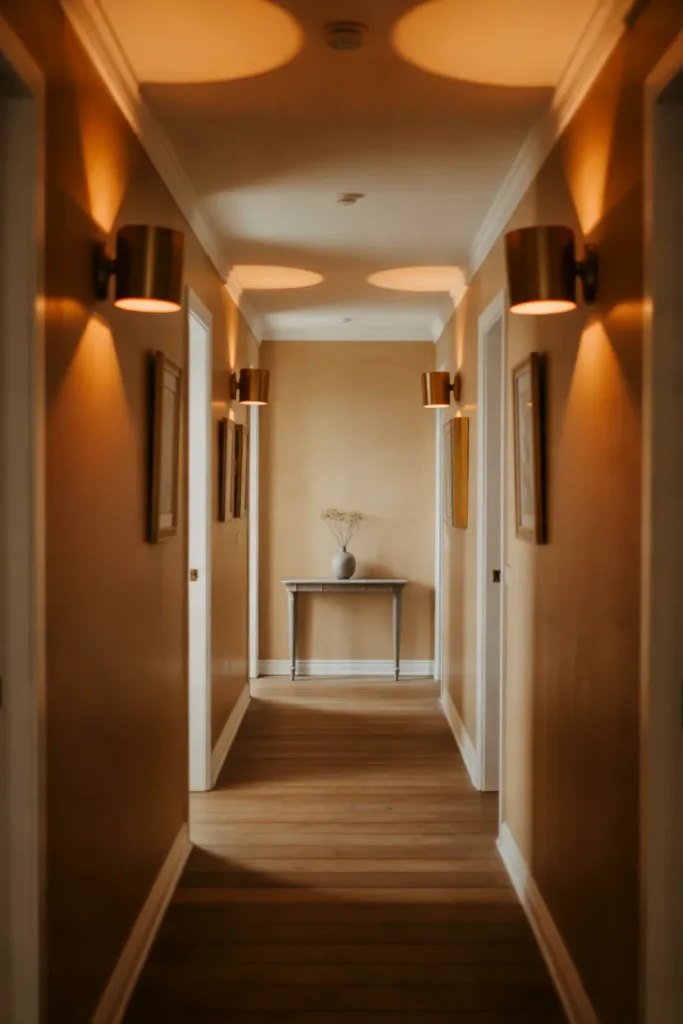
Layered Sconce Lighting
Quick Tip:
Layer two light sources instead of relying on one intense fixture. Use ceiling lighting for general visibility and sconces for softer wall-level illumination. Installing dimmable fixtures makes it easier to adjust brightness from daytime tasks to relaxed evening use.
Layered lighting gives a hallway more depth because different fixtures illuminate different surfaces. The ceiling light handles general coverage while sconces add warmth around artwork, mirrors, or architectural details. I’ve noticed this setup feels especially comfortable in corridors that connect frequently used rooms, where lighting needs change throughout the day.
Linear Ceiling Fixtures
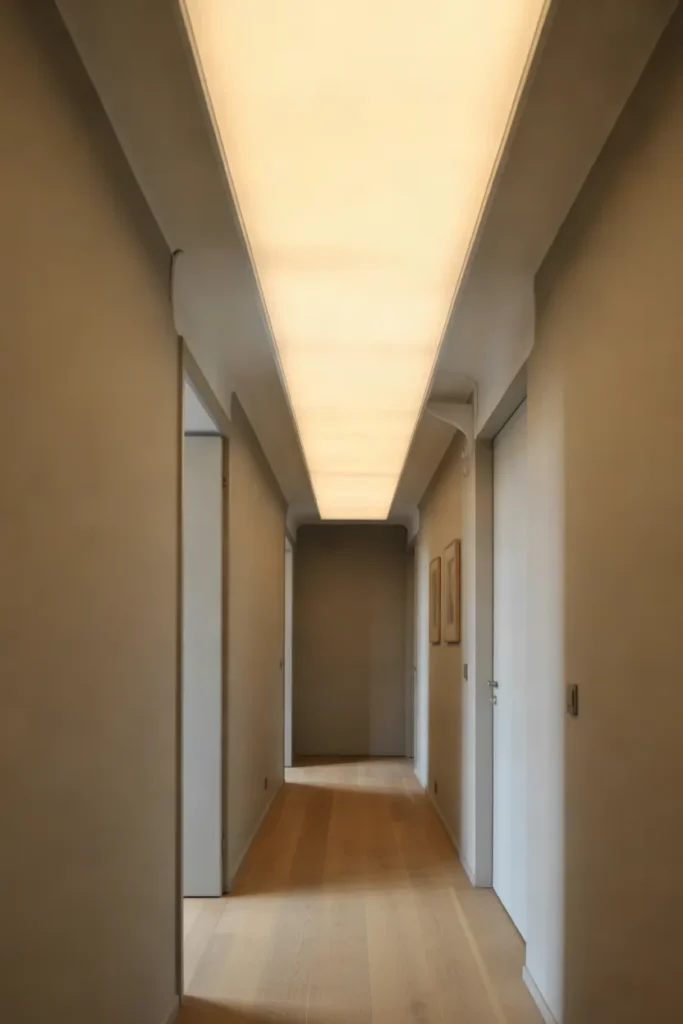
- Choose a fixture that follows the hallway’s length rather than its width.
- Select a frosted diffuser for smoother, glare-free illumination.
- Keep the fixture centered over the main walking route.
- Match the finish with nearby door hardware and decorative accents.
- Use dimmable bulbs when the hallway serves multiple purposes.
A linear fixture gives a long corridor a clear visual direction while distributing light across more of the walking area. It is especially useful where several small ceiling lights might look busy. For a polished result, choose a slim profile that feels proportional to the ceiling and leaves surrounding surfaces visually calm.
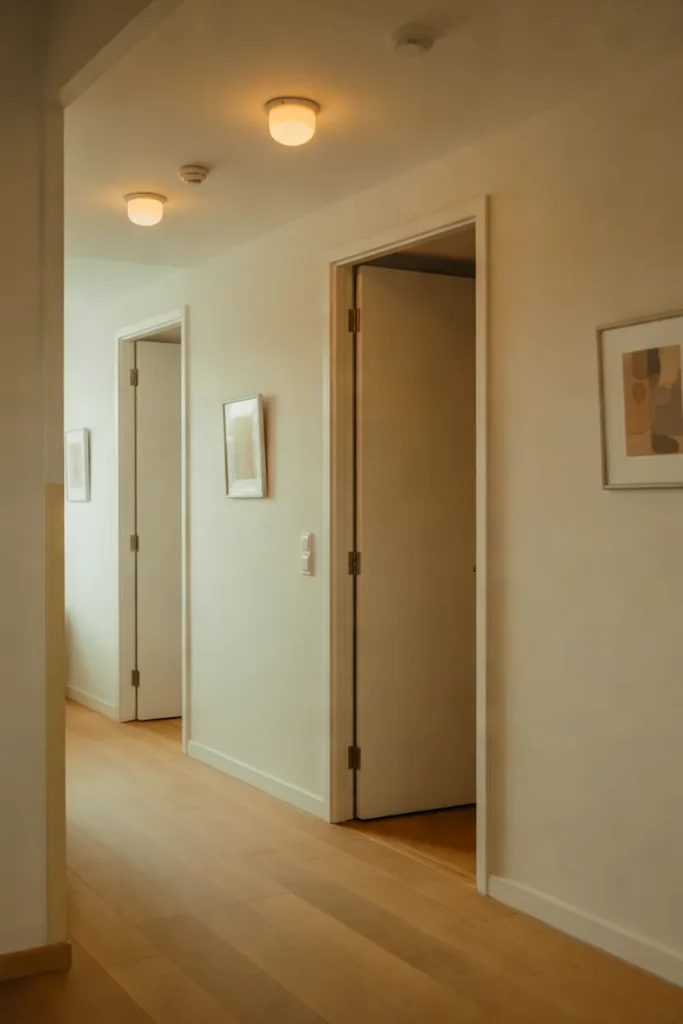
Motion Sensor Lights
Quick Tip:
Install motion activated lighting near bedrooms, stairs, or frequently used nighttime pathways. Choose sensors with adjustable timing so the lights remain on long enough to walk safely without staying illuminated unnecessarily. A warm color temperature keeps late-night trips comfortable and less harsh on the eyes.
Motion sensors add convenience to hallways that are used frequently after dark. They are particularly helpful when carrying laundry, children, or other items that make reaching for a switch inconvenient. Before installation, check the sensor’s detection range and position it where movement will reliably trigger the light.
Wall-Washing Sconces
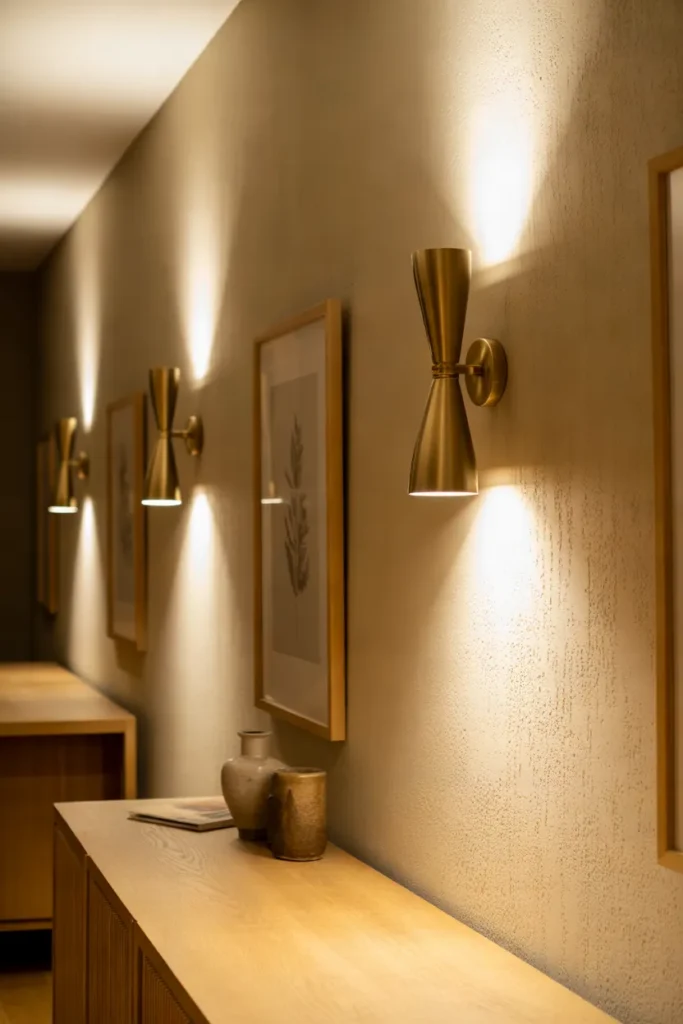
BEFORE: Bare hallway walls can look flat when a single ceiling fixture sends most of its light downward. Artwork and architectural details may disappear into darker areas, especially after sunset.
AFTER: Wall-washing sconces spread light across the vertical surfaces, creating gentle illumination around artwork and trim. The corridor gains more visual depth while the main walking path remains comfortably lit.
Select sconces with upward and downward light output when you want broader coverage. Mount them at a consistent height and leave enough space between fixtures to avoid bright overlapping spots. This approach suits hallways with textured walls, panel molding, artwork, or other details worth highlighting after dark.
Skylight Style Panels
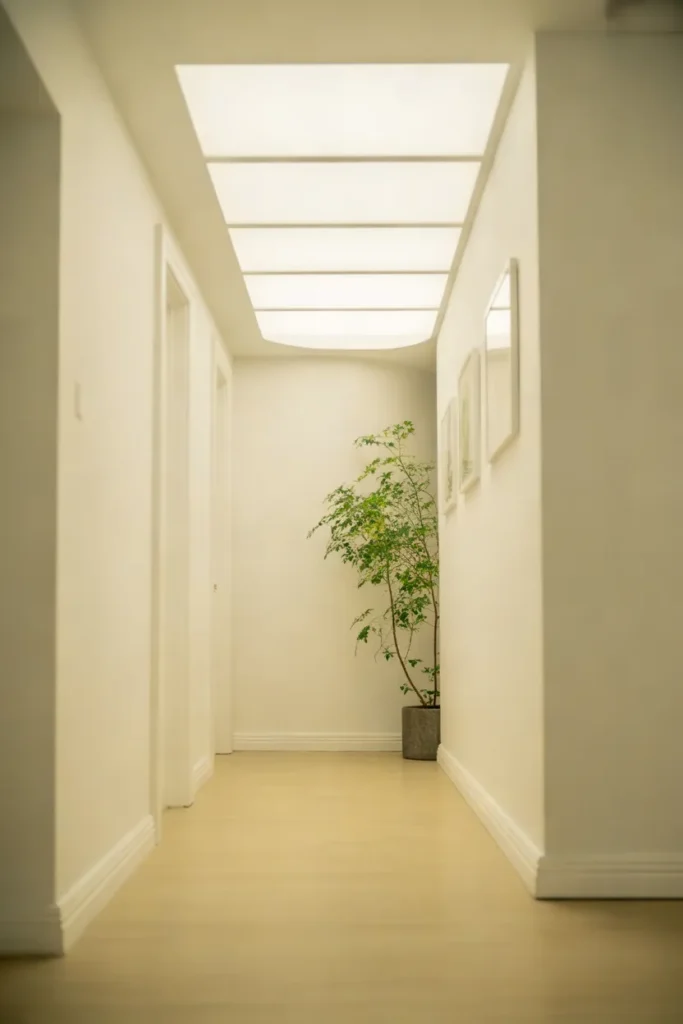
- Measure the ceiling opening or available mounting area before choosing the panel size.
- Select a high-quality LED panel with even, diffused illumination and a natural-looking color temperature.
- Position the panel where the hallway receives the least existing light.
- Keep surrounding ceiling fixtures simple so the panel remains visually discreet.
- Test the brightness at different times of day before adding additional lighting.
A skylight-style panel can brighten a hallway that has little or no access to natural daylight. Its broad surface produces even illumination instead of a concentrated beam, helping reduce dark areas. Choose a slim, flush design for a cleaner ceiling and use dimming controls if the corridor connects directly to brighter rooms.
Pendant Cluster
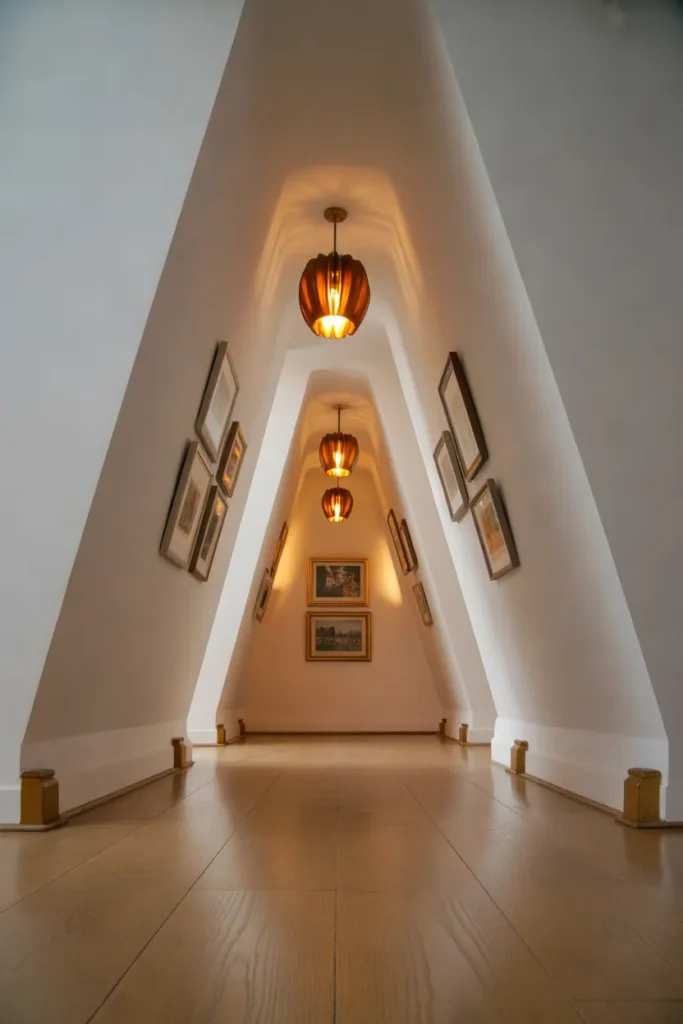
| Comparison Point | Option A: Single Pendant | Option B: Pendant Cluster |
| Visual Impact | Subtle | More decorative |
| Light Coverage | Focused | Broader |
| Best Ceiling | Standard height | Higher ceiling |
| Style | Minimal | Statement-focused |
A pendant cluster adds dimension when a hallway has enough ceiling height to support it safely. Keep the individual shades relatively small so the grouping does not overwhelm the corridor. For a cohesive look, repeat one finish or shape across the pendants while allowing slight variation in height or form.
Warm LED Cove Lighting
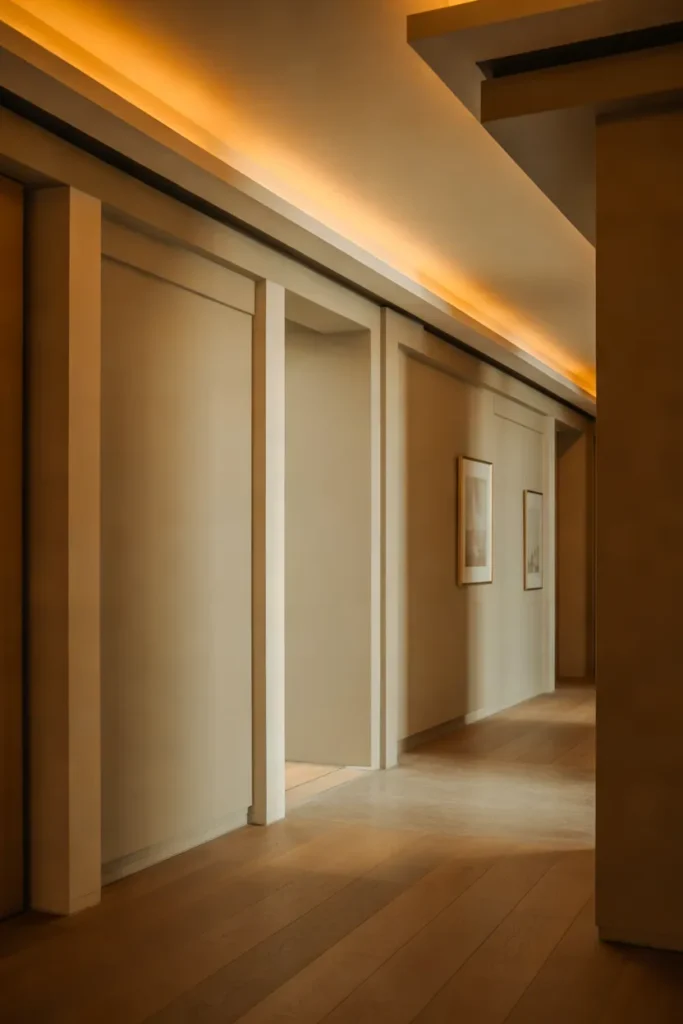
DO: Hide LED strips inside a ceiling recess, molding, or architectural ledge.
DO: Choose warm white light for a relaxed residential atmosphere.
DO: Use a diffuser to create a smooth continuous glow.
DO: Add dimming controls for flexible brightness.
DON’T: Leave LED strips exposed where individual diodes are visible.
DON’T: Use extremely cool light in a warm-toned hallway.
DON’T: Place the lighting where it creates distracting reflections.
DON’T: Overload a small corridor with several competing light sources.
Cove lighting works by bouncing illumination off the ceiling or wall instead of shining directly into the hallway. That indirect approach creates a soft layer that pairs well with recessed fixtures or sconces. It is especially effective in modern interiors where clean surfaces and concealed details are part of the overall design.
Lantern Style Fixtures
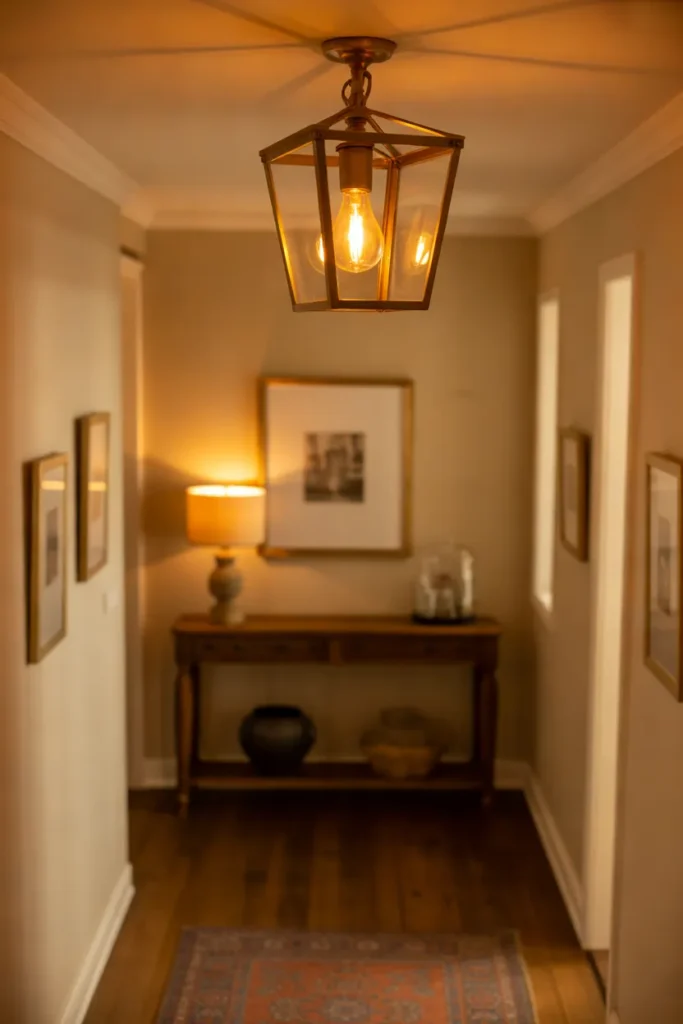
Cost: Moderate | Time: 1 to 2 hours | Skill Level: Beginner
Best For: Traditional, farmhouse, and transitional hallways
Light Quality: Warm and decorative | Result: Character-rich overhead glow
Lantern fixtures bring architectural character to a hallway while providing useful overhead illumination. Look for a compact frame with clear or seeded glass so the bulb can spread light across the corridor. Aged brass, bronze, or matte black finishes pair naturally with wood floors and classic trim details.
Recessed Step Lights
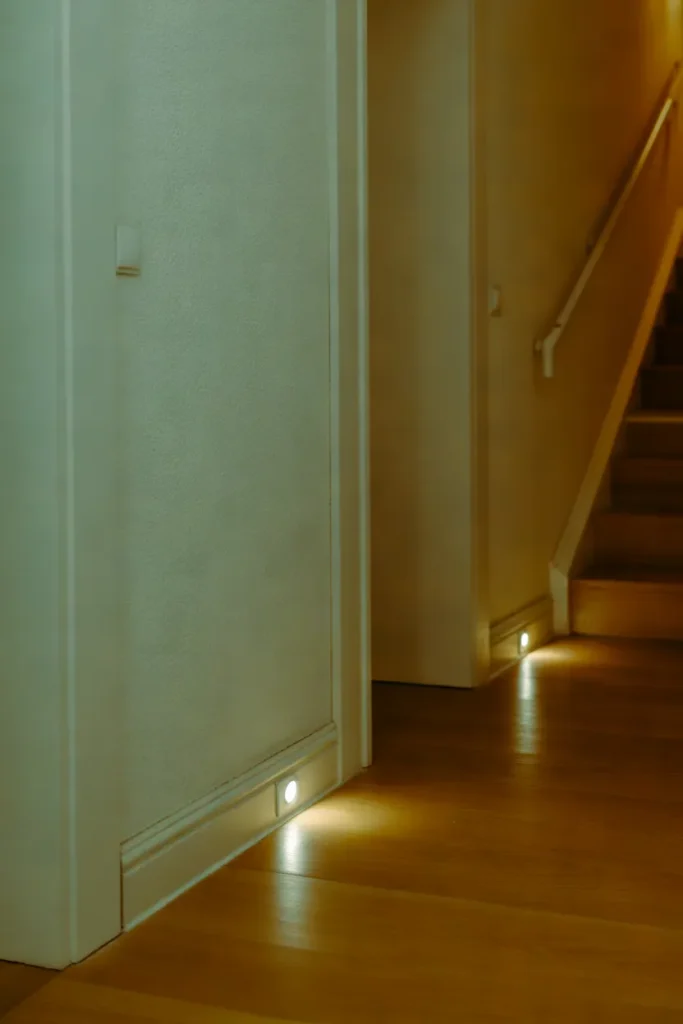
Low-level lighting can make a hallway safer without flooding the entire space with brightness. Install compact recessed fixtures near floor level, particularly around stairs, changes in elevation, or dark corners. Choose warm illumination and space the lights consistently so they guide movement without creating distracting bright spots.
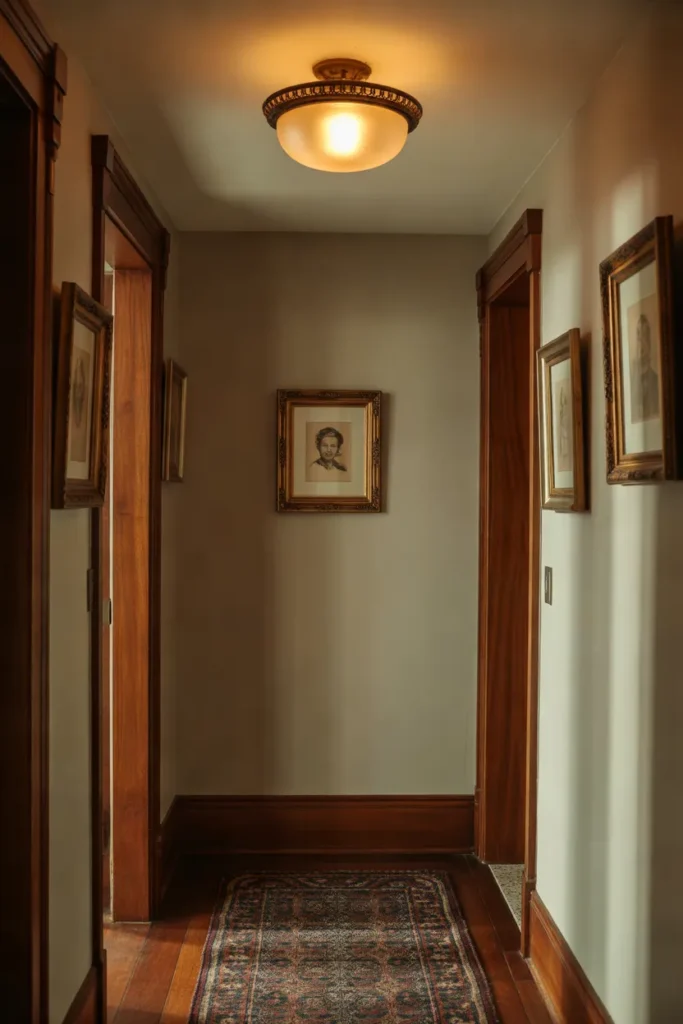
Vintage Flush Mounts
Quick Tip:
Look for vintage-inspired fixtures with frosted or seeded glass when you want character without excessive glare. Check the fixture’s dimensions carefully before installation, especially in narrow corridors. A smaller shade with a detailed metal frame often provides enough visual interest without making the ceiling feel crowded.
Vintage-style lighting can connect a hallway with older architectural details such as crown molding, paneled doors, or hardwood floors. I’ve noticed that repeating a finish from nearby furniture or hardware helps the fixture feel intentional rather than decorative in isolation. Keep the surrounding decor relatively simple so the light remains the focal detail.
Brass Drum Shades
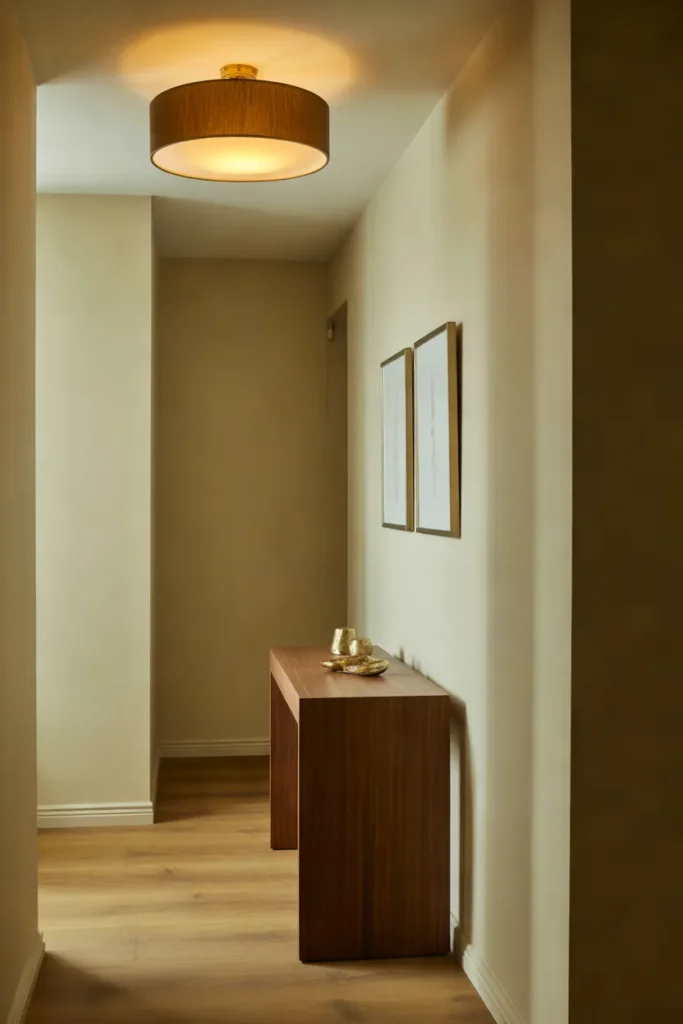
Cost: Moderate | Time: 1 to 2 hours | Skill Level: Beginner
Best For: Transitional and modern classic hallways
Light Quality: Soft and diffused | Result: Warm, balanced ceiling glow
A drum shade softens the appearance of a ceiling fixture while helping spread light across the hallway. Choose linen or fabric shades in ivory, beige, or soft white for gentle diffusion. A brass frame adds warmth and works particularly well with wood floors, neutral walls, and coordinating door hardware.
Conclusion
The right lighting can make a hallway feel brighter, more comfortable, and much more connected to the rest of your home. From simple flush mounts to layered sconces, recessed lights, pendants, and subtle LED accents, these hallway lighting ideas offer plenty of practical inspiration for different spaces and budgets.
Start with one area that feels too dark or plain, then choose a lighting style that solves that specific problem. I’ve seen how small lighting changes can completely shift the way a space feels. Save this post to Pinterest for your next home project, try your favorite idea, and share it with someone who could use a little more brightness at home.
One Comment