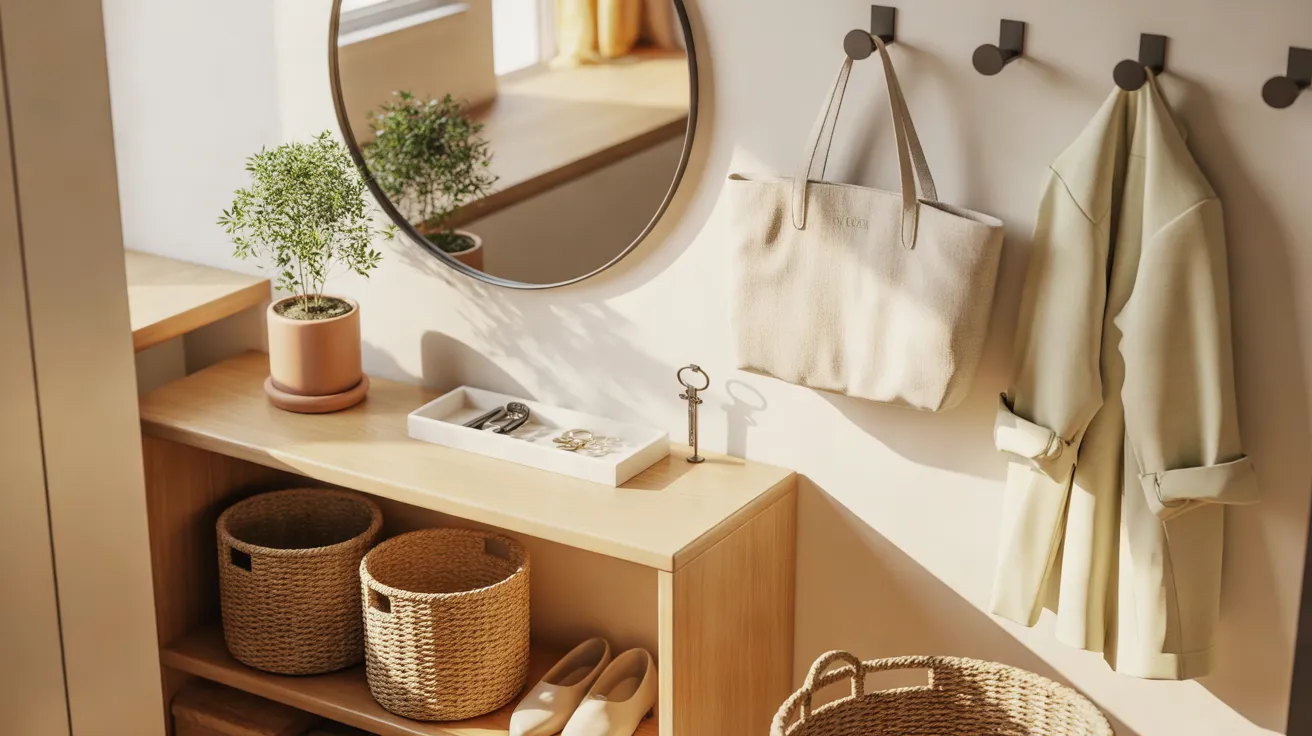
24 Apartment Entryway Drop Zone Ideas for Easy Order
A messy entryway can make even a tidy apartment feel chaotic. The right apartment entryway drop zone ideas can give every everyday item a simple place to land.
From keys and shoes to bags, mail, and umbrellas, small essentials quickly pile up when there is no clear system. These 24 ideas show how to create practical drop zones without sacrificing precious floor space or making your entrance feel crowded. You will find slim furniture, wall storage, baskets, hooks, shelves, and clever corner solutions that work beautifully in compact homes.
In my experience, the easiest systems are the ones that match your daily habits. A simple hook by the door may work better than a large storage unit if you regularly carry bags and jackets. Choose one idea that fits your routine, then build from there.
Slim Console Station
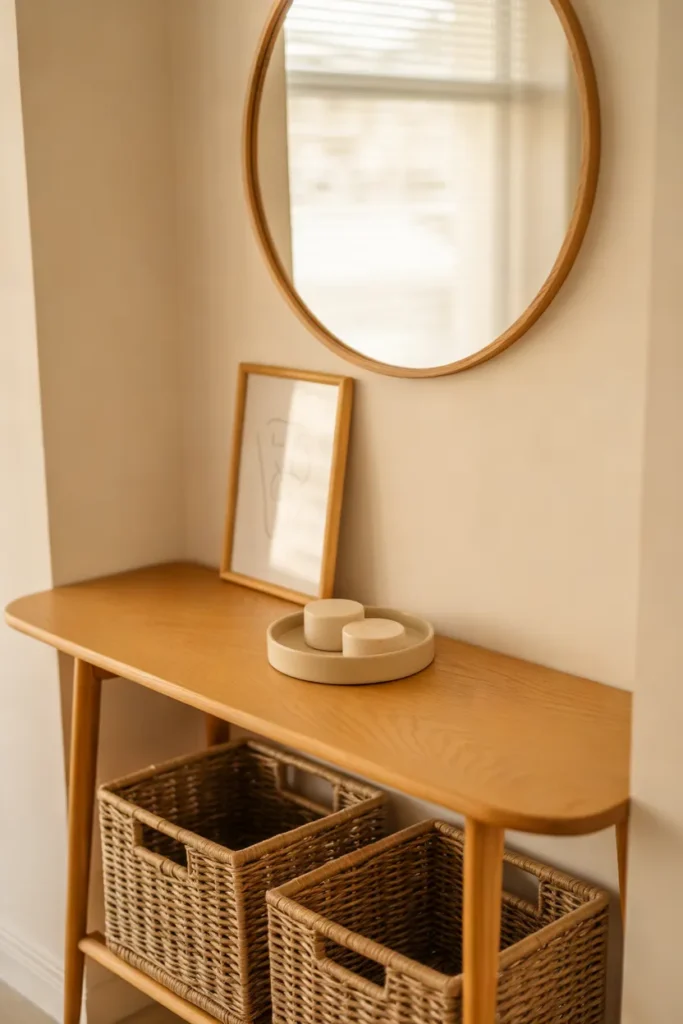
A narrow console can give an apartment entrance a dedicated landing spot without stealing valuable floor space. Choose a model about 10 to 12 inches deep, then keep the surface limited to daily essentials such as keys, sunglasses, and a small catchall tray.
The space underneath can handle baskets for shoes, scarves, or reusable bags. I’ve noticed that shallow furniture works especially well in apartment hallways because it creates storage without making the walking path feel cramped. Keep at least a comfortable passage between the console and opposite wall.
Wall-Mounted Key Rack
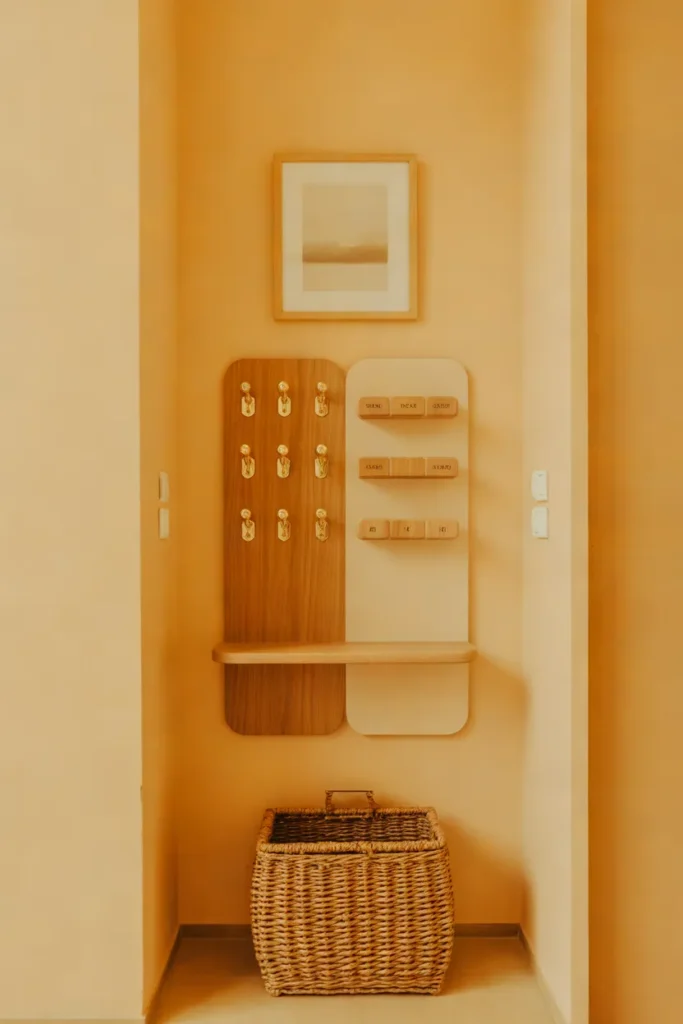
- Mount the rack near the door at comfortable hand height.
- Give each household member a dedicated hook.
- Add a narrow shelf for wallets and sunglasses.
- Keep one hook available for guests or temporary items.
- Choose rounded hooks to protect bags and clothing.
A wall rack keeps everyday items off the floor and makes the entry easier to reset. For renters, look for adhesive-mounted or removable systems when drilling is restricted. Keep the rack close enough to the door that dropping keys there becomes automatic rather than another chore.
Labeled Drop Baskets
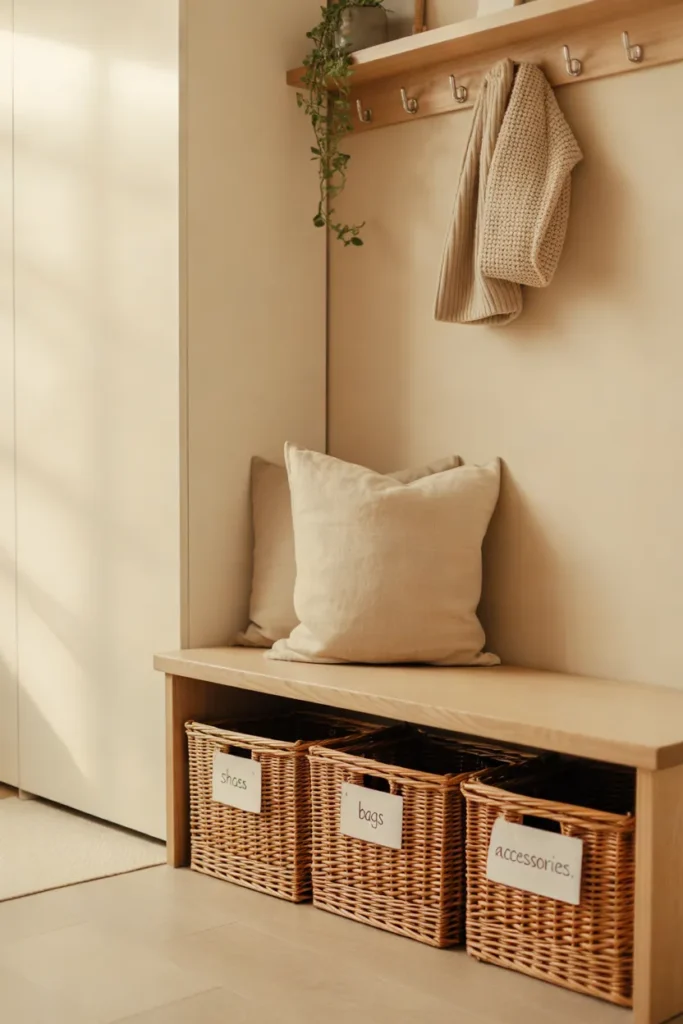
Quick Tip: Choose baskets that slide completely beneath a bench or console so the floor stays visually clear. Use simple labels such as Shoes, Bags, and Accessories. Matching containers create a calmer look and make it easier for everyone to return items to the correct place.
Labeled baskets turn a busy entrance into a simple sorting system. They are especially useful when several people share a small apartment because each category has an obvious home. In my experience, broad categories work better than overly specific labels because they are faster to maintain during rushed mornings.
Slim Entryway Bench
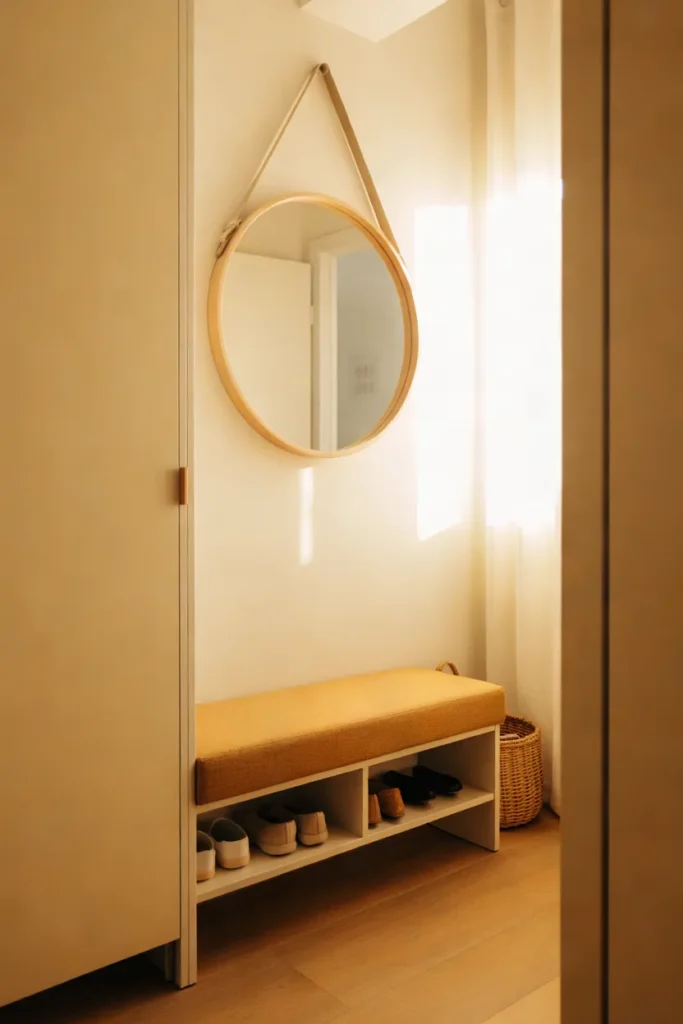
BEFORE: Shoes collect beside the door, bags land on the floor, and there is nowhere comfortable to sit while putting footwear on. The entrance quickly feels crowded.
AFTER: A narrow bench provides a place to sit while hiding shoes underneath. The floor stays clearer, and daily routines become easier without requiring a bulky storage cabinet.
Keep the bench shallow enough to preserve the main walking path. Choose open cubbies for frequently worn shoes and reserve baskets for smaller accessories. A cushion adds comfort, but avoid oversized upholstery that makes the entry feel visually heavy.
Floating Entry Shelf
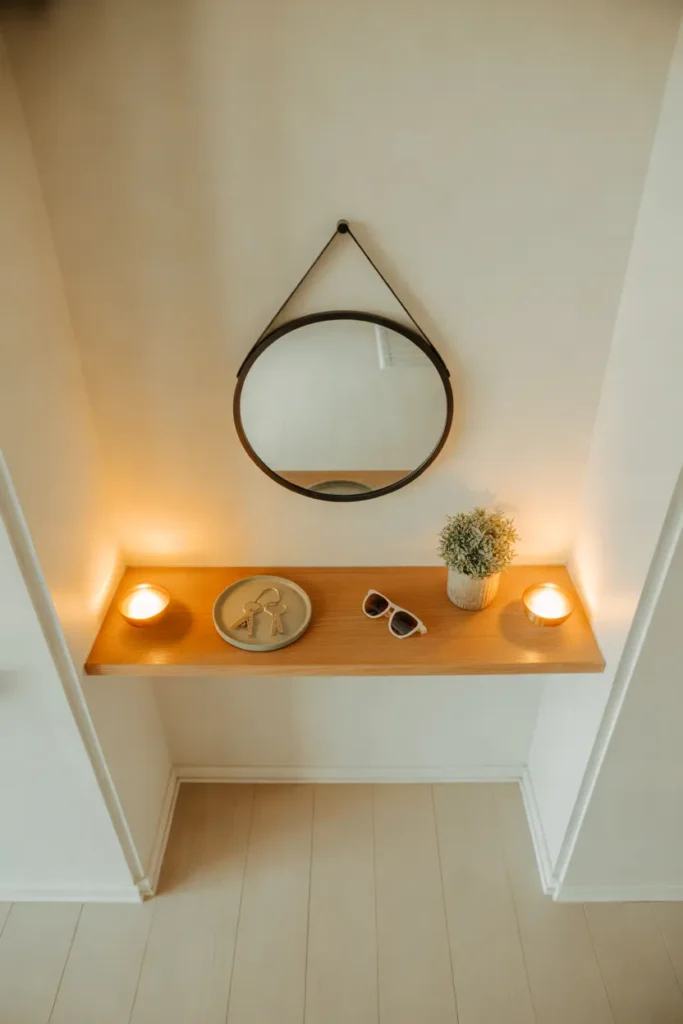
- Choose the wall: Select a clear section near the entrance that does not interfere with door movement.
- Install the shelf: Mount a sturdy shelf at a comfortable height for daily access.
- Create zones: Keep keys and small essentials on one side while leaving the rest open.
- Add one accent: Place a small plant, candle, or framed print to soften the setup.
A floating shelf gives you useful landing space without adding furniture to a narrow hallway. Keep its depth modest and avoid filling every inch. The most practical apartment entryway drop zone ideas leave enough empty surface for grabbing essentials quickly, rather than creating another cluttered storage area.
Closed Shoe Cabinet
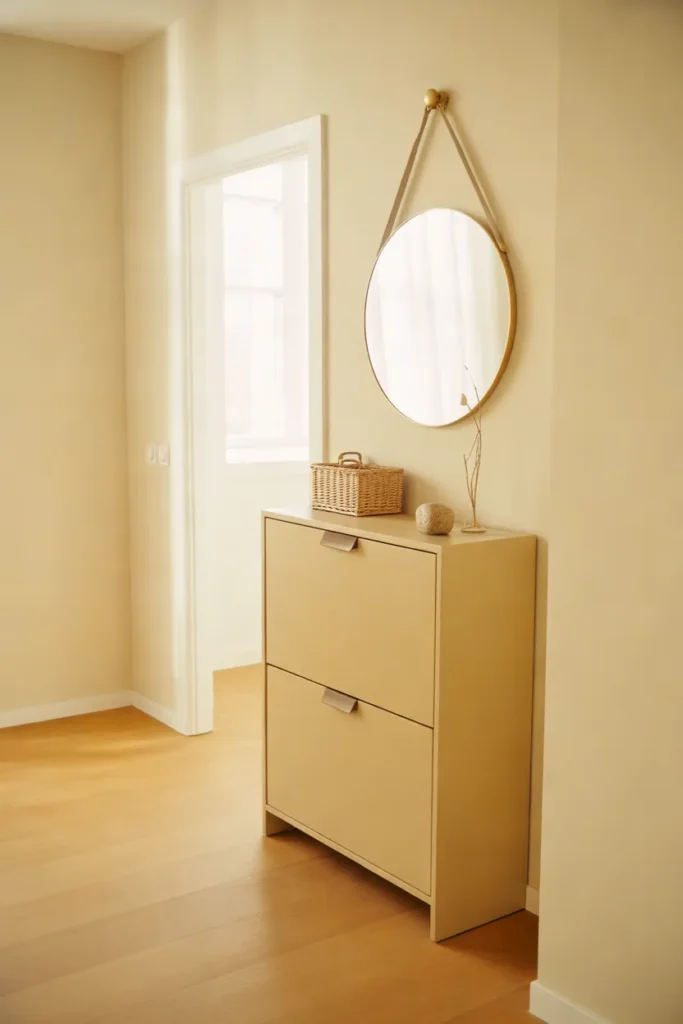
| Feature | Option A: Open Storage | Option B: Closed Cabinet |
| Visual appearance | Shoes remain visible | Shoes stay concealed |
| Access | Very quick | Quick with one door movement |
| Cleaning | More exposed dust | Easier to keep visually tidy |
| Best use | Frequently worn footwear | Shared or busy entryways |
A closed cabinet helps an apartment entrance look calmer when several pairs of shoes need to stay nearby. Select a slim model with ventilation and enough clearance for your everyday footwear. If floor space is tight, prioritize vertical storage rather than choosing a deeper cabinet that narrows the walkway.
Peg Rail Organizer
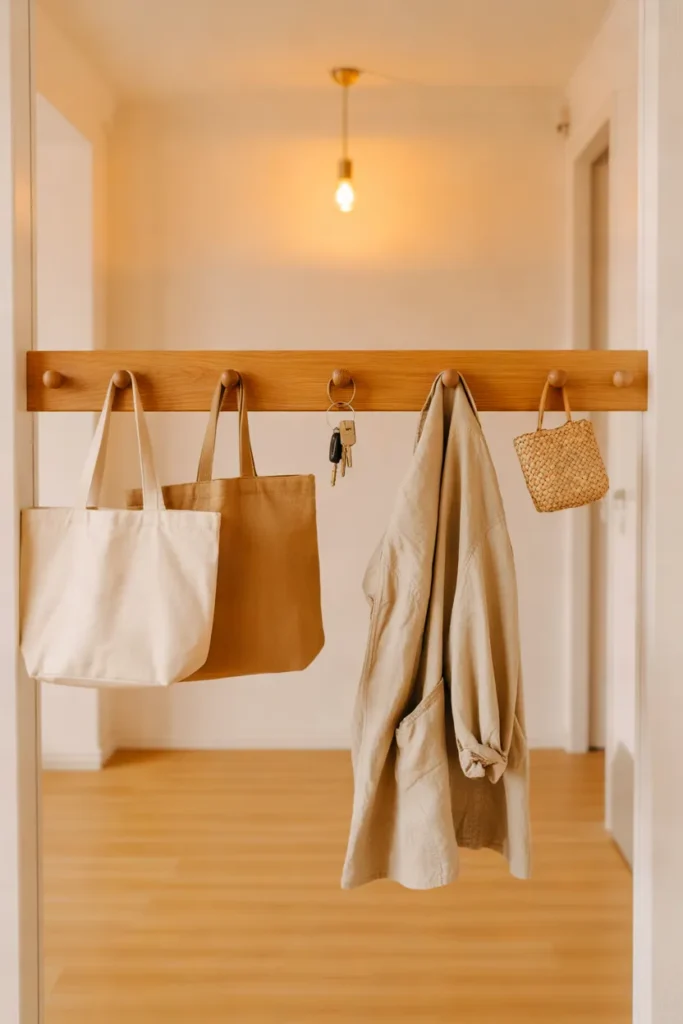
DO:
- Mount the rail close to the main entrance.
- Assign one or two hooks to each person.
- Hang only items used regularly.
- Keep heavier bags on sturdy pegs.
DON’T:
- Overload the rail with coats.
- Hang delicate items from rough hooks.
- Place it where the door can strike bags.
- Mix every household item on one small rail.
A peg rail makes vertical space work harder without adding bulky furniture. I’ve seen this setup work particularly well in rentals because it can hold bags, hats, light jackets, and dog leashes in one visible location. Keep the arrangement edited so the entry still feels open rather than becoming another crowded wall.
Entryway Catchall Tray
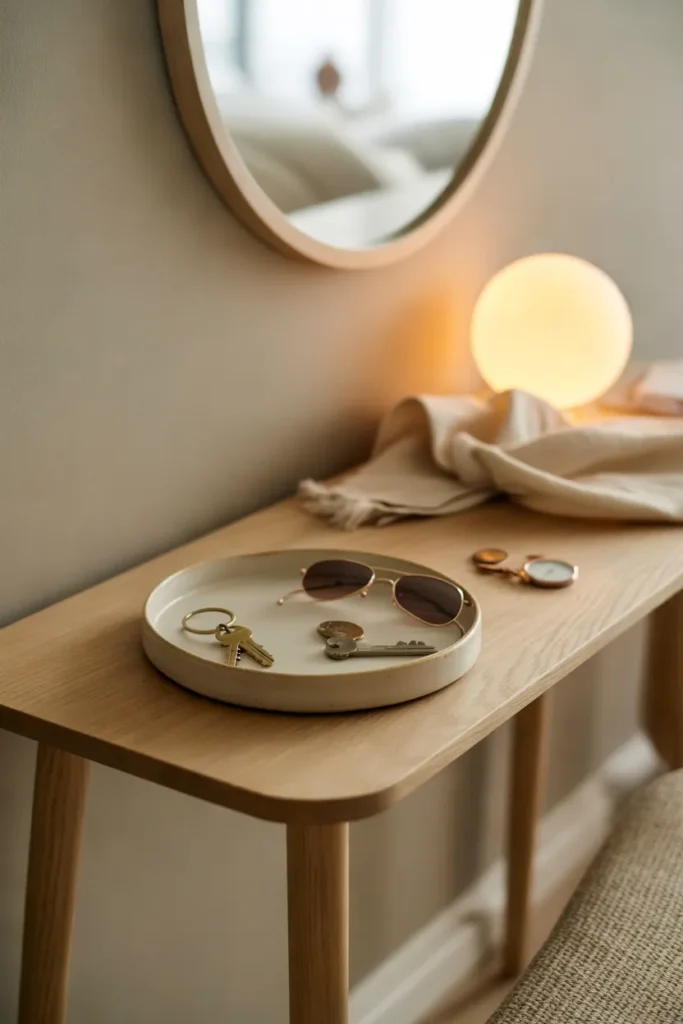
Cost: Low | Time: 10 minutes | Skill Level: Beginner
Best For: Keys, wallets, sunglasses, small daily items | Space Needed: Minimal
A simple tray can stop tiny essentials from spreading across every available surface. Choose one with raised edges so keys and coins stay contained. Place it beside the door and keep it dedicated to items you carry out daily. The goal is quick drop-off and quick pickup, not decorative storage.
Mirror With Hooks
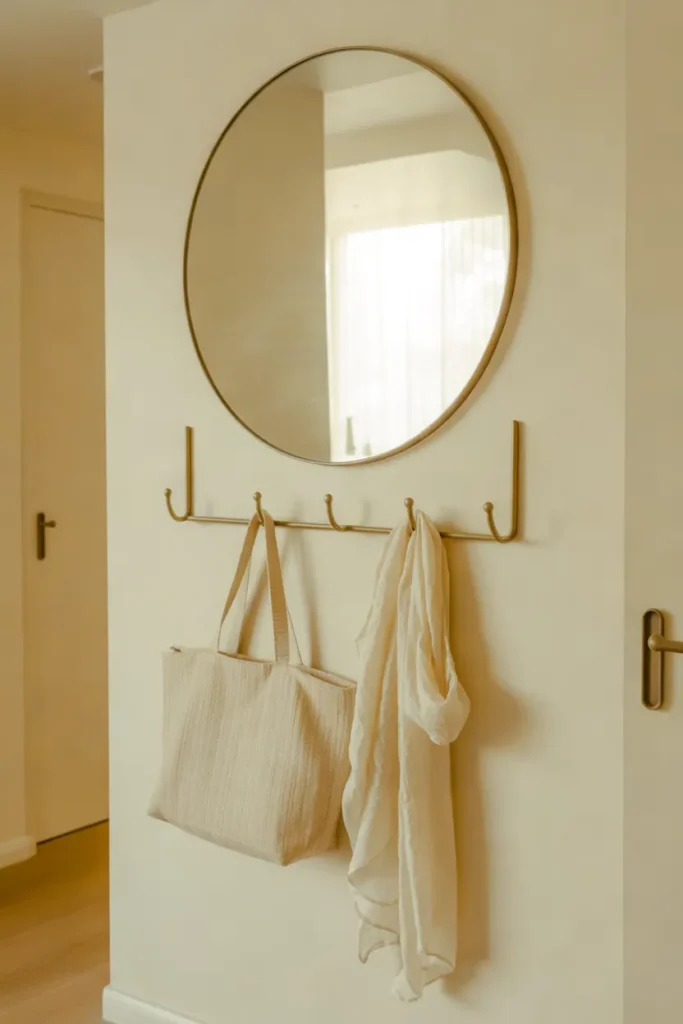
A mirror can do double duty when paired with nearby hooks. Mount it above a compact hook row so the wall provides both a last-look station and practical storage. Keep the hanging items limited to daily bags, hats, or light layers to prevent the arrangement from looking overloaded.
For renters, choose a freestanding mirror with an attached hook rail if wall mounting is limited. The reflective surface also helps bounce available light around a darker entrance. For an even more welcoming entrance, pair the mirror with ideas from these hallway lighting ideas. Keep the floor area open beneath it for shoes or a small basket, creating a compact drop zone without crowding the doorway.
Slim Shoe Bench
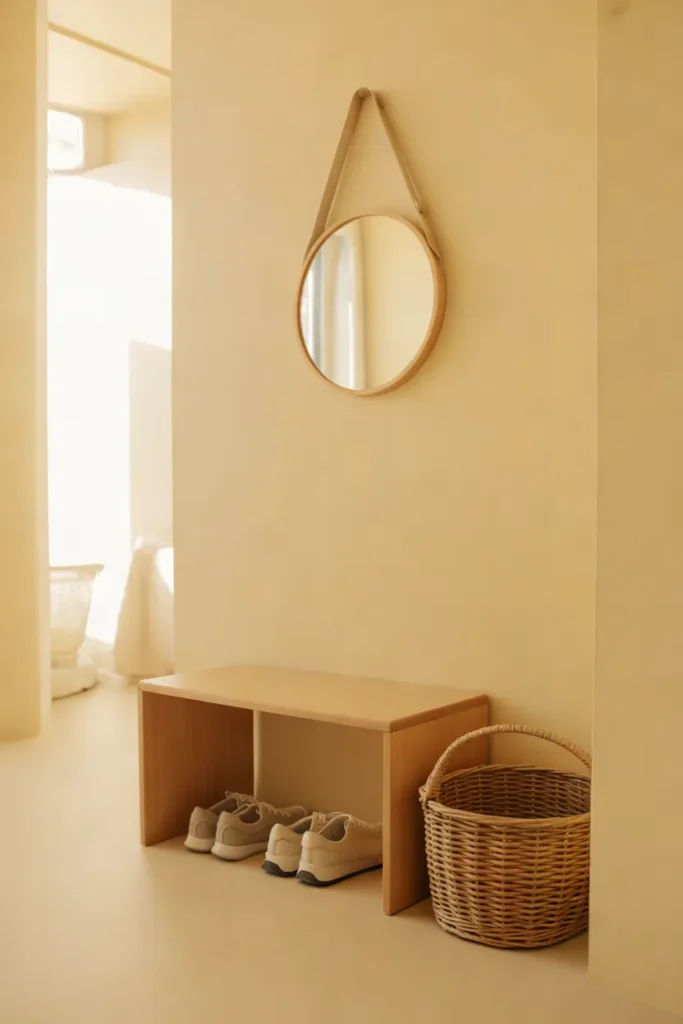
DO:
- Choose a bench narrow enough to preserve walking space.
- Store everyday shoes directly underneath.
- Add one basket for slippers or small accessories.
- Keep the top surface mostly clear.
DON’T:
- Use a deep bench that blocks the doorway.
- Let shoes spill beyond the bench edges.
- Store rarely used items underneath.
- Cover the seat with bulky decor.
A shoe bench gives the entrance two useful functions in one compact footprint. It provides a comfortable place to sit while putting on footwear and creates an obvious home for frequently worn pairs. Choose open storage when quick access matters most, especially in apartments with limited closet space.
Color-Coded Storage Bins
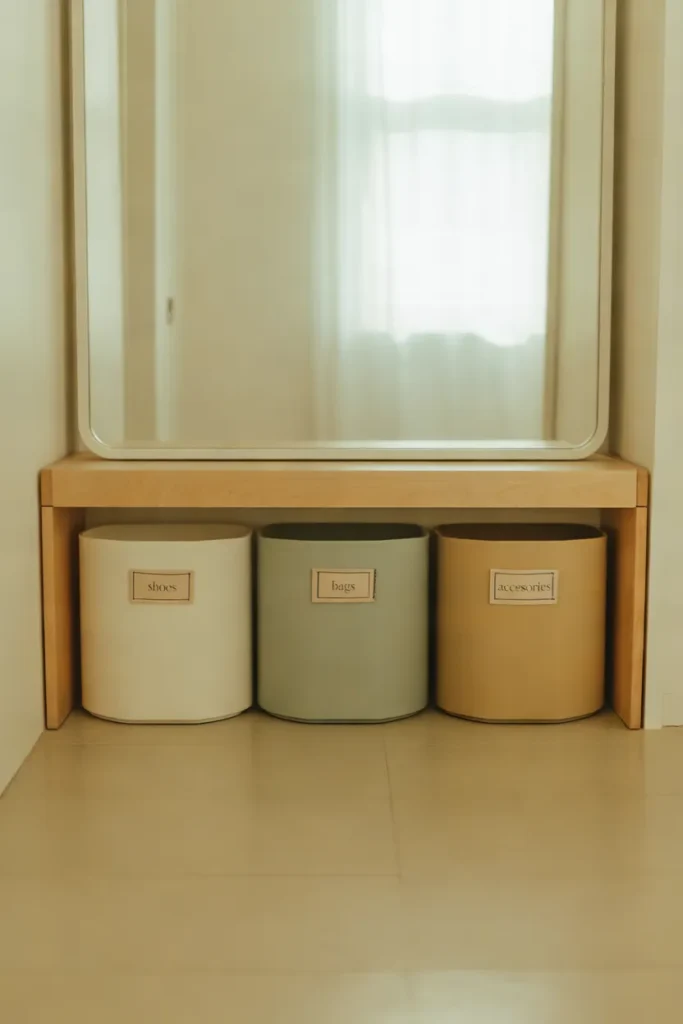
Cost: Low to moderate | Time: 30 minutes | Skill Level: Beginner
Best For: Shared apartments and families | Works In: Entry closets, shelves, consoles
Result: Faster sorting with less visible clutter
Color coding makes a busy entrance easier to manage because each container has a clear visual purpose. Keep the palette restrained so the bins complement your decor rather than becoming the main feature. Use one color for each category and place the most frequently used bin closest to the door.
Mail Sorting Station
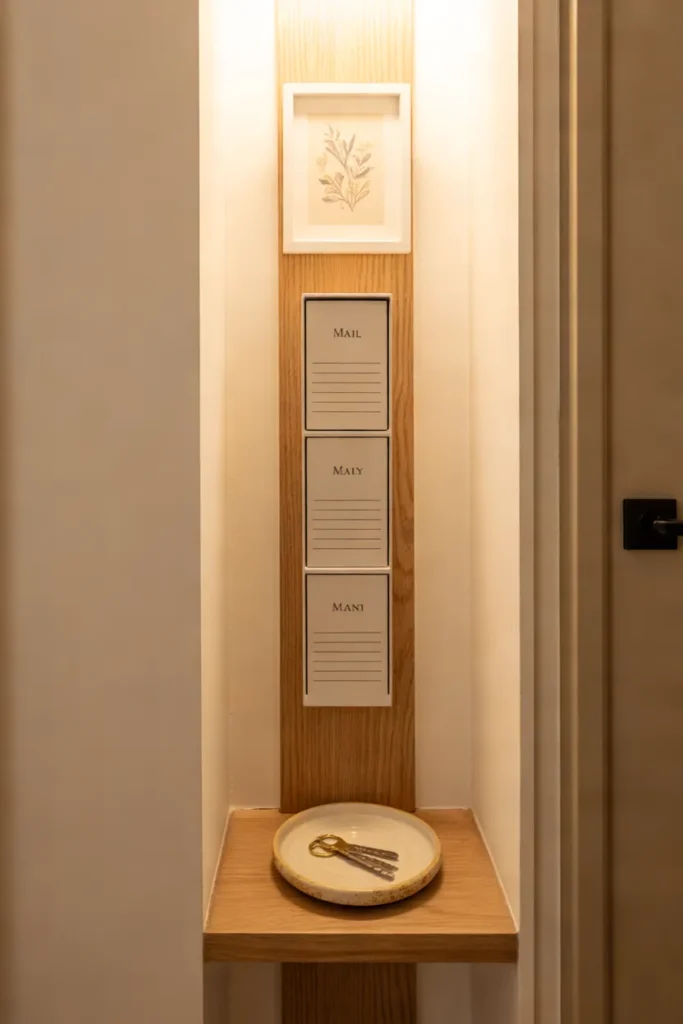
Mail becomes much easier to control when it has a designated stopping point near the entrance. Install a vertical organizer with separate spaces for incoming mail, items to act on, and outgoing envelopes. Add a small recycling container nearby so unwanted paper does not migrate onto kitchen counters.
A compact mail station works especially well beside a key rack or console. Sort papers as soon as you walk in instead of creating a growing pile. I’ve noticed that keeping the system within arm’s reach makes it far more likely that mail gets handled immediately rather than becoming another weekend task.
Over-Door Storage Rack
DO:
- Measure the door clearance before buying a rack.
- Use lightweight baskets for smaller accessories.
- Store seasonal items higher up.
- Keep frequently used pieces within easy reach.
DON’T:
- Overload the rack with heavy bags.
- Block the door from opening fully.
- Let baskets extend into the walkway.
- Store items you rarely need near eye level.
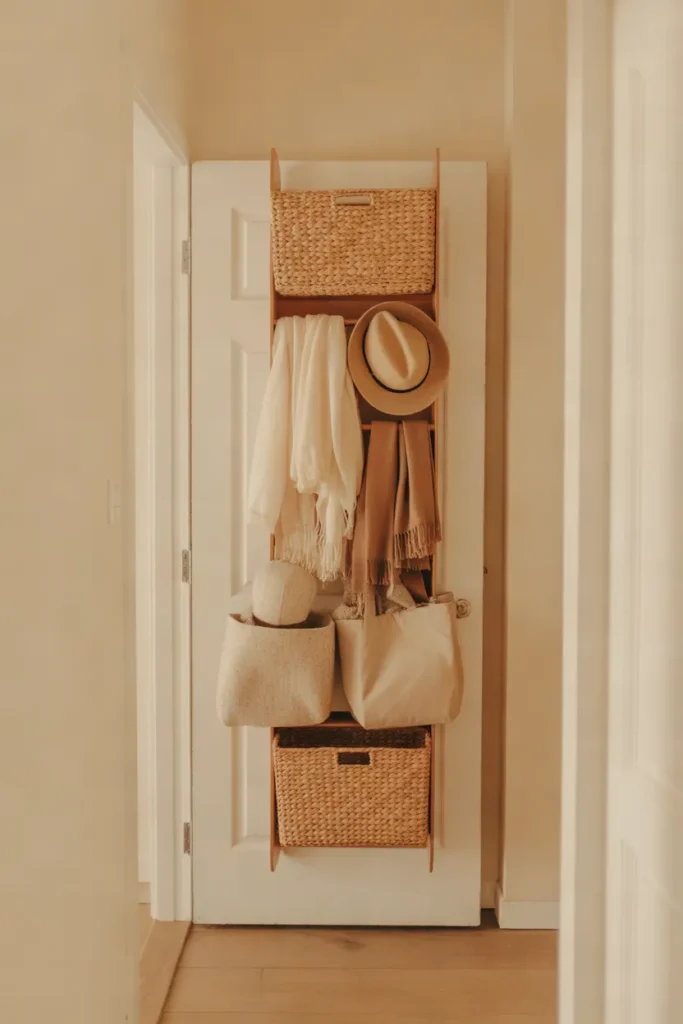
An over-door rack turns unused vertical space into valuable storage without taking up floor area. It works especially well for renters who cannot install permanent cabinetry. Choose a slim design that sits securely against the door, then reserve it for lightweight items such as hats, scarves, and reusable shopping bags.
Wall-Mounted Shoe Cubbies
Cost: Moderate | Time: One afternoon | Skill Level: Intermediate
Best For: Narrow entrances | Storage: Shoes and slippers
Space Saving: Excellent | Maintenance: Simple
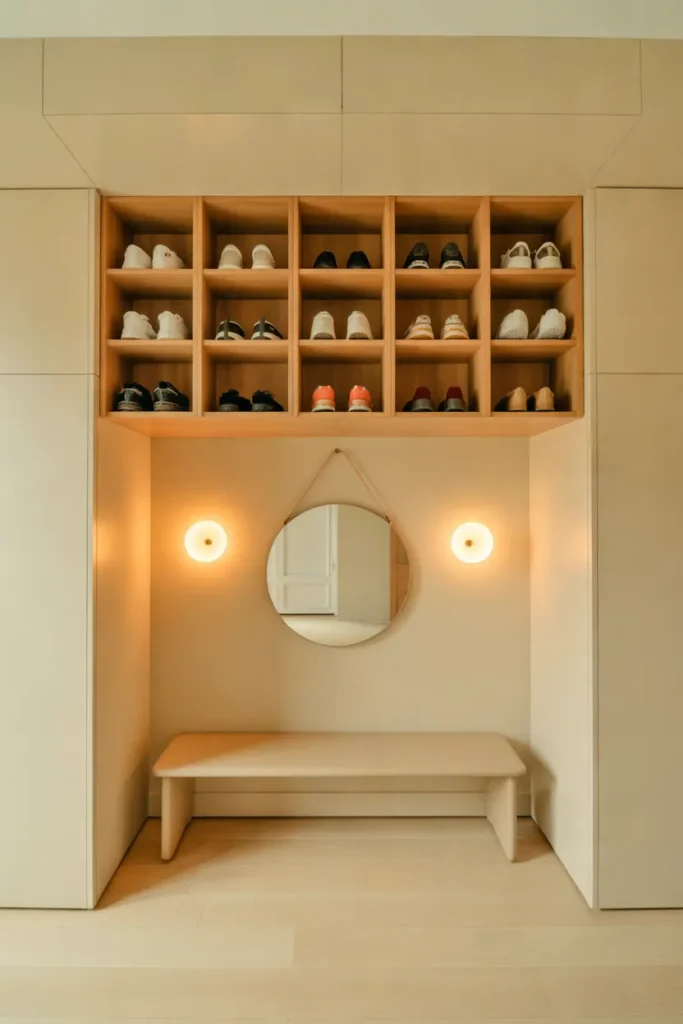
Wall-mounted cubbies keep footwear organized while leaving valuable floor space open. Measure your shoes before choosing cubby dimensions, especially if you own boots or bulkier sneakers. Keep the lowest compartments easy to reach for everyday pairs and use higher sections for footwear that is worn less often.
Dedicated Bag Hooks
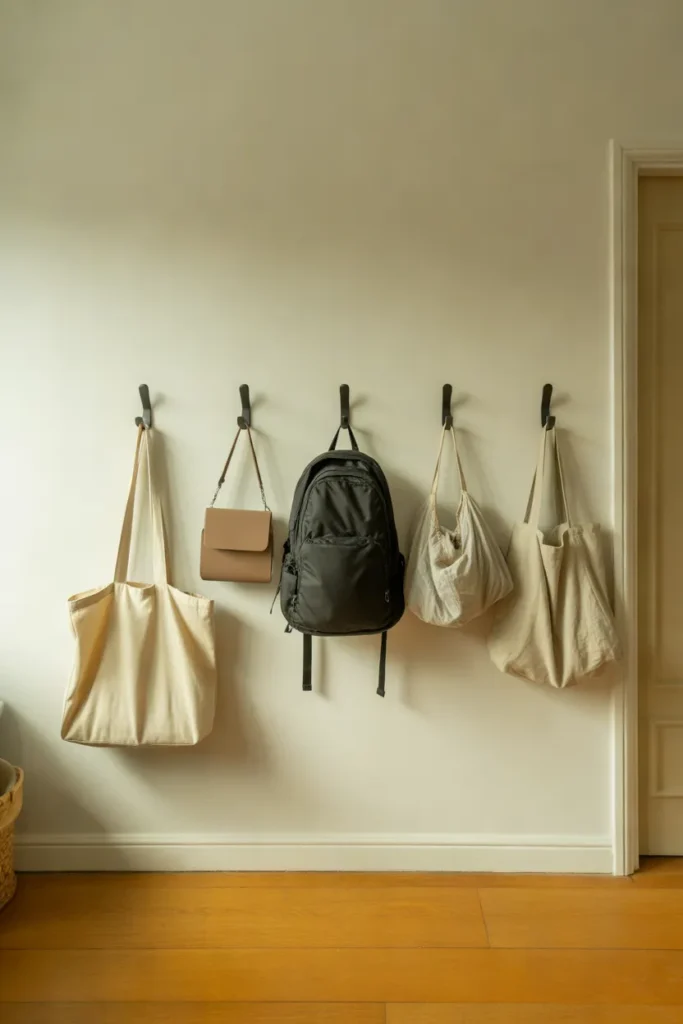
Bags often become the first source of entryway clutter, but a dedicated hook row gives each one a clear landing spot. Position hooks close to the door and space them far enough apart that handles do not overlap. Use stronger hooks for backpacks and heavier work bags.
For shared apartments, assign one or two hooks to each person. Keep the lowest hooks accessible to children if needed, while placing heavier adult bags higher. This small change can make the entrance easier to reset because bags stop landing on chairs, counters, and floors throughout the home.
Narrow Utility Cabinet
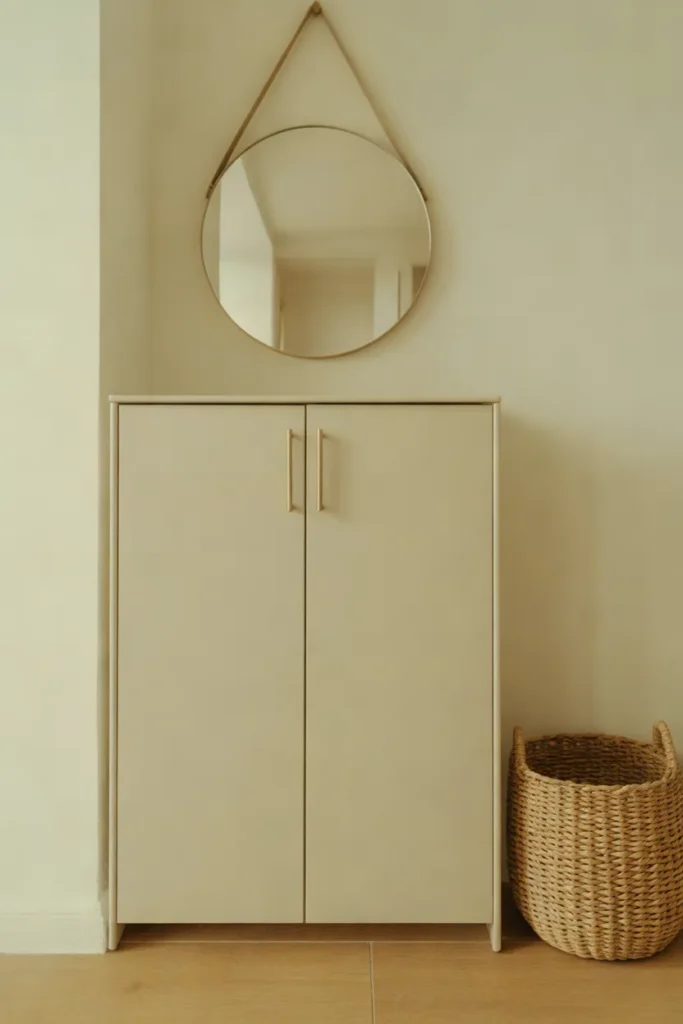
BEFORE: Small essentials spill across the entry because there is no enclosed storage nearby. Cleaning supplies, umbrellas, pet items, and spare accessories end up scattered between rooms.
AFTER: A narrow cabinet gives those loose items a dedicated home while keeping them hidden. Adjustable shelves make it easier to organize different supplies without sacrificing the limited footprint of the entrance.
Choose a cabinet that is shallow enough to preserve comfortable passage around the doorway. Adjustable shelves are especially useful because apartment storage needs change over time. Keep daily items at waist or eye level and move occasional supplies higher. A closed front also helps the entrance look calmer between resets.
Under-Bench Baskets
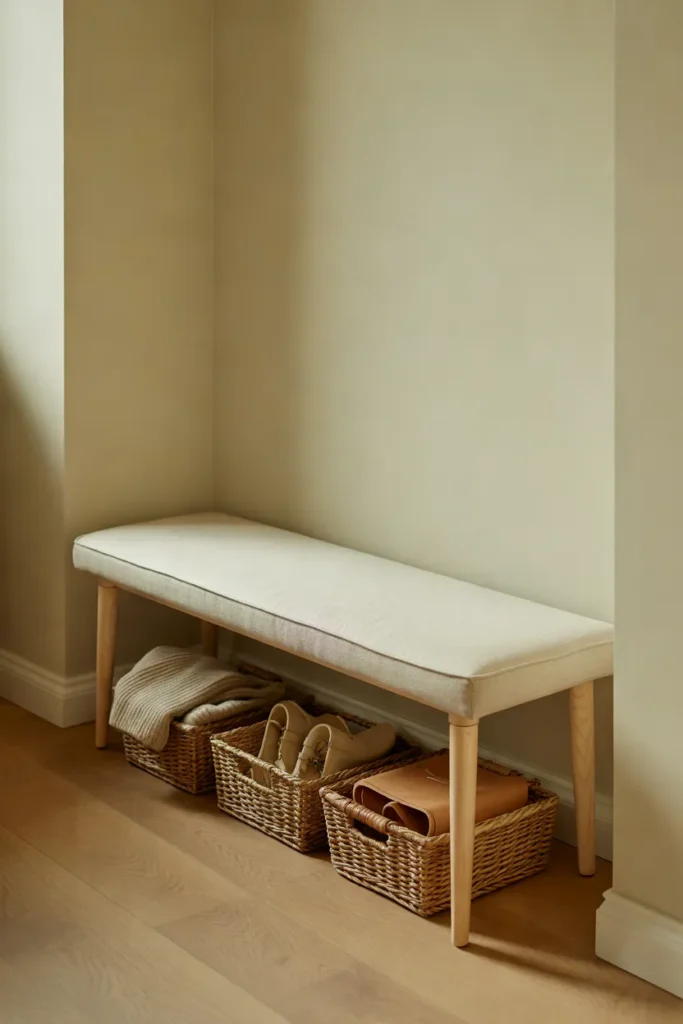
- Measure underneath: Check the bench height and width before purchasing baskets.
- Assign categories: Use one basket for footwear, one for accessories, and one for miscellaneous daily items.
- Add labels: Simple tags make shared storage easier to maintain.
- Leave clearance: Pull baskets out comfortably without blocking the walkway.
Under-bench baskets turn an otherwise unused gap into practical storage. Choose matching containers for a cleaner appearance, then keep the most frequently accessed basket nearest the door. This approach works particularly well in small apartments because the storage stays contained while the seating area remains useful for putting on shoes.
Vertical Cubby Tower
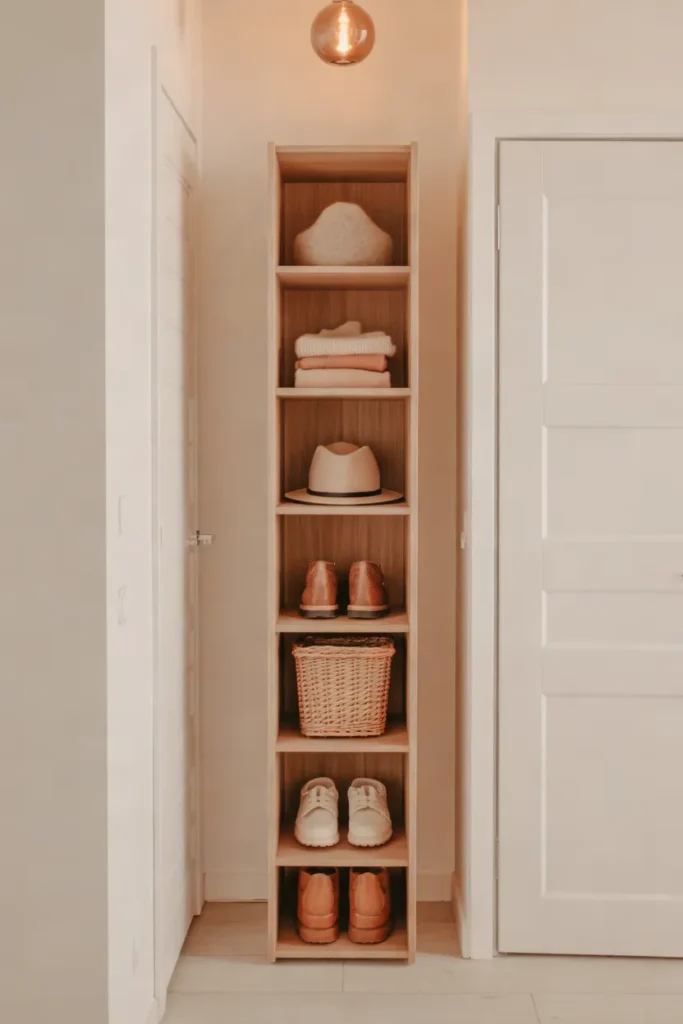
| Feature | Option A: Wide Storage | Option B: Vertical Tower |
| Floor space | Uses more width | Uses minimal width |
| Capacity | Broad storage area | Multiple stacked zones |
| Best placement | Larger foyer | Narrow apartment entrance |
| Organization | Side-by-side categories | Separate vertical categories |
A tall cubby makes better use of wall height when floor space is limited. Assign each compartment a purpose and place everyday footwear or bags in the easiest-to-reach zones. Add baskets to lower cubbies if you prefer a cleaner look. This layout keeps storage close without widening the entry footprint.
Umbrella Holder Corner
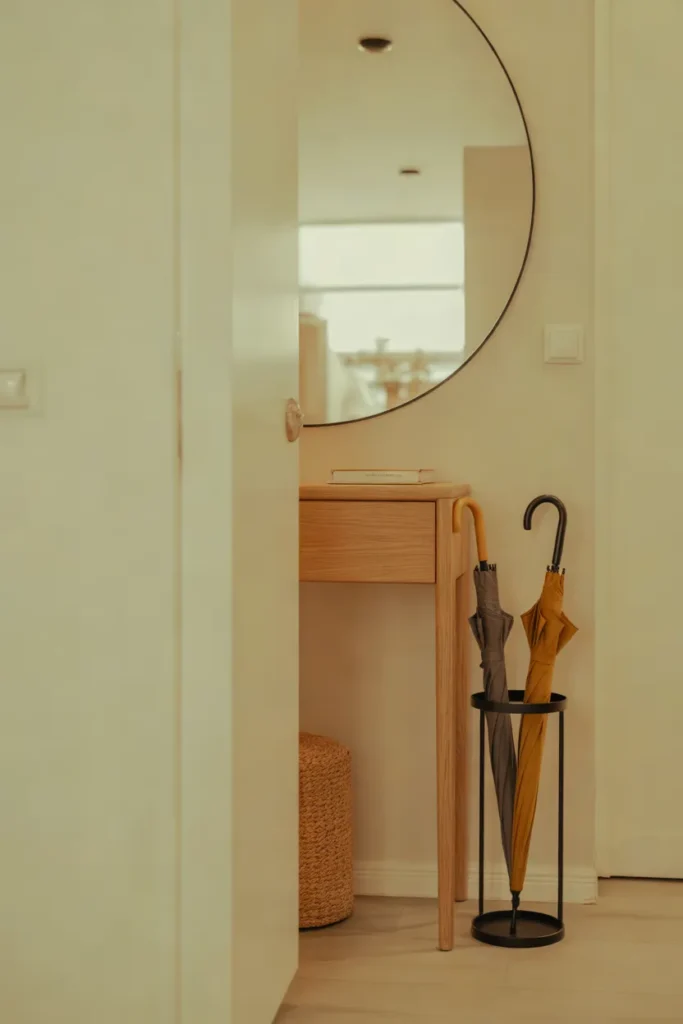
DO:
- Place the holder beside the door.
- Choose a narrow, weighted base.
- Let umbrellas dry before long-term storage.
- Keep only current-use umbrellas nearby.
DON’T:
- Place the holder where it blocks the doorway.
- Use a tall unstable container.
- Store wet umbrellas inside a closed cabinet.
- Fill the corner with unrelated items.
An umbrella holder gives wet-weather essentials a clear home before they spread across the floor. Pick a container with a waterproof interior or removable drip tray to protect nearby flooring. A slim vertical design works especially well in apartments because it uses a small footprint while keeping umbrellas easy to grab.
Daily Essentials Shelf
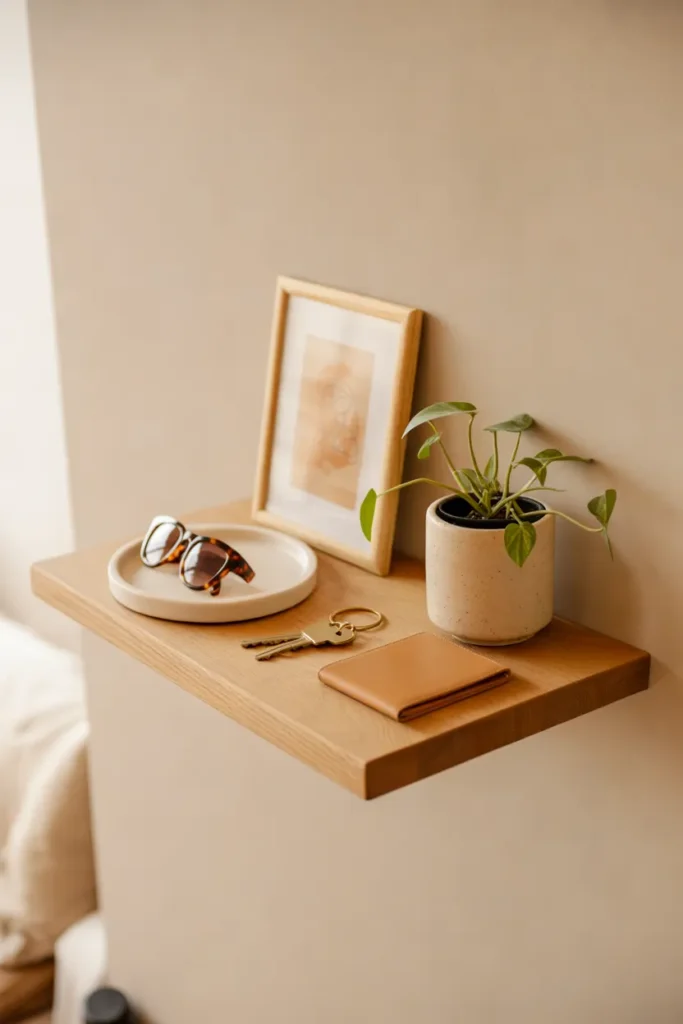
Cost: Low | Time: 20 minutes | Skill Level: Beginner
Best For: Daily essentials | Works In: Narrow walls and entry corners
Storage: Small items | Result: Faster exits and fewer misplaced belongings
A dedicated shelf works best when it holds only things that leave the apartment with you regularly. Keep a small tray for keys and wallets, then reserve the remaining space for one or two useful accessories. The less crowded the shelf becomes, the easier it is to spot what you need.
Entry Drawer Organizer
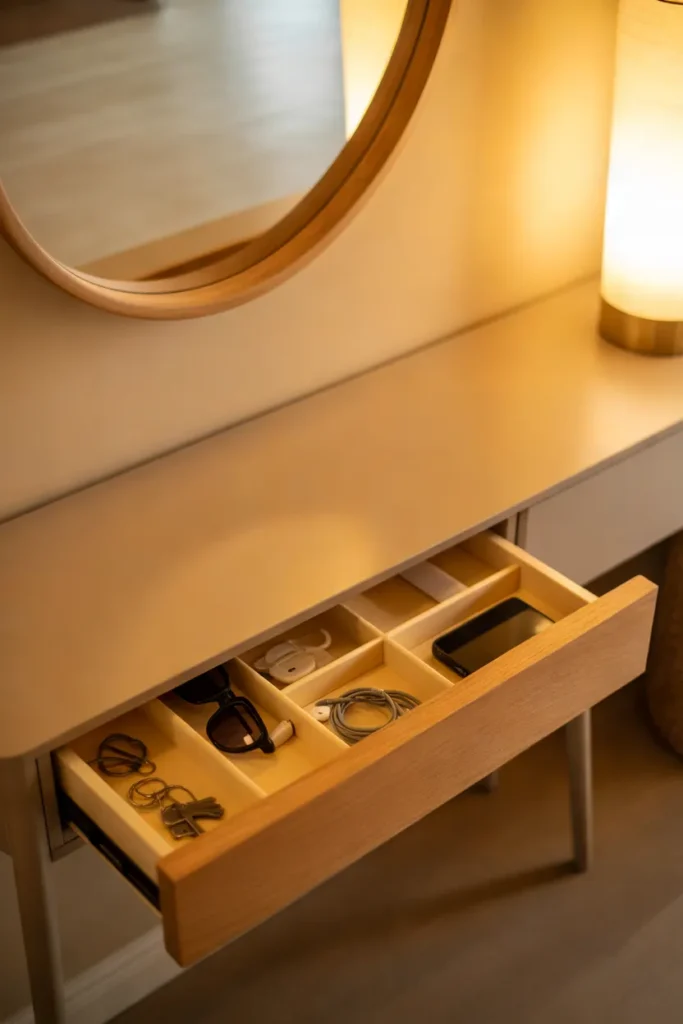
Small items become much easier to manage when they have individual compartments. Add adjustable dividers inside a shallow entry drawer and create simple zones for keys, chargers, sunglasses, earbuds, and other pocket essentials. Keep everyday objects toward the front so you do not have to search through the entire drawer.
This approach keeps visual clutter completely out of sight while preserving quick access. It also prevents the drawer from becoming a random catchall. I’ve noticed that dividing a drawer by item type makes weekly resets much faster because misplaced objects have an obvious destination instead of getting pushed into an empty corner.
Fold-Down Entry Desk
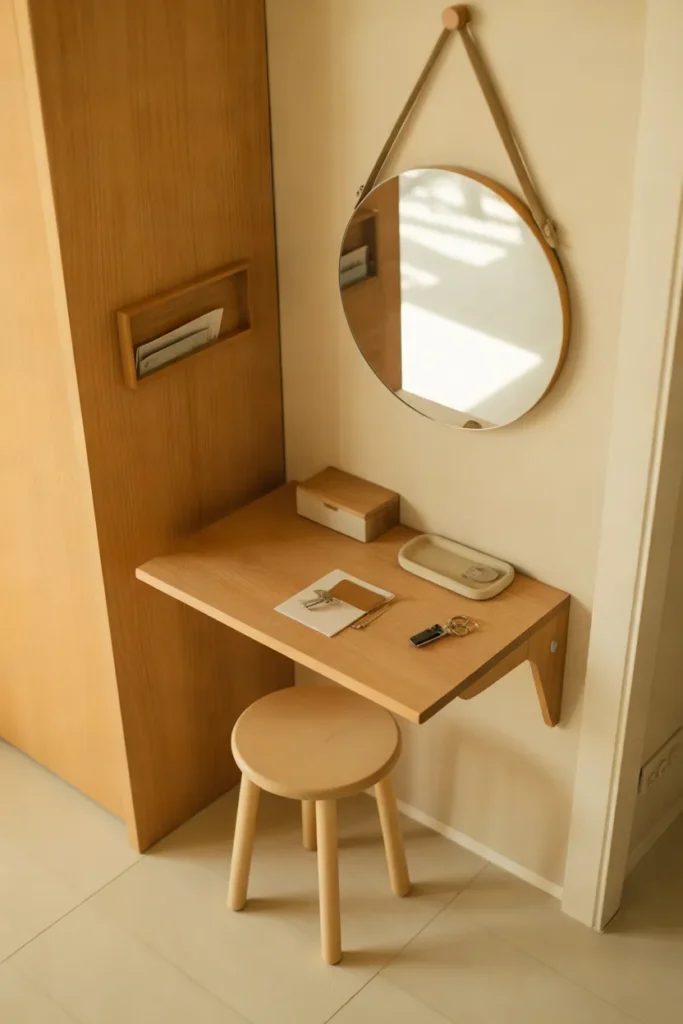
BEFORE: A small entry has no surface for sorting mail, dropping keys, or handling quick tasks. The available floor area is already too limited for another piece of furniture.
AFTER: A fold-down desk creates a temporary work surface only when needed. When closed, it sits flat against the wall and leaves the walkway open for normal apartment traffic.
Choose a model with a secure latch and a surface large enough for your everyday tasks. Keep a small stool nearby only if you will use the desk regularly. This setup suits compact apartments where every inch matters, especially when the entrance doubles as a mail-sorting or quick planning area.
Tote Bag Station
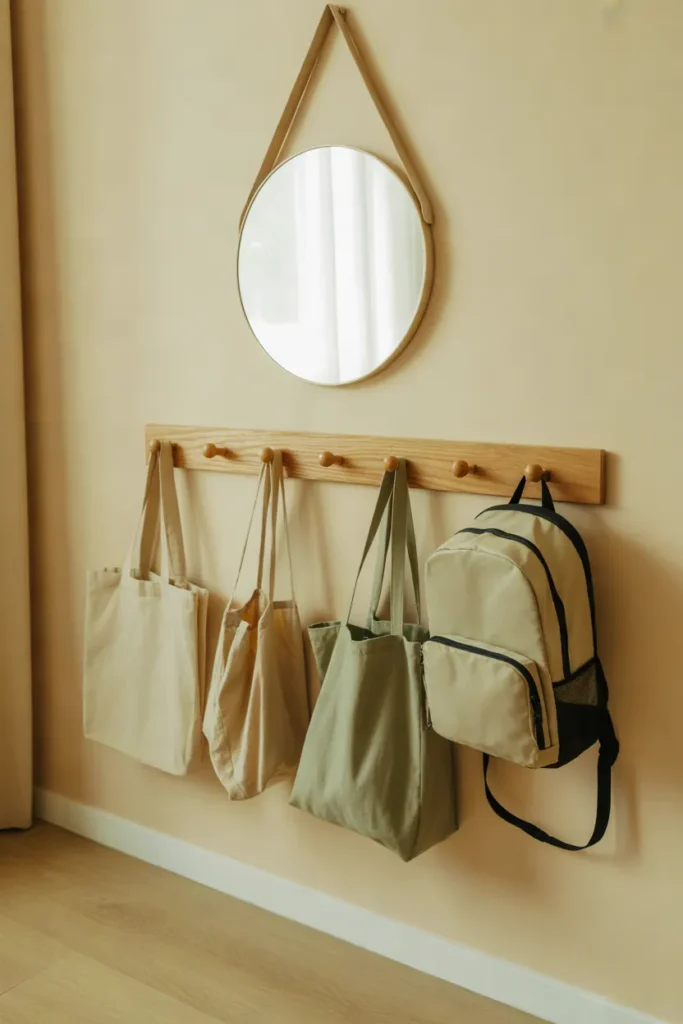
- Choose one wall: Find a spot close to the door that stays clear of door movement.
- Install sturdy hooks: Use hooks strong enough for full grocery or work bags.
- Sort by use: Keep everyday totes in the easiest-to-reach positions.
- Limit the collection: Remove damaged or rarely used bags regularly.
A dedicated tote station prevents reusable bags from collecting on chairs, counters, and closet floors. Keep the setup simple enough that returning a bag takes seconds. For a polished look, choose bags in complementary neutral shades and place the most frequently used options closest to the entrance.
Corner Storage Cabinet
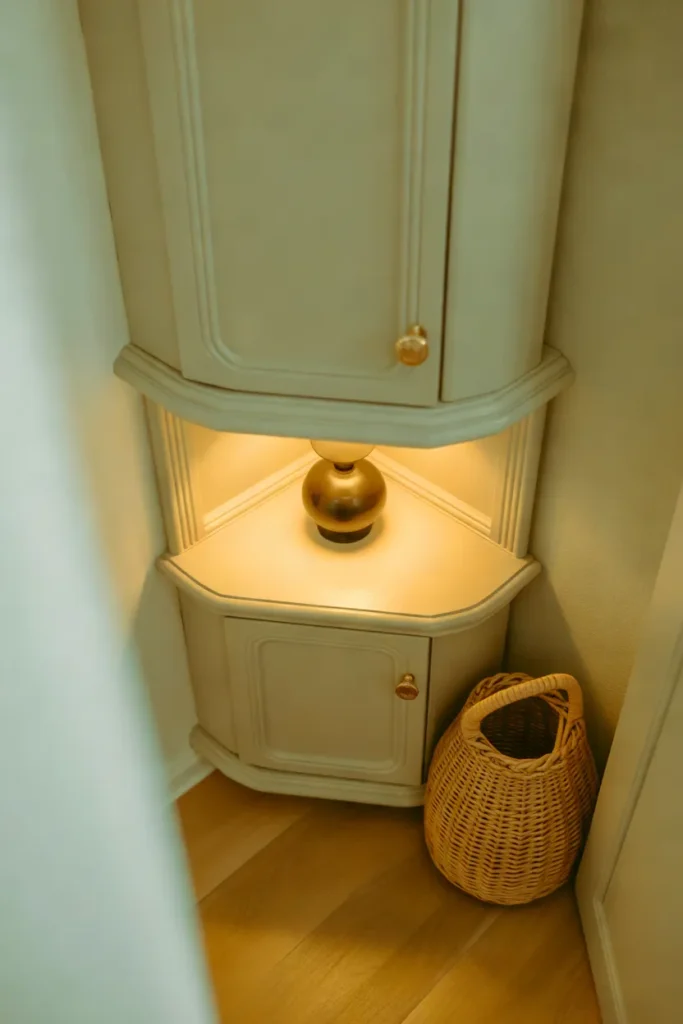
| Feature | Option A: Open Corner Shelves | Option B: Closed Cabinet |
| Visibility | Items remain exposed | Contents stay concealed |
| Maintenance | Requires frequent visual tidying | Easier to keep looking neat |
| Storage | Best for attractive accessories | Better for mixed essentials |
| Style | Light and airy | Clean and contained |
A corner cabinet can turn an awkward entrance angle into useful storage without extending far into the room. Choose rounded or compact furniture if the corner sits near a busy walkway. Use the interior for shoes, hats, pet accessories, or seasonal items that would otherwise collect around the doorway.
Conclusion
A well-planned entryway does not need to be large to feel organized. These apartment entryway drop zone ideas show how small surfaces, vertical storage, baskets, hooks, and smart furniture can give everyday belongings a clear home.
Start with the clutter that bothers you most and choose one solution that addresses it. I’ve seen how small changes like these can completely shift the way an apartment feels and functions. Save this post on Pinterest for your next organizing project, try your favorite idea, and share it with someone who could use a calmer, more practical entrance. A tidy welcome starts with one simple change.
One Comment