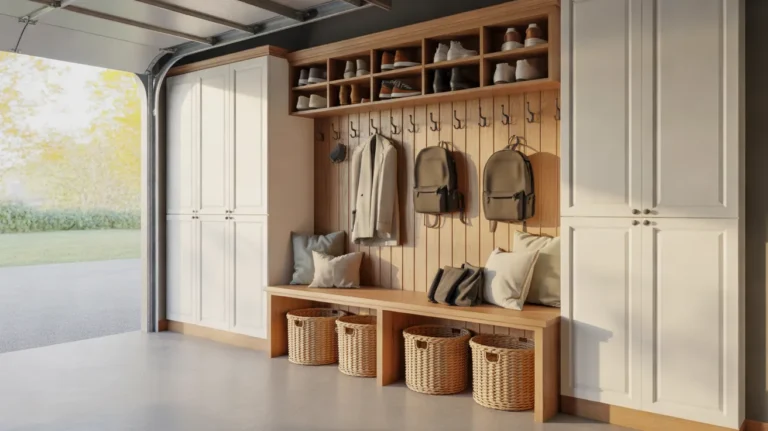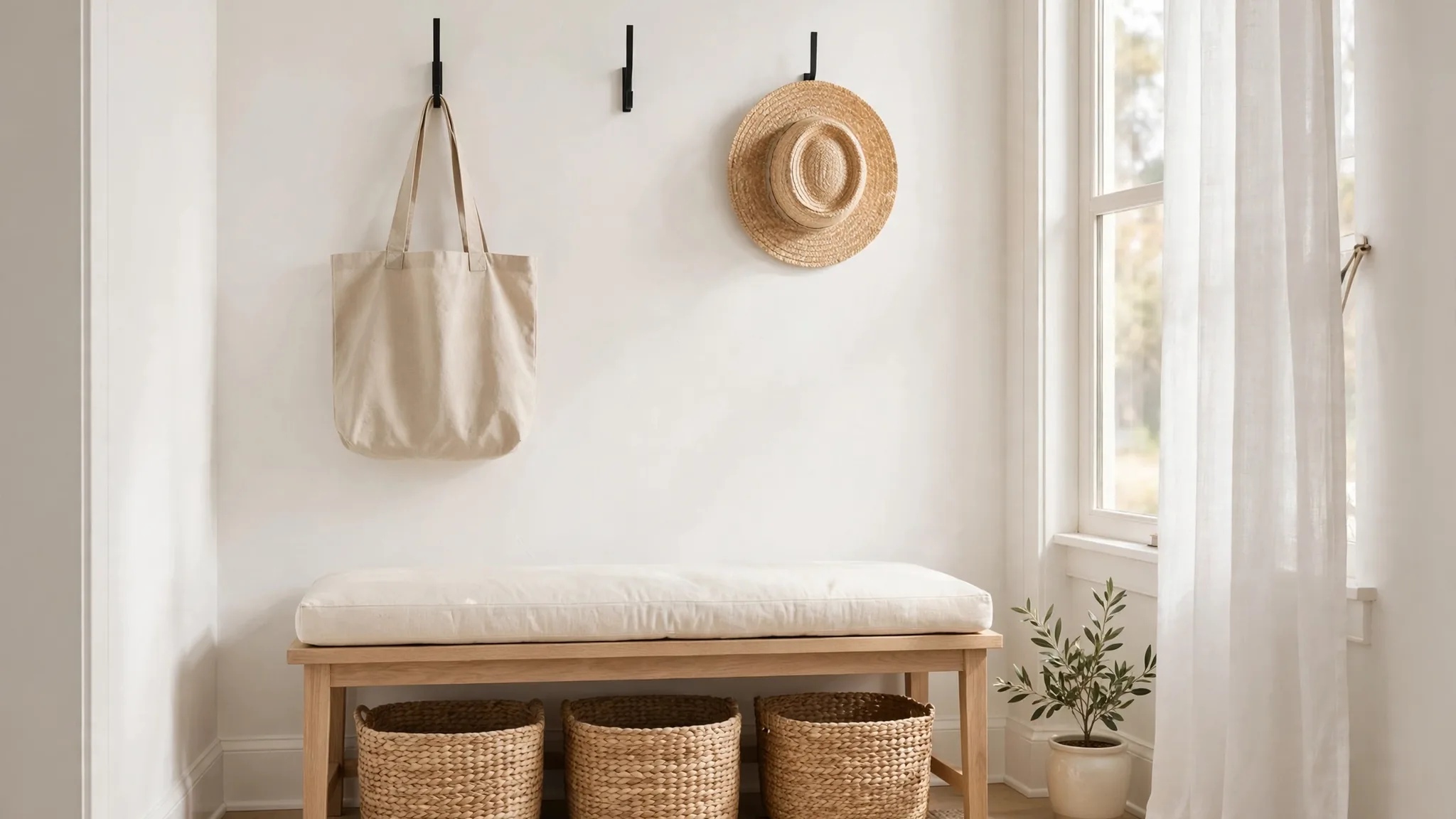
25 Mudroom Organization Ideas for Small Entryways to Beat Clutter
Your entryway sets the tone for your whole home, yet a tiny foyer often turns into a clutter magnet by the front door. The good news is that smart mudroom organization ideas for small entryways can give even the narrowest nook the calm function of a full mudroom. I have tested dozens of compact solutions in real homes, and the right setup makes busy mornings feel noticeably calmer. If you love tidy utility spaces, you will also enjoy these small laundry room decor with open shelving ideas for another hardworking corner.
This guide rounds up 25 space-smart ideas that borrow true mudroom magic for the smallest entryways. Every pick pairs function with a clean, minimal look built on pale woods, soft whites, and honest materials. Start with two or three that fit your layout, and your front door will finally feel welcoming instead of chaotic. Small square footage is no excuse for daily mess.
Slim Wall Hooks for mudroom organization ideas for small entryways
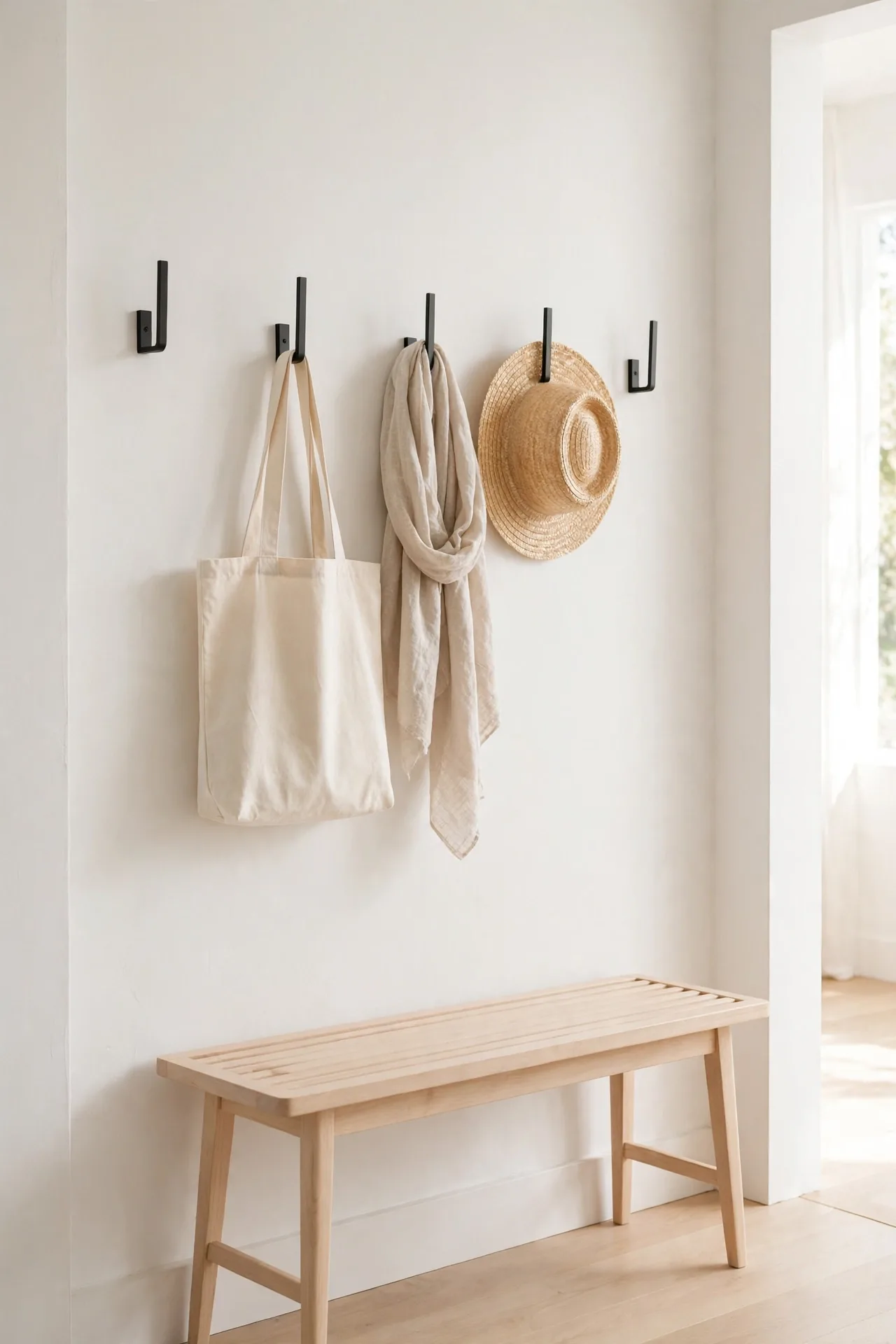
Five coats on one square foot of wall sounds impossible until you meet a slim rail of staggered hooks. Mounting hooks at two heights lets adults and kids share the same strip without tangling sleeves, and the slim profile keeps walkways clear. Choose a rail in pale oak or soft white so it blends into the wall instead of shouting for attention.
The real win is how hooks force a daily edit. When every hook is full, something goes back to the closet, which keeps the entryway honest. Add one small hook near the door for keys and leashes so grab-and-go items never pile on the bench. This single habit cuts morning searching time and keeps the whole corner calm.
Narrow Shoe Rack
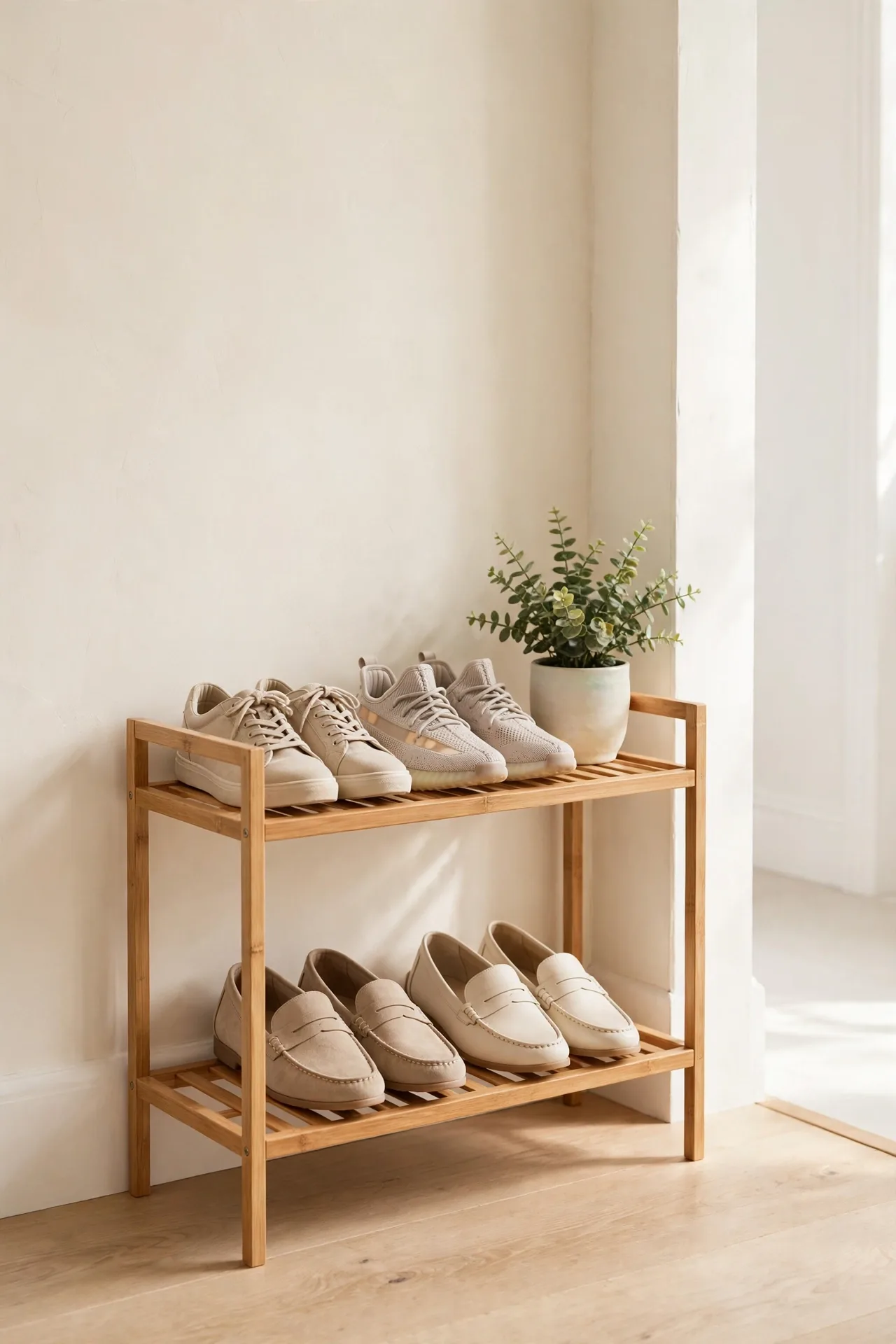
A shoe pile by the door makes a small entryway feel cramped fast. A narrow rack fixes it:
- Pick a rack no deeper than ten inches so it hugs the wall.
- Two open tiers hold daily shoes while keeping pairs visible, so nothing hides and smells.
- Bamboo or light wood finishes keep the look airy instead of heavy.
- A top surface doubles as a drop spot for mail, sunglasses, and a small plant.
- Line the bottom with a washable tray to catch wet soles in rainy months.
Place the rack beside the door rather than behind it so shoes land there naturally. Once the rack exists, family members stop kicking shoes into corners. The entryway reads as intentional, and cleaning the floor takes seconds.
Floating Entry Shelf
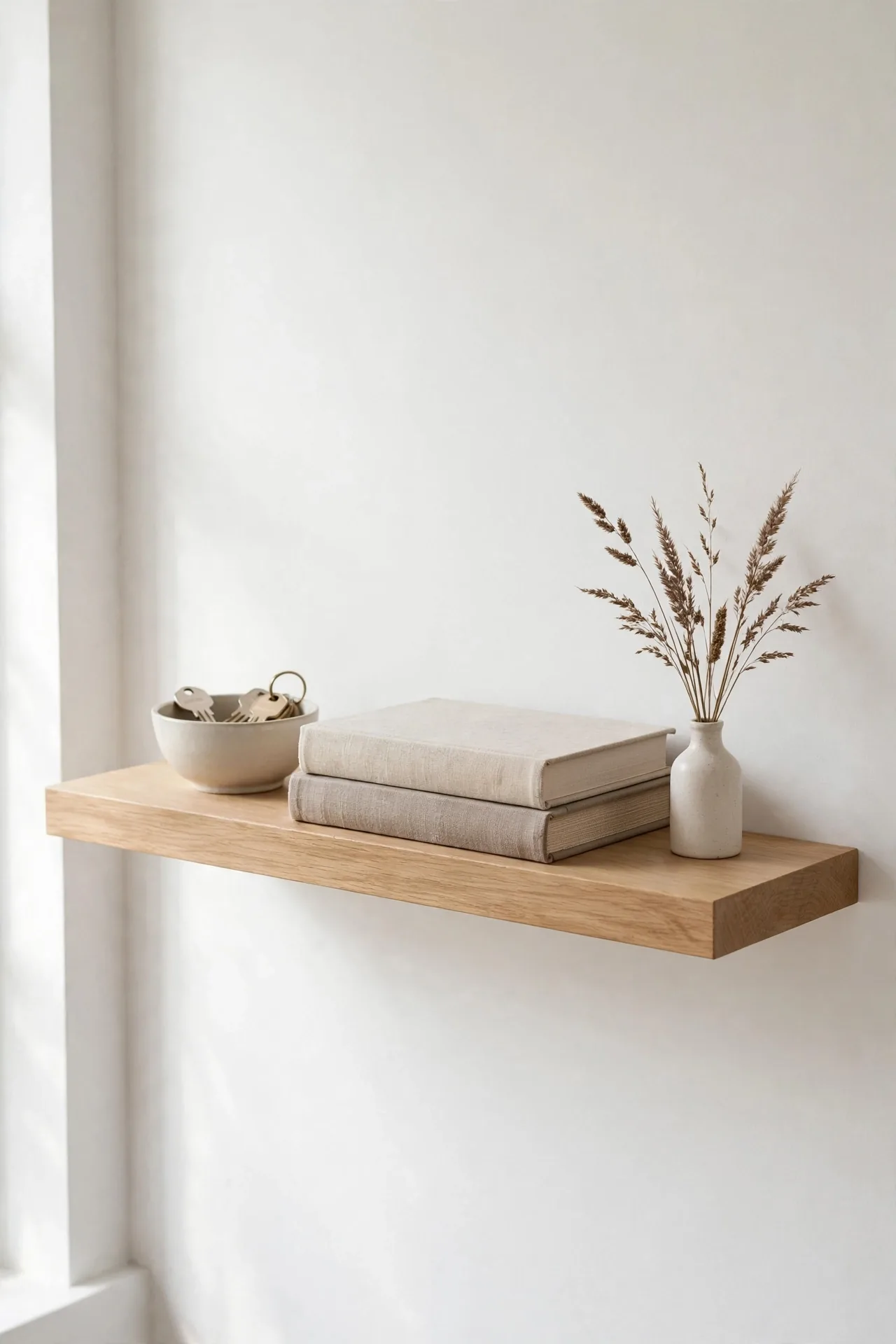
Quick Tip: mount the shelf at elbow height, about 42 inches from the floor, so keys and mail land within easy reach the moment you walk in.
A floating shelf gives you a landing zone without a single leg touching the floor, which keeps a tight entryway feeling open. Style it with restraint: a small bowl for keys, one stack of books, and a bud vase with dried stems. The empty space around objects matters as much as the objects themselves. That is why many experts recommend leaving at least a third of the shelf bare, so the eye rests instead of racing. Pair the shelf with one wall hook below for a bag, and you have a complete drop zone in under two square feet.
Over-Door Organizer
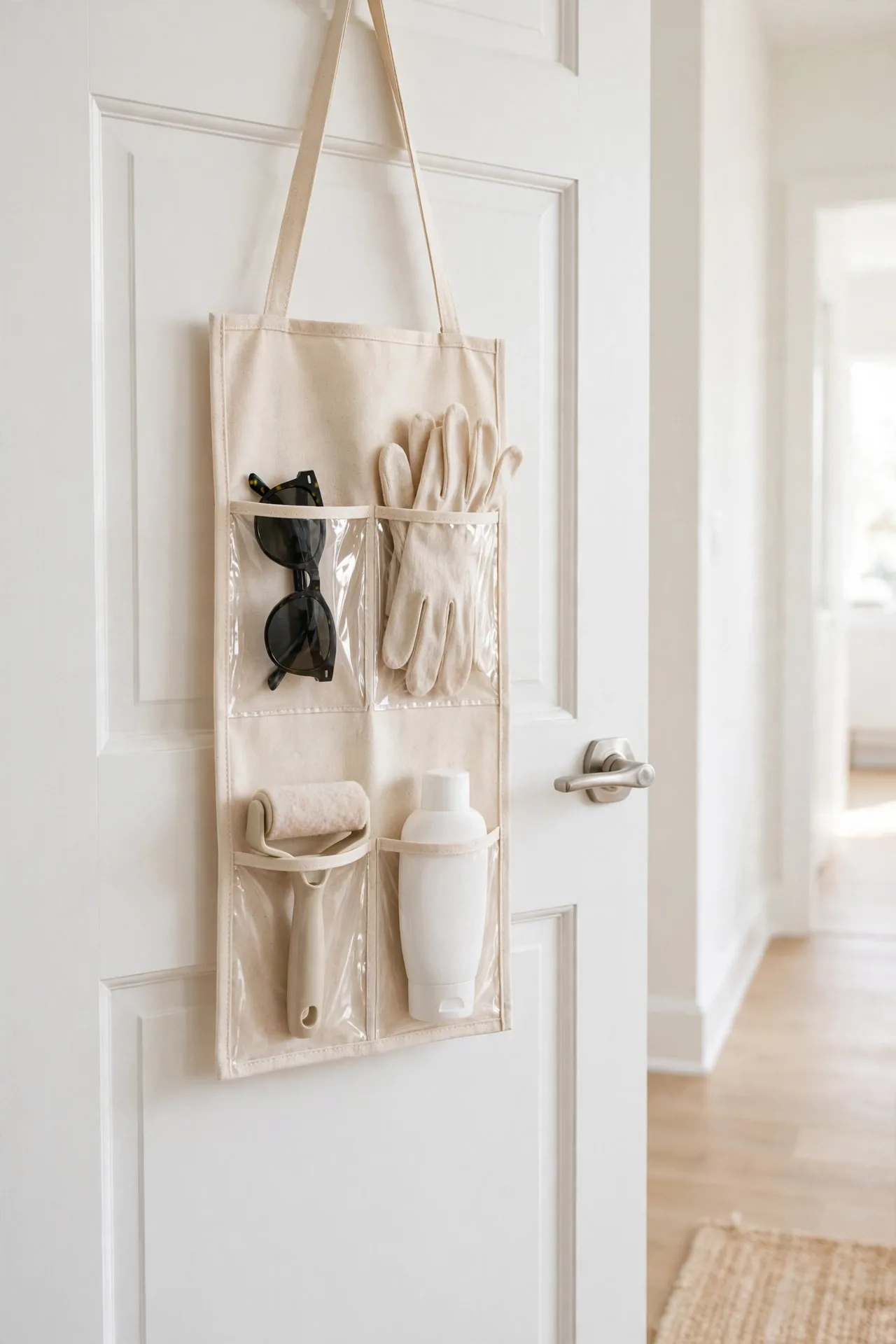
BEFORE: the inside of your front closet door is dead space while scarves and gloves explode across the bench every winter. Small items have no home, so they migrate to every flat surface in sight.
AFTER: a slim over-door organizer turns that blank panel into twelve labeled pockets. Sunglasses, gloves, pet bags, and spare masks each get a slot, and the door still closes flat. The entryway suddenly looks twice as tidy with zero new furniture.
Choose a fabric organizer in cream or oatmeal so it reads as soft storage. Hang it on the closet door nearest the entrance. This trick shines in rentals because it needs no screws, yet it swallows the clutter that mudroom organization ideas for small entryways are built to defeat.
Woven Storage Baskets
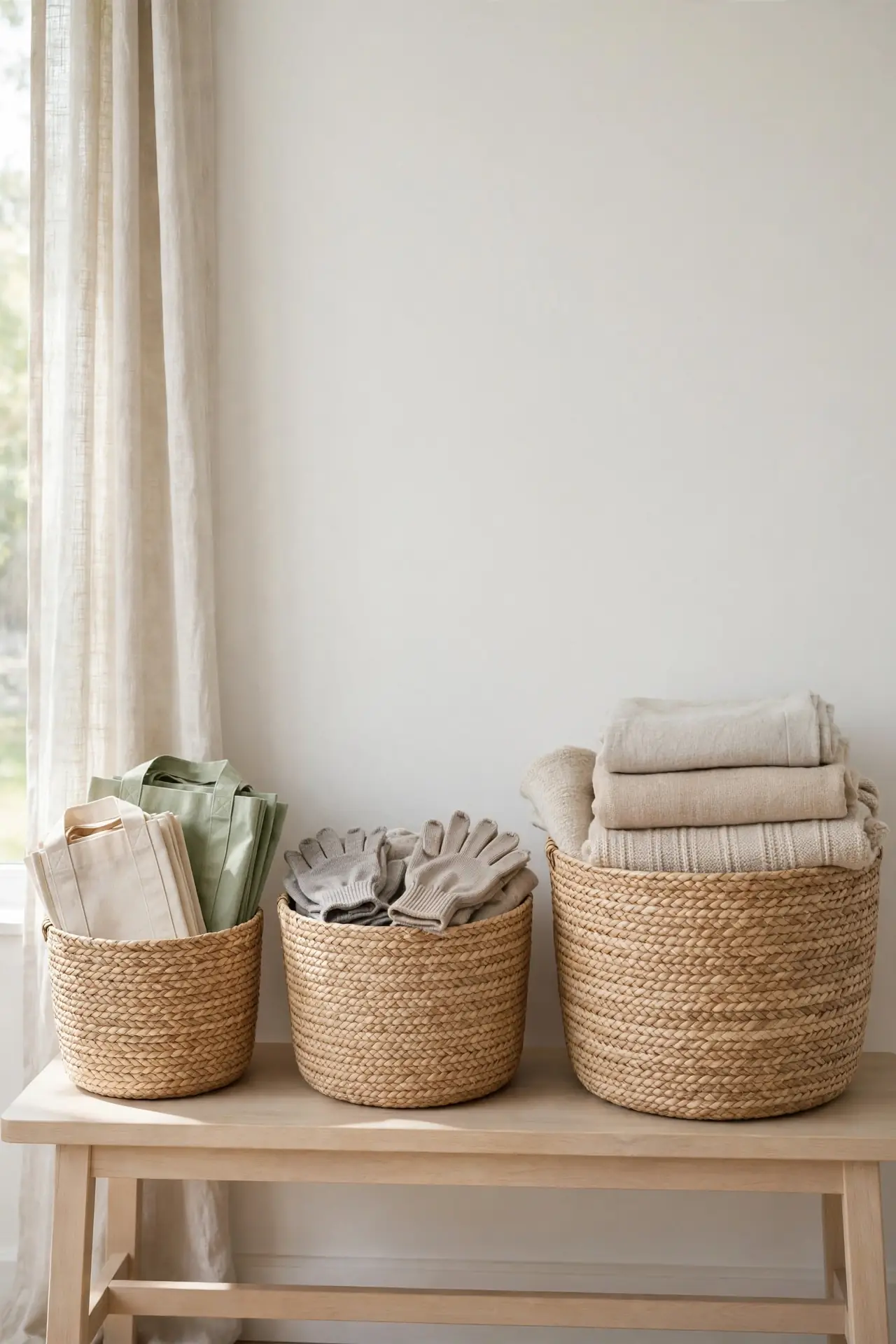
Baskets are the quiet workhorses of tidy entryways, and a trio in graduated sizes handles almost everything. Follow these steps to make them earn their keep:
- Assign each basket a job: one for outgoing items, one for seasonal gear, one for pet supplies.
- Pick seagrass or jute weaves that add warmth while hiding visual noise.
- Slide the largest under a bench and stack the smaller two on a shelf.
- Empty the outgoing basket every Sunday so it never becomes a junk drawer.
The woven texture softens hard entryway lines and makes storage look like decor. I have noticed that guests never guess the pretty baskets hold dog leashes and spare batteries. Keep the palette to natural tones and the whole corner stays calm, cohesive, and genuinely useful.
Compact Bench Seat
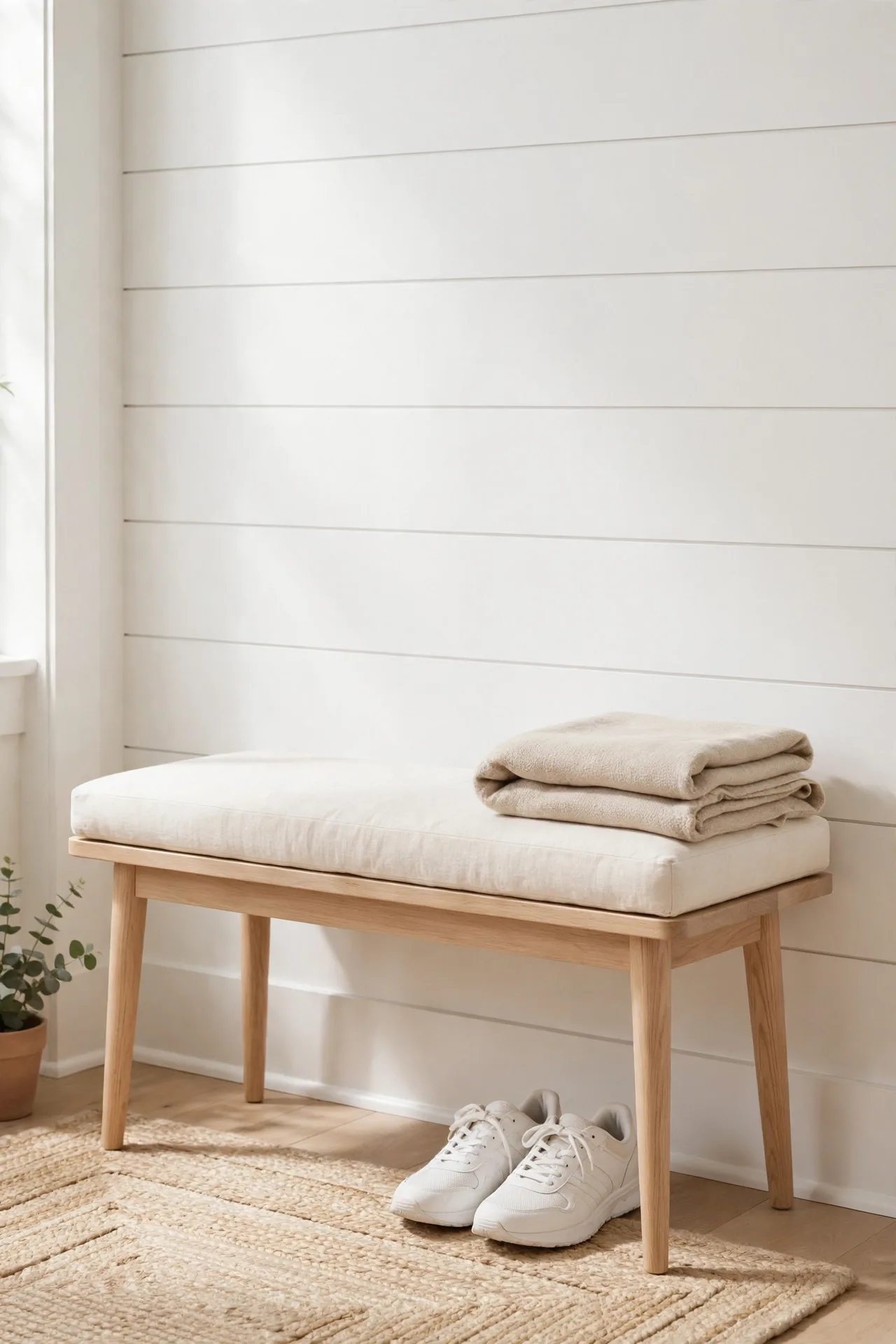
A bench gives you a perch for pulling on boots, but in a small entryway it must stay slim. Compare your options before you buy:
| Bench style | Depth | Storage |
| Backless wood bench | 12 inches | Open space below for shoes |
| Upholstered storage bench | 14 inches | Hidden bin for hats and gloves |
| Wall-mounted fold-down | 4 inches folded | None, but vanishes when unused |
Measure your walkway first and leave at least 30 inches of clear passage. A backless bench in pale wood keeps sightlines open, while a cushion in washable linen adds comfort without bulk. Tuck daily shoes beneath and the bench becomes the hardest working piece in the whole entryway.
Magnetic Key Strip
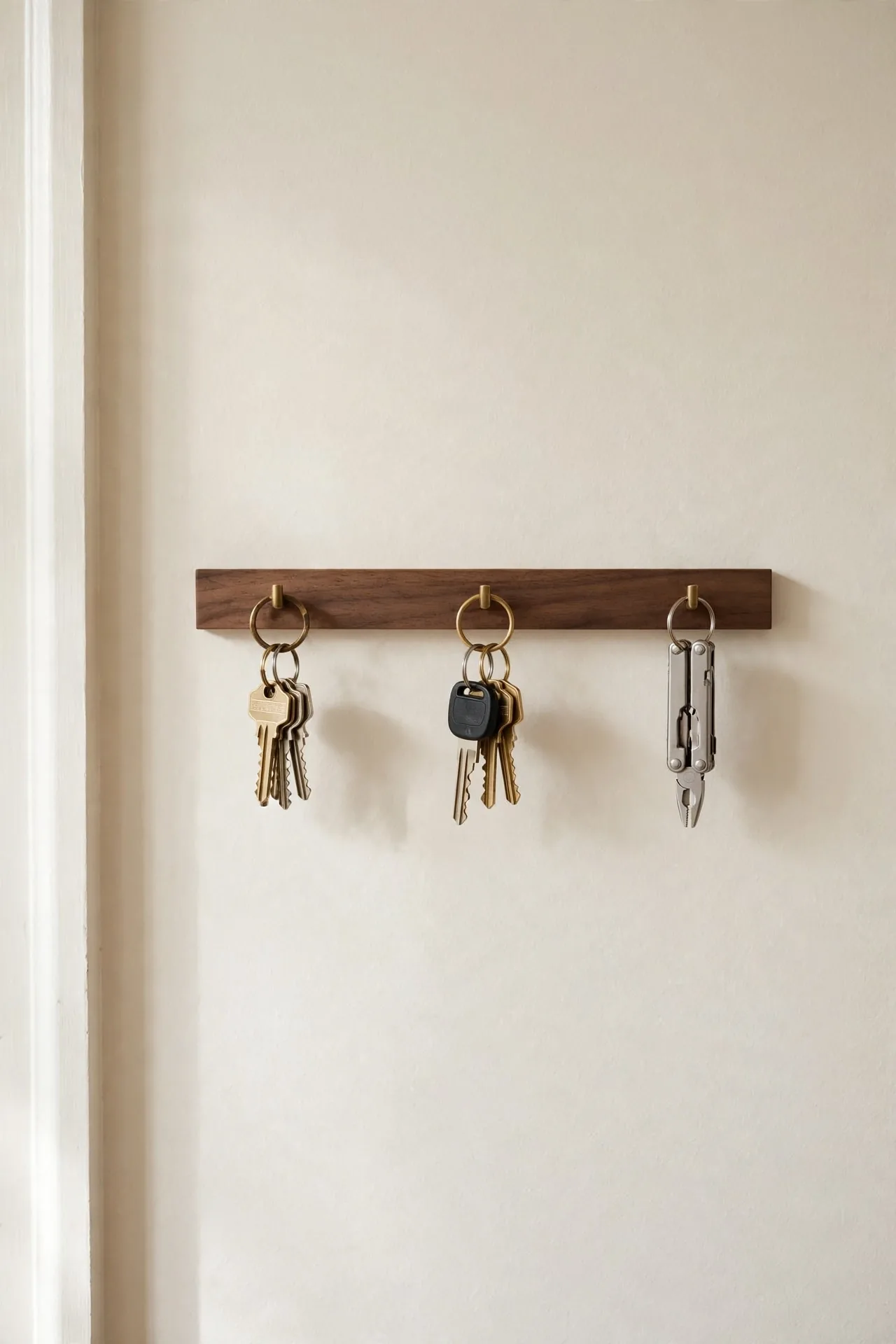
Lost keys derail more mornings than any other small-entryway problem. A magnetic strip solves it:
DO:
- Mount the strip at eye level inside the door so keys are the last thing you see.
- Choose a wood strip with strong hidden magnets that hold key rings flat.
- Keep only daily keys here and store spares elsewhere.
DON’T:
- Do not hang heavy keychains that slide off.
- Do not mount it behind the door swing.
- Do not let the strip become a magnet for random metal clutter.
The strip keeps keys visible in a footprint of zero floor space. Households that adopt one stop losing keys within a week. The walnut finish adds a warm, crafted detail that finishes the wall beautifully.
Clear Catchall Tray
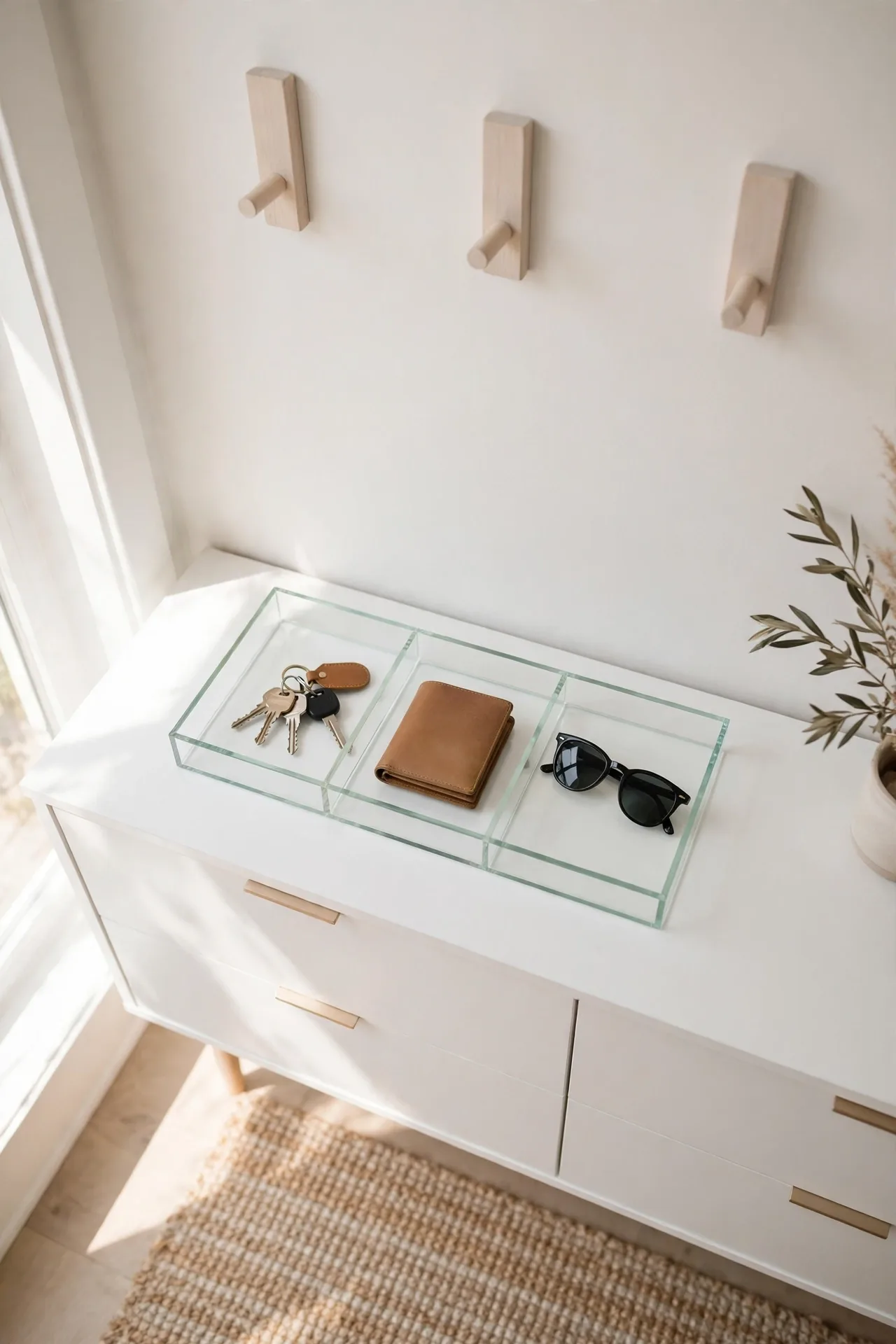
A catchall tray is the smallest organizer with the biggest payoff in a tight entryway. Consider the facts before you dismiss it as too simple:
Cost: under twenty dollars for glass or ceramic. Time: zero installation, just set it down. Skill level: none needed. Best for: keys, wallets, sunglasses, and lip balm. Result: every pocket-emptying item lands in one visible spot.
The transparency keeps the surface feeling light instead of cluttered, which matters when every inch shows. Place it on your shelf or console closest to the door and make emptying pockets into it a nightly ritual. I have seen this work well in many cases: the tray becomes the household lost-and-found, and frantic morning searches simply stop happening.
Wall-Mounted Cubbies
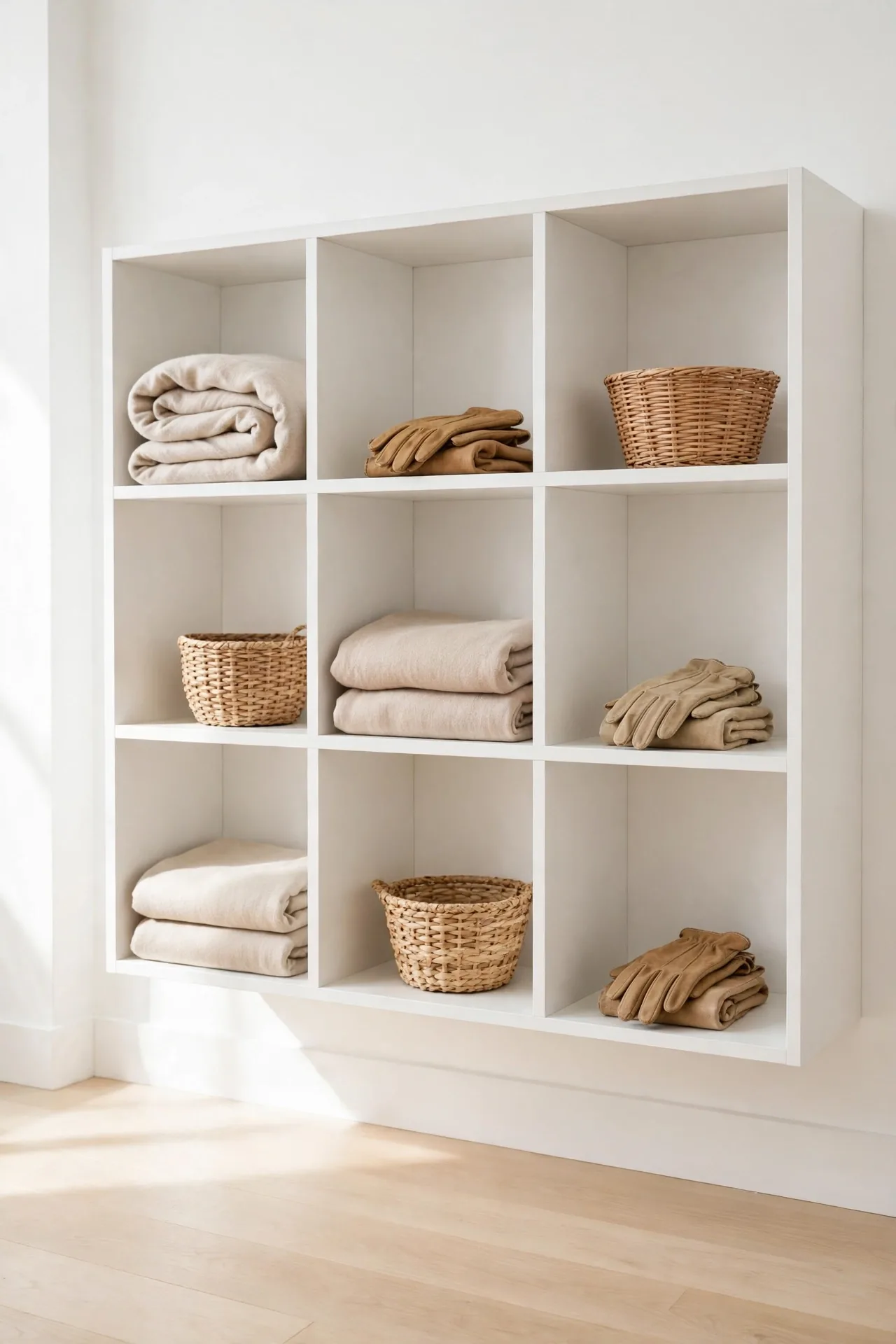
Open cubbies mounted on the wall give every family member a personal landing pad without touching the floor. Two rows of three cubes fit a surprising amount: gloves, hats, sunglasses, and the mail you actually need. Assigned cubes end arguments about whose mess is whose, because the boundaries are visual. Paint the cubbies wall-white so they read as architecture, not furniture.
The open fronts force a natural limit on stuff, which is exactly what mudroom organization ideas for small entryways should do. When a cube overflows, it is a clear signal to purge rather than stack higher. Line each cube with a small basket for tiny items that would otherwise scatter. This setup scales beautifully: start with three cubes and add more as your household grows.
Slim Rolling Cart for mudroom organization ideas for small entryways
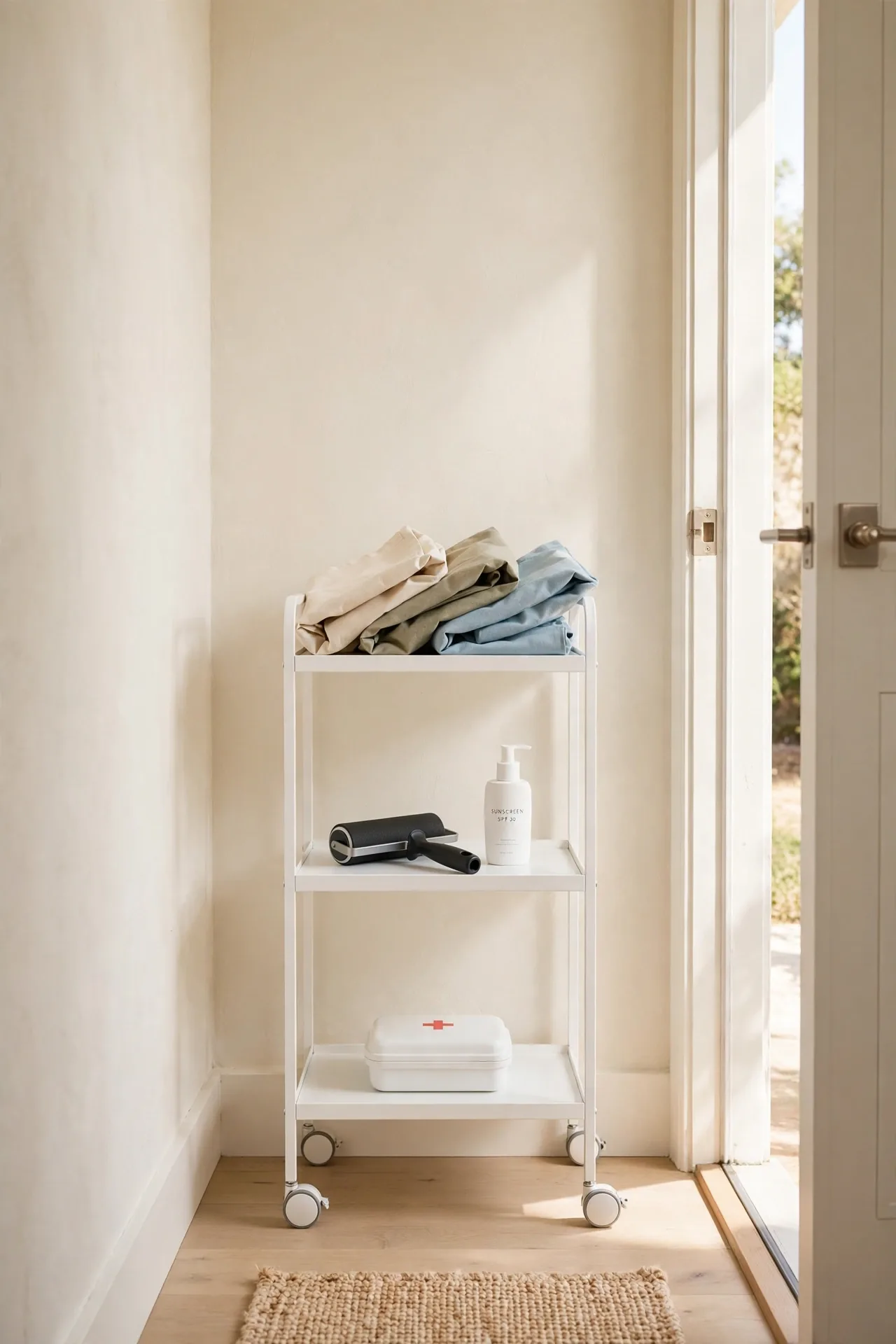
That awkward six-inch gap beside your door is wasted space waiting for a slim rolling cart. A three-tier cart on casters slides into gaps other furniture cannot touch. Stock it with the things you grab on the way out:
- Top tier: sunglasses, sunscreen, and a lint roller for last-minute fixes.
- Middle tier: reusable shopping bags folded flat and ready to go.
- Bottom tier: a small first aid kit and spare phone charger.
- Hook on the side: the dog leash or a compact umbrella.
Roll it out for access and tuck it back when guests arrive. The cart serves the entryway daily but can roll to a closet in seconds. Keep it white or pale wood so it blends into a small space.
Fold-Down Table Ledge
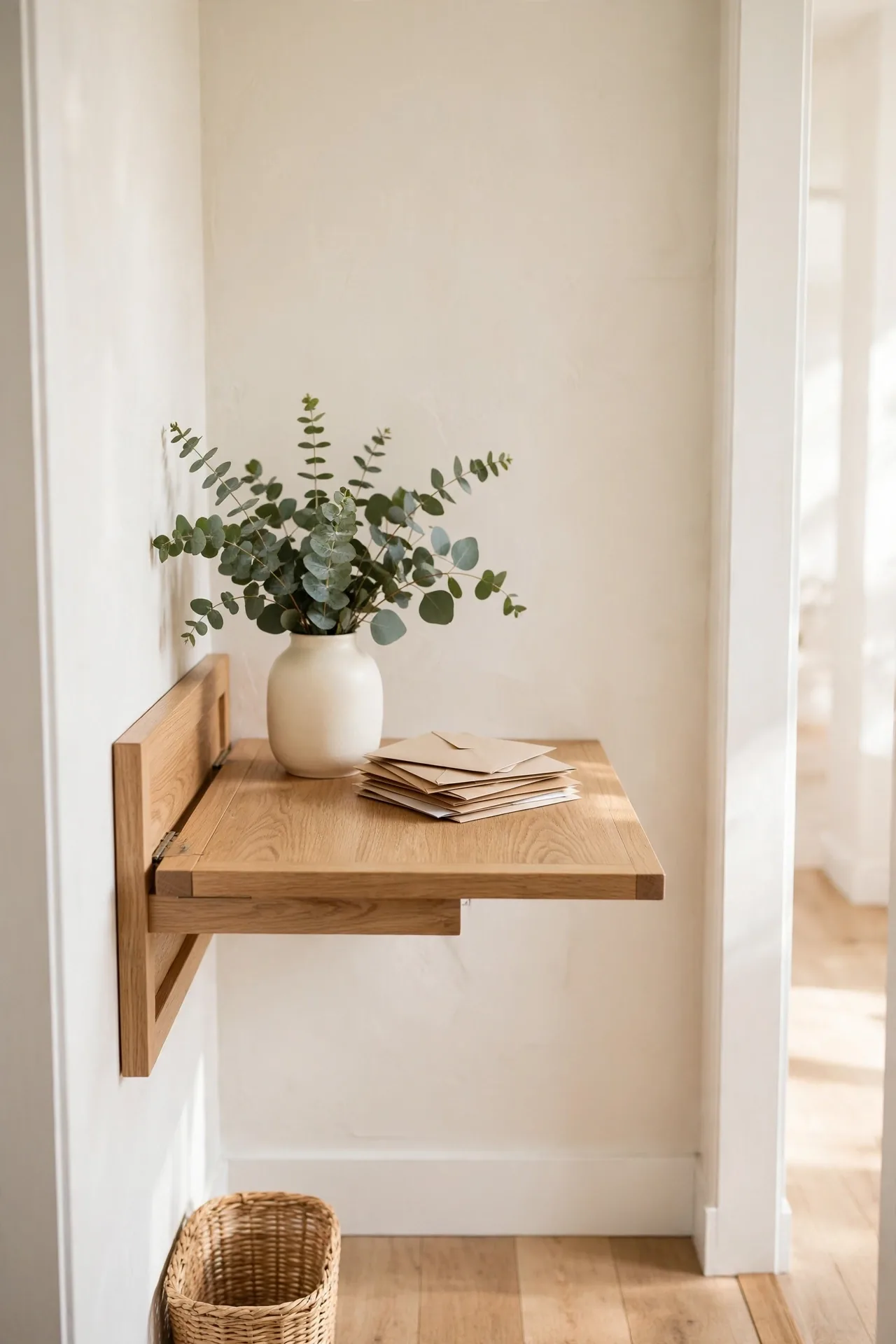
Quick Tip: install the ledge at standard table height, 30 inches, and test the folding mechanism ten times before you load it, so the hinge action feels smooth and safe for daily use.
A fold-down ledge is a console table that vanishes. Open it to sort mail, sign school forms, or set down groceries, then fold it flat against the wall when you are done. The four-inch profile when folded keeps even the narrowest hallway clear. That is why many experts recommend wall-mounted fold-downs for entryways under four feet wide: they deliver a work surface only when you need one. Choose pale oak to match your trim and the ledge will look like a design detail, not a compromise.
Corner Coat Tree
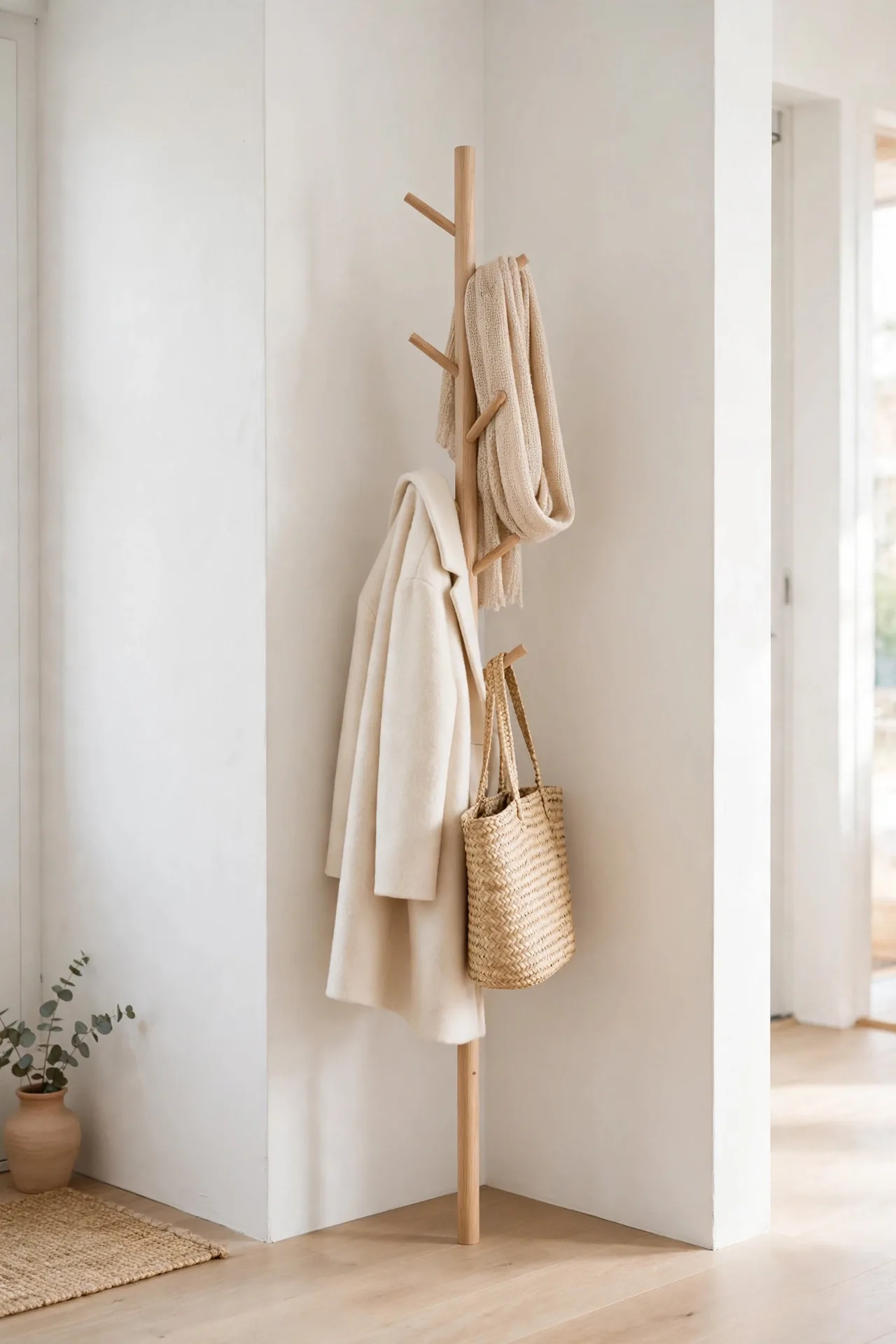
BEFORE: coats drape over dining chairs and pile on the bench because wall space is already claimed by art and mirrors. The corner sits empty while jackets colonize every other surface.
AFTER: a slim corner coat tree claims that dead corner with six pegs in a twelve-inch footprint. Coats hang at staggered heights, bags take the lower pegs, and the bench stays clear for sitting. The entryway breathes again.
Pick a tree in light wood with rounded pegs that will not snag delicate fabrics. Anchor it to the wall with a discreet bracket so it cannot tip when loaded with winter coats. Corners are the most underused square footage in small entryways, and this one piece turns yours into a hardworking coat station.
Labelled Storage Bins
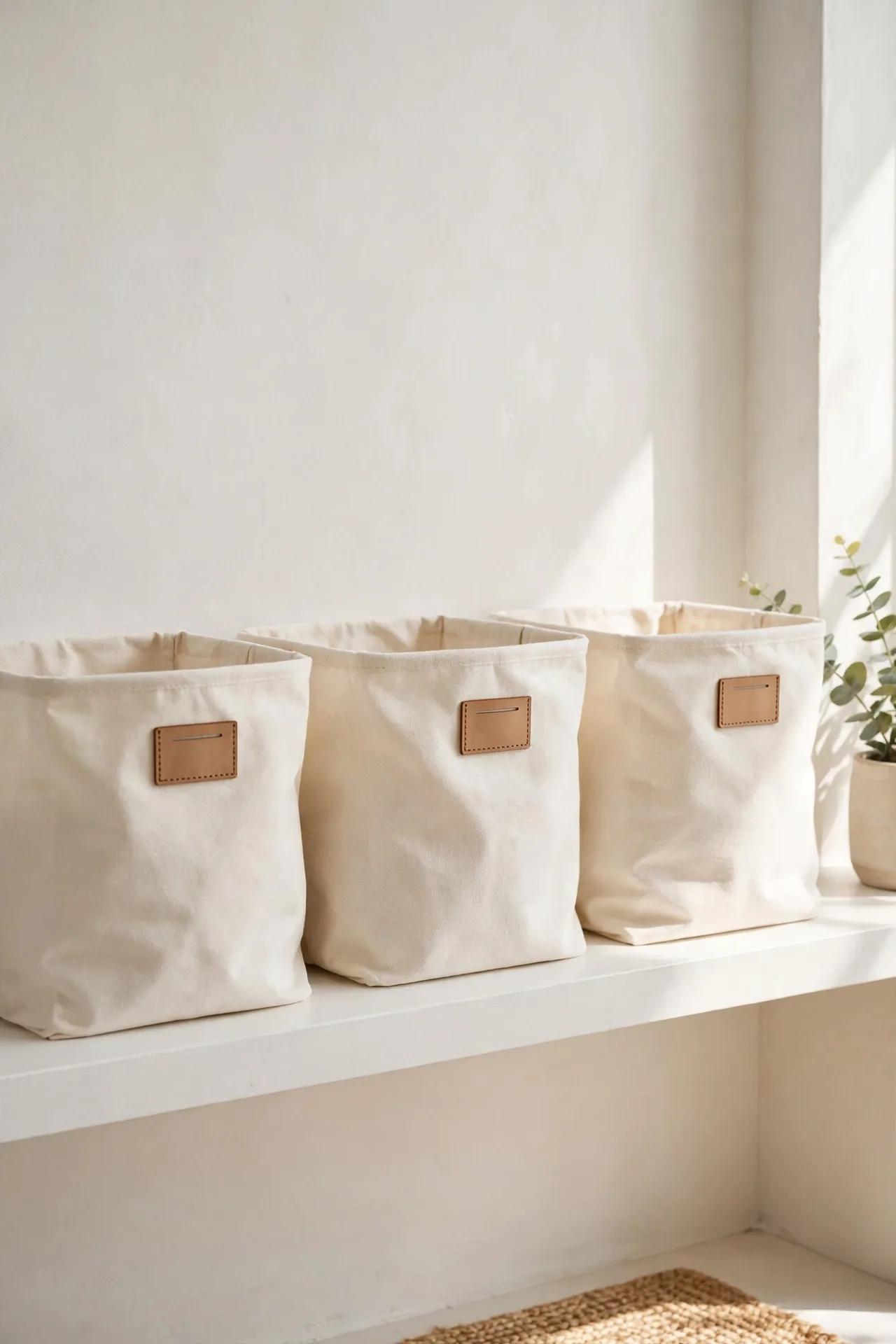
Labels turn anonymous bins into a system the whole household can follow. Set yours up in an afternoon with these steps:
- Sort entryway items into true categories: hats, scarves, pet gear, outgoing mail.
- Choose cream fabric bins that fit your shelf with an inch to spare.
- Attach simple leather or brass label holders to the front of each bin.
- Write labels in the same hand or font so the row looks intentional.
- Review bin contents each season and relabel as needs change.
The labels do the reminding so you do not have to. Kids learn the system in a day because the words say where things live. I have noticed that labelled bins stay tidy while unlabelled ones become junk drawers within a month.
Mirror With Hooks
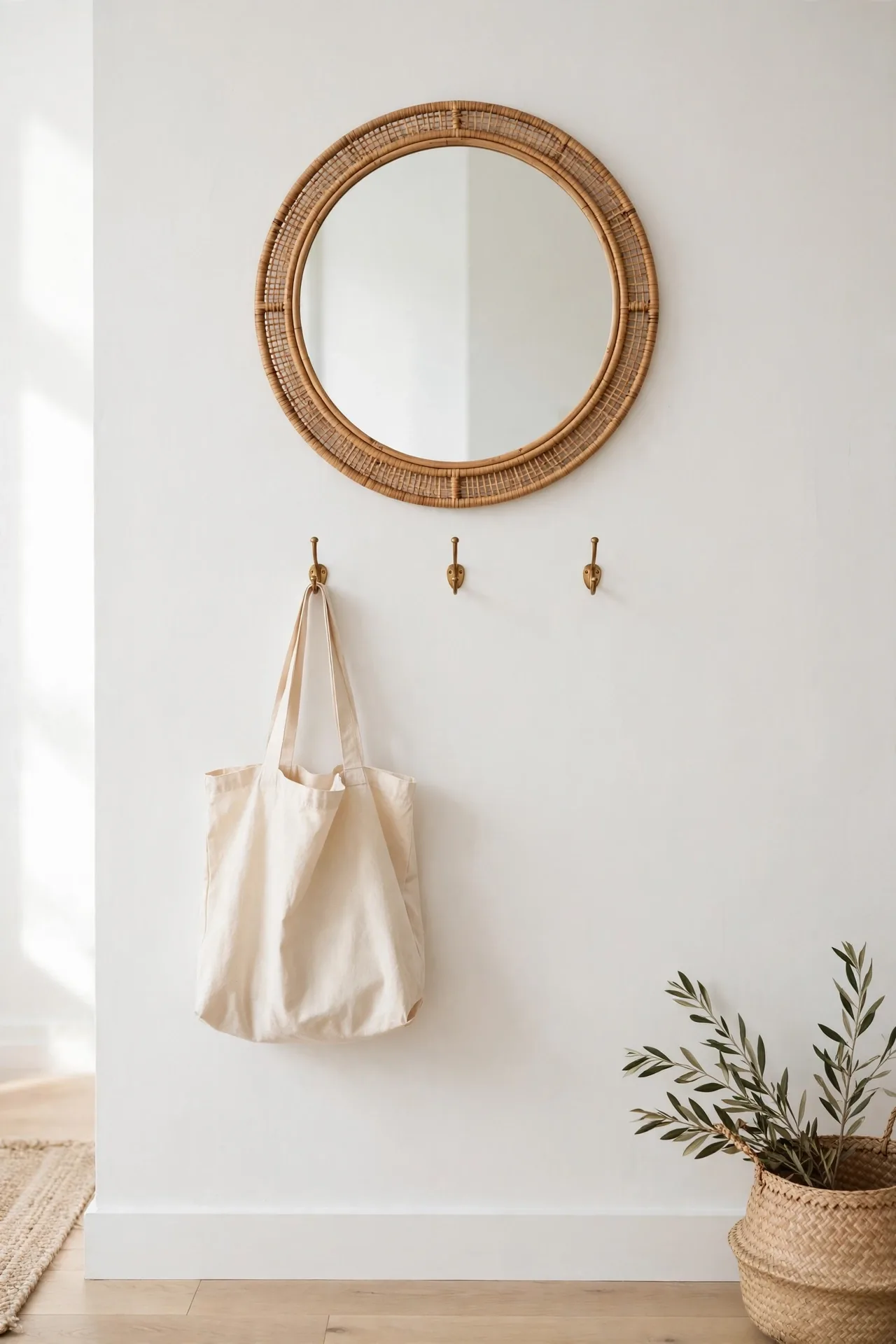
A mirror makes a small entryway feel twice as large, and adding hooks makes it twice as useful. Weigh the two-in-one against separate pieces:
| Option | Wall space used | Function |
| Mirror with hooks | One 24-inch circle | Last look plus bag and key storage |
| Mirror plus hook rail | Two separate zones | More hooks but busier wall |
| Mirror alone | One circle | Light and depth only, no storage |
Hang the combo where you do your final check before leaving. The reflection bounces daylight deep into the entryway while the hooks below catch your tote and keys. This pairing is one of my favorite mudroom organization ideas for small entryways because it solves two problems with a single set of screws.
Under-Bench Drawers
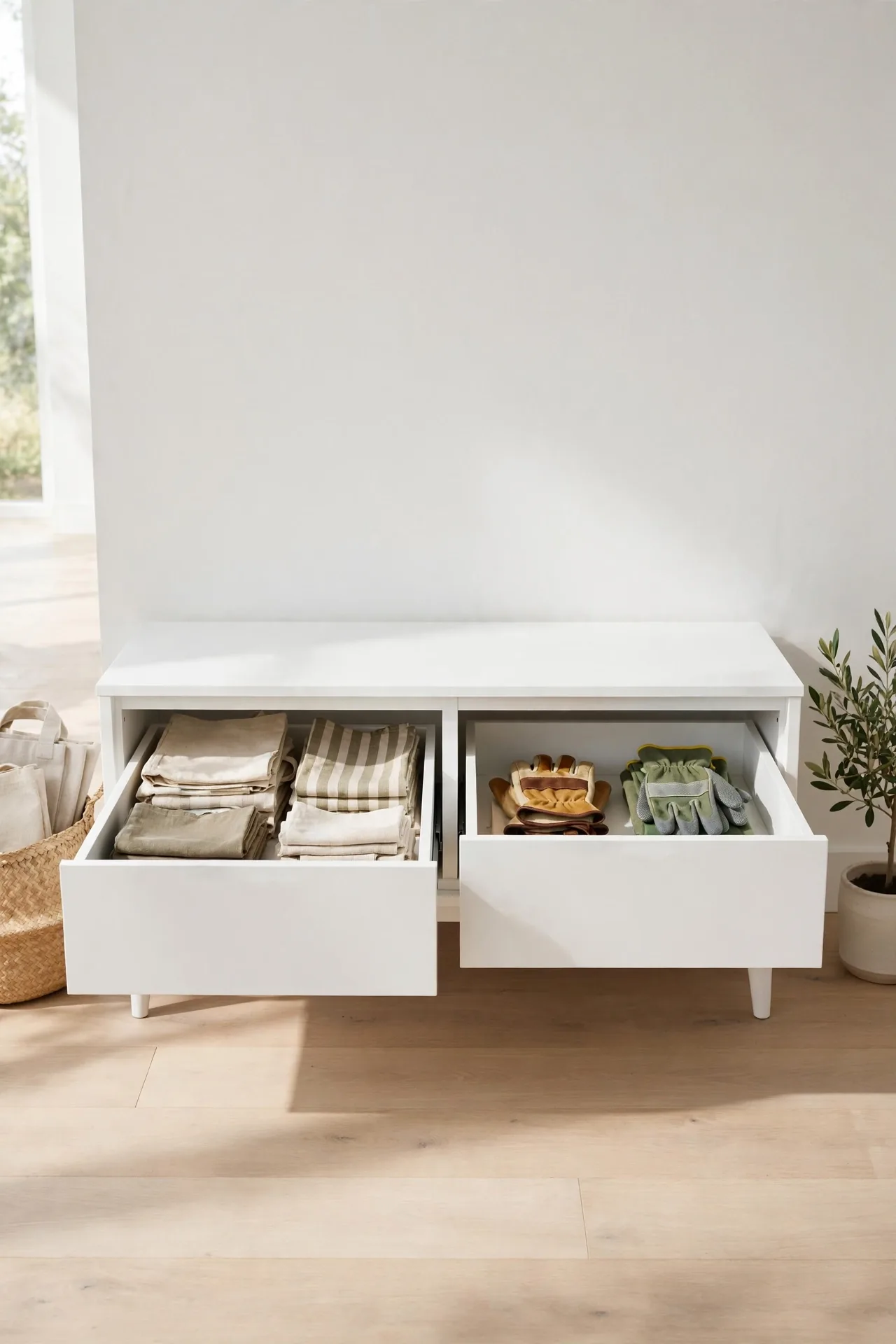
The space under your bench is prime storage hiding in plain sight. Shallow drawers in the bench base swallow small items that usually drift:
DO:
- Do assign one drawer per person so everyone owns their tidiness.
- Do use drawer dividers to stop gloves and chargers from tangling.
- Do choose soft-close glides so drawers never slam in a quiet hallway.
DON’T:
- Do not store anything you need in a rush; drawers suit backup supplies.
- Do not let drawers become overflow for junk from other rooms.
- Do not skip measuring: drawers need clearance to open fully.
Pull-out drawers beat open cubbies for visual calm because everything hides behind clean fronts. In my experience, guests assume a drawer-front bench is just furniture until you reveal its secret storage.
Pegboard Wall Panel
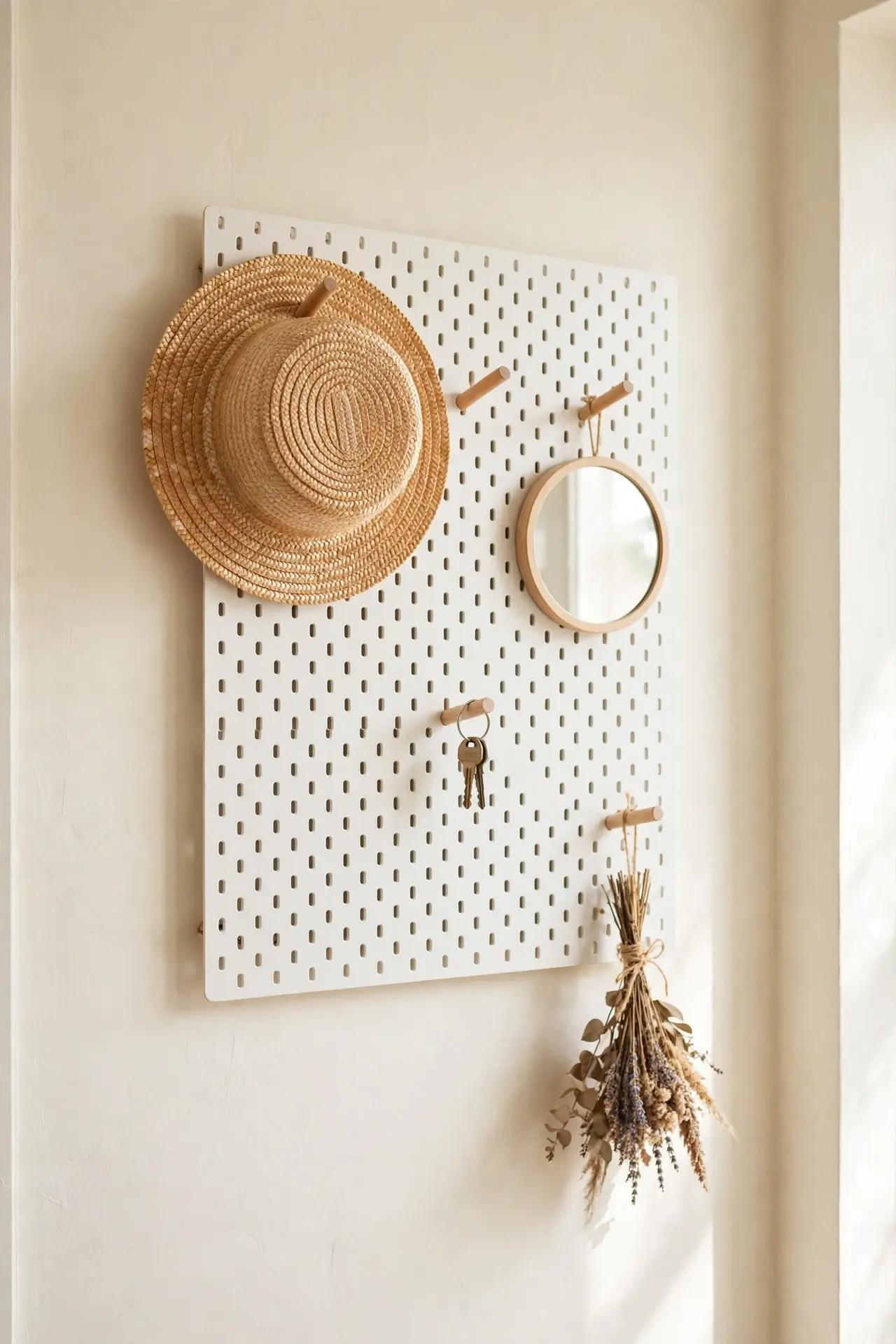
A pegboard panel turns a blank wall into endlessly rearrangeable storage. The facts make the case on their own:
Cost: a painted panel and a bag of pegs run under forty dollars. Time: one hour to hang and style. Skill level: basic drilling only. Best for: renters and anyone whose needs change with the seasons. Result: hooks, shelves, and cups that move wherever you need them.
Paint the panel the same color as your wall for a built-in look that recedes visually. Start with pegs for hats and keys, then add a small shelf for sunglasses as you learn your habits. I have seen this work well in many cases: the pegboard evolves with the household instead of fighting it, which is rare in fixed furniture.
Stacked Crate Towers
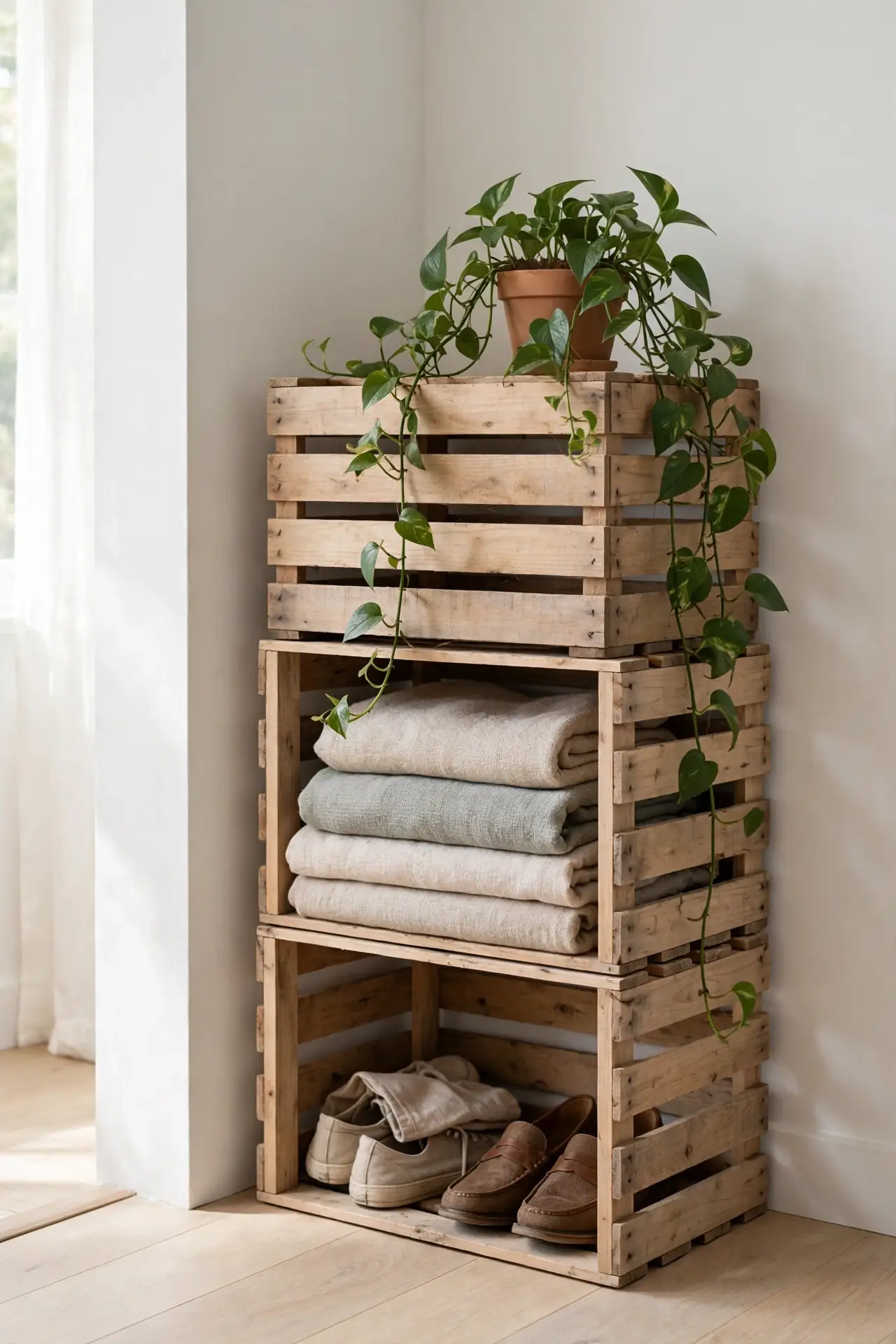
Three wooden crates stacked into a tower create cubby storage for the price of a pizza. The vertical footprint is barely a square foot, yet each crate swallows shoes, scarves, or cleaning supplies. Sand the edges smooth and finish with clear wax so the wood glows softly. I have noticed that crate towers look intentionally rustic rather than cheap when the wood tones match the rest of the room.
Stability matters most here. Screw the crates together from inside and anchor the tower to the wall. Top it with a trailing plant to finish the vignette. This is the rare storage piece that costs almost nothing, takes an afternoon to build, and genuinely solves the clutter problem in a small entryway.
Compact Umbrella Stand for mudroom organization ideas for small entryways
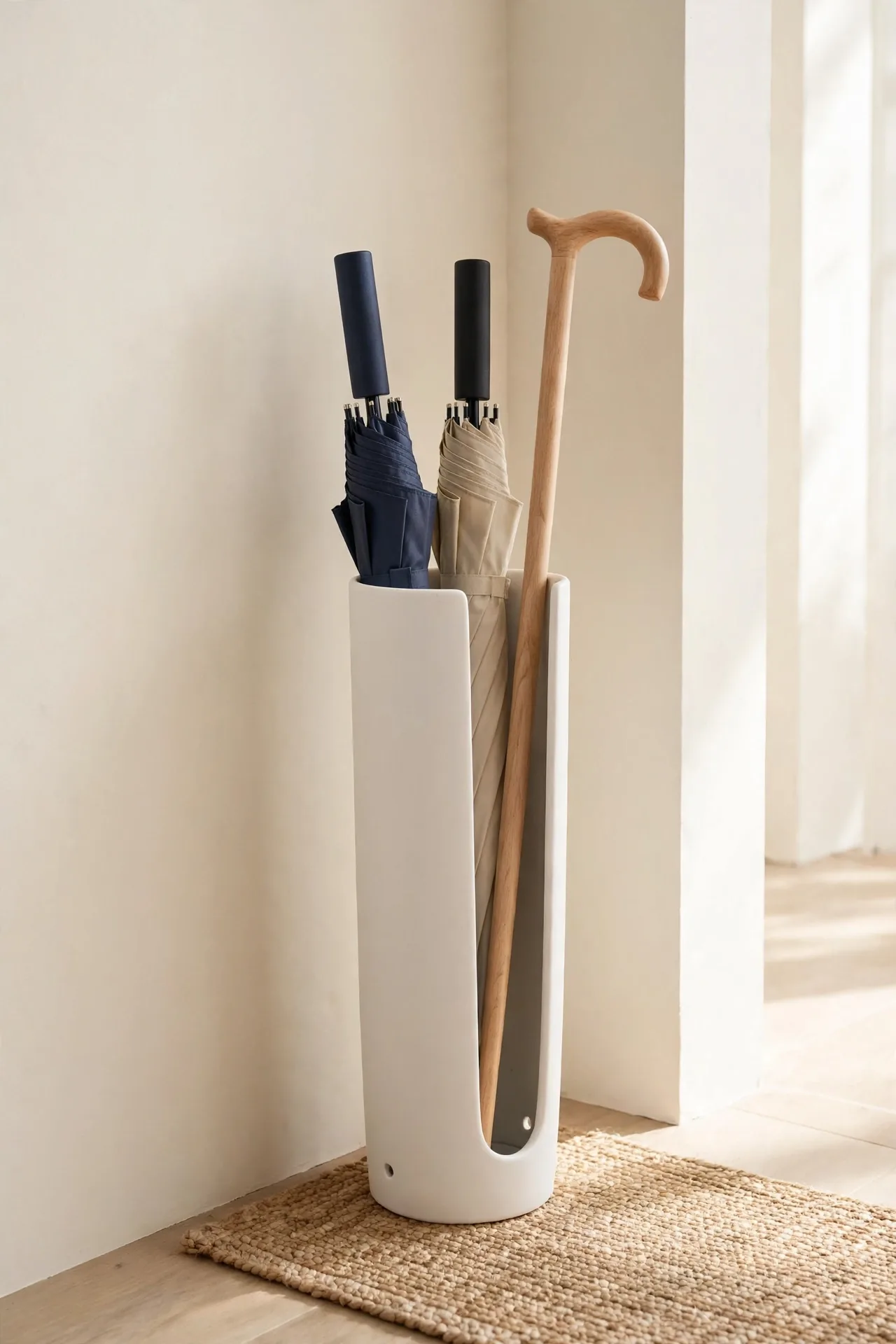
Wet umbrellas dripping across the floor undo every other organizing effort in seconds. A compact stand with a six-inch diameter tucks beside the door and contains the mess. Look for these features when you shop:
- A removable drip tray that you can empty and rinse in seconds.
- Enough height to hold full-size umbrellas without tipping.
- A matte ceramic or powder-coated finish that wipes clean.
- A slim profile that slides into the gap between door and wall.
Place the stand on the hinge side of the door so dripping umbrellas never cross the walkway. For more small-space entryway thinking, browse these entryway organization ideas for small spaces that pair beautifully with a dedicated umbrella spot. One contained drip zone keeps floors dry and the whole corner looking sharp.
Hanging Fabric Pockets
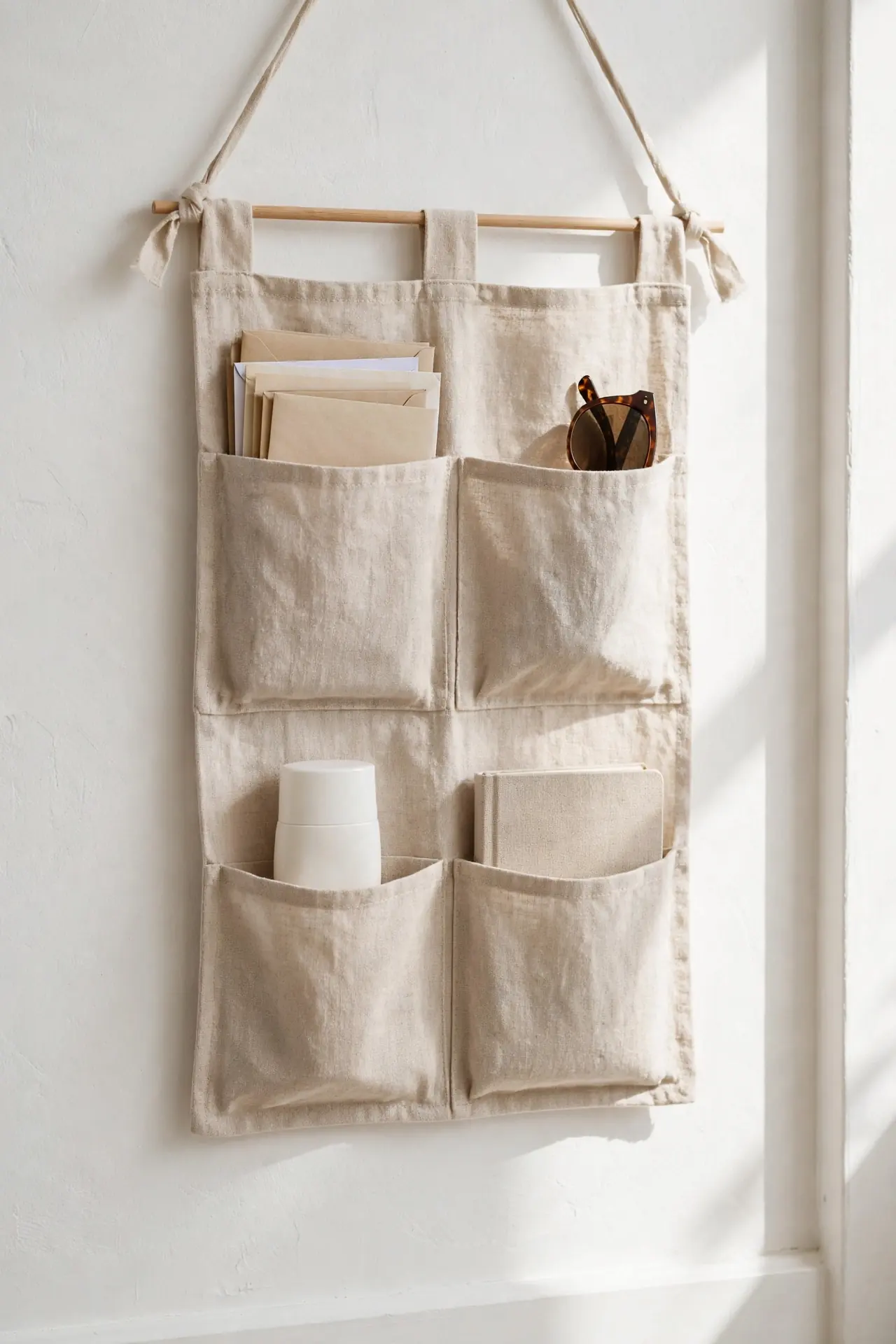
Quick Tip: hang the pocket organizer on the wall beside the door at shoulder height, and sort mail into it the moment you walk in, so paper clutter never reaches the table.
Fabric pockets catch the paper and pocket clutter that defeats mudroom organization ideas for small entryways faster than anything else. Each slot takes on a job: bills, school forms, coupons, and the notebook for jotting reminders. Linen or canvas in natural tones keeps the organizer looking like soft decor instead of office supply. That is why many experts recommend fabric over plastic for visible walls: the texture reads warm and intentional. Empty the pockets weekly and the system stays effortless.
Slim Console Table
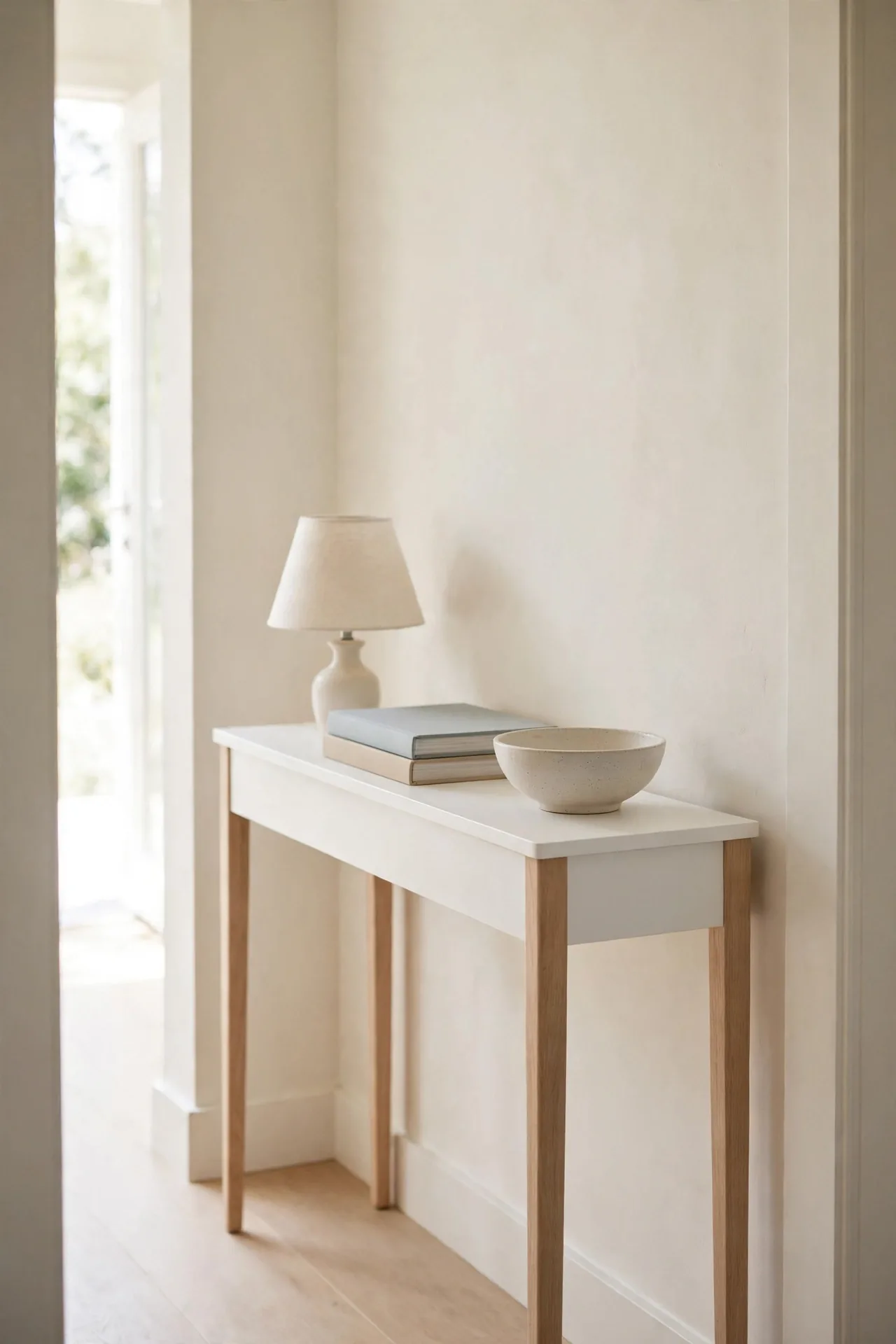
BEFORE: the entryway has no surface, so keys land on the floor vent and mail piles on the bench cushion. Every flat inch is an accident waiting to happen because nothing was designed to catch daily items.
AFTER: a ten-inch-deep console table runs along the wall with a lamp, a bowl for keys, and one stack of books. The bench stays clear for sitting, the floor stays clear for walking, and the entryway finally has a proper landing strip.
Keep the styling to three objects so the narrow surface never feels crowded. A slim console also anchors a mirror or art above it, turning a blank wall into a composed vignette. Choose legs in pale wood and a top in white for the lightest possible visual footprint.
Chalkboard Command Center
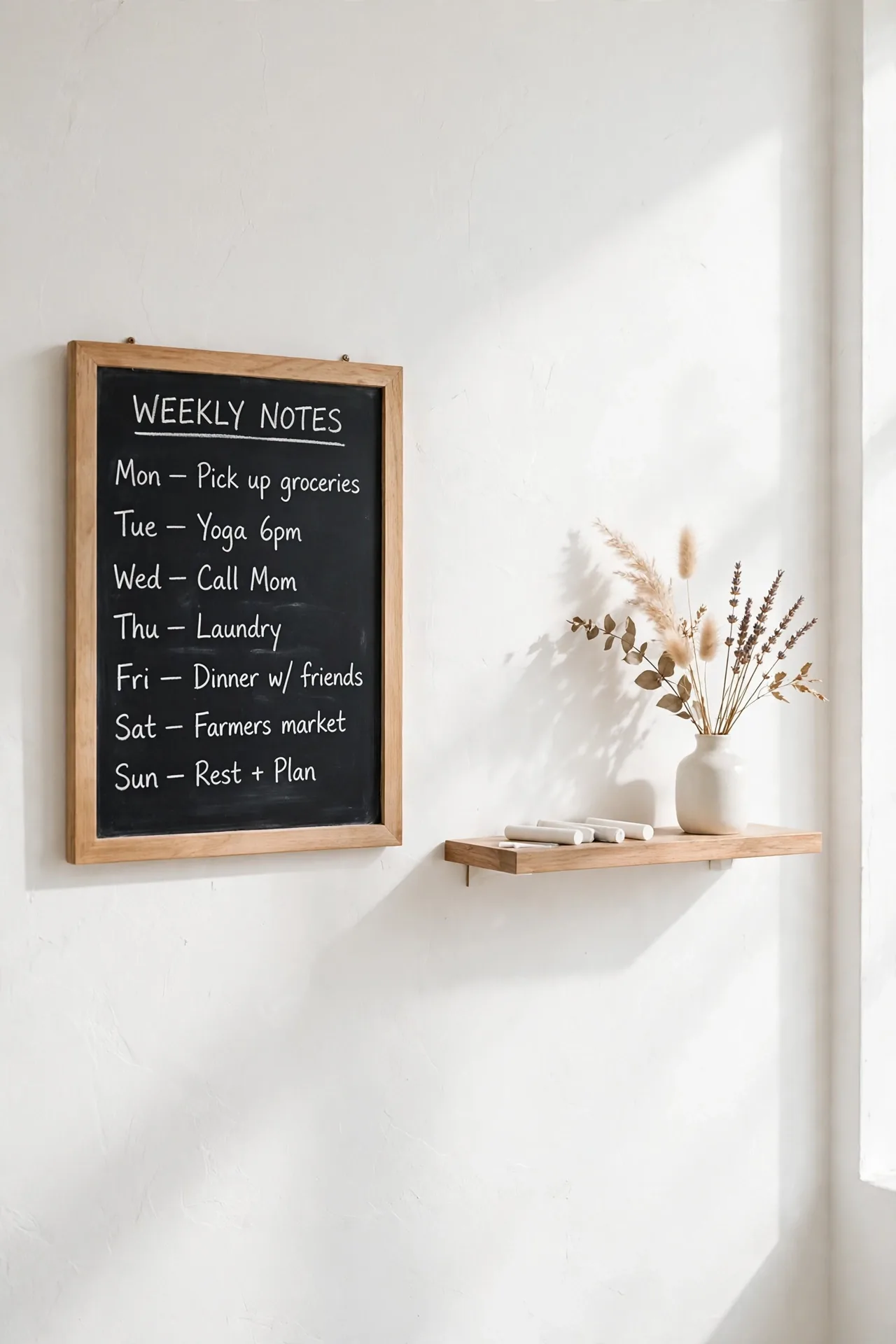
A command center keeps the household running without a single app. Build yours with these steps:
- Hang a small framed chalkboard at eye level beside the door.
- Add a slim shelf below for chalk, a calendar, and outgoing mail.
- Divide the board into three zones: this week, shopping list, reminders.
- Update it every Sunday evening in under five minutes.
- Photograph the board before wiping so nothing gets lost.
The chalkboard becomes the family bulletin that everyone actually checks. I have noticed that visible reminders beat phone notifications for household tasks because the board catches your eye on the way out. Keep the frame in natural wood so the command center feels like decor, not a classroom.
Tiered Wall Baskets
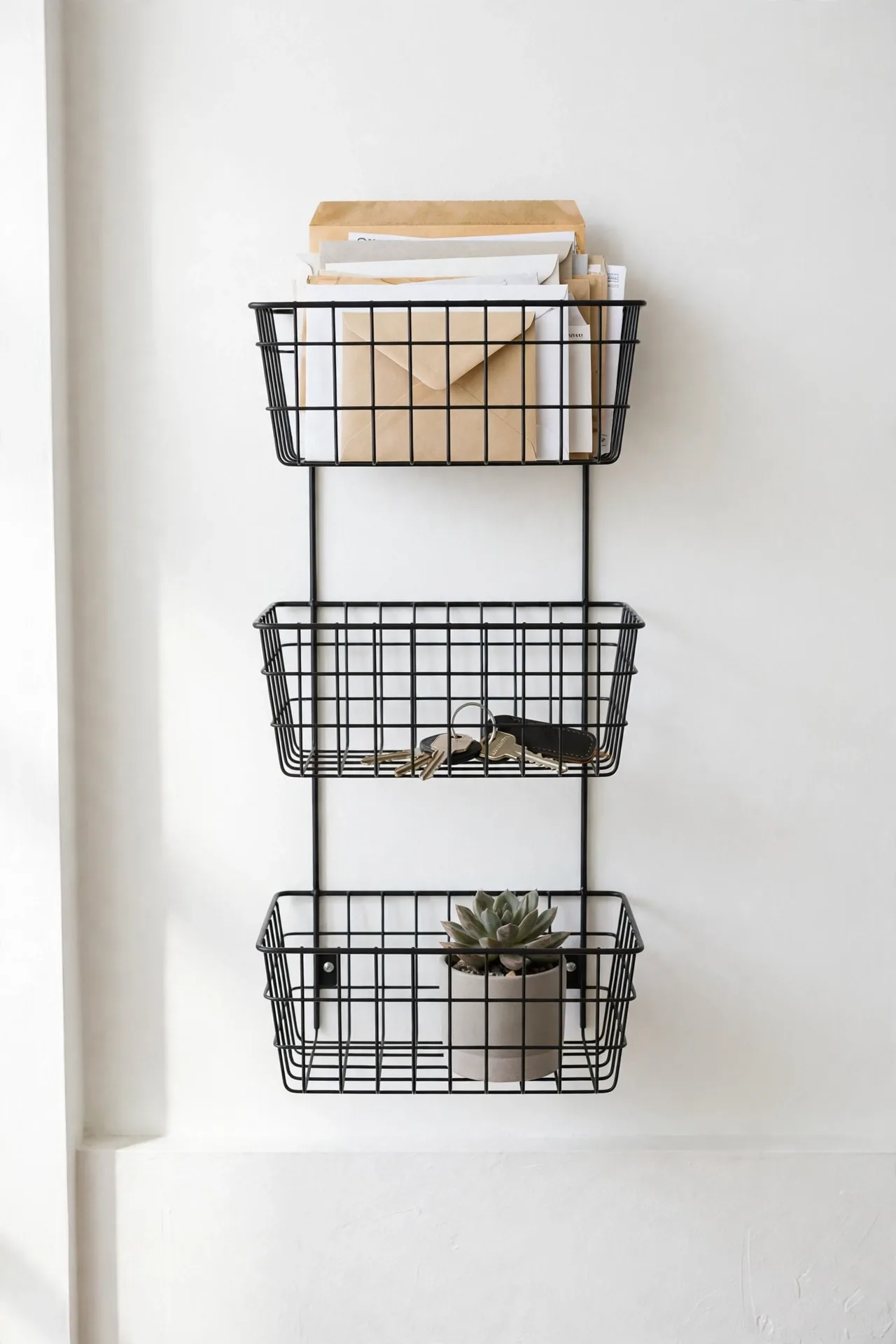
Wall-mounted tiered baskets stack three levels of storage in the footprint of one. Compare the setup against a tabletop organizer:
| Feature | Tiered wall baskets | Tabletop organizer |
| Counter space used | Zero | Full tray footprint |
| Visibility | Everything seen at a glance | Items hide under each other |
| Capacity | Three sorted levels | One mixed pile |
Mount the tiers beside the door with the most-used level at hand height. Mail goes on top, keys in the middle, and a small plant on the bottom to keep the unit feeling alive. The vertical sort keeps categories separate, which is the whole secret to entryway order. Once mounted, the baskets turn an empty wall into a hardworking station.
Foldable Step Stool
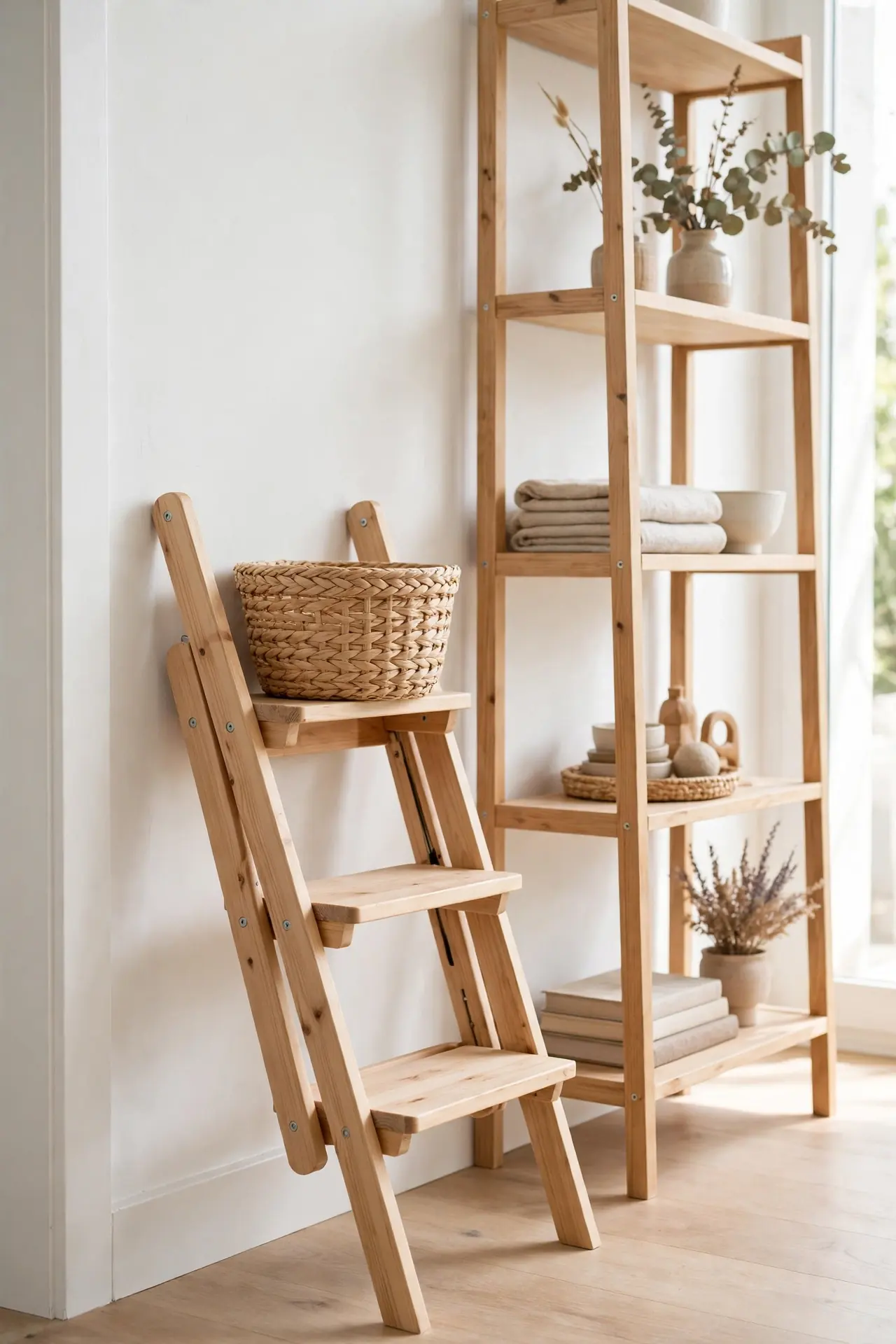
High shelves double your storage, but only if you can reach them safely. A foldable step stool bridges that gap in a two-inch profile. Keep it lean with these rules:
DO:
- Do choose a stool that folds flat to slide behind the door.
- Do pick light wood that matches your entryway palette.
- Do store it near the high shelf it serves.
DON’T:
- Do not buy a bulky plastic stool that fights your decor.
- Do not leave it unfolded in the walkway as a tripping hazard.
- Do not exceed the weight rating, no matter how sturdy it looks.
This small addition opens up the top shelf for off-season gear, which is where mudroom organization ideas for small entryways gain real capacity. Fold it away after use and the entryway stays clear.
Linen Storage Ottoman
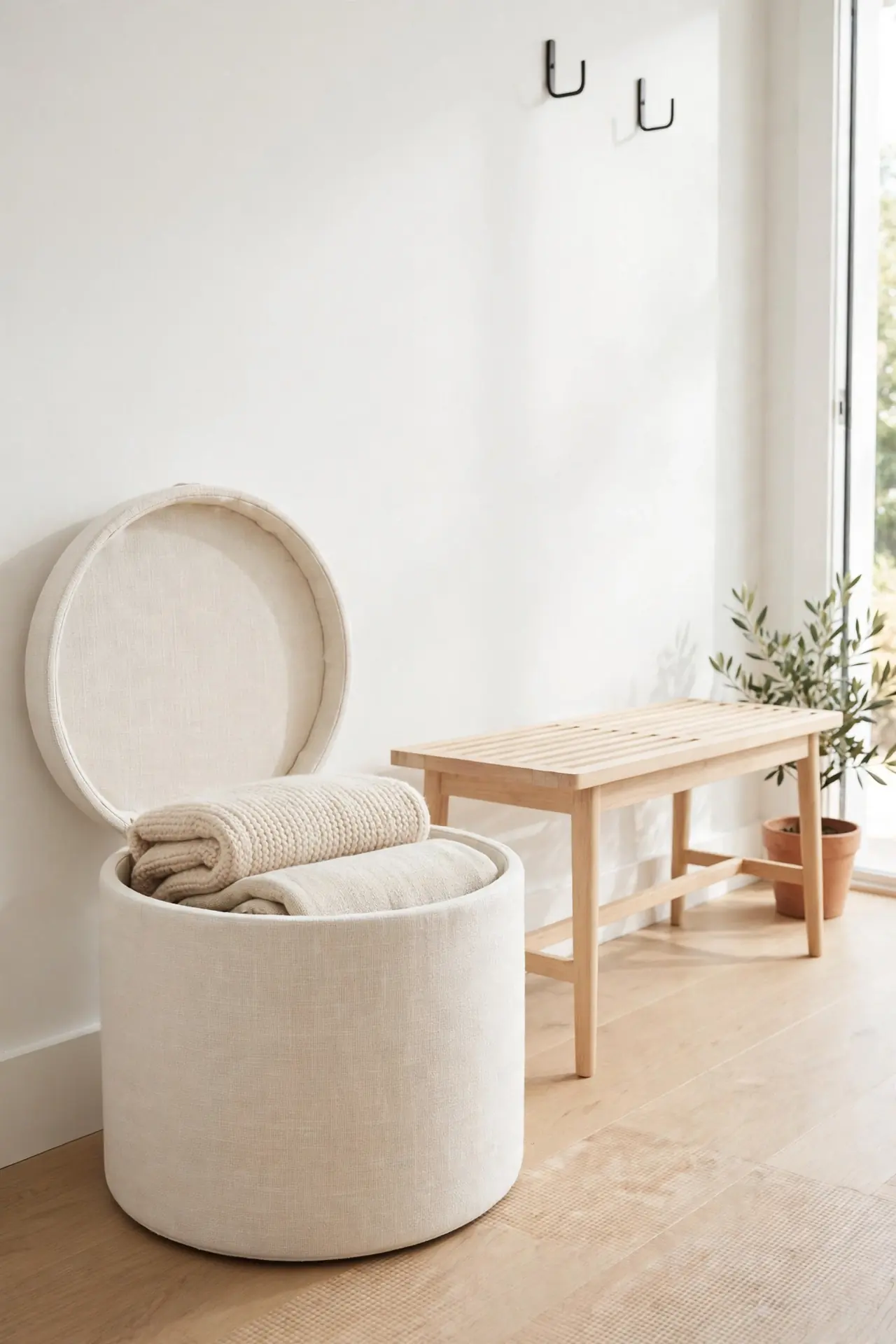
A storage ottoman is a seat, a side table, and a hidden bin in one soft package. The facts explain its popularity:
Cost: quality linen ottomans start around sixty dollars. Time: zero assembly for most designs. Skill level: none. Best for: spare throws, seasonal scarves, and shoe care kits. Result: seating plus storage in one square foot.
Choose a round shape to soften the hard angles of a small entryway. The linen upholstery adds texture that makes the corner feel finished rather than purely functional. I have seen this work well in many cases: guests sit on it, set coffee on it, and never suspect it hides the winter accessories.
Hidden Wall Cabinet
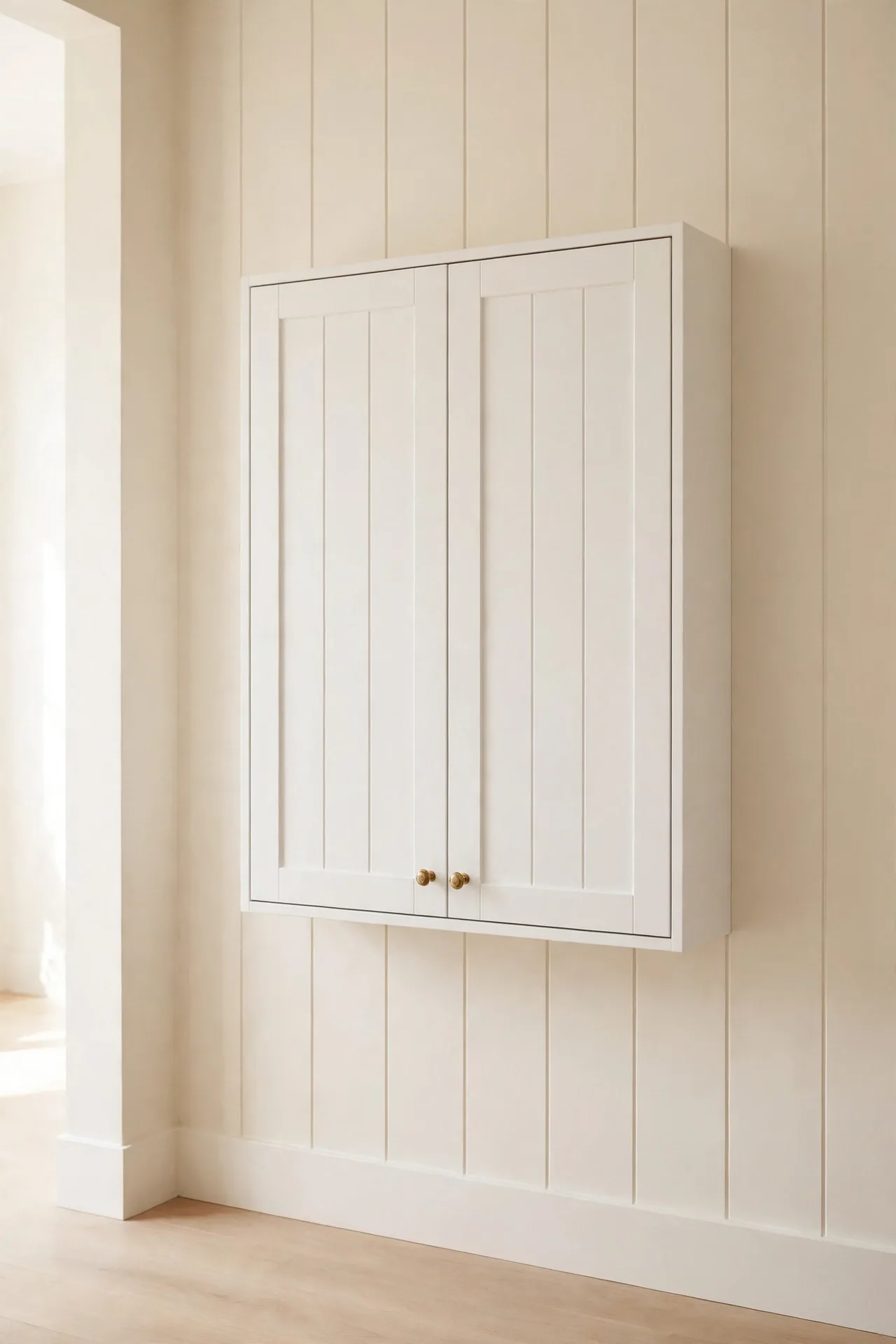
The ultimate small-entryway trick is storage nobody can see. A shallow wall cabinet, only six inches deep, hides cleaning supplies, spare bulbs, and the toolkit. Paint it the exact color of your wall and fit a slim brass knob. I have noticed that visitors walk past these cabinets for months without realizing they open. The flat front keeps the entryway visually quiet while swallowing the awkward items that ruin open shelving.
Mount it above the bench or beside the door where dead wall space waits. Inside, add one adjustable shelf to split tall bottles from small boxes. This hidden capacity is the finishing touch that makes a tiny entryway function like a full mudroom, because everything has a home even when nothing shows.
Conclusion
A small entryway does not need a renovation to work like a proper mudroom. As these mudroom organization ideas for small entryways show, the formula is simple: claim vertical space with hooks and shelves, give every category a labeled home, and keep the palette light so the corner feels open. Start with the two ideas that solve your biggest daily friction, whether that is keys, shoes, or coats. Once those systems hold, add one more layer each month. Within a season, your front door will greet you with calm instead of chaos, and every arrival will feel like coming home.