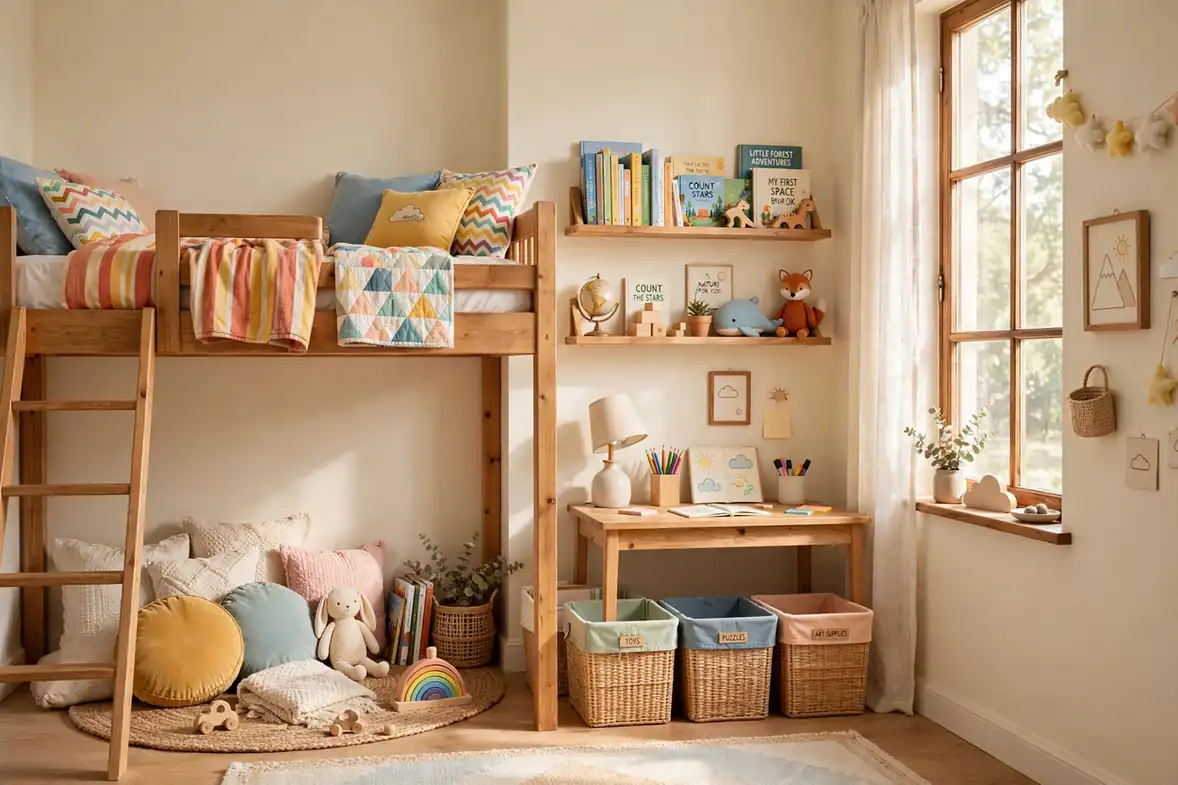
22 Small Bedroom Decor Ideas for Kids to Maximize Space
A tiny bedroom can feel like a daily puzzle when toys, books, and clothes compete for every inch. small bedroom decor ideas for kids solve that puzzle by turning vertical space and hidden corners into hard-working storage that still feels playful. The right layout gives your child room to sleep, study, and play without the clutter creeping back by bedtime.
Start with the biggest win first: the bed. Lofting or choosing a bed with built-in storage frees up nearly half the floor in one move. For broader inspiration that works for any age, explore these small bedroom decor ideas alongside the kid-specific tricks below. In my experience, families who plan the layout around zones, sleep, study, play, store, see the mess shrink within a week.
Loft Bed Magic
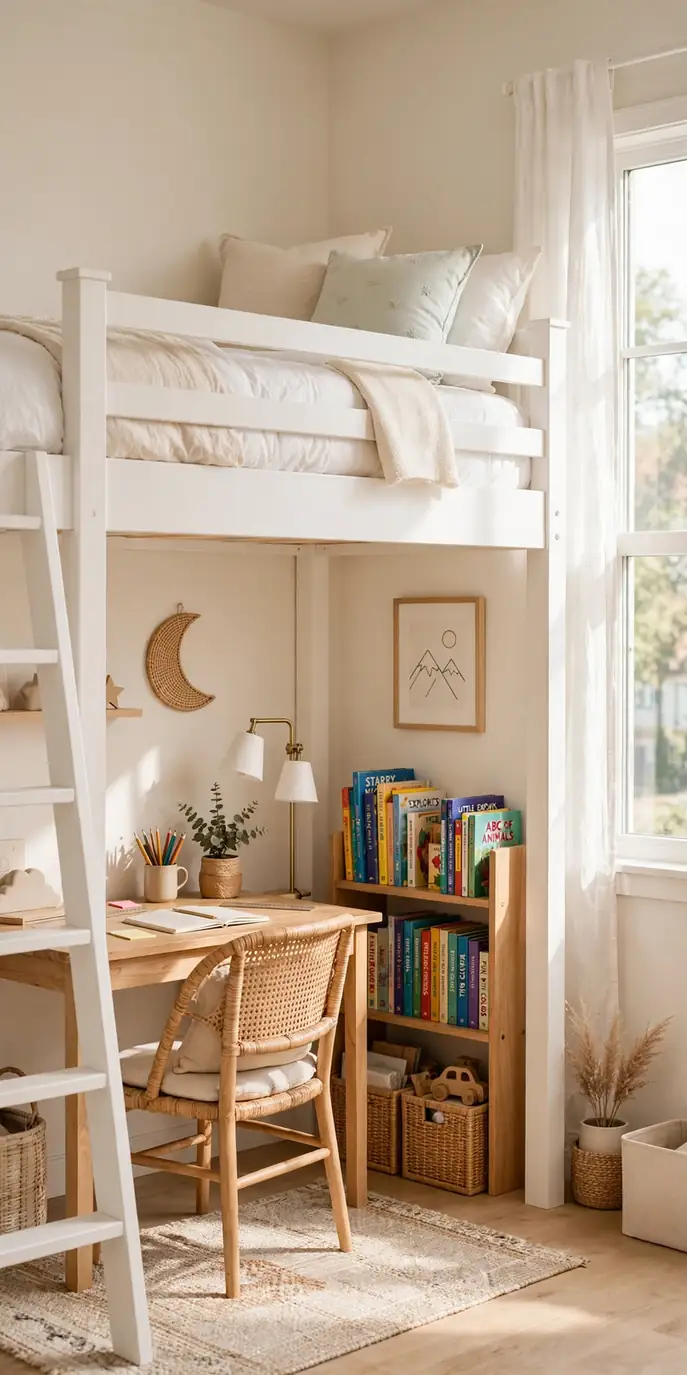
Small kids rooms gain instant square footage the moment the bed goes up. A sturdy loft bed lifts the mattress to near-ceiling height and hands back the entire footprint below for a desk, a reading corner, or toy storage. Safety comes first, so choose a model with full-length guardrails and a wide, easy ladder, and keep the ceiling clearance comfortable for sitting up.
Underneath, define one clear purpose so the space stays tidy. A compact desk with a clip-on lamp turns the shadow into a homework station, while a beanbag plus a small bookshelf creates a reading hideout. I’ve seen this work well in many cases where siblings share a room: one child sleeps up top while the other uses the zone below during the day.
Underbed Drawer Storage
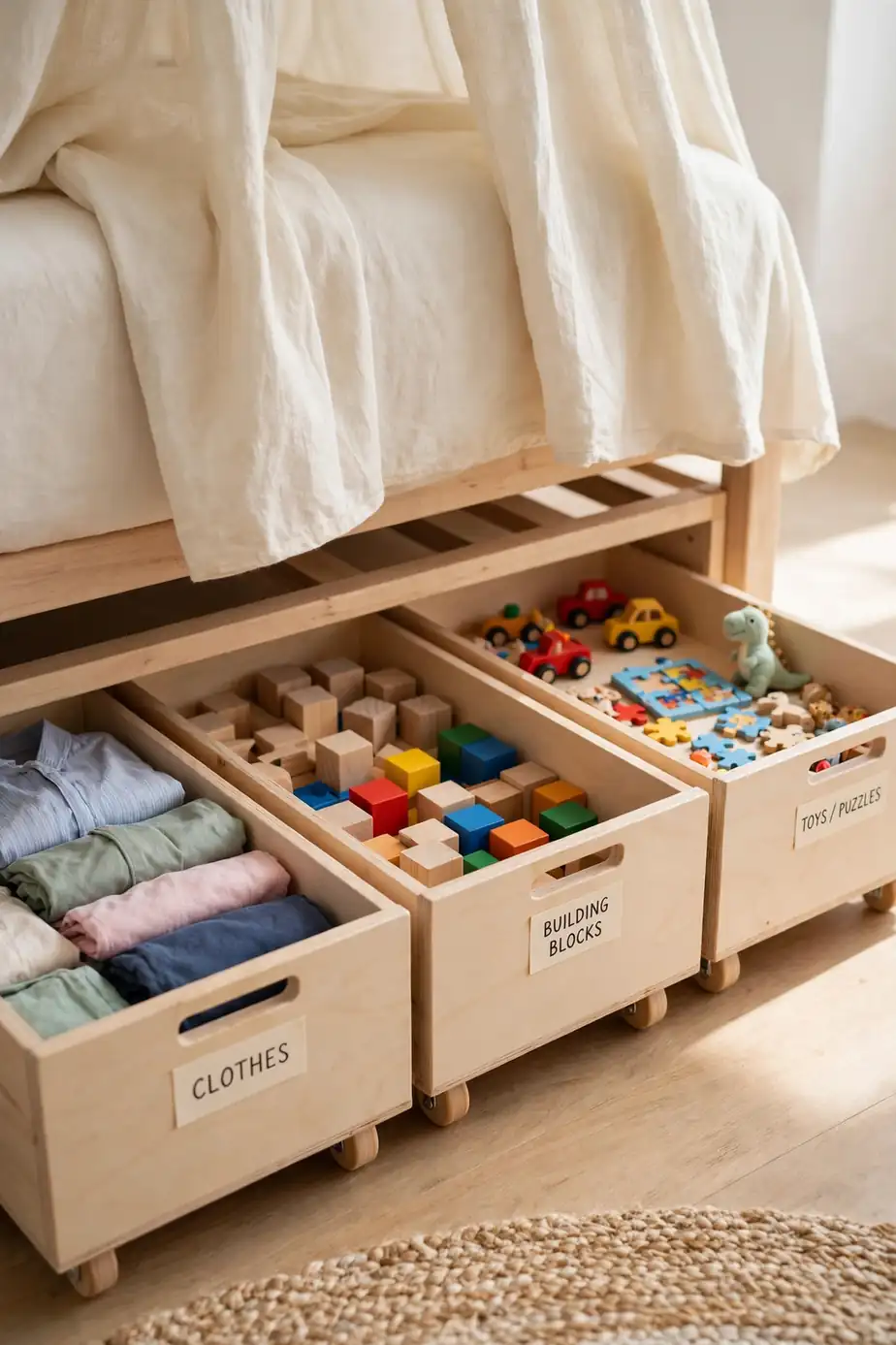
- Measure the clearance under the bed before buying; aim for drawers at least 15 cm deep.
- Choose smooth-rolling drawers with handles your child can grip easily.
- Label each drawer with pictures for pre-readers and words for older kids.
- Keep one drawer empty as a buffer so tidying never feels like a puzzle.
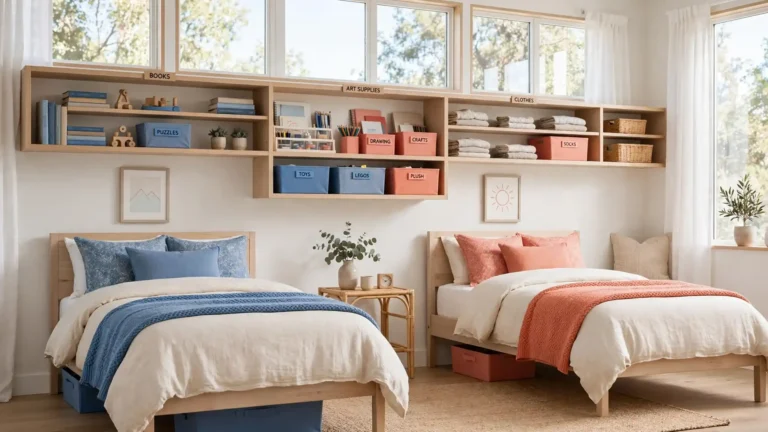
The dead space under a standard bed hides around one square meter of storage. Low drawers on casters turn it into a dresser alternative for pajamas, Lego sets, or out-of-season clothes. That’s why many experts recommend underbed storage as the first upgrade in any small kids room. The low height means even toddlers can tidy up independently, which builds good habits early.
Corner Desk Nook
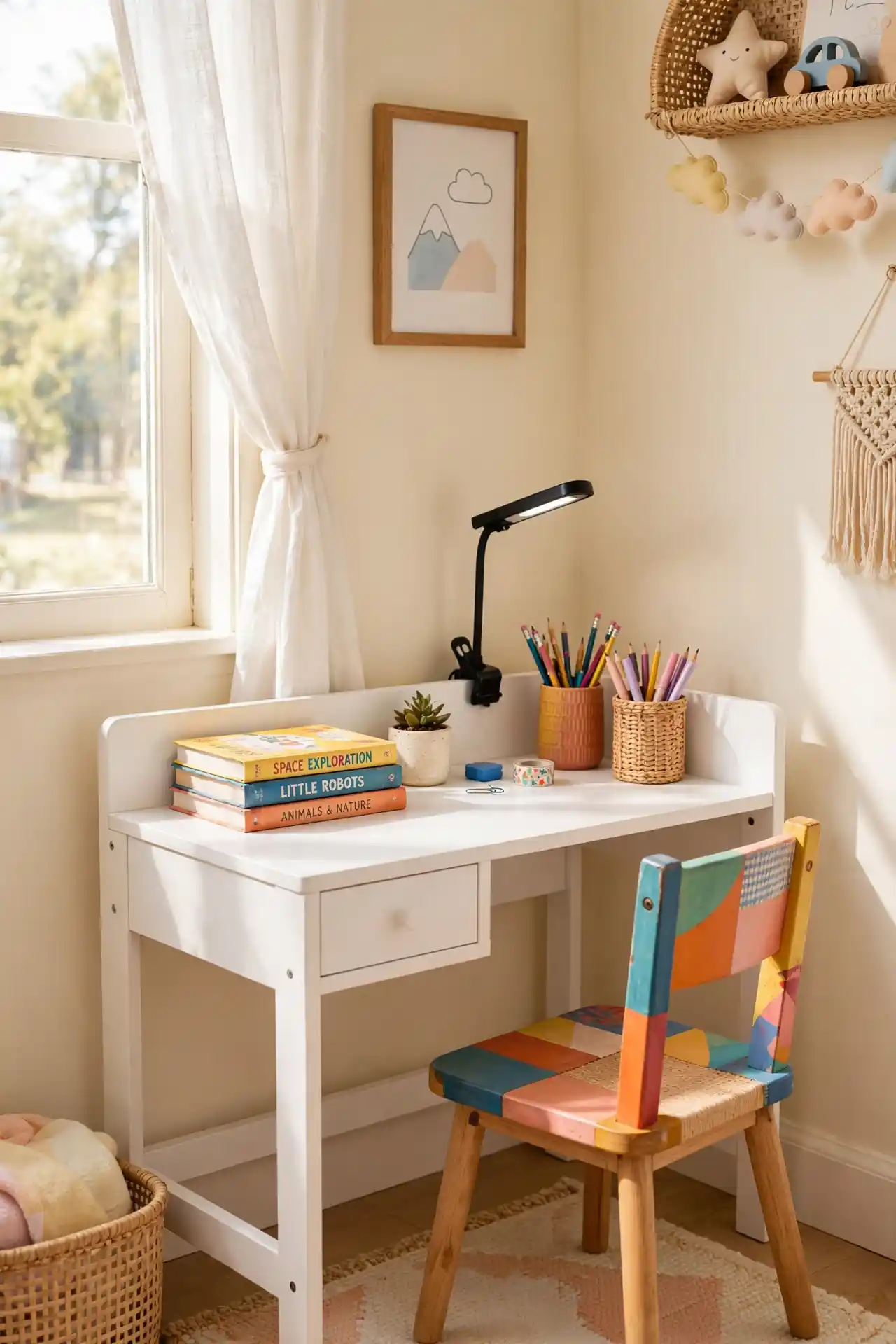
Quick Tip: A corner desk needs only 80 cm of wall on each side to work. Mount a simple wall desk at the right height, add a slim chair that tucks fully underneath, and keep supplies in a wall-mounted caddy so the desktop stays clear. Clip-on lamps beat bulky bases in tight corners.
Corners are the most wasted real estate in small bedrooms. A dedicated study nook there gives homework a permanent home instead of the kitchen table, which means fewer lost worksheets and calmer evenings. Paint the corner a soft accent color to mark it as the “work zone” without adding any furniture bulk.
Wall Mounted Shelves
BEFORE: Books and trophies crowded the dresser top and spilled onto the floor. Every surface collected clutter, and cleaning meant moving twenty small objects first.
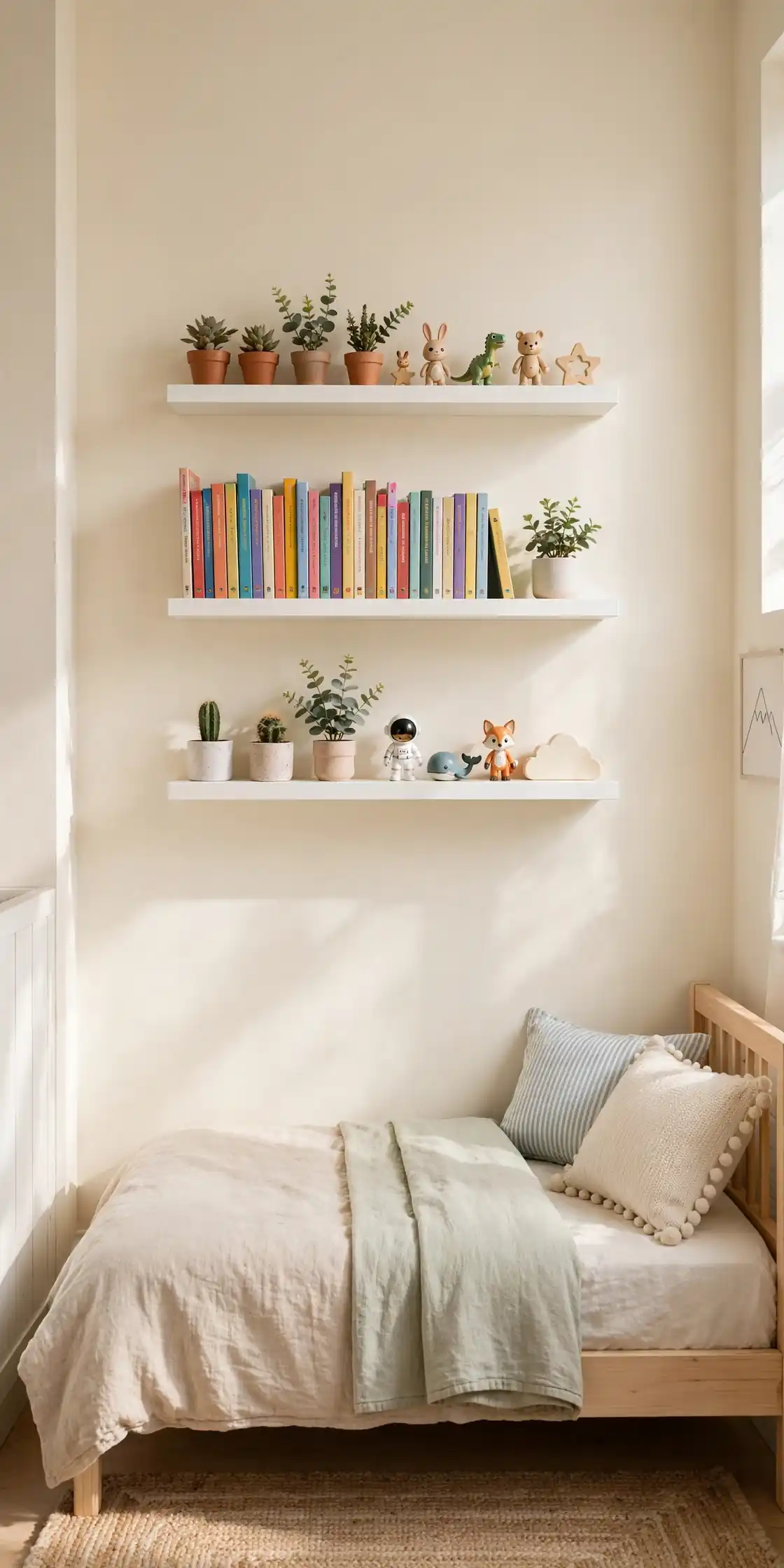
AFTER: Three floating shelves hold the whole collection at eye level. The dresser top stays clear, the floor is visible again, and your child can reach favorites without climbing.
Shelves move storage off the floor and onto the walls where space is free. Install them above the desk or bed, keeping heavy items low and display pieces higher. In my experience, kids maintain shelf order better than drawer order because everything stays visible. Anchor every shelf into wall studs so they hold real weight safely for years.
Rolling Storage Carts
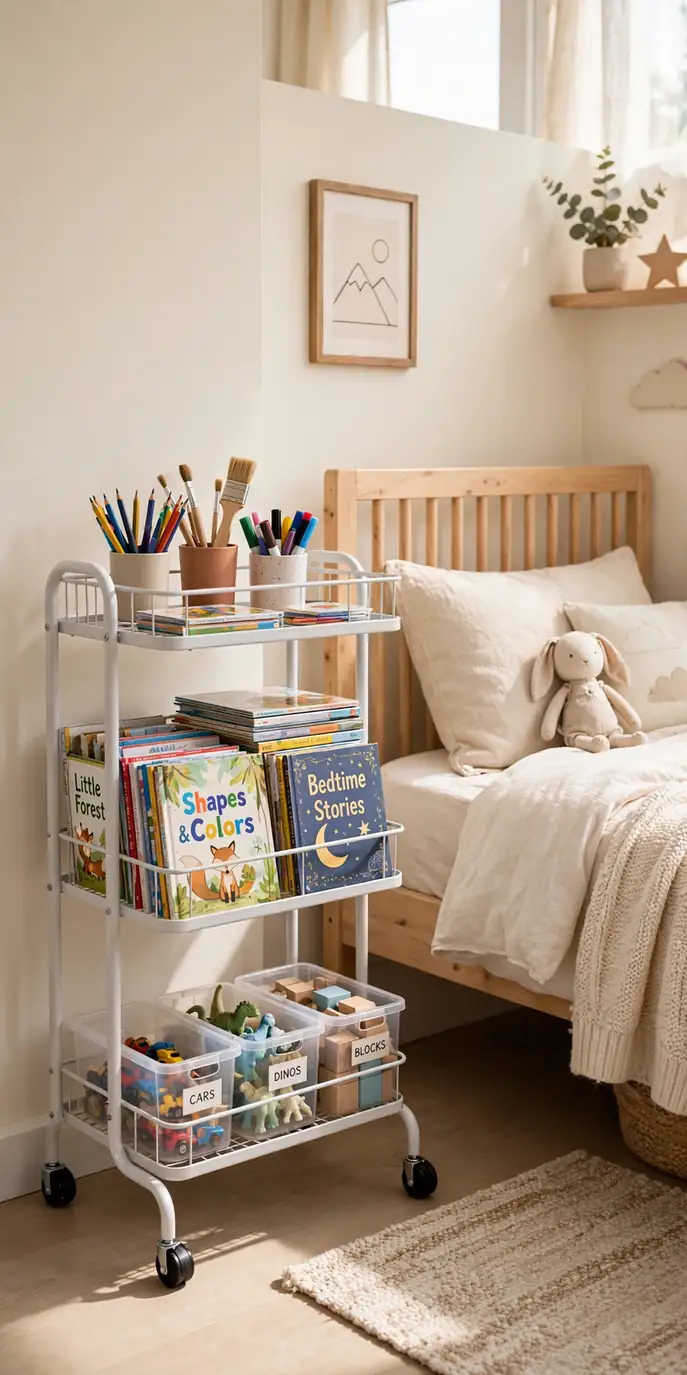
- Pick a slim three-tier cart that fits beside the bed or desk.
- Assign each tier a category: art supplies, reading, small toys.
- Use cups and small bins inside tiers so items stand upright.
- Roll it to the activity, then park it back in its marked spot.
A rolling cart is storage that follows your child around the room. Art projects happen at the desk, then the whole cart rolls to the closet when friends arrive. Locking casters keep it parked during use, and the narrow footprint slips into gaps other furniture cannot use. Choose a cart with a handle your child can grip, and park it in the same marked spot every evening.
Murphy versus Bunk
| Feature | Murphy Bed | Bunk Bed |
|---|---|---|
| Floor space by day | Fully freed when folded | Partially freed below |
| Sleep capacity | One sleeper | Two sleepers |
| Best for | Single child, tiny room | Siblings sharing |
| Cost | Higher investment | Budget friendly |
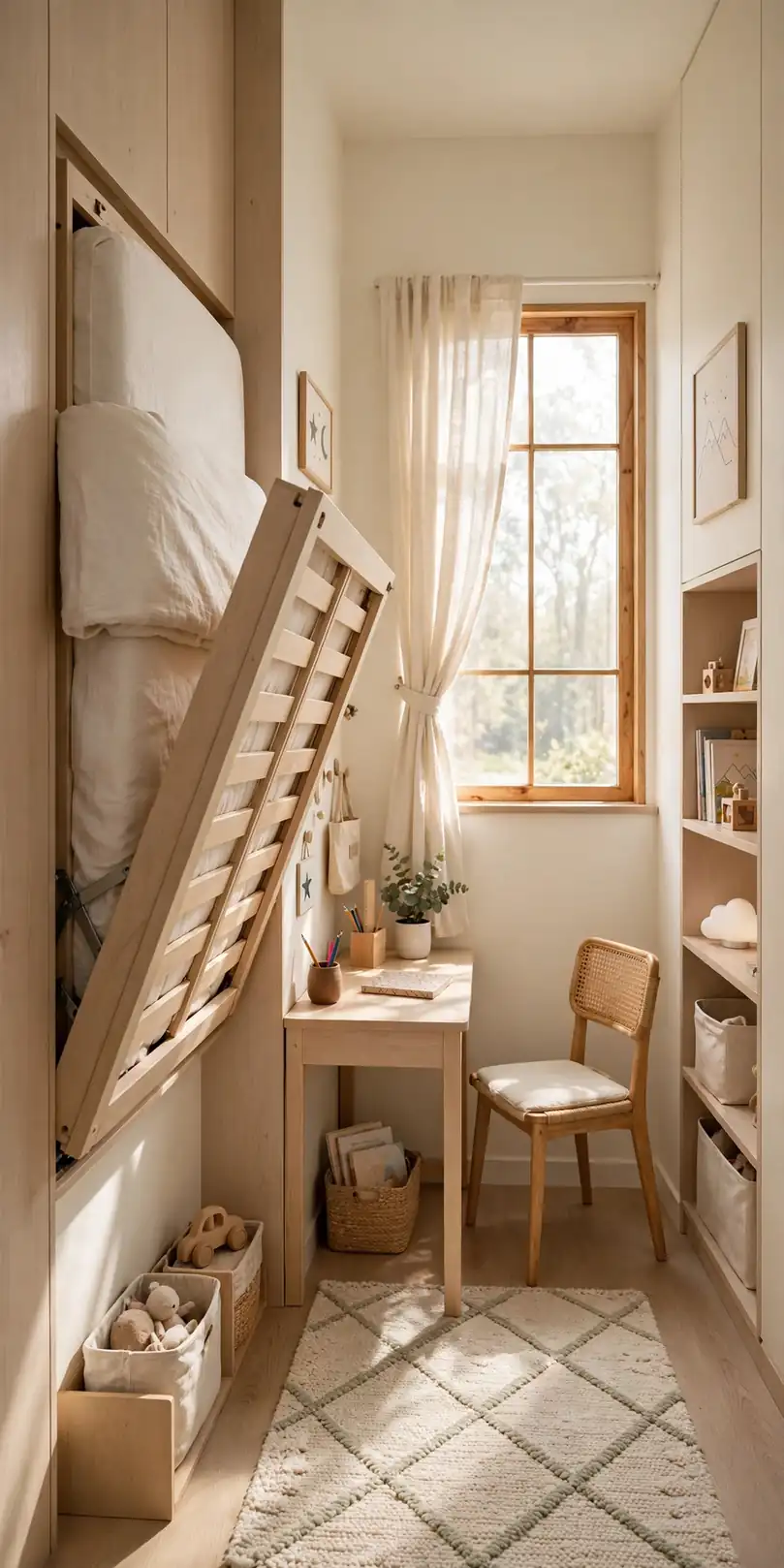
Choose the bed type around your real constraint. A single child in a truly tiny room gains the most from a murphy bed that vanishes by day. Siblings who must share will get more mileage from bunks with storage stairs. Either way, the bed decision shapes every other layout choice. Measure your ceiling height and floor space twice before ordering, since both options are harder to return than standard beds. Talk with your child too, since they will live with the choice daily.
Overdoor Organizers
DO:
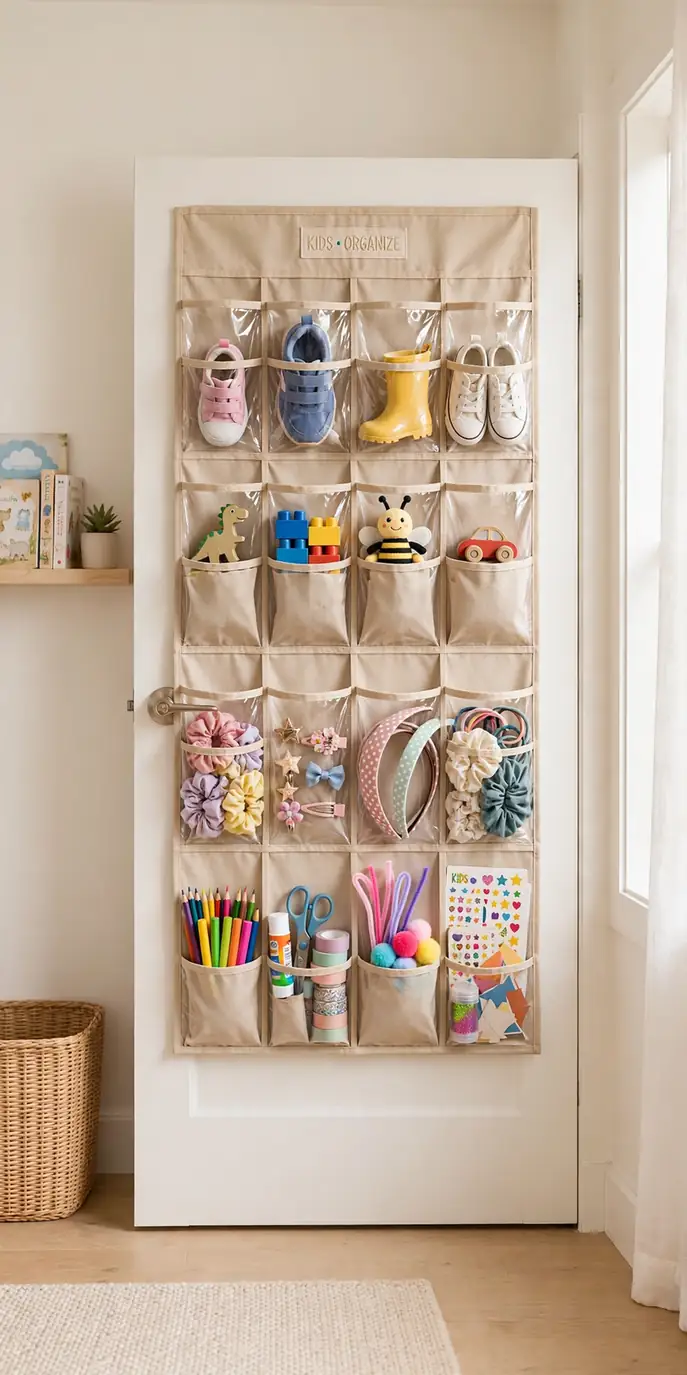
- Hang a clear-pocket organizer on the bedroom door for shoes and small toys.
- Use the closet door inside for accessories and hair supplies.
- Keep pockets at your child’s height so they can reach everything.
DON’T:
- Don’t overload pockets; heavy items strain the door hinges.
- Don’t store anything fragile where the door slams.
- Don’t block the door’s full swing with bulky hanging items.
Doors are vertical storage hiding in plain sight. A pocket organizer adds a dozen compartments without touching floor space. I’ve noticed kids actually use door storage because grabbing from a pocket feels like a game, not a chore.
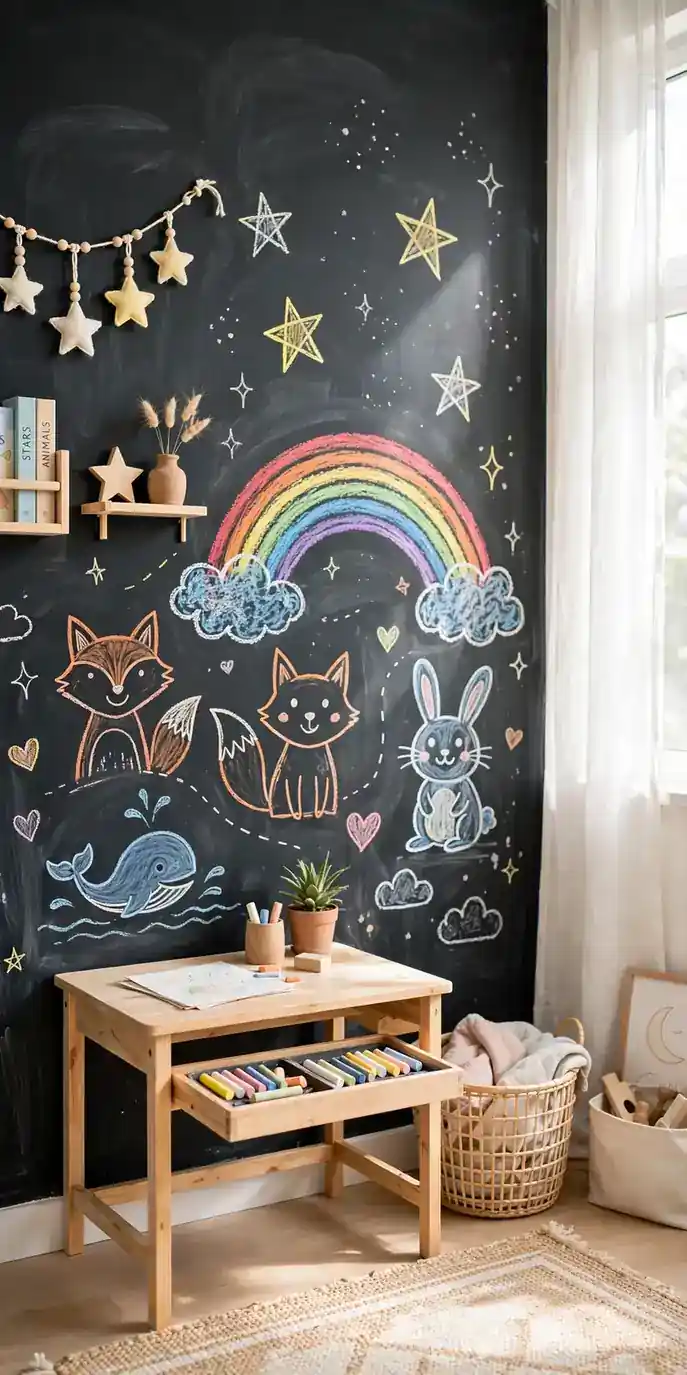
Chalkboard Wall Art
Cost: Low | Time: One weekend | Skill Level: Beginner | Best For: Creative kids aged 4+
One chalkboard wall replaces posters, frames, and doodle pads in a single stroke. Kids gain a giant creative surface that never runs out, while parents get decor that refreshes itself weekly. Frame the painted area with simple white trim so it reads as intentional design. Mount a slim chalk tray below and stock dustless chalk to keep the air clean. In my experience, kids draw far more when the canvas feels huge. When your child outgrows the phase, one coat of primer restores a normal wall.
Reading Corner Glow
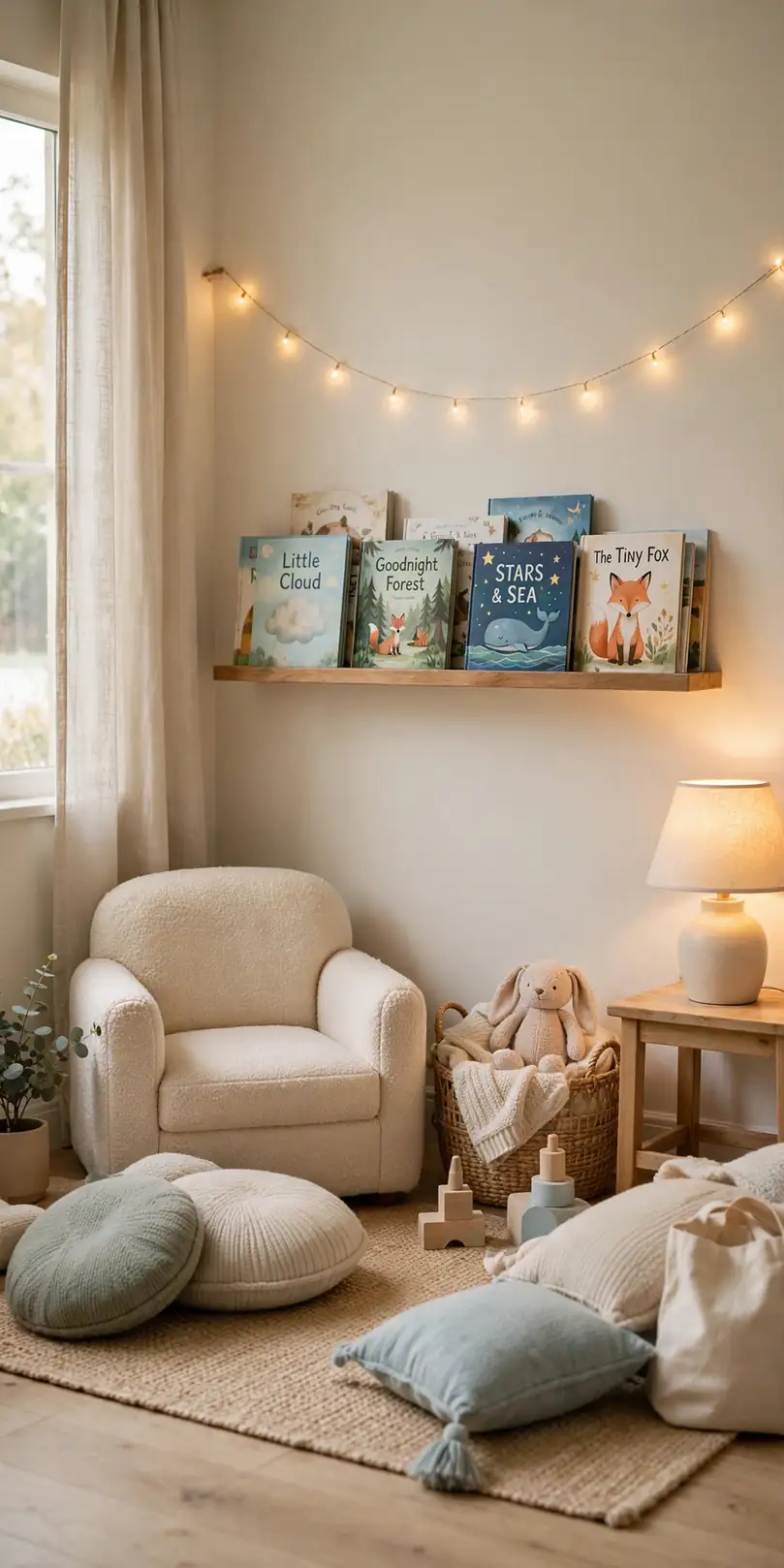
A reading corner needs no more than one square meter to feel magical. Tuck a small armchair or a pile of floor cushions into an unused corner, hang a warm string of lights overhead, and mount one slim shelf for current books. The glow signals that this spot is for winding down, which helps bedtime routines stick.
Keep the corner separate from toy storage so books don’t drown in clutter. A small basket for finished books and a clip-on reading light complete the setup. I’ve seen how a dedicated reading spot can turn reluctant readers into kids who ask for “five more minutes” every night.
Stackable Toy Bins
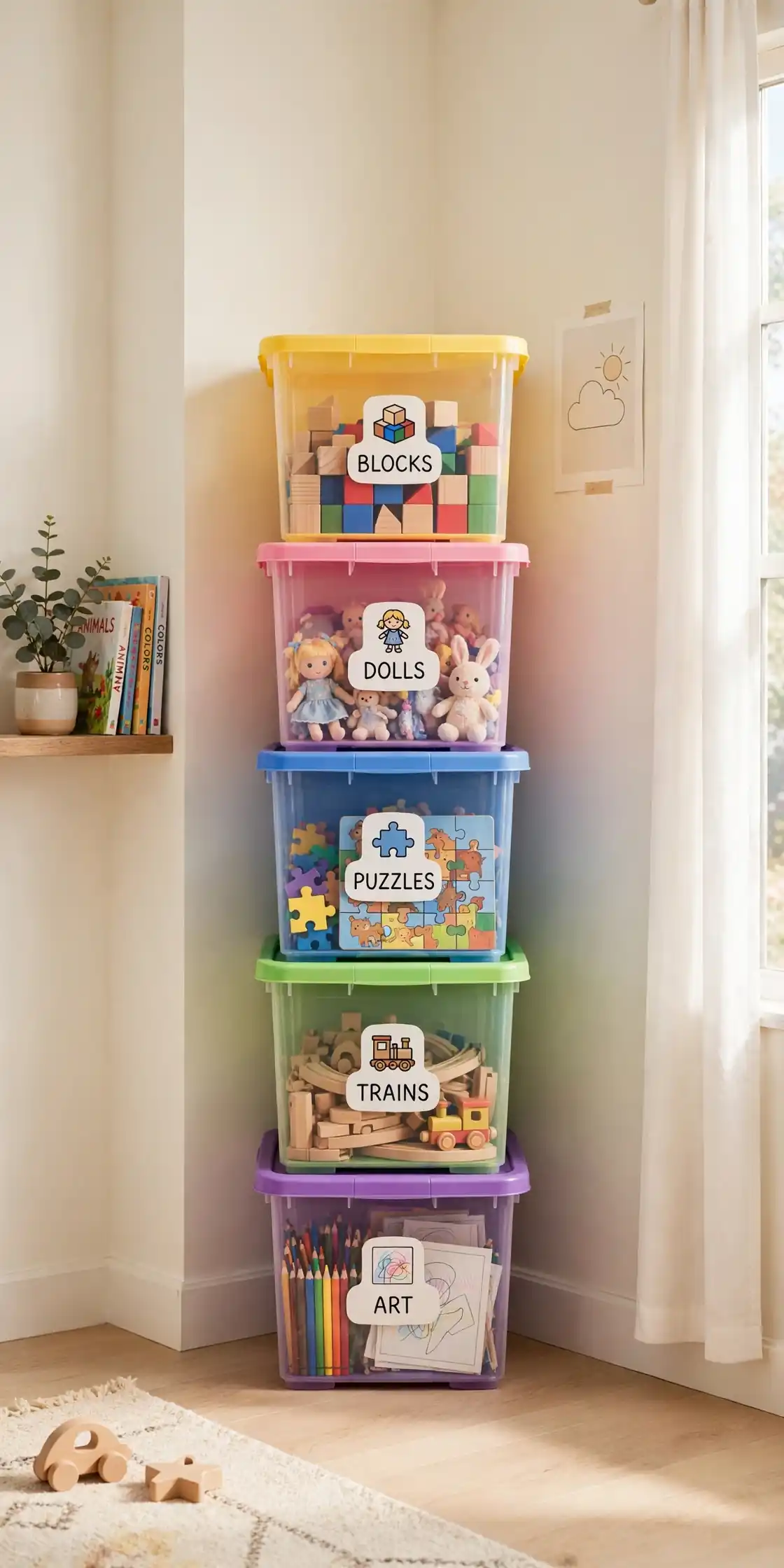
- Buy bins in one size so they stack safely without toppling.
- Sort by play type: building, art, dolls, vehicles, puzzles.
- Cap the collection at what fits; one in, one out.
- Place daily favorites at child height, rare toys higher.
- Use clear fronts or picture labels so cleanup is obvious.
Stackable bins turn a toy avalanche into a tidy tower. Vertical stacking uses the same footprint as one bin while holding five times the toys. The one-in-one-out rule keeps the system honest as birthdays and holidays add new arrivals. Clear bins let kids see contents at a glance, which cuts the dump-everything-out habit fast.
Foldaway Table Spot
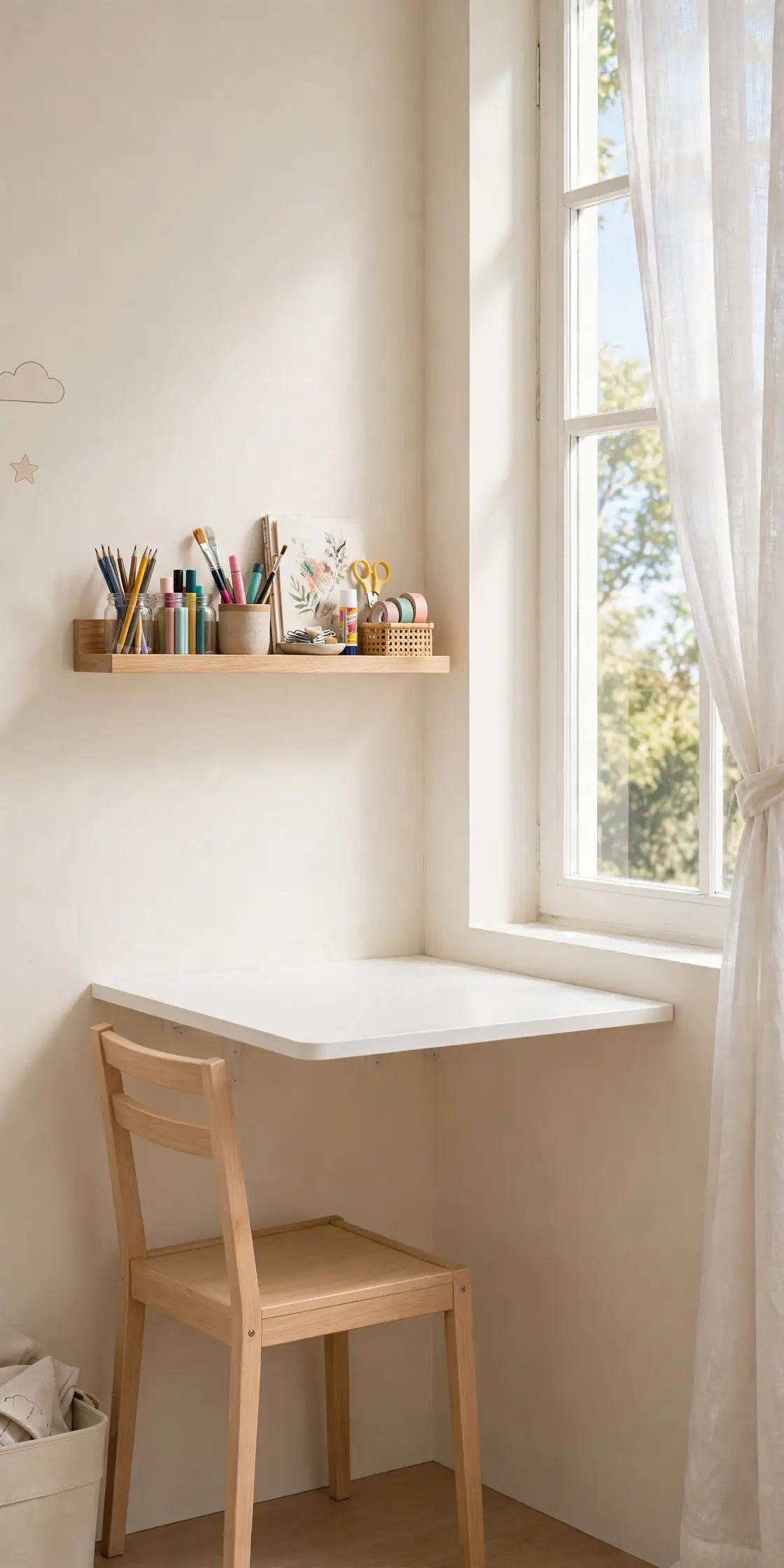
Quick Tip: A wall-mounted drop-leaf table gives you a full desk or craft surface that vanishes in seconds. Mount it at standard desk height near a window for natural light. When folded, the wall space above can hold art or a small shelf, so nothing is wasted.
Not every small bedroom can spare permanent desk space. A foldaway table appears for homework and art, then disappears for floor play. Choose a model with a safety latch so little fingers stay safe, and pair it with a folding chair that hangs on a wall hook. A folding chair hung on a wall hook completes the setup without stealing floor space.
Pegboard Play Wall
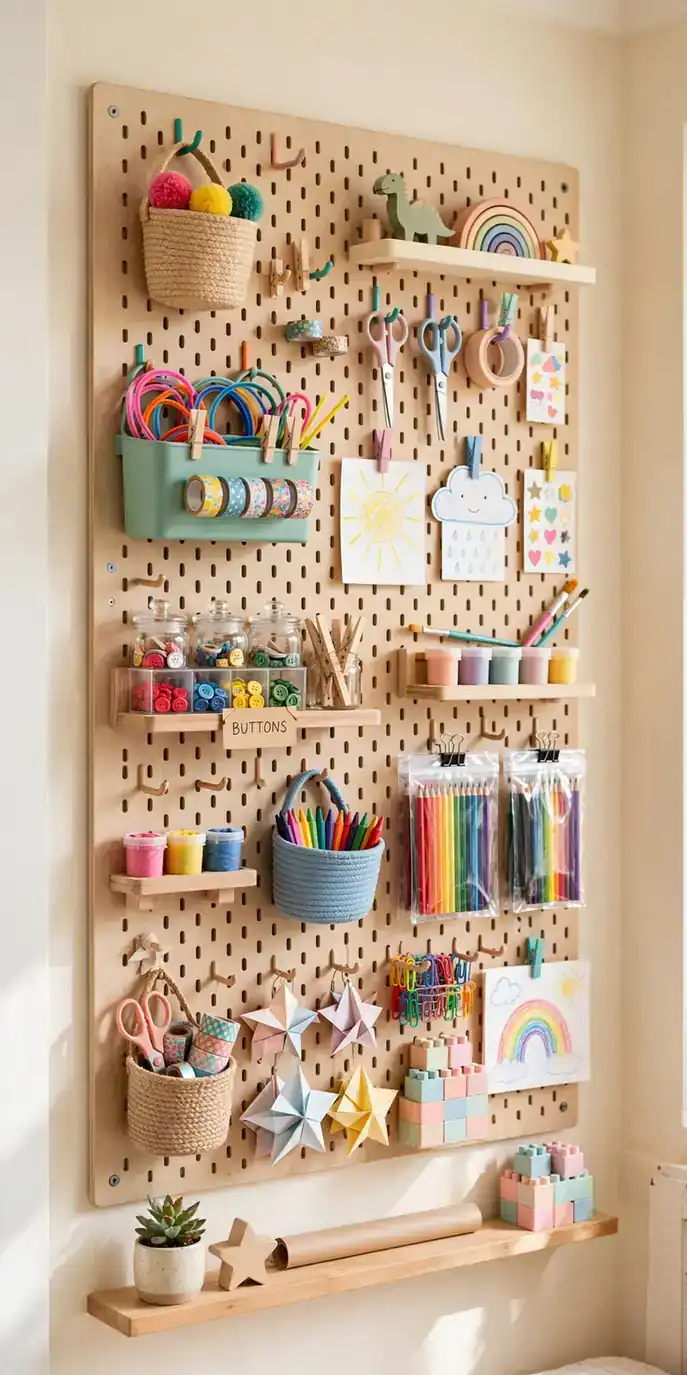
BEFORE: Craft supplies lived in boxes under the desk. Every project meant dragging out three containers and leaving them open for days.
AFTER: A pegboard wall holds every supply on hooks and mini shelves. Projects start in seconds, and cleanup means hanging things back on their outlines.
Pegboards adapt as interests change, which fixed furniture cannot do. Rearrange hooks for a Lego phase, then reconfigure for an art phase next month. Trace each item’s outline on the board so your child always knows where things belong. Start with a 60 by 90 cm board mounted at your child’s eye level; you can always add a second panel later.
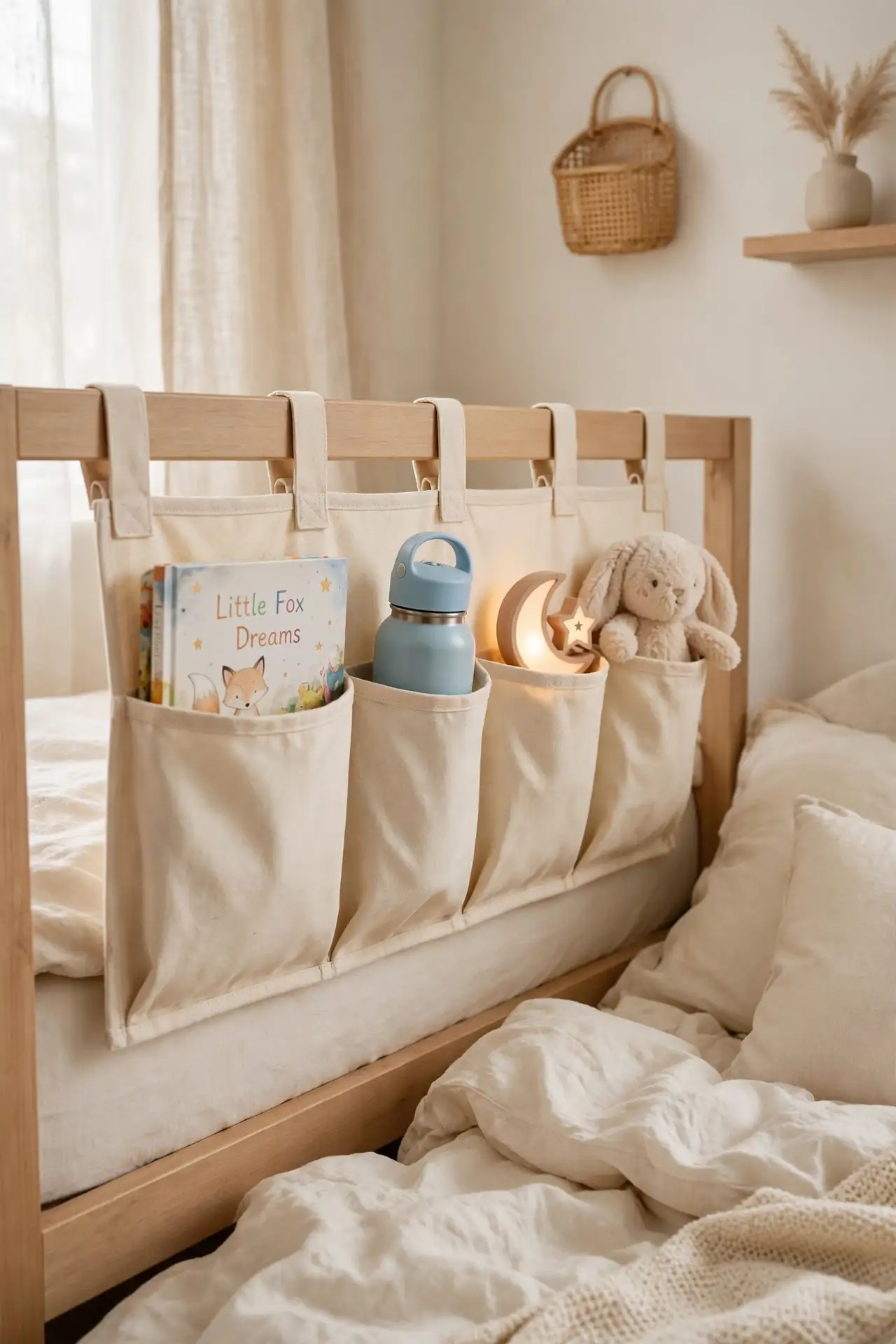
Bedside Pocket Pouch
- Choose a sturdy fabric pouch with at least three deep pockets.
- Hang it on the bed frame at mattress height, within arm’s reach.
- Stock it with a book, water bottle, and small nightlight.
- Keep a fourth pocket empty for treasures that appear overnight.
A nightstand eats precious floor space beside the bed. A hanging pocket pouch holds the same bedtime essentials on zero square centimeters of floor. Kids love having their things within reach, which means fewer reasons to get up after lights out. Choose machine-washable fabric, since bedtime snacks and midnight water spills are simply inevitable with kids. Secure the straps tightly so the pouch never slides off during the night.
Window Seat Storage
| Feature | Storage Bench | Built-in Seat |
|---|---|---|
| Cost | Low, ready-made | Higher, custom |
| Install effort | None, just place it | Weekend project |
| Storage type | Open cubbies | Deep drawers |
| Best for | Renters | Owned homes |
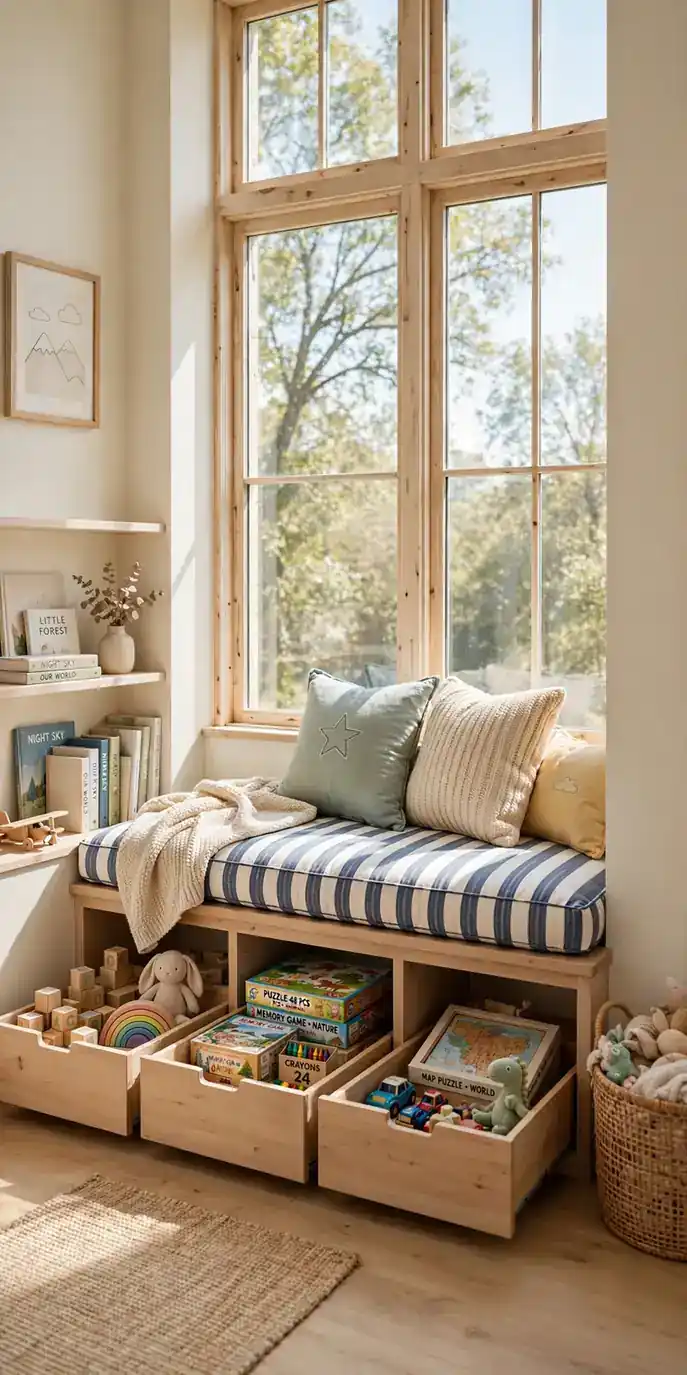
Windows waste the wall below them in most kids rooms. A storage bench turns that dead zone into seating plus hidden toy space. Add a washable cushion and it becomes the favorite reading spot, especially on rainy afternoons when the light is soft. Look for a bench with cubbies your child can reach without help. Style the top with two cushions and one throw so it invites lounging, not just storage duty. Measure the window width first so the bench fits wall to wall without gaps.
Hanging Closet Rods
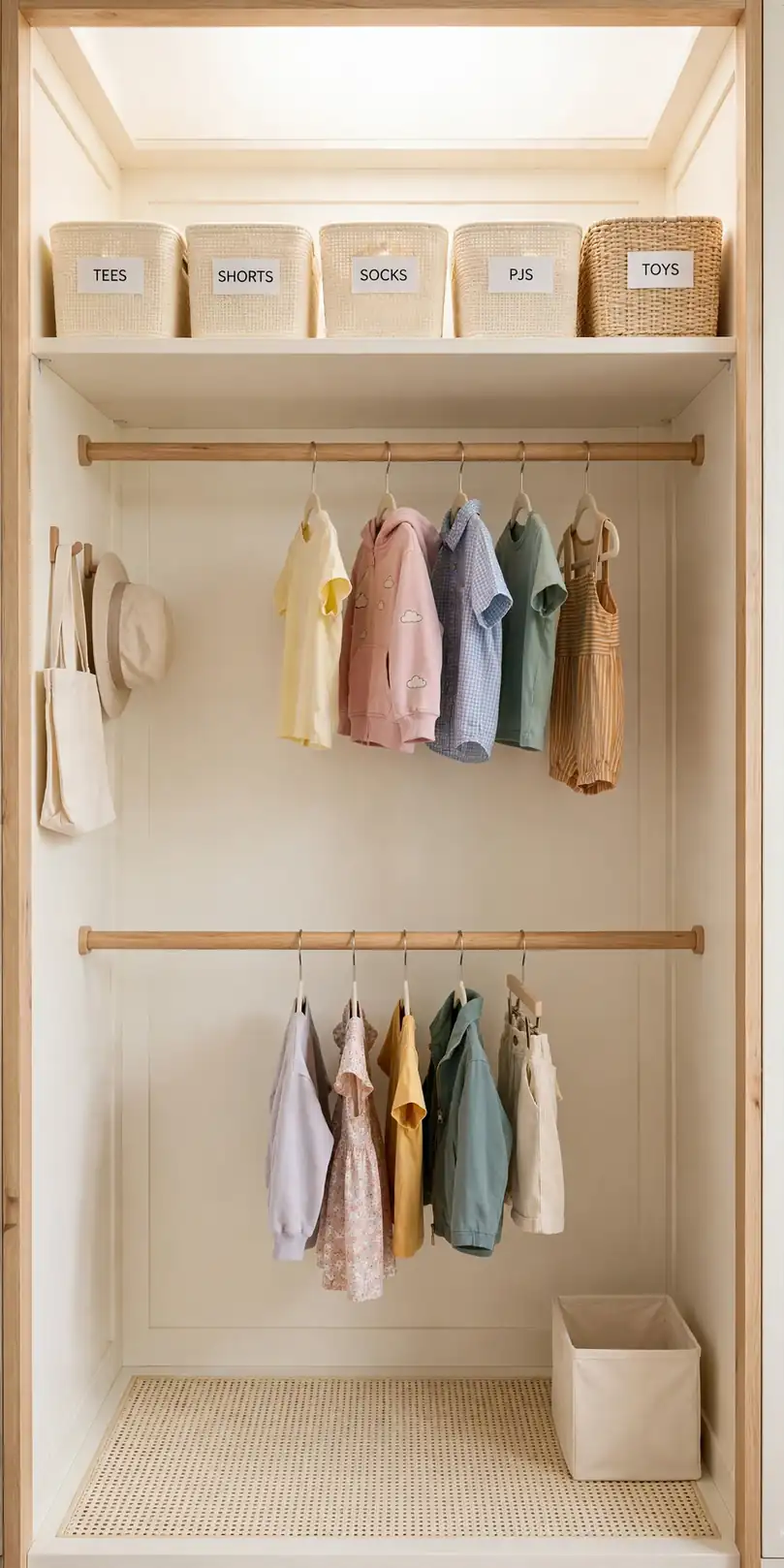
DO:
- Install a second lower rod so kids can reach their own clothes.
- Use slim velvet hangers to fit twice as many garments.
- Sort clothes by type or school-day outfits for easy mornings.
DON’T:
- Don’t hang anything heavy on tension rods; they will slip.
- Don’t let the closet become a dumping ground for broken toys.
- Don’t skip the top shelf; seasonal items belong up there.
One rod wastes the lower half of every closet. A double-rod setup doubles hanging space and puts daily clothes at child height, which builds independence at dress time. Add a small step stool for the top shelf and the whole closet becomes kid-operated.
Floor Cushion Zone
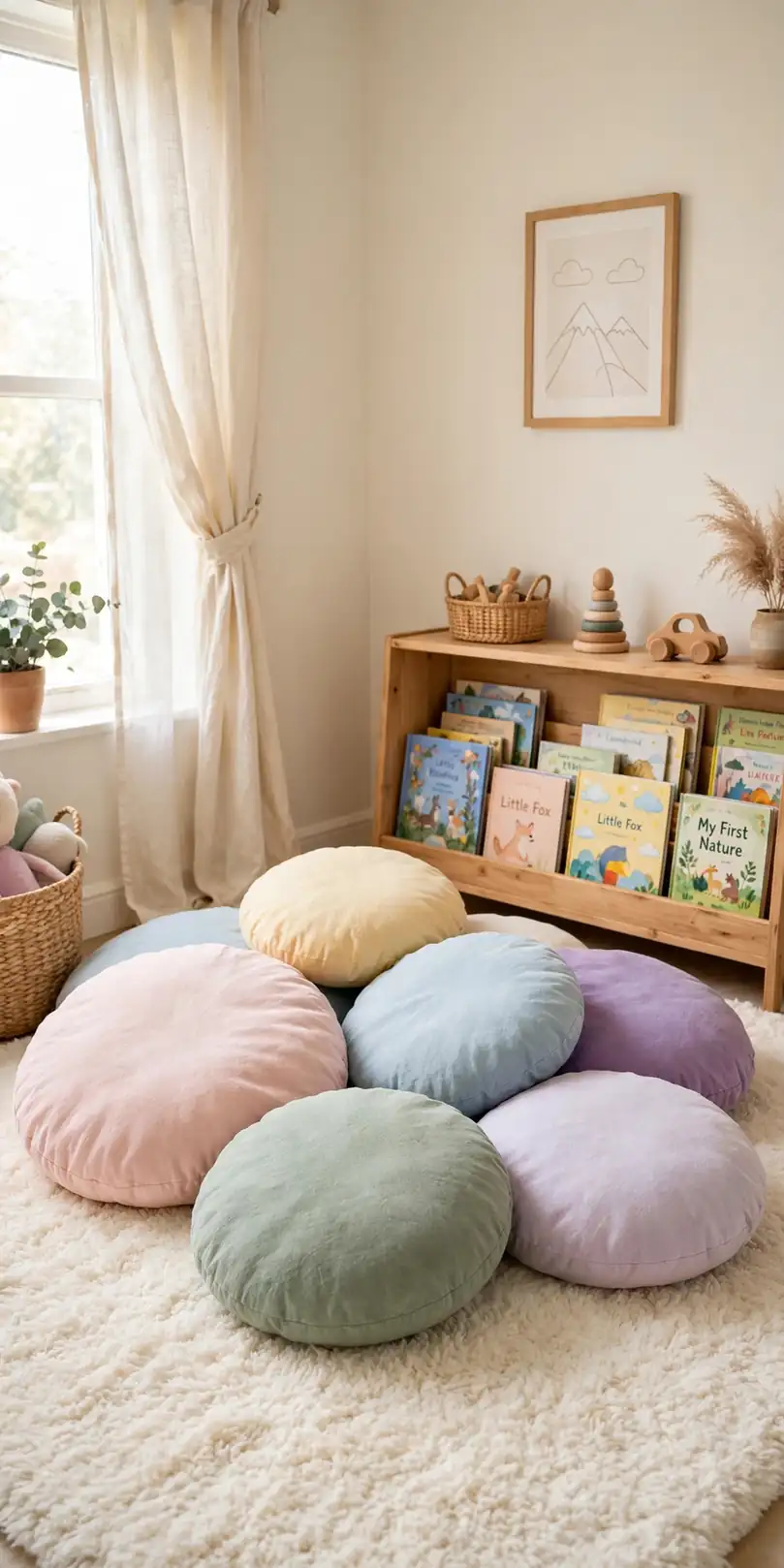
Cost: Low | Time: One afternoon | Skill Level: Beginner | Best For: Play and lounging
Chairs and sofas demand floor space that small rooms cannot spare. A zone of large floor cushions on a soft rug creates flexible seating that stacks away in seconds. Kids sprawl, build, and read there, then the cushions pile into a corner when the room needs to breathe. Choose cushions with removable washable covers in two or three coordinating colors. A round rug underneath defines the zone and adds the softness kids love for floor play. Toss in one weighted lap pad for calm-down time.
Vertical Book Display
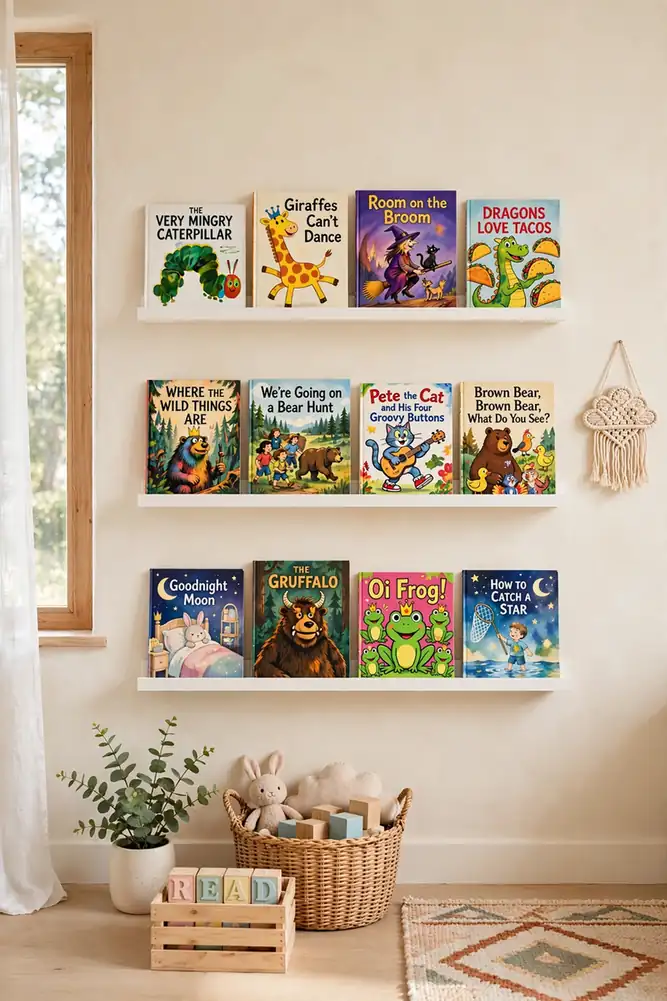
Books spine-out on a deep shelf get ignored. Front-facing display shelves turn book covers into wall art that invites little hands to grab and read. Two or three narrow picture ledges hold a surprising number of picture books while taking up almost no depth from the room.
Rotate the displayed books monthly to keep the wall feeling fresh. Let your child choose the front row; ownership of the display builds reading pride. For more inspiration on kid-friendly rooms that grow with your child, browse these kids bedroom ideas for layouts that balance storage with play space. Mount ledges securely into studs, since curious climbers will test them.
Hidden Toy Trunk
- Pick a trunk with a soft-close lid to protect little fingers.
- Use it as a bench by adding a cushion on top.
- Sort inside with small bins so toys don’t become a jumble.
- Place it at the bed’s foot where dead space usually sits.
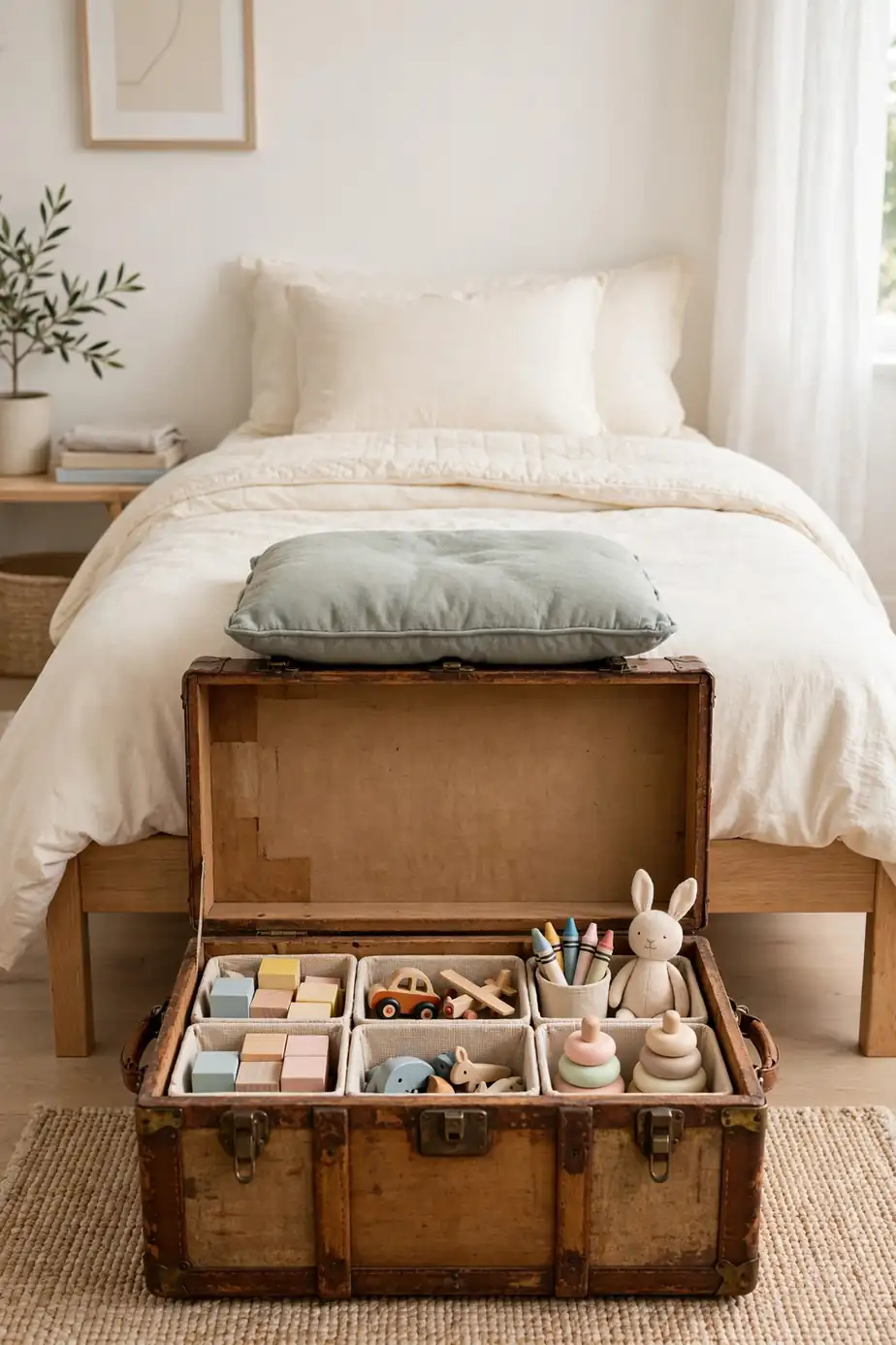
A trunk at the foot of the bed swallows bulky toys whole. It doubles as seating for story time and looks like decor rather than storage. The soft-close hinge matters more than the style; safety hardware turns a simple box into a kid-proof workhorse. Line the trunk with a washable mat to protect the inside from sticky toy residue.
Hanging Net Storage
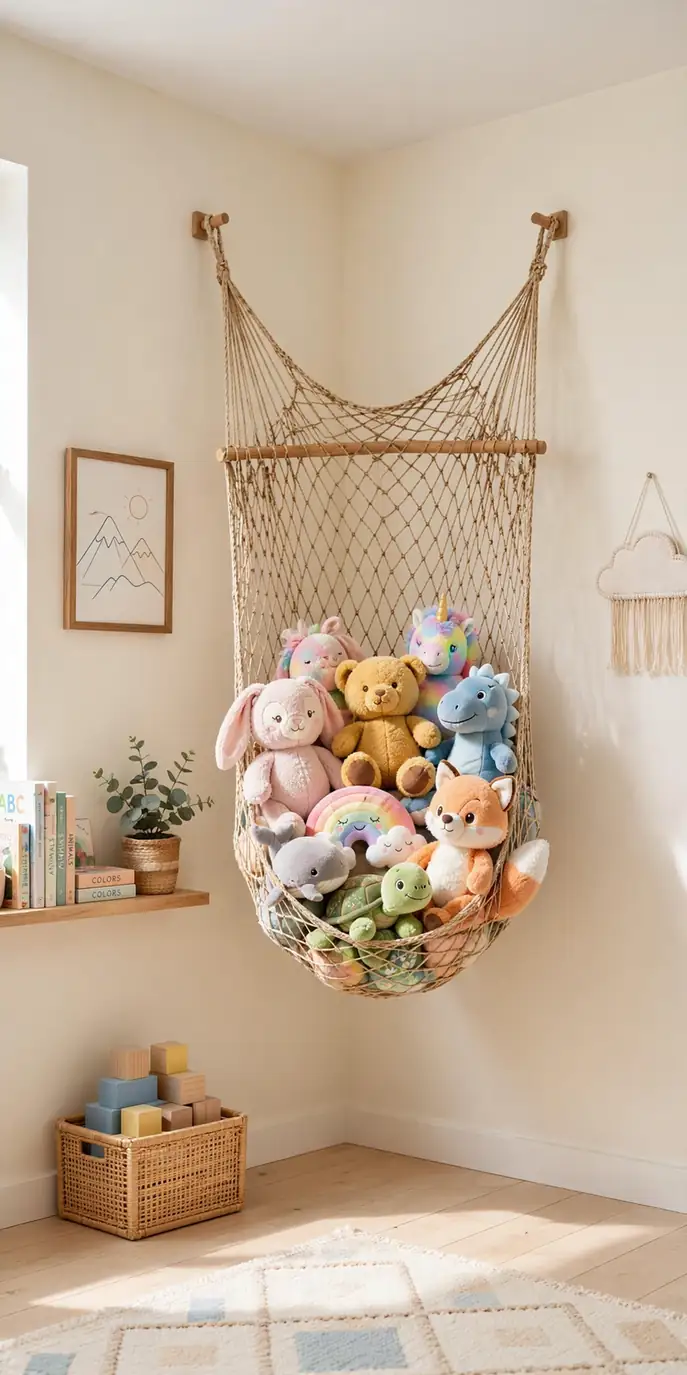
Quick Tip: Stuffed animals multiply faster than any other toy. A corner net hammock corrals dozens of them overhead, freeing shelf and bed space. Hang it high enough that the lowest toys clear your child’s head, and choose a net with small mesh so tiny plush don’t slip through.
Ceiling corners are the most ignored storage in any bedroom. Nets, hanging baskets, and suspended shelves all exploit that dead air. Start with one corner hammock and watch how much shelf space reappears for books and games. Rotate the displayed plush monthly so every favorite gets its turn. Check the hooks seasonally to keep everything secure.
Slim Nightstand Swap
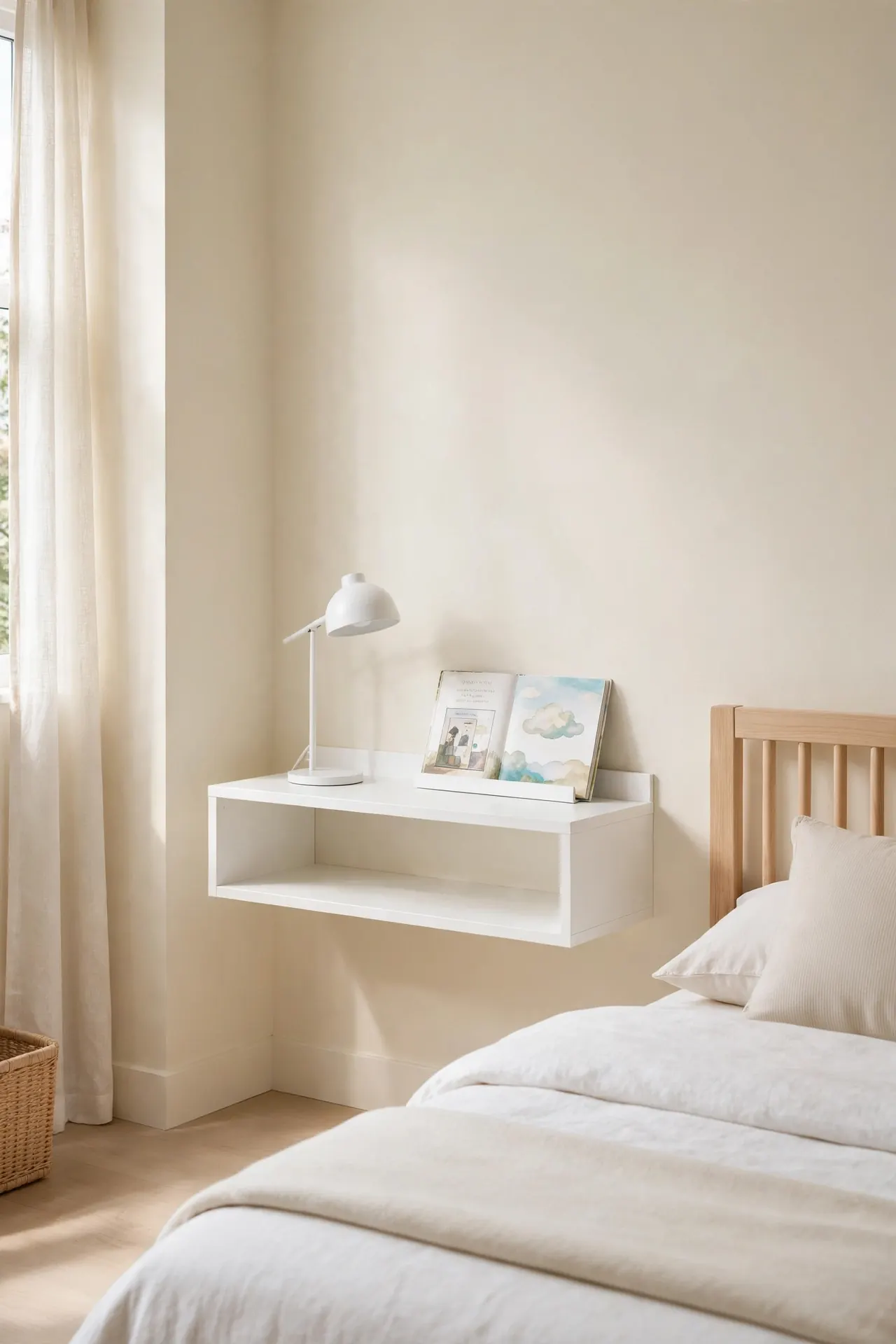
BEFORE: A chunky nightstand jutted 45 cm into the room and collected random clutter. The walkway beside the bed shrank to an awkward squeeze.
AFTER: A slim floating shelf holds just the lamp and tonight’s book. The floor below stays open, the walkway feels wide, and there’s nothing extra to dust.
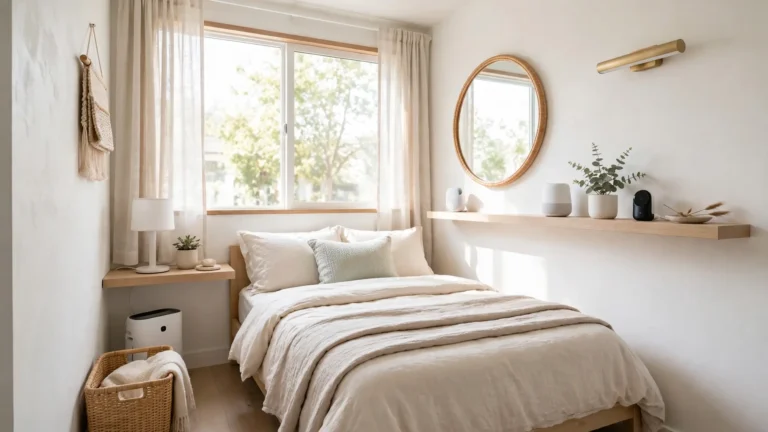
Nightstands are usually oversized for what kids actually need. A floating shelf or a narrow wall-mounted cabinet gives the same function in a fraction of the depth. Mount it a touch lower than adult height so small arms reach everything easily. A tiny drawer built into the shelf adds hidden storage for small treasures.
Magnetic Wall Strip
- Mount a magnetic knife-style strip at your child’s eye level.
- Attach small magnets to lightweight toys and art supplies.
- Use it for magnetic letters, cars, and mini figures.
- Keep heavier items off; magnets hold light things best.
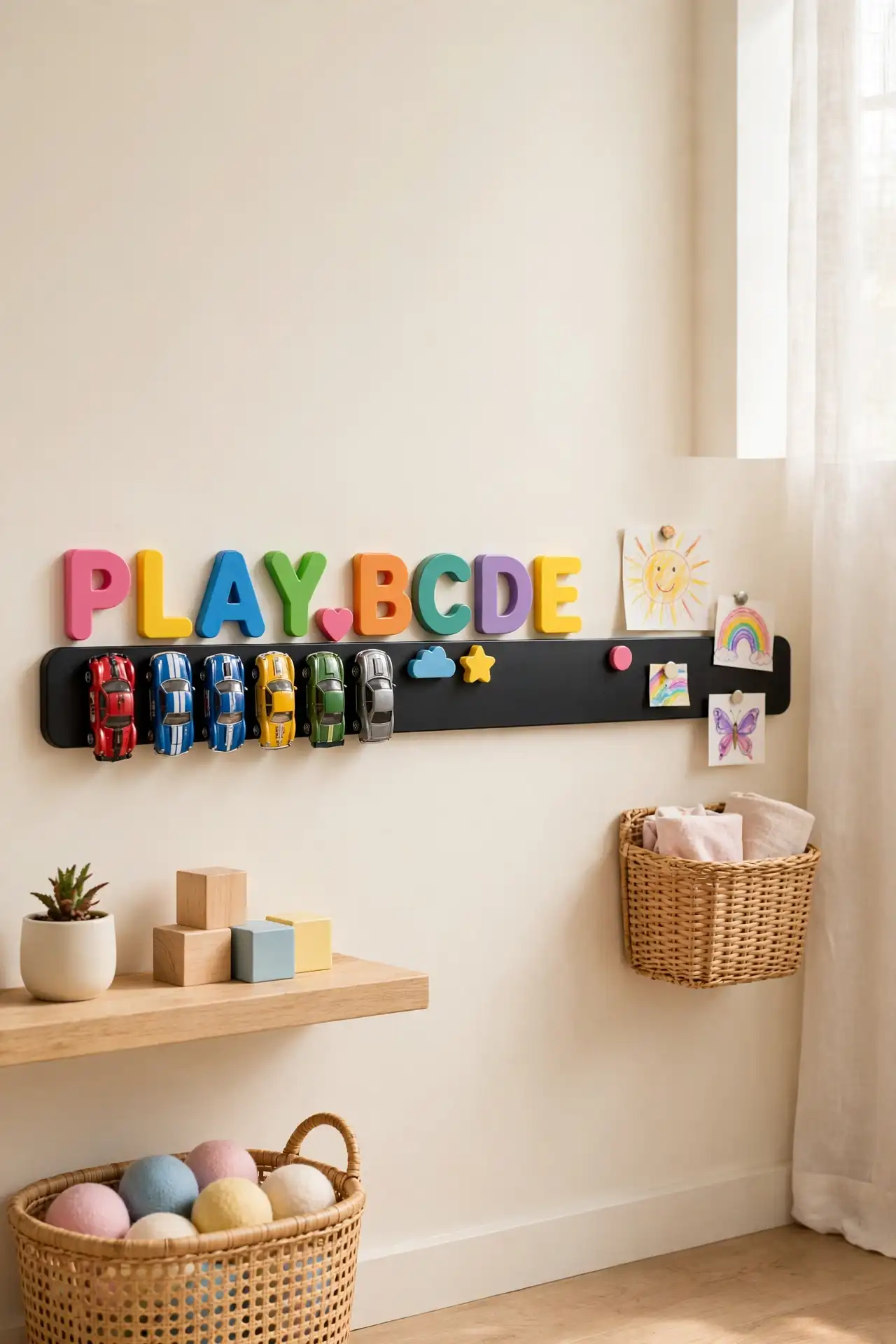
A magnetic strip turns a blank wall into interactive display space. Toy cars park in a neat row, artwork rotates without tape damage, and magnetic letters become a spelling game. The strip costs little, installs in minutes, and delights kids far beyond its size. Pair the strip with a small magnetic whiteboard for drawing and spelling practice. Kids rearrange the display daily, which keeps the wall feeling fresh and fun.
Trundle Bed Guest
| Feature | Trundle Bed | Air Mattress |
|---|---|---|
| Everyday footprint | Same as single bed | Zero, stored away |
| Setup effort | Pull out in seconds | Inflate and deflate |
| Sleep comfort | Real mattress | Varies widely |
| Best for | Frequent sleepovers | Rare guests |
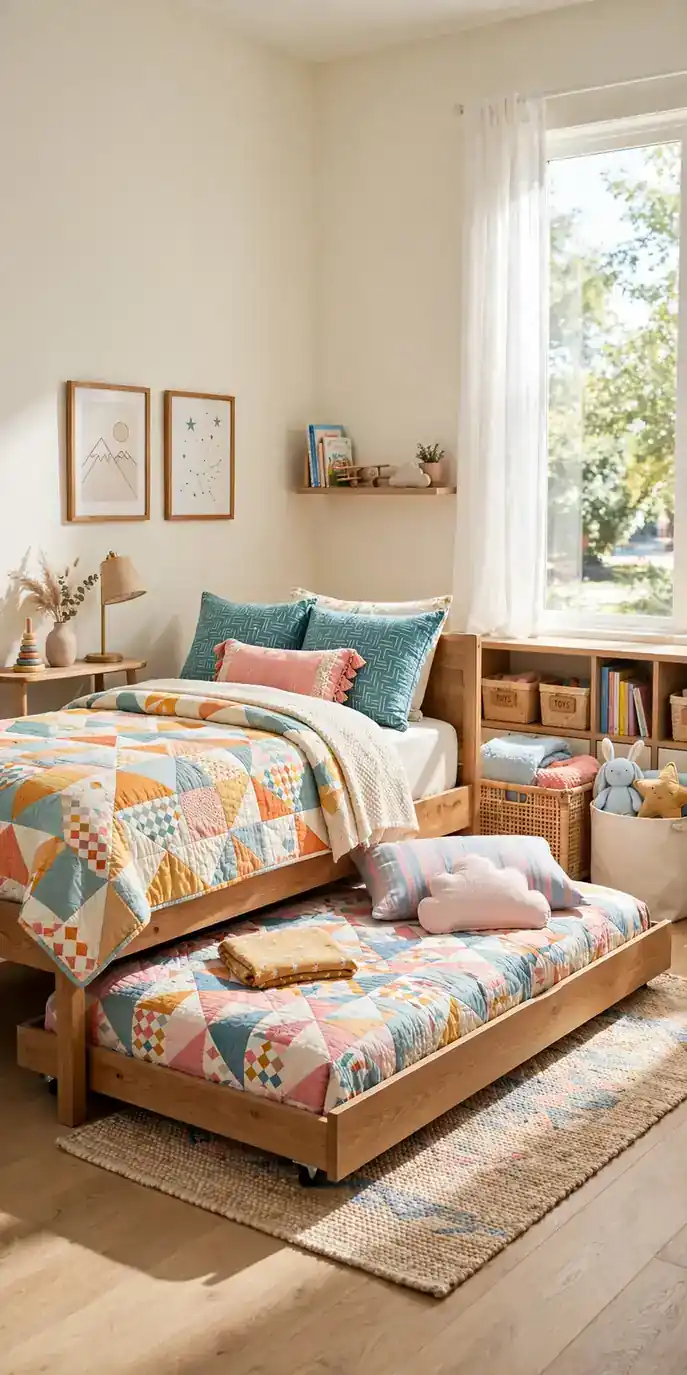
Sleepovers shouldn’t require rearranging the whole room. A trundle slides out in seconds and slides back by morning, keeping the floor clear for daily life. If your child hosts friends often, the trundle beats every inflatable option on comfort and convenience. Choose a trundle with a real mattress rather than a thin pad, and add matching bedding so the pulled-out bed looks intentional. Store spare pillows inside the trundle cavity during the day.
Conclusion
Small rooms reward smart choices more than big budgets. Pick two or three of these small bedroom decor ideas for kids that match your child’s age and habits, then let the new zones settle in for a week. Save your favorites on Pinterest, try one weekend project at a time, and share the before-and-after with friends. I’ve seen how small changes like these can completely shift the way a space feels, and your child’s tiny bedroom is about to feel twice its size. Measure the room before you shop, involve your child in choosing colors for each zone, and celebrate every finished corner together.