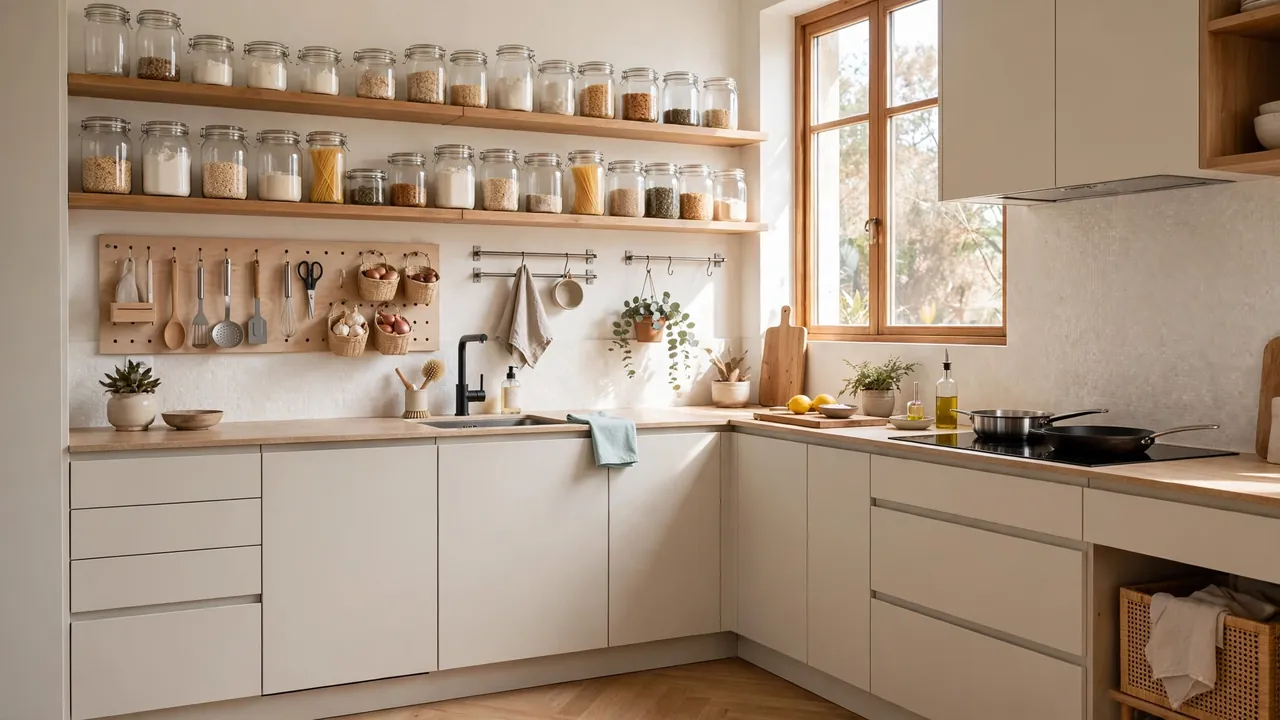
How to Organize a Kitchen Without a Pantry
If your kitchen has no pantry, you are not alone. Learning how to organize a kitchen without a pantry starts with a simple shift in thinking. Your cabinets, walls, and counters can do the job a pantry would. In my experience, the kitchens that feel most organized are rarely the ones with the most space.
This guide walks you through every step, from sorting what you own to creating zones that make cooking easier. You will learn which containers work best, how to use vertical space, and the simple habits that keep everything in place.
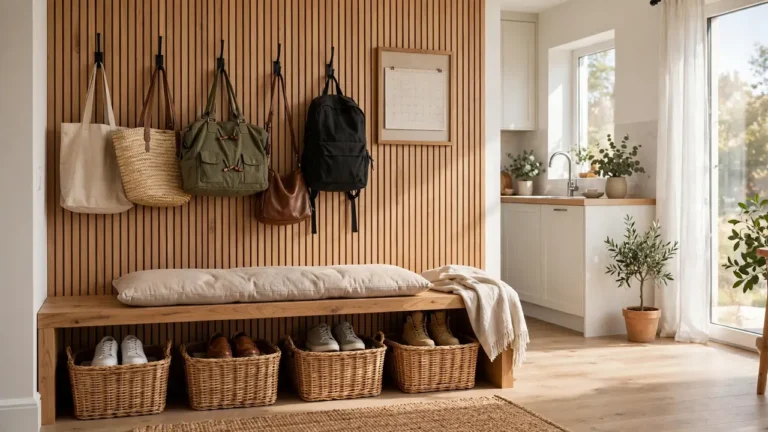
If you love smart storage ideas, you might also enjoy our guide on how to maximize storage in a small entryway, which uses many of the same principles in a different room.
Why No-Pantry Kitchens Overflow
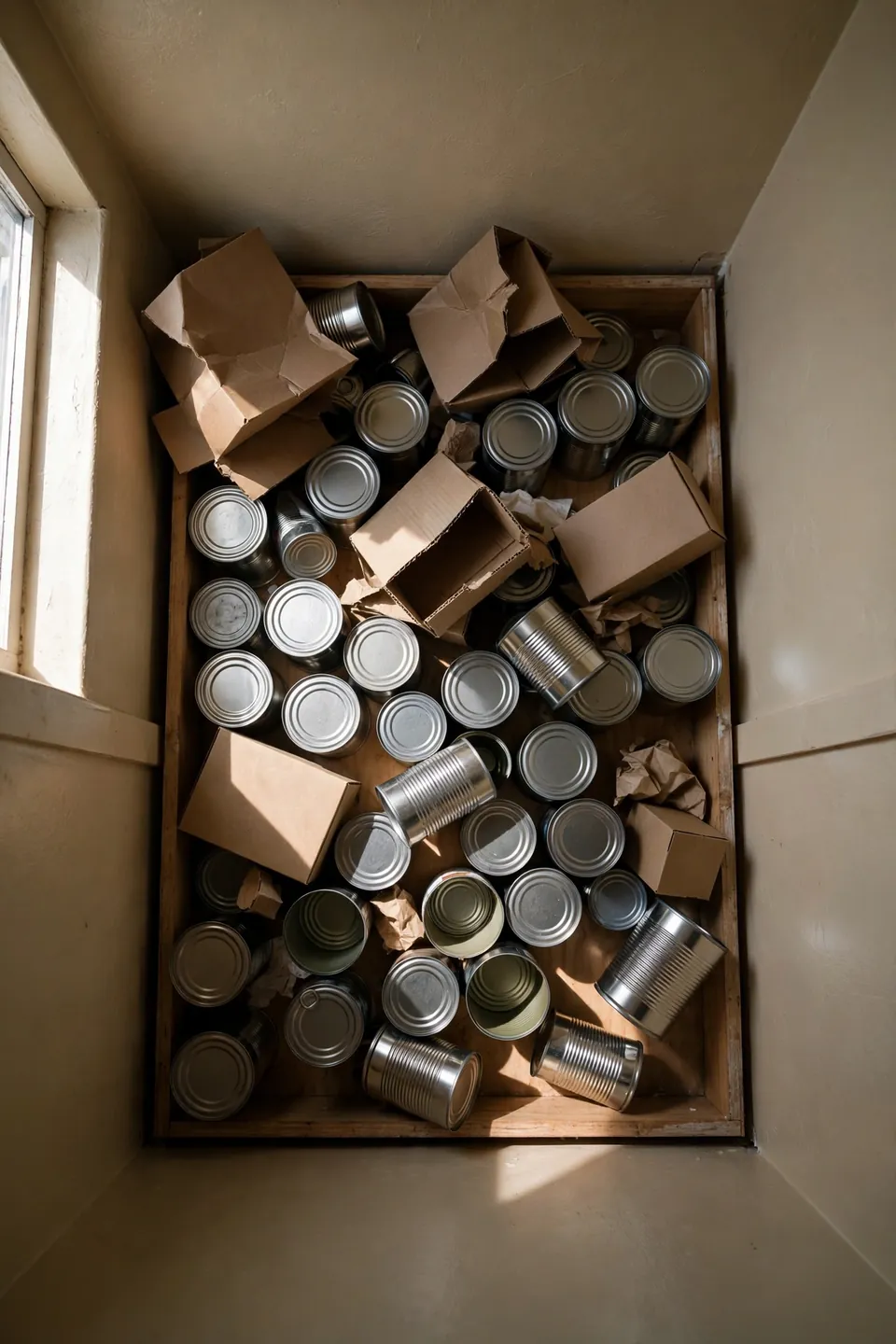
Most kitchens without a pantry were never designed for serious storage. Builders assumed you would figure it out, so cabinets are shallow, corners are wasted, and there is no single place for dry goods. Everything ends up scattered across random shelves, and finding anything feels like a treasure hunt.
The good news is that overflow is a system problem, not a space problem. Once you give every item a clear home and stop storing things where they do not belong, the same kitchen suddenly feels twice as big. The fix is simpler than you think.
Empty and Sort Everything
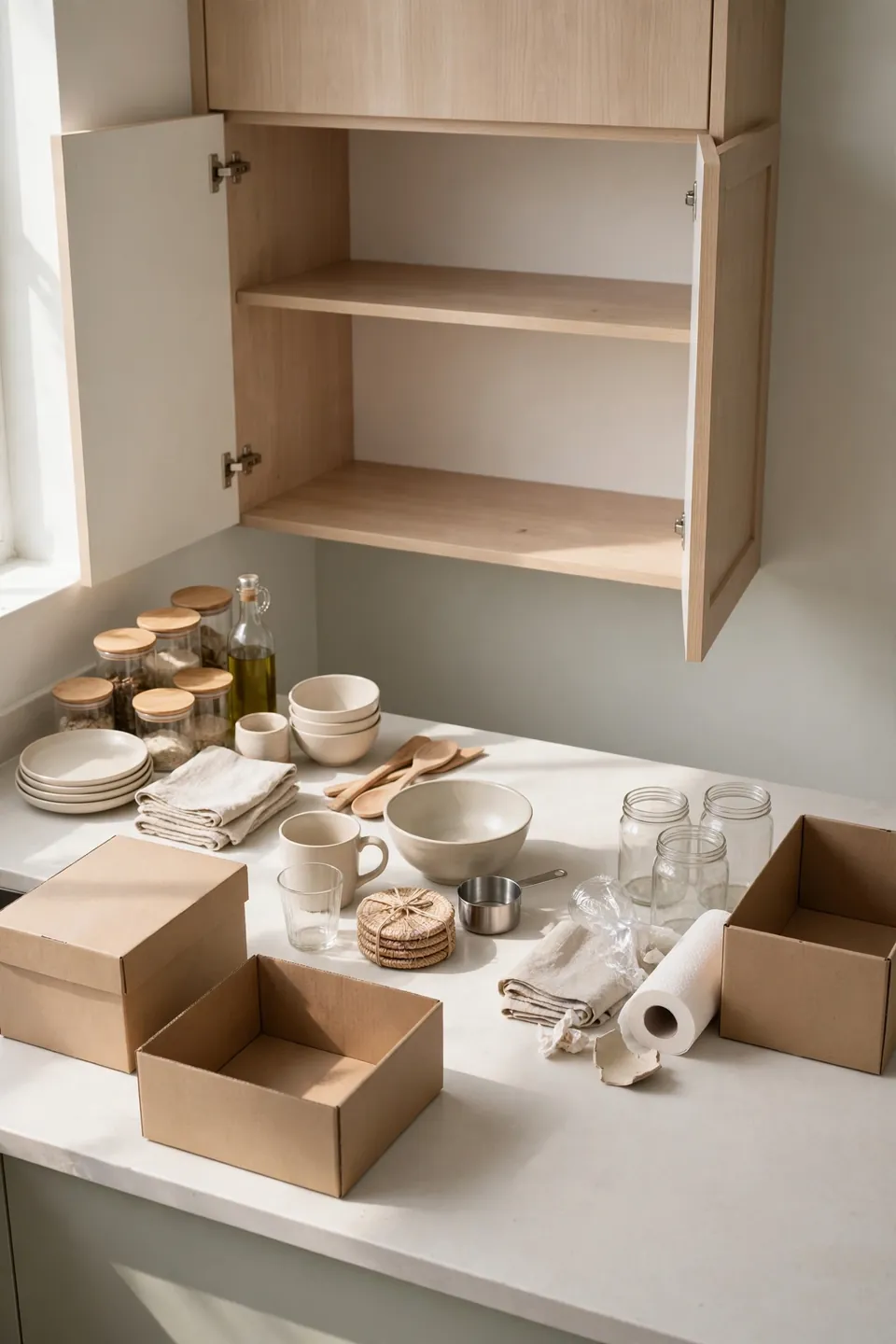
You cannot organize what you cannot see. Pulling everything out of your cabinets gives you a true picture of what you own. Most people discover duplicates, expired items, and gadgets they forgot they had. This single step makes every decision after it easier.
- Take everything out of one cabinet at a time so your kitchen stays usable. Group items on the counter by type as you go.
- Check expiration dates and toss anything stale or spoiled. Donate duplicates and gadgets you have not touched in a year.
- Wipe down the empty shelves before putting anything back. A clean start makes the new system feel intentional.
- Make three piles: keep, donate, and trash. Be honest about what you actually cook with each week.
Zone by Category
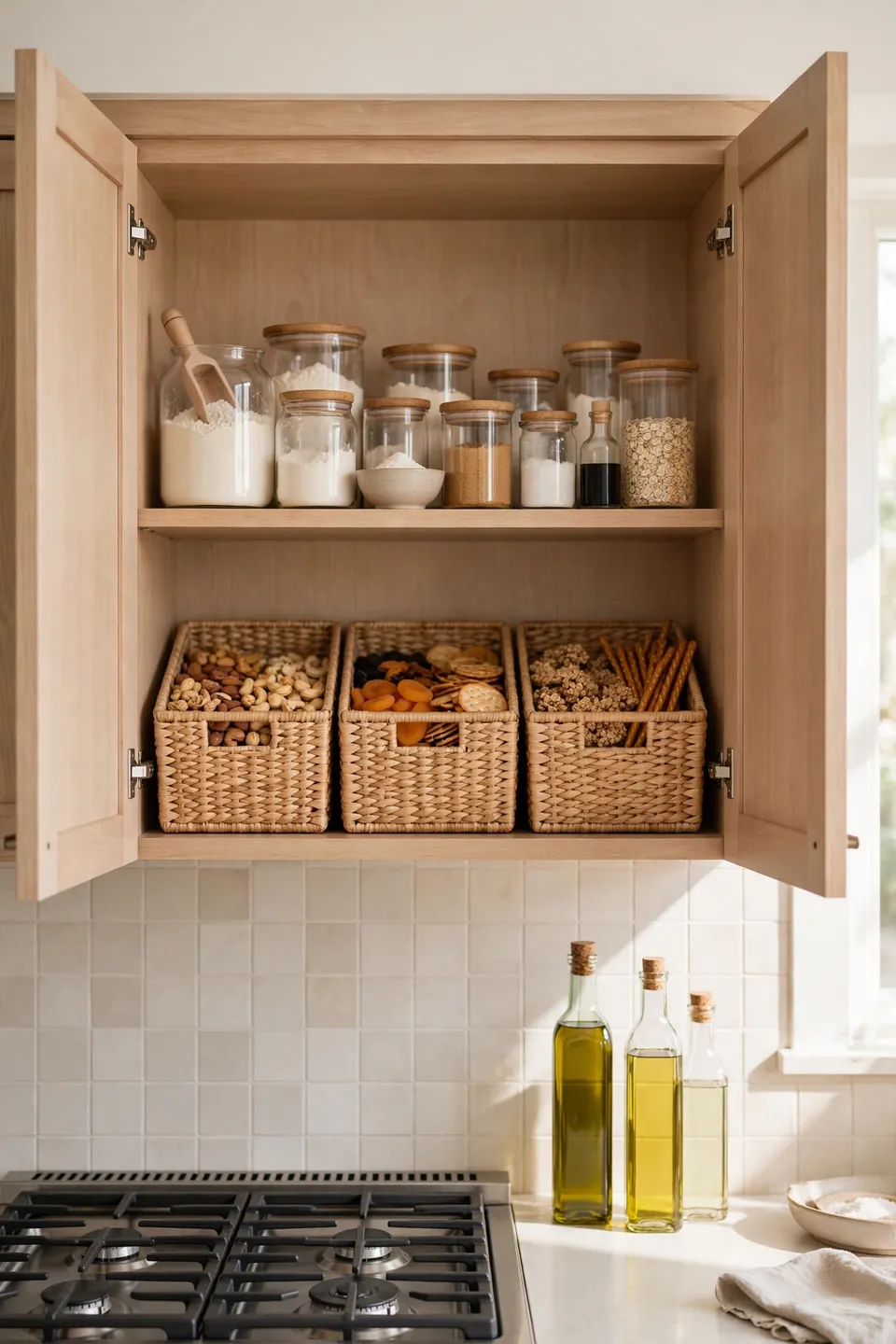
Quick Tip: Store items where you use them, not where they fit. Keep cooking oils near the stove, prep tools near the main counter, and coffee supplies in one spot. This one rule cuts your daily steps in half.
Zones turn a random collection of cabinets into a kitchen that works like a team. When all baking supplies live together and all snacks share one shelf, you stop hunting and start cooking. Think about your daily routine and let it guide where things go.
Use Clear Containers
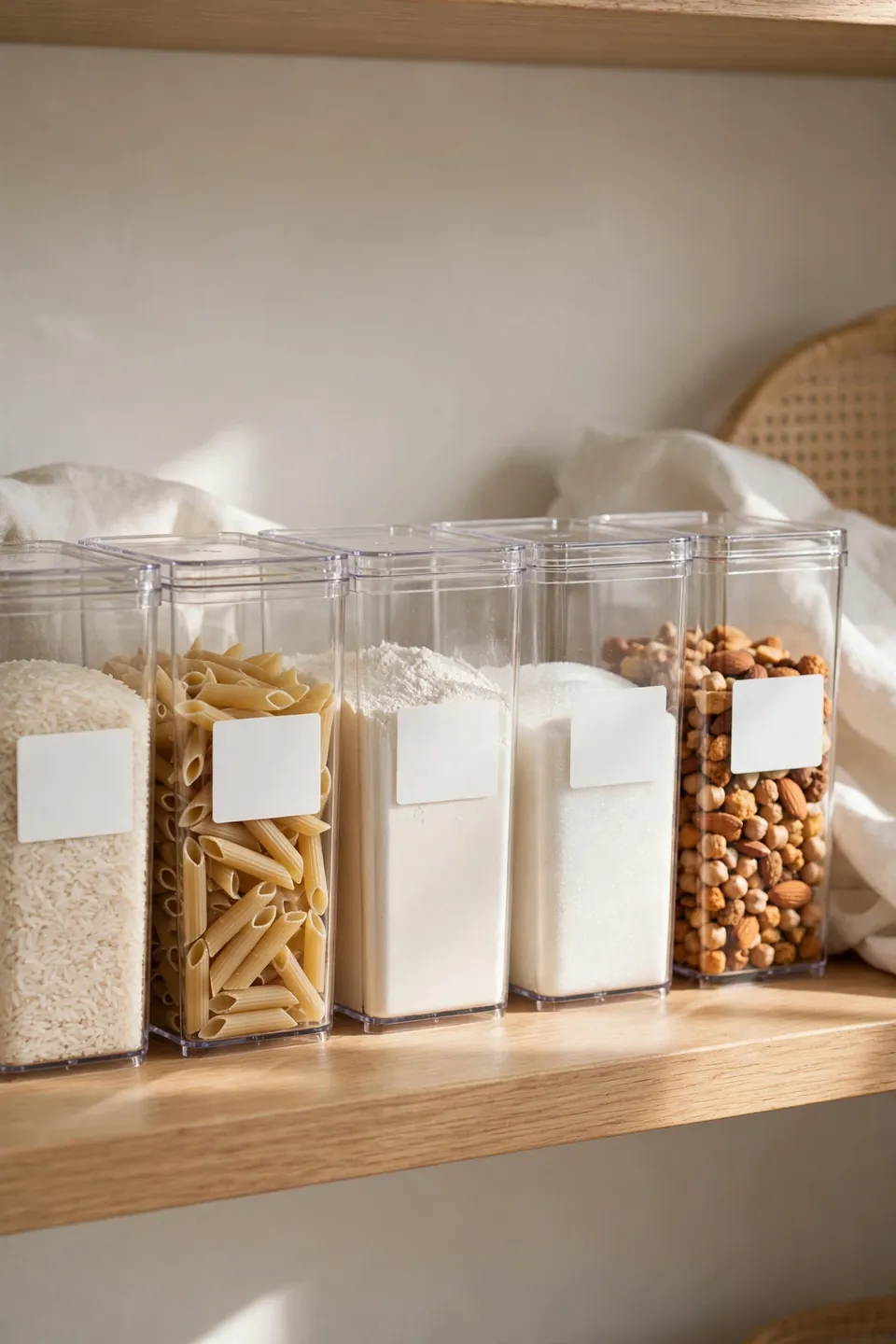
Common Mistake: Most people buy a dozen matching containers before they know what they need. They end up with sizes that do not fit their shelves or their food, and the containers become clutter themselves.
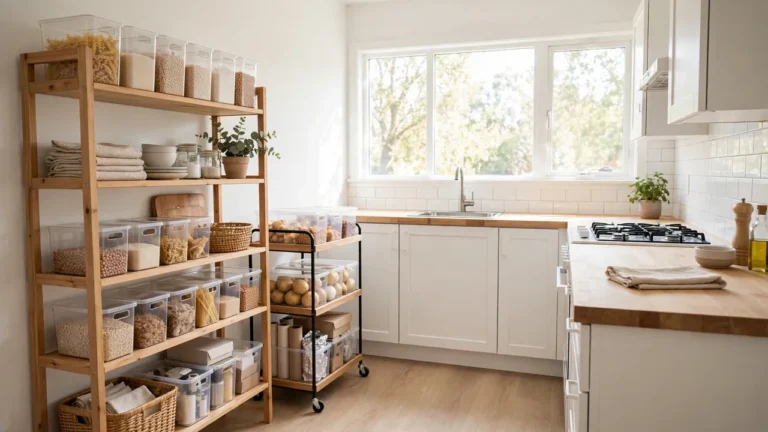
The Fix: Measure your shelves first, then buy containers for your actual staples. Start with just five or six for the items you buy most, like rice, pasta, flour, sugar, and snacks. Add more only when you see a real gap.
Clear containers work because you can see what is inside without opening anything. That visibility stops you from buying duplicates and reminds you what needs restocking. Choose square shapes over round ones since they use shelf space more efficiently, and label the front so everyone in the house knows where things belong.
Maximize Cabinet Space
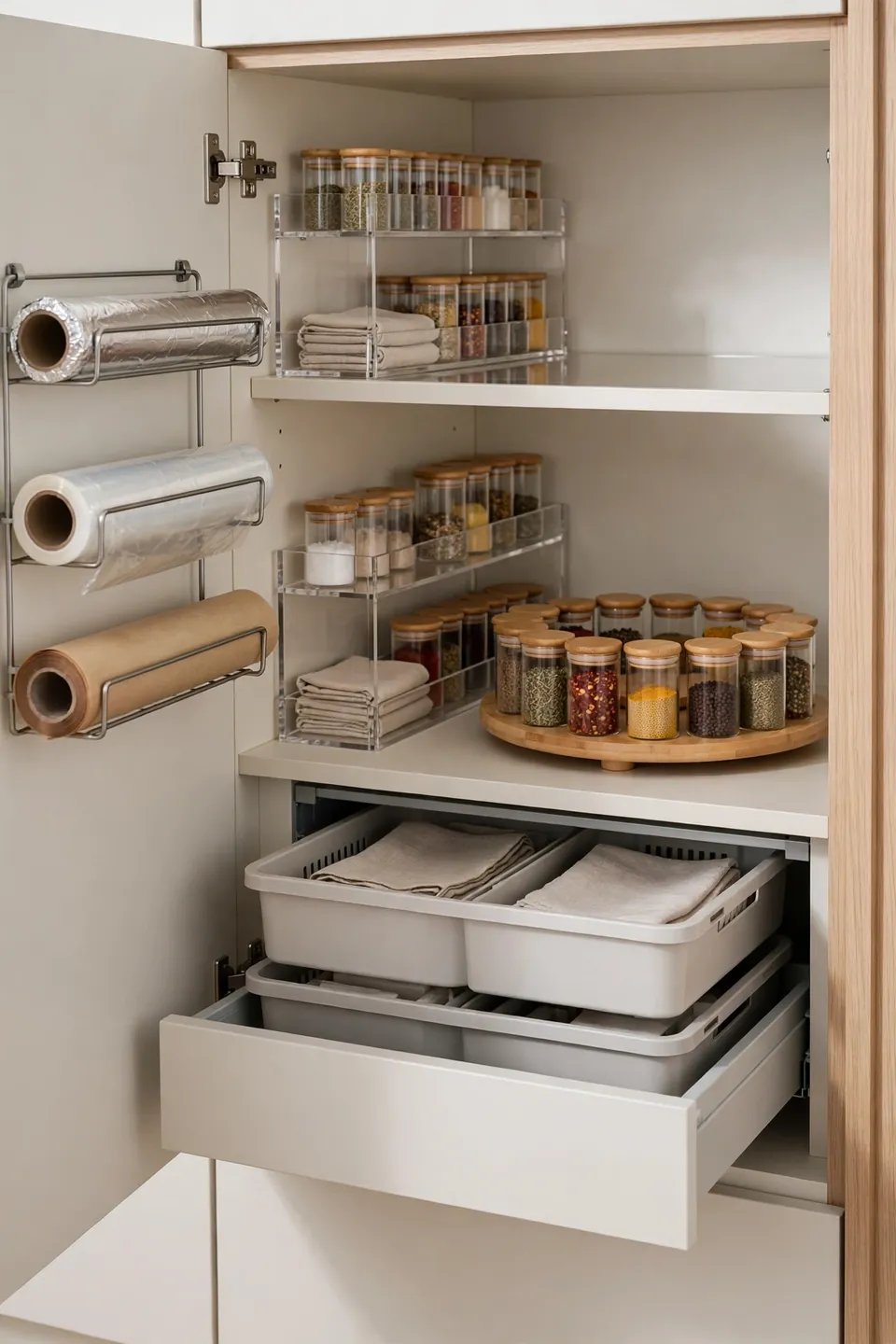
What You Need:
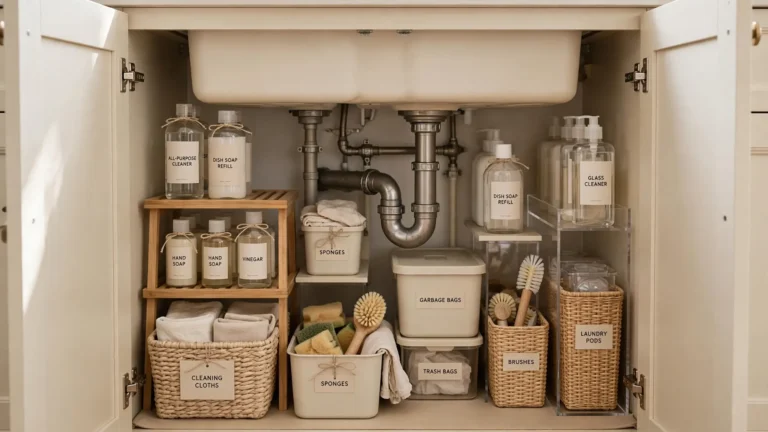
- Shelf risers: They double the usable height inside deep cabinets so nothing gets buried.
- Turntables: A lazy Susan in a corner cabinet brings hidden items to the front with one spin.
- Door-mounted racks: The inside of cabinet doors is perfect for spices, wraps, and small tools.
- Stackable bins: They keep categories together and slide out like drawers for easy access.
- Under-shelf baskets: These clip onto existing shelves and create a bonus layer for mugs or packets.
Cabinet space is precious when you are figuring out how to organize a kitchen without a pantry, so every inch has to earn its place. Risers, turntables, and door racks turn dead zones into working storage. Walk through your cabinets once a season and adjust the setup as your needs change.
Stack With Risers
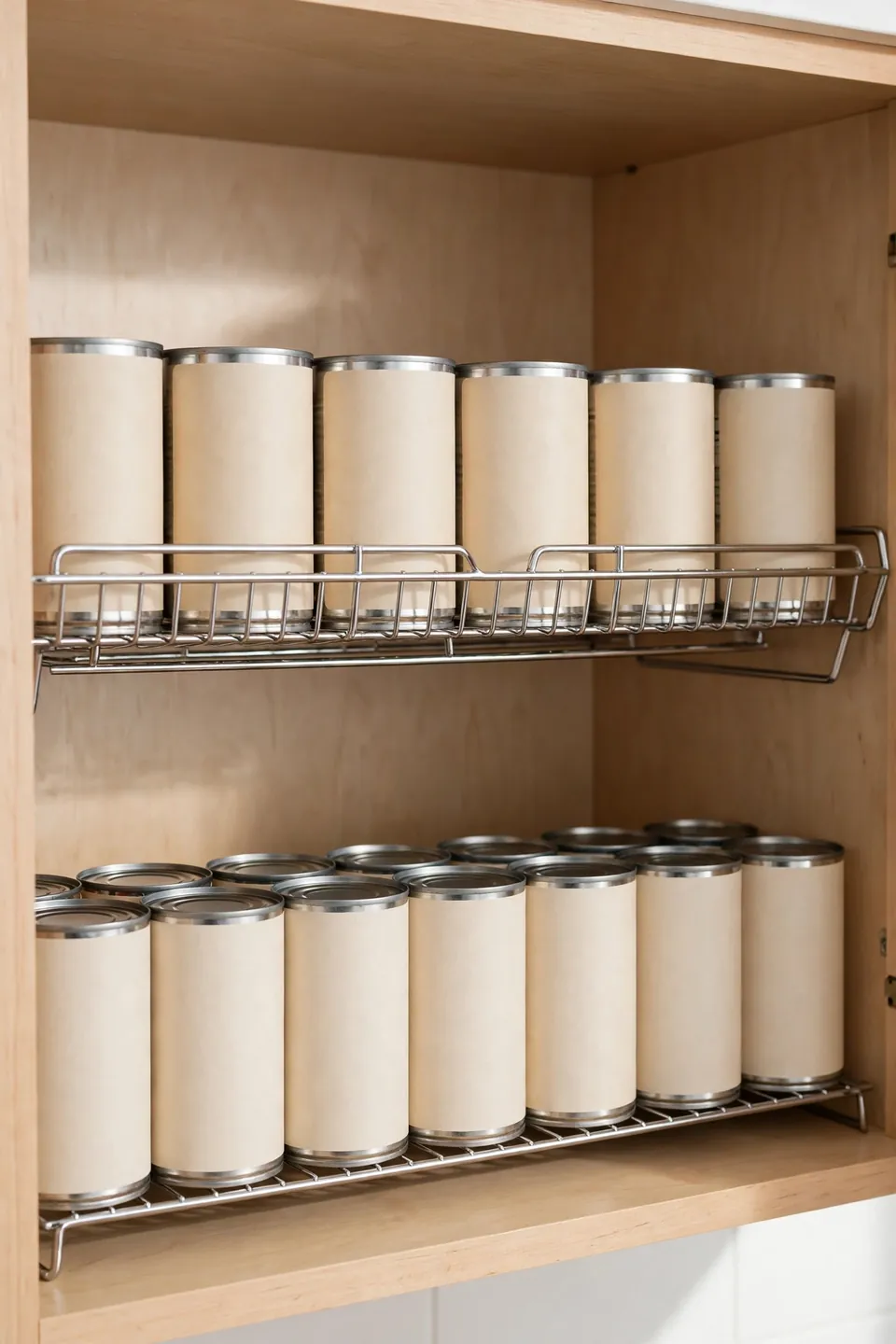
Before: Your cabinet has one tall shelf with cans stacked three high in the back. You cannot see what is behind the front row, so you buy another can of tomatoes even though three are hiding back there.
After: A simple wire riser creates two levels, so every can is visible at a glance. You grab what you need without moving anything, and your grocery list finally matches what you actually have.
Risers are the cheapest upgrade with the biggest payoff in a pantry-free kitchen. They cost just a few dollars and install in seconds with no tools. Use them for canned goods, spices, and any shelf where items tend to hide behind each other, and you will wonder how you lived without them.
Use the Walls
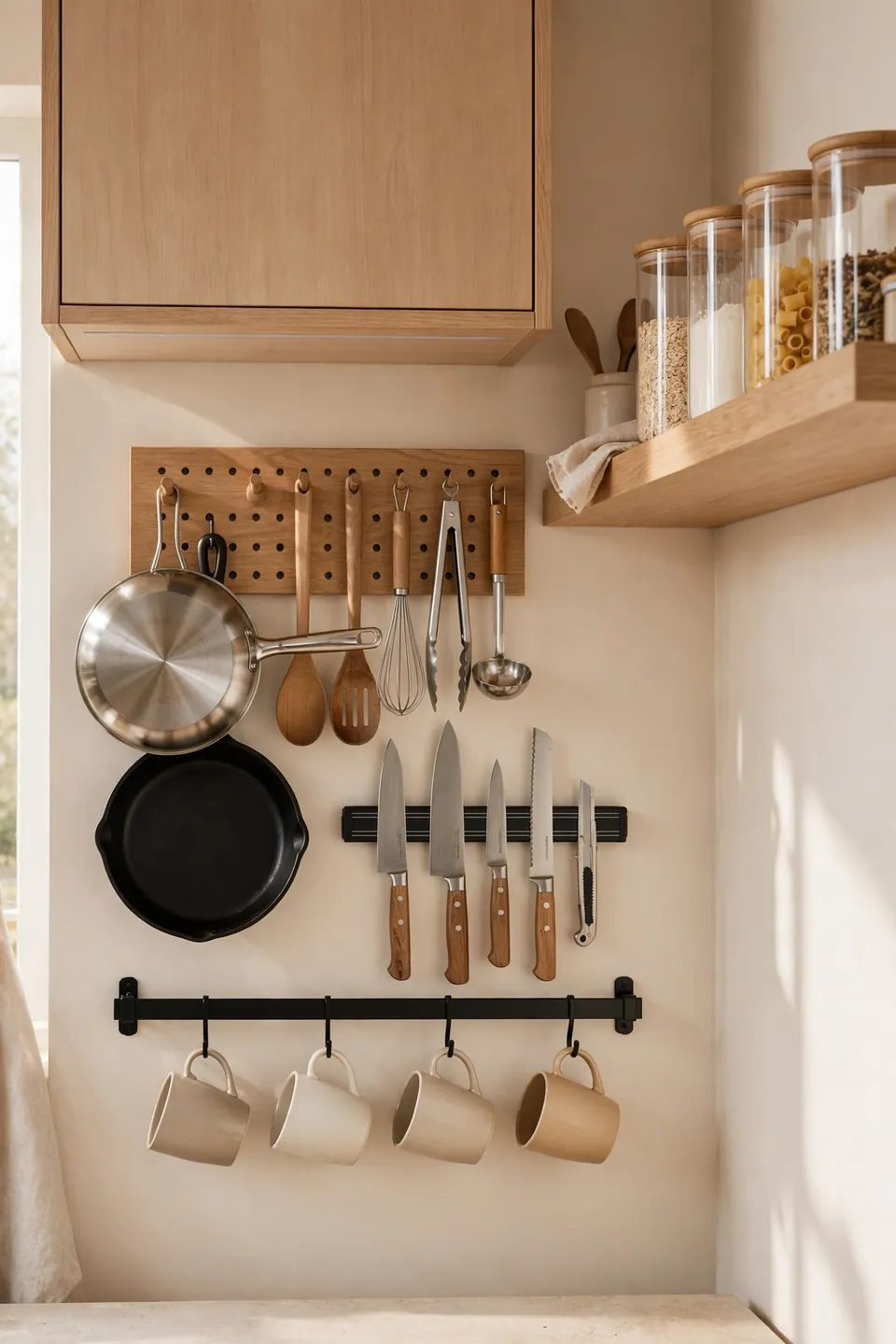
Do This:
- Mount a pegboard for pots, pans, and utensils you reach for daily.
- Install a magnetic strip for knives to free up a whole drawer.
- Hang a rail with hooks under the cabinets for mugs and small tools.
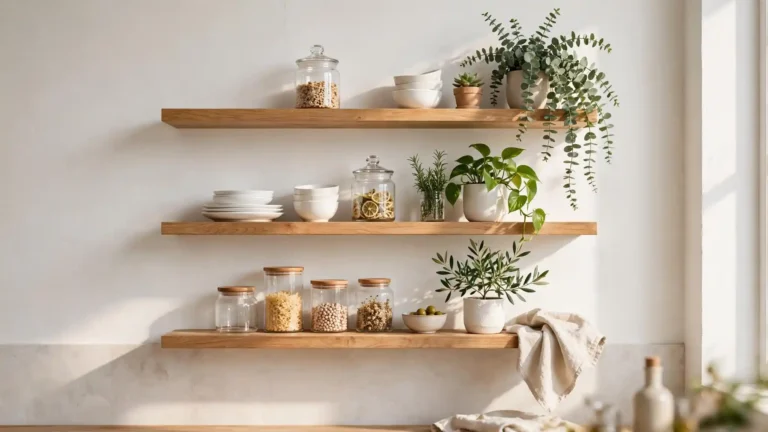
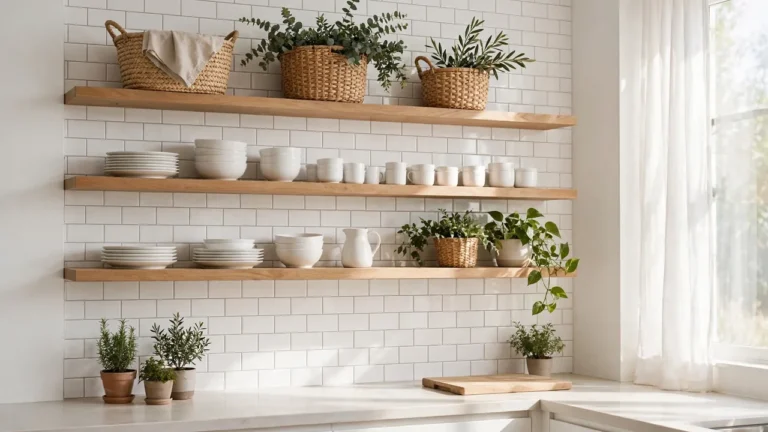
- Add floating shelves for pretty jars and cookbooks you actually use.
Avoid This:
- Do not hang anything above the stove where grease will coat it.
- Avoid heavy items on adhesive hooks that can fail and crash down.
- Do not block windows or light with tall wall storage.
- Avoid open shelves for items you rarely use, since they collect dust.
Walls are free real estate in a kitchen with no pantry. Moving everyday tools onto the wall clears entire cabinets for food storage. Keep the arrangement simple and leave some breathing room so it looks intentional, not crowded. I’ve noticed that the kitchens that use wall space well feel calmer the moment you walk in.
Once your kitchen feels under control, you might enjoy tackling another tricky space with our guide on how to decorate a living room with an awkward layout.
Maintain the System
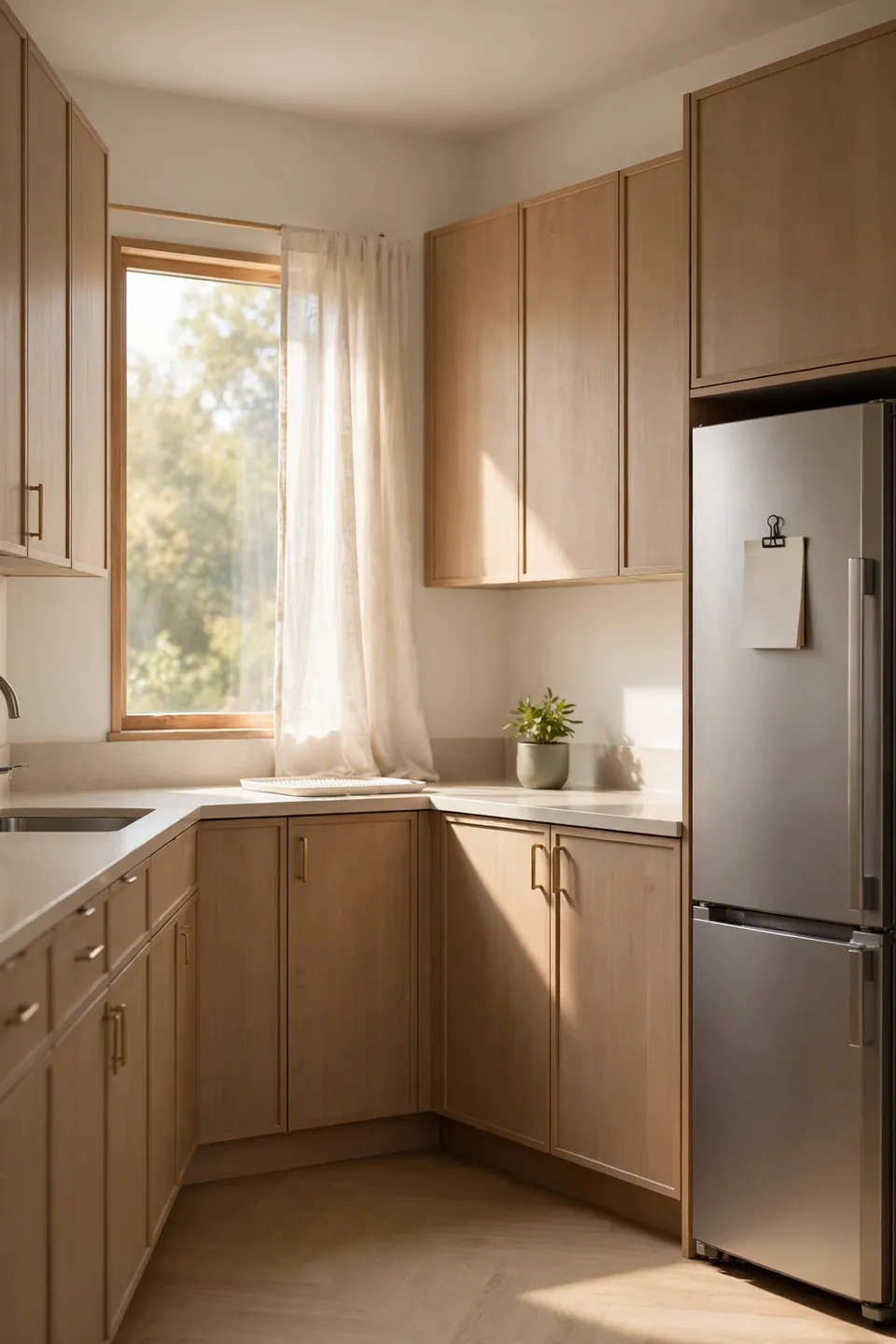
Time Needed: 20 minutes for the initial sort | Difficulty: Easy | Cost: Low
Best For: Renters and homeowners with no pantry space
Pro Tip: Do a five-minute reset each night to keep zones intact
Result: A kitchen where everything has a home and stays put
Systems only work if you maintain them, and this one is designed to be easy. Put things back in their zones right after grocery day, and toss expired items once a month. Small consistent effort beats a massive reorganization every six months, and your future self will thank you.
Common No-Pantry Mistakes
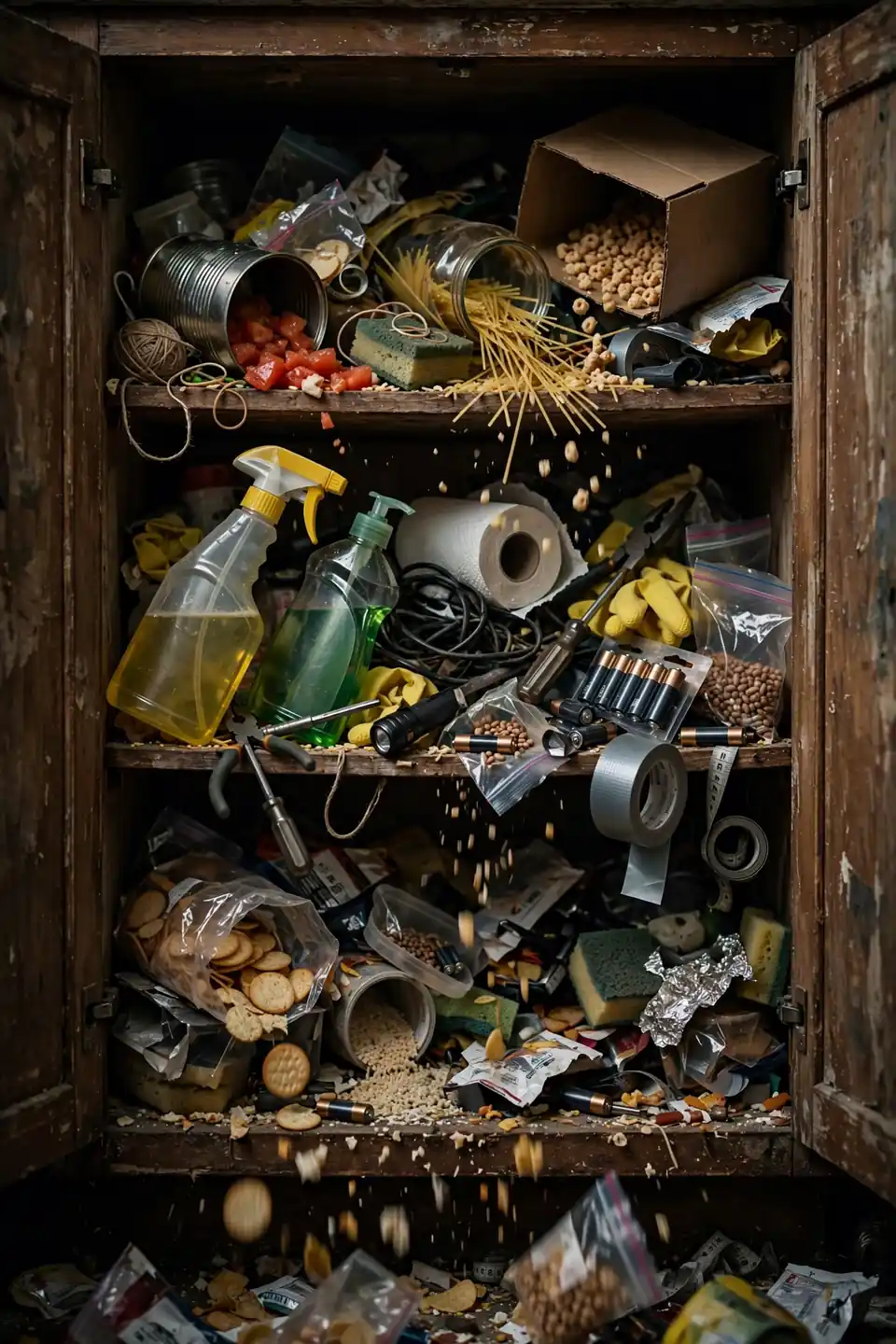
The biggest mistake is treating every cabinet the same. People spread dry goods across four different shelves, then wonder why nothing feels organized. Without a dedicated pantry zone, food gets mixed with dishes, cleaning supplies, and random gadgets, and the whole kitchen starts to feel chaotic.
Another common error is buying storage products before decluttering. Fancy containers cannot fix too much stuff, and they often make the problem worse by hiding it. Sort first, then buy only what your actual inventory needs. Your wallet and your shelves will both be happier.
Pro Tips for Lasting Order
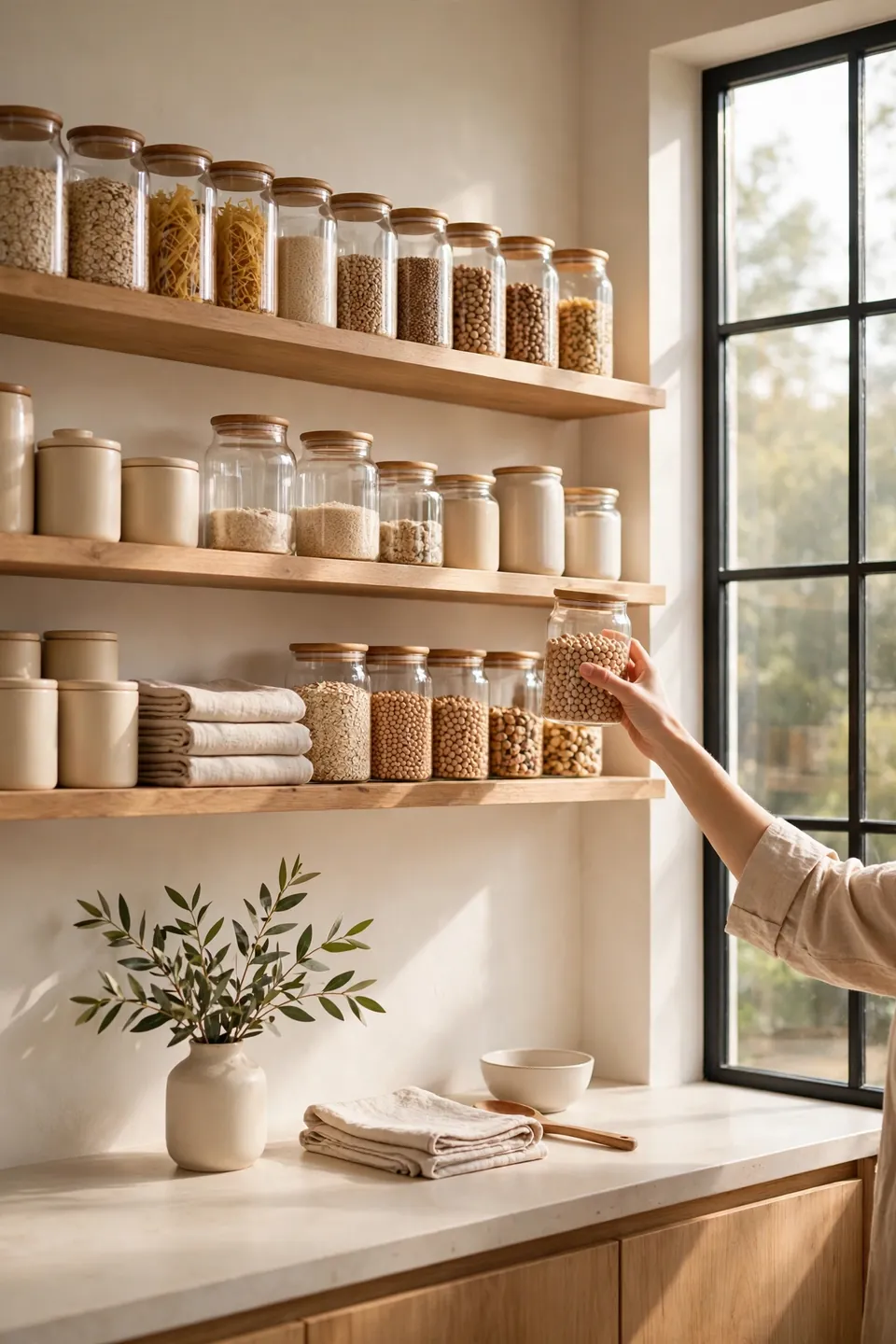
These are the small habits that separate kitchens that stay organized from ones that slide back into chaos. None of them take more than a few minutes, but together they protect all the work you just did. Pick two to start with and add more when they feel automatic.
- Do a two-minute reset after dinner by returning items to their zones. This prevents the slow drift that undoes good systems.
- Keep a running grocery list on the fridge and add items the moment they run low. You will stop overbuying and wasting food.
- Review one cabinet each month and remove anything you have not used. Small regular edits keep clutter from building up.
- Store new groceries behind older ones so nothing expires unnoticed. This simple rotation saves money and reduces waste.
Conclusion
You do not need a pantry to have a kitchen that works beautifully. With clear zones, smart containers, and a few simple habits, learning how to organize a kitchen without a pantry becomes second nature. Start with one cabinet today and build from there. Save this guide on Pinterest so you can come back to it whenever you need a refresh, and share it with a friend who is fighting the same battle. I’ve seen how making this one change can completely shift how a kitchen feels every single day.
2 Comments