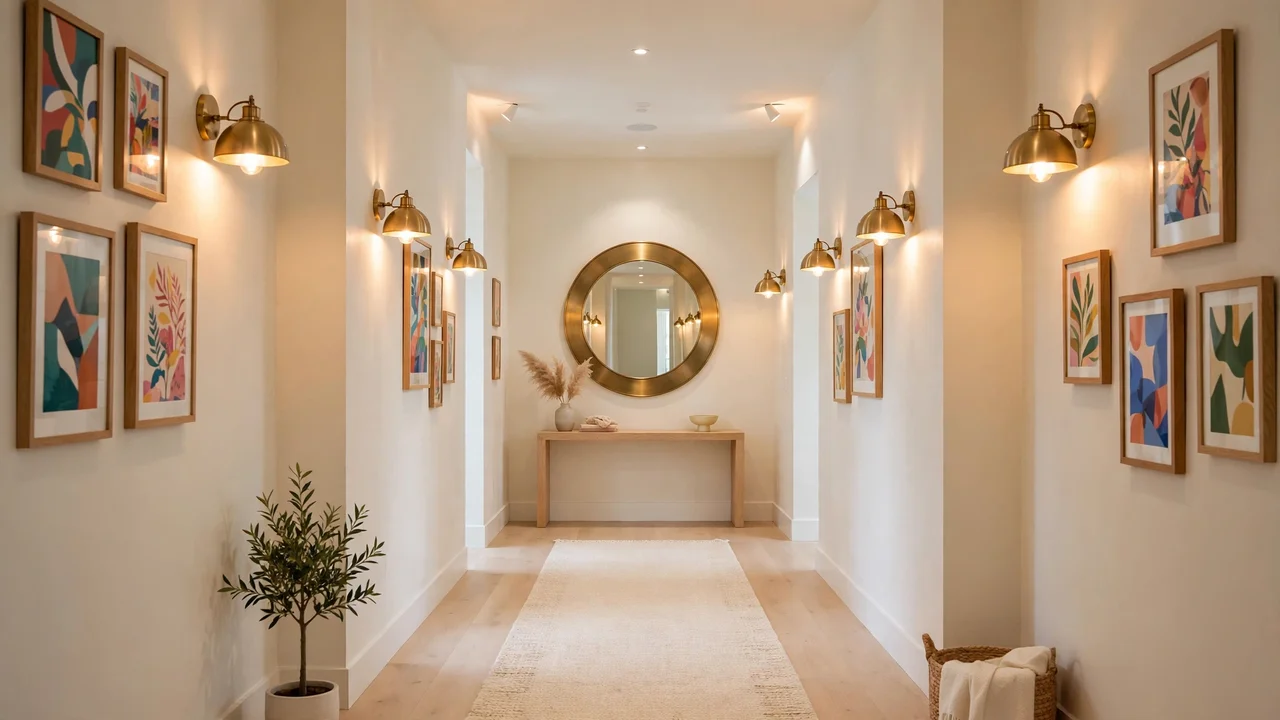
How to Decorate a Dark Hallway With No Natural Light
Walking down a dim, shadowy hallway can make even a lovely home feel unwelcoming. If you are wondering how to decorate a dark hallway with no natural light, you are not alone. Many homes have interior hallways that never see the sun.
The good news is that a windowless hallway can still feel bright and inviting. With the right lighting, paint colors, and reflective surfaces, you can transform that gloomy corridor into a space you actually enjoy walking through.
In my experience, small changes make the biggest difference here. For more ideas on brightening tricky spaces, see how to organize a kitchen without a pantry. Let us walk through each step together.
Why Dark Hallways Feel Gloomy
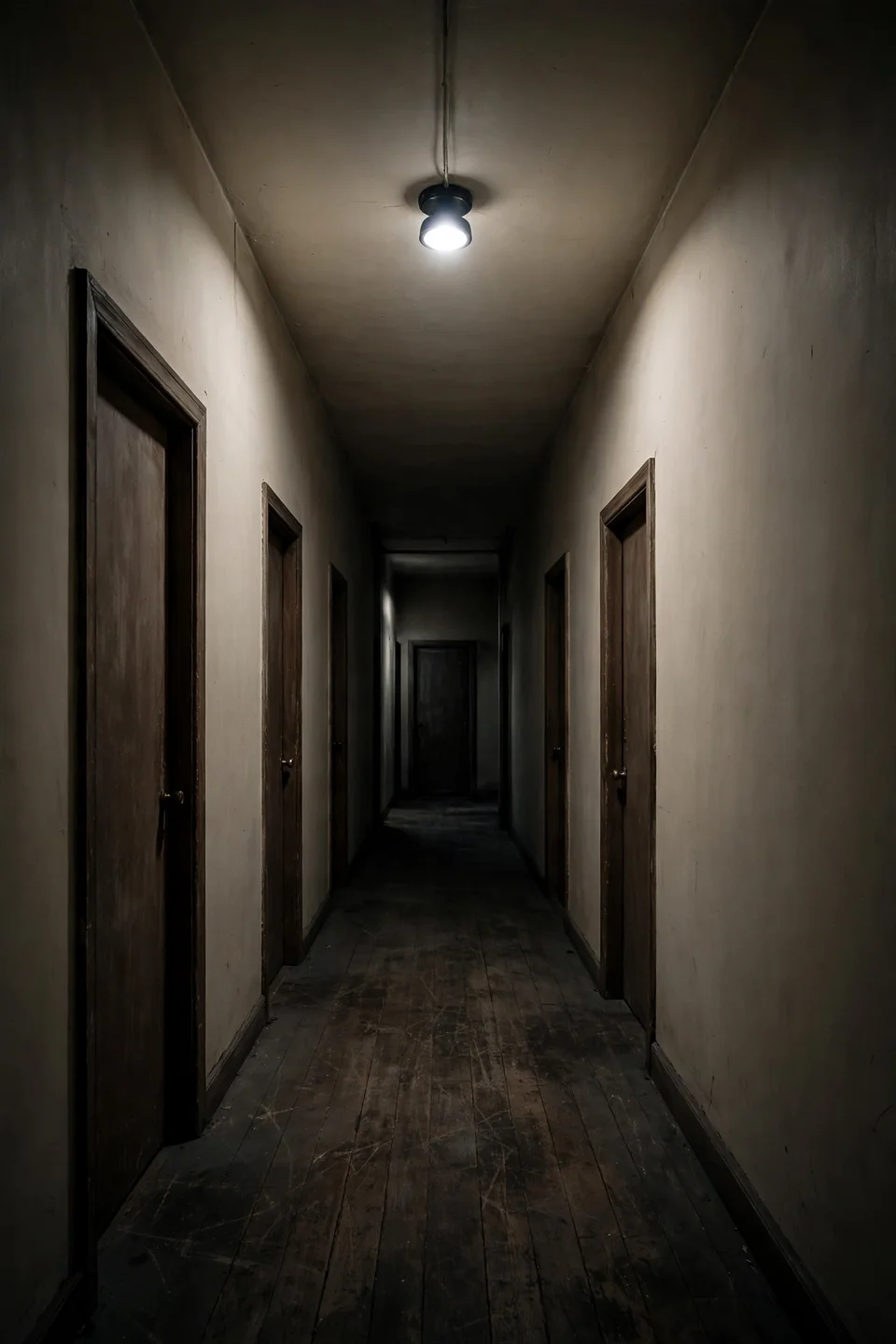
A hallway without windows traps shadows in a way that feels heavier than a dark room. With no daylight to bounce off the walls, every surface absorbs light instead of reflecting it. Narrow proportions make it worse because close walls block the ambient light drifting in from nearby rooms.
Paint color matters more than most people expect. Deep tones soak up light, while flat finishes show every shadow. A single overhead bulb creates harsh pools of light with dark corners, which tricks your eyes into reading the whole space as smaller and gloomier than it really is.
Layer Your Lighting
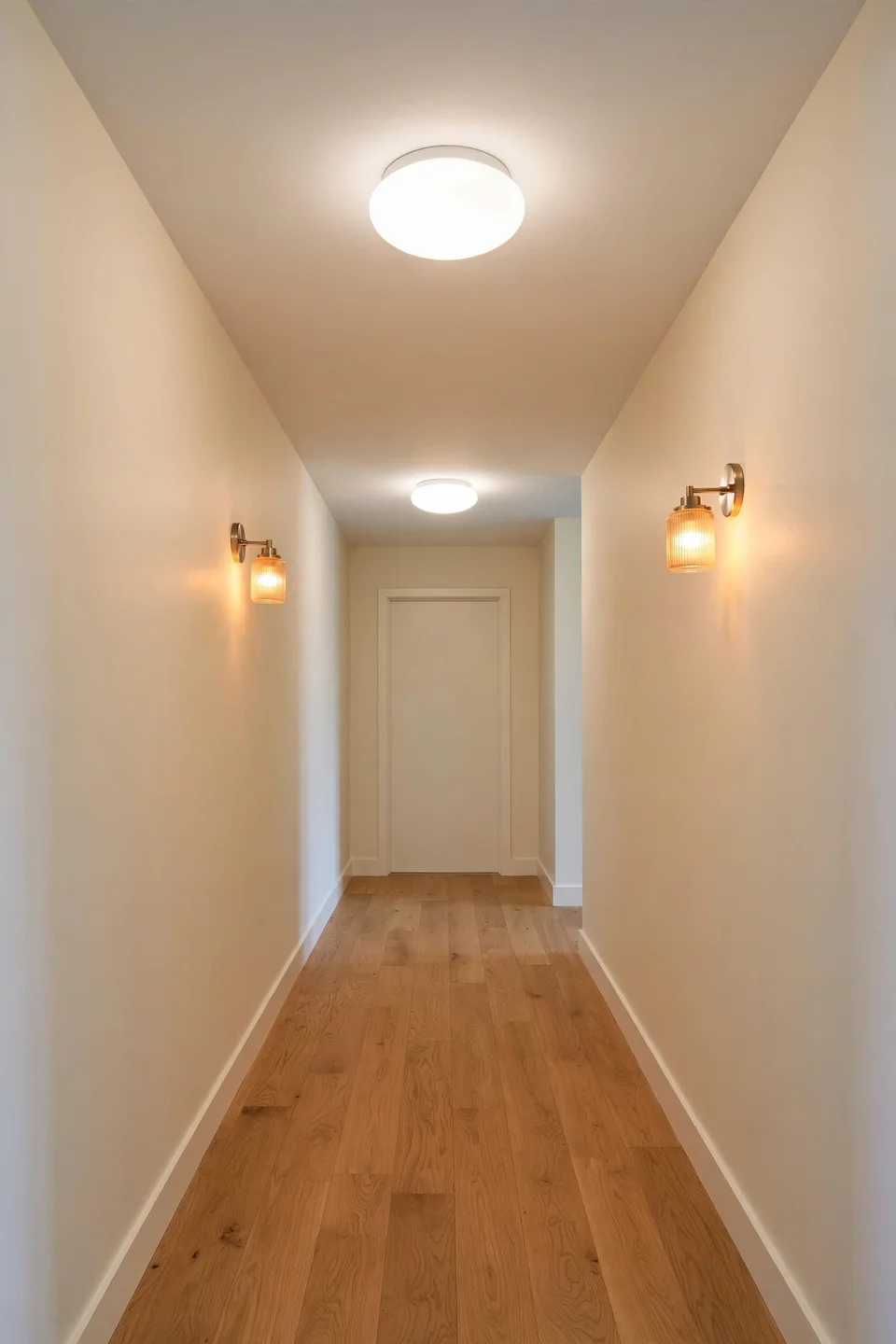
One ceiling light cannot carry a whole hallway on its own. Layering different light sources at different heights fills in the shadows and gives the space a warm, even glow from end to end. The result feels natural and welcoming instead of harsh and flat.
- Start with overhead lighting. Replace a single harsh bulb with two or three flush-mount fixtures spaced evenly, or install a track with adjustable heads.
- Add wall sconces at eye level. Place them every six to eight feet to wash the walls with soft light and break up the tunnel effect.
- Include a low light source. A small table lamp on a console or LED strip lighting along the baseboard adds warmth near the floor.
- Choose warm white bulbs. Look for 2700K to 3000K on the package for a cozy glow that flatters paint colors.
Lighten the Walls
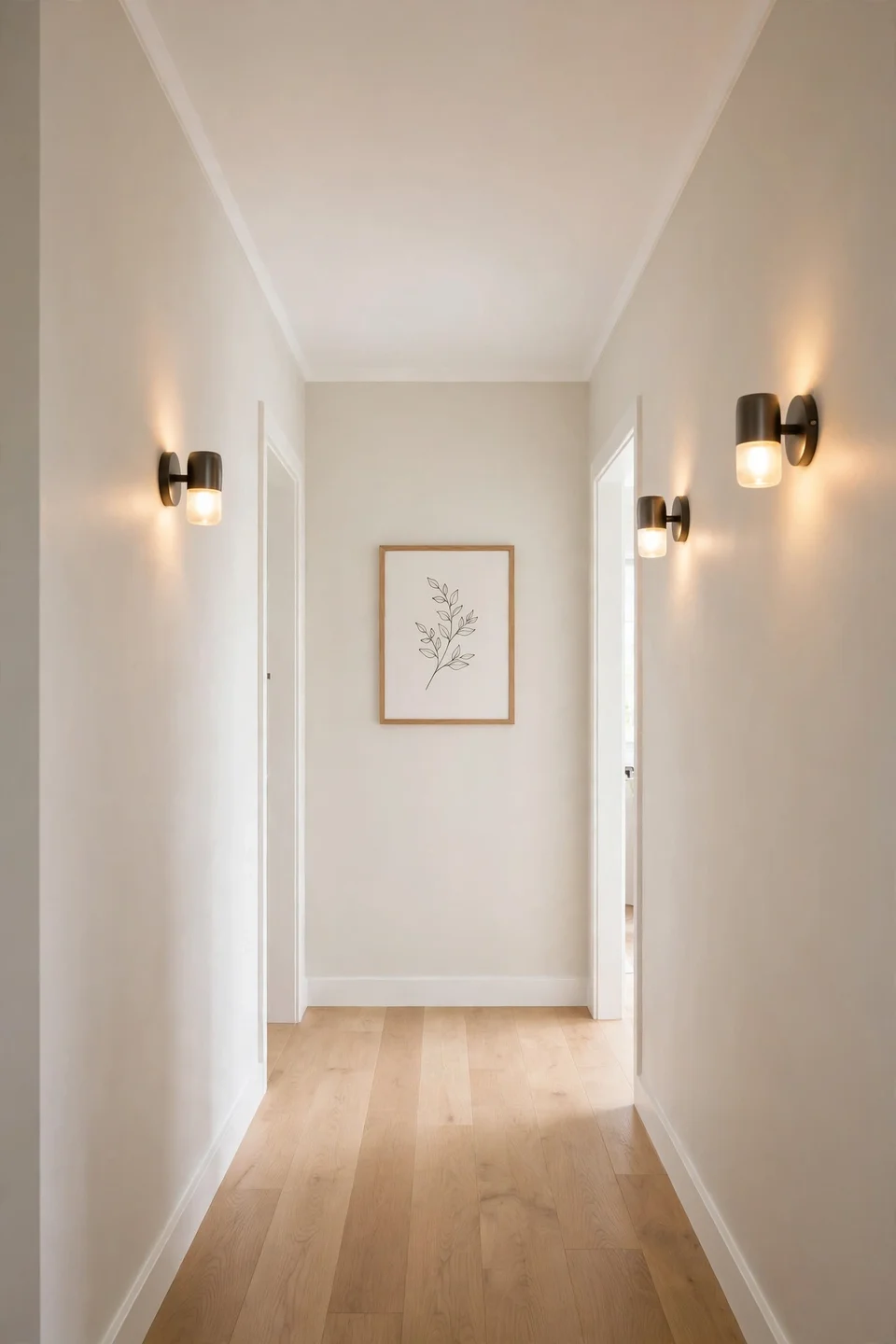
Quick Tip: Paint the ceiling a shade lighter than the walls. This simple trick draws the eye upward and makes the hallway feel taller and brighter, even with no windows at all.
Light, cool-toned paint reflects more light than deep or warm colors. Soft whites, pale grays, and light greiges bounce available light around the space. If white feels too stark, try warm ivory or light sage. Satin or eggshell finishes reflect better than flat paint, so choose a slight sheen.
Add Mirrors for Depth
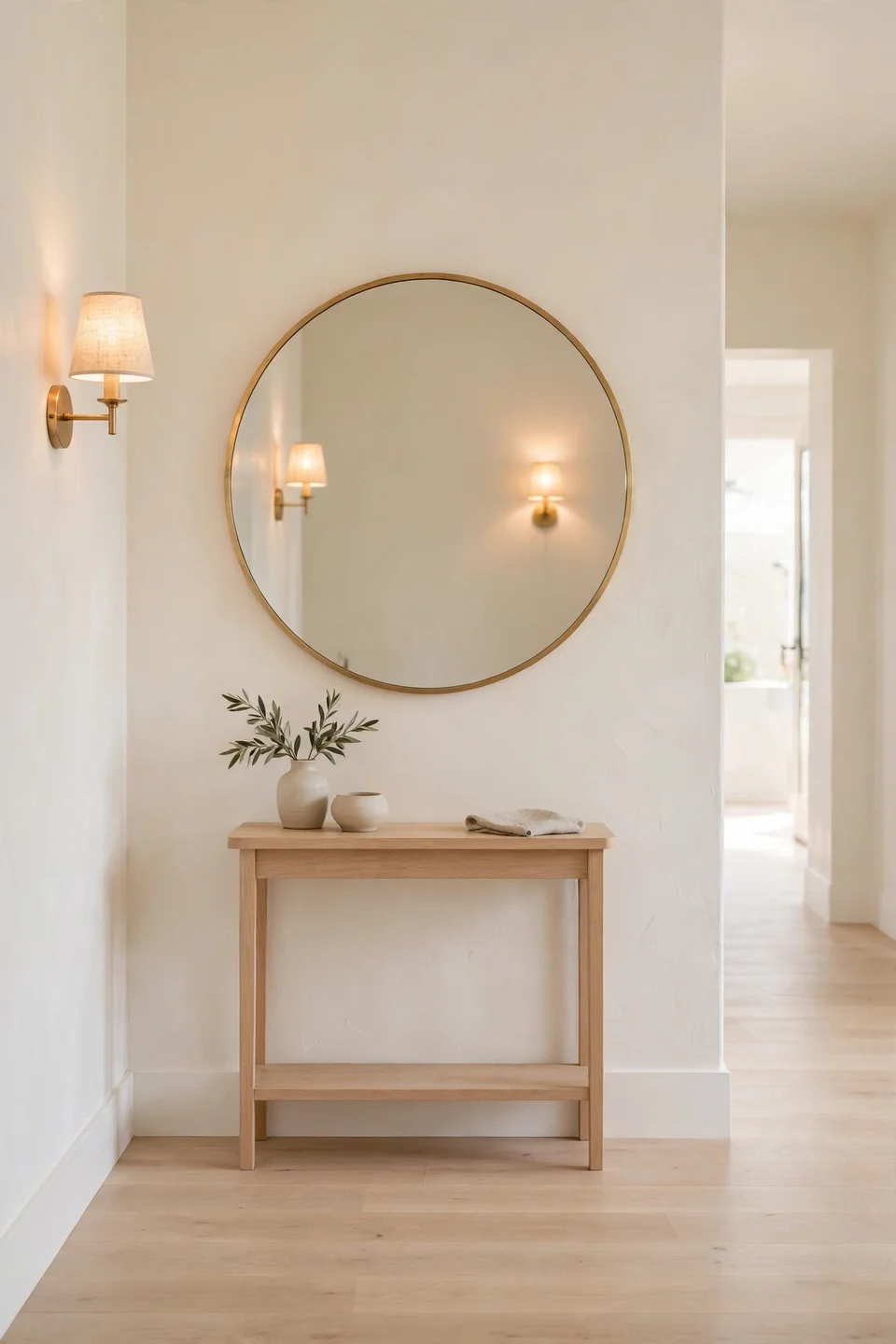
Common Mistake: Many people hang one small mirror and expect it to brighten the whole hallway. A tiny mirror in a dark corridor barely reflects anything, so the space stays just as gloomy as before.
The Fix: Go big and strategic. Hang a large mirror opposite a light source, or use a series of mirrors down one wall to bounce light along the full length of the hallway.
Mirrors do more than decorate. They double the light in a space by reflecting fixtures, sconces, and even light spilling in from adjacent rooms. A floor-length leaning mirror at the end of the hallway creates the illusion of depth. For a polished look, choose thin frames in light wood or brushed brass.
Choose Light Flooring
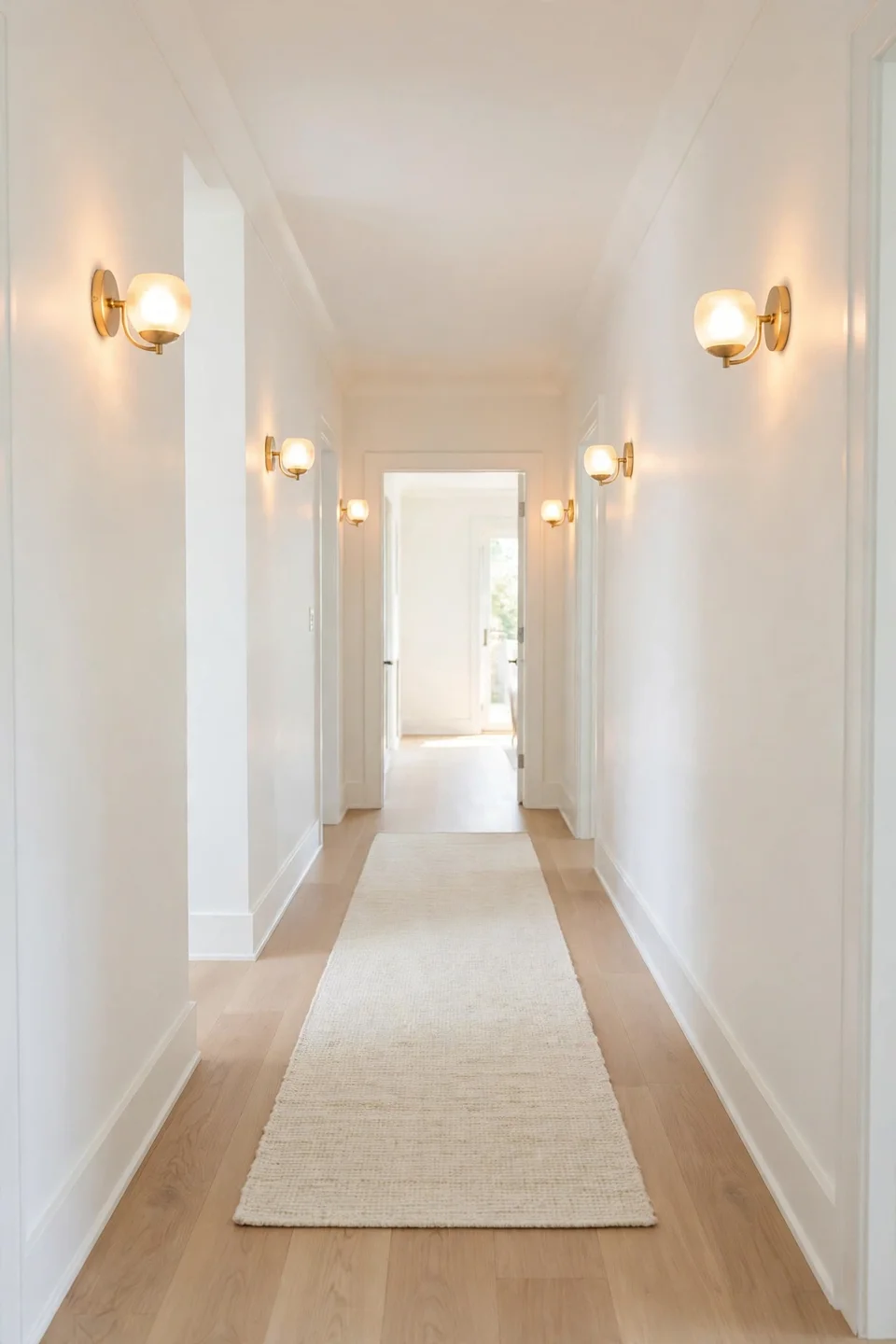
What You Need:
- Light area runner: A pale runner with a subtle pattern covers dark floors and adds brightness underfoot.
- Peel-and-stick vinyl planks: Affordable light oak or whitewashed planks that install right over existing flooring.
- Washable rug: A low-pile washable rug in cream or light gray that handles hallway foot traffic.
- Floor polish or refresh kit: For wood floors, a polish restores shine so the surface reflects more light.
- Painter’s tape and drop cloth: If you decide to paint or whitewash the existing floor for a fresh look.
Dark floors absorb light just like dark walls do. If replacing flooring is not an option, figuring out how to decorate a dark hallway with no natural light starts from the ground up with a light runner or rug. Pale flooring reflects light upward, which makes the whole corridor feel brighter and more open.
Keep It Uncluttered
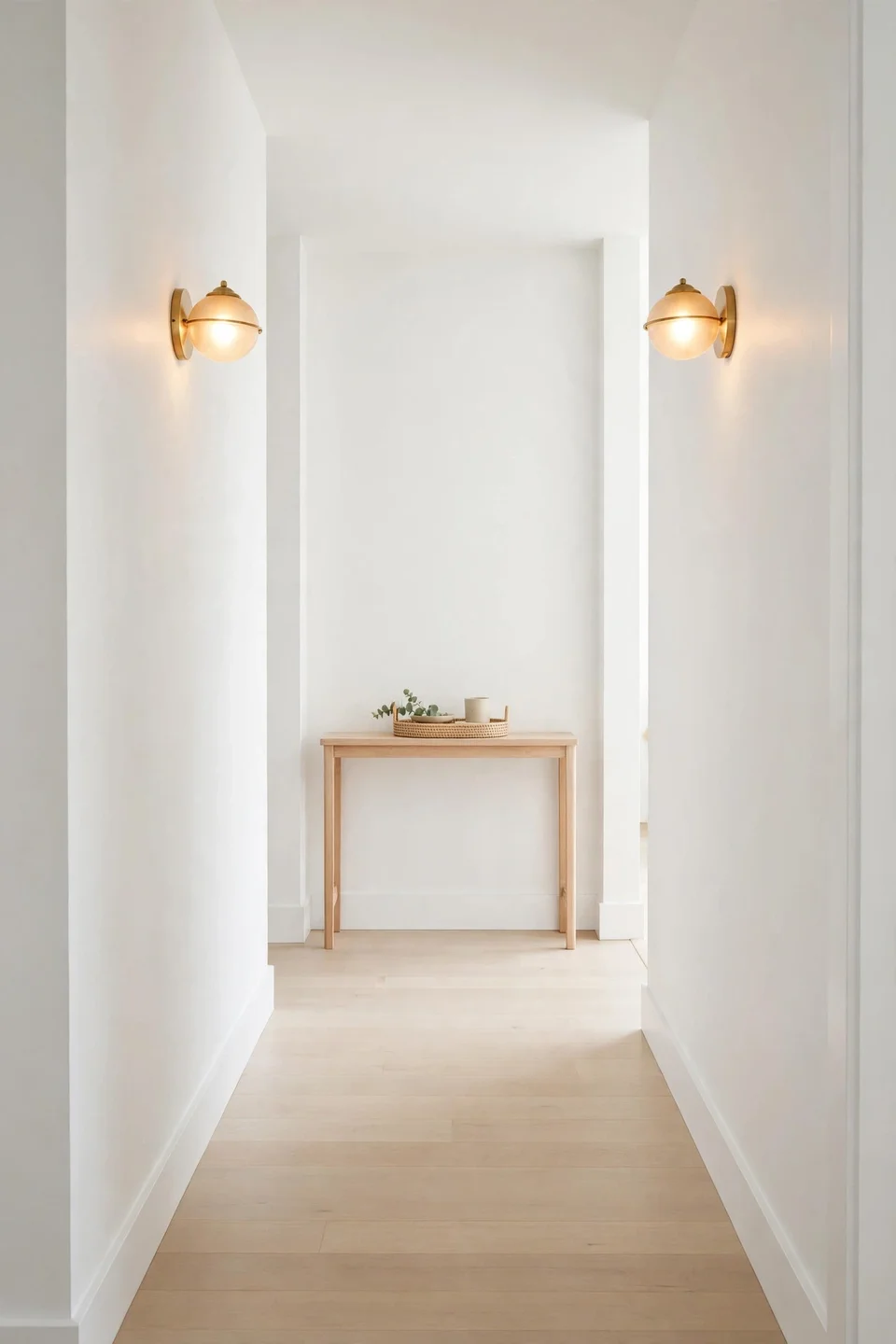
Before: Shoes pile up by the door, coats hang off every hook, and boxes line the walls. The hallway feels cramped and chaotic, and all that clutter blocks light from reaching the far end.
After: A slim console holds only a small tray for keys, hooks stay limited to daily coats, and the floor stays clear. Light flows freely down the corridor, and the space feels calm and twice as wide.
Clutter casts shadows. Every extra object in a narrow hallway blocks light and makes the walls feel closer together. Keep surfaces minimal and store out-of-season items elsewhere. A clear hallway not only looks brighter but also feels safer and easier to walk through at night.
Add Art and Color
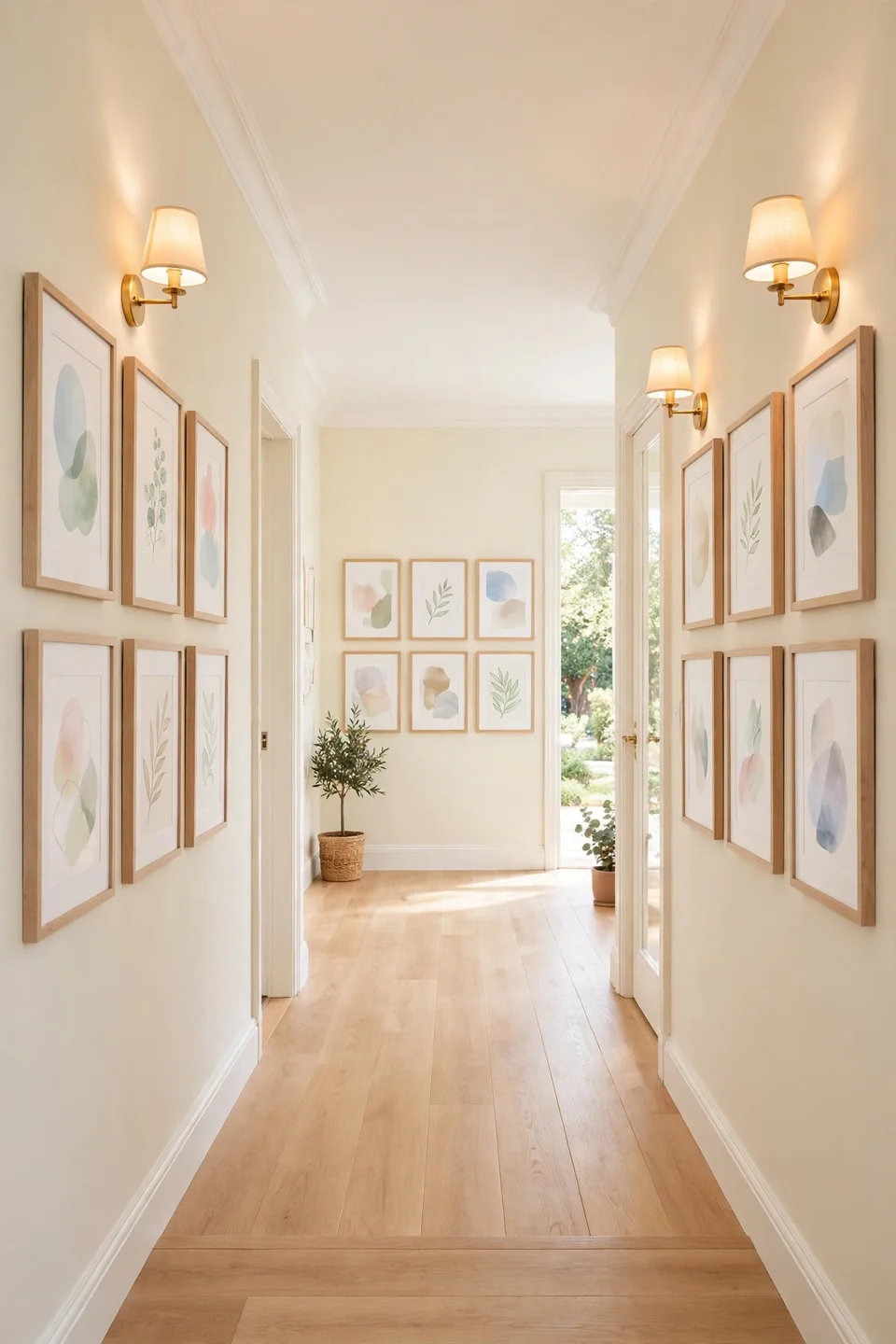
Do This:
- Hang art with light-colored mats and frames to keep the wall feeling bright.
- Choose pieces with light backgrounds or metallic accents that catch the light.
- Space frames evenly to create rhythm without overcrowding the narrow walls.
- Add a colorful runner or pillows in soft hues for warmth without darkness.
Avoid This:
- Avoid large dark-framed pieces that absorb light and feel heavy on the wall.
- Avoid gallery walls packed edge to edge, which make narrow hallways feel cluttered.
- Avoid very dark or moody art that reinforces the gloomy feeling.
- Avoid hanging art too high, where it sits in shadow instead of catching light.
Art gives a hallway personality, but the wrong choices can make darkness worse. Stick to lighter pieces and thoughtful placement that catches available light. I’ve noticed that a few well-chosen frames do more for a hallway than a wall crowded with dark prints. Let each piece breathe and shine.
For ideas on keeping nearby spaces organized, see how to maximize storage in a small entryway.
Use Reflective Surfaces
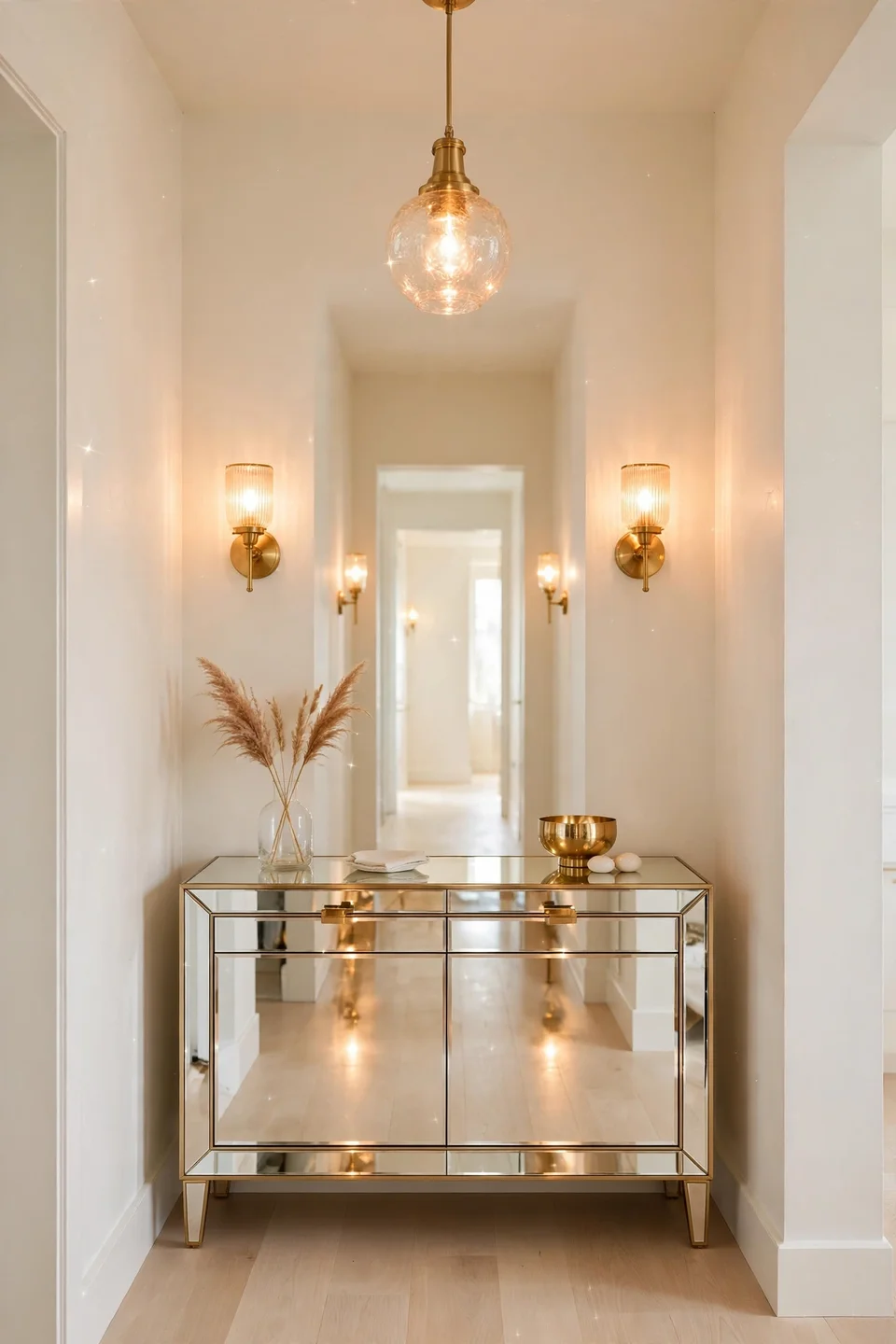
Best Materials: Glass, acrylic, lacquered wood, polished metal, high-gloss paint
Placement: Opposite light sources, at the end of the hallway, on console tabletops
Budget Tip: Thrifted mirrored trays and metallic frames add shine for very little cost
Maintenance: Wipe reflective surfaces monthly, as dust dulls their light-bouncing power
Reflective surfaces work like extra windows. A mirrored console table, glass pendant shades, or metallic picture frames all bounce light around the hallway. Even glossy paint on doors or trim helps. The more surfaces that reflect instead of absorb, the brighter the whole space feels from end to end.
Common Dark Hallway Mistakes
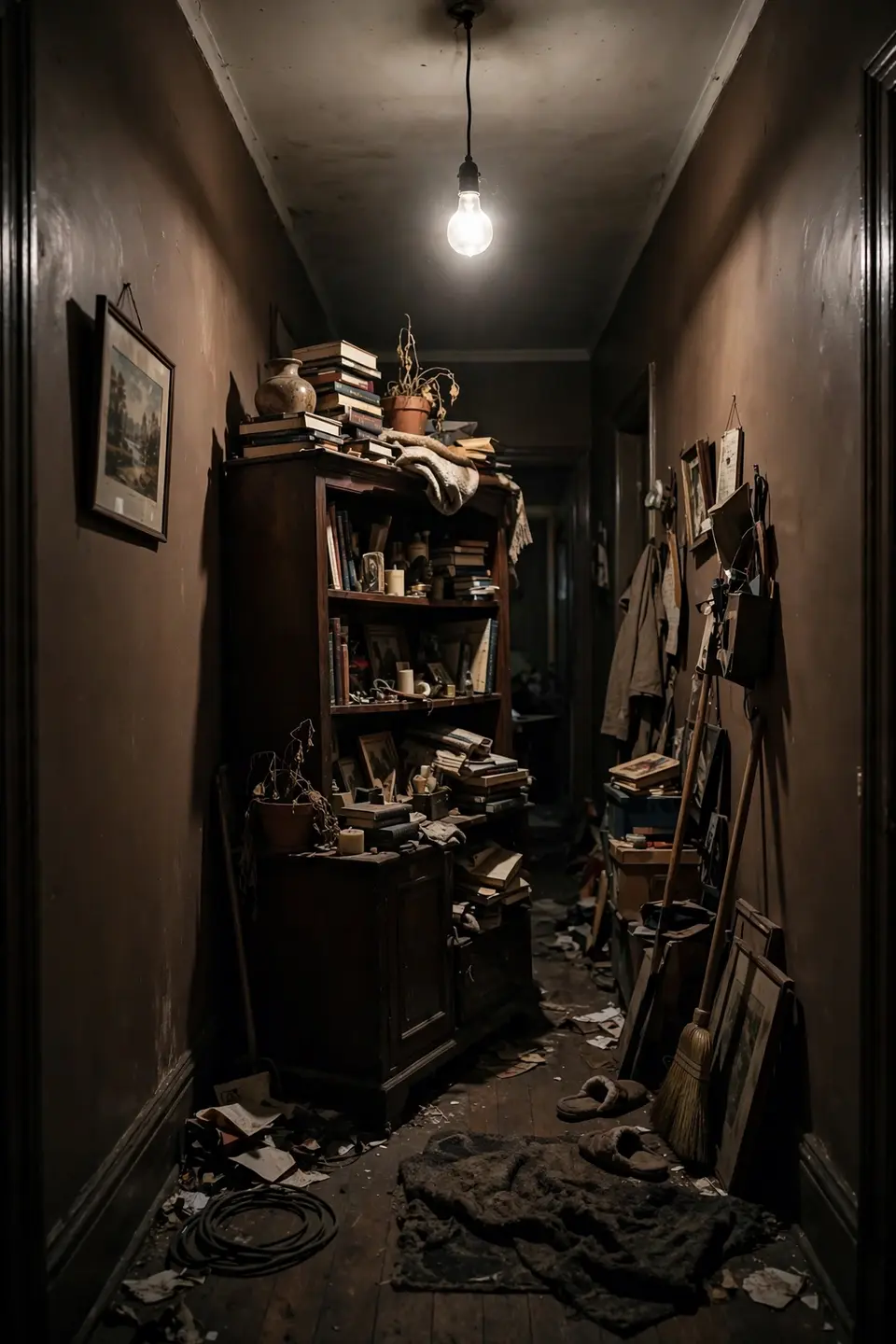
One common mistake is relying on a single overhead light and calling it done. That creates harsh shadows and leaves the ends of the hallway in darkness. Another is choosing paint that is too dark or too warm, which absorbs the little light available instead of reflecting it.
People also overcrowd narrow hallways with bulky furniture that blocks light flow. A wide dresser or bookshelf eats up precious inches and casts big shadows. Keep pieces slim and minimal. The goal is to let light travel freely from one end to the other without obstacles.
Pro Tips for Bright Hallways
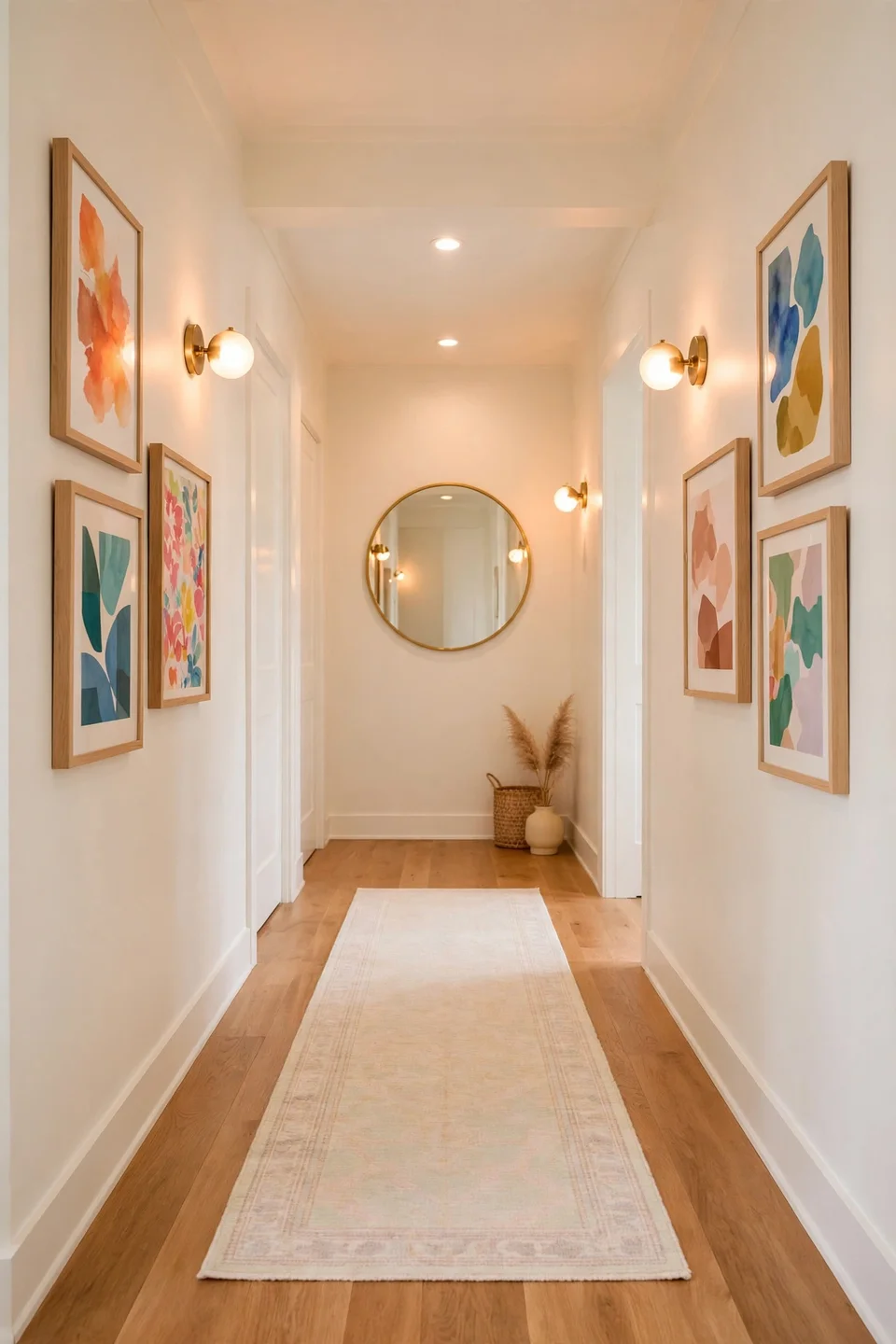
These finishing touches take a hallway from simply lit to genuinely welcoming and bright. Small details make a surprising difference when there is no natural light to help out. Try one or two ideas this weekend and notice how the whole space changes.
- Add a motion-sensor night light. It keeps the hallway safe after dark without leaving bright lights on all night.
- Paint the inside of the front door a light color. It reflects entry light deeper into the hallway.
- Use LED strip lights under a floating console or along crown molding for a soft, modern glow.
- Hang a light-colored curtain at the hallway entrance if it opens to a brighter room, to filter light gently.
Conclusion
A dark hallway does not have to stay gloomy forever. With layered lighting, light colors, mirrors, and a few reflective touches, you can truly learn how to decorate a dark hallway with no natural light and love the result. Start with the easiest change, like swapping bulbs or adding a mirror, and build from there. I’ve seen how making this one change can completely shift the feel of a home. Save this guide on Pinterest so you can refer back to it, and share it with someone whose hallway needs some love.
2 Comments