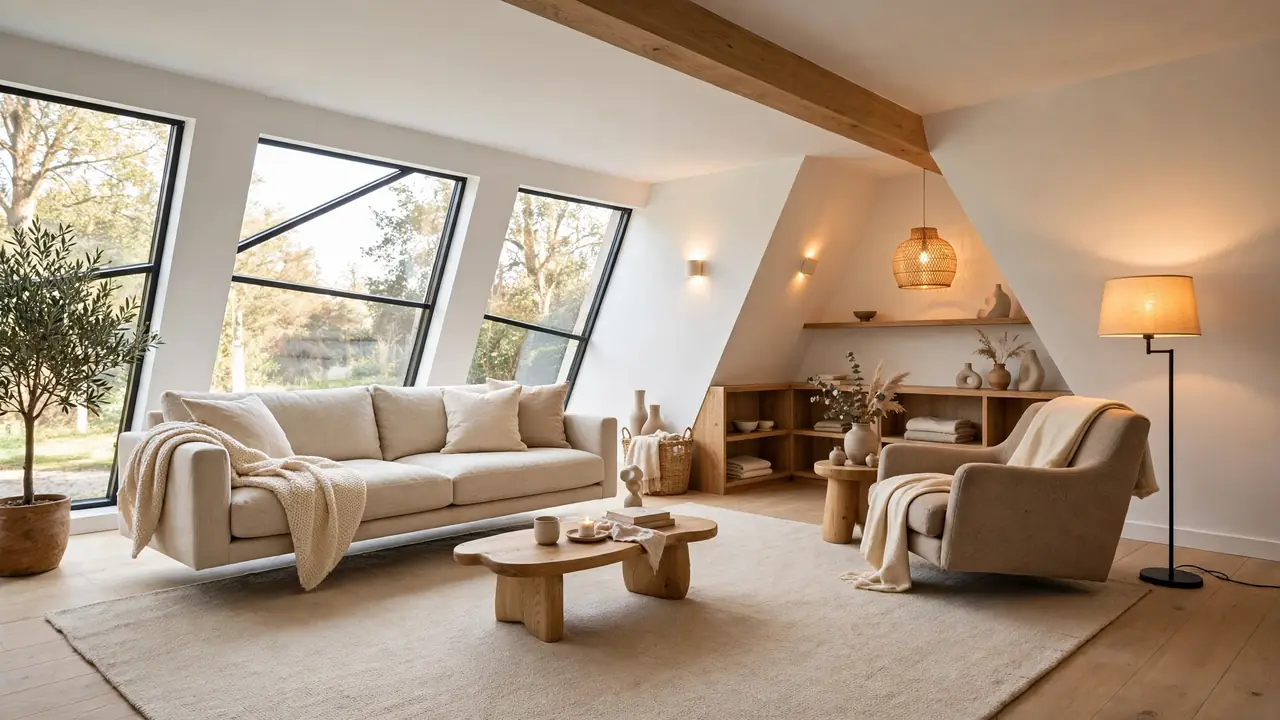
How to Decorate Awkward Living Room Layouts
If your living room has a weird angle, a door in every wall, or a fireplace nobody can face, learning how to decorate awkward living room layouts will change how you feel at home. These rooms are more common than you think, and they are absolutely fixable.
In my experience, the breakthrough comes when you stop copying standard layouts and start solving for your room’s actual shape. The steps below walk you through that process calmly, one decision at a time. You might also like how to make dark rooms look brighter if light is part of the struggle.
By the end, your odd corners will have jobs, traffic will flow, and the room will finally feel like yours.
Why Awkward Layouts Feel Impossible
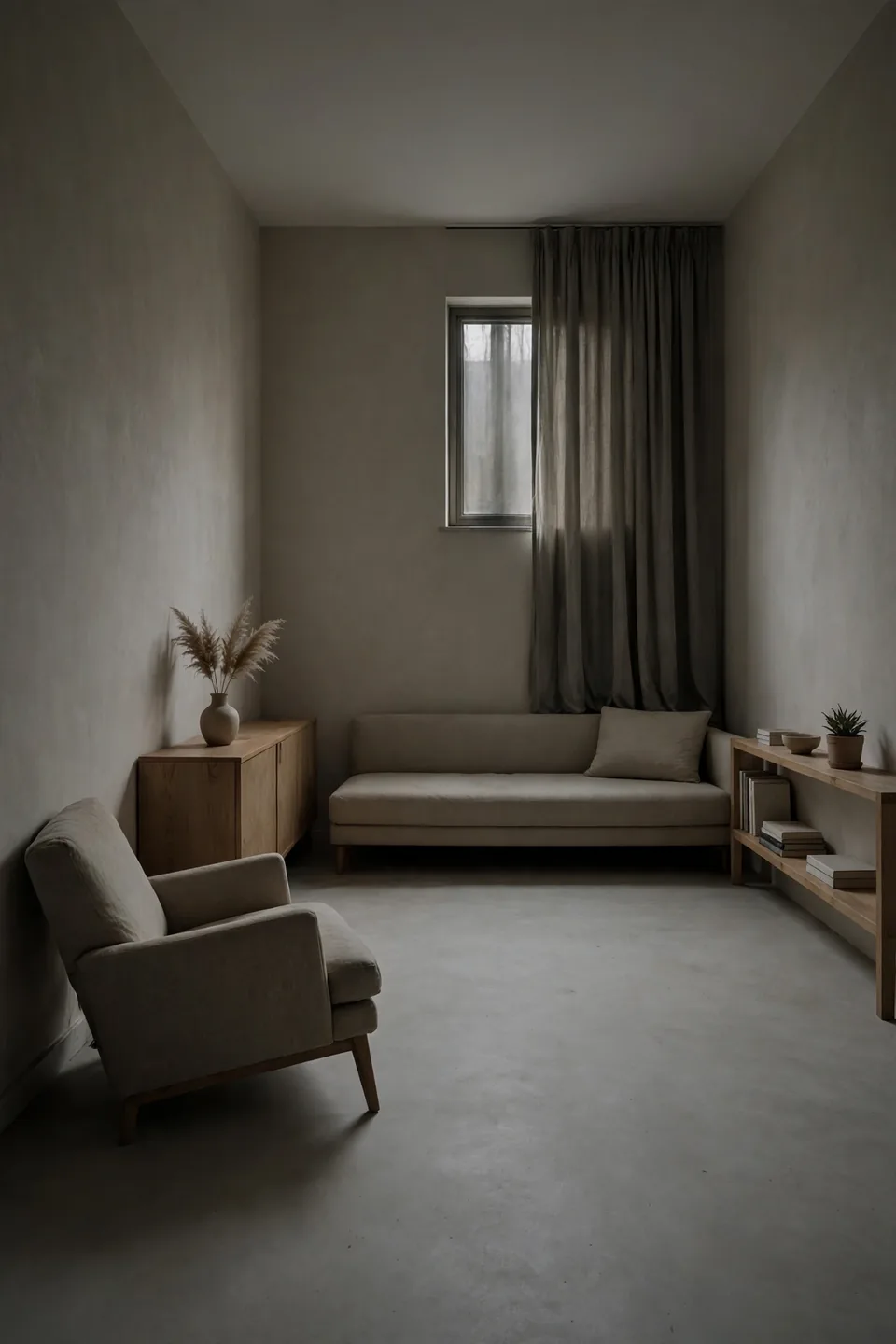
Every living room has a logic to it, but some hide theirs well. Maybe the doorways land in odd spots, the windows face the wrong wall, or a fireplace sits off-center. Nothing lines up the way you expect, and every arrangement leaves a dead corner or a blocked path.
Awkward rooms usually suffer from competing focal points rather than bad furniture. Once you spot which feature wants attention and which traffic paths must stay open, the room stops fighting you. The sections ahead walk through that exact process, step by step, so the layout finally clicks.
Identify Your Layout Challenge
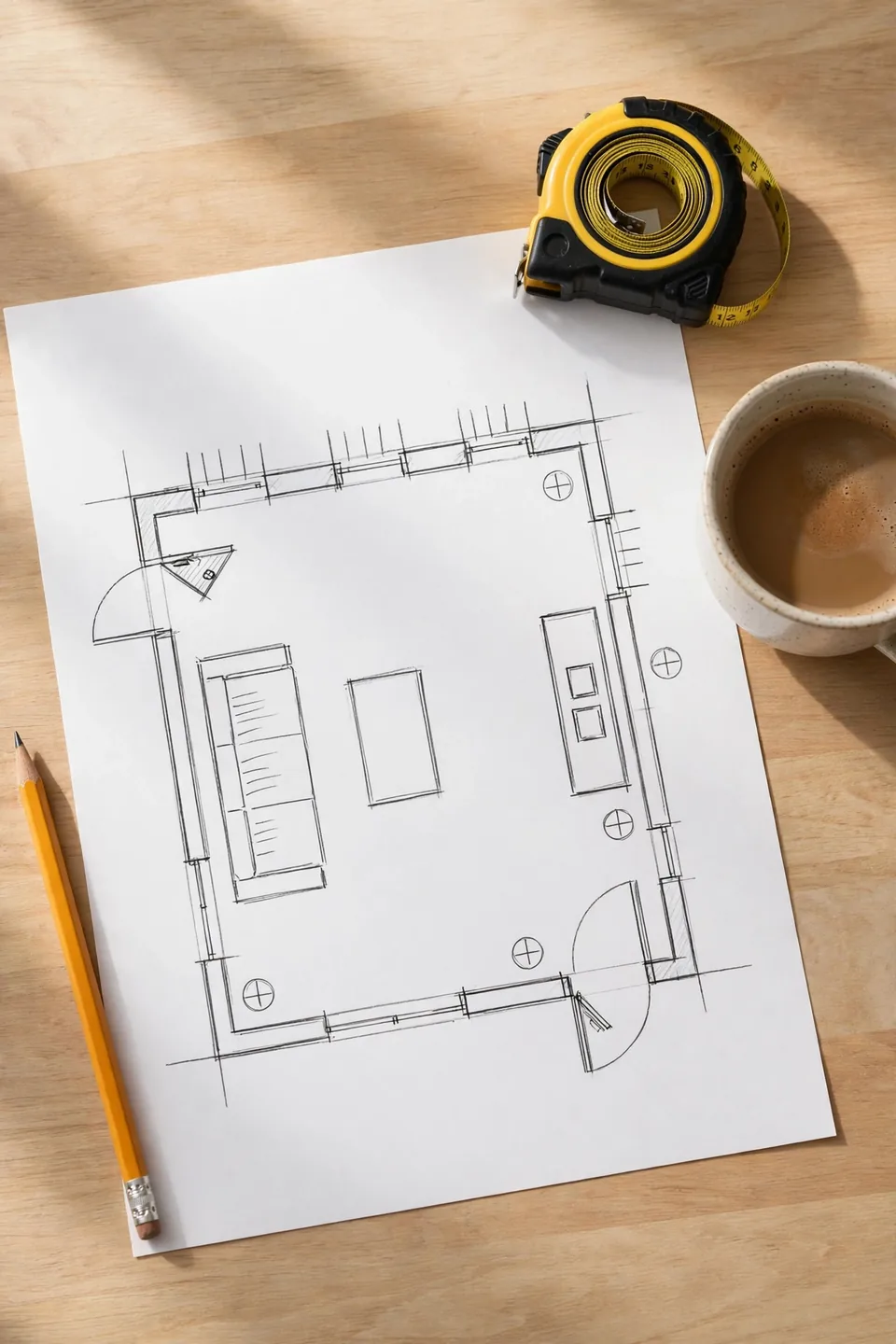
Before moving a single chair, name the exact problem your room has. A long narrow room needs different fixes than an L-shaped one, and guessing wastes an afternoon. Pin down the challenge first, and every choice after it gets easier.
- Sketch the room on paper, marking every door, window, and outlet. This five-minute map reveals traffic paths you keep blocking by accident.
- List what bothers you most: the TV has nowhere to go, seating floats oddly, or one corner always sits empty.
- Note the room’s fixed features, like the fireplace or the biggest window, since these anchor every layout decision.
- Measure the tightest spots, such as the walkway between the sofa and the wall, so new arrangements respect real clearance.
Find the Right Focal Point
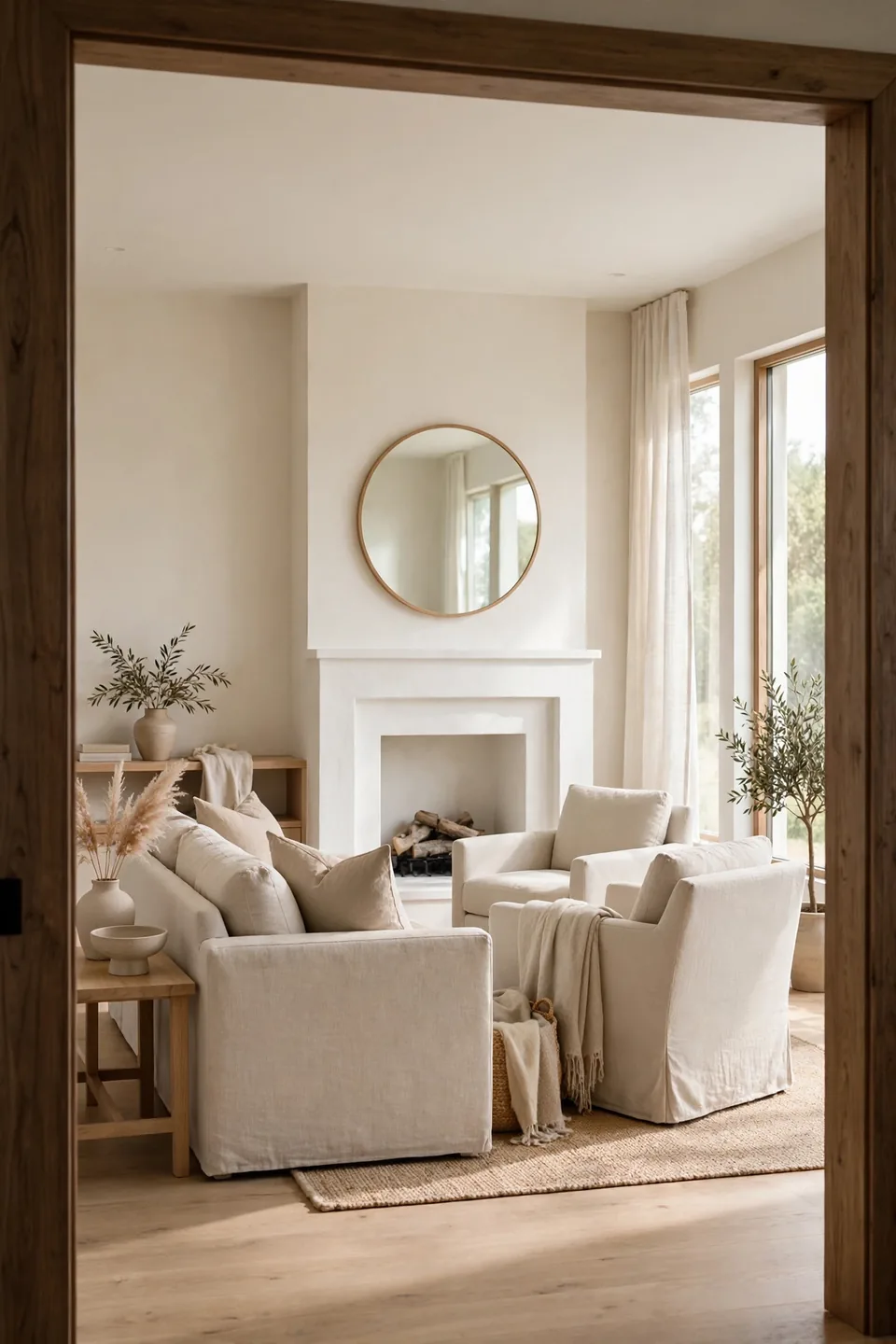
Quick Tip: Stand in the doorway and notice where your eyes land first. That spot is your room’s natural focal point, even if it is not the prettiest feature. Build the seating around it instead of fighting it.
Most awkward rooms have two features competing for attention, like a TV on one wall and a fireplace on another. Pick one winner based on how you actually use the room. In my experience, rooms feel settled the moment everything visibly points toward a single star.
Float Furniture With Purpose
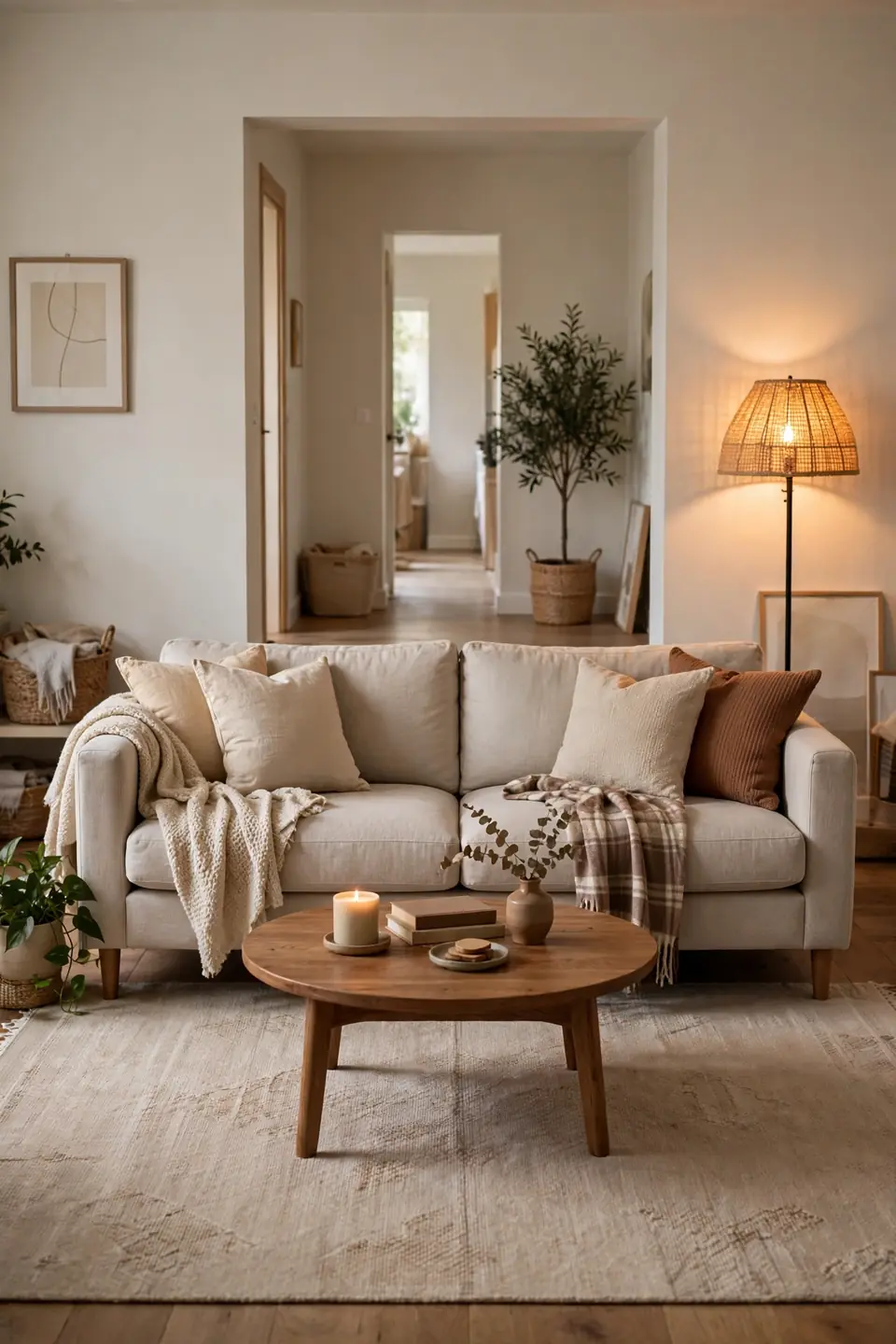
Common Mistake: Most people push every piece against the walls, hoping to free up floor space. In an awkward layout, this actually makes the room feel like a waiting area, with an empty hole in the middle and no cozy conversation spot.
The Fix: Pull the main seating a few inches off the wall and angle it toward your focal point. That small shift creates breathing room behind pieces and lets the center of the room hold a rug, a coffee table, and real purpose.
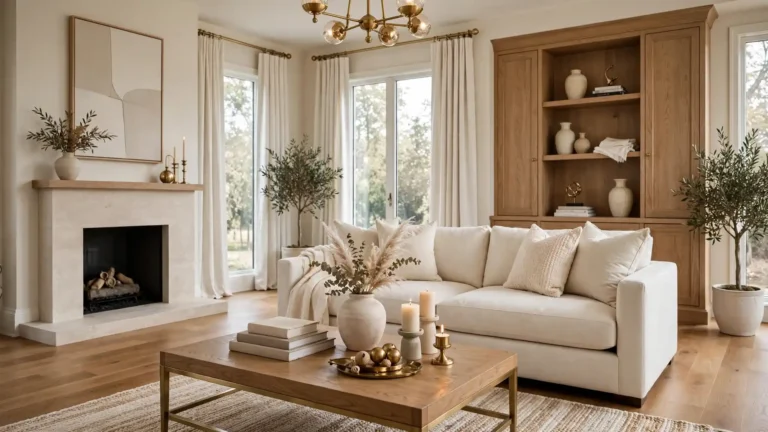
Floating works best when you anchor the group with a rug large enough to catch the front legs of each seat. Leave clear walkways of about three feet around the grouping so traffic flows naturally. The room will feel intentional instead of accidental, even if the footprint stays exactly the same.
Define Zones Clearly
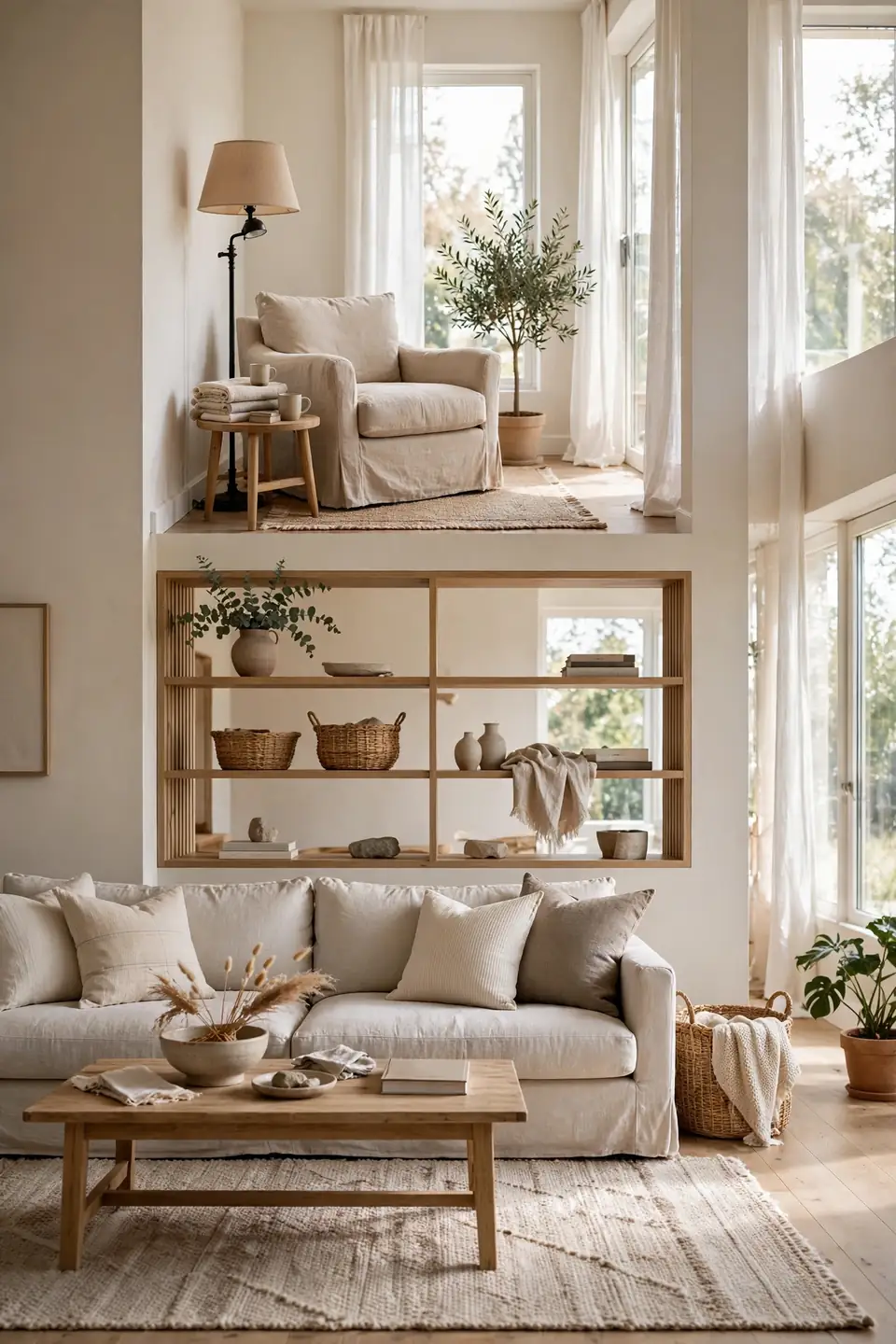
What You Need:
- A large area rug: it visually glues one zone together and separates it from the next.
- A slim console or open shelf: it acts as a room divider without blocking light or sightlines.
- Matching table lamps: a pair of lamps signals that two chairs belong to the same conversation zone.
- A small side table: every seat needs a landing spot, which makes each zone feel finished.
- Plants or floor baskets: soft vertical elements mark zone edges without heavy furniture.
Zones turn one confusing room into two or three clear destinations, which is the real secret of how to decorate awkward living room layouts without knocking down walls. Repeat one color or material across zones so the whole room still reads as one home and feels calm.
Work With Angles, Not Against Them
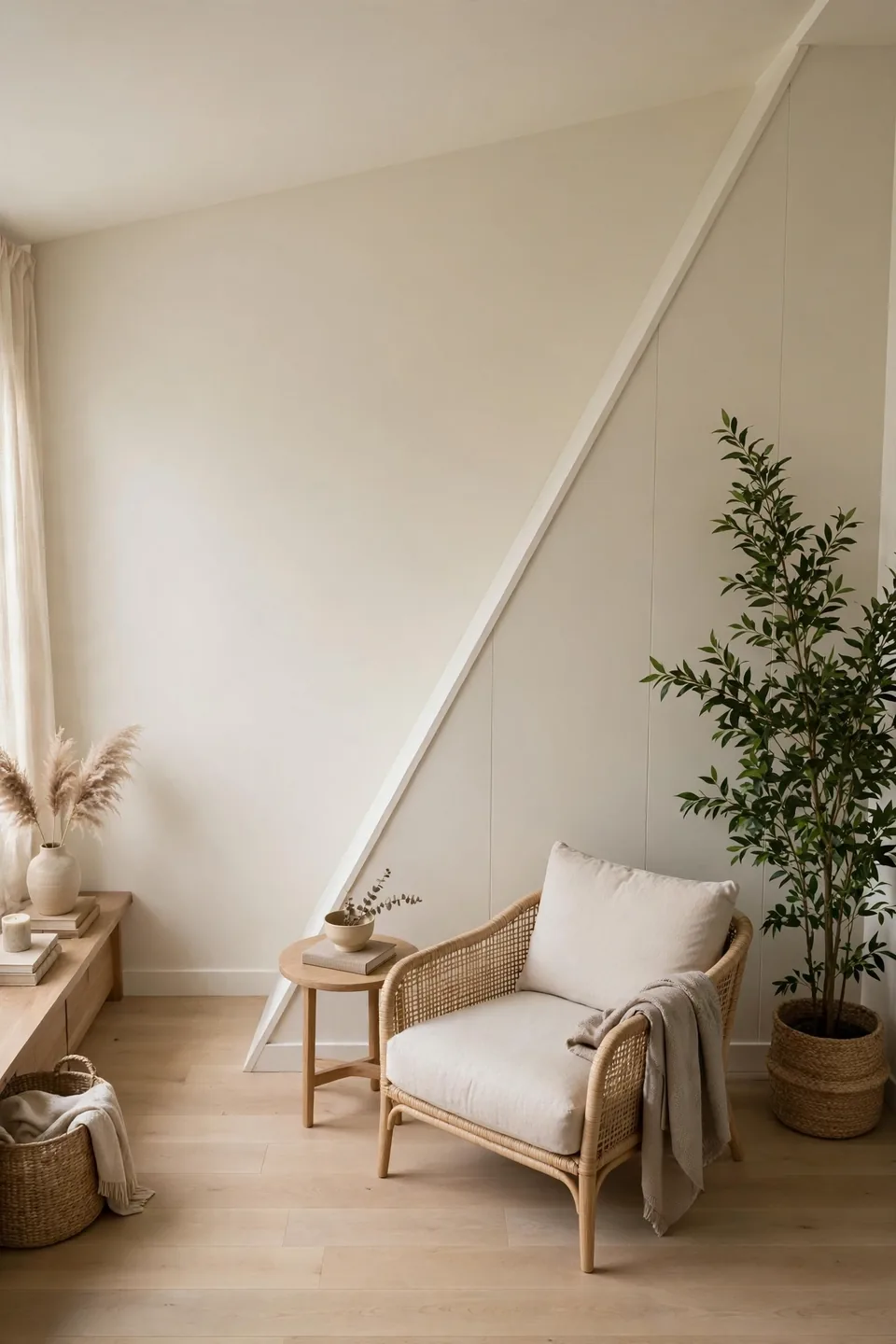
Before: The armchair sits jammed into the angled corner at a strange tilt, half facing the sofa and half facing the wall. It looks like it landed there by accident, and nobody ever chooses to sit in it.
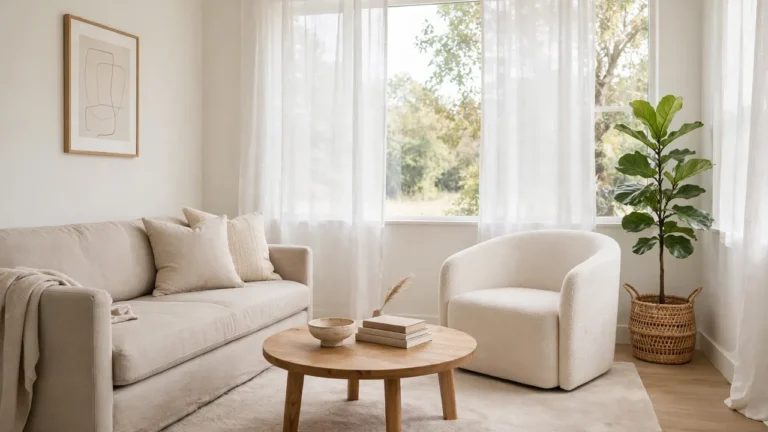
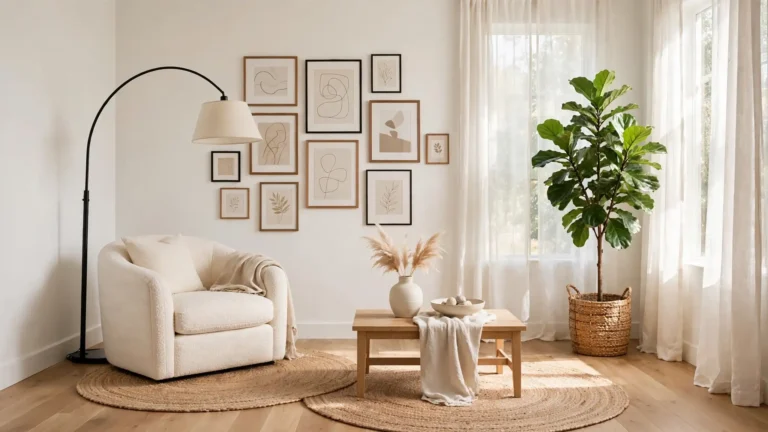
After: The same chair now angles deliberately toward the coffee table, paired with a small side table and a floor lamp. The odd corner becomes a reading nook with a job, and the angle suddenly looks like a design choice.
Angles only look wrong when furniture ignores them. Pull pieces slightly away from slanted walls, then echo the angle with a rug or a plant placed parallel to it. I have seen this make a real difference in rooms people had nearly given up on.
Scale Furniture to the Space
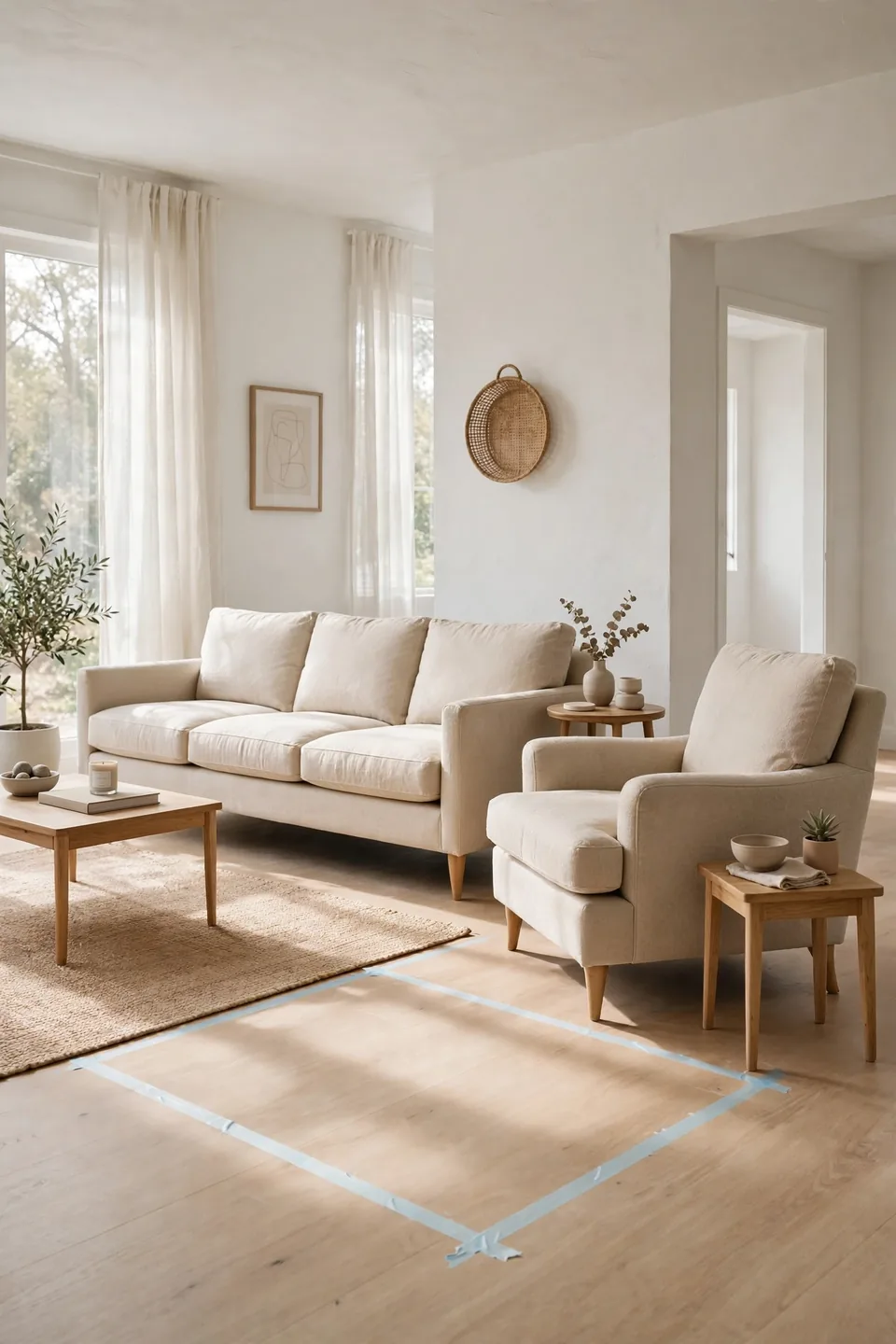
Do This:
- Measure your longest wall and choose a sofa at least a foot shorter so walkways survive.
- Pick pieces with visible legs to keep sightlines open under furniture.
- Use one larger anchor piece plus smaller companions instead of many medium pieces.
- Test layouts with painter’s tape outlines before lifting anything heavy.
Avoid This:
- Do not buy a sectional that eats the whole room just because it seats six.
- Avoid tall bulky bookcases that chop an already odd room into smaller bits.
- Skip tiny scattered furniture that makes the layout look restless and unfinished.
Scale is about proportion, not just size. One generous sofa usually calms an awkward room more than three small chairs ever could. When each piece earns its footprint, nothing blocks the walkways, and every seat faces something worth looking at, the layout finally feels deliberate.
For more ideas on stretching every inch, see how to maximize space in small kitchens.
Use Lighting to Unify
Time Needed: One weekend | Difficulty: Easy | Cost: Low to medium
Best For: Rooms with dark corners or competing focal points
Pro Tip: Match bulb color temperature across all fixtures for one calm glow
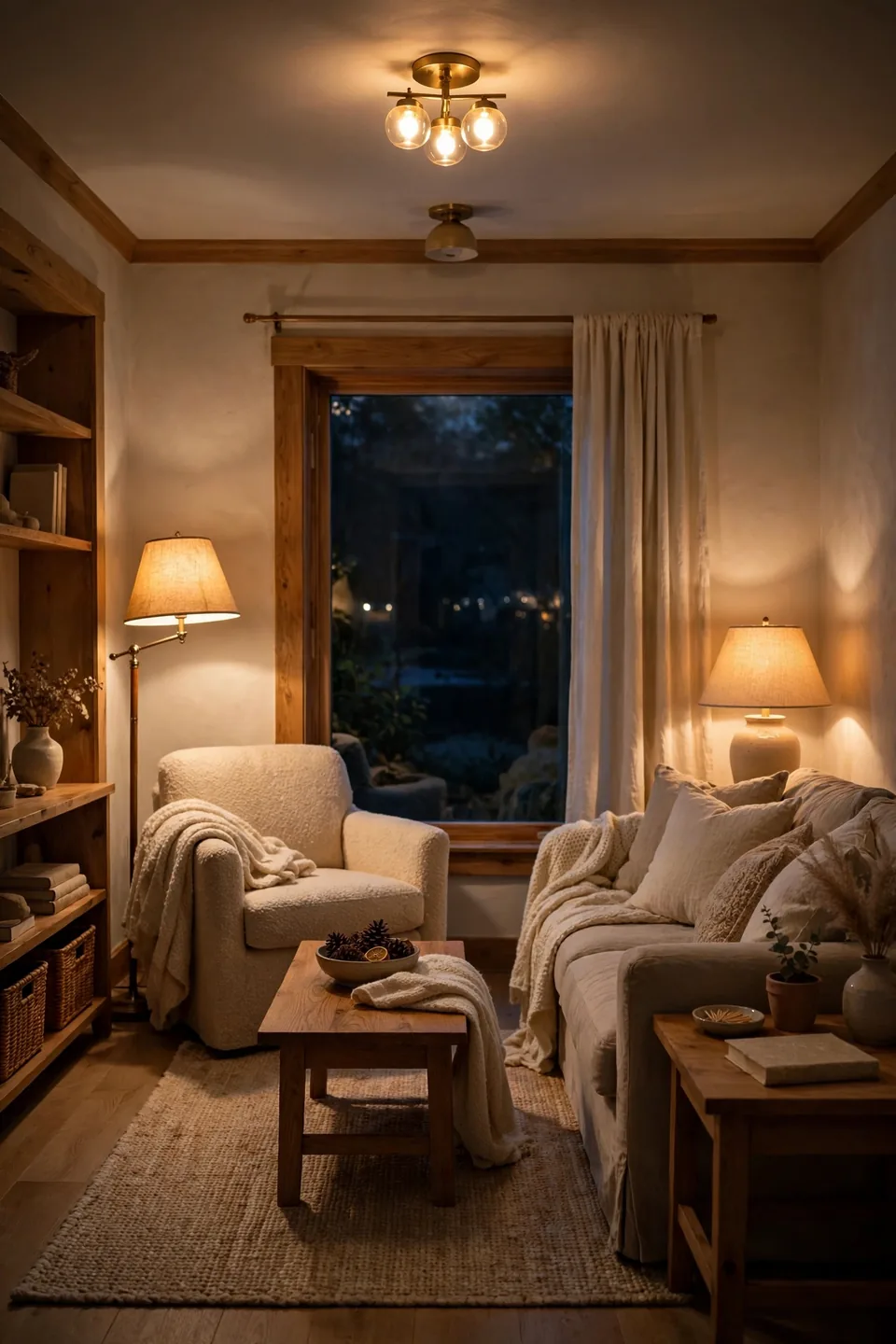
Lighting stitches zones together when the layout cannot. A floor lamp in the reading corner, a table lamp by the sofa, and one overhead fixture on a dimmer give every area its own pool of light. Keep the glow consistent and the room reads as one welcoming space.
Common Layout Mistakes
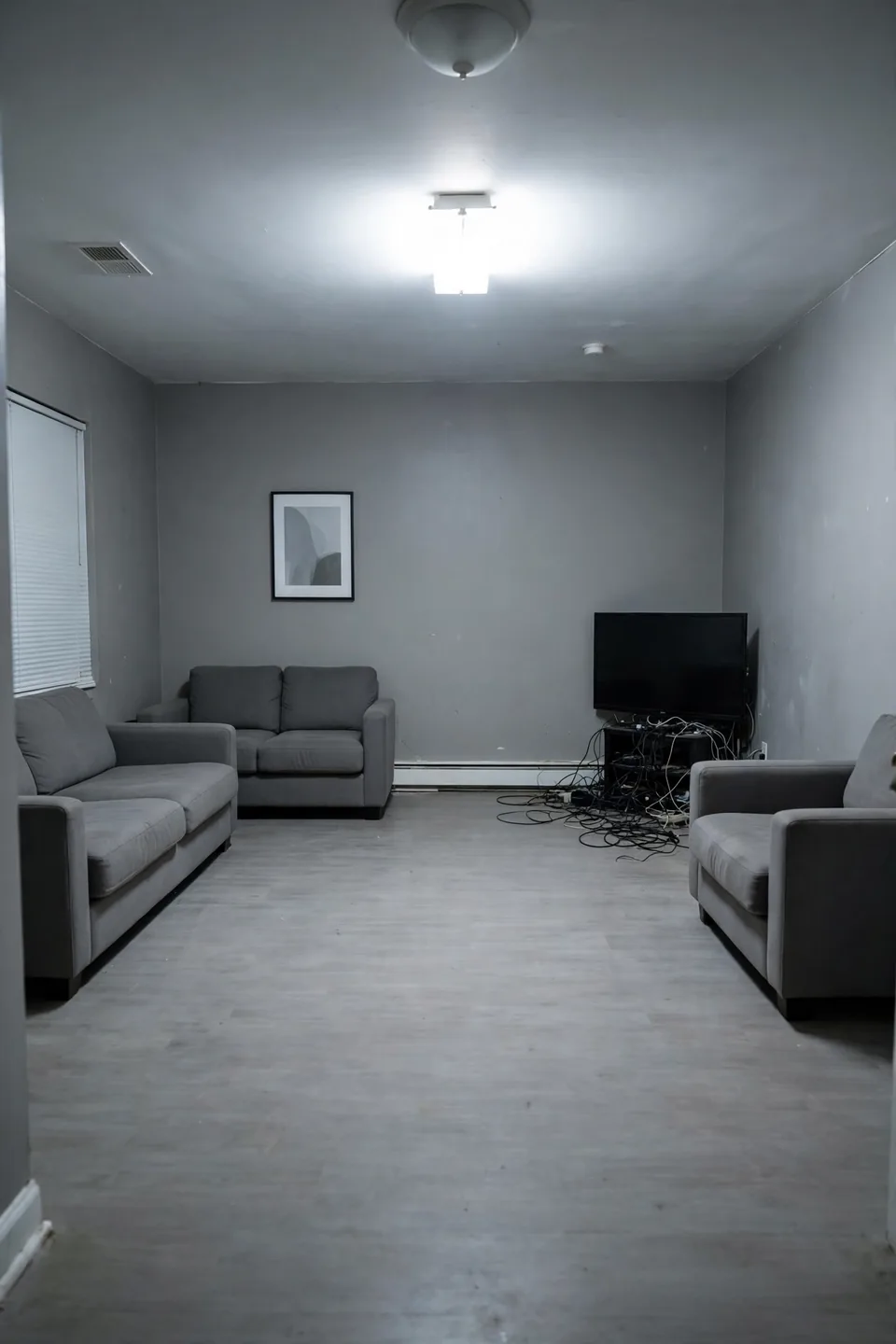
The most common mistake is lining every seat along the walls and leaving the middle empty. It feels safe because nothing blocks the walkways, but the room ends up cold and conversation dies across the distance. Another frequent error is pushing the TV into whatever corner fits, then twisting all seating toward it.
Fix both by pulling seating inward and giving the TV or fireplace a clear, centered home. Walk the room after each change and notice where you hesitate or squeeze past furniture. Those tight spots are the layout telling you exactly what to adjust next.
Pro Tips for a Cohesive Room
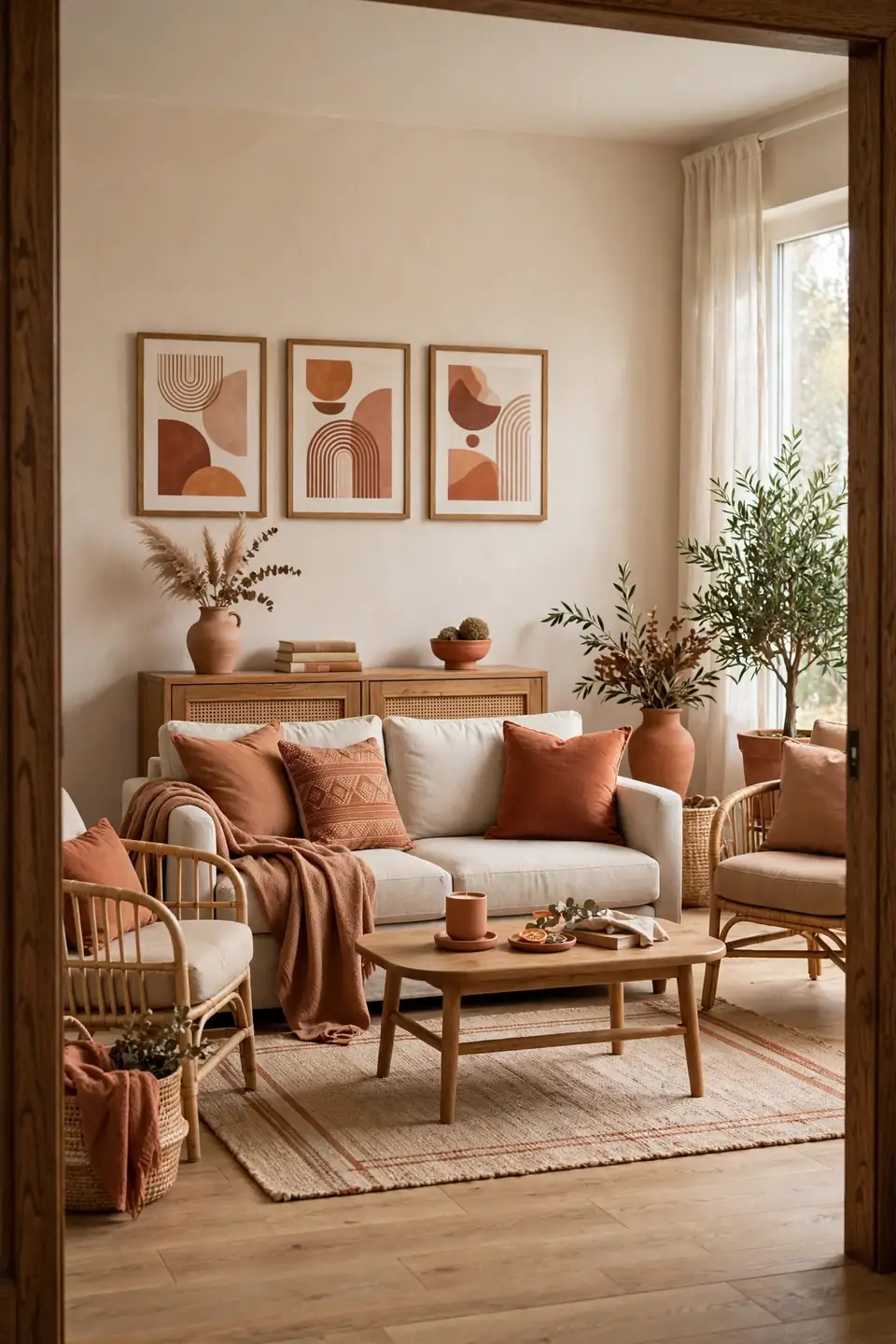
These finishing moves pull everything together at the end of the process. None of them require new furniture or a big budget, just a careful eye and an hour or two. Apply them in order and watch the room settle into itself.
- Repeat one accent color in at least three spots, such as a cushion, a throw, and a piece of art, to tie zones together.
- Edit ruthlessly: remove one item from each surface and see if the room breathes better without it.
- Photograph the room from the doorway; the camera reveals clutter and imbalance your eyes have learned to ignore.
- Live with the new layout for three days before judging it, since fresh arrangements always feel strange at first.
Conclusion
A room that once frustrated you can become the favorite spot in the house. Once you know how to decorate awkward living room layouts with intention, every odd angle turns into character instead of a problem. Save this guide on Pinterest so you can revisit each step as you rearrange. Try one change this weekend, like floating the sofa or defining a zone with a rug, and notice how quickly the room responds. I have seen how making this one change can completely shift the result, and I am confident your living room is closer to beautiful than you think.
2 Comments