
How to Decorate a Bedroom With Limited Electrical Outlets
A bedroom with only one or two outlets can feel impossible to style well. Learning how to decorate a bedroom with limited electrical outlets starts with a simple shift: treat outlets as a resource, not the rule. Once you plan around them, the whole room opens up.
The trick is layering. Battery lamps, rechargeable sconces, and a single well-placed power strip handle most lighting and charging needs. In my experience, one weekend of planning beats months of tangled extension cords.
Small rooms with tricky constraints reward the same careful planning you see in how to make a small dining room work for six people, where every inch and every tool gets a clear job. Read on for ten sections that walk you through it step by step.
Map Out Your Power Points Before You Decorate

Before buying a single lamp, walk the room slowly and note every outlet, its height from the floor, and what already shares its circuit. Mark each one on a rough sketch or a phone photo so the whole layout lives in one easy reference.
This tiny audit tells you exactly where you can plug in and where you must go cordless. Stand in each zone and name what it needs, from reading light to phone charging, then match those needs to outlets first. Fewer stretched cords means a calmer looking room from day one.
Start With a Battery-First Lighting Plan

Decide where light should fall before you touch a single plug. A battery-first plan makes cords the backup rather than the backbone of your bedroom lighting. The room stays flexible for future furniture moves, and tripping hazards disappear for good.
- List the three spots that need light most, such as the nightstand, reading chair, and closet corner.
- Assign a battery or rechargeable lamp to each spot, choosing warm 2700K bulbs for a cozy evening glow.
- Reserve real outlets for items that must stay plugged in, like the phone charger and alarm clock.
- Set a charging tray by one outlet so devices refill overnight without crowding the nightstand.
Choose the Right Cordless Lamp for Every Corner
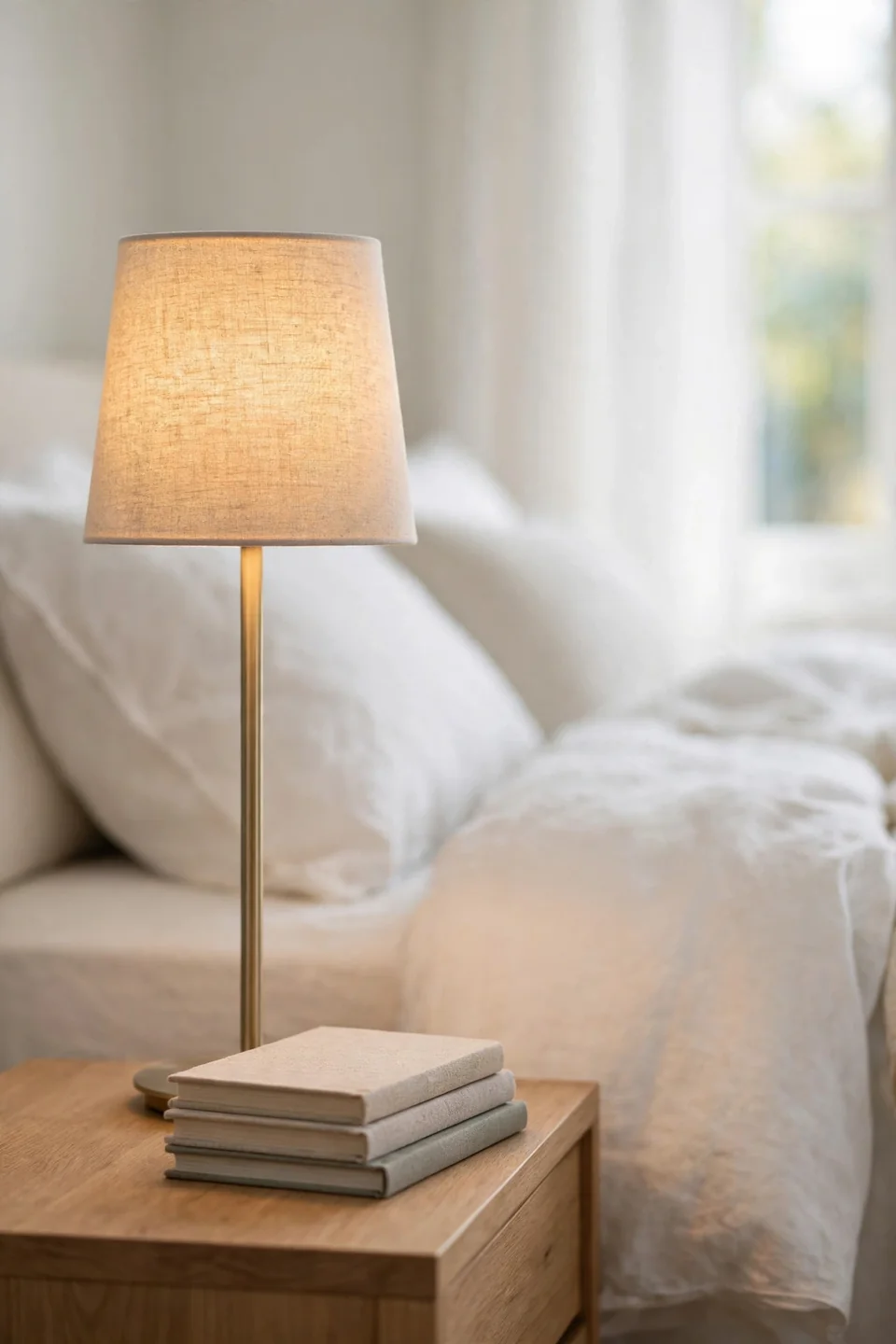
Quick Tip: Choose lamps with at least eight hours of runtime and USB-C charging, so one overnight charge covers a full evening of reading. Rechargeable wall sconces with remotes beat table lamps in tight corners where surface space is scarce.
Match the lamp size to its surface for a styled look. A slim sconce suits a narrow nightstand, while a chunky rechargeable lantern anchors a wide dresser top. Keep all finishes in one metal tone so cordless pieces look intentional rather than scattered afterthoughts around the room.
The Charging Station Mistake That Ruins the Mood
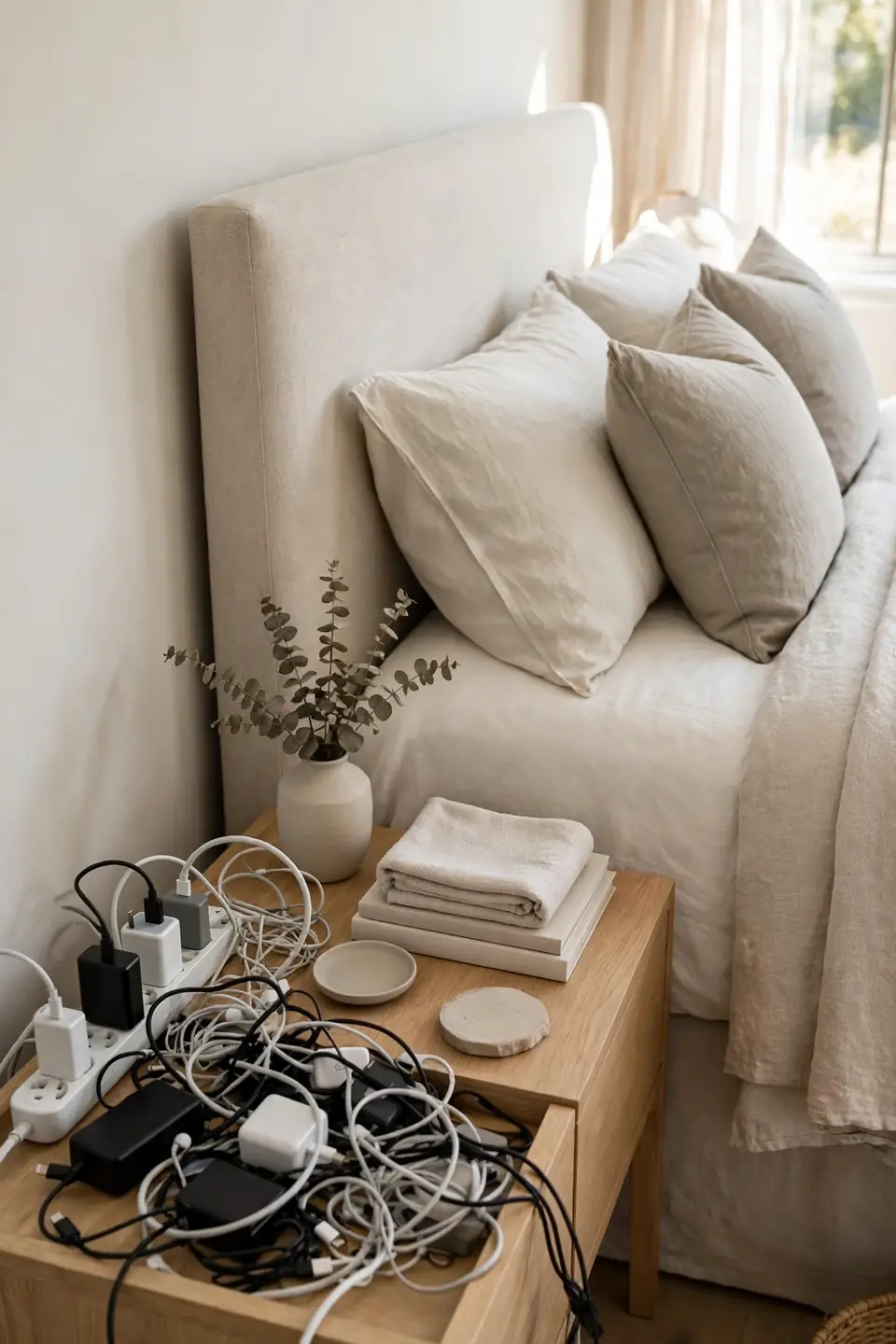
Common Mistake: Most people pile chargers, cables, and power strips on the nightstand right beside the bed. The result is a glowing tangle that kills the calm look and gathers dust behind every single cable.
The Fix: Move charging to one hidden hub, such as inside a dresser drawer fitted with a short power strip or tucked behind the bed skirt. Charge everything there, and keep only a slim cable at the nightstand for overnight phone top-ups.
The bedroom instantly feels calmer when technology disappears from sight. In my experience, this single move makes the biggest visual difference in outlet-starved rooms, since clutter beside the bed reads as chaos even in bright daylight. Guests notice the calm before they notice anything missing.
What You Need for an Outlet-Free Bedroom

What You Need:
- Rechargeable table lamps: two give you warm evening light on both sides of the bed with zero cords.
- Battery wall sconces: they mount with adhesive or small screws and add reading light exactly where wanted.
- A slim power strip: one with a flat plug slides behind furniture and multiplies a single outlet safely.
- Cord covers: paintable channels hide the few cords you must run along baseboards.
- USB-C charging cables: a single cable type keeps the drawer hub tidy and simple to manage.
- Motion sensor night lights: they guide midnight trips to the door without needing an outlet at all.
Buy the lamps first and test them for a full week before committing to wall sconces. Battery life claims vary widely, and real evenings of reading reveal which lamp dims too early for your habits. Return the weak ones while you still can, then invest in the winners.
Before and After: The Dead Corner That Now Glows
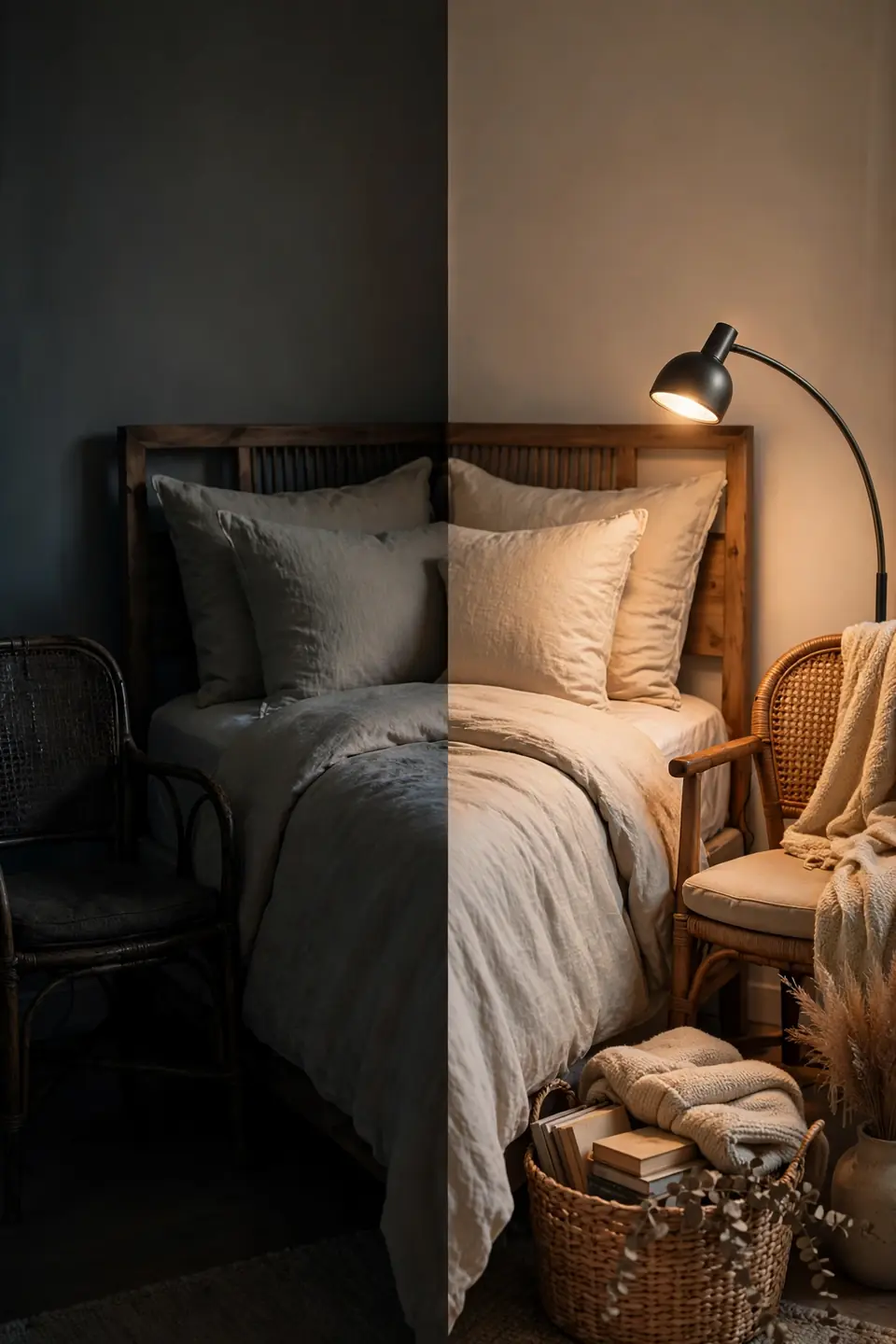
BEFORE: The far corner held a lonely chair under a bare ceiling, dark by seven each evening. No outlet sat within reach, so the chair collected laundry instead of readers, and the whole room felt half finished after sunset.
AFTER: A rechargeable floor lamp now arcs over that same chair, with a small basket for books and a battery candle on the side table. The corner became the favorite seat in the house, glowing warm every night with zero cords crossing the rug.
Just as how to arrange furniture in a room with multiple windows treats light as a layout tool, here light placement reshapes how the room feels after dark. One glowing corner pulls the whole bedroom together and makes limited outlets feel like a choice, not a flaw.
Do This and Avoid This With Extension Cords

Do This:
- Run cords flat along baseboards and hide them inside paintable cord covers.
- Use one short, high-quality strip instead of daisy-chaining two cheap ones together.
- Unplug seasonal items like space heaters when the bedside lamp needs the outlet.
- Label each plug so you never yank the wrong cord in the dark.
Avoid This:
- Never run cords under rugs, where heat can build up unseen.
- Skip cords stretched across doorways or walkways where feet catch them.
- Do not overload one outlet with heaters, hair tools, and chargers all at once.
- Avoid permanent tape on walls, which tears paint when you remove it.
Treat cords as temporary guests rather than permanent fixtures in your bedroom. The fewer visible cables, the larger and calmer the space feels at the end of a long day. A quick cord audit each season keeps the whole setup safe, tidy, and working exactly as planned.
Quick Facts for Decorating With Few Outlets

Minimum Outlets: one good outlet can serve a whole bedroom with smart cordless picks
Battery Runtime: aim for 8+ hours on medium brightness for evening lamps
Budget: a full cordless lamp setup usually costs less than rewiring one wall
Biggest Win: hiding the charging hub transforms the room’s calm overnight
Keep a small note on your phone tracking which lamp lasts how long on a single charge. After two weeks you will know exactly which pieces earn their spot and which need replacing before they die mid-chapter. Real data beats guessing every single time you shop.
Style the Nightstand Without an Outlet

The nightstand farthest from the door often sits nowhere near an outlet, yet it holds the lamp, the book, and the water glass. Give it a rechargeable lamp with a small footprint plus a battery candle beside the book stack. A tiny tray corrals the glass and reading glasses so the surface stays tidy.
Add height with a small framed print leaned against the wall and dried stems in a bud vase. Neither needs power, and both keep the vignette layered and intentional. The result looks styled rather than stranded, even with no cord in sight.
Run Your Morning Test and Tweak
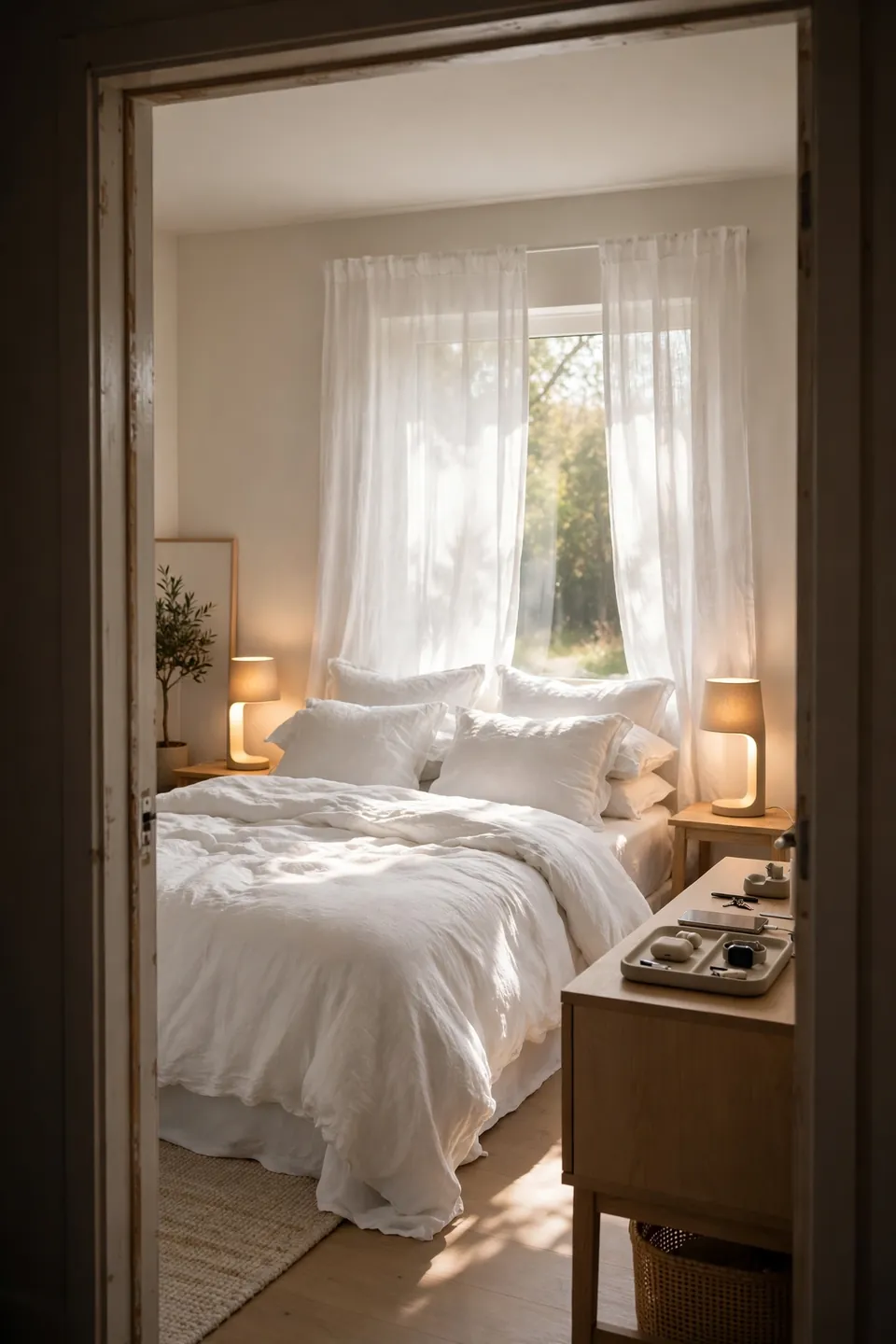
Live with the new setup for three full mornings before calling it finished. Mornings reveal what evenings hide: dying lamp batteries, awkward switch reaches, and chargers that migrated overnight. A short test run catches every weak link before it becomes a habit.
- Note which lamp died first and move a longer-runtime lamp into that spot.
- Check that every switch and remote sits within arm’s reach of where you actually use it.
- Confirm the charging hub refilled everything overnight with no warm plugs or smells.
- Snap a photo of the room to catch cords and clutter your eyes had missed.
Conclusion
A bedroom with scarce outlets can still feel layered, warm, and complete. Once you lean into cordless light, learning how to decorate a bedroom with limited electrical outlets becomes a creative exercise rather than a daily compromise. Pin this guide to your bedroom board on Pinterest so the checklist stays handy during your next refresh. Try the morning test this week, move one underperforming lamp, and notice how the whole room shifts. I’ve seen how making this one change can completely shift the result, turning a limitation into the coziest corner of the home.