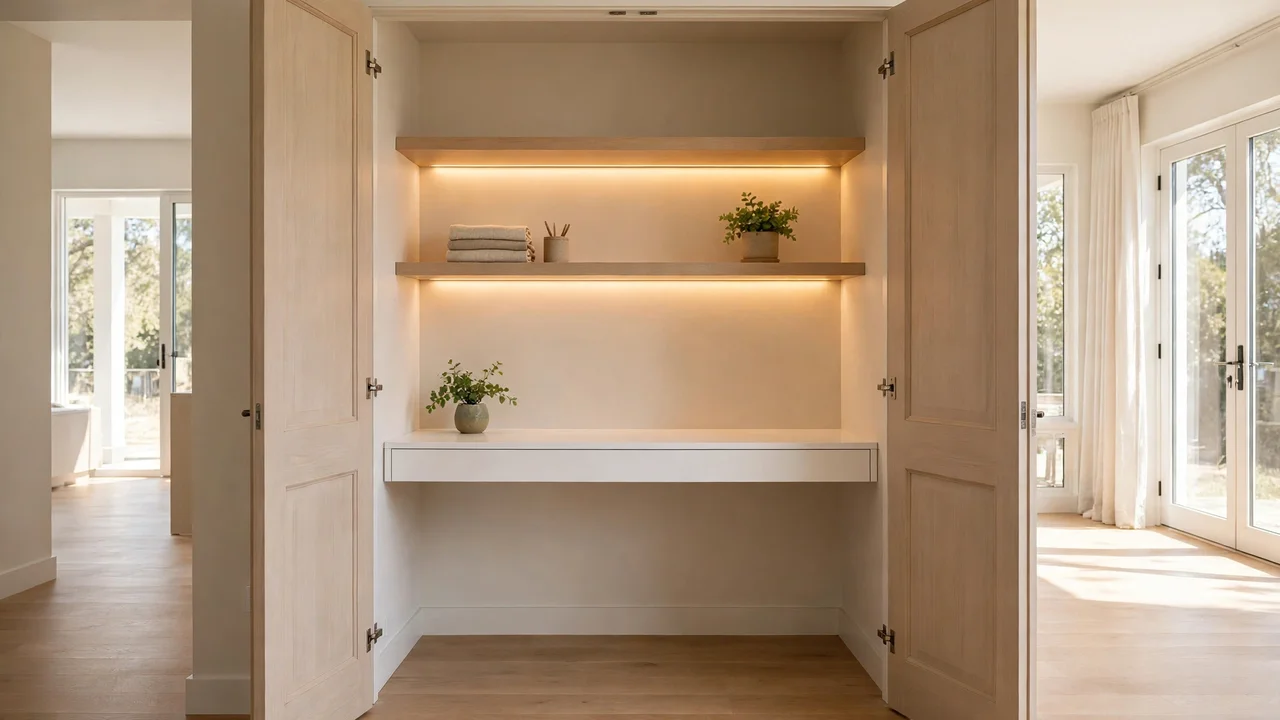
How to Create a Home Office in a Closet
Working from the kitchen table gets old fast, and not everyone has a spare bedroom to convert. That is why so many people are learning how to create a home office in a closet. A standard reach-in closet has the perfect footprint for a compact desk setup, and closing the doors at day’s end gives you a real boundary between work and home life.
In my experience, the biggest hurdle is believing a closet can feel like a real office. Once you clear the clutter and add proper lighting, the transformation feels surprisingly complete. If you have already tackled other small-space projects, like learning how to arrange furniture in a basement living room, you will find this project follows the same simple logic: work with what you have.
Why Closet Offices Work
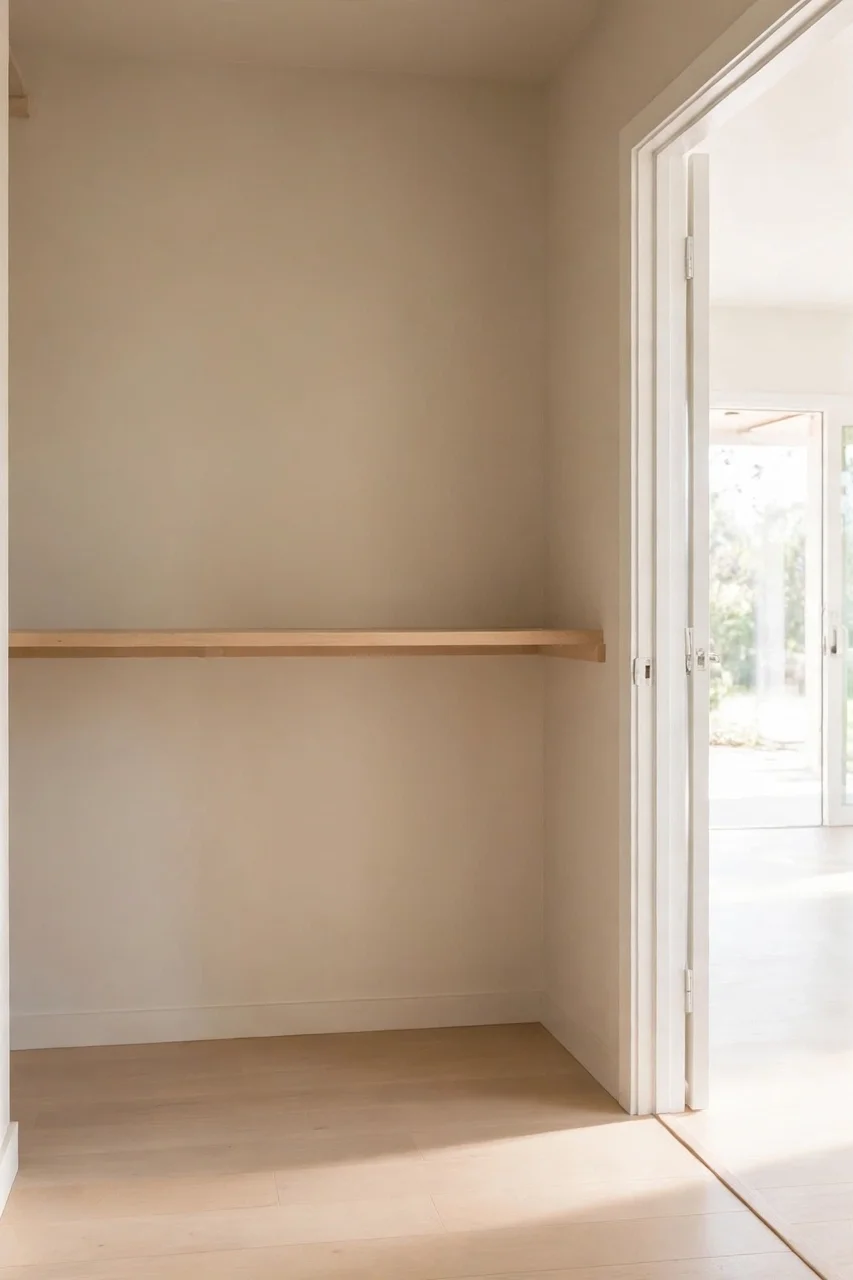
A closet already has walls, a door you can close, and often a shelf you can repurpose. That structure saves you from the hardest part of building a workspace from scratch. Unlike a living room corner, a closet office lets you shut the door on work and reclaim your home each evening.
The small size is actually an advantage. You cannot pile up clutter in a space this tight, which forces smart storage from day one. Every item earns its place, and that limit often creates a calmer, more focused workspace than a large spare room.
Clear Out the Closet

Before you buy a single desk accessory, the closet needs to be completely empty. A blank slate lets you measure accurately and spot issues like poor lighting or missing outlets. Rushing this step leads to furniture that does not fit, so take the time to do it right.
- Remove everything, including the rod and shelf brackets if you plan to reconfigure. Sort items into keep, relocate, and donate piles as you go.
- Wipe down walls, shelves, and the floor. Closets collect dust in corners, and a clean surface makes paint or wallpaper adhere better.
- Measure the width, depth, and height twice. Write the numbers on your phone so you have them while shopping for a desk.
- Check for an electrical outlet. If there is none nearby, plan for a power strip with a flat plug or consult an electrician before proceeding.
Add a Desk
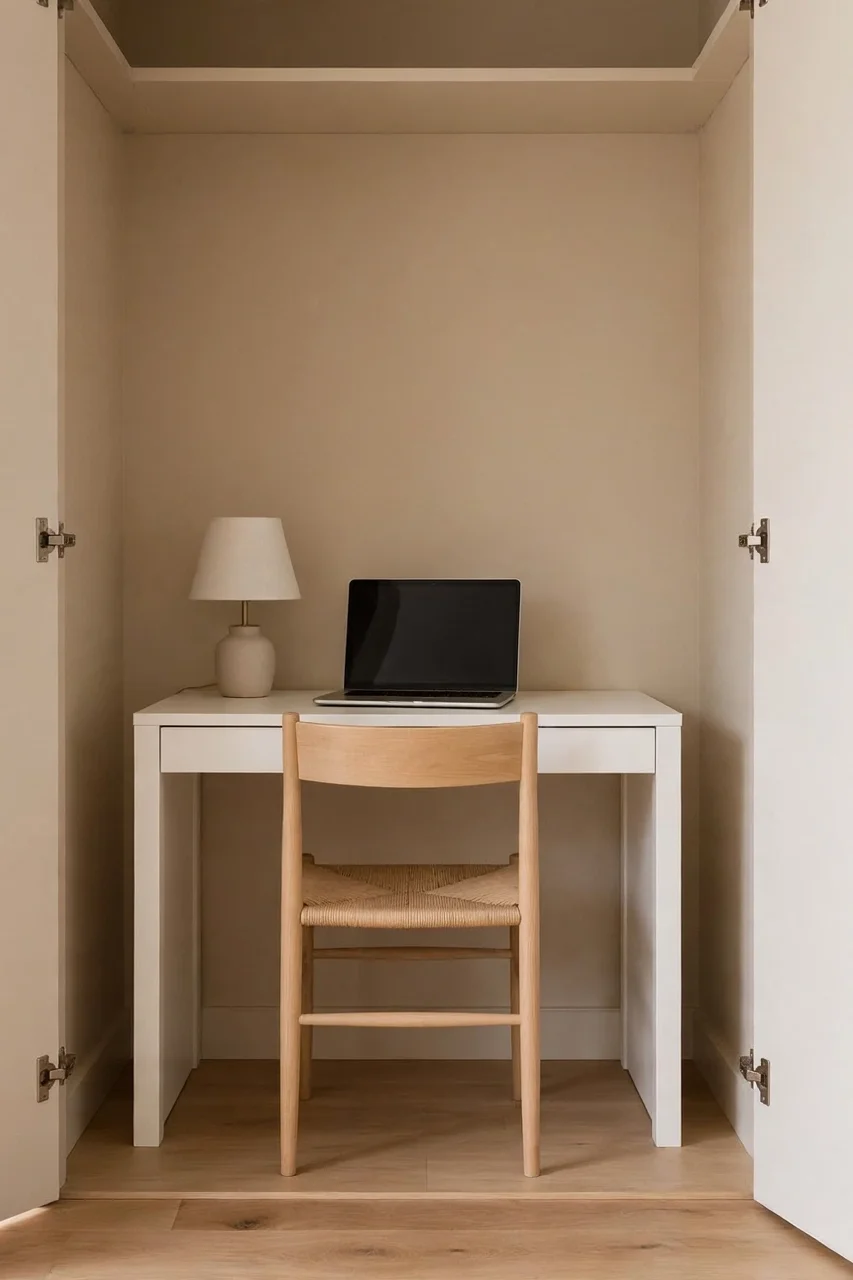
Quick Tip: Measure your closet depth before shopping. Most reach-in closets are 24 inches deep, which fits a standard desk perfectly. A floating wall-mounted desk saves floor space and looks cleaner than legs.
Choose a desk that leaves a few inches of clearance on each side for comfortable movement. If the closet is narrow, a wall-mounted folding desk gives you workspace when you need it and folds away when you do not. Pair it with a chair that tucks fully underneath to keep the footprint minimal.
Maximize Vertical Space

Common Mistake: Most people only use the desk surface and ignore the walls above it. That wastes the best storage real estate in a small closet office. Without vertical storage, supplies pile up on the desk and kill your focus.
The Fix: Install floating shelves or a pegboard above the desk for supplies, books, and decor. Use the full height of the closet, keeping daily items at arm’s reach and seasonal things up high. Vertical storage keeps the desk clear for actual work.
A tall, narrow bookcase in a corner can hold files and equipment without eating floor space. I have noticed that people who go vertical from the start rarely complain about running out of room. Start high and work your way down slowly as you organize.
Light It Well
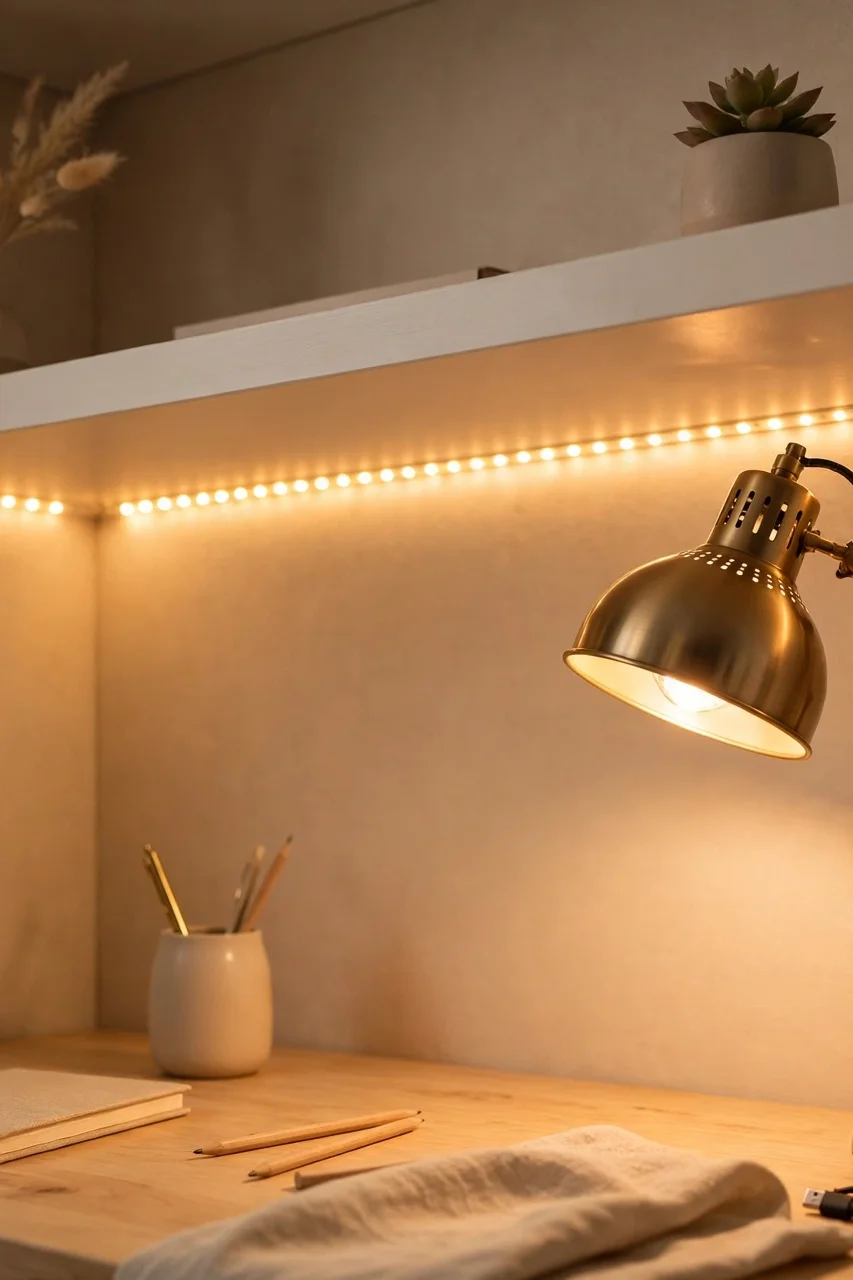
What You Need:
- LED strip lights: stick these under shelves for even, shadow-free illumination across the desk.
- A task lamp: choose an adjustable arm lamp that focuses light exactly where you need it.
- Battery puck lights: perfect for closets without wiring, they add brightness in dark corners.
- A small mirror: bounces light around and makes the tiny space feel larger and brighter.
- Warm white bulbs: 2700K to 3000K feels cozy and reduces eye strain during long work sessions.
Good lighting makes or breaks a closet office, and it is the detail most people underestimate when they learn how to create a home office in a closet. Layer at least two light sources so you are never working in shadows. Test the setup at night before you commit to furniture placement.
Keep It Organized
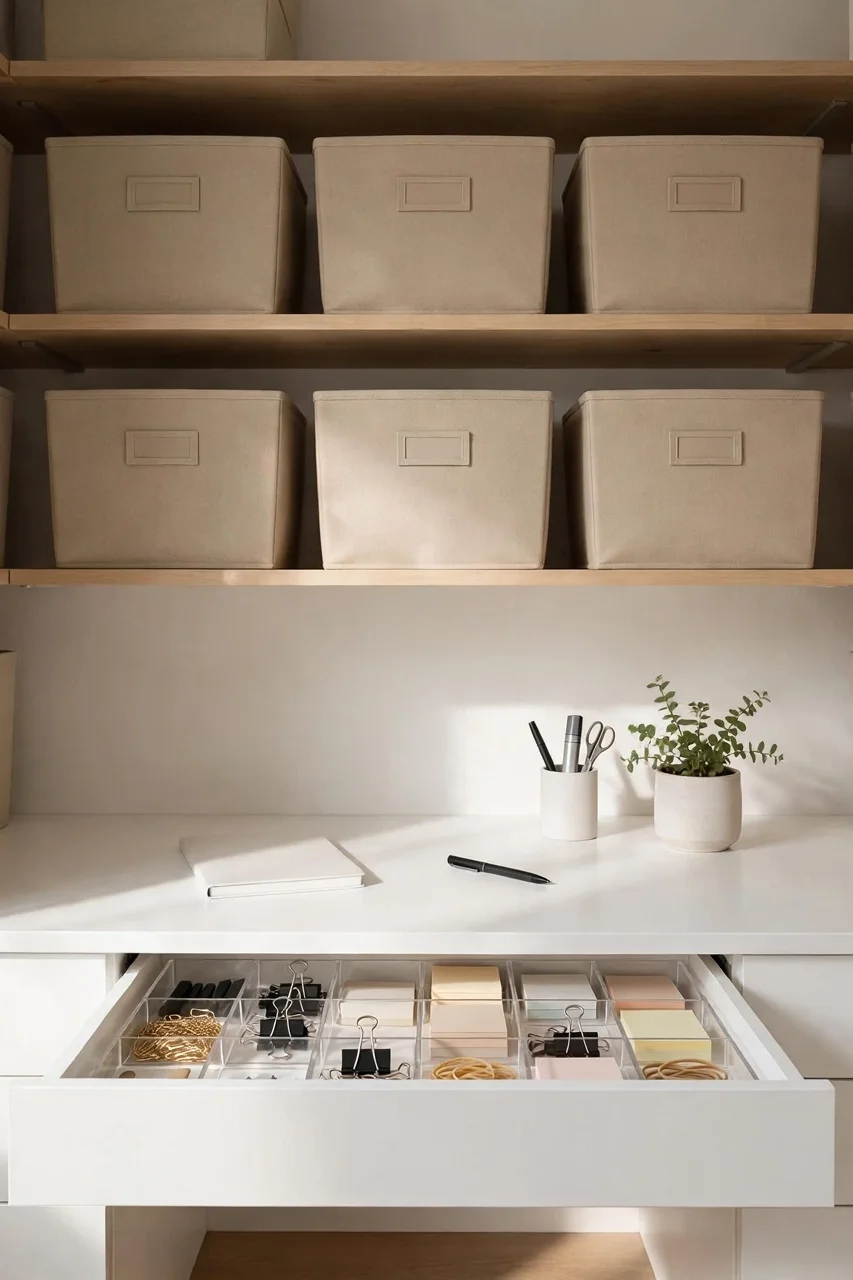
Before: Without a system, the desk becomes a landing zone for mail, chargers, and random papers. Drawers fill with supplies you never use, and finding anything takes forever. The small space starts feeling chaotic instead of calm.
After: With labeled bins and a simple filing system, everything has a home. The desk stays clear because supplies live in drawers or on shelves. You sit down, find what you need in seconds, and actually enjoy the compact space.
Set aside ten minutes at the end of each workday to reset the space completely. File loose papers, return every supply to its spot, and wipe the desk surface clean. This tiny daily habit prevents the slow creep of clutter that ruins small offices over time.
Add Personal Touches
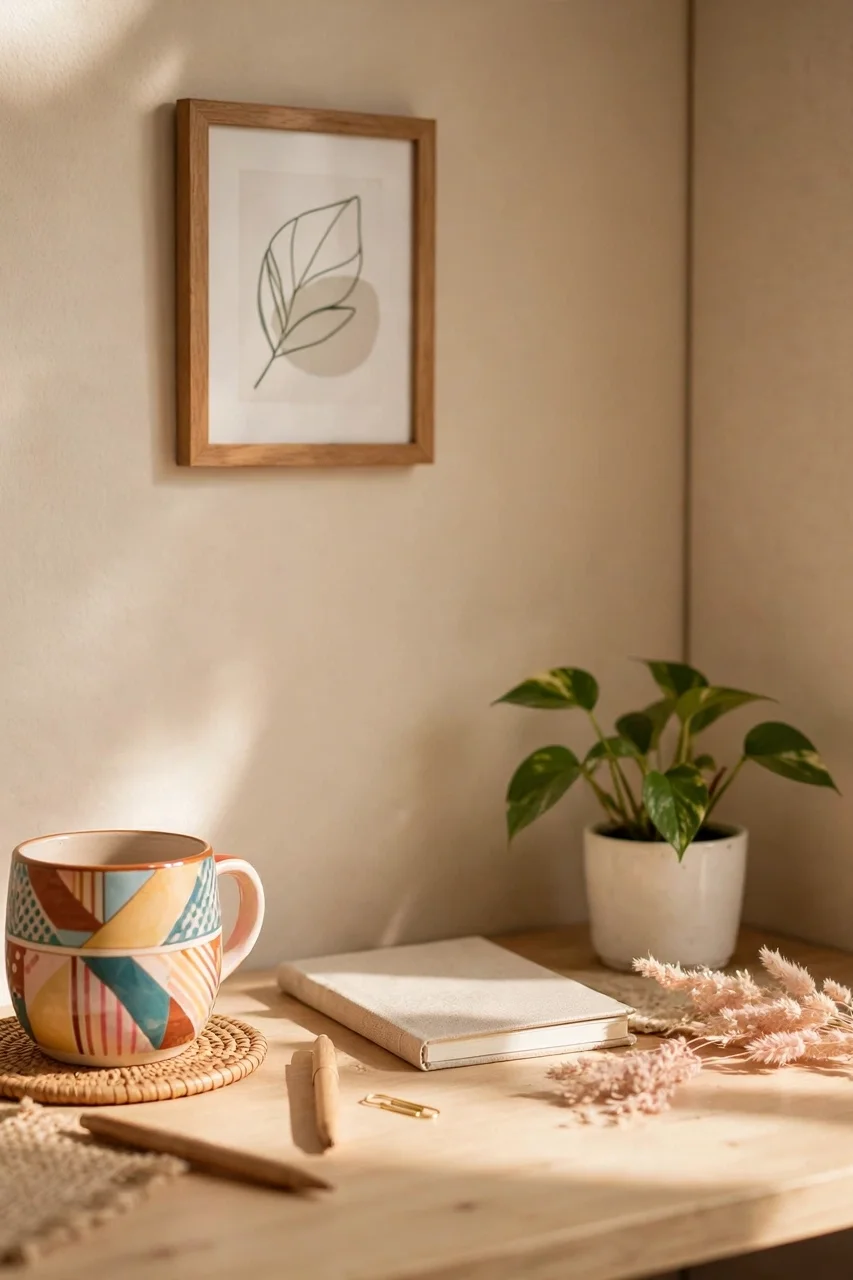
Do This:
- Hang one piece of art you love at eye level above the desk.
- Add a small plant that thrives in low light, like a pothos.
- Use a colorful desk mat or mug to bring personality to the space.
- Pin up a vision board or photos that motivate you during work.
Avoid This:
- Do not overcrowd the walls; one or two items is plenty in a closet.
- Avoid dark colors that make the small space feel smaller and gloomier.
- Skip bulky decor that eats into your limited desk surface.
- Do not use scented candles; opt for a small diffuser if you want fragrance.
Personal touches turn a converted closet from a storage nook into a place you want to spend time. Keep it simple and intentional, choosing items that make you smile without adding visual noise. A space that reflects you is a space you will actually use.
Manage Cables
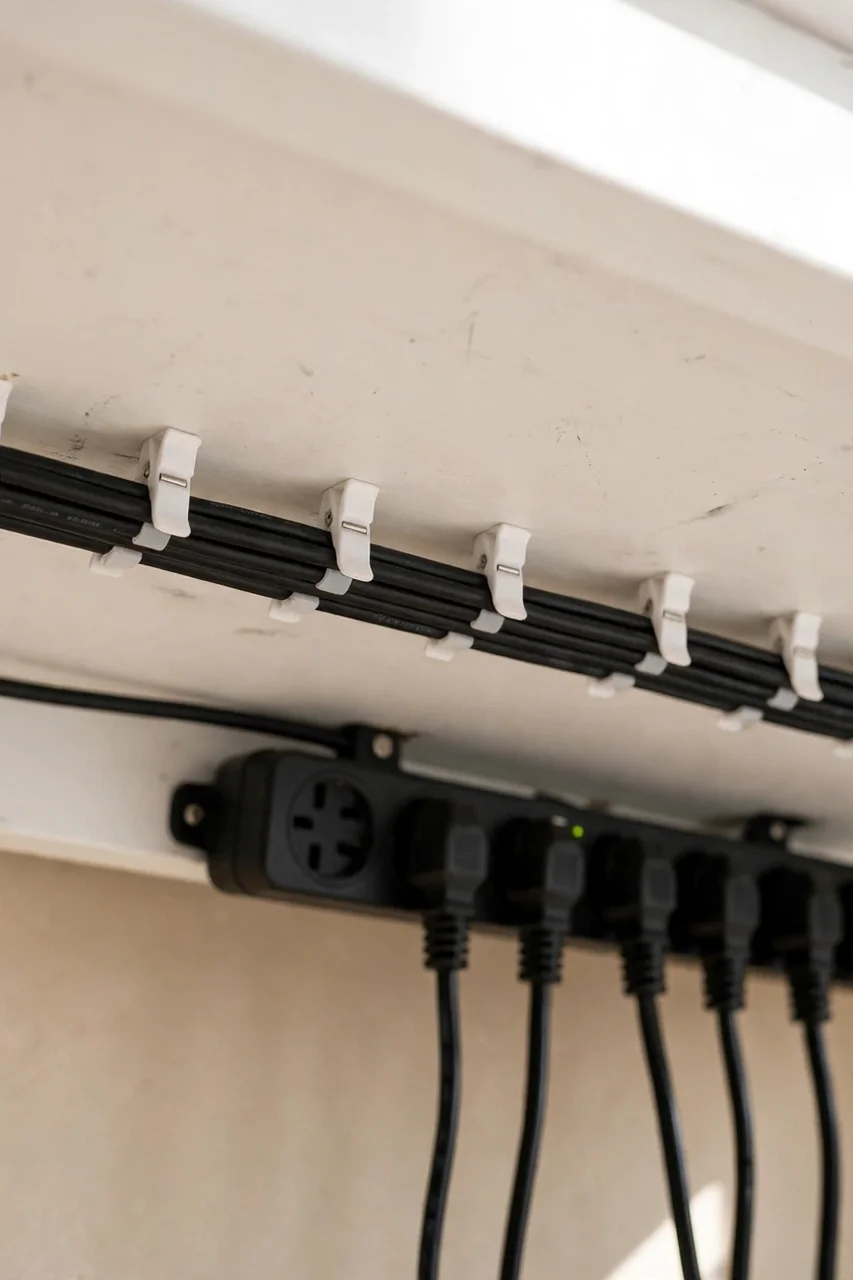
Time Needed: 20 minutes | Difficulty: Easy | Cost: Under $15 | Best For: Keeping cords tidy and preventing tripping hazards
Run a power strip along the back of the desk and secure loose cables with adhesive clips underneath. Label each cord so you can unplug the right device without guessing. Tidy cables make the whole setup look professional and keep dust from collecting in corners.
If you are furnishing other tight spaces too, our guide on how to decorate a living room with brown furniture has smart ideas for working with what you already own.
Common Closet Office Mistakes
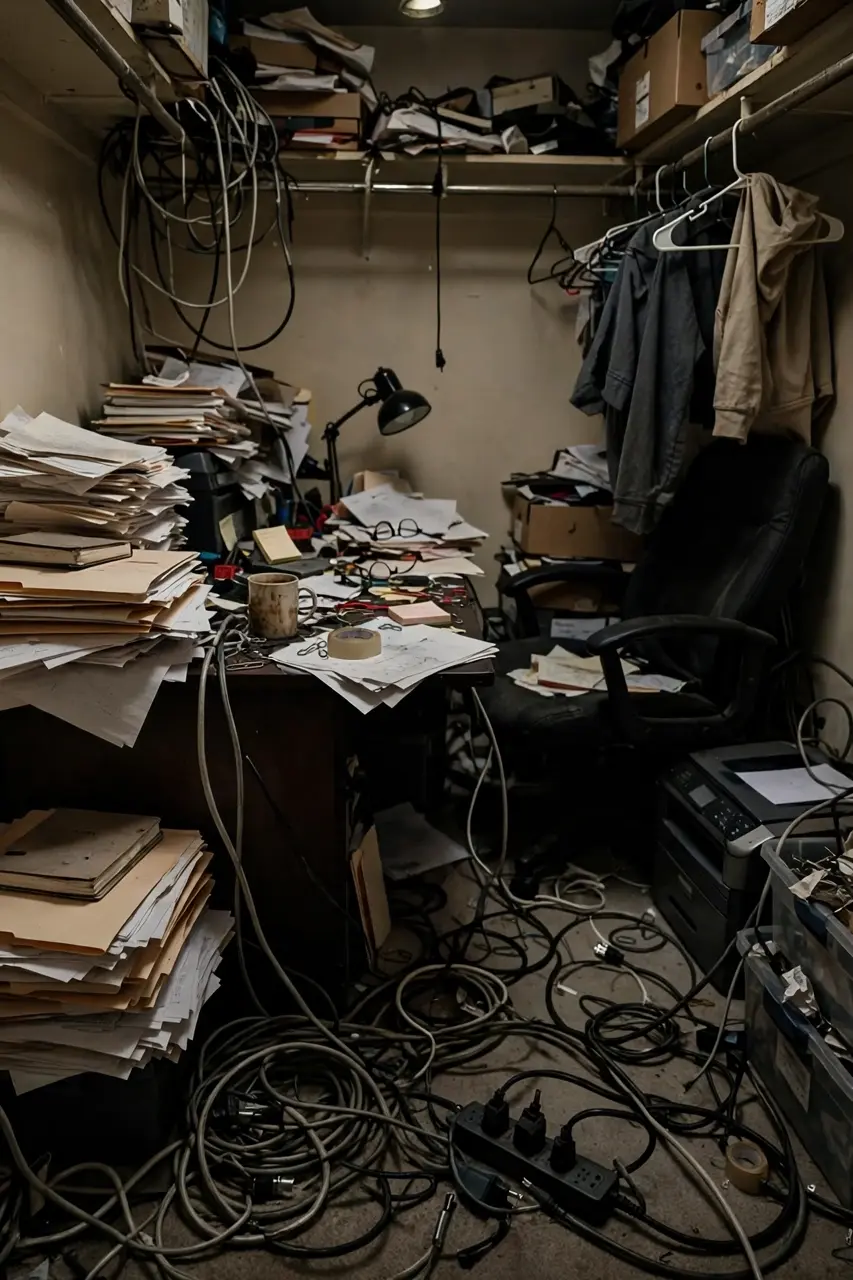
The most common mistake is skipping ventilation in the pursuit of a cozy, enclosed setup. A closed closet gets warm fast, especially with a computer running for hours each day. Leave the door open while you work, or add a small quiet fan to keep air circulating.
Another frequent error is choosing a chair that does not fit the shallow closet depth. Measure your legroom carefully before buying any seating for the space. A chair that jams against the back wall will make every workday uncomfortable, no matter how beautiful the desk itself looks.
Pro Tips for Productive Spaces
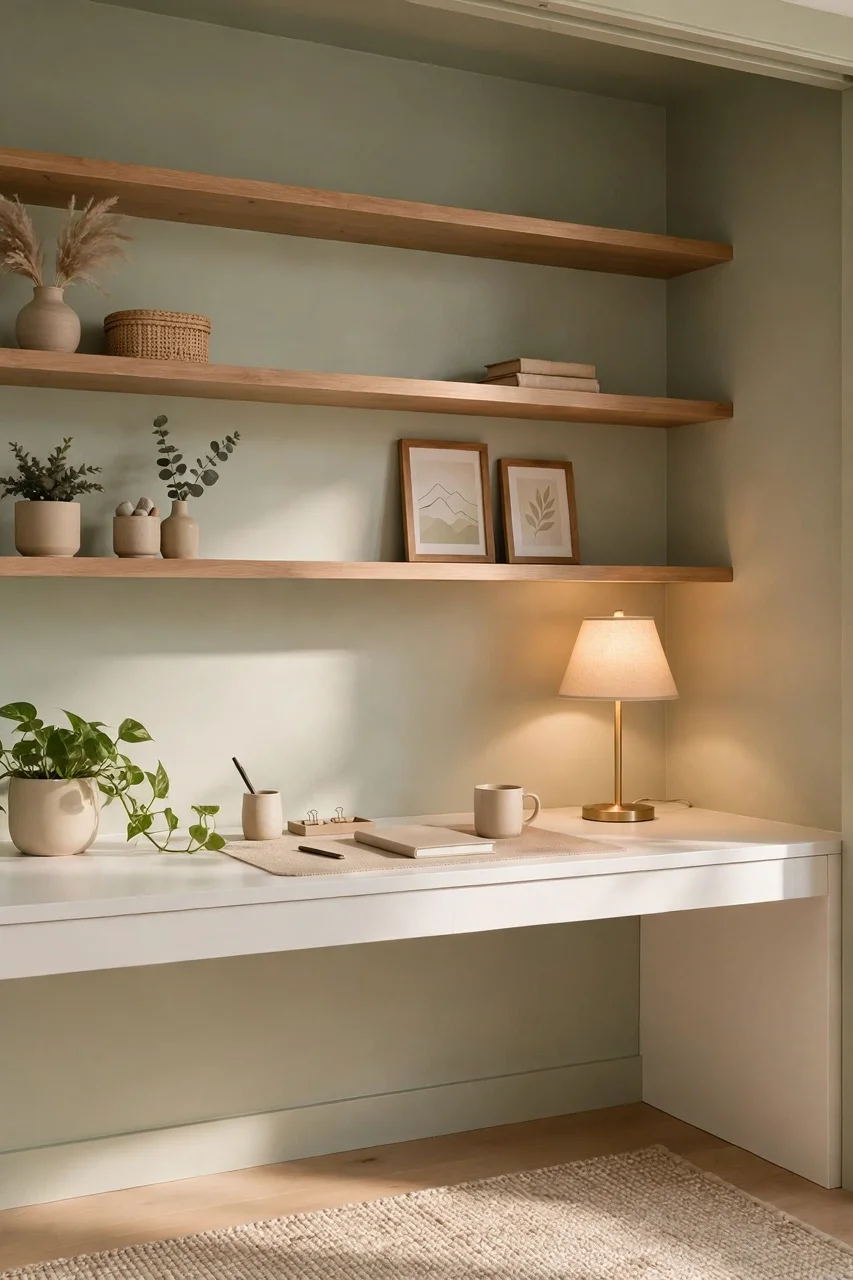
Small refinements separate a functional closet desk from a workspace you genuinely love using every single day. These final touches cost very little money but make a big difference in how the space feels and how well you can focus.
- Paint the interior a light, inspiring color. White or pale sage reflects light and makes the closet feel larger than it is.
- Add a small rug or mat under your chair. It defines the workspace and adds comfort for your feet.
- Keep a water bottle and notebook within reach. Staying hydrated and jotting ideas down keeps momentum going.
- Set a shutdown ritual. Close the laptop, tidy the desk, and shut the closet doors to signal the workday is done.
Conclusion
Turning an unused closet into a home office is one of the most satisfying small-space wins. You gain a dedicated spot to focus without sacrificing a whole room, and the doors give you a clean break when work ends. If you have been wondering how to create a home office in a closet, start this weekend by clearing yours out. I have seen how making this one change can completely shift daily productivity. Save this guide on Pinterest so you can follow each step, and share it with a friend who needs a workspace too.





One Comment