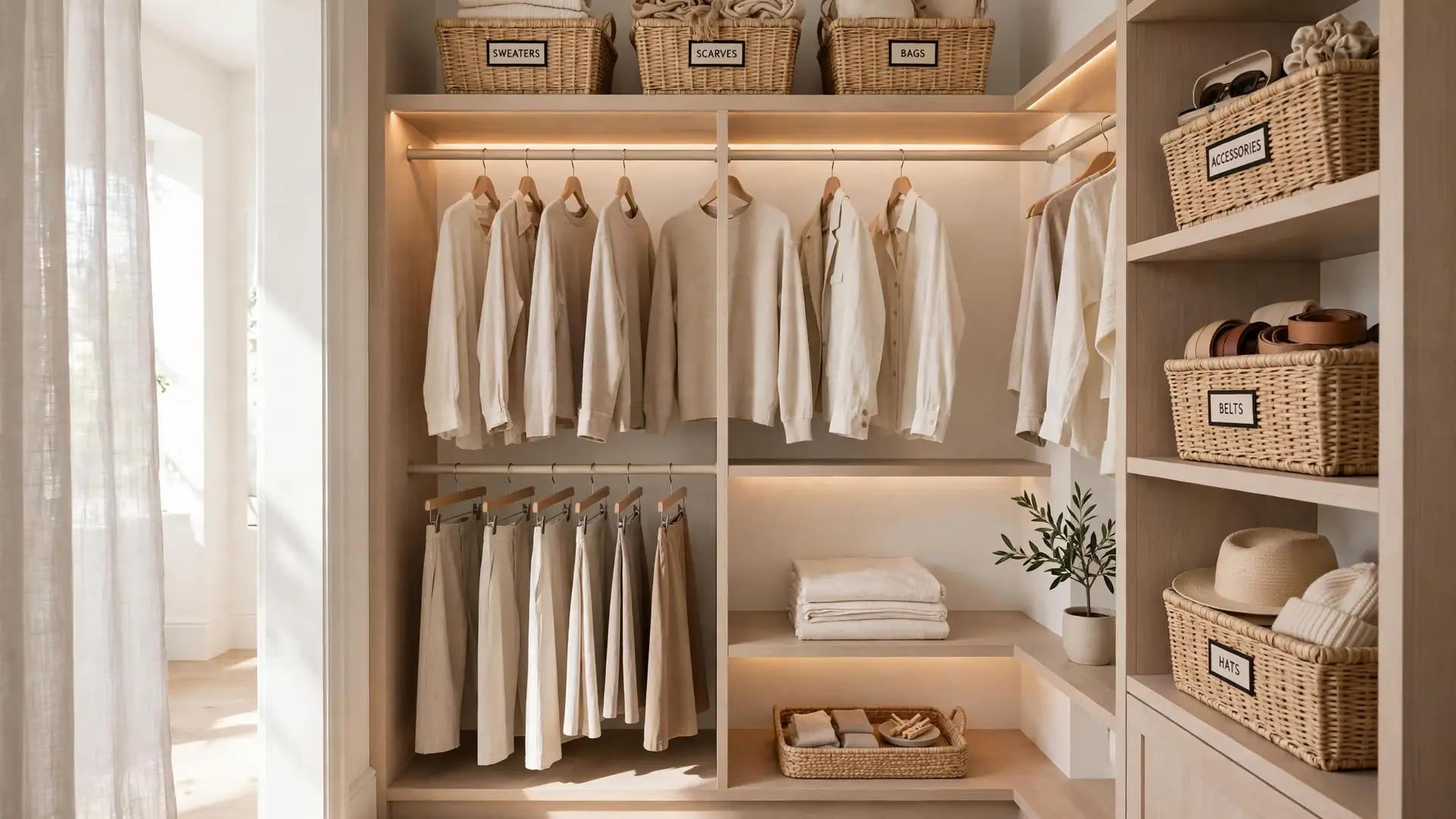
25 Small Walk In Closet Organization Ideas to Maximize Storage
A cramped closet wastes more time than you think, which is why smart small walk in closet organization ideas matter so much. I have seen tiny walk-ins hold a full wardrobe once every rod, shelf, and corner earns its keep. The trick is treating the closet like a small room, with clear zones for hanging, folding, shoes, and accessories instead of one crowded rail.
Below you will find 25 ideas that fit real closets, from double rods to labeled bins you can add in a single weekend. If you love smart bedroom storage, these bedroom dresser styling ideas with mirrors pair beautifully with a freshly organized closet. Pick the fixes that match your space, then layer them in one project at a time.
Double Rod Zone
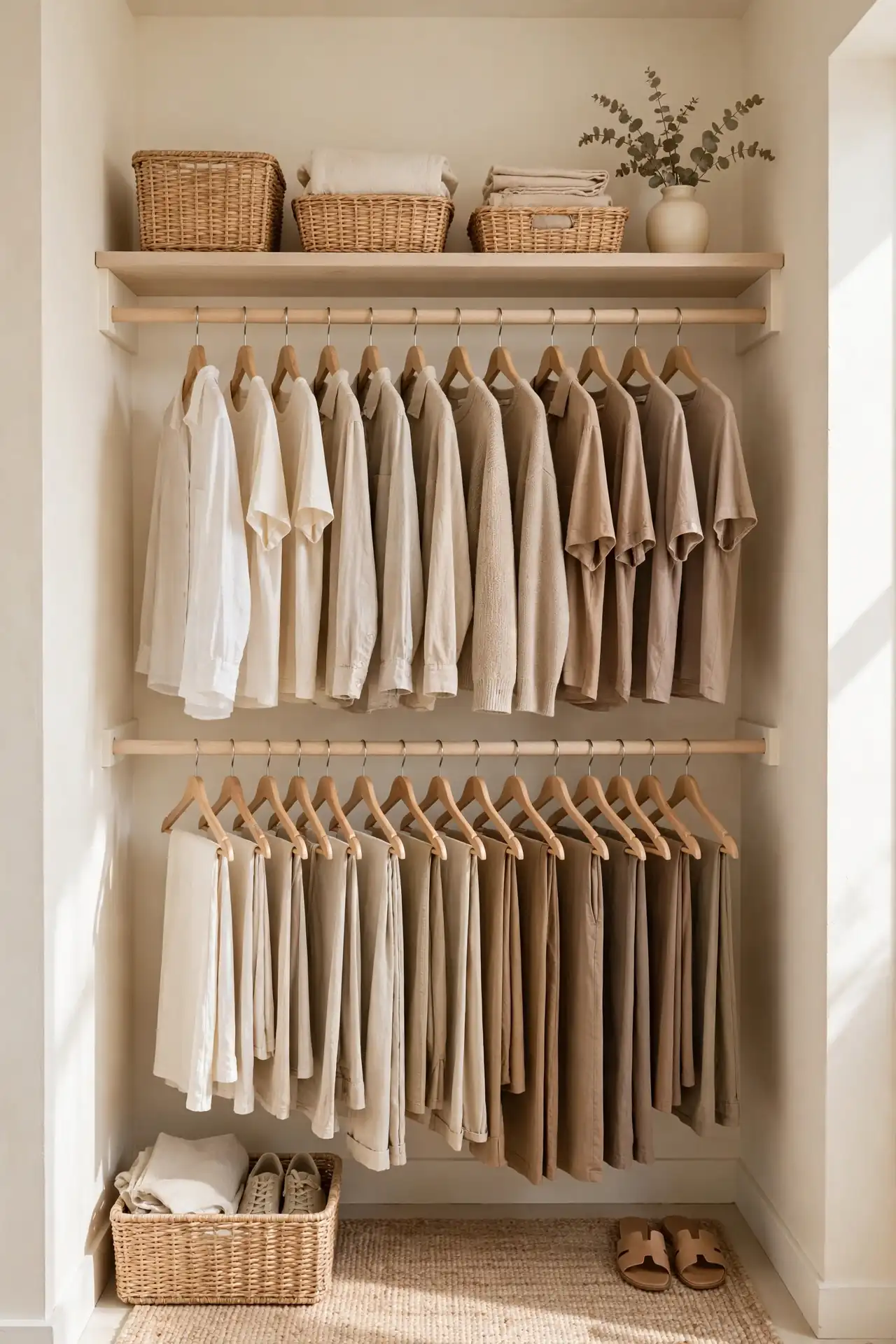
Most closets waste the air above and below short clothes like tees and folded denim. Mount a second rod near 84 inches for dresses and coats, then drop the original rod to about 42 inches for daily tops. Cut the lower rod shorter, leaving one open side for full-length dresses.
Hang your most-worn items on the lower rod so grabbing them feels natural each morning. Reserve the upper rod for occasion pieces and out-of-season layers, sliding each hanger flush so nothing overlaps. Add small S-hooks on the lower rod’s ends for tomorrow’s planned outfit, and the whole system runs itself.
Shelf Riser Stacks
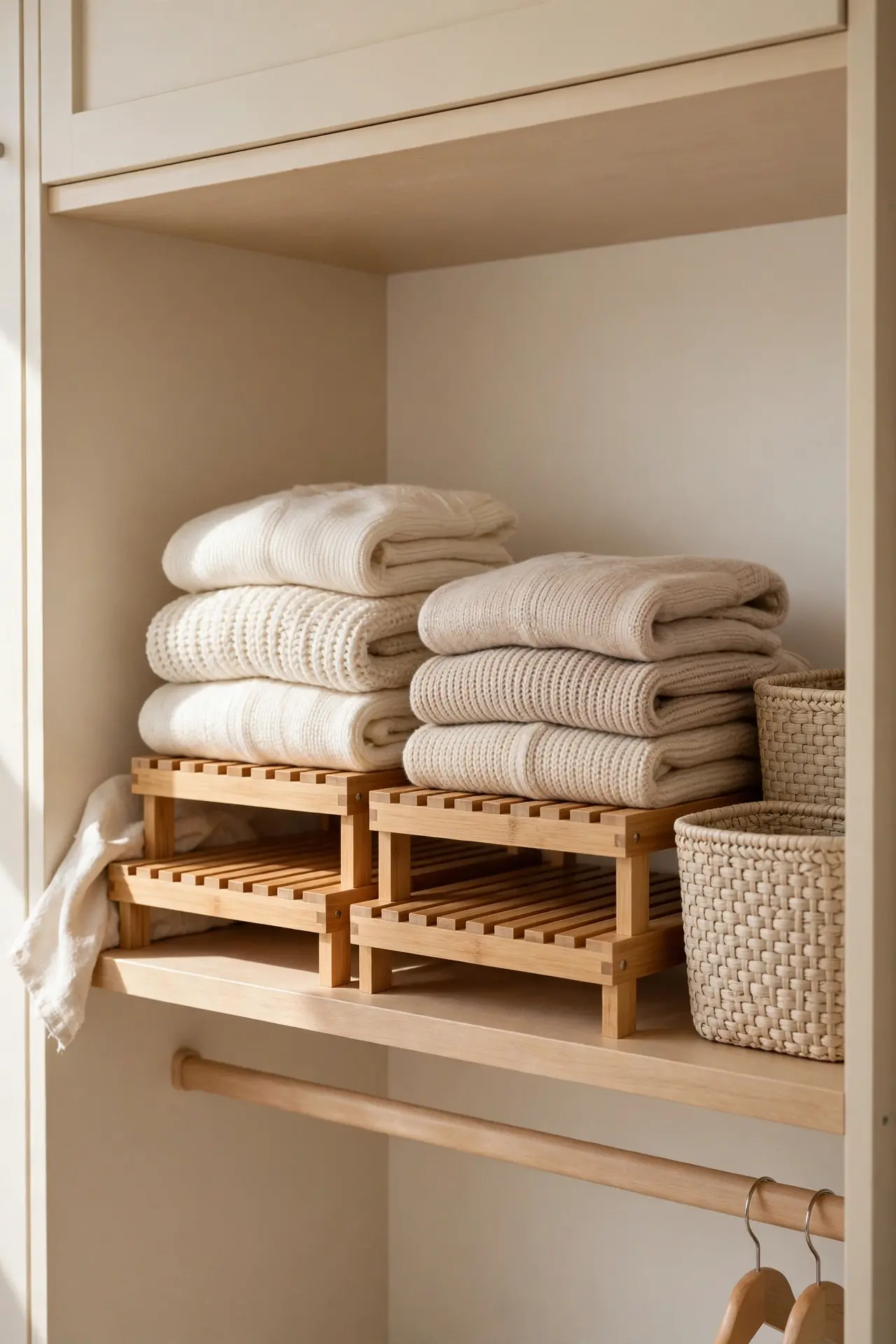
- Stack two wire risers per shelf to split tall piles of folded sweaters into visible layers.
- Push risers toward the back for weekly items and keep daily tees on the shelf’s front lip.
- Choose narrow risers on shallow shelves so the extra tier never topples past the edge.
- Cap each riser stack at about six inches, since taller piles lean and collapse when pulled.
- Tag the shelf edge with washi-tape notes like ‘knits’ so the system stays self-explanatory.
Risers turn one dead shelf into two working levels without any drilling or hardware. I’ve noticed folded stacks stay neater when each tier holds only one category, because mixed piles always drift into chaos within a week. Measure your shelf height first, then buy risers at least eight inches tall.
Velvet Hanger Row
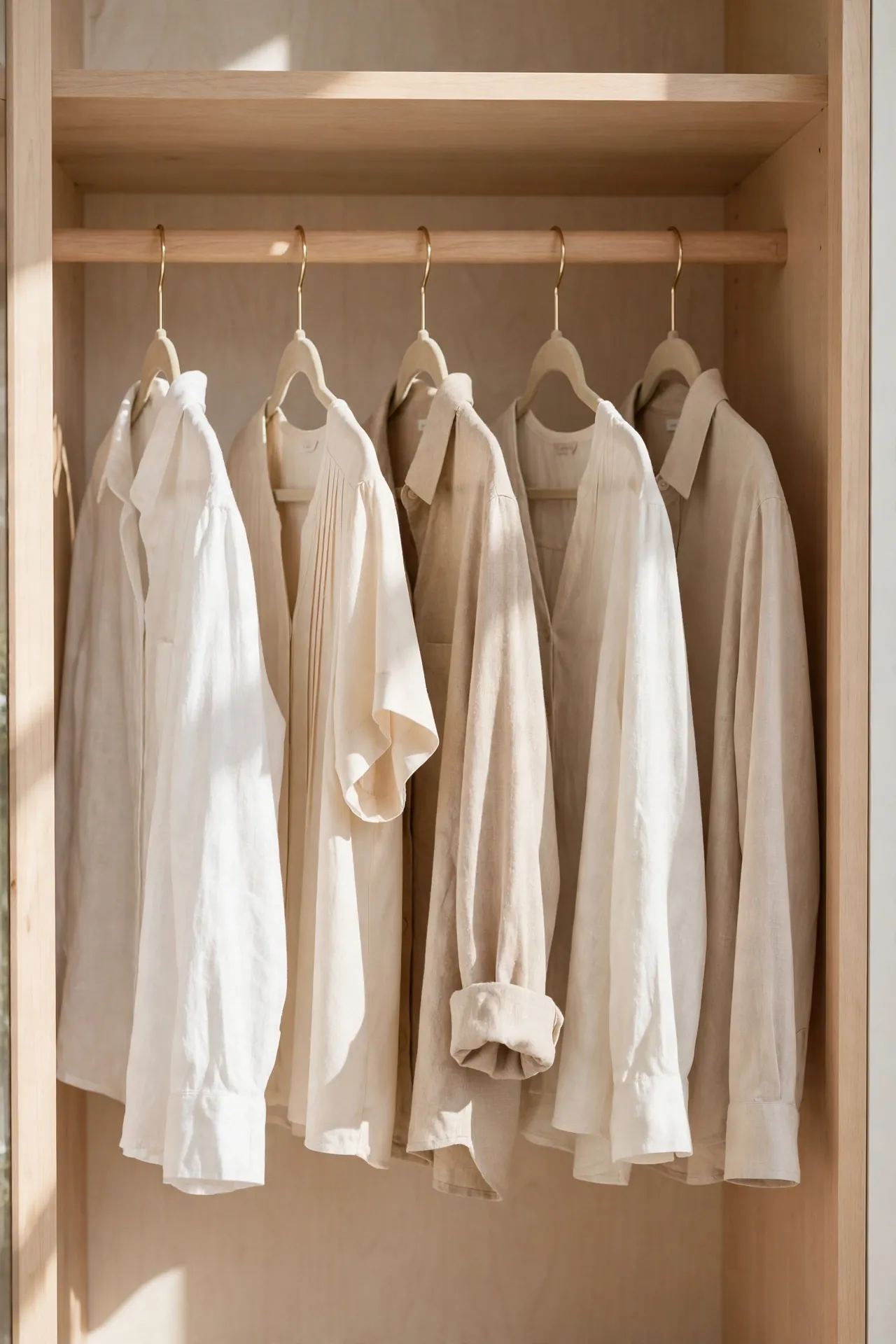
Quick Tip: Swap every plastic hanger for slim velvet ones in a single color, because matching hangers erase visual noise the moment you open the door. The textured surface grips fabric so shirts never slide into a tangled pile. The slim profile also frees several inches of rod space, which adds hanging room without any new hardware.
Keep the hooks all facing one direction so the row looks uniform and pieces glide without snagging. Move empty hangers to the rod’s far end right away, because stray hangers breed clutter faster than anything else in a closet. One color, one direction, zero slide.
Shoe Wall Grid
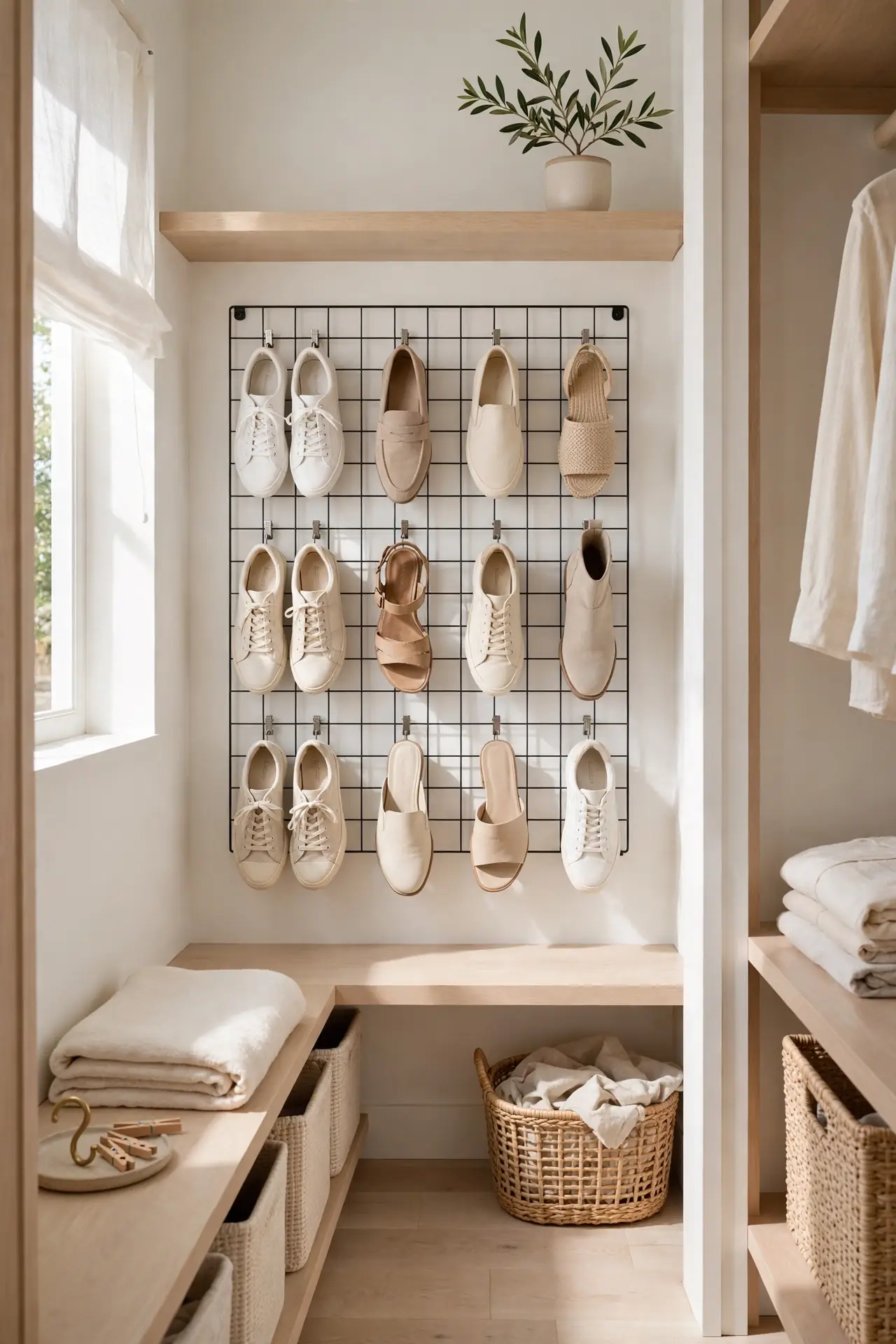
BEFORE: Shoes pile along the floor in a dusty drift, and finding the right pair means shoving through sneakers and boots every morning. Half the pairs migrate under hanging clothes, where they collect lint and disappear from memory.
AFTER: A clear over-the-door grid or wall-mounted rack puts every pair on display at eye level. Each shoe gets its own pocket or slot, so mornings become a quick scan instead of a floor search.
Mount the grid on the inside of the closet door to keep floor space clear for a laundry basket or step stool. Cap the grid at the pairs you actually wear each month, and store seasonal boots in labeled bins above. A shoe limit quietly forces the rest of the closet to stay edited too.
Basket Label System
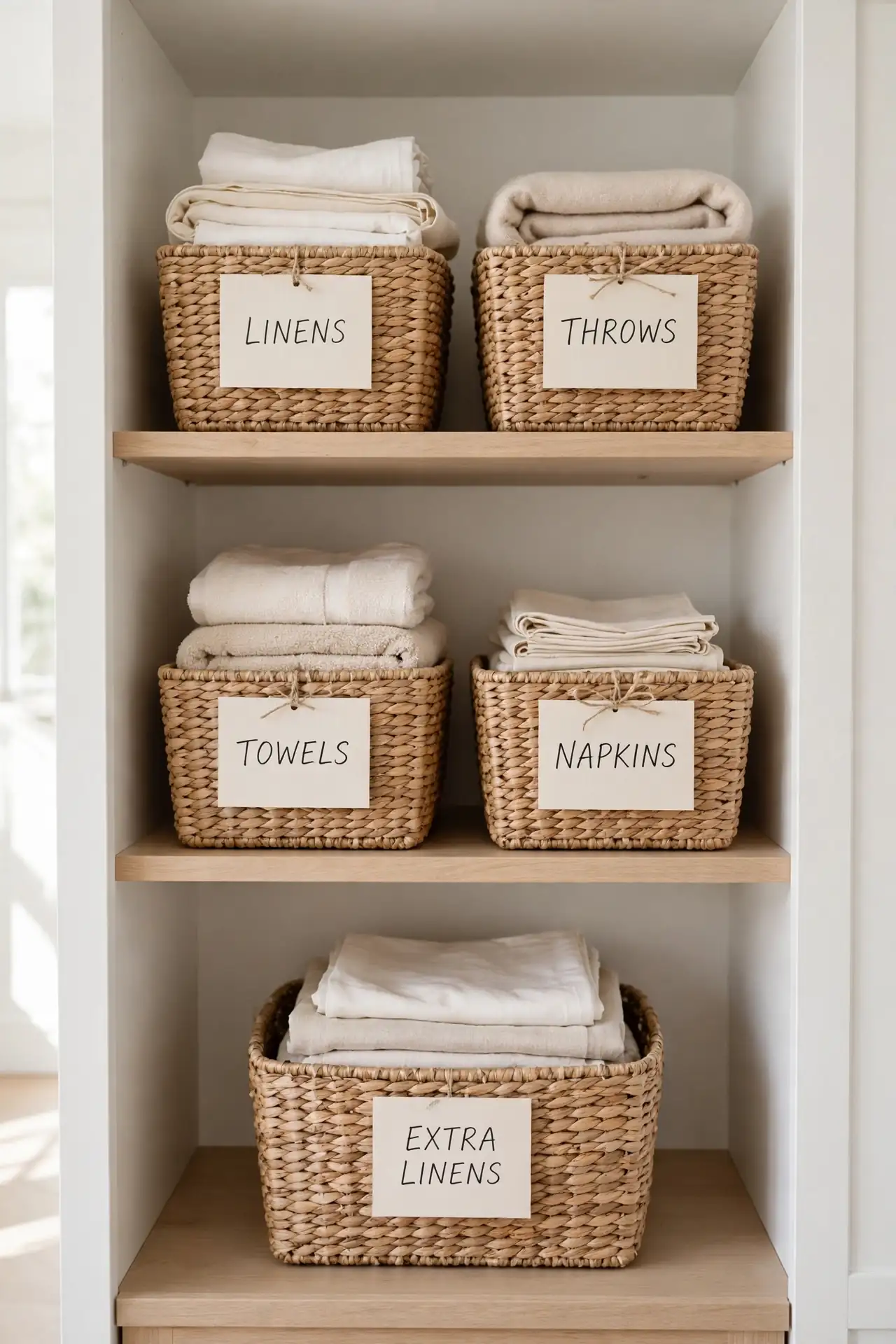
- Choose three to five matching baskets that fit your shelves snugly, leaving about an inch of clearance on each side.
- Assign each basket one category, like scarves, belts, socks, or swim, and resist the urge to create a miscellaneous bin.
- Clip a label to the front of every basket, since an unlabeled basket always becomes a junk drawer within weeks.
- Do a two-minute reset every Sunday, returning stray items to their labeled baskets before the week starts.
Matching baskets with clear labels turn open shelves into a filing system your hands can run on autopilot. Keep one basket empty as an intake zone for new purchases, and empty it into its proper category before it overflows. Labels are the lock that keeps the whole system honest.
Pull-Out Drawer Tower for small walk in closet organization ideas
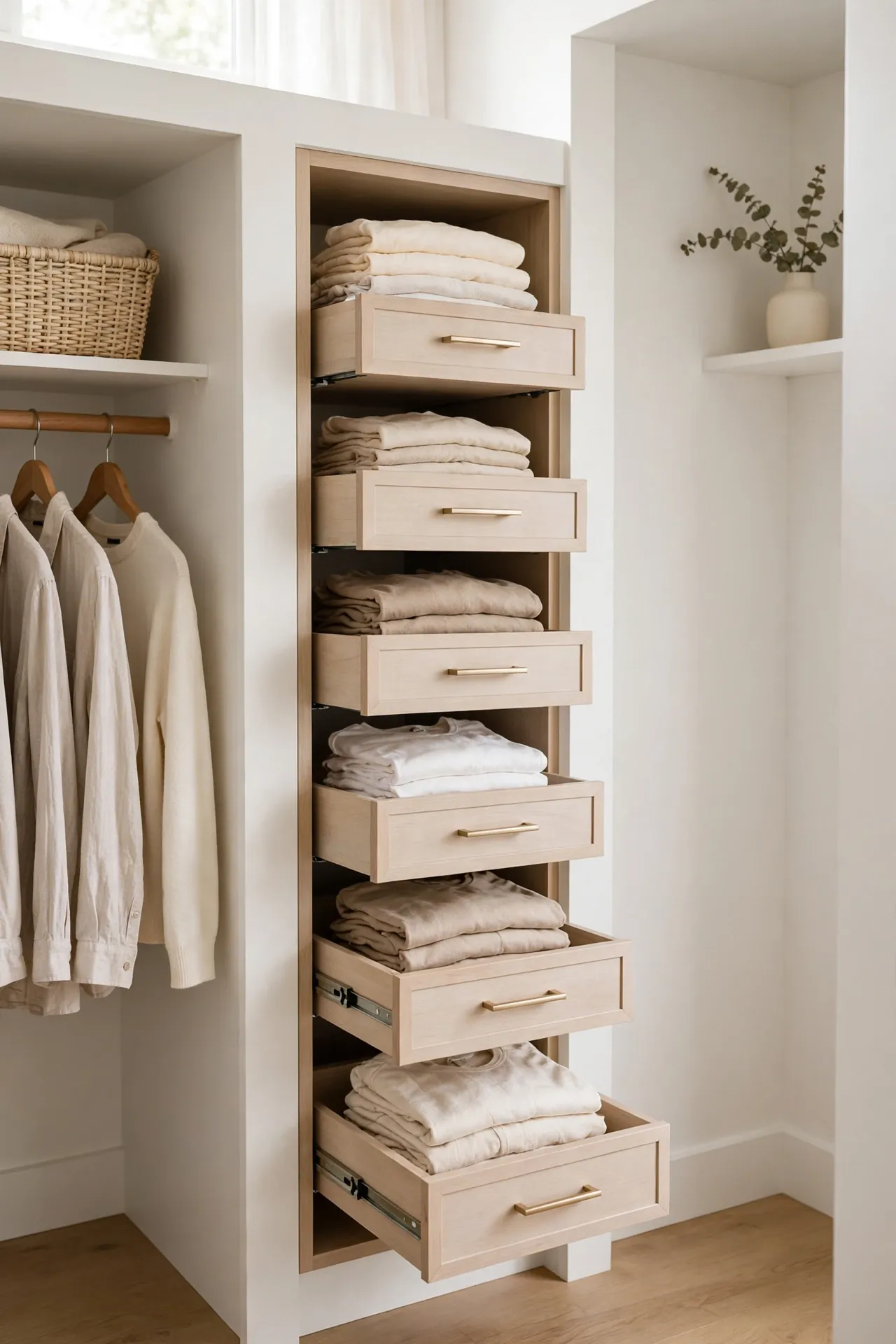
| Option | Access | Floor Space | Assembly |
|---|---|---|---|
| Pull-Out Tower | Full-extension drawers reveal every layer at once | 18 inches wide, tucks into dead wall space | $60 to $120, quick two-screw frame setup |
| Stacked Bins | Bottom bins stay buried until you lift the stack | Same footprint but wobbles as it grows | $20 to $40, none needed, just stack and go |
Most closets waste the narrow back wall, but a slim tower converts it into layered storage for tees, accessories, and undergarments. Slide each drawer out fully once a month and regroup anything drifting into the wrong slot. In my experience, ten quiet minutes of sorting keeps the whole tower searchable.
Corner Turntable Caddy
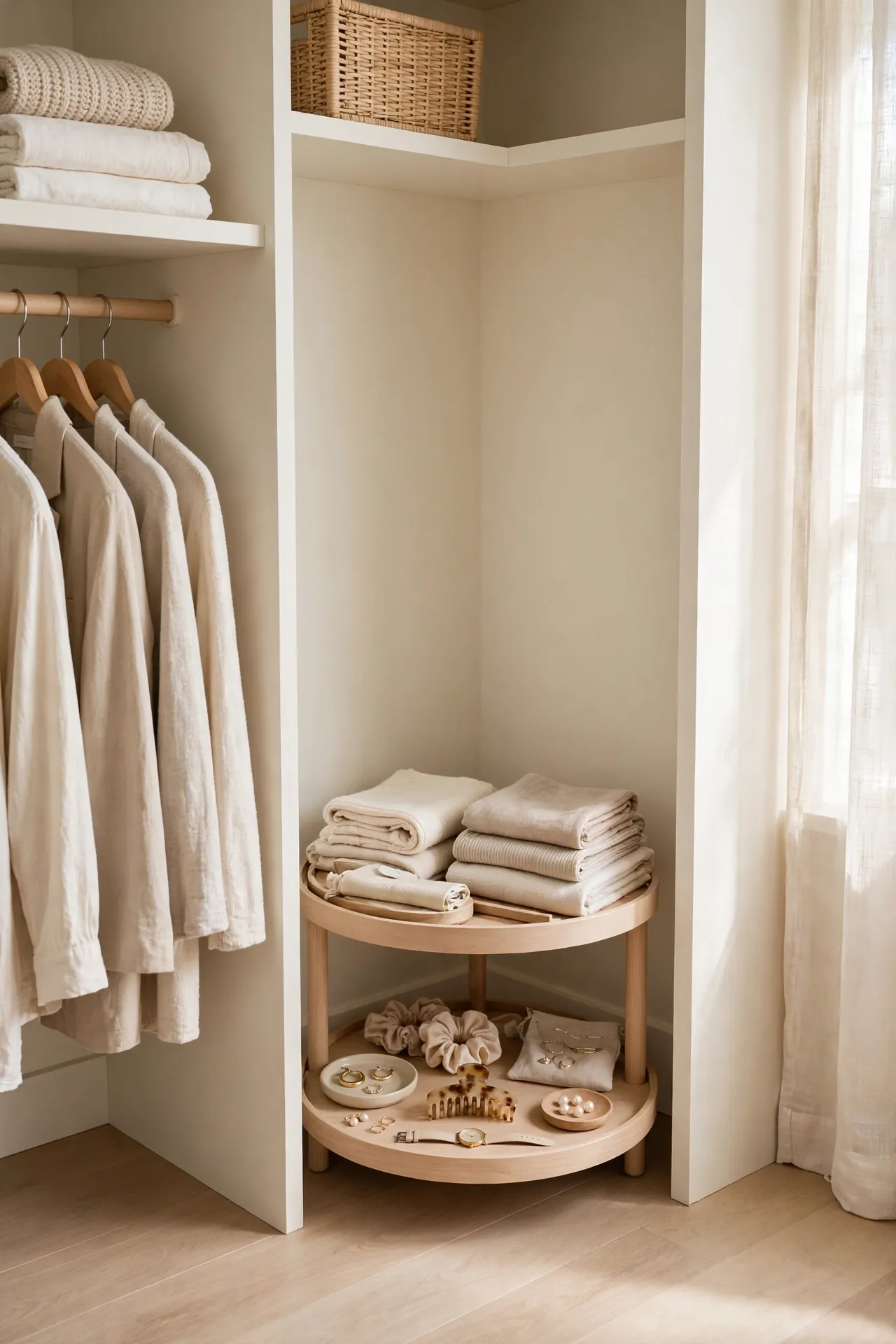
DO:
- Place the turntable in the dead corner and stack shoes, bags, or perfumes on its two tiers.
- Assign each person a wedge so morning routines stop colliding.
- Wipe it weekly since dust collects fast in corners.
DON’T:
- Never overload the top tier; heavy bottles make it spin unevenly.
- Keep it out of the walkway; the goal is reclaiming the corner, not blocking traffic.
- Never mix unrelated categories on one tray; each wedge needs one purpose.
Corners become junk zones faster than any other closet spot, yet a turntable turns them into the easiest section to browse. One spin surfaces everything hiding behind the door swing. A weekly wipe keeps dust from settling, and assigned wedges mean everyone finds their own things without hunting.
Over-Door Hook Rail
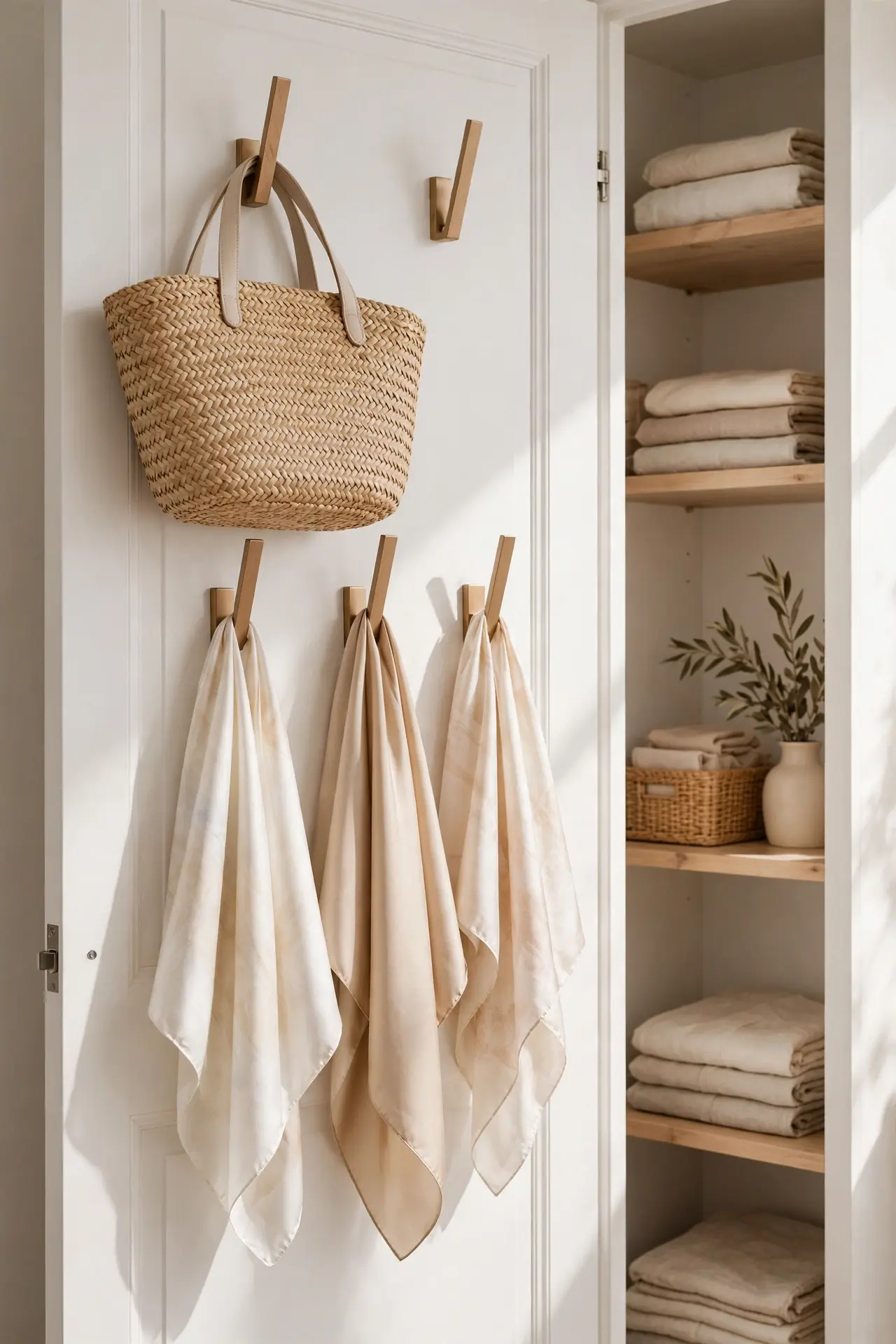
Cost: $15 to $25 for a five-hook rail with padded brackets that protect the door finish | Time: five minutes to hang, no tools needed | Skill Level: beginner, it hooks over the door top and comes off without a trace | Best For: renters and anyone short on wall space who wants tomorrow’s outfit staged tonight
The back of your closet door sits empty while shelves overflow, yet a simple rail there holds tomorrow’s outfit, the gym bag, and three belts in arm’s reach. Hang it low enough to see everything at a glance. The result is one calm surface that keeps clutter from spilling back onto the floor.
Light Strip Glow
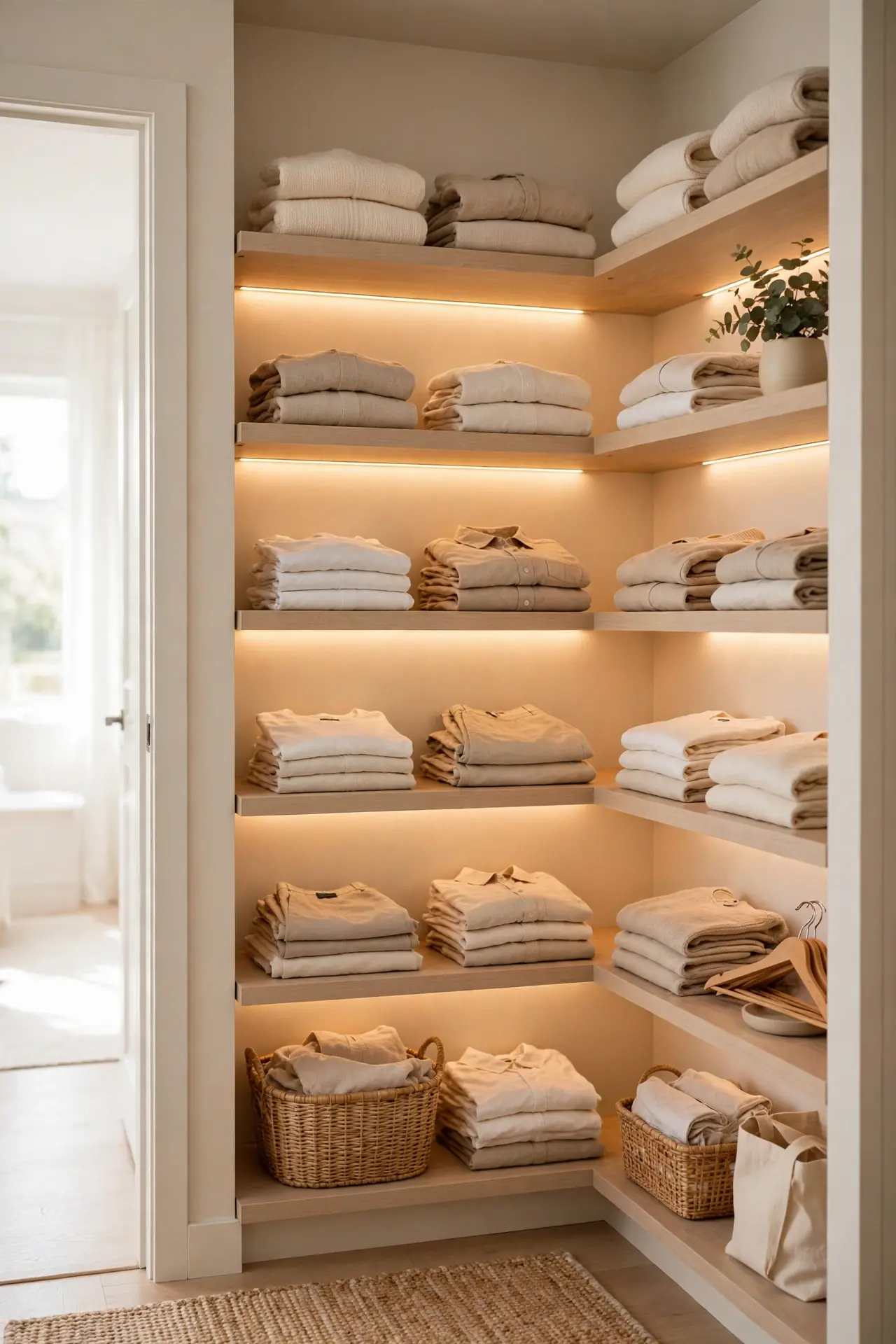
Closets swallow light faster than any room in the house, and dim corners become blind spots where clothes pile up unseen. A slim LED strip along the top shelf or door frame fixes that for a few dollars and one quiet Saturday morning. Motion sensors wake the strip when you enter and switch it off when the door closes behind you.
The soft glow reaches the dark ends of every rod and reveals pieces you forgot you owned, which is the simplest of all small walk in closet organization ideas. Fewer wrinkled surprises mean faster mornings and a calmer routine.
Fold File Sweaters
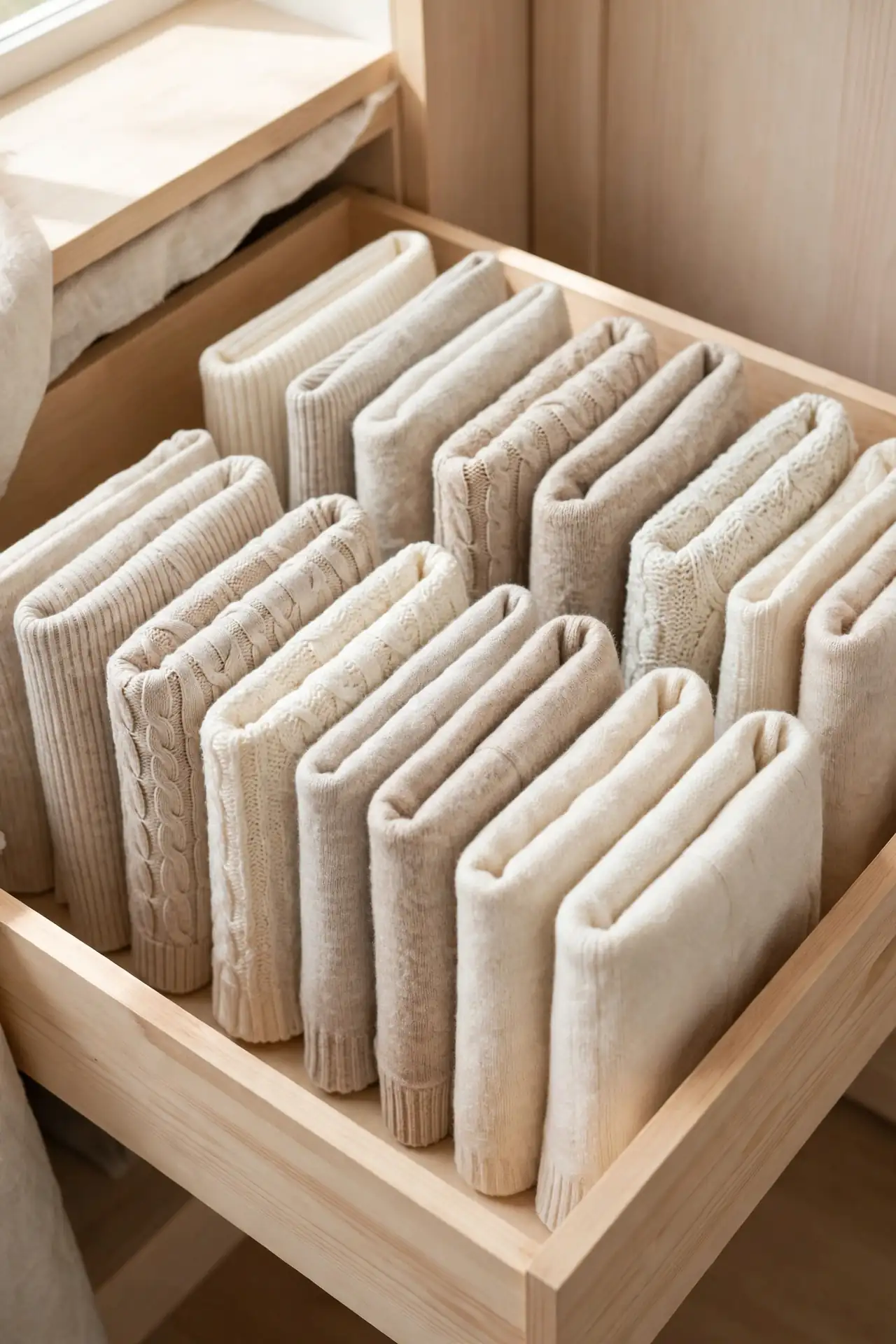
- Fold each sweater into a neat rectangle, then file them vertically so every spine faces up like books on a shelf.
- Sort by color or weight within each row so you grab the charcoal crewneck without disturbing the rest.
- Tuck tissue paper between folds to stop delicate knits from creasing.
- Leave a finger’s width of space between rows so the drawer still opens smoothly.
Flat stacking buries everything below the top fold, while filing puts every sweater on display at once. The method works in deep dresser drawers, closet bins, and even open cubbies with dividers. Re-fold anything slumping after a week, and the system practically maintains itself beautifully.
Bag Shelf Dividers
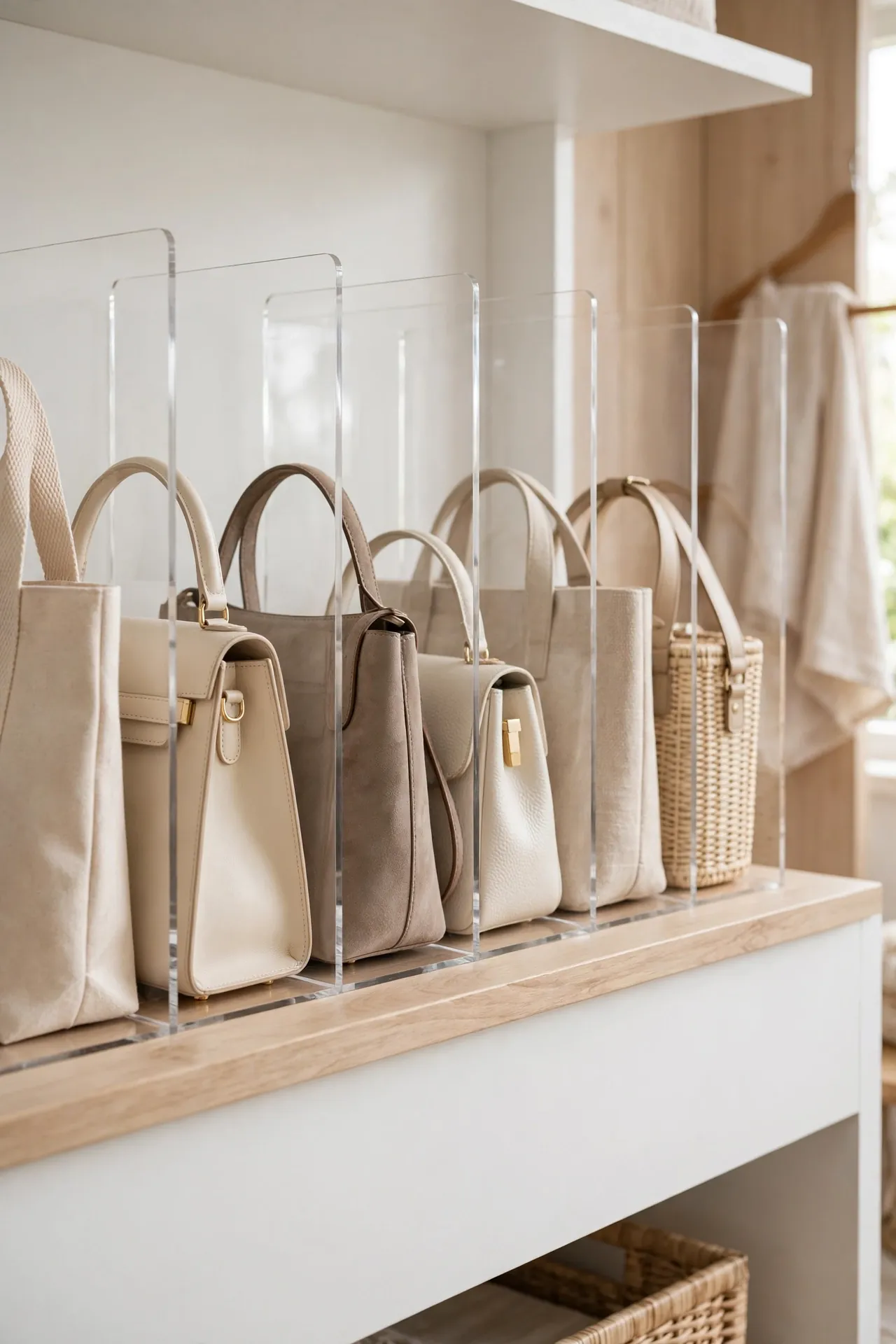
Quick Tip: Stop handbags from sliding into a shapeless pile by storing each bag upright in its own slot. Space clear dividers about eight inches apart across deep shelves so bags stay visible instead of flopping forward. Tuck tissue inside structured totes and soft clutches to hold their shape between wears.
In my experience, acrylic dividers work best because every bag stays visible without pulling out a stack. Line each slot’s front edge with a soft felt strip so leather handles never scuff. Giving every tote its own slot means grabbing the right one takes seconds instead of digging through piles.
Seasonal Swap Bins
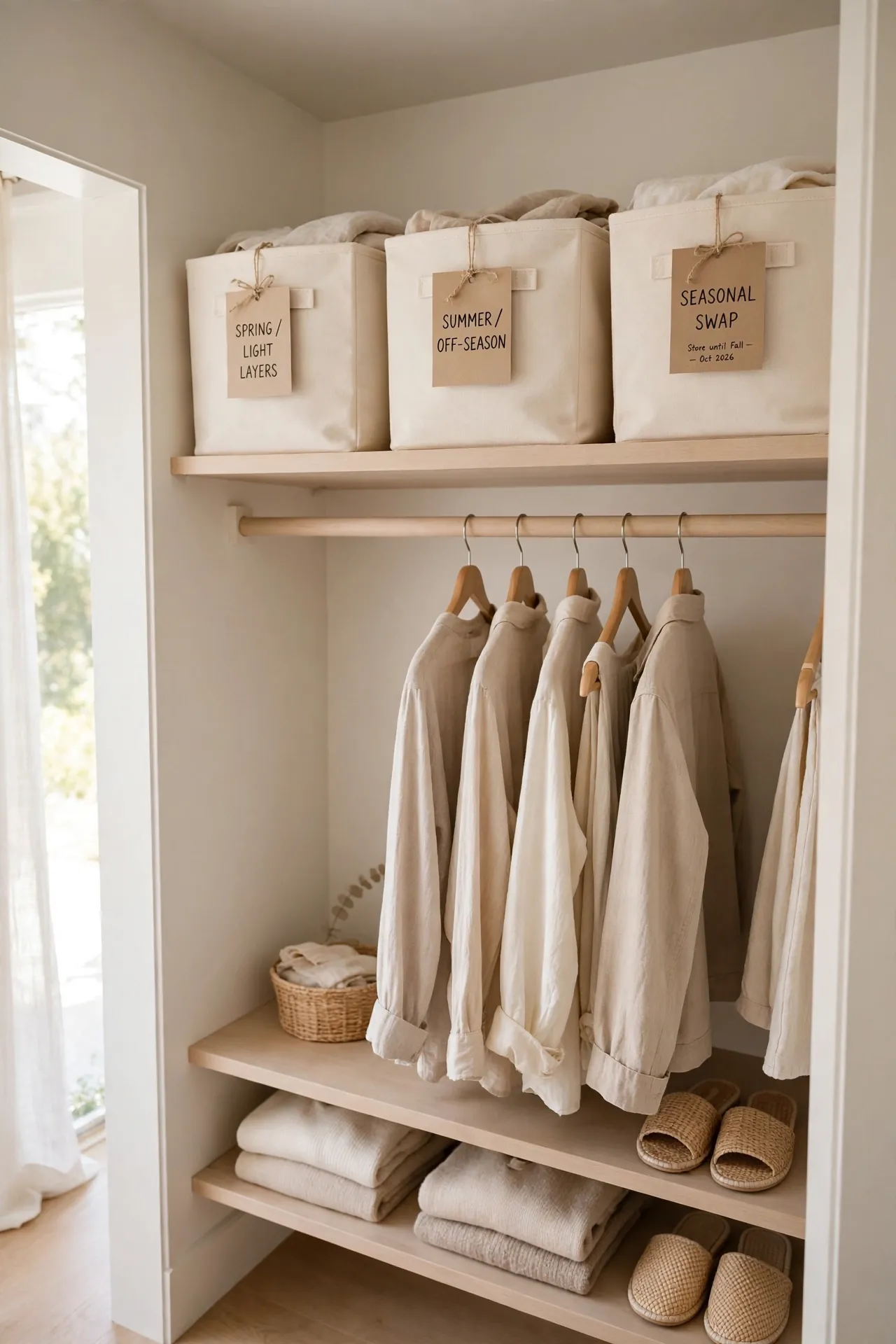
BEFORE: Heavy winter knits buried the back of every shelf while summer sandals crowded the floor, and finding one scarf meant moving five coats. Overflow folded towers leaned sideways whenever the closet door swung open.
AFTER: Now labeled bins hold off-season layers on the top shelf, and only current-weather pieces hang within reach. Swapping bins twice a year takes twenty minutes and keeps every outfit accessible without digging.
Choose clear bins so contents stay identifiable without opening lids, and snap on printed labels facing outward. Slide lighter bins to the highest shelf and keep heavier ones near hip level for safe lifting. When a season ends, sort out worn items before packing so next year’s swap starts with pieces worth wearing.
Slim Belt Rack for small walk in closet organization ideas
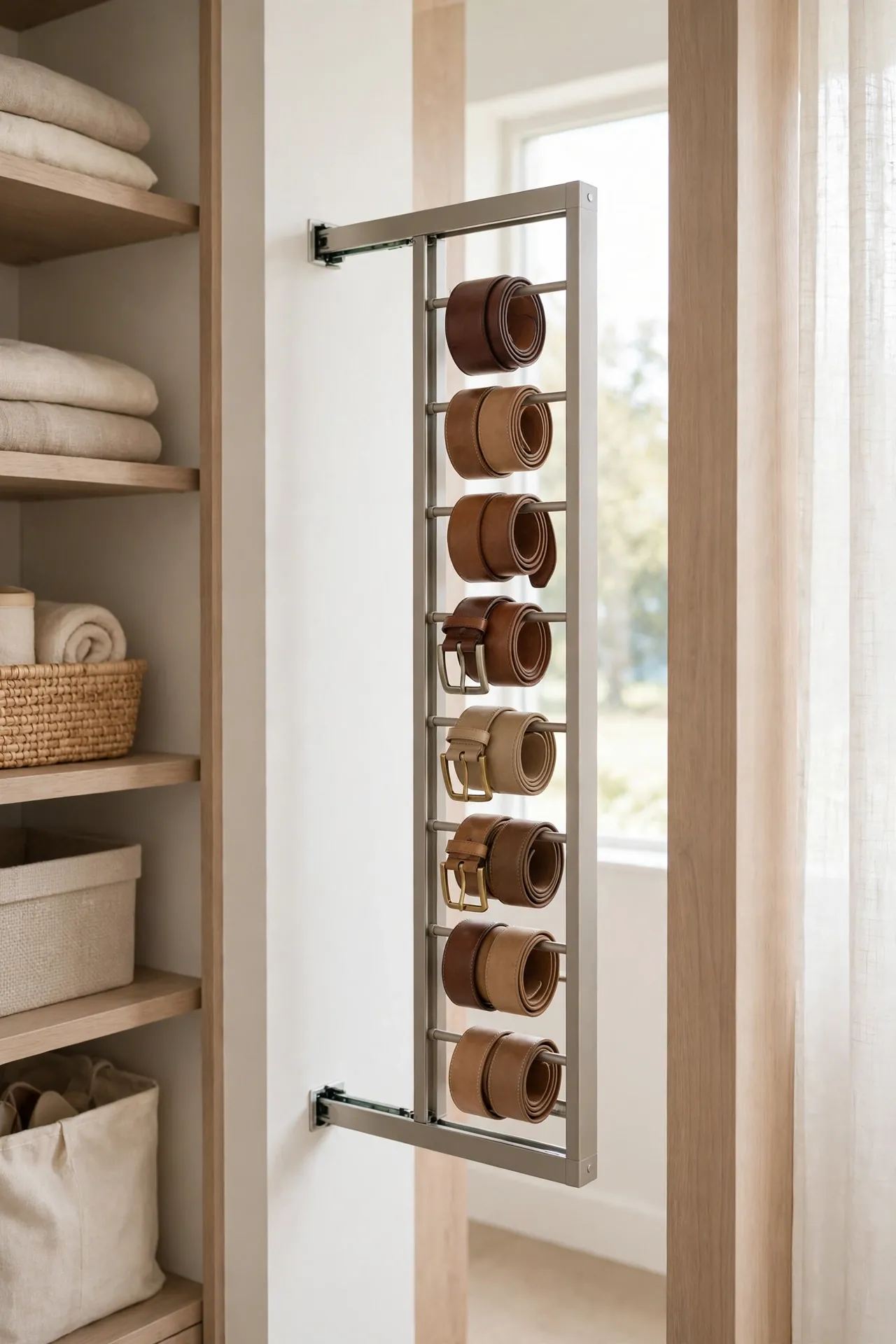
- Mount a slim belt rack inside the closet door with the two screws from the hardware kit.
- Roll each belt into a tight coil and hang it on its own hook so buckles never scratch the next belt.
- Sort belts by color from dark to light across the rack for quick morning picks.
- Place dress belts on upper hooks and casual belts below to prevent buckle tangles.
A dedicated rack frees up drawer space for folded tees and keeps leather belts from creasing where they used to coil inside drawers. In small walk in closet organization ideas, a door-mounted rack adds storage without stealing a single inch of hanging space. Your belts stay visible, crease-free, and ready to grab each morning.
Mirror Back Panel
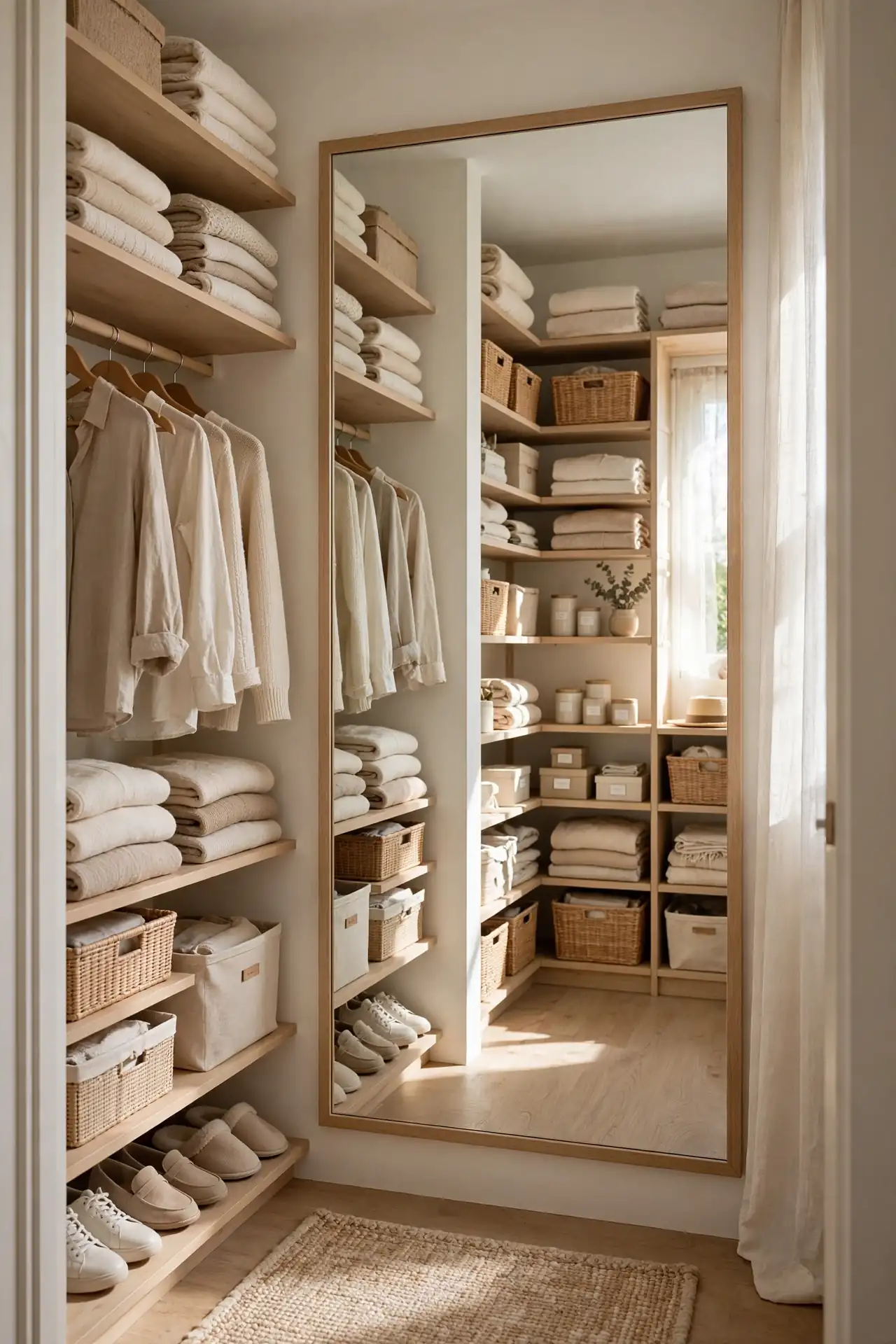
| Feature | Mirrored back | Matte painted back |
|---|---|---|
| Light bounce | Doubles lamp glow across shelves | Absorbs light, shelves look dimmer |
| Depth feel | Mirrors shelves, room feels twice as deep | Shows true size, walls feel closer |
| Cost | Budget tiles run under twenty dollars | A quart of paint costs even less |
| Upkeep | Wipe weekly with glass spray | Dust lightly, touch up paint yearly |
Mount self-adhesive mirror tiles behind the main hanging rod so lamplight bounces back into every corner. Reflections also let you check hems and backs without turning around. For the same brightening trick in a sleeping space, see these bedroom ideas with floating nightstands built around airy, light-catching storage.
Drawer Divider Trays
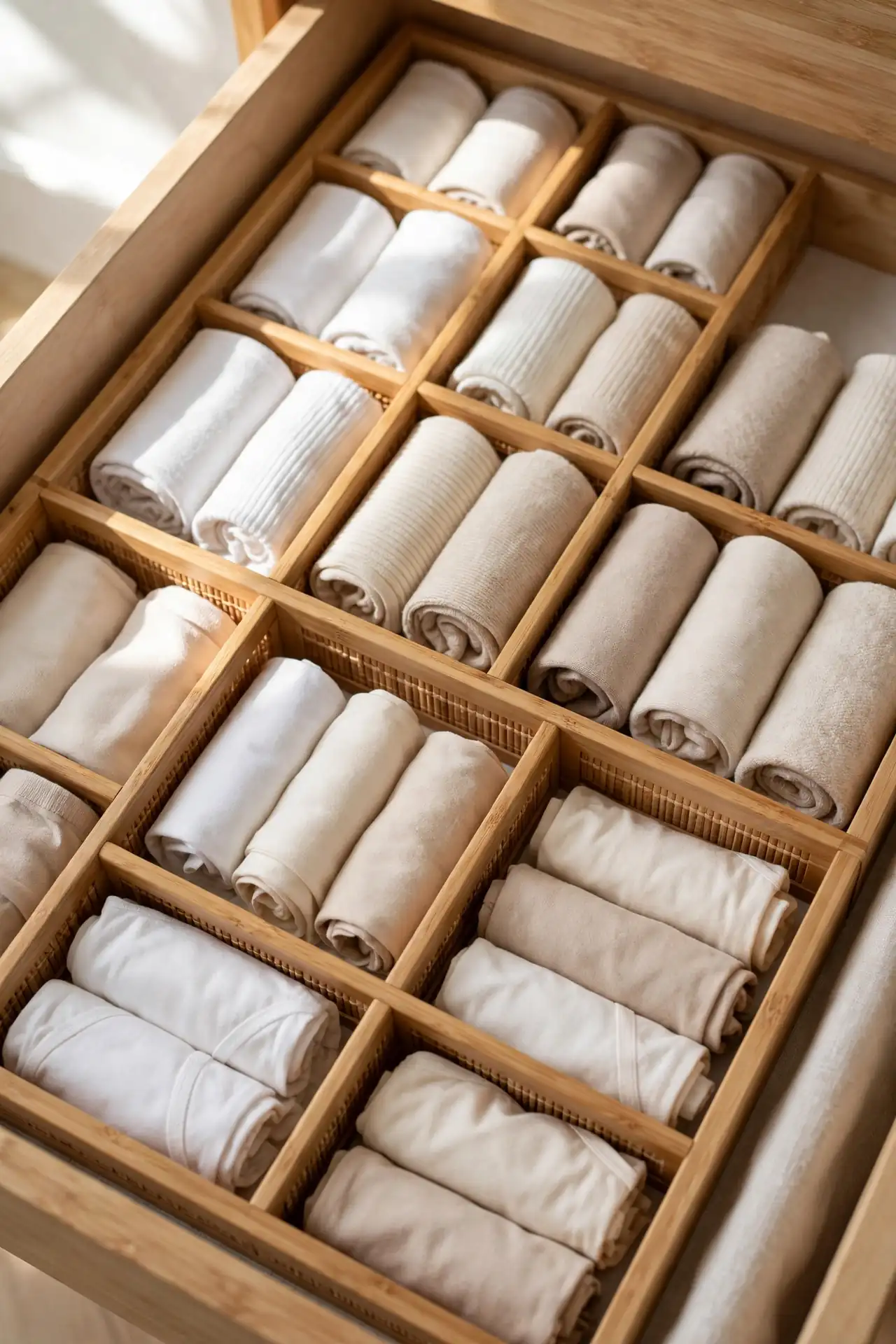
DO:
- Measure drawer interiors before buying so trays fit edge to edge.
- Group similar items together, like socks in one row and tees in another.
- Pick expandable bamboo trays that adjust as drawer contents change.
DON’T:
- Overfill each compartment or the dividers will buckle and collapse.
- Mix clean and worn items in the same drawer section.
- Stack heavy denim above light trays that were built for small goods.
Swap one deep drawer for shallow trays and suddenly socks, belts, and ties each get a visible home instead of a tangled heap. Pull a tray out like a small drawer to reach the back without emptying everything. Sorted compartments turn rushed mornings into quick, grab-and-go dressing.
Hanging Cubby Columns
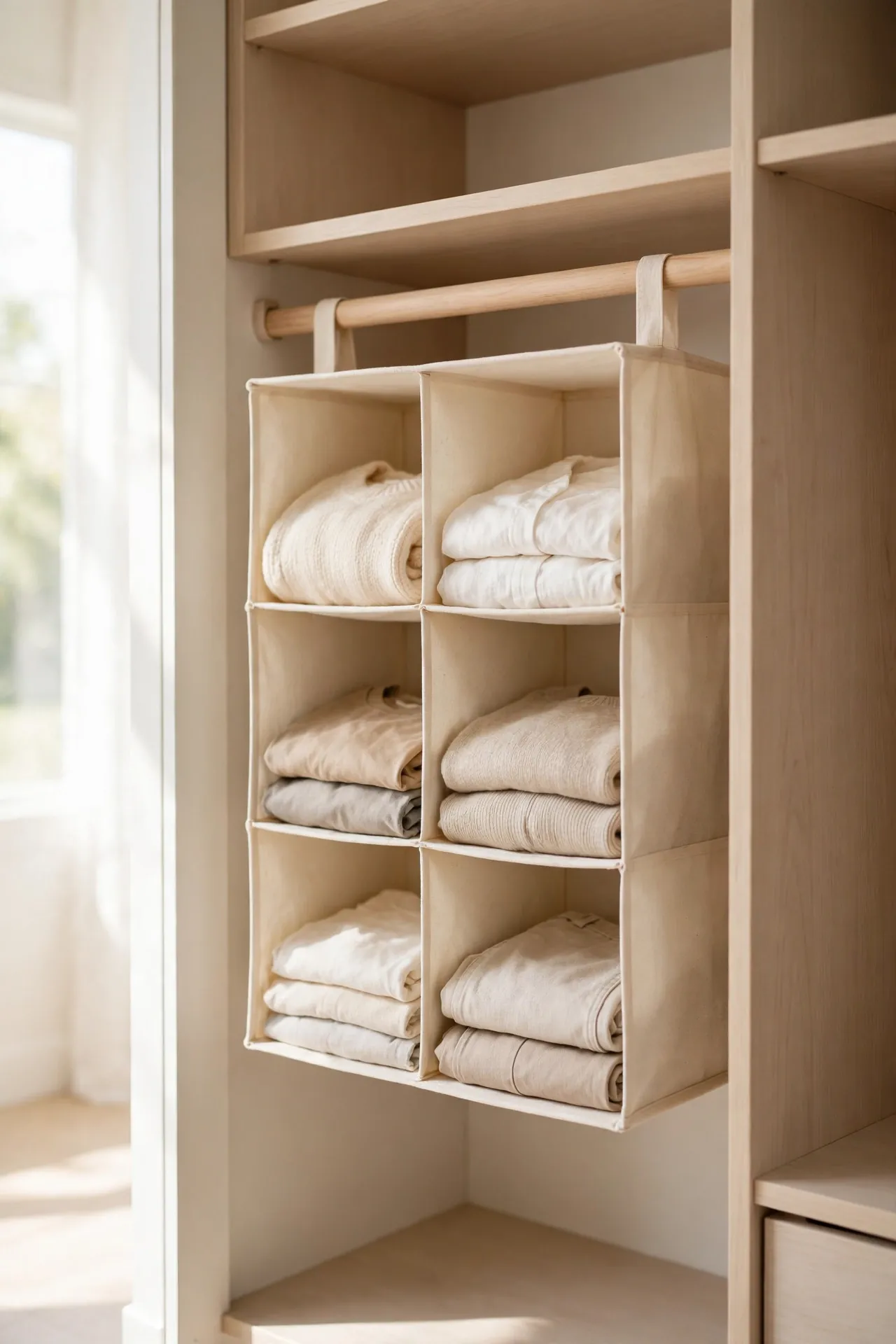
Cost: Under $35 for a canvas hanging organizer with six deep cubby compartments included | Time: 10 minutes to hang it on the rod and sort folded items into slots | Skill Level: Beginner; no tools needed beyond a sturdy existing closet rod | Best For: Deep narrow closets where folded clothes and bags pile up unused
Dead space hides between your hanging clothes. Slide a six-cubby fabric column onto the rod and give each square a job: tees, tanks, clutches, scarves, swimwear, belts. Fold pieces snugly so nothing tips. In my experience, labeled cubbies stay sorted for weeks. Hook the bottom to a shelf so it hangs straight.
Stackable Boot Boxes
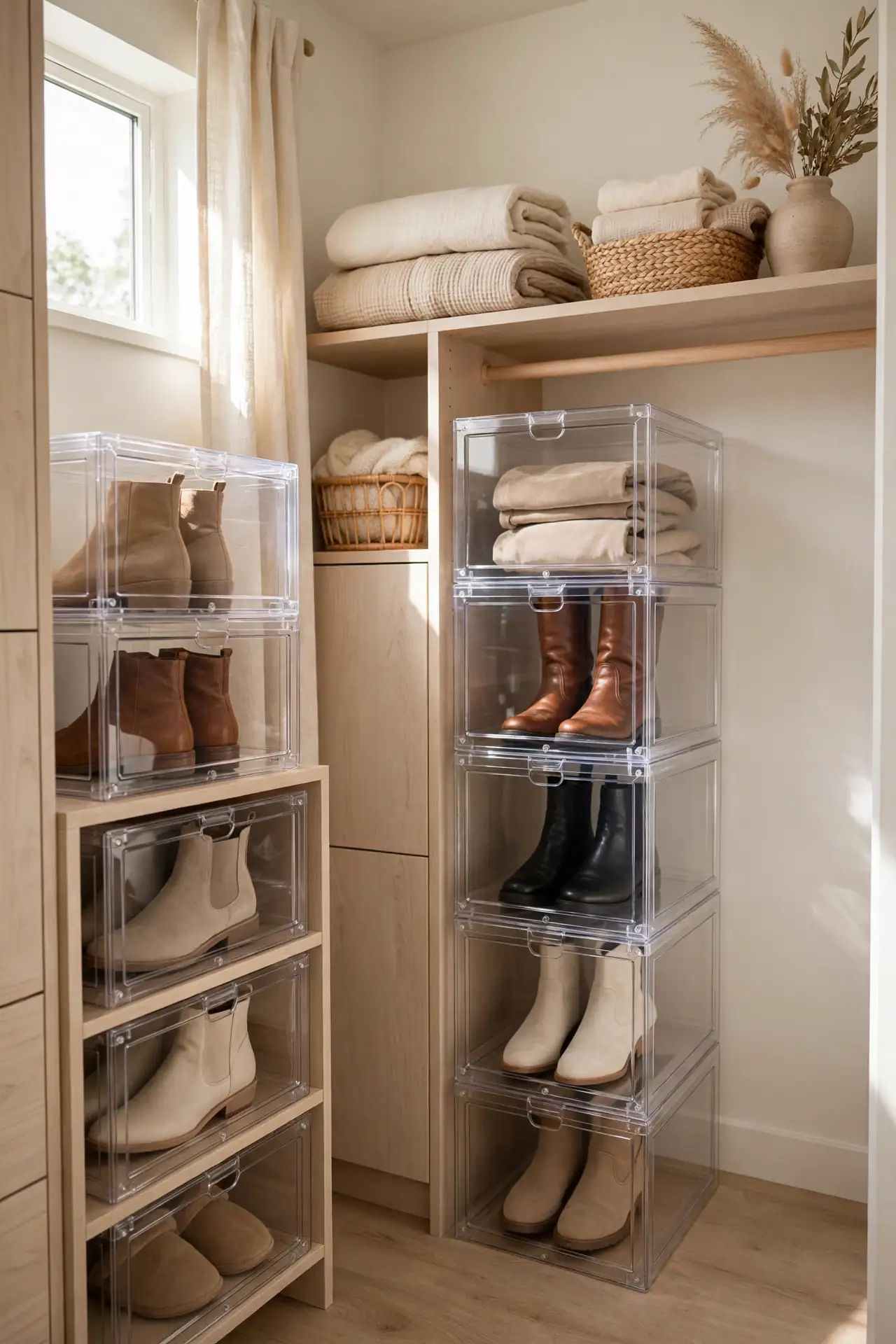
Tall boots slump sideways and swallow the whole floor of a closet. Stackable clear boxes built for boots turn that chaos into a neat vertical tower. Each box holds one pair upright, so shafts never crease and buckles never snag. Choose boxes with front drop doors for grab-and-go mornings. Label the ends by color or occasion, then line the towers along the least-used wall.
Measure boot height before buying, since taller shafts need extra clearance. Leave a finger width of air at the top so leather never presses against the lid. I have found that wiping boots before boxing keeps the clear fronts spotless longer.
Jewelry Drawer Insert
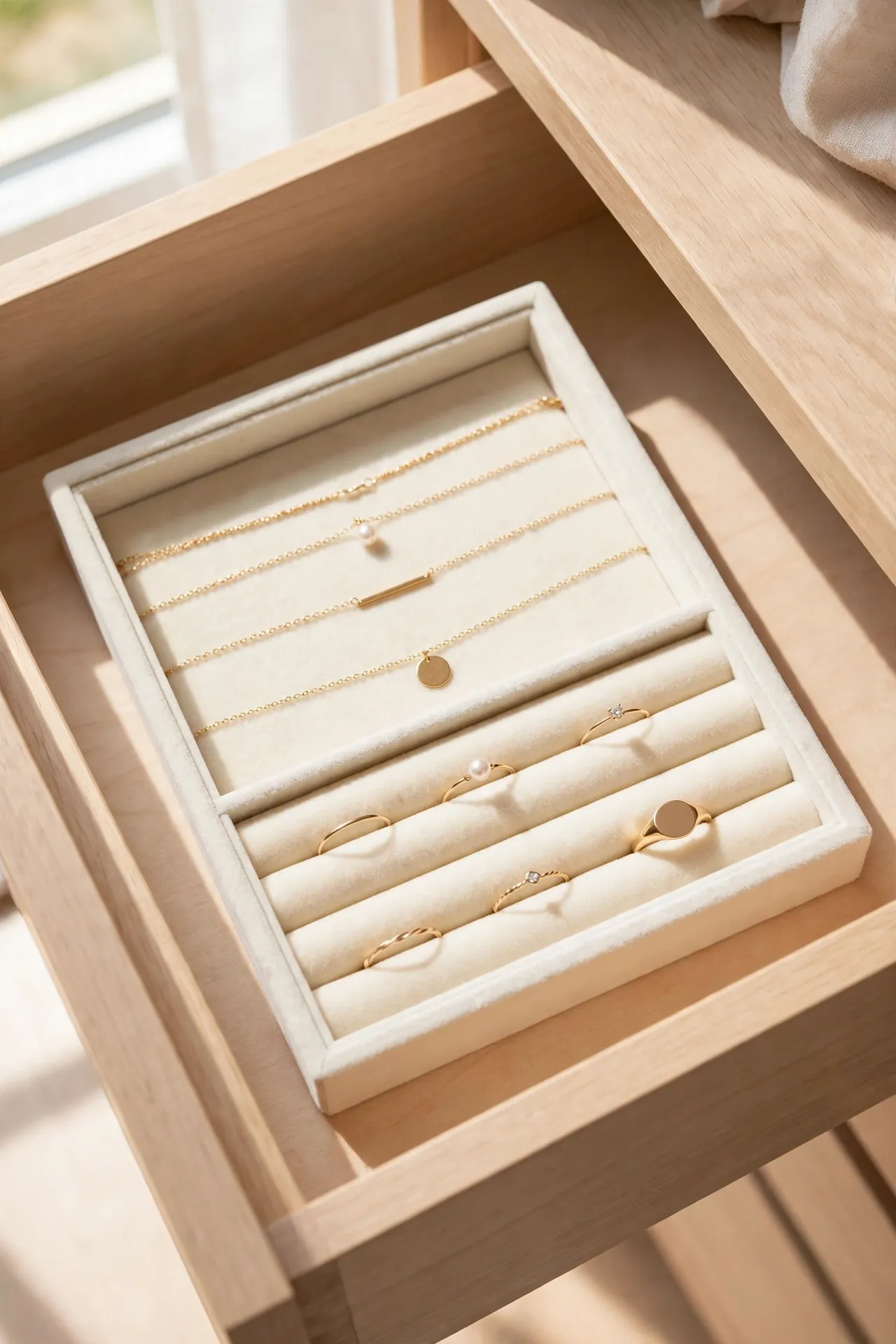
- Measure the drawer first; a snug tray stays put while a loose one slides.
- Give rings a velvet roll, necklaces a hooked row, earrings a shallow grid.
- Line compartments with anti-tarnish cloth to keep silver bright without polishing.
- Keep everyday pieces up top and occasion jewels below for faster mornings.
- Empty the tray monthly and return stray pieces so clutter never rebuilds.
A jewelry tray turns a junk drawer into a tiny boutique display. Many small walk in closet organization ideas fail here because tangled chains and loose rings create frustration. Lift the insert for cleaning, wipe the velvet, and check clasps as you reset each piece. The habit takes minutes and protects pieces you wear.
Open Shelf Edits
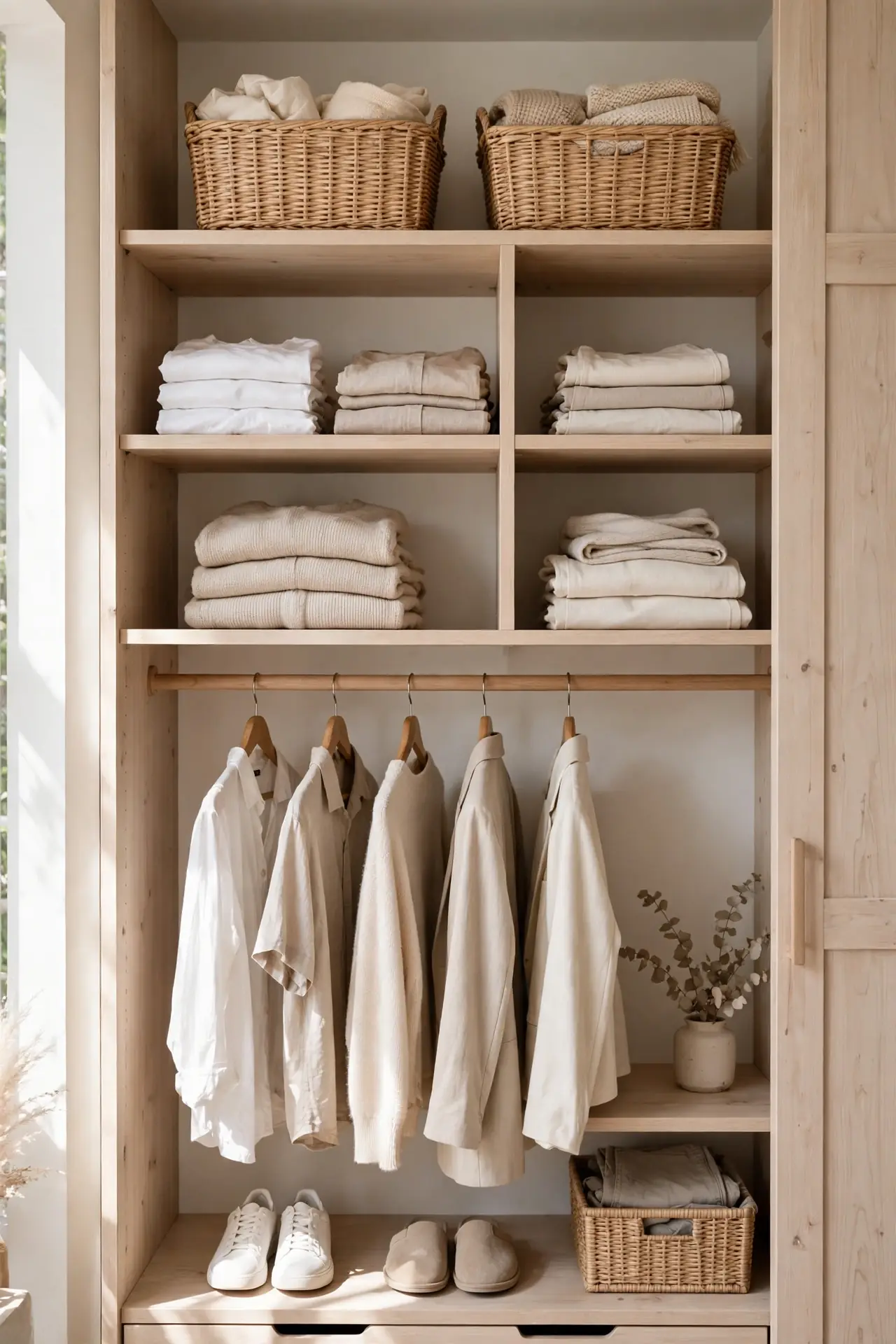
Quick Tip: Pull everything off one shelf at a time instead of emptying the entire closet at once. Edit each item with a simple rule: keep what you wore last season, store what still fits your life, and donate the rest. Refold keepers into tight neat rectangles before they go back.
Open shelves invite clutter because every item stays visible. Group keepers by type and color so the shelf reads like a display. Fold knits into matching rectangles, stacked two deep and never higher. Keep daily pieces at eye level, seasonal items up top. Step back often; spacing matters more than perfect folds.
Clear Front Boxes
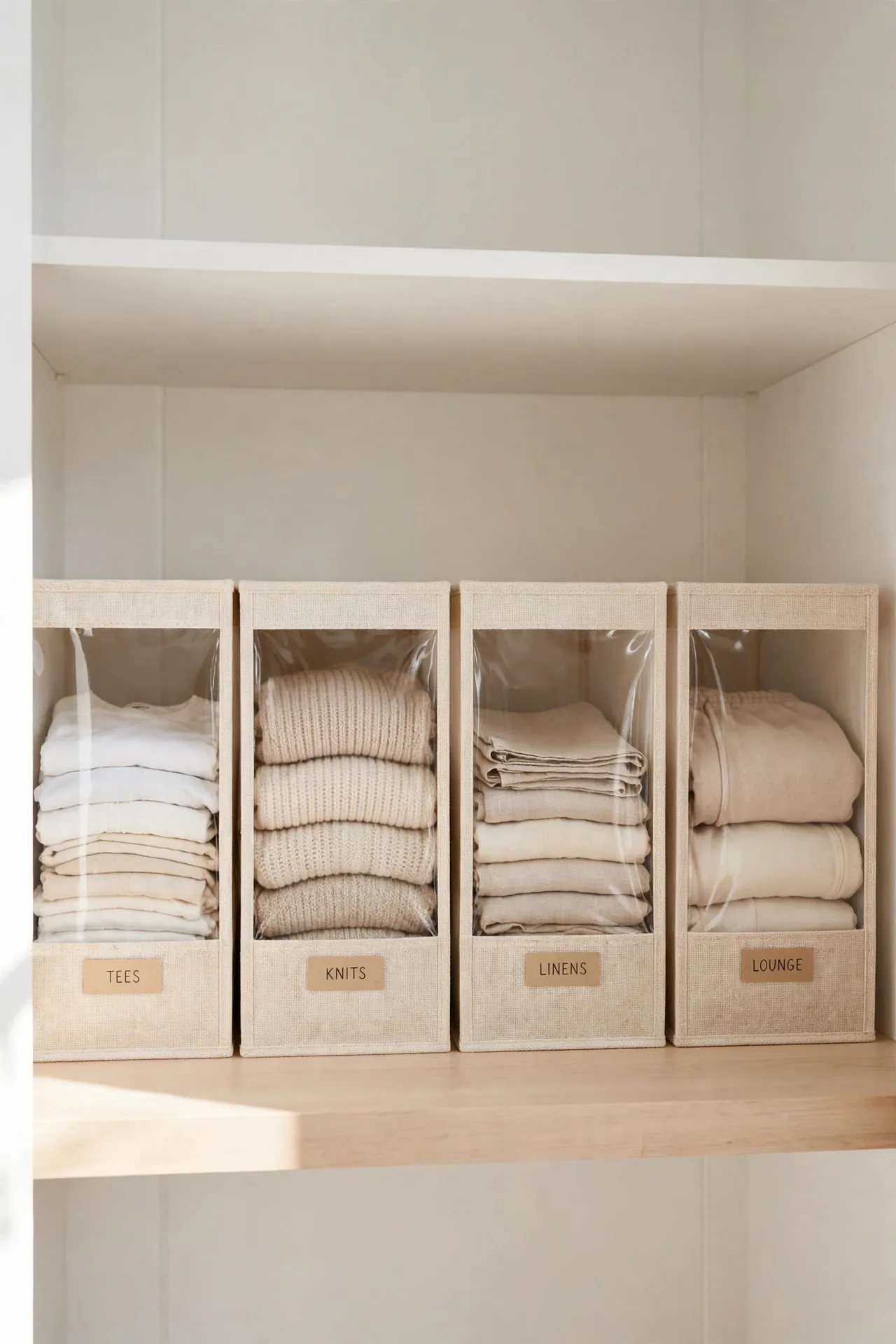
BEFORE: Opaque bins stack up on the top shelf with zero clue what lives inside. Every search becomes a full unstacking session, and half the contents never return to their spots. Rarely worn pieces quietly disappear for months.
AFTER: Clear-front boxes show every item at a glance, so grabbing the right pair takes seconds. Labels on the front edge name the contents for the whole household. The same shelf suddenly holds more because boxes stack flush with no wasted gaps.
Standardize on one box size so towers line up cleanly and look intentional. Reserve the clearest boxes for daily shoes and accessories, since those get the most grabs. Dust the entire fronts monthly with a dry microfiber cloth to keep the view crisp and clear.
Ceiling Shelf Run for small walk in closet organization ideas
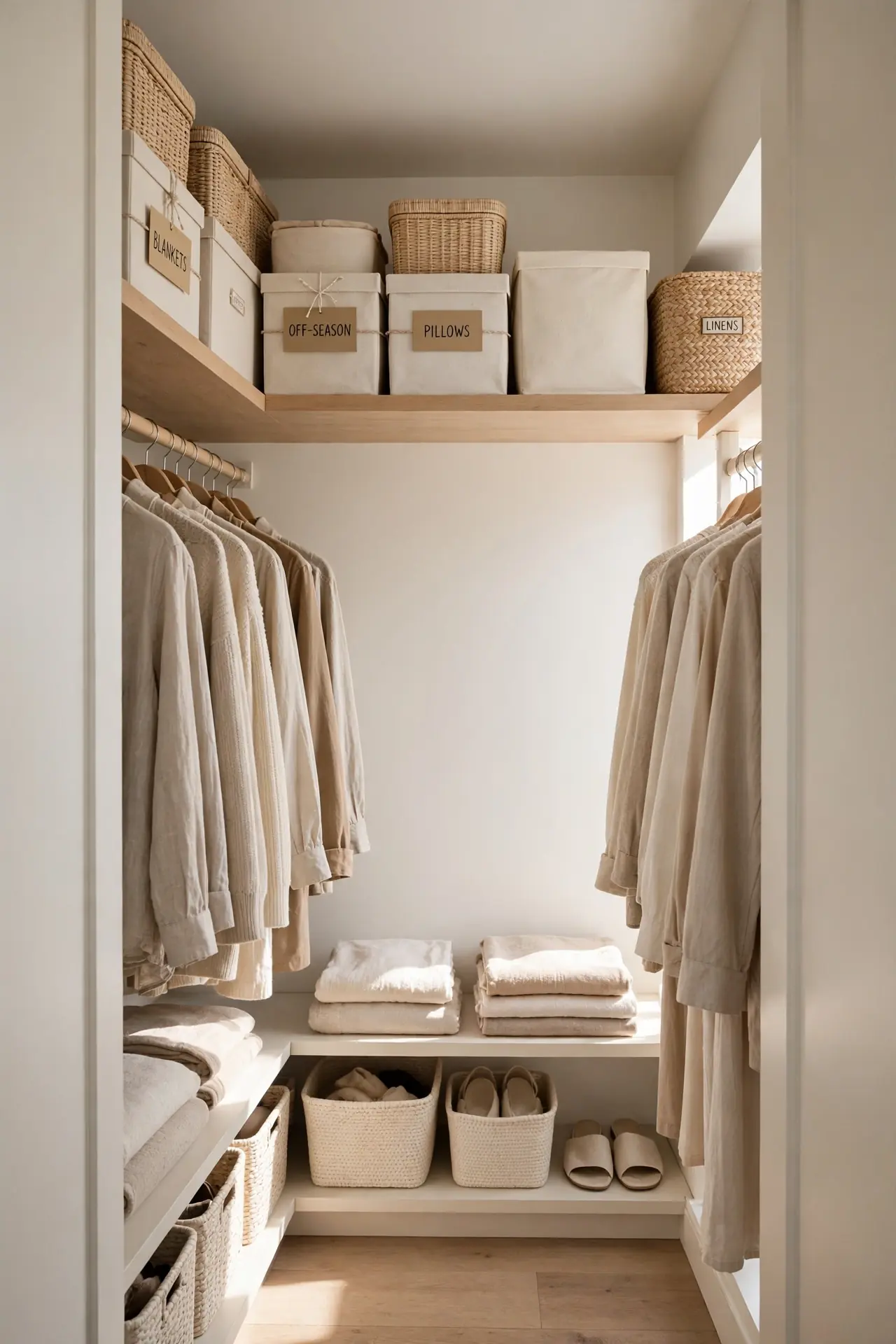
- Measure the wall two feet below the ceiling and mark each stud with painter’s tape first.
- Mount heavy-duty brackets into every stud, then screw a twelve-inch pine board across them level.
- Line the shelf with matching fabric bins labeled by category so the overhead run looks intentional.
- Keep a collapsible stool nearby and reserve this shelf for items you touch once a month.
This overhead band reclaims square footage most closets leave empty, and it works even in rental-friendly setups with track systems that clamp to shelf brackets. In my experience, closets with a labeled ceiling shelf stay tidy longer because daily shelves keep breathing room. Keep the lowest bin height reachable so nothing becomes forgotten clutter.
Laundry Hamper Slot
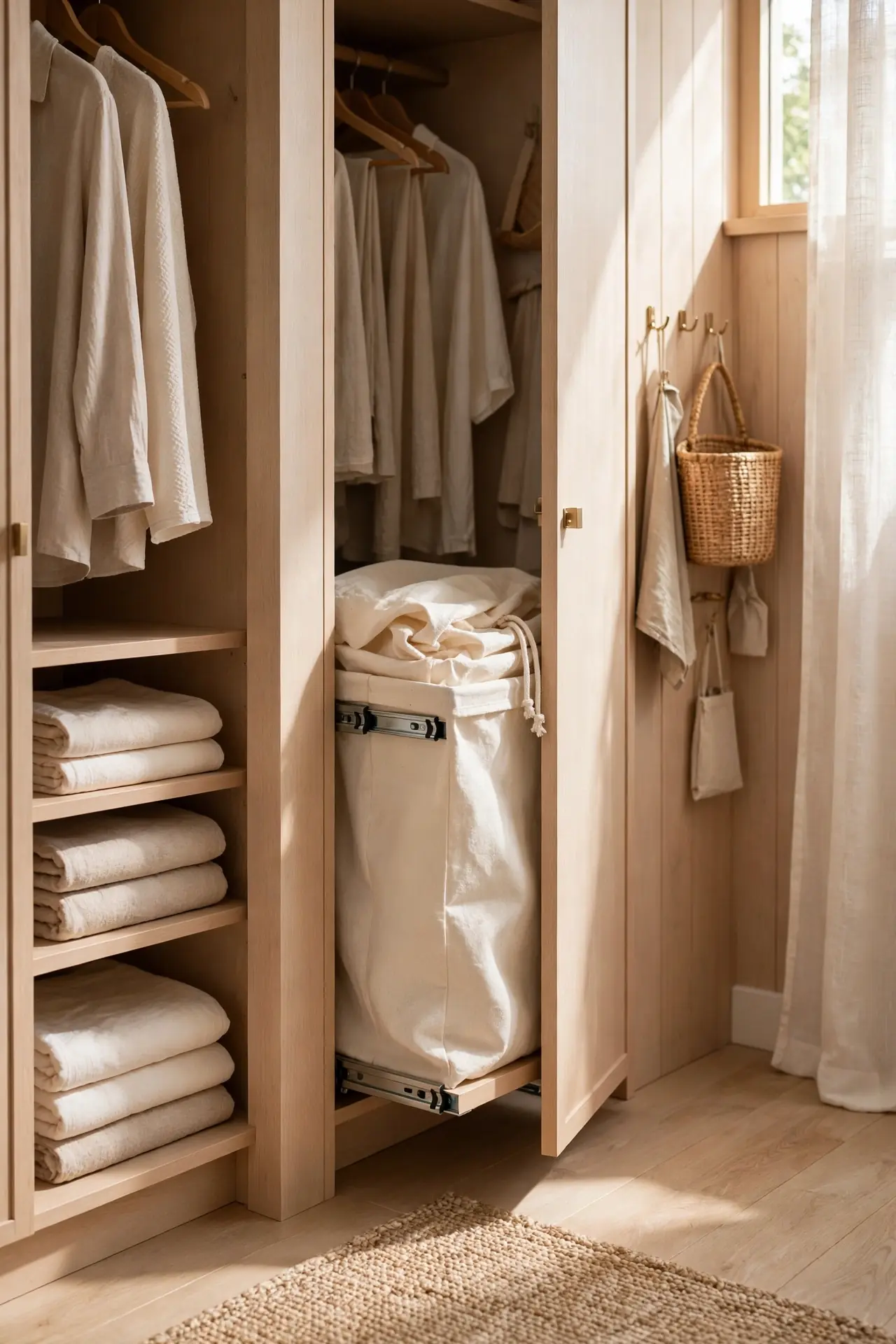
| Feature | Cabinet Pull-Out | Hanging Hamper |
|---|---|---|
| Setup | Slide-out wire basket inside a base cabinet | Canvas bag hung on an over-the-door hook |
| Cost | Around $40 for a pull-out frame | Under $20 for a sturdy fabric hamper |
| Space | Needs 12 inches of cabinet width | Needs six inches of clear floor space |
| Airflow | Wire mesh allows full airflow | Fabric bags need a breathable cotton weave |
Hamper placement decides whether dirty clothes pile on the floor or disappear into the system. Tuck the slot beside your least-used corner so the bin never blocks daily reach zones. Empty it the same day each week to keep the tiny room smelling fresh. A dedicated home for laundry quietly removes one of the biggest sources of closet mess.
Accessory Peg Board
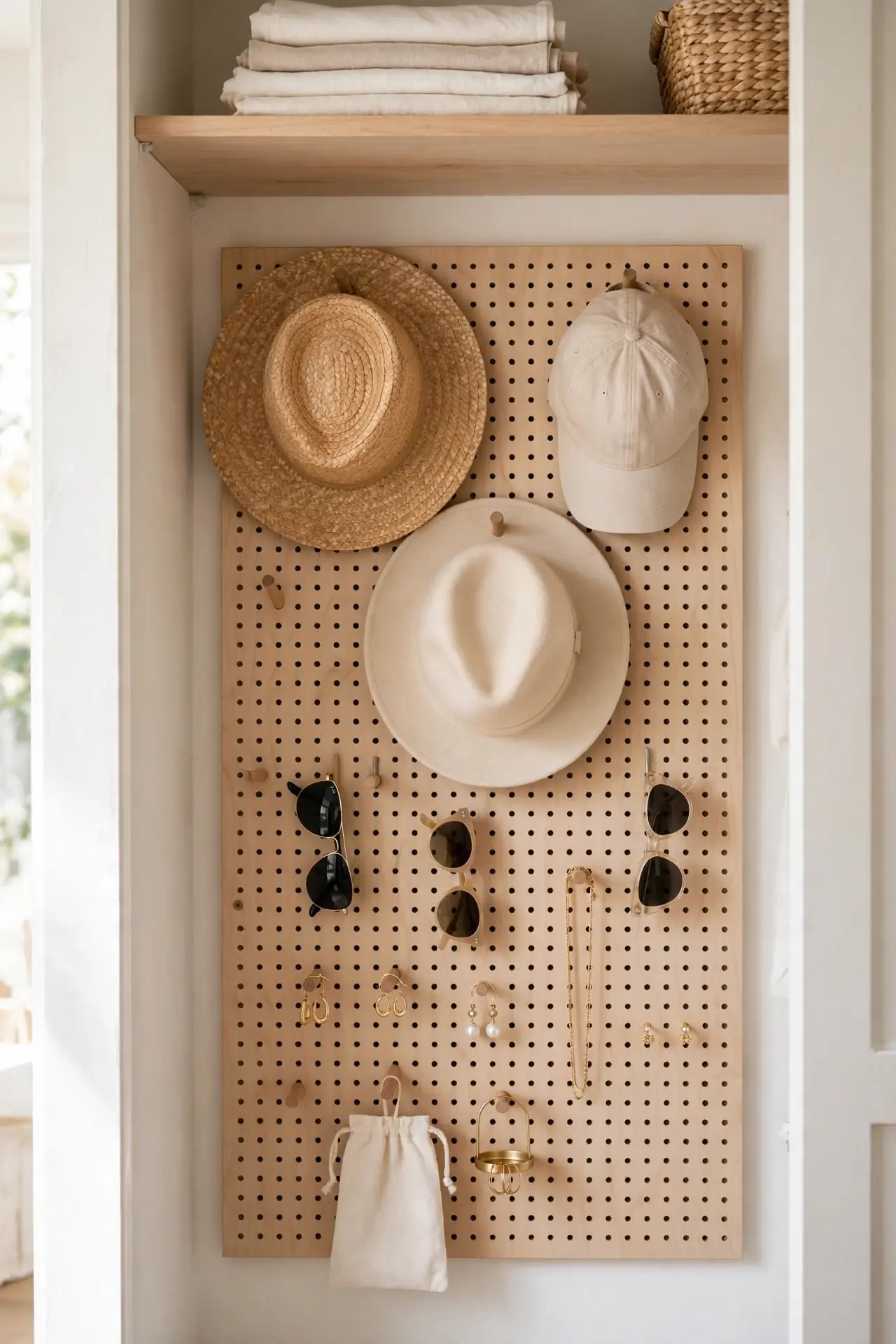
DO:
- Hang the board at shoulder height so scarves, belts, and bags stay within easy reach.
- Assign one hook zone per accessory type so everything stays visible at a glance.
- Clip small S-hooks along the bottom row for hats.
DON’T:
- Don’t overload hooks with heavy coats, which bend pins and sag the board.
- Don’t cluster jewelry on a single peg, because tangled chains defeat the purpose.
- Don’t mount on drywall without anchors or the loaded board pulls away.
A peg board turns dead wall space into a boutique-style display that keeps tiny drawers free. Group pieces by color for a tidy look, then rotate seasonal items forward each month. The board also doubles as a quick check station before you leave. It saves real time on busy mornings.
Uniform Capsule Row
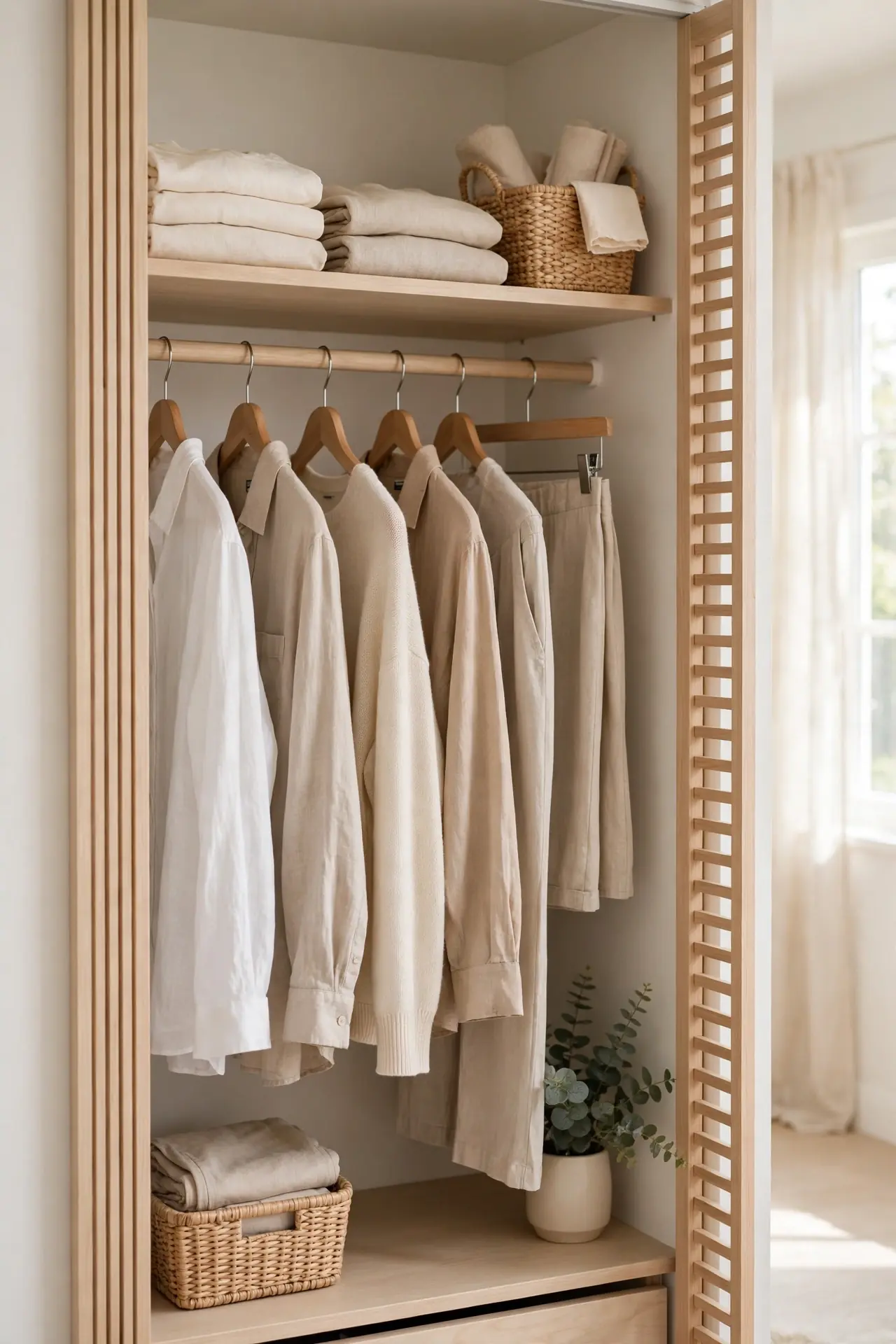
Cost: Around $30 to $60 for matching slim hangers, three dividers, and a small catch-all tray for jewelry.
Time: One focused weekend afternoon, including the ruthless editing session that makes the row work.
Skill Level: Beginner. No tools beyond a screwdriver and an honest eye for what you actually wear.
Best For: Busy professionals, parents, and anyone who reaches for the same reliable outfits on repeat.
A capsule row ends the morning stare-down by limiting daily choices to pieces that always work together. Pick seven to ten items in one color family, then remove everything else from this stretch of rod. Getting dressed becomes a two-minute grab instead of a ten-minute dig. The freed space also gives remaining clothes room to hang cleanly without crushing.
Dust Bag Library
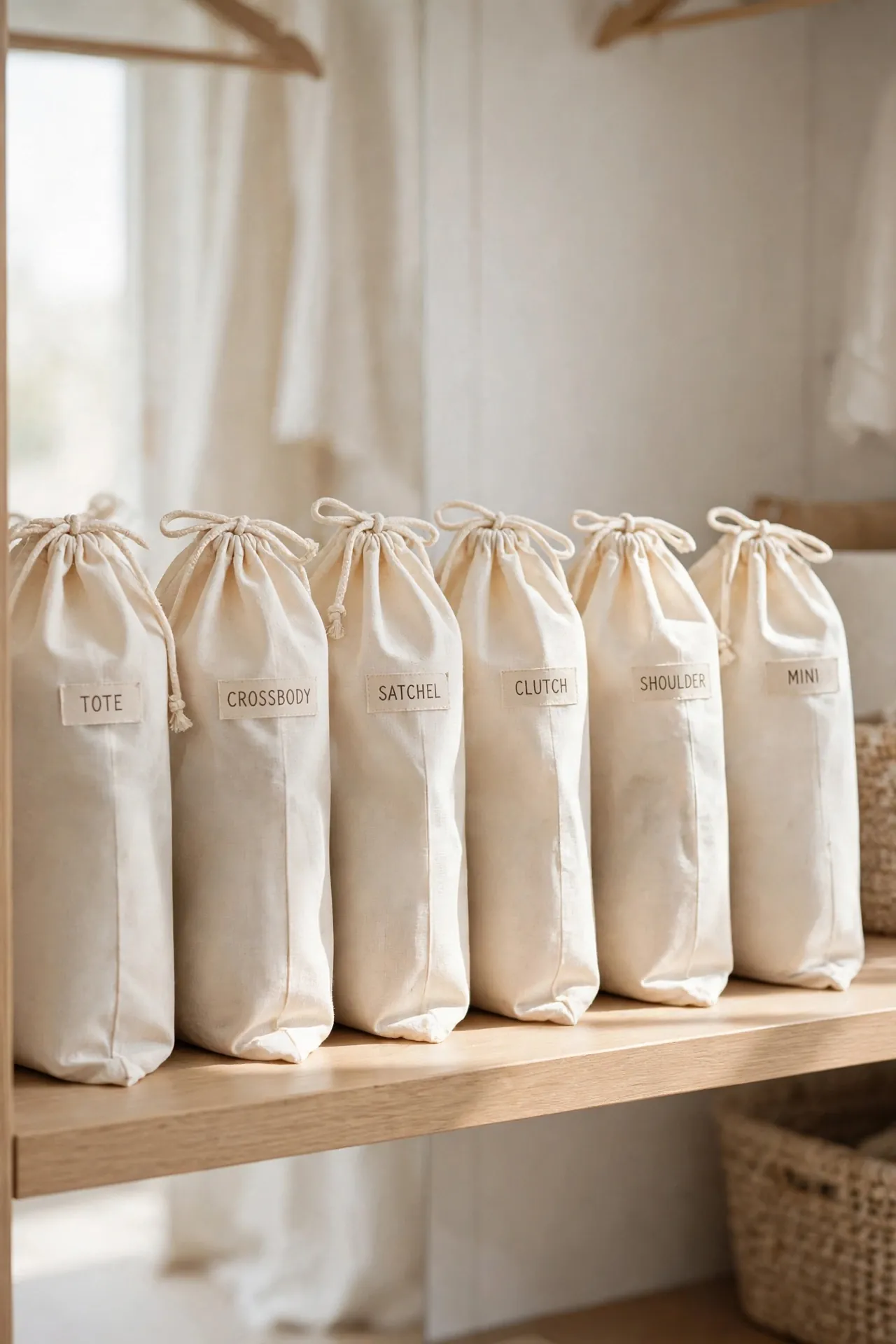
Handbags lose their shape the moment they slump under a pile, so give each one a breathable dust bag and a dedicated shelf slot. Stand bags upright with tissue tucked inside the body to hold structure between uses, and keep clasps fastened to stop straps from creasing. This small habit keeps every bag looking store-new for years.
Arrange the library by size and color so every bag shows its spine at a glance. A once-a-season rotation keeps the front row stocked with current favorites while stored pieces rest protected from light and dust. Label the rare bags so a quick scan reveals everything you own.
Conclusion
An organized closet changes how your whole morning feels, and small walk in closet organization ideas prove you do not need a big space to get there. Start with the quick wins, like better hangers and labeled bins, then add lighting and zones over a few weekends. I have seen how small changes like these can completely shift the way a space feels. Save your favorite ideas on Pinterest, try one upgrade this weekend, and share the before and after with someone who needs the push. Your closet deserves to work as hard as you do.



One Comment