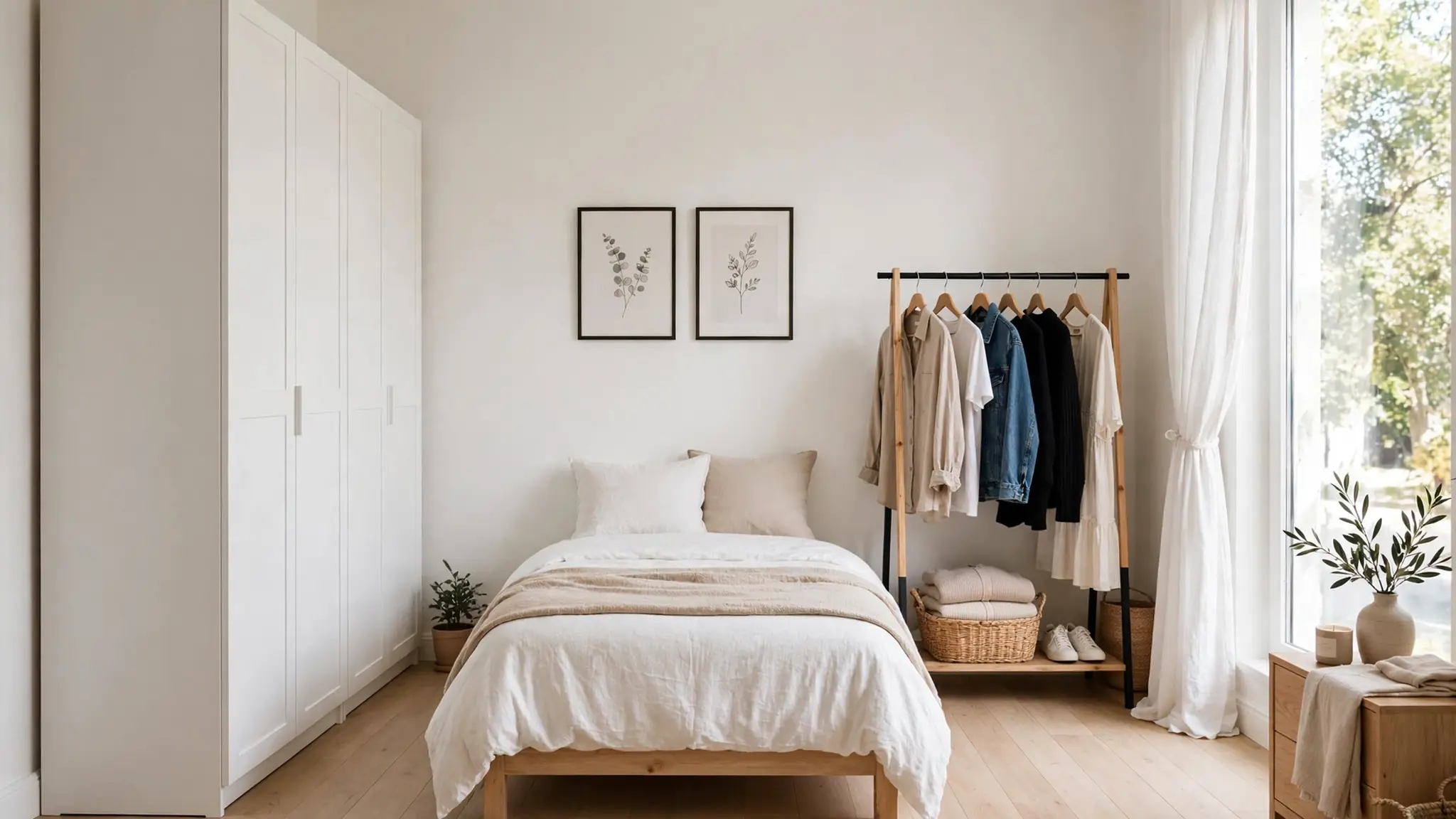
23 Small Bedroom Ideas With No Closet to Maximize Storage
No closet does not mean no storage, it just means getting creative with every inch. These small bedroom ideas with no closet turn freestanding wardrobes, wall systems, and under-bed space into a wardrobe setup that rivals any built-in. I have seen tiny bedrooms without a single closet door stay perfectly organized with the right mix of open and hidden storage. For dreamy styling to pair with your new storage, see these cozy small bedroom ideas for women that make small rooms feel like retreats.
Each idea below replaces what a closet would do, from hanging space to shoe storage to accessory organization. You will find renter-friendly options, budget picks, and systems that keep clothes visible yet tidy. Pick the three that match your space and start with the biggest win first.
Freestanding Wardrobe Win
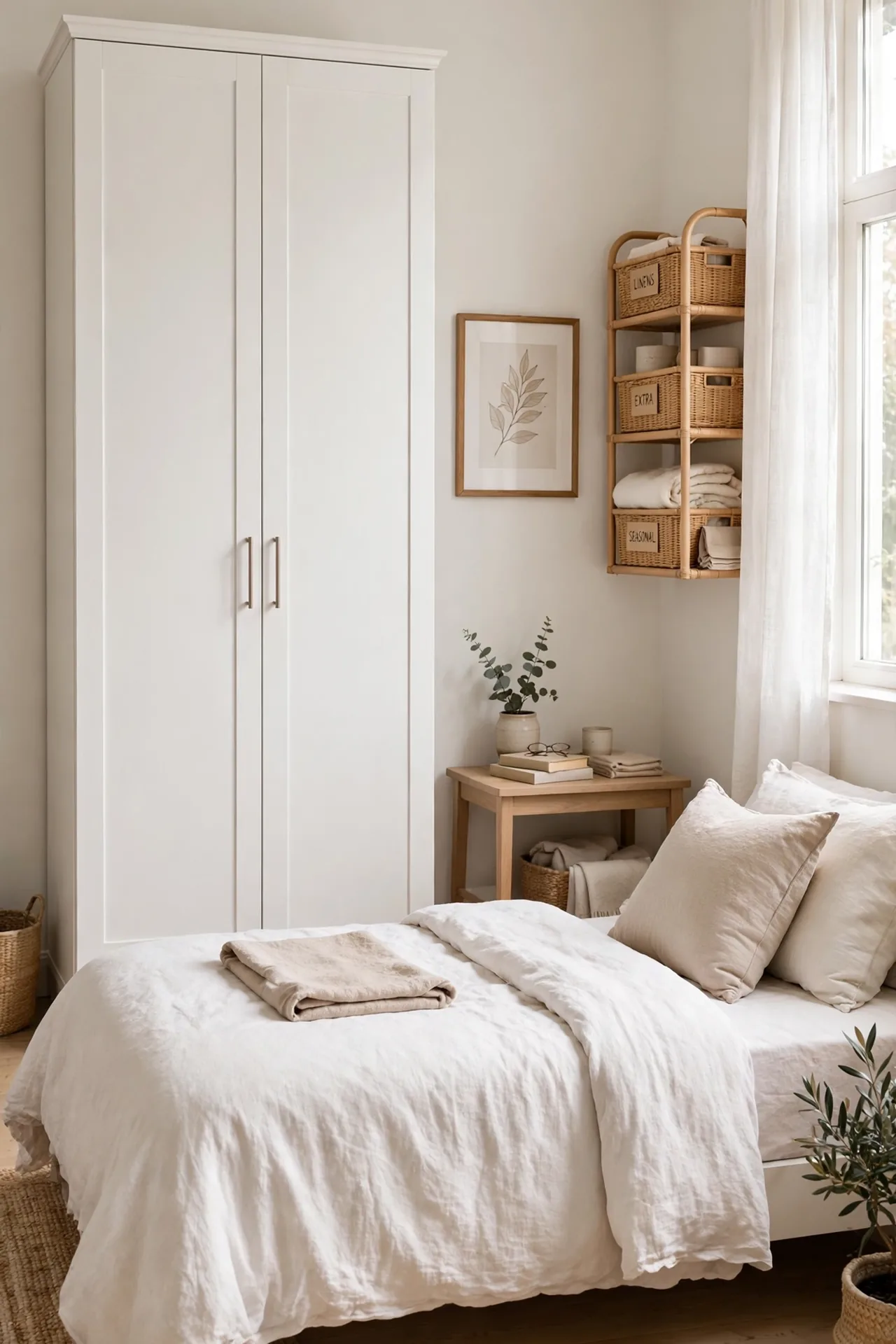
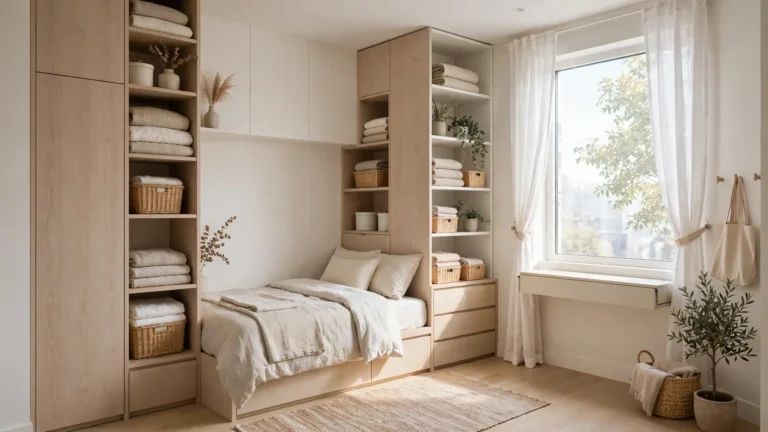
A freestanding wardrobe is the closest thing to a real closet you can buy. Choose one with both hanging and shelving zones, and anchor it to the wall for safety. The doors hide visual clutter completely.
Measure your ceiling height before buying, since tall wardrobes need clearance to stand up during assembly. White or light wood finishes keep a small room feeling open and bright. Add small LED strips inside for visibility, since dark wardrobe interiors swallow light and hide what you own. A full-length mirror on one door doubles the wardrobe’s value in a small room.
Under-Bed Drawers with a No Closet
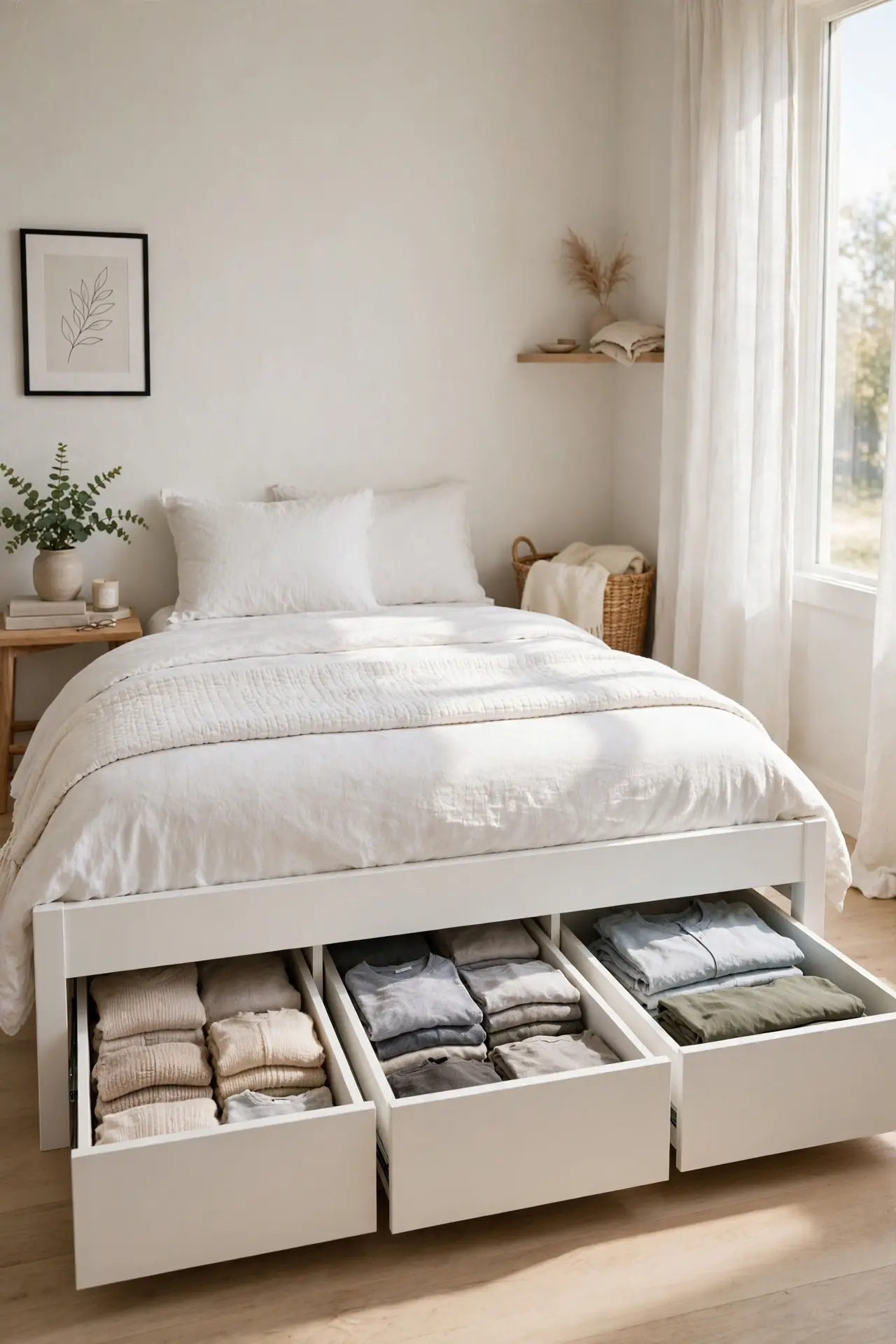
- Rolling drawers beat bins because you can see everything at a glance.
- Store off-season clothes here to free prime real estate elsewhere.
- Label each drawer front so the system stays obvious.
- Vacuum-sealed bags inside drawers double the capacity instantly.
Under-bed space is the most wasted square footage in a closet-less bedroom. I have noticed that drawers on wheels get used daily while bins get forgotten. This hidden zone can swallow an entire season of wardrobe. Measure your bed’s clearance before buying, since low frames need slim-profile drawers made for tight gaps. Felt-bottomed drawers glide quietly, which matters when a partner sleeps nearby.
Wall Hook Systems
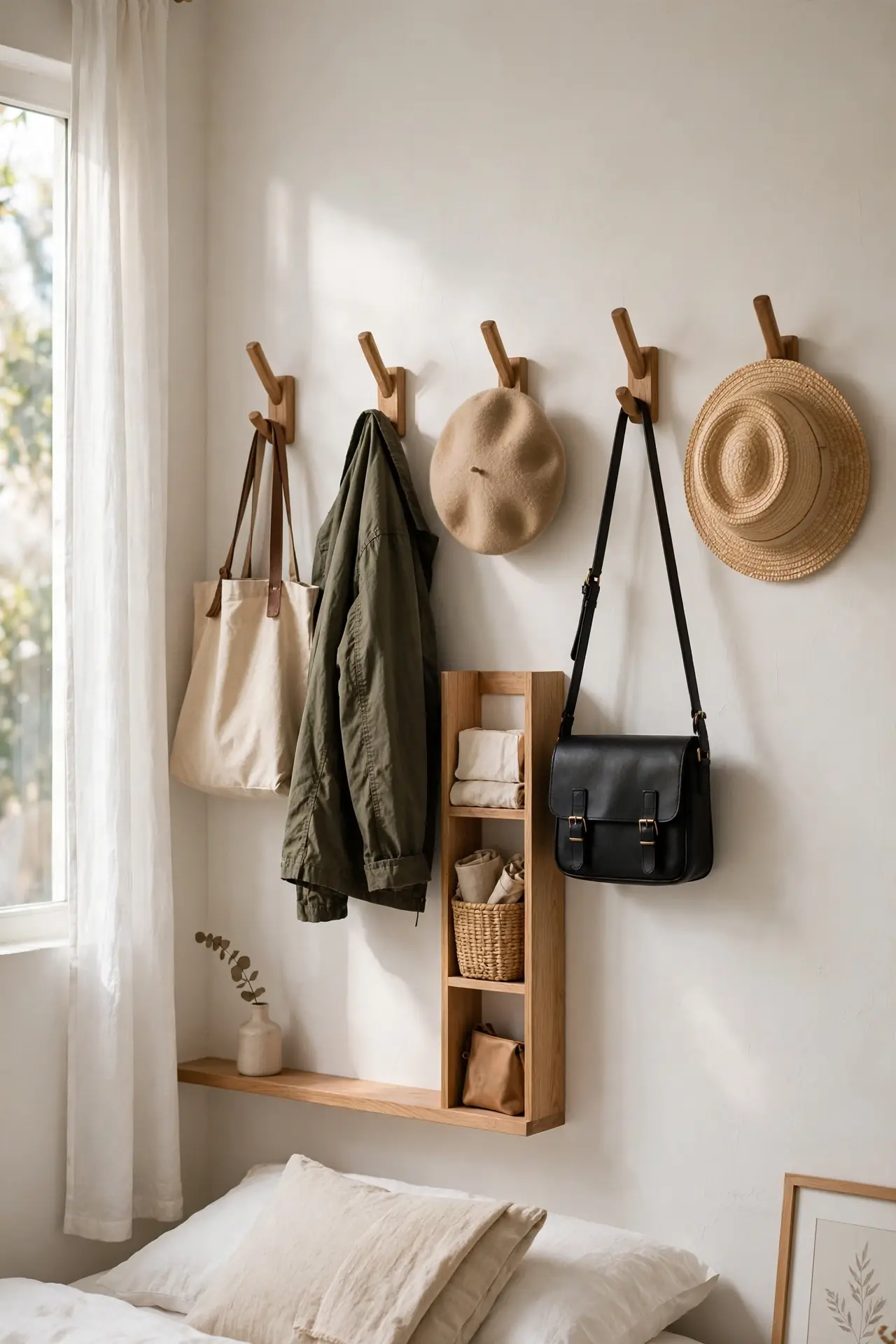
Quick Tip: Mount hooks at two heights, high for coats and low for bags, to double one rail’s usefulness. Space them eight inches apart so items never overlap. A solid rail with five hooks holds a full week’s outerwear in two feet of wall.
Wall hooks turn empty vertical space into instant hanging storage. Choose a sturdy rail over individual hooks for heavier coats. This renter-friendly fix needs only a few screws and transforms a bare wall. For zero-hole options, over-door hook strips grip just as well on smooth doors. Wipe the surface with alcohol first so adhesive bonds at full strength. Wait a full day before loading hooks to let the bond cure completely. A small shelf above the hooks catches sunglasses and keys that need a landing spot too.
Open Clothing Racks
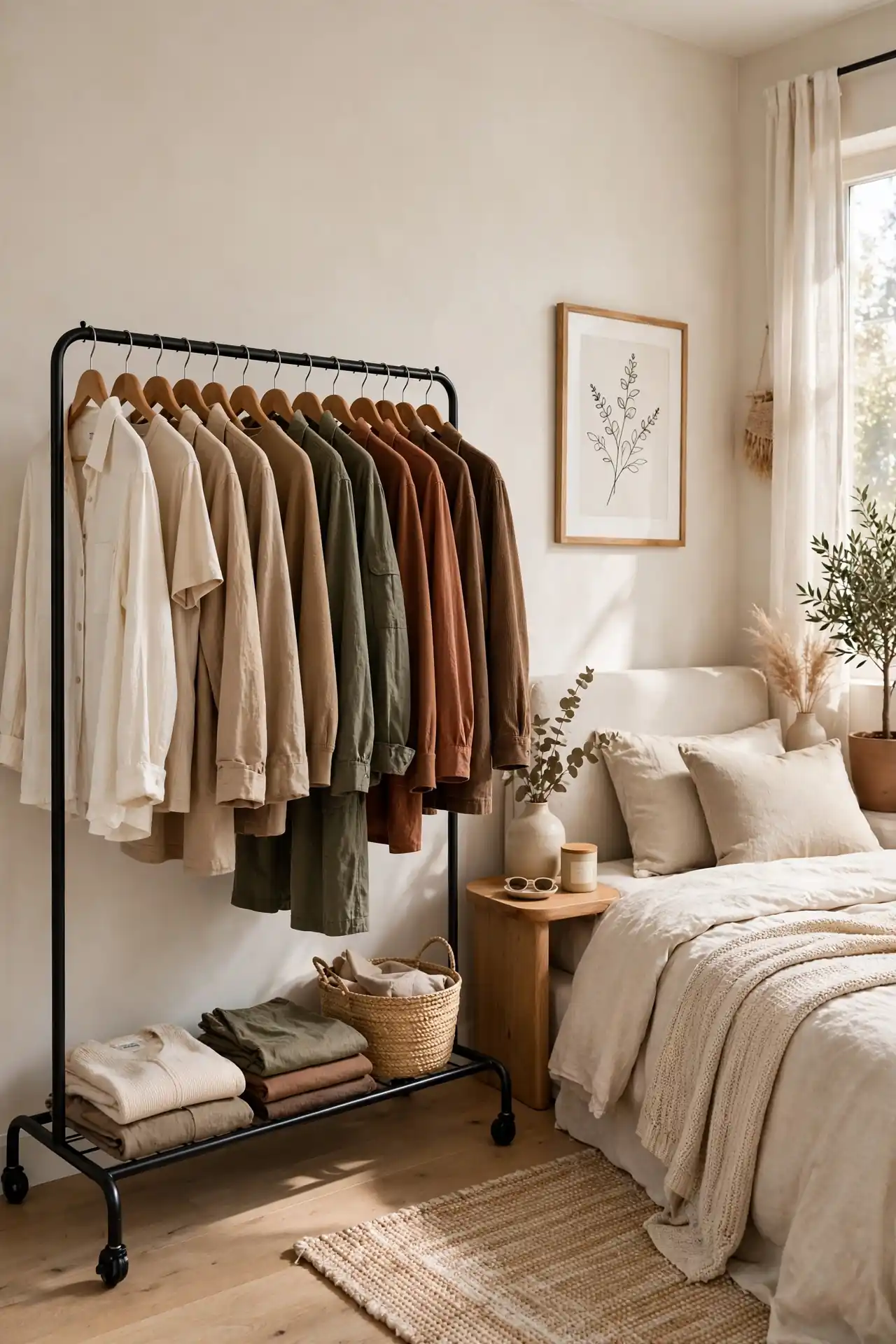
BEFORE: Clothes piled on chairs and the bed because there was nowhere to hang them, and the small room looked perpetually messy. Getting dressed meant digging through piles every morning.
AFTER: An open rack displays clothes boutique-style, making mornings faster and the room look intentional. The visible row forces a tidy habit that piles never could.
Keep only your current rotation on the rack and store the rest elsewhere. Color-coordinate the hangers for a calm, boutique look that makes the open display feel designed. Limit the rack to what fits comfortably without crowding.
Over-Door Organizers with a No Closet
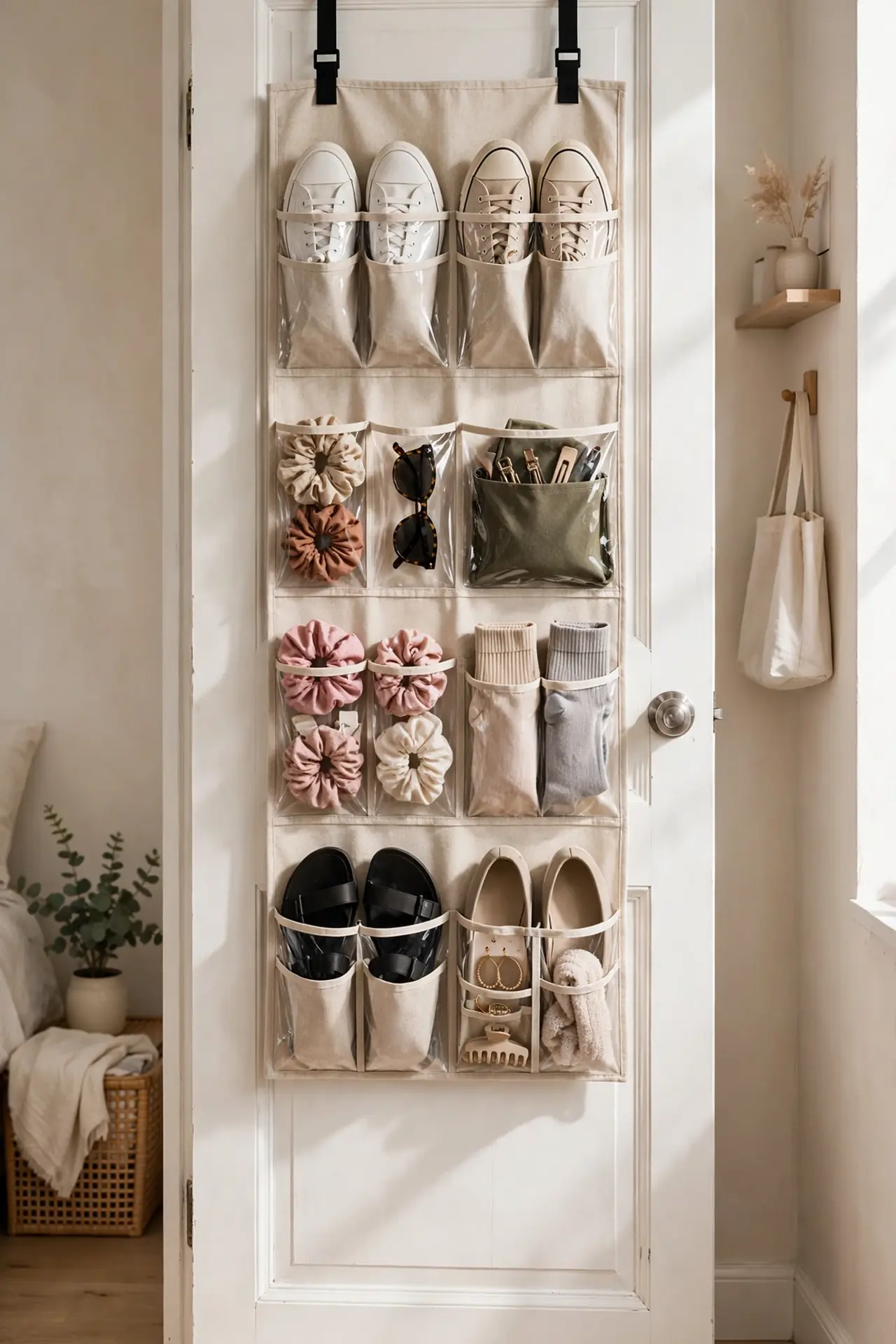
1. Choose a fabric organizer over plastic for a softer look.
2. Hang it on the inside of the bedroom door to hide it from view.
3. Assign pockets by category: shoes low, accessories high.
4. Keep it to one door so the room never feels covered in organizers.
Over-door organizers claim storage from thin air, and the inside of the door is prime hidden real estate. Shoes, scarves, and belts all find homes here. This five-minute install is the easiest win on the entire list. Clear pockets beat fabric ones for shoes, since you can spot the pair you want instantly.
Storage Bed Frames
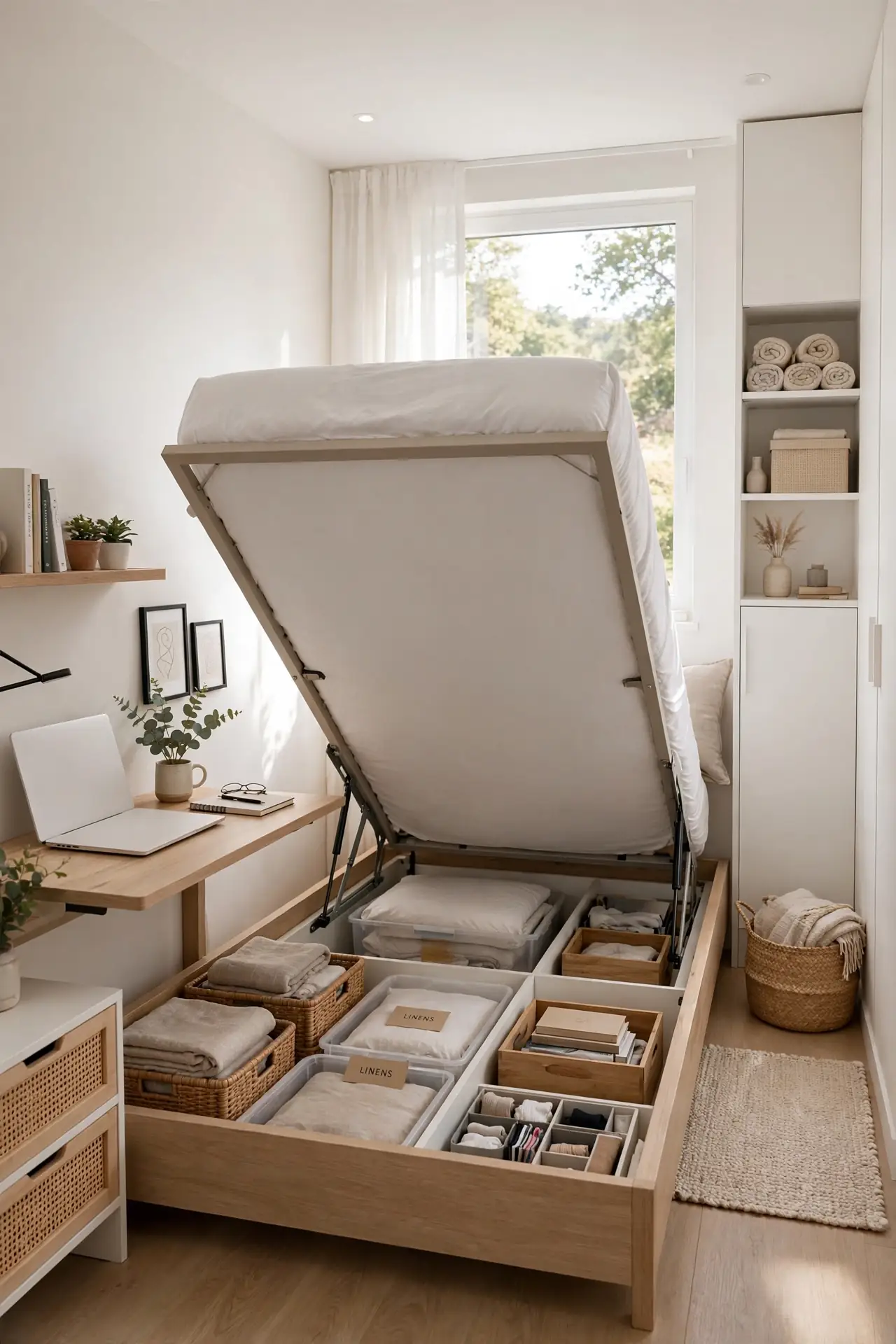
| Bed Type | Storage | Best for |
| Drawer base | Four deep drawers | Daily access needs |
| Lift-up ottoman | Entire footprint | Bulky items |
| Bookcase headboard | Shelves plus drawers | Small extras |
A storage bed replaces a dresser and a closet section in one footprint. The table above compares the main types so you can match one to your needs. Drawer bases suit daily use, while lift-up frames swallow seasonal bulk. Measure doorways before delivery day. Drawer bases cost less and suit renters, while lift-up frames maximize every cubic inch for owners planning to stay. Gas-lift mechanisms should feel light; test the showroom model before committing.
Floating Shelf Rows
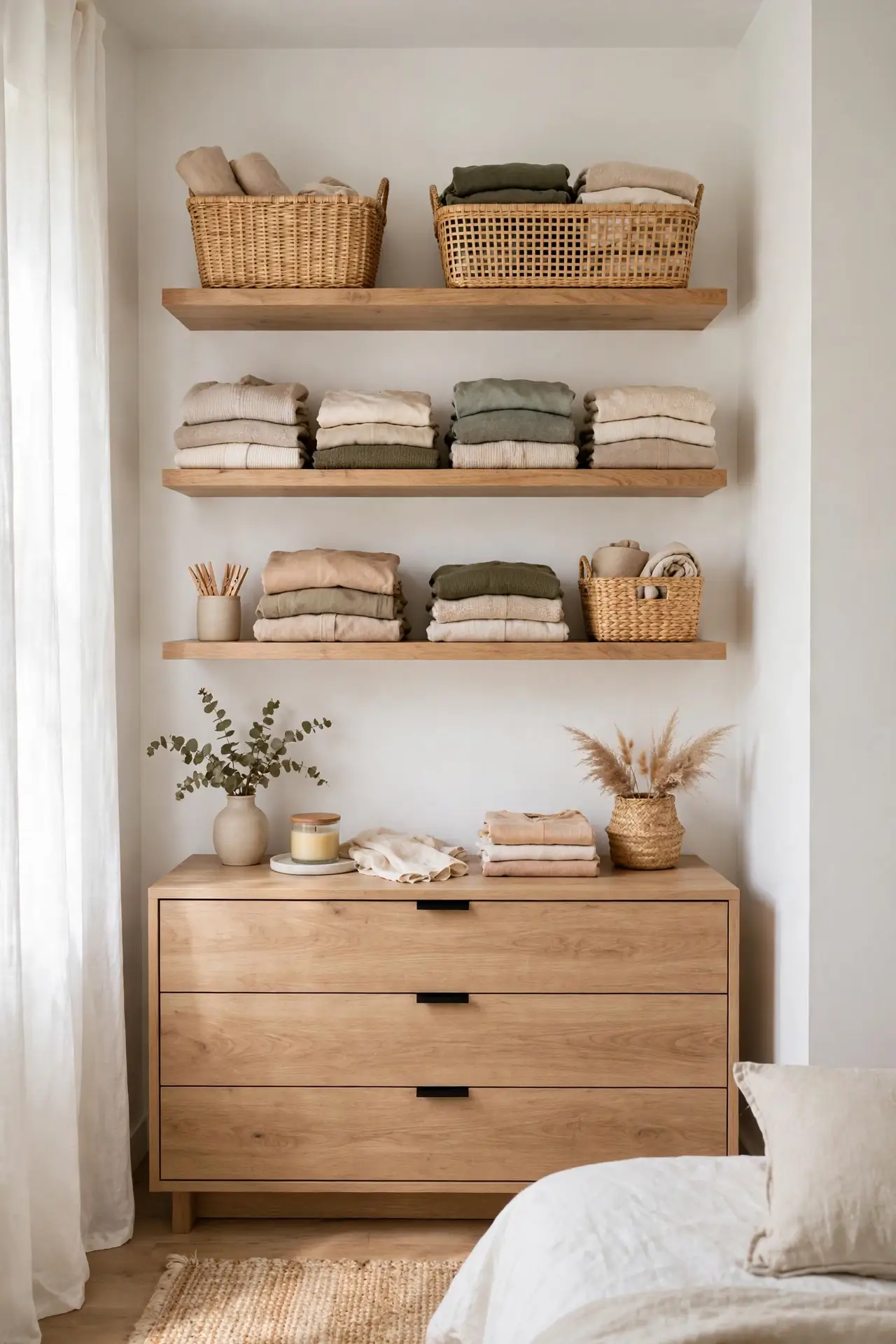
DO: Install two or three shelves in a vertical stack for maximum storage.
DO: Fold clothes file-style so every item stays visible.
DO: Use matching baskets on the top shelf for less-used items.
DON’T: Stack clothes more than eight inches high, or piles topple.
DON’T: Skip the wall anchors, since loaded shelves get heavy.
DON’T: Place shelves where a door swings into them.
Floating shelves create closet-style shelving on any blank wall. File-folded clothes stay neat and visible, which beats digging through stacks. I have seen this work well in many cases where a six-foot wall became a full wardrobe wall.
Rolling Garment Carts with a No Closet
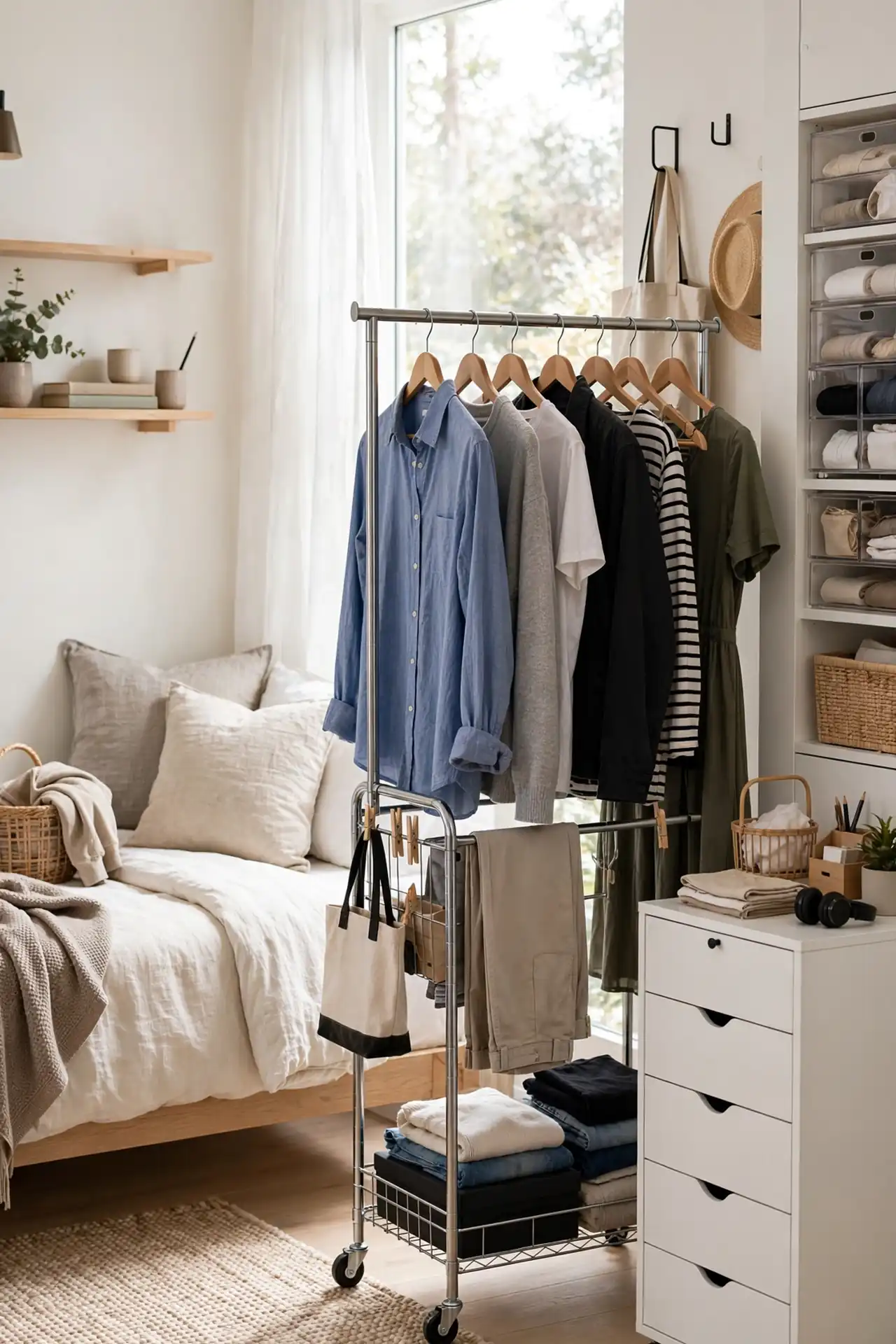
Cost: Low | Time: Thirty minutes to assemble | Skill Level: Beginner | Best For: Renters and frequent rearrangers
A rolling garment cart brings hanging space wherever you need it and tucks away when you do not. Load it with the week’s outfits on Sunday for grab-and-go mornings. The mobility is the magic, letting storage adapt to the room instead of the other way around. Park it in a closet-free corner by day and roll it beside the bed as a valet by night. A canvas cover thrown over the top hides the rack when guests visit.
Behind-Door Hooks
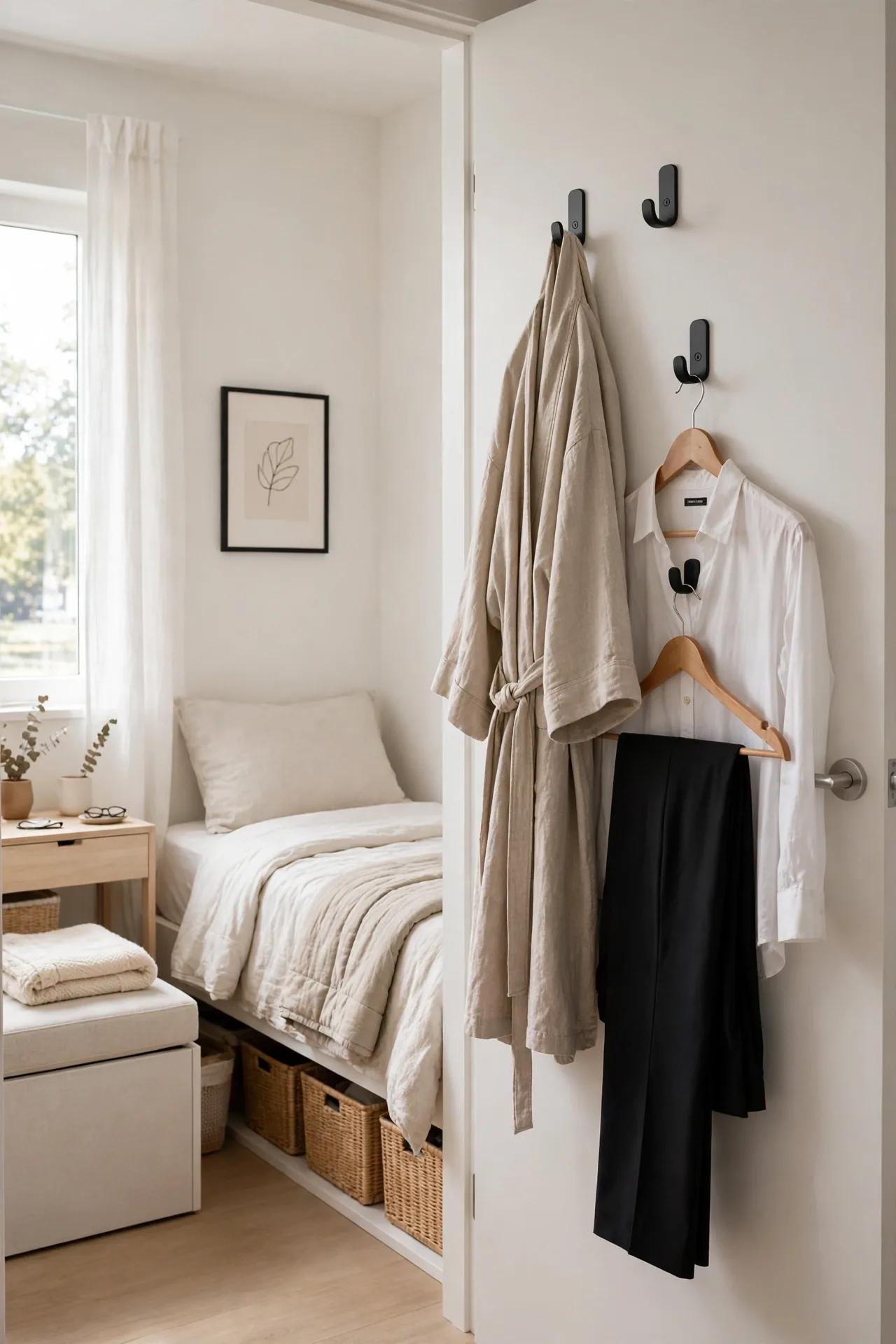
Adhesive hooks on the door’s back claim a hidden strip for robes and tomorrow’s outfit, turning wasted space into genuinely useful storage. No drilling means full deposit safety for renters, and the door simply closes with everything vanishing from sight. This is the rare upgrade that costs almost nothing yet earns its keep every single day.
Choose hooks rated for at least five pounds so robes never crash down overnight. Two rows, high and low, double the capacity of one door while keeping long robes clear of shorter jackets. Wipe the surface with alcohol first so adhesive bonds at full strength, then wait a full day before loading anything heavy.
Dresser as Closet
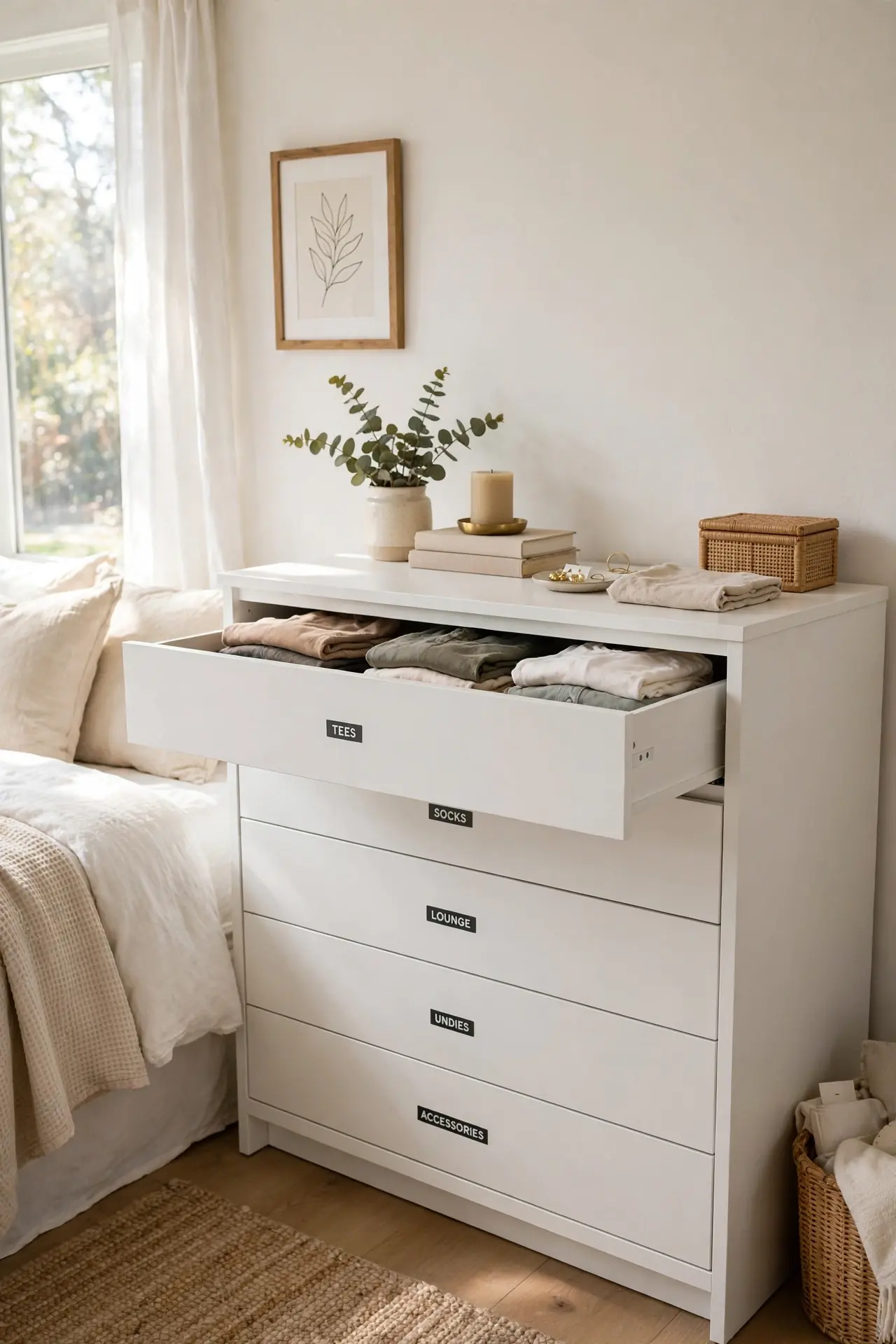
- Give every drawer a category so clothes always have a home.
- Use drawer dividers to keep file-folded items standing upright.
- Reserve the top drawer for daily essentials within arm’s reach.
- Photograph the organized drawers as a reset reference.
A dresser becomes a closet when every drawer has a job. I have noticed that labeled categories survive busy weeks far better than vague tidiness. This single piece can replace an entire reach-in closet’s folded storage. A dresser with a mirror top doubles as a vanity, squeezing two functions into one footprint. Felt-lined top drawers protect jewelry and watches from scratches.
Vacuum Bag Storage
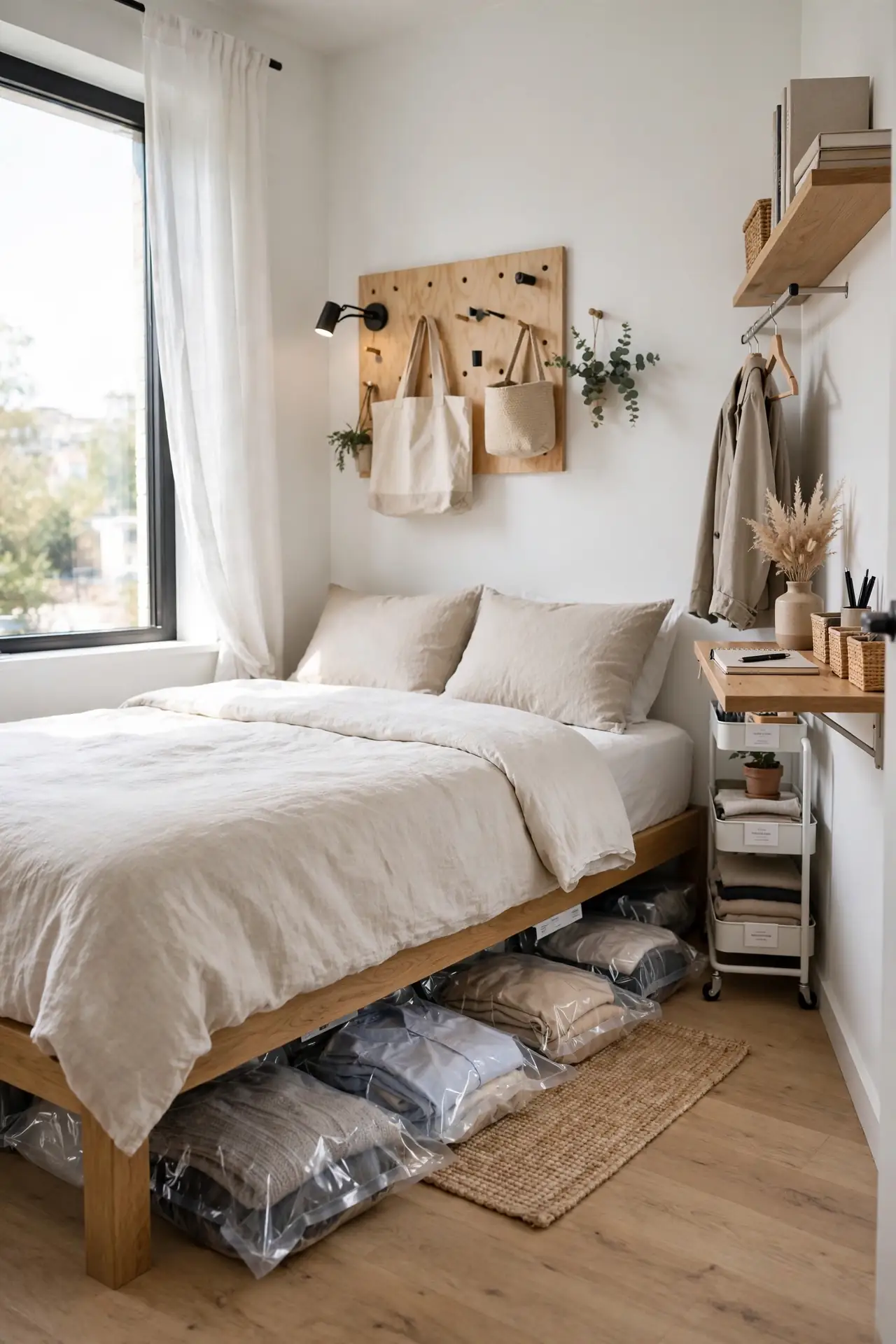
Quick Tip: Roll clothes before sealing to prevent deep creases, and never overfill past the max line. Suck out air slowly for the flattest pack. Store sealed bags flat under the bed where the low profile slides easily.
Vacuum bags shrink bulky off-season clothes to a third of their volume. Winter coats and sweaters vanish under the bed until needed. The compression also protects against dust and musty smells during long storage. Toss a cedar sachet in each bag to keep stored clothes smelling fresh for months. Press bags flat before stacking so they slide under low beds easily.
Corner Armoire Fit
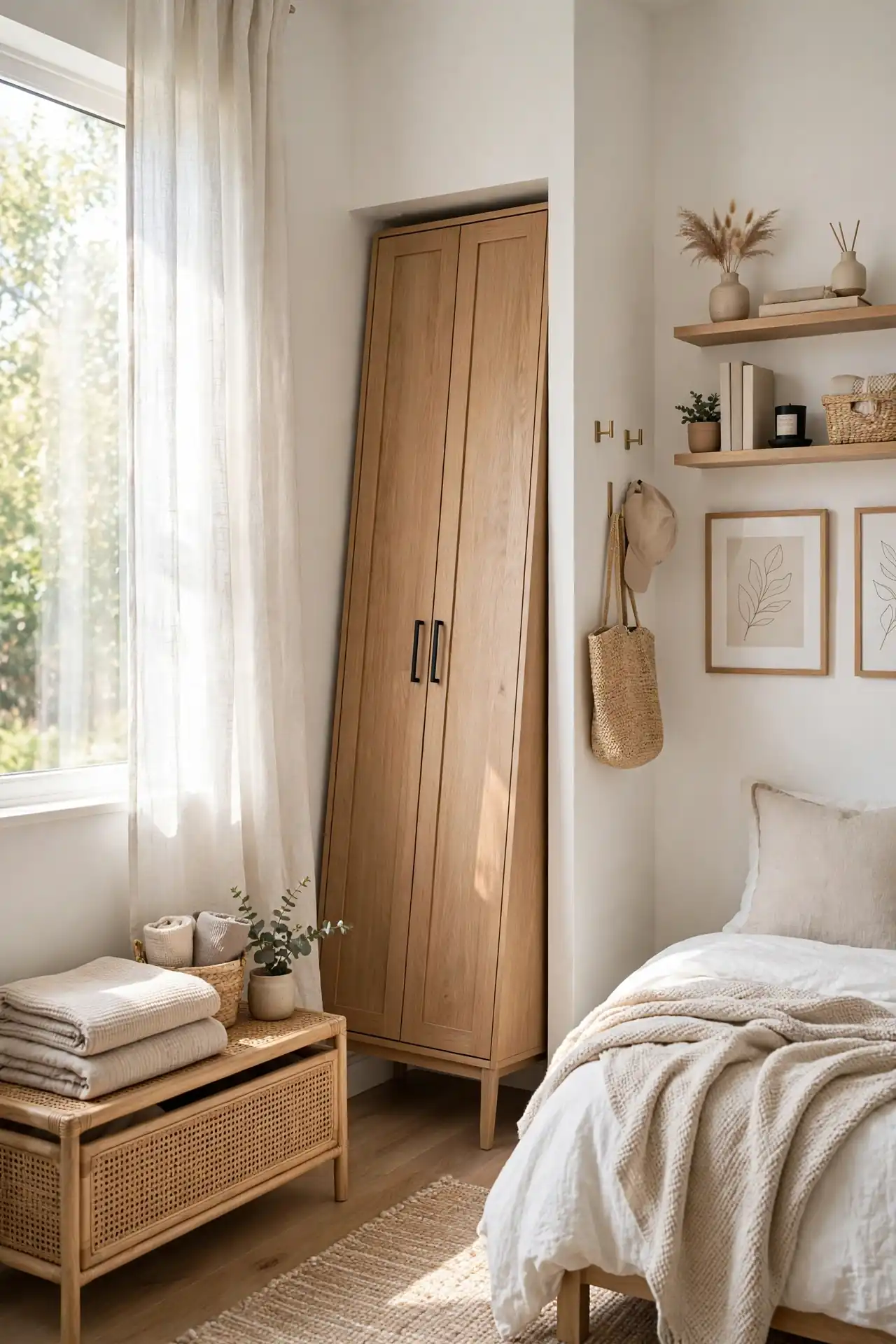
BEFORE: An awkward corner collected dust and clutter because standard wardrobes were too deep to fit. The dead space mocked every storage attempt.
AFTER: A slim armoire angled into the corner turns dead space into prime hanging storage. The angled placement actually makes the room feel larger by softening the boxy corner.
Measure corner clearances diagonally, not just wall to wall, before shopping. For more ideas on styling tight corners, browse these pink and green dorm room ideas with clever compact-space solutions. Paint or paper the alcove interior a shade darker for depth that makes the nook feel intentional. A battery puck light inside banishes the shadows that make nooks feel cave-like.
Labelled Basket Zones
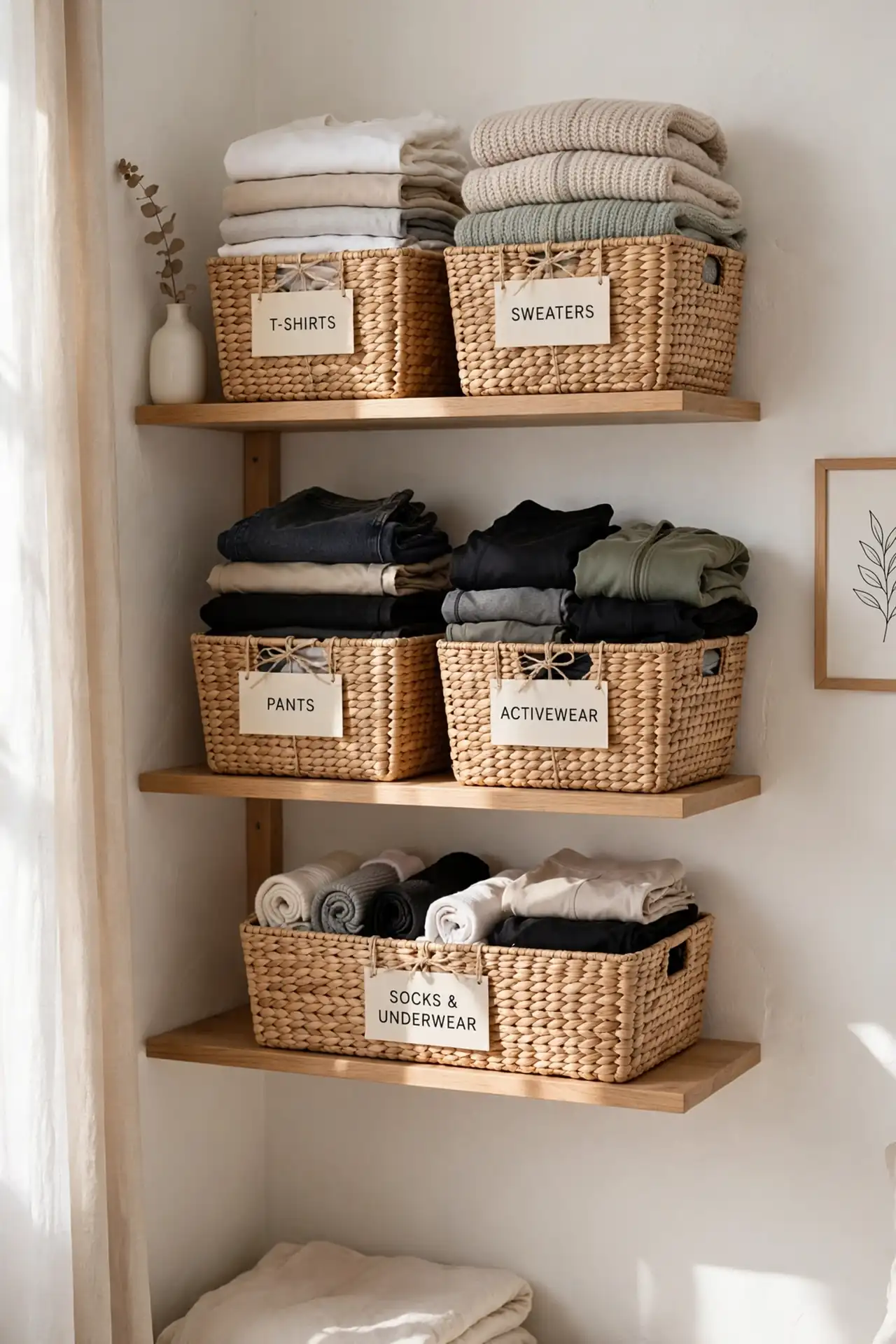
1. Sort clothes into zones: tops, bottoms, sleepwear, and extras.
2. Assign one basket per zone on open shelves.
3. Label every basket clearly with a tag or chalk label.
4. Return items to their zone nightly to keep the system alive.
Labels turn baskets from clutter-hiders into a real organization system. The visual categories make putting laundry away almost automatic. I have seen this work well in many cases where open shelving finally stayed tidy long-term. Review the zones monthly and reassign any basket that keeps overflowing. Uniform baskets in one material look calmer than a mix of colors and sizes.
Pegboard Accessory Wall
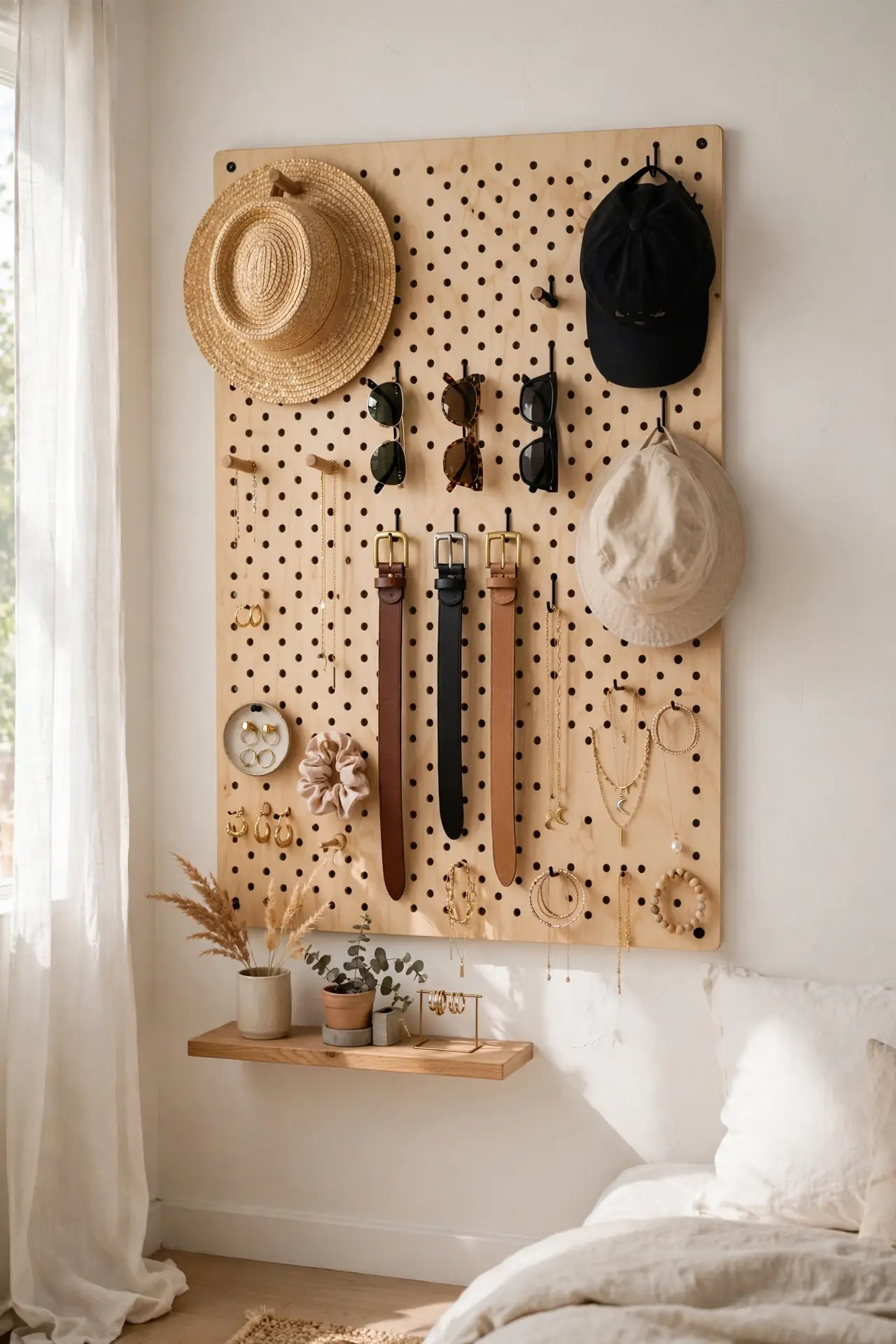
| Pegboard Use | Holds | Tip |
| Jewelry hooks | Necklaces, earrings | Small hooks prevent tangles |
| Hat pegs | Caps and sun hats | Wide pegs keep shape |
| Belt loops | Belts and scarves | Roll, do not fold |
A pegboard wall gives accessories the display they deserve while freeing drawer space for clothes. The table above maps the best hooks to each accessory type. Paint the board to match your walls and it reads as decor, not hardware. Hang tomorrow’s outfit on the lowest hooks to streamline your morning routine. Outline each tool’s spot with washi tape so everything returns to its home.
Ottoman Storage Seats
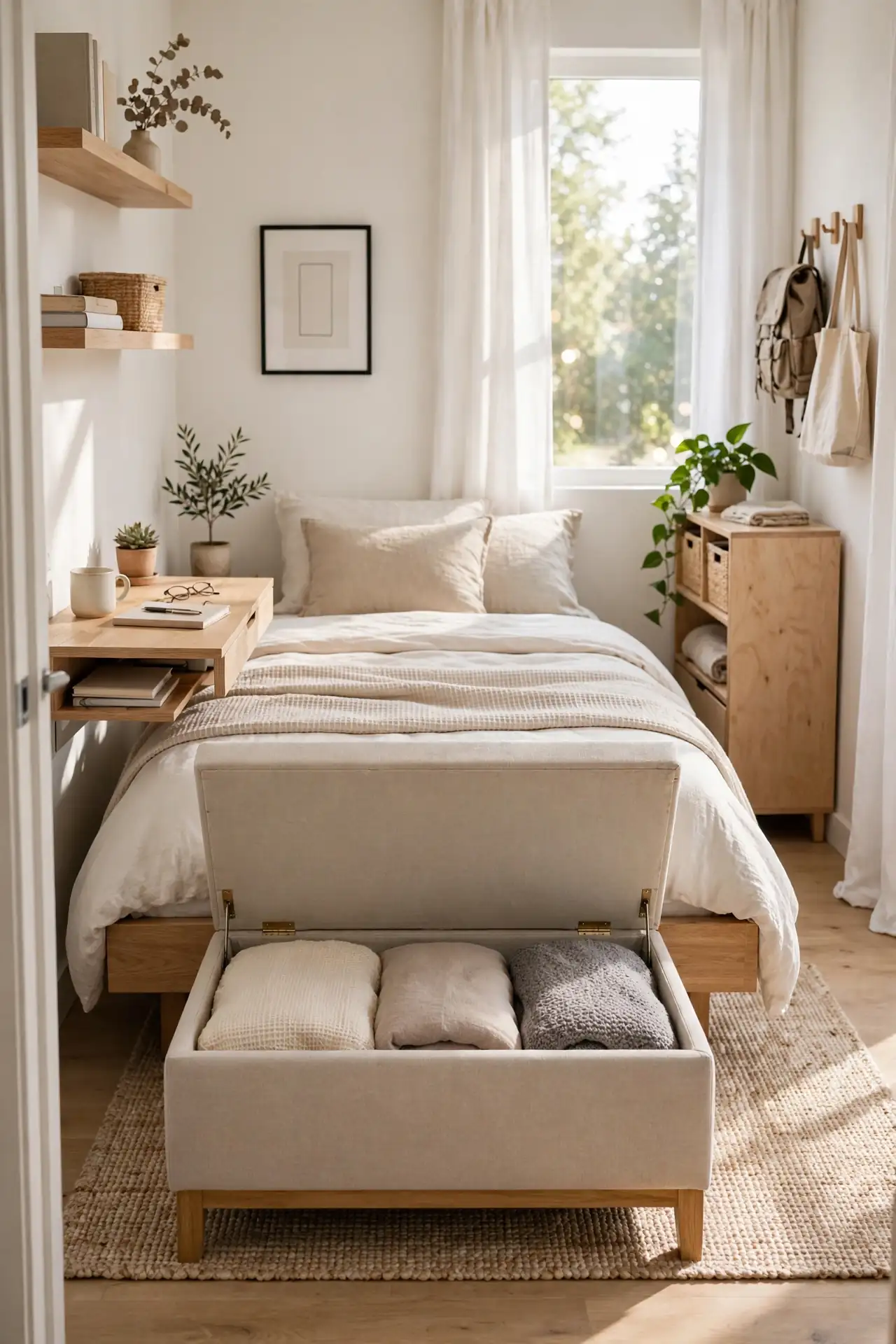
DO: Pick an ottoman wide enough to sit on comfortably.
DO: Store lesser-used items inside, like guest bedding.
DO: Match the upholstery to your bedding for cohesion.
DON’T: Overload it, since heavy lids are annoying daily.
DON’T: Block the main walkway with oversized seating.
DON’T: Skip measuring; too-tall ottomans dwarf small beds.
An ottoman at the bed’s foot adds seating and hidden storage in one footprint. It is the perfect home for guest linens and off-season extras. That dual purpose is exactly what closet-less rooms demand from every piece. Tuck a folded throw over the lid so it reads as intentional seating, not just storage. A tray on top converts it into a stable surface for tea or books.
Vertical Shoe Towers
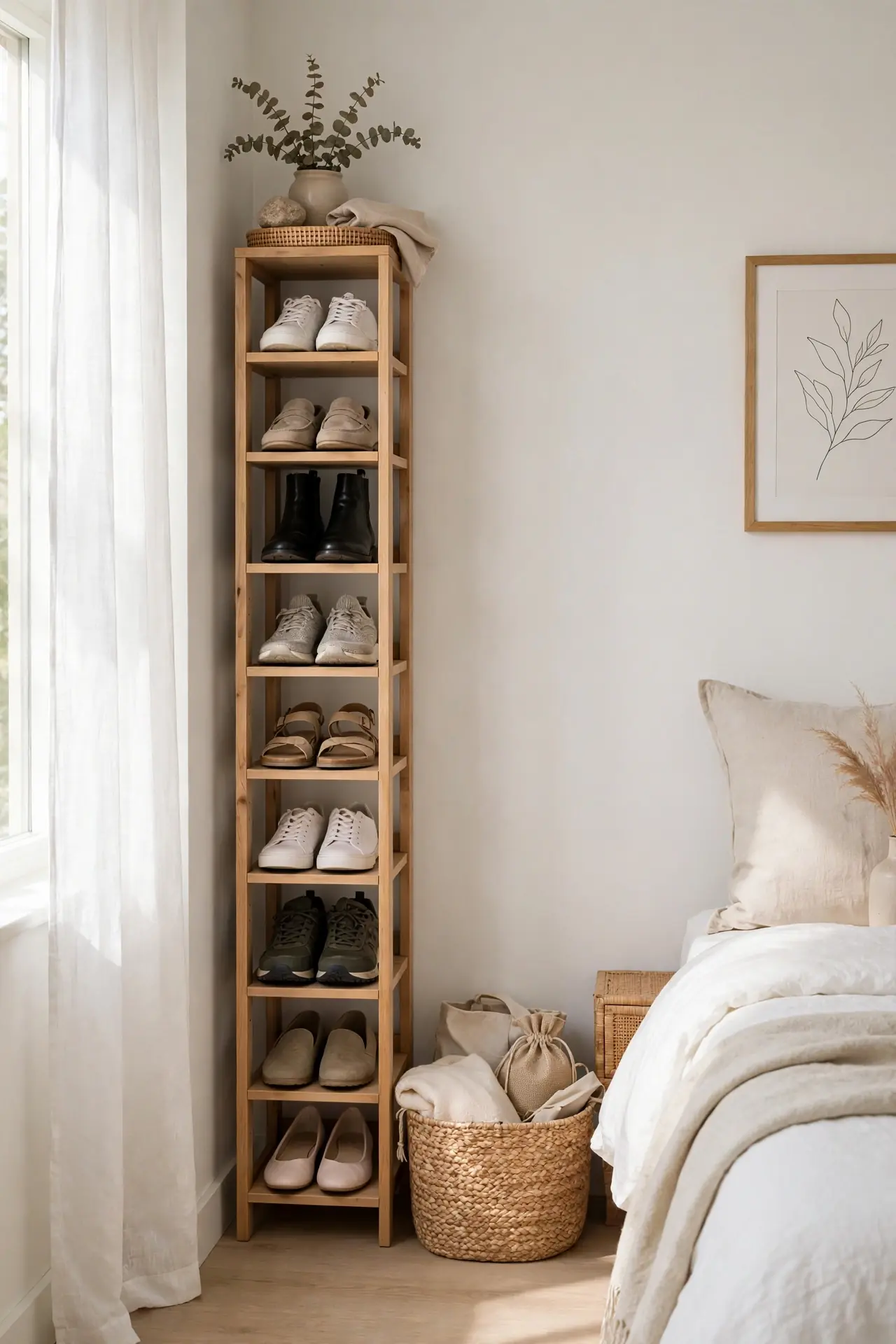
Cost: Low | Time: One hour to assemble | Skill Level: Beginner | Best For: Shoe lovers in tight rooms
Shoes eat floor space fast, and a vertical tower reclaims it all. Slim ten-inch-deep towers fit behind doors and in dead corners. Line pairs heel-to-toe to double each shelf’s capacity without a wider footprint. Anchor tall towers to the wall, since a fully loaded tower gets top-heavy fast. Rotate seasonal shoes to the top shelves so daily pairs stay at arm’s reach. A boot tray underneath catches drips and keeps the tower’s base clean through rainy months.
Curtain-Covered Nooks
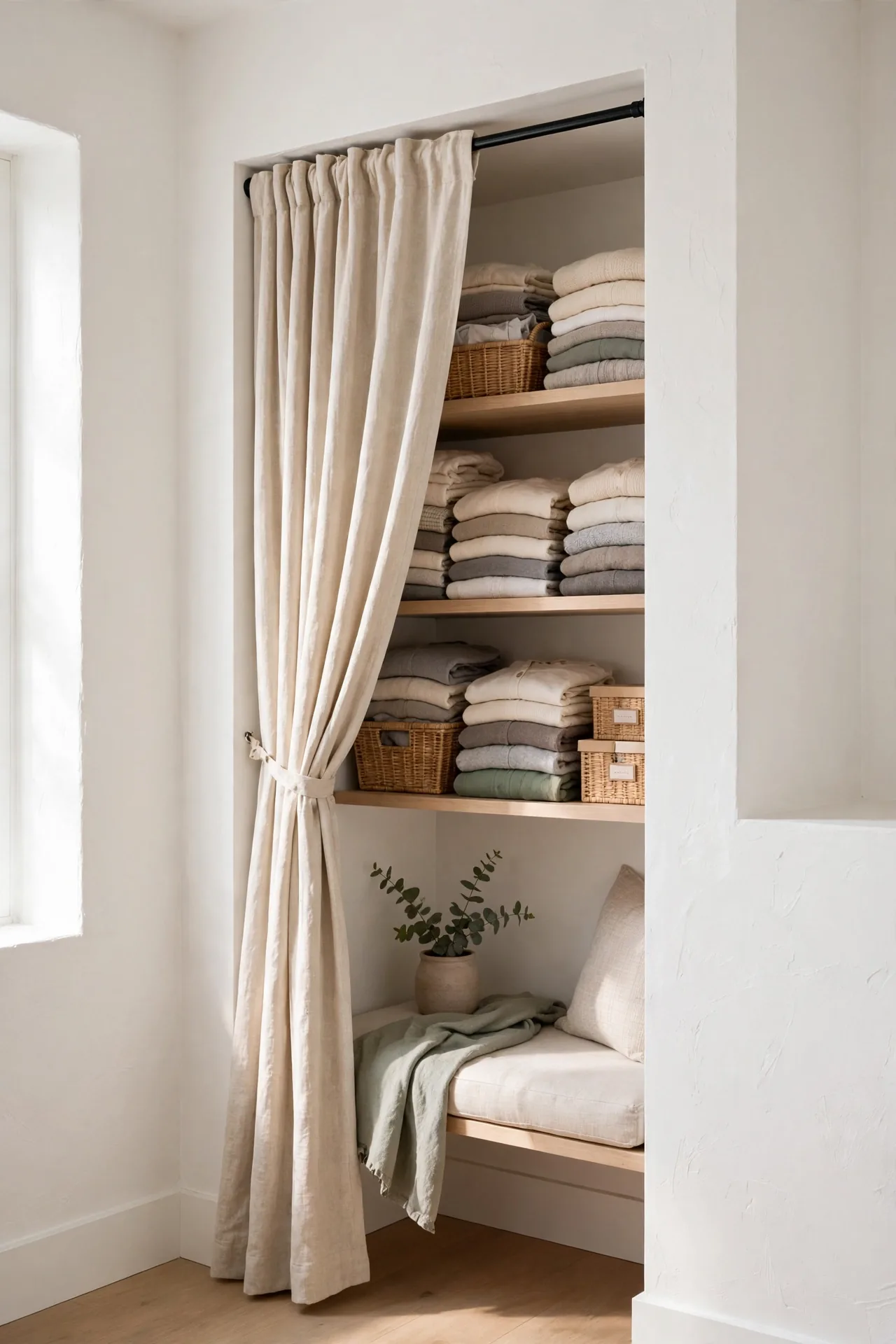
A tension rod and curtain turn any alcove into a hidden closet. Mount the rod inside the nook and let floor-length fabric conceal shelves of folded clothes. The soft drape looks intentional and elegant.
Choose a curtain that matches your bedding so the nook blends quietly into the room. This trick costs less than fifty dollars and creates genuine concealed storage. Hem the curtain to just kiss the floor for a tailored look that never looks makeshift. Weighted hems keep the fabric hanging straight instead of billowing. If the alcove is deep, add a second rod behind the first to double the hidden hanging space.
Slim Rolling Carts
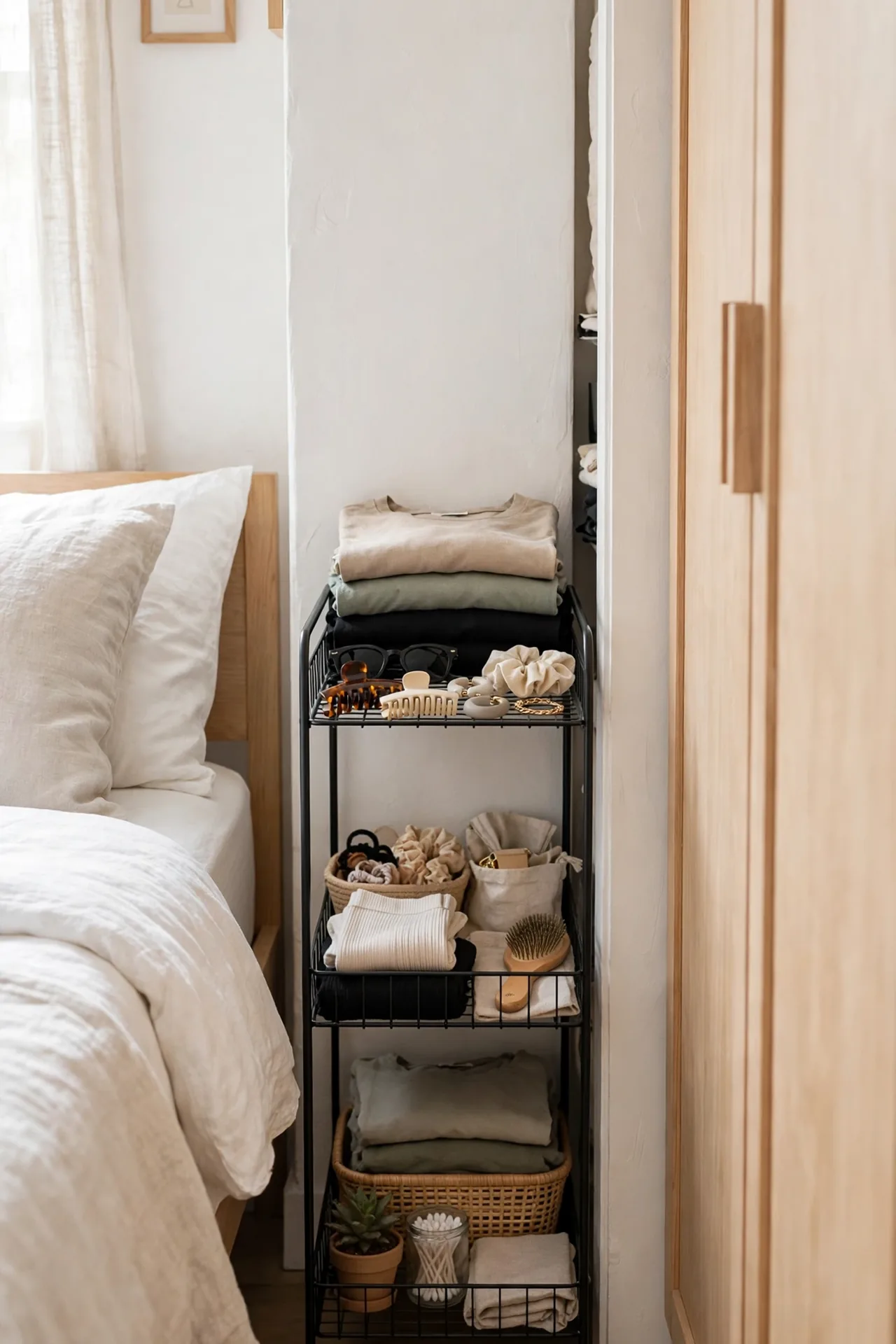
- Three-tier carts slide into six-inch gaps beside dressers.
- Use the top tier for daily items and lower tiers for backups.
- Lock the wheels once positioned so the cart never drifts.
- Decant products into matching containers for a tidy look.
Slim carts harvest storage from gaps too narrow for furniture. I have noticed that these overlooked slivers hold surprising amounts once carted. Roll it out for full access, then slide it home invisible. These carts also work brilliantly beside vanities for makeup and hair tools. A magnetic strip on the cart’s side holds bobby pins and tweezers within reach.
Seasonal Swap System
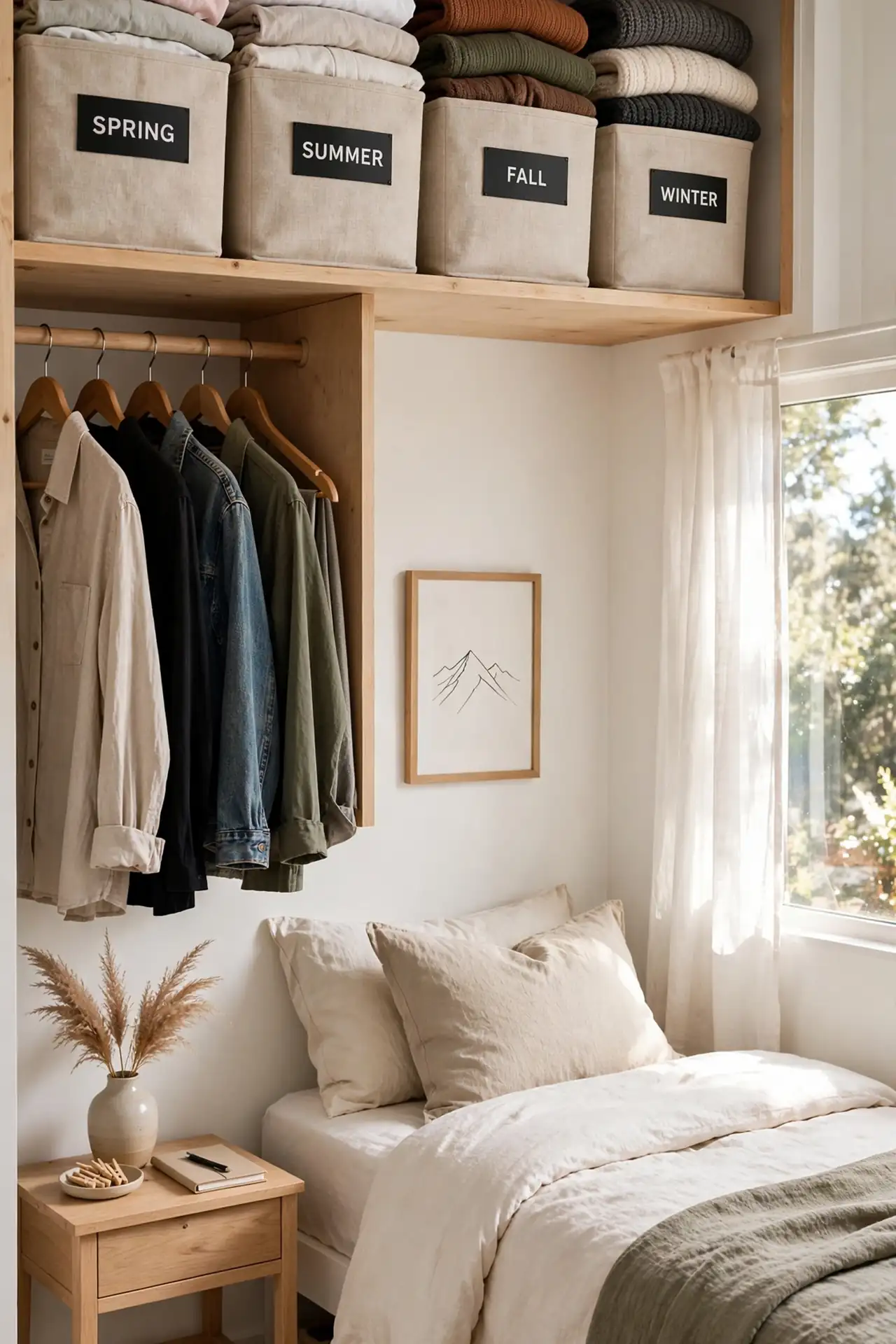
Quick Tip: Swap wardrobes twice a year on the same weekends you change smoke alarm batteries. Bag off-season clothes immediately so they never creep back. Keeping only the current season visible halves your daily storage needs.
A seasonal swap system means your limited storage only ever holds what you are wearing now. Store the rest in labeled bins under the bed or on a high shelf. Photograph each bin’s contents and tape the photo outside for instant identification. Purge one old item for every new one added so the system never outgrows its bins. Vacuum bags inside compress off-season overflow even further. Stack bins no more than three high so the bottom one stays reachable. This rhythm keeps a closet-less room feeling spacious year-round.
Mirror-Front Cabinets
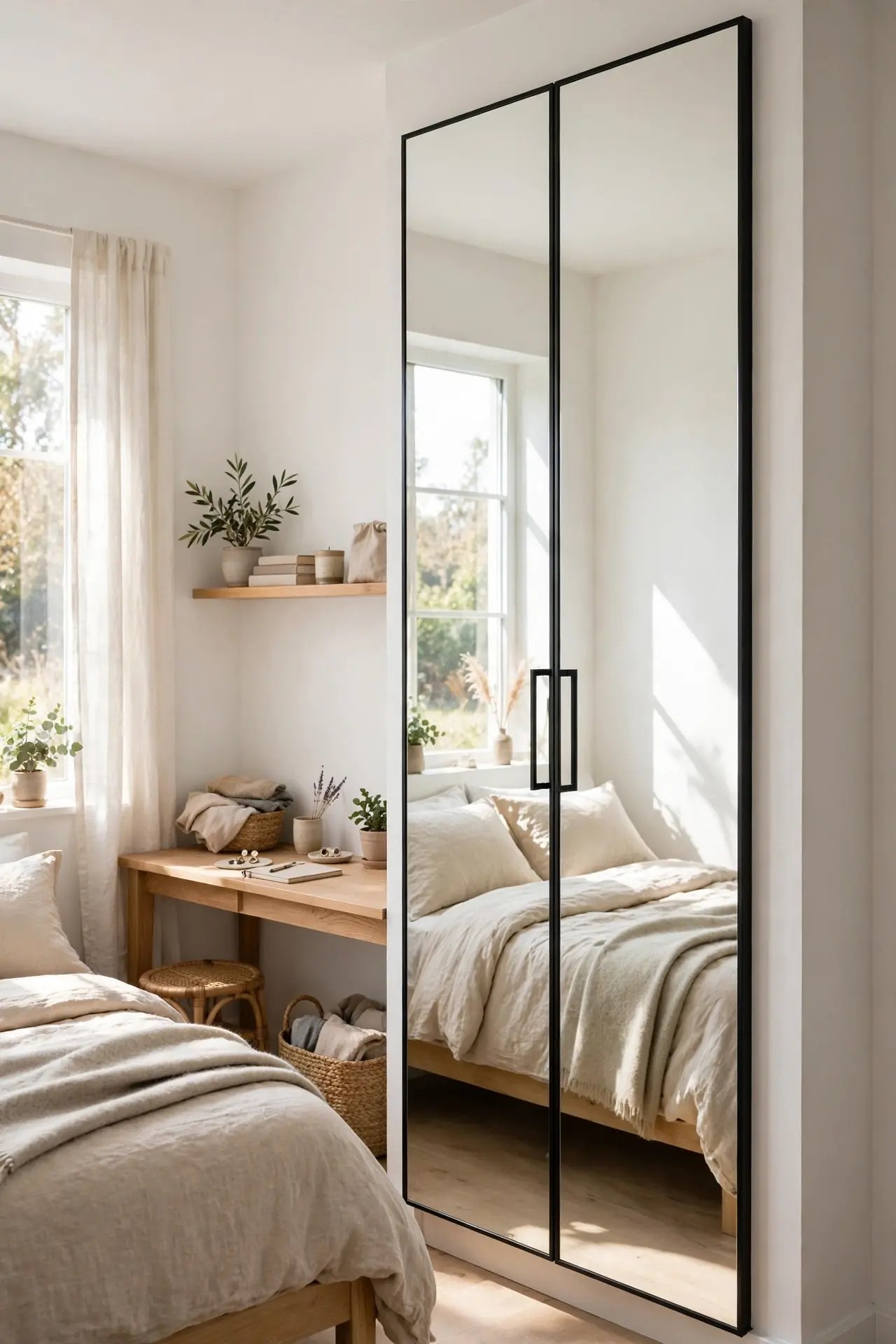
BEFORE: A bulky dresser hogged wall space and gave nothing back visually, making the small room feel smaller. Storage felt like a necessary eyesore.
AFTER: Mirror-front cabinets bounce light while hiding folded clothes inside. The reflective surface doubles the room’s brightness and the storage disappears into the glow.
Place mirror cabinets where they catch window light for maximum effect. Keep the glass streak-free, since smudges kill the illusion. A microfiber cloth kept in the top drawer makes daily wipe-downs effortless. This is storage that actively makes the room feel bigger.
Capsule Wardrobe Method
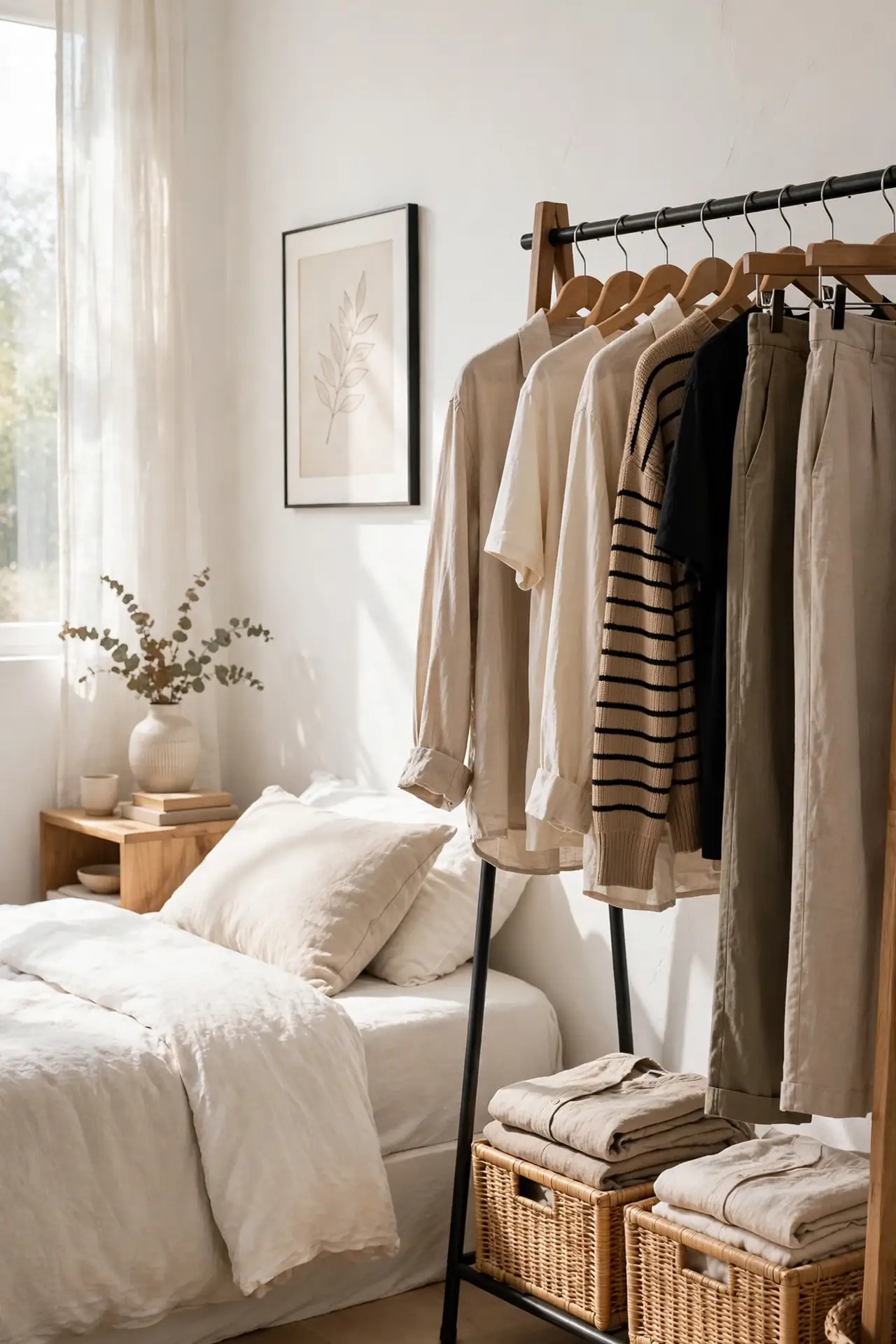
1. Pull everything out and keep only what you wore in the last year.
2. Build around three neutrals plus two accent colors maximum.
3. Count the keepers; aim for under forty pieces total.
4. Store the rest away or donate without guilt.
A capsule wardrobe shrinks what needs storing to fit any small space. Fewer, better pieces also make mornings effortless. That is why many experts recommend editing first and organizing second, since no system fixes too much stuff. Revisit the capsule each season and release anything you skipped wearing twice in a row.
Tiered Hanging Rods
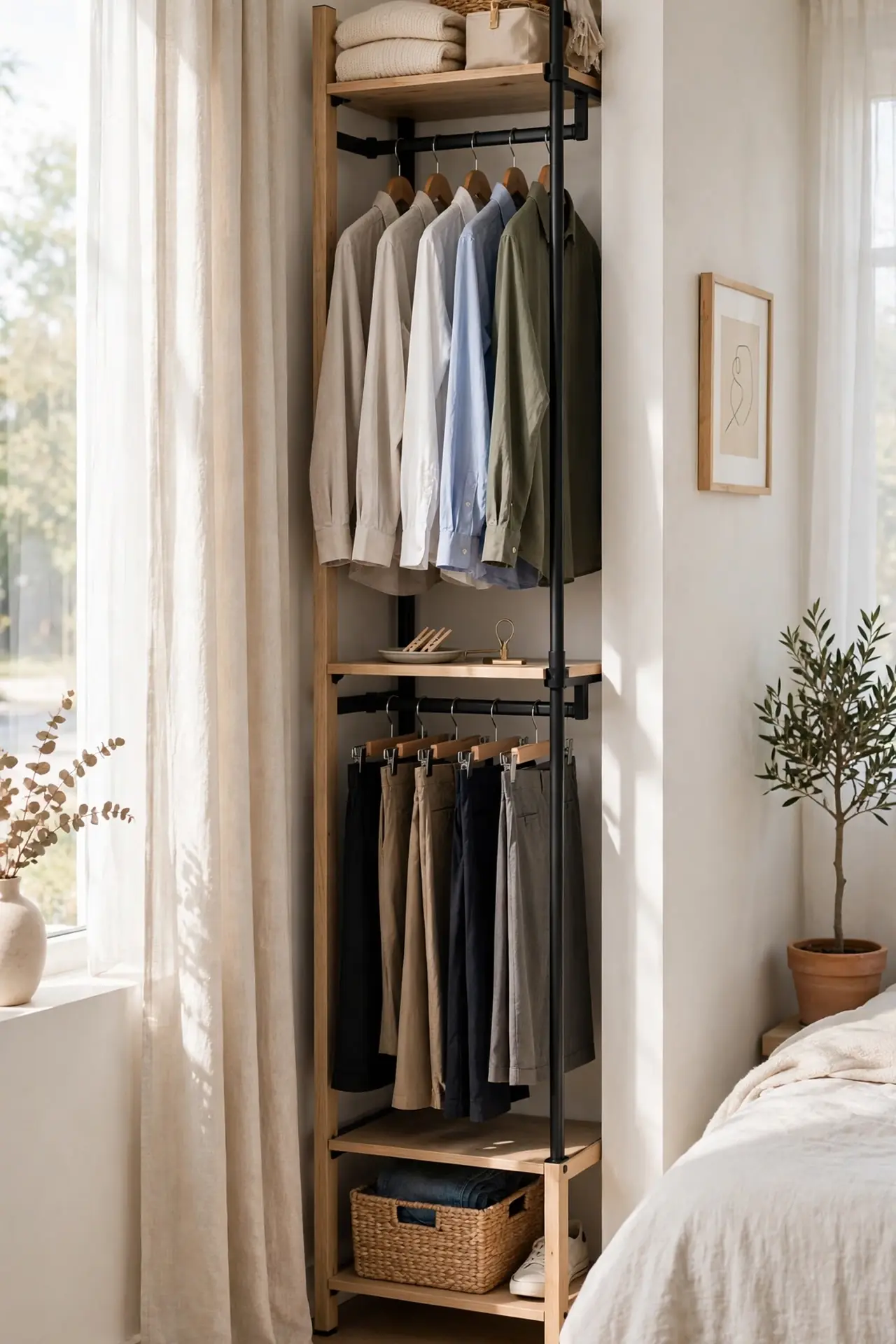
| Rod Setup | Height Needed | Doubles |
| Double hang | Five feet | Shirt and pant space |
| Triple hang | Seven feet | Kids or short items |
| Single plus shelf | Six feet | Long items plus folded |
Tiered rods double hanging capacity in the same vertical footprint. The table above shows which setups fit different ceiling heights. Most adults need the double-hang, while triple works for shorter items. A freestanding double-rod frame needs no wall at all. Add S-hooks along the top bar for bags and hats that need a home too. A fabric cover zipped over the frame hides everything when tidiness matters most.
Nightstand Valet Trays
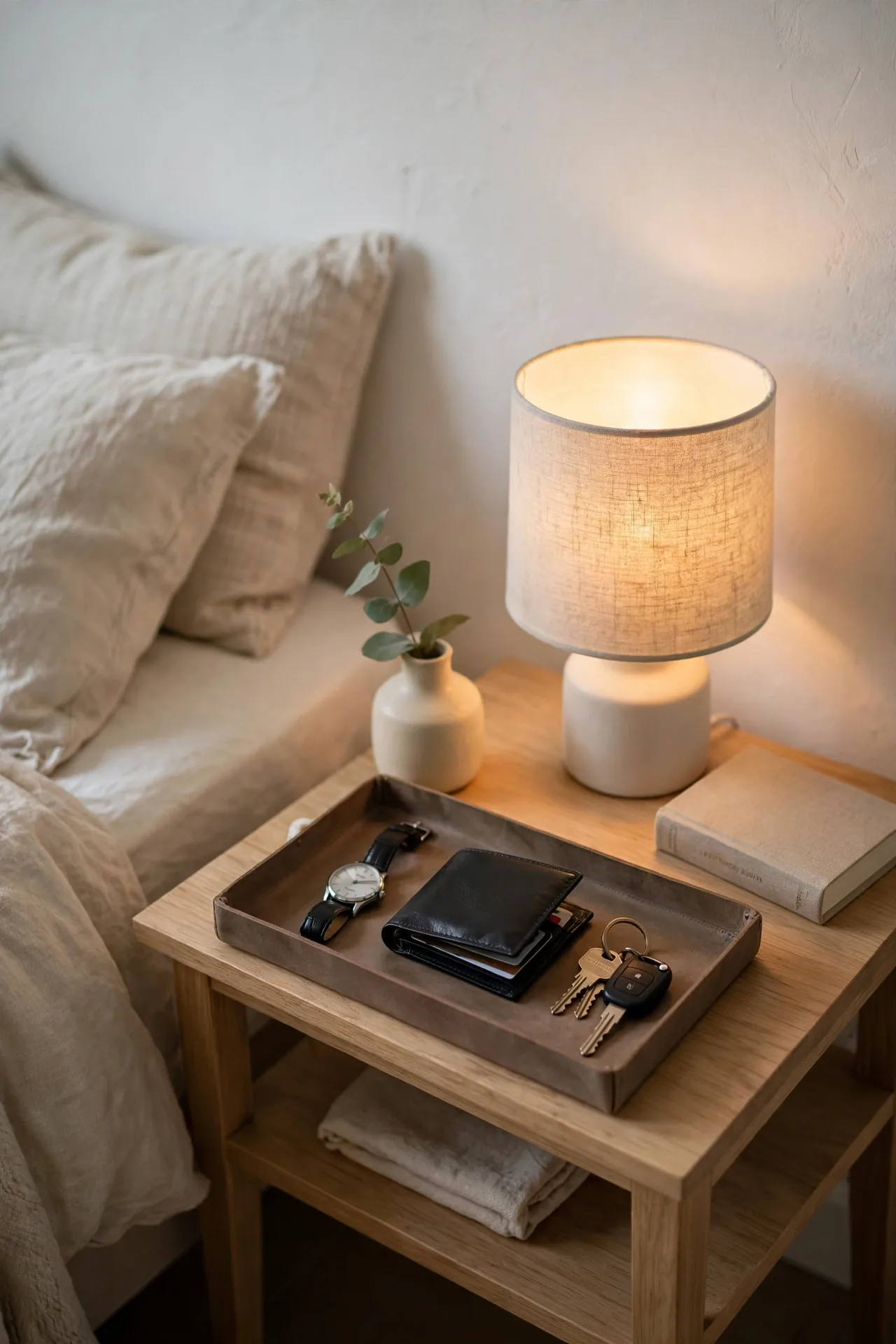
DO: Corral watch, wallet, and keys in one tray nightly.
DO: Choose a tray with compartments so items never pile.
DO: Empty it weekly to stop random clutter accumulating.
DON’T: Let the tray become a second junk drawer.
DON’T: Pick a tray larger than the nightstand surface.
DON’T: Forget a charging spot nearby for the phone.
A valet tray gives small daily items a permanent home by the bed. Mornings start smoother when essentials wait in one spot. This tiny habit is the finishing touch on a closet-less system that actually holds. Pair it with laying out tomorrow’s outfit to make mornings genuinely effortless.
Conclusion
Living without a closet is simply an invitation to store smarter, not less. These small bedroom ideas with no closet prove that freestanding wardrobes, wall systems, and hidden zones can out-organize many built-ins. Start with the biggest win, like a wardrobe or storage bed, then layer in the smaller systems. I have seen how small changes like these can completely shift the way a space feels. Save your favorites on Pinterest, tackle one idea this weekend, and share your closet-free transformation with someone who thinks small rooms cannot stay organized. These small bedroom ideas with no closet ideas will inspire your next makeover.


One Comment