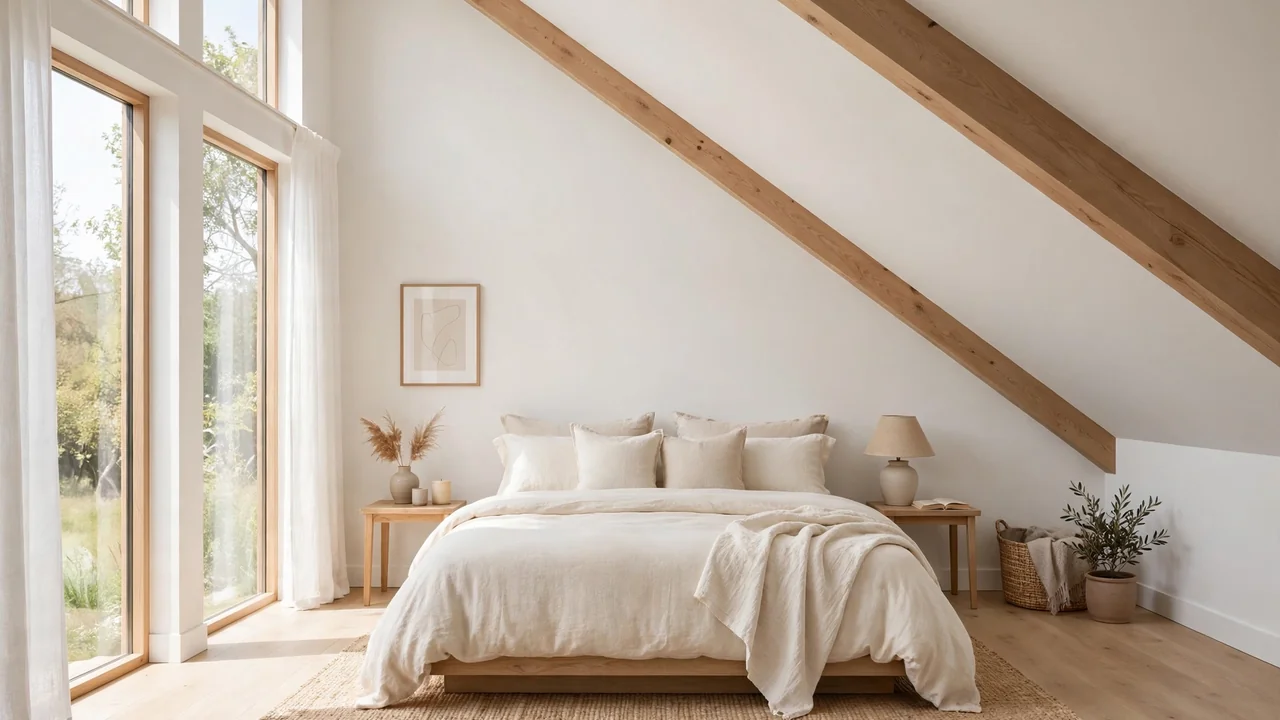
How to Decorate a Bedroom With a Sloped Ceiling
That awkward angled wall can make a bedroom feel impossible to furnish, but learning how to decorate a bedroom with a sloped ceiling changes everything. In my experience, the real problem is fighting the slope with furniture made for flat, tall rooms.
Once you stop pushing against the angle and start designing around it, the room opens up in surprising ways. Low beds, tucked-in storage, and warm layered light turn that tricky corner into the coziest spot in the house.
This guide walks you through every step, from paint choices to furniture that actually fits. If you also want clever storage ideas for the kitchen, read our guide on how to organize pots and pans in small cabinets for small-space tricks that apply anywhere.
Why Sloped Ceilings Feel Tricky
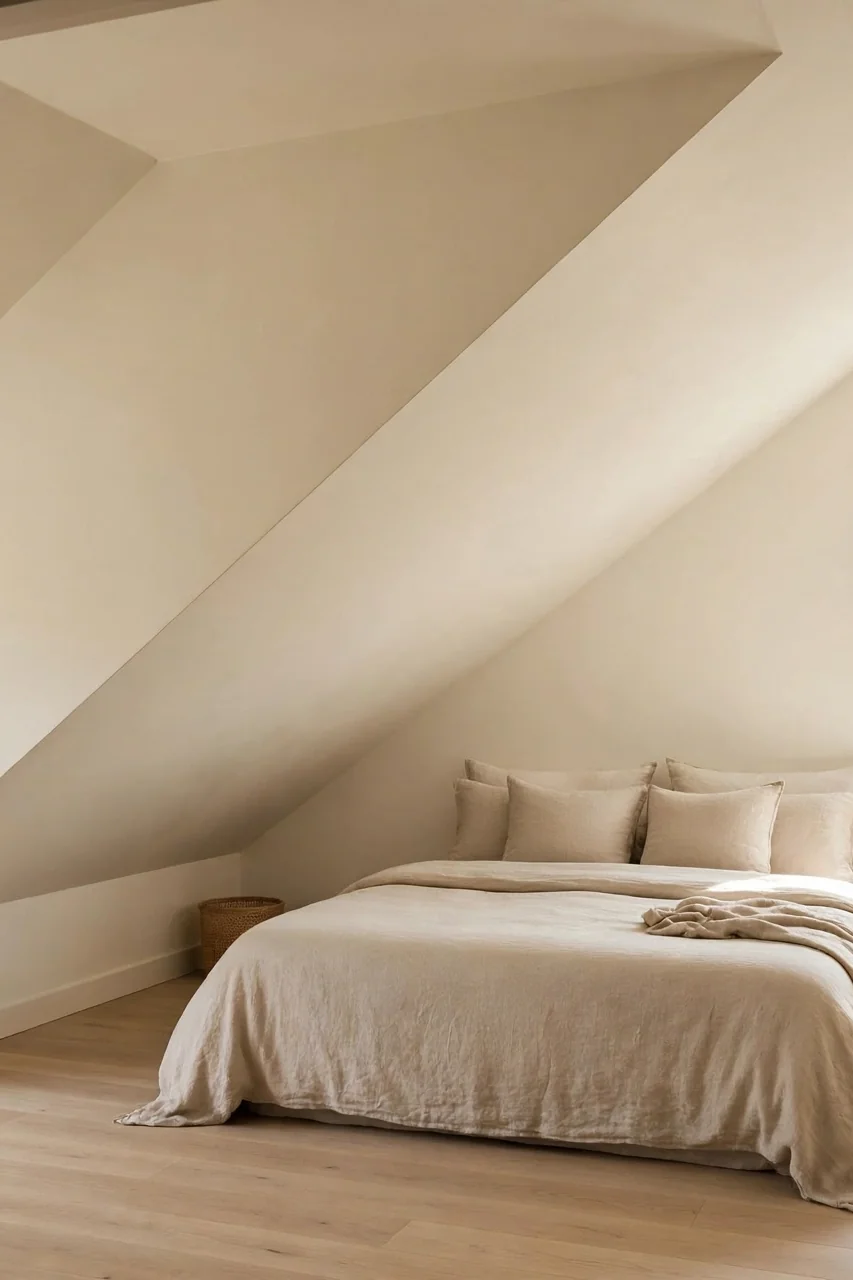
A sloped ceiling cuts off headroom exactly where you expect it, which makes the whole room feel smaller than its floor plan says. Your eye follows the angle down and reads the space as cramped, even when the square footage is fine.
Most bedrooms are designed for vertical walls, so standard furniture heights clash with the slope. Tall dressers bump into the angle, artwork hangs crooked, and lamps get lost under the low side. The fix starts with accepting the shape instead of hiding it behind bulky pieces that only make things worse.
Work With the Slope
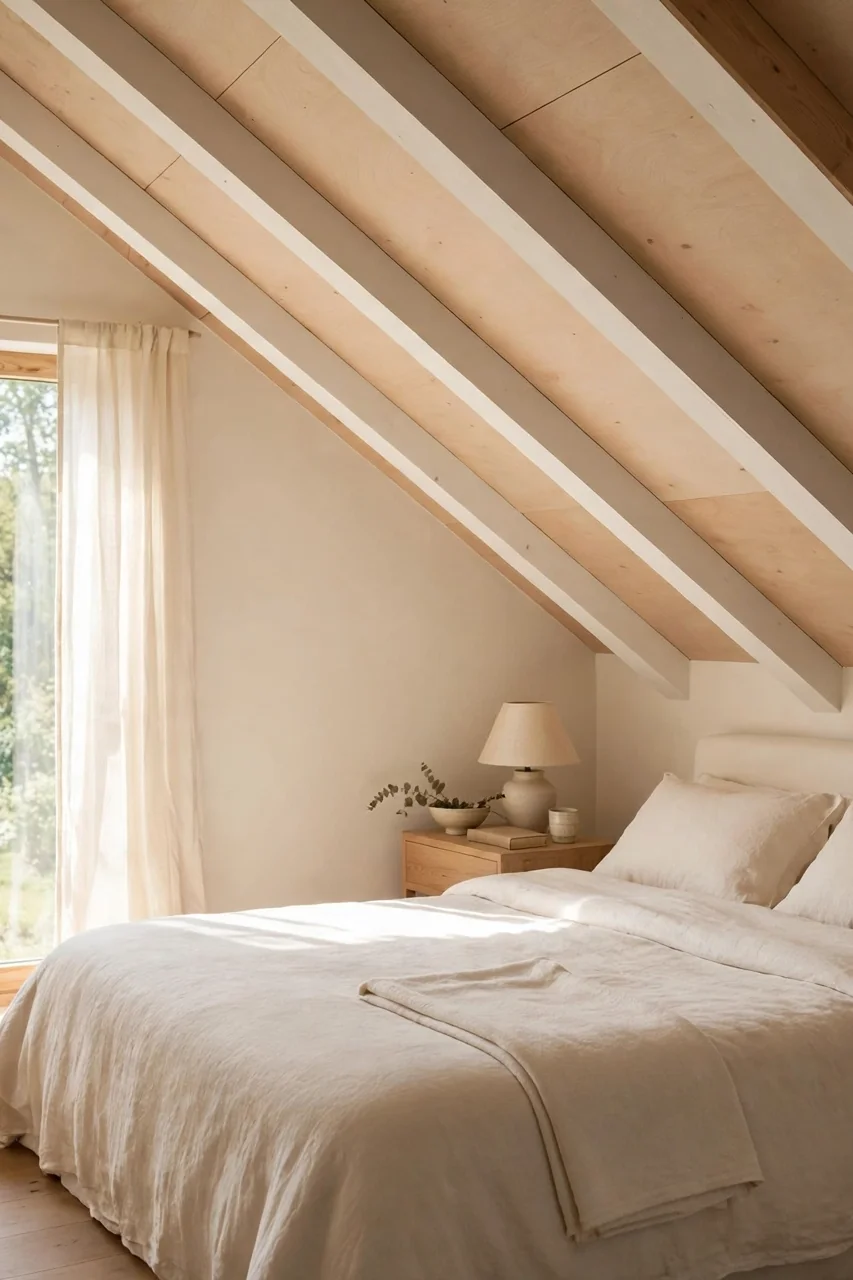
Stop treating the slope as a flaw and start using it as the room’s best feature. When furniture follows the angle instead of fighting it, every inch feels intentional and the room gains a cozy, layered character that flat ceilings cannot copy.
- Push the bed’s headboard against the lowest wall so the slope rises above your pillows like a canopy.
- Keep tall pieces, like wardrobes, on the high side where the ceiling gives them room.
- Let the low side hold short items, like a bench or a row of baskets.
- Leave the angle visible; covering it with a false flat ceiling wastes the charm you already have.
Choose Low-Profile Furniture
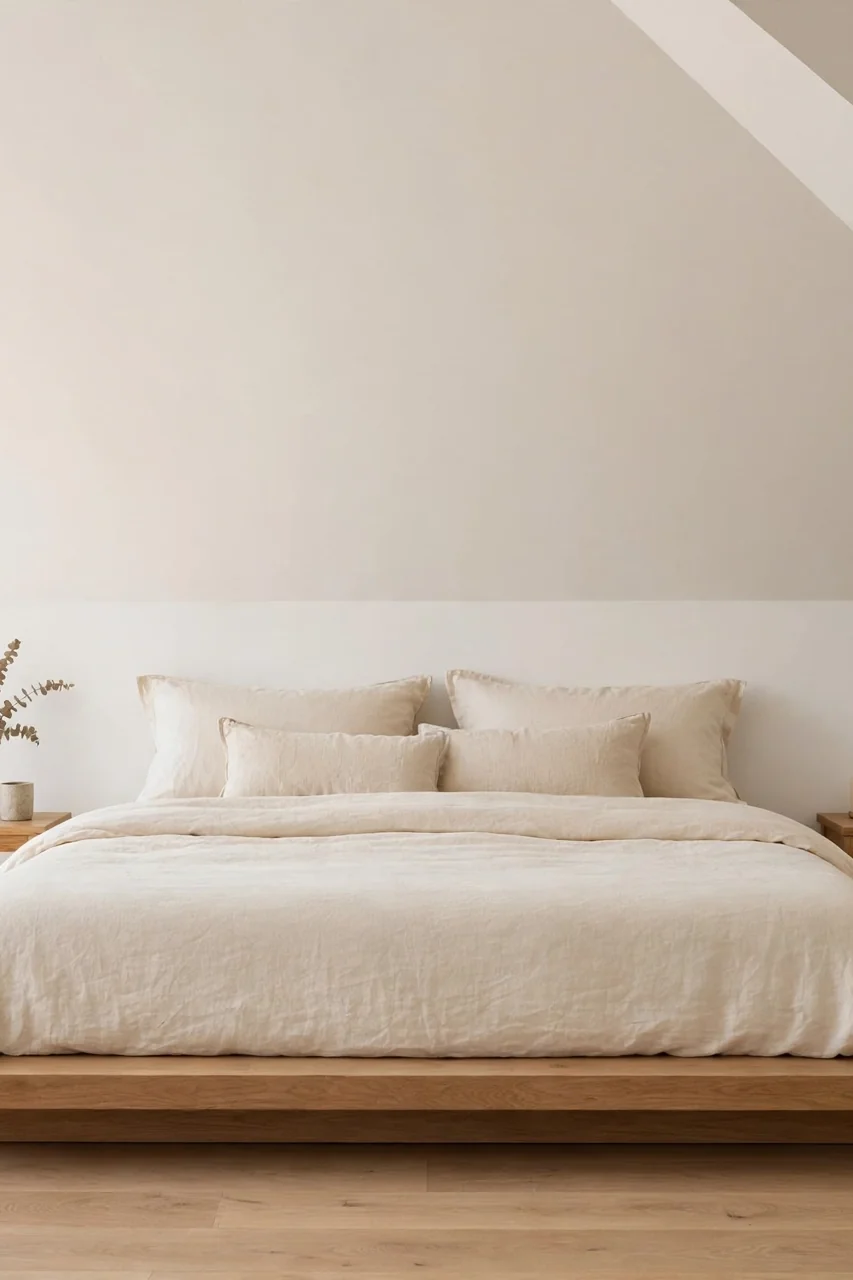
Quick Tip: Measure the height of the slope at several points before you shop. A bed frame that is 14 inches tall might slide perfectly under a three-foot knee wall, while a standard 24-inch frame will not. Bring a tape measure, not guesses.
Low platform beds, short nightstands, and horizontal dressers hug the floor and leave the slope breathing room. Look for pieces with clean legs or a floating look so the floor stays visible. Heavy, tall furniture crowds the angle and makes the ceiling feel like it is pressing down.
Paint Smartly
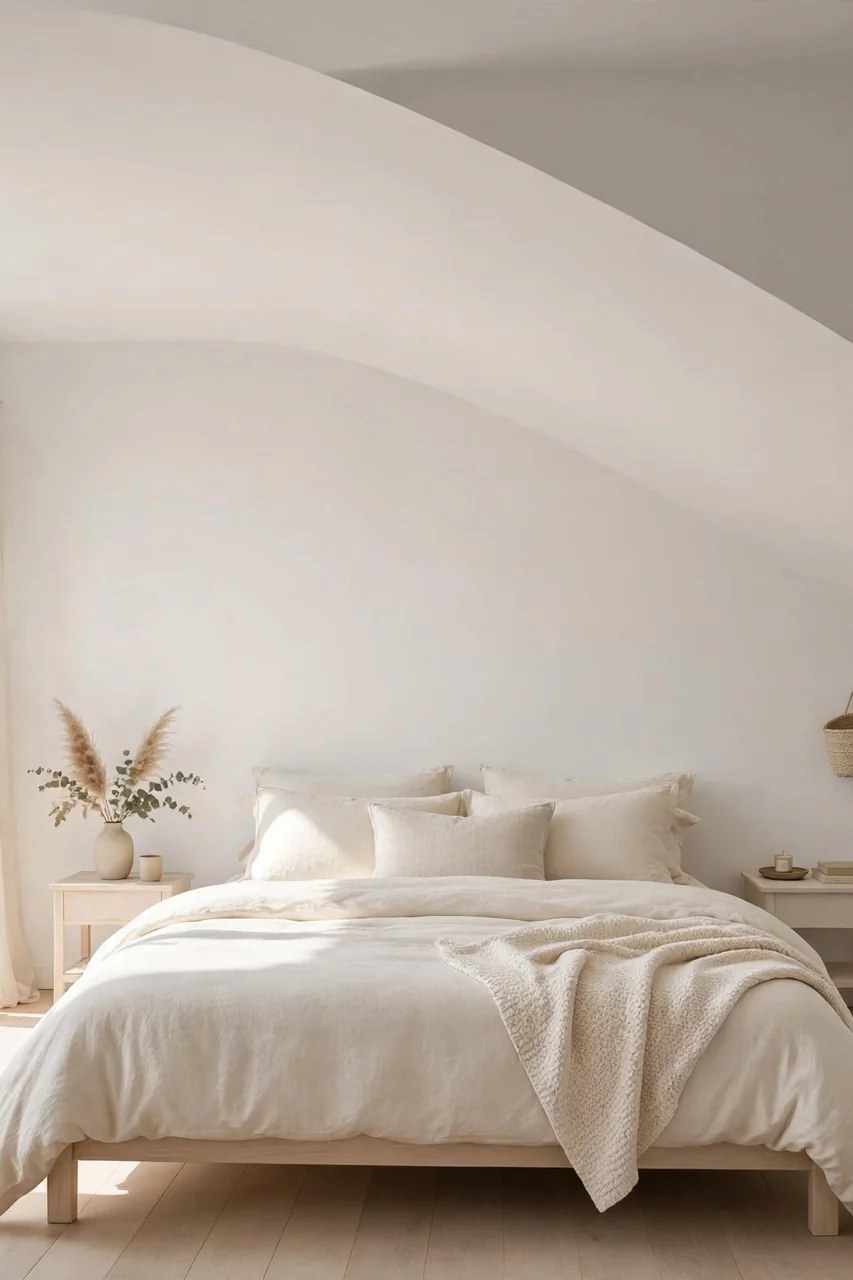
Common Mistake: Painting the slope a dark accent color feels bold, but it visually lowers the ceiling and chops the room in half. The angle becomes a heavy lid instead of a soft backdrop, and the bedroom feels smaller by nightfall.
The Fix: Paint the slope the same light color as the walls to blur the line where wall meets ceiling. White, warm ivory, or pale greige all lift the angle. Save deeper tones for bedding and art, where they add richness without weight.
A single continuous color makes the ceiling feel higher because your eye never stops at a border. If you crave contrast, try a soft stripe or a subtle tone-on-tone pattern on the slope. Keep the finish matte so light spreads evenly instead of harsh glaring.
Add Built-In Storage
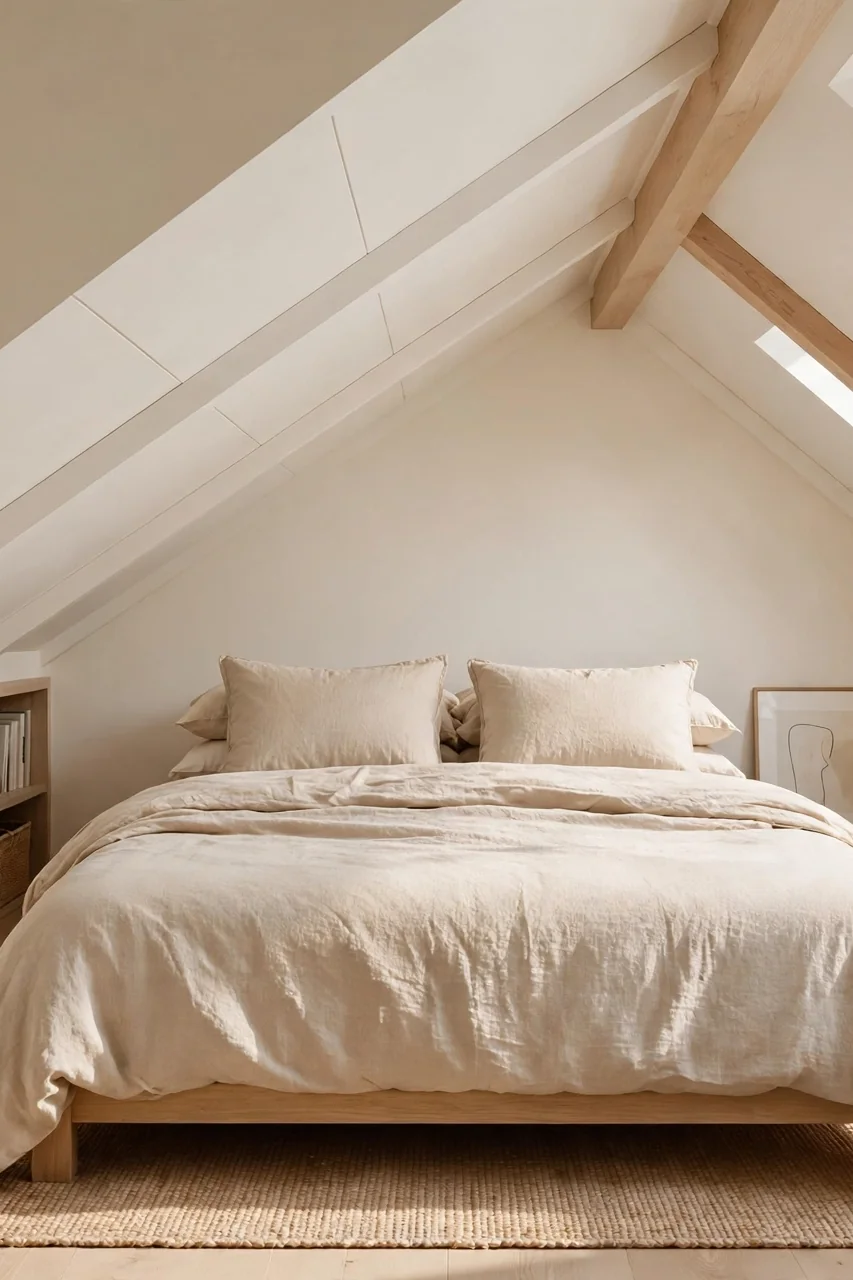
What You Need:
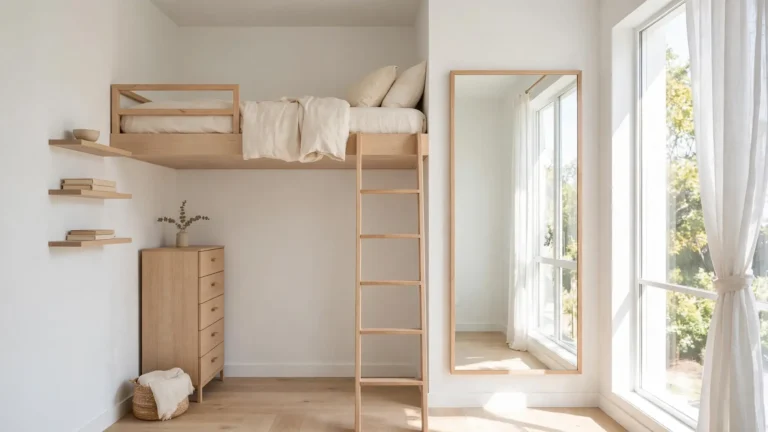
- Short bookcases that slide under the knee wall, turning dead space into a library.
- Pull-out drawers on casters for the deepest part of the slope, where nothing else fits.
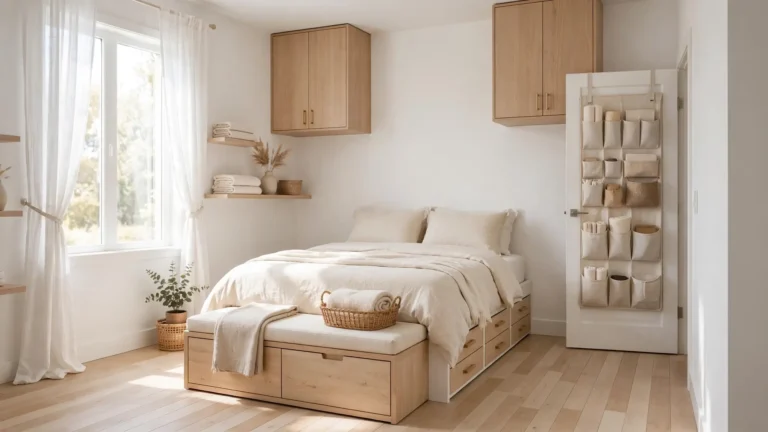
- A row of matching baskets for clothes or linens, keeping the low edge tidy.
- Wall-mounted shelves following the angle, for books and small plants.
- A slim bench with a hinged lid under the window, doubling as a seat and a trunk.
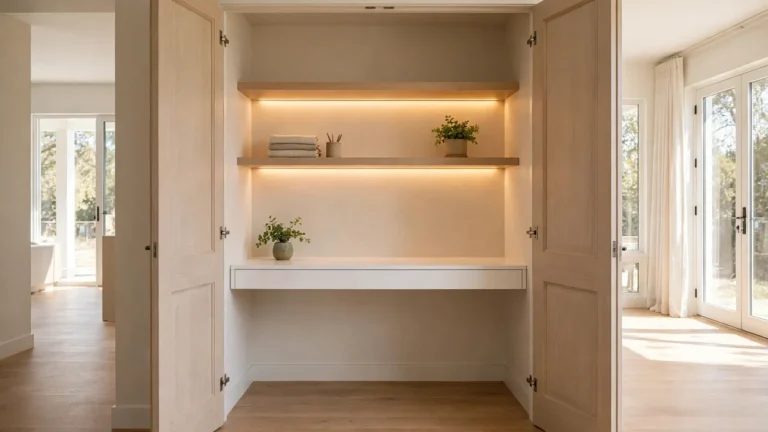
Custom storage is the secret weapon here, since learning how to decorate a bedroom with a sloped ceiling means using every odd inch. Built-ins hug the angle without wasting the middle of the room. Even simple ready-made pieces work if you measure first and keep the fronts clean and quiet.
Layer Lighting Low
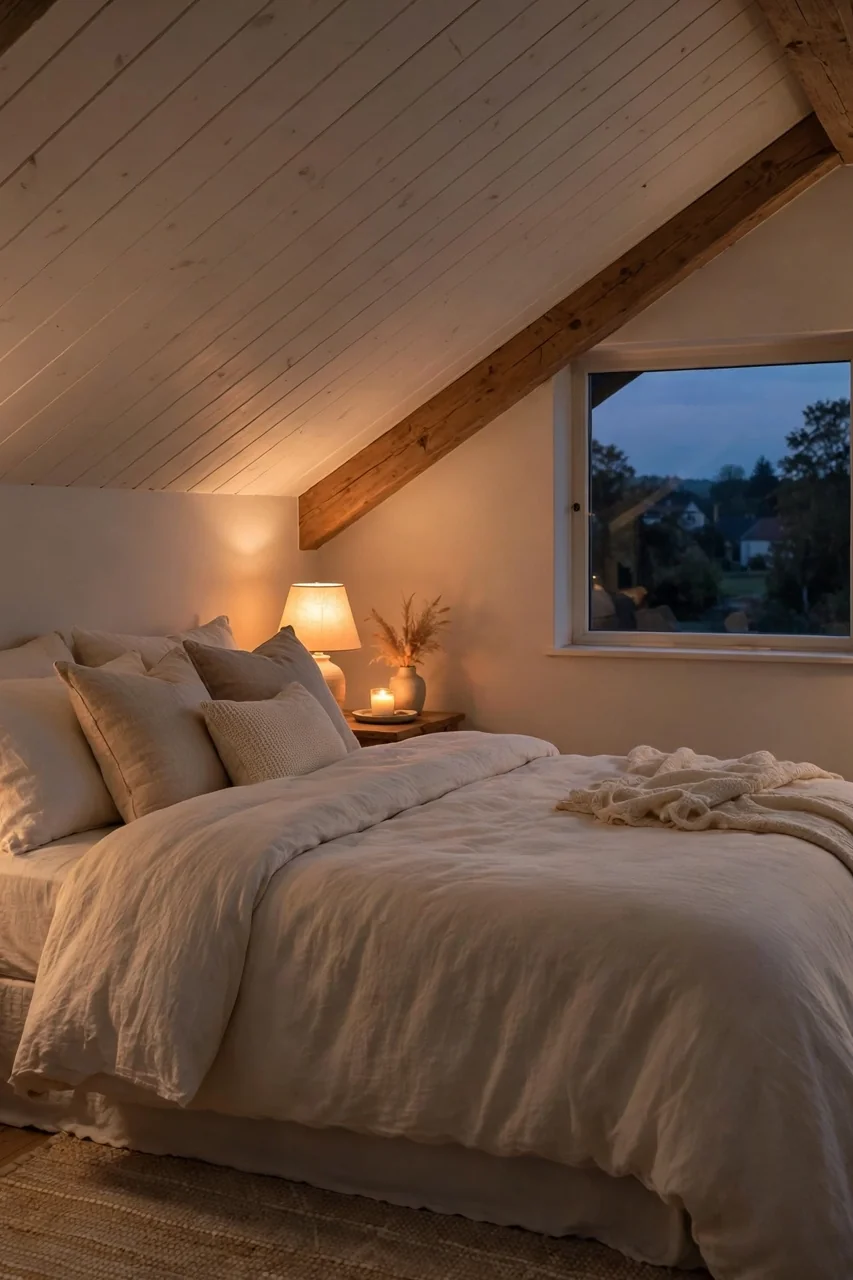
Before: One ceiling fixture in the center of the room throws harsh shadows under the slope and leaves the low side in gloom. The angle looks darker than it is, and the bedroom feels flat and unwelcoming after sunset.
After: Low lamps on nightstands, a floor lamp in the tall corner, and small wall sconces along the slope wash the angle in warm light. The ceiling glows softly, the room feels taller, and evenings turn genuinely cozy.
Keep every fixture low and pointed upward so light climbs the slope instead of glaring down. Warm bulbs around 2700K flatter the angle and the bedding alike. Add a dimmer wherever you can, since sloped rooms shift mood quickly between bright day and soft night.
Dress the Windows
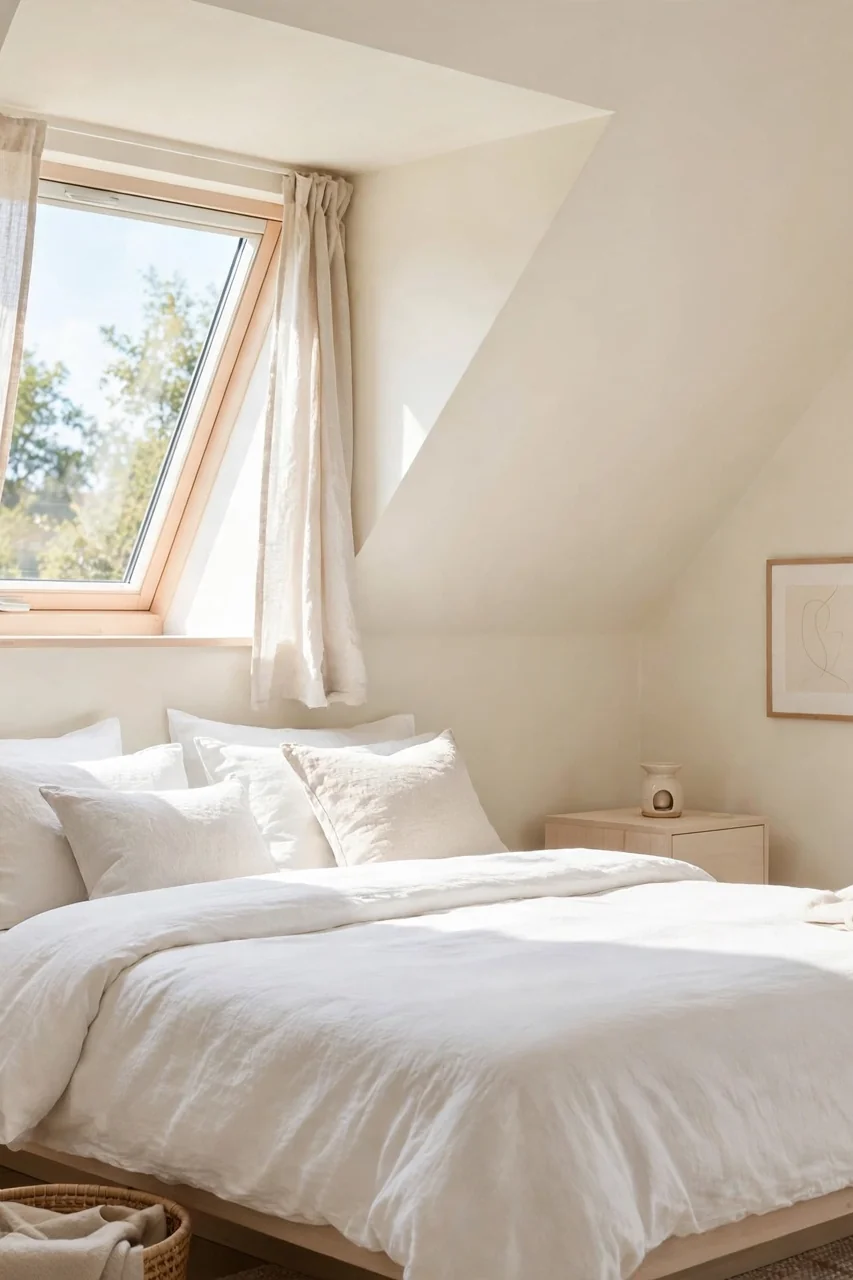
Do This:
- Hang curtains high and wide so the window feels larger than the slope allows.
- Use light-filtering fabrics that soften daylight without blocking it.
- Match curtain rods to the wall color so hardware disappears into the angle.
Avoid This:
- Heavy blackout drapes that swallow the little light a sloped window gives.
- Short curtains that stop at the sill and chop the wall visually.
- Ignoring the window entirely, which wastes your best source of brightness.
Windows under a slope are precious, so treat them like jewelry for the room. A simple linen panel or a neat Roman shade frames the glass without fuss. Keep the sill clear of clutter so daylight pours straight onto the bed and brightens the whole angle.
For entryway storage that uses the same small-space thinking, see how to create a drop zone in a small home.
Create Cozy Nooks
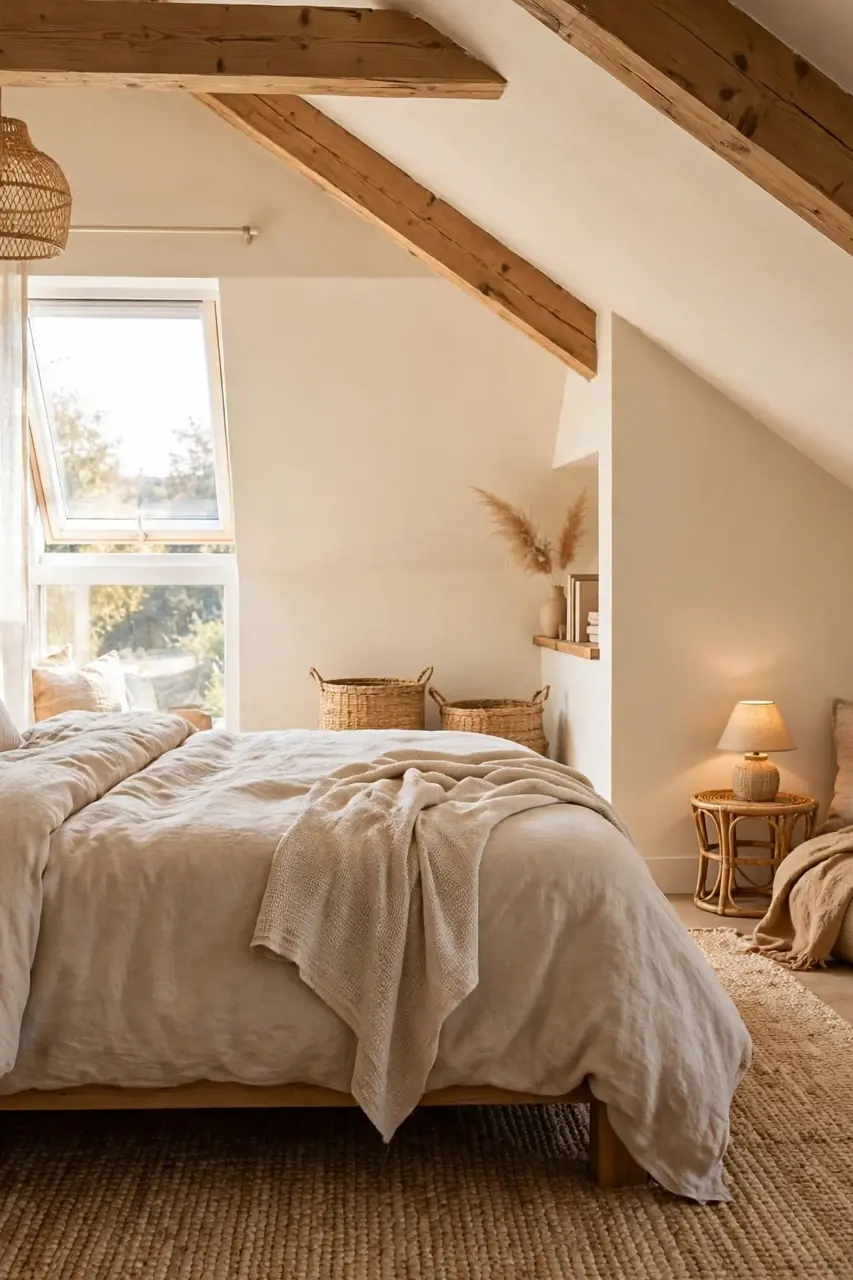
Time Needed: one afternoon | Difficulty: Easy | Cost: Low
Best Spot: the lowest corner, where standing is awkward but sitting is perfect.
What Helps: a floor cushion, a small lamp, and a basket of books.
Result: a reading corner that feels made for the slope, not stuck under it.
The low side of the room is wasted on walking space, so claim it for sitting instead. A cushion, a throw, and a small side table turn dead inches into the spot everyone fights over. I have noticed these corners become the most loved seat in the house.
Common Sloped Ceiling Mistakes
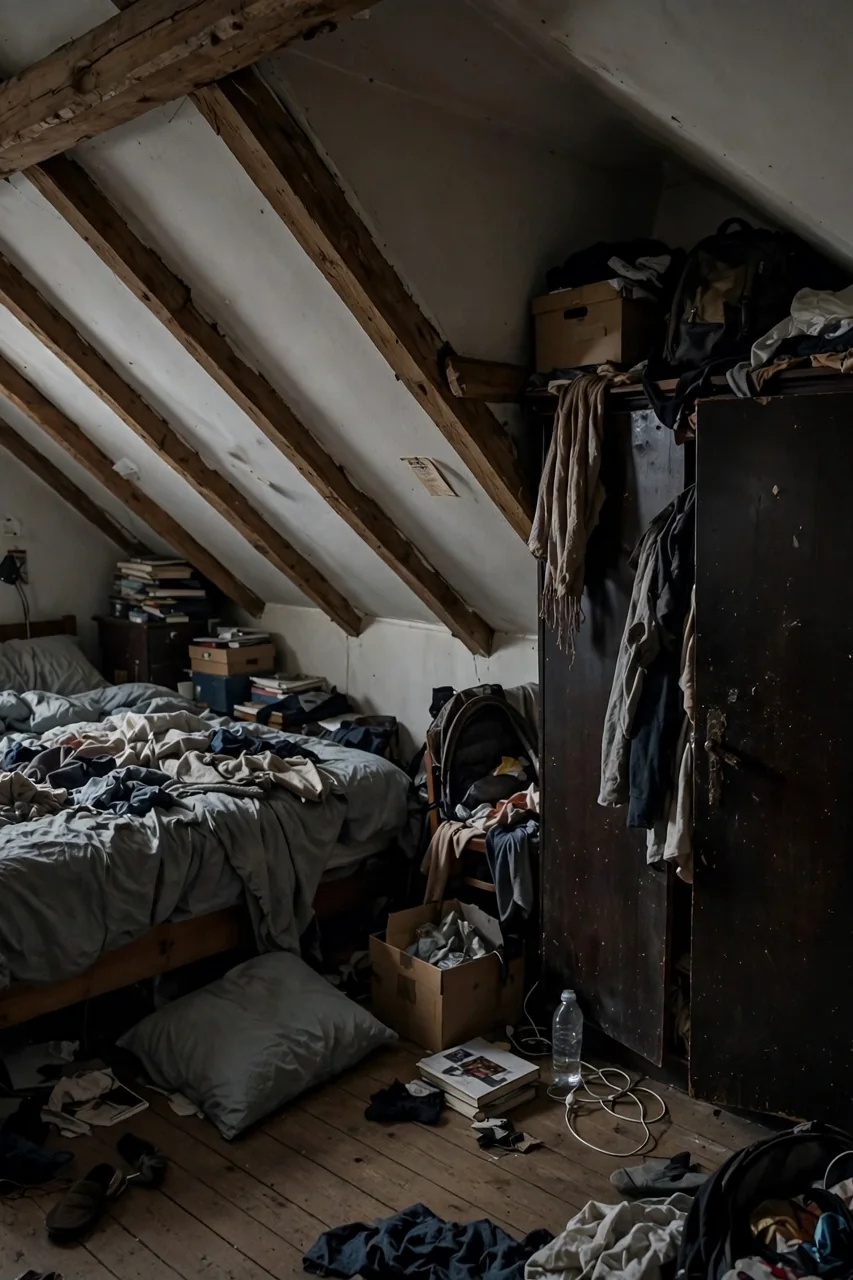
The biggest mistake is buying furniture for the room you wish you had instead of the one you own. Oversized headboards crash into the slope, tall bookshelves tilt visually against the angle, and dark paint turns the ceiling into a cave.
Another trap is leaving the low side empty because nothing tall fits there. That dead strip collects clutter fast. Fill it on purpose with low storage, a bench, or a row of plants, and the whole room feels finished instead of forgotten, which is the whole point of working with the angle.
Pro Tips for Sloped Bedrooms
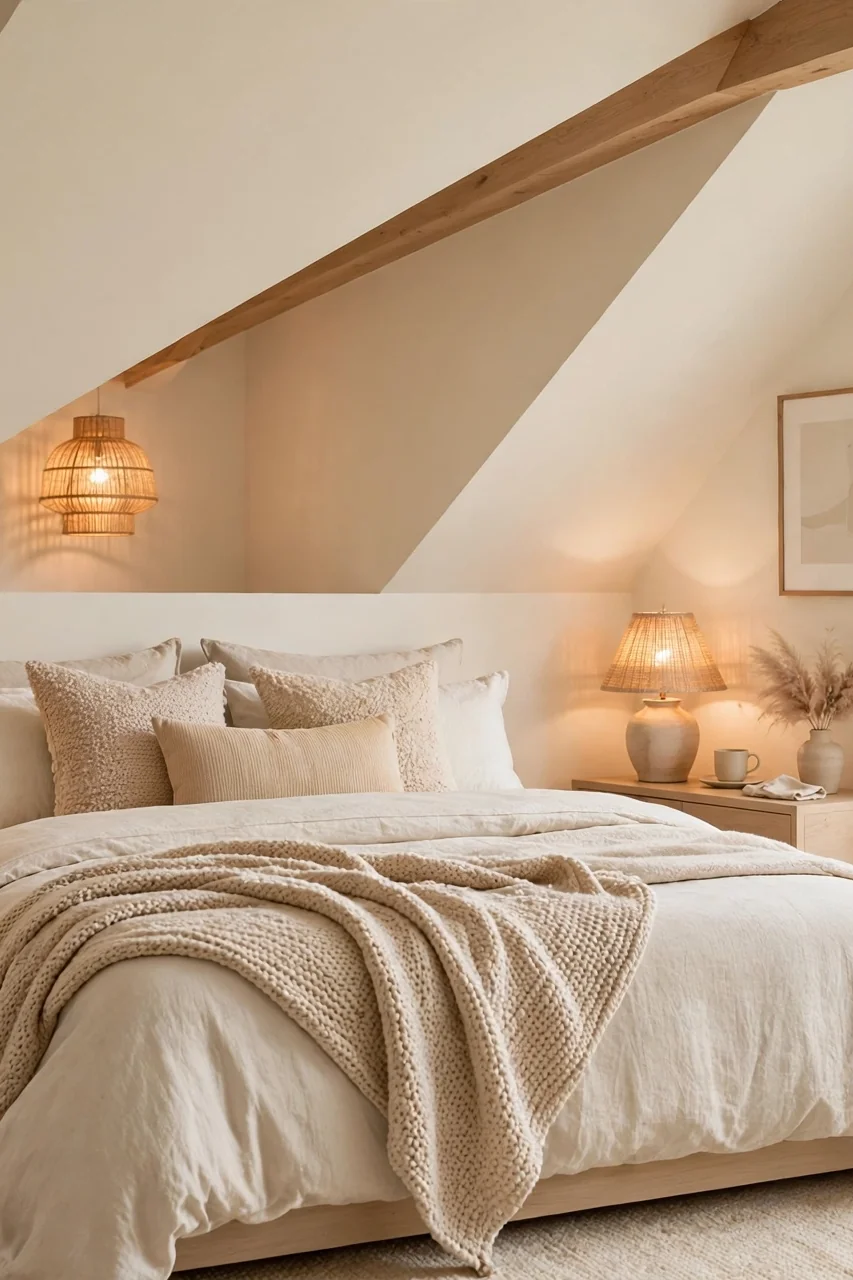
These finishing touches separate a room that copes with its slope from one that celebrates it. Small choices in texture, light, and placement make the angle feel like a design decision rather than a flaw you are stuck with daily.
- Add one textured throw or rug to soften the hard lines of the angle.
- Keep the palette to three neutrals so the slope reads as calm, not busy.
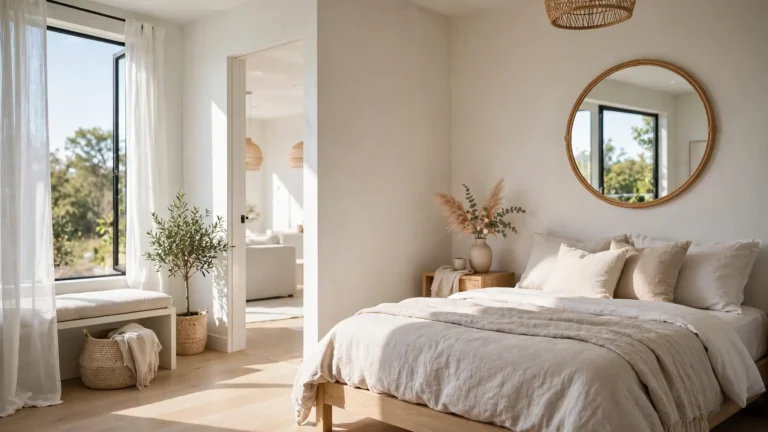
- Place a mirror opposite the window to bounce light up into the slope.
- Step back and check sightlines from the door; the bed should greet you first.
Conclusion
Learning how to decorate a bedroom with a sloped ceiling comes down to one mindset shift: work with the angle, not against it. Low furniture, light paint, and warm low lighting turn that tricky slope into the coziest feature of the room. Start with one change, like moving the bed under the low side, and build from there. I have seen how a single smart move can completely shift how a bedroom feels. Save this guide on Pinterest so you have it handy, try the steps this weekend, and share it with a friend who is wrestling with a tricky ceiling.
2 Comments