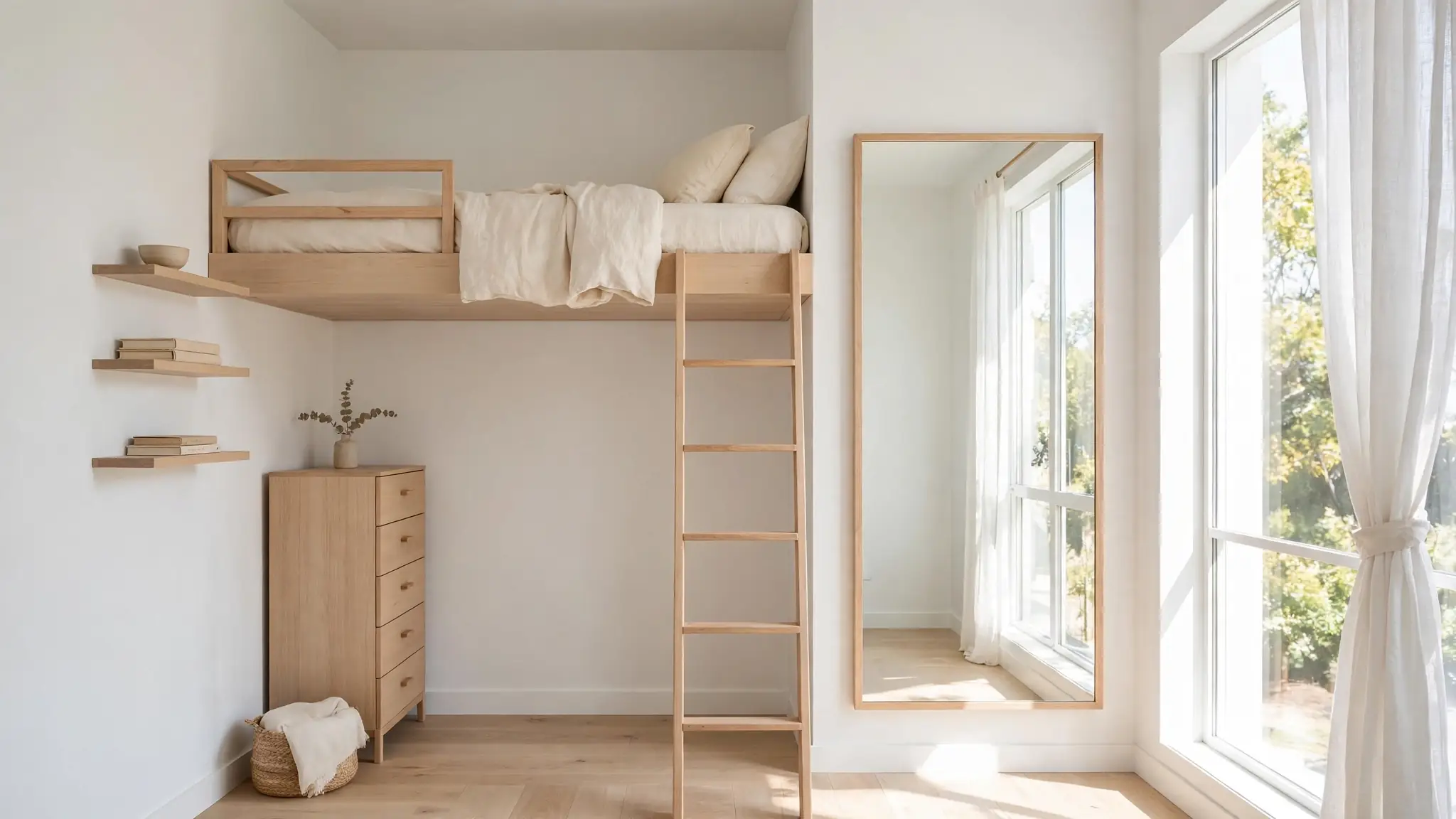
21 Tiny Bedroom Ideas for a Brilliant Space-Saving Feel
Small square footage is no barrier to beautiful sleep, and tiny bedroom ideas prove it with clever tricks that feel spacious. I’ve noticed that tiny rooms force the smartest design decisions in the whole house. Every inch earns its keep, every piece multitasks, and the result often feels more intentional than big rooms. This guide collects 21 brilliant ideas for making the smallest bedroom feel airy, organized, and calm. Each trick is practical, renter-friendly where possible, and chosen for real tiny spaces. You will be amazed how much changes with a few smart moves. Let’s make every inch count together.
Tiny rooms share tricks with sloped ones, so fans of our attic bedroom ideas will feel at home here. The principle is the same: work with the constraints, not against them. In my experience, one vertical storage move can free more floor than any furniture swap. Keep reading for the 21 ideas that make tiny feel brilliant.
Wall Mount Everything
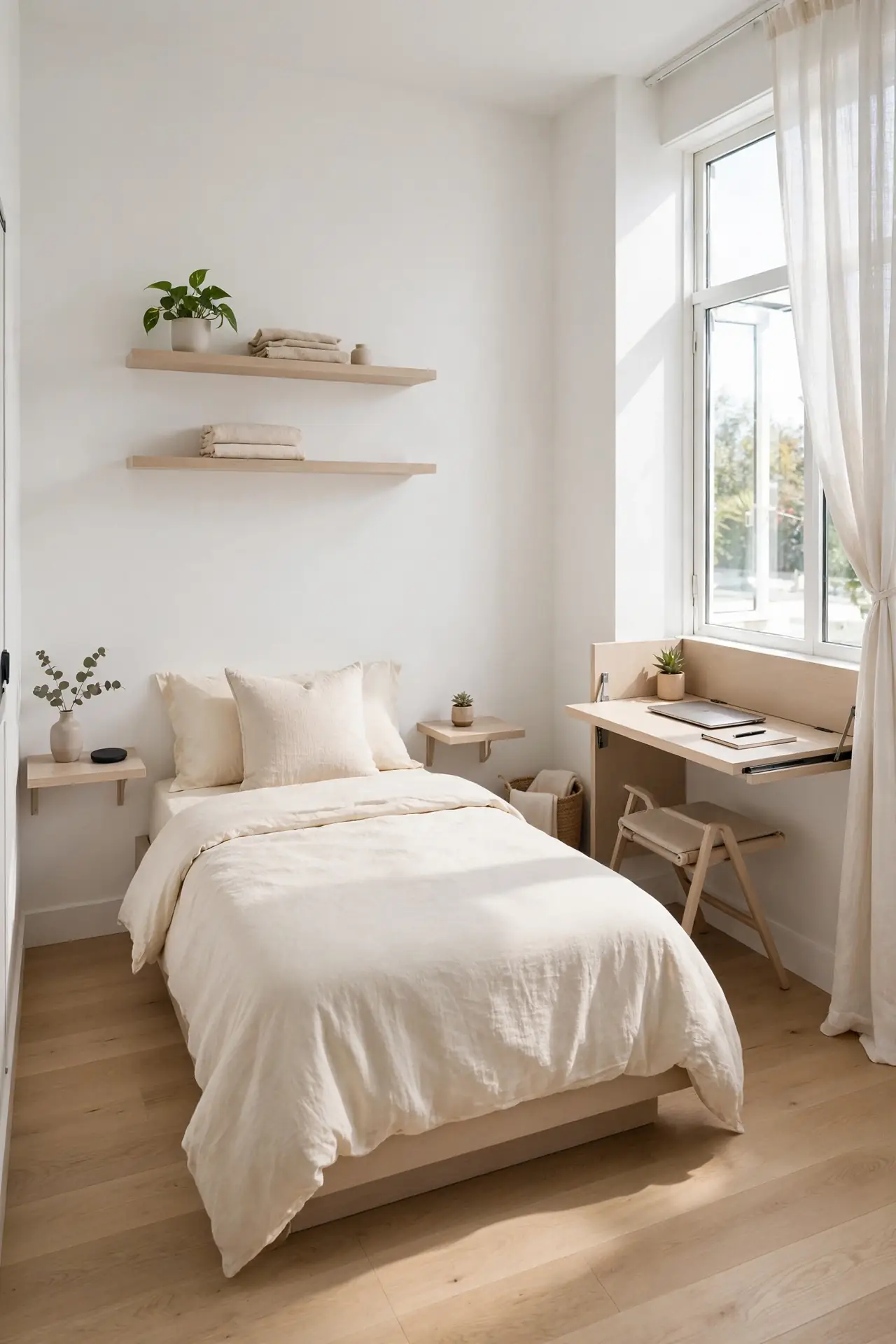
The floor is precious in a tiny room, so get things off it. Wall-mounted nightstands, shelves, and even desks free the footprint completely. The visible floor underneath tricks the eye into seeing more space. This one mindset shift changes every furniture decision you make. Start with the nightstands and feel the difference overnight.
Floating pieces also make cleaning effortless, which matters when every inch shows. Choose sturdy brackets rated for the weight. The airy look suits tiny rooms perfectly because nothing feels heavy. Your small bedroom will breathe easier with the floor left open. In my experience, this is the fastest tiny-room transformation.
Loft The Bed
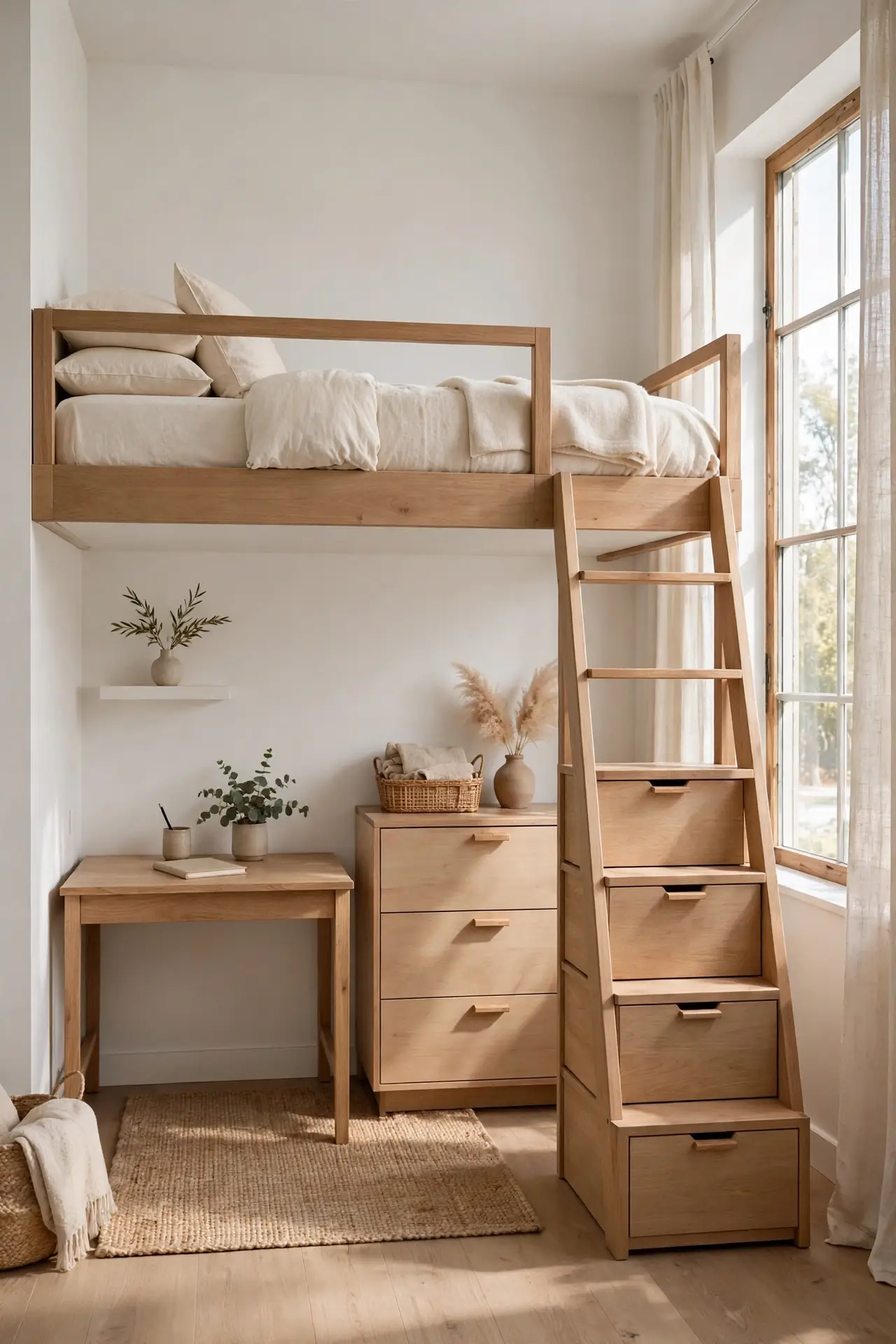
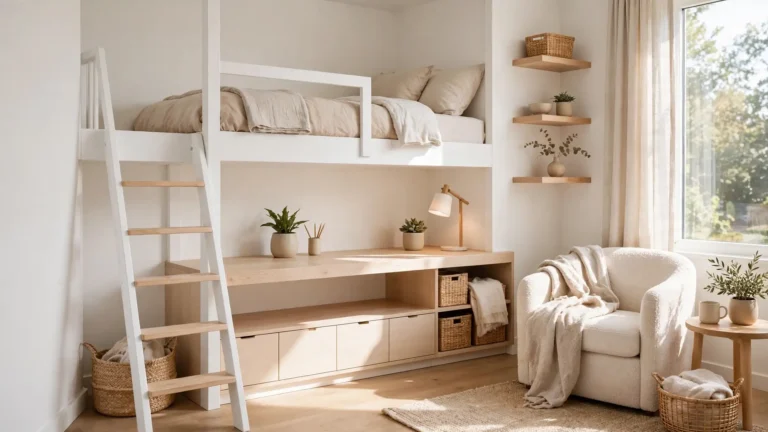
- Raise the bed on a loft frame to reclaim the floor below.
- Use the space under for a desk, dresser, or reading nook.
- Check ceiling height; you need sitting room above the mattress.
- Add a sturdy ladder or steps with storage inside.
- Secure the frame to the wall for zero wobble.
- Keep bedding simple so the loft looks tidy from below.
Lofting is the ultimate tiny bedroom power move. It literally doubles your usable floor without adding a square inch. The space beneath becomes office, closet, or lounge. This works best with ceilings over eight feet. The vertical thinking transforms how the room functions daily.
Mirror Wall Trick
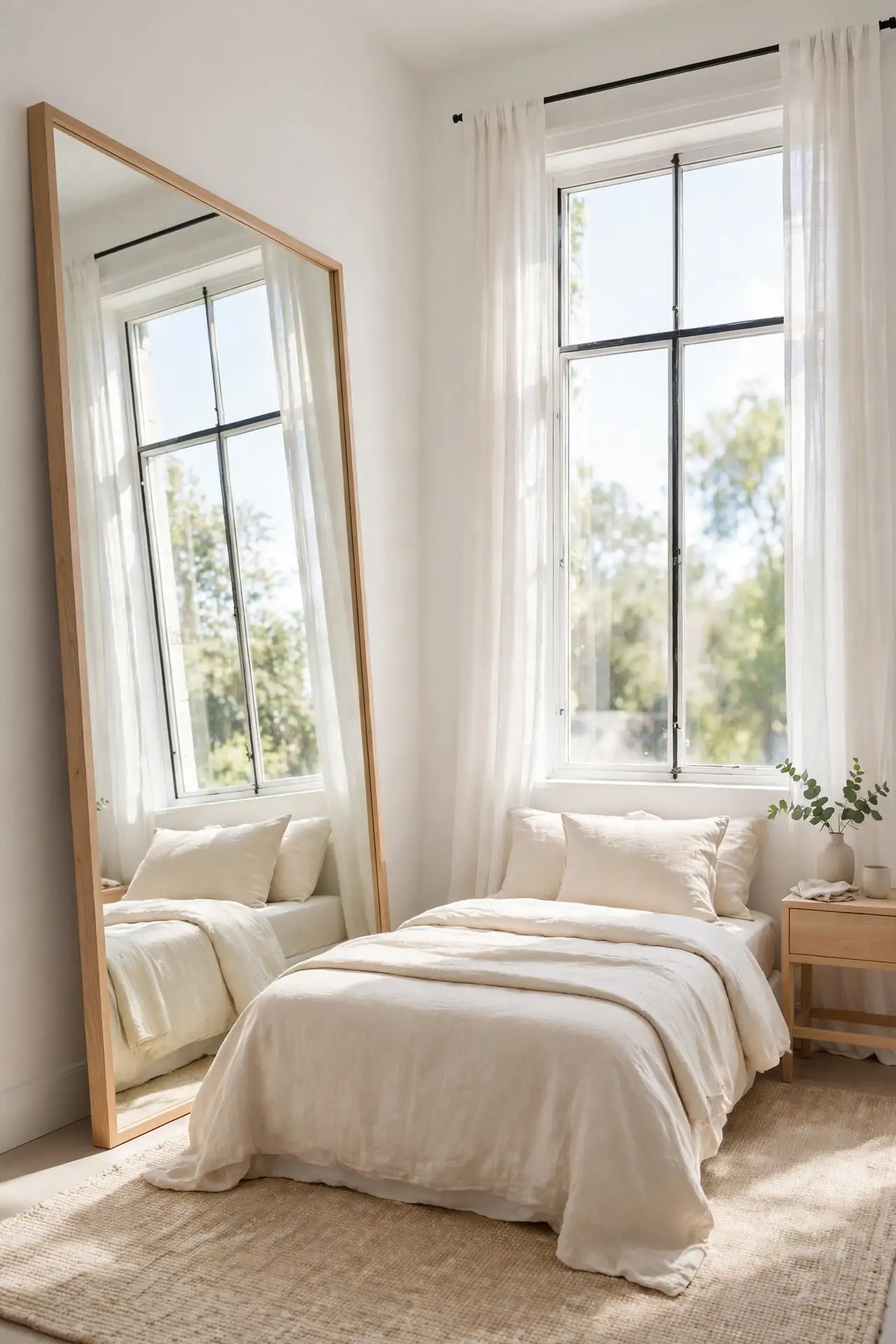
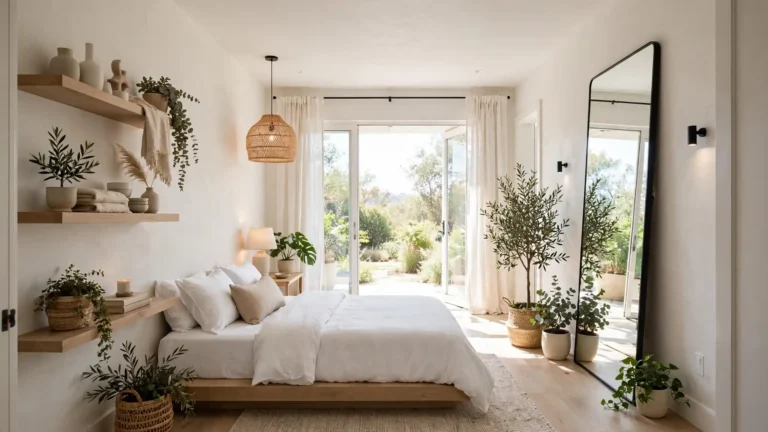
Quick Tip: Lean one oversized mirror against the wall opposite the window. It doubles the light and the perceived size. Keep the reflected view tidy since you will see it twice.
Mirrors are tiny rooms’ best friend. One large mirror does more than ten small decorations. It bounces daylight into corners and creates the illusion of a second window. Choose a leaner style to avoid wall holes. The reflection should show your prettiest wall, so style that side first. This single piece can make a box room feel twice its size, which is exactly the brilliance we are after. Hang it well and enjoy the magic.
Under Bed Drawers
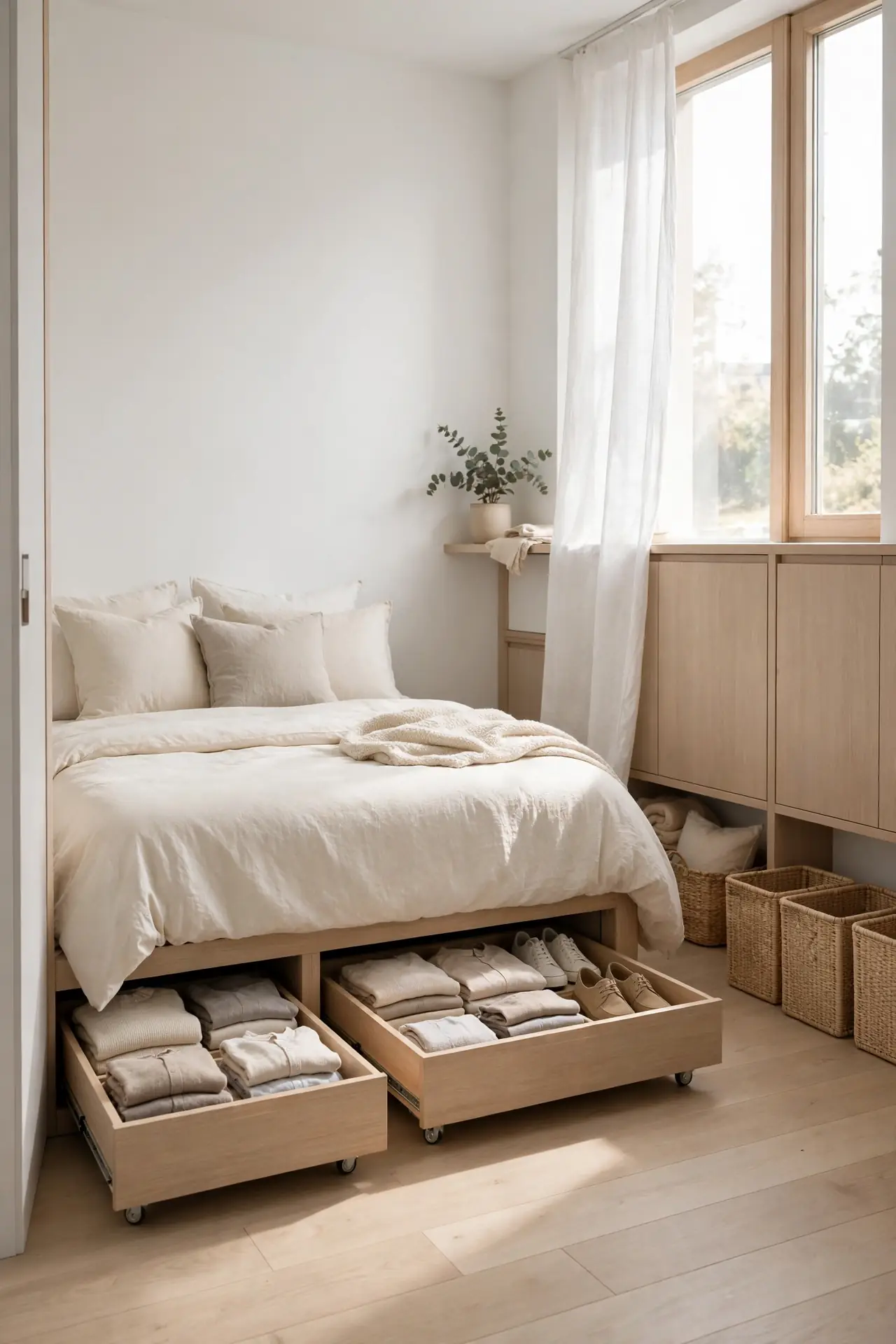
BEFORE: The space under the bed collects dust bunnies and lost socks. Valuable storage sits wasted in the dark. The room feels cluttered because everything else overflows.
AFTER: Rolling drawers or zip bins organize clothes, shoes, and linens under the bed. Everything has a labeled home. The closet breathes again and the room calms down.
Under-bed storage is the tiny bedroom’s secret weapon. It holds a dresser’s worth of clothes invisibly. Choose drawers on wheels for easy access. This hidden zone often absorbs the overflow that makes small rooms feel chaotic. Measure the clearance before buying anything. Vacuum the bins seasonally to keep dust away.
Fold Down Desk
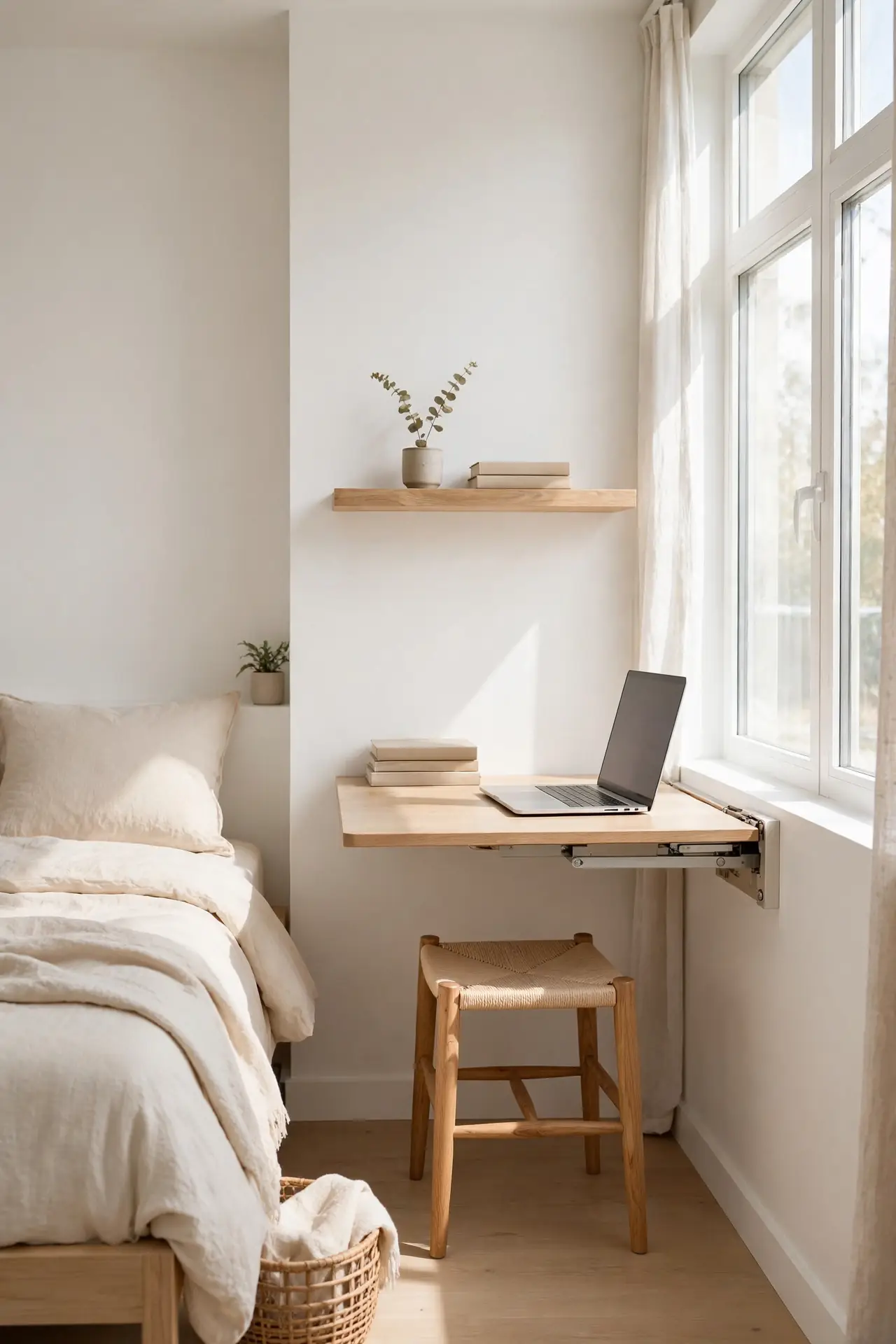
- Mount a fold-down desk on the brightest wall.
- Choose one rated for your laptop plus books.
- Fold it up daily to reclaim the floor.
- Add a wall-mounted shelf above for supplies.
- Pair with a stool that tucks underneath.
A desk you can fold away is tiny-room genius. Work happens when you need it and vanishes when you don’t. The wall-mounted design keeps the floor permanently clear. This suits students and remote workers in the smallest bedrooms. The room stays a bedroom first, office second. The daily fold becomes a satisfying ritual. Small rooms reward this kind of flexibility. Try it for one week and feel the difference.
Vertical Shelf Tower
| Corner Tower | Over-Bed Shelf | |
|---|---|---|
| Height | Floor to ceiling | Above headboard |
| Holds | Books and decor | Nighttime needs |
| Footprint | One square foot | Zero floor |
| Install | Freestanding | Wall mounted |
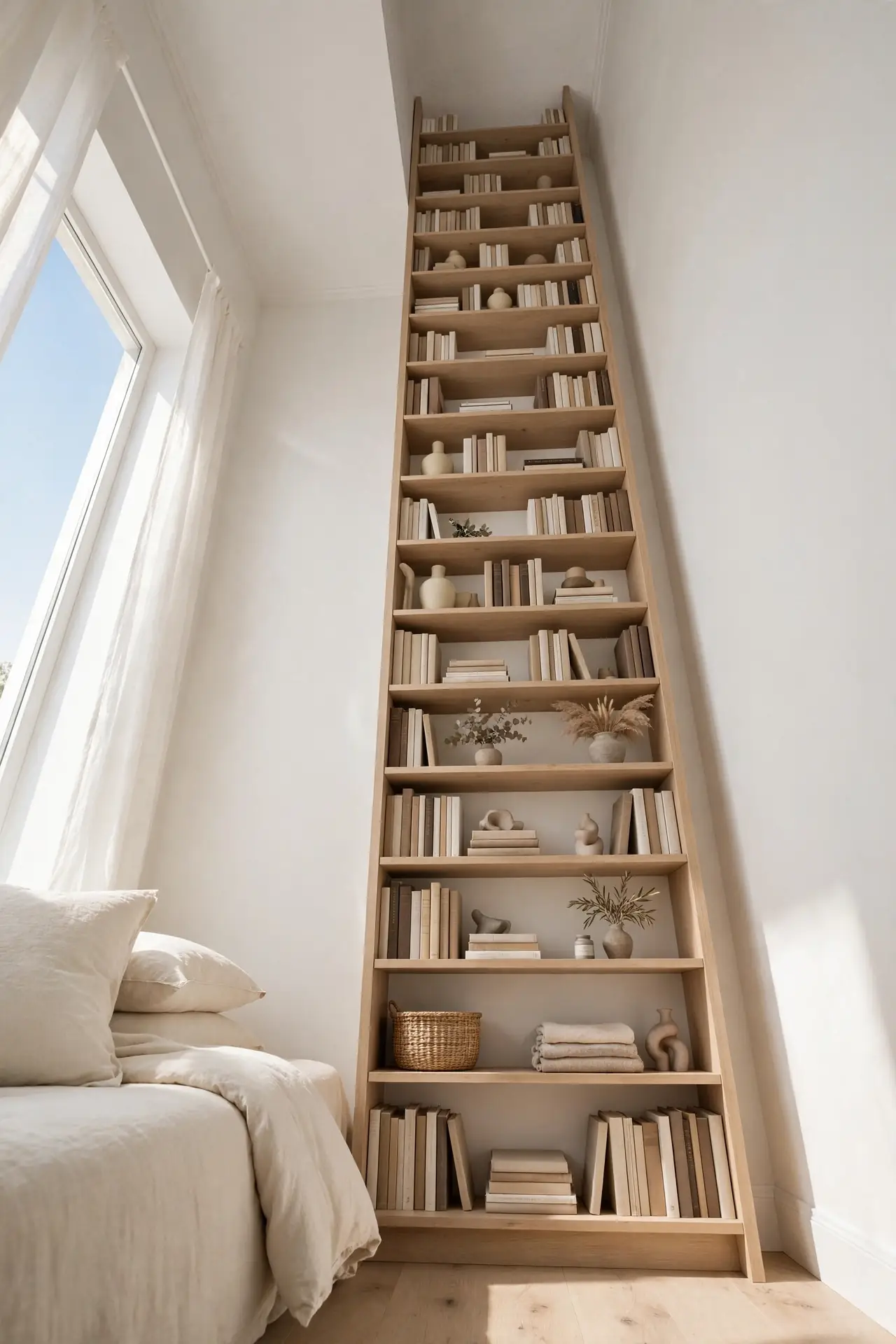
Think up, not out. A tall narrow shelf tower uses one square foot of floor and gives back six shelves. The vertical line also draws the eye up, making ceilings feel taller. Style it lightly so it never feels top-heavy. This is the highest storage per inch in the tiny bedroom playbook. Anchor tall towers to the wall for safety. The upward draw makes the whole room feel taller. Style the shelves with breathing room.
One Color Flow
DO:
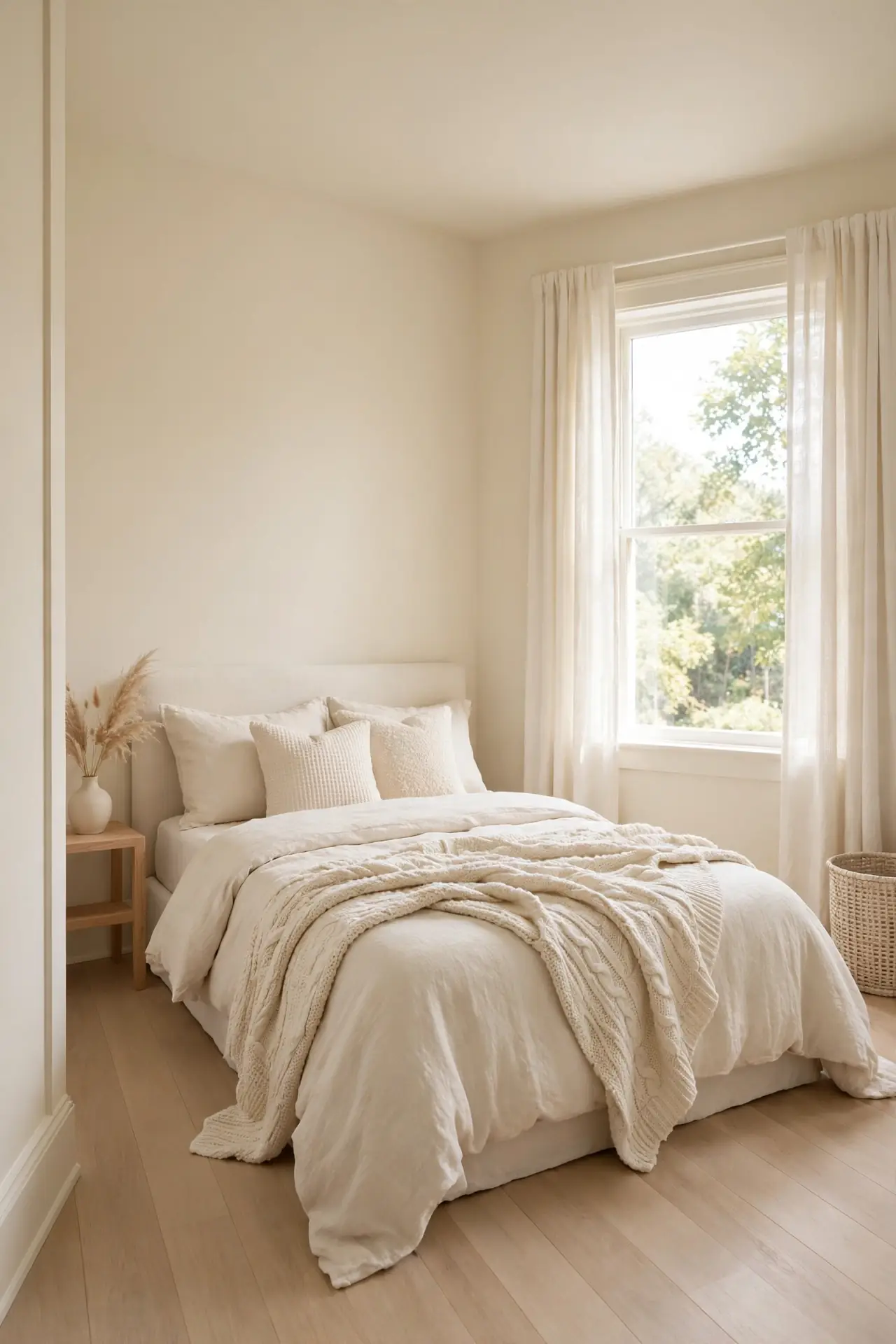
- Do paint walls, trim, and ceiling one soft color.
- Do choose bedding in the same color family.
- Do let texture, not color, create interest.
- Do extend the color onto the door for a seamless look.
DON’T:
- Don’t chop the room with contrasting accent walls.
- Don’t mix more than two wood tones.
- Don’t add busy patterns that shrink the space.
One continuous color makes walls disappear. The room reads as a single calm volume instead of chopped pieces. This is why tiny rooms in all white feel bigger. The monochrome flow is the oldest small-space trick, and it still works. The calm is immediate and lasting.
Pocket Door Swap
Cost: Medium, hardware kit
Time: One weekend
Skill Level: Handy DIY
Best For: Doors that block furniture
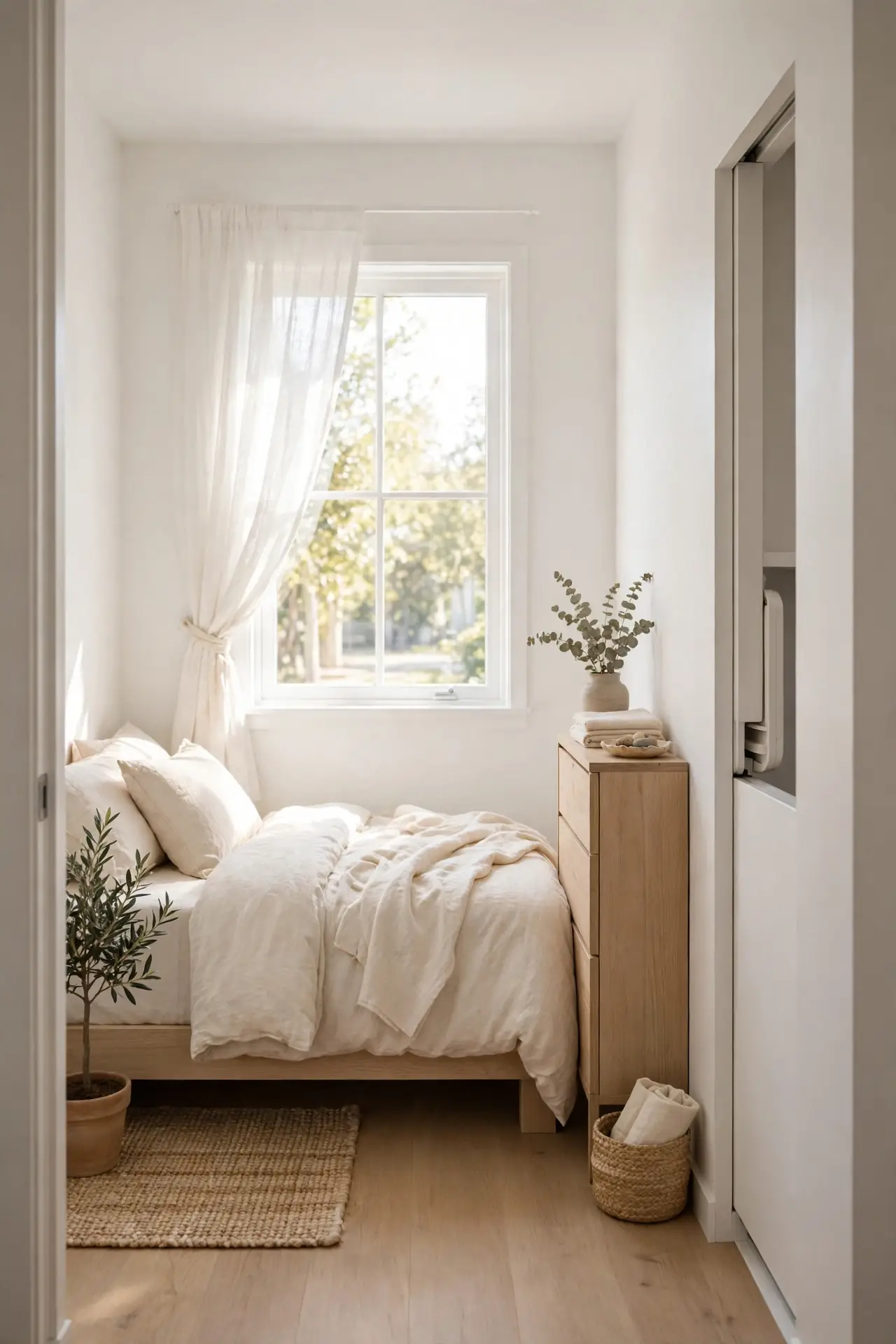
A swinging door eats nine square feet of floor. A pocket door gives it all back. The swap frees the wall where the door used to swing, which often fits a dresser. This is a bigger project but the payoff is permanent. Renters can fake it with a curtain on a track. Either way, reclaiming the swing zone transforms the layout. I’ve noticed this change alone can make a tiny room feel normal-sized. Measure the wall cavity before buying the kit. Worth every minute of work.
Corner Bed Squeeze
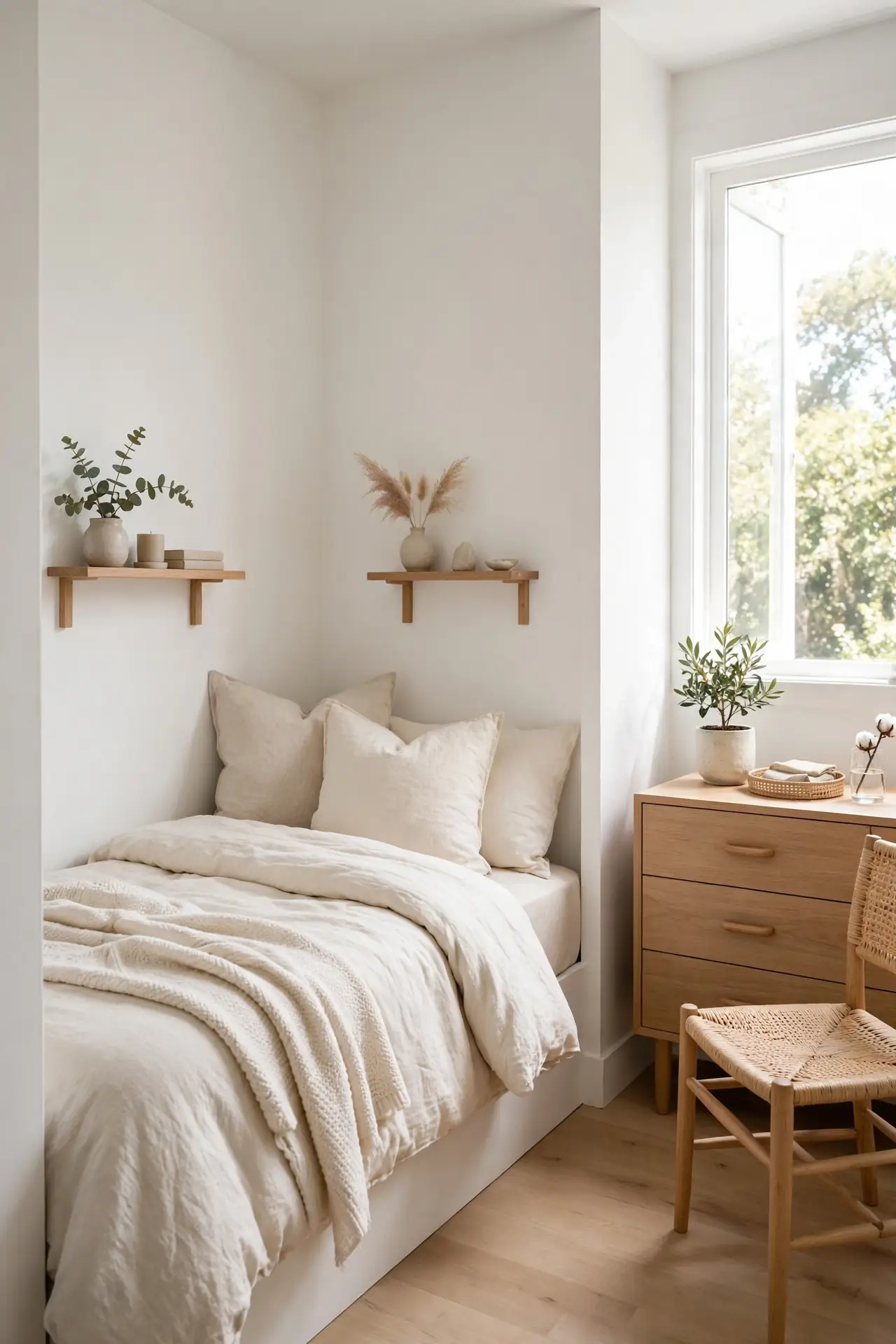
Pushing the bed into the corner frees the rest of the tiny room. Two walls become the headboard, which feels cozy rather than cramped. The open floor that remains fits a dresser and a chair. This is the highest-yield move for square tiny rooms. Add a wall-mounted reading light on the inner side.
Sleeping in a corner feels like a nest, which suits tiny rooms beautifully. Keep the bedding light so the corner never feels dark. A small shelf on each wall replaces nightstands. The corner becomes a snug sleep pocket while the room stays functional. In my experience, corner sleepers never go back.
Hanging Nightstand
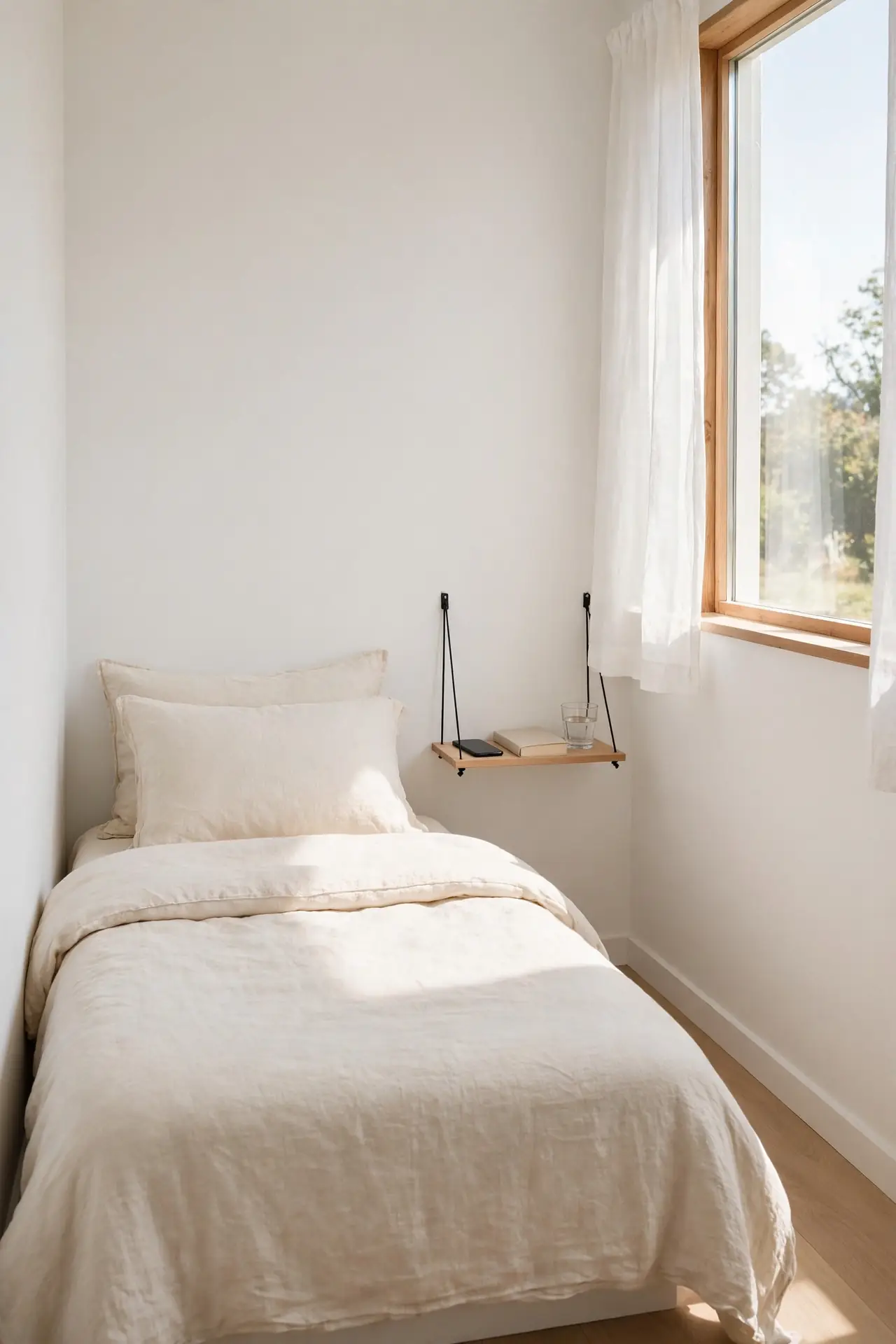
- Hang a small shelf or pouch from the wall by the bed.
- Keep it just big enough for a phone, book, and water.
- Choose a foldable fabric pocket for the tiniest rooms.
- Mount it at mattress height for easy reach.
- A wall-mounted cup holder handles the morning water glass.
A nightstand that hangs instead of stands saves precious floor. The wall does the work while the floor stays clear. This micro-solution suits the tiniest bedrooms perfectly. Even a sturdy canvas pocket counts. The bedside stays functional without a single inch of footprint. Small solution, big daily difference. Every inch saved counts double here.
Light Curtain Divide
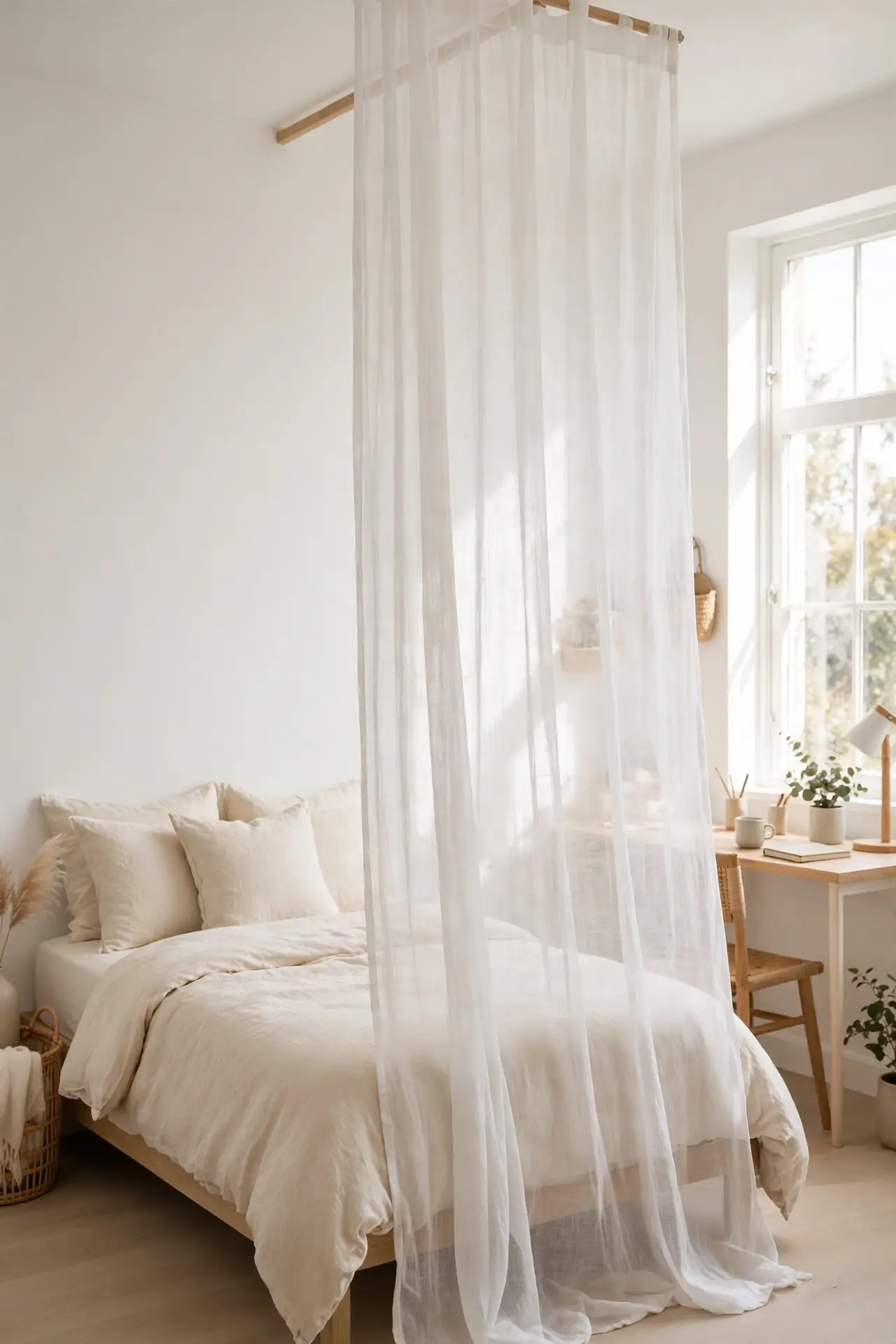
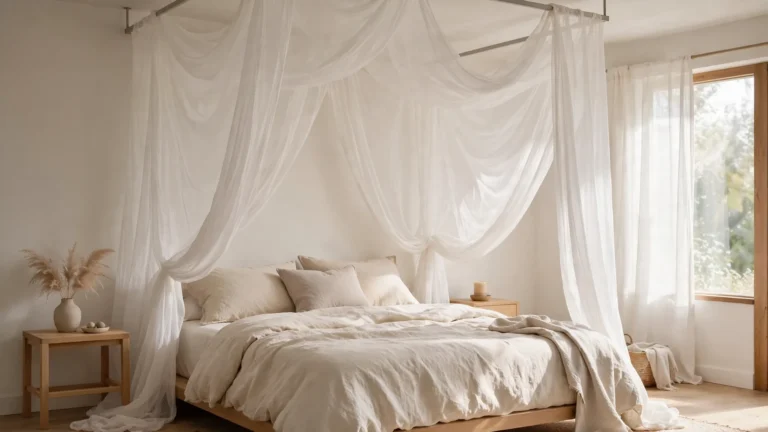
Quick Tip: Hang a sheer curtain to separate sleep and work zones. The fabric adds privacy without blocking light. Choose ceiling-mounted tracks that disappear visually.
Even tiny rooms benefit from zones. A sheer curtain creates a visual divide that makes one room feel like two. The translucency keeps light flowing while marking boundaries. This suits sleep-work combos in studio-style tiny rooms. Pull it closed at night for a dedicated sleep space. The psychological separation improves rest more than you would expect. It is the lightest possible wall. Choose white or ivory for maximum light flow. The softness beats any rigid divider here.
Rug Defines Sleep
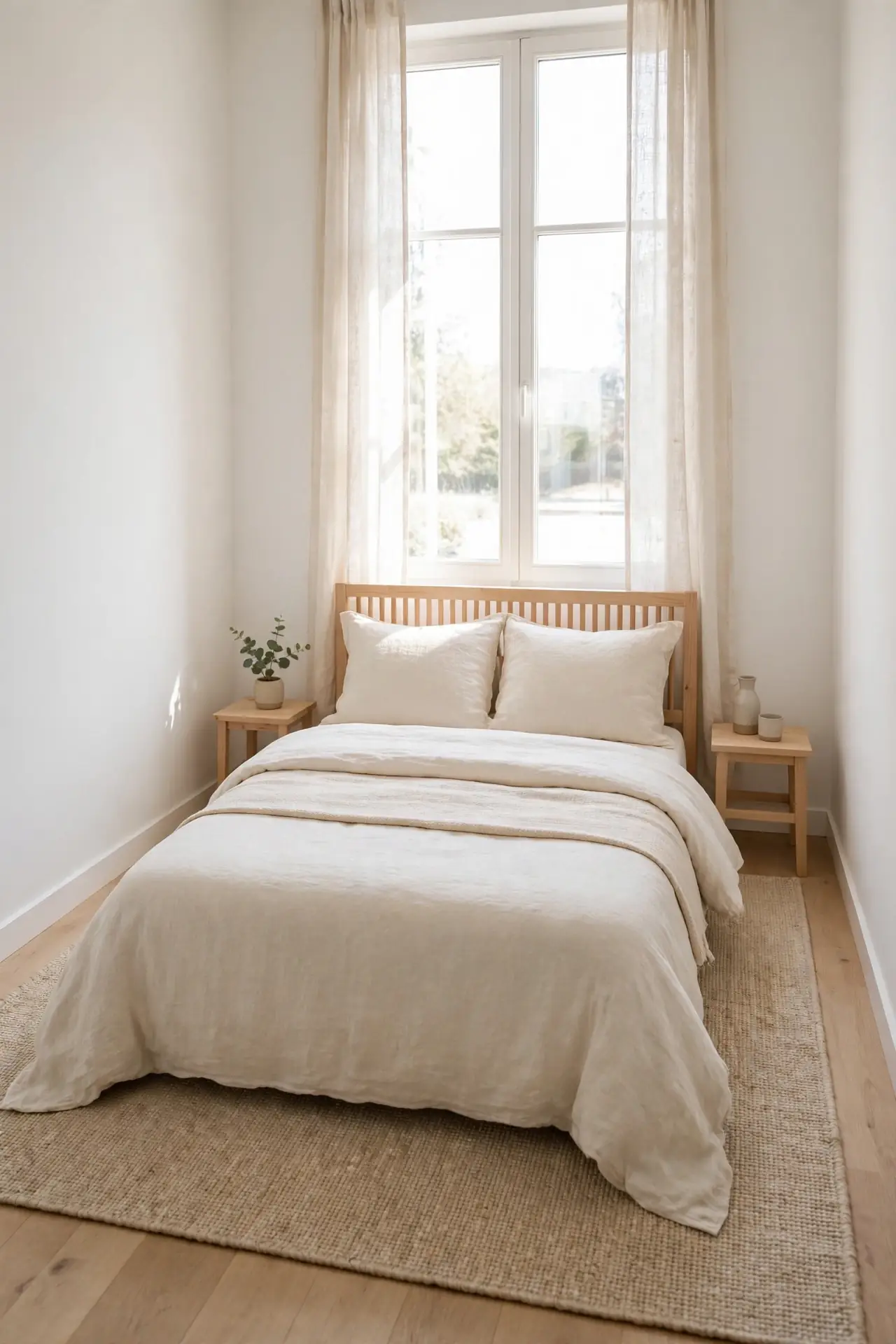
BEFORE: The bed floats on bare floor with no anchor. The tiny room feels like a storage unit. Nothing marks where sleep happens versus everything else.
AFTER: A rug sized to the bed zone defines the sleep area clearly. The room gains visual order instantly. The soft surface also makes mornings kinder on bare feet.
In a tiny room, one rug does the work of walls. It tells the eye where the bedroom begins and ends. Choose a rug that fits under the bed with a border showing. The definition brings calm to the smallest footprint. Low-pile weaves keep doors clearing easily.
Stackable Cube Storage
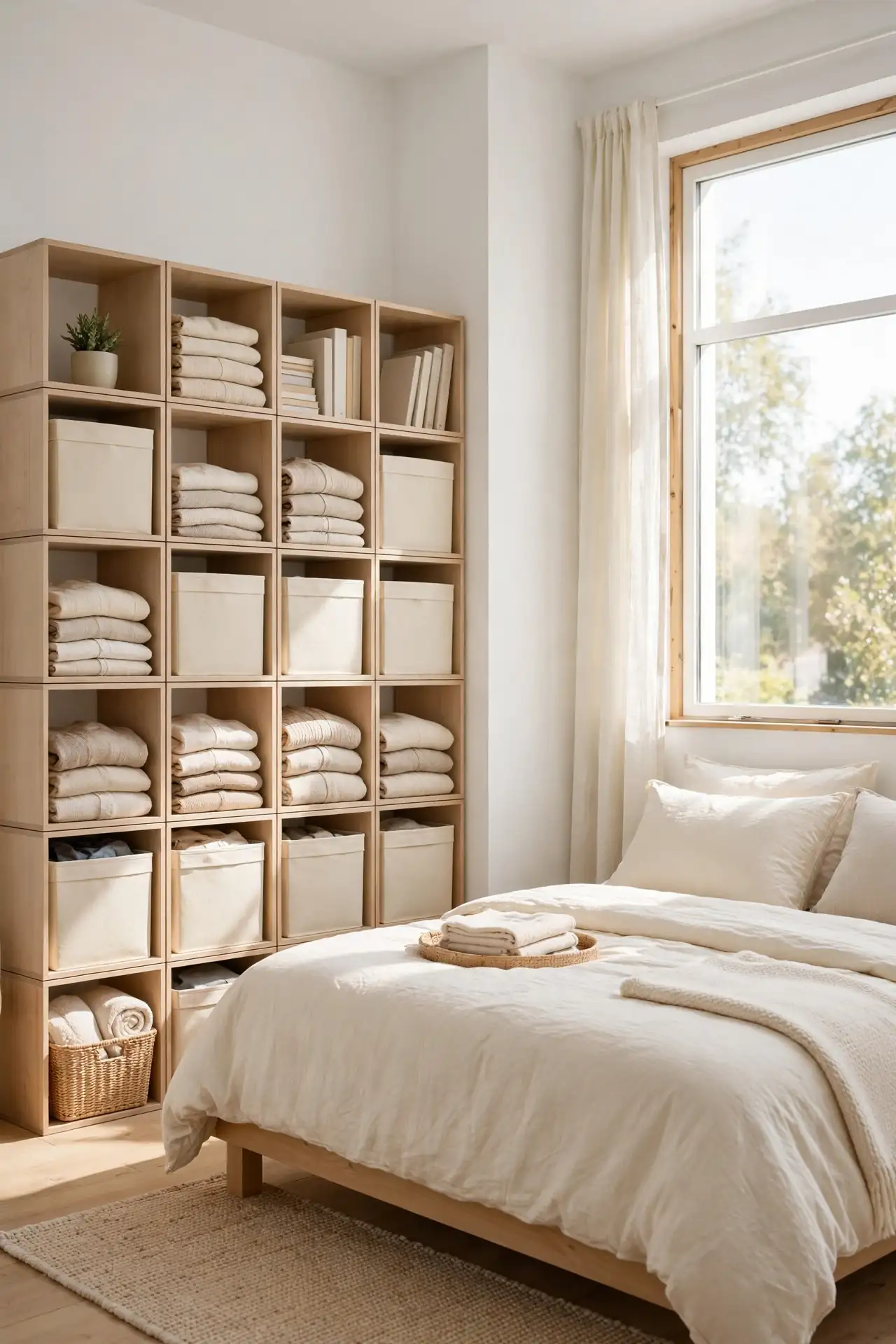
- Buy stackable cubes that fit your exact wall width.
- Anchor the stack to the wall for safety.
- Assign each cube a category: clothes, books, gear.
- Use fabric bins inside for a clean look.
- Leave the top cube for display, not clutter.
Cubes are the Lego of tiny bedroom storage. They stack to any height and rearrange in minutes. The grid looks orderly even when life is not. This modular approach grows with your needs. Start with four and add more as required. The flexibility suits renters and changers alike. Mix open cubes with doored ones for variety. Label the bins to stay organized.
Sconce Not Lamp
| Wall Sconce | Table Lamp | |
|---|---|---|
| Footprint | Zero | Eats nightstand |
| Light | Focused | Diffuse |
| Install | Mount once | Plug and place |
| Style | Built-in look | Casual |
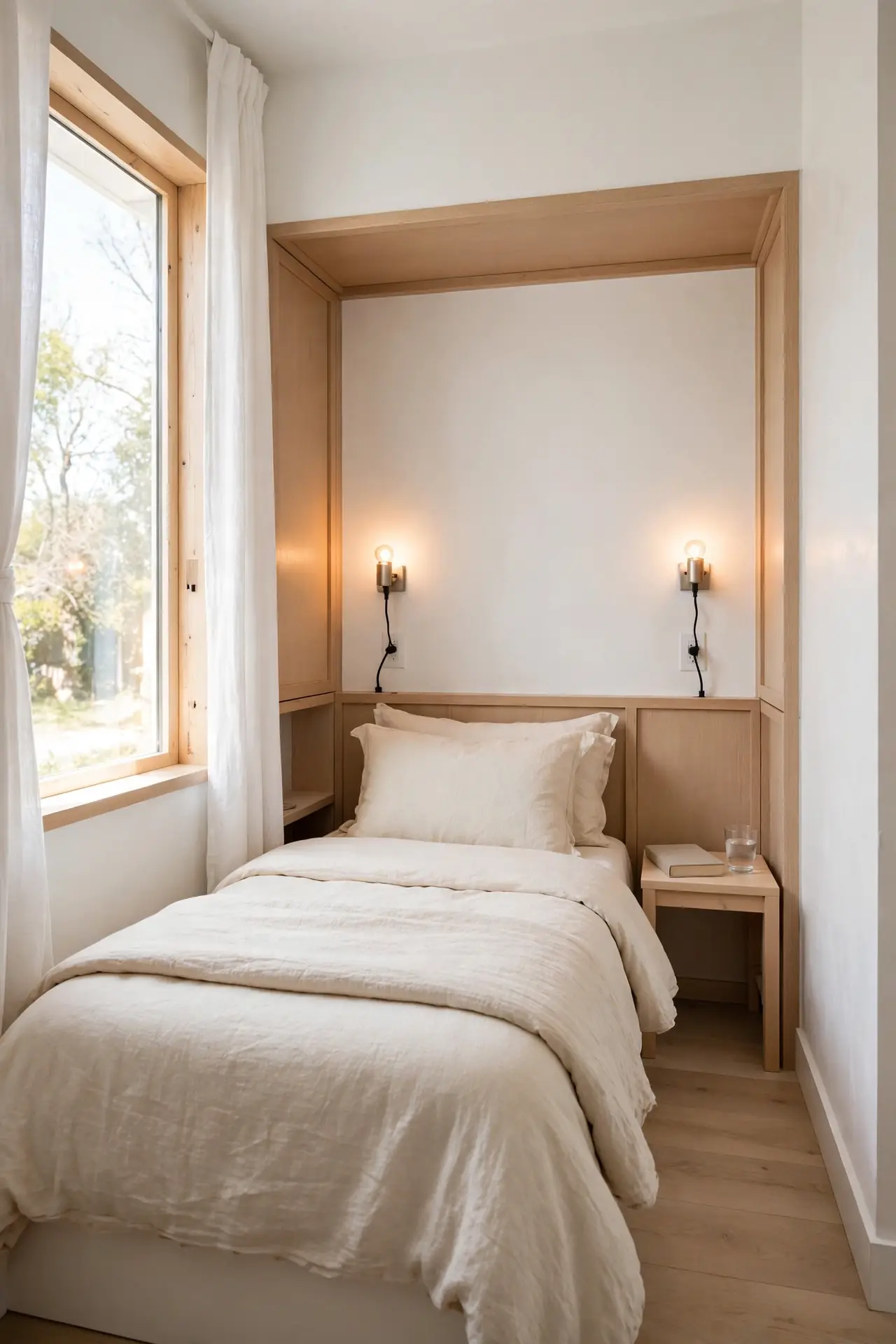
Table lamps steal nightstand space tiny rooms cannot spare. Sconces give the light without the base. The wall-mounted glow reads as intentional design. For full room makeovers, see our tiny bedroom makeover ideas guide. Choose plug-in styles to avoid electrician costs. The freed surface holds your book and water instead. This swap alone can declutter the whole bedside. Aim the shade for perfect reading light. Small change, nightly reward. Your nightstand will thank you. The wall stays clean and uncluttered.
Clear Floor Rule
DO:
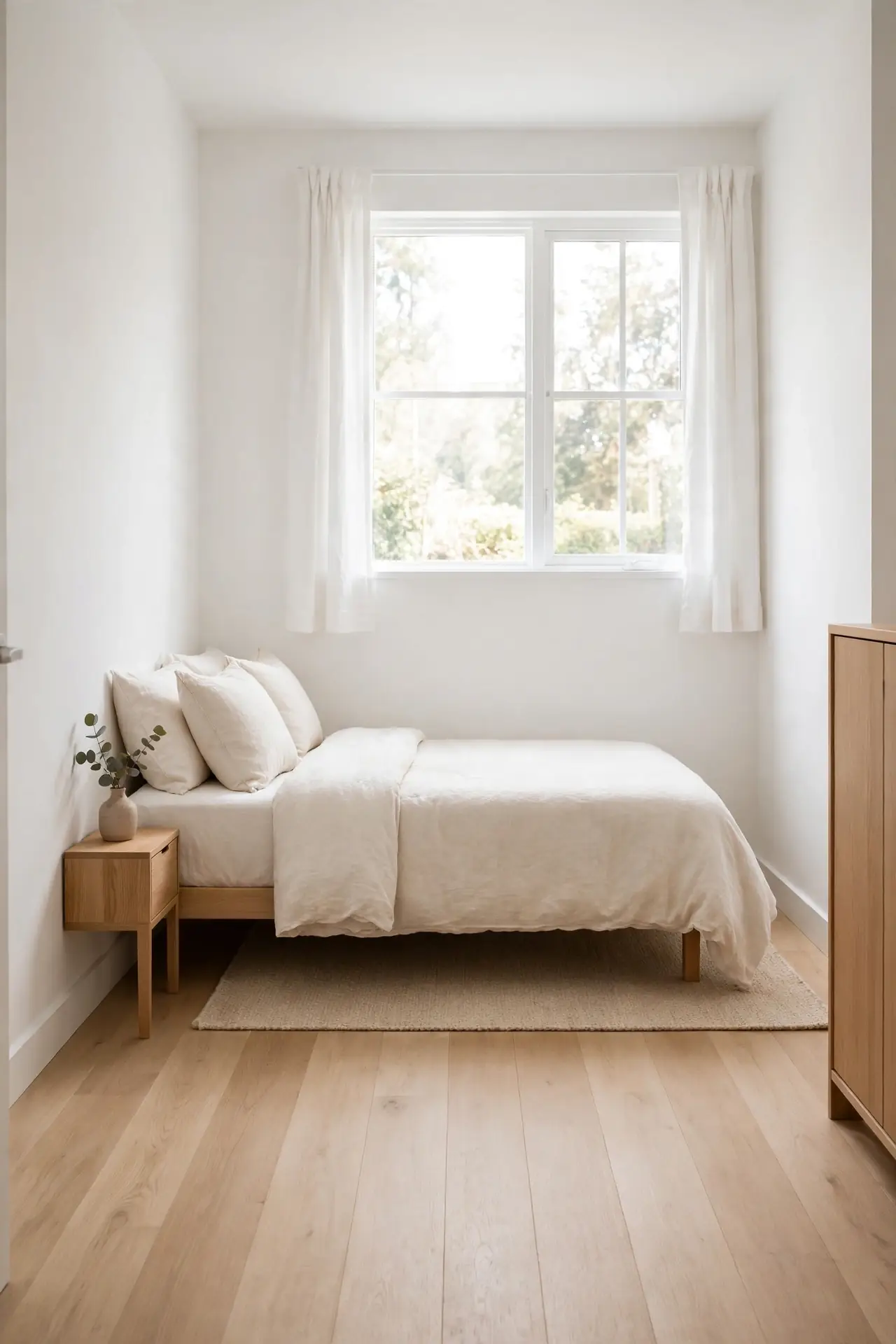
- Do keep the center of the room empty.
- Do push furniture to the walls.
- Do choose legged pieces that show floor.
- Do make the bed daily; it anchors the room.
DON’T:
- Don’t let laundry live on the floor.
- Don’t store boxes where you walk.
- Don’t add furniture without removing something.
Visible floor is the currency of tiny rooms. Every clear inch makes the space feel larger. This rule costs nothing and changes everything. The discipline of clear floors keeps clutter from creeping. Your tiny room will feel twice its size. Make it a nightly five-minute reset habit. The payoff is daily calm.
Tall Narrow Dresser
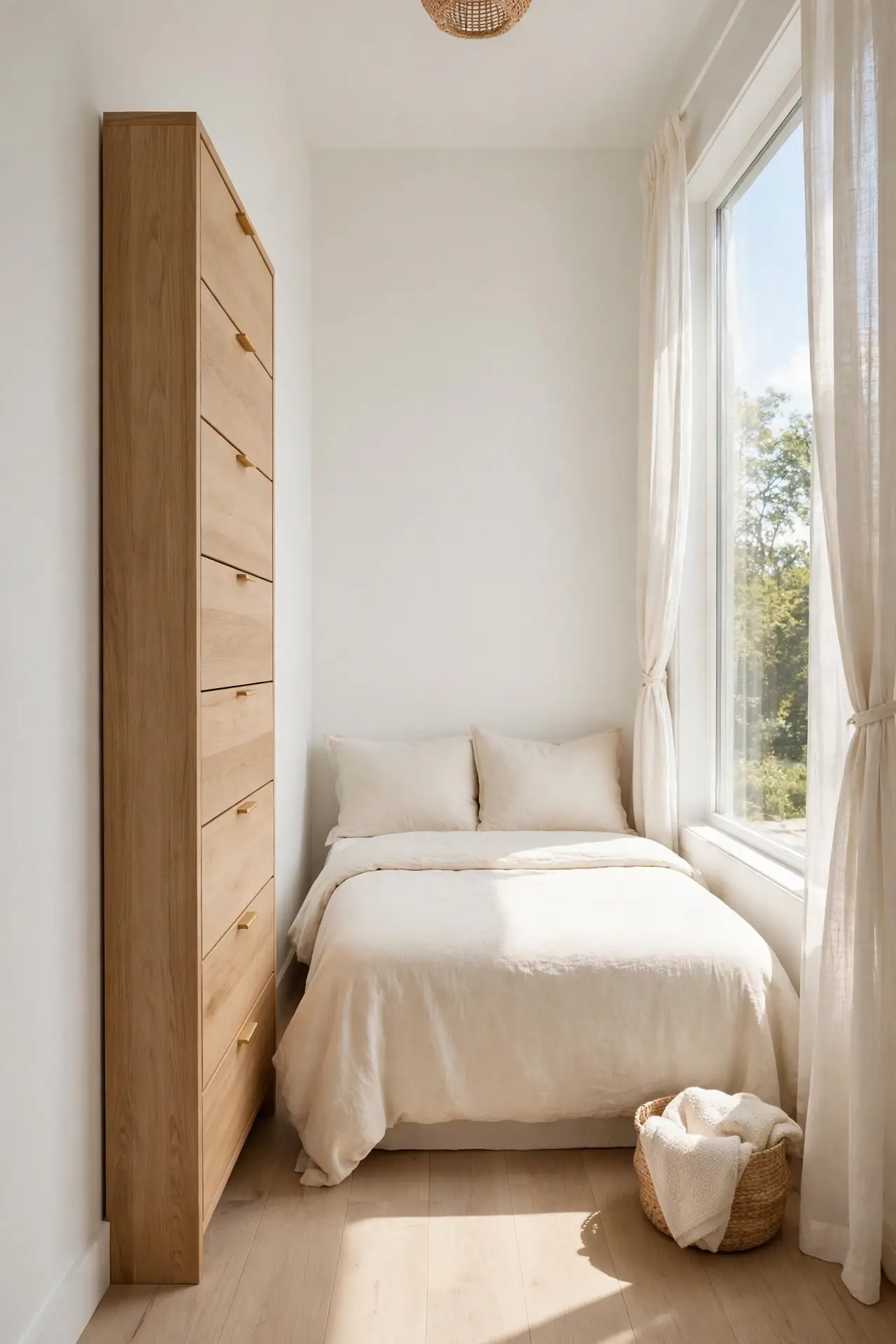
Cost: Low to medium
Time: One shopping trip
Skill Level: Beginner friendly
Best For: Narrow wall gaps
A tall narrow dresser is the tiny bedroom’s best storage shape. It sips floor space while drinking up vertical room. Six drawers in an 18-inch footprint hold a full wardrobe. Place it in the gap no other furniture fits. The vertical emphasis also makes ceilings feel taller. This single piece often replaces two bulky ones. I’ve noticed tiny rooms with tall dressers stay tidier because everything has a drawer. Anchor it to the wall for safety. The slim profile disappears visually. Perfect fit, zero waste.
Bed Against Wall
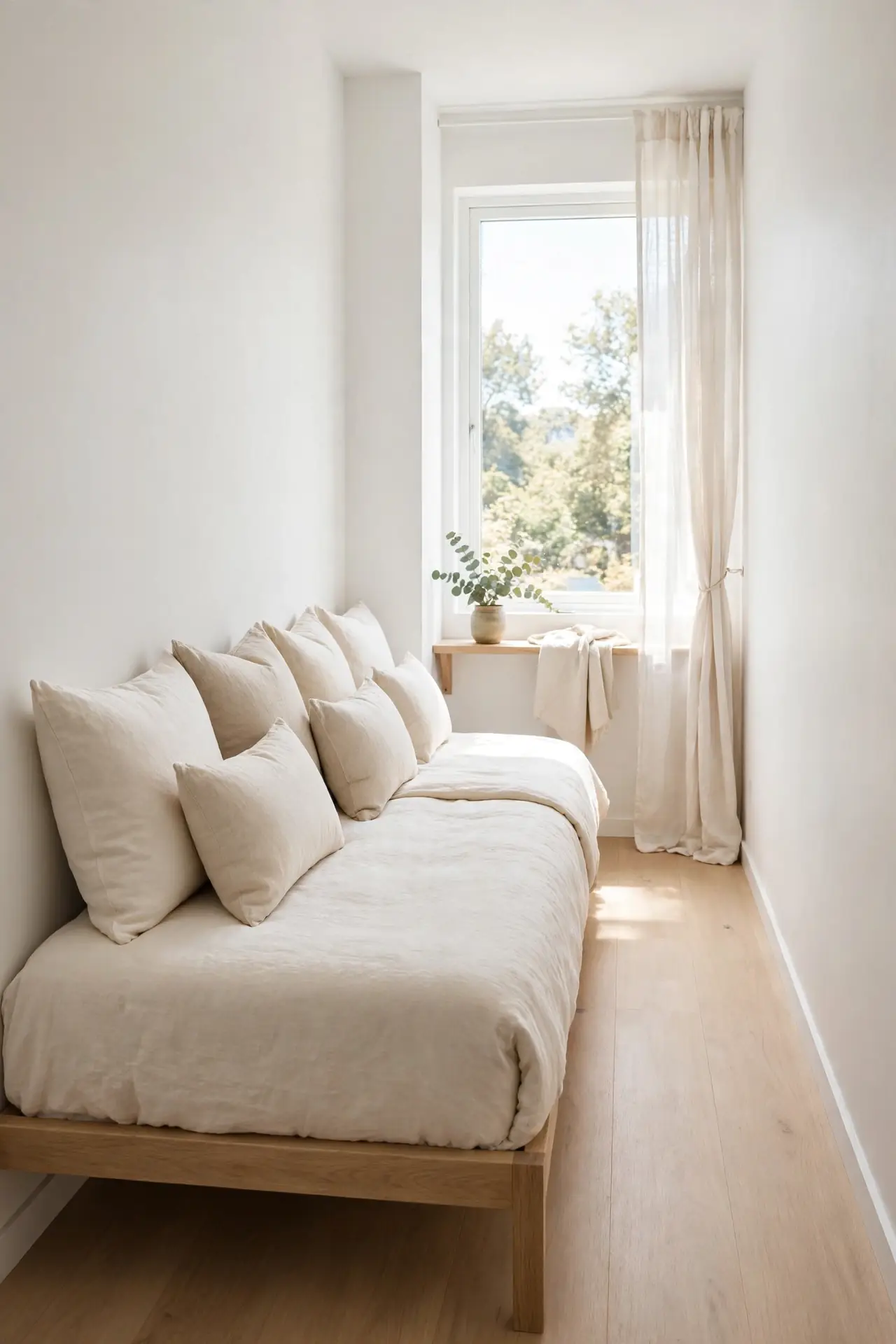
Slide the bed so its long side hugs the wall, freeing a walkway on one side only. This works when the room is too narrow for two-sided access. The bed becomes a daybed by day, which suits studio living. Add a row of pillows along the wall for back support. The single walkway keeps the layout simple.
One-sided access means making the bed takes a little practice. Tuck sheets from the open side and smooth toward the wall. The daybed styling makes the room feel like a studio, not a compromise. This layout squeezes a full bed into the narrowest rooms. In my experience, the coziness wins people over fast.
Over Door Hooks
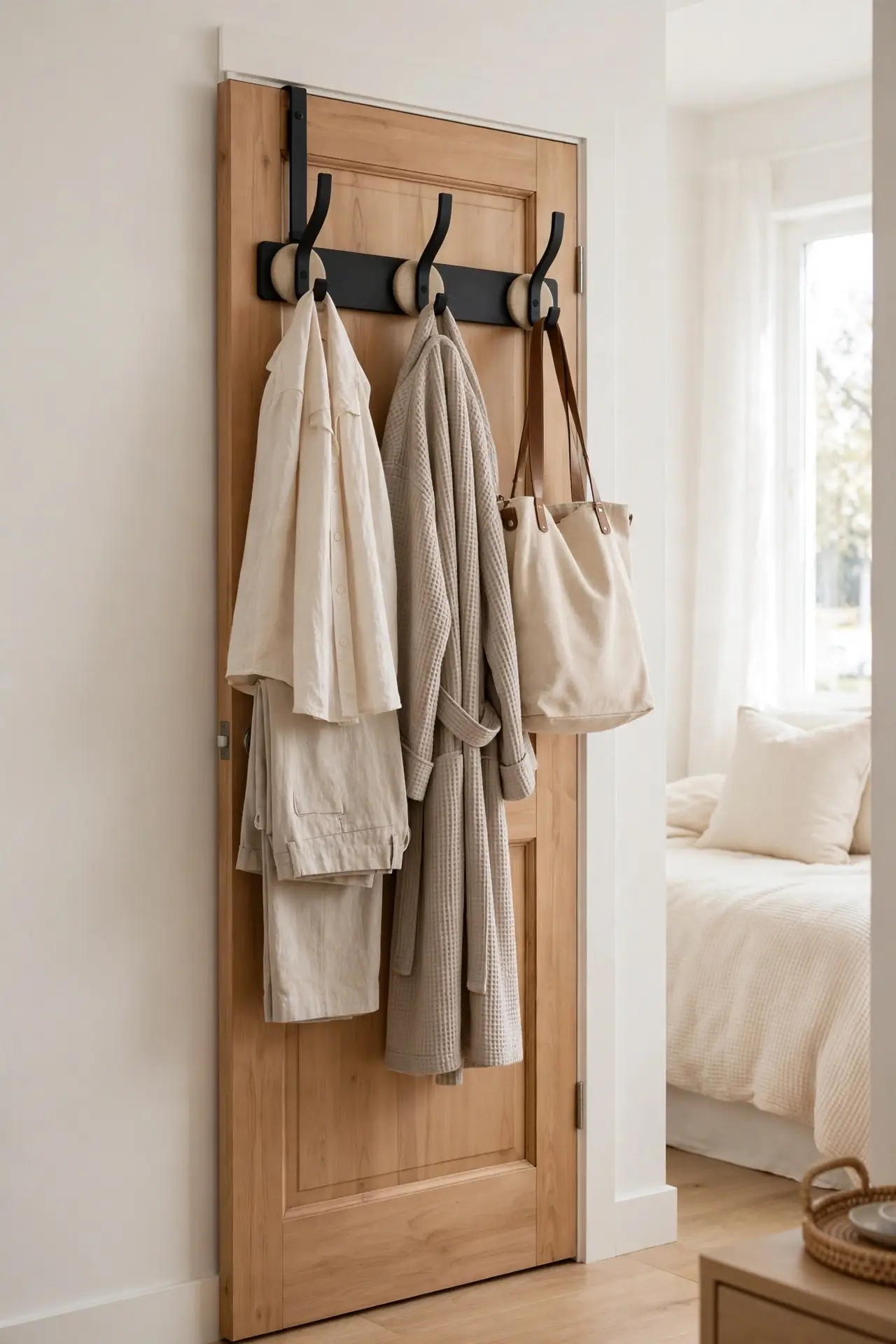
- Mount sturdy over-door hooks on the bedroom door.
- Hang tomorrow’s outfit, robes, and bags there.
- Choose hooks rated for real weight.
- Keep the door able to close fully.
- Add a second set inside the closet door.
- Felt pads behind hooks protect the door finish.
Doors are wasted vertical real estate. Hooks turn them into valet stations overnight. The bedroom door holds outfits while the closet door holds accessories. This zero-footprint storage suits every tiny room. The habit of hanging tomorrow’s clothes also speeds up mornings. Every door in a tiny home should earn its keep. Start with the bedroom door tonight.
Minimal Pillow Count
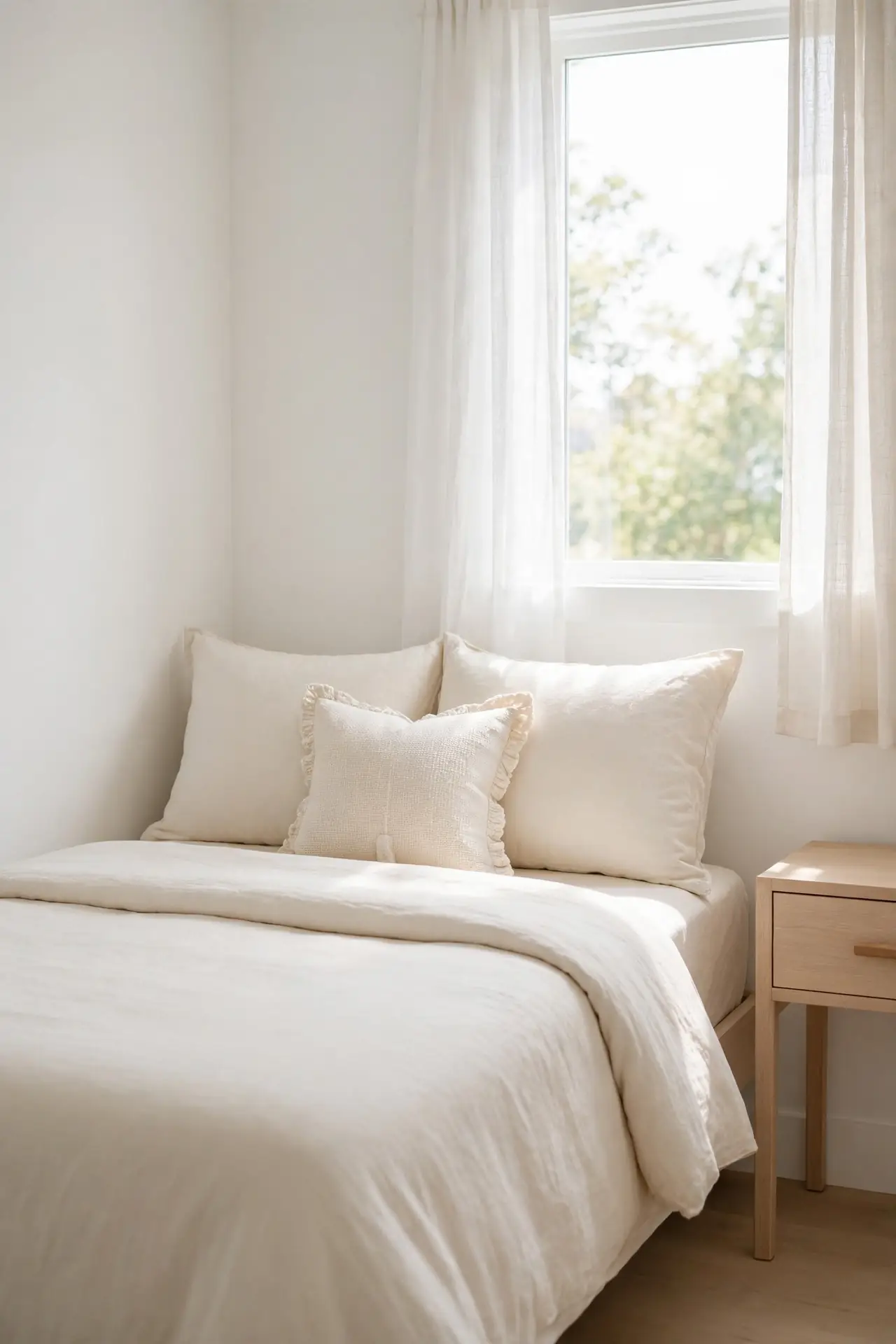
Quick Tip: Limit the bed to two sleeping pillows plus one decorative sham. More pillows eat the tiny bed visually. Store extras elsewhere if you love options.
Pillow mountains shrink tiny beds. Each extra pillow steals visual space the room cannot spare. Two sleeping pillows and one sham look styled without crowding. The bed stays the calm center, not a pillow warehouse. This restraint also speeds up the morning routine. Fewer pillows mean faster bed-making and a tidier look all day. In a tiny room, editing is designing. The simplicity photographs beautifully too. Less truly is more here. Your mornings will feel calmer.
Glass Reflects Space
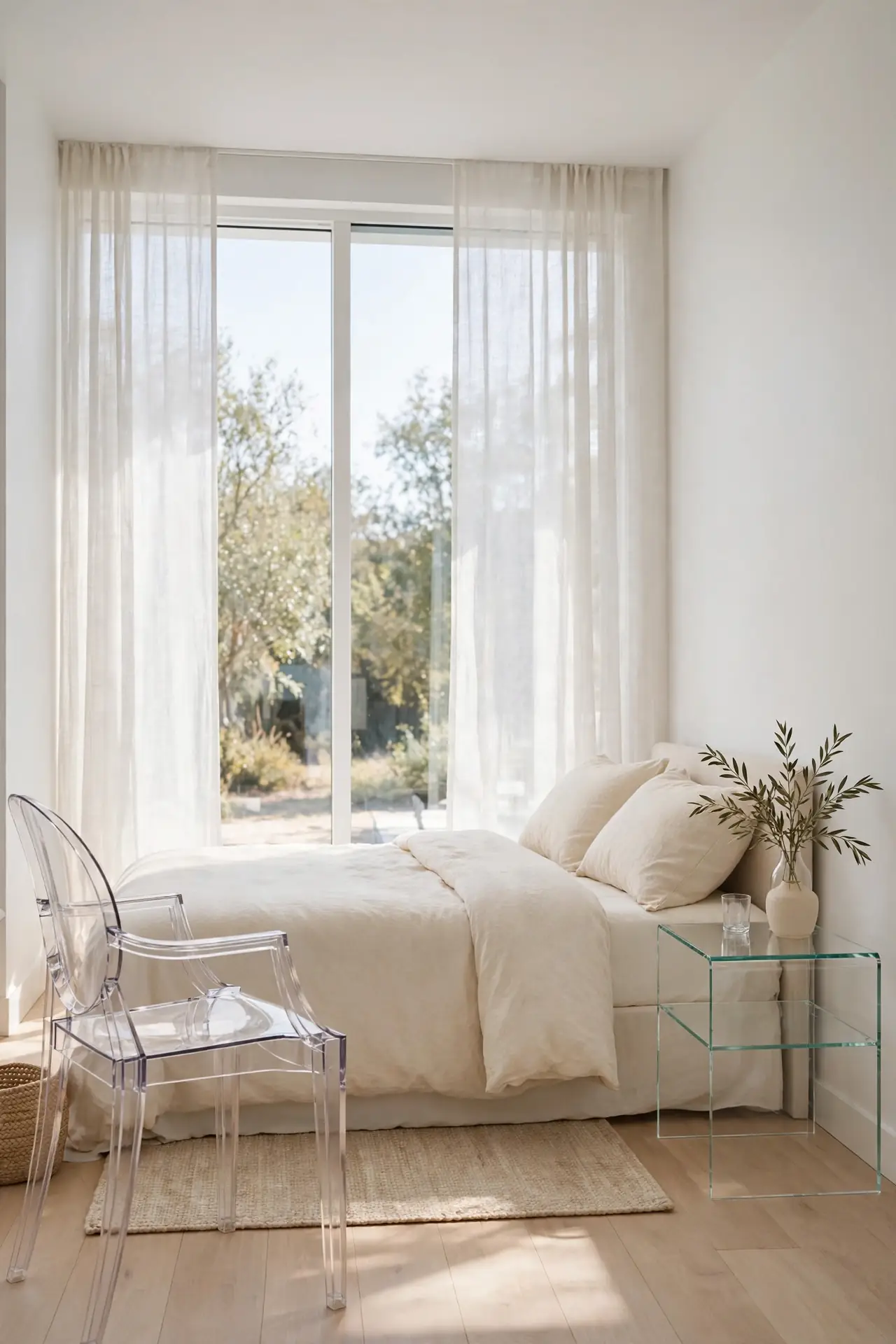
BEFORE: Heavy wood and opaque surfaces close the tiny room in. Every piece looks bulky and dark. The space feels like a box you endure.
AFTER: A glass nightstand and acrylic chair keep sightlines open. Light passes through instead of stopping. The same floor plan suddenly feels breathable.
Transparent furniture is a tiny-room cheat code. The eye passes through it, so the brain counts the space as empty. Use glass or acrylic for one or two pieces, not everything. The mix of solid and clear keeps the room grounded yet open. Wipe them weekly; fingerprints show fast. The lightness is worth the upkeep.
Multipurpose Ottoman
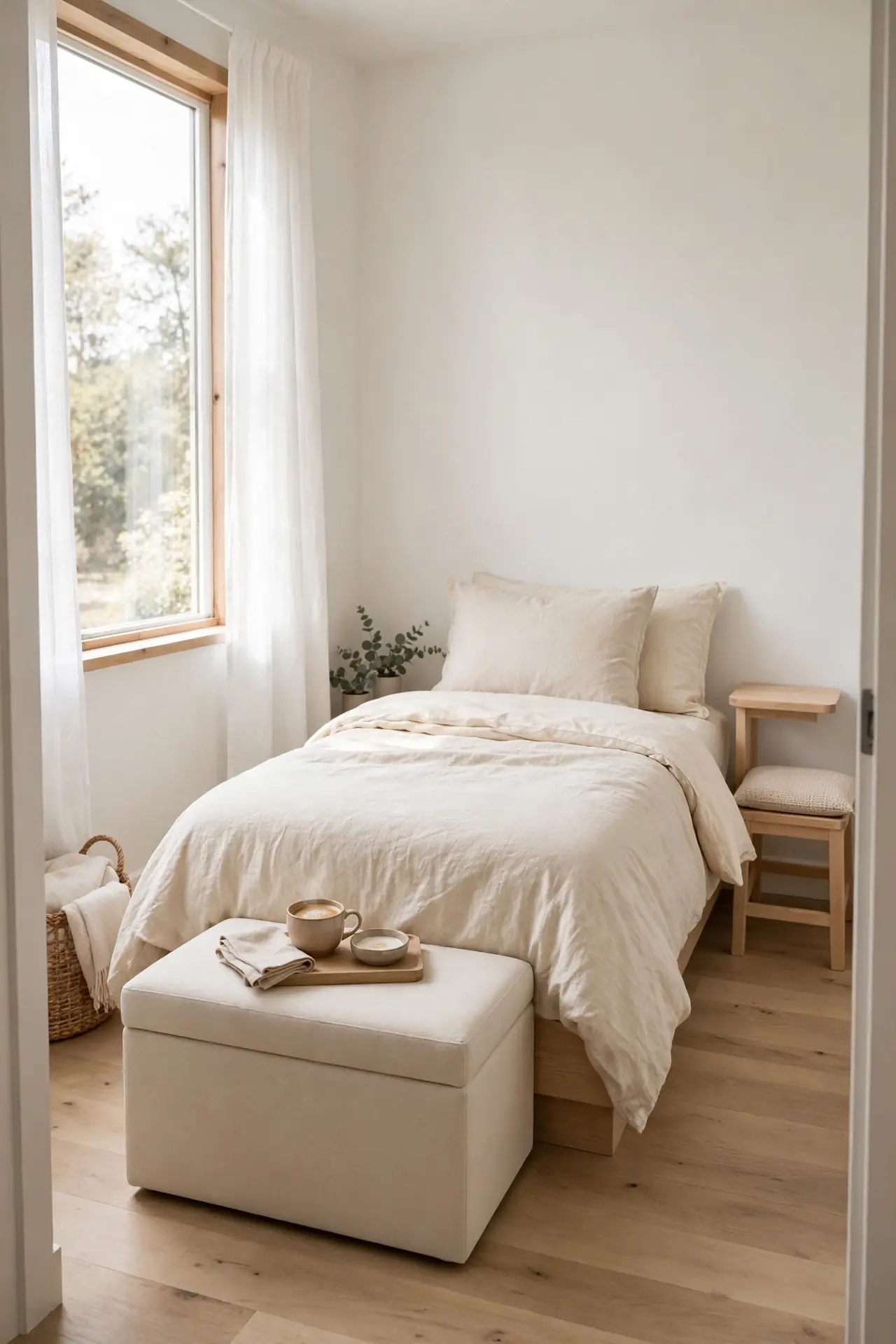
- Choose an ottoman with hidden storage inside.
- Size it to work as a seat, table, and footrest.
- Place it at the bed’s foot or in the corner.
- Top it with a tray when drinks are near.
- Pick washable fabric for daily use.
One ottoman can be three pieces of furniture. It stores blankets, seats guests, and holds the coffee tray. In a tiny room, this multitasking is gold. Choose a shape that fits your layout’s gaps. The ottoman earns its footprint three times over. This is the tiny bedroom’s hardest worker. Buy the best quality you can afford. It pays for itself daily.
Conclusion
These 21 tiny bedroom ideas prove that brilliant beats big every time. Whether you lofted the bed or mounted everything on the walls, each trick makes the room feel larger than its footprint. Start with the change that solves your biggest frustration and build from there. Save your favorites to Pinterest so the ideas stay handy for your next refresh. I’ve seen how small changes like these can completely shift the way a space feels. Your tiny room is about to feel brilliantly spacious. Small space, huge potential, all yours.
One Comment