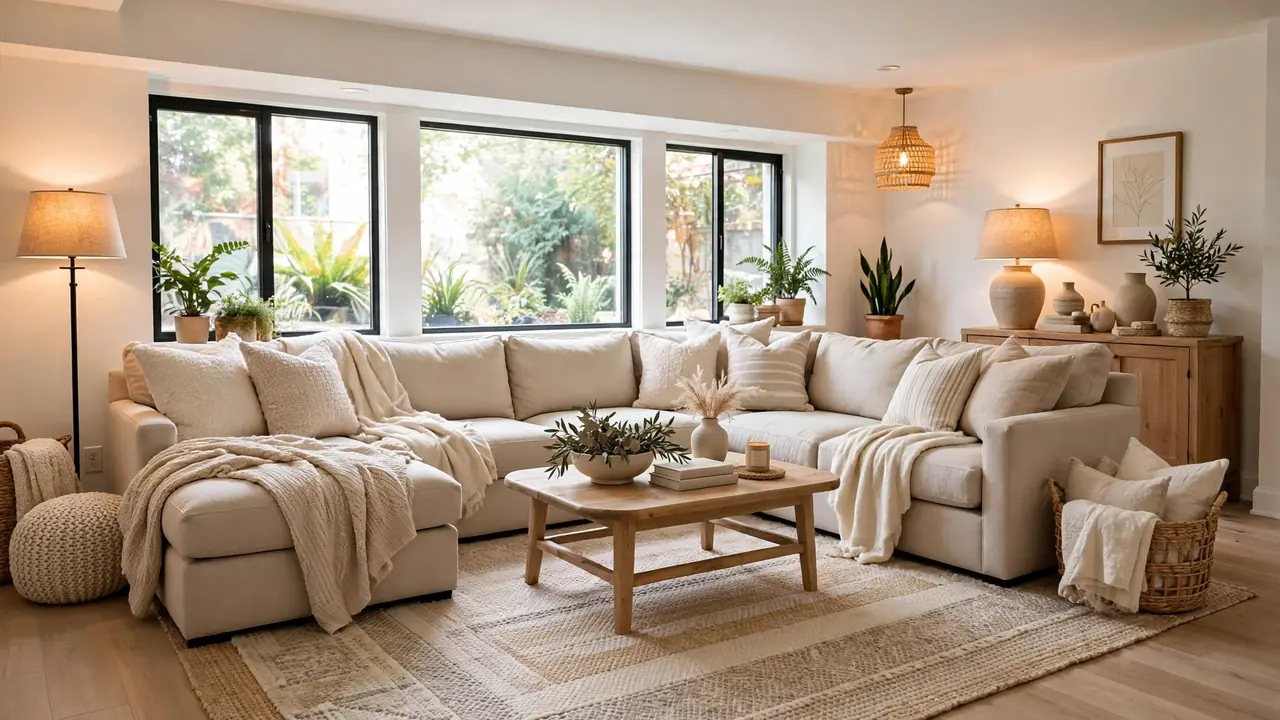
How to Arrange Furniture in a Basement Living Room
Most basements hold far more potential than they show. how to arrange furniture in a basement living room is the question I hear from homeowners whose lower level feels like storage. In my experience, the difference comes down to working with the room’s light and layout instead of fighting them.
This guide walks you through the whole process, from reading the light to picking cozy pieces and creating zones that make sense. Every tip is written for a beginner, so you can start today with what you own.
By the end, your basement will feel like the most inviting room in the house. If your main floor has dark pieces that fight the light, reading how to decorate a living room with brown furniture could give you ideas there too.
Why Basement Rooms Feel Tricky
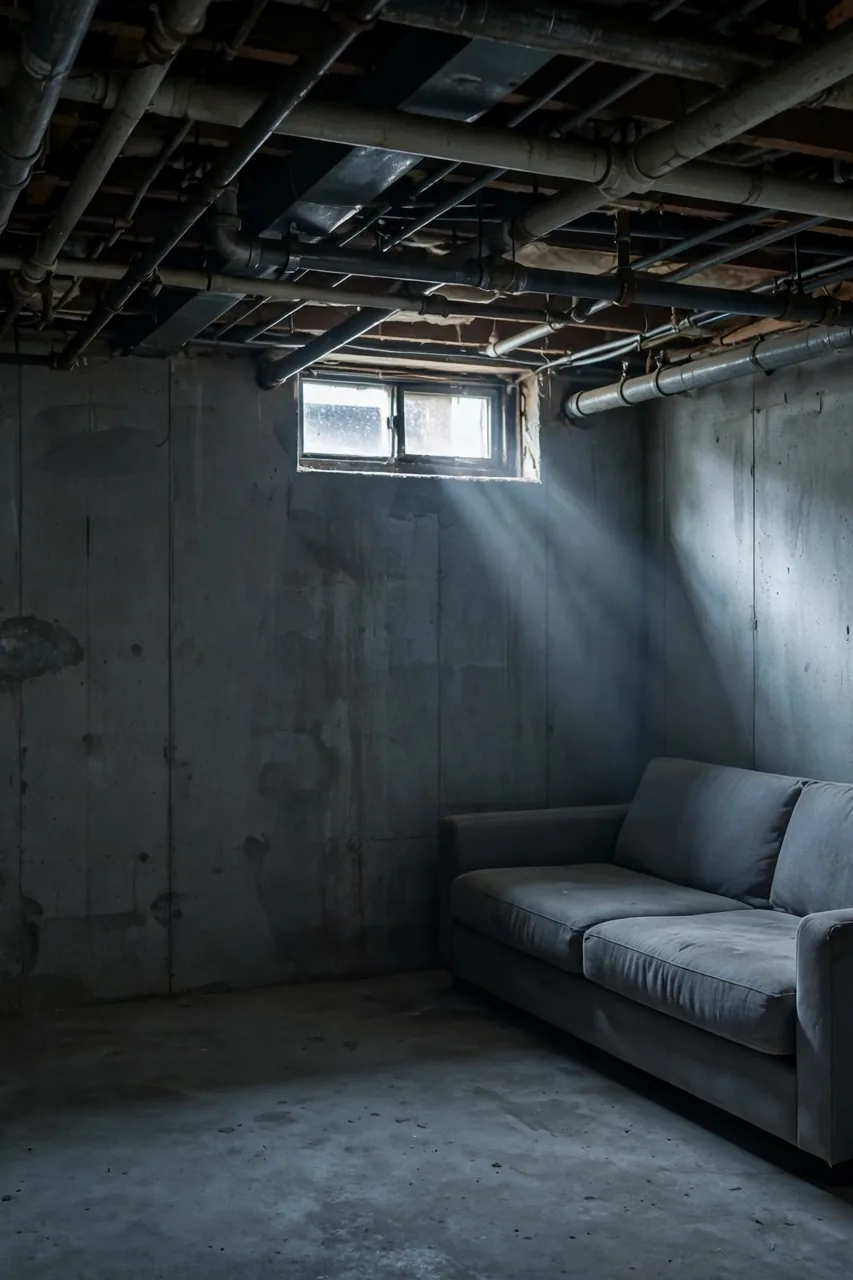
Basements come with built-in challenges: low ceilings, tiny windows, and concrete walls that swallow light. The room often feels dark and closed in no matter how nice the furniture looks. That gloom can make even a big sofa seem lost in the space.
On top of that, many basements have awkward support columns or odd nooks that break the flow. You might find yourself pushing furniture against every wall just to make it fit. Understanding these quirks first saves you from layouts that fight the room, and that awareness shapes every choice you make next.
Work With the Light
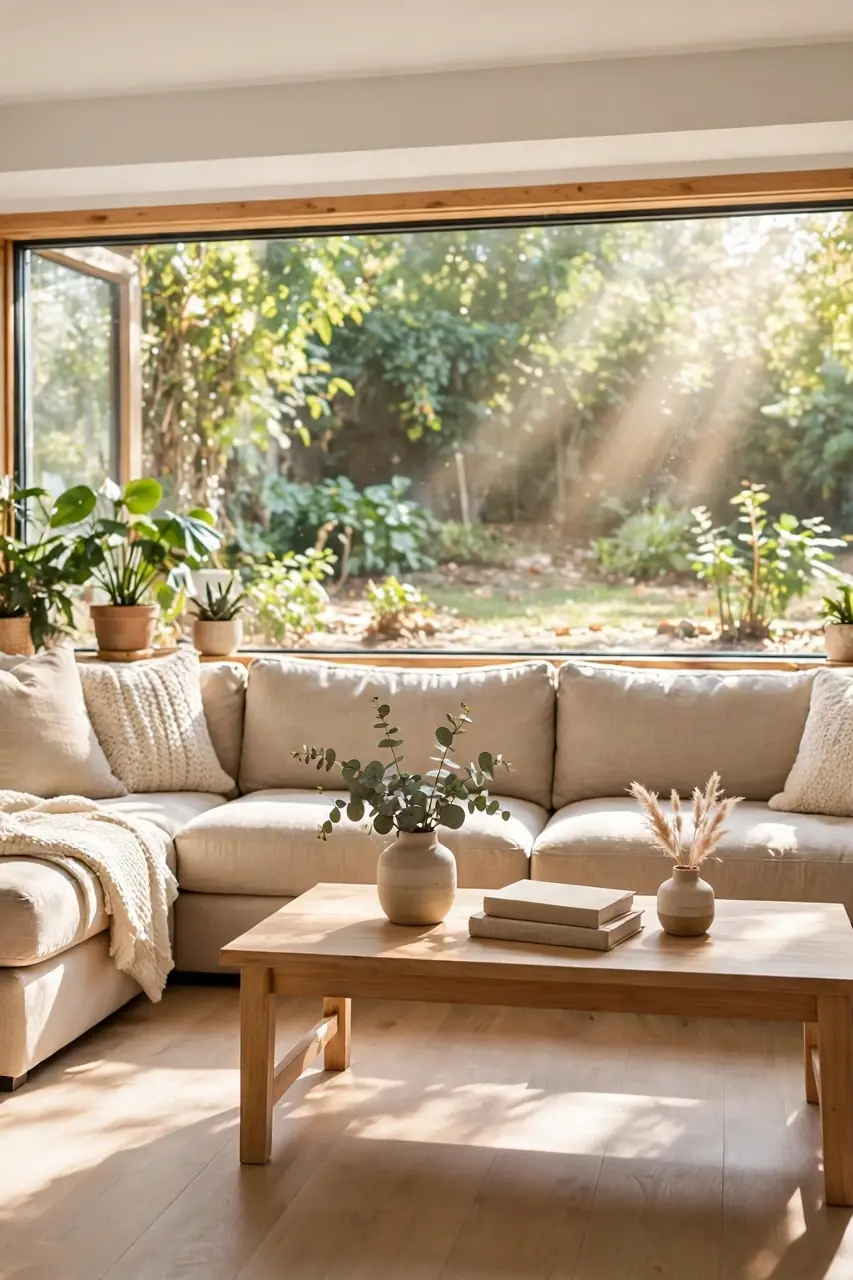
Light is the single biggest lever in a basement living room. Before you move a single piece, study where daylight lands and how it changes through the day. That map tells you exactly where people will naturally gather. Place your main seating near the brightest spot.
- Visit the room at three times of day and note which corners stay bright and which stay dim.
- Identify the main window wall, then plan your seating to face toward it, not away.
- Mark the darkest corner for a reading nook, since lamps work better in defined spots.
- Leave window areas free of tall furniture so no piece blocks incoming light.
Choose Cozy Furniture
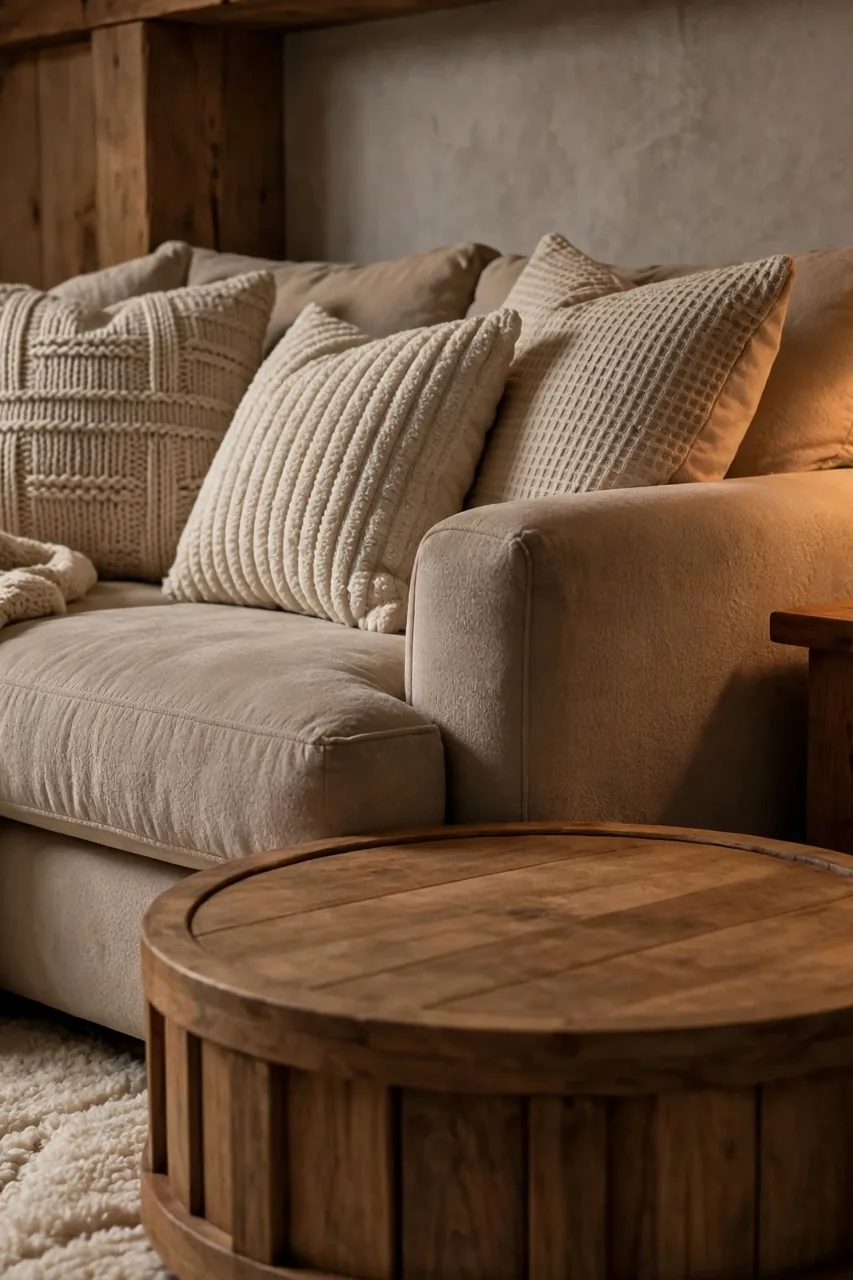
Quick Tip: Basement floors run cold, so upholstered pieces with low legs beat hard chairs every time. Pick a deep sofa you can sink into, and add an ottoman that doubles as a footrest and storage.
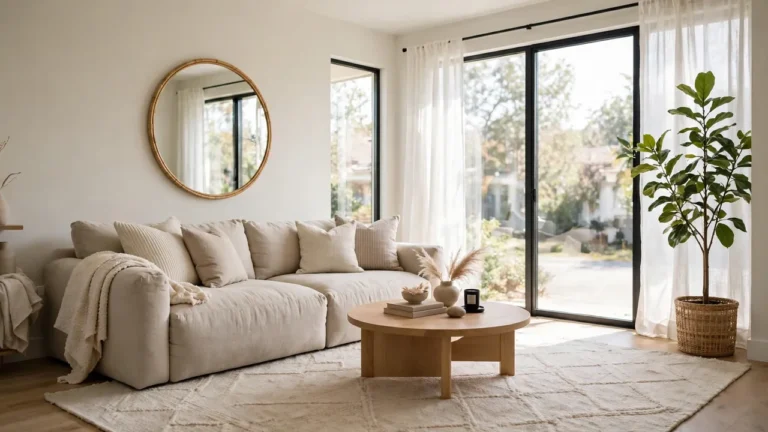
Soft textures do the heavy lifting in rooms that lack sunlight. Choose plush fabrics, rounded shapes, and warm-toned wood to counter the concrete feel. Avoid cold metal frames or glass tables that echo the basement chill, and instead let every seat feel like an invitation to settle in for a long evening.
Create Zones
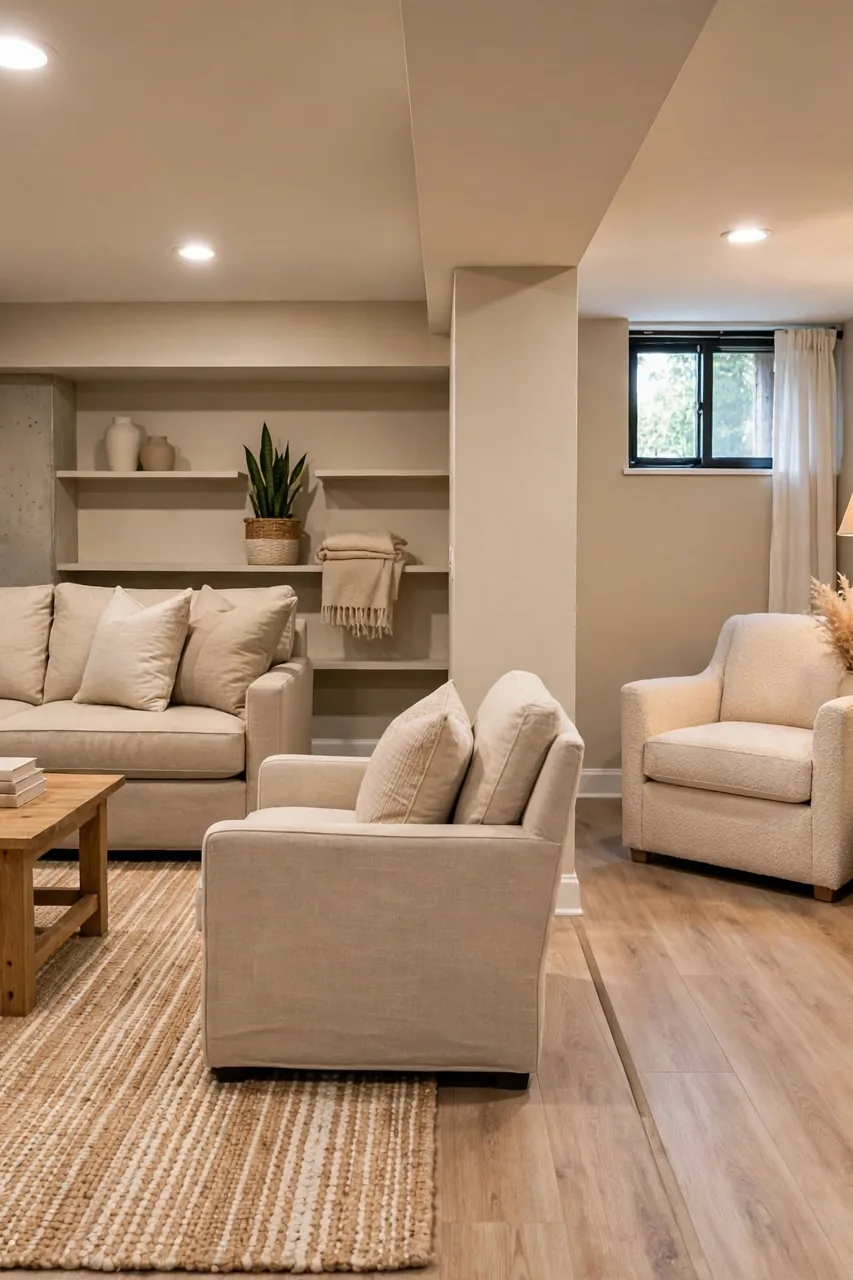
Common Mistake: Most people push every piece against the walls, leaving a dead empty center. That layout makes the room feel like a waiting area instead of a living space. It also wastes the middle of the room completely.
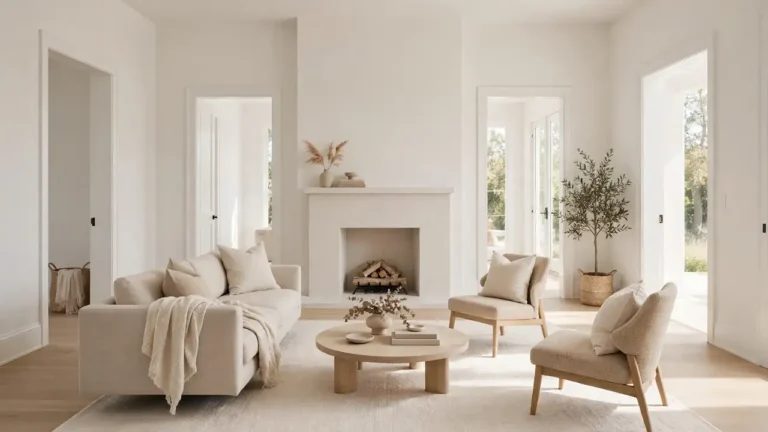
The Fix: Pull your seating inward to form a clear conversation zone around a rug or coffee table. Let one zone hold the main sofa and chairs, and use the leftover corners for a desk or a game table. The room instantly feels designed rather than dumped.
Defined zones tell your eyes where to rest, which fights the tunnel feeling basements often have. A rug anchors the main area while a bookcase or open shelf marks the boundary of a second spot. Keep walkways between zones wide enough for two people to pass comfortably.
Anchor With a Rug
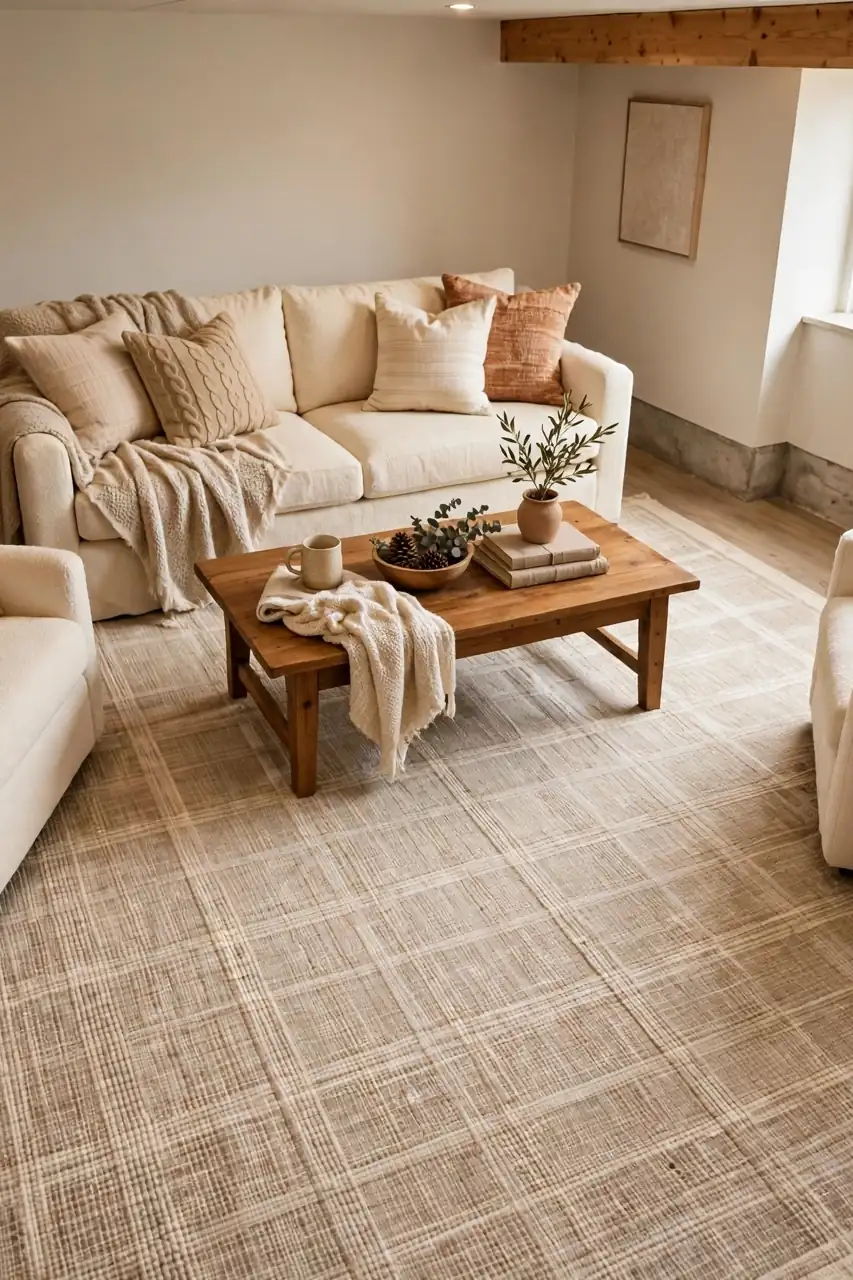
What You Need:
- A rug large enough that the front legs of your sofa and chairs sit on it, which ties the seating into one group.
- A low-pile or flatweave texture that will not trap basement moisture or feel clammy underfoot.
- Warm neutral colors like beige or terracotta that brighten the floor without showing every speck.
- A non-slip rug pad underneath so the rug stays put on concrete or laminate flooring.
- A washable option if the room doubles as a play space, since spills happen.
A rug turns a cold concrete slab into a room that invites bare feet. It is the fastest way I know to make how to arrange furniture in a basement living room feel simple, because the rug draws the layout for you. Keep its edges a few inches from the walls so the room breathes.
Brighten the Walls
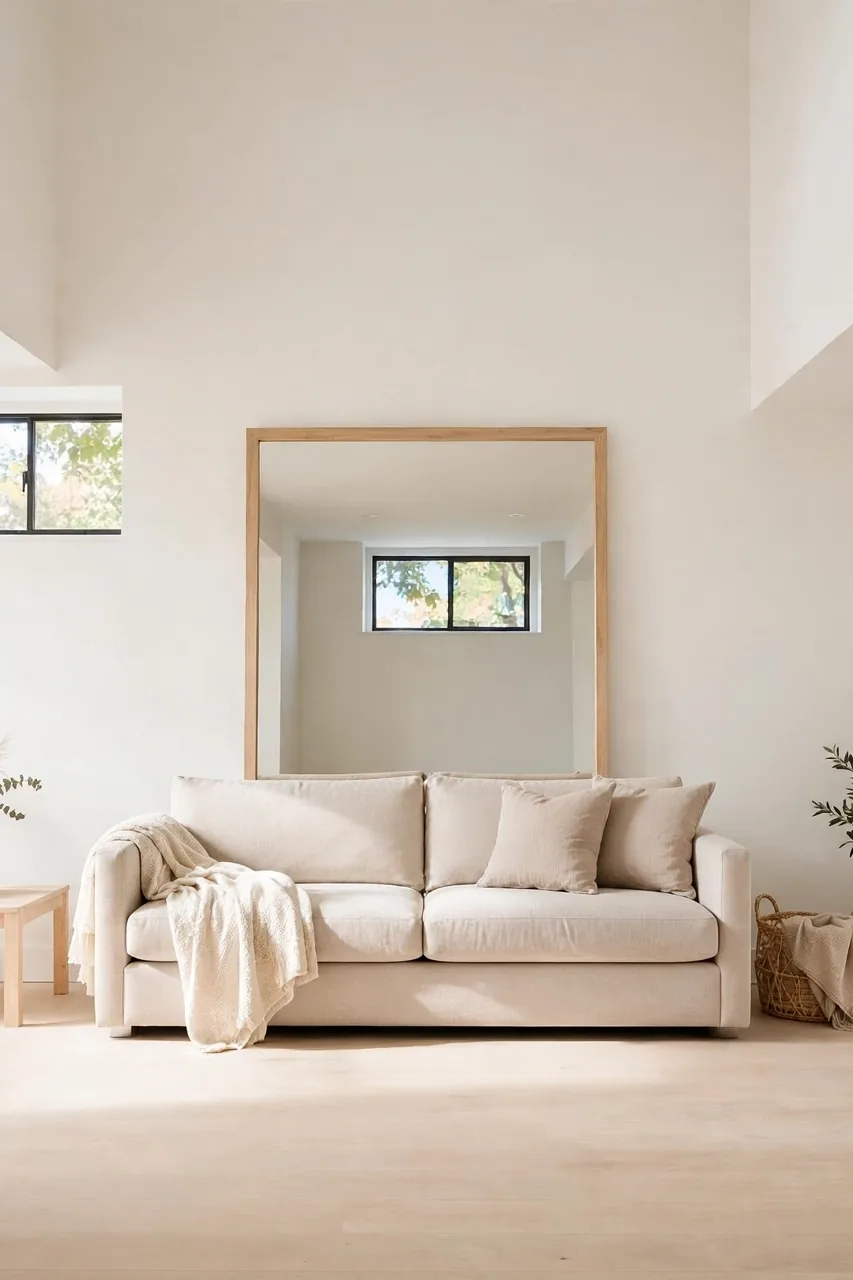
Before: Many basements wear dark paneling or gray concrete that drinks up what little light arrives. The walls feel like they are closing in, and the furniture seems to disappear against them. Everything reads cold and unfinished.
After: A fresh coat of warm white or pale beige paint bounces light back into the room instantly. Furniture pops against the brighter backdrop, and the ceiling feels higher than it did before. The whole space shifts from cave to comfortable.
Paint is the cheapest transformation you can give a basement living room. If paint feels like too much, large light-toned art or mirrors on the walls deliver a similar lift. Either way, the room starts working with the light it has instead of swallowing it.
Add Warm Lighting
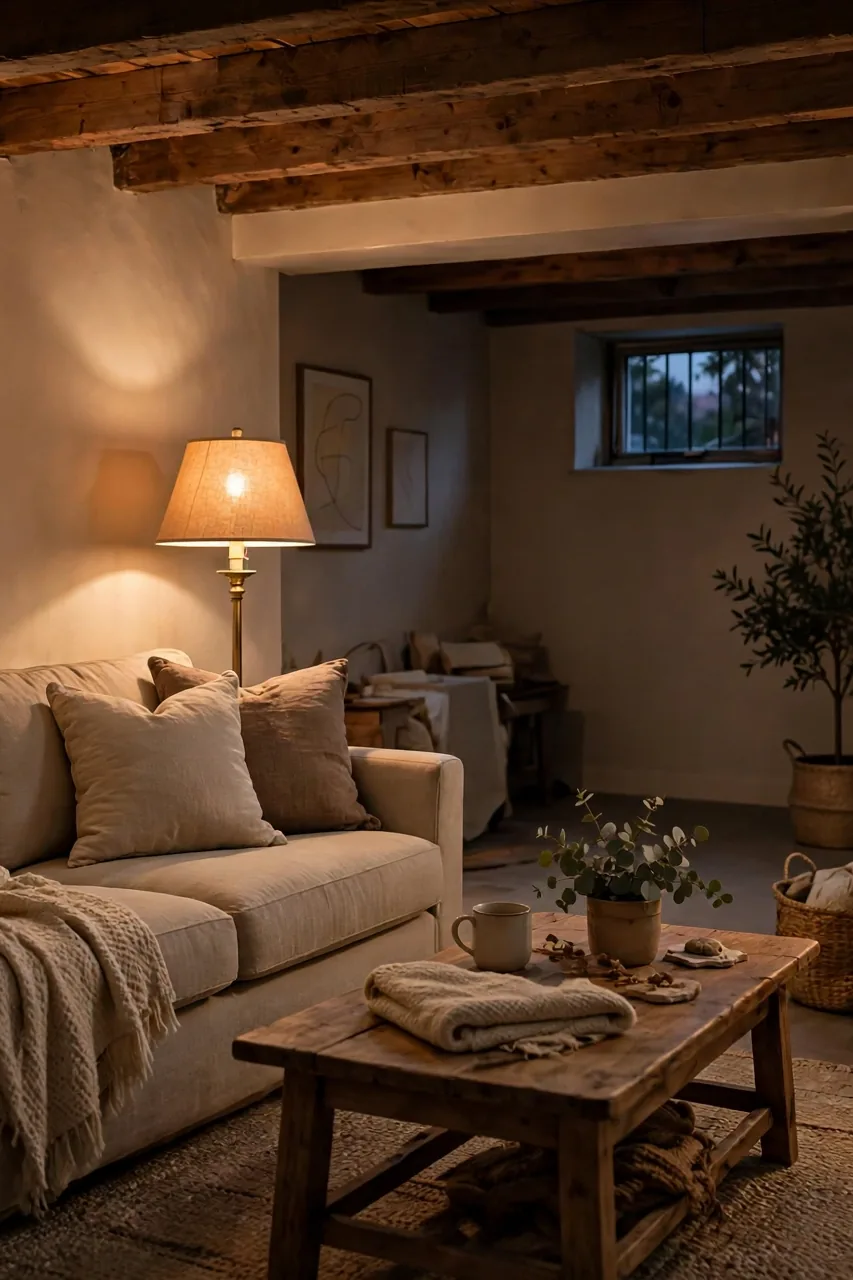
Do This:
- Layer a floor lamp, a table lamp, and wall sconces so light comes from three heights.
- Choose warm white bulbs around 2700K for a cozy glow instead of a clinical one.
- Place a lamp in the darkest corner to pull attention into the whole room.
- Add a dimmer switch where you can so the mood shifts for movie night.
Avoid This:
- Relying on one overhead light that flattens everything and deepens shadows.
- Using cool daylight bulbs that make the room feel like an office.
- Leaving corners unlit, which makes the walls close in on you.
- Hanging harsh downlights directly over the seating area.
Layered warm lighting is what finally sells the basement as a living room instead of a cellar. Small pools of light in several spots stretch the room visually and make furniture groupings feel intentional. Once the lamps are on, even a low ceiling fades into the background.
If tiny bathrooms give you the same cramped feeling, my notes on how to organize a small bathroom countertop use the same clear-everything-out approach on a smaller scale.
Keep It Uncluttered
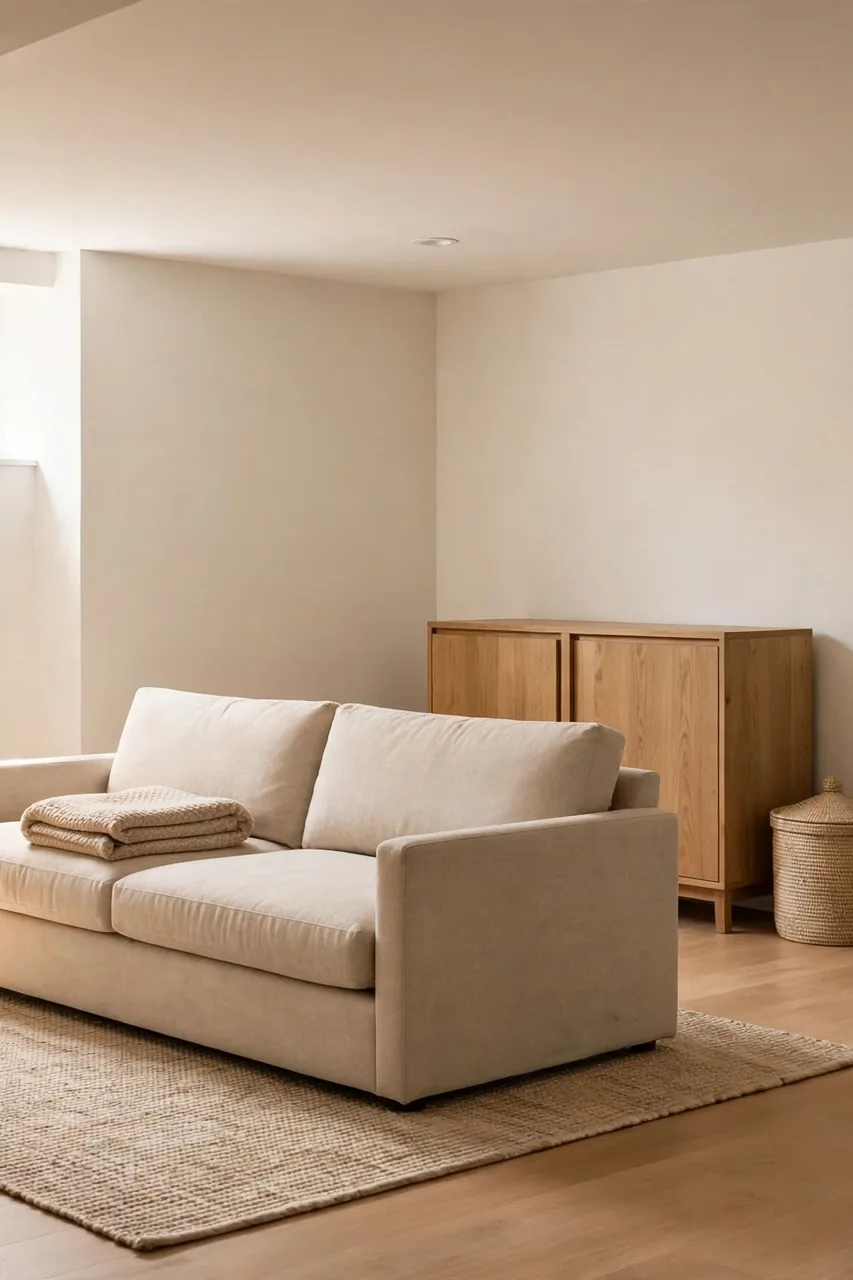
Time Needed: One weekend for a full reset | Difficulty: Easy | Cost: Low to none
Best For: Basements doubling as storage, which is nearly every basement
Pro Tip: Sort into keep, donate, and relocate boxes before moving anything back
Clutter is the fastest way to shrink a basement living room back into a cellar. I’ve noticed that once overflow boxes are out, the furniture arrangement you chose finally reads clearly. Build in closed storage like ottomans or lidded baskets so everyday items disappear instead of drifting across the floor.
Common Basement Mistakes
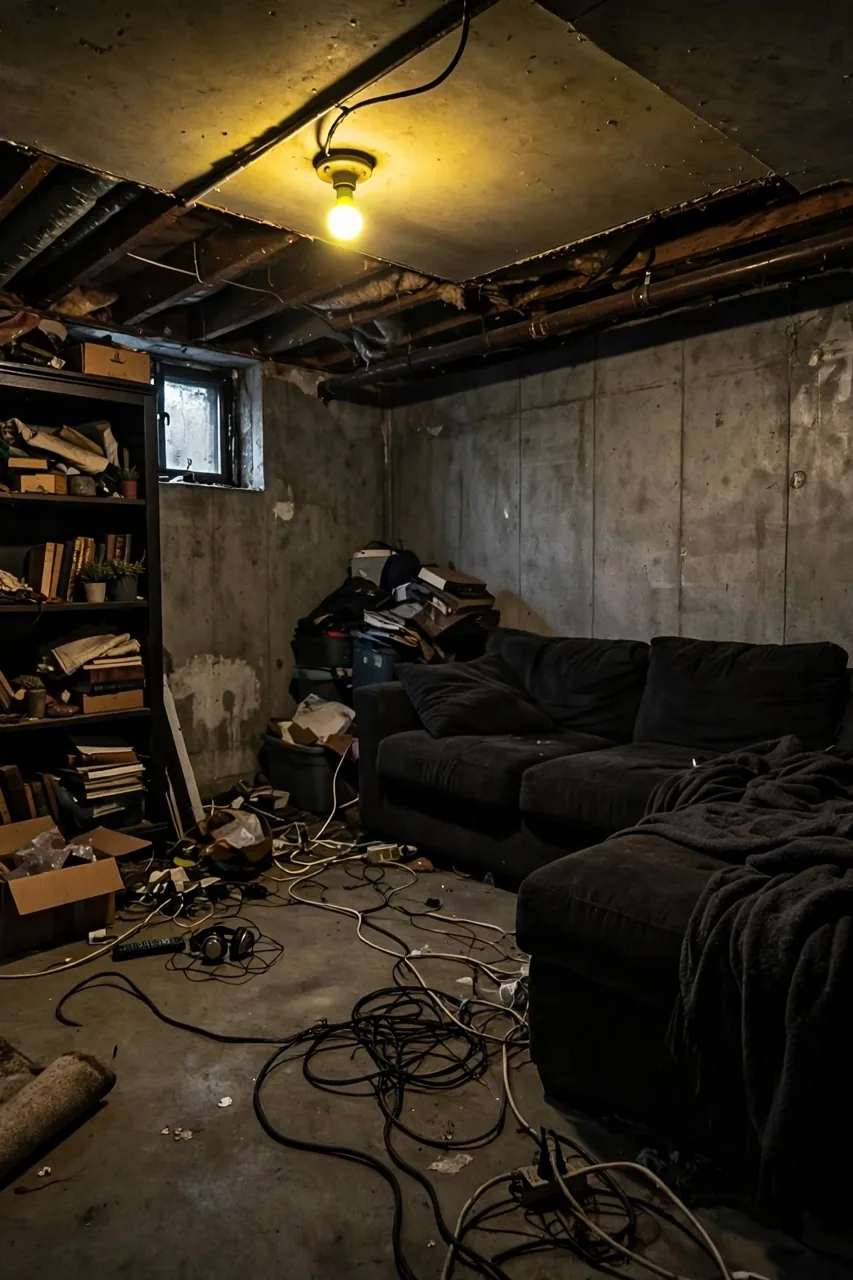
The classic mistake is blocking the only window with a tall bookcase or a big TV unit. Natural light is precious down here, and every blocked ray makes the room darker than it needs to be. Another common slip is choosing furniture scaled for an upstairs living room.
Oversized sectionals and giant coffee tables eat floor space fast when ceilings sit low. Match your pieces to the room’s actual proportions, and leave breathing room around each one. Your basement will thank you by feeling twice as big. Start small, adding pieces only where they earn their place in the layout.
Pro Tips for Cozy Basements
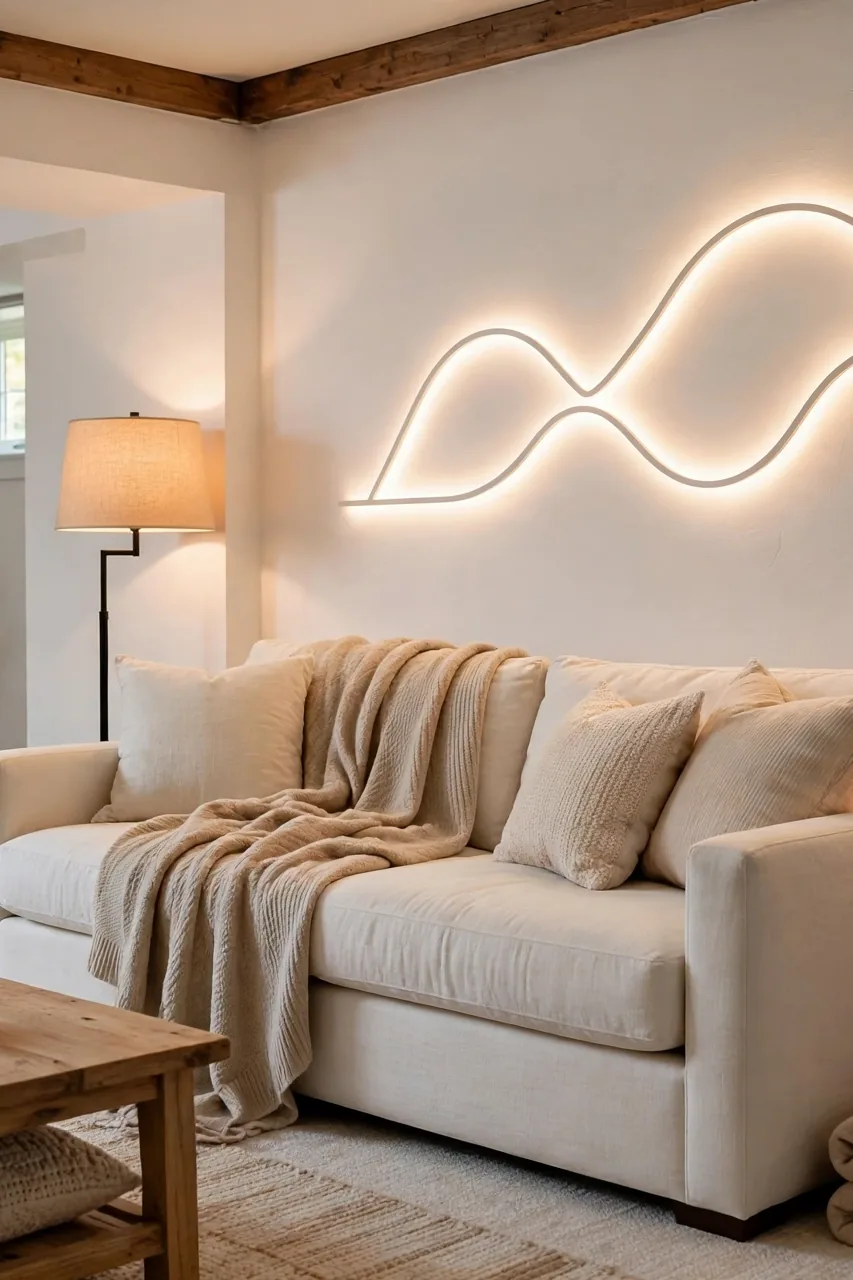
These last touches turn a well-arranged basement into a room people choose over the upstairs. Each one takes minutes but changes how the whole space feels. Try them in order, and stop the moment the room feels right to you.
- Drape a soft throw over the sofa arm so the seating looks inviting from across the room.
- Set a small speaker or a scented candle on the side table to make the room feel alive.
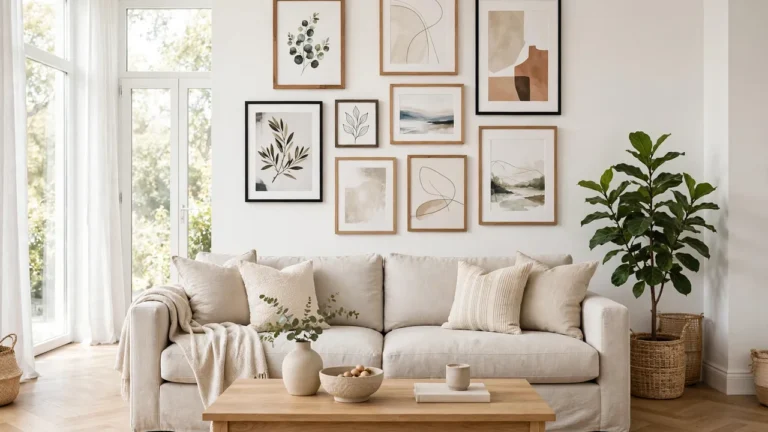
- Hang one oversized piece of art instead of many small ones, since it reads calmer in low light.
- Keep a spare blanket folded nearby so guests feel welcome the moment they sit down.
Conclusion
A basement living room can become the coziest spot in your home once the furniture works with the space instead of against it. Now you know how to arrange furniture in a basement living room from light mapping to cozy finishes, and the result is a room that finally feels finished. Save this guide to your Pinterest boards so you can find each step when the project weekend arrives. I’ve seen how making this one change can completely shift how a family uses their lower level. Start with the light, trust the process, and enjoy the new favorite room.
2 Comments