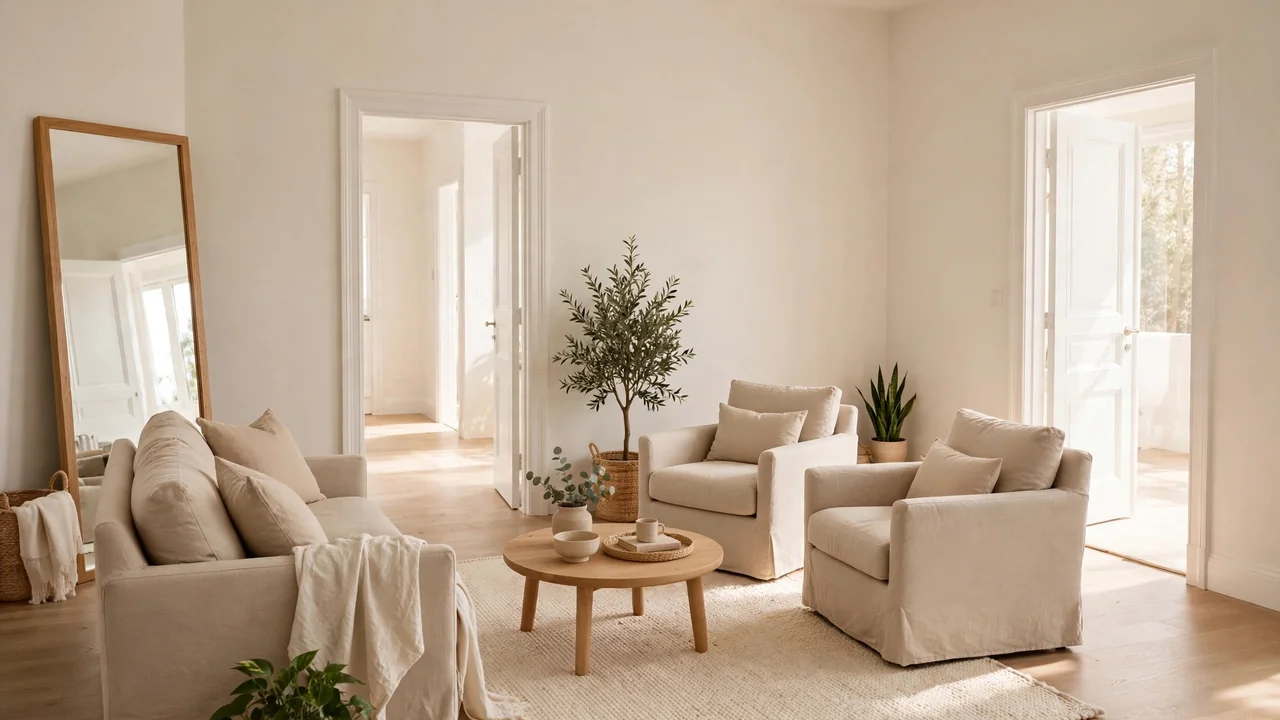
How to Arrange a Living Room With Two Doors
Two doorways can make a living room feel like a hallway instead of a place to relax. If you are wondering how to arrange a living room with two doors without blocking traffic, you are not alone. This layout challenge is more common than you think, and it has a straightforward solution.
In my experience, most people push all their furniture against the walls to keep paths open, but that actually makes the room feel smaller and disconnected. A better approach starts with mapping where people actually walk. Once you see the real traffic lanes, arranging around them becomes much easier, much like the planning behind how to brighten a room with dark walls starts with understanding the light.
Why Two Doors Complicate Layouts
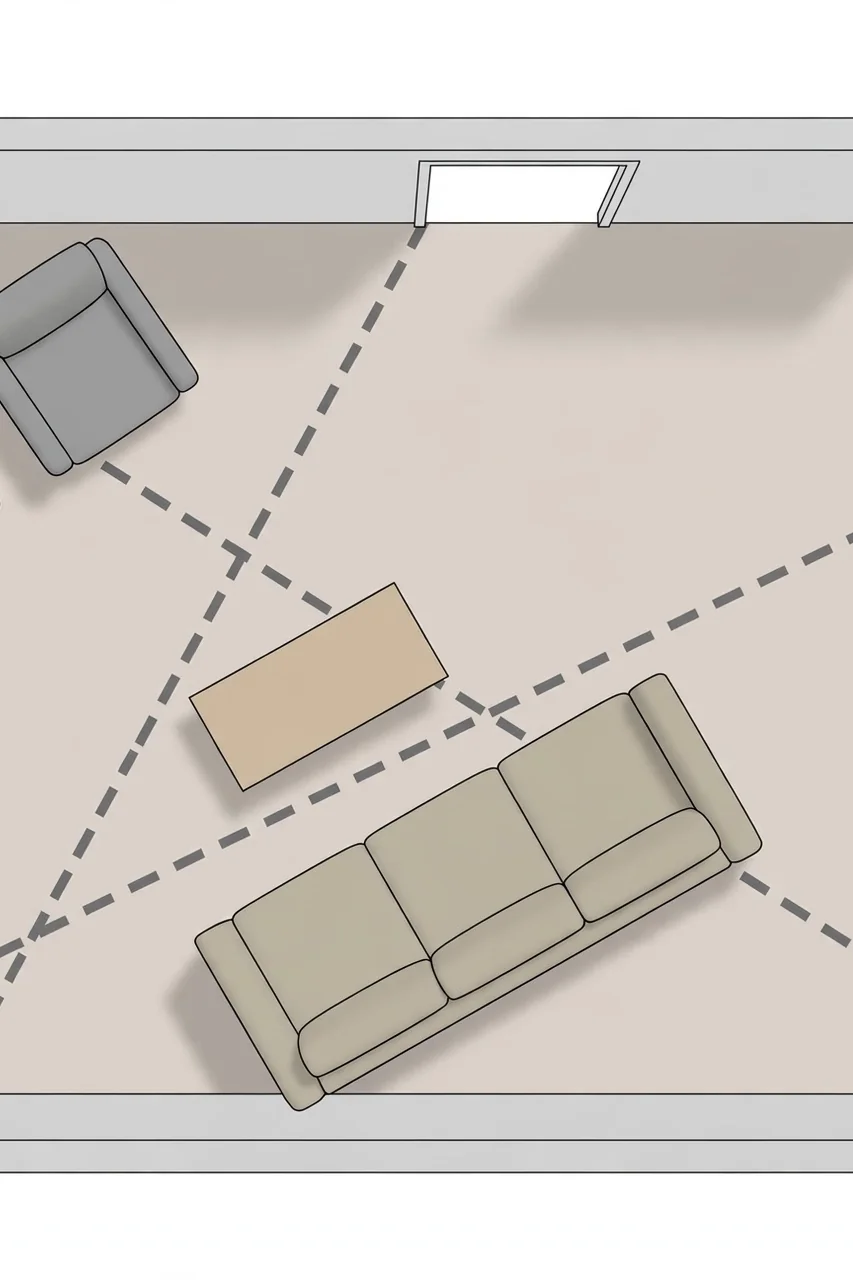
Every doorway creates an invisible walkway that furniture cannot block. With two doors, those walkways often cross the room in an X or L shape, eating up the floor space you thought you had. A sofa that looks fine against one wall can suddenly block the path to the second door, and the whole room starts to feel like a corridor.
The fix is not buying smaller furniture. It is placing pieces so both walkways stay open while you still get a comfortable spot to sit, talk, and unwind each evening.
Map Your Traffic Paths
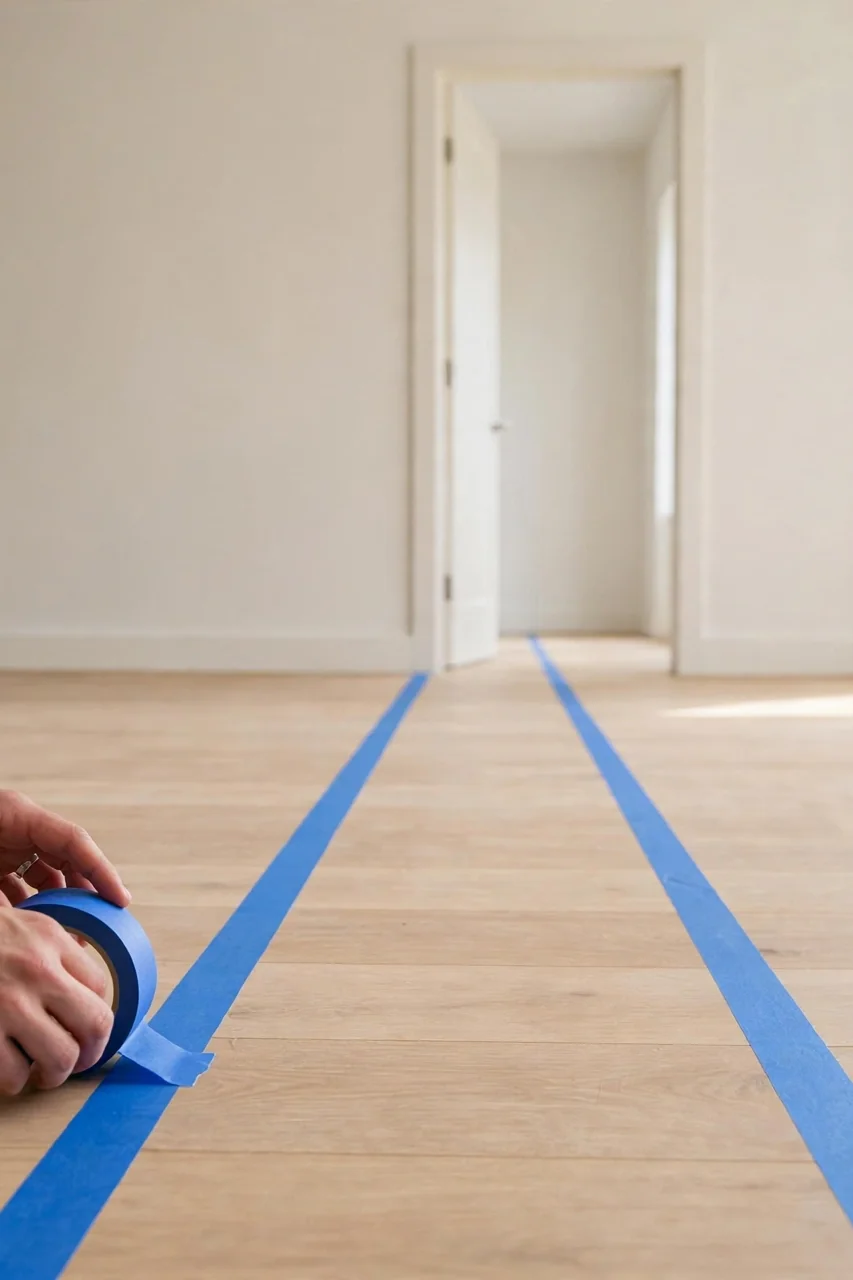
Before moving a single chair, you need to know exactly where feet travel through your space. Walk the room the way you and your family actually use it each day, then mark those routes. This five minute exercise prevents most layout headaches later.
- Stand at each door and walk to the other door, the kitchen, and the main seating spot. Notice the straight lines your feet naturally take.
- Lay painter’s tape on the floor along those lines, leaving 30 to 36 inches of clear width for comfortable passing.
- Arrange your furniture plan around the taped lanes, keeping every walkway completely open before you commit to a layout.
- Live with the tape for a day or two, adjusting any lane that feels tight when you carry laundry or groceries through.
Anchor With a Rug
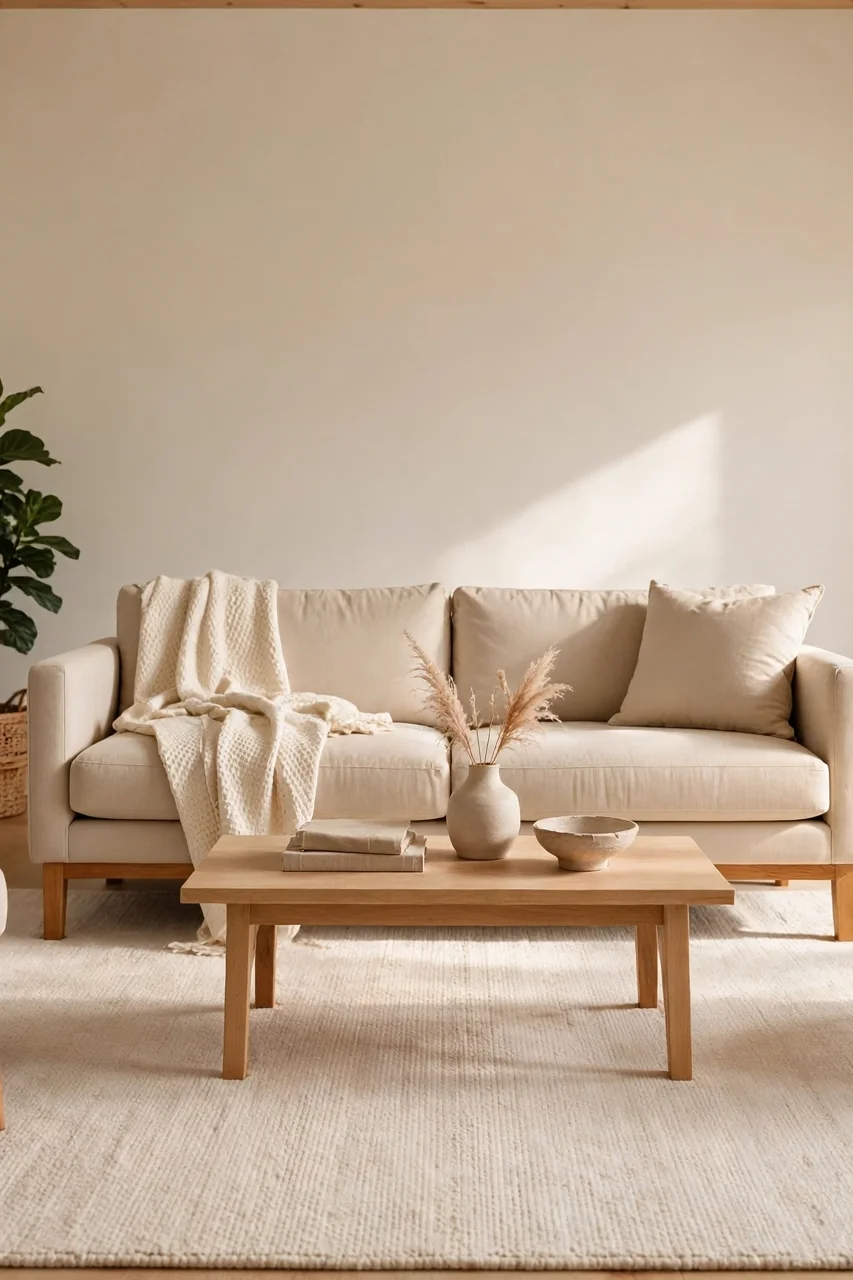
Quick Tip: A rug is the fastest way to tell the eye where the living area starts and the walkway ends. Choose one large enough that the front legs of your sofa and chairs all rest on it. This single piece visually claims the seating zone even when doors open on both sides.
Without a rug, furniture in a two door room tends to drift toward the walls and the middle feels empty. The rug pulls everything inward and creates a clear destination for the eye. Pick a low pile style so doors swing freely over it without catching.
Float Furniture Away From Doors
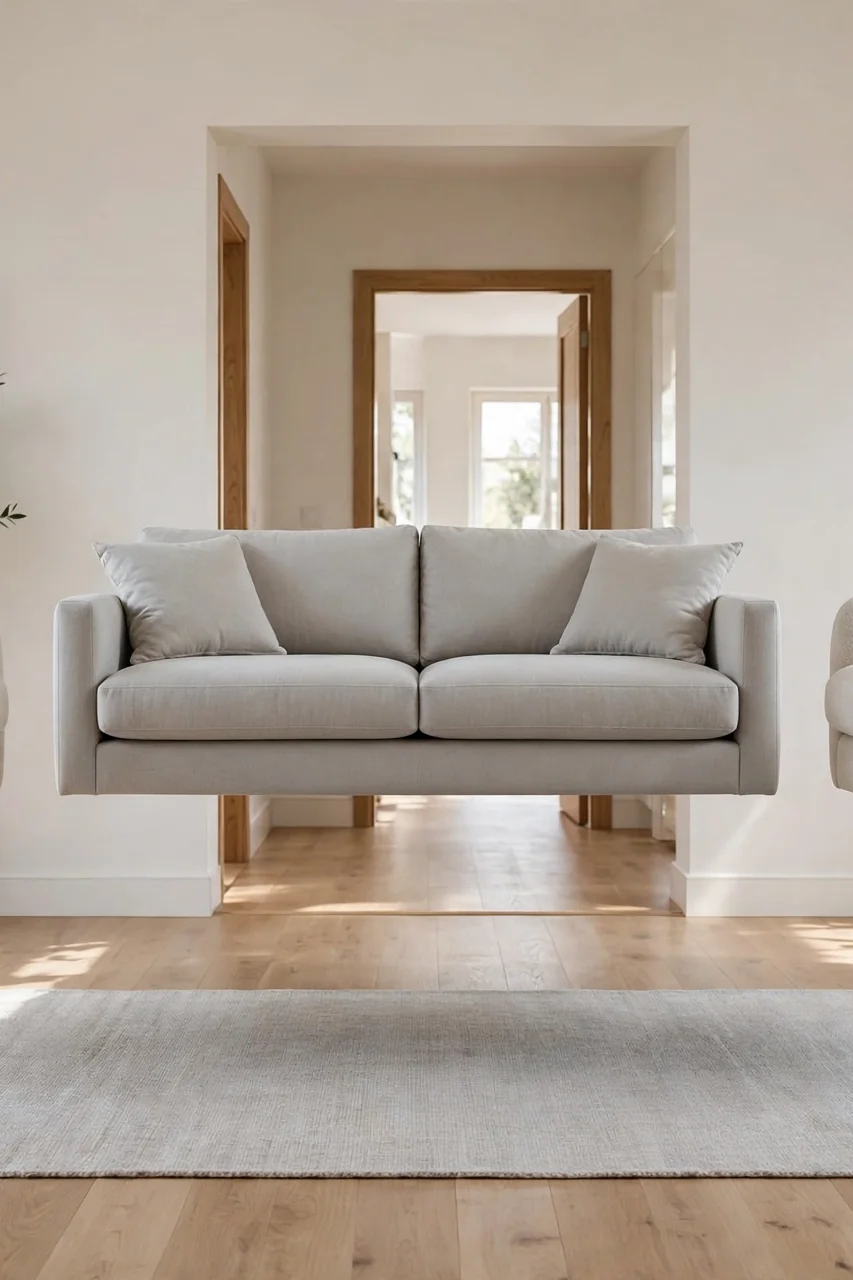
Common Mistake: Most people shove the sofa directly against the wall farthest from the doors, thinking that keeps paths clear. This leaves an awkward empty strip behind the sofa and pushes seating too far from the room’s natural center. The space ends up feeling both cramped and oddly vacant at once.
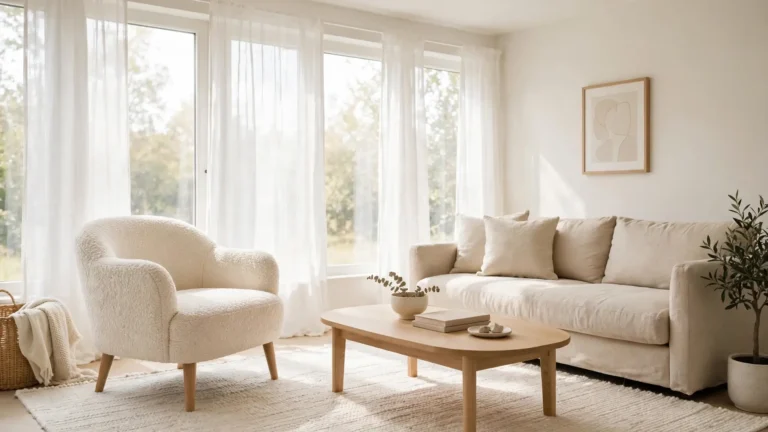
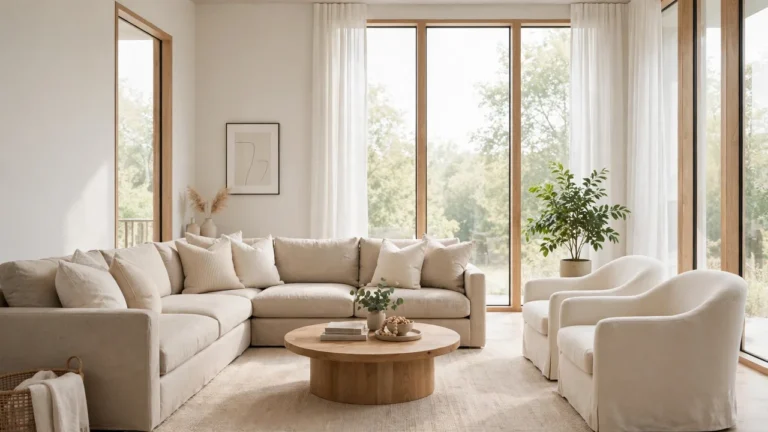
The Fix: Pull the sofa and chairs a few feet off the wall to form a loose grouping in the middle of the room. Leave a clear lane behind the furniture for the door paths you mapped earlier. The floating arrangement feels intentional and keeps both doorways fully usable.
Floating furniture takes courage the first time you try it, but the result is worth the leap. The room gains a defined seating area instead of a ring of furniture hugging the walls. Walk both door paths after rearranging to confirm nothing blocks the swing or the stride.
Create Conversation Zones
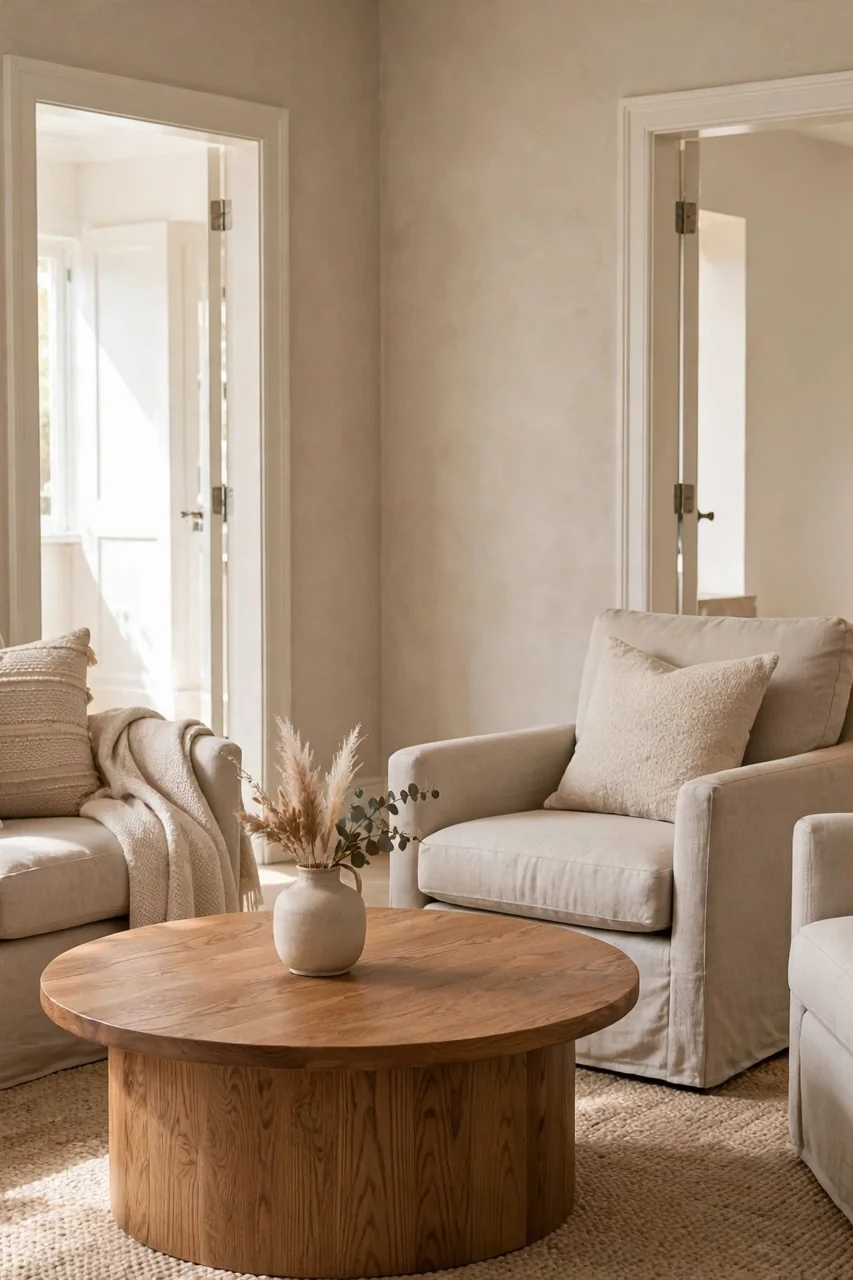
What You Need:
- A sofa or loveseat: pick the largest piece that fits without touching either traffic lane, since it anchors the whole zone.
- Two accent chairs: angle them toward the sofa so people face each other instead of staring at a doorway.
- A coffee table or ottoman: choose one that sits within easy reach of every seat and leaves 14 to 18 inches of legroom.
- A side table: place it at the end of the sofa or between chairs for drinks, books, and a small lamp.
- Good lighting: add a floor lamp or table lamp so the zone feels warm and inviting after dark.
A conversation zone gives the room a clear purpose that has nothing to do with the doors. When chairs face each other instead of the walls, guests naturally settle in and stay awhile. Keep the zone compact enough that voices carry easily without shouting across the space.
Use the Wall Between Doors
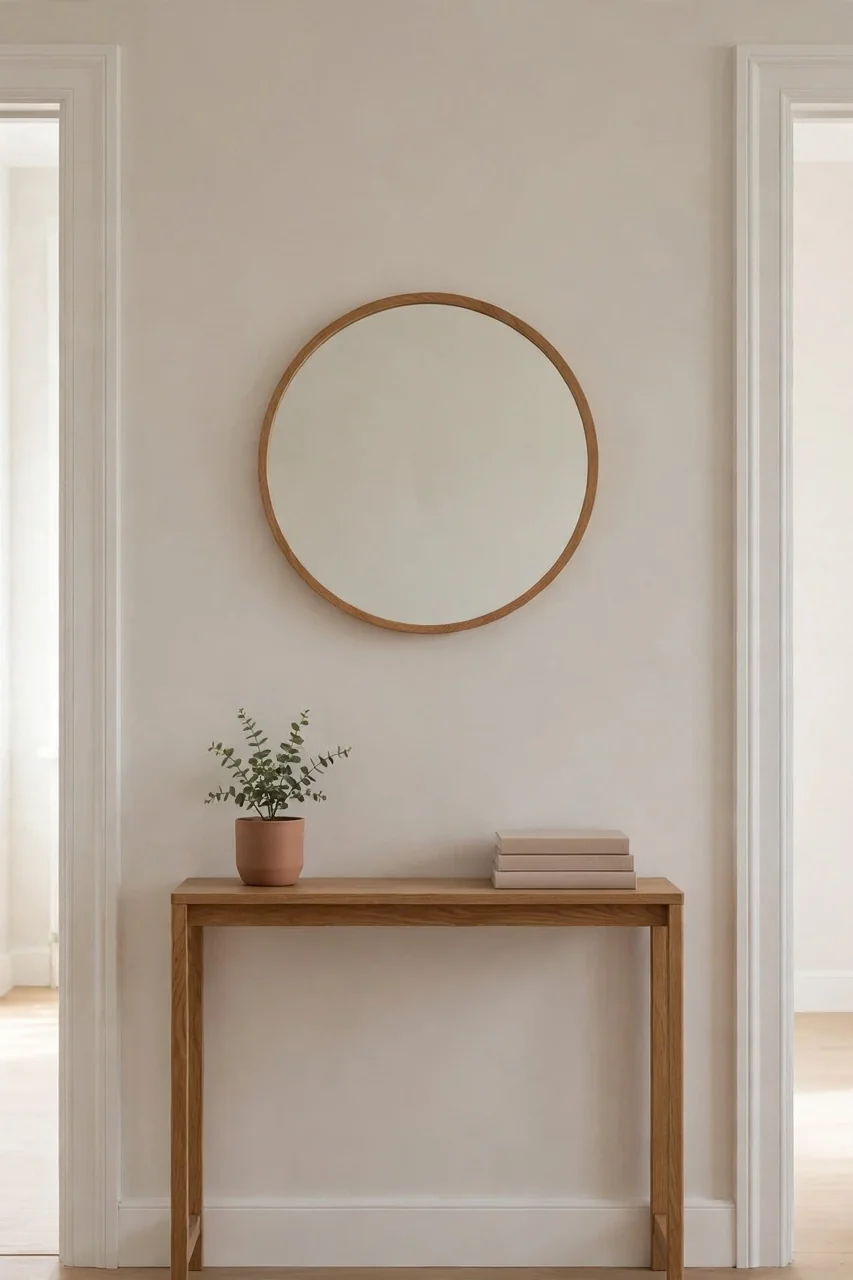
Before: The wall space between two doors often becomes a dead zone with nothing on it. Homeowners leave it bare because they are unsure what fits in a narrow stretch. The result is a blank gap that makes the whole room feel unfinished.
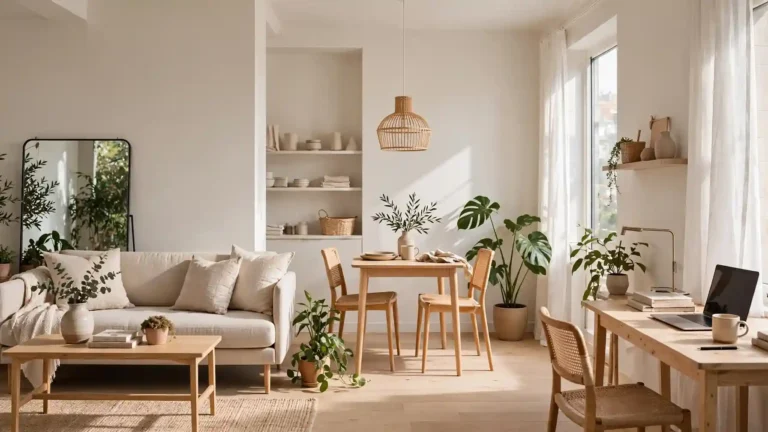
After: A slim console table with a mirror above it turns that gap into a stylish focal point. The mirror bounces light around while the table holds keys, a small plant, or a stack of books. Suddenly the space between doors feels deliberate instead of forgotten.
Figuring out how to arrange a living room with two doors means seeing every wall as an opportunity rather than a limitation. That narrow stretch between doors suits pieces that are shallow but full of character. Measure the width first so whatever you choose fits without crowding either doorway.
Keep Pathways Clear
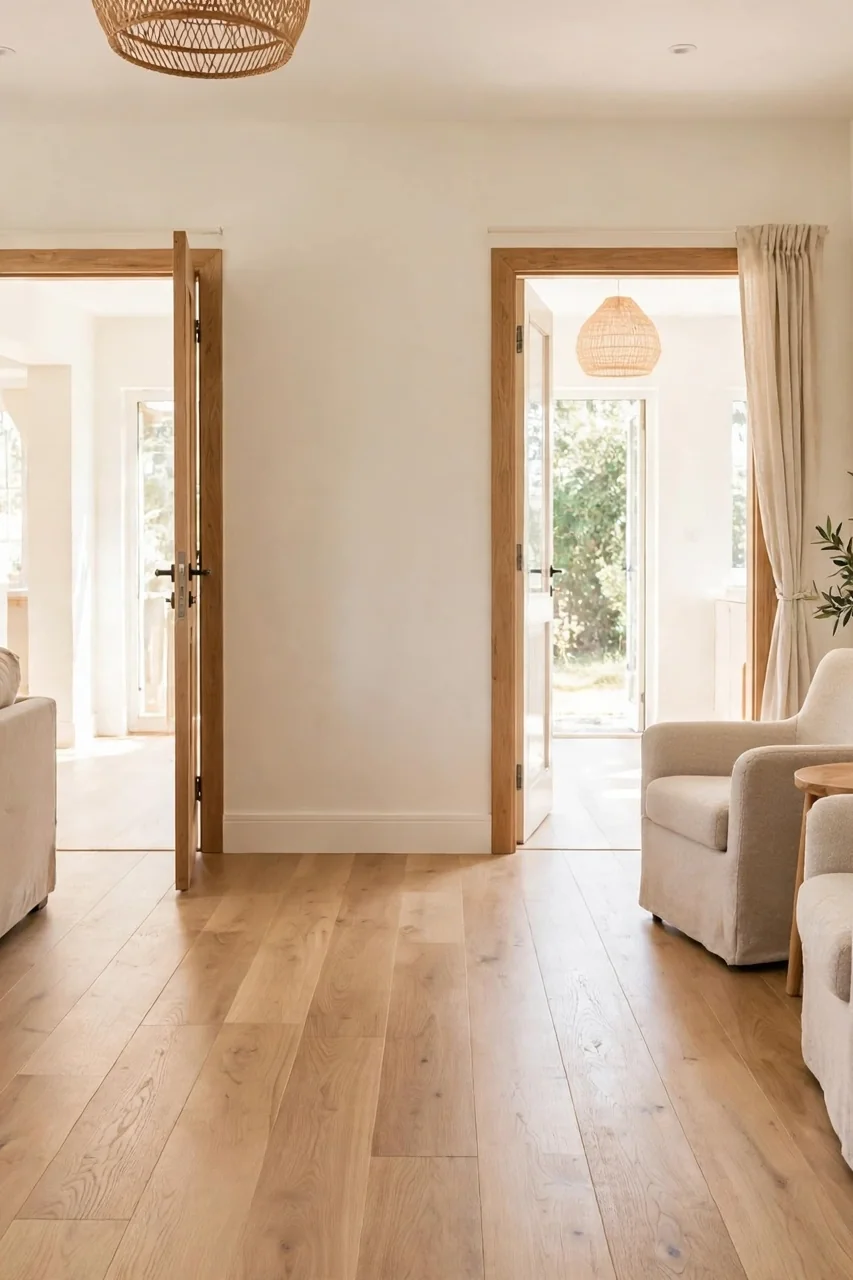
Do This:
- Leave 30 to 36 inches of open floor for each main walkway.
- Choose furniture with legs so the eye sees floor underneath and the room feels airier.
- Use a round coffee table to soften tight turns near door swings.
- Test every path by walking it with a laundry basket in your hands.
Avoid This:
- Do not place a chair where its back faces an incoming doorway.
- Avoid tall bookcases right beside a door where they block light and sightlines.
- Never let curtains puddle across a walkway where feet can trip.
- Do not crowd both doors with furniture that forces a single file squeeze.
Clear pathways are the difference between a room that flows and one that frustrates. After arranging, walk every route slowly and notice where your shoulders tense or your steps shorten. Move any piece that makes you hesitate, even by a few inches, until each path feels easy.
For more ideas on tricky spaces, see how to decorate a living room with no windows.
Balance Both Sides
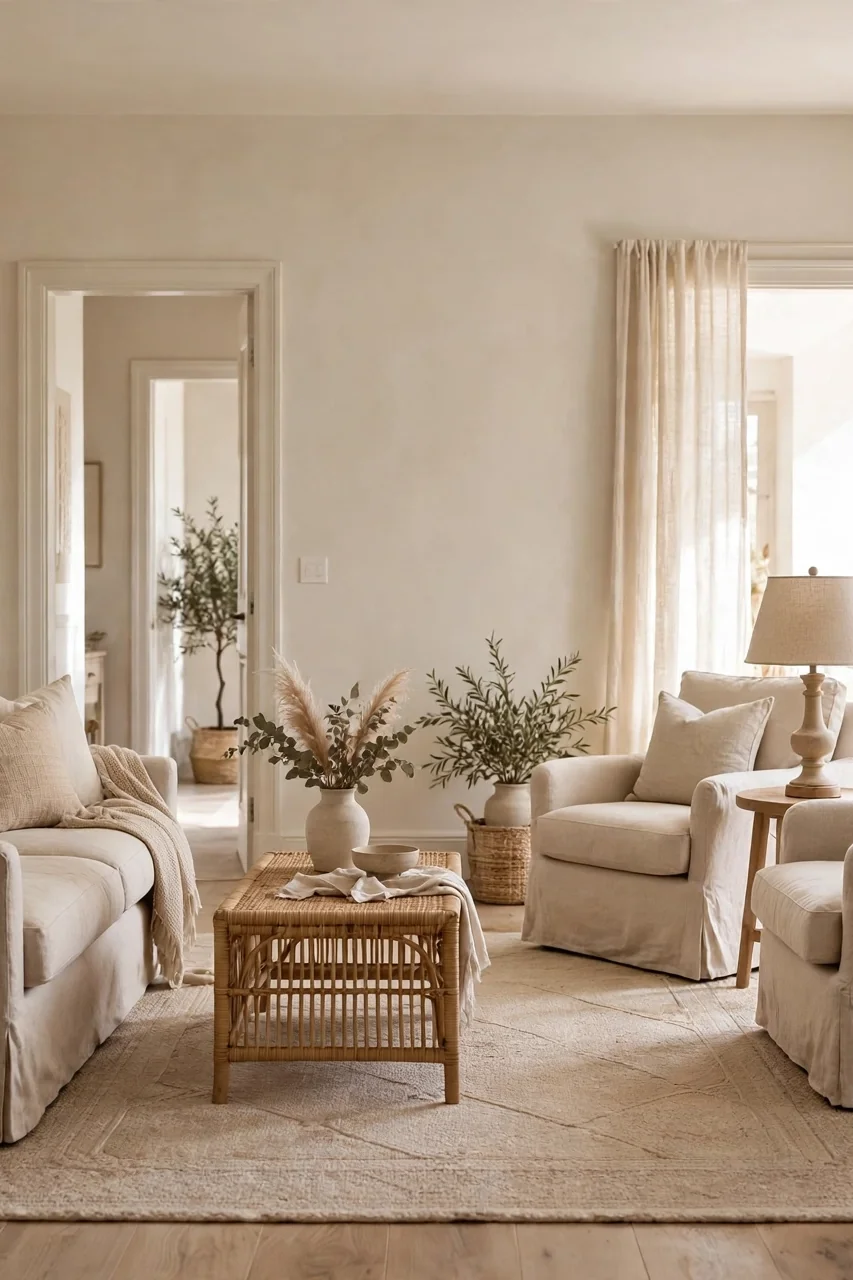
Visual Weight: Match heavy pieces on one side with a grouping of smaller items on the other | Door Clearance: Keep 24 inches minimum from any door swing to the nearest furniture edge | Symmetry Helper: A pair of matching lamps or plants on either side creates instant balance | Best For: Rooms where doors sit on opposite or adjacent walls
Balance does not mean perfect mirror images on each side of the room. It means neither side feels heavier or emptier when you glance across the space. Step back to each doorway and look in, adjusting pieces until both views feel settled and welcoming to guests.
Common Two-Door Mistakes
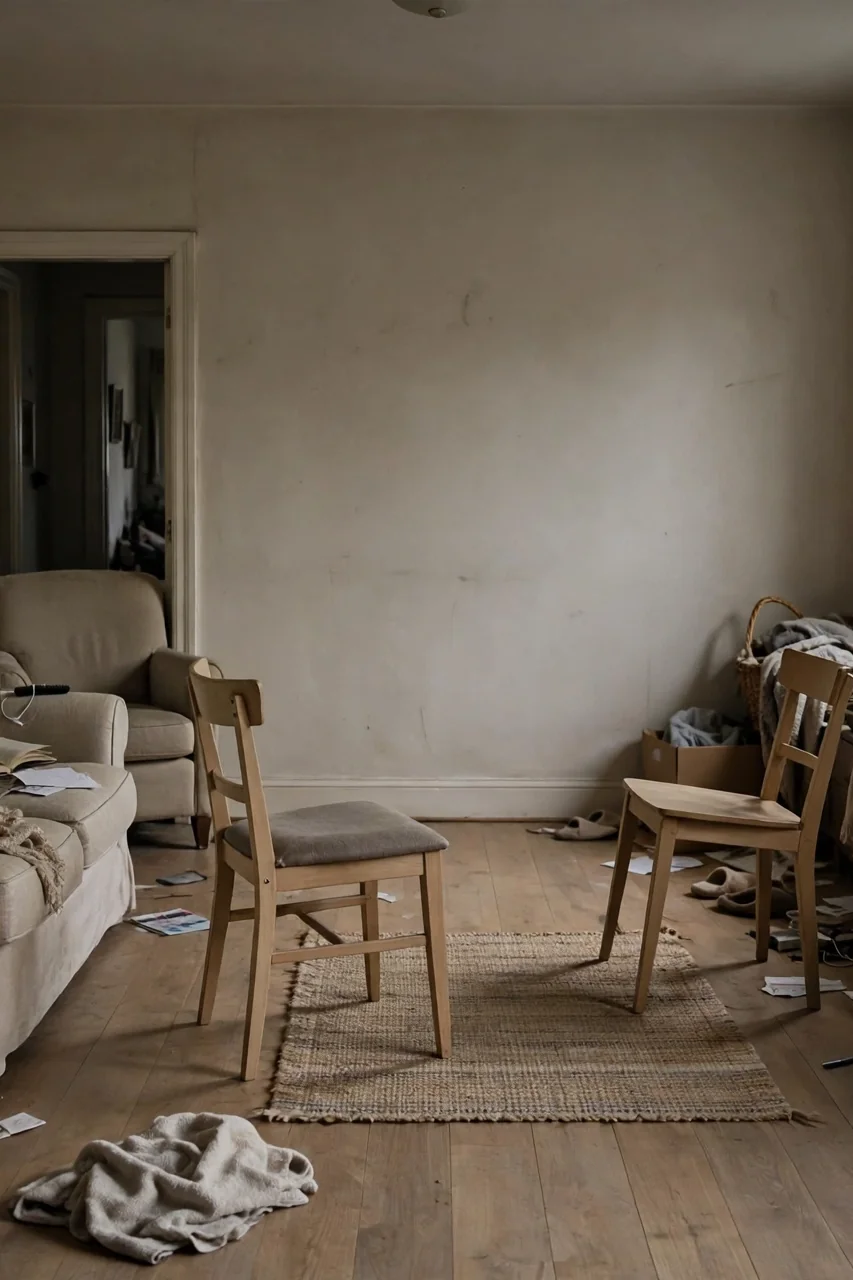
The biggest mistake is treating one door as the main entrance and ignoring the other. Furniture gets arranged for a single traffic flow, and the second door becomes an obstacle instead of an asset. Another frequent error is lining every seat against the walls, which turns the center into a no man’s land that nobody uses.
Watch for rugs that stop short of the seating area and leave chair legs half on and half off. That wobbly setup looks sloppy and feels unstable. Size up to a rug that comfortably holds all front legs.
Pro Tips for Tricky Layouts
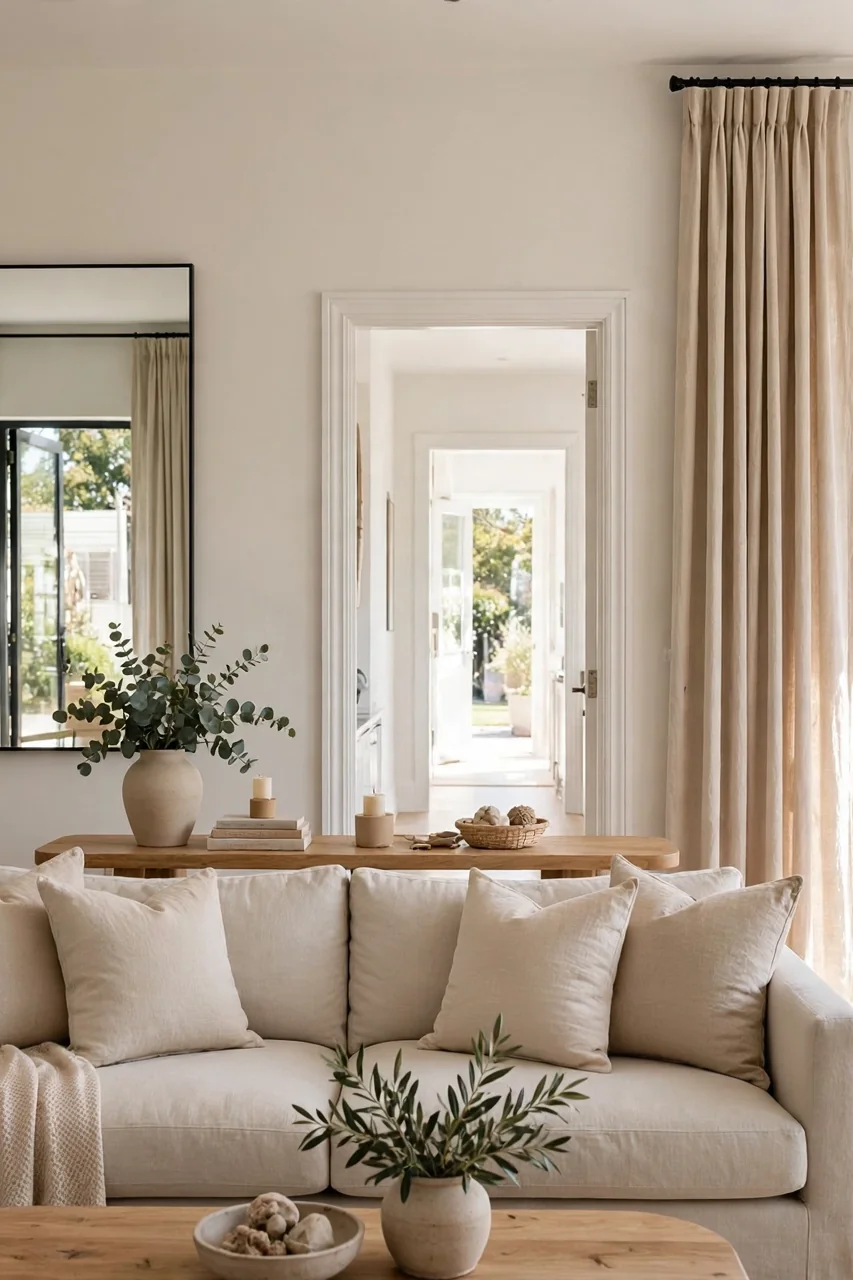
A few professional tricks can make a two door living room feel twice as functional as it does now. These are the small adjustments designers use when a layout refuses to cooperate. Try them in order and stop as soon as the room clicks into place.
- Place the largest seating piece facing the more frequently used door so arrivals see a welcoming arrangement first.
- Use a narrow console behind the sofa to create a visual boundary that separates seating from the walkway.
- Hang curtains higher and wider than the actual door frame to make walls feel taller and doorways less dominant.
- Add a mirror on the wall opposite the brightest door to double the natural light in the room.
Conclusion
Two doors do not have to mean double the trouble. Once you map the traffic paths and float your furniture with intention, the room starts to work with you instead of against you. I have seen how making this one change can completely shift the feel of a space. If this guide helped you figure out how to arrange a living room with two doors, save it to Pinterest so you can find it when you rearrange. Share it with a friend who is wrestling with the same tricky layout.
One Comment