24 Terracotta and Sage Green Home Decor Ideas for Earthy Charm
Warm clay and soft green have a way of calming a room the moment you walk in. That balance is exactly why terracotta and sage green home decor keeps showing up in the homes people save most. Terracotta brings the warmth of sun baked earth, while sage cools it down like shade in a garden.
The 24 ideas ahead pair these two colors in kitchens, bedrooms, bathrooms, and quiet corners, using pots, paint, tiles, textiles, and thrifted ceramics. The same grounded warmth runs through vintage brass home decor accents, where aged metal glows beautifully against both clay and sage. Start with one shelf or one wall, and let the palette grow slowly from there.
Terracotta Vases Sage Walls
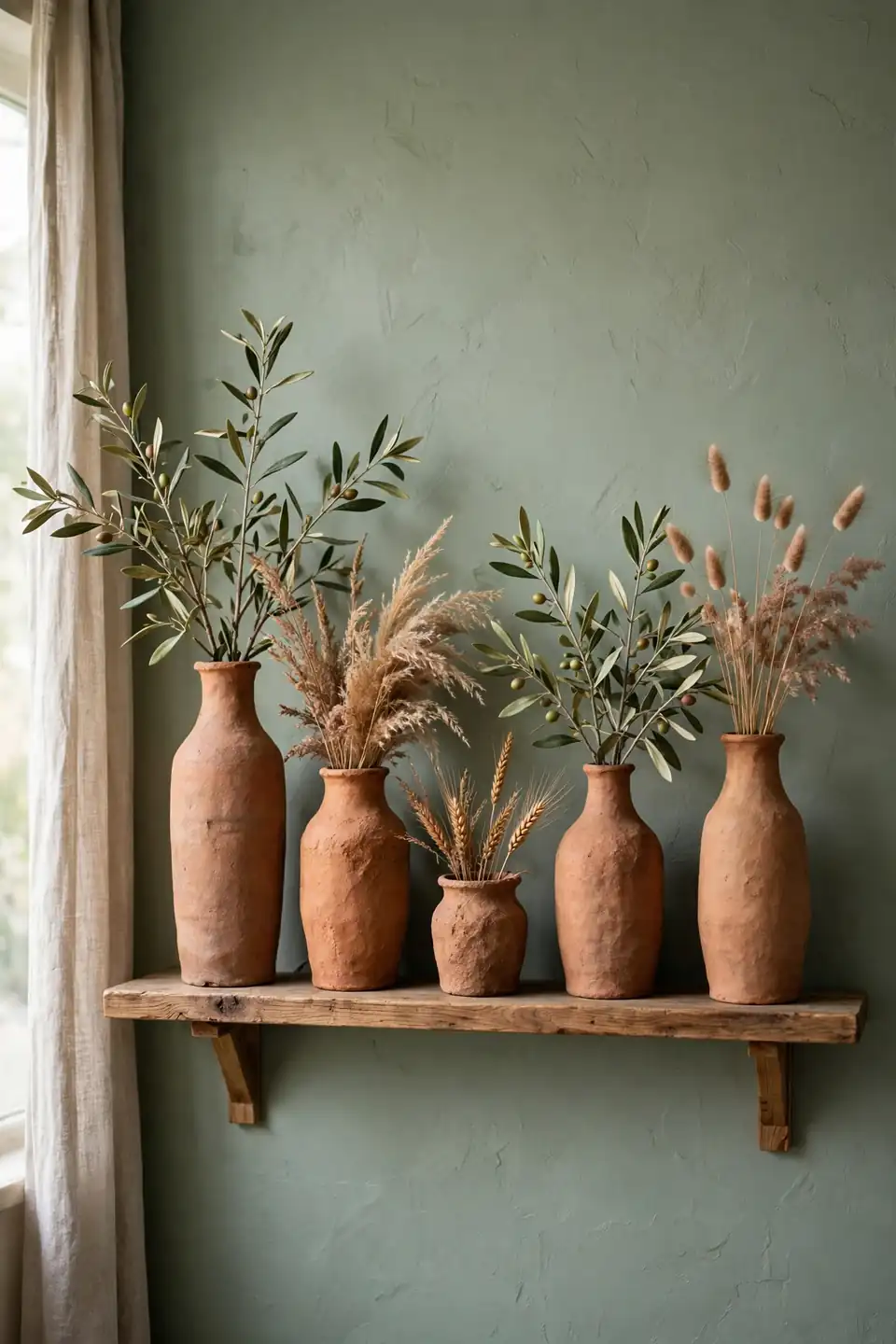
A row of handmade terracotta vases looks completely different once the wall behind it turns sage green. The muted green deepens the clay’s orange undertones, and suddenly plain thrift store pots read like pieces from a Mediterranean courtyard. Group them in odd numbers, and vary the heights so the silhouettes stay interesting.
Leave some vases empty and fill others with dried grasses, olive branches, or a single stem. Empty vessels hold their own as sculpture, while the filled ones soften the shelf line. In my experience, a matte finish beats a glossy one here, because shine fights the calm that sage walls work so hard to create.
Clay Pots Herb Corner
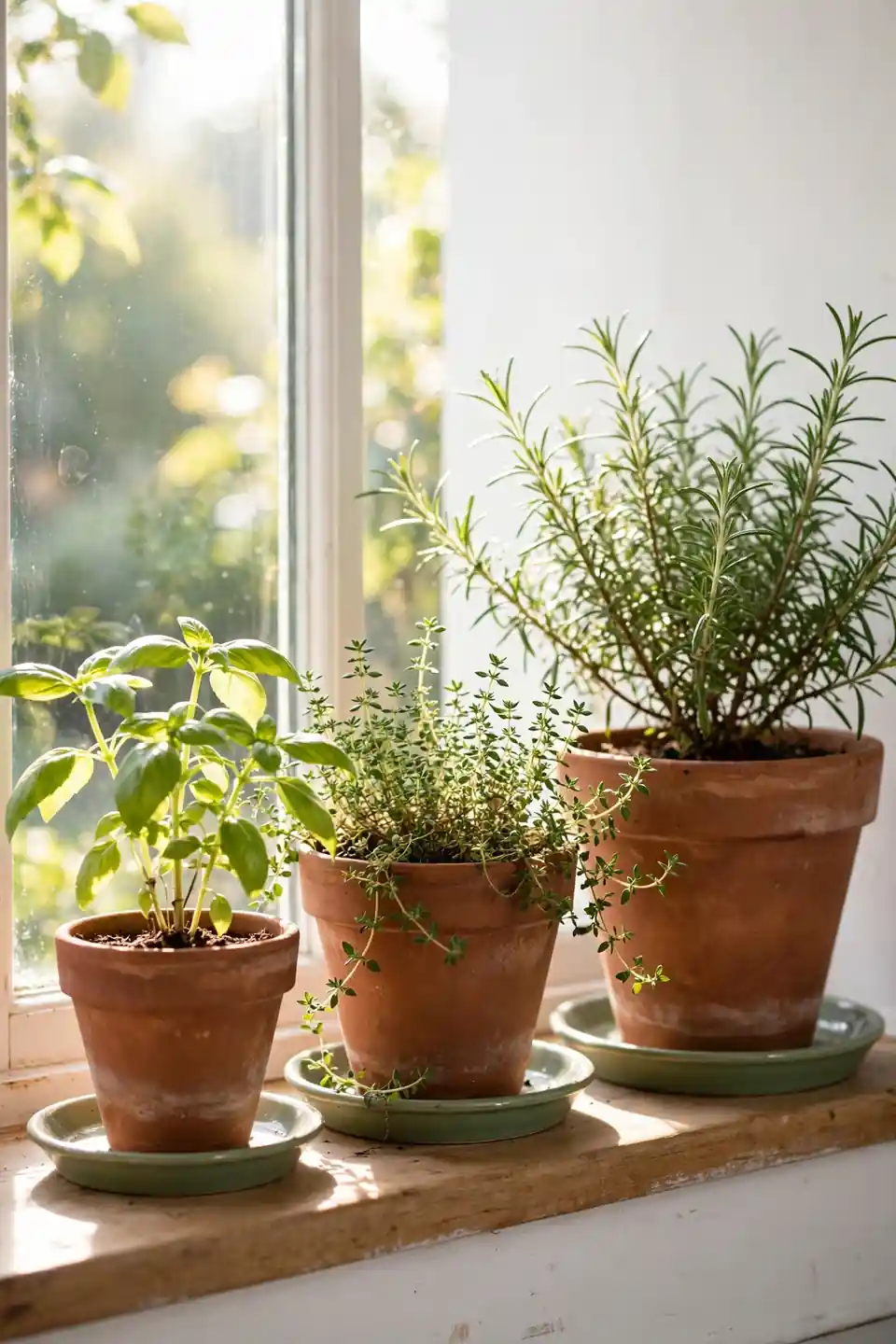
- Cluster three clay pots in graduated sizes on the sunniest windowsill you have.
- Plant basil, thyme, and rosemary, since their soft green leaves deepen against warm clay.
- Slip a sage green saucer under every pot to catch drips and repeat the palette.
- Rotate each pot a quarter turn weekly so herbs grow evenly toward the light.
- Mist the leaves lightly in the morning; terracotta wicks moisture away from roots fast.
Terracotta breathes, which herbs quietly love, but that same quality dries soil faster than glazed ceramic does. A finger pressed an inch into the soil tells you more than any schedule. Grouping the pots also keeps watering in one trip, and the little green corner perfumes the whole kitchen by midsummer.
Sage Green Kitchen Cabinets
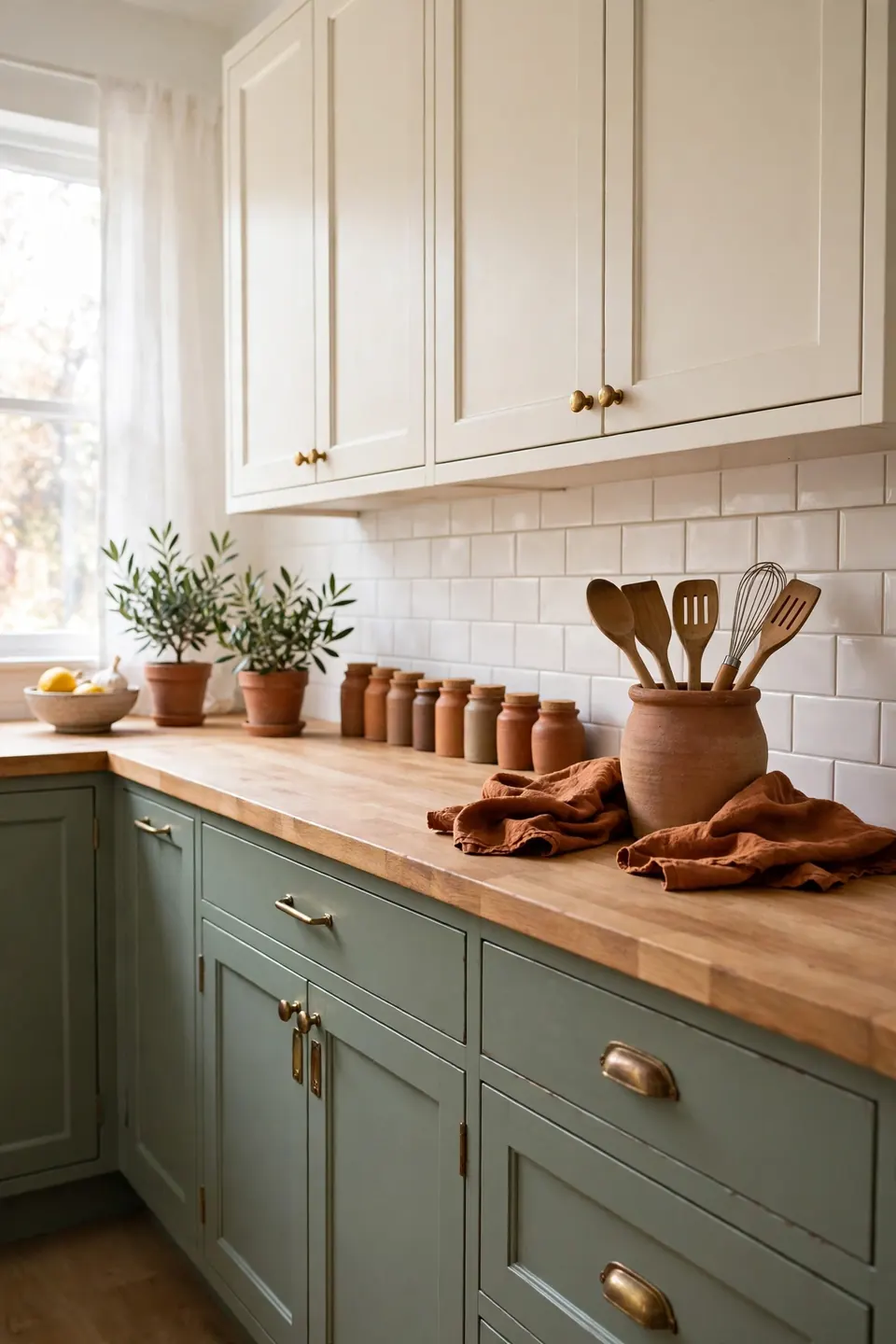
Quick Tip: Paint only the lower cabinets sage and leave the uppers warm white. The green grounds the room where hands and eyes land most, while pale uppers keep a small kitchen feeling open and bright during the day. Test the shade on one drawer front first, since sage shifts greener under warm bulbs.
Terracotta steps in through the small things: a clay utensil crock, rust toned linen towels, and a row of spice jars with clay lids. Against sage cabinetry, those warm notes read like late afternoon light. Brass or black hardware both work, though brass keeps the earthy story warmer and more connected.
Terracotta Tiles Bathroom Floor
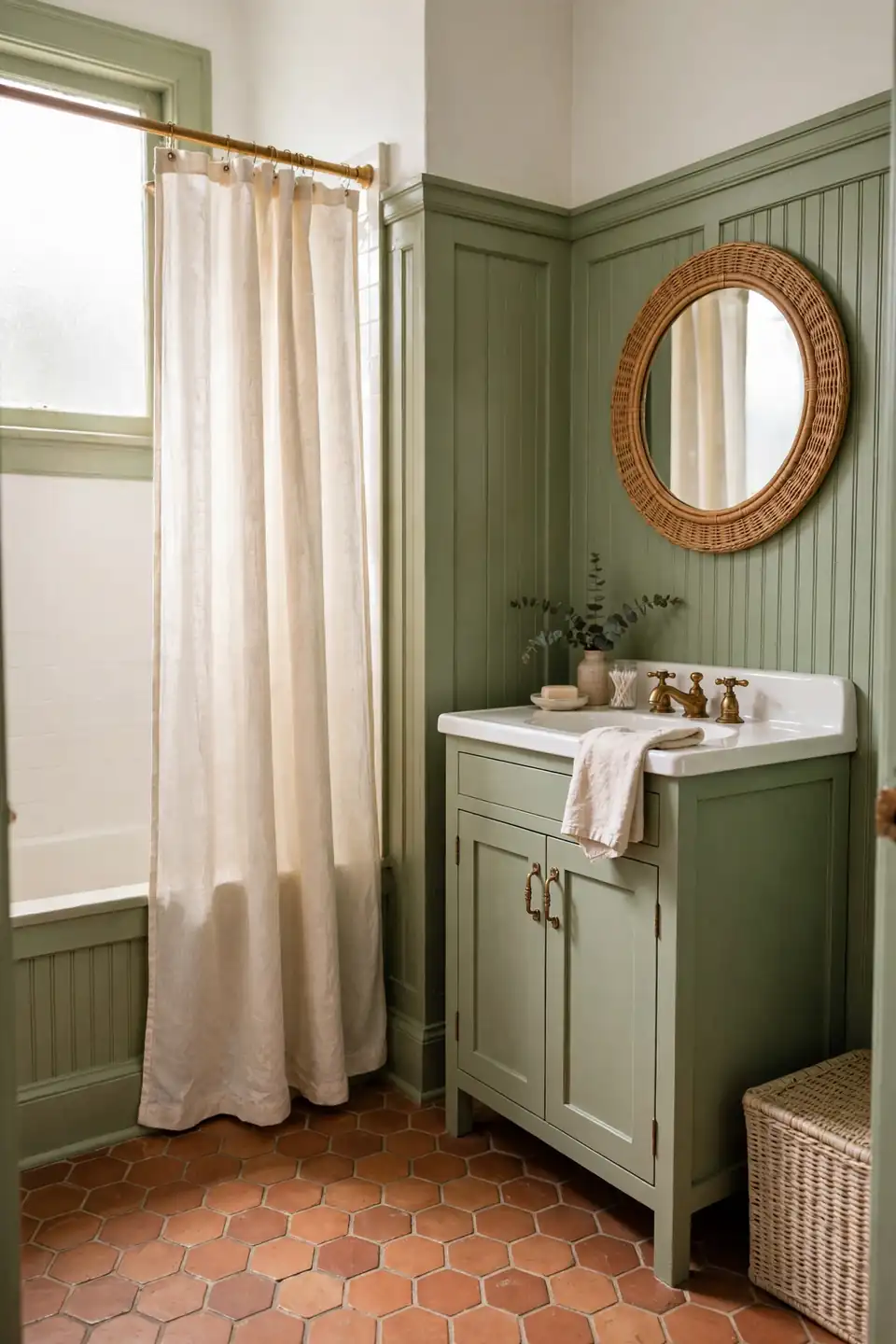
BEFORE: The small bathroom felt cold and rented, with gray vinyl flooring and a white plastic shower curtain. Nothing held any warmth, and the mirror light made every morning feel like a dentist visit.
AFTER: Hexagonal terracotta tiles now warm the floor underfoot, and a sage green vanity with a linen curtain softened the whole room. Bare feet meet baked clay warmth each morning, and the small space finally feels chosen rather than tolerated.
Unglazed terracotta needs sealing twice a year in a wet room, and that small chore protects the color from water spots. Choose a matte sealer so the tiles keep their dusty, handmade look instead of turning shiny like plastic. Sage towels finish the pairing without any extra pattern.
Painted Sage Accent Wall
- Wash the wall, let it dry fully, and sand any rough bumps smooth.
- Tape the ceiling line, baseboards, and outlets, pressing the tape edges down firmly with a fingernail.
- Cut in the edges with an angled brush, working in sections about an arm’s length wide.
- Roll the field in a W pattern, keeping a wet edge to hide lap lines.
- Roll the second coat after an hour, then pull tape while paint is slightly tacky.
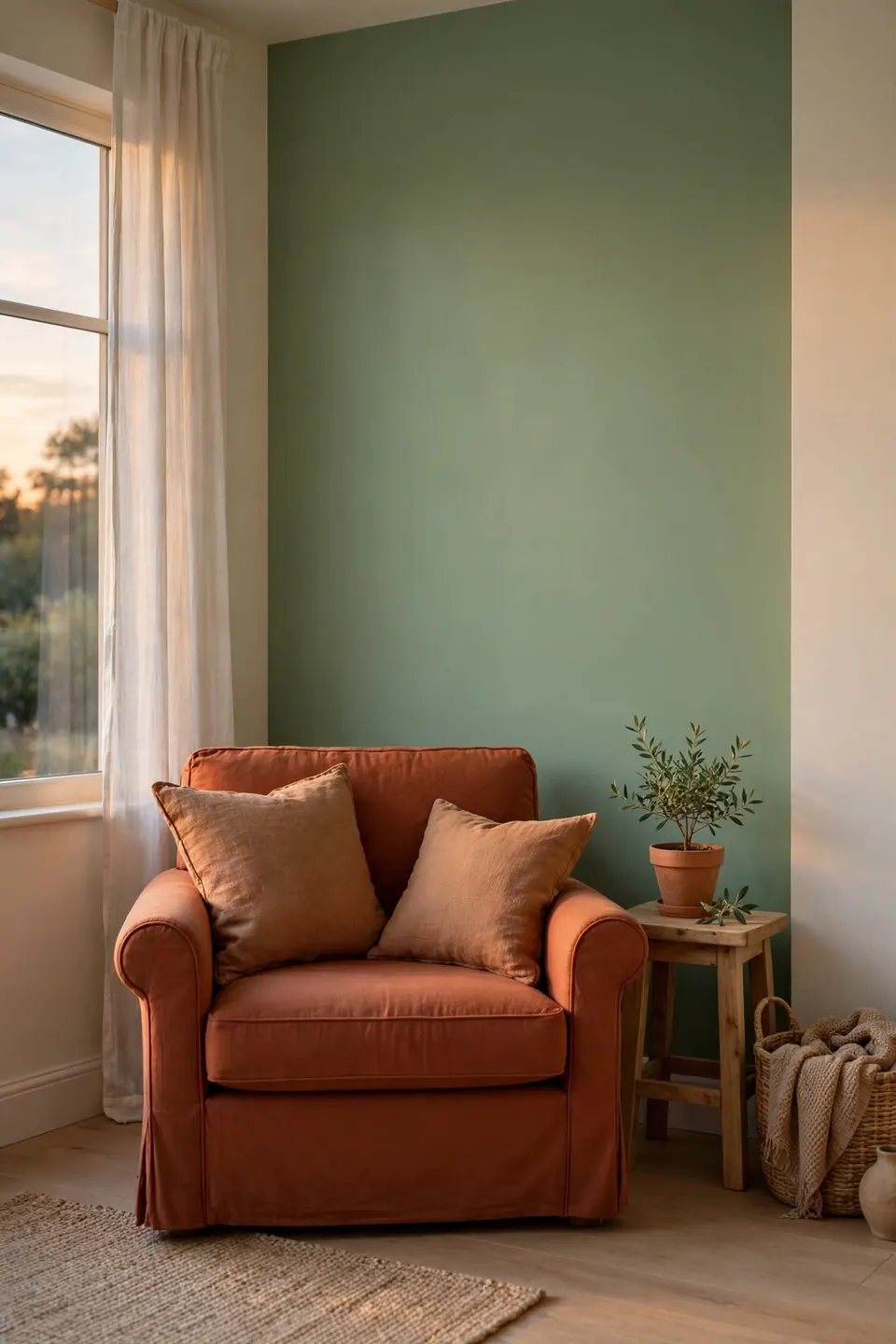
Live with the wall for two full days before judging the shade, because sage deepens as it cures and shifts with the light. A terracotta armchair or clay colored cushions placed against it complete the pairing and keep the green from feeling chilly in the evening.
Terracotta Versus Sage Balance

Both colors carry a room, but each one leads best in a different role in most homes.
| Feature | Terracotta | Sage Green |
|---|---|---|
| Mood | Warm, grounded, earthy | Cool, calm, airy |
| Best Light | South facing rooms glow | North light stays balanced |
| Pairs With | Cream, linen, walnut wood | Brass, marble, pale oak |
| Watch Out | Too much feels heavy | Too much feels chilly |
Most rooms land best near a sixty forty split, letting the warmer color lead in large pieces while the cooler one rests in paint and textiles. Swap the ratio in small rooms, where sage walls and terracotta accents keep the space feeling open yet grounded.
Layered Clay Dinner Table
Do:
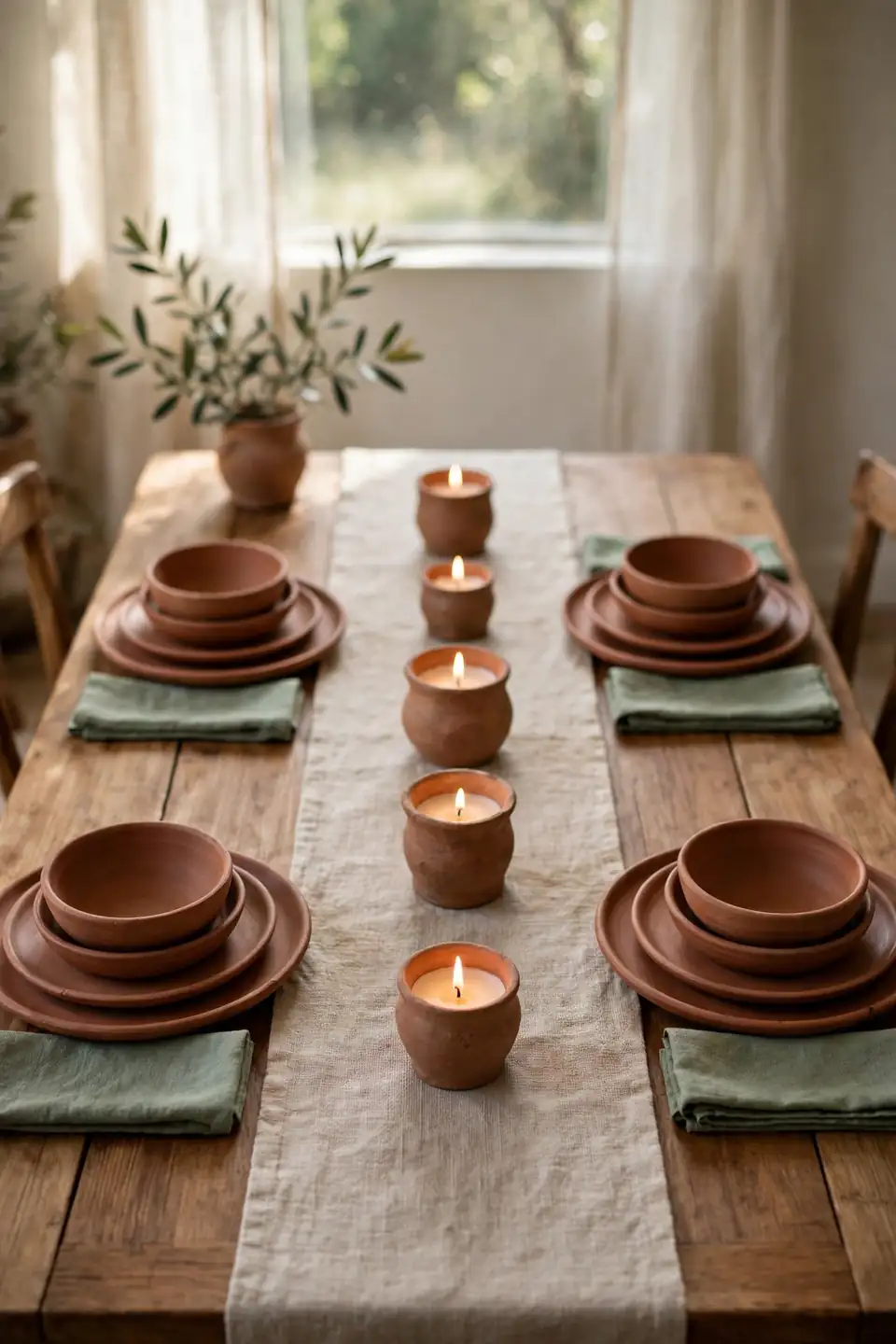
- Layer a linen runner under stacked terracotta plates and bowls.
- Set sage green napkins at every place to cool the warm clay.
- Mix candle heights in clay holders along the center line.
Don’t:
- Match every dish exactly; slight color variation is the charm of handmade clay.
- Use a glossy tablecloth, which fights the matte, earthy mood of the setting.
- Crowd the center with tall arrangements that block faces across the table.
A layered clay table asks guests to slow down, and the colors do half the hosting before any food arrives. Keep everyday pieces in a sideboard drawer so the setting rebuilds in a few minutes. The palette survives weeknight soup as gracefully as a holiday roast.
Sage Linen Bedroom Layers
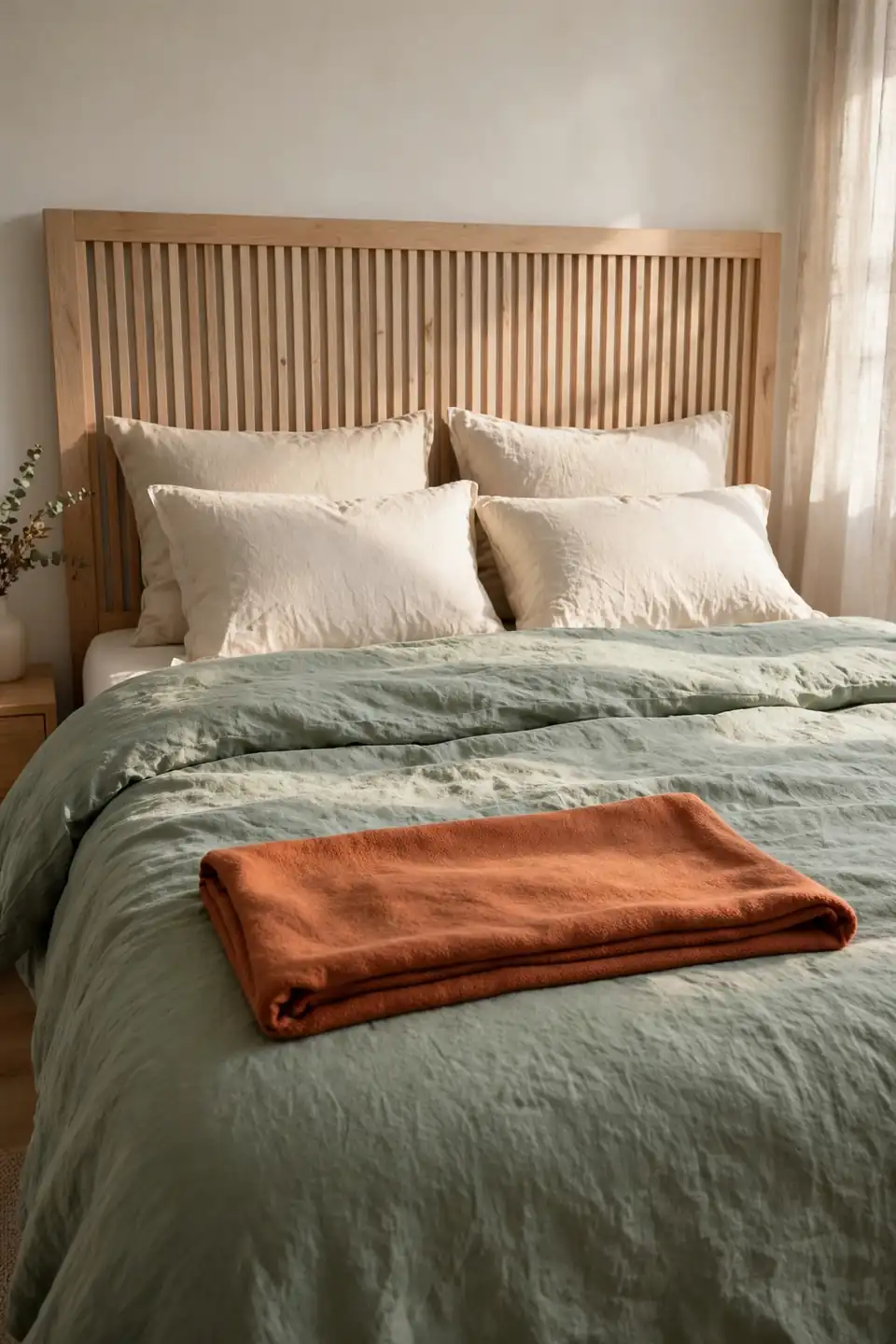
A bedroom dressed in sage linen and terracotta accents sleeps cooler visually than an all white one, and it hides everyday wrinkles far more kindly.
Cost: Low to moderate, linen blends beat pure flax prices
Time: One afternoon to wash, layer, and style the bed
Skill Level: Beginner, no sewing or tools required
Best For: Hot sleepers and bright south facing bedrooms
Wash linen before the first night, since it softens dramatically after two cycles and drapes the way the photos promise. A folded terracotta throw at the foot of the bed adds the warm note, and the sage sheets keep it from feeling heavy.
Terracotta Planters Window Garden
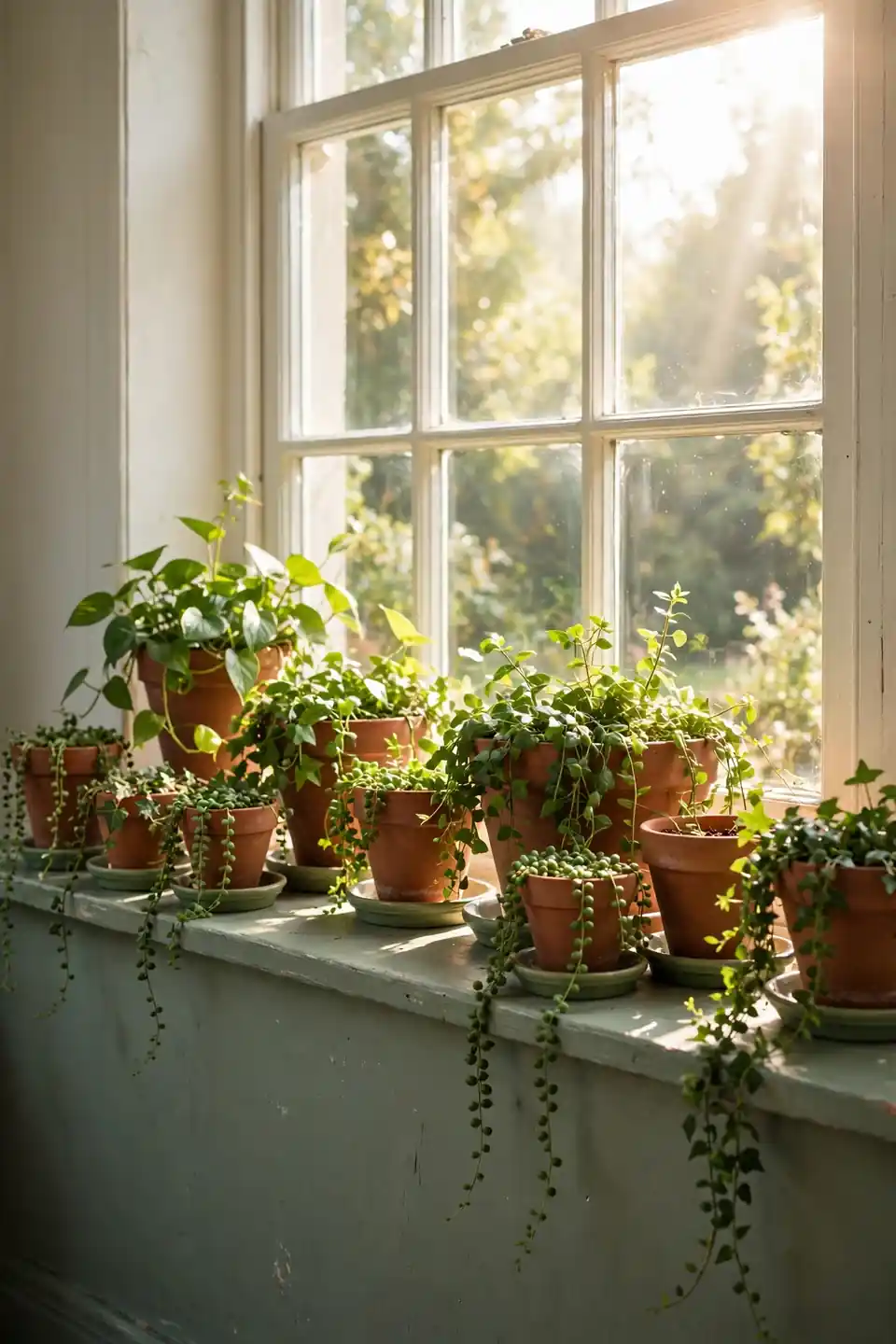
Eleven clay pots on one deep windowsill can carry a whole room’s color story. Terracotta planters in mixed sizes turn a plain window into a small garden, especially when trailing plants spill over the edges and catch the morning sun. The clay darkens where water touches it, adding honest variation.
Between the pots, leave small gaps so each plant keeps its own silhouette against the glass. Sage green painted sills or a row of sage ceramic saucers tie the display to the room’s other accents. Group plants by thirst, and watering day becomes one simple, calm pass with a single can.
Sage Velvet Sofa Styling
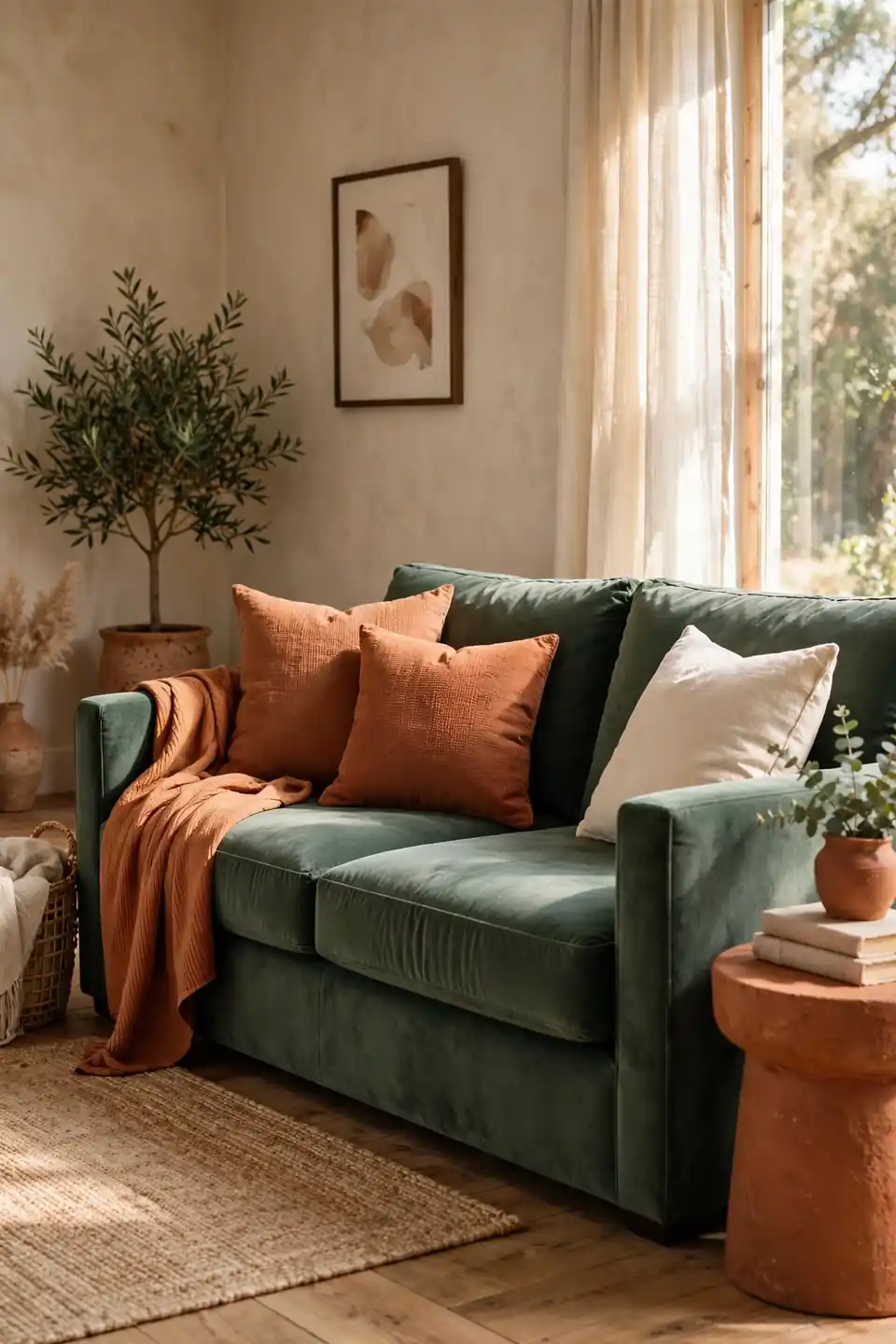
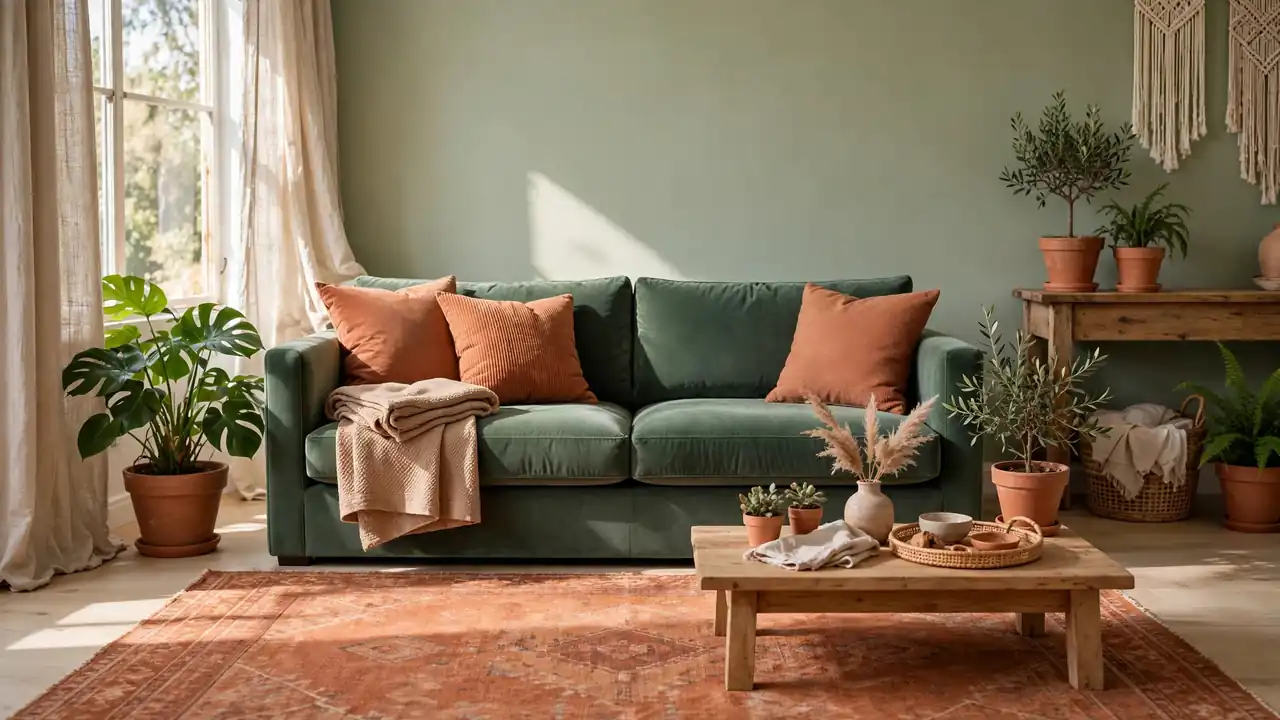
- Choose a deep sage velvet with a matte pile; shiny velvet reads formal instead of earthy.
- Layer two terracotta cushions and one cream linen cushion for a warm, uneven rhythm.
- Drape a clay colored throw over one arm only, never across the whole back.
- Set a terracotta side table beside the sofa to carry the warm tone outward.
- Keep metal accents black or aged brass so they bridge green and clay quietly.
Velvet and clay belong together because both hold color deeply and change with the light. The same grounded mood shapes organic modern coffee table styling, where low wooden tables and handmade ceramics repeat the palette across the room. One styling language, repeated gently, makes the whole space feel settled.
Clay Dinnerware Open Shelving
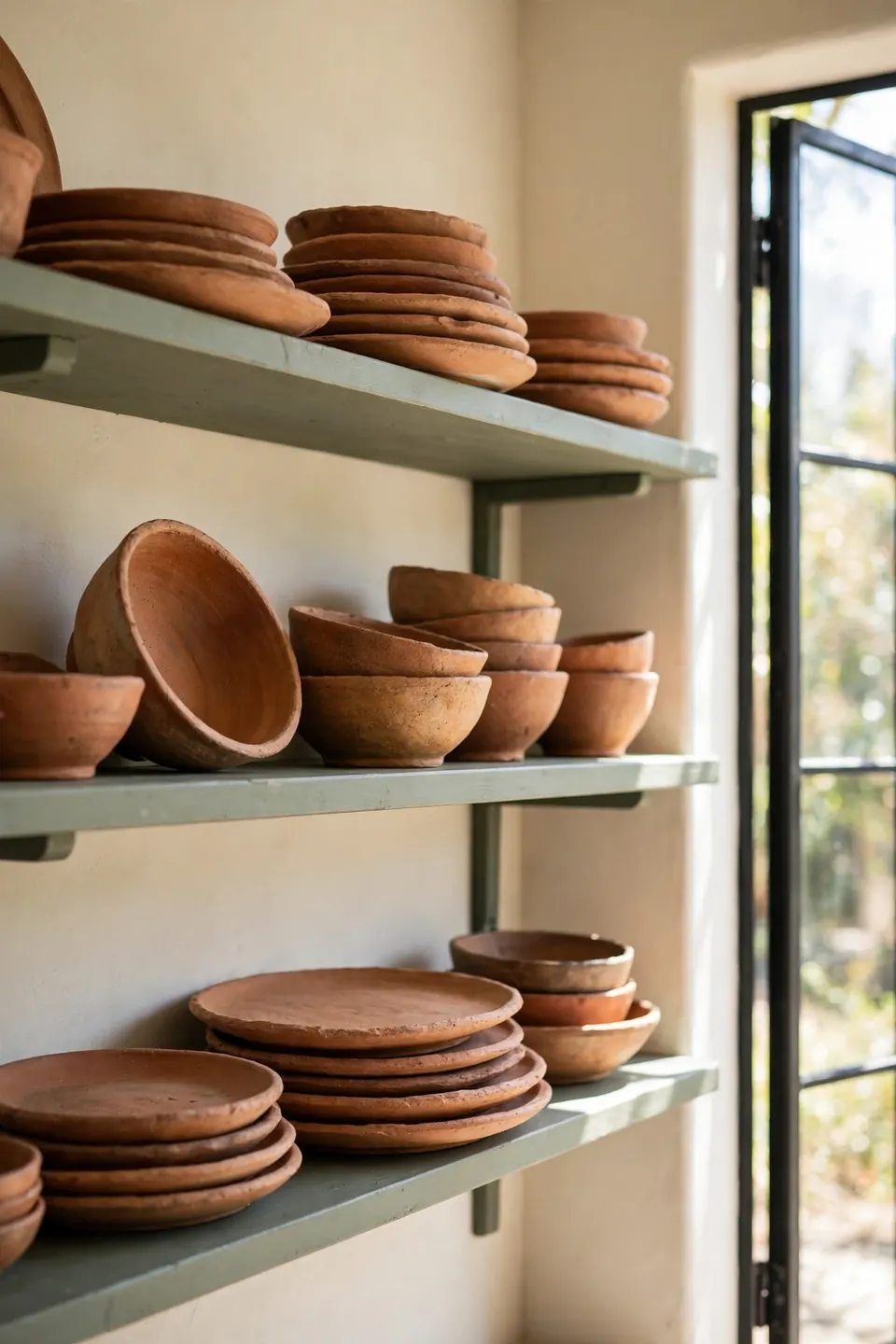
Quick Tip: Stack clay bowls by size with the largest at the bottom, and turn one bowl in every stack sideways. The sideways bowl breaks the monotony, shows the handmade rim, and gives the shelf a small, deliberate focal point. Unglazed bottoms need felt pads so stacks never scratch the shelf paint.
Open shelves in sage painted kitchens make clay dinnerware look like a working display instead of stored stock. Keep daily pieces at elbow height and save the top shelf for serving platters. Dust weekly with a dry cloth; the matte surfaces show flour dust quickly in bright kitchens.
Sage Green Entryway Bench
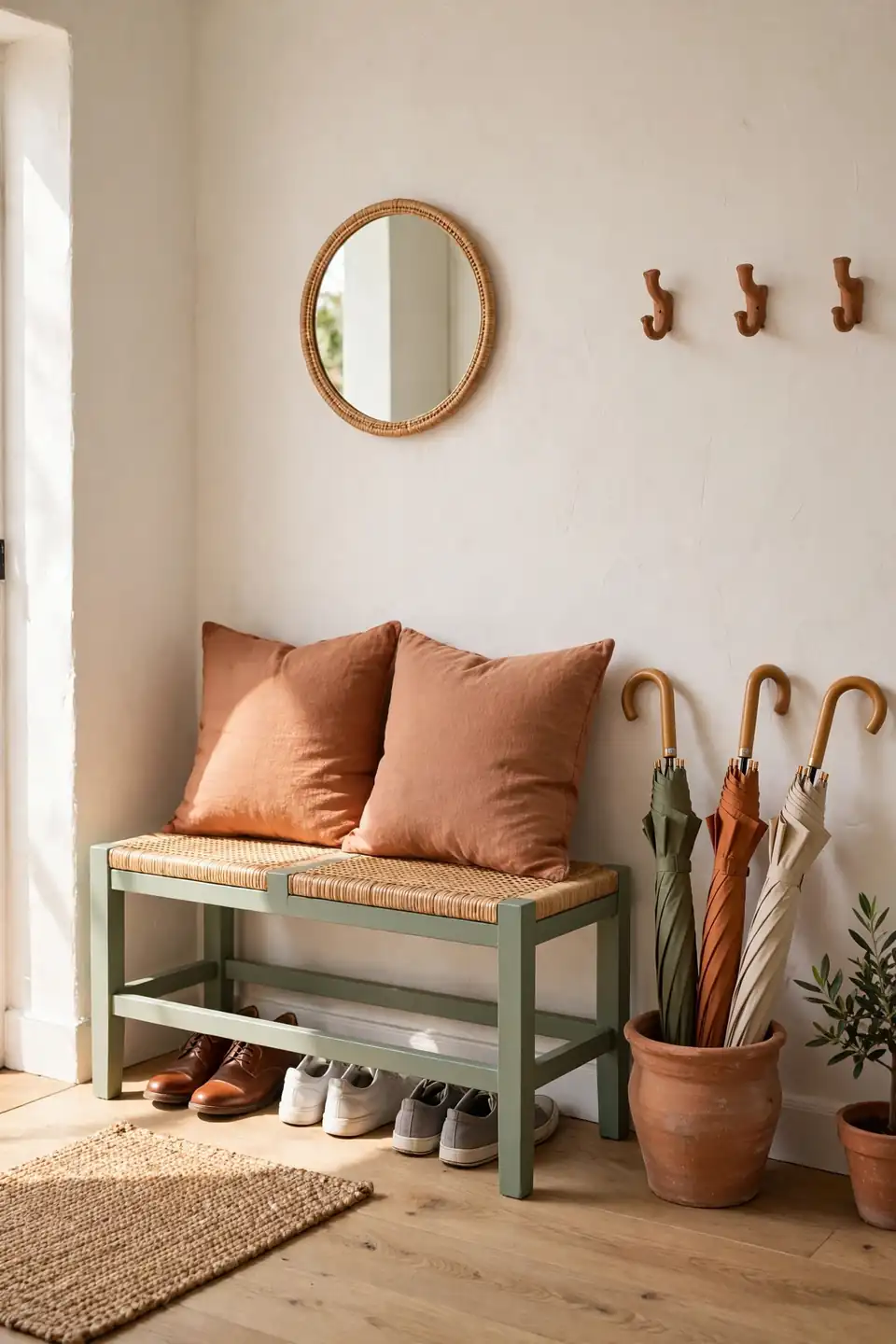
BEFORE: The entryway was a drift of shoes, mail, and one coat hook that never held everything. Guests stepped over sneakers to reach the living room, and the blank white wall offered nothing to look at but the clutter itself.
AFTER: A sage green bench with a woven seat now holds shoes beneath and cushions above, while terracotta hooks and a clay umbrella pot line the wall. The doorway finally works like a room, and arriving home feels calm instead of chaotic.
Entryways earn their keep in the first ten seconds, so every object there should either hold something or welcome someone. A small mirror above the bench doubles the light and gives the sage paint a second surface to glow against. Terracotta cushions keep the seat inviting.
Terracotta Gallery Wall Prints

- Collect botanical prints, clay colored abstracts, and one black and white photo for contrast.
- Lay the full arrangement on the floor and photograph it before touching the wall.
- Hang the largest print first, slightly off center, at standing eye level.
- Fill outward with smaller frames, keeping gaps near two finger widths everywhere.
- Slip one small terracotta frame into the mix to warm the sage mats.
Paint the wall sage first and the prints will hang like art in a garden room, quiet and green behind every frame. Step back to the doorway after each frame rather than judging from arm’s length; gallery walls are read from across the room, not up close.
Glazed Versus Matte Ceramics

The finish on a ceramic piece changes how both colors behave in real daylight.
| Feature | Glazed | Matte |
|---|---|---|
| Shine | Reflects light, colors deepen | Absorbs light, colors soften |
| Cleaning | Wipes clean in seconds | Shows water spots sooner |
| Feel | Cool and smooth daily | Warm, chalky, handmade touch |
| Best Use | Dinnerware and busy sinks | Vases, lamps, display shelves |
Most collections look best with both finishes sharing one shelf, glazed pieces low where hands reach and matte pieces above the splash zone. The mix keeps terracotta from looking flat and gives sage glazes a soft backdrop to shine against quietly. Balance, not matching, does the work.
Terracotta Textiles Reading Nook

Do:
- Stack terracotta cushions in two sizes against the chair back.
- Fold a sage throw over the arm where your hand naturally lands.
- Set a clay mug warmer or small terracotta dish for glasses nearby.
Don’t:
- Pile on patterned blankets that compete with the quiet clay and green.
- Use a cold white reading bulb; warm light keeps the nook feeling sheltered.
- Block the window light with a tall shelf behind the chair.
A reading nook succeeds when the body settles before the mind does, and soft clay tones against sage do most of that settling quietly. Keep the book pile small and current. A corner that asks for nothing becomes the seat everyone claims first in the house.
Sage Bathroom Tile Pairing
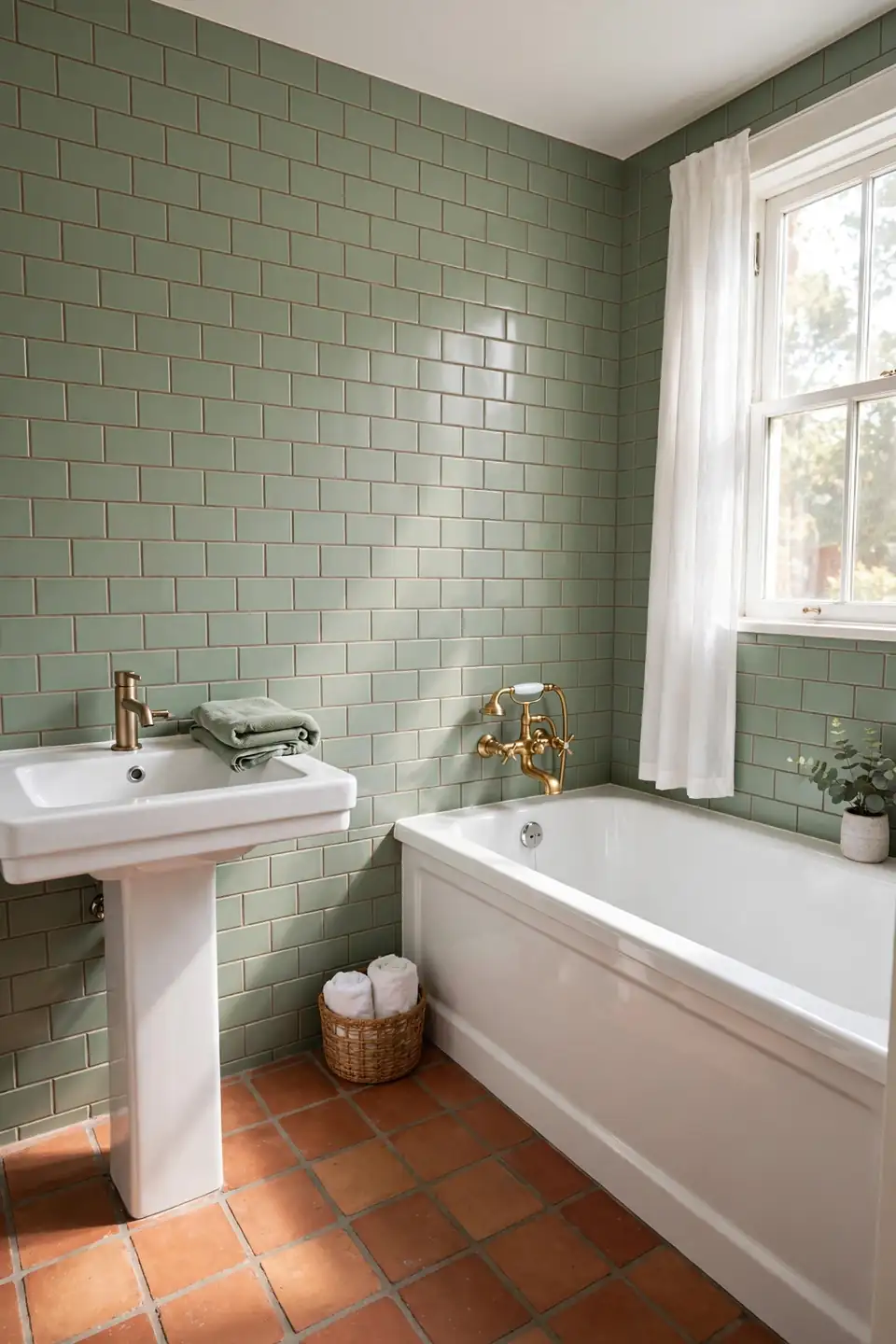
Sage tiles on the wall and terracotta on the floor divide a bathroom into calm above and warmth below every single day.
Cost: Moderate, ceramic tiles in both colors stay budget friendly
Time: One long weekend for a small bathroom floor and splashback
Skill Level: Confident beginner, tiling rewards slow measuring
Best For: Small bathrooms that feel cold or stark white
Choose a warm gray grout for both surfaces so the two colors share one outline and the room reads as a single idea. Seal the terracotta before grouting, or the grout haze settles into the clay and dulls it for good.
Clay Pendant Light Fixtures

Three clay pendants over a kitchen island pull the whole room’s palette up to eye level. Their bellies glow warm when the bulbs switch on at dusk, and the unglazed surface keeps that glow soft rather than brassy. Scale matters more than count: one oversized pendant can anchor a small island alone.
Hang pendants so the lowest rim sits about a forearm above the counter, low enough to feel intimate and high enough to see faces across the island. This is where the terracotta and sage green home decor story meets sage cabinetry below, and the two colors bookend the room from counter to ceiling.
Sage Green Nursery Corner
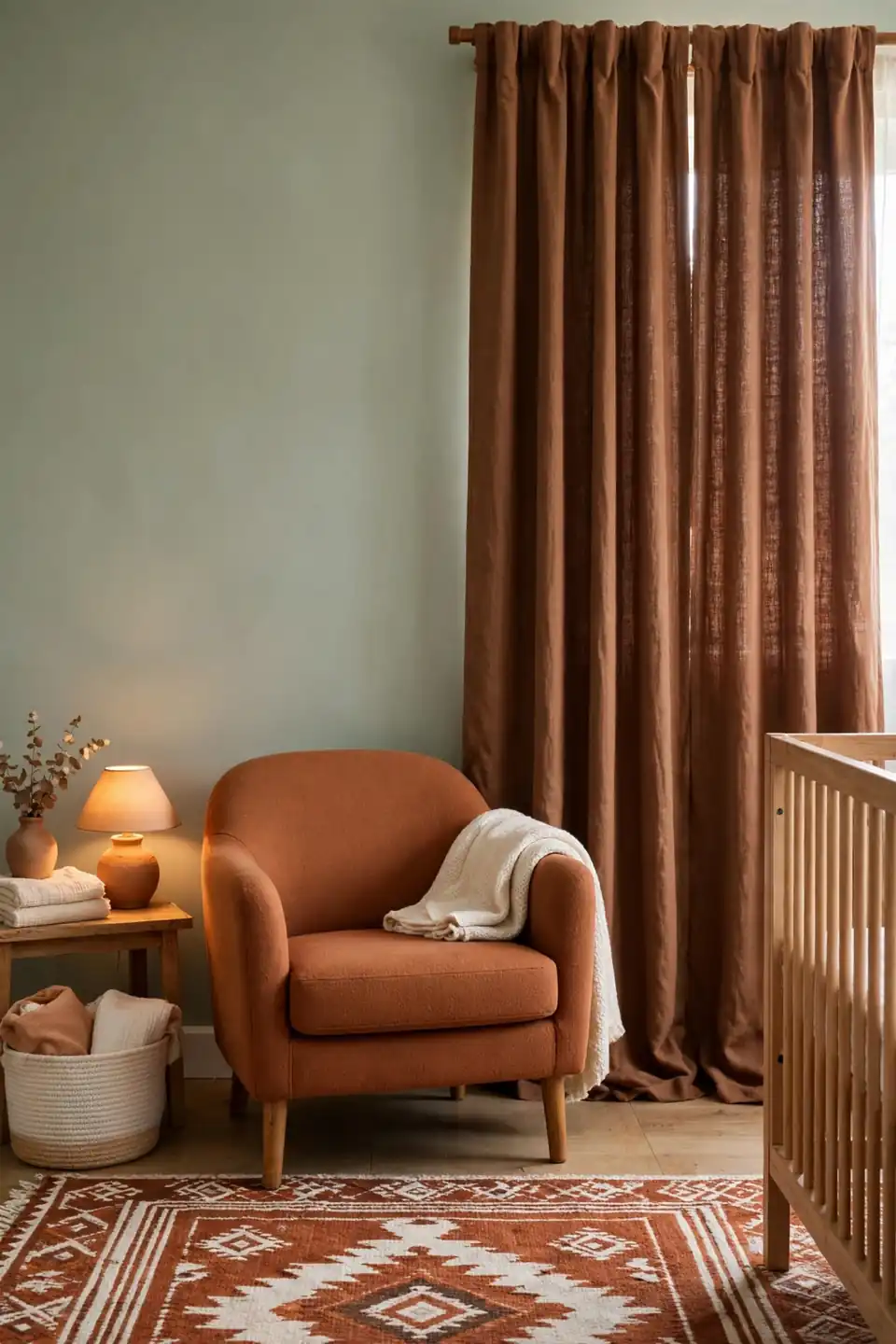
- Paint one wall sage and leave the rest warm white for a calm, bright balance.
- Set a terracotta armchair in the corner for night feeds and morning stories.
- Hang clay colored blackout curtains that warm the green without darkening it.
- Choose a washable rug in rust and cream so spills stay low stress.
- Keep a small clay lamp with a warm bulb for soft nighttime light.
Sage reads gender neutral and grows with the child, which saves a full repaint in three years. Terracotta accents swap easily as tastes change, from baby animals to maps and dinosaurs. Keep the palette steady and just trade the small pieces as the years move.
Terracotta Rug Living Room
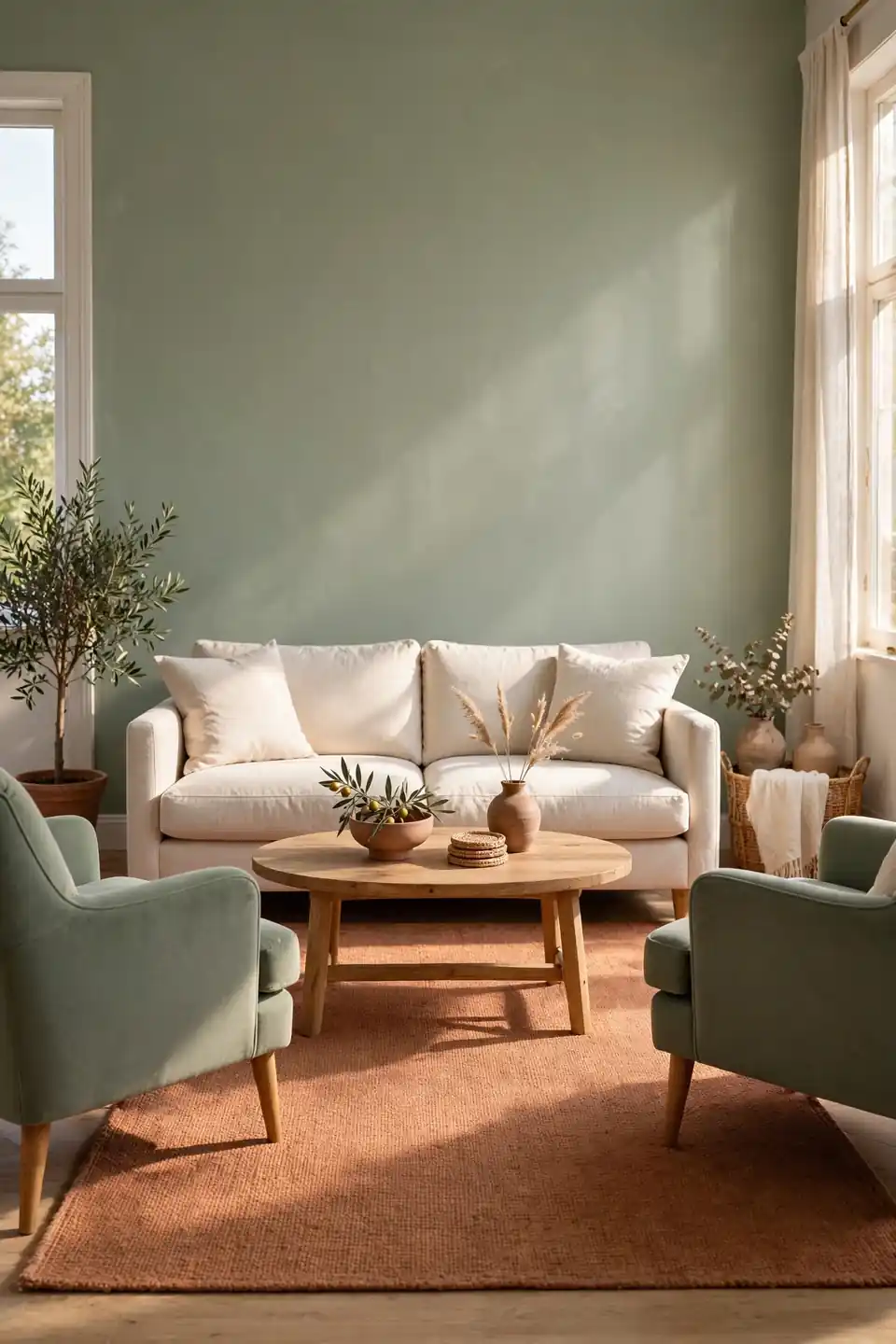
Quick Tip: Size the rug so the front legs of every seat rest on it. A terracotta rug floating in the middle of the floor shrinks the room visually, while one tucked under the furniture pulls the whole seating group into a single warm island. Measure twice; returns on rugs are never fun.
Sage walls behind a terracotta rug keep the warmth grounded instead of loud, especially in rooms with strong afternoon sun. Choose a low pile weave in high traffic homes. The clay tones hide dust and pet hair better than any pale rug ever will, which busy households notice by week two.
Sage Curtains Clay Tiebacks
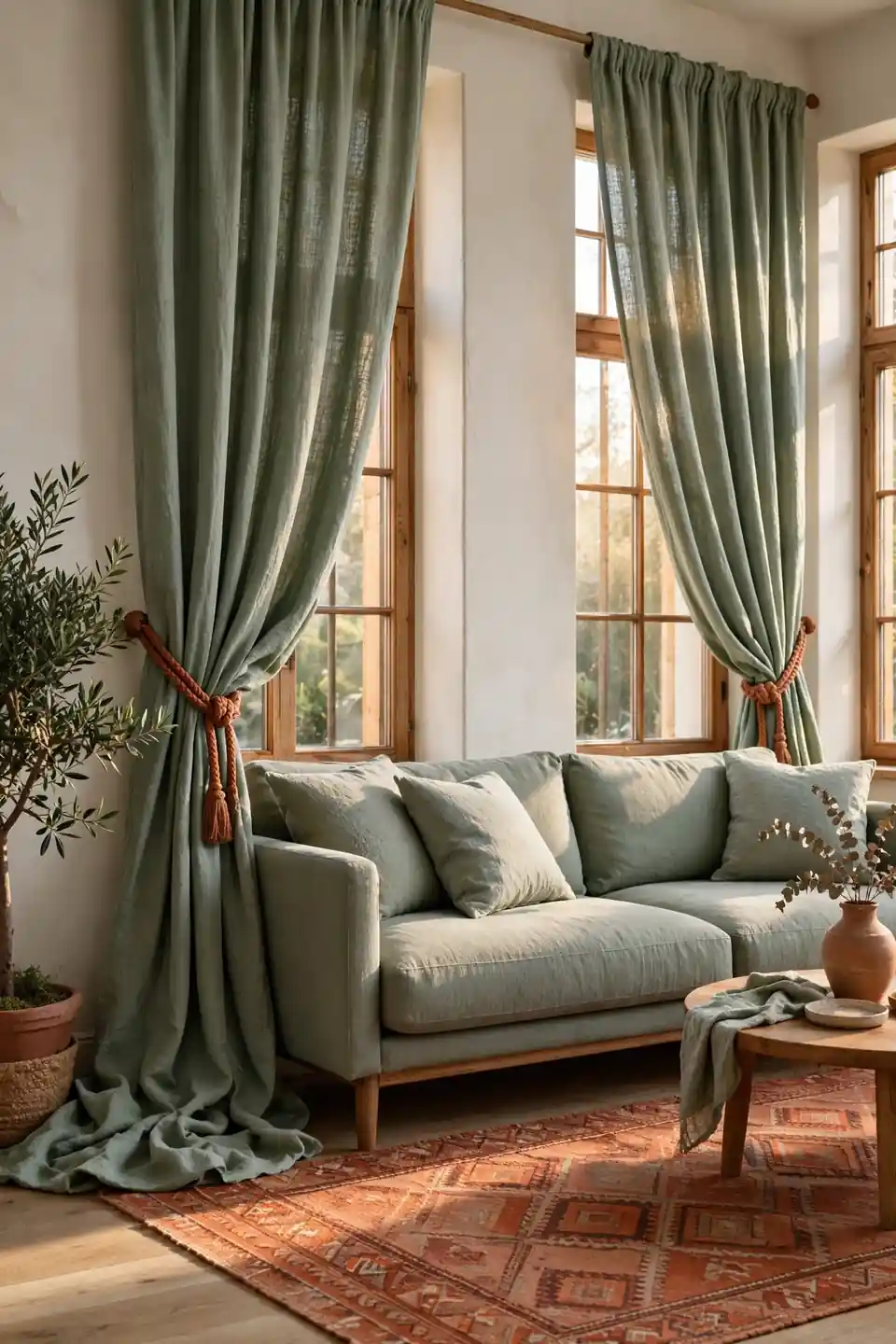
BEFORE: The windows wore thin white curtains that glowed harshly at noon and vanished by evening. The glass read as blank rectangles, and the sage sofa beneath them looked lost, with nothing connecting it to the walls or floor.
AFTER: Sage linen curtains now pool slightly at the floor, held back by chunky terracotta tiebacks that repeat the rug and cushions. The windows finally frame the sofa instead of floating above it, and afternoon light filters through the green like shade.
Tiebacks made from the same clay family as the rug pull a window wall into the room’s palette without another purchase of fabric. Swap them for rope in summer if the room needs a lighter hand for a season. The green reads calmer beside warm clay.
Terracotta Centerpiece Dining Table
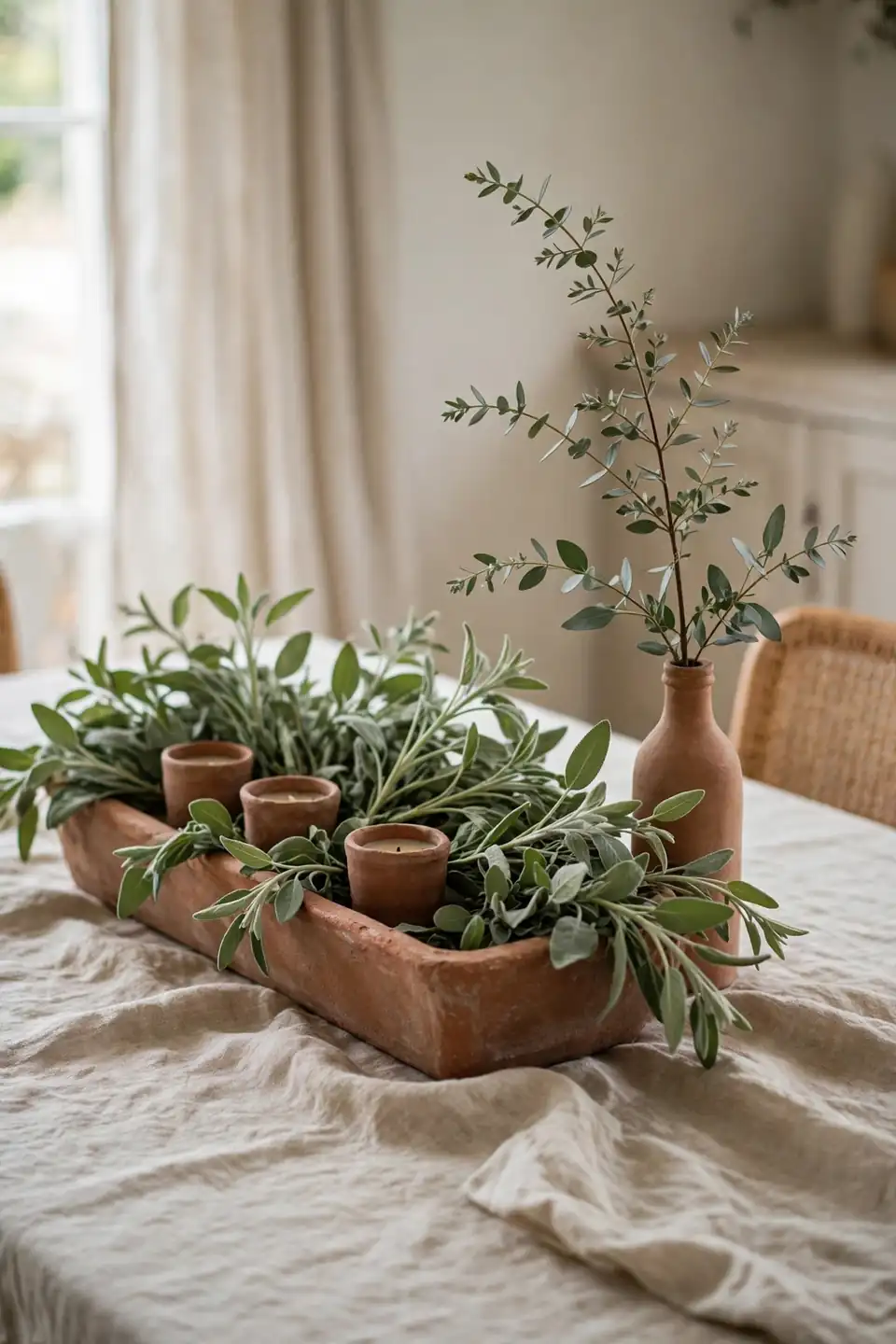
- Start with a low terracotta trough or wide shallow bowl as the base.
- Line the base with sage green eucalyptus stems laid loosely along its length.
- Tuck three small clay votives between the stems, spacing them unevenly for rhythm.
- Add one taller element off center, like a branch in a narrow clay bottle.
- Step back and remove one item; centerpieces almost always look better slightly emptier.
Low centerpieces keep sight lines open, so conversation flows over the greenery instead of around a floral wall. Refresh the stems monthly and the table always looks newly considered. Candles in clay holders echo the trough and stretch the palette to the place settings themselves.
Paint Versus Limewash Walls
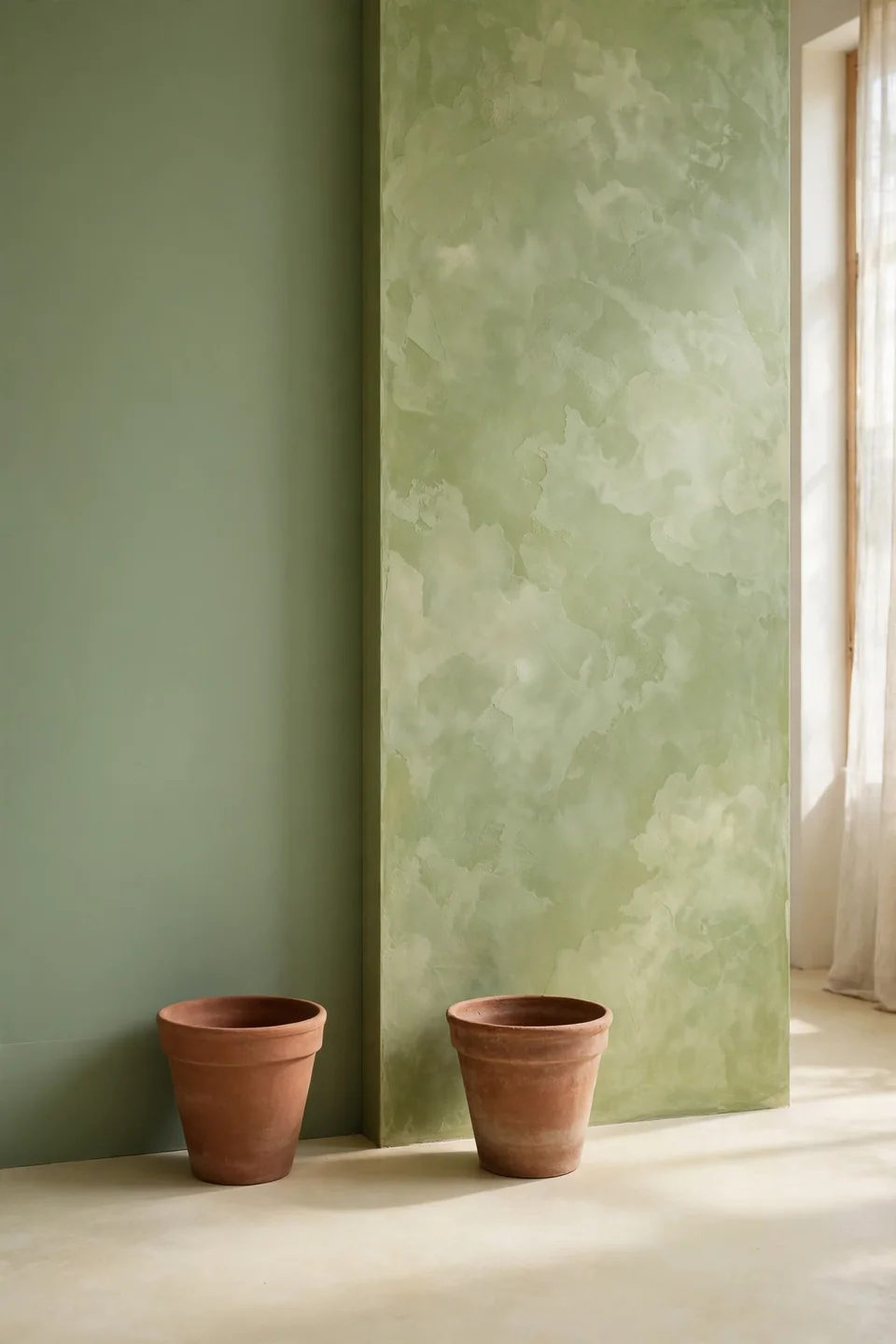
Sage arrives on a wall two ways, and the finish decides how terracotta behaves beside it.
| Feature | Flat Paint | Limewash |
|---|---|---|
| Look | Even, solid, modern color | Cloudy, layered, old world depth |
| Effort | Two coats, one weekend | Brushed coats, slower pace |
| Cost | Lower, one can covers more | Higher, specialty product needed |
| Best Beside | Smooth terracotta ceramics shine | Rough clay pots blend softly |
Limewash rewards walls with a little texture and punishes perfectly smooth drywall, where its clouds can read as mistakes. Flat paint stays the safer first step: live with the color a season, then decide whether the room wants the softer, older finish in the end.
Sage Green Home Office
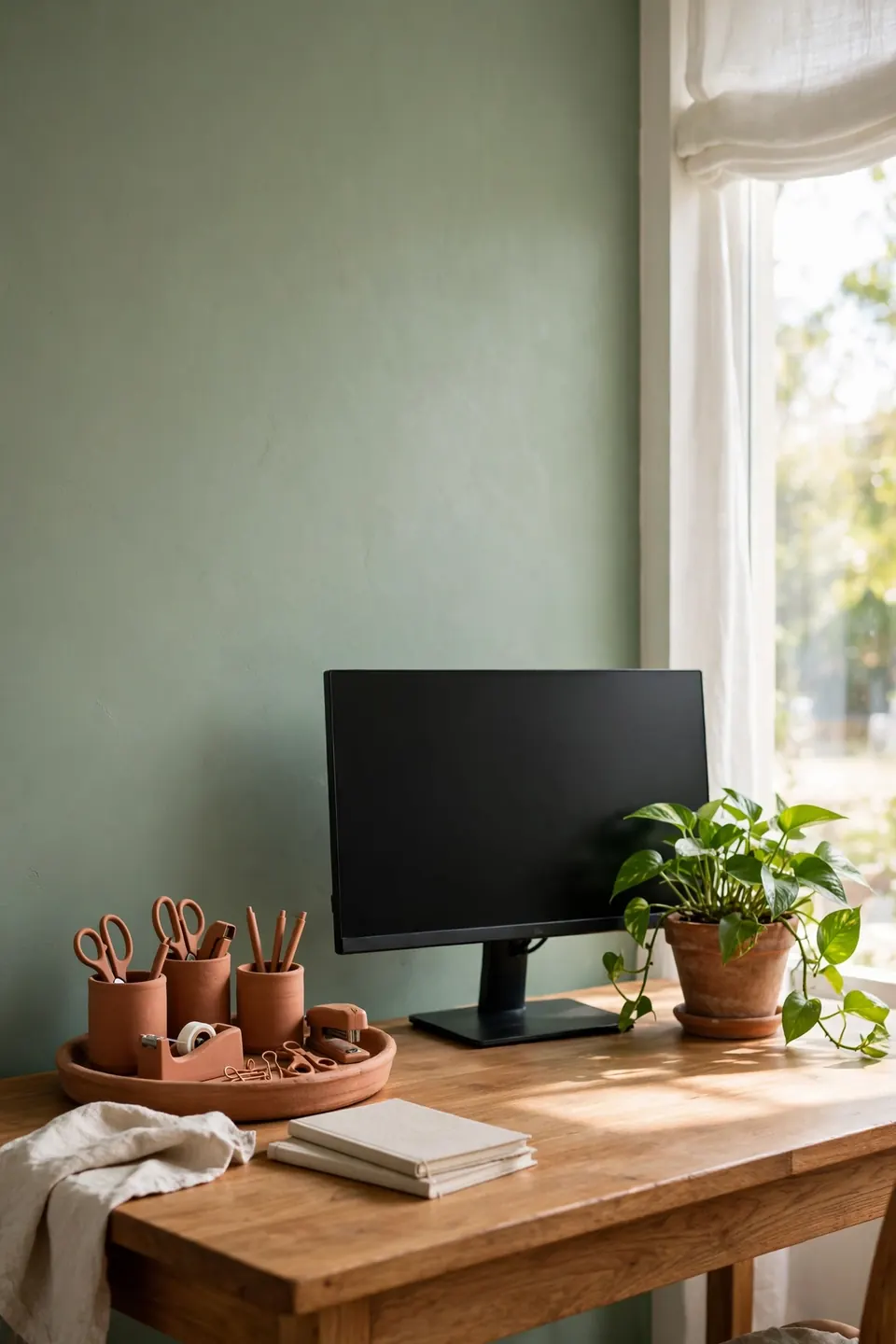
Do:
- Paint the wall behind the desk sage to rest your eyes between calls.
- Keep terracotta desk accessories in one tray so the surface stays clear.
- Set a clay pot plant where the camera shows it during video meetings.
Don’t:
- Face a blank white wall all day; the green wall earns its keep hourly.
- Mix in neon desk gear that shouts against the calm palette.
- Let cords and chargers sprawl across the terracotta tray’s clean border.
A calm office background quietly changes how a workday feels, and sage behind a desk reads professional without feeling corporate. The terracotta touches keep the screen image warm, so colleagues see a person, not a cubicle. Small palette, long hours, real payoff every single day.
Terracotta Fireplace Surround Glow
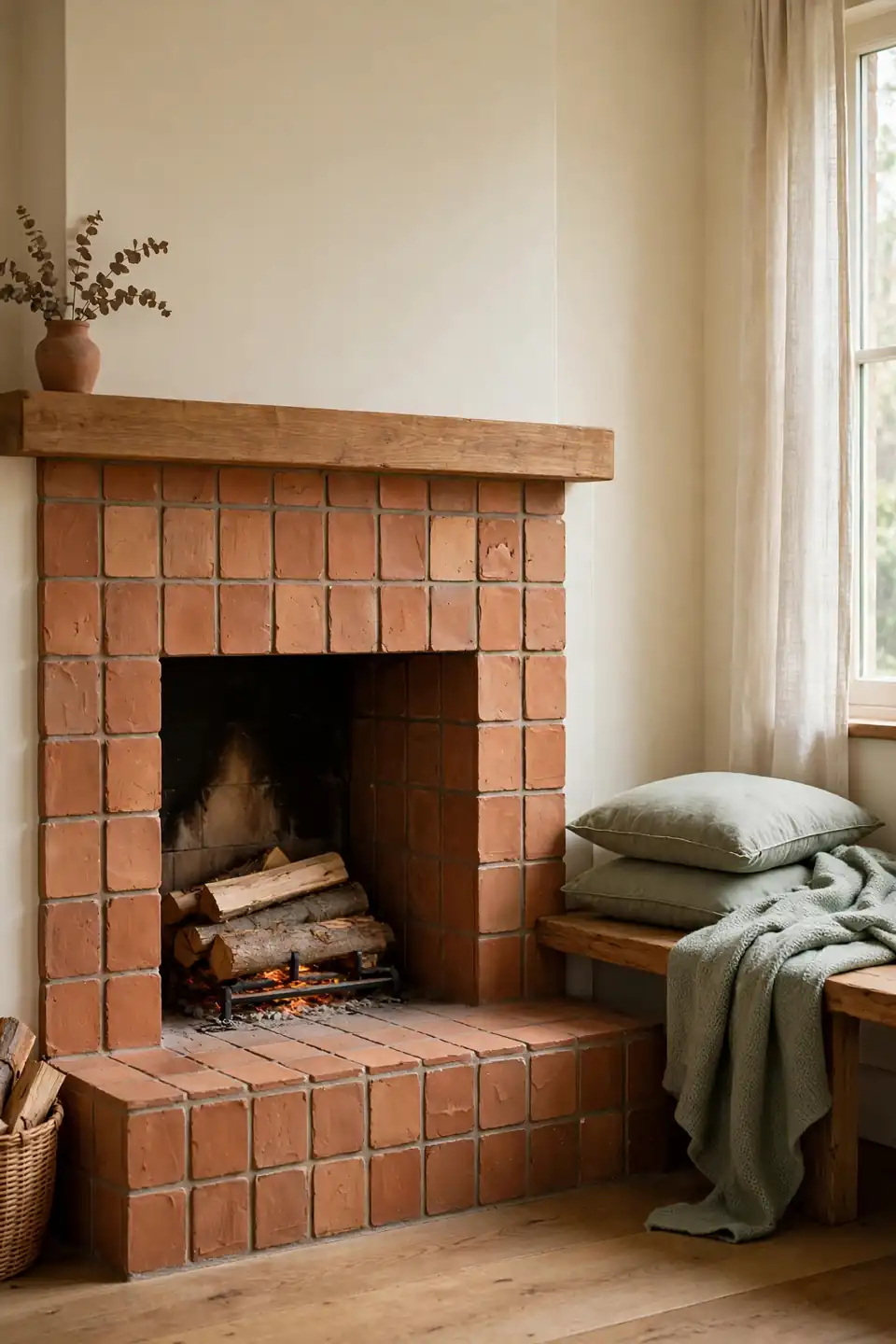
A terracotta tiled fireplace surround turns the hearth into the warmest square meter in the house on a cold evening.
Cost: Moderate to high, handmade tiles cost more per box
Time: Two weekends including curing and sealing coats
Skill Level: Advanced beginner, straight lines forgive slow work
Best For: Living rooms where the fireplace sits unused and pale
Stack sage green cushions and a sage throw on the hearth bench so the fire colors meet their cool partner at arm’s length. Even unlit, the clay surround holds a low ember glow from window light, and the room gathers around it naturally.
Conclusion
Warm clay and cool green ask very little and give a great deal back. A painted wall, a shelf of pots, one good rug: small moves like these stack into rooms that feel gathered from the earth itself. I’ve seen how quickly a single corner can shift the mood of a whole home once these two colors start talking to each other. Save these terracotta and sage green home decor ideas on Pinterest before your next thrift run or paint day, and share them with a friend whose rooms feel almost right. Start small, and let the palette grow.