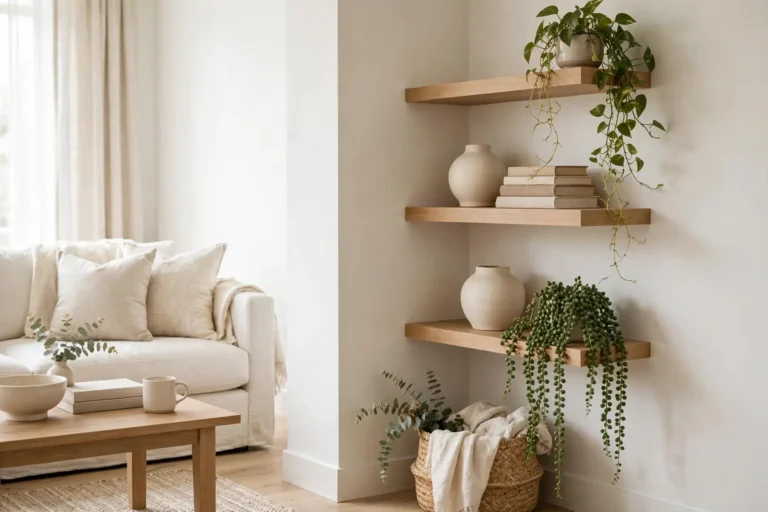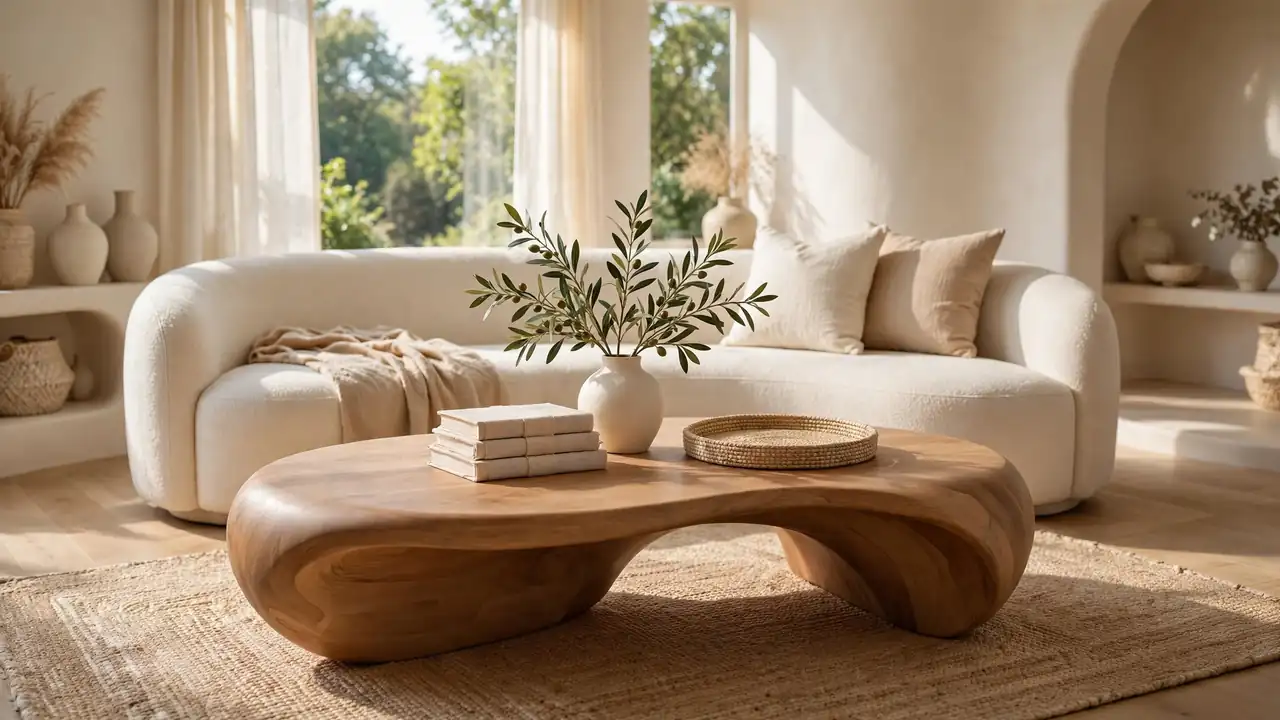
23 Organic Modern Coffee Table Styling Ideas for Natural Elegance
A coffee table anchors the whole living room, yet it often ends up as a landing strip for remotes and mail. Thoughtful organic modern coffee table styling changes that completely, pairing soft curves, raw wood, warm stone, and woven texture into a surface that feels calm and collected. Natural materials carry warmth that glass and chrome never manage, and they age gracefully with daily life.
Every idea ahead uses pieces most homes already own or can thrift cheaply, arranged with breathing room instead of clutter. The same calm, nature first thinking works beyond the living room too; these blue and white bedroom decorating ideas prove how far a limited palette and natural texture can stretch. Start with one table, one tray, and one honest edit, and the room quietly follows.
Sculptural Travertine Coffee Table

A travertine table with softened edges does the decorating work before a single object lands on it. The stone has a pitted surface and a warm ivory tone that reads as sculpture from every seat in the room. Keep the top nearly bare at first: one shallow bowl, nothing more, and let the material hold the attention for a while.
Travertine pairs best with pieces that echo its earthiness. A small stack of linen bound books, a sprig of olive branch in a clay pot, and the surface feels finished without a crowd gathering on it. In my experience, stone tables forgive daily life well; rings wipe off easily, and crumbs disappear into the natural pattern of the stone.
Stacked Art Book Layers
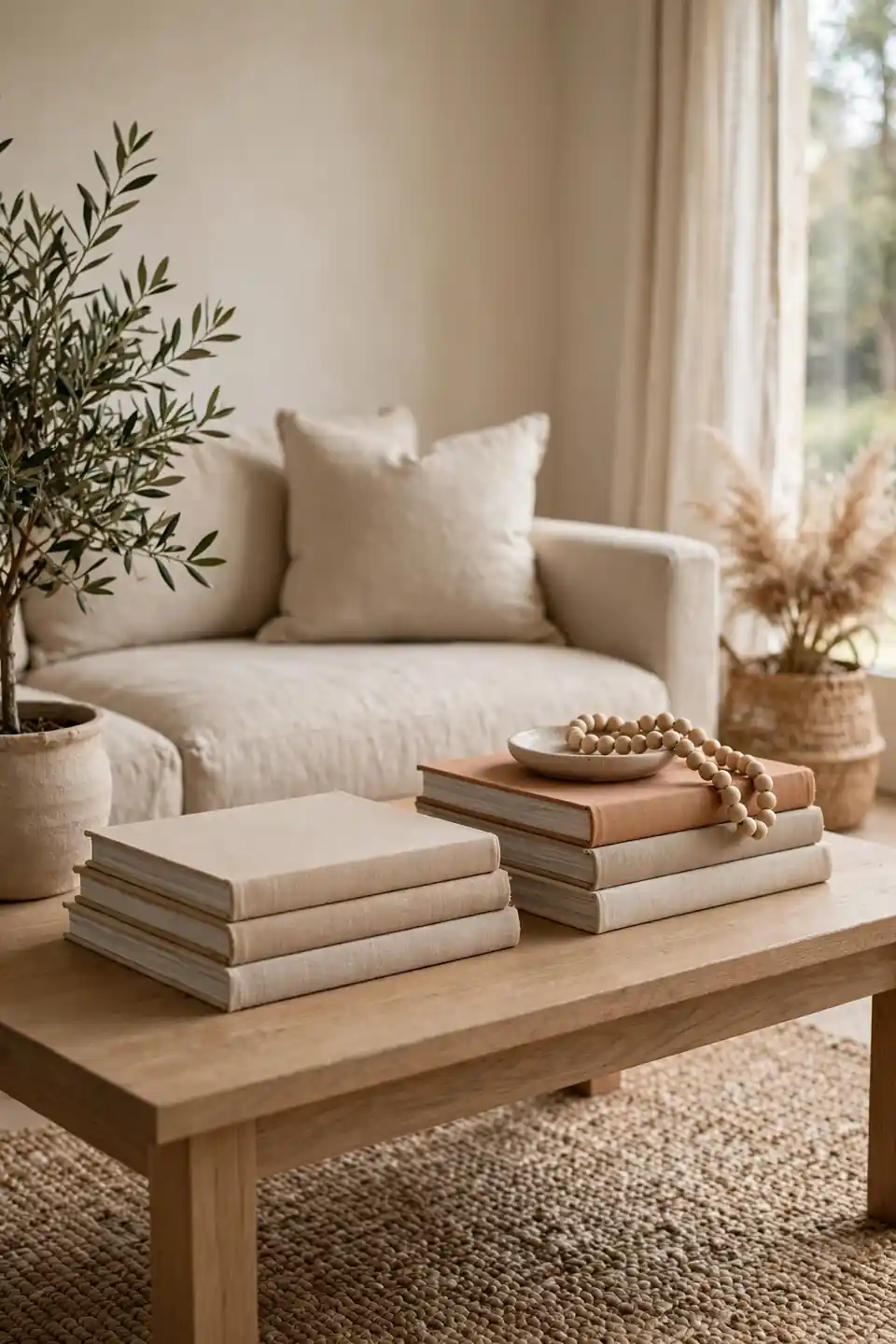
- Choose two or three large books with cloth or linen covers in sand, oat, and soft clay tones.
- Stack them slightly off center so the edges create a gentle, casual stair step across the table.
- Top the stack with a small ceramic dish, a strand of wooden beads, or a pair of reading glasses.
- Rotate the top book with the seasons; a fresh cover color refreshes the whole table for free.
Books add height, quiet color, and a hint of the people who actually live in the room. Keep stacks low enough that sightlines across the table stay open for conversation. Two stacks at most keeps the surface useful for cups, plates, and feet on a slow Sunday morning at home.
Ceramic Vase Branch Display

Quick Tip: Cut branches longer than feels reasonable, roughly twice the height of the vase itself. Tall stems of olive, eucalyptus, or dried grasses pull the eye upward and balance a low, wide table. Short stems crowd the neck of the vase, and the whole arrangement reads stunted within a day.
Matte ceramic in chalk, bone, or stone gray keeps the look grounded and modern. One generous vase beats three small ones competing for the same space. Set it slightly off center, then anchor the emptier side with a low stack of books or a small woven coaster set nearby.
Woven Tray Decor Corral
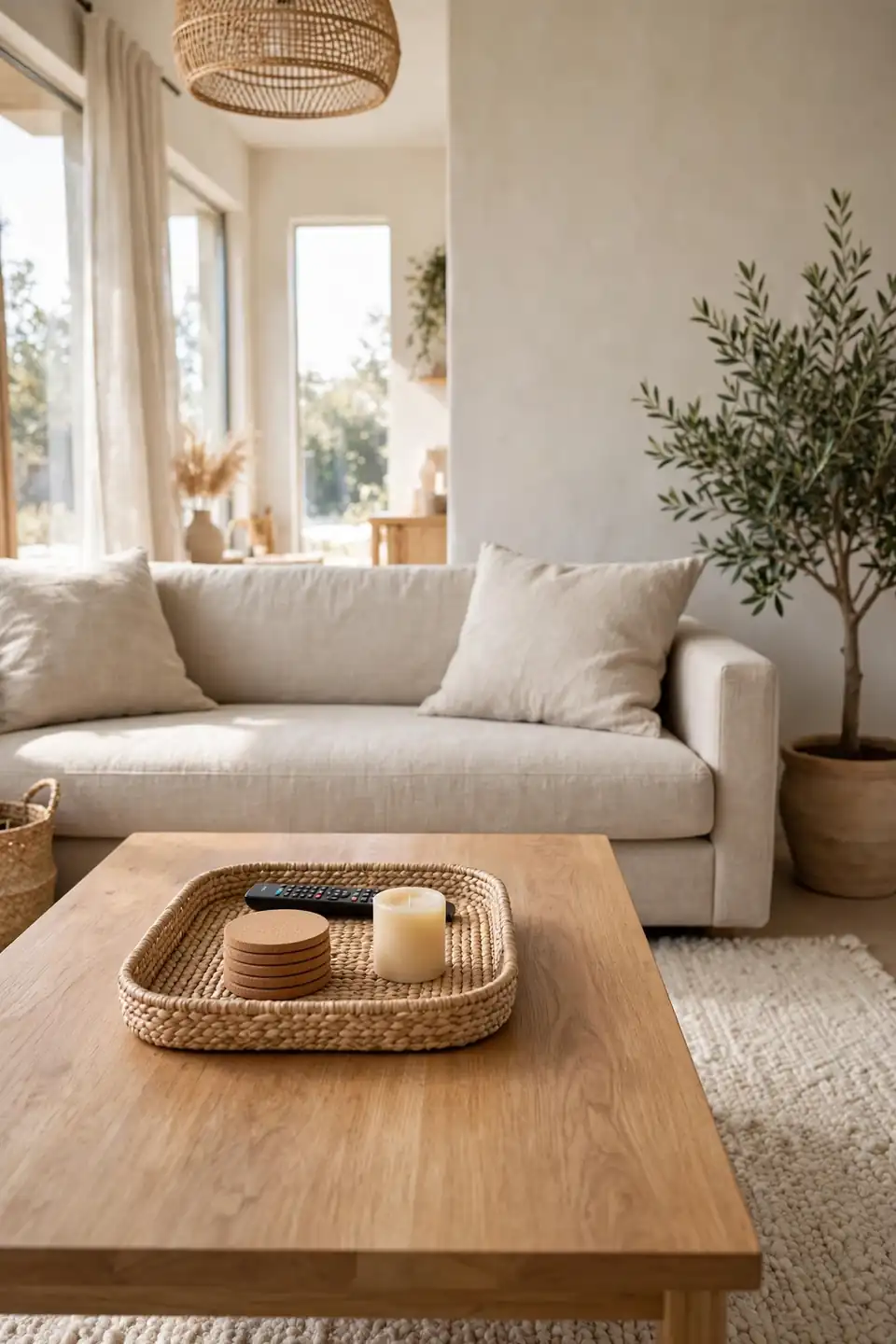
BEFORE: Remotes, coasters, a candle, mail, and a water glass sat scattered across the table, each one sliding wherever it landed. The surface looked busy from the doorway, and clearing it for guests meant armfuls of objects carried away.
AFTER: A flat woven seagrass tray now holds the remote, the coasters, and the candle inside one defined zone. Everything else left the table for good. The tray lifts away in seconds when the surface is needed, and the wood grain finally shows through.
Trays create borders that the eye reads as order, even when the objects inside are everyday things. Choose a tray that covers about a third of the tabletop and leaves the rest open. Natural fibers like rattan, jute, and seagrass soften hard table edges beautifully.
Layered Rugs Anchor Tables
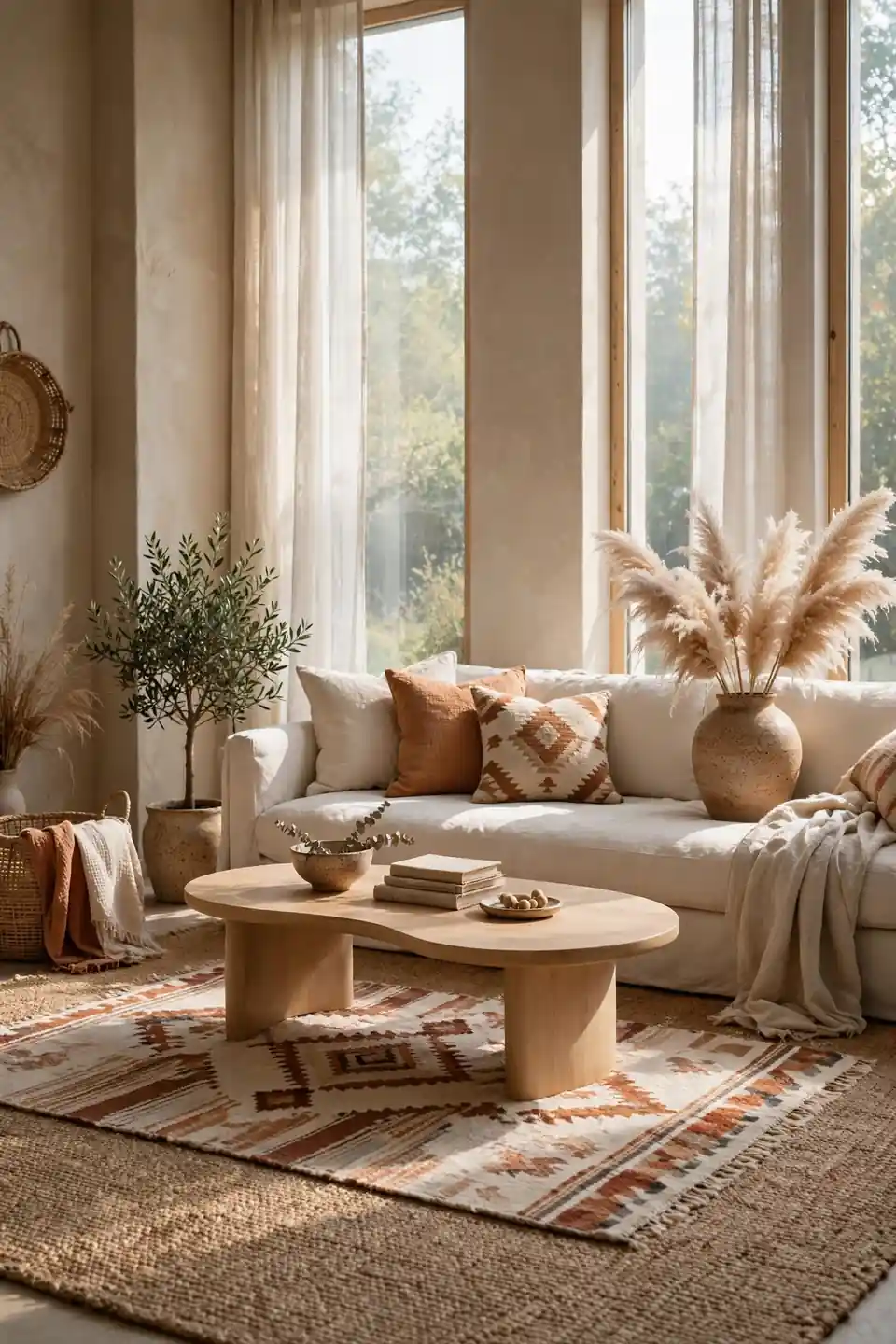
- Lay a large flatweave rug in jute or sisal so it extends well past the front legs of the sofa.
- Center a smaller patterned wool rug on top, leaving a clear border of the base rug visible all around.
- Set the coffee table where the two layers meet, slightly favoring the patterned side of the arrangement.
- Check that chair and sofa legs sit level across the layer change before styling anything on top.
Layering solves the classic problem of a table floating awkwardly on a rug that is too small. The base layer supplies the size, while the top layer adds pattern and softness underfoot. Keep both rugs low pile so the table legs stand steady and the look stays tailored rather than sloppy.
Wood Versus Stone Tables

Wood and stone sit at opposite ends of the organic modern spectrum, and the right choice depends on how the household actually lives day to day.
| Feature | Wood Table | Stone Table |
|---|---|---|
| Warmth | High, glows in sunlight | Cool, calm and steady |
| Upkeep | Coasters needed, rings possible | Wipes clean, very forgiving |
| Weight | Light, easy to move | Heavy, stays where placed |
| Cost | Low to mid range | Mid to high range |
Neither material wins outright; the room and the routine decide. Wood suits homes that rearrange often and lean casual, while stone suits still, grounded layouts that rarely change. I have seen this work well in many cases where the table matched the household habits instead of a passing trend photograph online.
Mixed Natural Texture Pairings
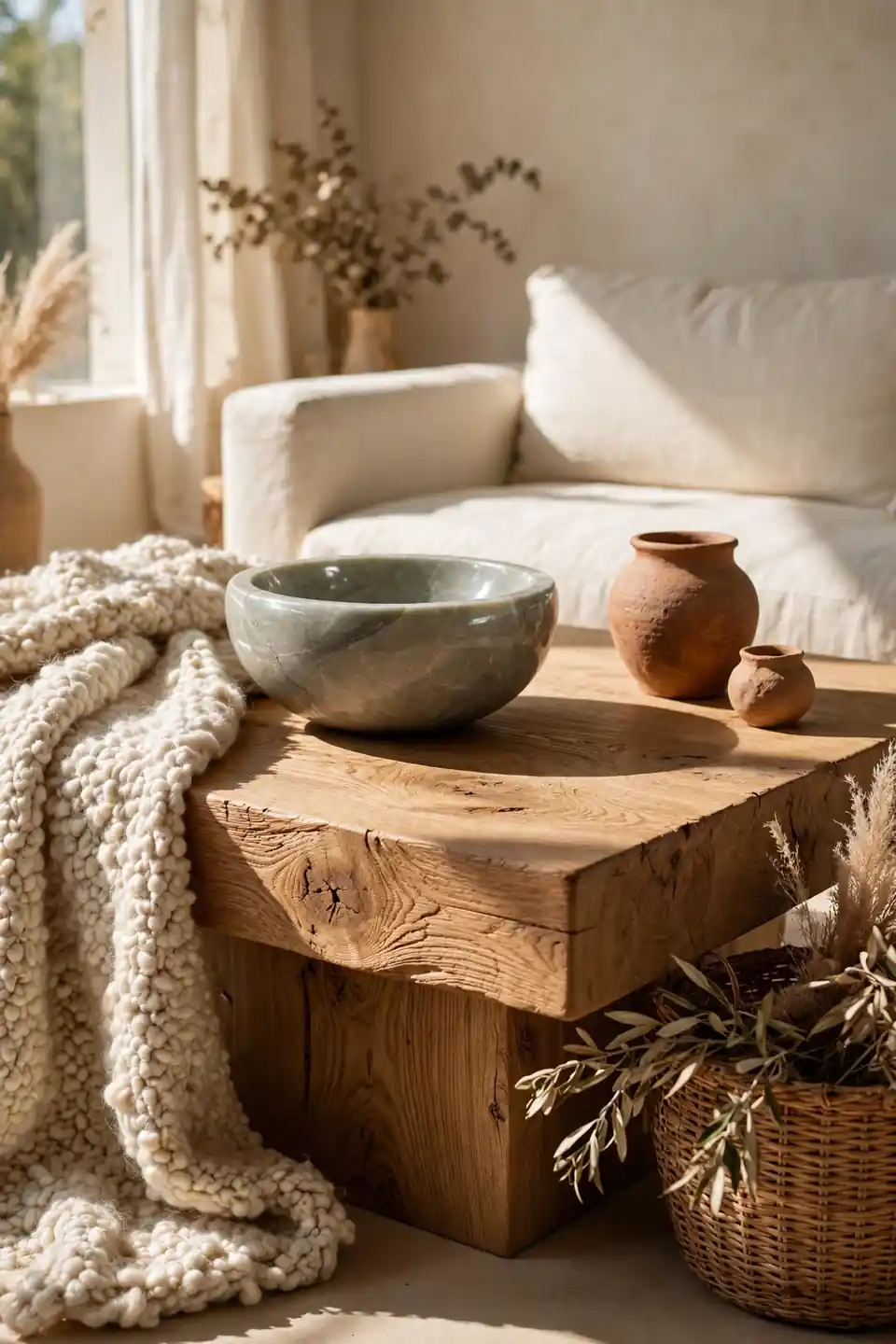
Do:
- Pair rough with smooth: a nubby wool throw beside a polished stone bowl.
- Repeat each texture twice so it reads as a choice, not an accident.
- Mix warm wood tones freely; nature never matches its own shades perfectly.
- Add one woven piece, like a rattan basket, to soften hard surfaces.
Don’t:
- Line up five shiny objects in a row; glare kills the calm.
- Match every wood tone exactly, or the room feels staged and stiff.
- Cover the whole tabletop; texture needs bare space around it.
Texture does the work that bold color does in louder rooms. Against a neutral palette, linen, cane, clay, and raw oak become the decoration itself. Start with three textures, live with them a week, then judge what the table still asks for.
Low Profile Table Proportions
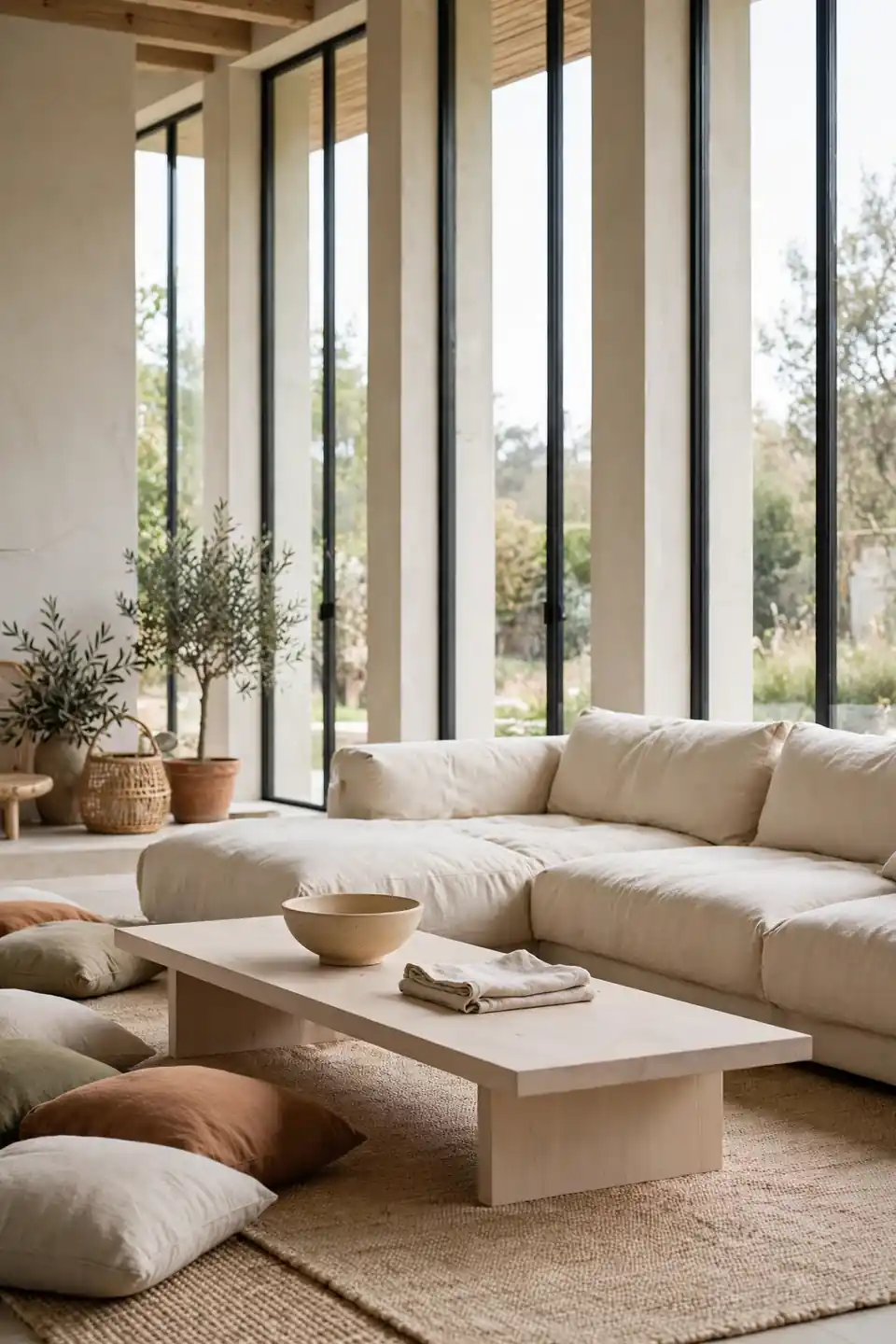
Height shapes how a table feels more than its material or color ever will, and low tables change the posture of the whole seating area.
Best Height: One to two inches below the sofa seat cushion
Ideal Length: About two thirds of the length of the sofa
Clearance: Fourteen to eighteen inches between table and seating
Best For: Low slung sofas, deep sectionals, relaxed lounge layouts
Low tables stretch a room visually because they keep the sightline across the seating low and unbroken. They also suit floor cushions and cross legged living styles very comfortably. Measure carefully before buying; two inches too tall and the table starts crowding everyone seated around it every single day.
Rounded Drum Table Styling
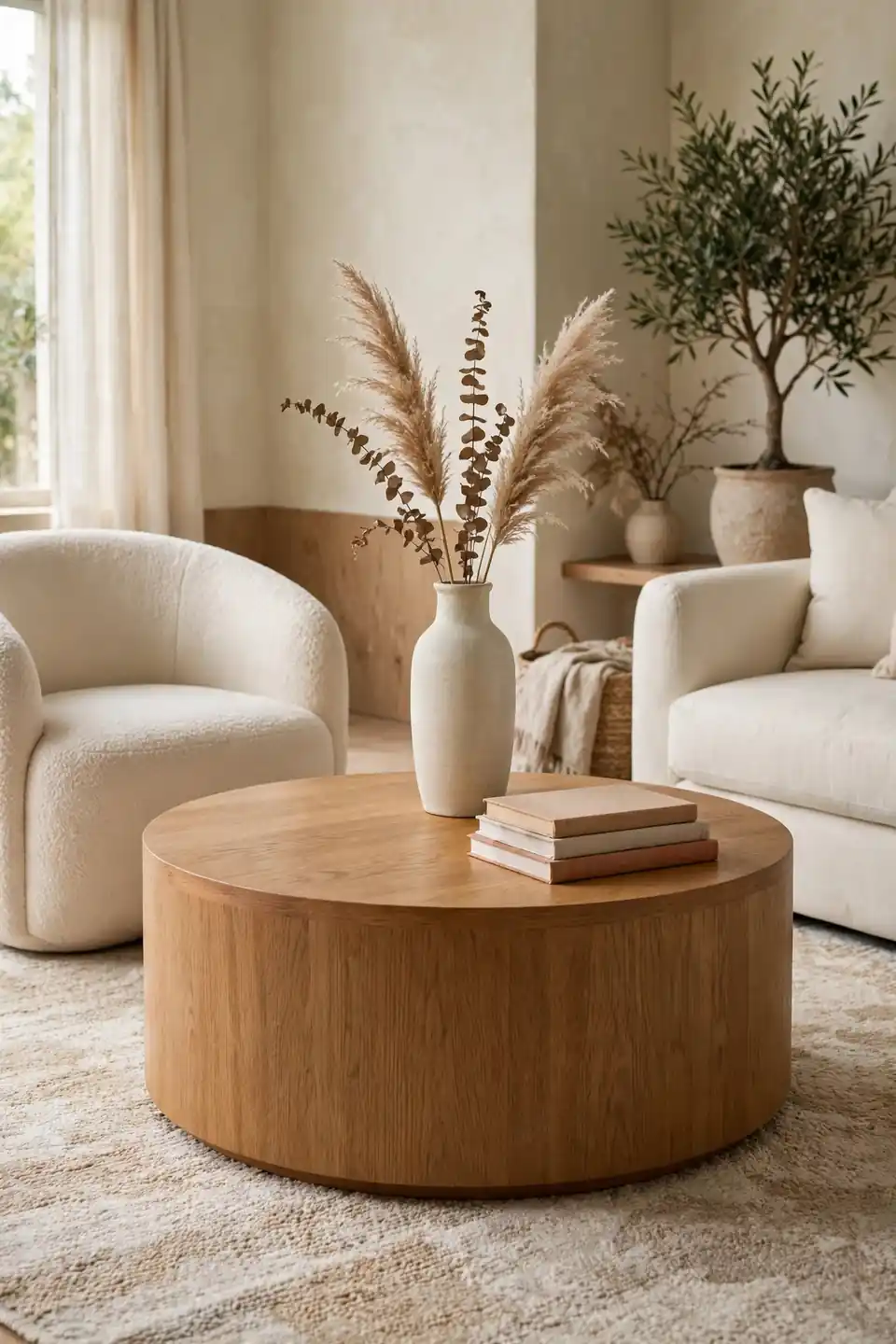
A drum table has no corners at all, so the styling follows a curve instead of a grid. Place one tall object, like a vase or a small sculptural lamp, slightly behind the center point. Everything else stays low and hugs the round edge gently without crowding it or blocking the walkway around the seating.
Round tables shine in tight seating arrangements where sharp corners would bruise shins and block the natural flow. A single sculptural piece often beats a busy grouping here, since the silhouette itself is the statement. Choose matte finishes so the curved surface catches soft light instead of harsh glare at midday.
Asymmetric Object Grouping Rules
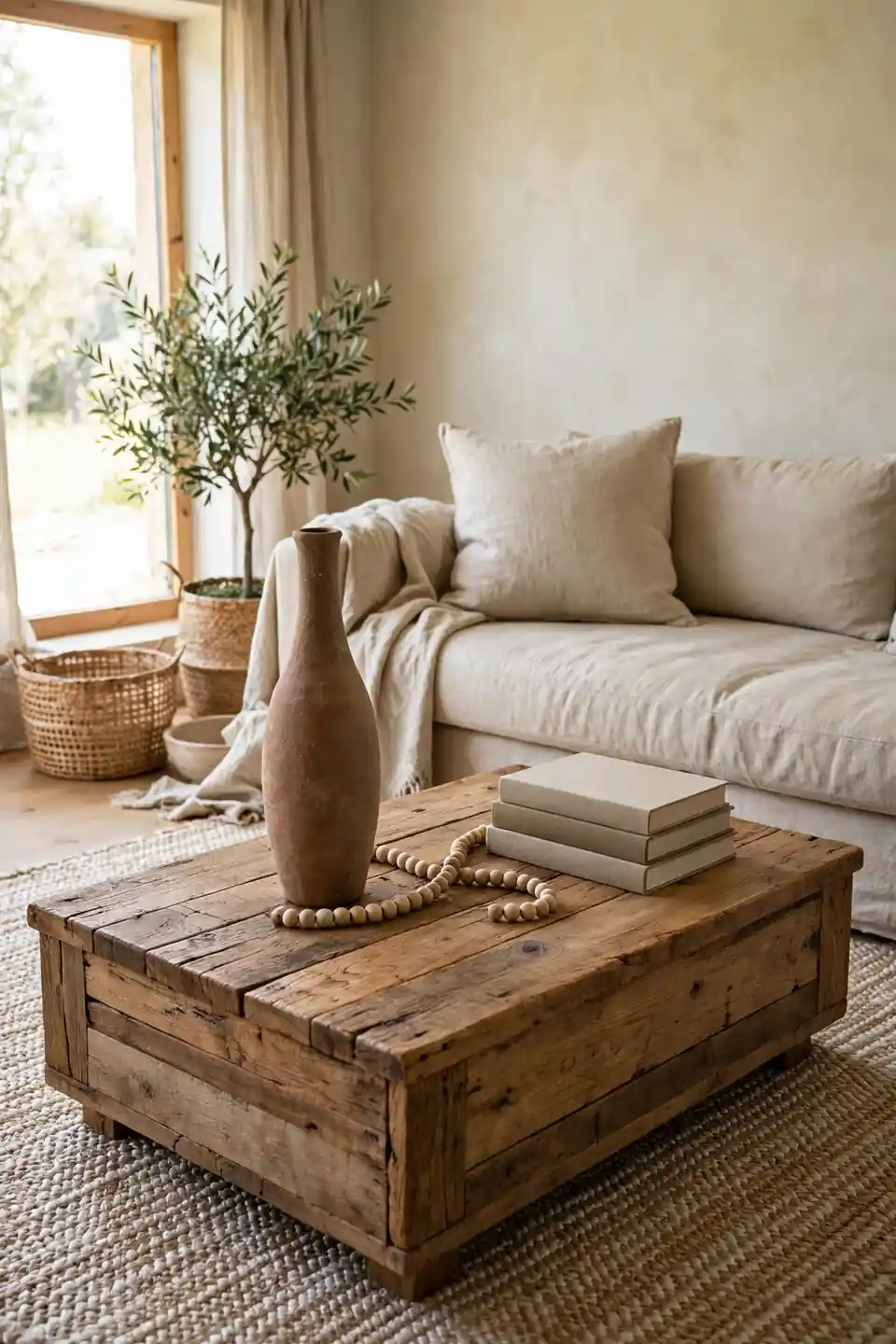
- Set the tallest object first, off center, at roughly one third of the table length.
- Add a medium horizontal piece, like a low stack of books, on the opposite side.
- Bridge the two with something low and long, such as a bead garland or shallow bowl.
- Leave one corner of the table completely bare for drinks, remotes, and daily use.
Perfect symmetry reads formal and a little stiff, while a gentle imbalance feels lived in and relaxed. The rule of thirds keeps that imbalance from sliding into chaos. Step back to the doorway and squint: the group should form one loose triangle, not a scatter of separate islands across the surface.
Linen Runner Softens Stone
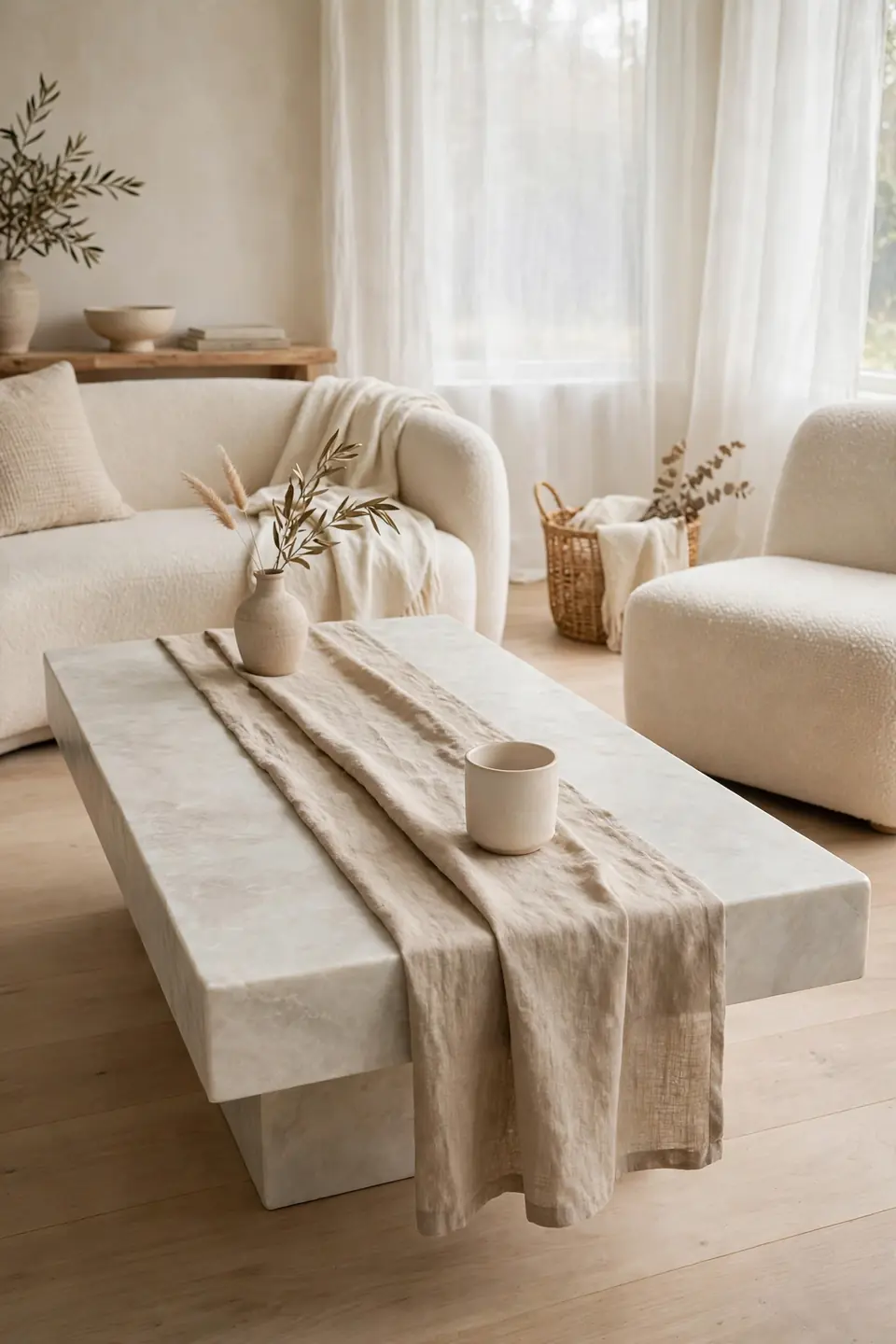
Quick Tip: Fold the runner lengthwise into thirds before laying it down the table. The narrower band shows more of the stone on both sides and looks tailored rather than tablecloth casual. A gentle tug at each end keeps the line crisp and the drape even on both sides.
Natural linen in flax or oatmeal softens cold stone and marble instantly, and it quiets the clink of cups and keys. Let the ends fall a few inches past the table edge for an easy, unstudied drape. Washable fabric matters here, since coffee and wine spills are simply a matter of time.
Candle Cluster Evening Glow

BEFORE: One tall pillar candle stood alone at the center of the table, more obstacle than atmosphere. Lit alone, it cast a small, lonely pool of light while the rest of the surface stayed in shadow, and nobody bothered lighting it.
AFTER: Three candles in varied heights now sit together on a small wooden board, flanked by a match jar and a sprig of dried lavender. The grouped flames throw one warm, generous glow, and the board makes the whole cluster easy to move.
Odd numbers and a shared base turn random candles into a deliberate arrangement. Keep flames at least a hand’s width away from books and fabric, and choose unscented pillars near seating so the glow never competes with dinner or nearby conversation.
Live Edge Slab Statement
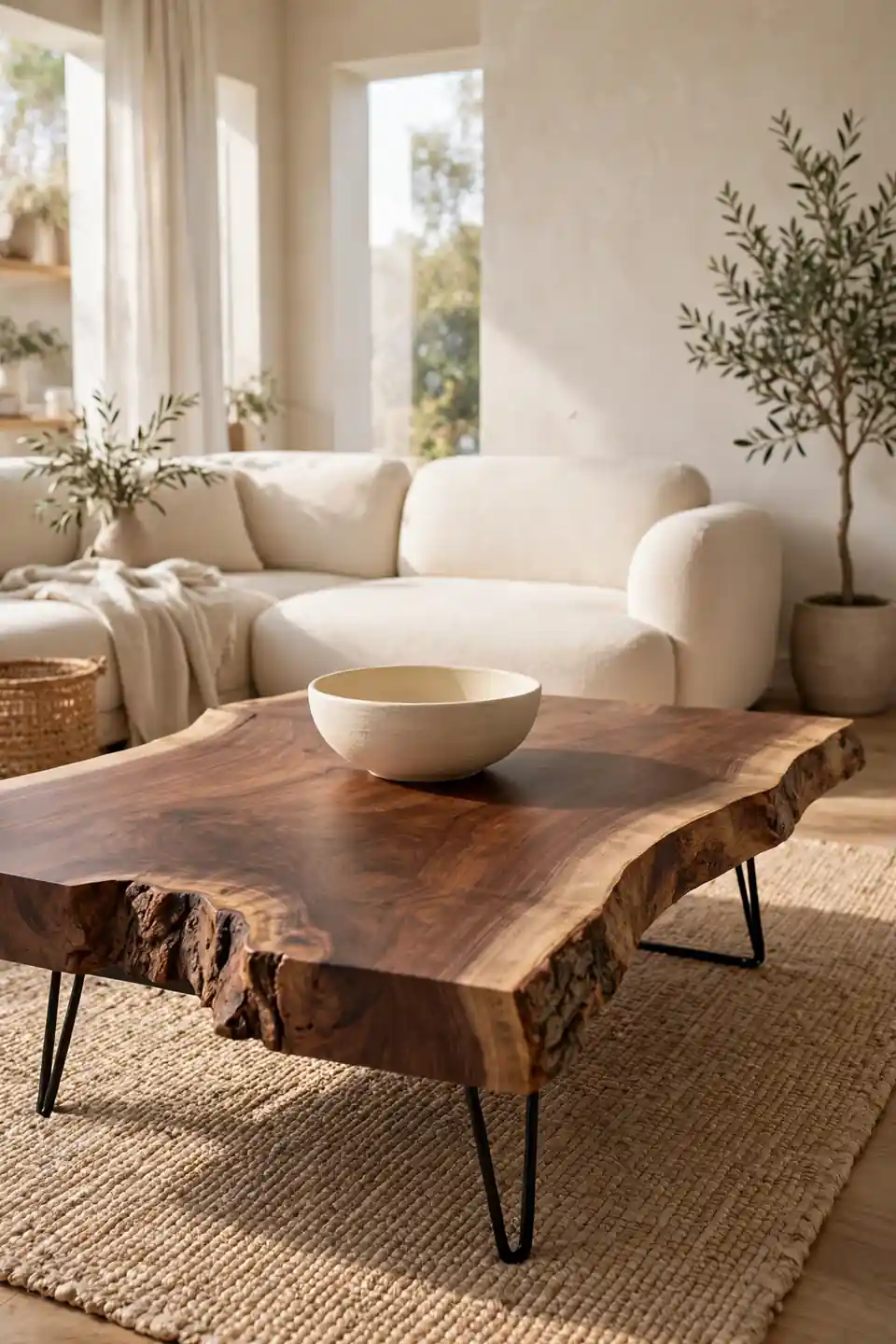
- Sand the slab lightly and seal it with a matte oil so the natural edge stays touchable.
- Set it on low black metal or plain wooden legs that quietly disappear under the grain.
- Style the center only: one bowl or a short stack of books following the slab’s own curve.
- Let both long edges stay completely bare so the organic outline remains the main feature.
Live edge pieces bring a slice of the outdoors straight into the seating area, bark line and all. No two slabs ever match, which makes the table a genuine one of a kind in the home. Keep nearby furniture simple so the grain pattern never has to compete for attention.
Rattan Versus Marble Surfaces
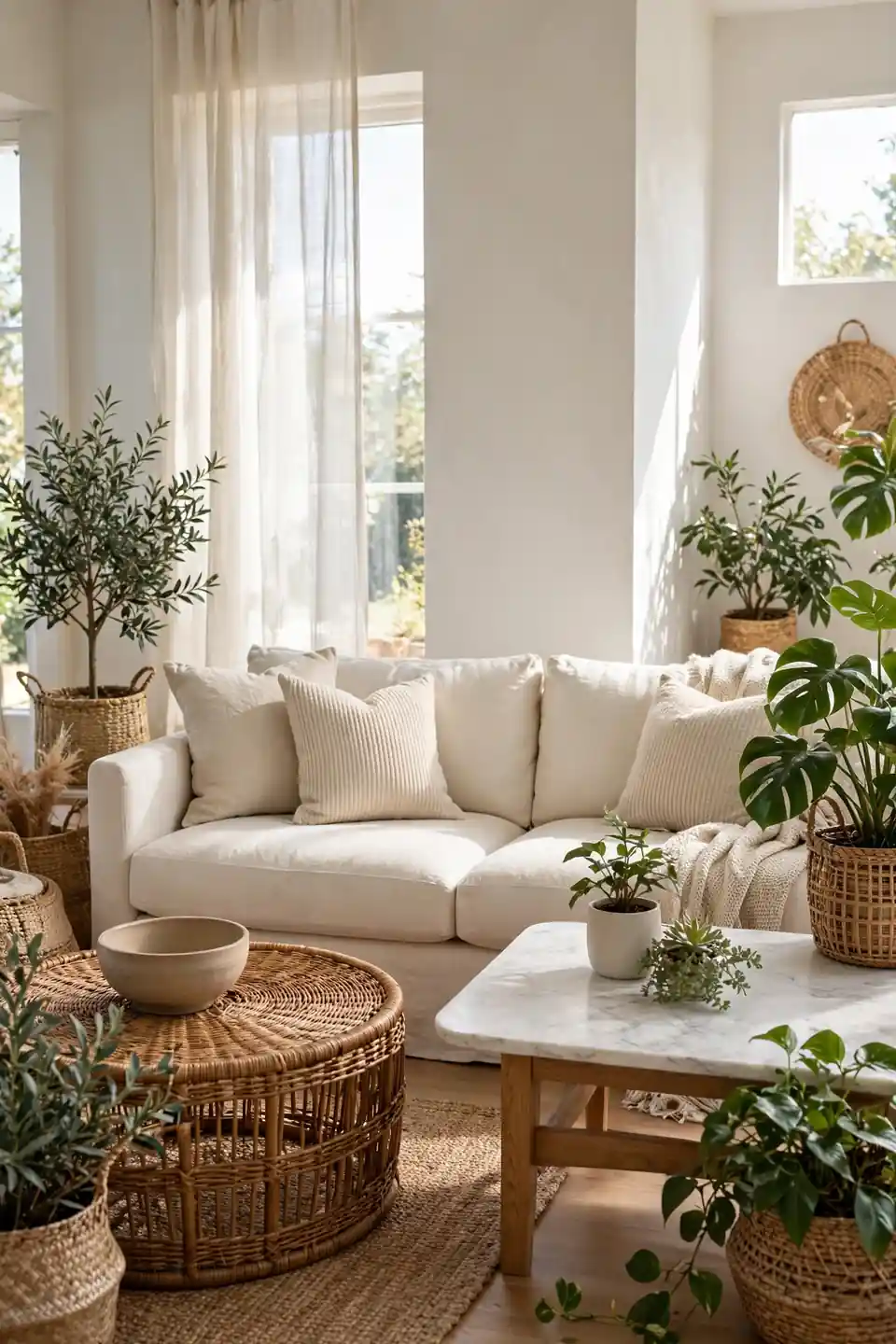
Rattan and marble pull a room toward opposite moods, one relaxed and beachy, the other polished and composed, so compare them honestly before spending anything.
| Feature | Rattan Table | Marble Table |
|---|---|---|
| Feel | Light, airy, casual | Cool, smooth, formal |
| Durability | Gentle use, weave can snag | Chips at edges, stains with acid |
| Light Effect | Brightens darker rooms | Reflects light, can glare |
| Care | Dust and vacuum the weave | Seal yearly, wipe spills fast |
Rattan suits relaxed, plant filled rooms where the table gets moved aside for yoga mats and game nights. Marble suits quieter spaces that get styled once and then left alone. Matching the surface to real household habits saves money and regret in almost equal measure over the years.
Greenery Bowls Bring Life
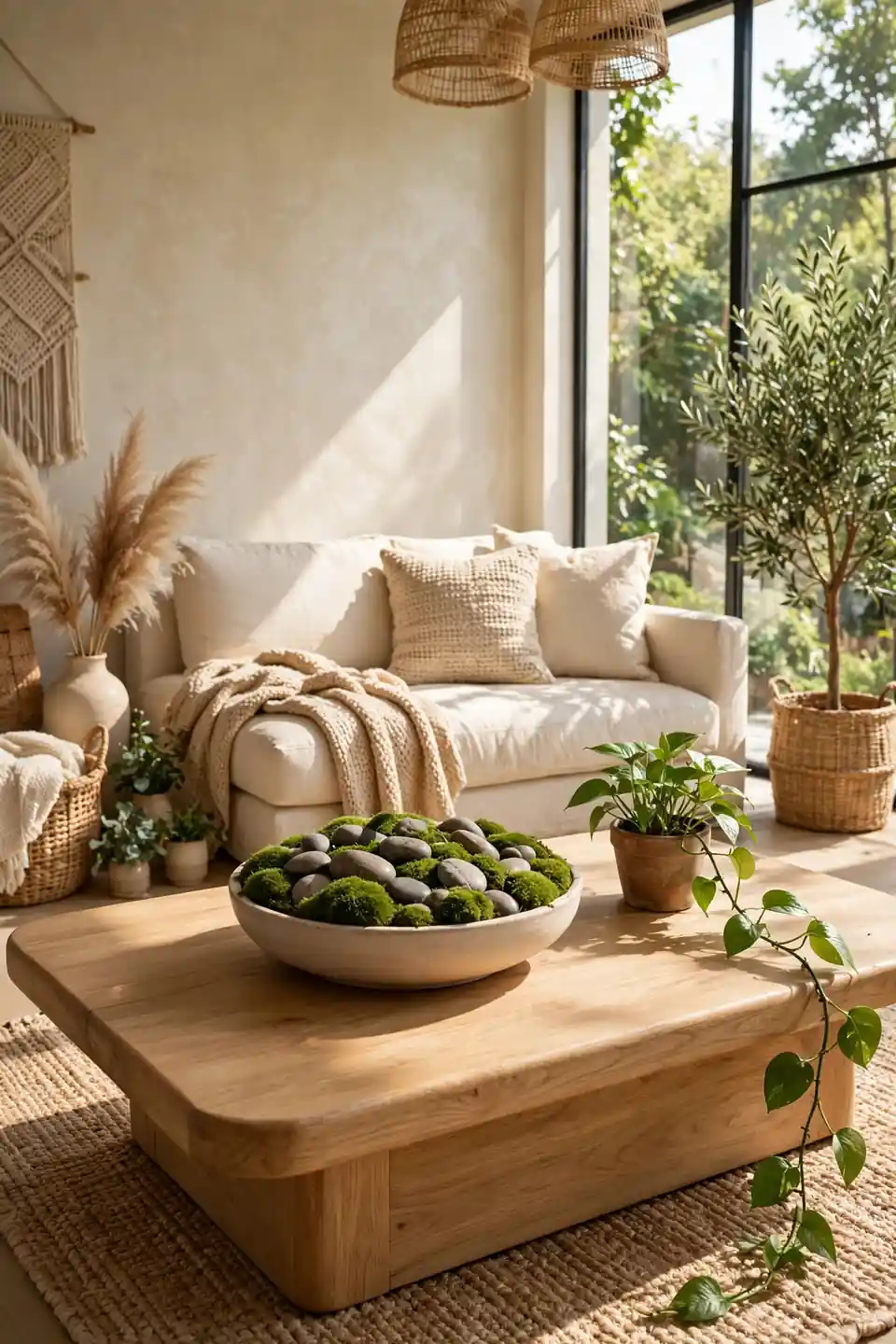
Do:
- Set a low bowl of moss or river stones at the center for easy green.
- Trail a pothos so one vine crosses the table edge softly.
- Mist leaves weekly and rotate the bowl so growth stays even.
- Choose one plant moment per table; one reads calm, three reads greenhouse.
Don’t:
- Place tall plants where they block faces across the table.
- Water over bare wood without a saucer or liner beneath.
- Fake the green with plastic when moss and stones cost less.
Living texture changes a table from styled to alive, and upkeep takes minutes a week. Bowls keep the footprint low and contained, unlike potted plants that colonize the surface. Start with one bowl and notice how often guests reach out to touch it.
Oversized Table Book Display

Small decor simply disappears on a big table surface, so scale becomes the whole trick of styling one well.
Book Size: At least eleven inches tall for real visual weight
Stack Count: One stack of two or three books, never more
Cover Rule: Cloth and linen covers in warm earth tones
Best For: Large tables that swallow small decorative objects
Oversized art and photography books earn their space by acting as both quiet color and sculpture at once. Their covers change with a simple flip, so the table refreshes without a single purchase. That is the quiet heart of organic modern coffee table styling: scale first, objects second, always.
Curved Wood Table Warmth

Bentwood and steam curved tables replace hard angles with one continuous, flowing line. The shape invites people to gather a little closer and makes a rectangular room feel noticeably less boxed in. Style along the curve rather than against it, with objects following the long arc of the tabletop instead of fighting it.
Warm mid tone wood, like white oak or walnut, keeps the modern shape from feeling cold or gallery like. A single ceramic bowl at the center and a folded throw on the sofa arm nearby is honestly enough decoration here. Curves this good rarely need styling beyond good company and good light.
Sculptural Object Trio Balance

- Pick three objects from the same material family, like all clay or all natural wood.
- Vary the heights clearly: one tall piece, one medium, and one low and wide.
- Keep the trio tight, almost touching, so it reads as one single composition.
- Set the group on a book or a low board to give it a shared base.
Three related objects feel collected rather than cluttered because the eye groups them instantly as one idea. The shared material is the glue, while the varied heights supply the rhythm. This simple formula rescues random souvenirs and thrift finds by giving them instant company and a clear purpose on the table.
Stone Coasters Protect Surfaces
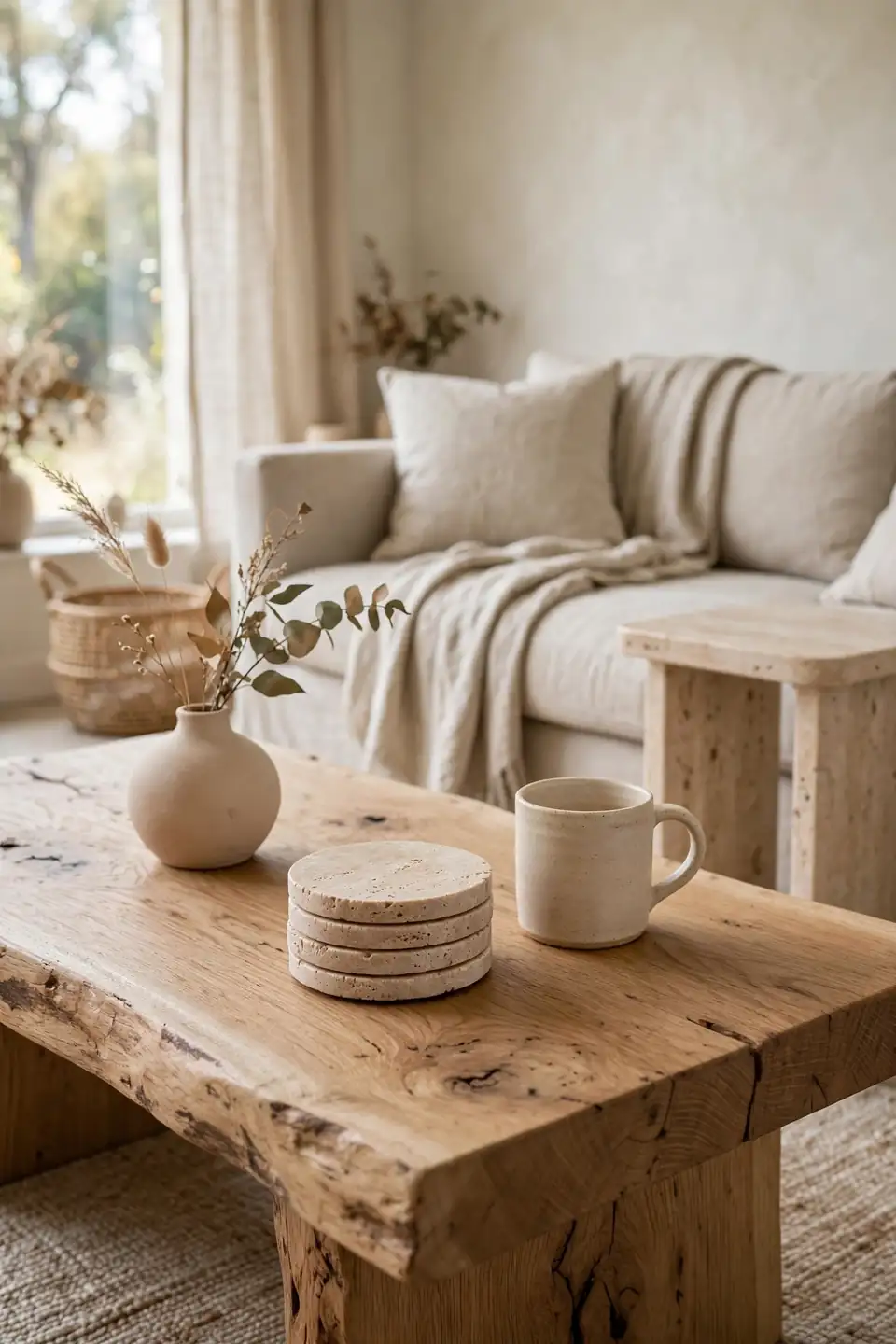
Quick Tip: Keep four coasters stacked in plain sight on the table instead of tucked away in a drawer. Visible coasters actually get used, and a neat stack of travertine or slate doubles as a small sculpture between drinks. Guests quietly copy whatever the table itself shows them to do.
Coasters are the smallest styling move with the biggest protective payoff, especially on raw wood and marble surfaces. Choose a material that already appears somewhere else in the room so the stack blends in naturally. Cork bottoms prevent scratches when the stack gets knocked or dragged across the grain. A spare set in a nearby drawer keeps the rotation going on busy evenings.
Seasonal Swap Simple Refresh

BEFORE: The same glass bowl of pinecones sat on the table from October clear through March, gathering dust. Nothing about the surface changed with the seasons outside, and the room felt stuck inside one long, gray month.
AFTER: The bowl now rotates with the calendar: shells and a linen cloth for summer, pinecones for winter, fresh citrus in spring. Each swap takes about ten minutes, and the table suddenly tracks the light and the mood outside the windows again.
A single rotating spot keeps styling feeling fresh without a full redecorate every few months. Store the off season pieces together in one labeled box so the swap stays painless. Small, regular change stops the eye from going blind to a table it sees every day.
Negative Space Breathing Room
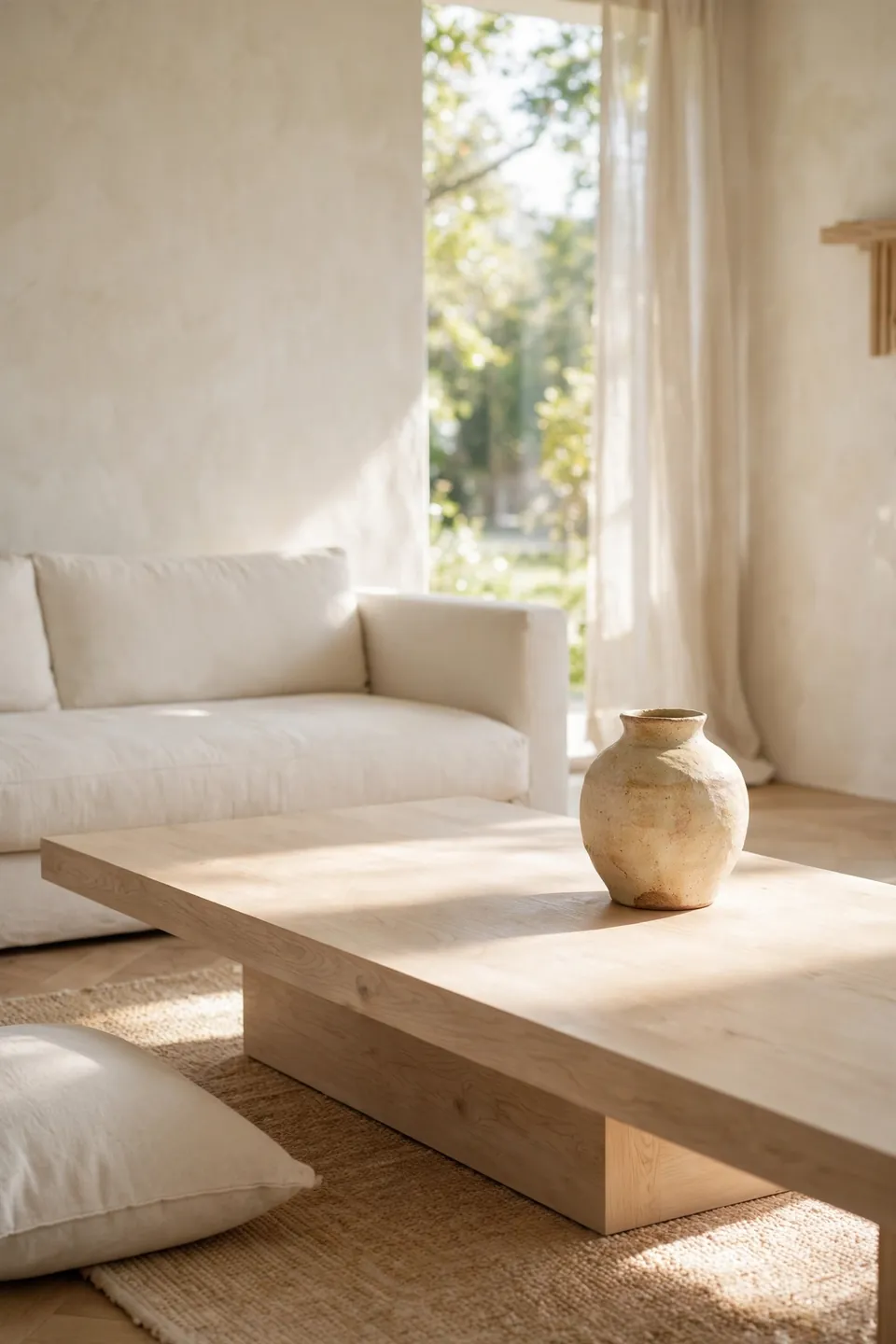
- Remove every single object from the table and wipe the whole surface completely clean.
- Return only the one piece you love most, placed deliberately off center on the table.
- Live with the near empty table for two full days before adding anything else back.
- Add back at most two pieces, stopping the moment the surface feels balanced again.
Empty space is a styling material in its own right, not a failure to decorate. Bare wood or stone around one loved object makes that object look deliberate and expensive. It is the gentle opposite of maximalist home decor inspiration, yet both approaches agree on one thing: every object on the table must earn its place there.
Glass Versus Solid Tables
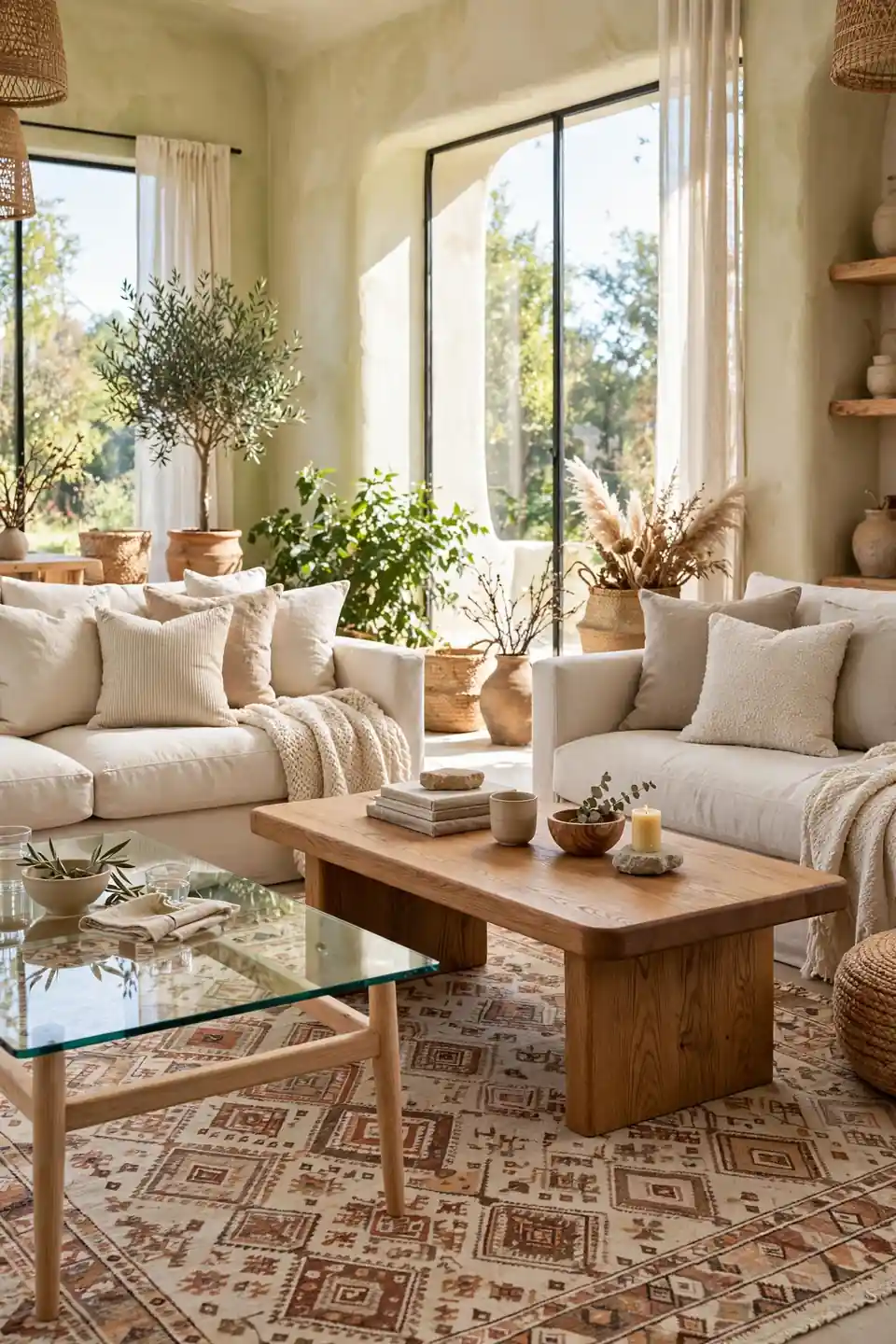
The choice between a glass top and a solid top quietly changes how heavy the whole room feels from the doorway.
| Feature | Glass Table | Solid Wood Table |
|---|---|---|
| Visual Weight | Nearly invisible, floats lightly | Grounds the seating area |
| Styling Surface | Shows the rug beneath it | Hides floor, needs objects |
| Upkeep | Fingerprints show every day | Dust shows, rings possible |
| Best Rooms | Small or darker spaces | Large, bright, open spaces |
Glass keeps small rooms feeling airy but demands constant wiping and offers no place to hide everyday clutter. Solid tops anchor bigger rooms and forgive busy households far more kindly. Measure your patience honestly before choosing; the prettiest table always loses to the one you can actually live with daily.
Handmade Pottery Finishing Touch
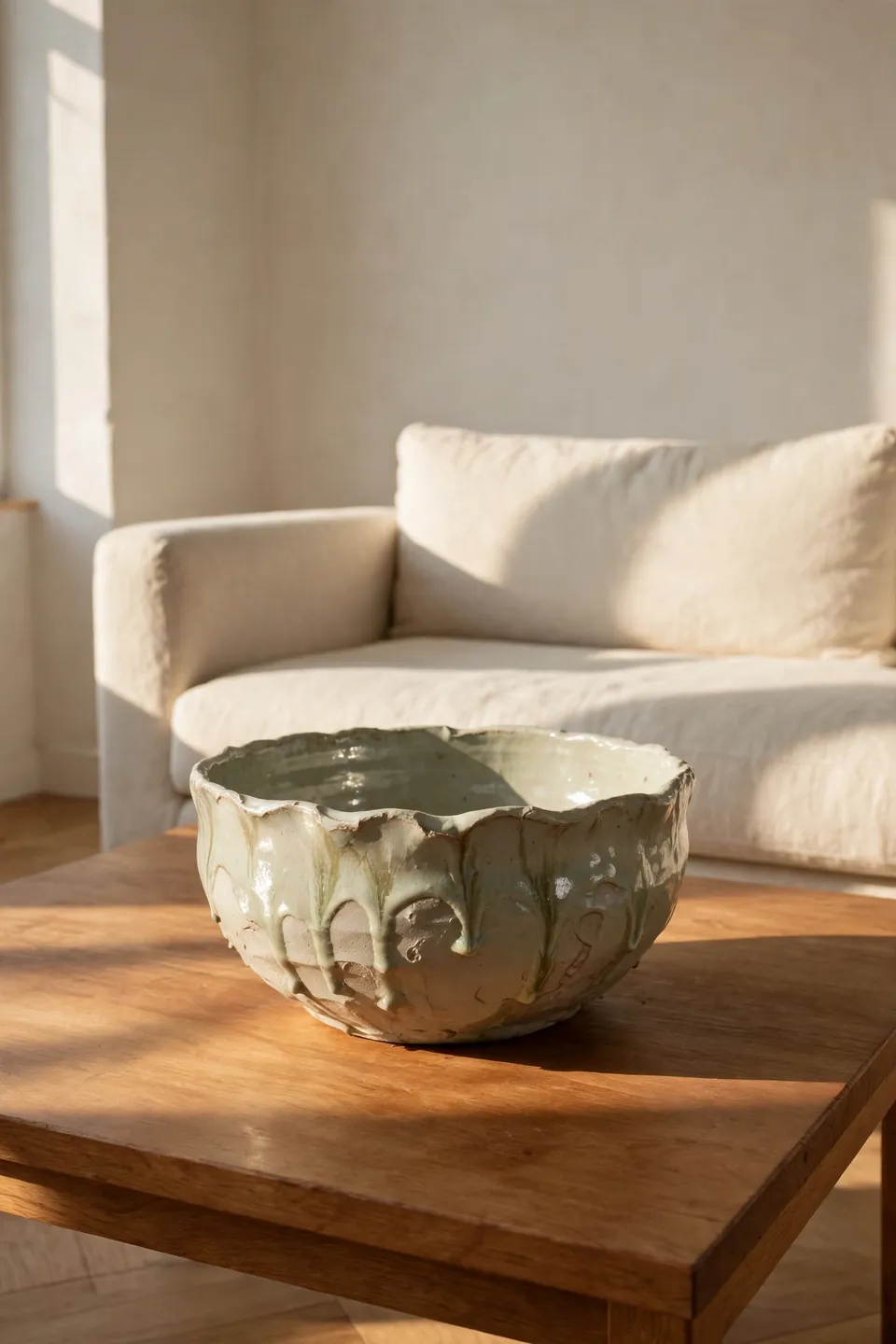
Do:
- Choose one handmade bowl with visible finger marks and glaze drips.
- Let its uneven rim stay empty; honest pottery reads as art.
- Buy from local makers so the piece carries a real story.
- Rest it on bare wood where its texture stands out most.
Don’t:
- Surround it with factory perfect pieces that make it look like a mistake.
- Fill every handmade vessel you own, since clutter hides the craftsmanship.
- Match glaze colors to the rug exactly, because near tones look far richer.
Handmade pottery brings the human hand back into rooms full of flat pack furniture. Slight wobbles and glaze variations are proof of making, not flaws to hide. One honest, handmade piece on the table quietly raises the value of everything sitting around it.
Conclusion
The strongest tables in this list all share one habit: fewer, better pieces with real room to breathe around them. Natural wood, honest stone, clay, and woven fiber do the heavy lifting, so the styling itself stays simple. Pick two ideas, clear the surface tonight, and rebuild it slowly over the coming week with pieces you already own and love. Save these organic modern coffee table styling ideas on Pinterest before you start, so the plan stays one tap away at the thrift store or the market. Small changes on one table can shift how the whole room feels by morning.