24 Warm Taupe and Olive Living Room Ideas for Earthy Elegance
Taupe and olive green share a quiet gift: neither one shouts, yet together they make a room feel gathered from the landscape itself. warm taupe and olive living room ideas build on that calm, layering mushroom soft neutrals against leafy greens for depth that never feels dark. The pairing flatters north and south light alike, and it welcomes wood, brass, linen, and stone without a single clash.
The 24 ideas ahead move from sofas and walls to lighting and art, each one grounded in pieces most homes already own. Hand stitched texture adds the same earthy character, the way vintage needlepoint wall art decor warms a classic wall with wool and patience. Start with the largest surface, the sofa or the wall color, and let olive arrive in layers you can adjust season by season.
Taupe Sofa Olive Cushions
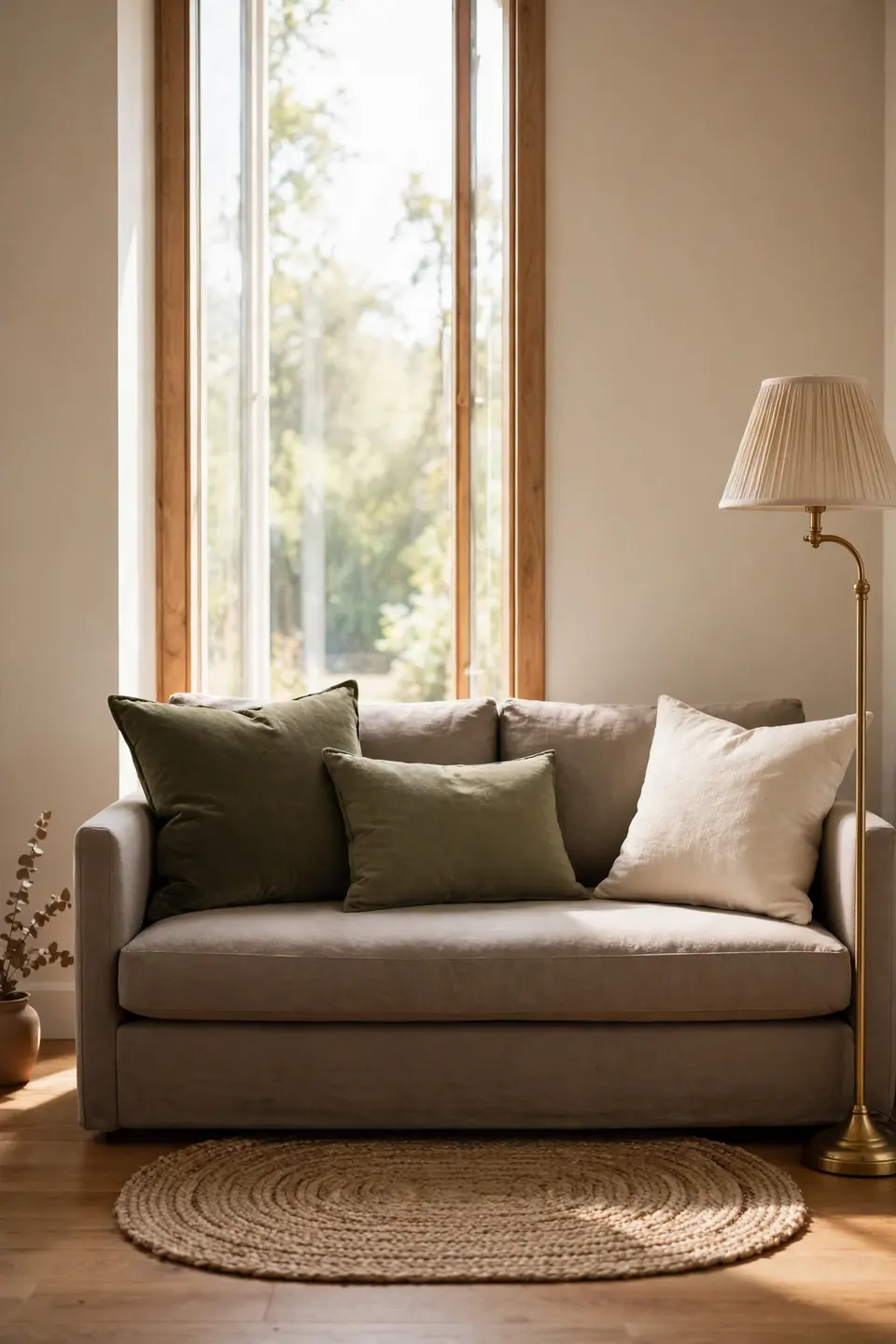
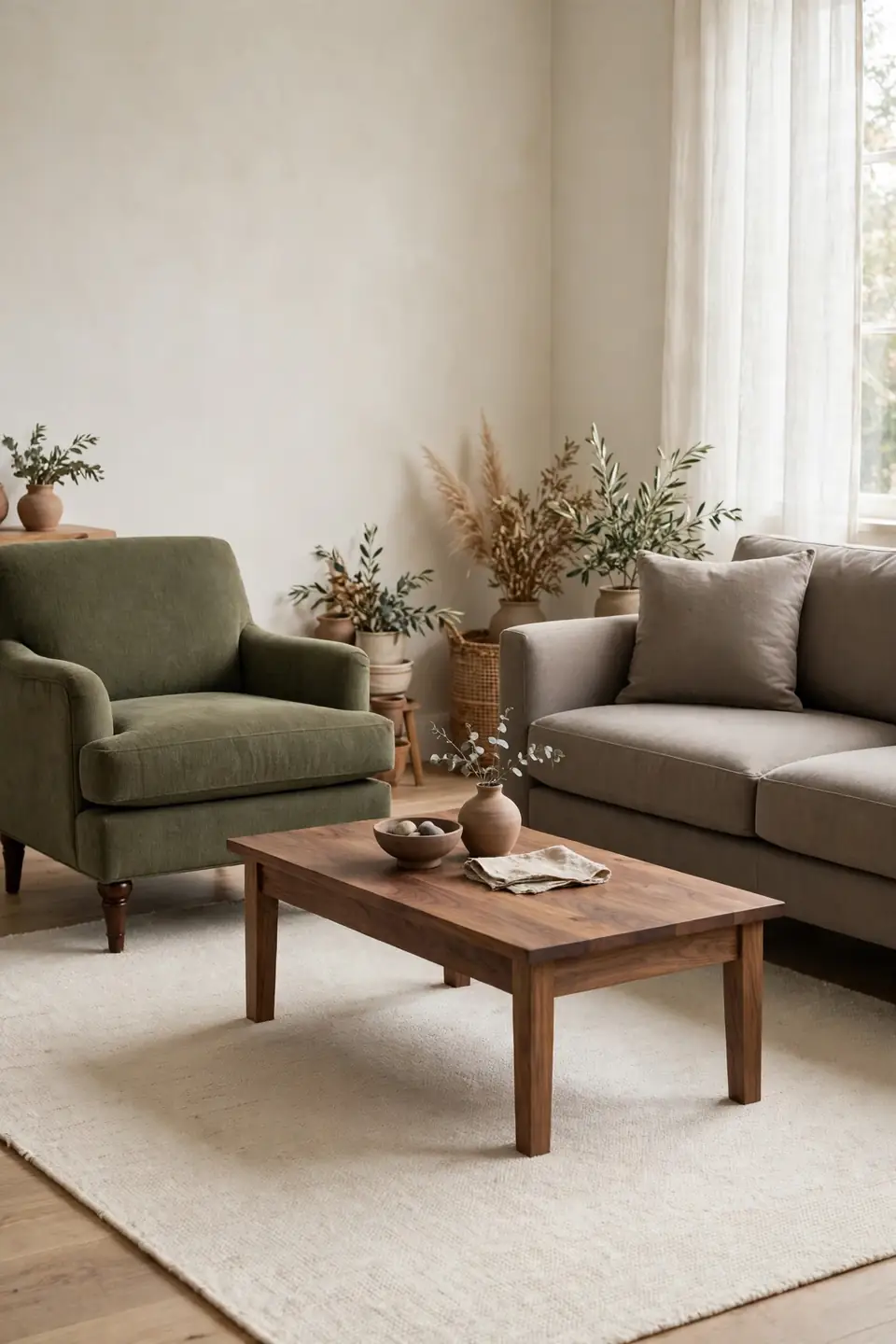
A taupe sofa is the hardest working neutral a living room can own, because it hides wear, flatters daylight, and pairs with nearly every wood tone. Against that soft mushroom base, olive cushions land like leaves against bark, natural and unforced. Choose sofa fabric with visible weave, such as linen look cotton, so the neutral reads as texture rather than flat color.
Build the cushion mix in threes: two olive in different depths, one cream, then repeat the olive on a chair across the room. In my experience, cushions look best slightly oversized and karate chopped at the top corners, a small fuss that makes the whole sofa feel considered. Keep one patterned cushion at most, so the greens stay the story of the seating.
Olive Velvet Accent Chairs
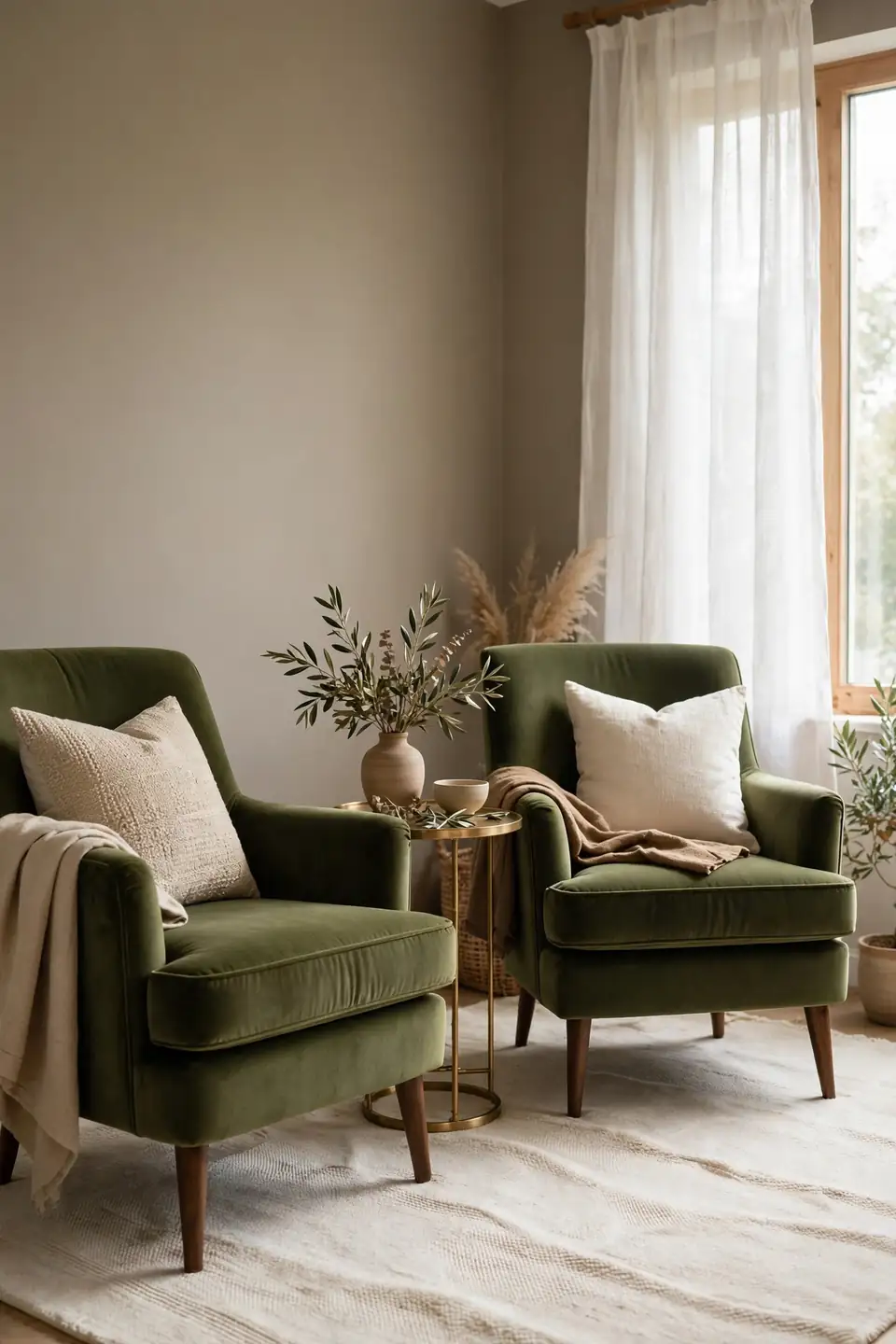
- Pick a pair of olive velvet chairs when the sofa stays neutral, and angle them toward each other.
- Velvet drinks in daylight and deepens the green, so the chairs read richer than flat cotton ever would.
- Swivel bases earn their keep in conversation layouts, turning toward the sofa or the fireplace as needed.
- Set one small brass side table between the pair for drinks, books, and a shared pool of lamplight.
Place the chairs where they catch the best natural light, because olive shifts beautifully from sage at noon to deep forest by evening. A sheepskin or cream throw over one arm keeps the velvet from feeling formal, and a shared ottoman in taupe ties the pair back to the sofa palette without matching anything exactly.
Warm Taupe Wall Color

Quick Tip: Paint a two foot square of warm taupe on two different walls and live with it for two days before committing. Taupe shifts more than any neutral, reading pink in warm light and grey in cool light, so the sample earns its drying time.
Warm taupe walls hand the room a permanent golden hour, against which olive upholstery looks richer and cream trim looks cleaner. Choose a taupe with a yellow or red base rather than a grey one, since grey based versions turn chilly beside green. One finish throughout, eggshell on walls and satin on trim, keeps the envelope calm and lets furniture change freely with the seasons.
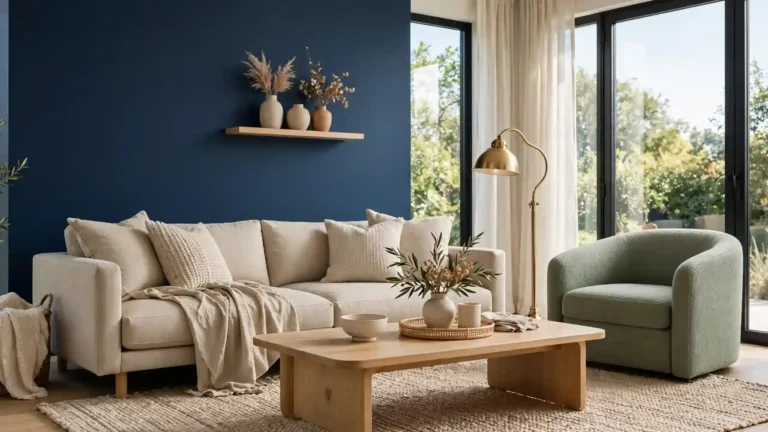
Olive Green Feature Wall
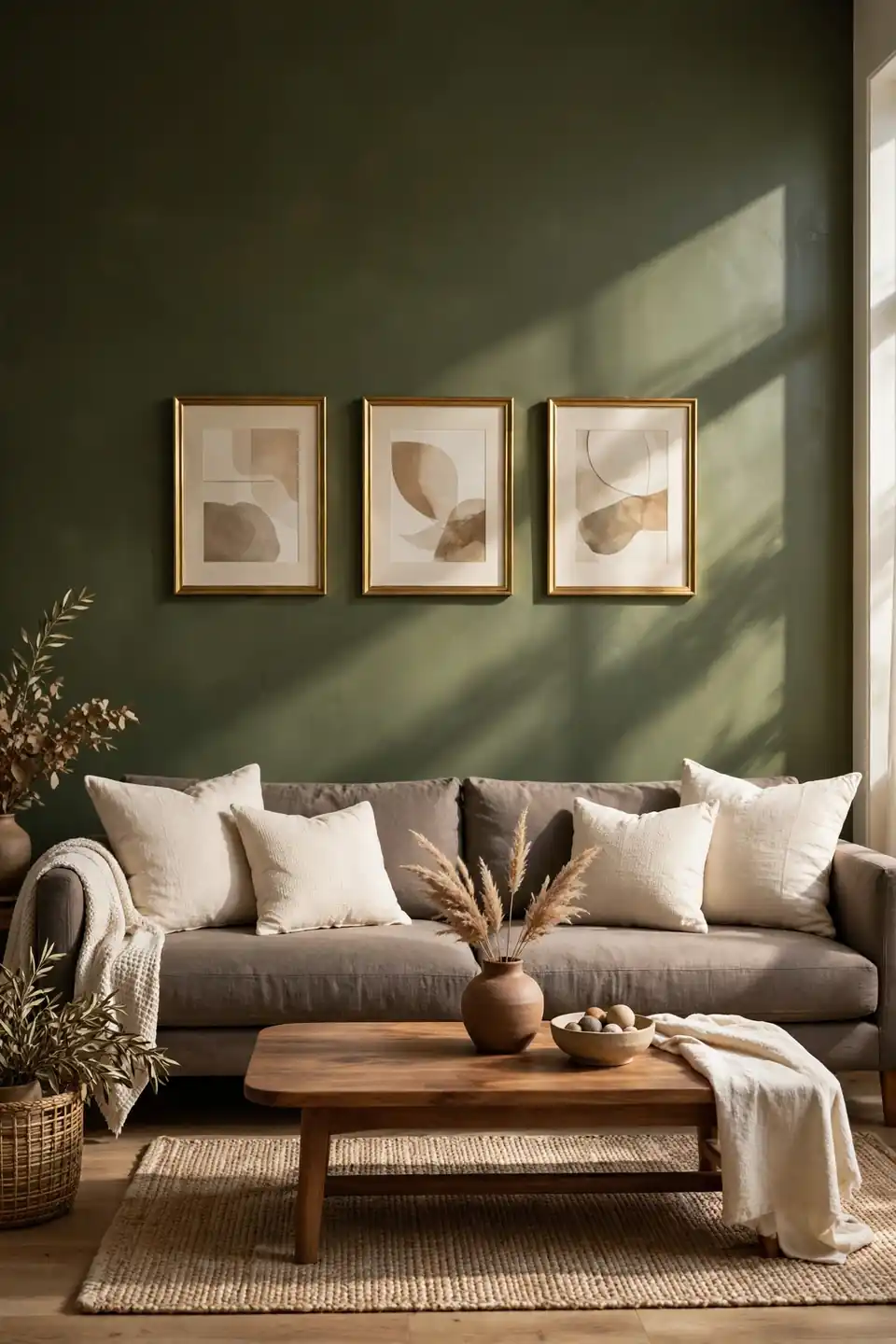
BEFORE: The wall behind the sofa was plain builder white, and taupe seating faded against it with nothing anchoring the arrangement. Photos of the room looked washed out, and the space felt rented rather than settled.
AFTER: Two coats of deep olive turned that wall into a backdrop, and the taupe sofa now glows against the green like stone against moss. Brass frames and cream cushions sharpened at once, and the room finally holds the eye.
One green wall is often enough, since olive repeats in cushions and plants around the room. Keep other walls warm white or pale taupe so the feature stays rich instead of heavy. Test the shade at full strength; most olives need one step deeper than the chip suggests once they cover a whole wall.
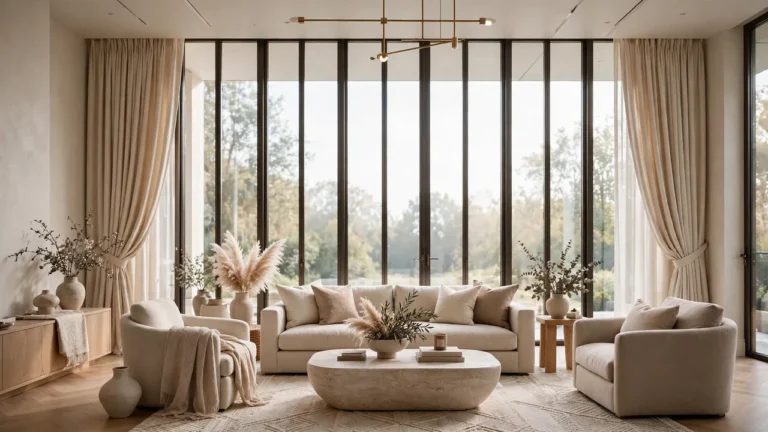
Taupe Linen Curtain Layers
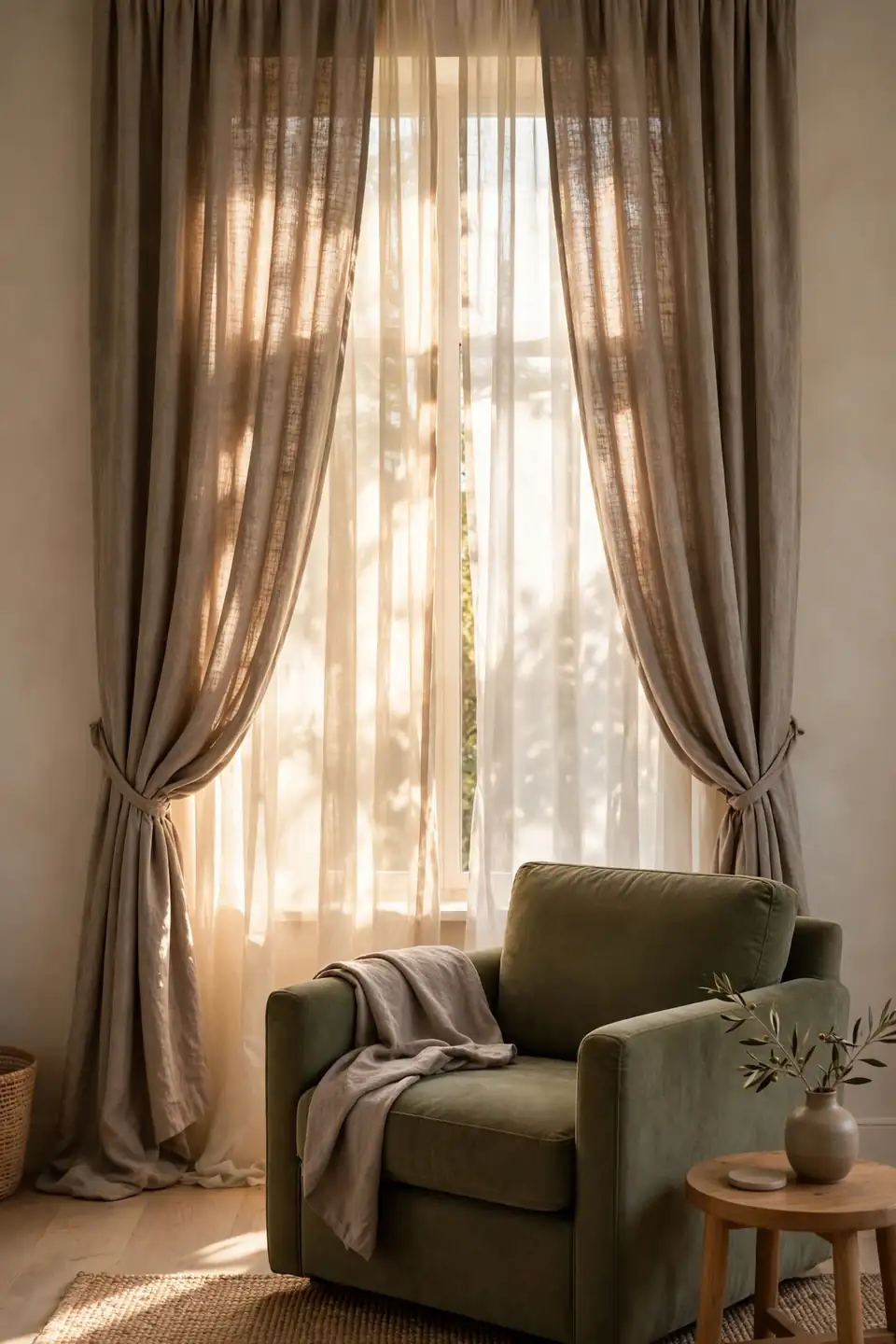
- Hang the curtain rod close to the ceiling and six inches wider than the frame on each side.
- Mount sheer cream panels first, directly against the glass, for privacy that keeps the daylight.
- Layer taupe linen drapes over the sheers, hemmed to just kiss the floorboards.
- Tie the taupe panels back with simple brass or rope holders for an easy daytime sweep.
- Steam the linen once hung; wrinkles fall out under its own weight within a day.
Taupe linen filters light into a warm haze that flatters every green in the room, and the double layer lets the window dress up or down. Draw the sheers alone on bright afternoons, and pull the full drapes on winter evenings when the room wants to feel held.
Olive Versus Taupe Upholstery
| Option | Olive Upholstery | Taupe Upholstery |
|---|---|---|
| Mood | Leafy, bold, nature led | Calm, soft, background led |
| Light Reaction | Deepens in shade, glows in sun | Stays steady all day |
| Best Partner | Cream, brass, walnut wood | Olive cushions, black accents |
Most rooms land happiest with one of each: the larger piece in taupe for calm, the smaller in olive for character. Swap the balance only when the room is very large or very sunny, where green can carry more area without closing in. Fabric samples tell the truth faster than opinions, so tape both to the wall beside the window and judge them at breakfast and at dusk before ordering anything.
Wood Tones That Warm
Do:
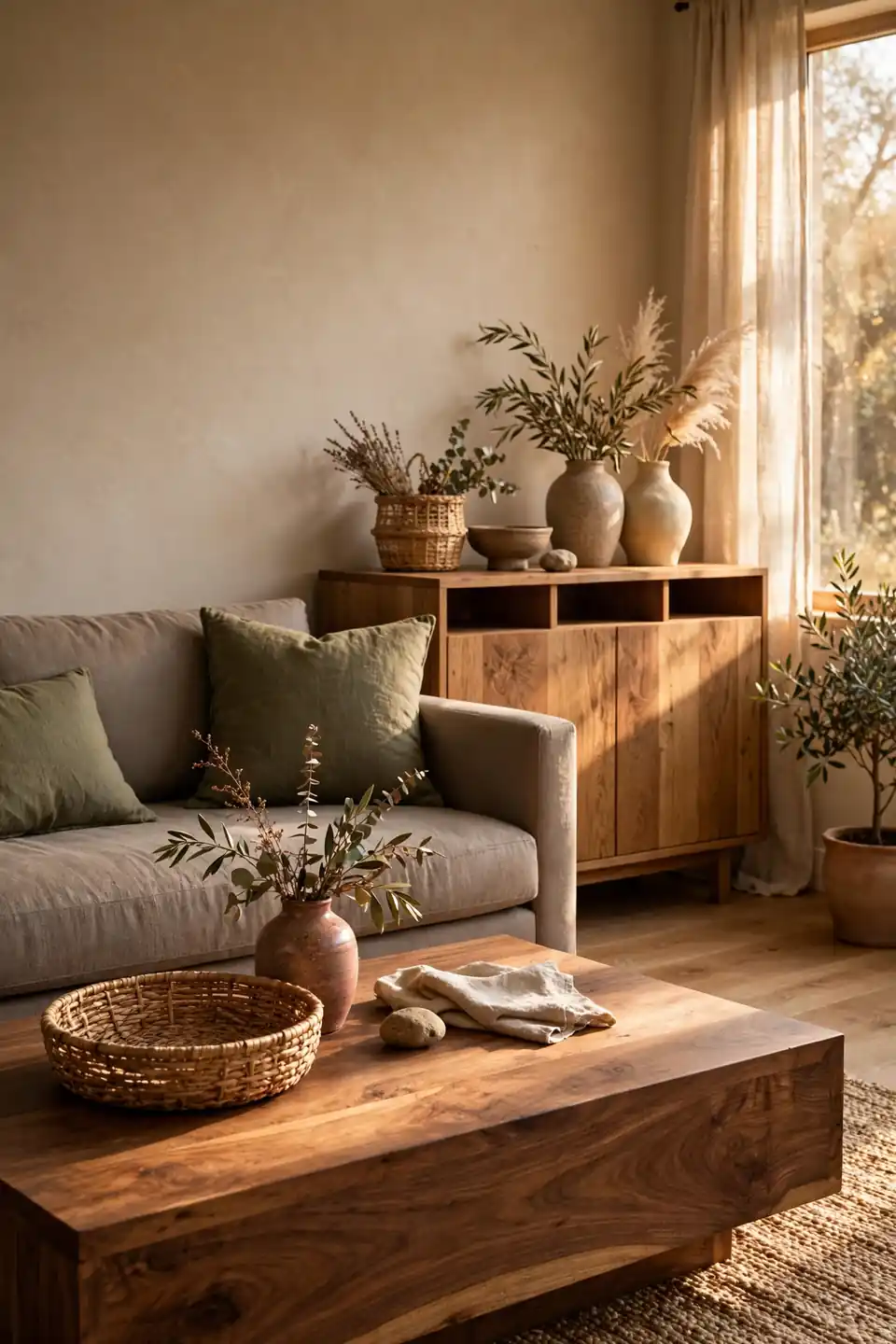
- Choose walnut, warm oak, or teak for tables and sideboards beside olive.
- Repeat each wood tone at least twice so it reads as a decision.
- Sand and oil tired pieces instead of painting over honest grain.
- Let one darker piece, a walnut cabinet, ground the lighter woods.
Don’t:
- Mix more than three wood tones in one sightline; the room feels collected by accident.
- Place grey washed wood beside olive; the green turns muddy against it.
- Match every piece exactly; identical stain reads flat and showroom stiff.
Warm wood bridges taupe and olive, because both colors live in bark, soil, and leaf shade. That’s why many experts recommend settling the wood palette before buying a single cushion. Get the boards right, and the fabrics almost choose themselves.
Olive Plants Greenery Corners

Cost: Low to medium, plants cost less than furniture
Time: One hour to place and pot everything
Skill Level: Beginner, choose forgiving varieties
Best For: Corners, shelves, and the gap beside sofas
Living green is the honest version of the olive palette, and plants soften every hard corner a room owns. Group three heights together: a tall olive tree or fiddle leaf in the corner, a trailing pothos on the shelf, and a small fern at table height. Terracotta and woven baskets keep the pots inside the palette, while one brass planter adds a deliberate glint. Water on a schedule rather than a hunch, since most indoor plants die of kindness and irregular drinks long before they die of thirst.
Taupe Area Rug Anchors
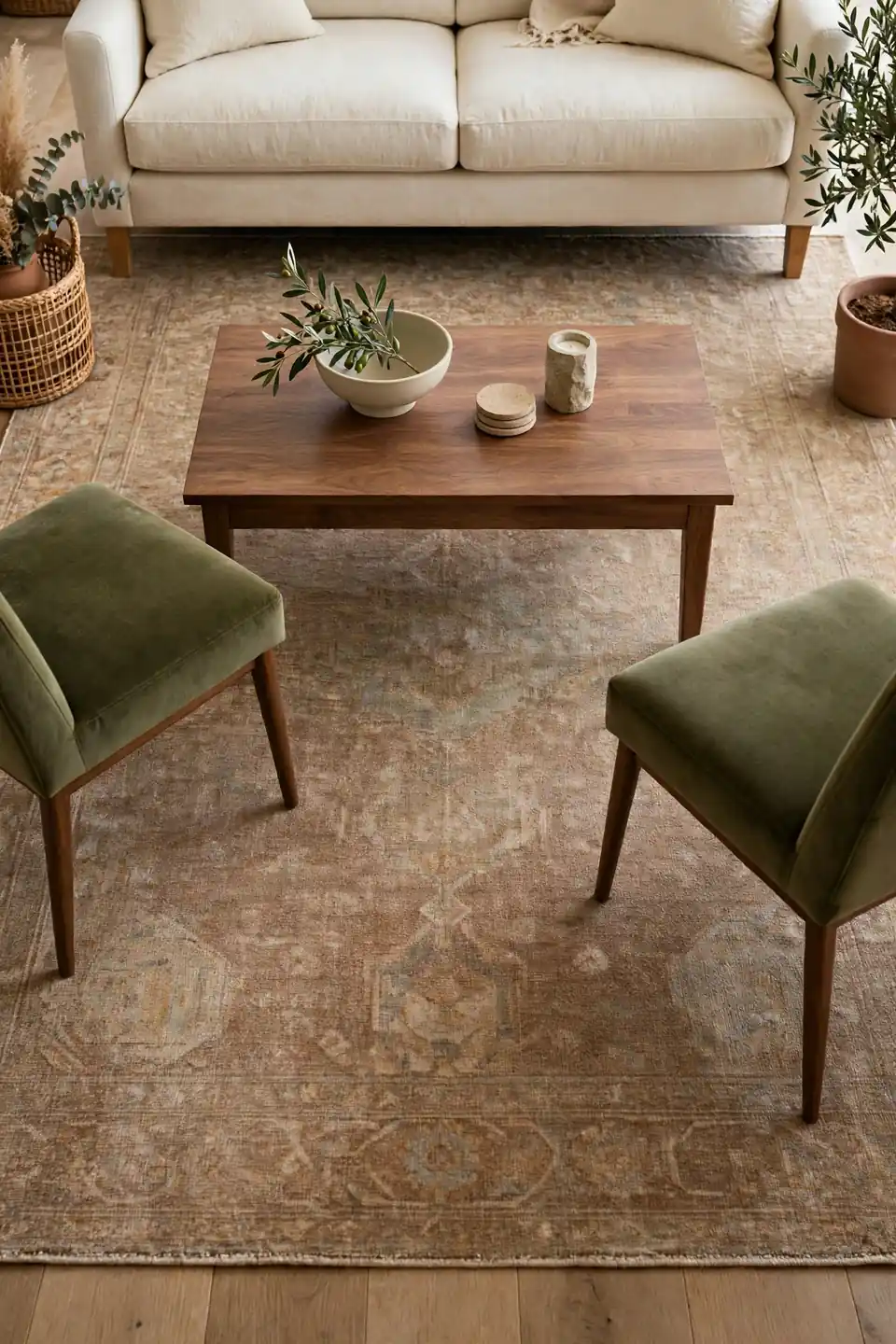
A large taupe rug quiets the floor and gives every other color permission to speak. Sized generously, with the front legs of all seating resting on it, the rug turns separate pieces into one conversation. Flatweave wool in a warm taupe holds up under traffic and hides the evidence gracefully between cleanings.
Pattern belongs in the rug if it appears anywhere, since the floor carries pattern without crowding the eye. A faded vintage style design in taupe, cream, and a whisper of olive ties the palette together underfoot. I’ve seen this work well in many cases where the walls stayed plain, because the rug did the decorating work at ground level.
Olive Throw Blanket Layers
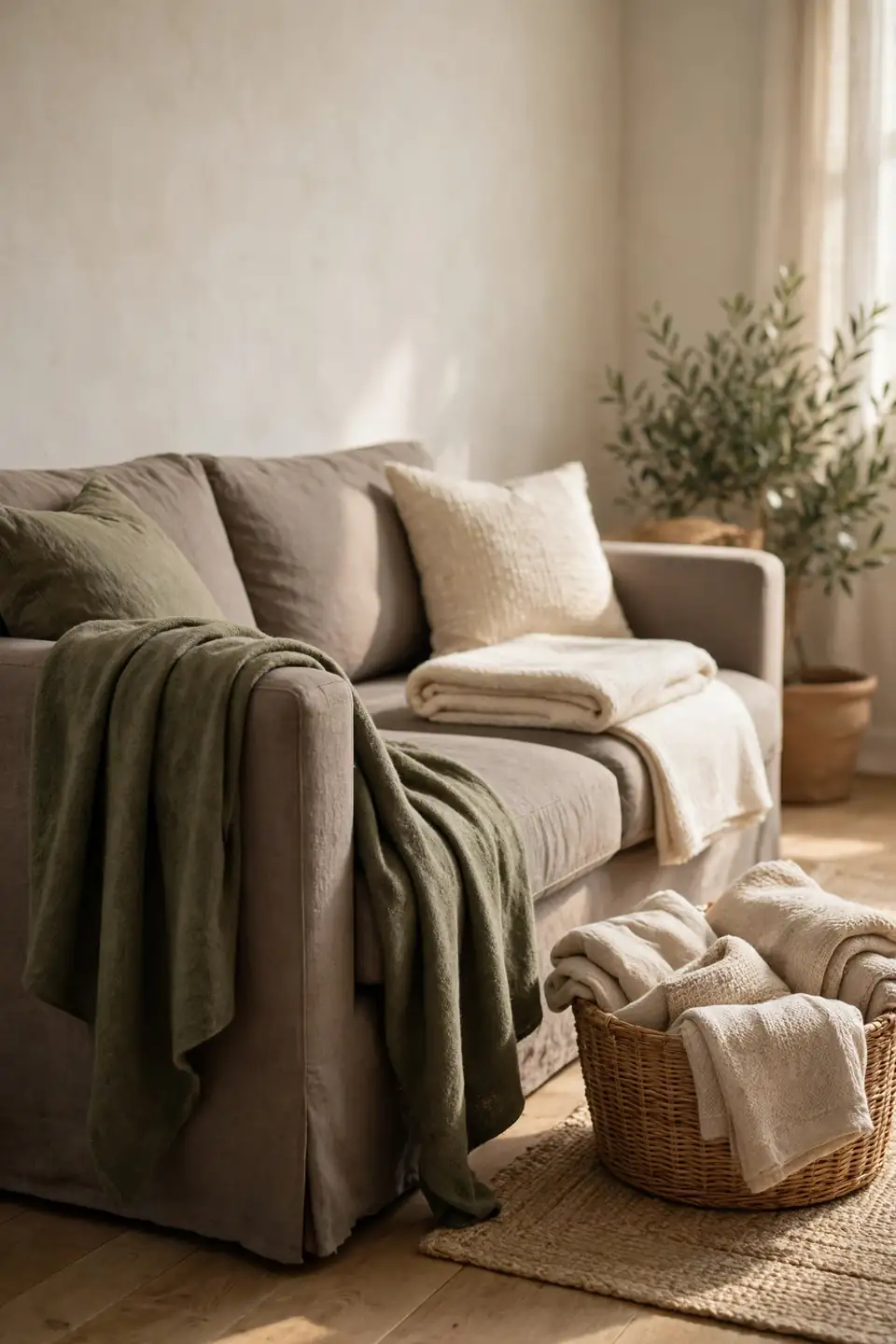
- Fold one olive throw over the arm of the sofa nearest the light, where the color shows first.
- Layer a cream throw opposite it, so the eye travels between green and light.
- Choose open weaves and visible fringe; texture matters more than perfect folds.
- Keep a woven basket by the sofa to hold spare throws instead of piling them high.
Throws are the fastest seasonal change a room gets, swapped in minutes when the light shifts. Drape loosely rather than folding into tight rectangles; a casual fall of fabric reads warm, while stiff geometry reads showroom. One wool throw for winter and one cotton for summer keeps the basket honest all year.
Brass Accents Warm Glow
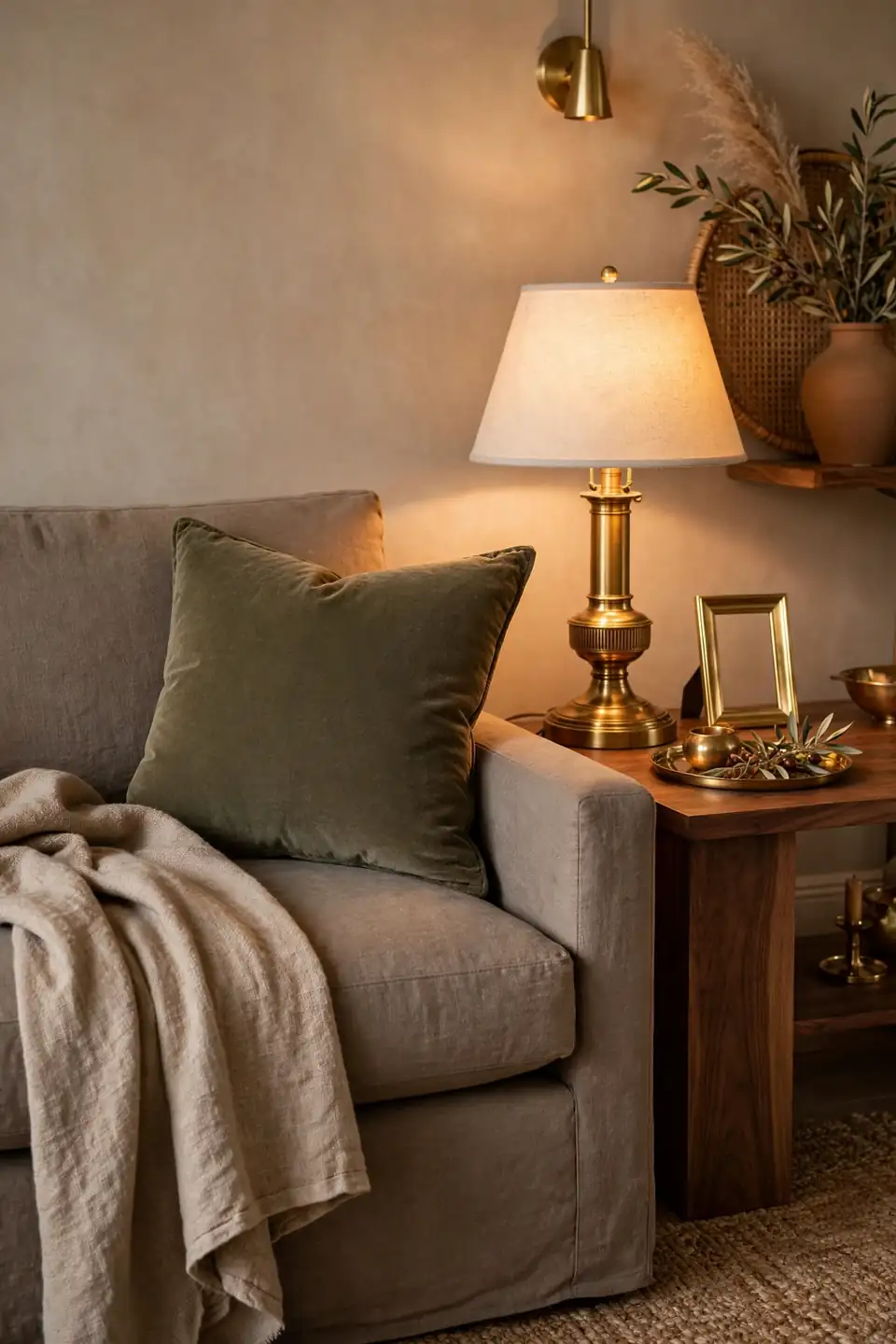
Quick Tip: Repeat brass at least three times across the room, in a lamp, a frame, and a tray, or the metal reads as an accident. Spaced repetition turns a single shiny object into a deliberate thread the eye follows.
Brass earns its place beside olive because both carry warmth and a hint of age. Unlacquered brass deepens slowly and honestly, developing the same lived in patina that makes green feel grown rather than bought. Keep other metals quiet nearby; a room this earthy rarely needs chrome competing for attention at all. Start with the lamp, since warm light on brass doubles the glow.
Taupe Sectional Family Seating
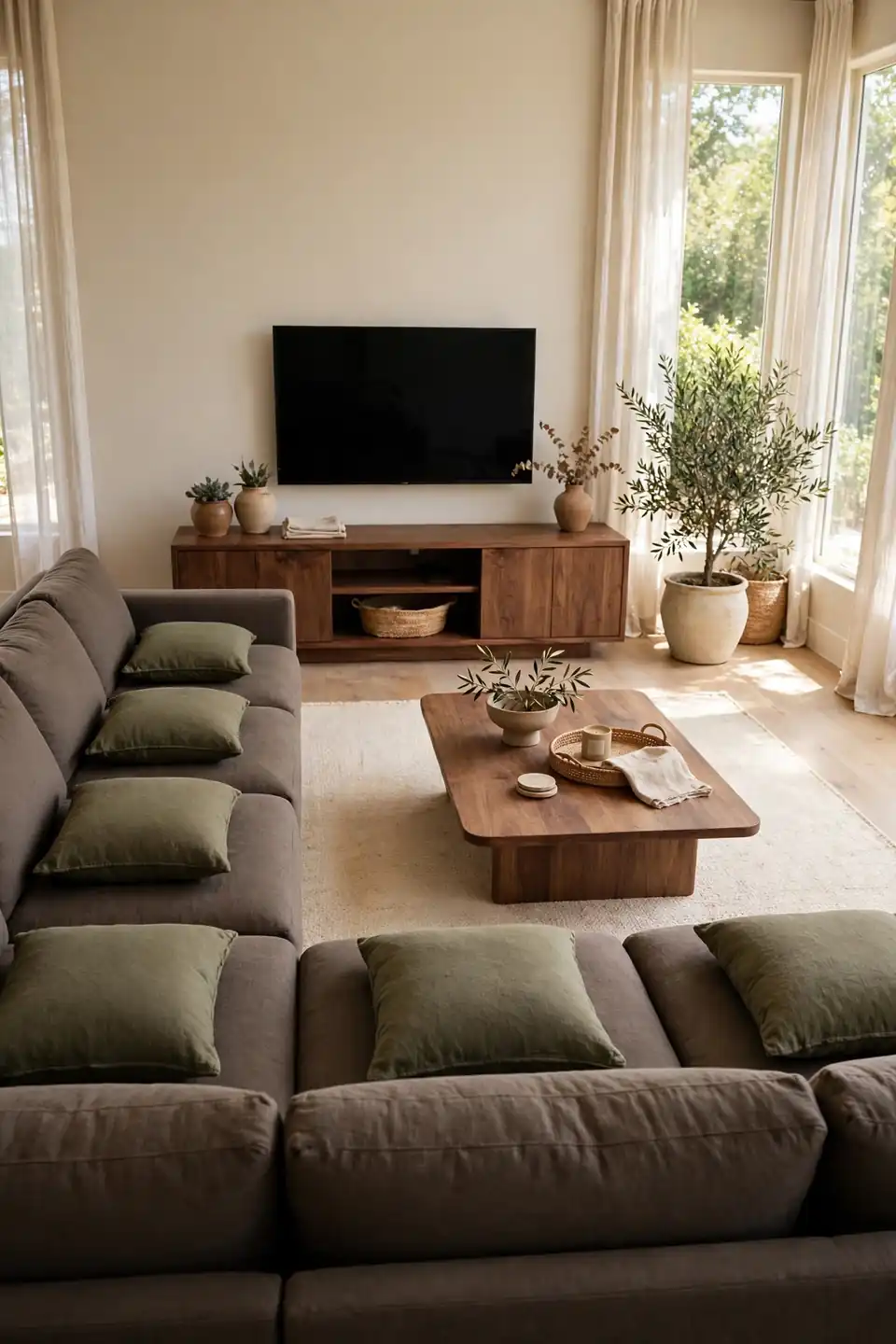
BEFORE: A small loveseat and two stiff chairs meant family evenings scattered across the room, with someone always exiled to a dining chair. The layout served the furniture, not the people.
AFTER: A deep taupe sectional in an L shape gathered everyone into one shared sprawl, with the olive cushions marking each person’s claimed corner. Movie night stopped needing extra chairs entirely.
Family seating is where warm taupe and olive living room ideas prove themselves, because the sectional handles daily wear while the green cushions carry the style. Choose performance fabric in a mid taupe, dark enough to forgive spills, light enough to keep the room airy. The chaise end becomes prime real estate within a week, so rotate who claims it before arguments start.
Olive Leather Ottoman Centerpiece
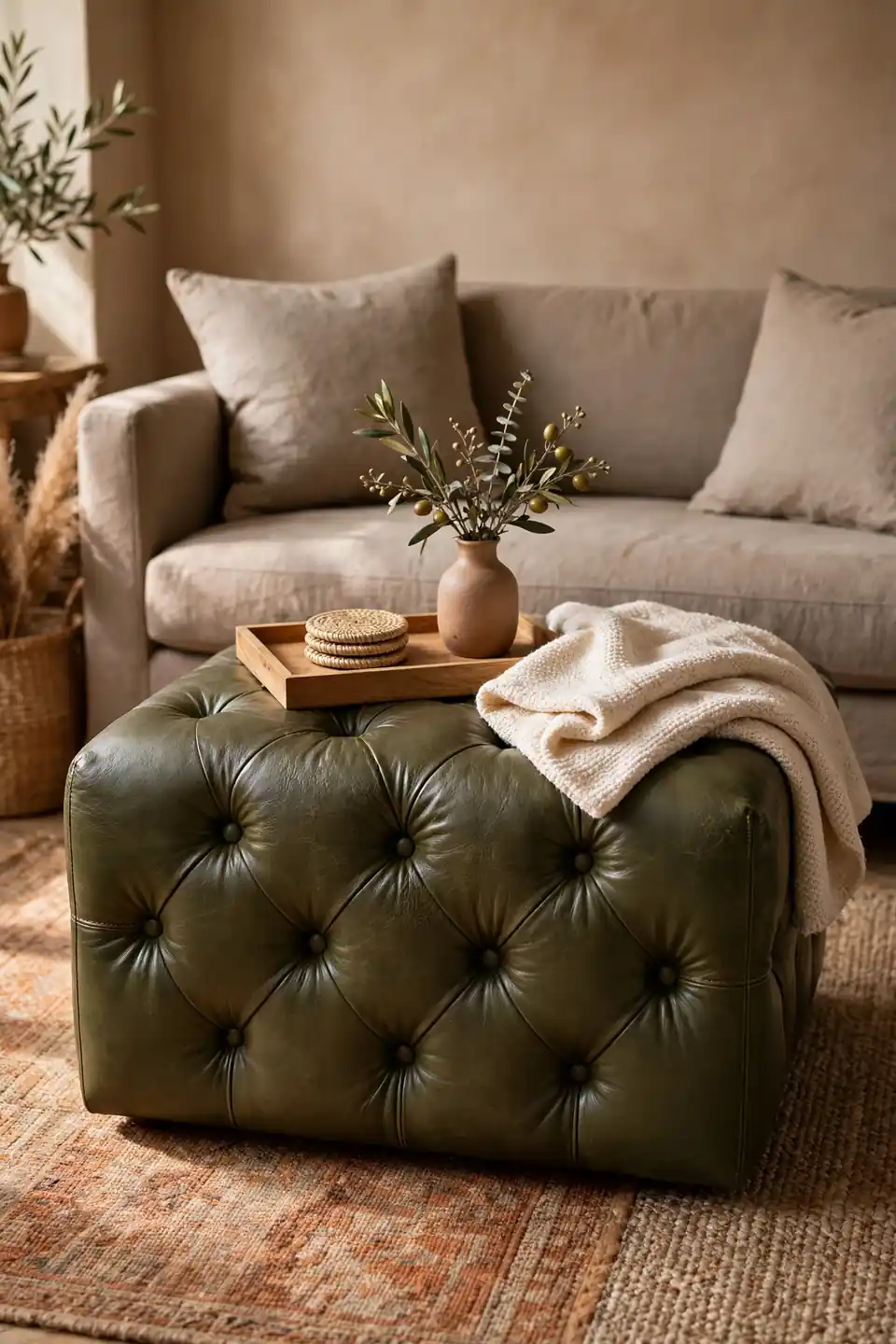
- Choose an olive leather ottoman about two thirds the length of the sofa seat.
- Leave fourteen to eighteen inches between ottoman and seating on every side for legs and passing feet.
- Top it with a wooden tray that corrals remotes, coasters, and a small vase.
- Rest a folded cream throw on one corner so the leather softens at the edges.
Leather brings a third texture into the taupe and olive conversation, smoother than linen and warmer than stone. Its surface wipes clean, shrugs off heels used as footrests, and develops a patina that suits the earthy palette better each year. An ottoman also moves where a table cannot, serving as extra seating when the room fills.
Taupe And Olive Patterns
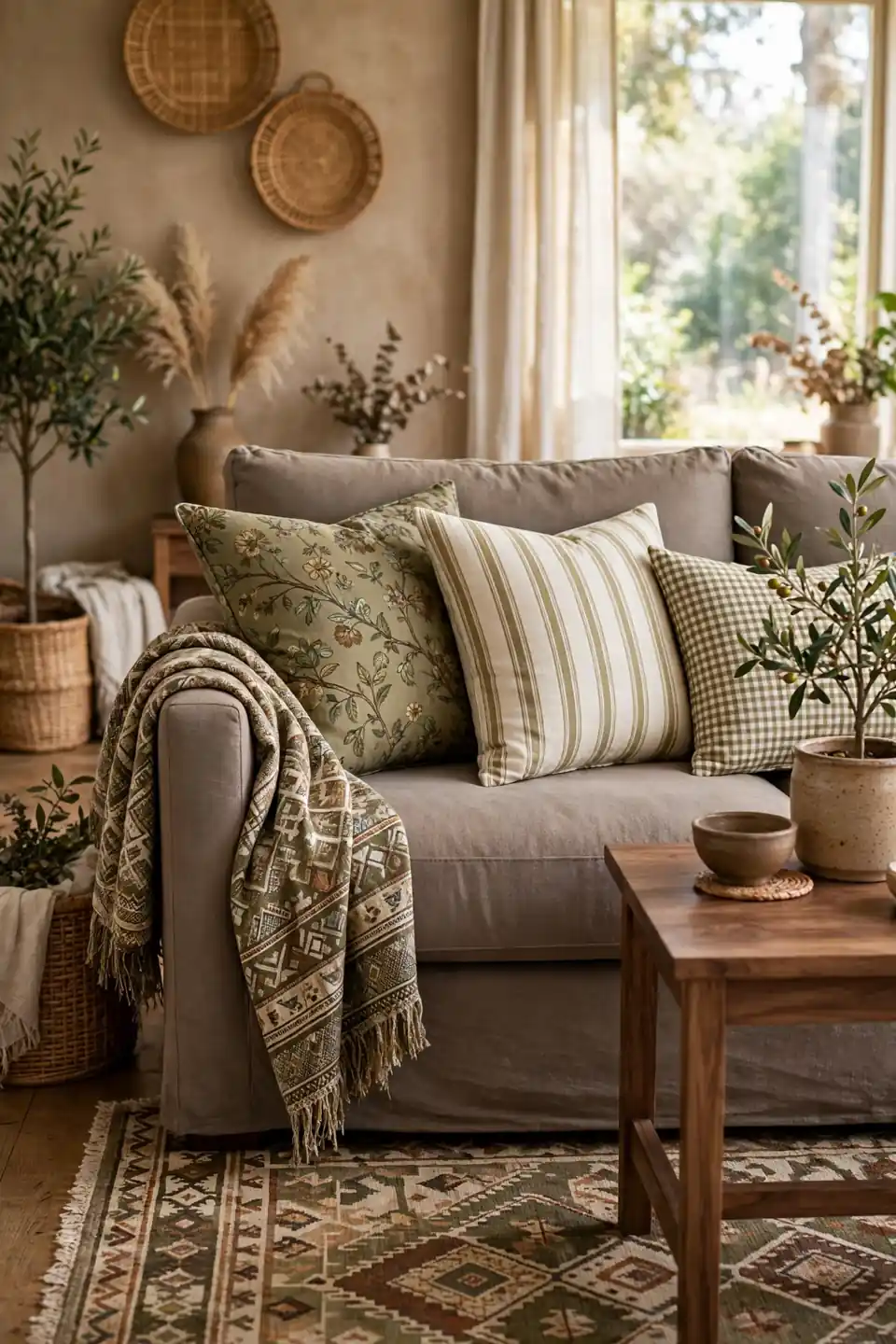
| Option | One Pattern Only | Pattern Mix |
|---|---|---|
| Feel | Safe, calm, very tidy | Layered, lively, collected |
| Best Mix | One floral or stripe | Floral plus stripe plus check |
| Rule | Keep colors inside the palette | Repeat each color twice or more |
Pattern scares people off an otherwise calm palette, yet pattern is what stops taupe and olive from reading as a showroom set. Keep every print inside the two colors plus cream, and vary the scale: one large floral, one medium stripe, one small check. Stand at the doorway and squint; if one print shouts louder than the rest, swap its scale down until the three hum together.
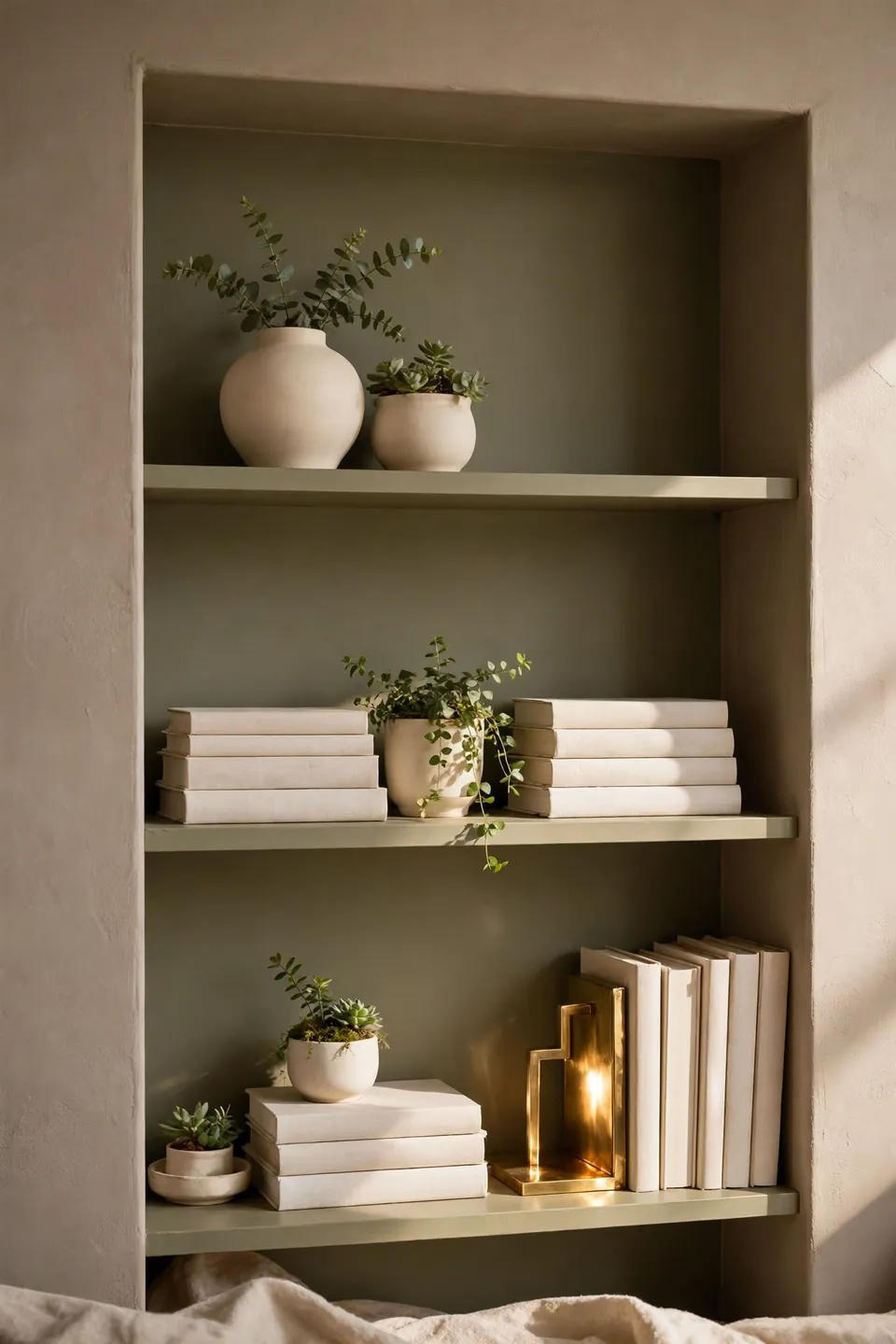
Olive Bookshelf Styling
Do:
- Paint the back panel of shelves olive so books and ceramics sit inside the color.
- Group objects in threes, mixing one plant into every second shelf.
- Lay some books flat with a small object resting on top.
Don’t:
- Line every shelf edge to edge with spines; the wall of books swallows the color.
- Use bright white shelving against olive backs; the contrast turns harsh.
- Fill every gap; empty space is what makes styled shelves look intentional.
Styled shelves carry the palette vertically, lifting olive to eye level where cushions cannot reach. Leave a third of each shelf empty, and rest one framed print against the green back panel for depth. The shelves read as part of the room’s design rather than storage that happens to be visible.
Cream Layers Lighten Taupe
Cost: Low, textiles and paint samples only
Time: A single afternoon of swapping layers
Skill Level: Beginner, no tools required
Best For: Dark rooms and north facing windows
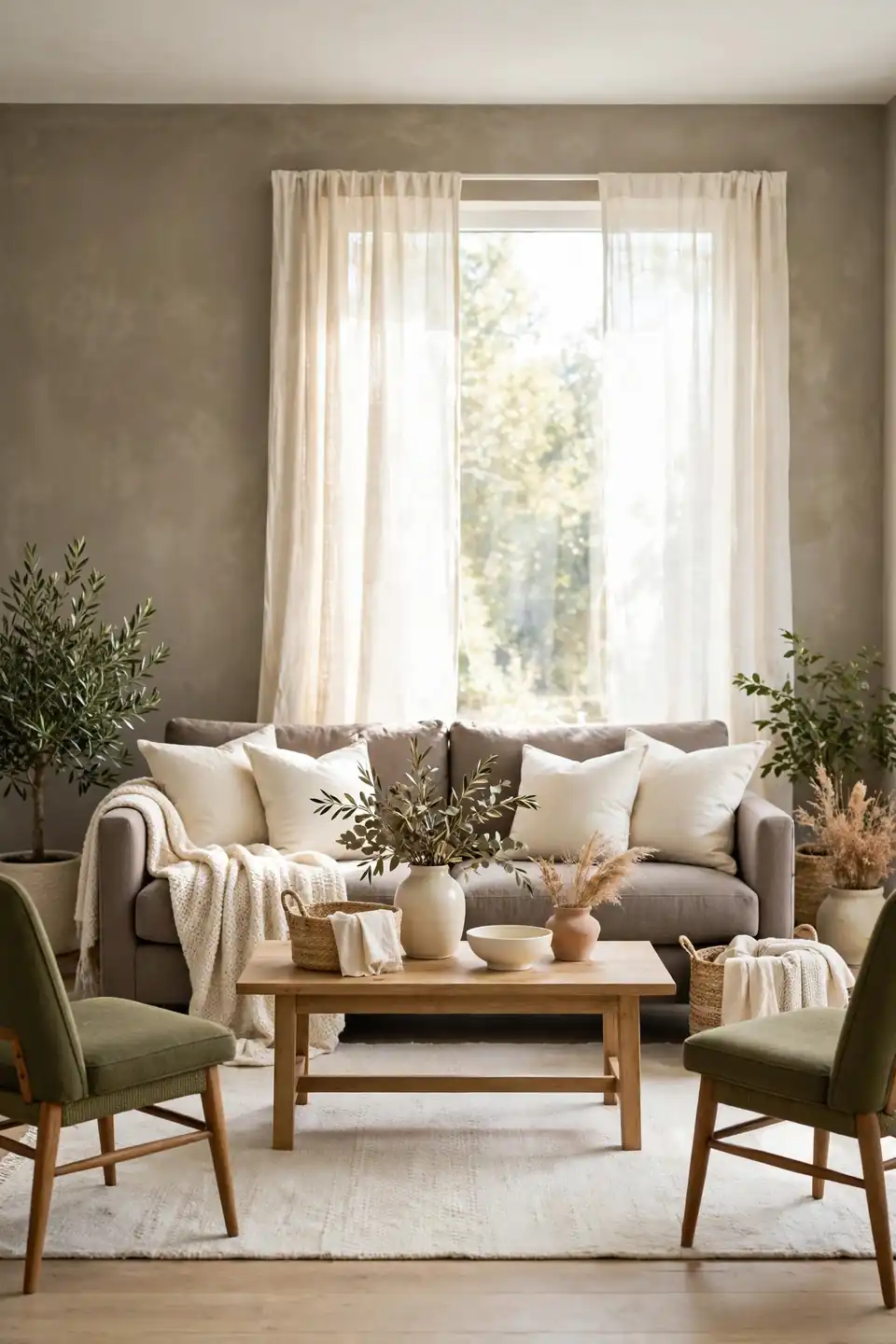
Taupe and olive both deepen a room, so cream acts as the breathing space between them. Lay cream in the largest soft pieces first: the rug, one throw, and the lightest cushions against the sofa back. The green then reads greener and the taupe warmer, because cream gives both a bright neighbor to lean against. In my experience, rooms that feel heavy in this palette are almost never short on color; they are short on cream. Add it in matte textures, linen, wool, and unglazed ceramic, so the lightness arrives without shine or glare.
Olive Armchair Reading Corner
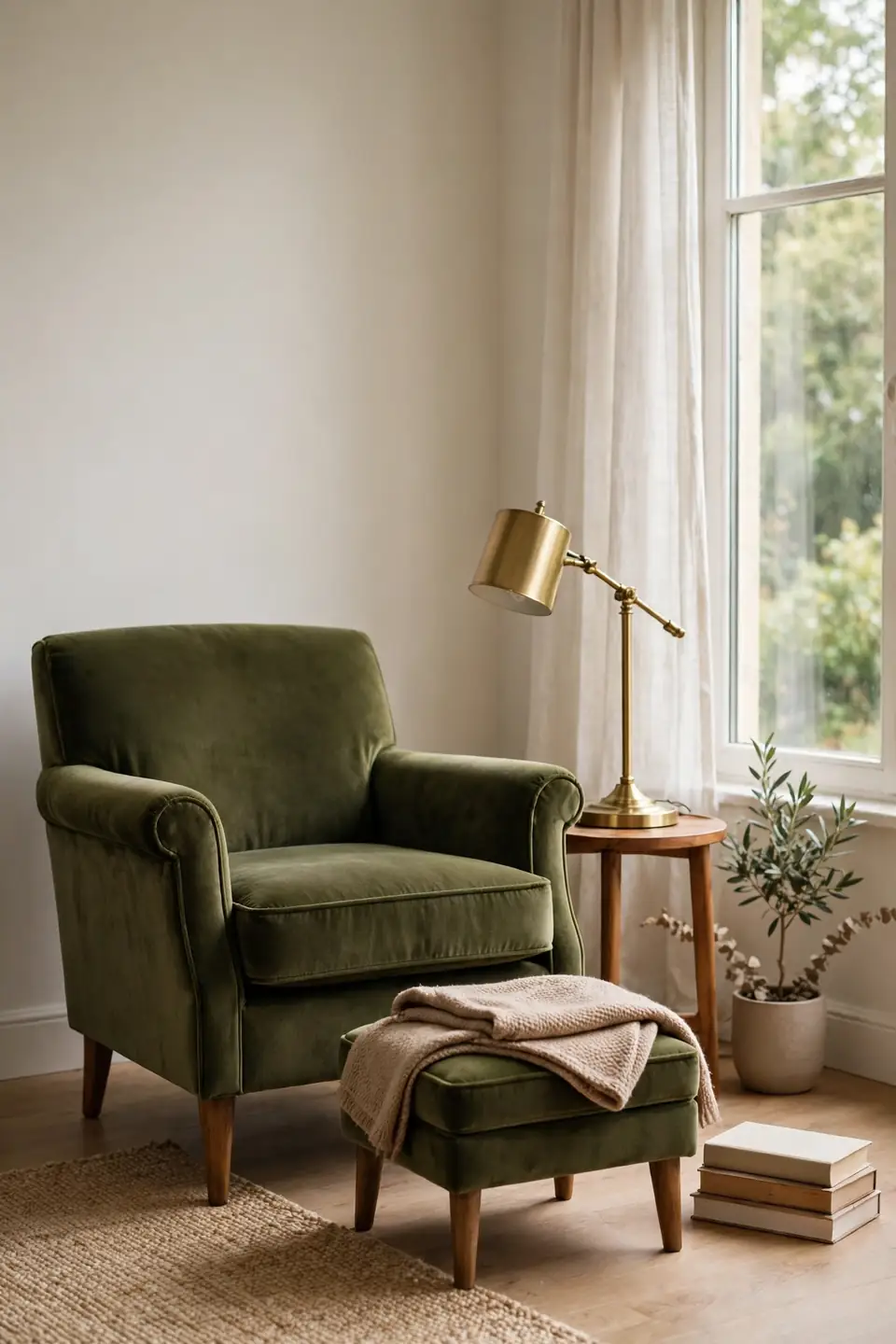
Every living room deserves one seat that belongs to a single person and a good book. An olive armchair claims that role beautifully, its green depth marking the corner as a destination rather than leftover space. Angle it toward the window at forty five degrees, close enough to borrow the daylight and far enough to feel private.
Complete the corner with three things only: a small table for a cup, a lamp at shoulder height, and a footstool in worn leather or taupe weave. A folded throw over the chair back waits for evening chapters. Keep the stack of books short and current, since a corner that collects clutter stops being a retreat and becomes another surface to tidy.
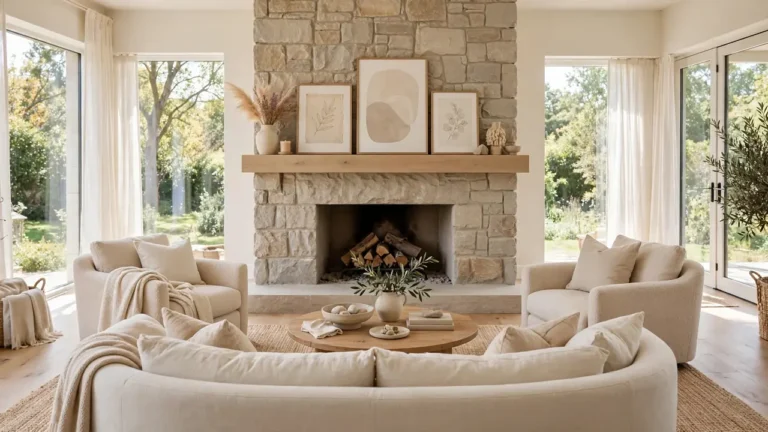
Taupe Stone Fireplace Surround
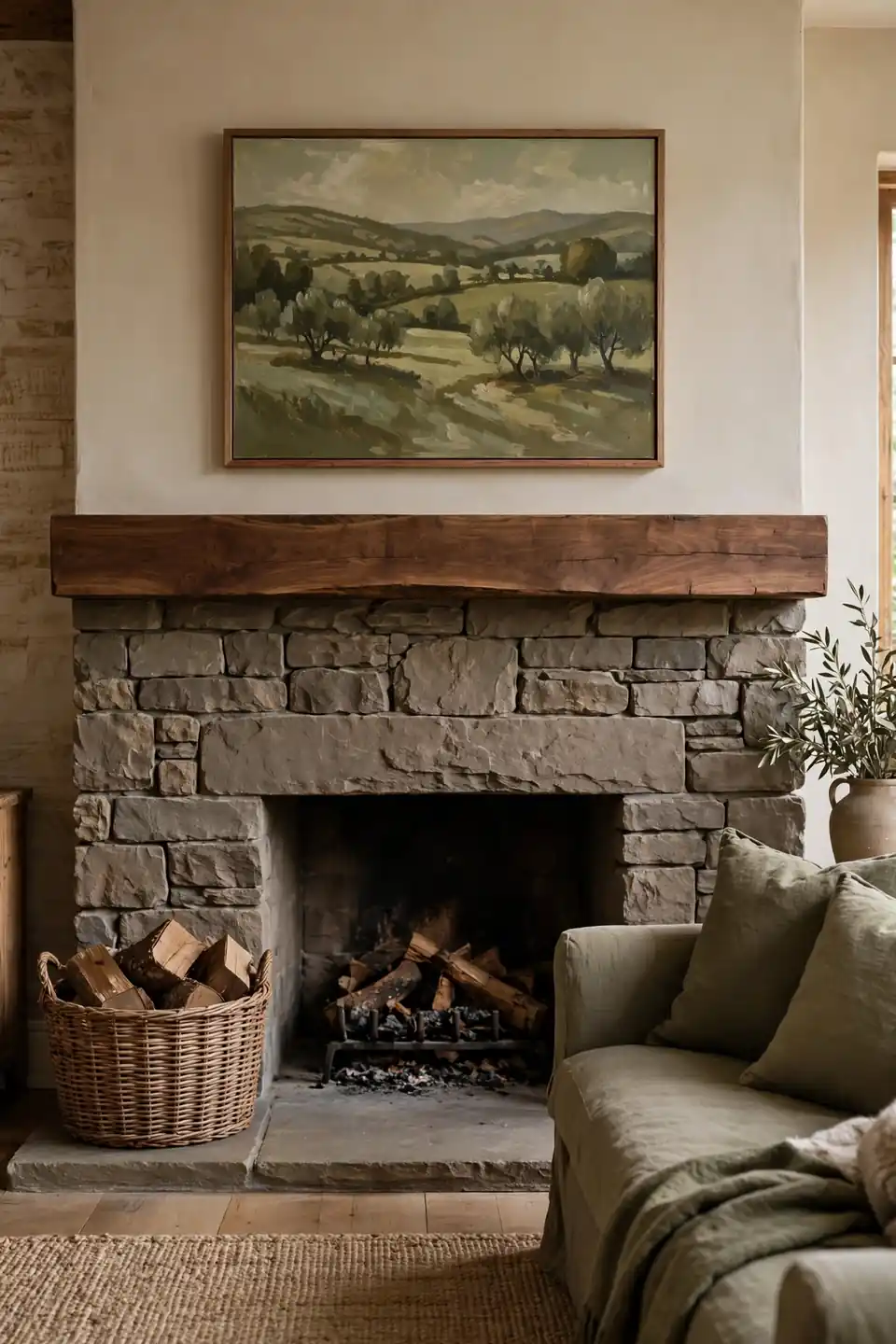
- Face the surround in rough taupe stone or limewash brick for texture the room can feel.
- Set a chunky walnut mantel shelf across it, deep enough for candles and a leaning print.
- Stack firewood in a woven basket on one side and leave the other side bare.
- Hang one large olive toned landscape above the mantel instead of a mirror.
Stone and timber belong to the same old houses, and a taupe surround pairs naturally with the decorative ceiling beam living room ideas that warm the ceiling above it. Keep the hearth styling sparse through summer, when the empty firebox can hold a cluster of pillar candles instead of logs. The surround then anchors the room in every season, lit or not.
Olive Cushion Color Ratios
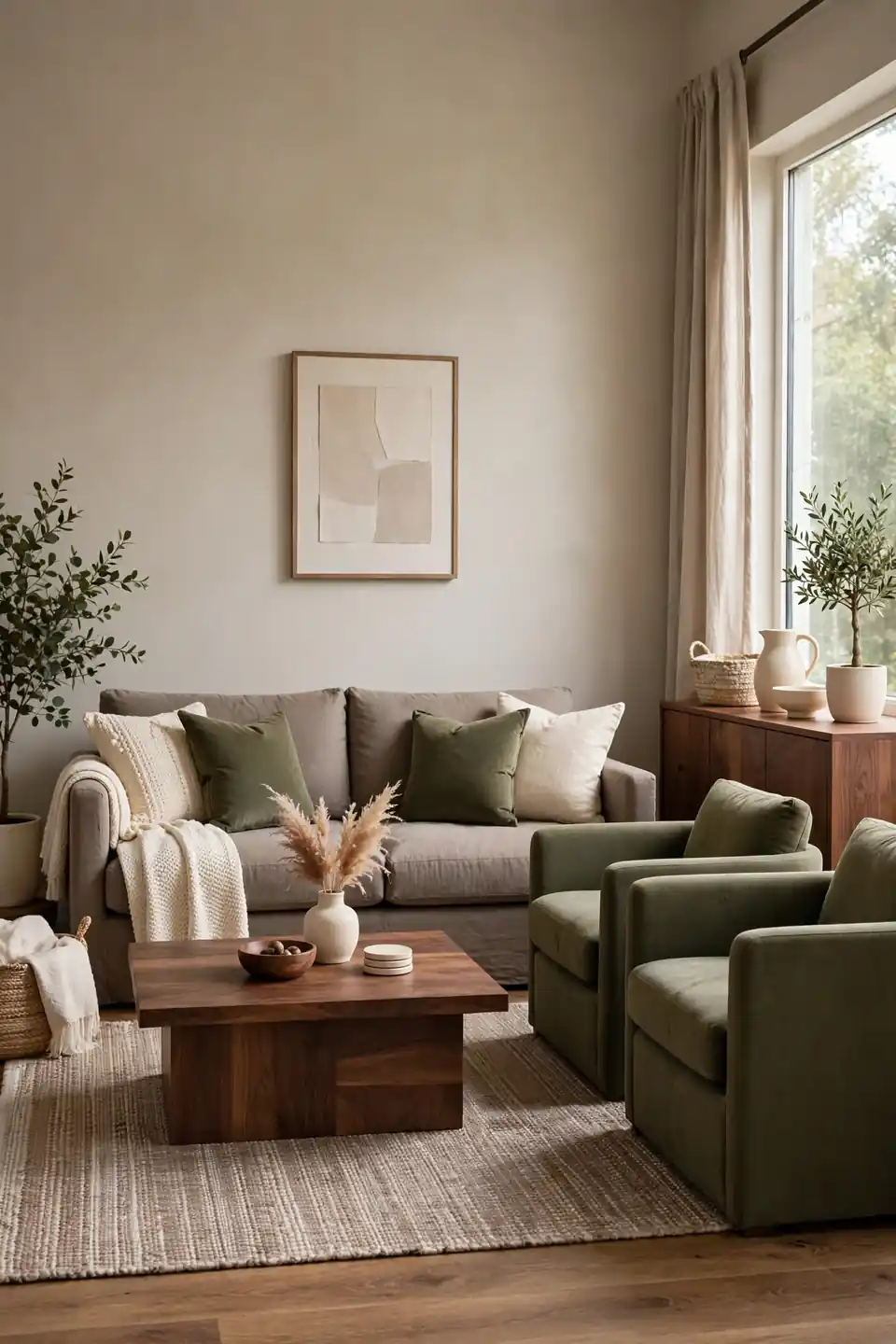
Quick Tip: Work to a rough ratio of sixty percent taupe, thirty percent olive, and ten percent cream across the room’s fabrics. The numbers stop the green from either vanishing or taking over, and they make shopping decisions almost automatic.
Apply the ratio room by room rather than cushion by cushion, since a mostly taupe sofa balances an olive chair across the space. Photograph the room in black and white on a phone; the values should read mostly mid, then dark, then light. If the photo looks flat, the ratio has drifted and one green piece usually restores the order.
Warm Lighting Evening Glow
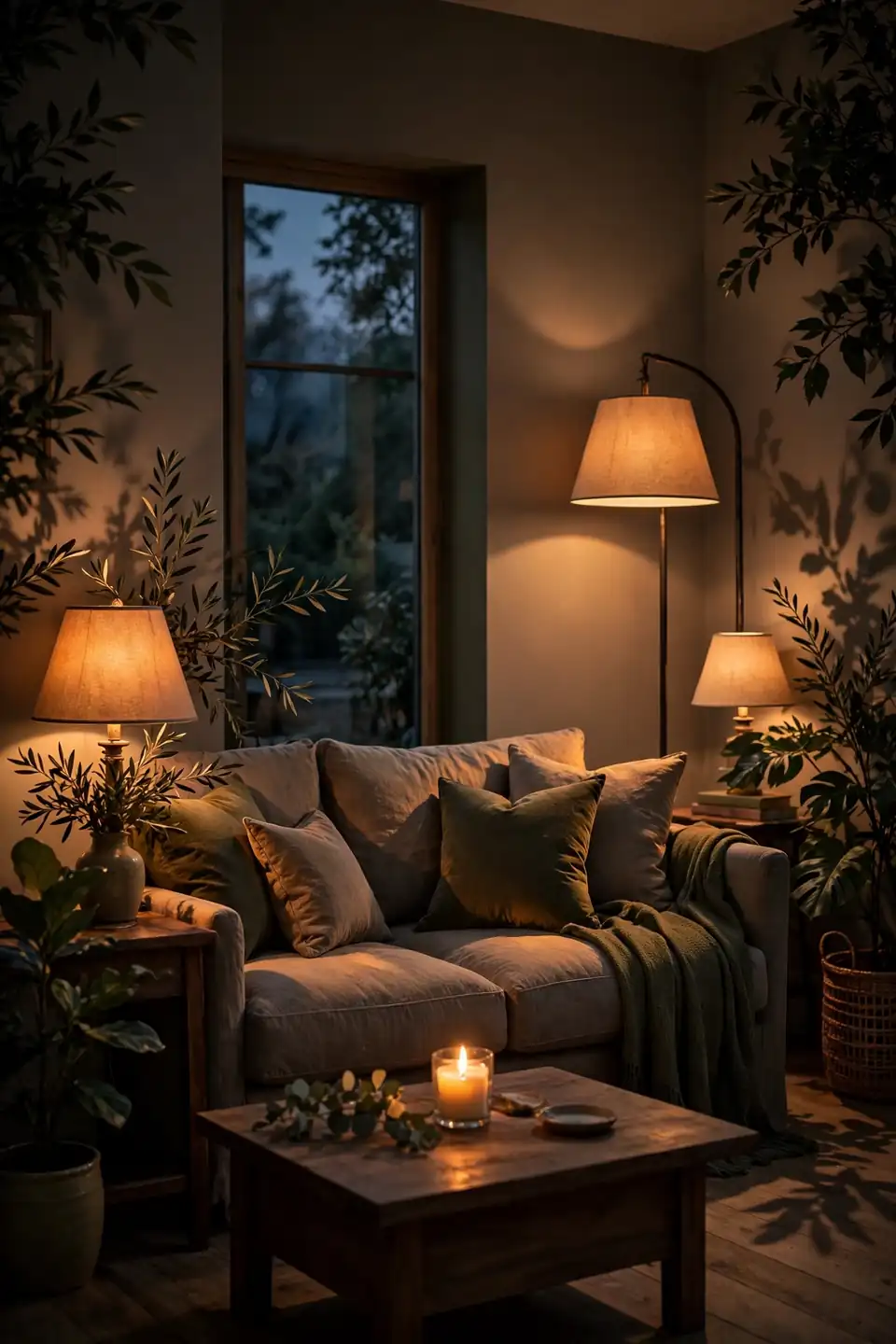
BEFORE: One bright ceiling light flattened the room every evening, bleaching the taupe to grey and the olive to black. The colors that looked so rich at noon simply vanished after dinner.
AFTER: Three low lamps with warm bulbs now pool light at seat level, and the taupe glows amber while the olive turns deep and leafy. The room feels half again as warm without touching the thermostat.
Light this palette from below eye level wherever possible, since overhead light greys both colors. Choose bulbs in the warm range and put the main lamps on dimmers, so the room can settle as the evening does. One candle or lantern on the table finishes the glow honestly, with real flame doing what no bulb fully can.
Olive Artwork Gallery Wall

- Choose art with olive, sage, and deep green passages, such as landscapes, botanicals, and leaf studies.
- Lay the arrangement on the floor first, largest piece off center, and photograph it before hanging anything.
- Hang the anchor piece at eye level, then build outward keeping gaps near two inches.
- Mix frame finishes, walnut, brass, and black, so the wall feels gathered over time.
A gallery wall lets olive climb the room in small doses, echoing the cushions below without another stick of green furniture. Keep mats cream and generous, since pale borders stop busy art from crowding the taupe wall behind it. One abstract piece among the landscapes keeps the arrangement awake and stops the theme from turning literal.
Taupe Versus Olive Walls
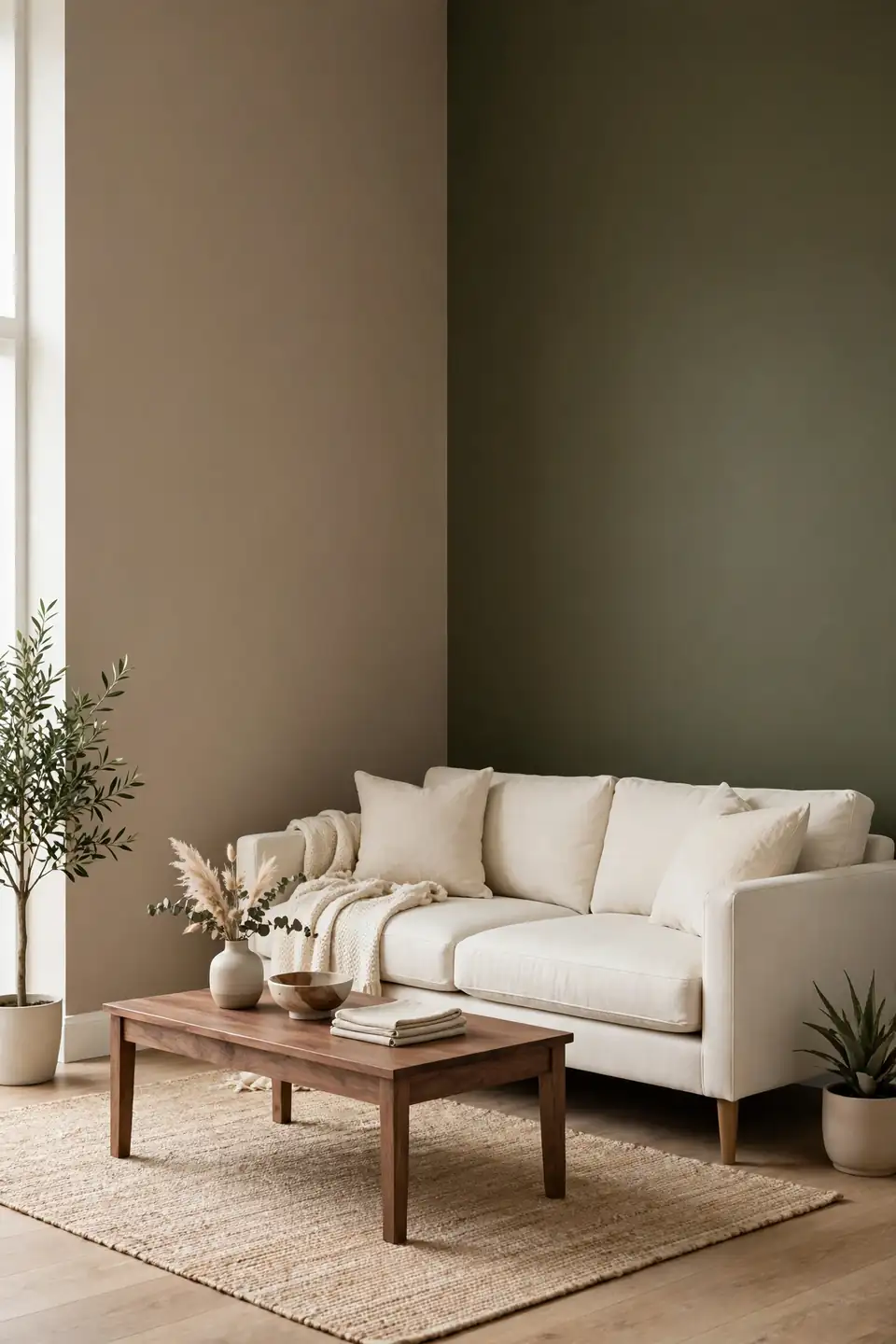
| Option | Taupe Walls | Olive Walls |
|---|---|---|
| Mood | Restful backdrop, easy to live with | Enveloping, dramatic, cocoon like |
| Light Needs | Works in most light levels | Needs good daylight or lamps |
| Furniture Pairing | Olive sofas and chairs shine | Taupe and cream seating glows |
Neither wall wins outright; the room’s light decides. Bright south facing rooms carry olive walls with ease, while dim north facing rooms usually thank you for taupe with olive kept to furniture and art. Compromise sits happily in between: taupe on three walls and olive on the one behind the sofa, where green does the most good and the least harm after dark.
Natural Textures Woven Baskets
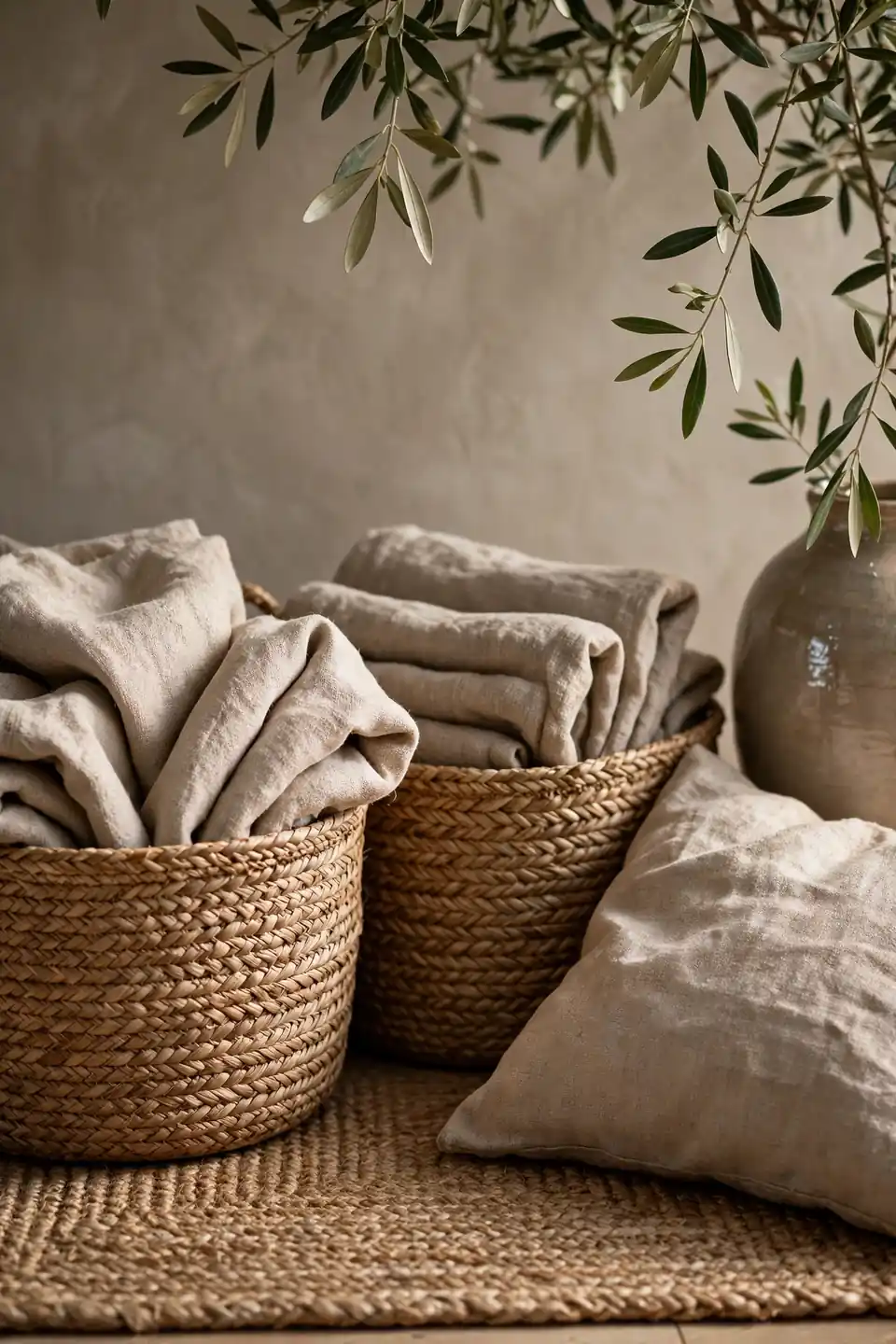
Do:
- Layer jute, seagrass, wool, and raw linen so the colors gain depth.
- Store blankets and magazines in woven baskets beside the seating.
- Mix one smooth surface, glazed ceramic or glass, into every texture group.
Don’t:
- Let every surface go rough; without contrast the room reads one note.
- Buy plastic storage that pretends to be wicker; the shine gives it away.
- Skip the rug pad under natural fiber rugs; they creep and curl at the corners.
Texture is the quiet half of this palette, since taupe and olive are mid tones that need surface interest to stay awake. If everything feels the same, the room photographs flat no matter how right the colors are. Natural fibers also age gracefully, softening rather than peeling or cracking with the years.
Olive Sofa Bold Statement

Cost: Medium to high, the sofa carries the budget
Time: One delivery day, styling in an afternoon
Skill Level: Beginner, the piece does the work
Best For: Large rooms with calm taupe walls
An olive sofa reverses the usual recipe and rewards the brave, turning the largest piece of furniture into the room’s green heart. Keep everything around it quiet: taupe walls, a cream rug, walnut wood, and cushions that borrow the sofa’s green only in pattern. Velvet shows olive at its richest, though a washed linen slipcover keeps the statement relaxed for family rooms. Commit fully once it arrives; half measures around a bold sofa look like doubt, and this palette forgives confidence far more readily than hesitation.
Conclusion
Taupe gives the calm, olive gives the life, and together they ask very little from the rest of the room. These warm taupe and olive living room ideas work in stages: settle the big neutrals first, then add green in cushions, plants, and art until the balance feels right from the doorway. Save this pin for your next slow weekend project, try one corner at a time, and share the result with someone who loves an earthy palette. I’ve noticed rooms in these tones get used more, because nobody feels they have to keep them precious.