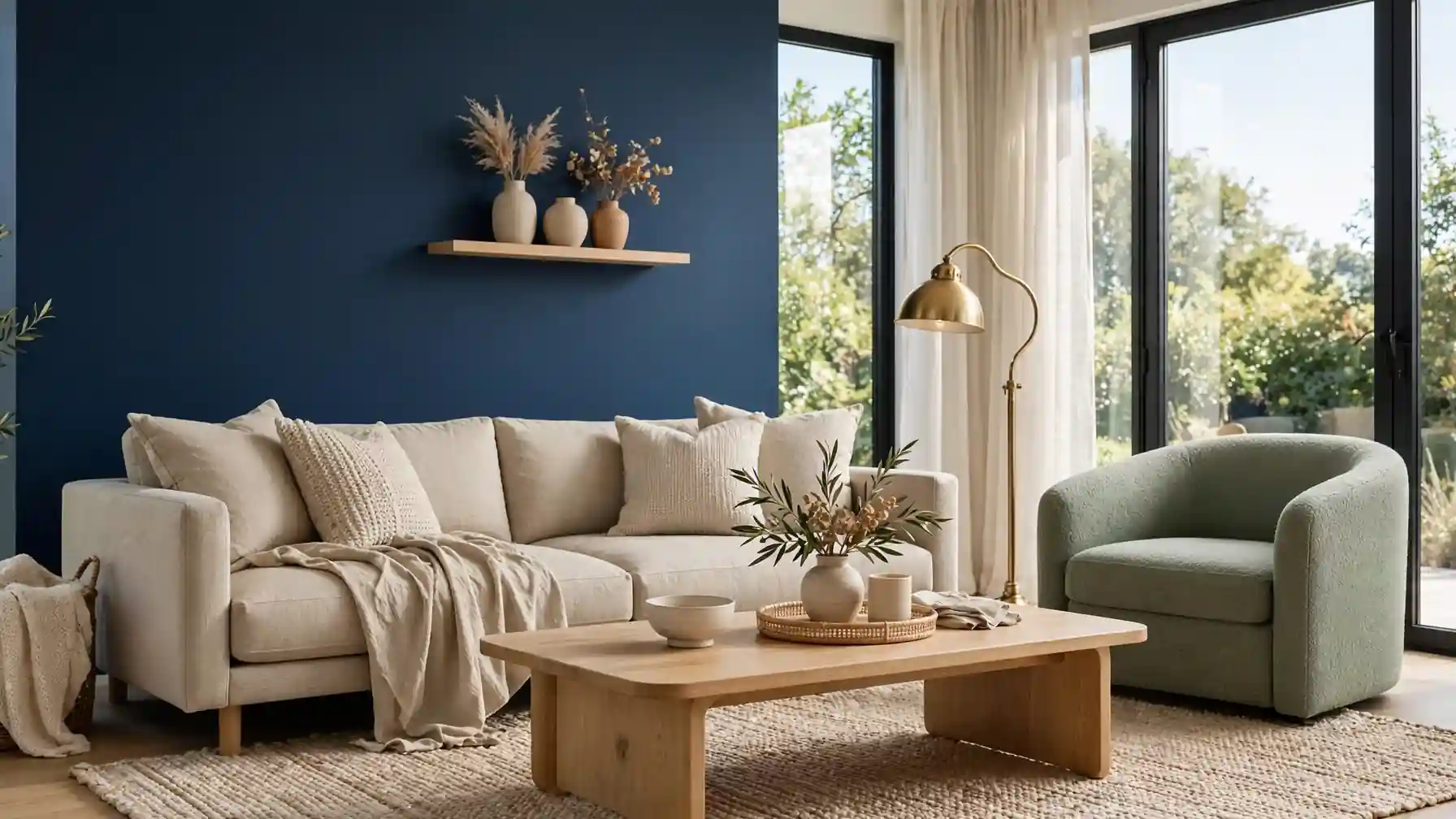
23 Living Room Accent Wall Ideas for a Stunning Focal Point
A single wall can change how your whole room feels, and living room accent wall ideas give you that power without repainting every surface. A focused burst of color, texture, or pattern pulls the eye exactly where you want it, whether that is the sofa zone or a quiet reading corner. You do not need a big budget or a contractor to pull it off.
Below you will find 23 fresh ways to build that focal point, from deep paint colors to wood slats and soft limewash. Each idea works in real homes and photographs beautifully for Pinterest. If you love carving out small retreats, pair one of these walls with inspiration from reading nook ideas and watch an ordinary corner turn into the spot everyone fights over.
Navy Blue Statements
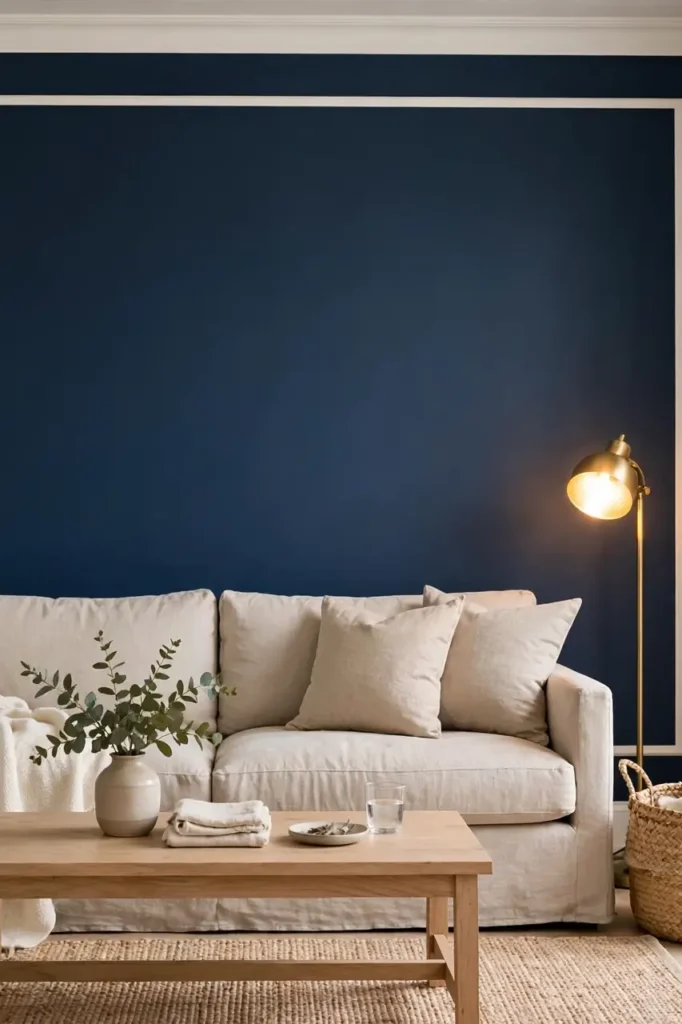
Deep navy pulls a living room together like nothing else I have tried. One painted wall behind the sofa creates instant depth, and the color makes nearby whites and woods look richer by contrast. In my experience, north-facing rooms benefit most because navy adds the coziness that flat light can wash away. Keep trim crisp white so the edge reads sharp and clean.
Pair it with brass lamps or woven baskets to warm the cool tone. I have seen this work well in many cases where renters need big impact on a small budget, since one gallon covers a single wall. Finish with two coats of eggshell paint for a soft glow that hides roller marks.
Warm Wood Slats
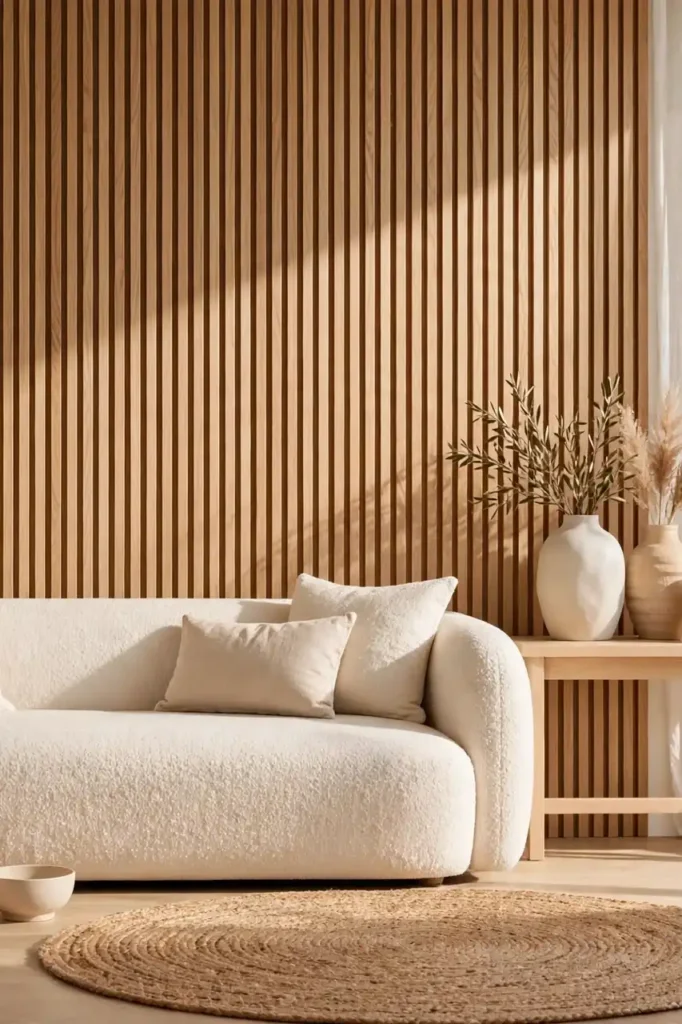
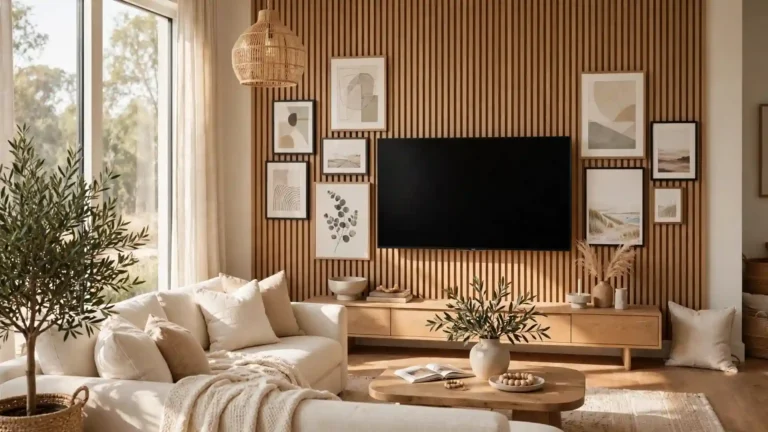
Vertical wood slats bring warmth and rhythm to a plain room in one weekend. Here is what makes them work so well:
- They add texture without paint, which suits renters who cannot commit to color.
- Slim oak or pine strips feel modern, while wider reclaimed boards read rustic.
- The shadow gaps between slats create depth that flat paint cannot match.
- They hide uneven drywall and old patch marks behind clean lines.
- Stained or clear-coated, they pair with almost any sofa fabric.
Mount the slats on thin battens so air flows behind them and the wall stays dry. I have noticed that staining before installation saves hours of taping, and a satin finish keeps dust from settling into the grain.
Soft Limewash Layers
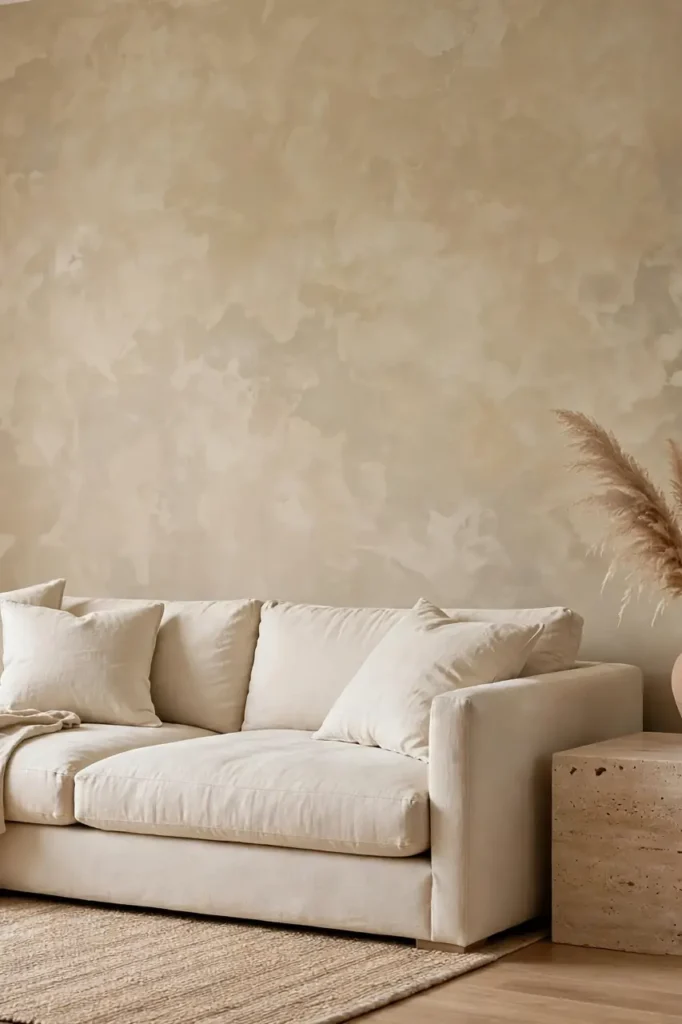
Limewash gives walls a cloudy, old-world softness that flat paint never achieves. The layered brushwork catches light differently across the day, so the wall feels alive without any pattern at all.
Quick Tip: Apply limewash with a large block brush in loose crisscross strokes, and never try to make it even. The charm lives in the variation. Work in small sections and step back often, because the color dries lighter than it looks wet. Two coats usually build the depth you want.
Seal it with a matte topcoat if the wall sits near a busy hallway, since raw limewash marks easily. I have seen this finish rescue dull rental living rooms where bold color felt too risky.
Bold Geometric Paint
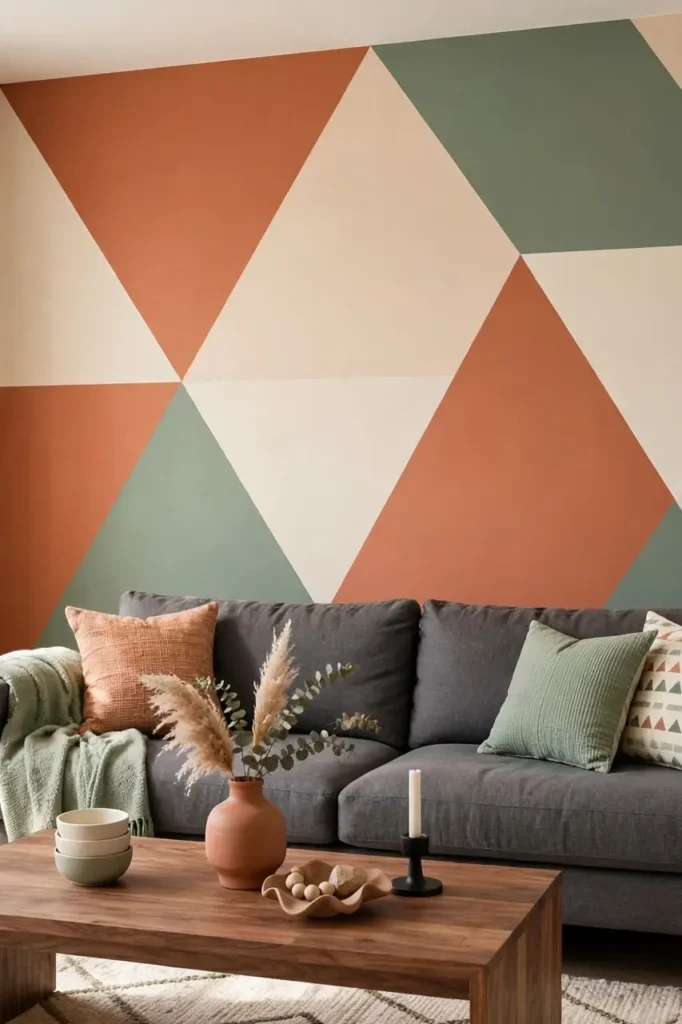
BEFORE: The wall behind the TV sat plain and forgettable, a blank expanse that made the whole room feel unfinished. Guests never looked twice at it, and the space lacked any sense of personality.
AFTER: Crisp terracotta and cream triangles now frame the screen like art, and the room suddenly has a pulse. Painting a living room accent wall with simple shapes costs less than one framed print and takes a single afternoon.
Sketch the layout on paper first, then map it with painter’s tape and a level. Two colors are plenty for a first attempt, and matte paint hides tape bleed far better than gloss.
Shiplap Cottage Charm
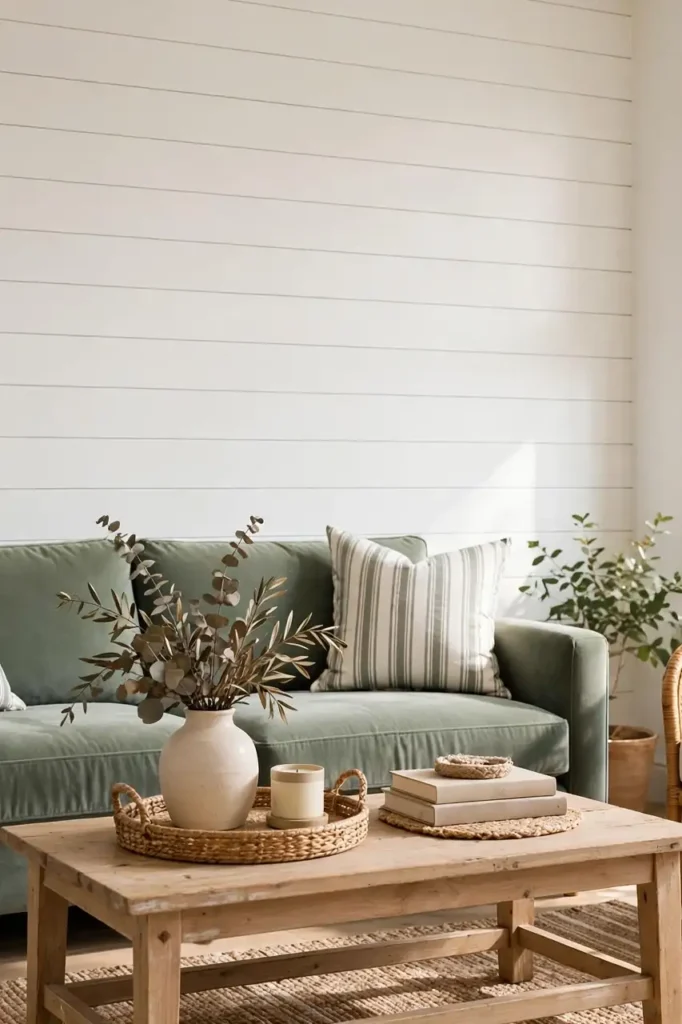
Shiplap boards bring instant cottage charm to a living room wall. Follow these steps for a clean result:
- Measure the wall and mark stud locations so every board lands on solid wood.
- Start at the bottom with a level line, leaving a small gap at the floor for trim.
- Nail each board through the tongue, keeping the reveal lines even as you climb.
- Caulk the edges and fill nail holes before the final coat of paint.
- Finish with semi-gloss white for a crisp look that wipes clean.
I have tried peel-and-stick shiplap panels in rentals, and they deliver the same look without nails. Either way, paint the wall behind the boards dark first so no gaps show through.
Floral Mural Dreams
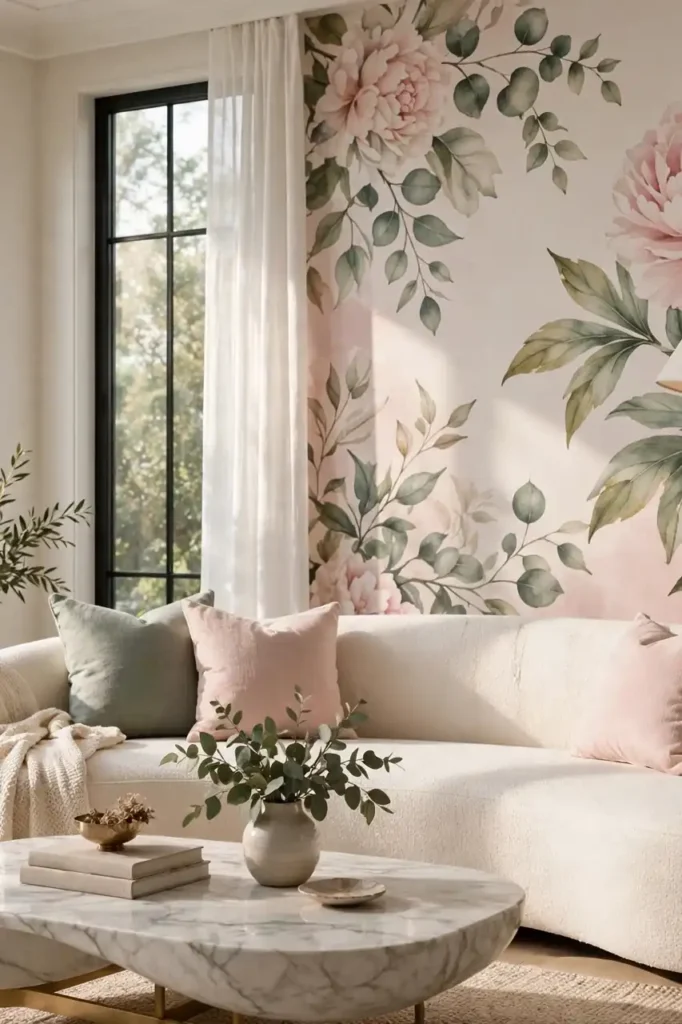
A floral mural turns one wall into a permanent piece of art, and the right scale makes all the difference between dreamy and overwhelming. Large-scale blooms feel modern and calm, while the style suits romantic, cottage, and eclectic rooms alike. Compare your options before you commit:
| Option | Best For |
|---|---|
| Peel-and-stick mural | Renters and quick changes |
| Hand-painted mural | One-of-a-kind custom look |
| Framed mural panels | Statement without wall damage |
Scale matters more than color here. Oversized blooms read modern and calm, while tiny busy prints can overwhelm a small room. I have noticed that murals with plenty of negative space blend into decor changes for years. Hang a simple linen sofa or light wood bench in front so the mural breathes, and keep nearby patterns quiet to let the flowers lead.
Charming living room accent wall
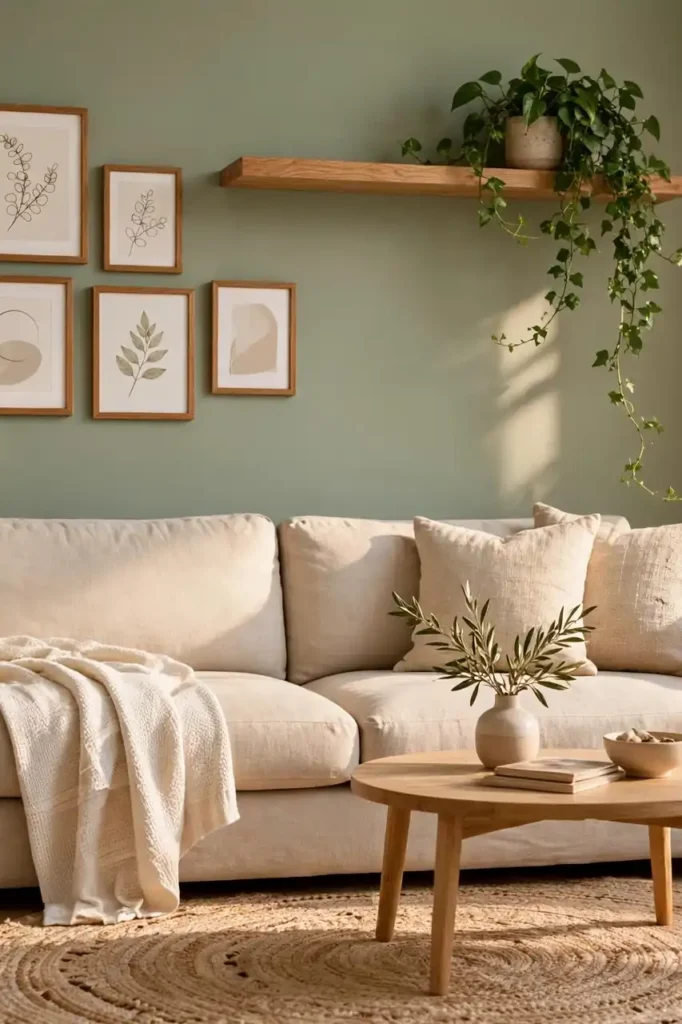
Sometimes the prettiest wall is the simplest one, painted in a color you genuinely love. Here is how to keep it charming instead of flat:
DO:
- Choose a color pulled from your rug or art so the wall feels connected.
- Paint only to a natural break like a corner or doorway for a clean stop.
- Repeat the color in two small accents, like a throw or vase.
DON’T:
- Pick the boldest swatch on the card; go two shades softer for living spaces.
- Ignore the undertone, since pink-beige walls clash with gray sofas.
- Skip primer on dark walls, or the old color will peek through.
Live with large swatches for two days before you buy the gallon. Morning and evening light can turn the same paint into two different colors.
Textured Plaster Finishes
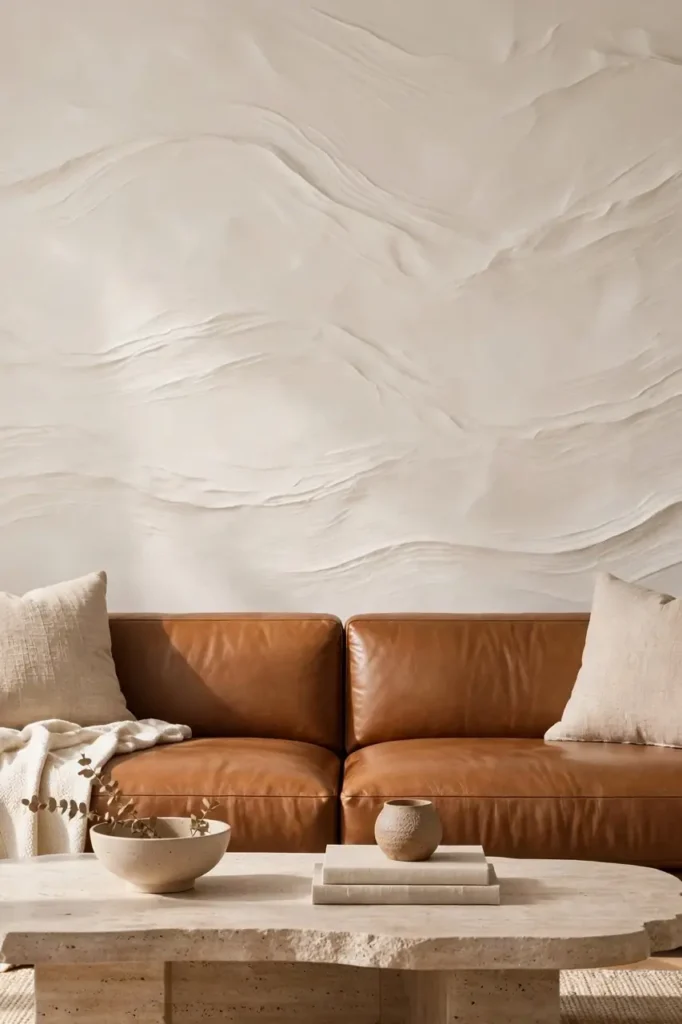
Hand-troweled plaster adds movement that paint alone cannot give, catching light in soft waves across the surface. The essential facts:
Cost: Medium, one bag of plaster covers a single wall. Time: One weekend plus drying. Skill Level: Beginner friendly with practice on cardboard first. Best For: Mediterranean, modern organic, and Japandi rooms.
Work in sweeping arcs and let the trowel skip lightly for natural texture. I have seen this work well in many cases where homeowners wanted luxury on a budget, since the material costs less than wallpaper but looks far more custom. Mist the wall lightly if the plaster drags, and step back every few feet to check the overall rhythm.
Arched Niche Features
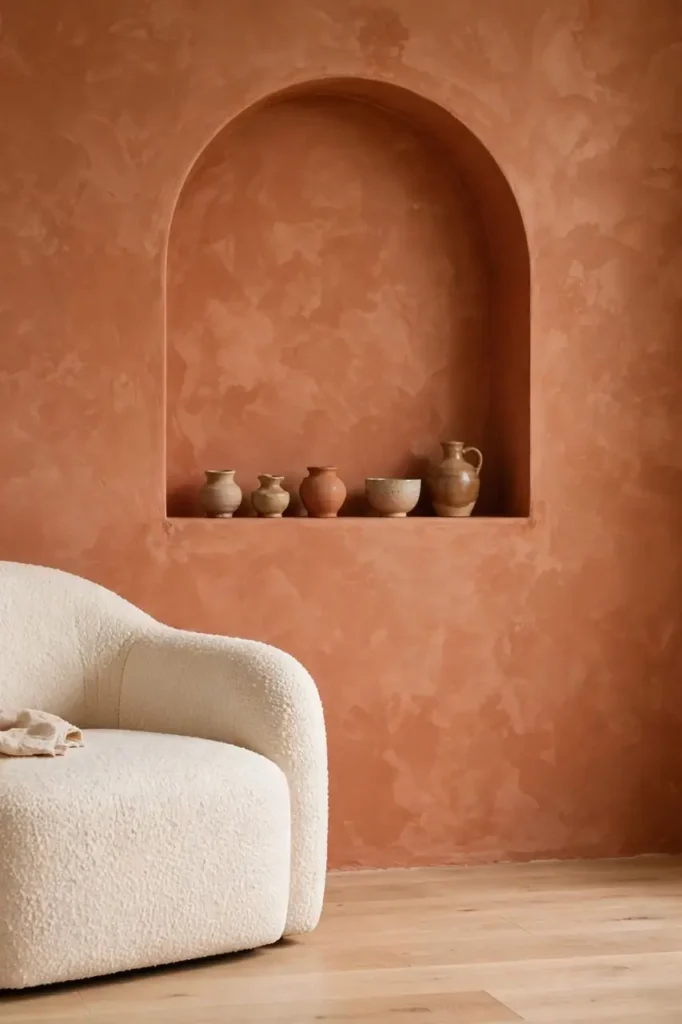
An arched niche carved into the wall creates architecture where none existed. Paint the recess a tone deeper than the room, and the curve reads like a doorway to somewhere special. Even a painted faux arch delivers most of the magic with zero construction.
Style the niche with restraint: three small objects beat a crowded shelf every time. I have noticed that pottery, a single stem in a bud vase, and one stacked book create a vignette that draws the eye without clutter. Keep the surrounding wall calm so the arch stays the hero. A small picture light above the arch makes it glow after dark.
Dark Moody Greens
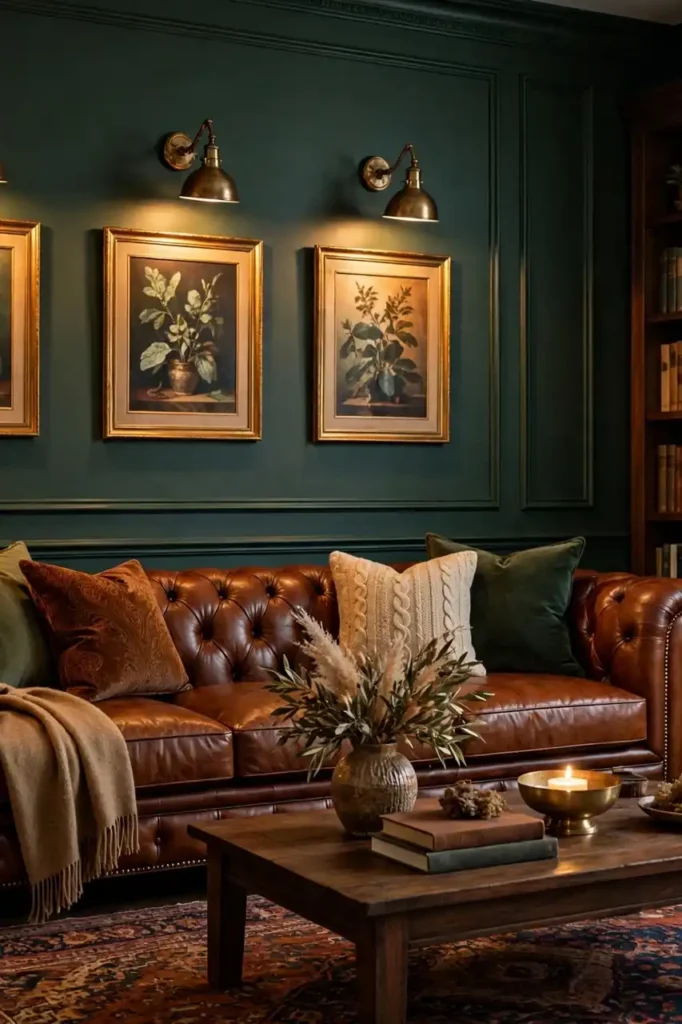
Deep green walls wrap a room in quiet drama that feels both classic and current. Consider these points before you commit:
- Forest and hunter greens flatter wood tones, leather, and brass beautifully.
- They make white ceilings look higher by contrast, which helps low rooms.
- Evening lamp light turns the color rich and velvety instead of flat.
- One wall keeps the mood cozy; four walls can feel like a cave.
- Eggshell finish bounces just enough light to avoid a chalky look.
A dark living room accent wall like this pairs naturally with plants, since green on green reads lush rather than matchy. I have tried it in a windowless den, and good lighting made all the difference.
Terracotta Clay Walls
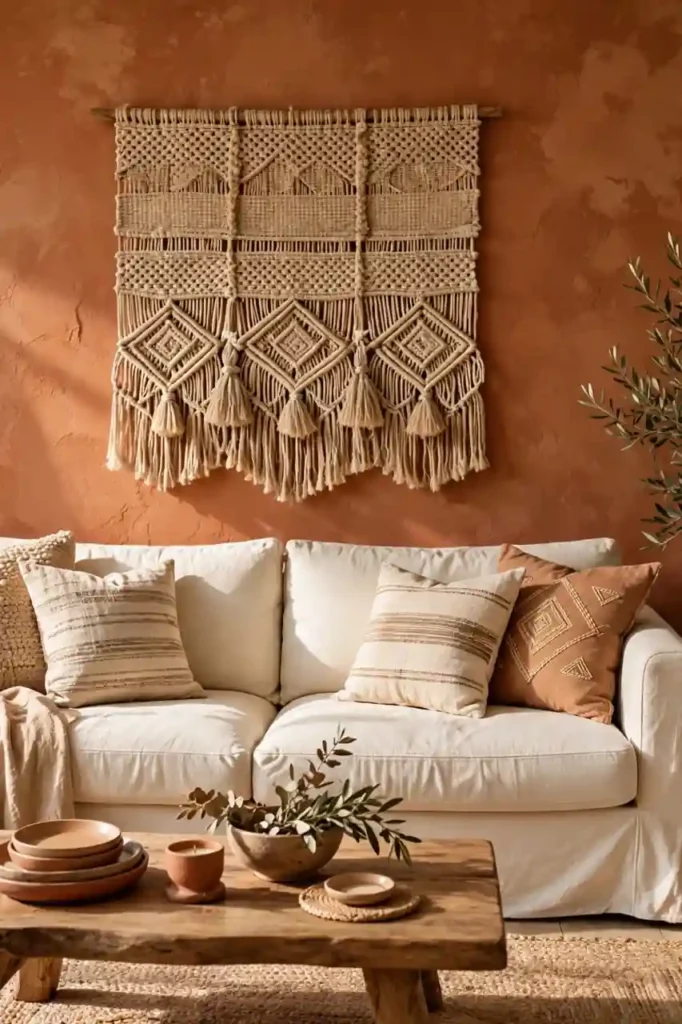
Terracotta brings sun-baked warmth that makes a living room feel instantly welcoming. The earthy tone sits perfectly between orange and brown, so it flatters both cool grays and warm creams nearby.
Quick Tip: Test terracotta in a south-facing room before you commit, because strong sun can push it toward bright orange. A clay or plaster-based paint with natural pigment stays muted and sophisticated. Pair it with linen, jute, and olive wood for a Mediterranean mood that never feels themed.
One coat of tinted primer underneath saves you a full extra coat of this pigmented color. I have seen renters fake the look with a large terracotta tapestry when paint was off the table.
Vertical Stripe Illusions
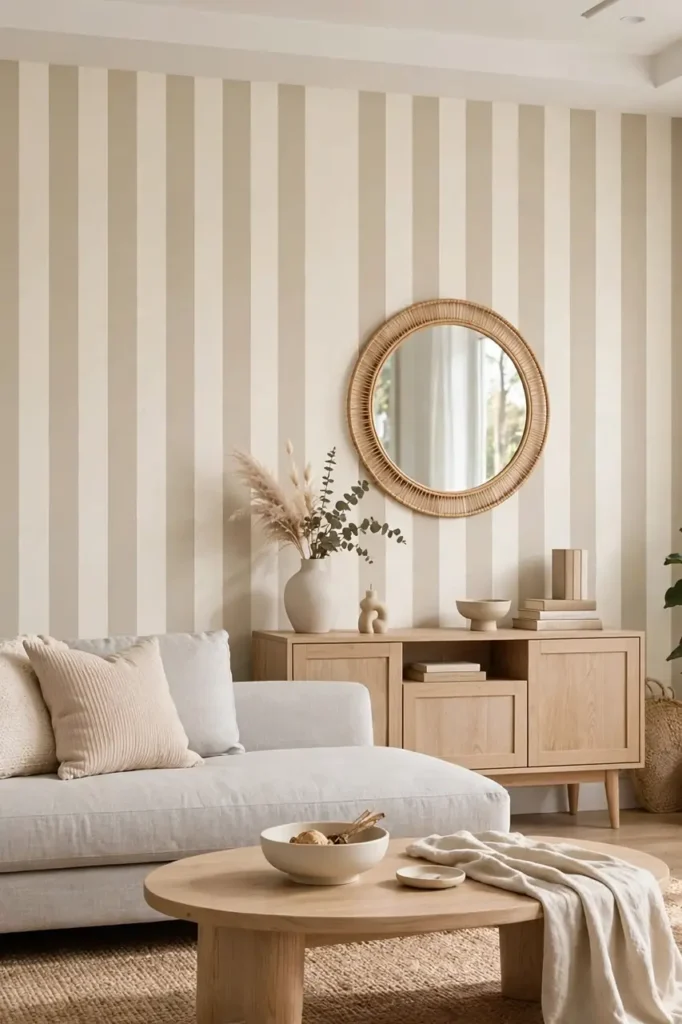
BEFORE: Low ceilings made the living room feel squat, and every piece of furniture seemed to press down on the space. The proportions fought against any sense of airiness.
AFTER: Tone-on-tone vertical stripes now draw the eye upward, and the ceiling feels a full foot taller. The stripes stay subtle in cream and beige, so the effect reads as texture rather than pattern.
Use a laser level and delicate-surface tape for the crispest lines. I have noticed that stripes in similar tones suit small rooms best, while high-contrast stripes demand more square footage to breathe. Measure twice and mark lightly in pencil before taping, since crooked stripes ruin the illusion fast.
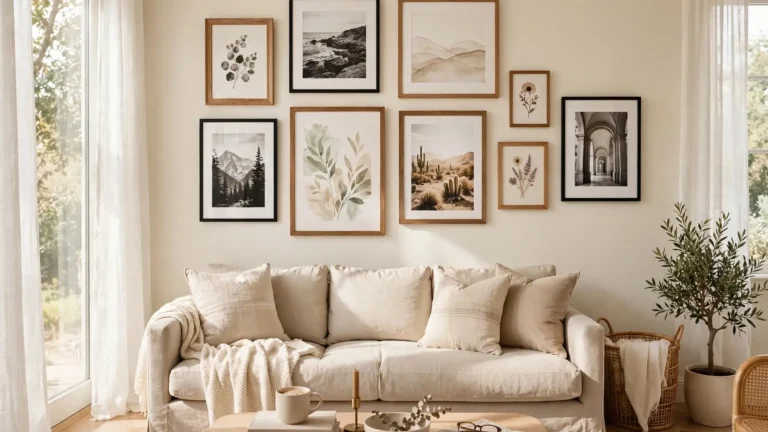
Oversized Art Clusters
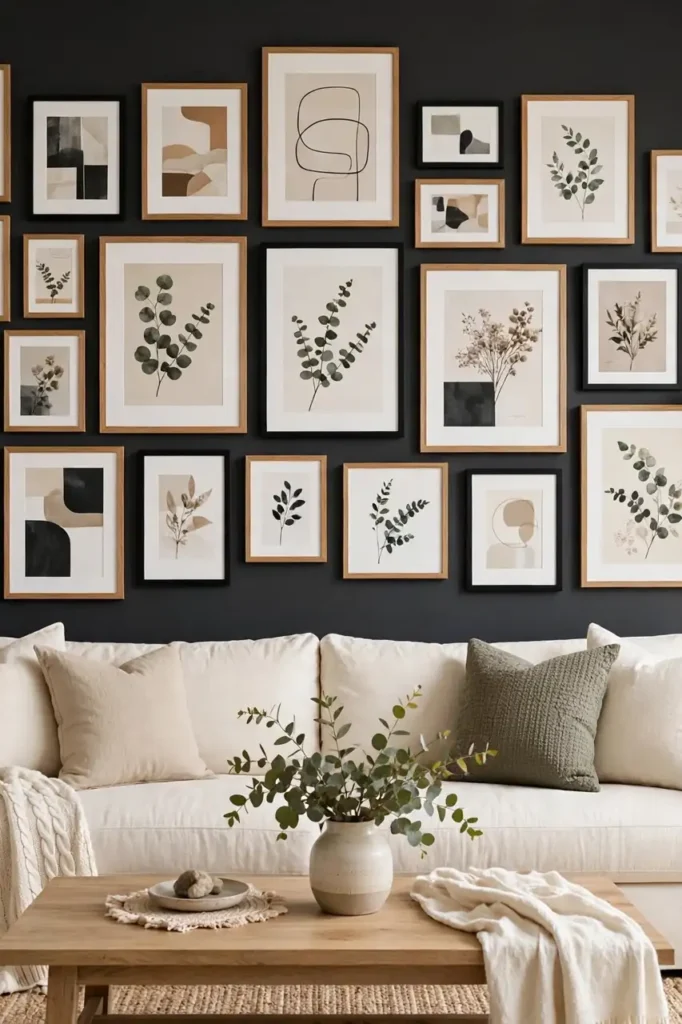
A dark wall turns an art cluster into a gallery moment. Follow these steps to hang it right:
- Paint the wall first in charcoal, ink blue, or deep olive for contrast.
- Lay the frames on the floor and arrange until the composition feels balanced.
- Photograph the layout, then transfer it to the wall with paper templates.
- Hang the largest piece at eye level and build outward from there.
- Leave two to three inches between frames for breathing room.
For more hanging inspiration, browse living room gallery wall ideas and adapt the layouts to your dark backdrop. Mixed frame finishes look intentional against deep color.
Cork Tile Warmth
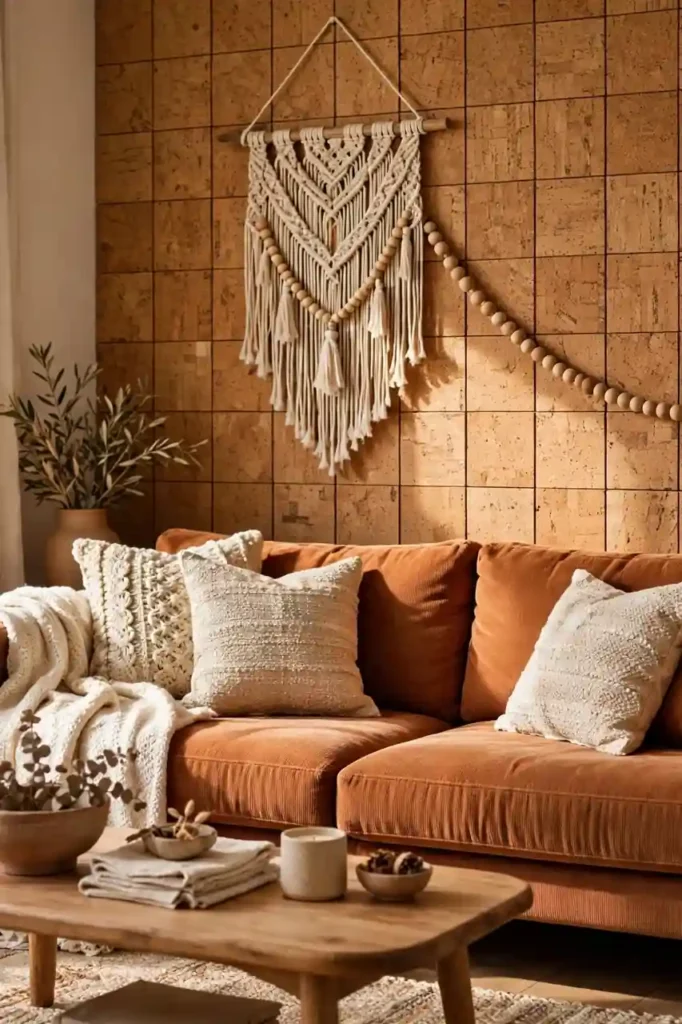
Cork tiles add honeyed warmth and hush the echo in hard-surfaced rooms, which makes them ideal behind a TV or reading chair. They go up with simple adhesive and cut easily around outlets. Compare the choices:
| Tile Style | Look |
|---|---|
| Natural mosaic | Organic, varied, textured |
| Stained planks | Sleek, modern, uniform |
| 3D geometric | Bold, sculptural, dramatic |
Cork also insulates, so a living room accent wall in this material feels warmer to the touch in winter. Seal the tiles with a clear matte coat in sunny rooms, since direct light can fade the natural tone over time. I have seen cork walls soften the acoustics of open-plan living rooms beautifully.
Gold Leaf Accents
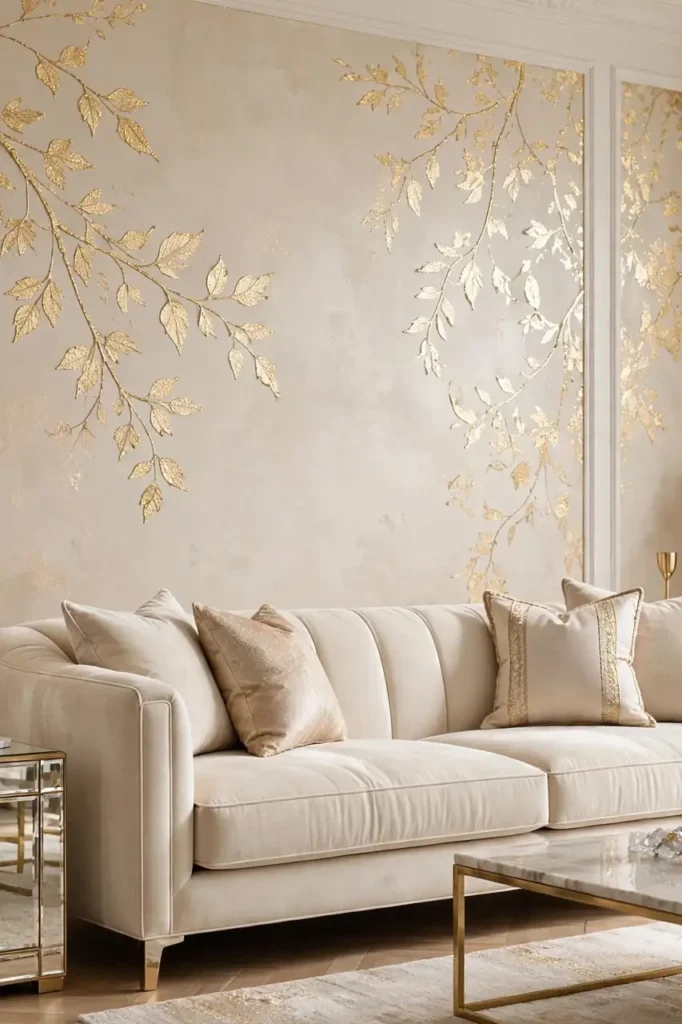
Gold leaf details catch light like jewelry on a wall. Here is how to use them without going overboard:
DO:
- Apply leaf to one panel, border, or stencil motif rather than the whole wall.
- Pair it with soft neutrals so the shimmer reads as glow, not glare.
- Seal with a clear topcoat to keep the leaf from flaking.
DON’T:
- Mix gold leaf with chrome finishes, since the tones fight each other.
- Apply it in high-touch zones like behind a busy desk.
- Skip the adhesive size step, or the leaf will not stick evenly.
A little metallic goes a long way in daylight. I have seen one gilded stripe above a mantel outshine entire wallpapered rooms.
Concrete Effect Paint
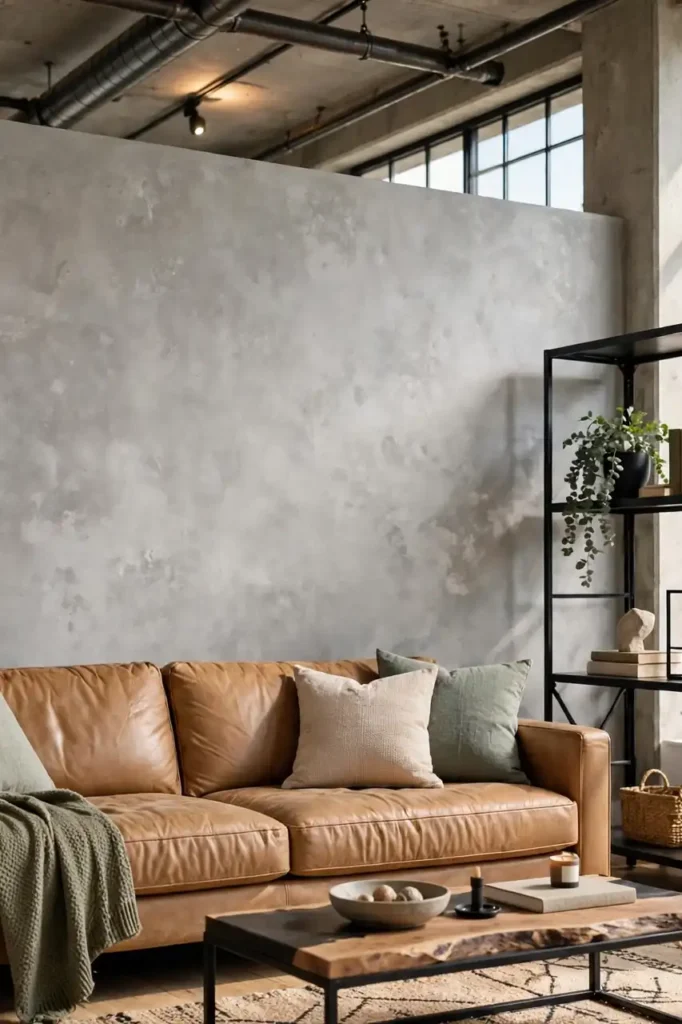
Concrete-effect paint delivers loft style without the weight or cost of real cement, and the mottled finish hides wall flaws well. The key facts:
Cost: Low, one specialty paint kit covers a feature wall. Time: A single day including drying between coats. Skill Level: Easy, the technique forgives mistakes. Best For: Industrial, modern, and minimalist living rooms.
Layer two tones with a trowel for authentic mottling, then seal with matte varnish. I have tried this in a rental-friendly version using removable concrete-look panels, and guests assumed it was the real thing. Pair it with warm leather and wood to keep the gray from feeling cold.
Botanical Wallpaper Panels
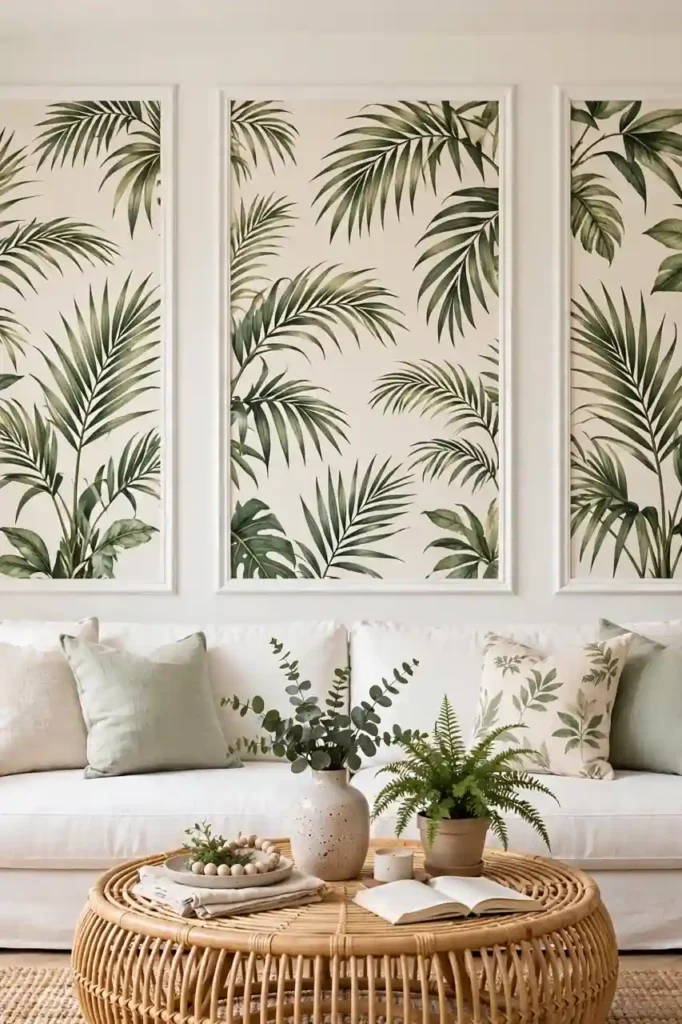
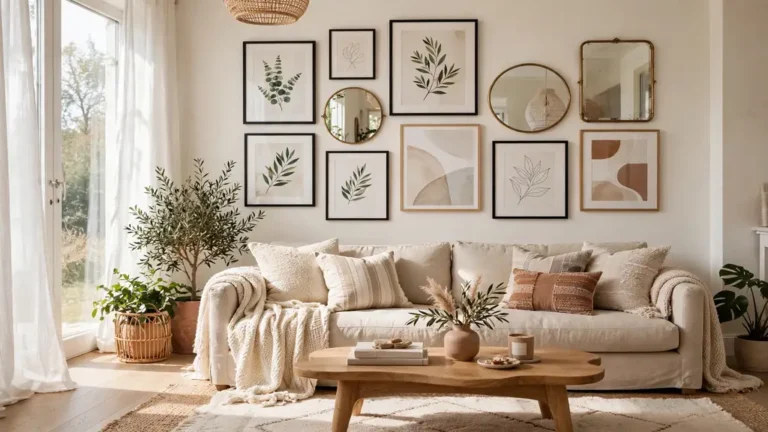
Framed botanical panels give you wallpaper drama with renter-friendly flexibility. Hang large palm or fern prints inside simple molding frames, and the wall reads as custom millwork from across the room. Use lightweight frames and removable hooks so the whole installation comes down without a trace.
Keep the palette to two greens plus cream so the panels feel calm rather than busy. I have noticed that symmetry matters here: matching panels on either side of a fireplace or sofa create the polished look. Swap the prints seasonally for a wall that never gets stale. I have tried oversized fern prints in summer and moody botanical sketches in winter.
Herringbone Wood Patterns
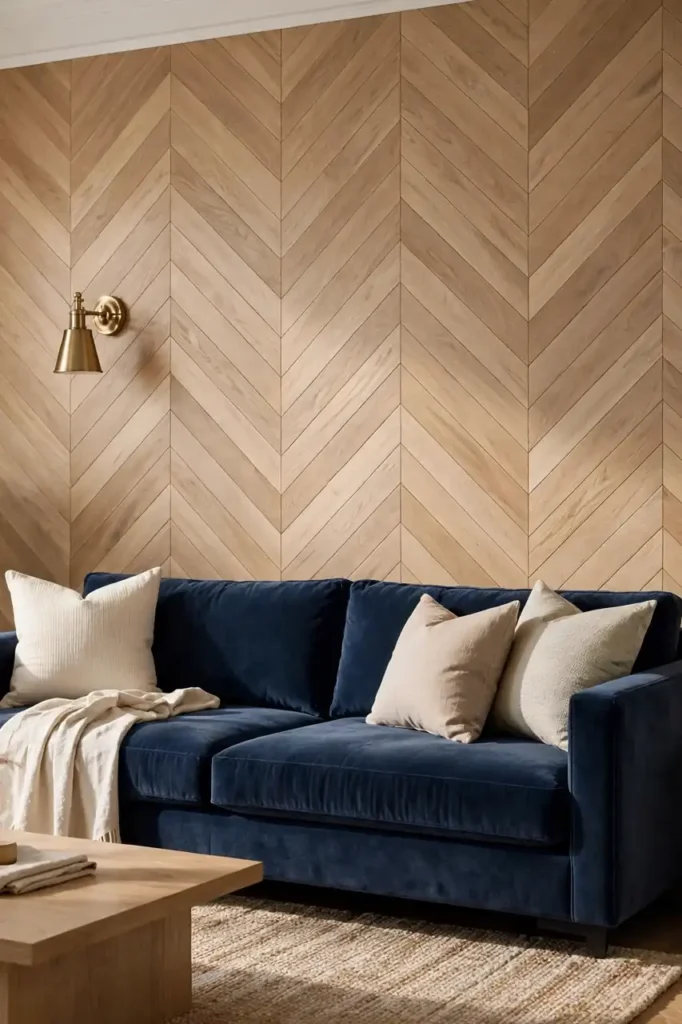
Herringbone wood brings tailored pattern to a wall without a single drop of paint. Consider these points:
- Light oak keeps the zigzag airy, while walnut turns it rich and formal.
- The pattern draws the eye across the wall, which widens narrow rooms.
- Peel-and-stick wood tiles make this achievable in a weekend rental project.
- Seal with matte polyurethane so the finish stays soft, not shiny.
- Keep furniture lines simple nearby so the pattern stays the star.
A herringbone living room accent wall rewards careful measuring, so snap chalk lines before the first tile goes up. I have seen this pattern rescue plain new-build living rooms better than any paint color could.
Ceiling Color Dips
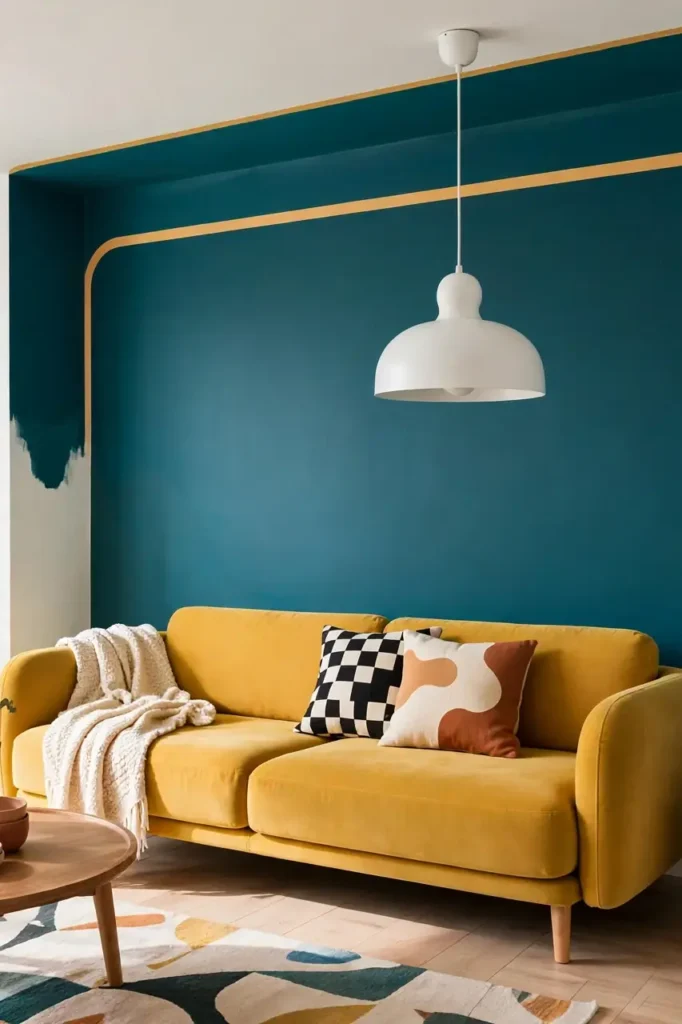
Dipping the paint color onto the ceiling makes the accent wall feel architectural and bold. The wrapped edge tricks the eye into seeing a taller, more intentional space, like the room was designed around that single gesture.
Quick Tip: Run the wall color twelve inches onto the ceiling for a subtle dip, or go a full two feet for drama. Use crisp tape at the ceiling line and paint the wall color first, then cut in the white. In my experience, deep teal and warm ochre dip beautifully without overwhelming.
This trick costs nothing extra beyond a little more paint. I have seen it make standard eight-foot ceilings feel custom in the best way.
Mirror Gallery Mixes
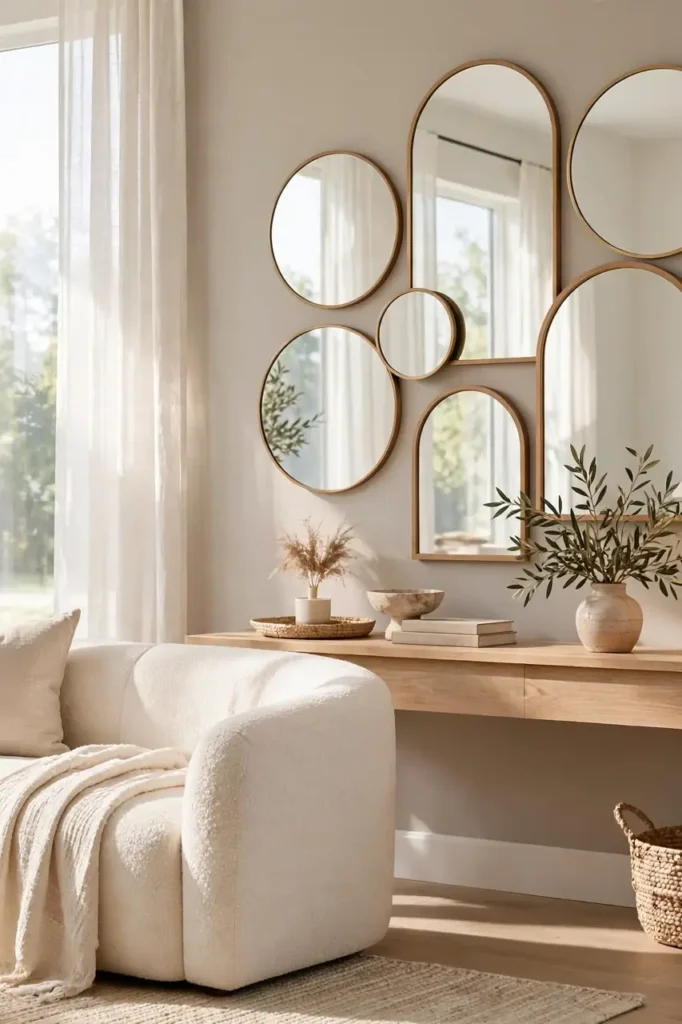
BEFORE: The dark corner of the living room swallowed light all day, and no lamp seemed to fix the gloom. The wall felt like a dead end no matter how it was styled.
AFTER: A soft greige wall now holds a mix of round and arched mirrors that bounce daylight deep into the room. The corner glows, and the mirrors double as art with their varied frames.
Mix frame finishes but keep the wall color quiet so the reflections shine. I have noticed that three mirrors of different sizes beat one large mirror for visual interest every time. Anchor the arrangement with the largest mirror at eye level.
Rustic Brick Slips
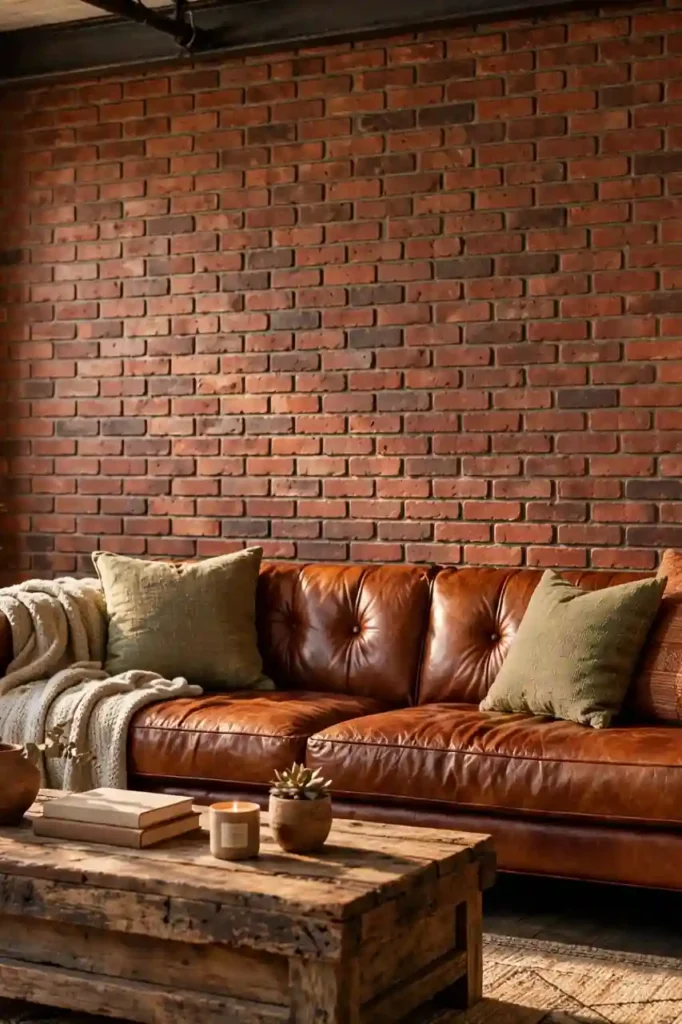
Thin brick slips bring warehouse character without structural work. Follow these steps:
- Clean and prime the wall so the adhesive grips properly.
- Dry-lay a row on the floor to plan cuts around outlets.
- Butter the back of each slip and press firmly, working bottom to top.
- Point the joints with mortar and sponge off the excess quickly.
- Seal with a matte brick sealer to tame dust.
A brick living room accent wall loves leather, iron, and warm wood nearby. I have seen whitewashed slips suit farmhouse rooms while raw red brick leans industrial and bold. Grout color changes the mood too: light grout feels airy while dark grout reads moody.
Two Tone Color Blocks
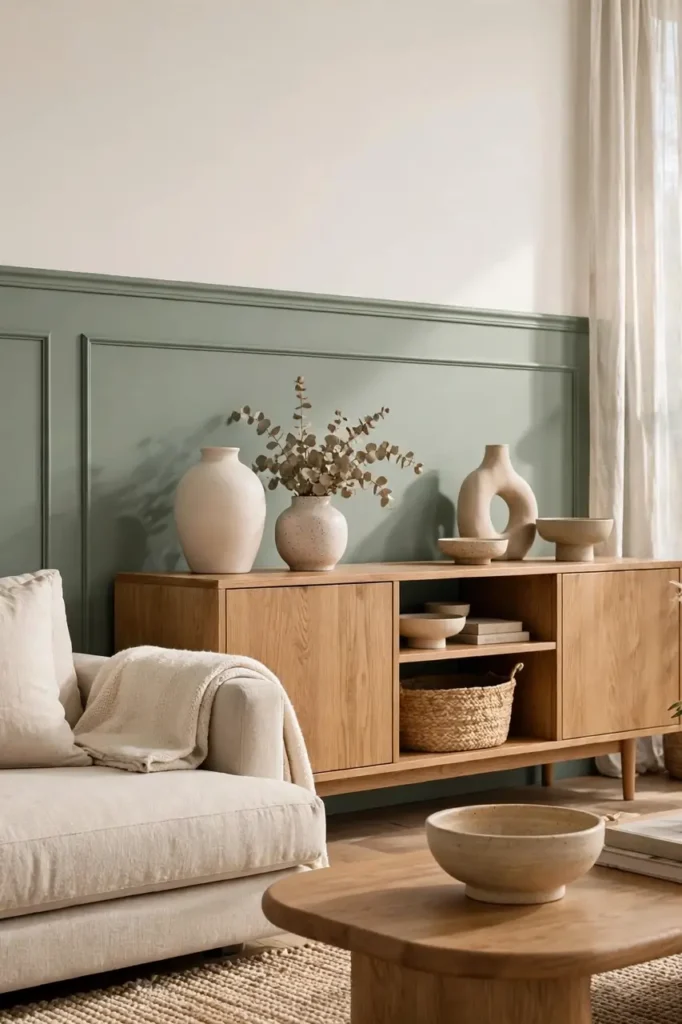
Two-tone blocking adds graphic interest with nothing but paint and tape, making it one of the cheapest accent wall ideas here. It works in any room size and suits both modern and traditional furniture. Compare the approaches:
| Style | Effect |
|---|---|
| Horizontal split | Grounds furniture, feels classic |
| Vertical blocks | Adds height and modern edge |
| Diagonal divide | Playful, energetic, artistic |
Place the divide at picture-rail height for a timeless look, or at two-thirds for something bolder. I have noticed that pairing the lower color with the sofa upholstery ties the whole composition together. Let each coat dry fully before taping the next color, and pull tape while the paint is slightly tacky for razor-sharp lines.
Soft Beige Textures
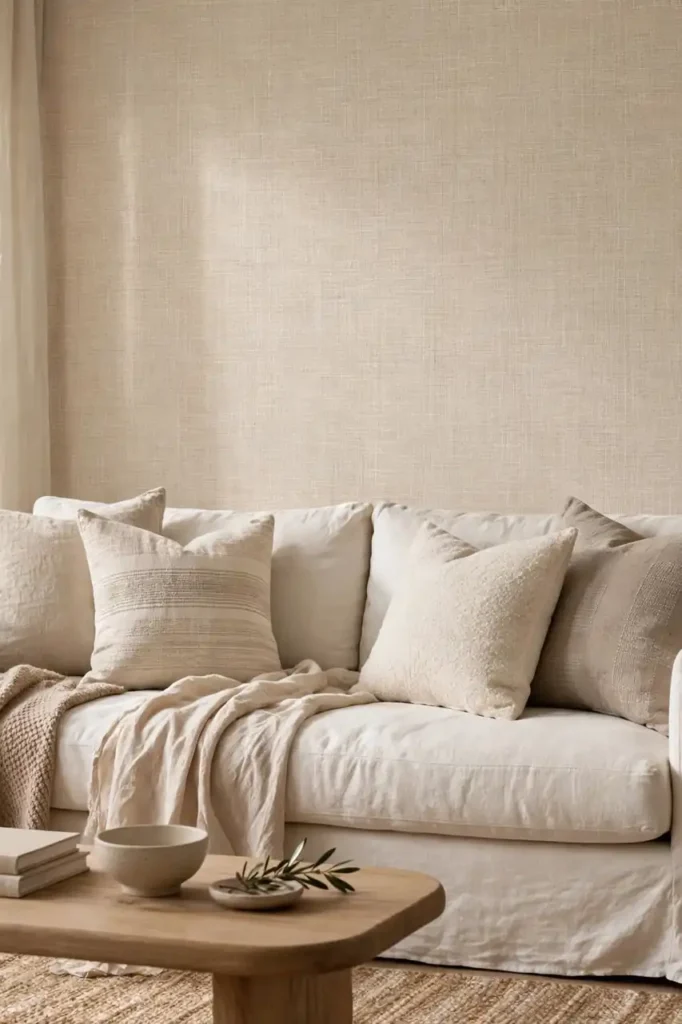
Soft beige texture proves neutrals can still make a statement. Here is how to keep it interesting:
DO:
- Choose grasscloth, linen-weave, or brushed plaster for touchable depth.
- Layer tonal beiges in throws and rugs so the wall feels deliberate.
- Let natural light rake across the texture to show it off.
DON’T:
- Pick flat beige paint and call it done, since it will read as unfinished.
- Pair it with cool gray furniture without a warm bridge piece.
- Forget lighting, because texture disappears in flat overhead light.
Texture is the quiet luxury of accent walls. I have seen beige grasscloth outlast three sofa changes without ever looking tired.
Conclusion
One bold wall can rewrite the whole story of your living room, and now you have 23 ways to write yours. Whether you reach for deep navy paint, warm wood slats, or a hand-troweled plaster finish, the right living room accent wall turns an ordinary room into a space with a point of view. Start with the idea that made you pause, gather your supplies this weekend, and enjoy the moment the room clicks into place. Save your favorite to Pinterest, share it with a friend who needs the nudge, and tag your finished wall so we can cheer you on.
One Comment