25 Natural Burl Wood Furniture Interior Ideas for Organic Luxury
Few materials stop a scrolling thumb the way swirled burl grain does. The appeal of natural burl wood furniture interior ideas starts with that grain: tight knots, waves, and clusters formed when a tree grows under stress, sliced thin and polished until the surface almost glows. Every piece carries a pattern no factory can repeat, which is exactly why designers keep returning to it.
Below are twenty-five ways to bring burl into real rooms, from one small tray to a full bookmatched dining table. The same restraint that makes blue toile de Jouy bedroom decor feel calm works here too: let one patterned surface lead, keep walls and fabrics quiet, and let daylight rake across the grain. In my experience, burl rewards a slow approach, one strong piece at a time.
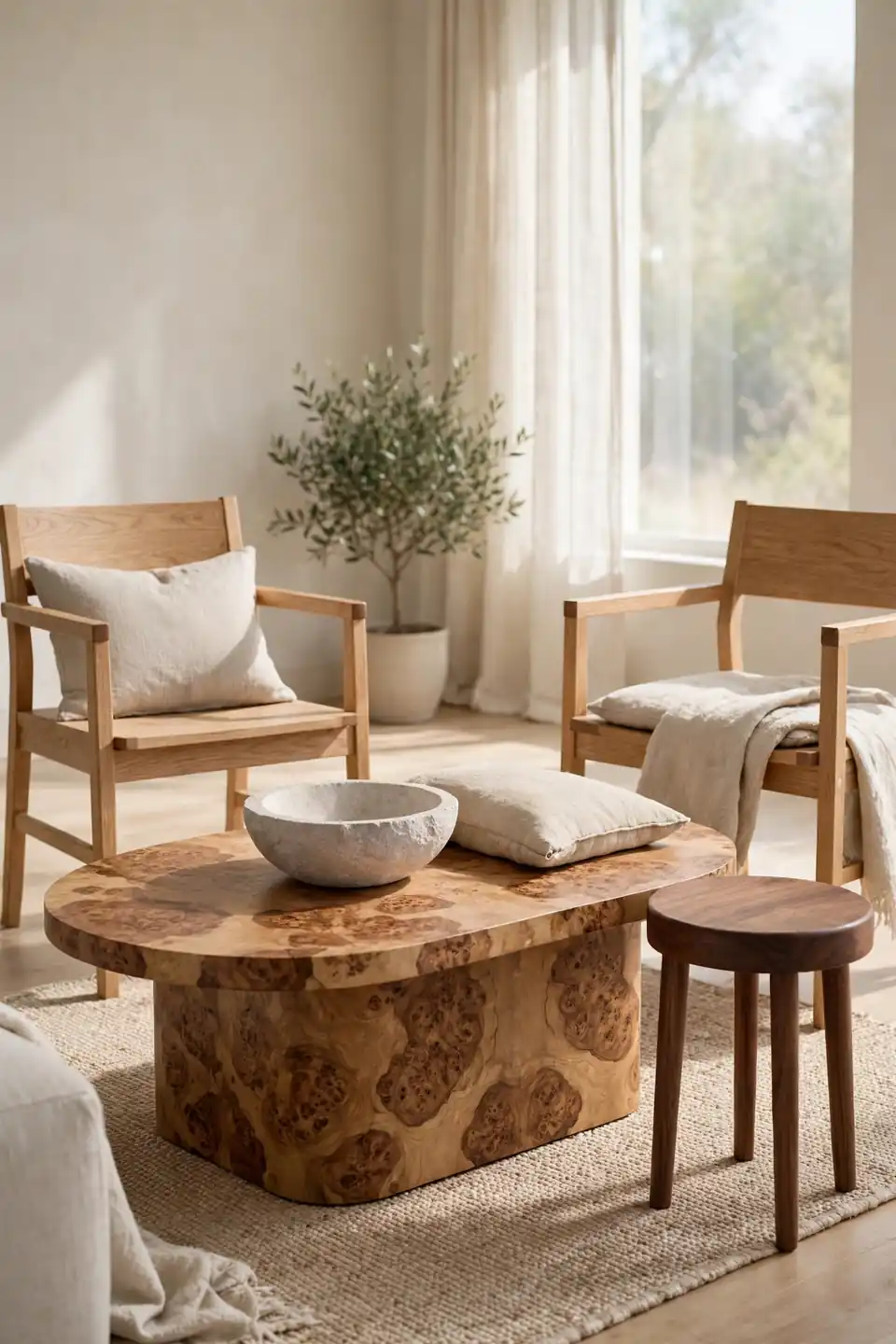
Burl Wood Coffee Table
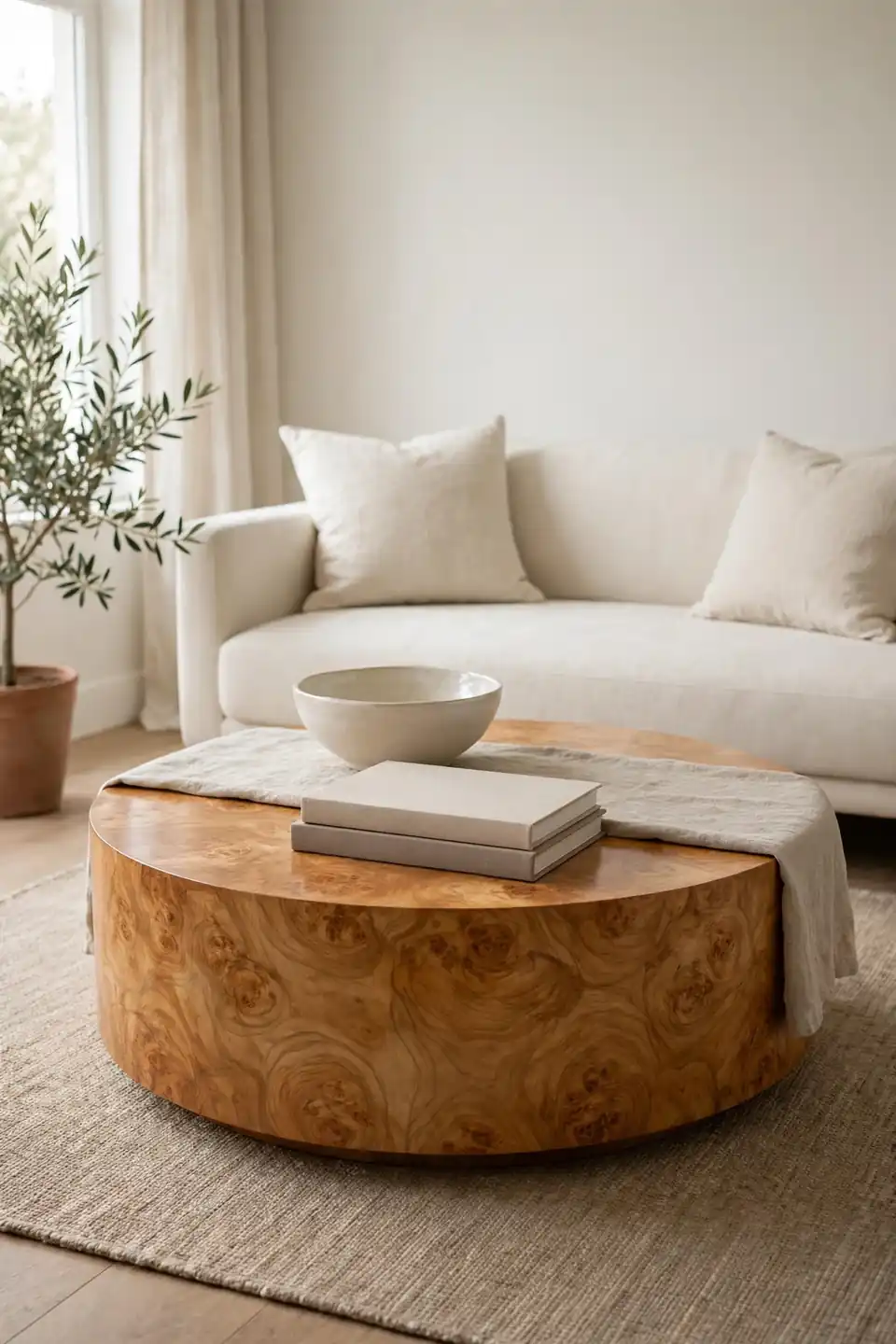
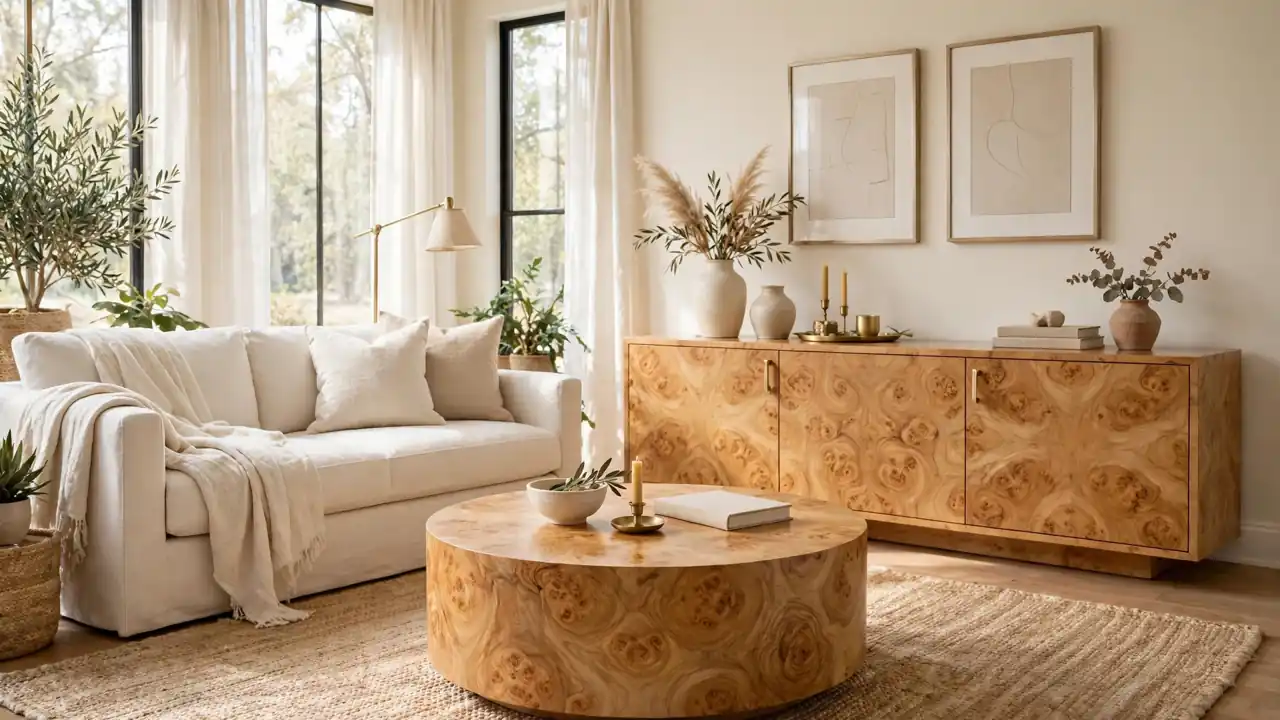
A coffee table sits in the middle of every conversation, and burl turns that spot into the room’s signature. The grain moves like slow water, so even a plain sofa and a flat rug suddenly look deliberate beside it. Choose a low, wide shape with rounded edges; sharp corners fight the softness of the pattern.
Keep the top almost bare. A linen runner, one ceramic bowl, and a stack of two art books are plenty, because every extra object steals attention from the swirls. I have noticed that guests run a hand across burl before they sit down, so a smooth matte finish matters more than shine. Felt pads under the legs protect pale floors from the table’s real weight.
Swirled Credenza Entryway Moment
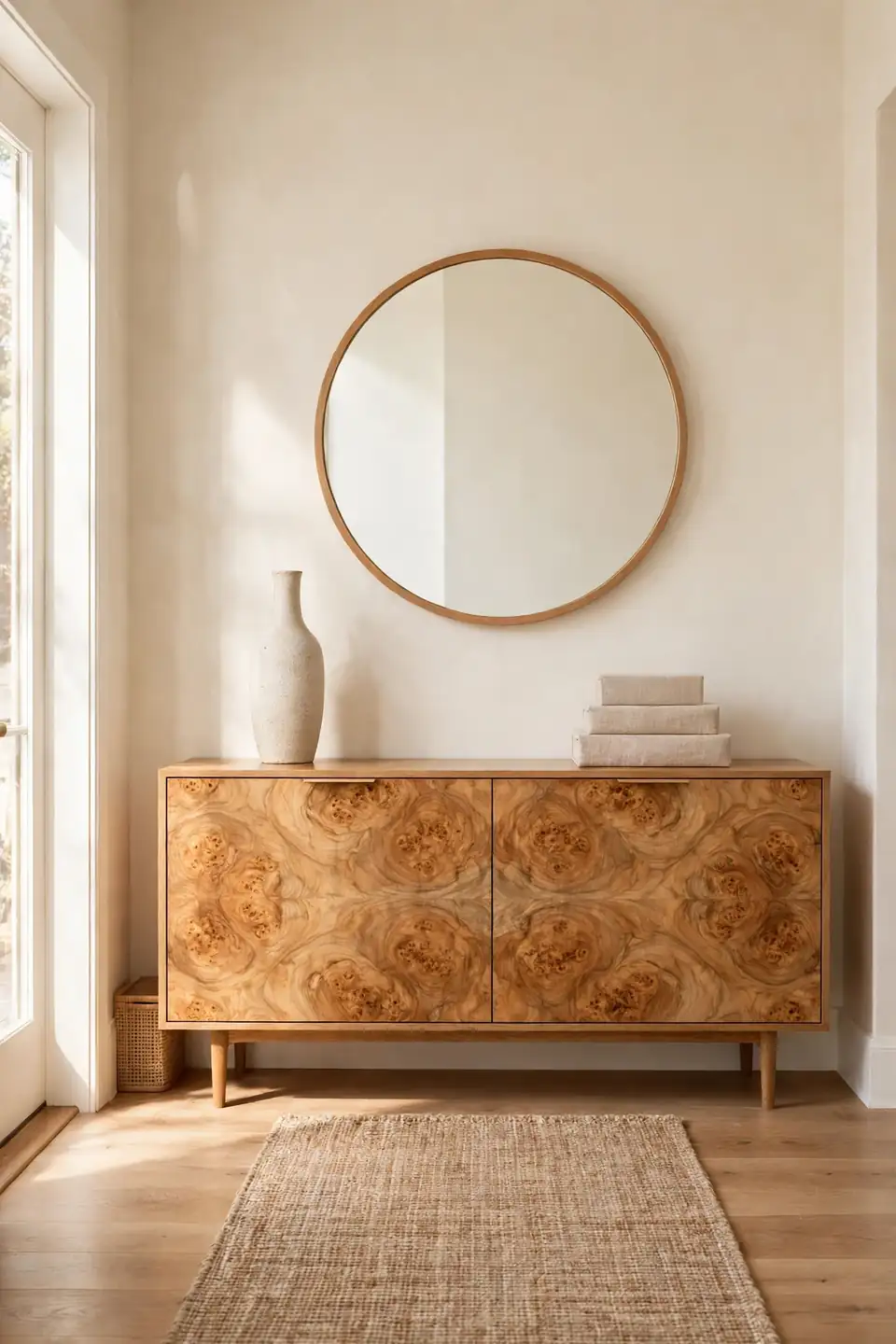
- Hang a round mirror above the credenza so its curves echo the grain below.
- Set one tall vase on the left third, never dead center.
- Stack two linen bound boxes for keys, mail, and sunglasses.
- Leave the right half empty; burl needs bare space to read clearly.
- Choose matte black or aged brass pulls that stay quiet.
An entryway credenza works hard twice, first as storage and then as the opening sentence of the whole home. Burl suits that job because its pattern hides the small scuffs of daily arrivals better than plain painted wood. Keep a shallow tray by the door for wet keys, and the surface will stay handsome through every season of boots and bags.
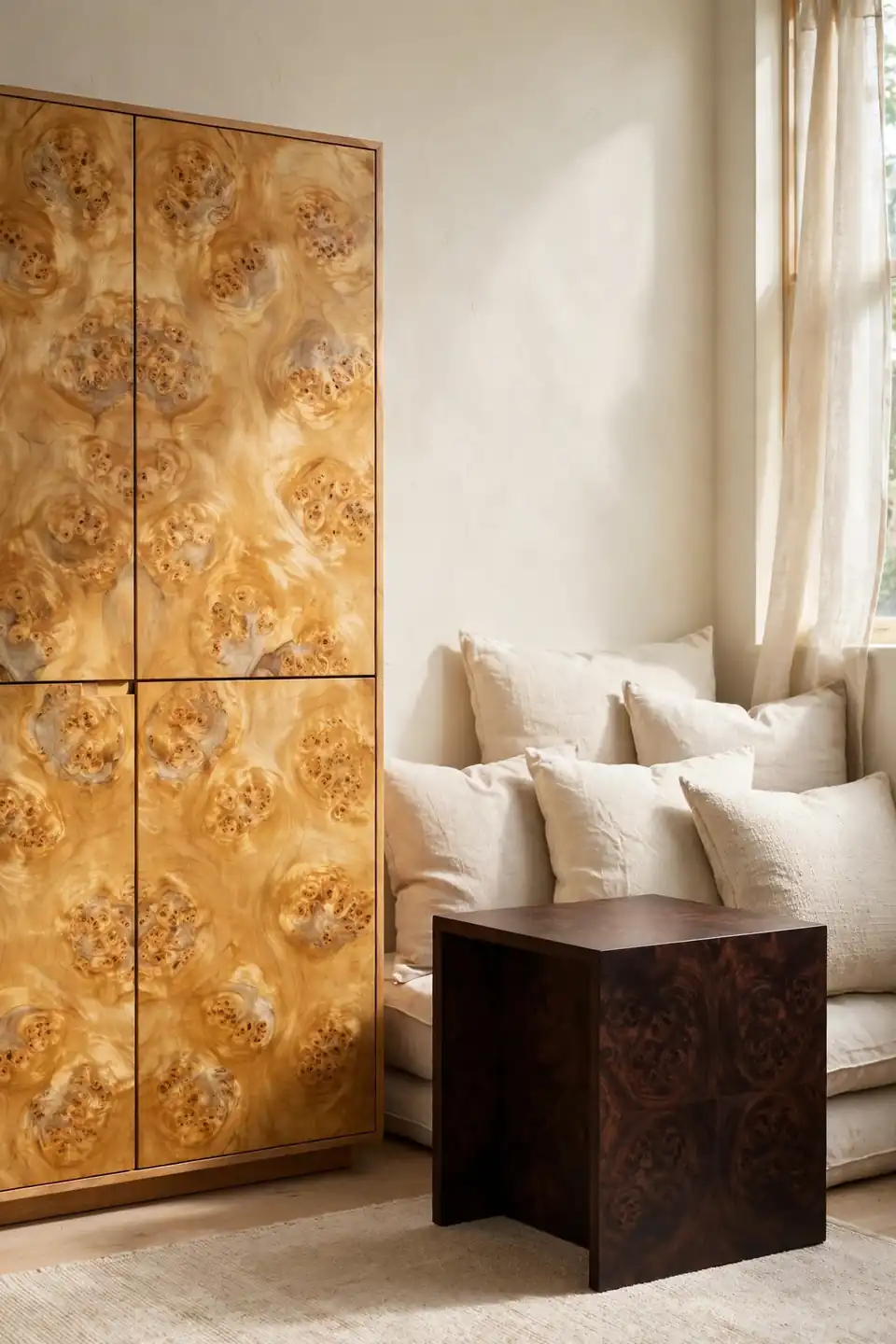
Burl Veneer Accent Cabinet
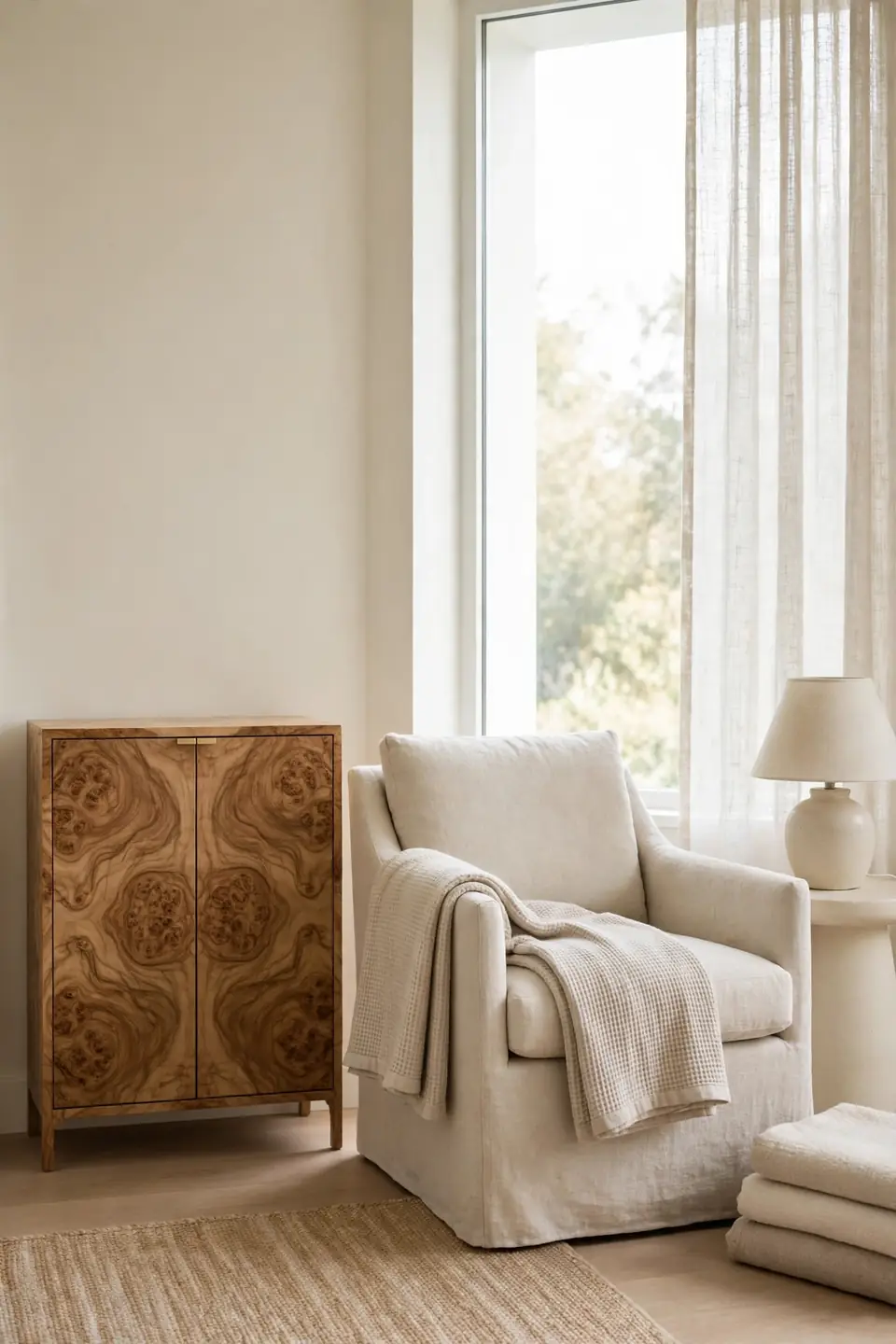
Quick Tip: Run your palm slowly across a veneer cabinet in the shop. Good burl veneer feels glass smooth with no lifted edges at the seams, and the pattern should flow across both doors like one continuous sheet of water.
A single accent cabinet is the safest first burl purchase, big enough to matter and small enough to move when rooms change. Tuck it beside a reading chair, under a window, or at the end of a hallway that currently holds nothing but a draft. Inside, store the board games, the good candles, or the linen napkins; a beautiful door makes ordinary storage feel considered. Mine holds spare throws, and opening it still pleases me more than it reasonably should.
Bookmatched Burl Dining Table
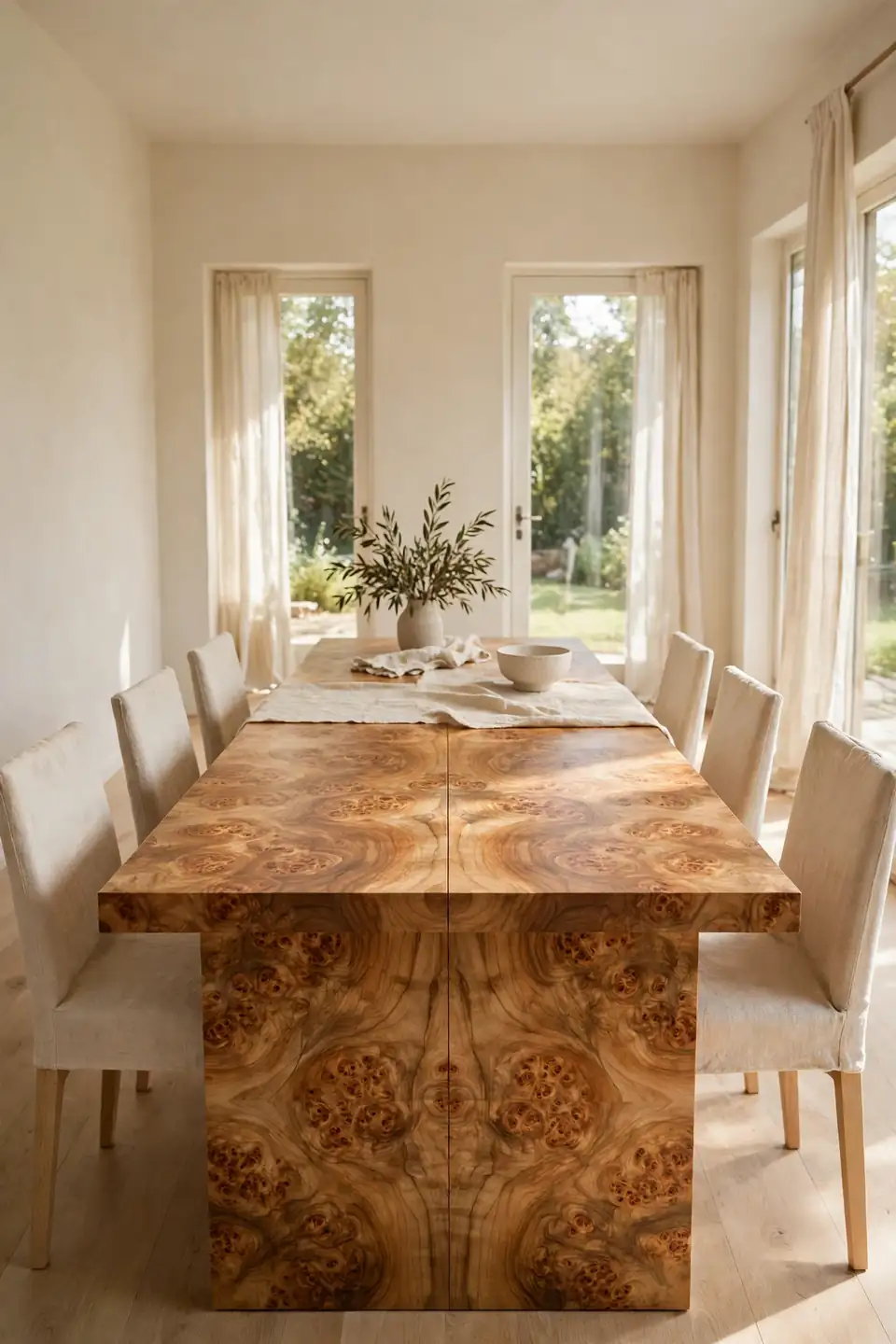
BEFORE: The dining room had good bones and no heartbeat: a plain oak table, six mismatched chairs, and a rug that apologized for all of them. Meals were fine, but nobody lingered, and the room photographed like a rental listing.
AFTER: A bookmatched burl table changed the temperature of the room. Two mirrored veneer leaves meet down the center, so the grain blooms outward like wings, and plain linen chairs now look intentional instead of tired.
Bookmatching is the one burl splurge I defend without blinking, because dining tables live long lives and host the best hours of the week. Protect the surface with a clear matte coat, serve on boards and trivets, and let the pattern handle decoration. A plain runner down the seam is enough dressing.
Burl Nightstands Beside Linen
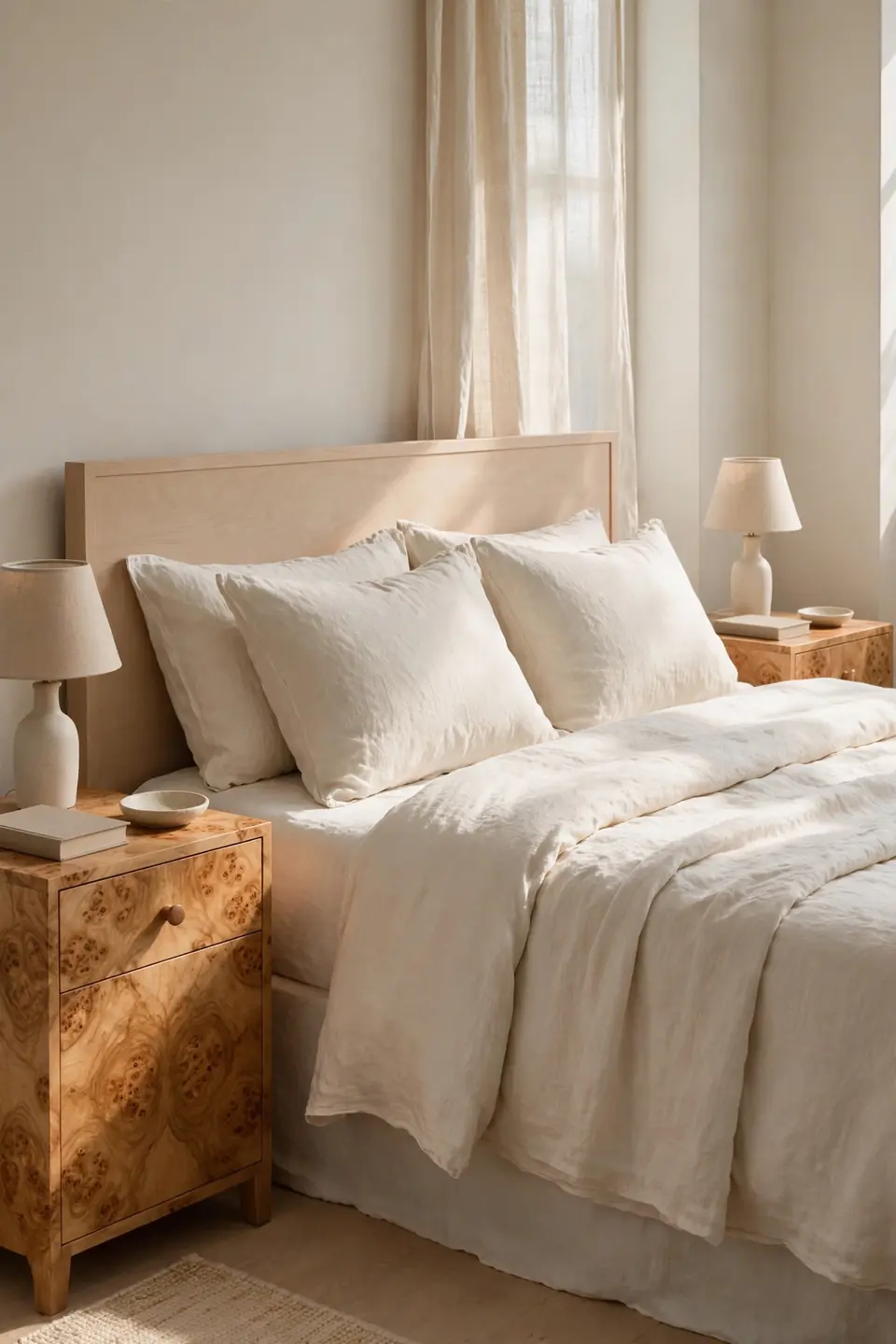
- Pick nightstands whose grain runs in the same direction on both sides of the bed.
- Match the height to the top of the mattress, within an inch.
- Leave the surface half empty: lamp, book, small dish, nothing more.
- Choose drawers over open shelves; bedside clutter reads louder beside patterned wood.
- Repeat the honey tone once more in a frame or woven basket.
Few pairings calm a bedroom like burl and washed linen. The wood brings movement, the fabric brings rest, and together they make a hotel level corner out of an ordinary wall. Keep cords hidden behind the drawer unit, and mornings will feel gentler before your feet even find the floor.
Burl Versus Plain Walnut
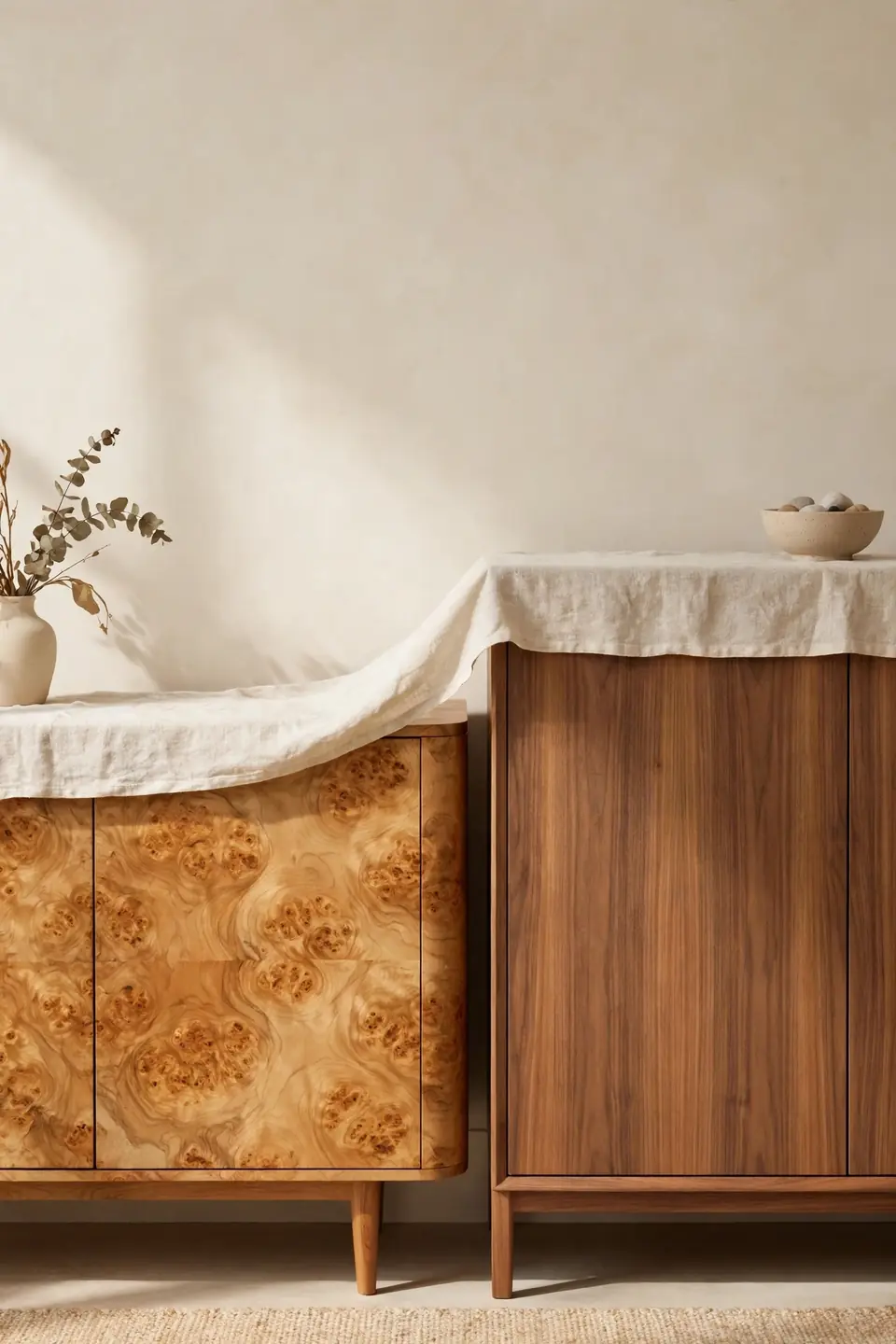
| Feature | Burl Wood | Plain Walnut |
|---|---|---|
| Grain movement | Wild swirls and knots | Straight, calm lines |
| Price | Higher, rarer cuts | Friendlier budgets |
| Upkeep | Matte coat, gentle dusting | Very forgiving |
| Best mood | Organic luxury | Quiet modern order |
Neither wood wins outright; they simply tell different stories at different volumes. Burl speaks first and loudest, so it suits rooms that feel flat or overly matched, while plain walnut whispers and suits rooms already busy with pattern. Budget decides more often than taste: one burl piece beside several walnut ones gives most rooms the drama they want at a third of the cost of going all in. Compare samples at home in evening light before ordering either.
Gentle Care Burl Surfaces
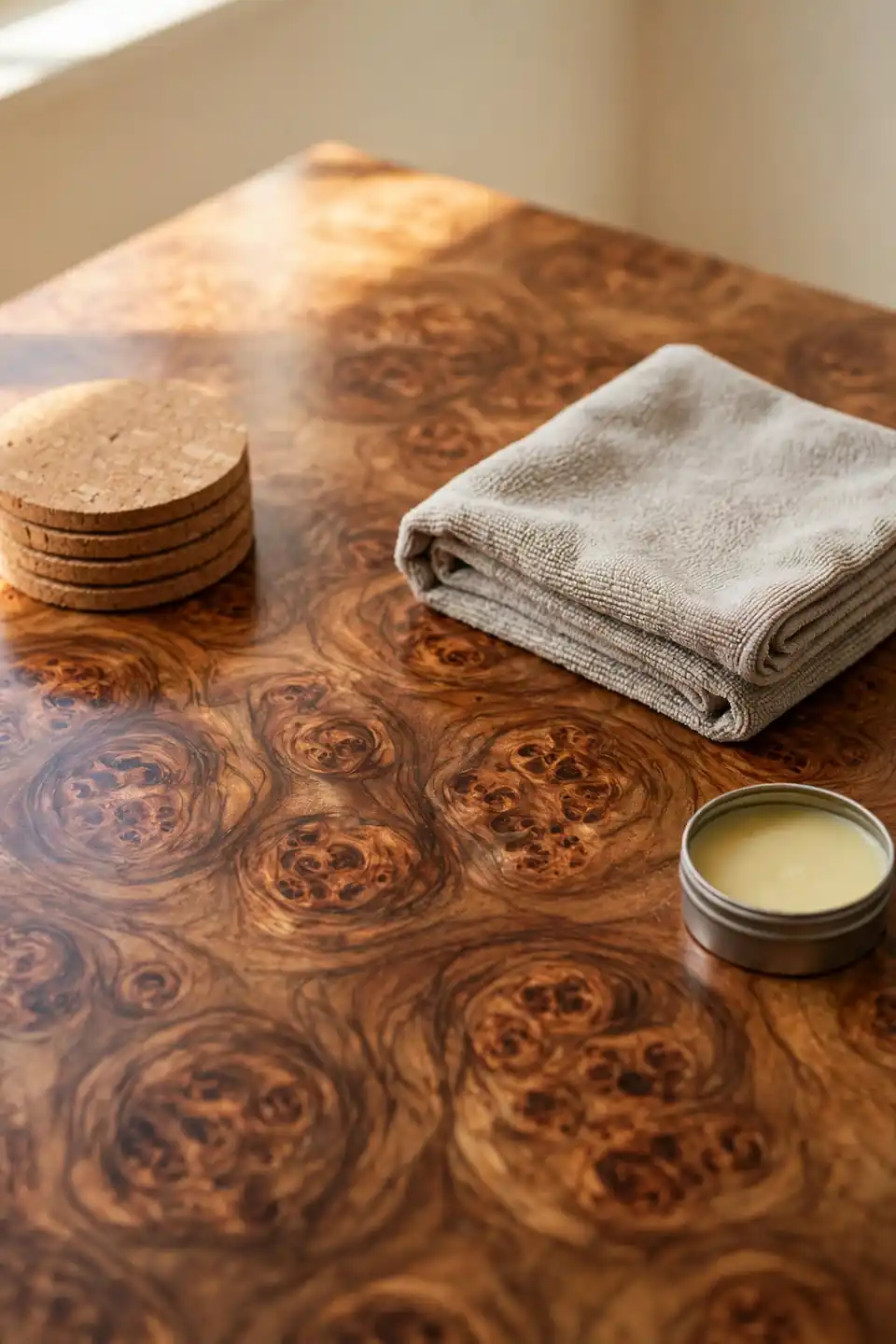
Do:
- Dust with a dry microfiber cloth along the grain’s swirl.
- Set coasters under every glass, always, even for favorites.
- Apply a quality paste wax twice a year for depth.
- Keep pieces out of harsh direct sun to protect color.
Don’t:
- Spray water based cleaners straight onto veneer seams.
- Drag ceramic or metal objects across the polished top.
- Place burl beside radiators or heating vents.
- Use silicone polishes that cloud the natural glow.
Veneer frightens people more than it should. Burl veneer over a stable core actually moves less than solid wood in changing humidity, which is why fine antique burl pieces survive centuries of heated rooms. Treat the surface like a good leather bag, kept clean, fed occasionally, never soaked.
Small Burl Pieces Impact
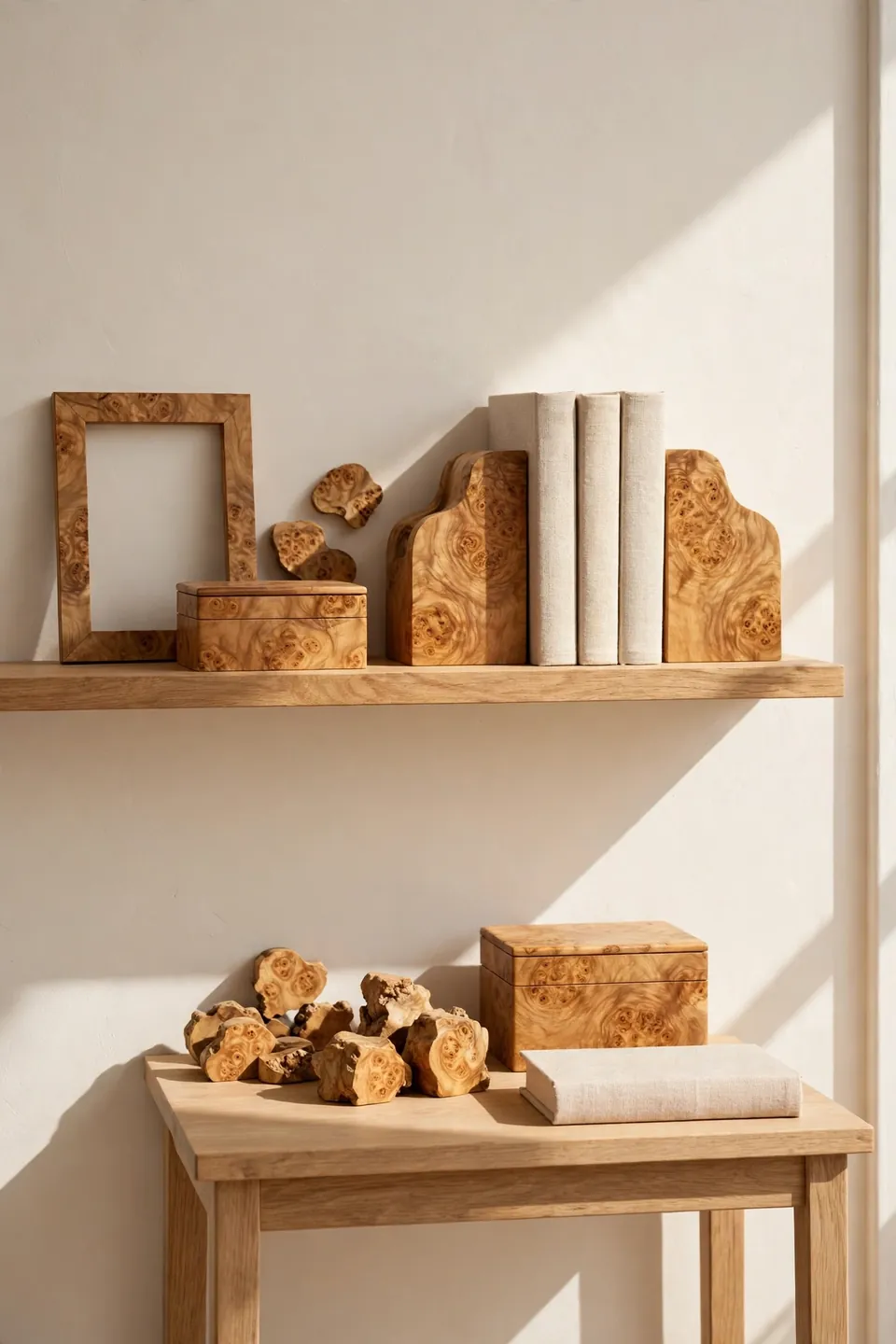
Cost: Low to moderate
Time: One shopping trip
Skill Level: None needed
Best For: Renters and beginners
Not every room needs a statement table to feel the pull of burl. A single frame, a small box, or a pair of bookends carries the same swirled energy at a fraction of the commitment, and these little pieces travel well when you move. Scatter is the enemy, though: group small burl pieces in one or two places, beside the reading chair and on the entry shelf, rather than dotting them through every room. Concentrated, they look collected; scattered, they look accidental. I have seen this work well in many cases where a full furniture budget was still a year away.
Burl Desk Home Office
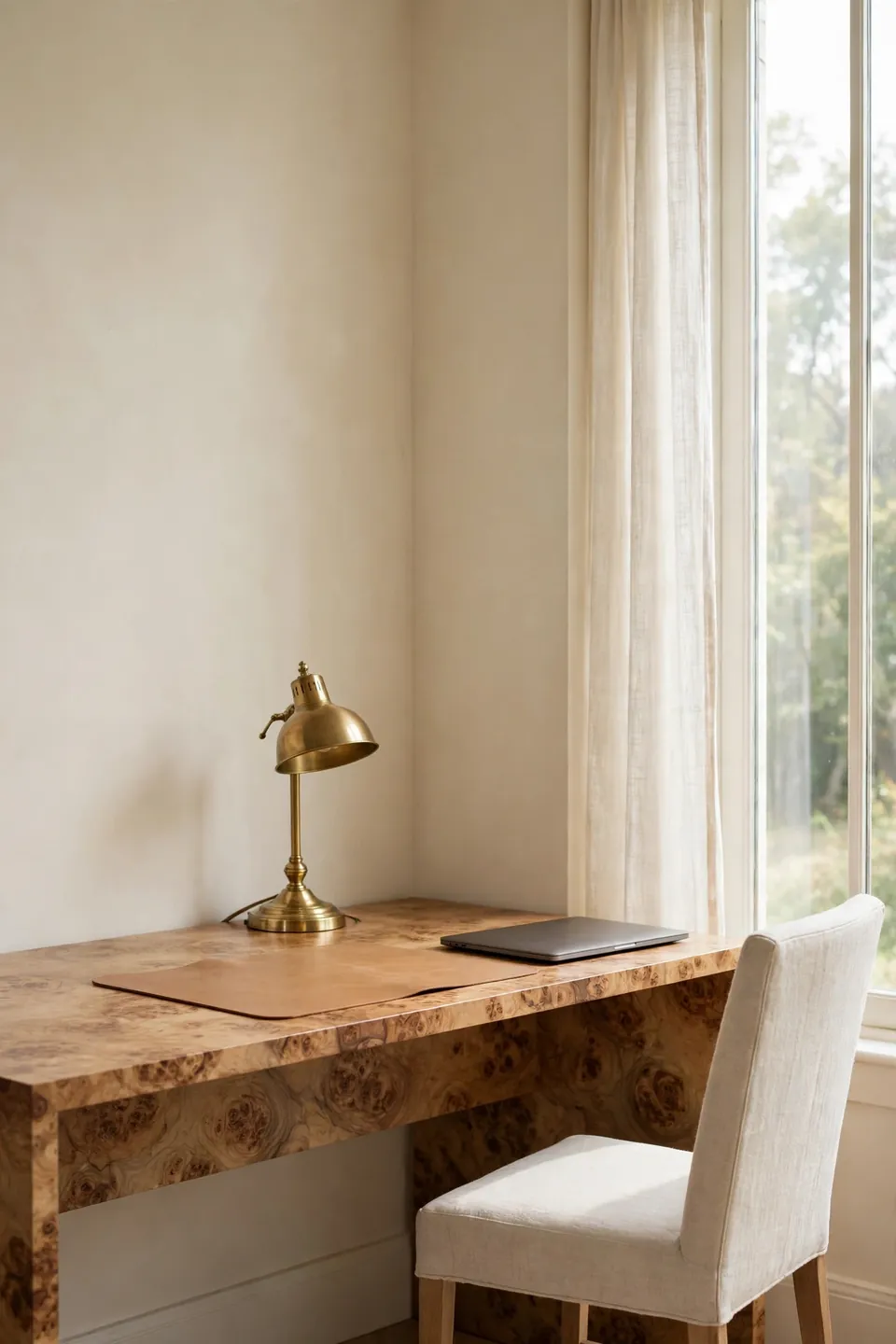
Work feels different at a desk with weather in it. Burl grain moves like a topographic map, and during long calls my eyes rest on the swirls the way they rest on a window view. A wide single slab or a veneered top with one drawer bank keeps the surface calm and generous.
Style the desk like a still life that happens to hold a laptop. One brass lamp, a leather blotter in a quiet tan, and a burl pen cup are enough; cables should vanish into a rear channel so nothing competes with the pattern. Face the desk toward the room rather than the wall, and the office corner starts to feel like a small library instead.
Layered Burl And Brass
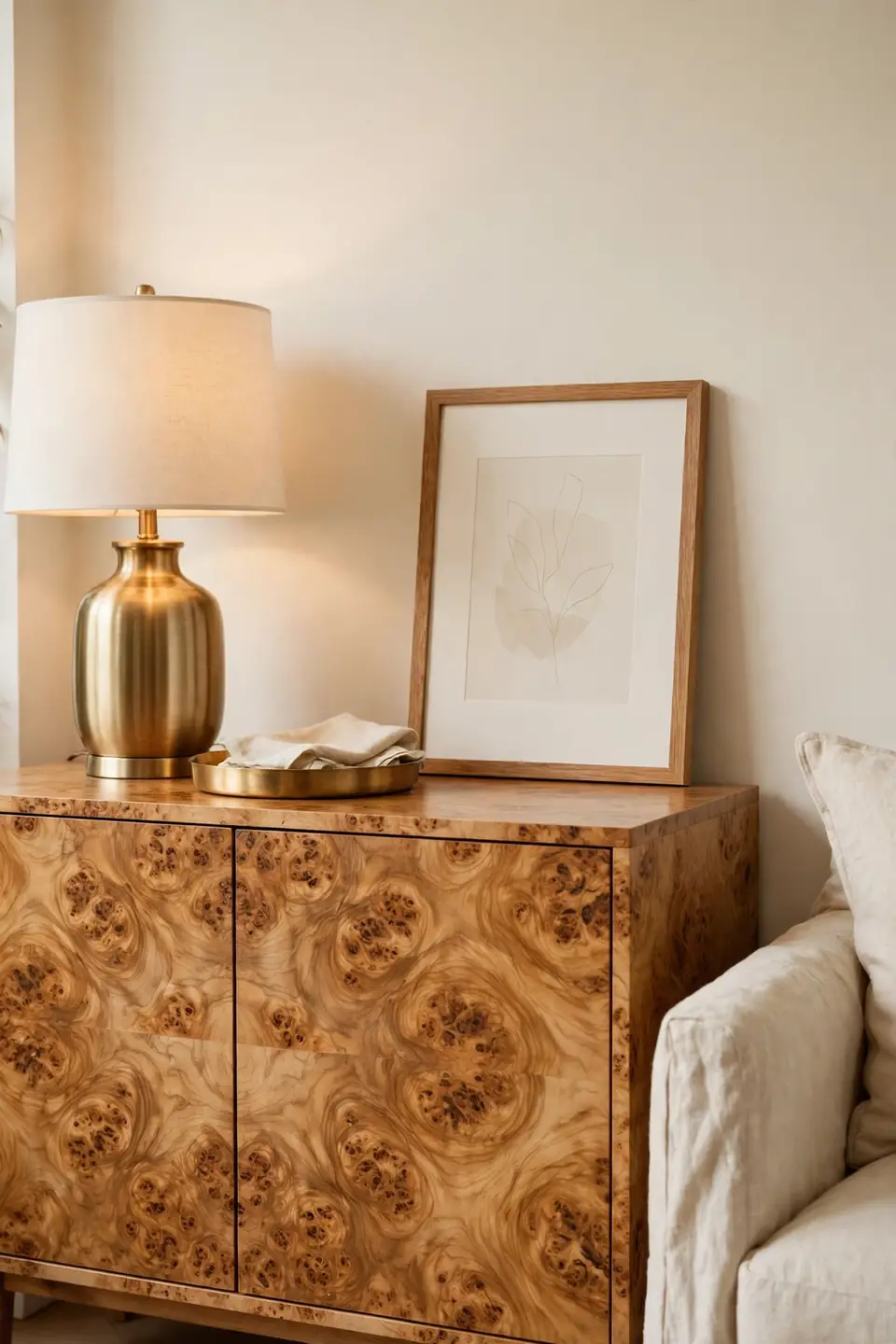
- Let brass appear exactly three times: lamp, hardware, one frame.
- Choose brushed or aged finishes; mirror shine fights wood softness.
- Keep the brass warm toned so it rhymes with honey grain.
- Rest a brass tray on burl rather than beside it.
- Polish brass rarely; a soft patina suits organic rooms.
Burl and brass share the same warm undertone, which is why the pairing reads rich instead of flashy. The wood supplies movement, the metal supplies light, and cream walls hold the two apart like a frame. That’s why many experts recommend limiting metallic finishes to one family per room; two metals can work, three almost always argue. That same one family rule shapes the modern rustic bathroom design inspiration readers ask me about most.
Burl Mirror Frame Glow
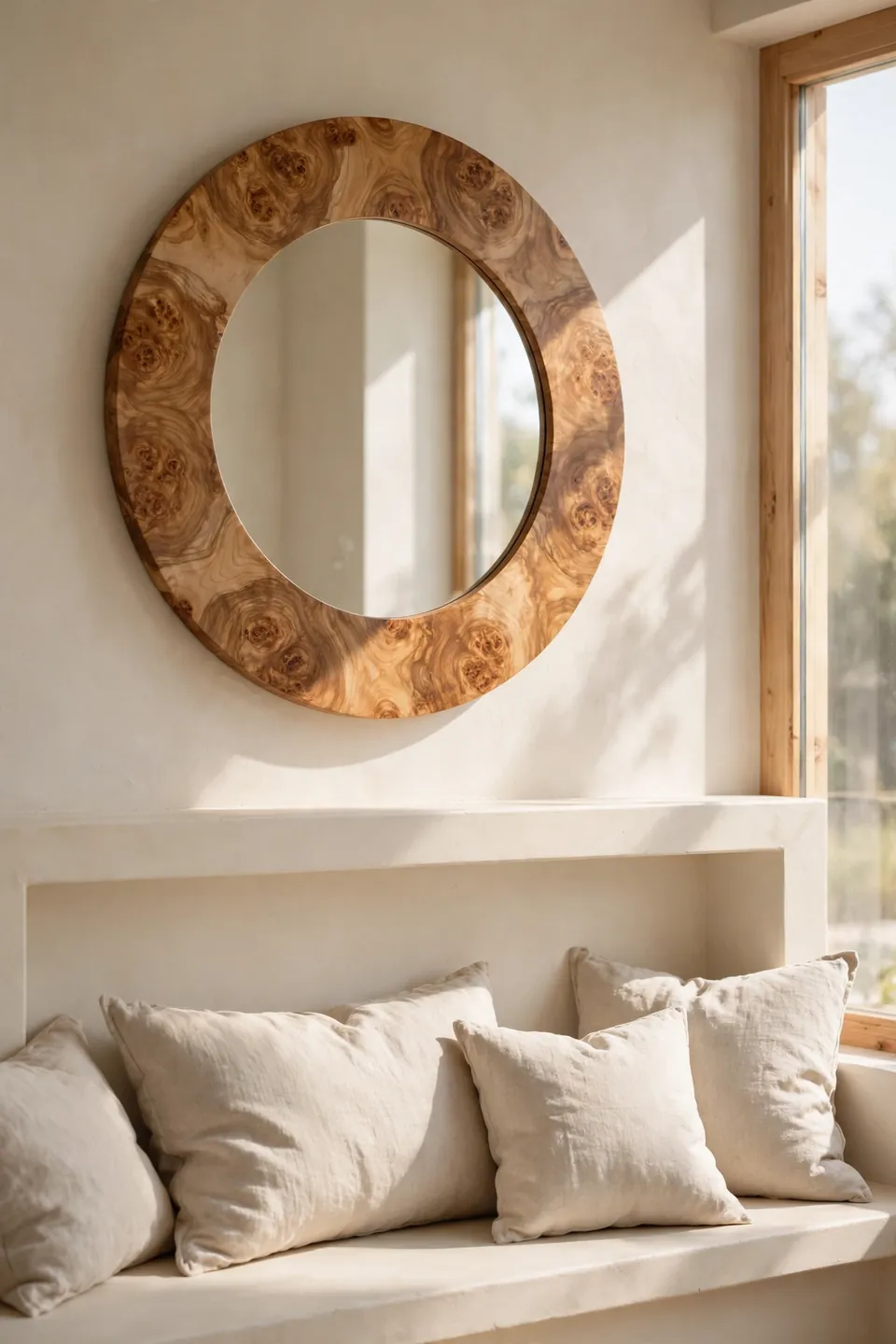
Quick Tip: Hang a burl framed mirror opposite or beside a window, never facing a blank wall. The frame borrows the view, doubles the daylight, and the grain seems to ripple when light moves across it through the afternoon.
Mirrors earn their keep in small or dim rooms, and a burl frame turns that utility into decoration. The swirled edge softens the mirror’s hard geometry, so the whole piece reads like art rather than equipment. Over a mantel or an entry console, it also repeats the wood tone of nearby furniture without matching it piece for piece, which keeps a room feeling gathered rather than bought in one afternoon.
Plain Room Burl Makeover
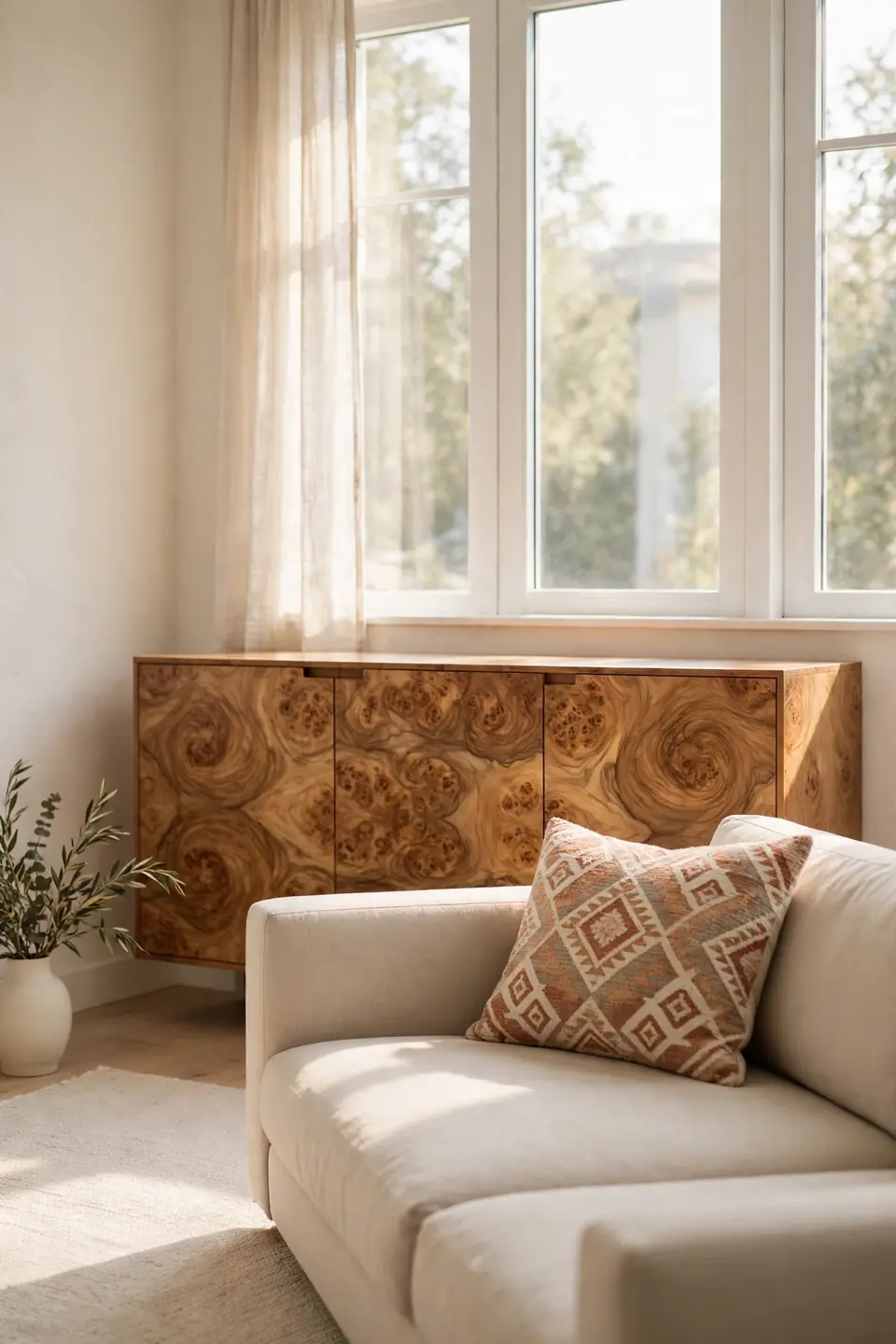
BEFORE: The living room was pleasant and forgettable: beige sofa, beige rug, pale wood from a single big store, all of it clean and none of it memorable. Friends called the room nice, the word used when nothing stays with anyone.
AFTER: One burl credenza under the window rewired the whole space. Its swirling front gave the eye a destination, the beige pieces settled into supporting roles, and the room finally had a story guests asked about.
A makeover rarely needs five new pieces; it needs one piece with a pulse. Burl supplies that pulse because its pattern is nature’s own artwork, framed by whatever quiet furniture already surrounds it. Start with the largest flat surface your budget allows, and live with it a full month before judging.
Choosing Burl Grain Pattern
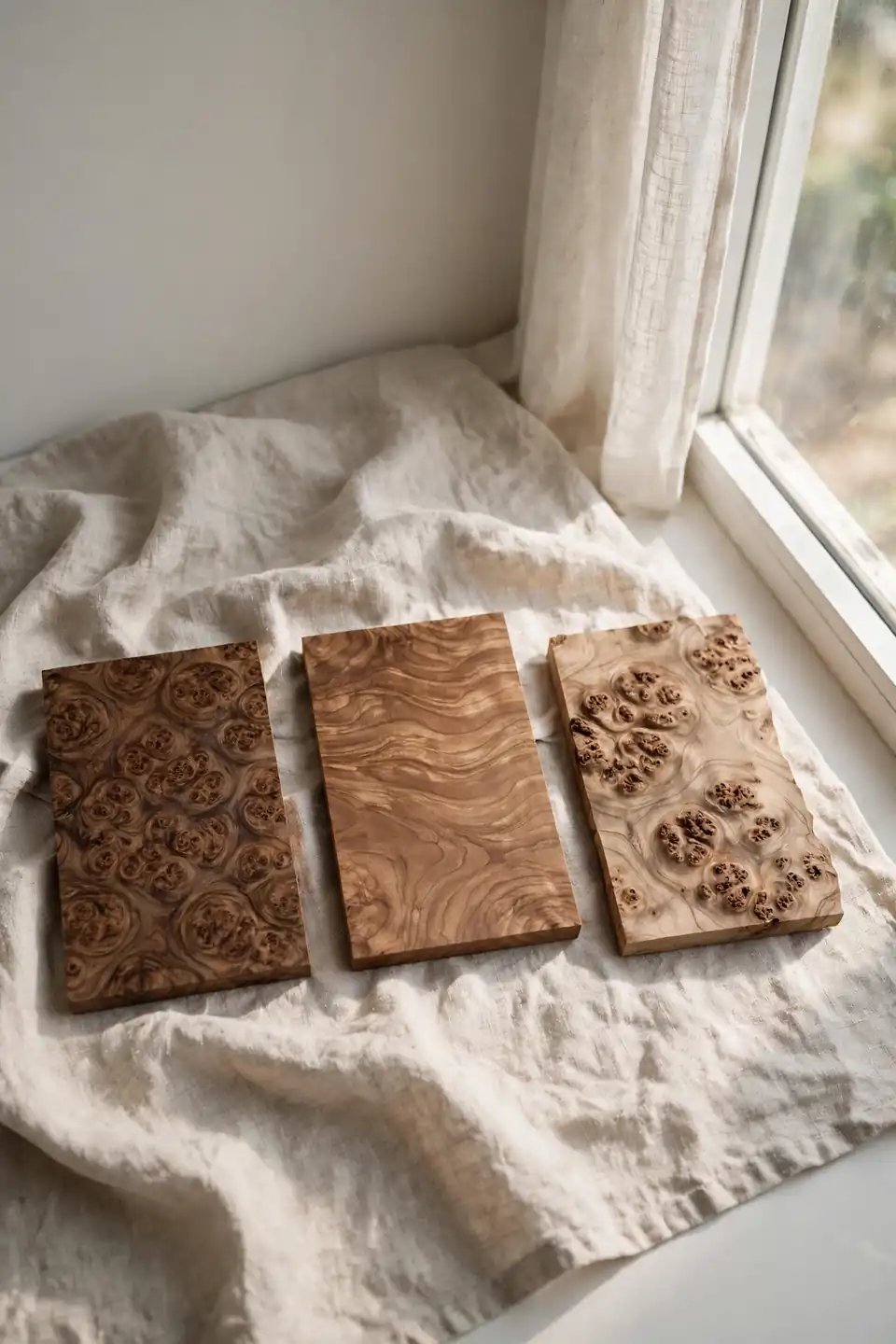
- Decide the mood first: tight busy swirls energize, wide calm waves soothe.
- View large photos of the exact piece; no two burl cuts match.
- Check that the pattern’s scale suits the furniture’s size.
- Look for balanced color, with no pale patches at the edges.
- Hold the sample beside your flooring in daylight before paying.
Grain choice matters more than brand or price, because the pattern is what you will actually live with. Readers collecting natural burl wood furniture interior ideas often save three candidate pieces and compare them side by side at breakfast, when the light is honest and the eye is fresh. The right one usually announces itself within a minute.
Burl Veneer Versus Solid
| Feature | Burl Veneer | Solid Burl |
|---|---|---|
| Availability | Common, bookmatch friendly | Rare, small pieces only |
| Stability | Steady over stable core | Moves with humidity |
| Price | Moderate to high | Very high |
| Best use | Tables, cabinets, doors | Boxes, bowls, accents |
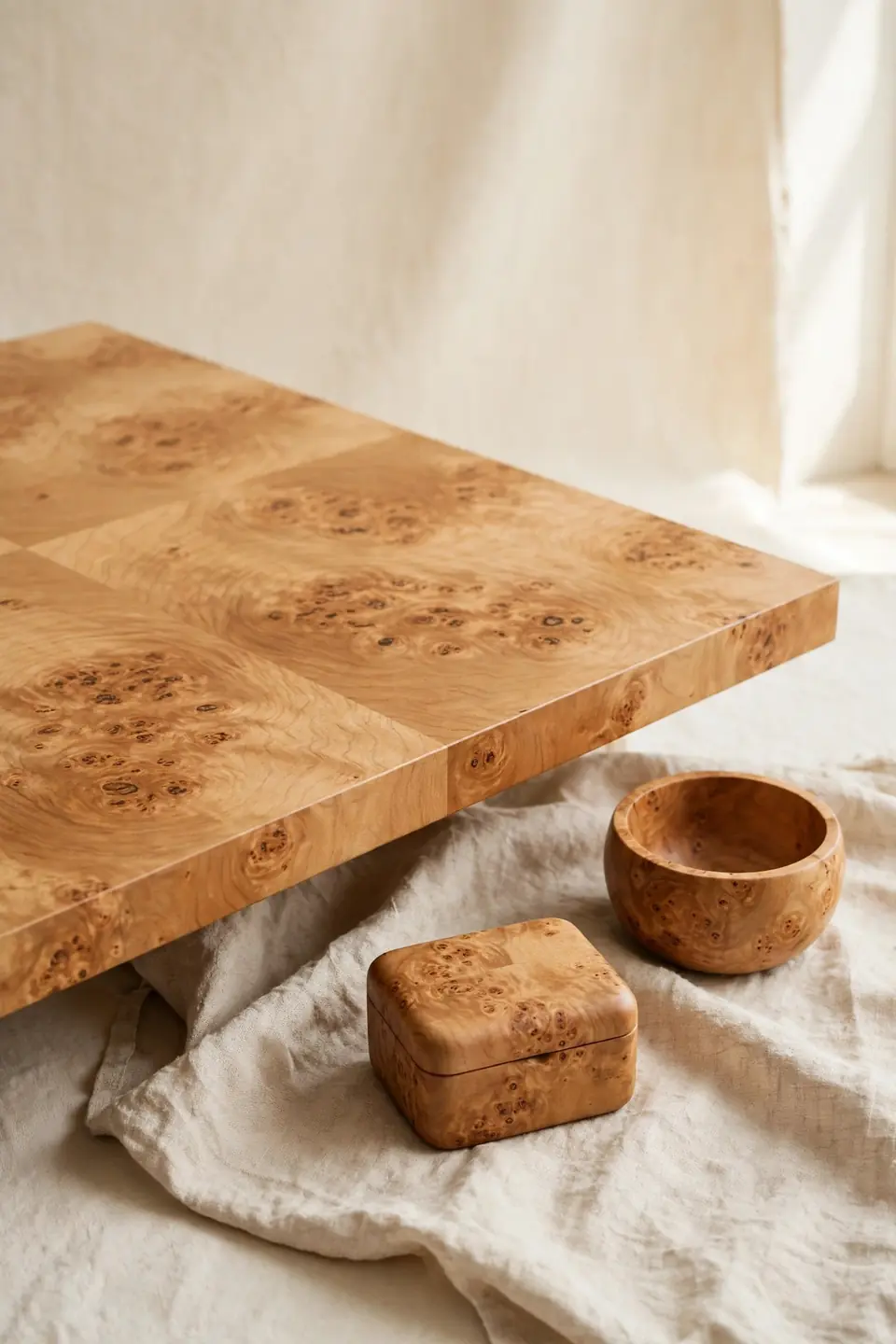
Solid burl sounds purer, yet veneer is the honest workhorse of fine furniture and has been for two centuries. Because burl grows as a knotty outgrowth, solid pieces stay small and crack prone, while veneer slices one rare burl into wide, stable, bookmatched sheets. Judging veneer as a shortcut misses the craft: the finest antiques in museums wear veneer over pine. Buy the construction quality, tight seams, thick edges, balanced finish, and the surface will serve for generations.
Pairing Burl With Neutrals
Do:
- Rest burl against warm cream walls that flatter honey tones.
- Choose linen, wool, and cotton in undyed natural shades.
- Let one neutral carry texture, like a nubby woven throw.
- Repeat cream at three heights: rug, upholstery, curtains.
Don’t:
- Pair burl with stark blue white paint; it turns orange.
- Surround patterned wood with patterned fabrics on every side.
- Choose gray neutrals that drain the wood’s warmth away.
- Forget black entirely; one dark accent grounds the palette.
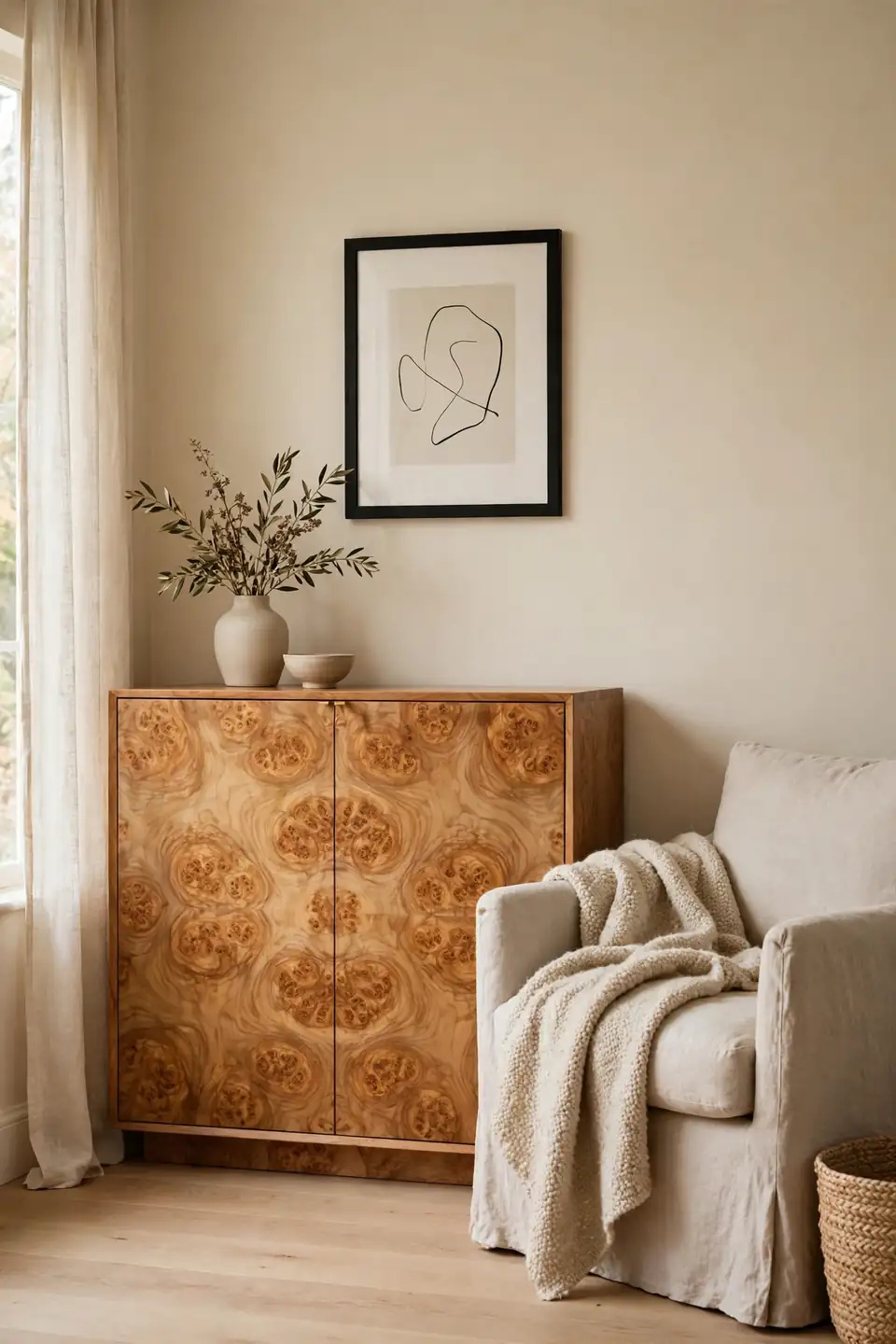
Neutrals are not a compromise beside burl; they are the stage crew that lets the star perform. The wood already carries pattern, color, and movement, so fabrics only need texture and calm. Rooms styled this way photograph beautifully at any hour, because nothing depends on a single shaft of perfect light.
Burl In Small Spaces
Cost: Moderate, one piece
Time: A single afternoon
Skill Level: Beginner
Best For: Studios and small lounges
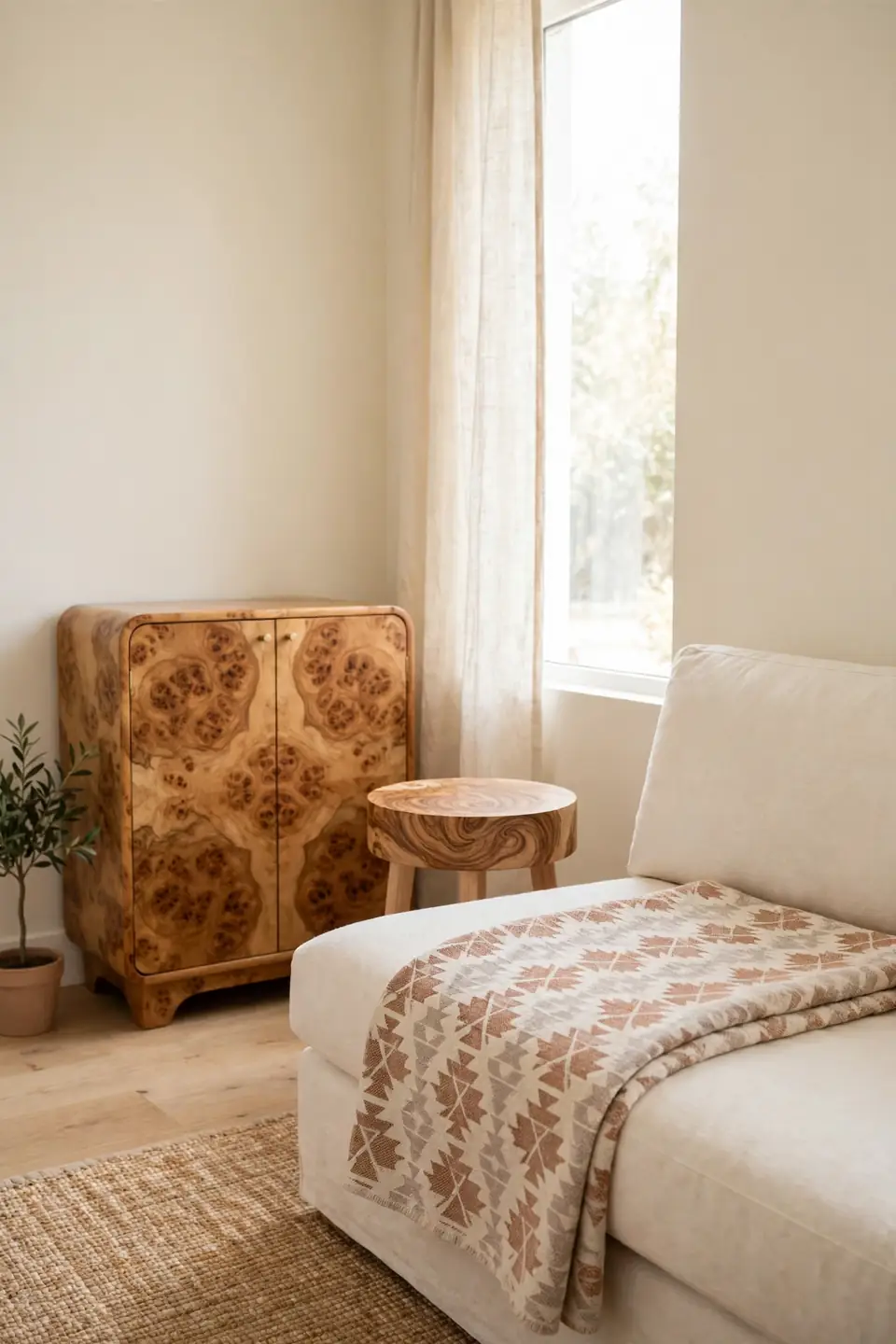
Small rooms fear bold materials, yet one burl piece often works better in a studio than in a hall. The pattern supplies the decoration a tiny room cannot fit, so walls stay bare, shelves stay few, and the space still feels finished. Choose furniture that works twice, a burl storage ottoman, a cabinet that hides the printer, a table that seats four or folds to two. Scale is the only real rule: one confident piece at proper size beats three timid ones squeezed along a wall, which only make the room feel like a storage unit with seating.
Burl Headboard Statement Bed
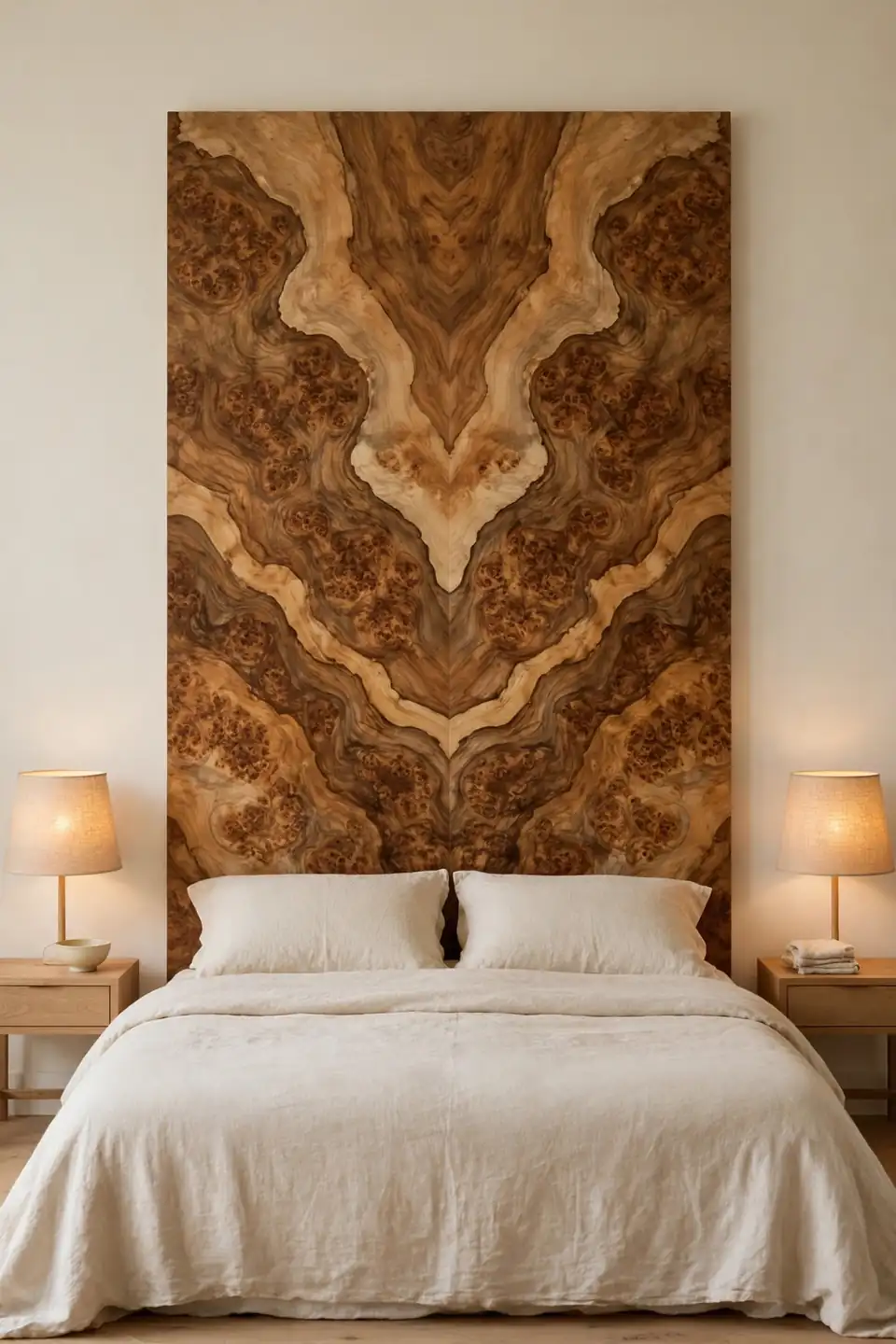
A burl headboard turns the bed into scenery. Bookmatched panels meet at the center like a landscape folded open, and plain cream bedding becomes the quiet foreground it deserves. No art above the bed can compete, so leave the wall bare and let the grain hold the whole view by itself.
Proportion decides whether the effect feels serene or theatrical. Aim for a headboard that rises a hand’s width above the pillows and stops an inch or two wider than the mattress on each side. Warm bulbs in linen shades on both nightstands will rake soft light across the swirls at night, when the pattern looks richest.
Vintage Burl Finds Restored
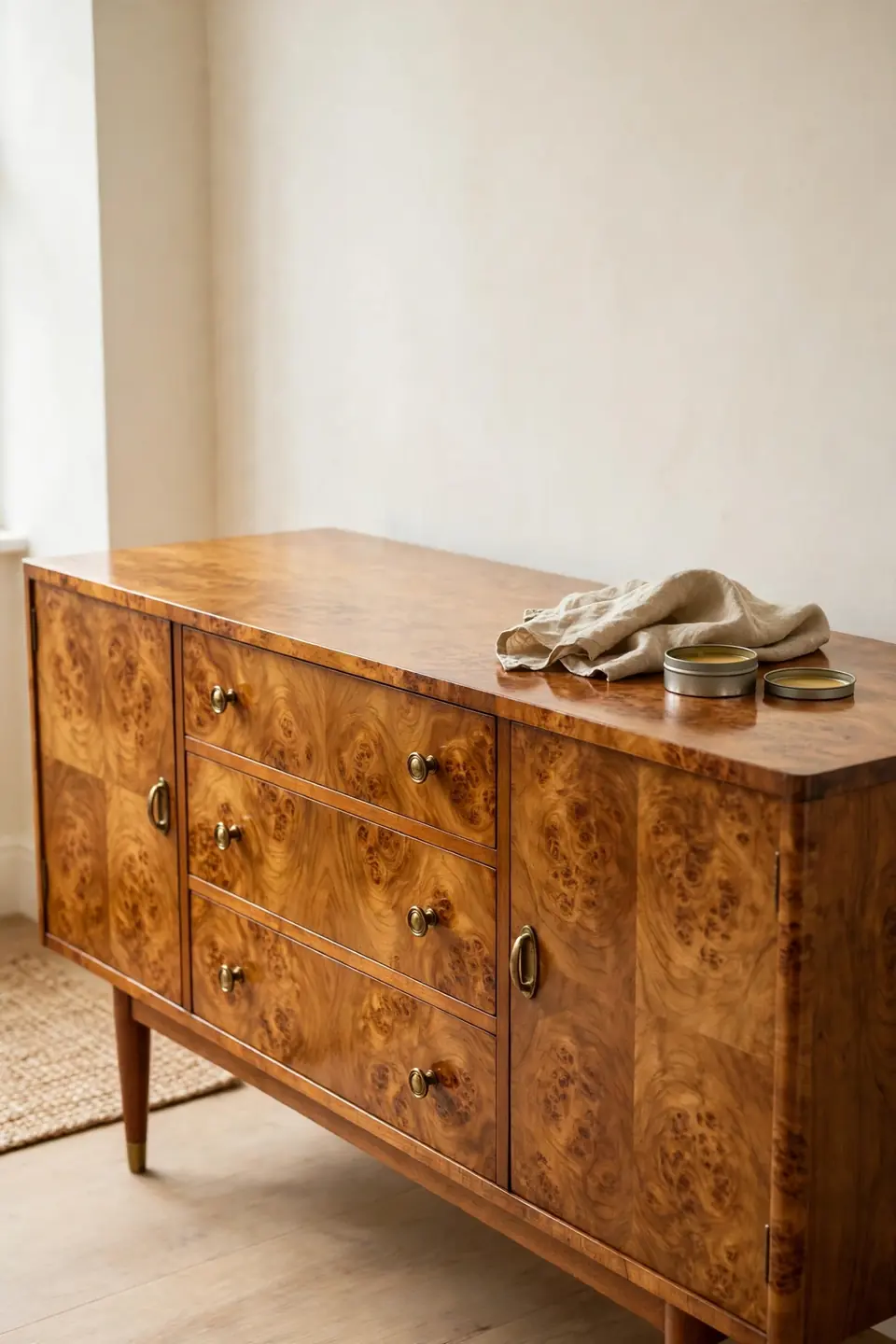
- Hunt estate sales and small auction houses, where burl hides under dust.
- Check veneer edges with a fingertip; lifting corners mean careful repair ahead.
- Budget for a professional polish rather than a full refinish.
- Keep original hardware whenever possible; it dates the piece honestly.
- Ask about provenance, but buy the grain, not the story.
Mid century burl pieces surface constantly in estate sales, often priced as ordinary brown furniture because sellers miss what the grain is. A gentle clean, a wax feed, and new felt pads can return a tired sideboard to glory in one weekend. I have noticed restored burl sells the room instantly, carrying age and polish in the same surface.
Burl Tray Styling Moments
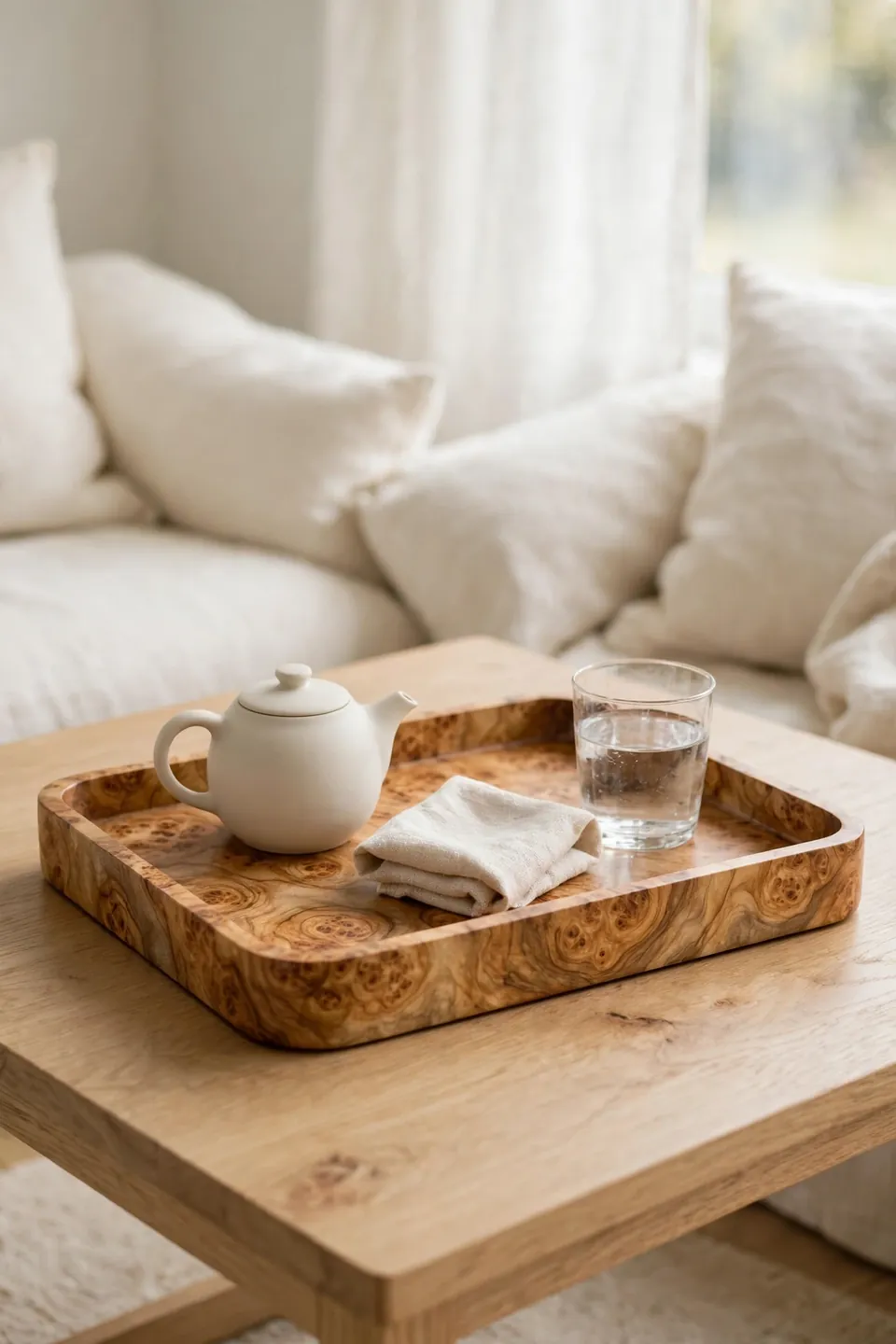
Quick Tip: Style a burl tray in odd numbers, three objects or five, never four. The eye reads odd groupings as collected rather than arranged, and the tray’s own swirls count as one of the visual elements in the group.
A burl tray is the smallest possible commitment to the material, and it works almost anywhere: corralling remotes on a coffee table, holding perfume on a dresser, or carrying tea to a reading chair. Because the grain is busy, keep the objects on it plain and tall enough to cast small shadows. One tray also makes a kind first gift for a friend who admires burl but fears furniture sized decisions.
Dated Room Burl Refresh
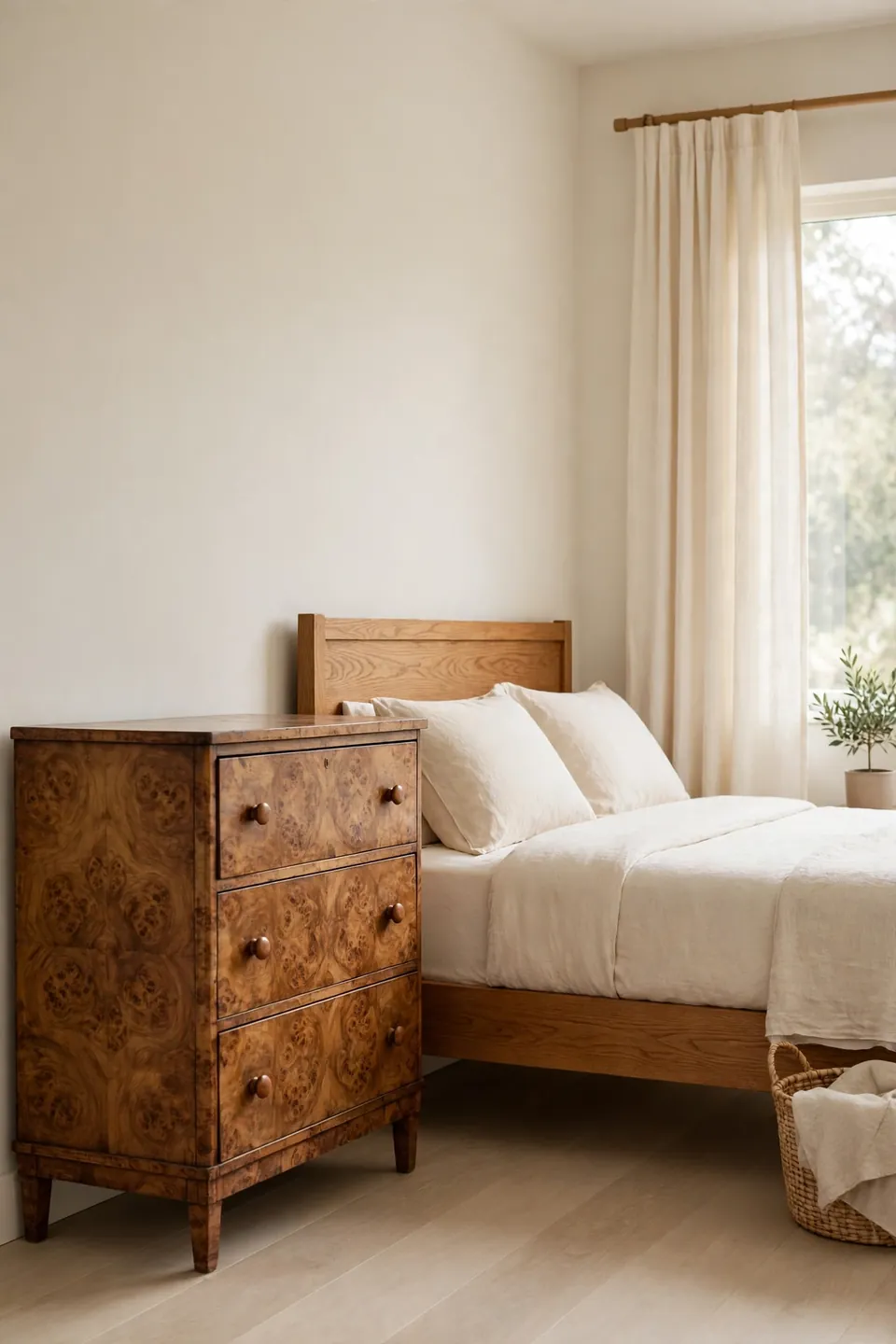
BEFORE: The guest room still lived in an earlier decade: honey oak set bought all at once, shiny brass bed, and curtains the color of old tea. Everything matched, and that was exactly the problem; the room felt preserved rather than lived in.
AFTER: Swapping the dresser for a vintage burl piece broke the set’s spell. Suddenly the oak bed looked warm instead of dated, the curtains read as soft rather than tired, and guests started asking where the dresser came from.
Breaking a matched set is the cheapest refresh in decorating, and burl is the ideal intruder because its age sits comfortably beside older wood. Change one piece, live with the new tension for a week, and only then decide what else goes.
Styling Burl Console Table
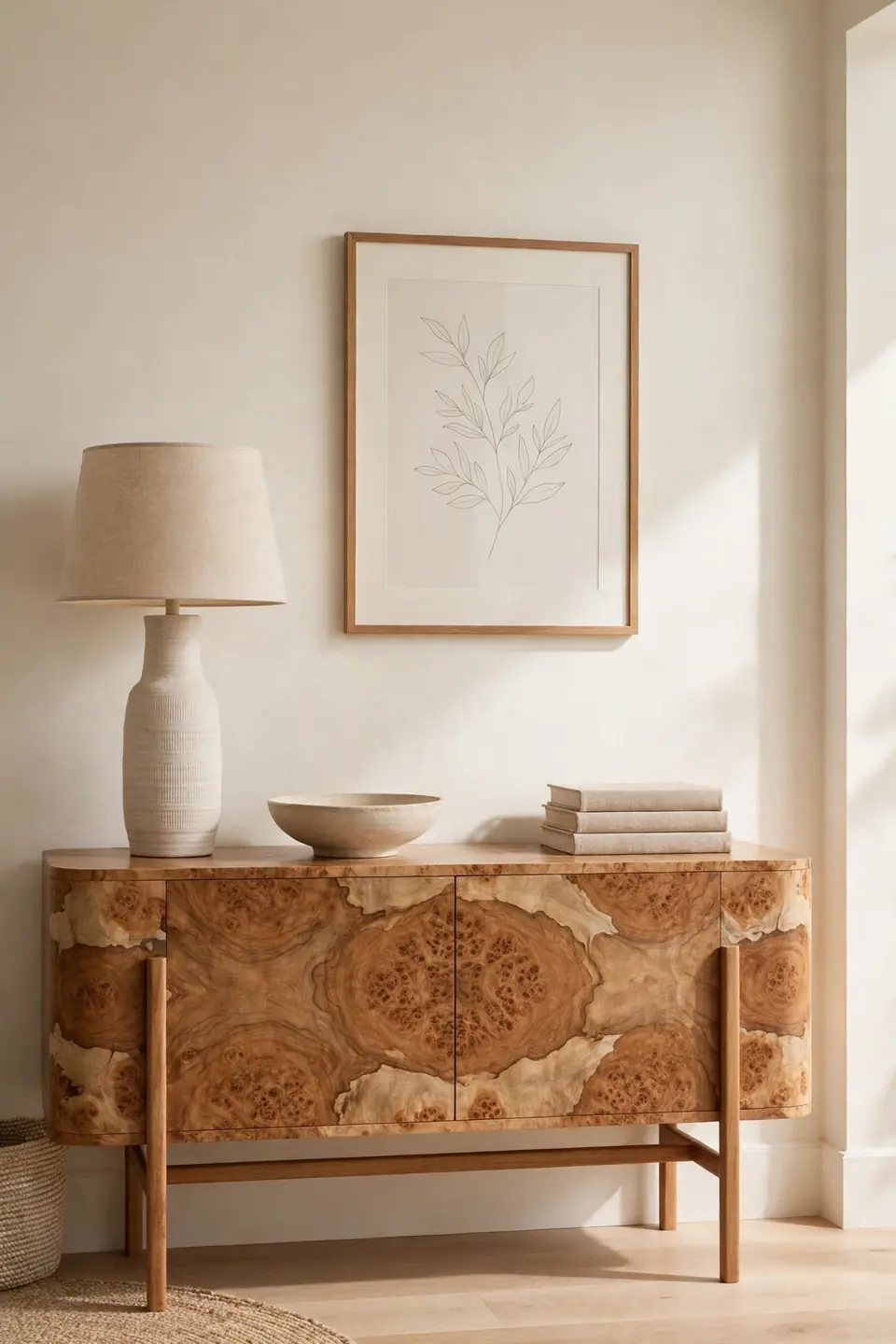
- Anchor the wall first with art or a mirror at eye level.
- Place the tallest object, a lamp or branch, at one end.
- Balance it with a low stack of books at the other end.
- Bridge the middle with one shallow burl or ceramic bowl.
- Step back and remove one item; consoles improve with subtraction.
A console table lives in the hardest working meter of a home, behind sofas and along entry walls, so its styling must survive daily traffic. Keep walkways clear, keep objects heavy enough not to wander, and let the burl top show in long bare stretches between groups. The grain is the decoration; everything else is punctuation.
Honey Burl Dark Burl
| Feature | Honey Burl | Dark Burl |
|---|---|---|
| Tone | Golden, sunlit warmth | Deep espresso swirls |
| Light needs | Happy in bright rooms | Wants strong daylight |
| Pairs with | Cream, linen, brass | Cream, black, chrome |
| Mood | Cheerful organic | Moody, tailored drama |
Tone changes everything about how burl behaves. Honey burl throws light back into a room and forgives north facing windows, while dark burl drinks light and asks for lamps in pairs. Mixed together on different pieces, the two can clash like unmatched shoes; keep one tone per room and let finishes vary instead. When in doubt, hold the sample against your largest existing furniture piece, because harmony with that anchor matters more than loyalty to a photograph.
Mixing Burl Other Woods
Do:
- Let burl be the only patterned wood in the room.
- Keep companion woods plain grained: oak, walnut, or ash.
- Overlap tones slightly so pieces feel like relatives.
- Repeat each companion wood at least twice for rhythm.
Don’t:
- Mix two different burls with competing busy patterns.
- Place zebrawood or heavy oak grain beside swirls.
- Match every wood tone exactly; sameness looks staged.
- Forget a non wood material to rest the eye.
Wood mixing fails when every piece demands attention. Give burl the solo, let plain woods play rhythm, and add one quiet non wood voice, stone, linen, or matte ceramic, to separate the tones. Rooms arranged this way feel collected over years, even when everything arrived last spring, because the eye senses a hierarchy instead of a contest.
Burl On A Budget
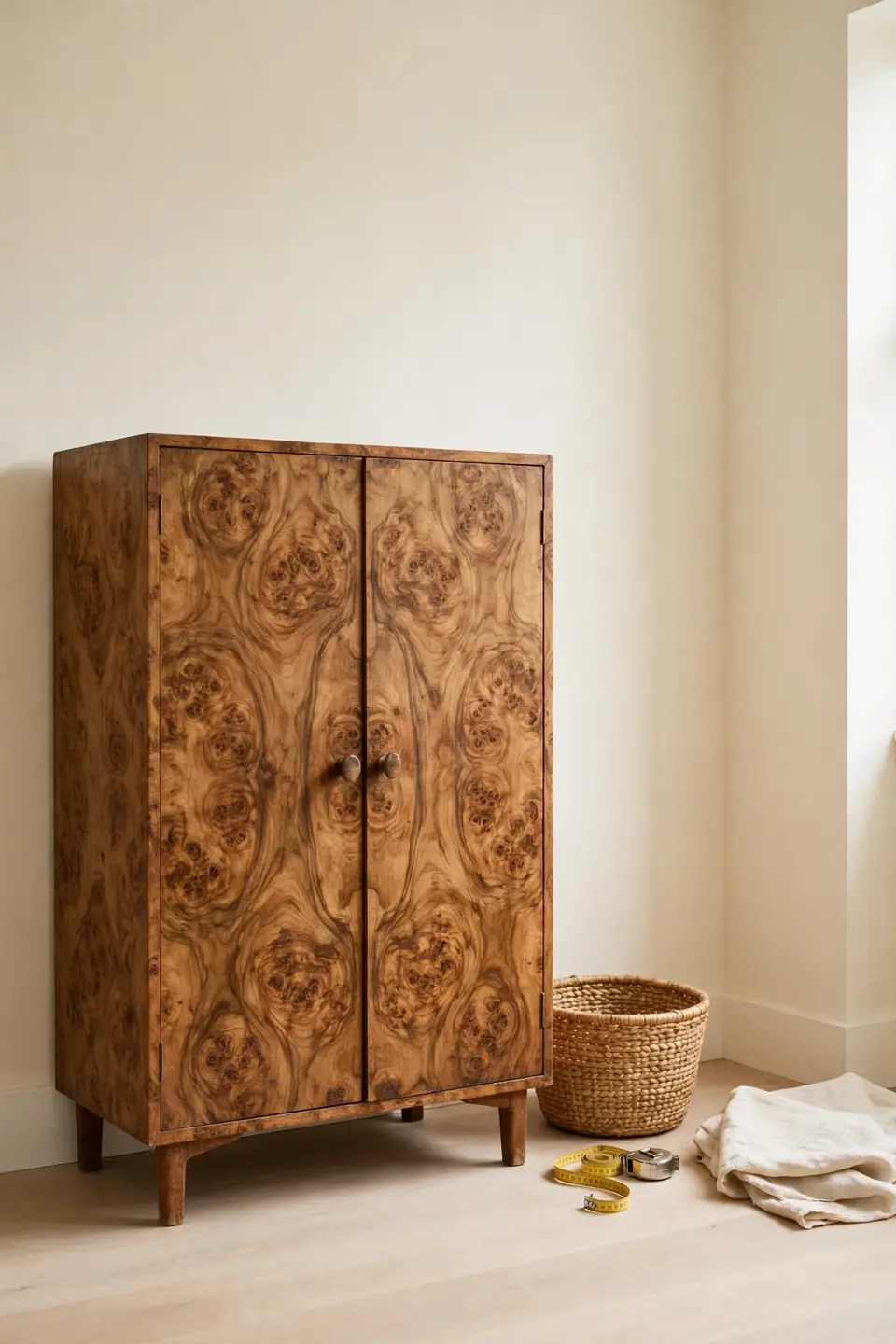
Cost: Low if vintage
Time: A few weekends
Skill Level: Patient beginner
Best For: First burl buyers
Burl carries a luxury reputation, yet patient shoppers find it for very little. Veneered pieces from the seventies surface in thrift shops weekly, small boxes and trays hide on auction sites under vague listings, and offcuts from veneer suppliers make fine shelves and frames. The real budget skill is waiting: set a search alert, learn the grain so you can spot it in a bad photograph, and keep a measuring tape in your bag. I have seen this work well in many cases, including my own first cabinet, bought for less than a new flat pack bookcase.
Burl Corner Reading Nook
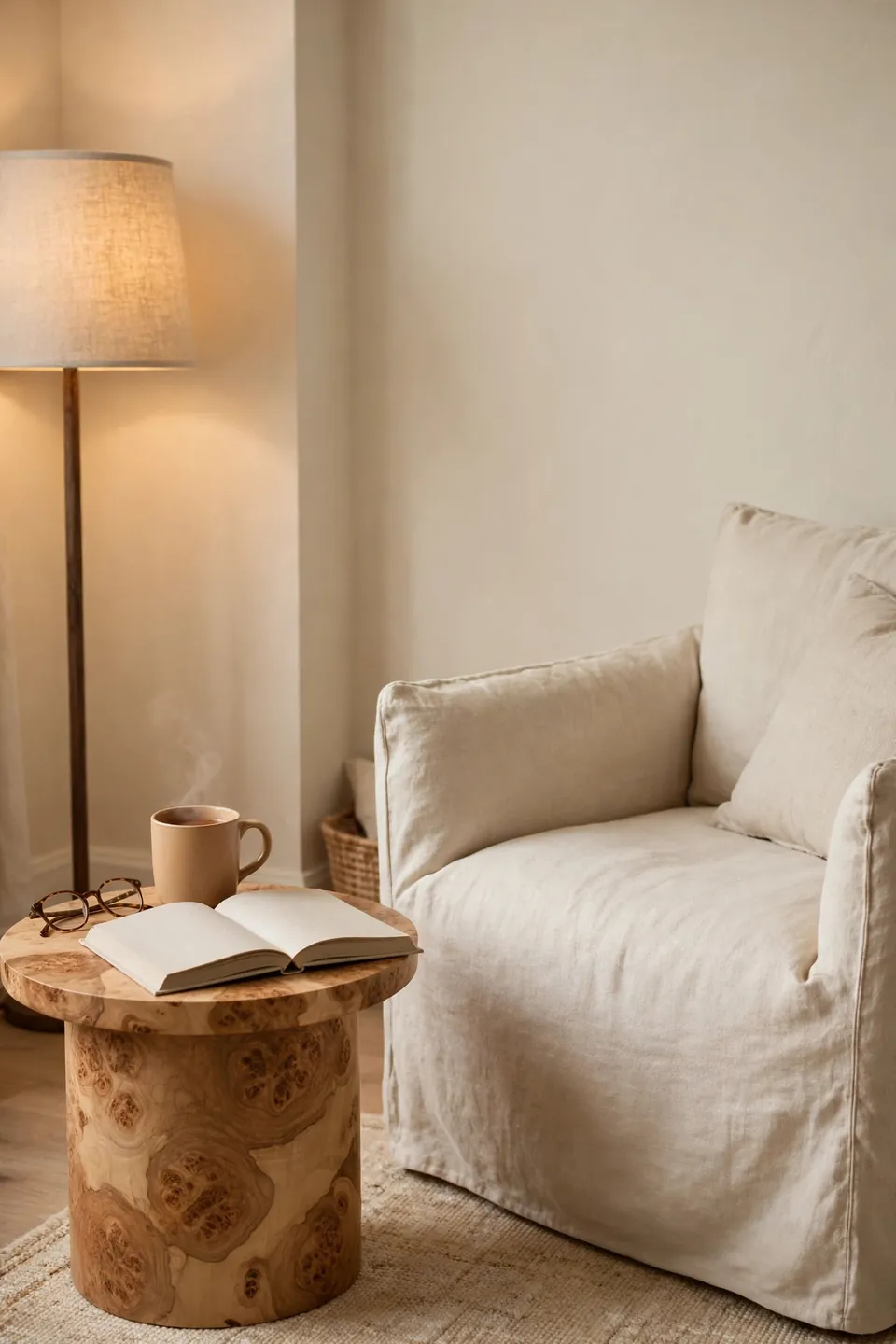
Every home deserves one corner that asks nothing of you. A small burl side table beside a deep chair builds that corner quickly, its swirls giving your eyes somewhere gentle to wander between pages. Add a floor lamp with a linen shade and the nook starts calling you by name.
Keep the table’s surface honest: current book, reading glasses, one warm drink, nothing that beeps. A folded wool throw over the chair arm repeats the wood’s warmth in soft form. Corners like this get used daily, which is more than most formal rooms can claim, and the burl only grows prettier under that kind of loyal attention.
Conclusion
Burl wood asks for very little: one honest surface, soft light, and room to breathe. Start where your eyes land first, a coffee table, a pair of nightstands, a cabinet by the door, and let the rest of the home stay simple around it. That is the quiet promise of natural burl wood furniture interior ideas: luxury that comes from nature doing the decorating itself. Save your favorite ideas to a Pinterest board before you shop, try one piece this season, and share the result with a friend who loves warm wood as much as you do.