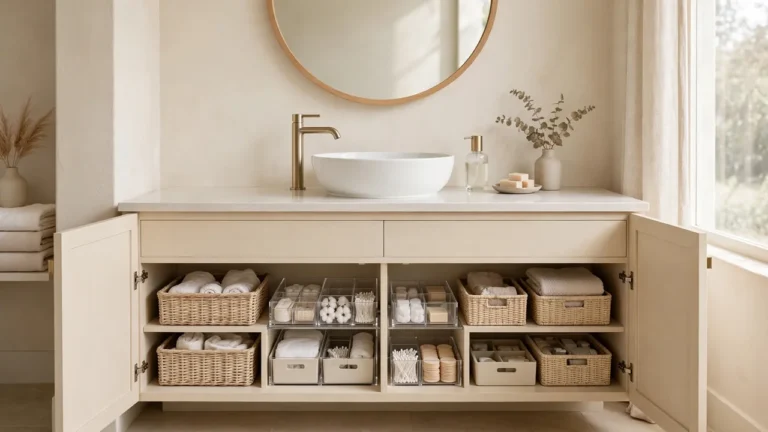
23 Modern Rustic Bathroom Design Ideas for Natural Elegance
Warm wood, honest stone, and soft morning light can turn the plainest bathroom into the calmest room in the house. Good modern rustic bathroom design inspiration starts with materials that age gracefully: reclaimed oak, rough slate, unlacquered brass that deepens with every year of use.
Below are twenty three grounded ways to build that look slowly and honestly, from a full vanity change to a single basket swap. Warmth at home rarely needs a matching set; even the burnt orange and cream bedroom ideas people save for autumn follow the same rule of one natural material repeated with care. Start where your hand lands every morning, the faucet or the vanity edge, and let one good change teach the next.
Reclaimed Wood Floating Vanity
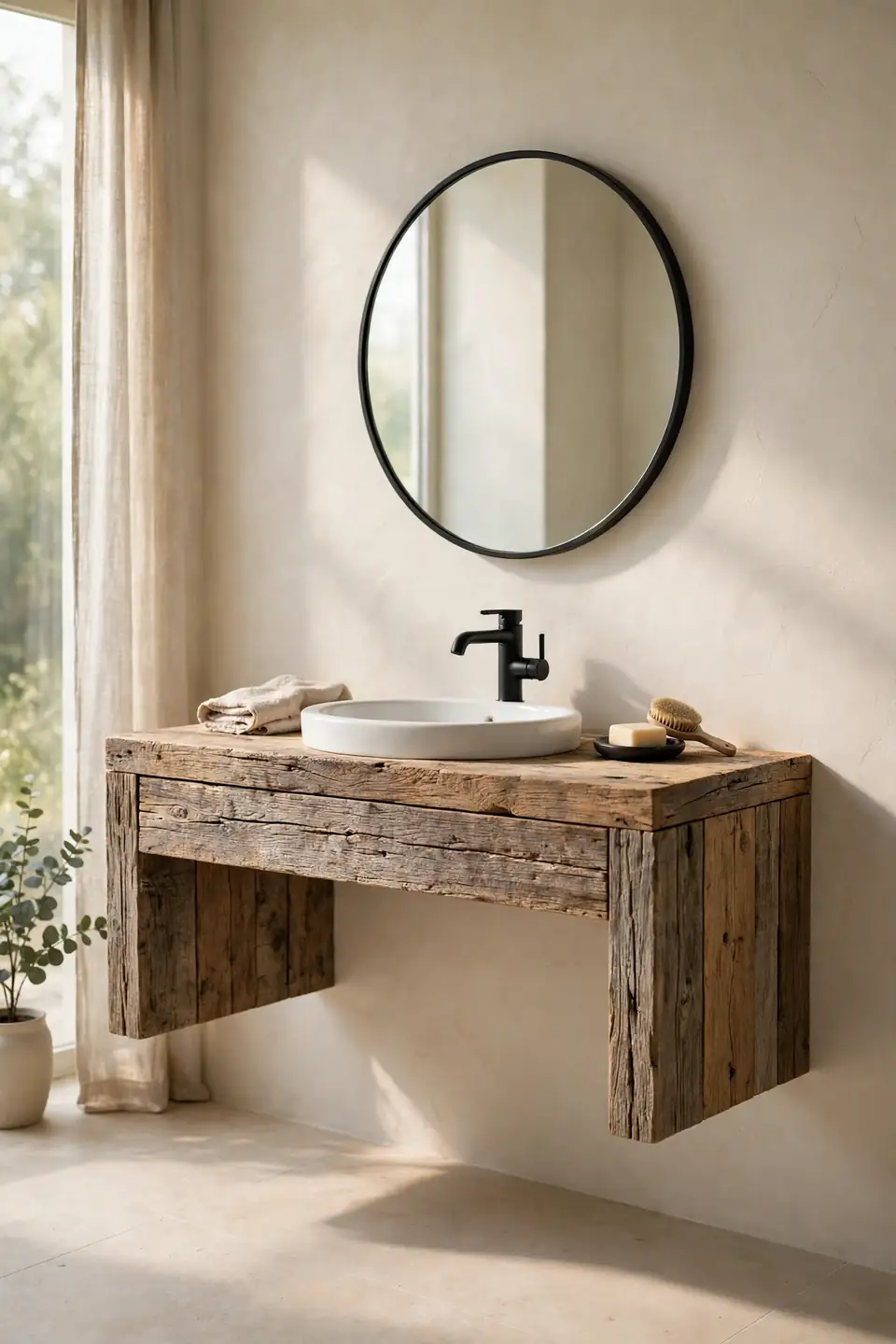
A floating vanity in weathered oak gives a bathroom instant warmth while the open floor beneath keeps the room feeling twice its size. The grain does the decorating here, so skip busy hardware and let simple black peg knobs finish the piece quietly.
Mount the vanity a hand’s width higher than standard if your household runs tall, and seal the wood with a matte hardwax oil that shrugs off splashes. Leave the wall behind it plain cream plaster so the timber stays the single loud voice in the room. In my experience, one strong wood piece beats five small rustic props every single time, and guests always ask where the vanity came from.
Stone Vessel Sink Pairing
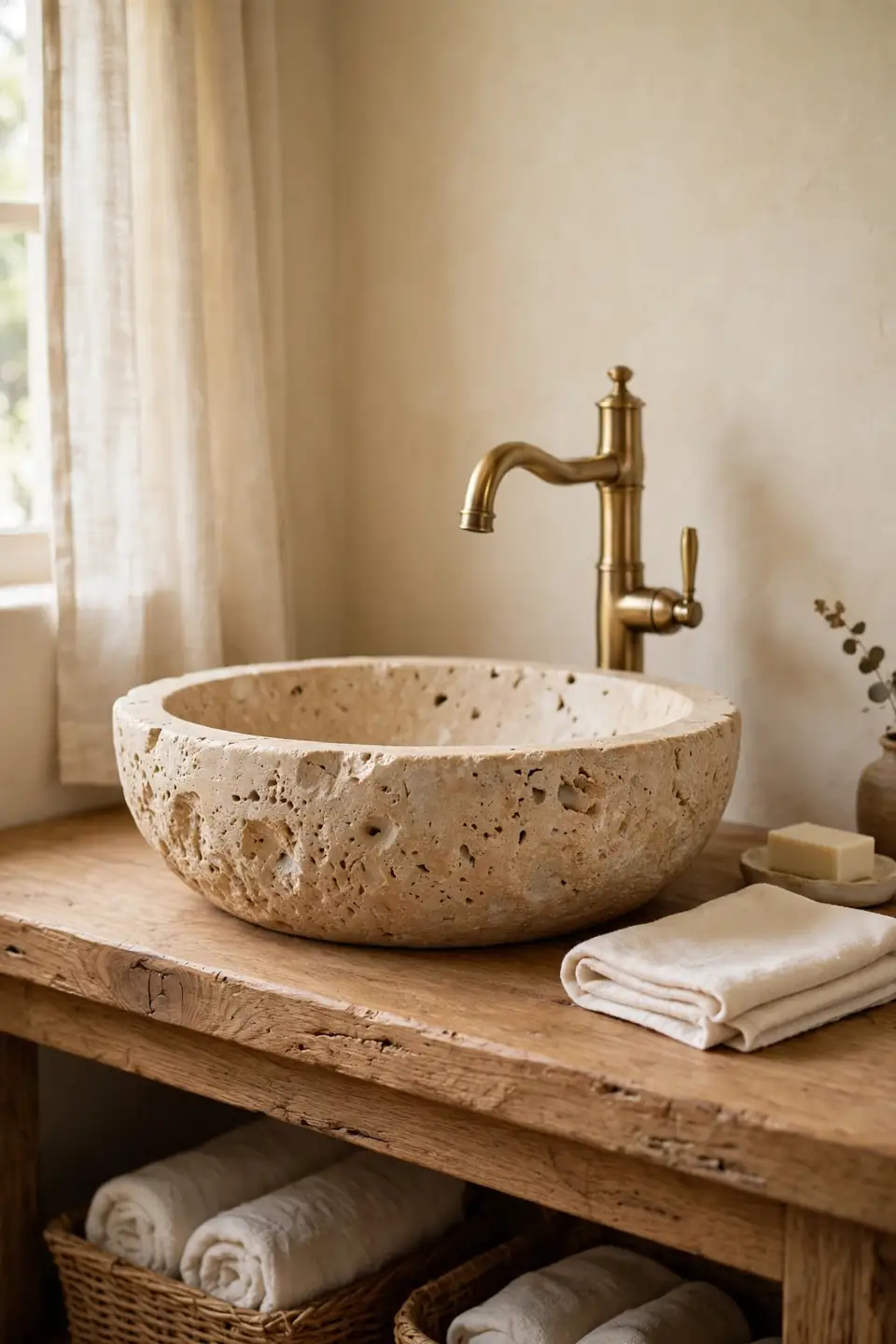
- Pick a hand carved travertine bowl with a softly uneven, honest rim.
- Set the vessel on a thick oak counter so stone and timber meet at once.
- Match it with a tall faucet; short spouts splash over high vessel rims.
- Keep drain and faucet finishes identical for a calm, deliberate pairing.
- Seal natural stone twice yearly, since toothpaste etches it quickly.
A stone vessel earns its keep by slowing the whole room down; even a rushed morning wash feels calmer at a basin with weight and texture. Keep counters around it nearly bare, one folded hand towel and a small soap dish at most, and the sink stays the clear hero of the vanity wall.
Matte Black Fixture Swap
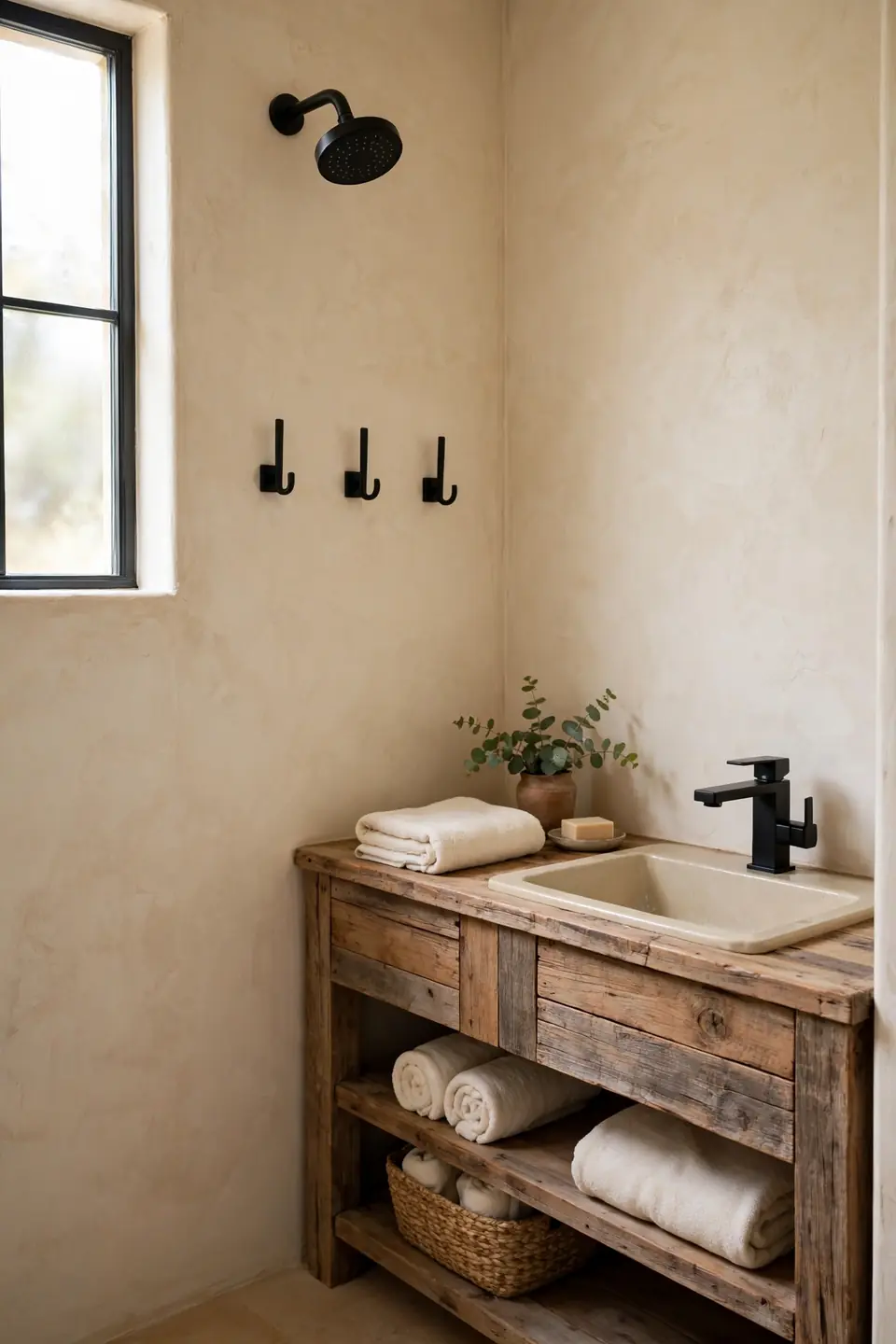
Quick Tip: Swap one fixture at a time over a month: faucet first, then shower head, then robe hooks. Spreading the change keeps costs gentle and shows you exactly which swap made the biggest visual difference.
Matte black reads modern against cream plaster and rustic against raw wood, which is why it anchors this whole style so well. The finish hides water spots better than chrome, though it shows pale dust in hard water areas, so a weekly wipe with a dry cloth keeps it deep and even. Stick to one black family across the room; mixing matte, satin, and gloss black in a single small bathroom makes the fixtures look mismatched rather than layered, and the eye keeps catching on the difference instead of resting.
Freestanding Soaking Tub Scene
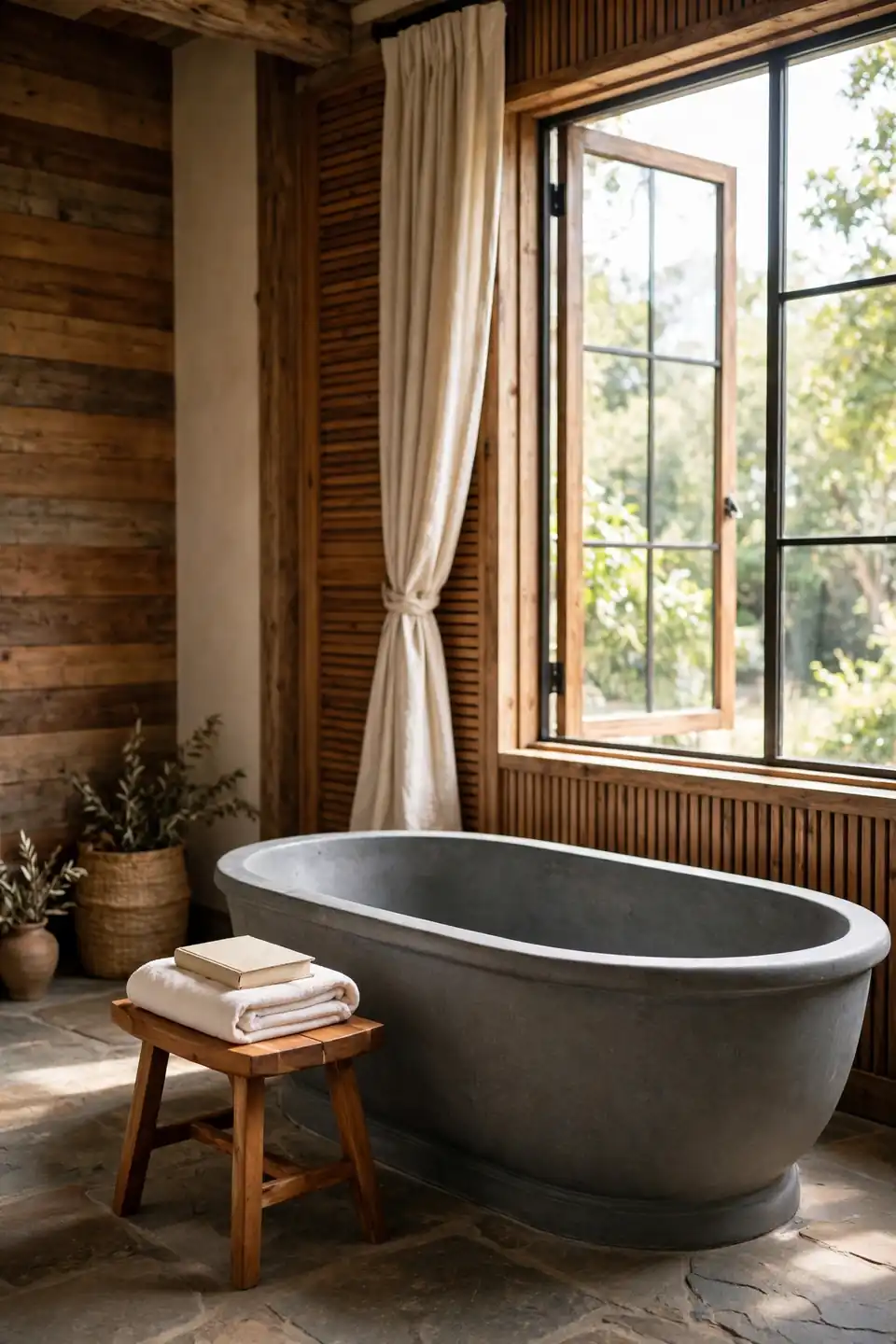
BEFORE: The old built in tub sat boxed in tile, its wide deck collecting bottles, candles, and dust. The whole corner felt heavy and dated, and nobody in the house ever chose a bath over a quick shower.
AFTER: A deep oval soaking tub now stands on its own near the window, with a small teak stool beside it holding a folded towel and a book. The floor shows around every curve, and the corner finally breathes.
Freestanding tubs ask for less plumbing drama than people fear; many models fill from a floor mounted faucet placed after the tub is set. Leave at least a hand’s span between tub and wall on every side so mopping stays easy and the shape reads sculptural instead of squeezed in.
Plaster Wall Texture Steps
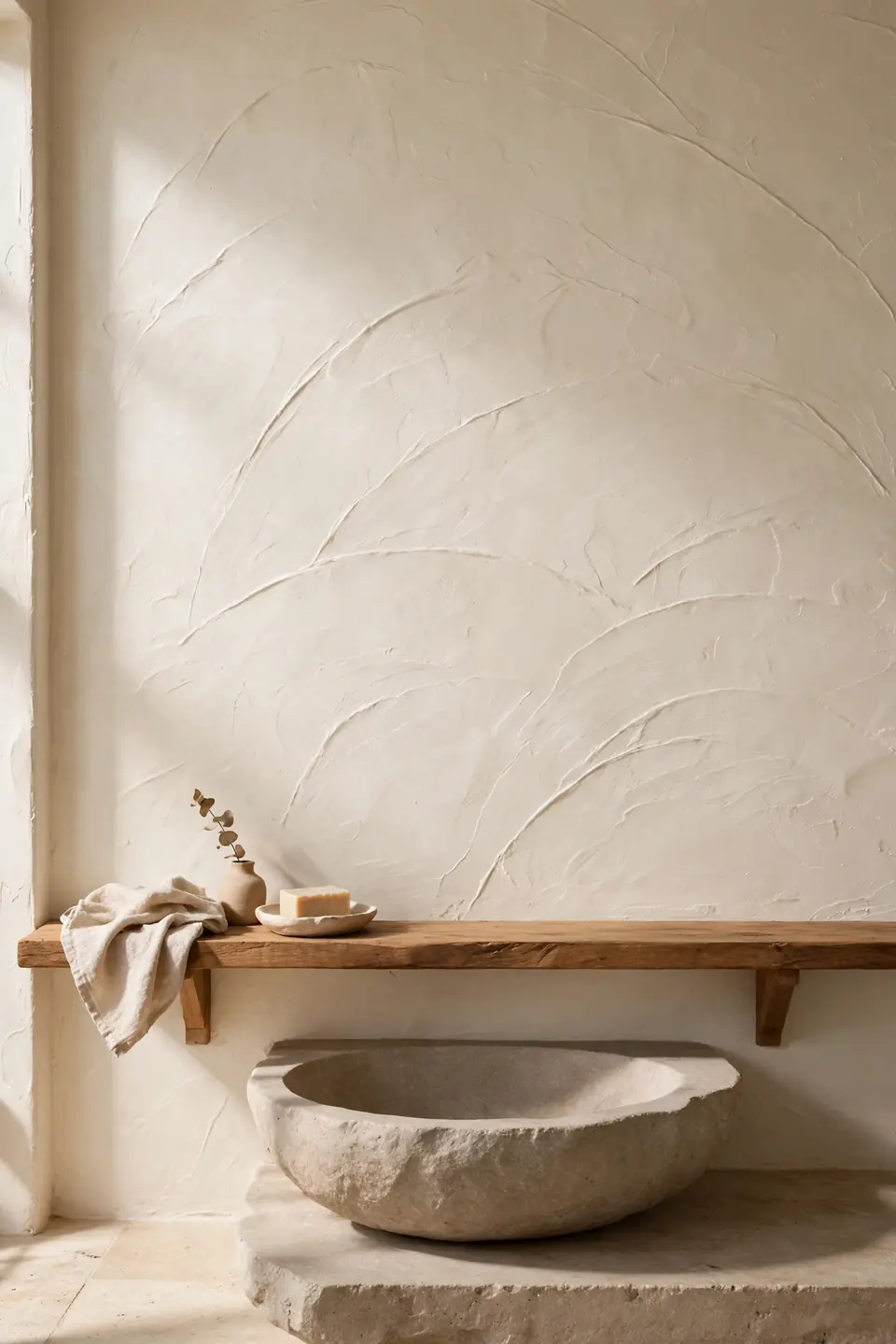
- Strip old paint drips and fill dents; texture hides little sins, never big ones.
- Mix lime plaster to thick yogurt consistency and work in small sections.
- Spread with a wide trowel in loose arcs, leaving gentle ridges as you go.
- Soften harsh ridges with a damp sponge once the surface starts to set.
- Leave it unpainted in warm white, or wash with diluted clay paint for depth.
Plaster walls give rustic bathrooms their soft, chalky light; the surface drinks in sunshine instead of bouncing it back like flat paint. The finish suits wood and stone because it shares their matte, touchable quality. Small cracks over the years read as character here, not damage, which makes plaster a forgiving choice for older houses that still shift a little with the seasons.
Vanity Wood Tone Choice
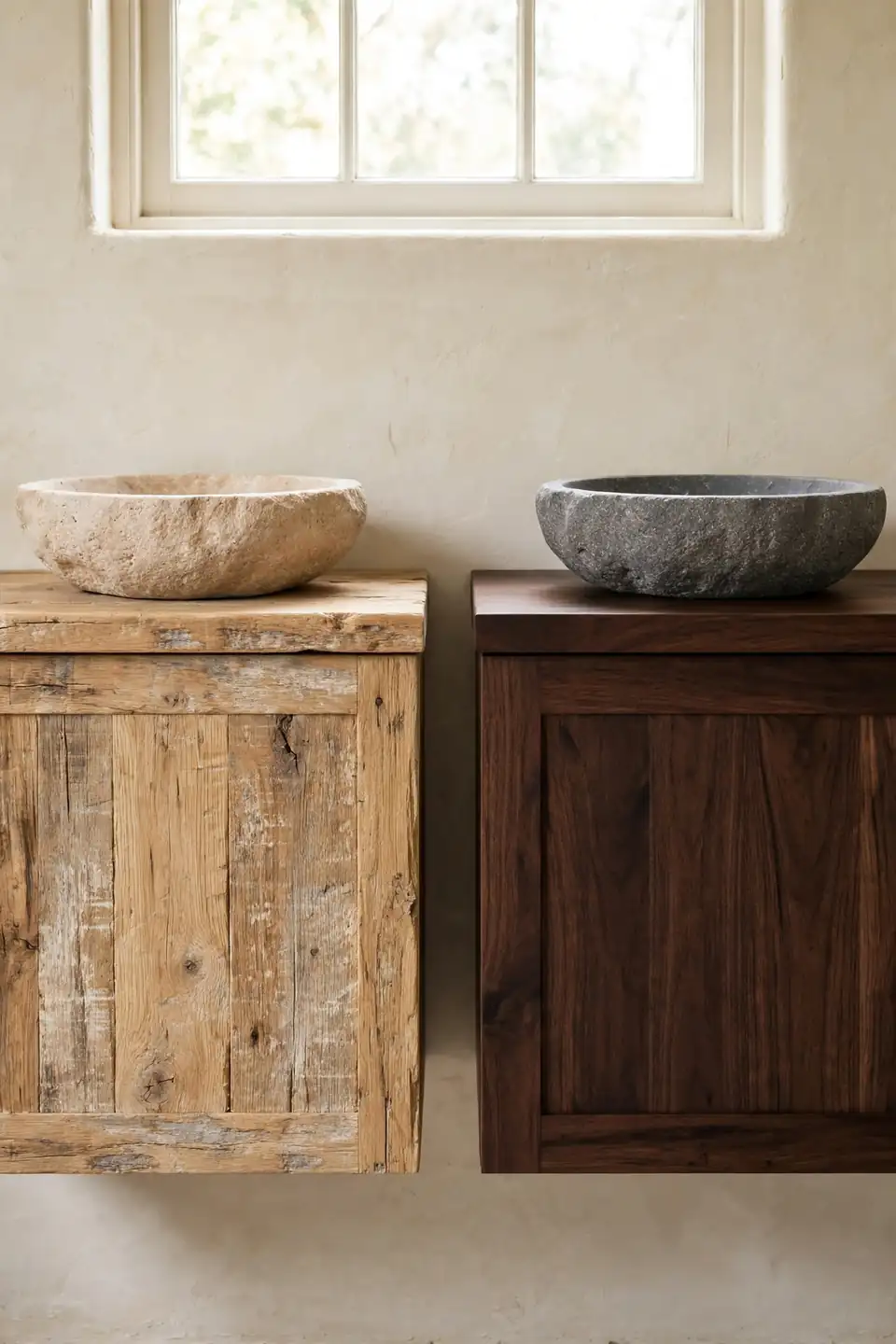
| Feature | Reclaimed Oak | Dark Walnut |
|---|---|---|
| Room feel | Bright and open | Deep and moody |
| Grain | Bold, rustic marks | Smooth, fine lines |
| Upkeep | Matte oil yearly | Polish twice yearly |
| Pairs with | Cream plaster, brass | Stone, matte black |
Neither wood wins outright; the room decides. Oak keeps small bathrooms light and forgiving, hiding dust and toothpaste flecks between weekly cleans. Walnut brings richness that suits larger rooms with strong daylight, where its depth reads as luxury rather than gloom. Stand both samples against your wall at breakfast and again at dusk before ordering, because wood tones shift across a day more than paint chips warn. Whichever you pick, repeat the same tone once more in the room, a mirror frame or stool, so the vanity never sits as the only wood voice.
Live Edge Mirror Moment
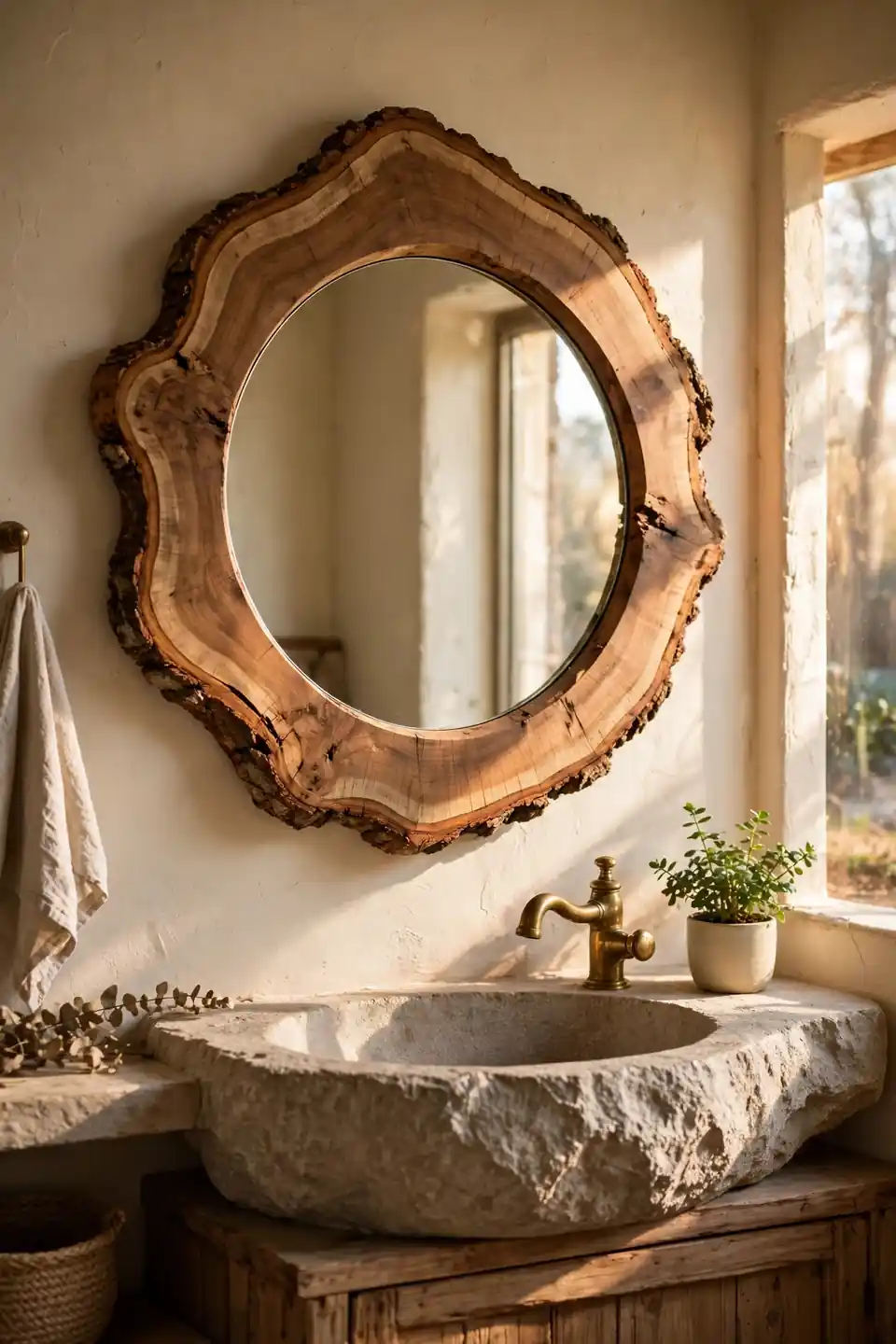
Do:
- Hang the mirror so its wildest edge faces the window light.
- Center it over the sink, not over the whole vanity width.
- Leave breathing room between the wood edge and any sconce.
- Wipe the bark edge with a dry brush, never a wet cloth.
Don’t:
- Pair live edge wood with ornate gold frames nearby.
- Hang two live edge pieces in one small bathroom.
- Seal the edge in glossy varnish; matte oil keeps it honest.
A live edge mirror brings the forest into the room without a single themed accessory. The uneven rim softens all the straight lines of tile and porcelain around it, and morning light rakes across the grain in a way a flat frame never allows.
Open Shelf Styling Facts
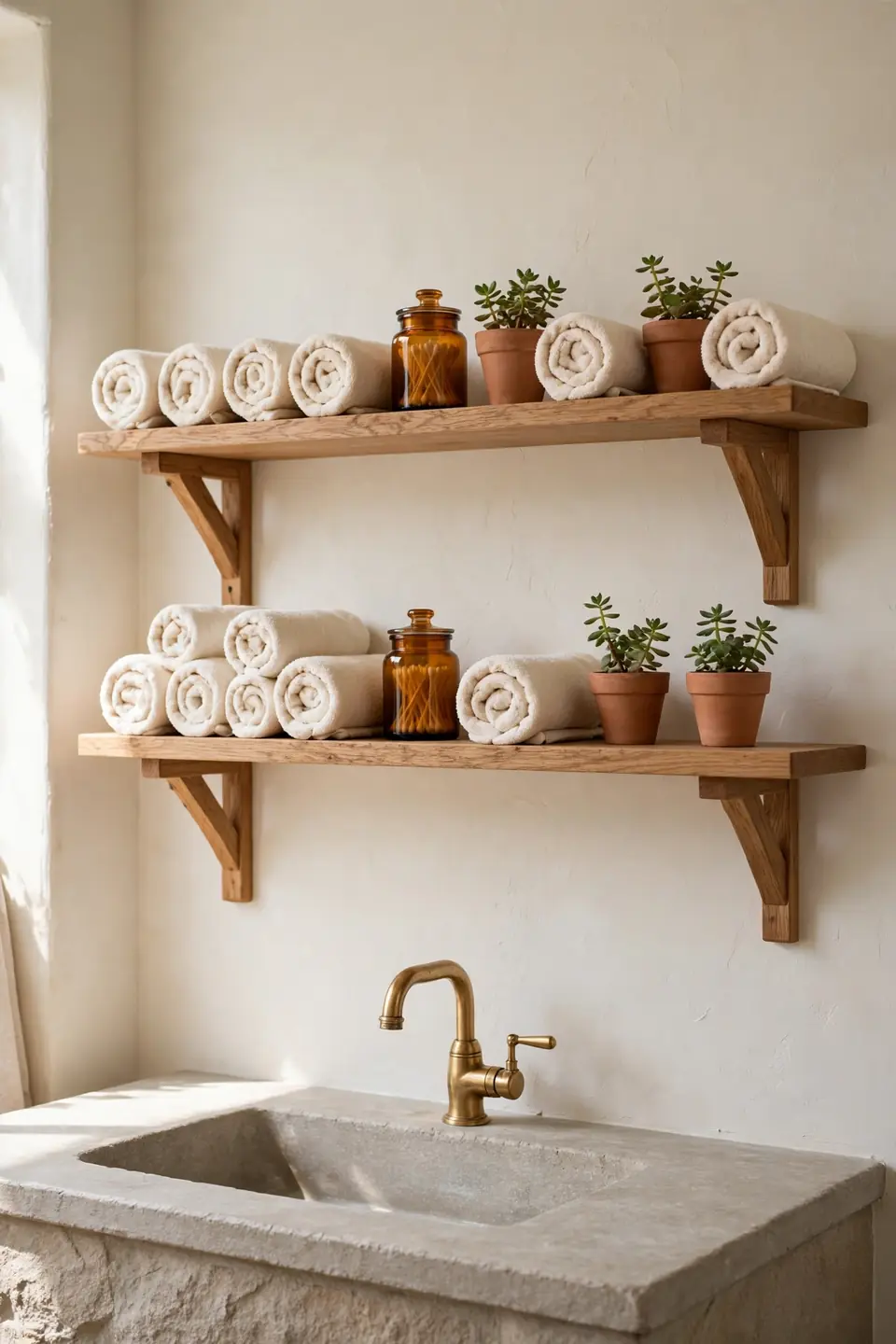
Cost: Low, two oak boards
Time: One slow afternoon
Skill Level: Beginner friendly
Best For: Towels and jars
Open shelves trade cabinet hiding space for daily visual calm, but only if every shelf holds a strict edit: rolled cream towels, one amber jar, a small plant, nothing more. The trick is repetition; identical jars and folded stacks read as calm, while a mix of bottles reads as clutter at eye level. Keep everyday items on the lowest shelf and save the top one for pretty extras you rarely touch. Dust is the honest price here, so choose shelves only if a weekly wipe sounds peaceful rather than annoying, and keep spare towels inside lidded baskets below.
Sliding Barn Door Entry
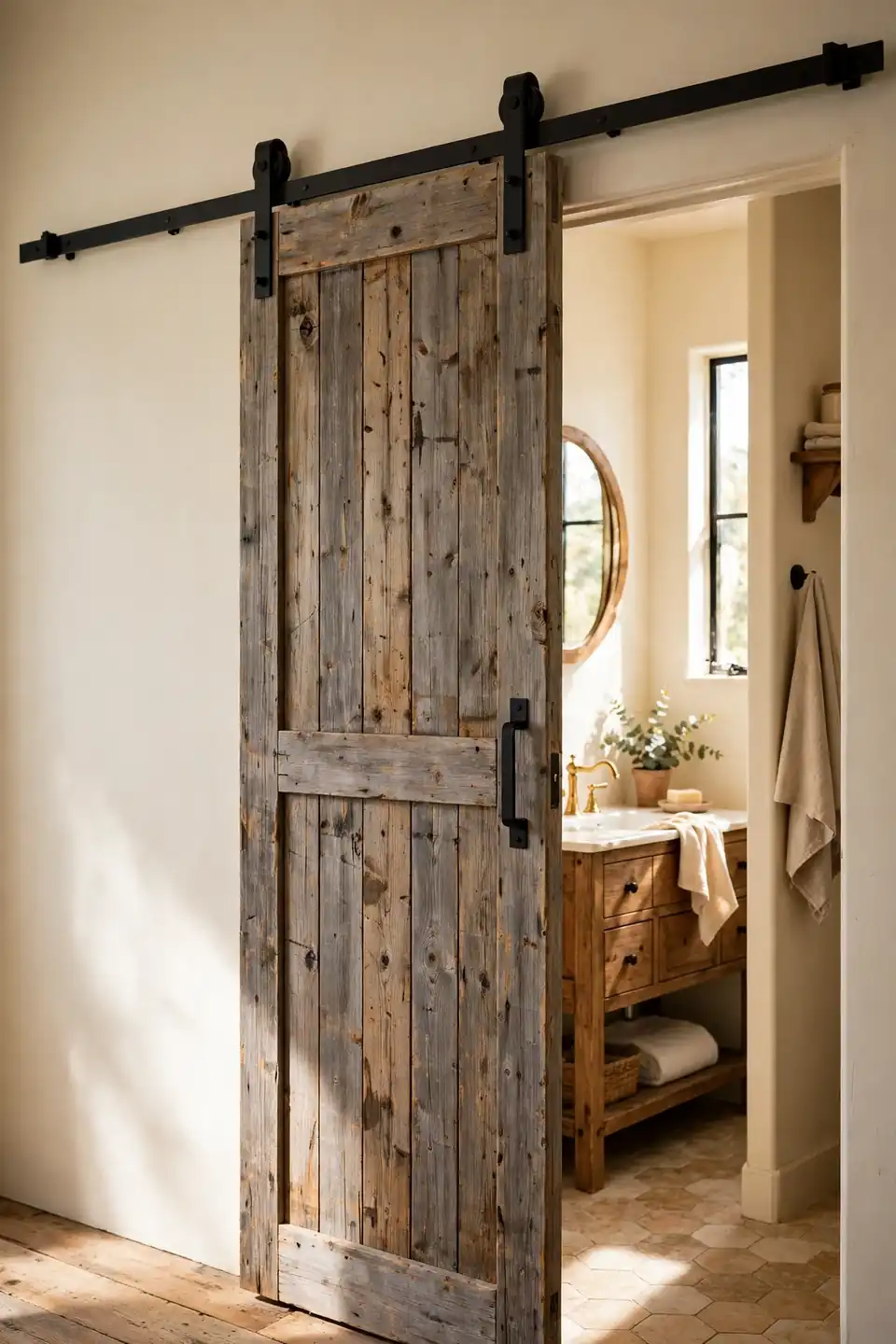
A sliding barn door in weathered pine turns a plain bathroom doorway into the room’s first rustic statement, and it saves the floor space a swinging door would steal. Hang it on black steel hardware for that modern contrast, and let the wood run slightly wider than the frame so no gaps show when closed.
Barn doors trade sound privacy for style, so they suit primary bathrooms and powder rooms better than shared family ones. A soft close kit stops the door banging at night, a detail worth every penny. Keep the wall beside the doorway clear, since the door needs its full slide path, and treat that bare stretch as part of the design rather than lost display space.
Woven Basket Storage Tricks
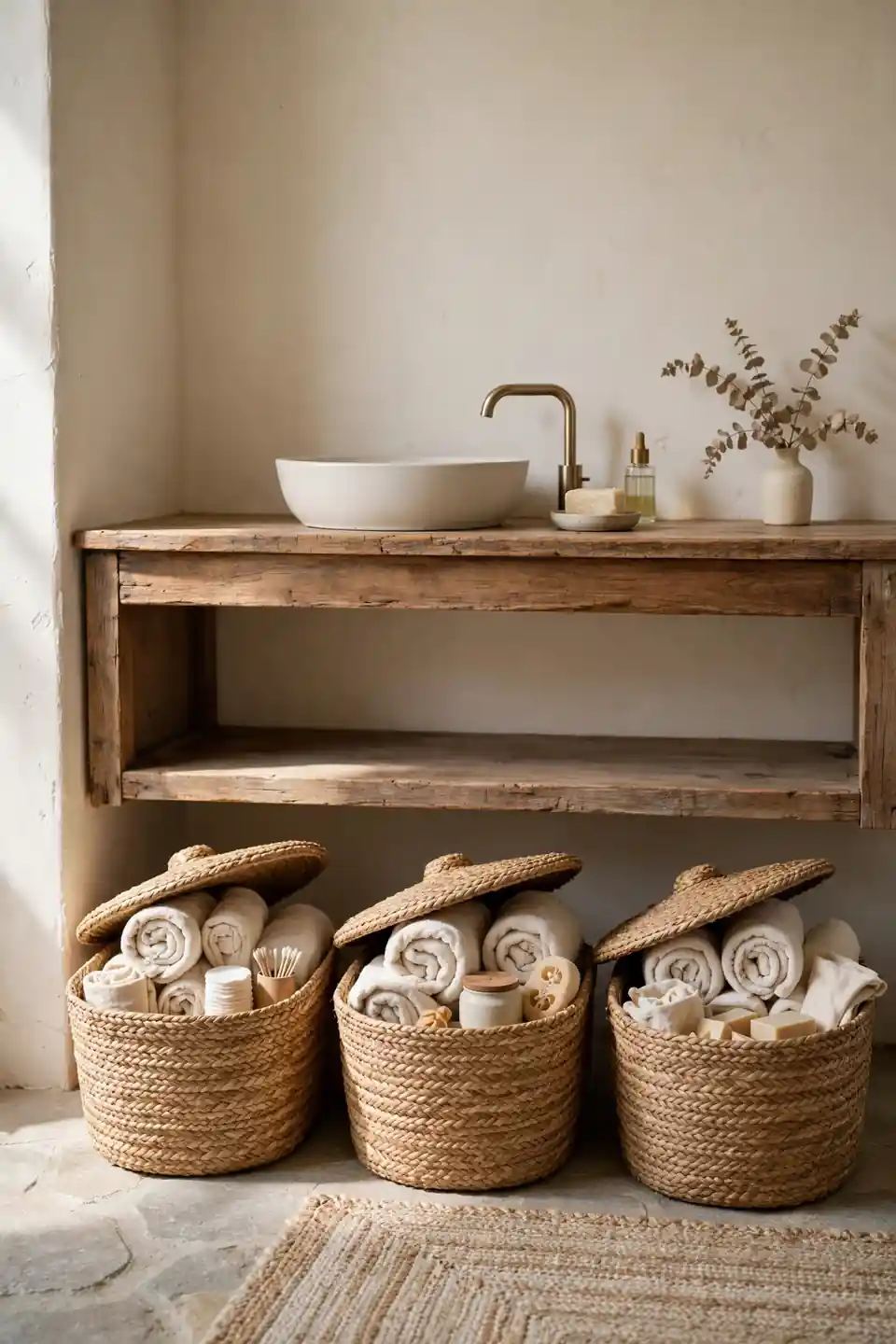
- Line three matching seagrass baskets under the vanity for towels, tools, and spares.
- Choose lidded baskets for anything visually noisy: cords, bottles, medicine.
- Label nothing; texture and shape should guide the hand instead.
- Shake baskets out weekly outside, since woven fibers collect bathroom dust.
Wicker and seagrass soften a bathroom full of hard surfaces in a way plastic bins never manage, and they forgive the slight damp of a steamy room if they dry between uses. Rotate two sets if your bathroom stays humid; one airs while the other works. Keep the shapes uniform and the contents ruthless, and open storage stays looking styled rather than spilled.
Brass Faucet Warm Glow
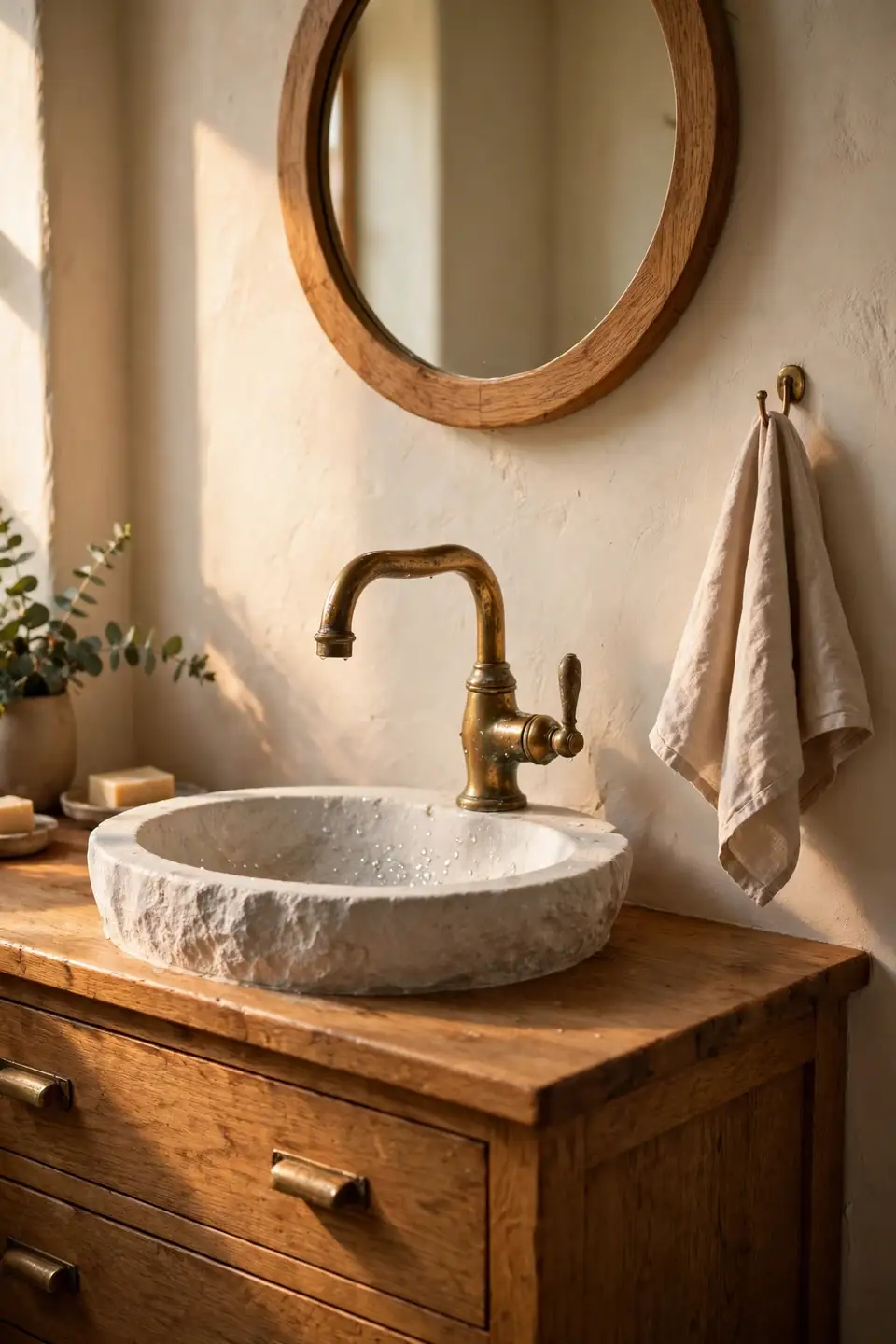
Quick Tip: Choose unlacquered brass if you love change; it darkens where hands touch it and polishes bright on the edges, telling the story of the house. Lacquered brass stays uniform and suits households that prefer a steady, finished shine.
Brass brings the warmth of late afternoon sun into rooms that otherwise run cool with stone and porcelain. It pairs naturally with oak and walnut, and it forgives the slight green of aged marble better than chrome does. One warning from experience: brass shows water spots honestly, so keep a soft cloth on a hook nearby and make the evening wipe a habit; the patina rewards the small ritual.
Small Bathroom Rustic Reset
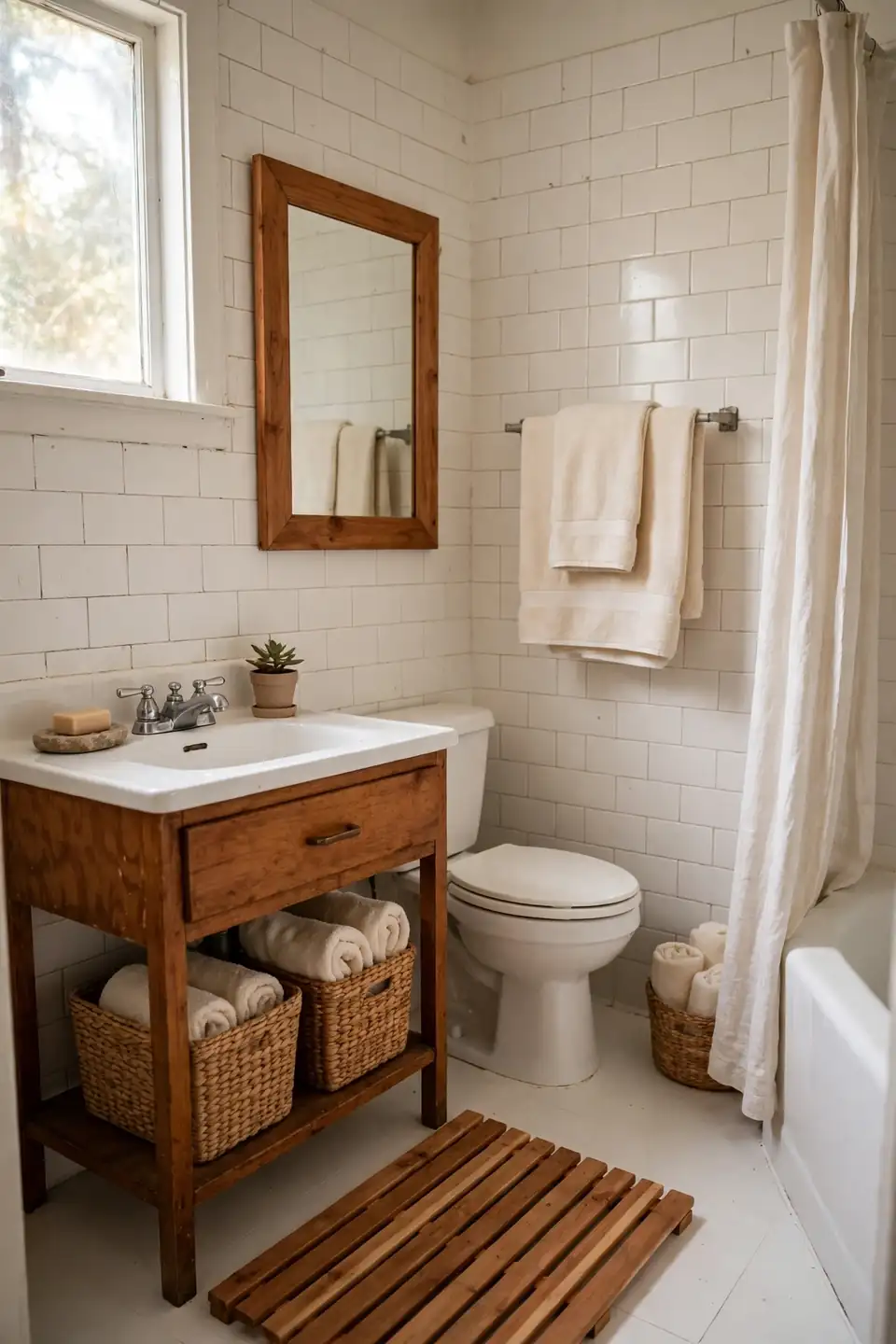
BEFORE: The rental bathroom was all white tile and chrome, cold underfoot and echoing. Storage meant one wobbly plastic tower, and the mirror threw back a harsh, tired light every single morning.
AFTER: A cedar bath mat, a wood framed mirror, and two woven baskets warmed the room in one afternoon. Cream towels replaced the thin white ones, and the space finally felt chosen rather than endured.
Nothing here needed a landlord’s blessing or a plumber, which is the quiet promise inside modern rustic bathroom design inspiration: warmth comes from materials, not demolition. A single framed print helps too, the way vintage landscape art living room decor softens a sitting room wall, and a small cedar stool gives the eye a second natural note to rest on.
Linen Shower Curtain Layers
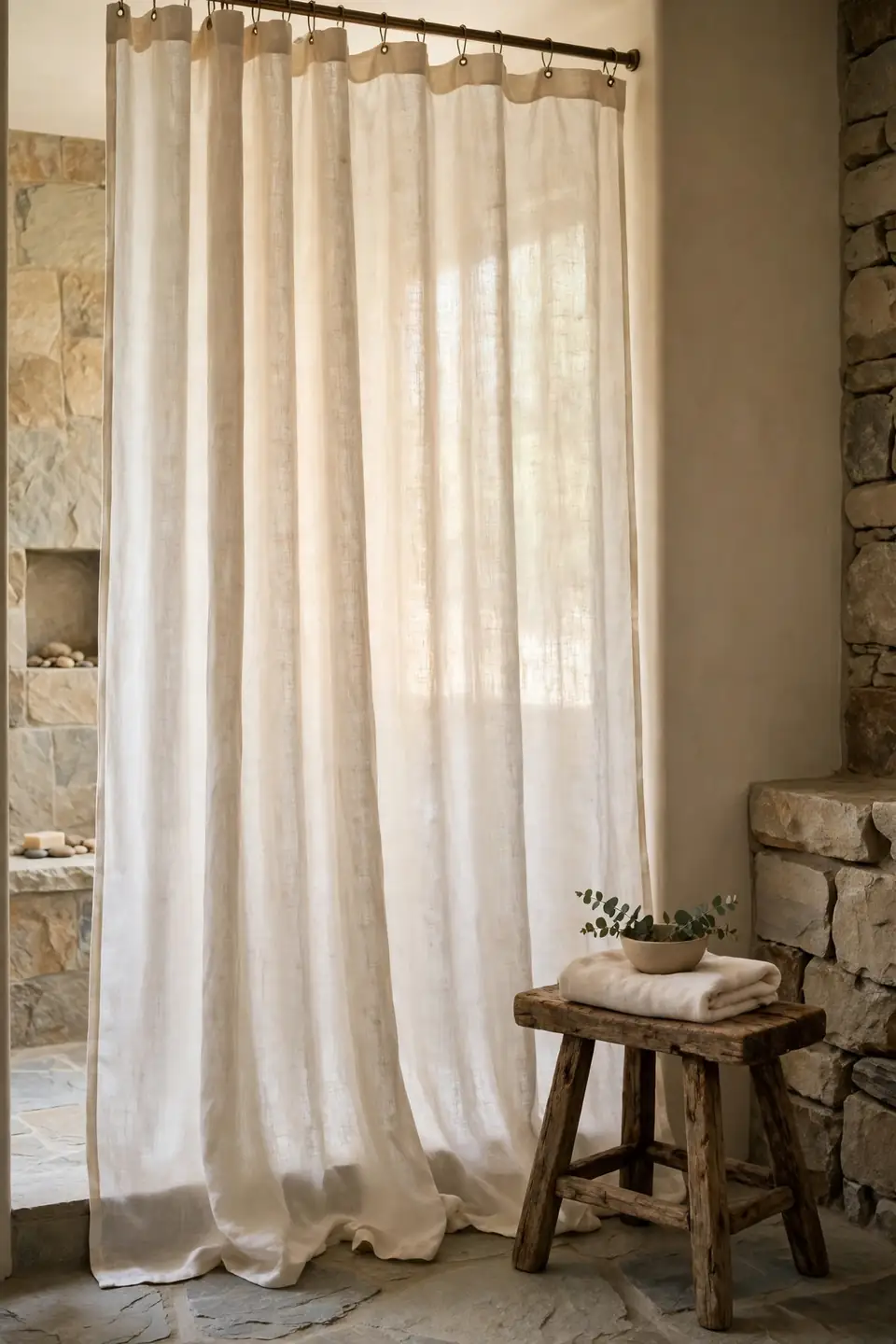
- Hang a washable linen curtain on the outside ring at full ceiling height.
- Clip a clear liner behind it, hemmed two inches above the tub floor.
- Choose warm white or oatmeal linen; stark white reads cold beside wood.
- Steam the folds once hung so the fabric falls in soft, even waves.
A linen curtain changes the acoustics of a bathroom as much as the view; fabric swallows echo and makes morning showers feel hushed and private. The slight wrinkle is part of the charm here, so skip the iron and let the texture echo the grain in your wood pieces. Wash monthly on gentle, and the curtain will soften for years instead of yellowing like plastic liners do.
Stone Floor Tile Choice
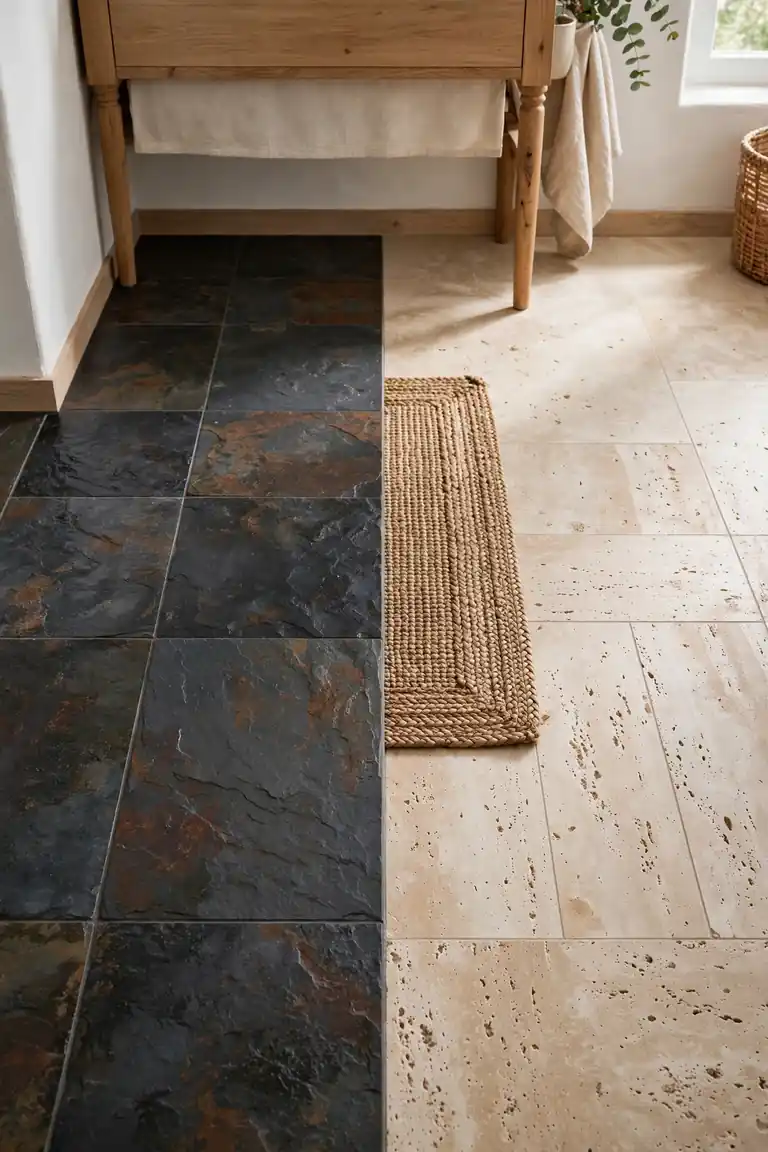
| Feature | Slate | Travertine |
|---|---|---|
| Feel underfoot | Cool, firm grip | Warm, gentle give |
| Color story | Charcoal, rust hints | Cream, honey bands |
| Upkeep | Seal yearly | Seal twice yearly |
| Best rooms | Showers, busy baths | Powder rooms, calm baths |
Slate forgives muddy paws and wet boots, its dark surface hiding the evidence between cleans, which is why busy households lean toward it. Travertine feels kinder at dawn, warmer and softer under bare feet, but it asks for sealing discipline and quick wipes after acidic spills. Both stones reward a honed, matte finish; polished stone in a wet room is a slip waiting for its moment. Stand barefoot on samples at home before deciding, because floors are the one surface your skin judges every single day.
Exposed Beam Ceiling Charm
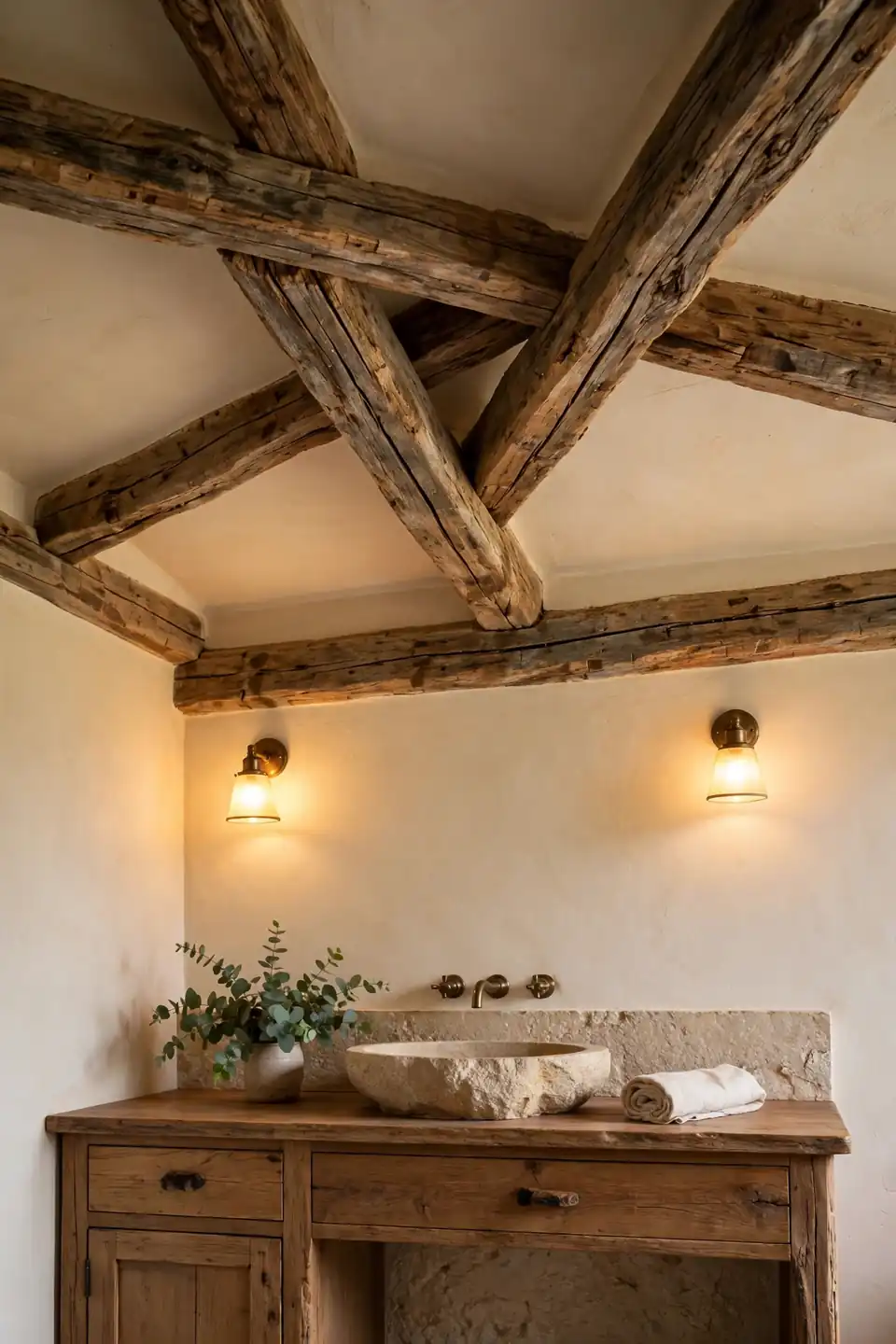
Do:
- Sand rough beams lightly; splinters near a steamy shower age badly.
- Leave real beams unpainted so their age shows with pride.
- Add faux beams only where the ceiling height truly allows depth.
- Run lighting below beam level to avoid harsh striped shadows.
Don’t:
- Stain new pine dark and call it reclaimed; the lie shows fast.
- Crowd beams with hanging plants in a humid bathroom.
- Paint beams glossy white; shine fights the rustic mood.
Beams pull the eye upward and make even a modest bathroom feel built rather than decorated. In older homes they often hide under plaster, waiting; a careful exploratory hole near one corner tells you whether treasure or plain joists sleep above your ceiling.
Apron Front Farmhouse Sink
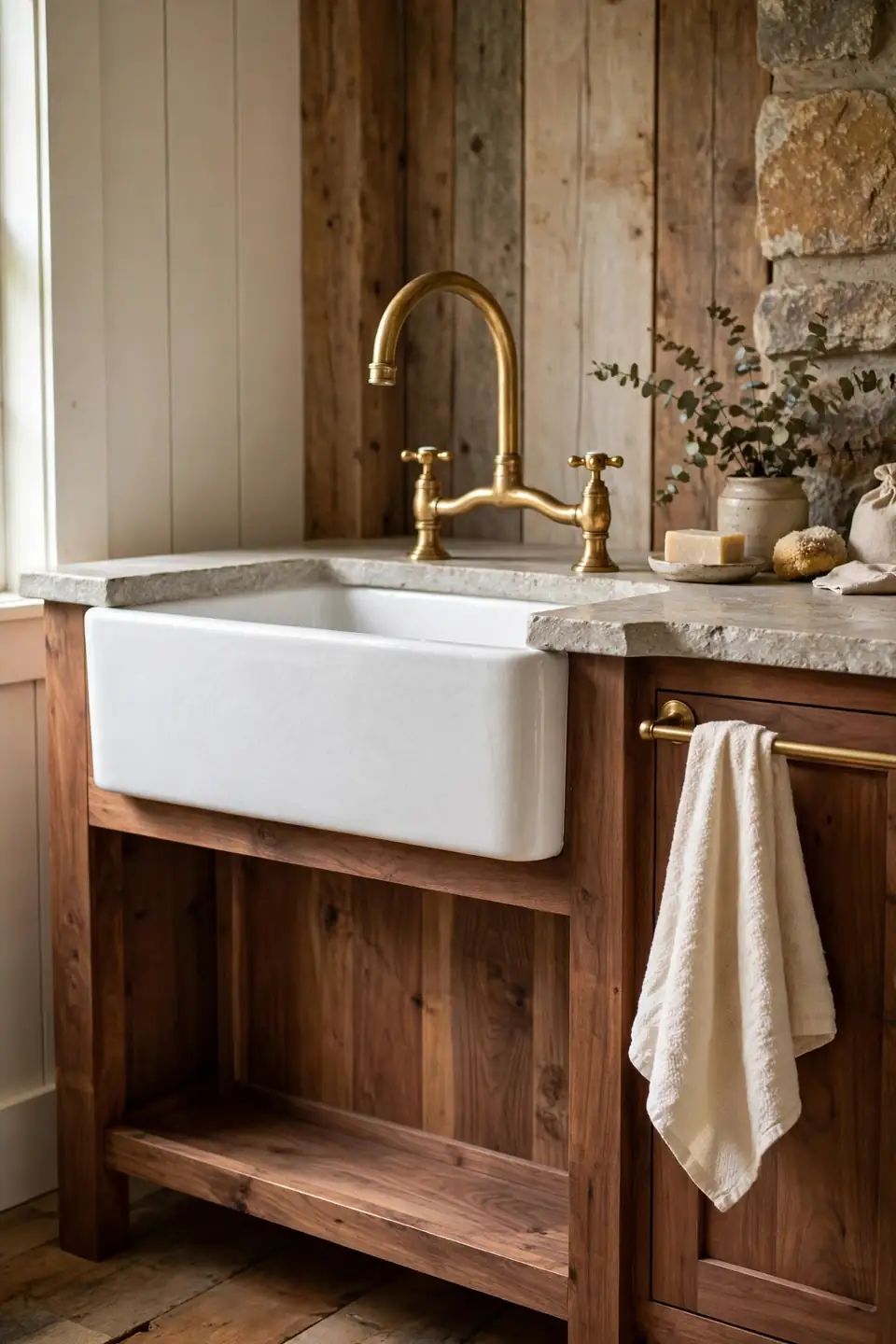
Cost: Mid range, worth it
Time: One plumbing day
Skill Level: Confident DIY
Best For: Deep soaking tasks
An apron front sink brings farmhouse honesty to a bathroom vanity: a deep basin that swallows a whole day’s hand washing, plant watering, and delicates soaking without complaint. The exposed front panel shows off honed marble or fireclay in a way drop in rims never do, and it pairs beautifully with bridge faucets in brass or black. Measure twice before ordering; apron sinks need a cabinet cut to their exact shoulders, and older fireclay models vary by a few millimeters from piece to piece, handmade charm included.
Clay Tile Backsplash Band
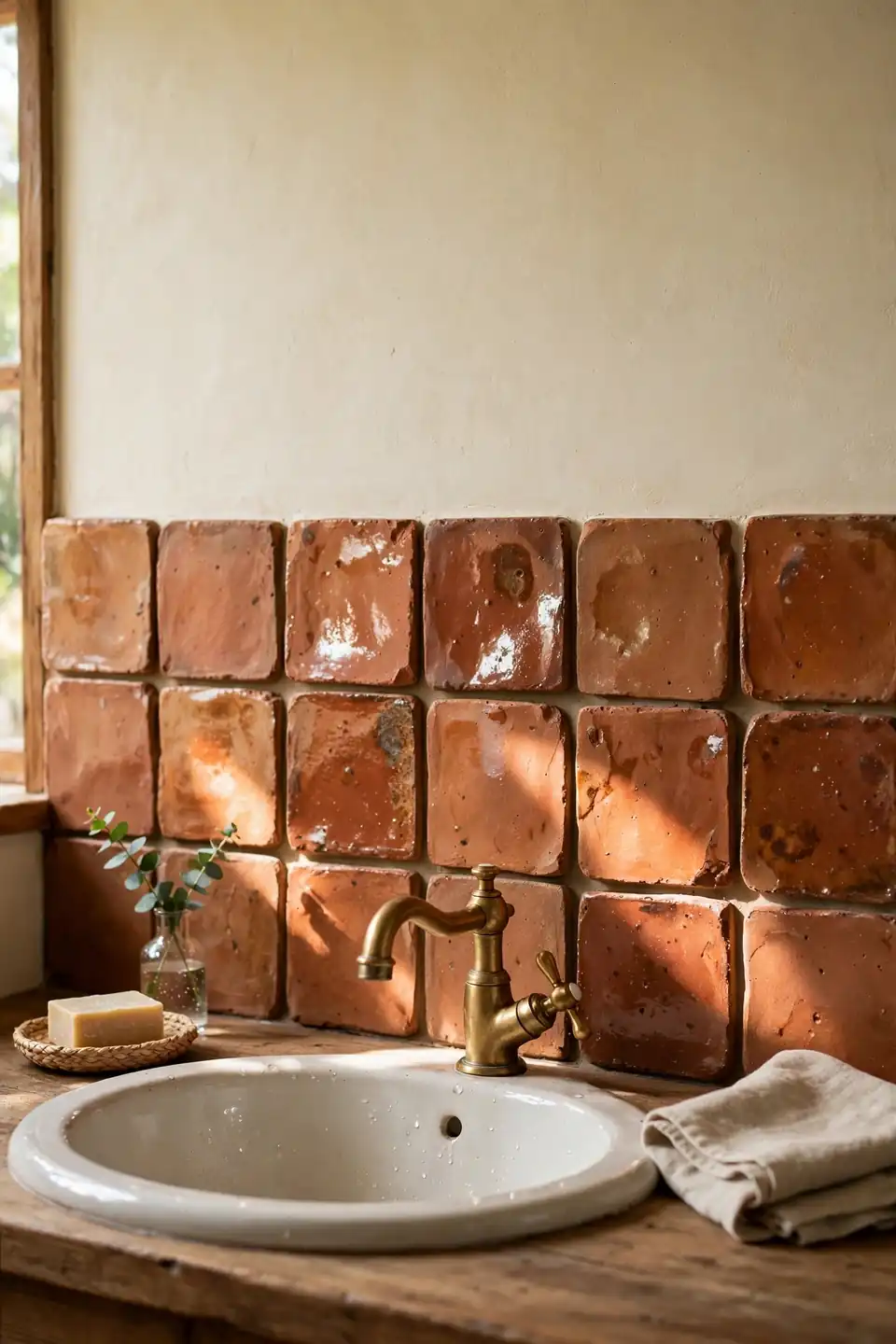
A single band of handmade clay tile behind the sink gives a rustic bathroom its crafted heartbeat. The tiles never sit perfectly flat, and that wobble catches light in small bright pools across the wall. Choose a warm terracotta or a smoky sage, and keep the band to four rows so it frames the faucet rather than fighting it.
Handmade tile asks for wider grout lines and a patient hand, so hire the tiler who smiles at the word irregular. Seal the clay well in splash zones, or choose glazed pieces that shrug off water while keeping the uneven surface. Above the band, plain plaster keeps the wall calm and lets the tile glow.
Wooden Stool Spa Corner
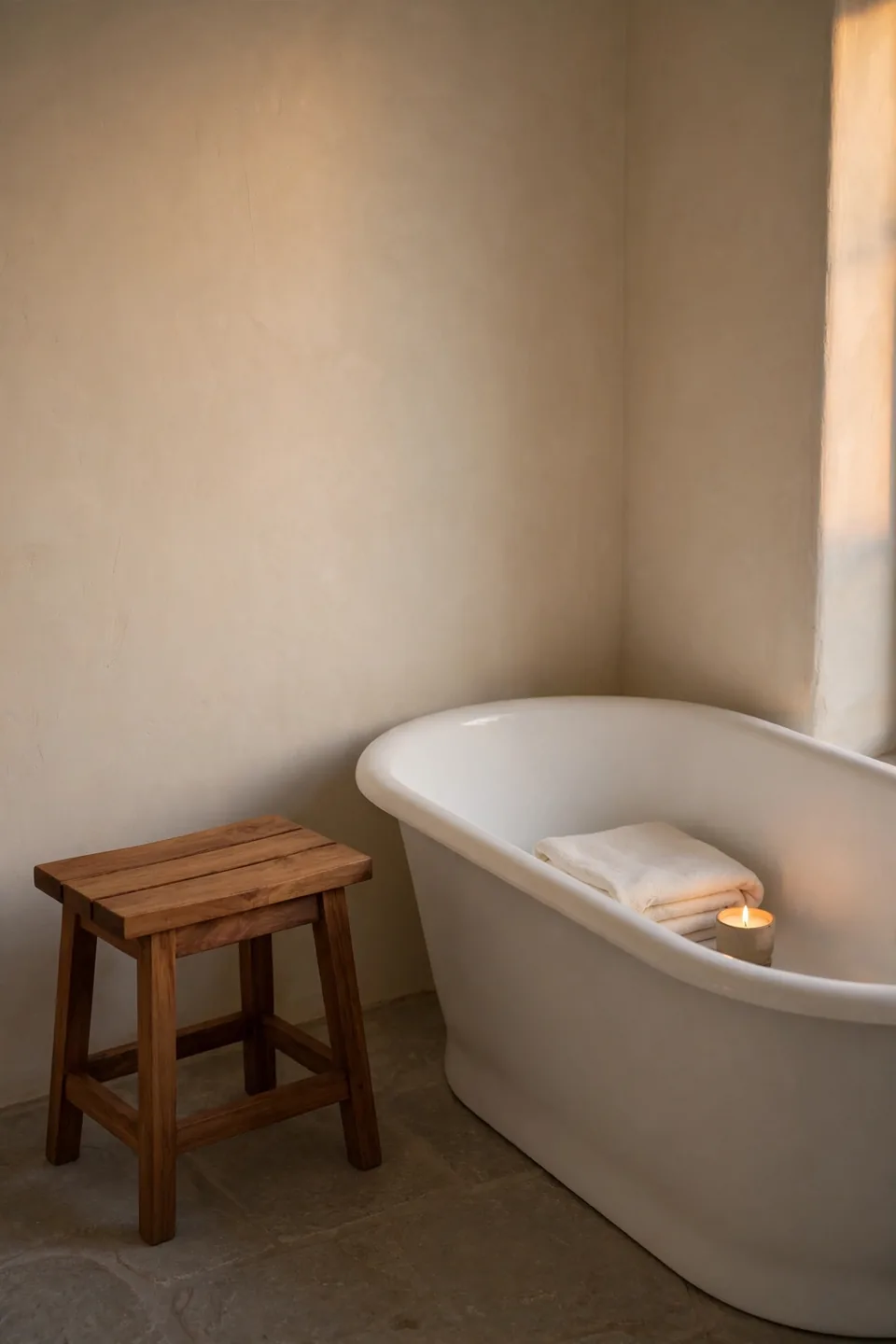
- Pick solid teak or cedar, woods that shrug off steam and splashes.
- Set the stool by the tub with a folded towel and one candle.
- Rest a paperback on top so long soaks feel planned, not stolen.
- Oil the wood twice a year to keep the grain rich and dark.
A simple stool is the hardest working piece in a rustic bathroom: seat, side table, plant stand, and quiet sculpture in one. It softens the hard geometry of tubs and tile, and it gives guests a clear place to set a phone or a glass. Keep its surface nearly bare between baths, and the corner always looks ready for a slow evening soak.
Potted Herb Window Shelf
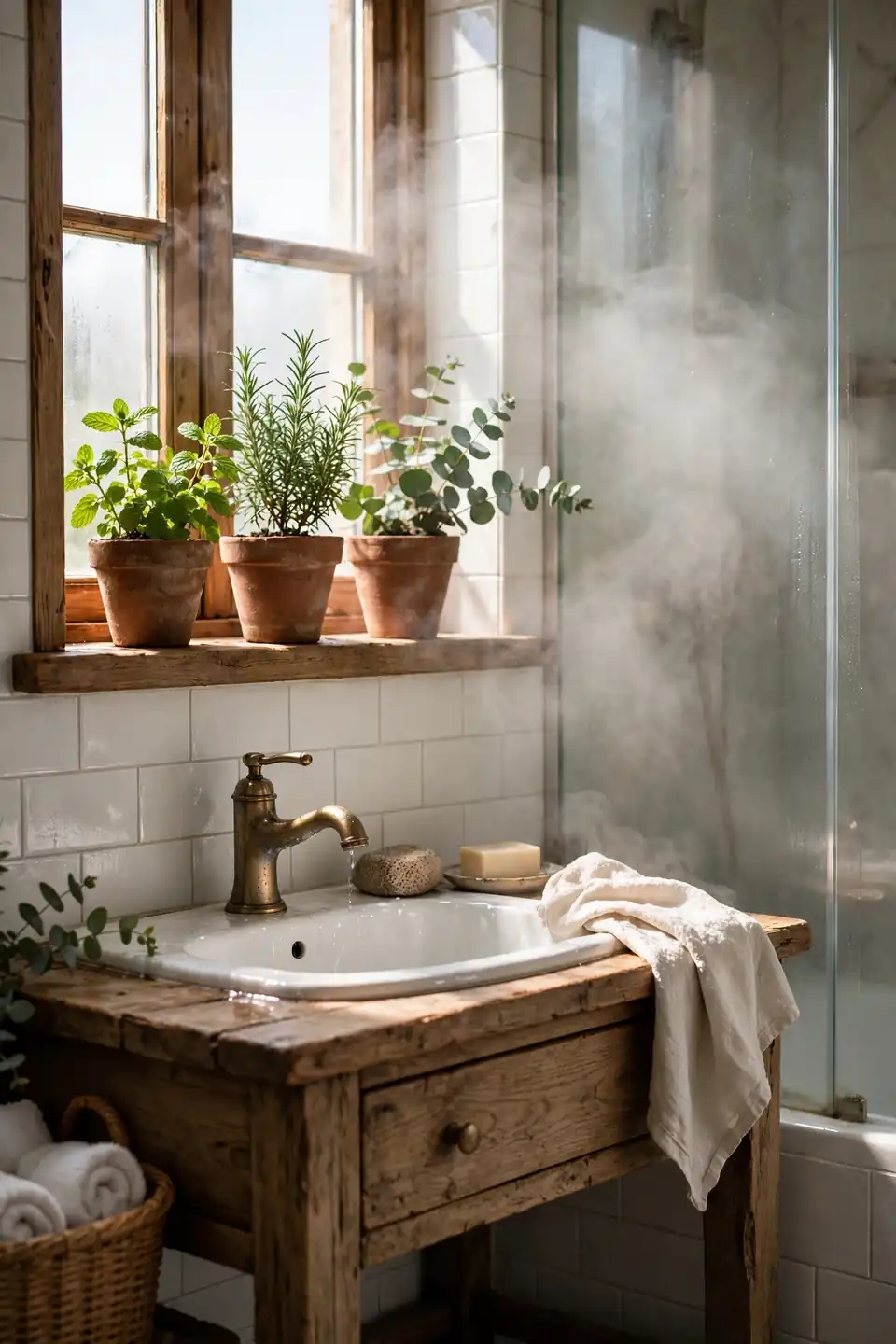
Quick Tip: Grow mint, rosemary, or eucalyptus sprigs in plain clay pots on the sill; steam from the shower waters them gently, and a crushed leaf scents the whole room better than any bottled spray.
Green life is the cheapest way to keep a rustic bathroom from feeling like a staged showroom. Herbs suit the style because they are useful as well as pretty, and their rough clay pots echo the clay tile and terracotta already in the room. Rotate pots weekly toward the light so stems grow straight, and pinch herbs often; bushy plants look generous, while leggy ones read as neglect within a fortnight.
Dark Bathroom Warm Makeover
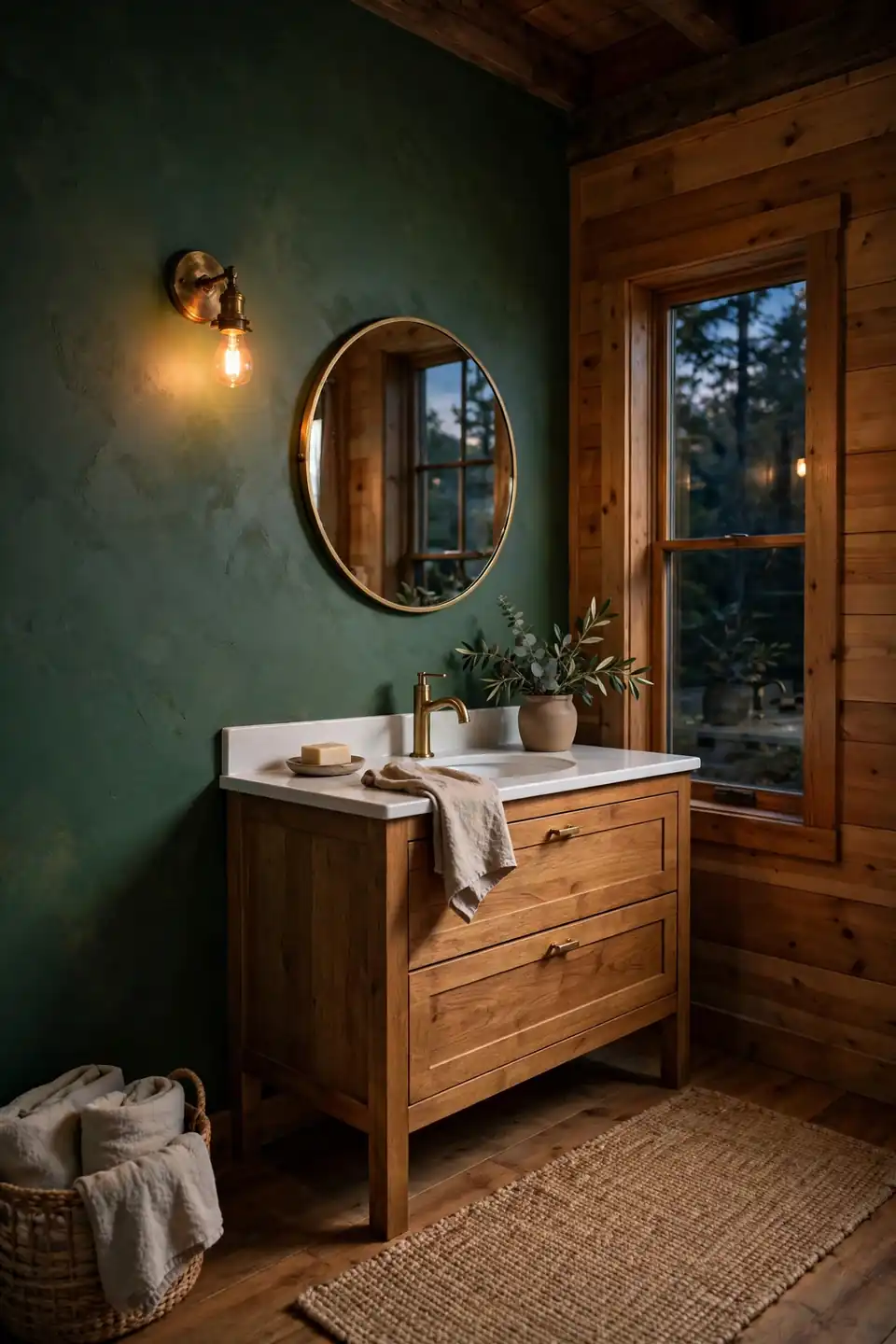
BEFORE: The bathroom leaned on glossy white tile and a single ceiling light that flattened everything. Even at noon the room felt like a clinic, and the wood vanity looked lost and orange against the glare.
AFTER: Deep green plaster on one wall, a warm bulb in a brass sconce, and a jute runner changed the mood by dinner. Shadows softened, the wood glowed, and the room finally held evening light kindly.
Warmth in a dark bathroom comes from light temperature more than brightness; bulbs near 2700K flatter wood and skin alike. Layer one dimmable sconce pair at face height and let the ceiling light rest. The room will feel smaller in the best way, like a cabin bathroom built for slow mornings.
Towel Ladder Display Steps

- Lean a five rung cedar ladder against the wall at a gentle, stable angle.
- Anchor the top with two discreet brackets if children or guests use the room.
- Drape towels in threes: two creams and one warm stripe for rhythm.
- Hang the damp towel on the top rung so air reaches every fold.
A towel ladder turns storage into the room’s softest wall art, layers of cream and clay cotton against plaster or tile. It suits renters especially, since it leans rather than drills, and it moves to a new home in one trip. Keep colors in one warm family and the display reads calm even on laundry day, when half the rungs stand briefly bare.
Shower Finish Face Off
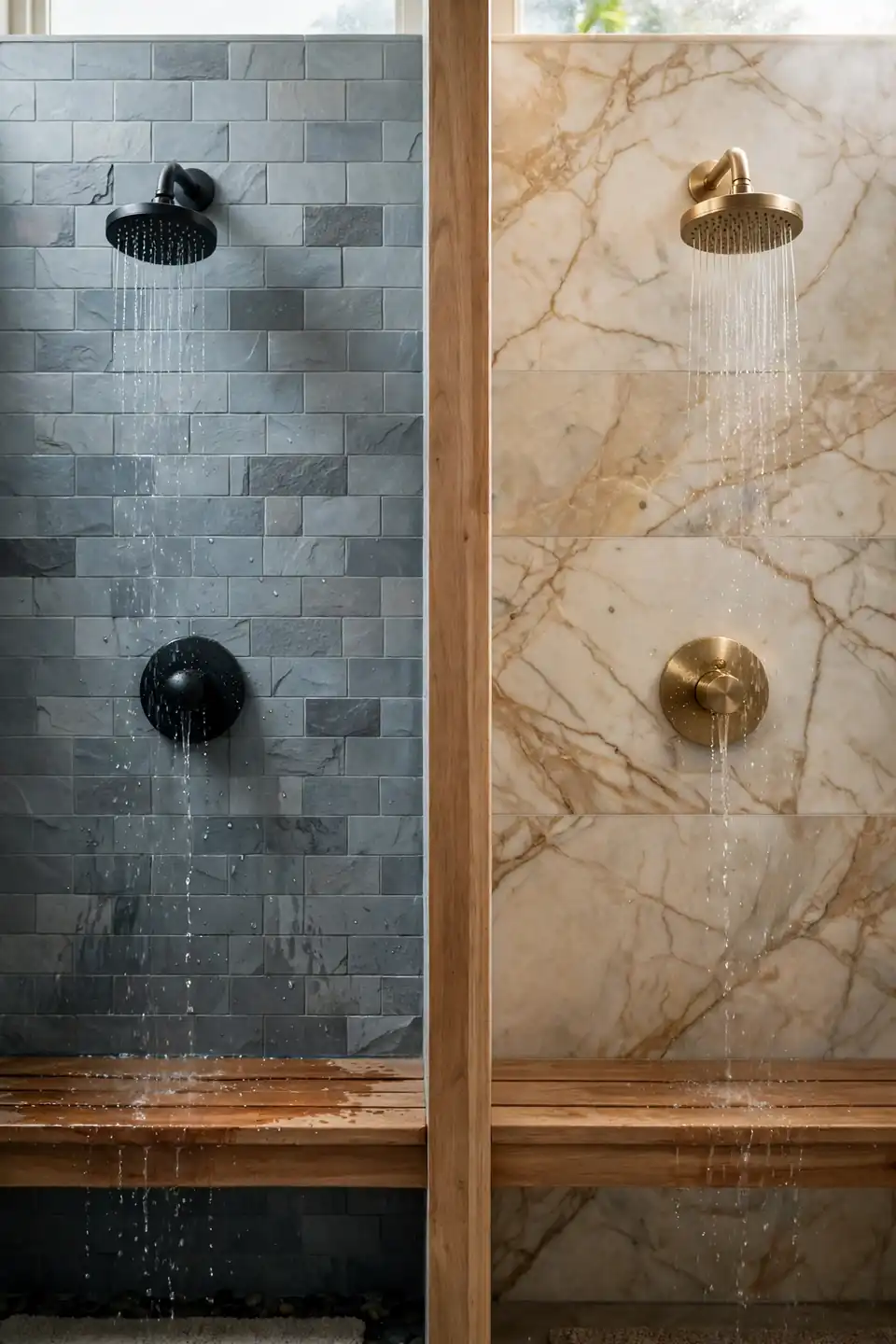
| Feature | Matte Black | Brushed Brass |
|---|---|---|
| Mood | Crisp and modern | Warm and golden |
| Water spots | Shows pale dust | Hides most marks |
| Aging | Steady for years | Patina deepens slowly |
| Pairs with | Slate, white oak | Marble, walnut tones |
Black sharpens a shower the way eyeliner sharpens a face; every line reads cleaner against pale tile and plaster. Brass does the opposite kindness, warming cool stone and echoing the honey tones in wood vanities and stools. Both finishes fail the same way, through mixed leftovers, so replace every visible piece in one go, including the drain cover and the shower door hinges people forget. Your hand will judge the choice daily, so hold both finishes wet before you commit.
Final Touches Checklist
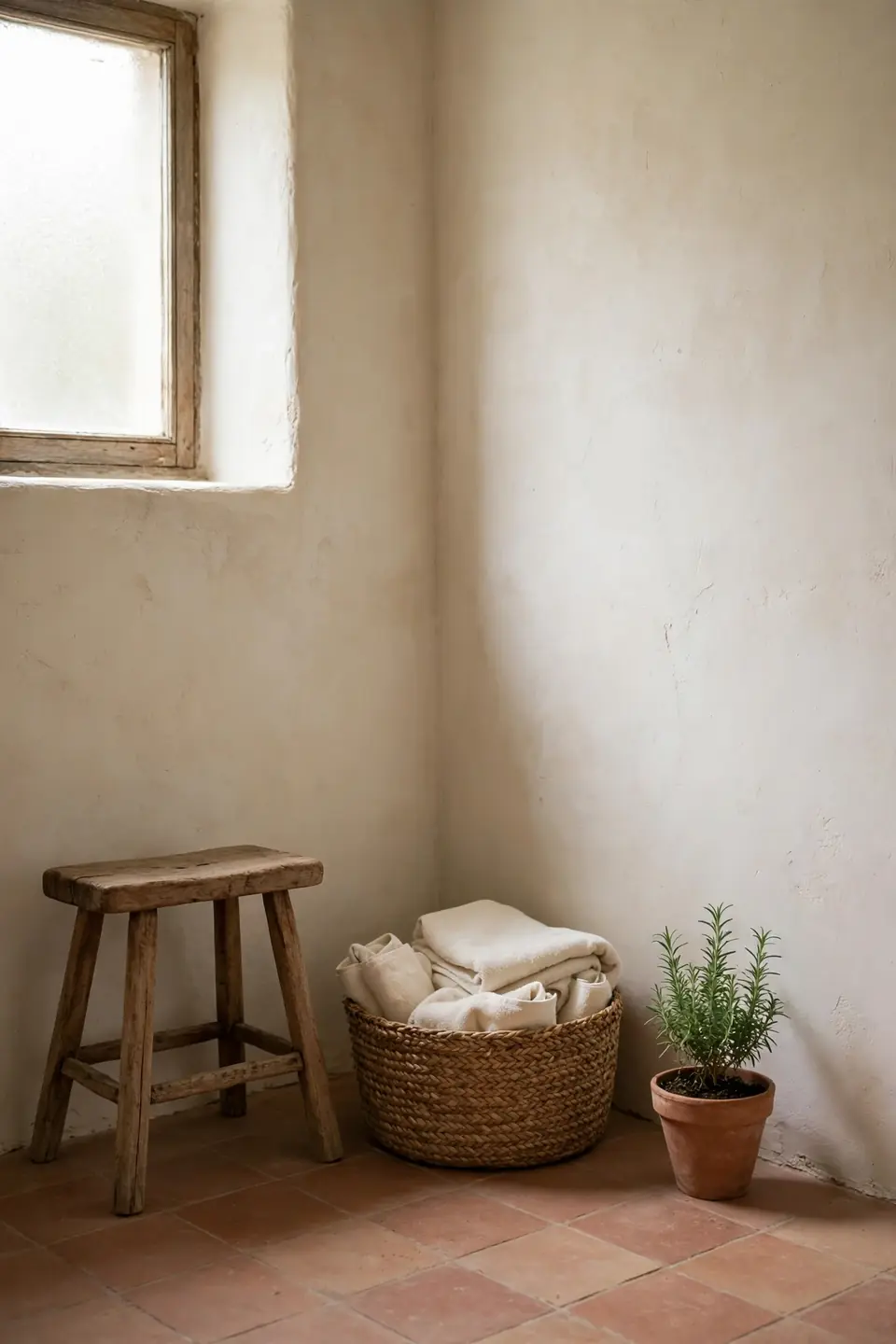
Do:
- Repeat each material at least twice so nothing feels accidental.
- Leave one surface bare; rest is part of rustic calm.
- Choose scent from wood, herb, or beeswax, never plastic sprays.
- Photograph the room yearly and edit what no longer earns space.
Don’t:
- Buy themed rustic signs with words; texture tells the story better.
- Mix more than two metal finishes in one small room.
- Fill every corner; empty floor is a design choice too.
Final touches decide whether a rustic bathroom feels lived in or staged for a listing photo. Edit slowly, live with each addition for a week, and let the room keep only what your hands reach for daily without thinking.
Conclusion
A rustic bathroom is never really finished, and that is its charm. Wood darkens, brass freckles, stone smooths under your hands, and the room keeps the record of your mornings. If these pages of modern rustic bathroom design inspiration gave you one clear first step, take it this week: one shelf, one stool, one honest material. I have seen how one honest material can change the way a whole morning feels. Save your favorite ideas to a Pinterest board before you shop, share the finished corner with someone who loves a slow morning, and let the room grow warmer one true piece at a time.