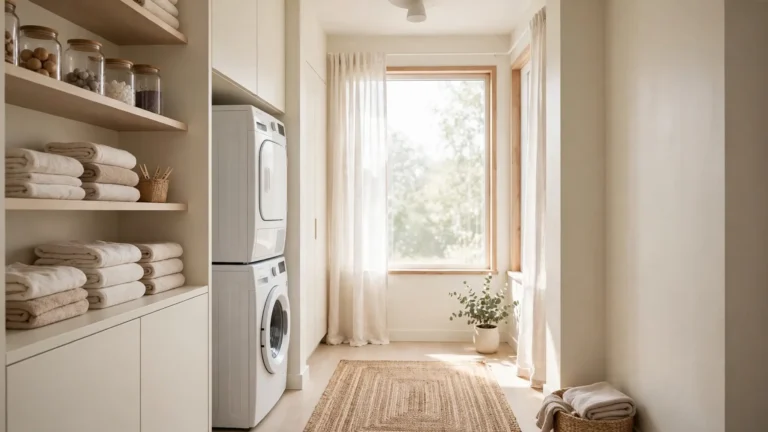
25 Laundry Room Upgrades for a Stylish, Functional Space
A laundry room works hard twice a week, yet it usually gets the least attention of any space in the house. The right laundry room upgrades change that fast: a real folding counter here, honest storage there, and wash day starts to feel like a routine you run, not a corner you dodge.
Start small if the budget is tight. Fresh paint and a confident color can carry a room surprisingly far, as the sunny schemes in butter yellow bedroom makeovers prove. The twenty five ideas ahead mix quick wins with weekend projects: counters, cabinets, sinks, lighting, storage walls, and floors, each picked to add function first and style a close second. In my experience, the upgrades that stick are the ones that fix an annoyance you meet on every single wash day.
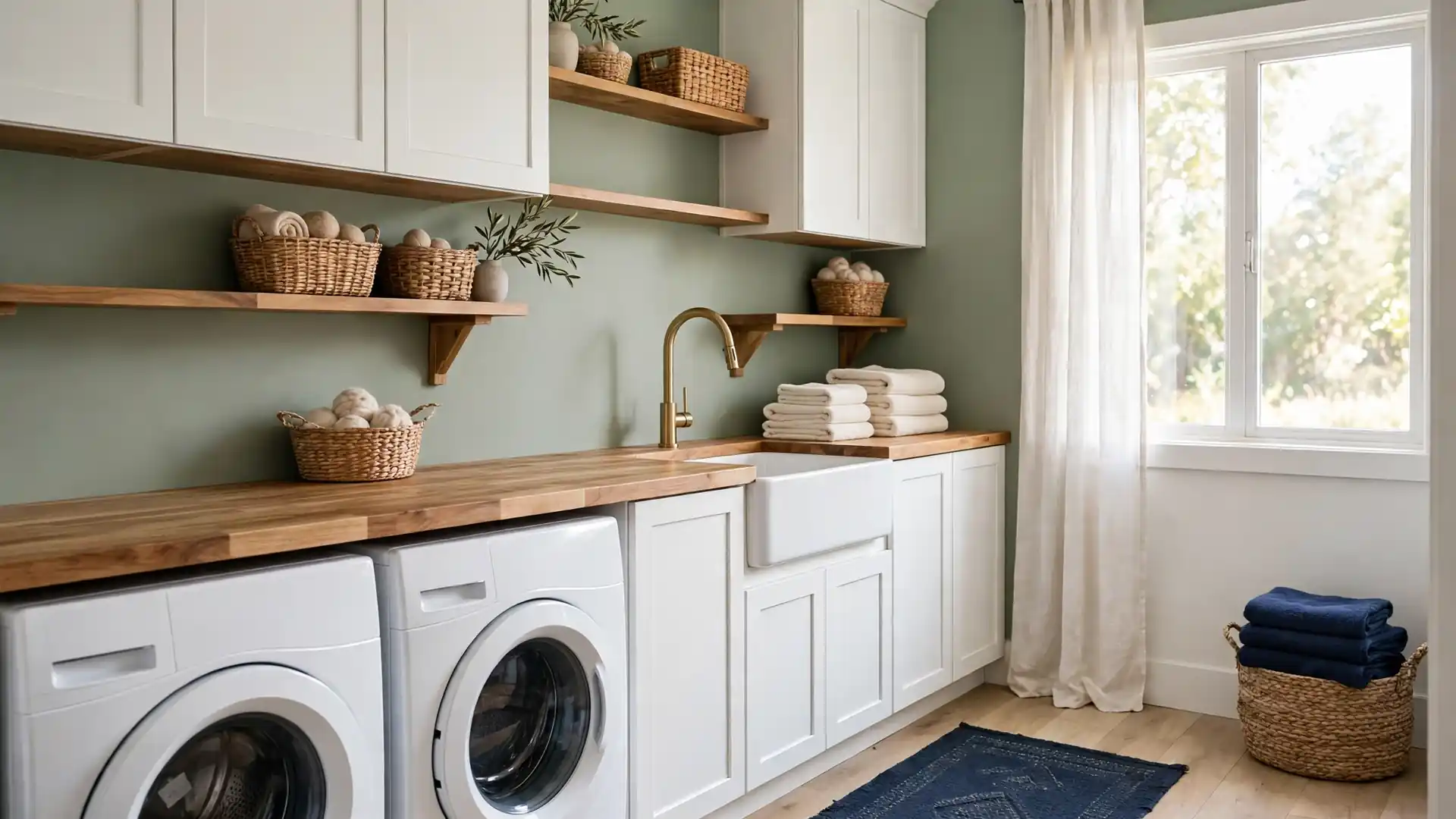
Butcher Block Folding Counter

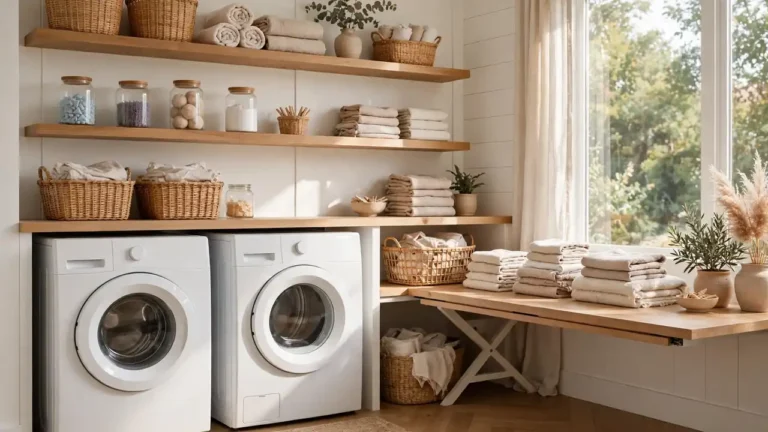
Hot laundry lands in a basket, then migrates to the bed, then waits there until bedtime. A butcher block counter stretched over front load machines ends that journey at the source. The warm wood slab gives every load a landing strip, a folding surface, and a sorting line in one move, and it hides the machine tops that collect dust and stray socks.
Measure the depth of your machines and add an inch of overhang at the front. Seal the wood with hardwax oil rather than polyurethane, so water rings buff out instead of peeling. In my experience, a counter at hip height saves more bending than any other single change in the room.
Open Shelving With Baskets
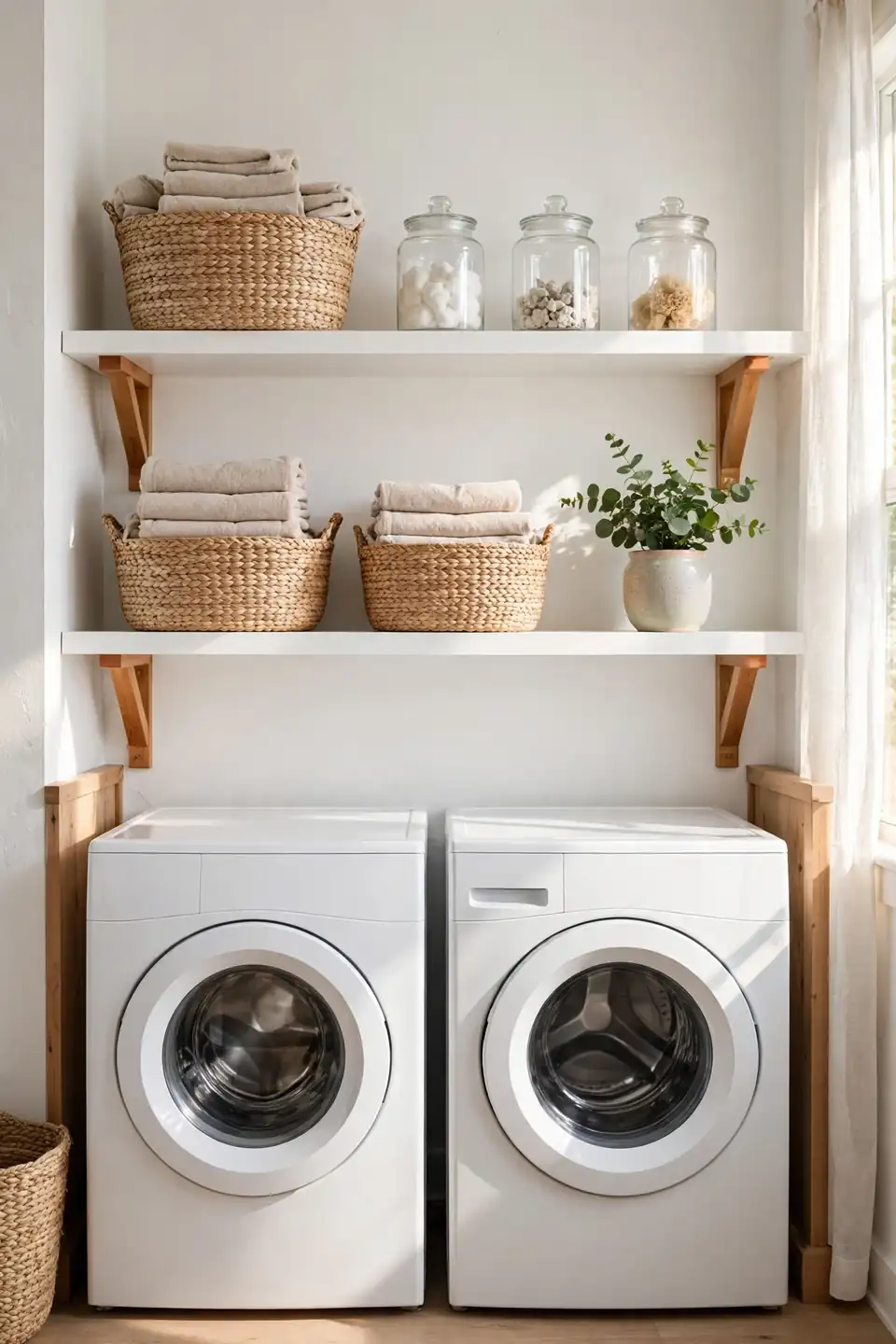
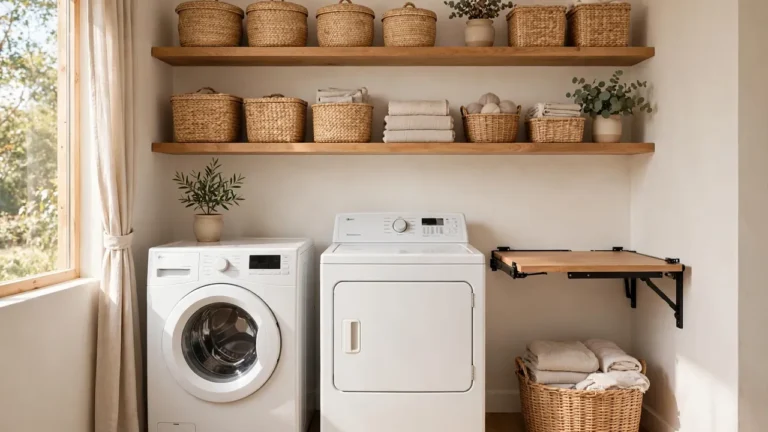
- Two floating shelves above the machines hold daily supplies at eye level.
- Woven baskets group small bottles so nothing tips or hides.
- Glass jars keep pods and powders visible and easy to refill.
- A folded towel stack adds softness between the hard surfaces.
- Labels on basket fronts end the guessing game for helpers.
Open shelves work in a laundry room because everything stored there is used weekly and nothing needs hiding behind doors. Keep the top shelf for refills and the lower one for the current bottles, and the system maintains itself. Dust takes seconds with a cloth, far less time than digging through a dark cabinet.
Farmhouse Sink Swap
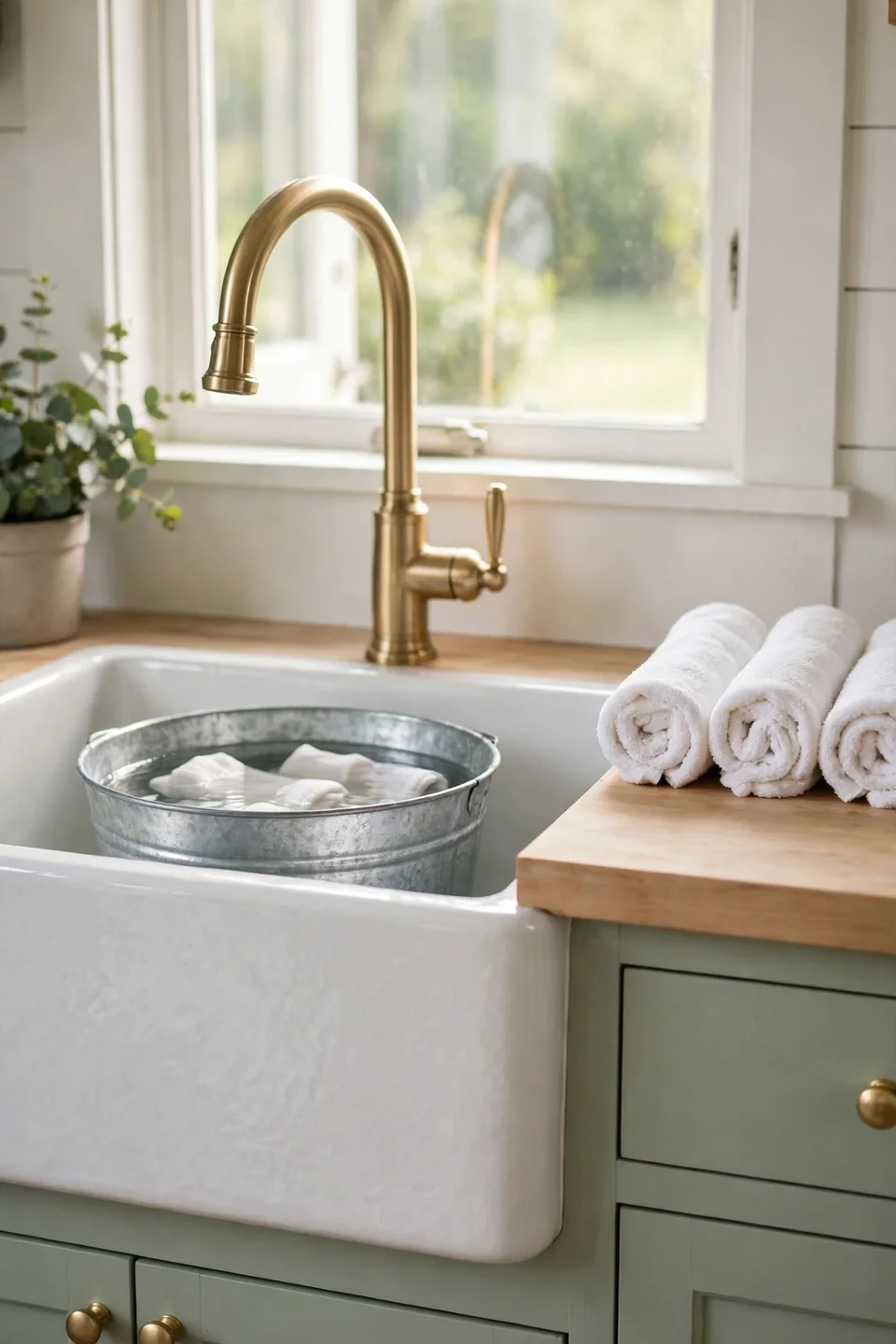
Quick Tip: Choose a sink at least ten inches deep with an offset drain. Deep basins swallow a soaking bucket whole, and the offset drain leaves flat room for delicates to rest while they soak, a detail most people only appreciate after the first hand wash load.
Swapping a plastic utility tub for a farmhouse style sink changes the whole register of the room. Porcelain and fireclay models read as intentional furniture rather than a builder afterthought, and a tall gooseneck faucet clears buckets and watering cans with ease. Match the faucet finish to your cabinet hardware and the sink looks planned from day one.
Stacked Washer Built-Ins
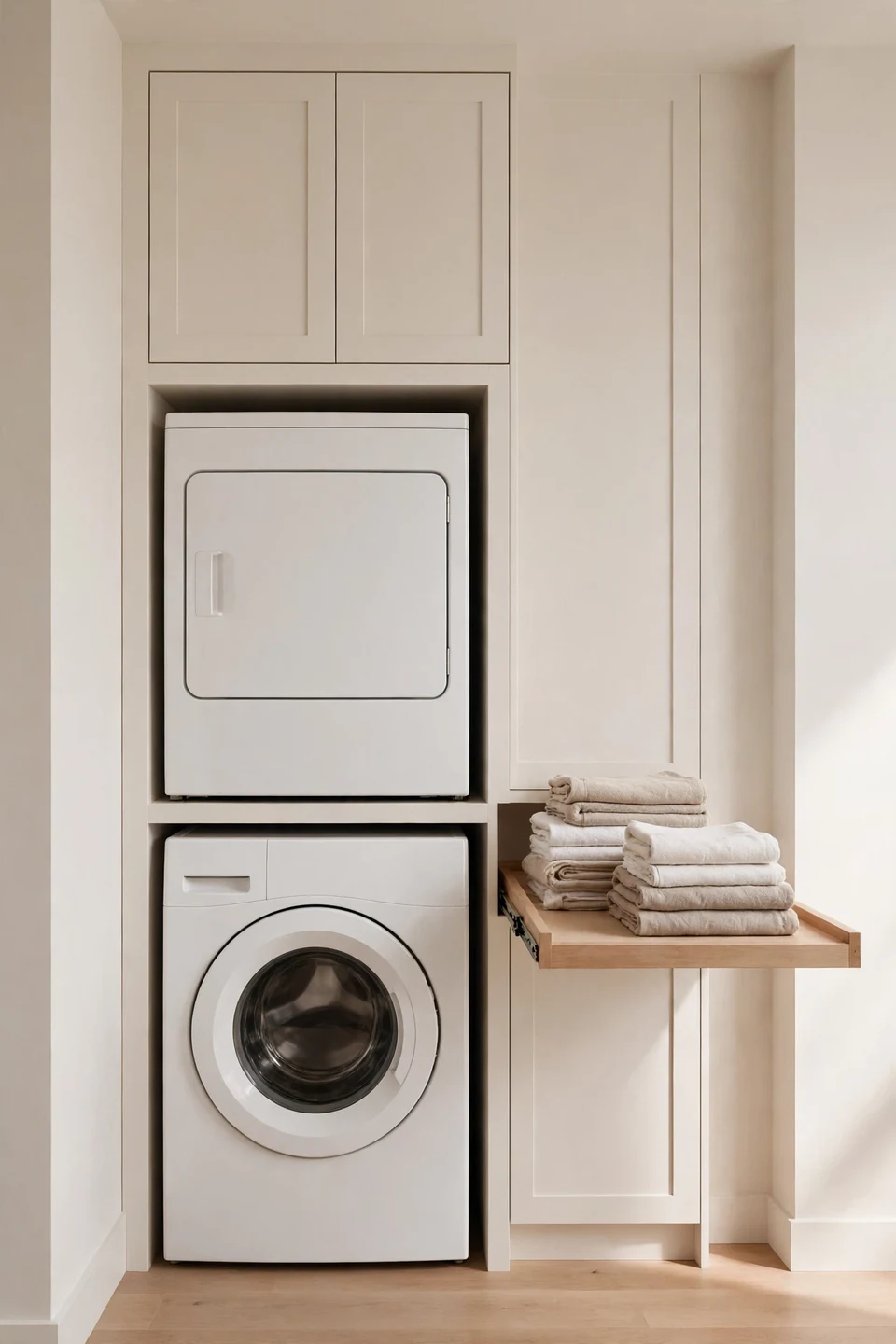
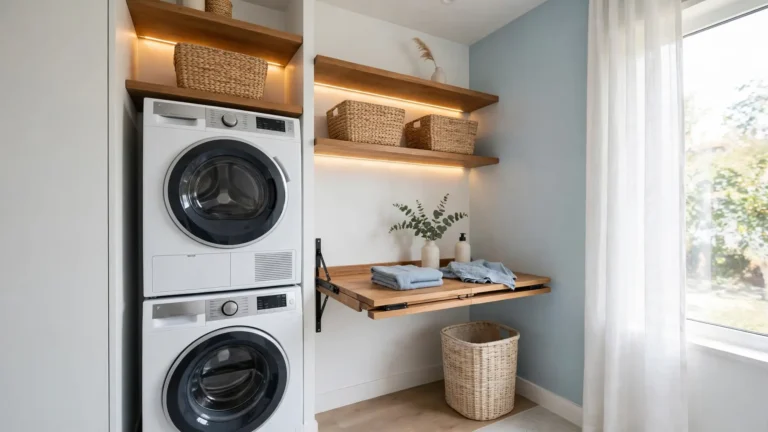
BEFORE: The stacked machines stood bare in a corner, flanked by a wobbling wire shelf and a detergent bottle balanced on top. Every cycle shook the shelf, and supplies crept across the floor toward the door.
AFTER: A simple framed surround now boxes the stack in painted wood, with a cabinet above the door swing and a pull out shelf beside it. Supplies sit behind a door, the floor stays clear, and the stack reads as a built in unit.
Framing a stacked pair takes one weekend with basic lumber and paint matched to your trim. Leave the manufacturer clearance gaps for heat and vibration, and add an access panel so hoses stay reachable. The result looks custom without a custom price.
Pull-Out Drying Rack
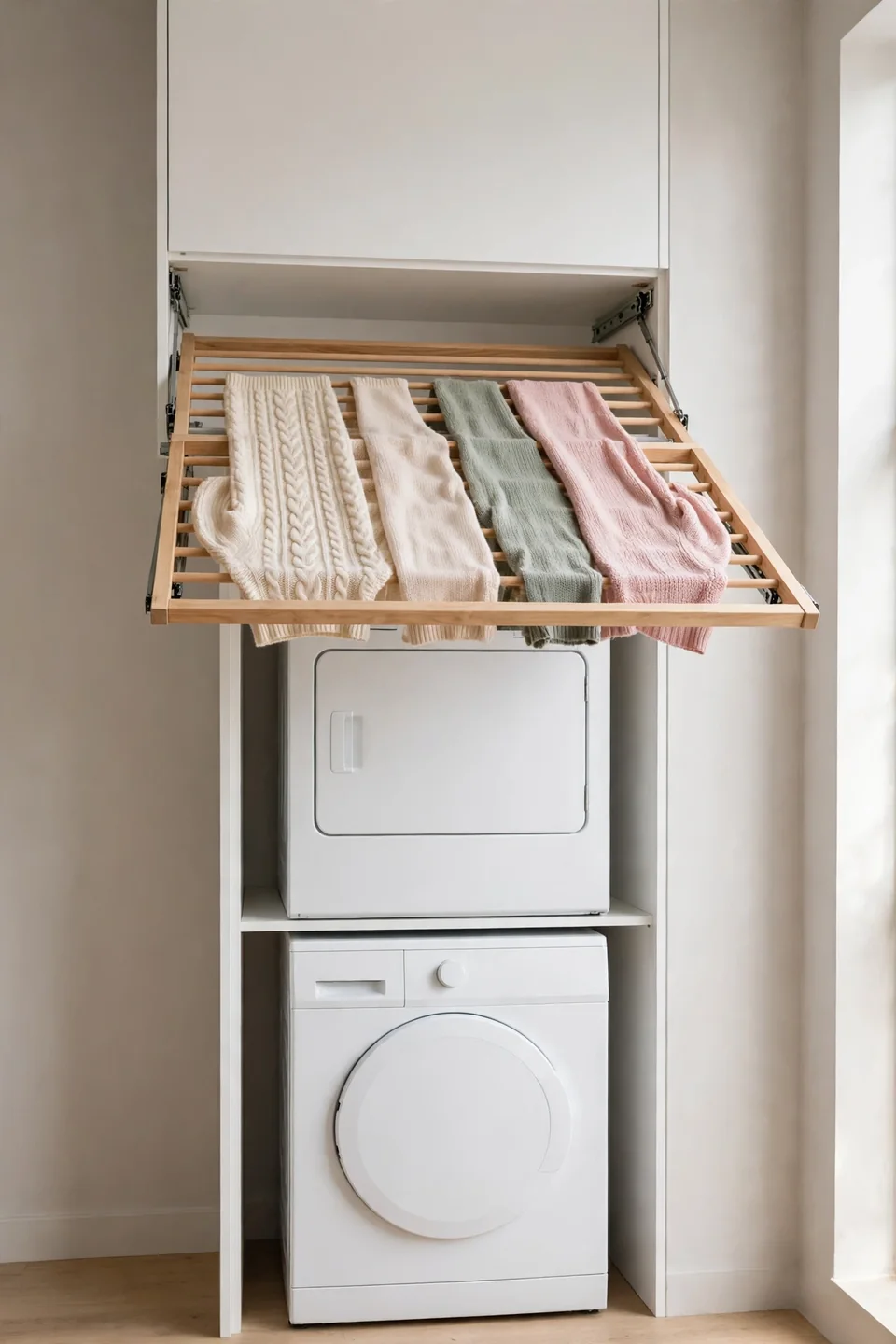
- Pick a wall gap near the machines, ideally above the sink or beside the stack.
- Mount two heavy duty drawer slides level with each other at chest height.
- Stretch a wooden dowel grid or mesh frame between the slides as the rack bed.
- Add a small stop block so the rack cannot pull free when loaded.
A pull out rack gives delicates and swimwear a flat, airy place to dry, then vanishes into the wall when the load is done. It beats draping shirts over door tops and chair backs all week. In my experience, flat drying also keeps knits in shape far better than hangers do, so the rack quietly protects the clothes it holds.
Tile Backsplash Upgrade
| Feature | Subway Tile | Zellige Tile |
|---|---|---|
| Cost per sq ft | $2 to $6 | $12 to $25 |
| Look | Clean and uniform | Handmade and varied |
| Grout lines | Thin and even | Wider, rustic edges |
| Cleaning | Wipes smooth fast | Texture traps some grime |
| Best wall | Behind sink and machines | One short feature wall |
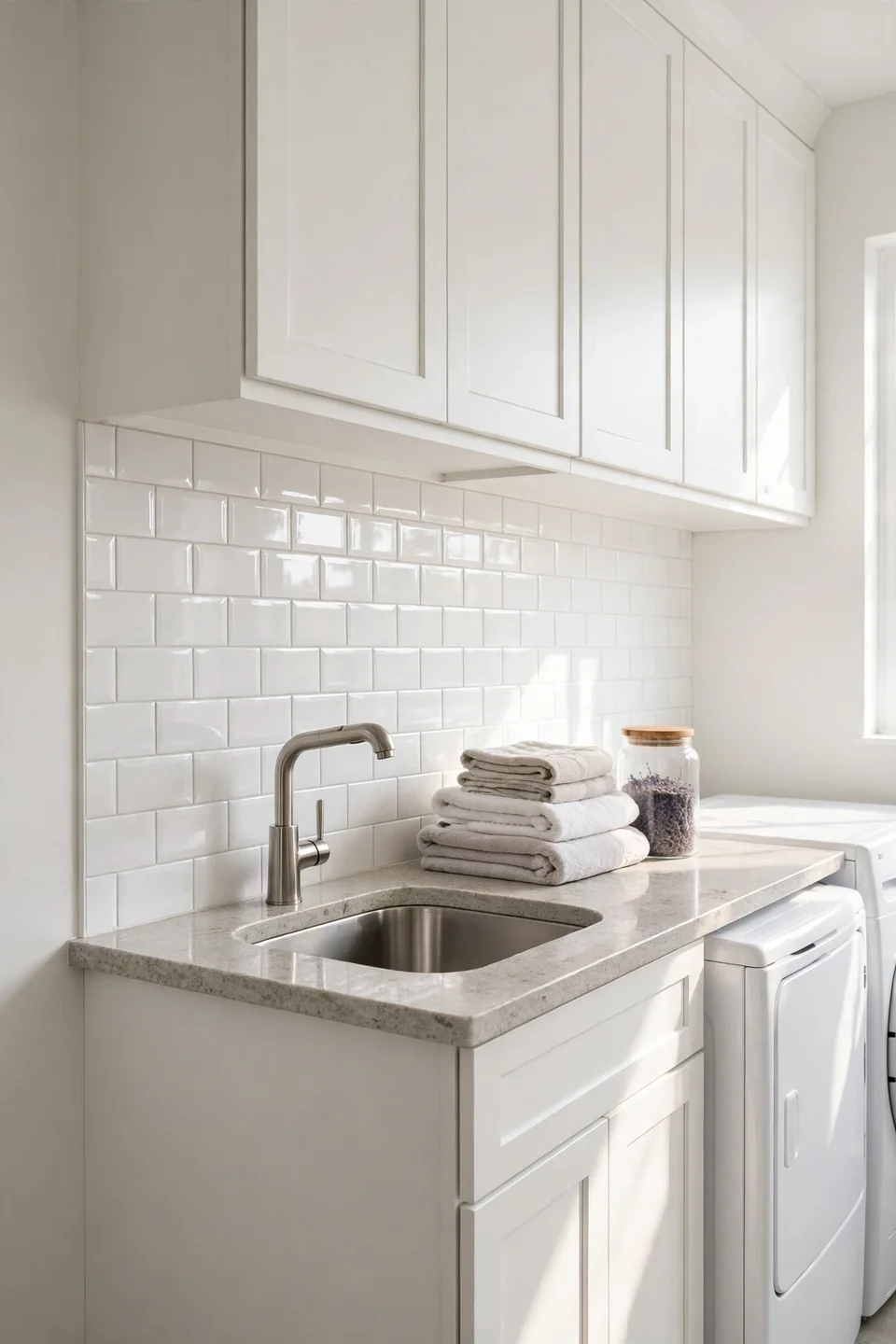
A backsplash earns its keep the first time a detergent splash lands on it instead of the paint. Run tile from counter to cabinet height behind the sink and machines, where splashes actually fly. Classic subway tile keeps the look calm and the budget calmer, while handmade zellige adds shimmer on a single short wall. Either way, seal the grout once a year and the wall shrugs off a decade of wash days.
Cabinet Color Refresh
Do:
- Sand and prime first; paint alone peels off glossy finishes.
- Pick a satin sheen that wipes clean after splashes.
- Remove doors and hardware for a finish without drips.
- Let coats cure a full week before loading shelves.
Don’t:
- Skip flat matte paint; it grabs lint and splash marks.
- Never paint over grease near machines without degreasing first.
- Avoid trendy colors you cannot match for touch ups.
- Rush the second coat on a humid day.
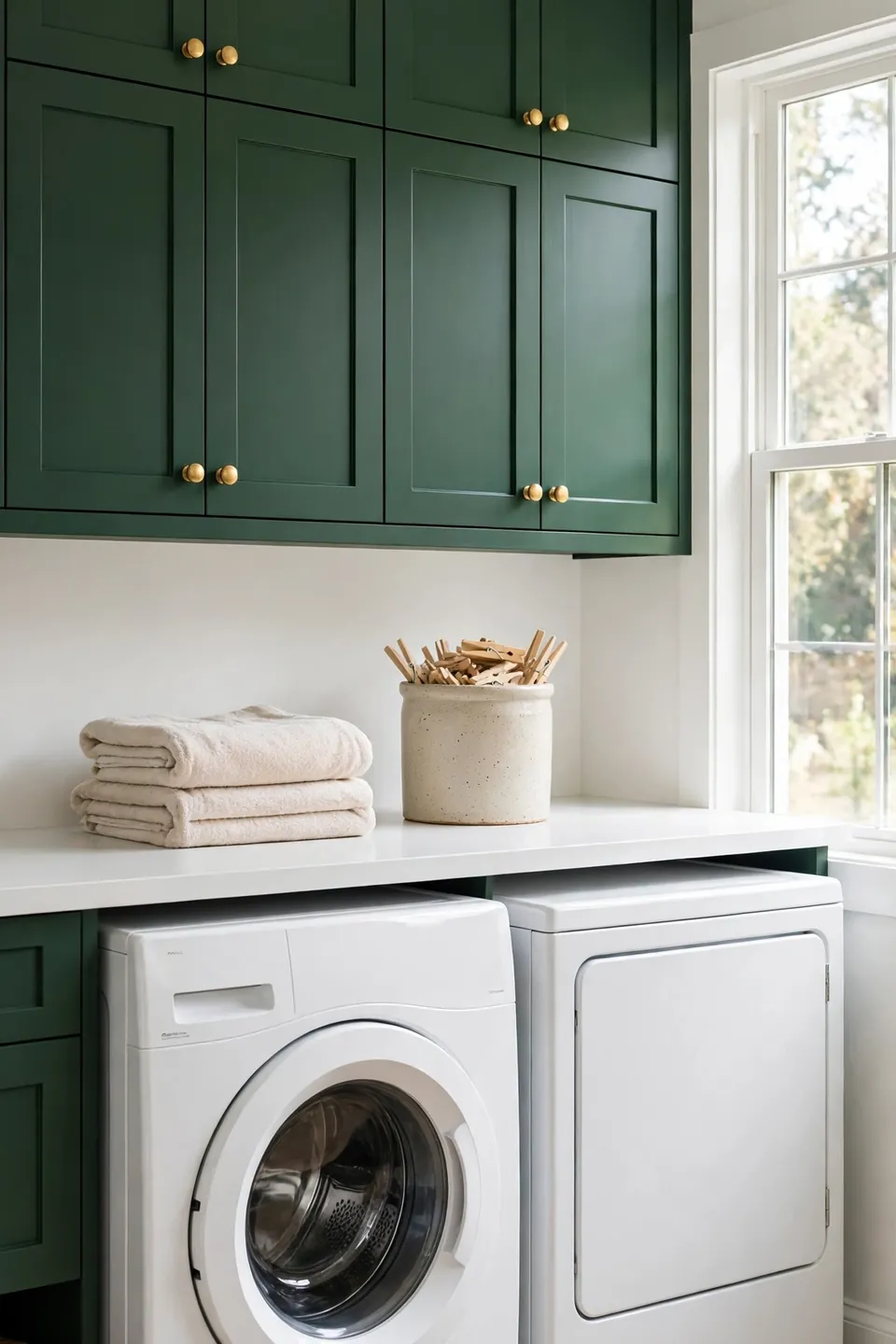
Paint is the cheapest way to make stock cabinets look chosen instead of inherited. Deep green, navy, and warm greige all flatter the white machines most rooms already own. Swap the knobs while the doors are off and the refresh looks twice its cost.
Sliding Barn Door Entry
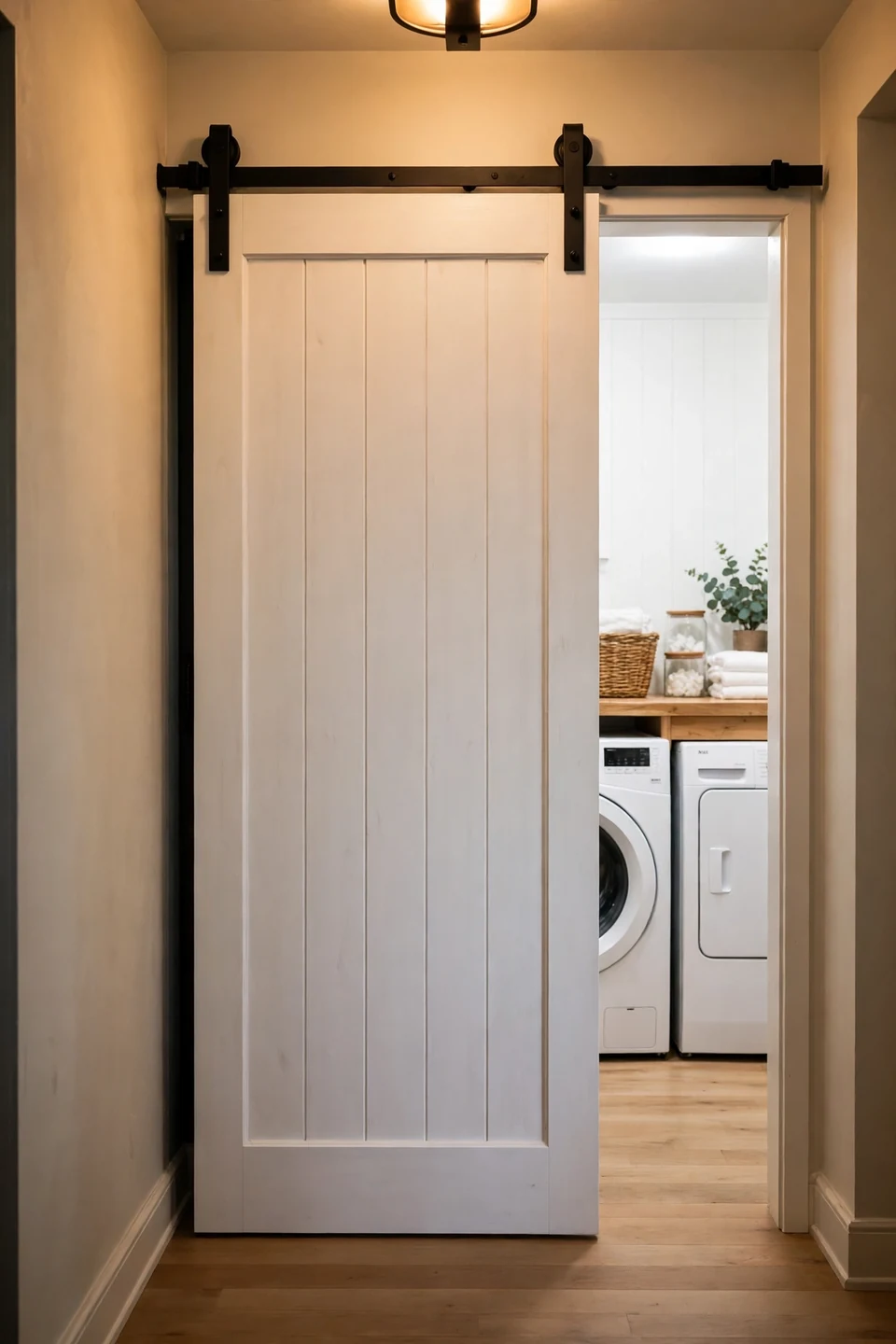
Cost: $150 to $400 for hardware and slab | Time: One afternoon | Skill Level: Intermediate, studs required | Best For: Tight hallways with swinging doors
A hinged door eats a full swing of floor space in a room that rarely has any to spare. A sliding barn style door parks flat against the hallway wall instead, freeing the corner where hampers and carts want to live. Choose a slab with a simple panel profile and paint it to match the trim, or stain it for contrast against white walls. Soft close hardware stops the slam that wakes the house during late night loads. Check the wall run first: the door needs clear space equal to its own width.
Glass Jar Storage Wall
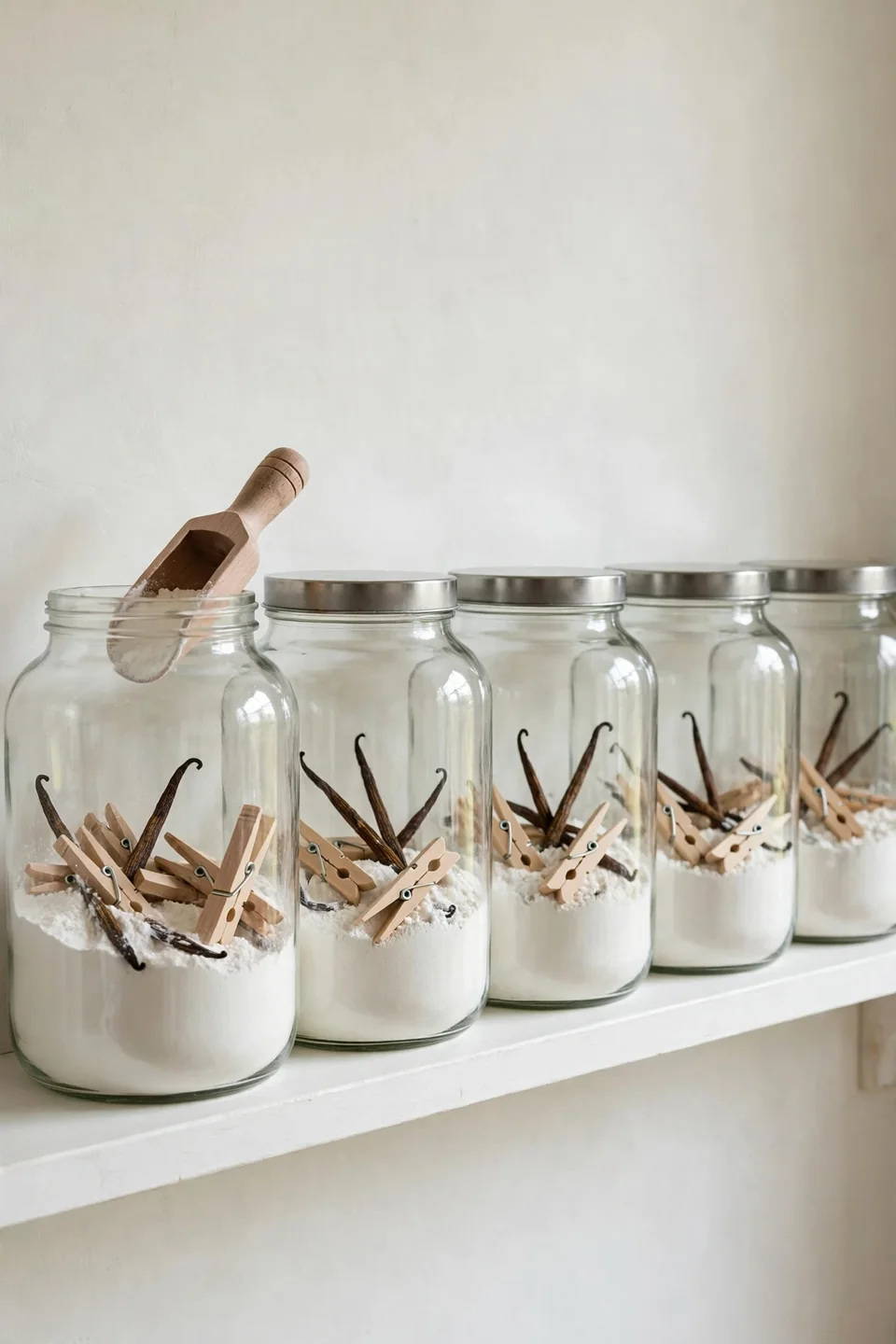
Detergent pods, powder, and dryer balls usually live in loud branded tubs that shout from the shelf. Decanting them into large glass jars with tight lids calms the whole wall down in one afternoon. The contents stay visible, so running low is obvious at a glance, and the jars wipe clean in seconds.
Line the jars on a single shelf at shoulder height, tallest at the back. Keep scoops inside each jar to stop wet hands digging in. That’s why many experts recommend glass over plastic here: it never absorbs odors or stains, and one set of jars can serve the room for decades.
Hanging Rail System
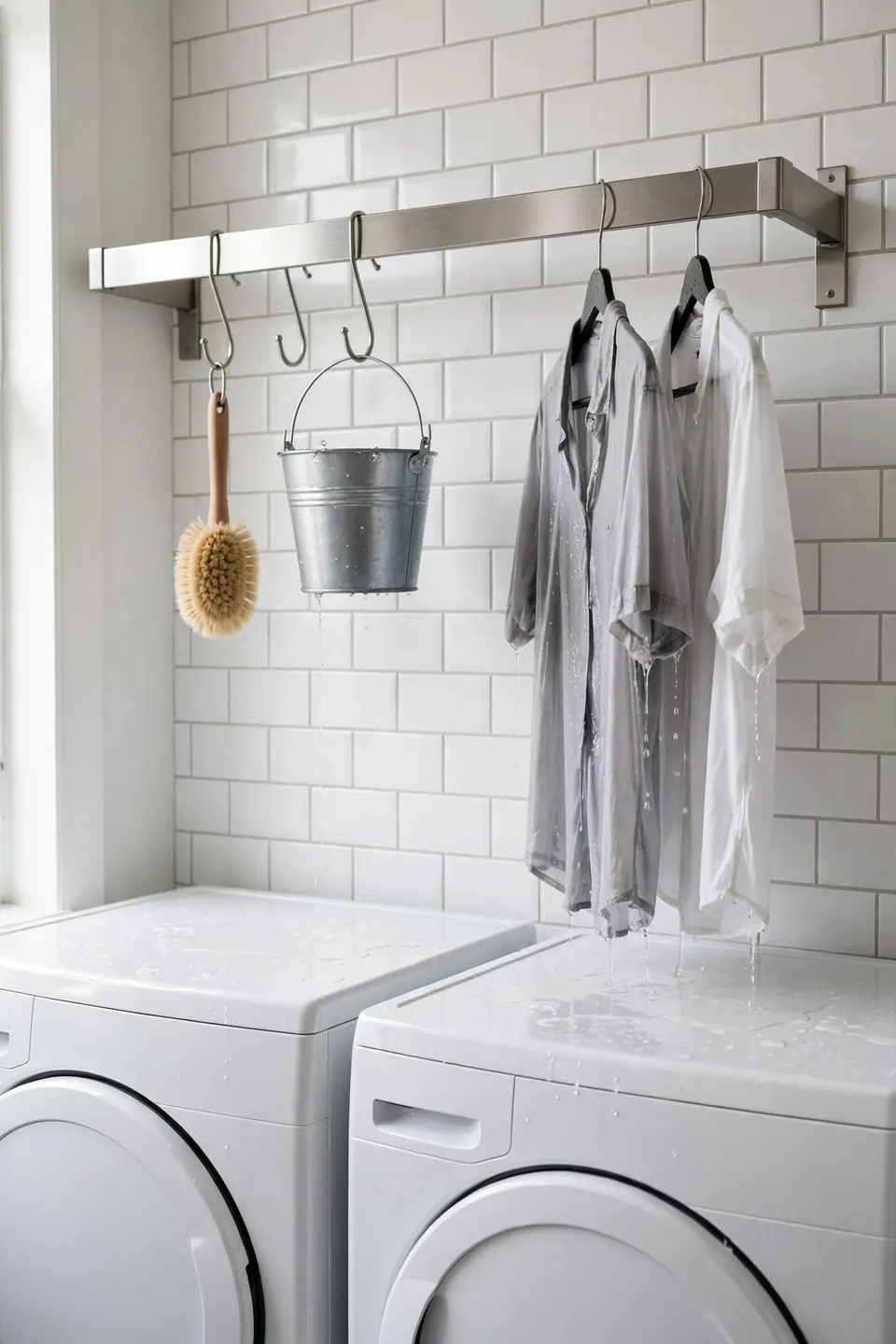
- A wall rail with S hooks holds brushes, scissors, and a dustpan.
- Shirts on hangers drip dry straight from the machine door.
- A clip strip keeps single socks visible until partners appear.
- Small buckets on hooks corral stain sticks and collar brushes.
Rails steal storage from thin air because they use the wall strip most rooms waste. Mount one above the machines for drying and one near the sink for tools. The same wall first thinking works beyond this room; the high contrast schemes in black white bedrooms use it to keep small spaces feeling ordered rather than crowded. One rail costs less than a single cabinet and installs in about twenty minutes.
Under-Shelf Lighting Strips
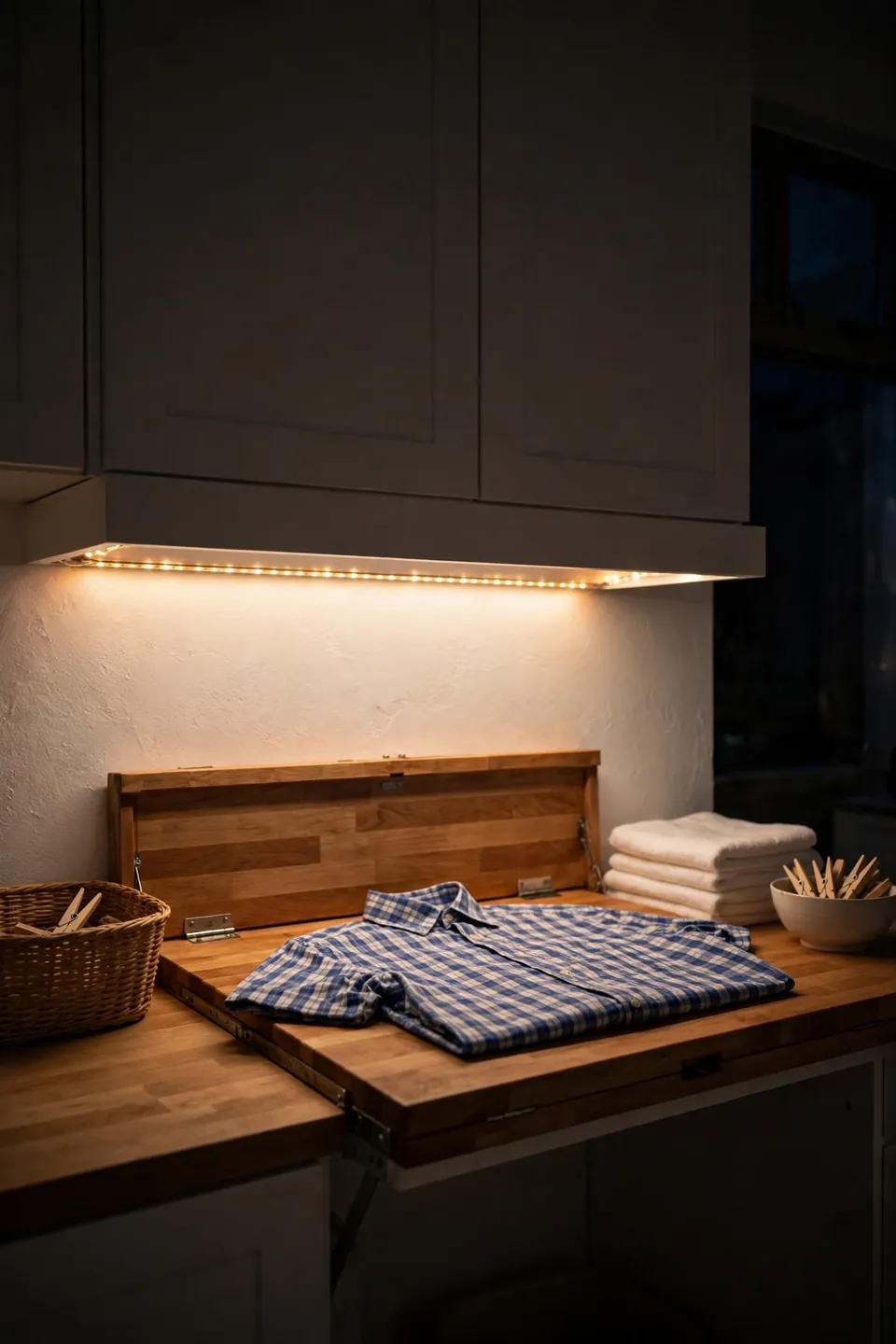
Quick Tip: Pick a warm 2700K strip and mount it at the front edge of the shelf, angled slightly toward the wall. Front mounting throws light onto the work surface instead of into your eyes, and the warm tone matches household bulbs so whites read true.
Laundry rooms often rely on one ceiling fixture that leaves the counter in shadow exactly where you inspect collars and cuffs. Peel and stick LED strips under shelves or cabinets fix that for the price of a pizza. Motion sensor versions switch on when you enter with full arms, a small mercy on wash day.
Sorting Station With Hampers
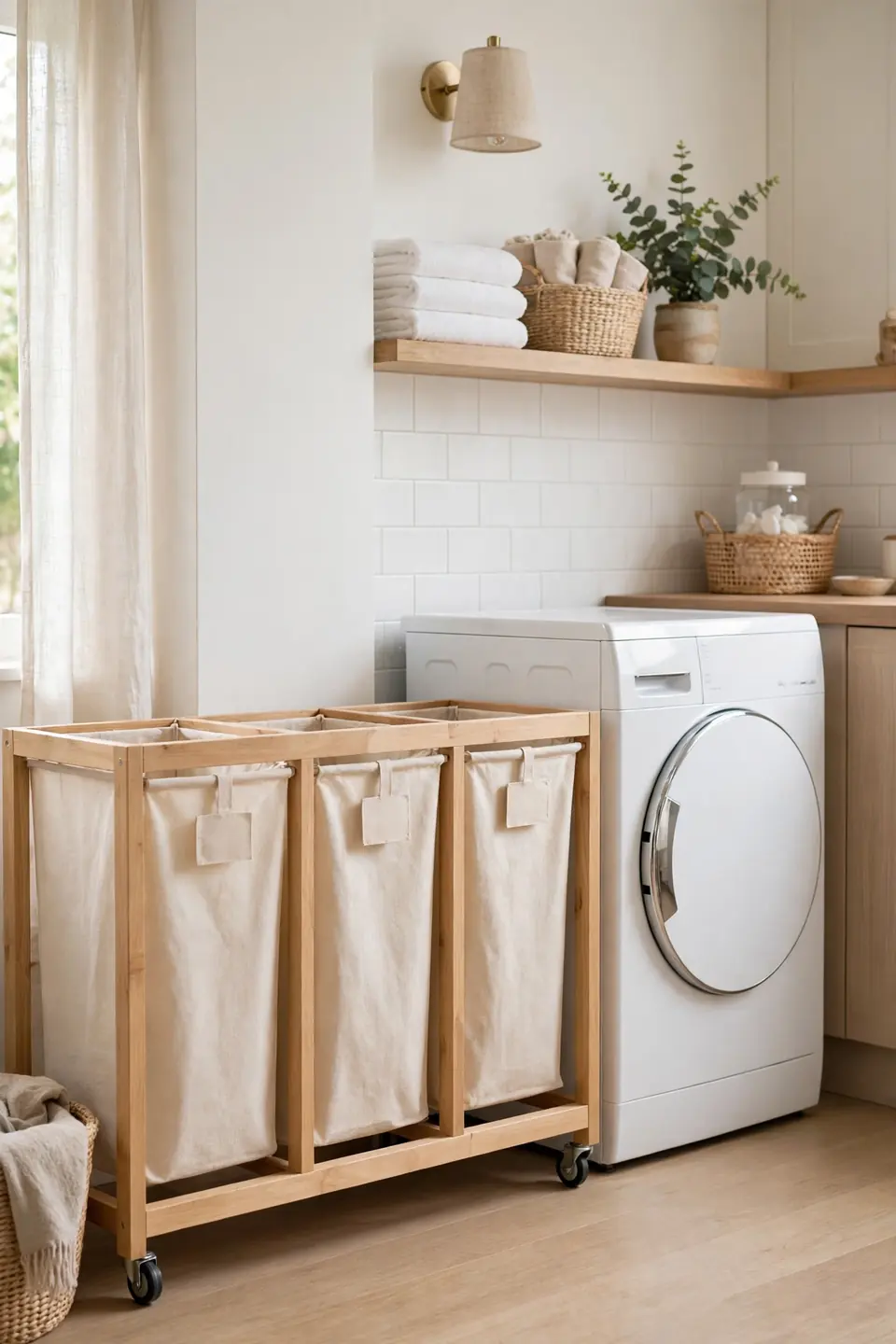
BEFORE: One mixed basket took every load, so darks, delicates, and towels shared a single hot wash more often than anyone admits. Sorting happened on the floor, in piles, minutes before the machine started.
AFTER: A three bin station now stands by the door, one bin each for darks, lights, and towels. Loads sort themselves all week as clothes arrive, and wash day starts with full, ready machines instead of a floor archaeology dig.
Choose bins with removable cloth liners you can carry straight to the machine. Label the fronts with simple icons if kids or guests do the tossing. A station on small wheels rolls aside for mopping and earns its footprint twice over.
Wall-Mounted Folding Table

- Locate two studs above the machines or along the longest clear wall.
- Mount a piano hinge on a sealed plywood top cut to your wall length.
- Add two folding brackets rated for the weight of a full basket.
- Finish with a slim latch that holds the top flat against the wall.
A fold down table gives you a full folding surface that costs zero floor space, which is why it ranks among the most practical laundry room upgrades for small homes. Drop it, fold the load, lift it back, and the walkway stays clear. A strip of ironing board fabric on top helps if you press shirts there too.
Countertop Upgrade Choices

| Feature | Butcher Block | Quartz |
|---|---|---|
| Cost | $150 to $400 DIY | $600 and up installed |
| Warmth | Warm wood grain | Cool stone feel |
| Care | Oil twice a year | Wipe and go |
| Repairs | Sands out at home | Needs a pro |
| Best for | Folding over machines | Sink run counters |
The counter you fold on daily should forgive dropped bottles and hot basket rims. Butcher block brings warmth and a home repair path that suits most budgets, while quartz shrugs off bleach splashes without any upkeep at all. Pick by your habits: frequent soakers lean quartz, frequent folders lean wood, and either choice beats the wire shelf it replaces.
Ironing Board Cabinet
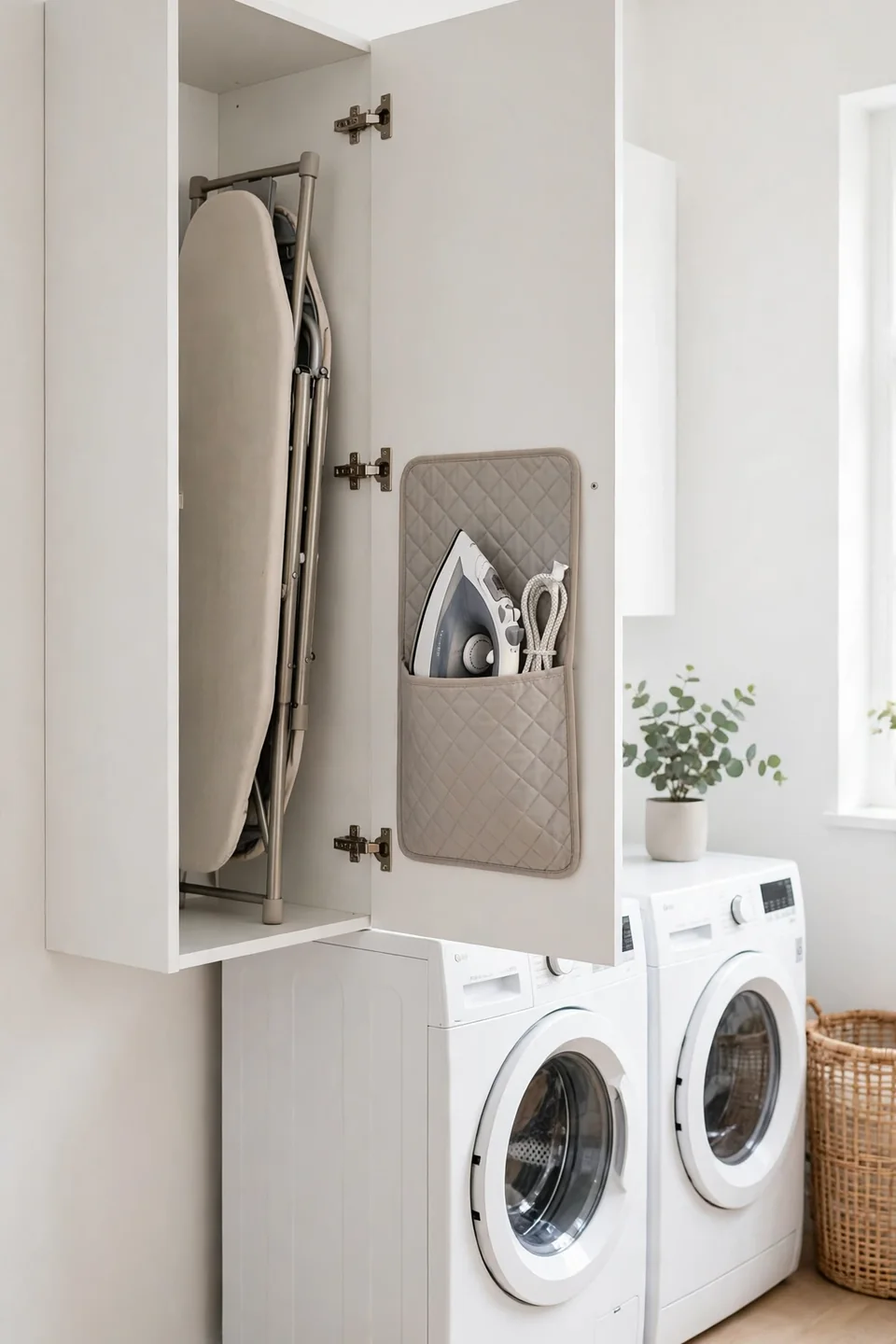
Do:
- Mount the cabinet between studs beside the machine outlet.
- Choose a model with a swivel board for tight corners.
- Add a heat proof lining where the iron rests hot.
- Keep spray bottle and starch inside the door pocket.
Don’t:
- Block the cabinet swing with a hamper or cart.
- Skip models without a locking latch around kids.
- Mount it where steam drifts onto stored linens.
- Leave the board down as a catch all shelf.
A wall cabinet hides the ironing board behind a slim door that reads as simple millwork. The board drops down at working height, presses a shirt in two minutes, and disappears again. Rooms without a spare closet gain the most from this one.
Sage Green Accent Paint
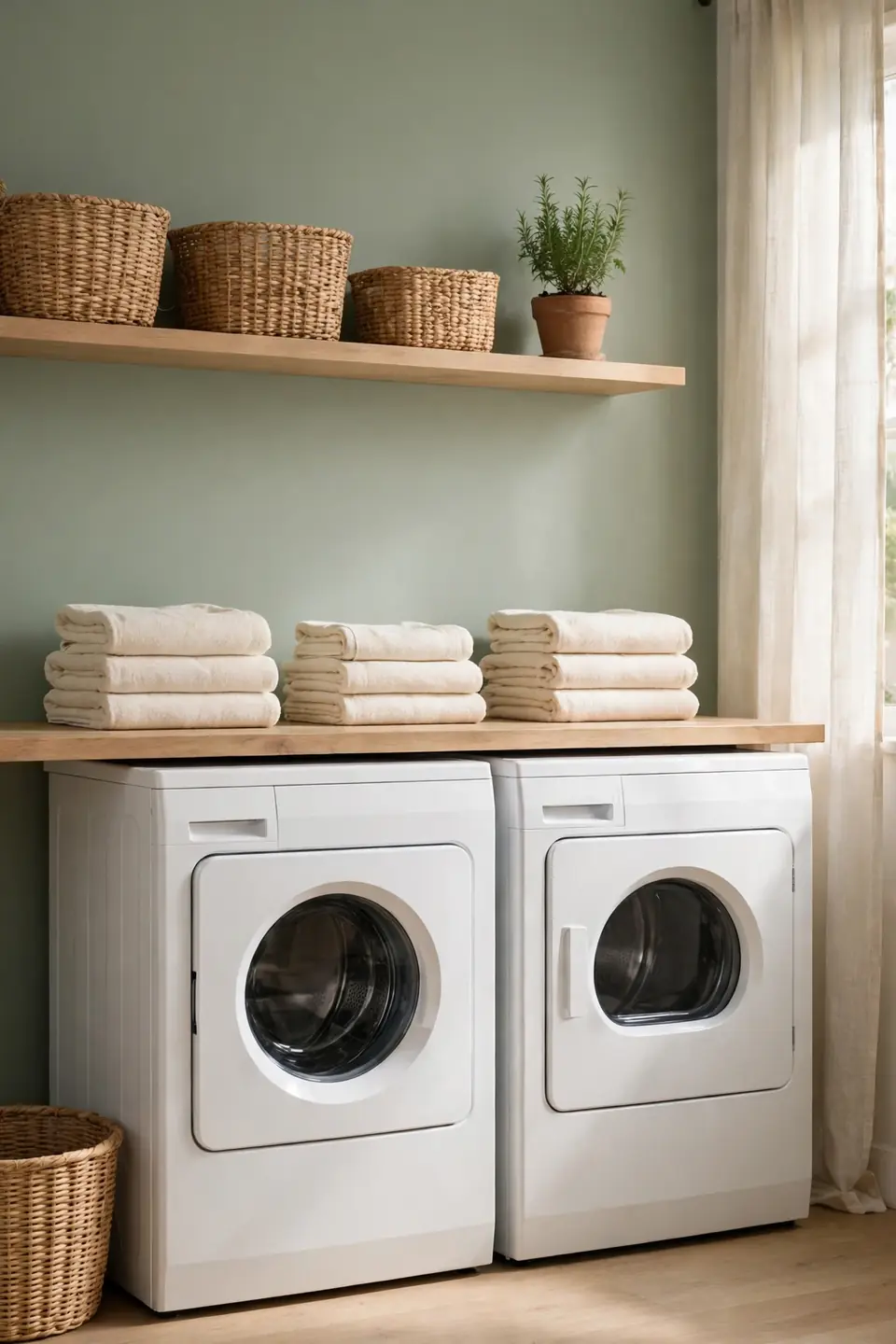
Cost: $40 to $90 for paint and supplies | Time: Half a day | Skill Level: Beginner | Best For: All white rooms feeling flat
Sage green has a calming effect that suits a room built around a chore. Paint one wall, the cabinet fronts, or the inside of the door and the white machines suddenly look deliberate instead of default. The gray undertone keeps sage from reading sweet, and it pairs with the wood tones and woven textures laundry rooms collect. Test the swatch beside something white and something chrome before committing, since the color shifts between the two. In my experience, sage is the rare color nobody in the house argues with.
Overhead Shelf And Rod
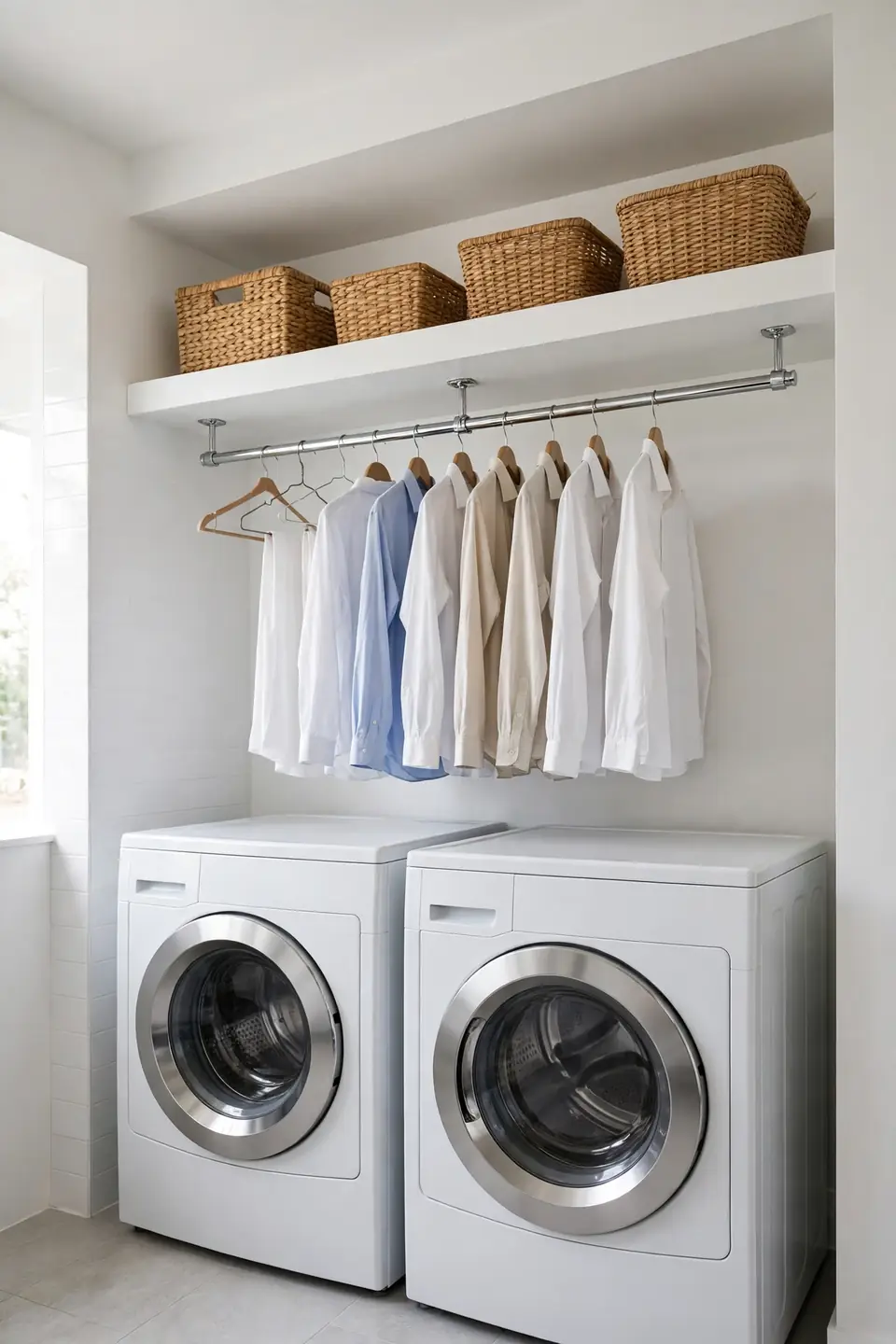
The strip of wall above the machines usually holds nothing but dust. A deep shelf fitted with a hanging rod underneath turns that dead zone into the hardest working storage in the room. Shirts come out of the dryer, go straight onto hangers, and hang from the rod instead of draping over every chair in the house.
Set the shelf a full arm’s reach below the ceiling so baskets slide on and off without a stretch. Use brackets rated well past the weight of wet clothes. Keep the rod ends capped so hangers stop instead of sliding off onto the machines.
Rolling Cart Supply Station
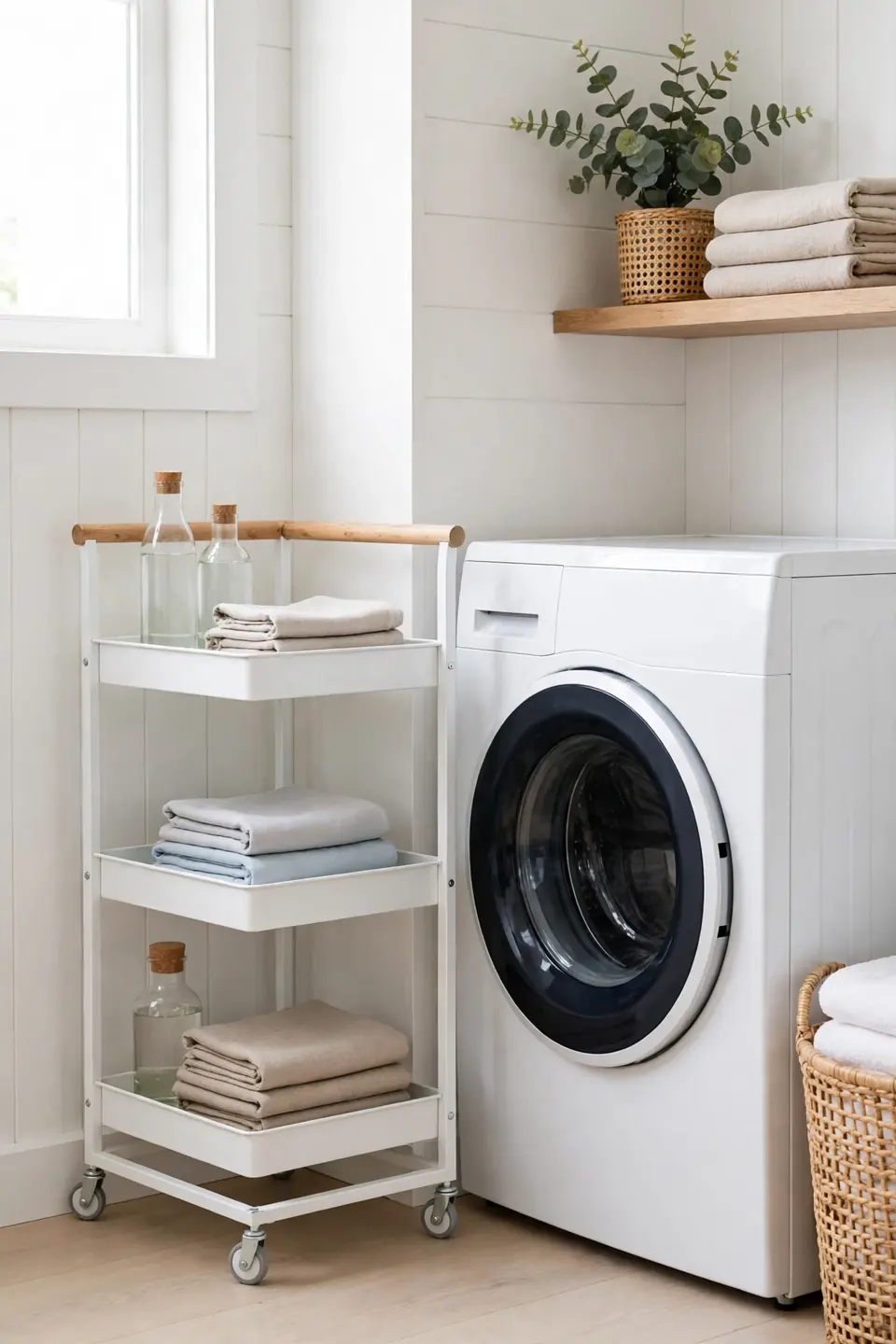
- A slim three tier cart fits the gap beside most machines.
- The top tier holds the current detergent and stain remover.
- Middle tiers store folded rags, dryer balls, and mesh bags.
- Wheels let the whole station roll out for cleaning behind.
That awkward five inch gap beside the washer is dead space until a rolling cart moves in. The cart turns a dust trap into a supply station you can pull forward with one finger. Park it during cycles so vibrations do not send it wandering, and the system stays tidy by itself. Measure the gap before ordering, since cart widths vary by a few inches between brands.
Pet Washing Station

Quick Tip: A handheld shower head on a long hose matters more than the tub itself. It rinses mud from paws and bellies without lifting the dog, and it doubles as the easiest way to wash the station down afterward.
A raised pet wash tucked at the end of the room saves your back and your bathroom grout. A simple tiled alcove with a drain, or a utility tub on a platform, handles muddy paws in minutes. Store towels and pet shampoo on a shelf directly above, and the whole muddy season routine lives in two square feet. A small mat outside the station catches the shake off water before it reaches the floor.
Brighter Window Treatments
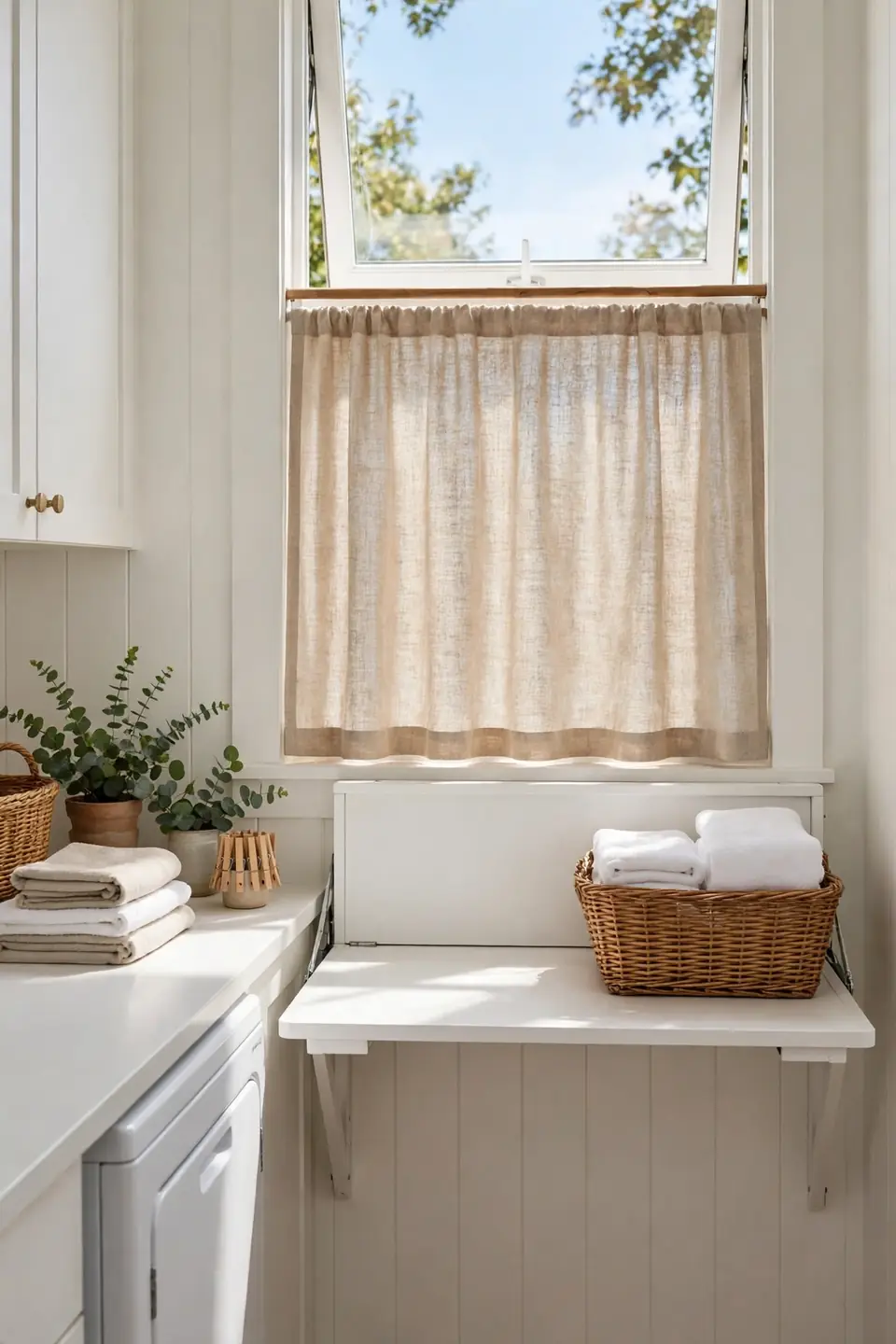
BEFORE: Heavy blinds blocked half the window and still left the room gloomy, their slats gray with lint. Folding happened under ceiling light even at noon, and stains slipped past unnoticed week after week.
AFTER: A simple linen cafe curtain now covers only the lower sash, leaving the top open to the sky. Daylight pours across the counter, colors read true, and privacy stays intact for the neighbors.
Window changes cost little and pay back on every single load. If privacy allows, even a bare top sash works. Clean glass matters too: wash day light is inspection light, so give it a clear path in.
Durable Vinyl Flooring

- Clear the room and pull the old flooring back to the subfloor.
- Level low spots with patching compound and let it cure fully.
- Lay sheet vinyl or click planks from the back wall forward.
- Seal edges around machines and the sink with silicone.
Laundry floors take water, heat, and dragged baskets, so flooring here must forgive all three. Modern vinyl shrugs off spills that would swell laminate and stain grout lines. Warm wood looks soften the utility feel of the room, and the cushioned surface is kinder to dropped hangers and knees alike. Most planks click together without glue, so a careful beginner can finish the floor in a single weekend.
Washer Pedestal Drawers
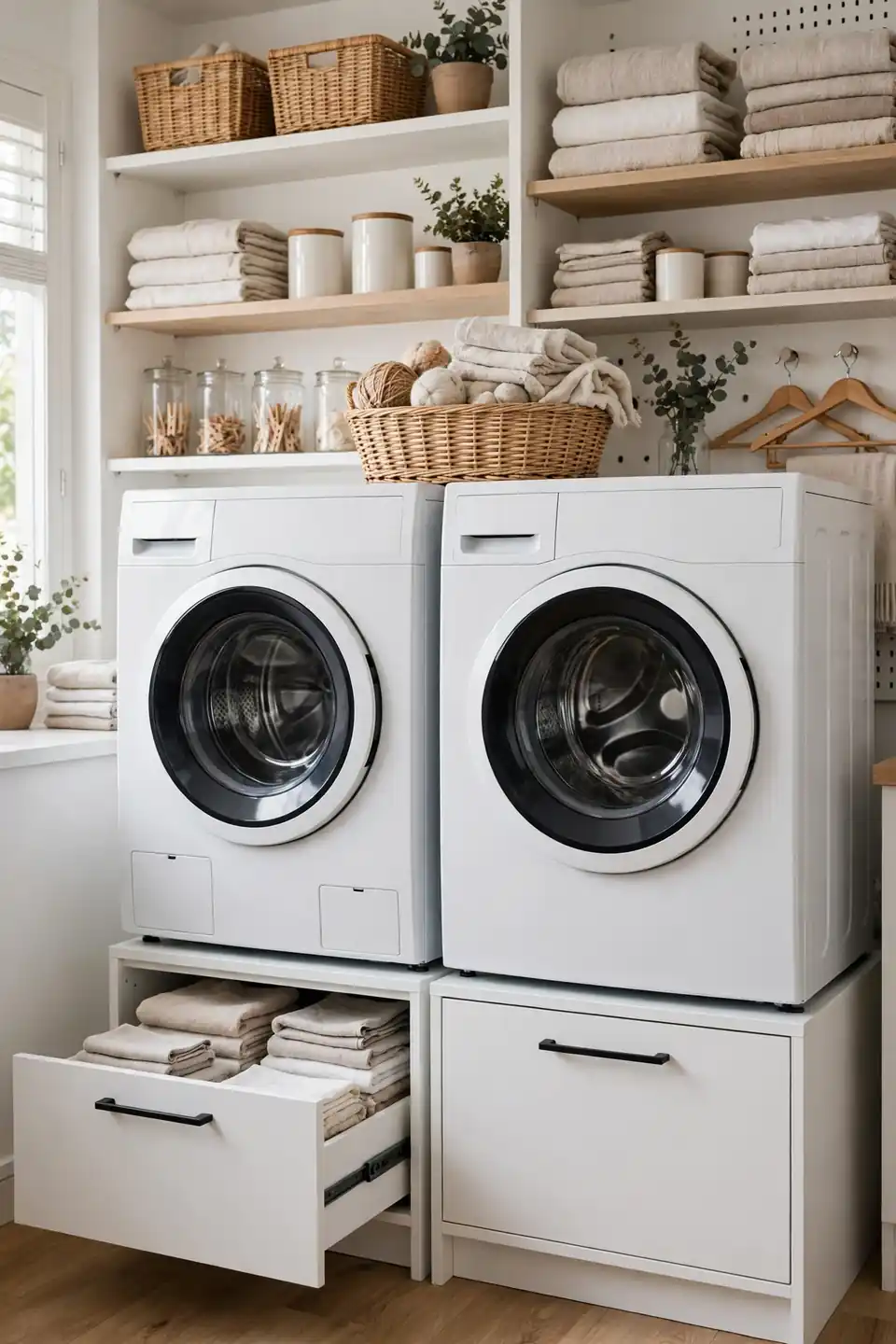
| Feature | Pedestal Drawers | Open Riser |
|---|---|---|
| Storage | Hidden, divided drawers | Open shelf, baskets fit |
| Height gain | About 12 to 15 inches | About 10 inches |
| Cost | $200 to $300 each | $80 to $150 DIY |
| Looks | Sleek and built in | Casual and airy |
| Best for | Small supplies and pods | Bulky baskets and bins |
Raising the machines to a comfortable loading height ends the deep crouch at every cycle. Pedestal drawers hide supplies in the bargain, while a simple open riser costs less and swallows big baskets. Whichever base you pick, the comfortable height alone justifies the weekend it takes to install. Your knees and lower back will notice the difference within the first week.
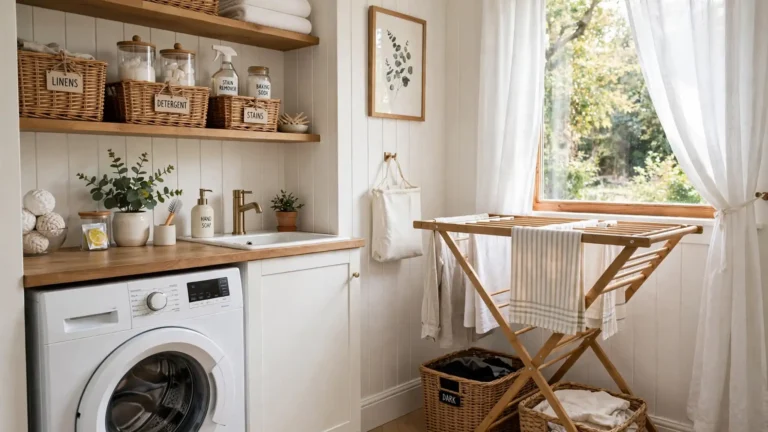
Labeled Basket System
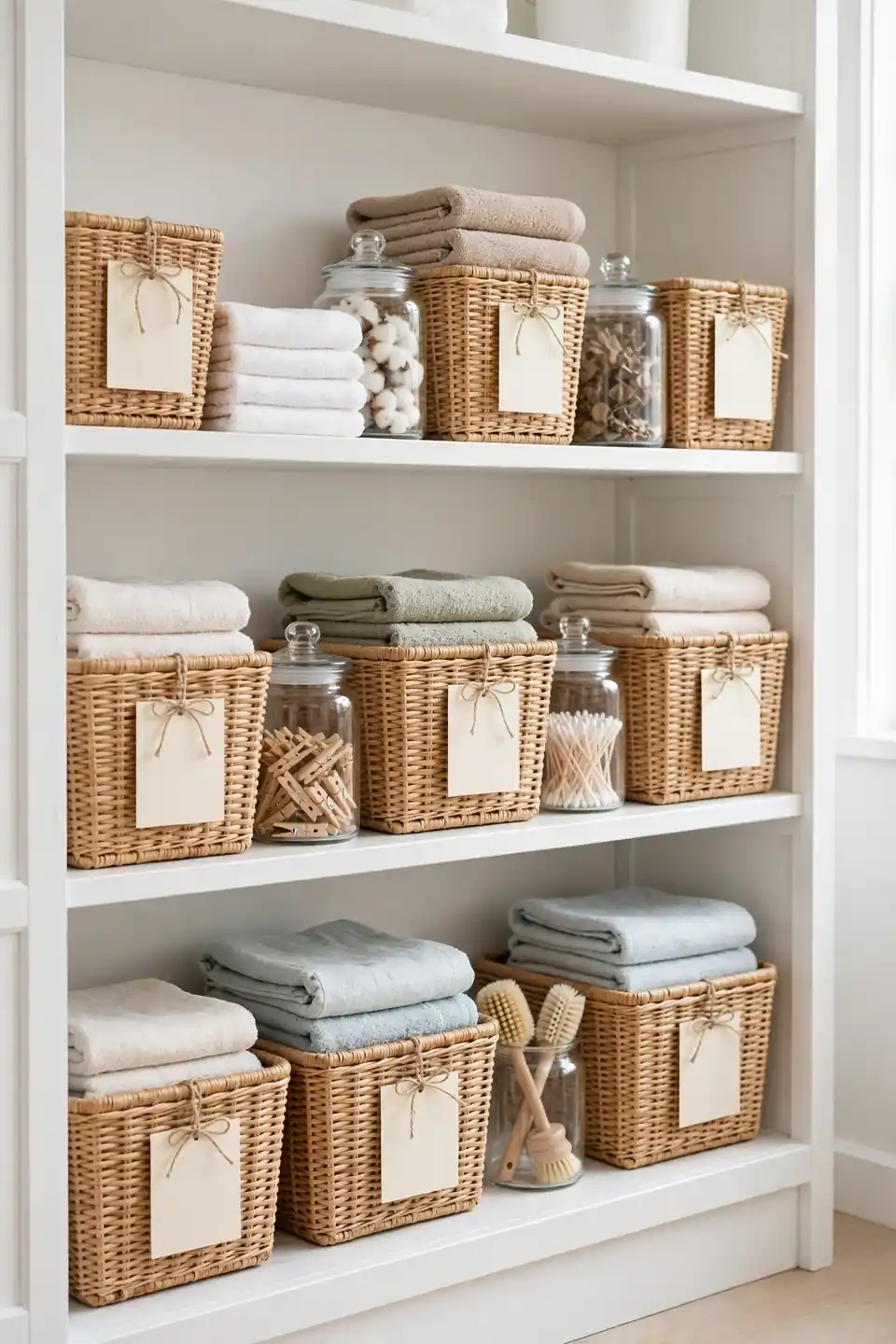
Do:
- Give every category its own basket: pods, powders, rags.
- Use large simple labels readable from the doorway.
- Keep baskets one layer deep so nothing buries.
- Match basket sizes so shelves look calm and even.
Don’t:
- Mix cleaning chemicals into the laundry baskets.
- Choose tiny baskets that swallow nothing and crowd shelves.
- Add lids; they slow down one handed wash days.
- Label in pencil, it fades in the humidity.
A labeled system survives because anyone can run it, not just the person who organized it. Guests, kids, and partners put things back right without a briefing. That staying power is what turns a tidy weekend into a tidy year.
Navy Cabinet Accents
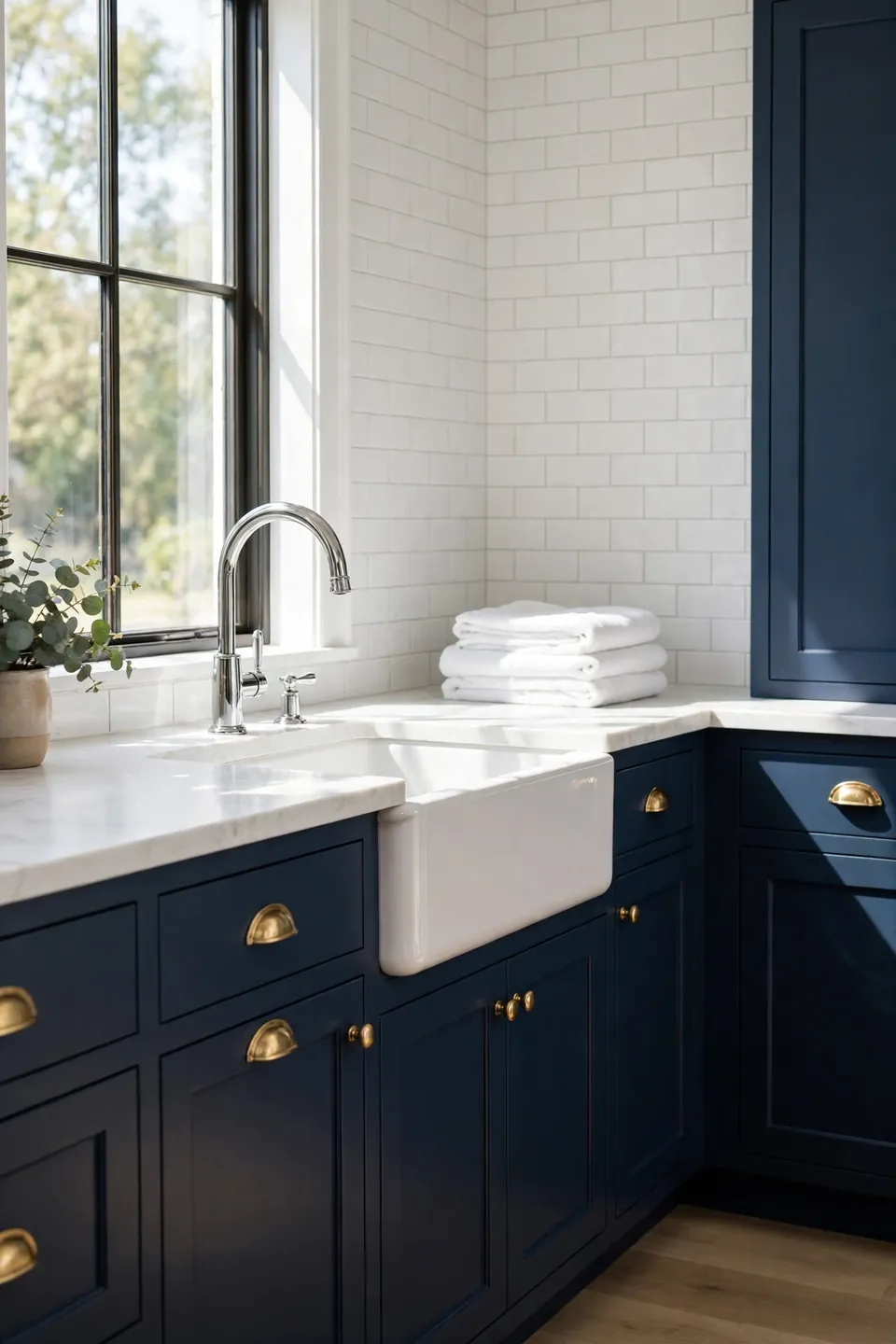
Cost: $50 to $120 for paint and hardware | Time: One weekend | Skill Level: Beginner to intermediate | Best For: Rooms with strong daylight
Navy cabinets give a laundry room the confidence of a kitchen. The deep blue hides scuffs, flatters chrome and white porcelain, and pairs cleanly with brass or matte black hardware. Paint only the lower cabinets if uppers in navy feel heavy, or do the reverse and ground the room with white below. Navy also forgives the blue tint of detergent drips better than any color on the chart. I’ve seen this work well in many cases where a room needed one decisive color move.
Washable Rug Runner
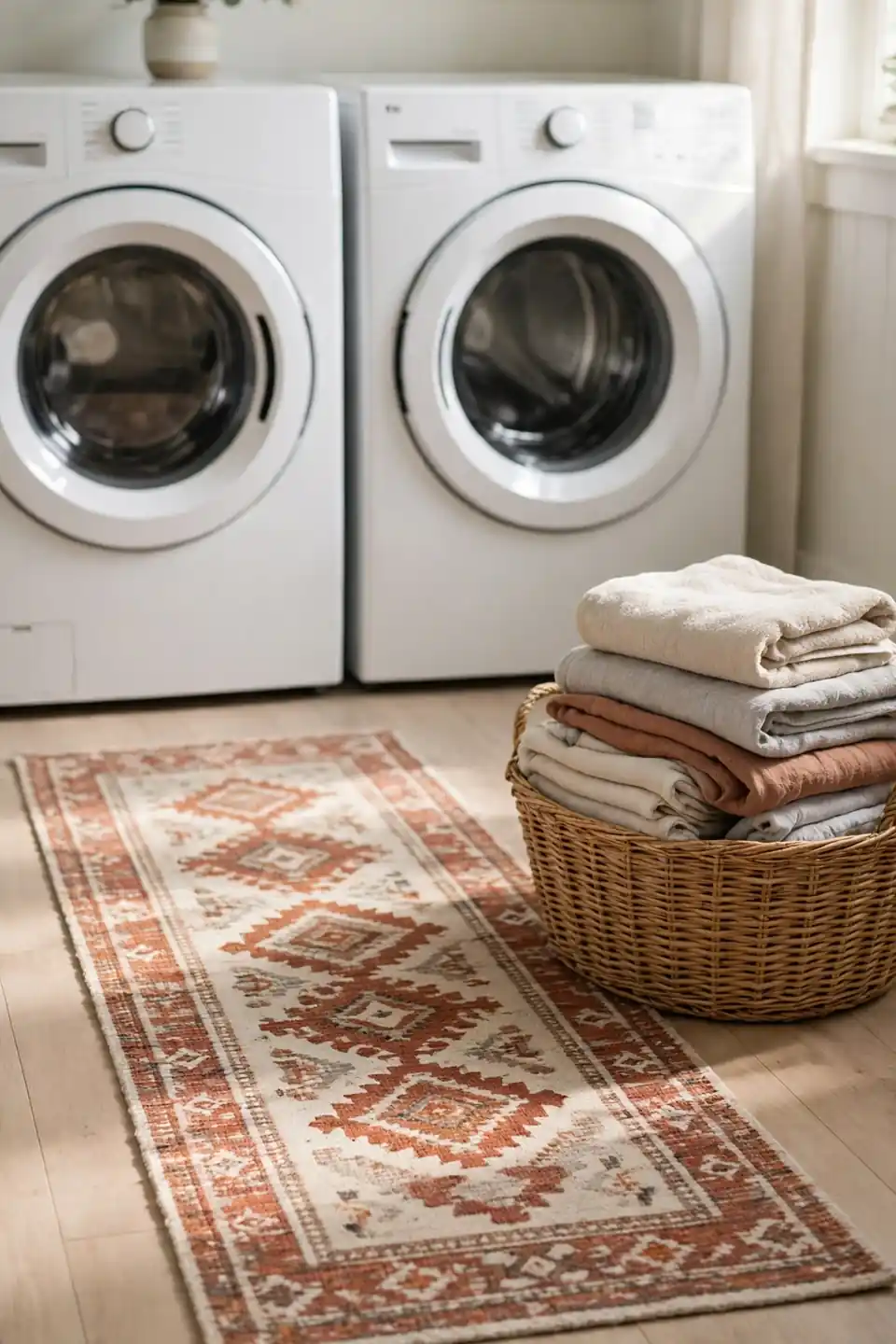
Cold tile at 7 a.m. is a rude way to start a chore. A washable runner in front of the machines cushions every stand and sort session, catches the drips that escape the door seal, and quiets the echo of the room. Modern washable rugs shrug off the very machine they serve: when the runner gets grubby, it goes in the wash itself.
Choose a low pile so doors swing clear and baskets roll over it without fighting. A nonslip pad underneath is non negotiable near water. Pick a pattern busy enough to hide lint between washes, in colors borrowed from your cabinets for a pulled together finish.
Conclusion
None of these changes needs a full renovation or a contractor on speed dial. Pick the upgrade that solves your loudest wash day complaint, finish it completely, and let the room prove itself for a few weeks before choosing the next one. Small, well chosen laundry room upgrades stack up quickly: a counter that catches the folding, shelves that end the countertop clutter, light that shows you the stains before the dryer sets them. Save this pin for your next free weekend, start with the quickest win, and share your before and after with someone still folding on the bed. I’ve seen how small changes like these can shift the whole feeling of a home.