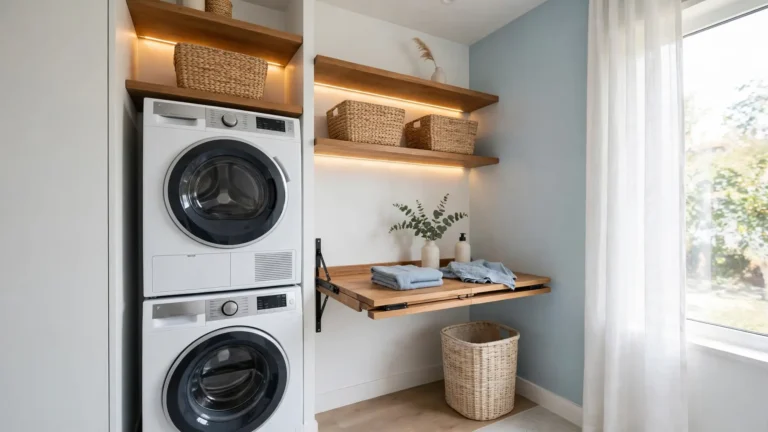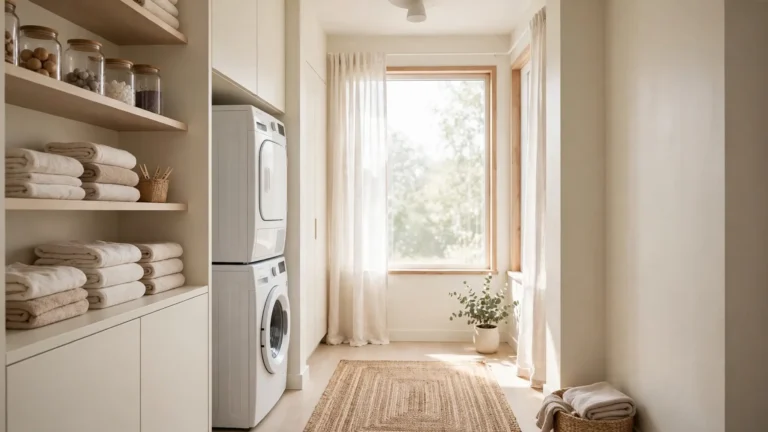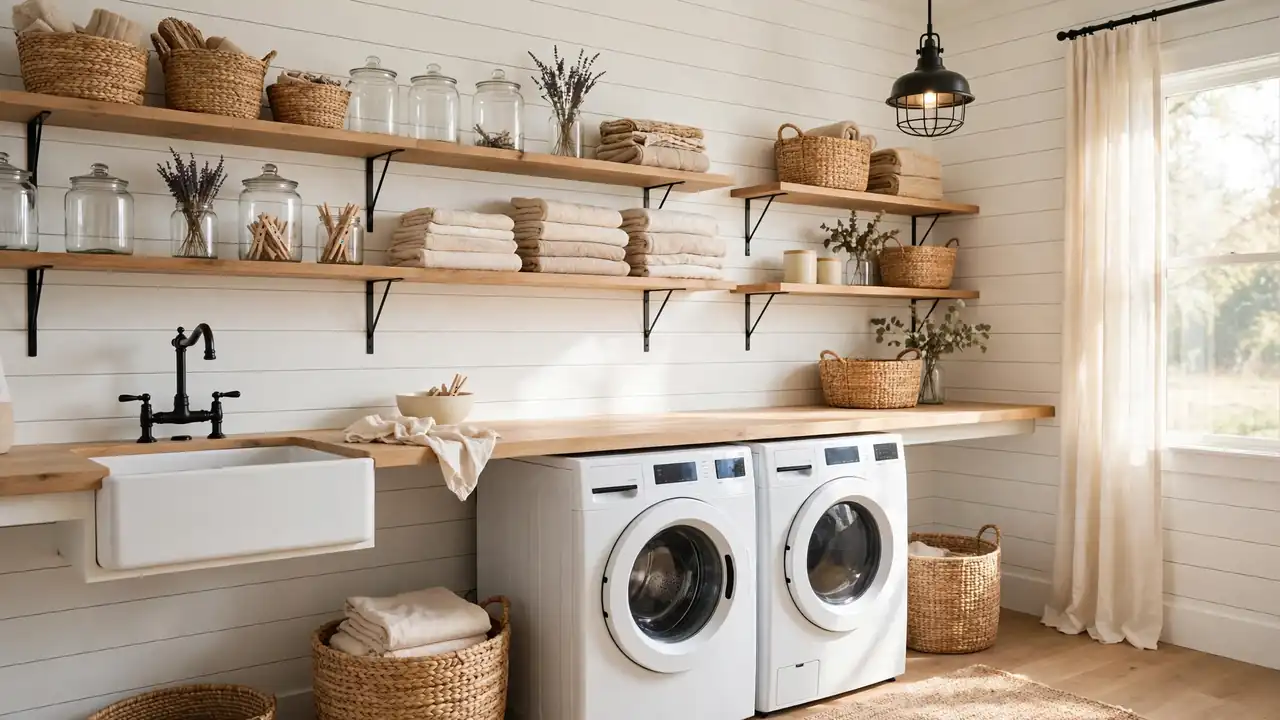
21 Modern Farmhouse Laundry Room Decor Ideas for Rustic Style
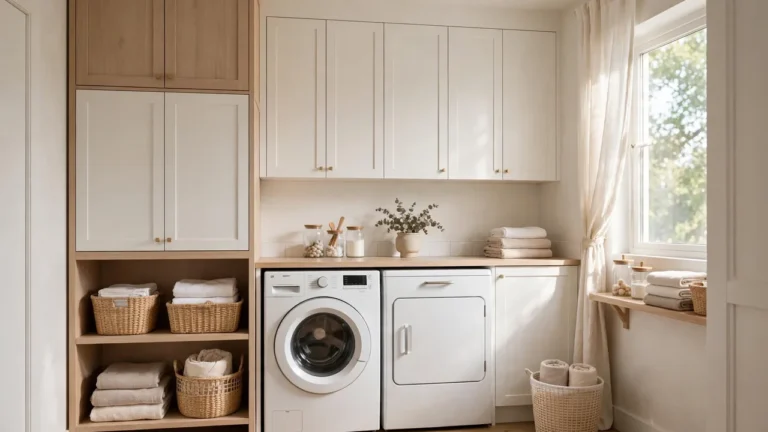
A laundry room rarely gets design love, yet it is one of the hardest working spots in the house. Good modern farmhouse laundry room decor fixes that with white shiplap, warm wood, and hardworking storage that still looks calm on a Sunday morning.
Start with the surfaces you touch daily, then layer in baskets, rails, and one or two rustic details. The same layered thinking that makes lime green and pink living room ideas feel balanced works here too: one lead finish, repeated accents, and plenty of pale neutral ground. I’ve noticed small laundry rooms feel twice as big when every shelf and hook earns its place.
Shiplap Wall Backdrop
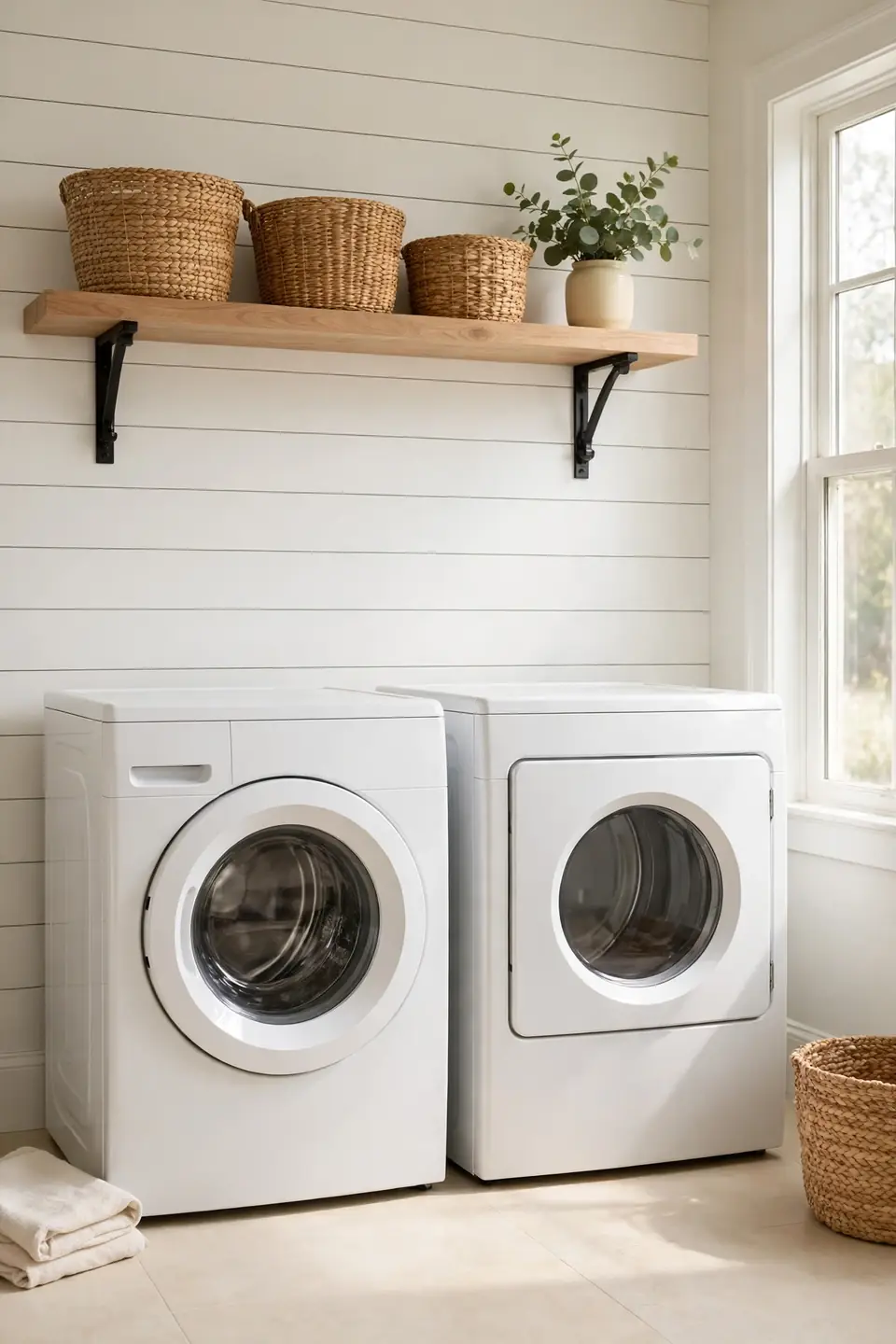
White shiplap behind the machines gives a plain laundry room instant farmhouse character. Run the boards horizontally to widen a narrow room visually, and keep the grooves clean with a matte or satin paint finish. One wall is enough; covering every surface can make a small space feel busy, so let the other walls stay smooth and pale.
Shiplap also hides the scuffs and splashes that laundry walls collect. Seal the boards behind the sink and washer with a washable topcoat so steam and detergent mist wipe away in seconds. I’ve seen this work well in many cases where drywall alone kept looking tired no matter how often it was repainted.
Open Wood Shelf Rows
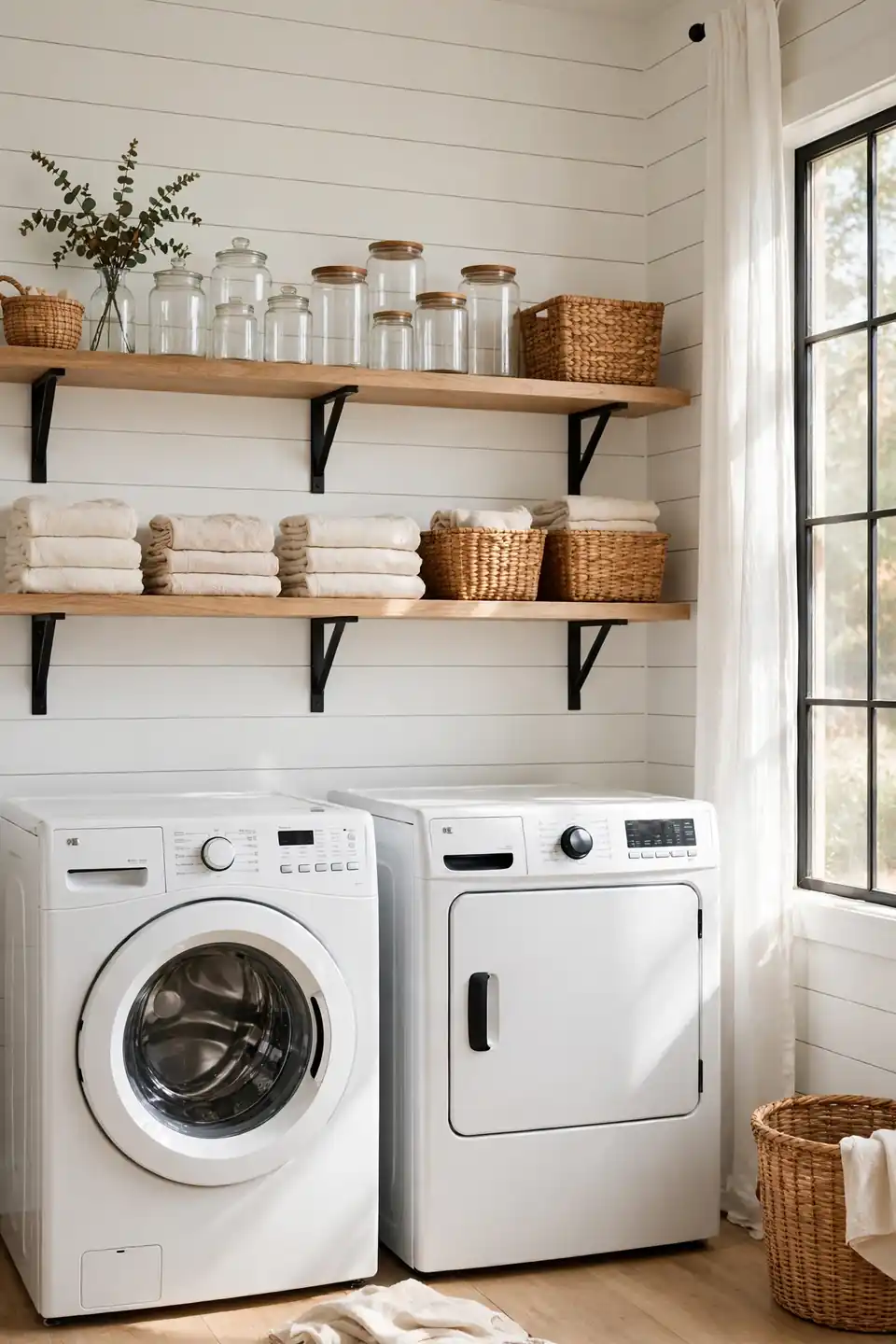
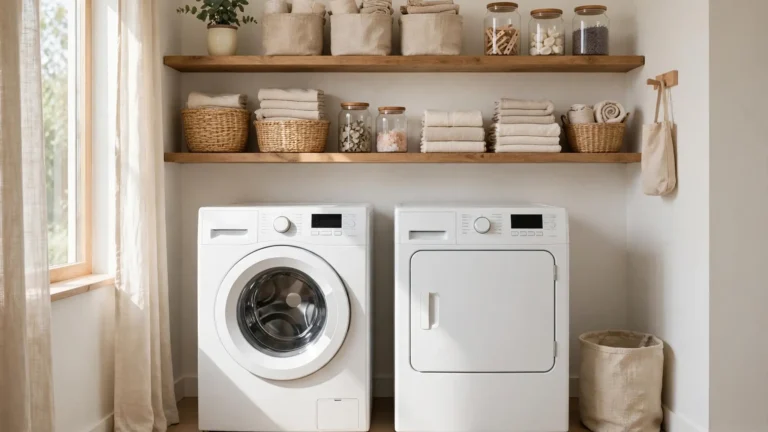
- Mount two light wood shelves above the machines at comfortable reaching height.
- Store daily detergents on the lower shelf and backup supplies up top.
- Leave one third of each shelf empty so the rows breathe visually.
- Choose brackets in matte black metal for a quiet farmhouse contrast.
- Keep shelf styling to jars, baskets, and one small potted plant.
Open shelves force a tidier routine than closed cupboards, because everything stays visible. Decant powders into plain glass jars, group bottles on a small tray, and the daily shelf looks arranged instead of cluttered. Dusting takes two minutes weekly with a dry cloth, a fair trade for storage that doubles as decoration.
Deep Farmhouse Sink
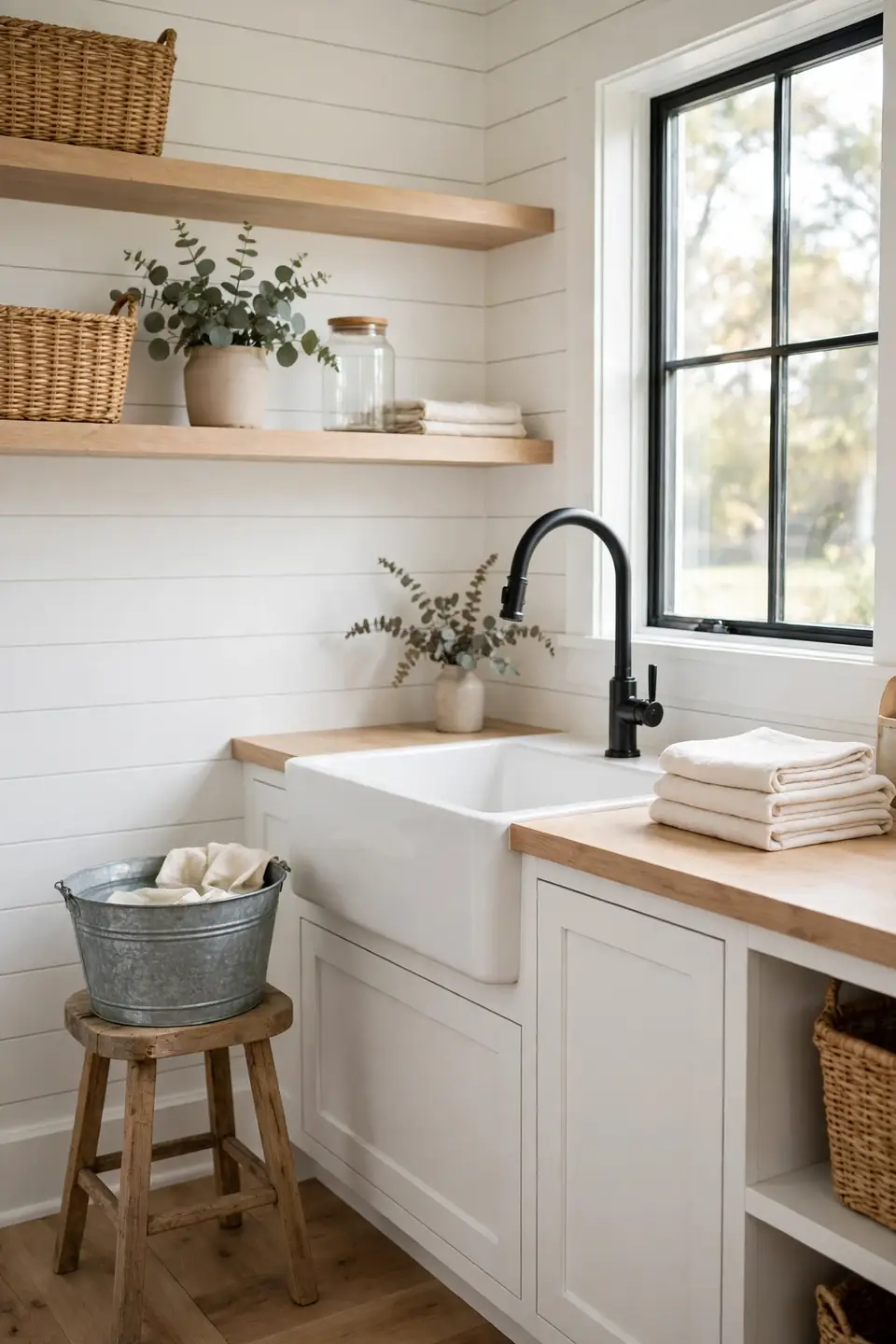
Quick Tip: Choose a sink at least 20 centimetres deep with a tall gooseneck faucet. Bulky items like mop heads, buckets, and muddy boots fit under the tap without splashing the counter, and hand washing delicates stops feeling like a juggling act.
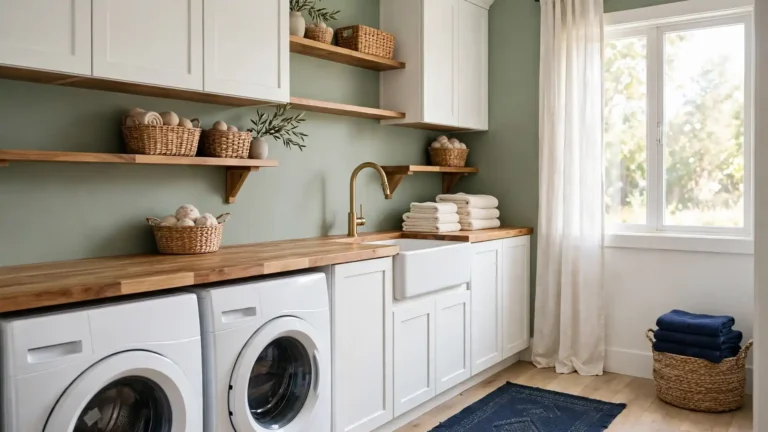
A deep apron front sink becomes the room’s workhorse and its prettiest feature at once. Pair it with a simple bridge faucet in matte black or brushed nickel, and add a small wood stool beside it for soaking buckets. The sink zone then handles stain treating, plant watering, and pet bowl rinsing without sending you across the hall to the kitchen.
Bare Counter Transformation
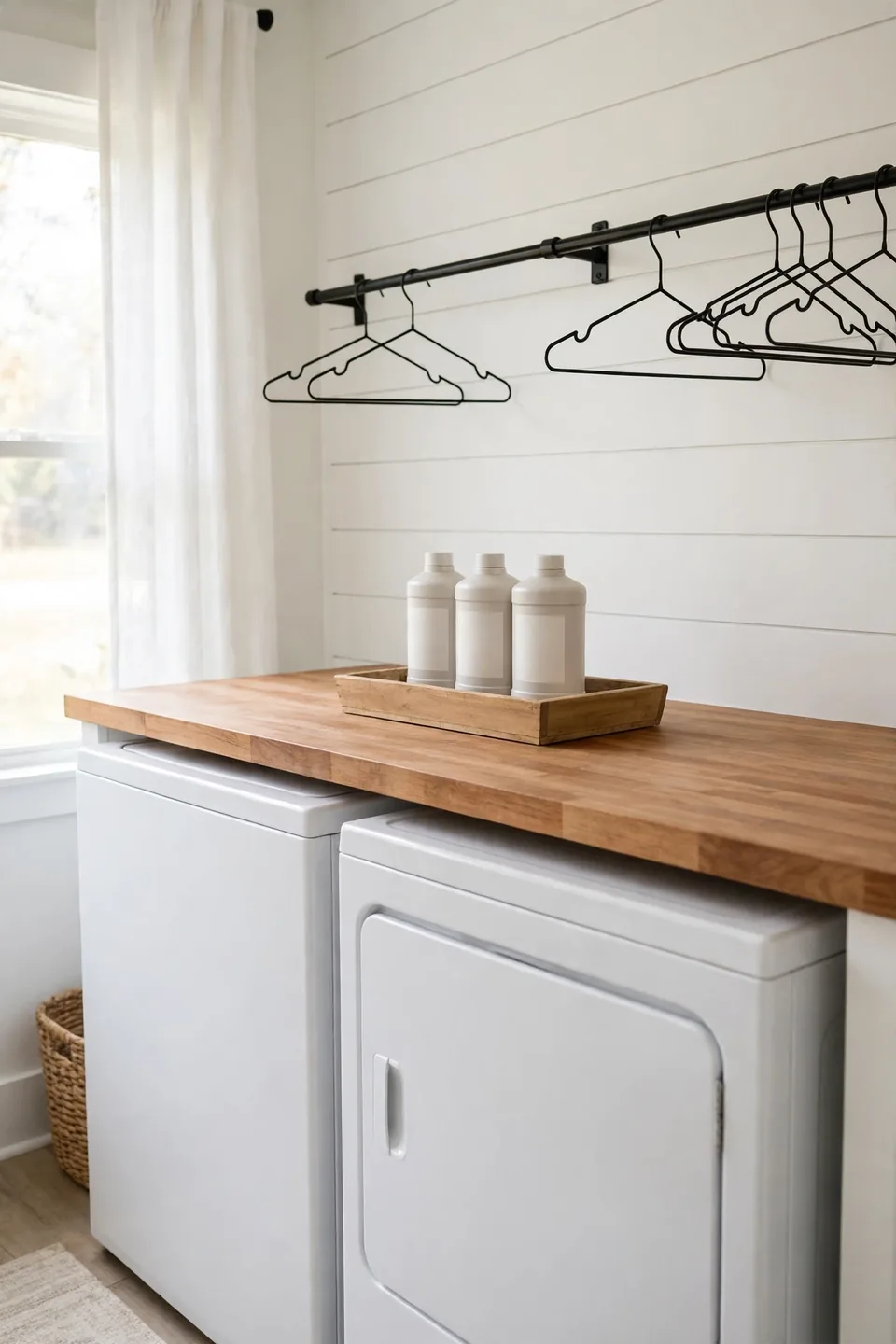
BEFORE: Counter space stayed buried under detergent bottles, loose socks, and a leaning stack of hangers. Folding happened on the bed because the laundry counter never stayed clear for more than an hour.
AFTER: One wooden tray now corrals the bottles, a wall rail holds the hangers, and the counter sits empty and ready. Fresh loads land on a clear surface, get folded on the spot, and leave the room the same hour.
Clear counters change laundry from a dreaded chore into a short, calm routine. The trick is giving every stray item a home that is not the counter itself: trays for bottles, rails for hangers, baskets for socks. Once the surface stays empty overnight, keeping it that way becomes surprisingly easy.
Three Bin Sorting Station
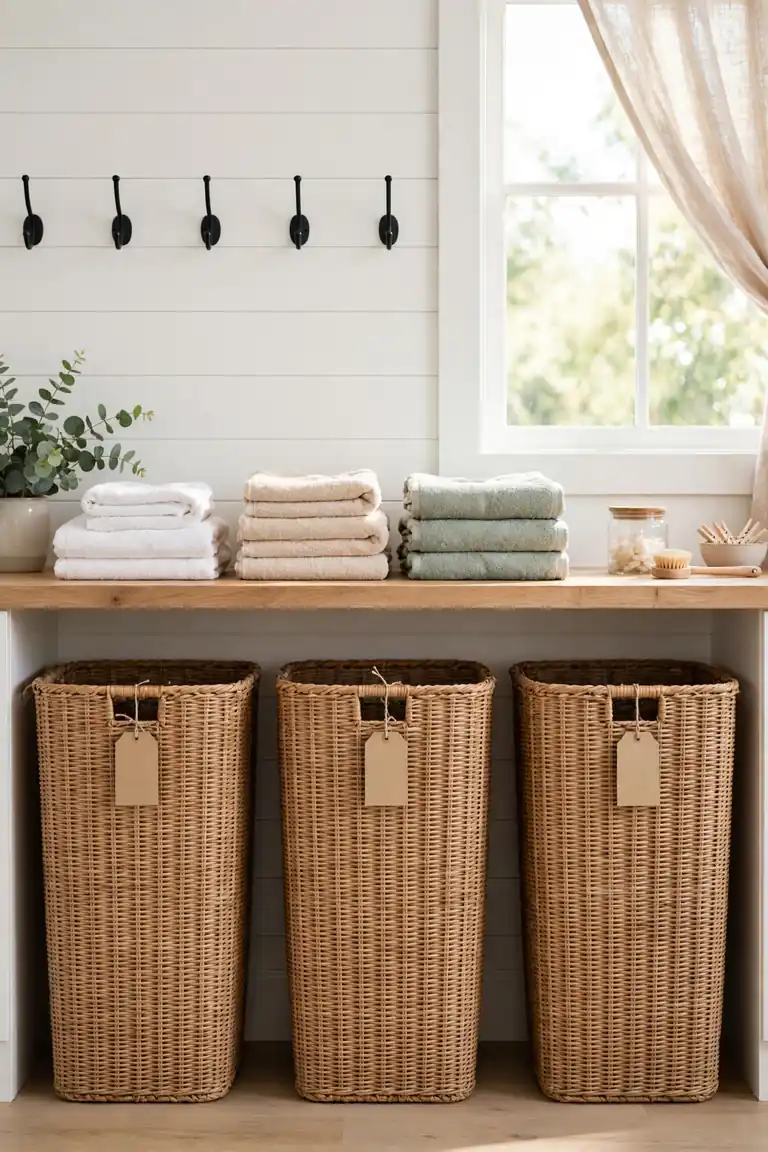
- Set three tall hampers in a row beneath the counter or along one wall.
- Assign each bin a job: whites, colours, and heavy items like towels and denim.
- Mark each bin with a plain blank tag or a different basket weave, never by memory.
- Wash the fullest bin first and return it empty to the same spot every time.
Sorting at the hamper, not at the machine, removes the worst bottleneck on wash day. Family members drop clothes into the right bin all week, so loads build themselves and the floor stays clear. In my experience, a labelled row of three beats one giant hamper every single time.
Painted Versus Wood Cabinets
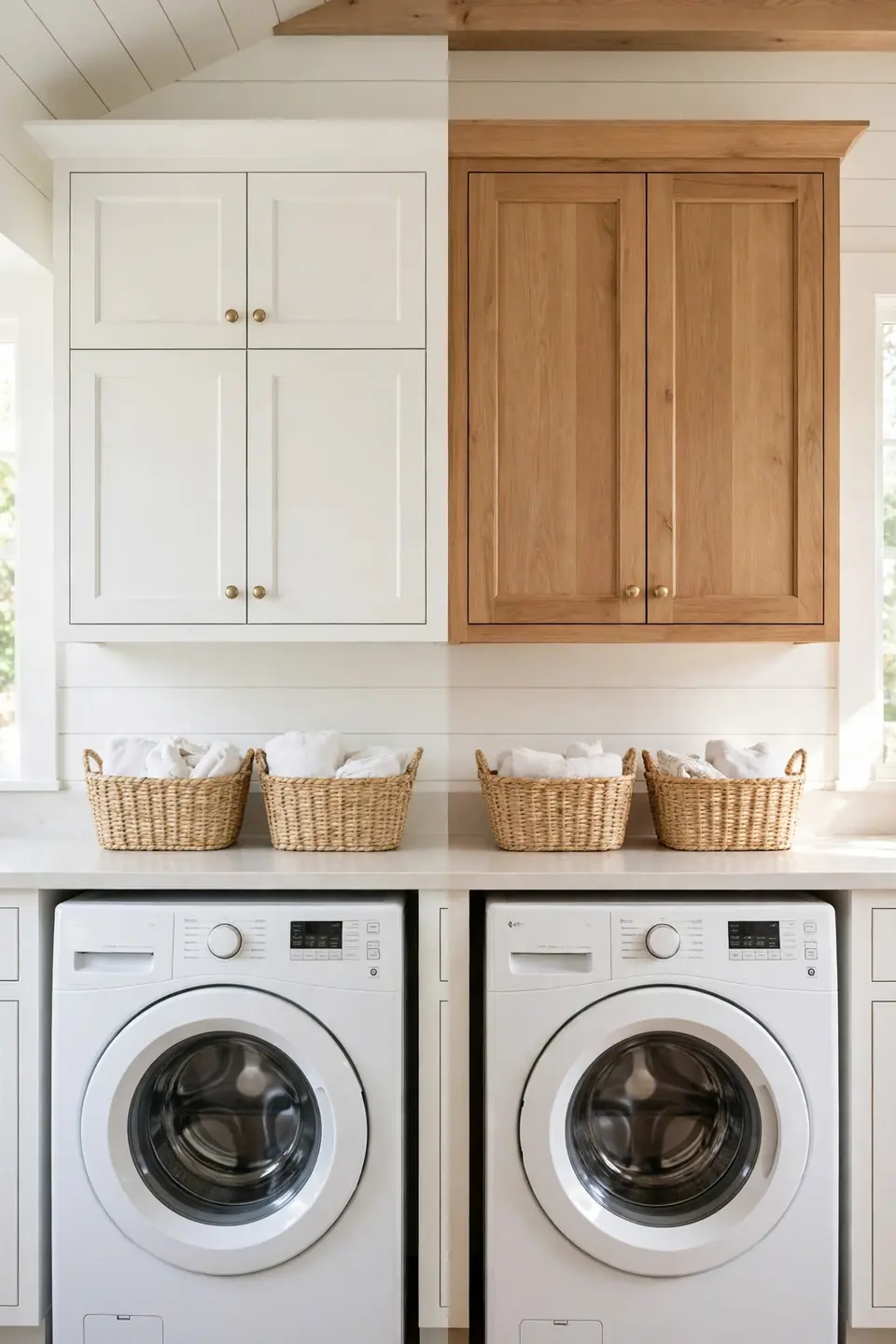
| Painted White Cabinets | Natural Wood Cabinets |
|---|---|
| Brightens small rooms fast | Adds warmth and grain |
| Shows dust and splashes sooner | Hides everyday marks better |
| Easy to repaint for a refresh | Needs sealing against steam |
| Suits bright airy schemes | Suits rustic layered schemes |
Neither finish wins outright; the room’s light and workload should decide. White paint lifts a windowless laundry room and makes stains easy to spot and treat. Natural wood forgives the daily scuffs of baskets and boots, and its grain hides steam marks between deep cleans. Many farmhouse rooms mix both: painted uppers to keep the eye level bright, wood lowers where hands and hampers bump most.
Woven Basket Storage Rules
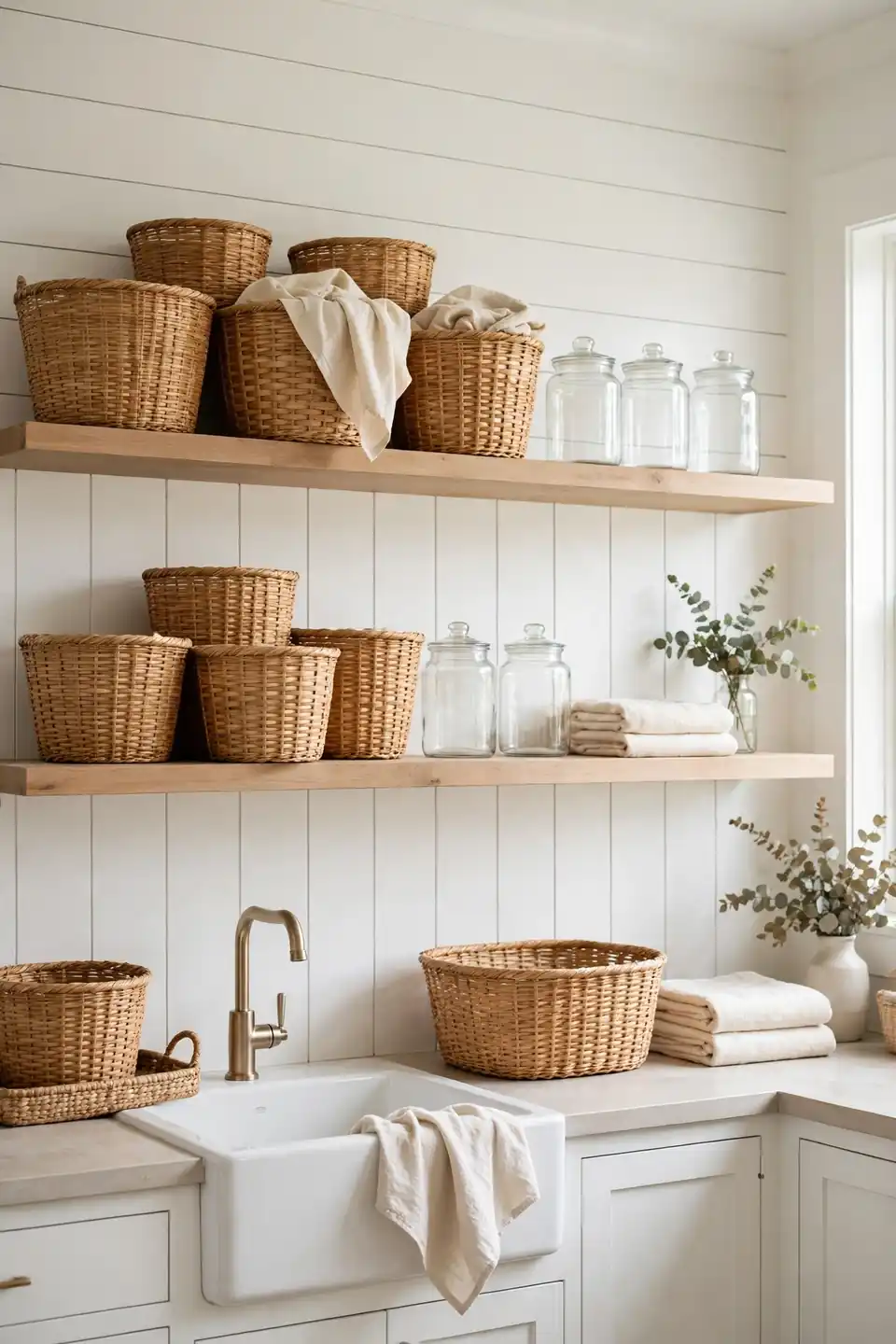
Do:
- Group baskets in odd numbers, threes and fives, for a collected farmhouse rhythm.
- Match weave tones across the room so storage reads as one family.
- Line baskets that hold fine linens with plain cotton cloth.
Don’t:
- Never stack heavy baskets on top of folded laundry piles.
- Avoid mixing plastic bins into a woven basket display.
- Do not park baskets in walkways where hips and hampers collide.
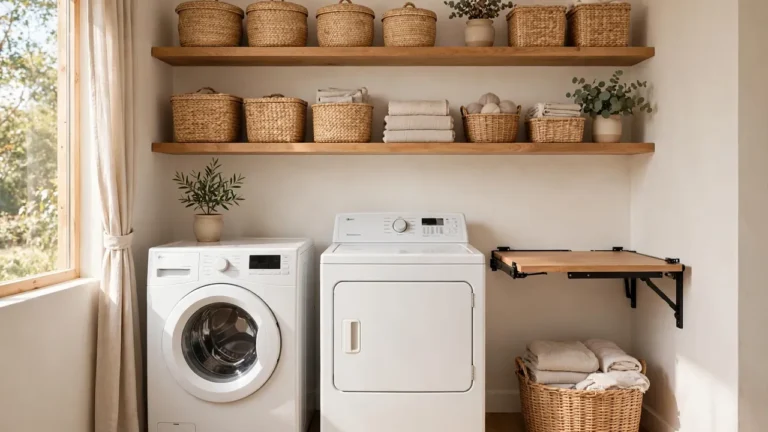
Baskets bring the softness that hard laundry surfaces lack. Their woven texture warms white walls and wood shelves, and a spare basket by the door catches the odd socks and cloths that wander. Choose one weave family, repeat it everywhere, and storage starts to look like decoration.
Starter Costs Fact Sheet
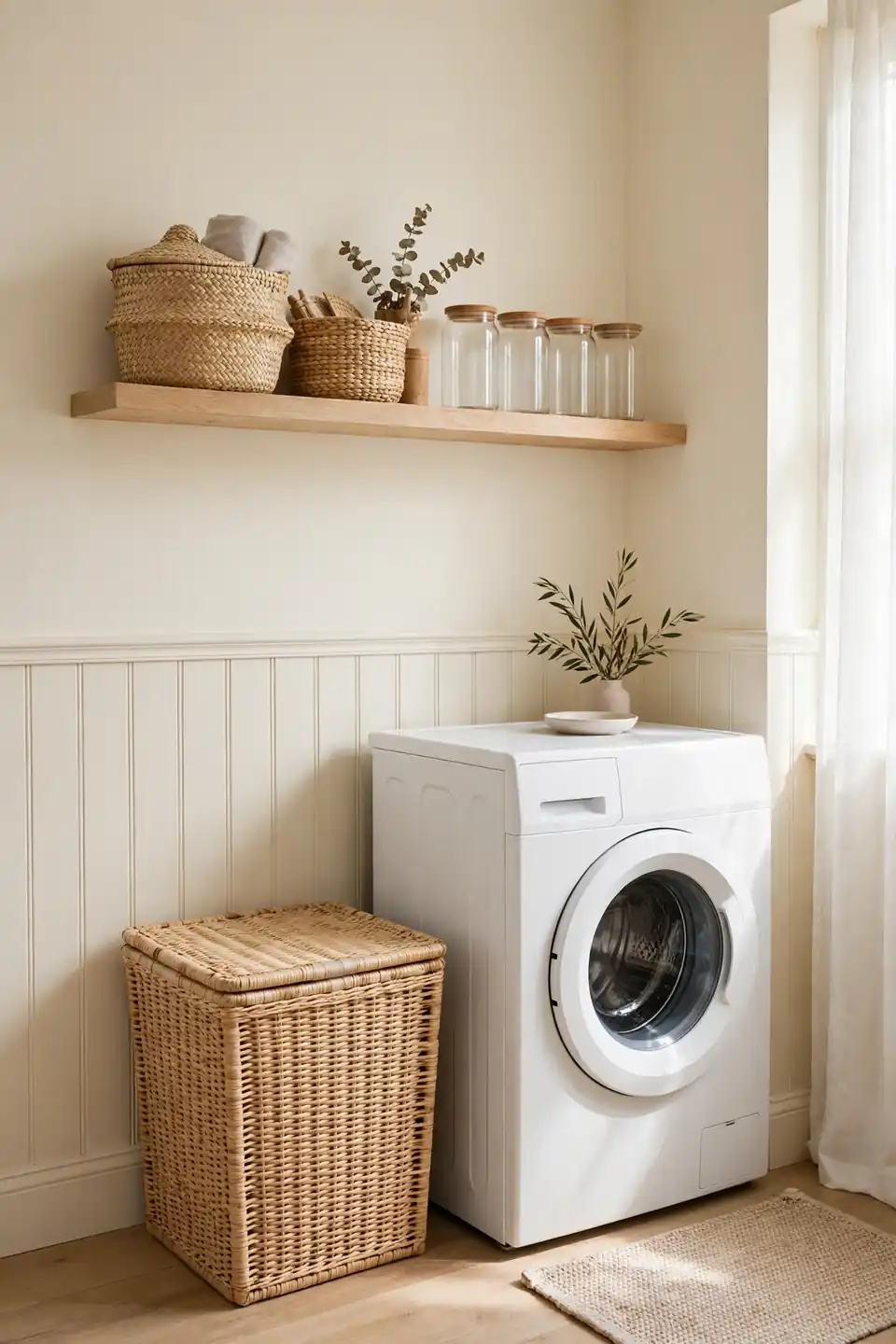
Cost: Low to moderate | Time: One weekend | Skill Level: Beginner | Best For: First farmhouse refresh
Most farmhouse laundry updates cost less than people expect, because the big wins are paint, shelves, and baskets rather than new machines. A weekend covers the walls, shelving, and sorting setup for a standard room, with the sink or door upgrades saved for a second round. Beginner skills are enough for nearly everything here: a drill, a level, and patience. Start with the cheapest third of the list, live with the room for a month, and let real laundry habits decide what deserves money next, rather than guessing on day one.
Butcher Block Folding Counter
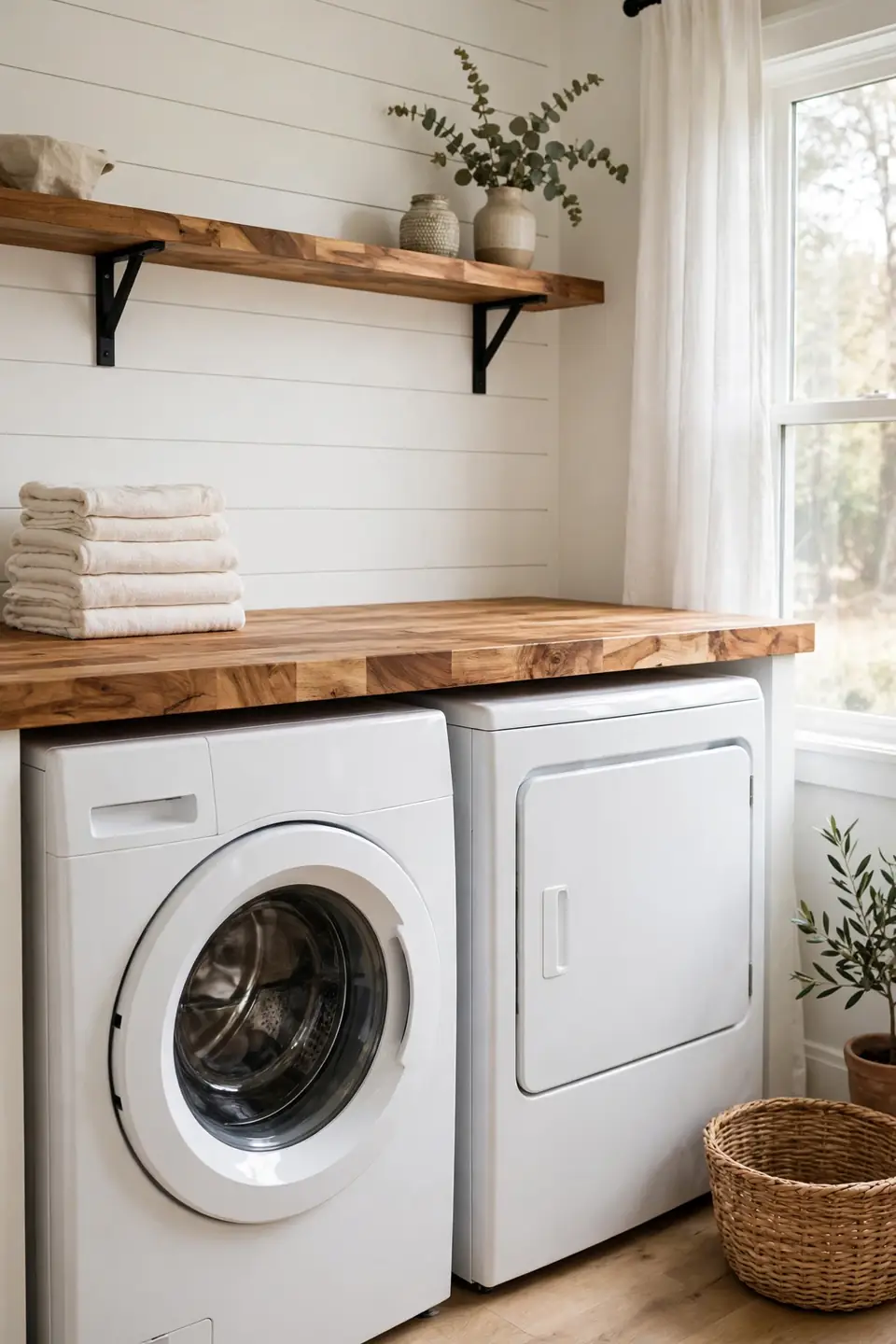
A butcher block counter stretched over the machines turns dead space into the room’s most useful surface. The warm wood softens all that white metal, and a thick slab feels sturdy under piles of folded towels. Seal it well, and it shrugs off detergent drips and damp clothes. Choose a slab with rounded front edges for comfort during long folding sessions.
Leave a hand’s width between the counter and the wall so lost socks can be fished out easily. Wood also quiets machine vibration better than laminate, a small mercy on spin cycle. Rest a folded throw or a plant at one end, and the folding zone feels styled even midweek.
Blank Tag Basket Labels
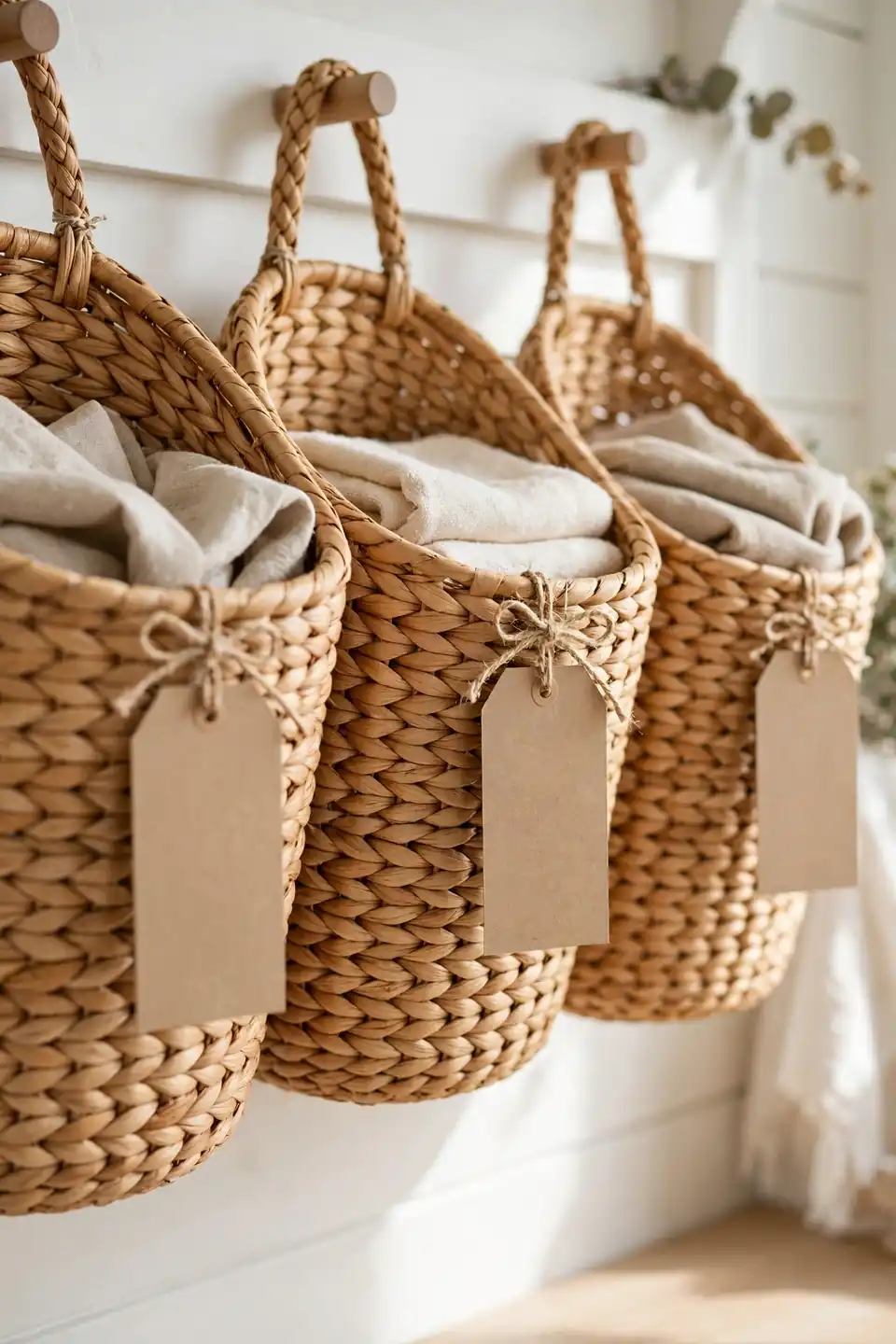
- Tie plain kraft or wood tags to each basket handle with twine.
- Leave the tags blank, or mark them with simple shapes and numbers.
- Keep one tag style across every basket for a calm, matched look.
- Swap tag shapes when a basket changes jobs, no sticky residue left behind.
- Store spare tags and twine in one small jar on the shelf.
Labels end the daily guessing game of which basket holds what. The same gentle order that plum and sage green bedroom decor brings to layered bedding works here: every item has a place, and every place is easy to read at a glance. Guests and kids sort correctly without a single lesson.
Hanging Drying Rod Trick
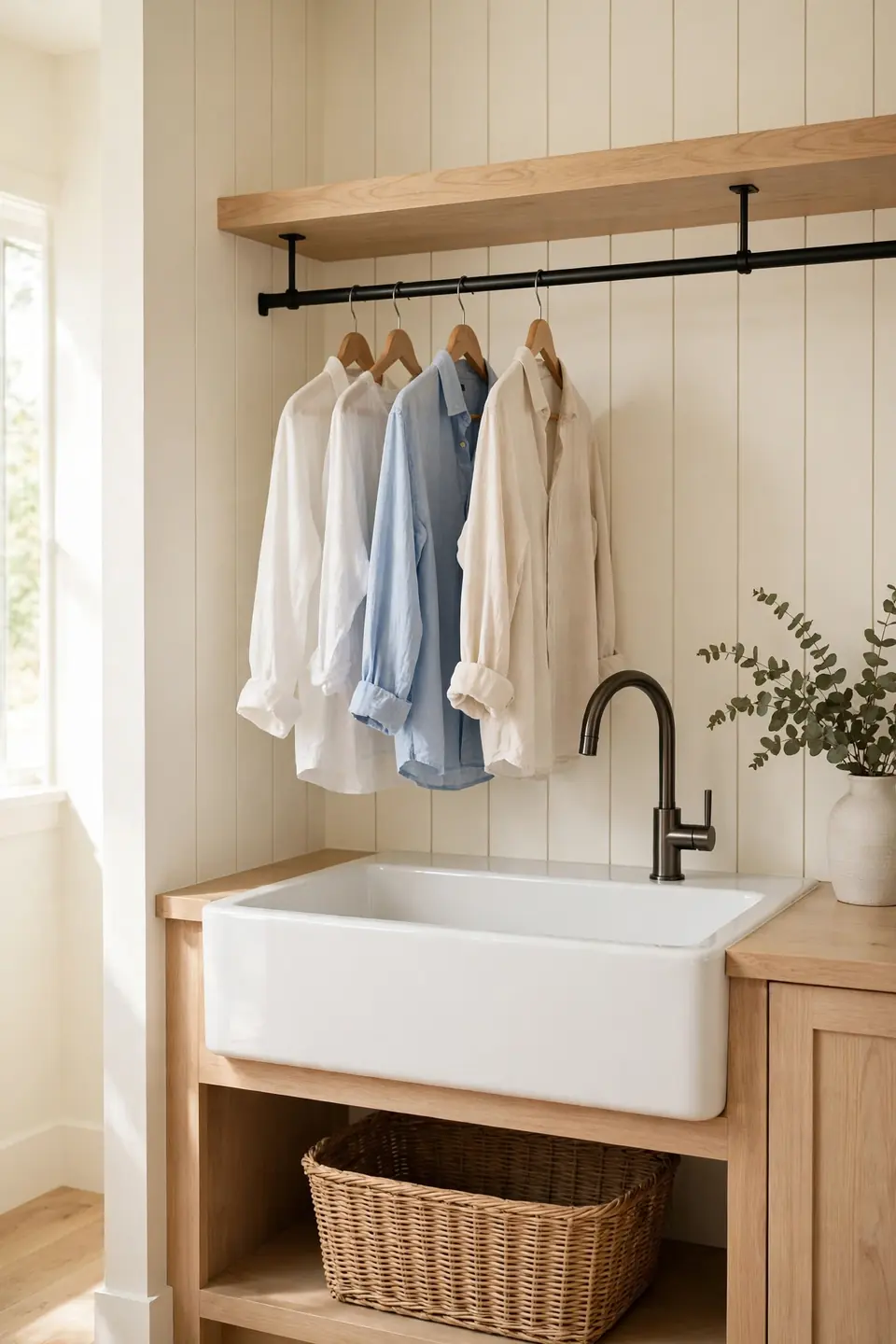
Quick Tip: Mount a black metal rod beneath the top shelf or cabinet, high enough that shirts hang clear of the counter. Delicates drip dry in place, and hangers slide straight from the rod into the wardrobe, skipping the drying rack entirely.
A hanging rod rescues the clothes that hate the dryer: linen shirts, swimwear, and anything with a delicate print. Place the rod over the sink when possible, so drips fall somewhere useful. One metre of rod handles a full load of shirts, and the vertical storage costs zero floor space in a small room. That trade suits laundry rooms of every size and budget.
Cramped Corner Laundry Fix
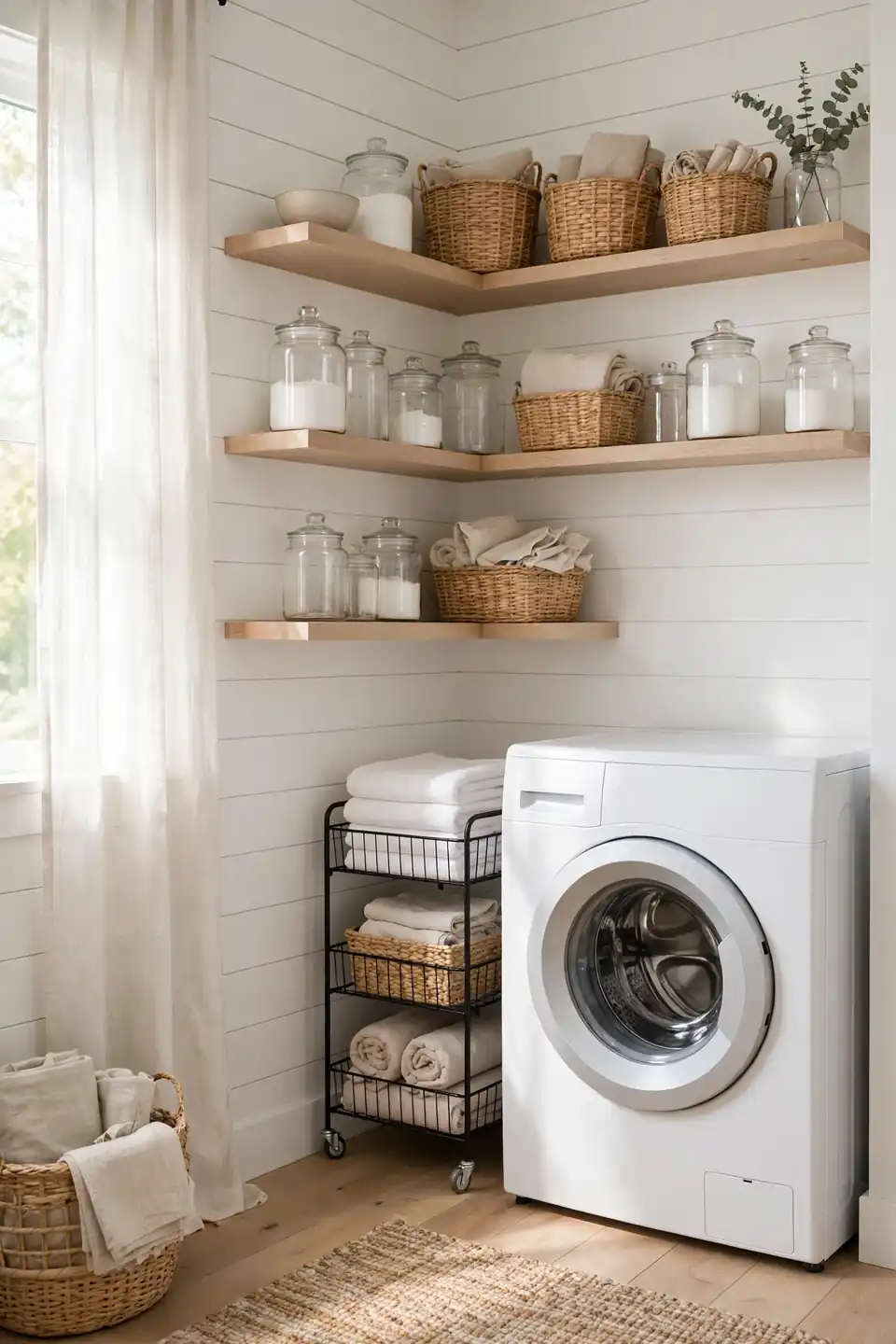
BEFORE: The corner held a dead stack: an empty hamper, a mop, and boxes of supplies nobody opened. Every wash day started with moving things just to reach the machine.
AFTER: Corner shelves and a rolling cart now fill the angle with daily supplies in easy reach. The hamper stands by the door, the mop hangs on a wall clip, and the corner finally earns its floor space.
Dead corners are where small laundry rooms hide their extra storage. Shelves climb the walls, carts roll into the gap, and suddenly modern farmhouse laundry room decor feels generous instead of squeezed. Measure the corner first, because angled spaces reward exact fits and punish guesswork.
Sliding Barn Door Install
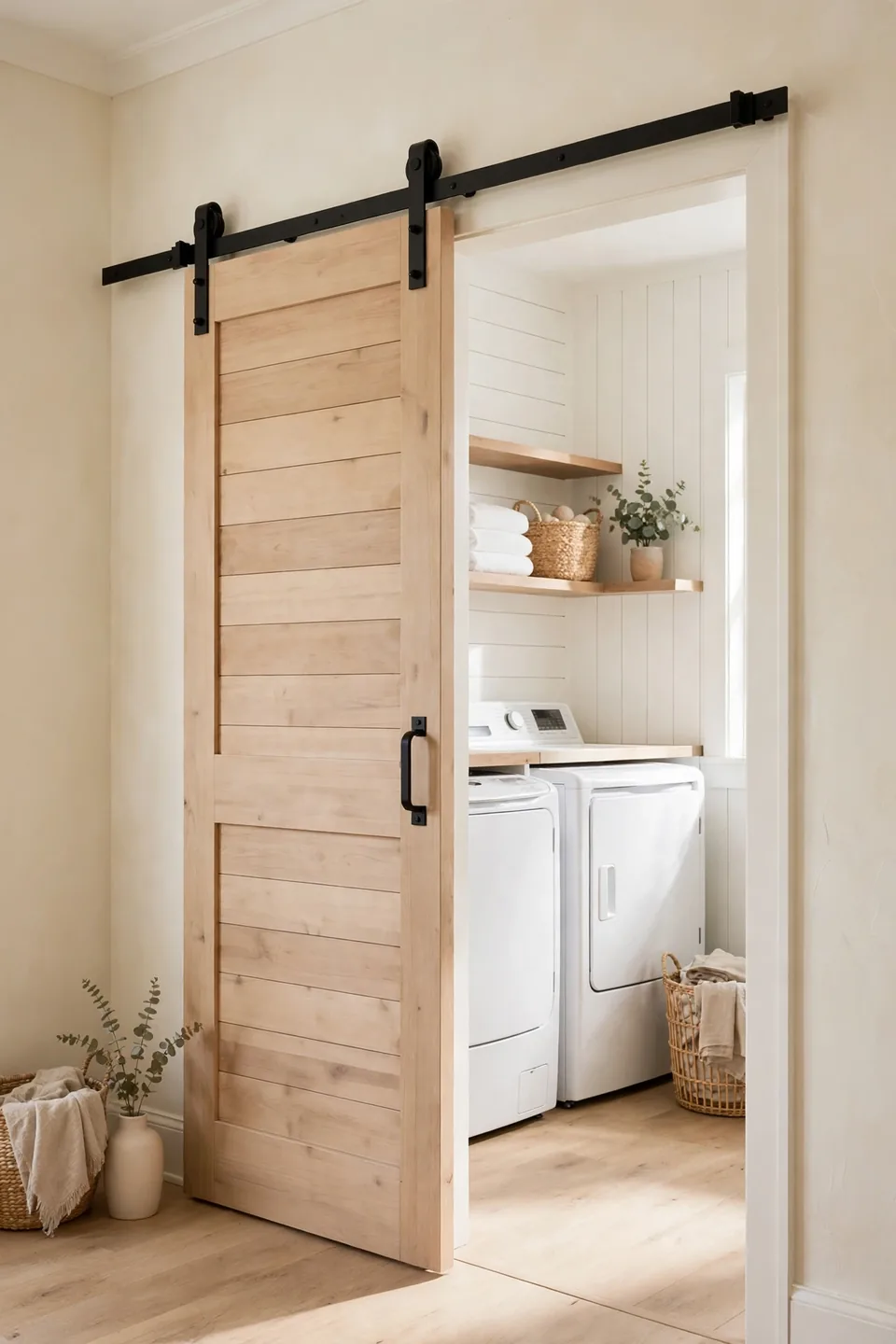
- Measure the doorway and choose a door at least five centimetres wider than the opening.
- Fix the black metal rail to a solid header board above the frame.
- Hang the door on its rollers and test the slide before adding hardware.
- Fit a floor guide so the door glides straight without swinging into the room.
- Add a simple pull handle at comfortable hand height on the room side.
A barn door earns its keep where a swinging door would eat half the room. It hides the machines during guests’ visits, opens flat against the wall, and gives the laundry room a farmhouse focal point. Keep the track dusted so the slide stays silent.
Appliance Finish Face Off
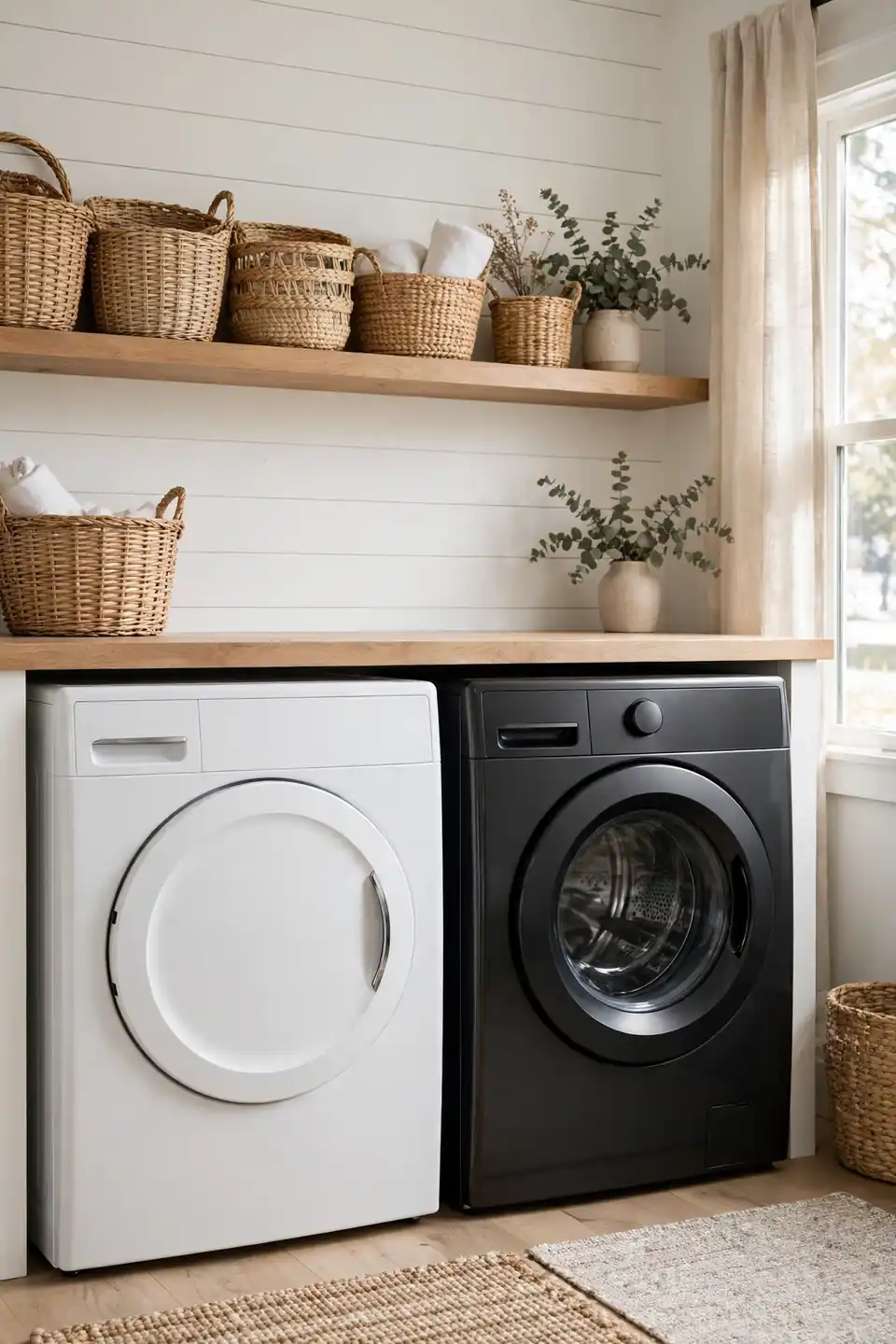
| Classic White Machines | Matte Black Machines |
|---|---|
| Blends with shiplap and shelves | Anchors the room with contrast |
| Shows detergent drips sooner | Hides splashes between cleans |
| Feels bright and cottage calm | Feels modern and tailored |
| Widely available at every budget | Often costs a little more |
Matching the machines matters less than matching them to each other and to the room’s metals. White appliances disappear into a pale farmhouse scheme and keep small rooms bright. Black machines ground light wood and white shiplap, echoing black rails and rods across the room. Mixed finishes, though, read as accidental, so choose one finish and repeat it with intent.
Folding Station Ground Rules
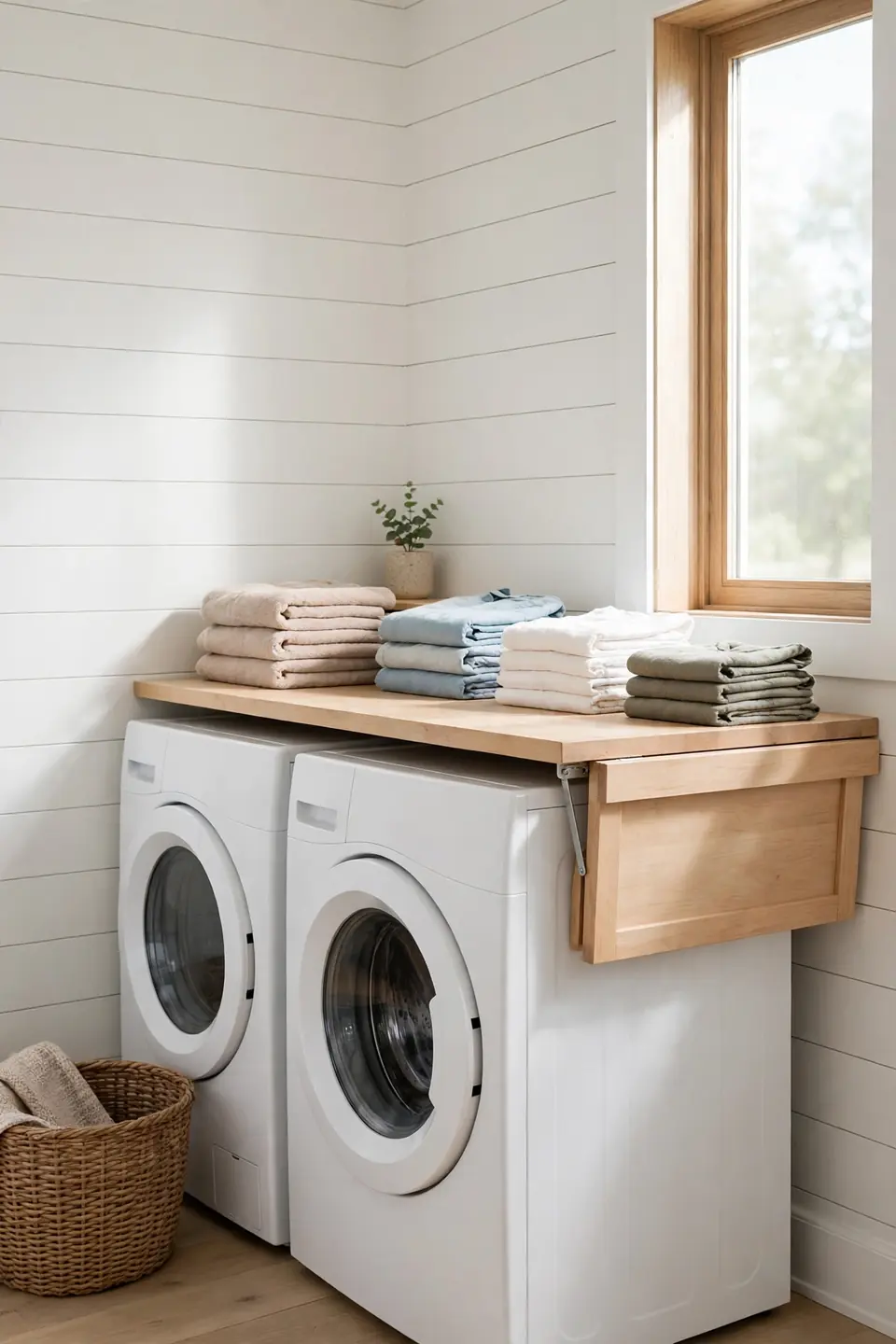
Do:
- Keep the folding surface completely clear between laundry loads.
- Sort folded stacks by person for one trip delivery.
- Rest a small plant or candle at the back corner for calm.
Don’t:
- Never leave clean piles sitting where damp loads land.
- Avoid folding under harsh white light that tires the eyes.
- Do not store chemicals on the folding surface itself.
A true folding station ends the trail of laundry baskets through the house. Clothes get folded where they are washed, stacked by owner, and carried out in one trip. The surface earns a permanent clear rule, and a plant rewards the habit with a small moment of calm each wash day.
Lighting Layers Fact Sheet
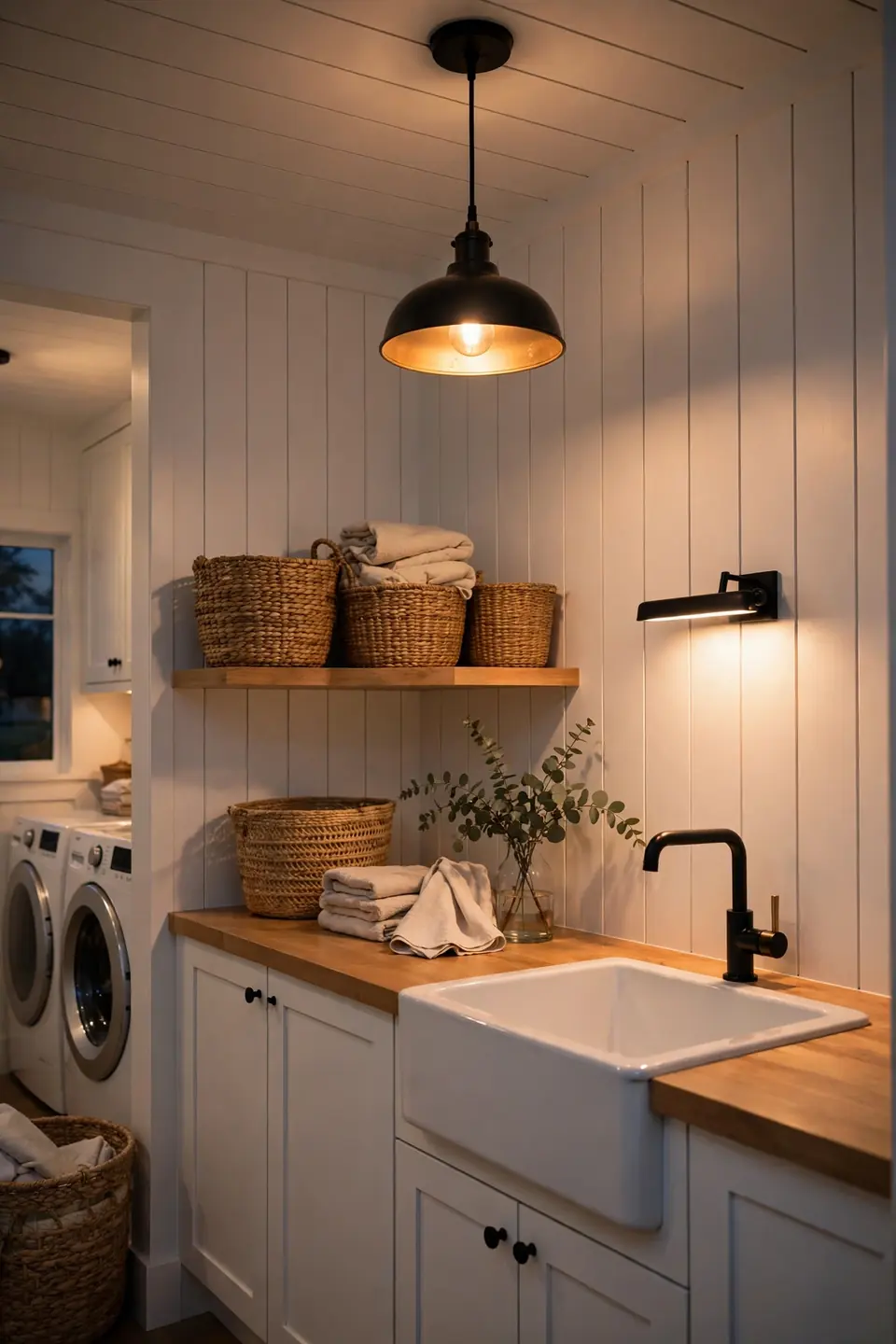
Cost: Low | Time: One afternoon | Skill Level: Beginner friendly | Best For: Windowless laundry rooms
Laundry rooms often get one ceiling light and nothing else, which leaves stain spotting and sock matching to guesswork. Layer instead: a bright ceiling fixture for general light, a strip or sconce above the sink and counter for tasks, and the machines’ own glow for the rest. Warm white bulbs keep whites looking white without the blue glare of daylight tubes. Good light also makes the room feel bigger, because corners stop disappearing into shadow at the exact moment you are hunting for a dropped sock. It is the cheapest size upgrade a laundry room can get.
Cafe Curtain Cabinet Skirts
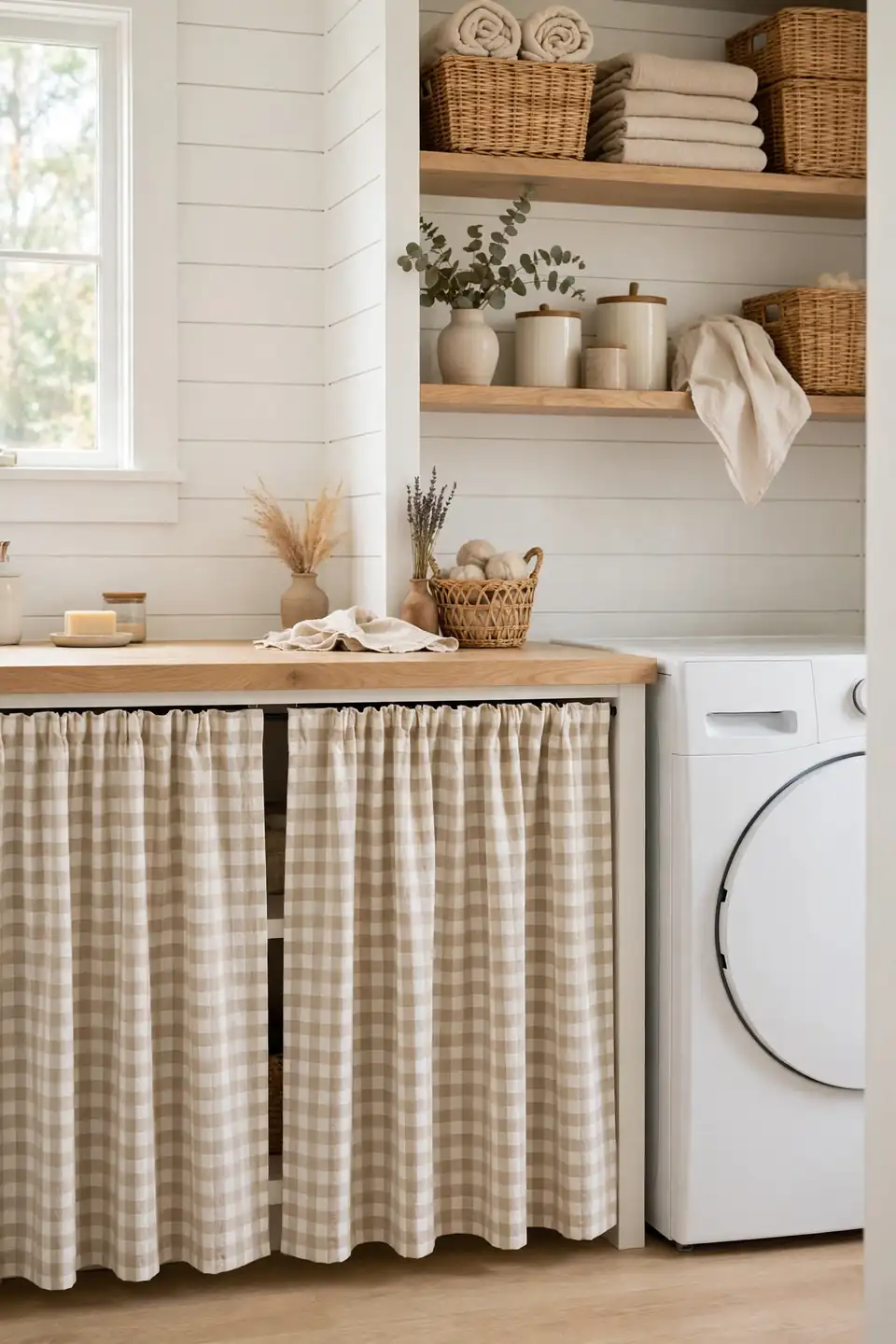
Short cafe curtains hung below the counter hide open under-sink storage with soft farmhouse charm. Gingham, plain linen, or a faded floral all suit the style, and the fabric warms a room full of hard surfaces. A simple tension rod makes the whole project renter friendly.
Skirts beat doors in tight rooms because they never swing into knees or baskets. Wash the fabric with the towels whenever it dulls, and it returns looking fresh in one load. Behind the curtain, stack spare bottles and the toolbox where guests never see them. Two short panels cost less than one replacement cabinet door, too.
Rolling Cart Supply Station

- Choose a slim three tier cart that fits the gap beside the machines.
- Park daily detergents and stain treatments on the top tier.
- Keep cloths, brushes, and the lint roller on the middle tier.
- Store backup bottles and spare bags on the bottom tier.
- Roll the cart out for deep cleans and tuck it back after.
Wasted gaps beside machines are prime storage in disguise. A rolling cart turns those awkward fifteen centimetres into a supply station that moves when you clean and hides when guests arrive. Metal carts in black or white suit the farmhouse palette best and wipe clean in seconds.
Wooden Peg Rail Storage

Quick Tip: Fix a wooden peg rail at shoulder height along the longest free wall. Brushes, dustpans, and the iron rest on the pegs, always visible and never tangled in a cupboard again, and cleaning tools dry faster in open air.
Peg rails carry the farmhouse look honestly, because Shaker rooms used them for everything from chairs to clocks. In the laundry, a rail keeps tools off the counter and the floor, and each peg can hold a small basket for clothespins or lost buttons. Paint the rail to match the shiplap, or leave the wood bare for contrast against white walls.
Patterned Tile Floor Change
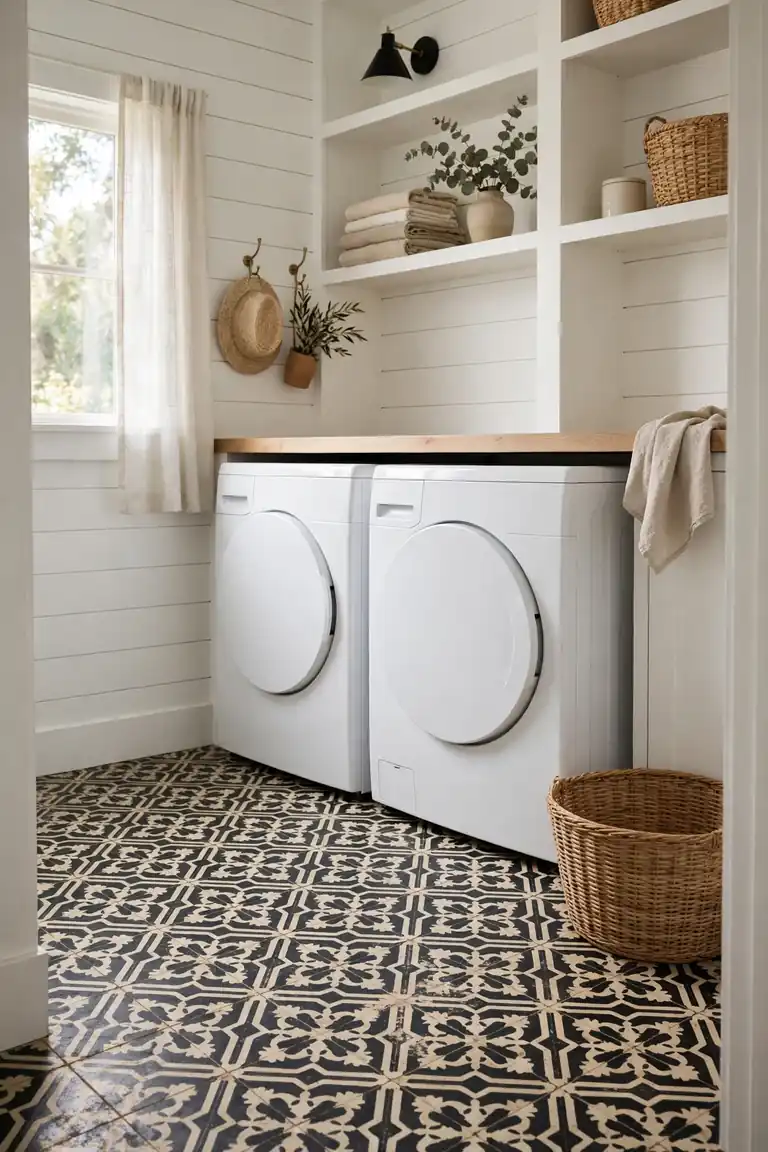
BEFORE: Plain grey vinyl made the whole room feel cold and temporary. Every white appliance glared against the dull floor, and the farmhouse details above it looked like an afterthought.
AFTER: Black and cream patterned tiles now anchor the room like a woven rug that never needs washing. The wood shelves and white shiplap finally connect, and even laundry day feels a little dressed up.
Flooring sets the room’s temperature more than any other single choice. Pattern hides the lint and hair that laundry floors collect daily, buying time between sweeps. Peel and stick tiles give renters and beginners the same payoff in one afternoon, with no grout and no demolition dust.
Five Step Weekly Reset
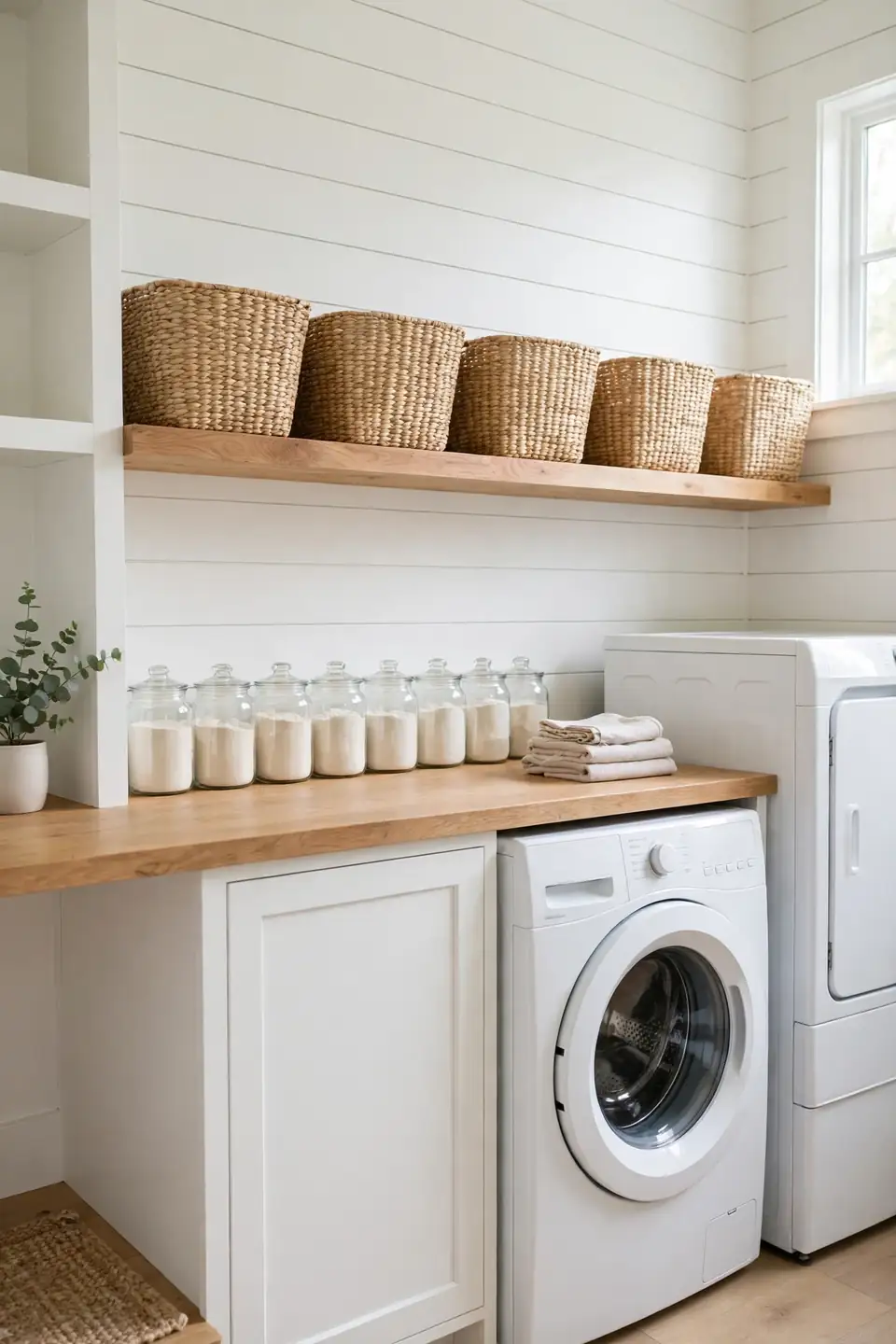
- Empty every basket and bin, then wipe the shelves and cart tiers.
- Run one hot empty cycle with a cup of white vinegar inside.
- Refill jars and bottles from the backup tier so nothing runs out midweek.
- Fold or hang anything left on the rod, counter, or cart top.
- Sweep the floor, empty the lint trap, and restock the cloth pile.
Twenty minutes of reset each week keeps the farmhouse look from sliding into farmhouse clutter. The routine protects the pretty parts of the room, the shelves, baskets, and clear counters, by keeping the working parts honest. That’s why many experts recommend a fixed reset day: the room never gets bad enough to dread.
Conclusion
A laundry room that looks this good makes the work inside it feel lighter. Shiplap, warm wood, woven baskets, and clear counters are the whole recipe behind modern farmhouse laundry room decor, and none of it needs a renovation budget. Pick one idea this week, maybe the shelves or the sorting bins, and let the room prove itself load by load. Save these ideas to your Pinterest board before you start, and share your finished corner with a friend whose laundry room needs the same kindness.