24 Vintage Botanical Dining Room Ideas for Timeless Elegance
A dining room dressed in pressed ferns, framed prints, and leafy greens carries a calm that few styles match. Strong vintage botanical dining room inspiration starts with artwork that looks collected over decades, then layers sage paint, aged wood, and linen until the whole room feels like a quiet garden house.
Begin with the walls, since prints and plants need a soft backdrop to read clearly. The layered palette thinking behind modern farmhouse laundry room decor works here as well: one calm base colour, natural textures repeated, and metal accents kept warm. In my experience, rooms built this way stay interesting for years because each piece can change with the seasons.
Framed Antique Botanical Prints

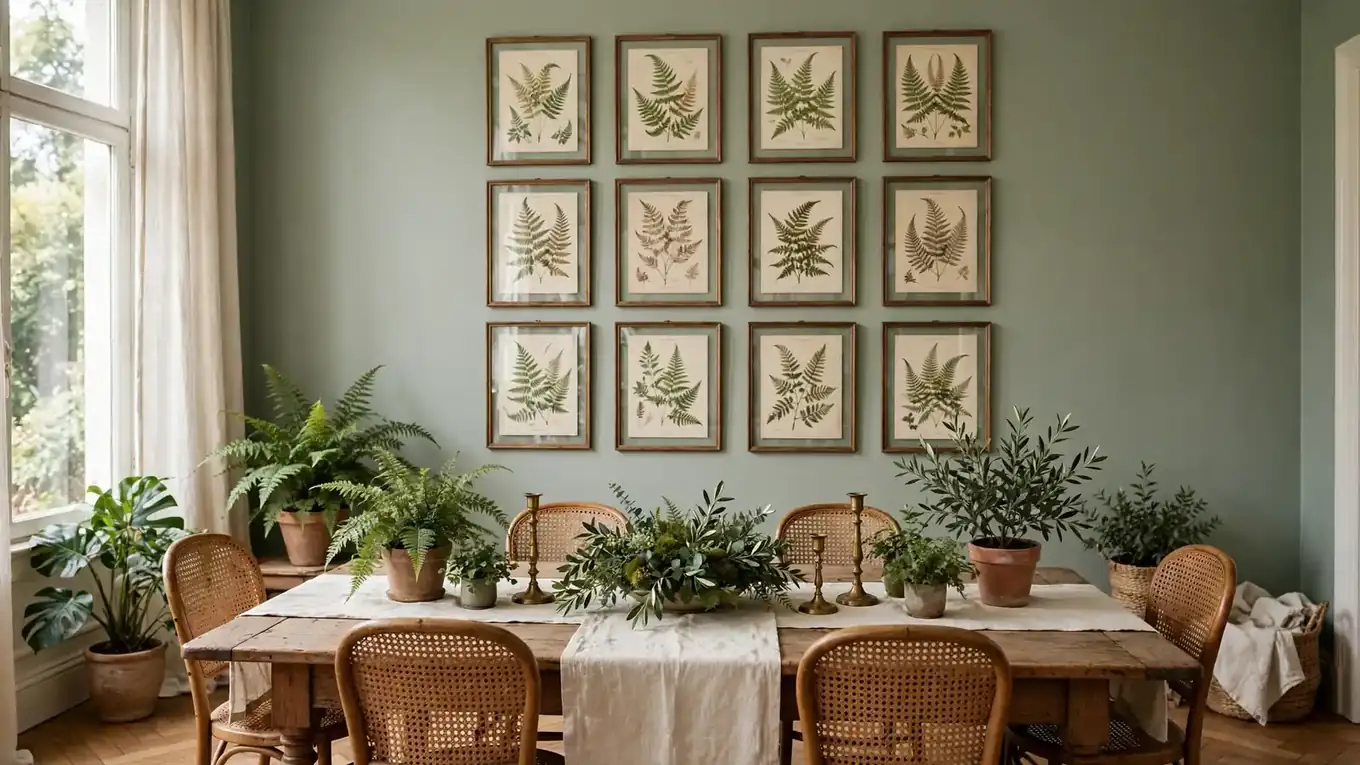
Six matching frames above a sideboard turn a blank dining wall into a small gallery. Hunt for prints with cream paper, fine line work, and subjects in one family, such as ferns, herbs, or orchard fruit. Thin gold or dark wood frames keep the set feeling collected rather than matched.
Hang the grid low enough that seated guests can study the details without standing. Keep spacing even, around five centimetres between frames, and let the centre row sit near eye level from the table. I’ve noticed aged paper tones warm up white walls far better than bright modern posters do. Swap one print each season for a slow, evolving display.
Sage Green Wall Backdrop

- Paint walls a muted sage with a matte finish for a soft garden feel.
- Leave ceiling and trim warm white so the green stays fresh, never heavy.
- Test two shades on the largest wall and watch them at dinner time.
- Repeat the sage in one cushion or a painted chair for quiet links.
- Keep floors pale wood or stone to ground the colour gently.
Sage works like a neutral that remembers the garden. It flatters candlelight, softens dark wood, and gives framed prints a backdrop with real depth. Rooms painted this shade photograph beautifully for saved boards, yet in person the colour feels restful rather than trendy, which is why it suits dining spaces so well.
Pressed Fern Glass Frames

Quick Tip: Press ferns between heavy books for two weeks, then float each frond between two glass panes in a slim brass frame. The see-through mount keeps the piece light on the wall and lets the wall colour show through the leaves. Change the fronds each spring for a fresh set at almost no cost.
A row of three pressed fern frames suits the narrow wall beside a window, where real plants would block the light. Group fronds by size, largest in the middle, and hang them close so the set reads as one artwork. Dust the glass weekly; fingerprints show fast on clear mounts.
Bare Table Botanical Makeover

BEFORE: The oak table sat bare between meals, its surface marked by water rings and a single dusty candle. Chairs in mixed finishes crowded the edges, and the room felt paused, as if dinner belonged somewhere else.
AFTER: A washed linen runner now crosses the table under a low bowl of moss, fern cuttings, and cream roses. Matching seat pads tie the chairs together, and a pair of brass candlesticks gives the setting height and a warm evening glow.
Nothing here needs to be costly or permanent. The runner, bowl, and seat pads lift away in minutes when the table returns to homework and laptops. Start with the centrepiece bowl, live with it for a week, then add layers only where the table still feels empty.
Botanical Wallpaper Accent Wall

- Choose a hand drawn leaf or vine pattern in sage, cream, and faded gold.
- Paper the wall behind the sideboard or the table’s short end only.
- Hang from the centre outward so the main motif lands mid wall.
- Match one print colour in cushions and napkins to link the scheme.
One patterned wall carries the whole botanical theme, which keeps the spend low and the room calm. Keep the other walls plain, let the table sit a little away from the paper, and avoid hanging busy art over a busy pattern. A single mirror or one large print is plenty here.
Linen Versus Velvet Upholstery

| Washed Linen Seats | Velvet Seat Pads |
|---|---|
| Breathes well in summer heat | Feels plush on cold evenings |
| Shows creases, reads relaxed | Shows marks, reads formal |
| Wipes clean after most spills | Needs gentle brushing weekly |
| Suits bright daytime rooms | Suits candlelit dinner rooms |
Both fabrics earn their place when the room’s light leads the choice. Linen keeps a sun filled dining room airy and forgiving, while velvet deepens a north facing room that hosts evening meals. My own rule is simple: linen for the everyday table, velvet cushions added in winter when long dinners call for softness. Mixing one of each also works, linen on chairs and velvet on the bench, as long as the colours stay close cousins.
Gallery Wall Print Rules

Do:
- Mix two frame finishes at most, gold with dark wood reads classic.
- Keep print subjects in one family, leaves, herbs, or fruit studies.
- Lay the arrangement on the floor before drilling a single hole.
Don’t:
- Never hang prints higher than the top of the door frame.
- Avoid glossy glass that throws window glare across the artwork.
- Do not crowd small prints across a very large wall.
A gallery wall succeeds on rhythm more than rarity. Even spacing, shared tones in the paper, and one repeated frame colour make mixed prints feel like a set. Step back to the doorway after hanging half the pieces; the gaps that need adjusting always show from that distance first.
Herbal Centerpiece Fact Sheet

Cost: Low | Time: One hour | Skill Level: Beginner | Best For: Long wooden tables
A living centrepiece of potted herbs beats cut flowers on both cost and lifespan. Rosemary, sage, and small bay plants in terracotta pots run down the table centre, each one useful in the kitchen afterwards. Group three pots on a narrow wood board so the arrangement lifts away as one piece before meals. Water lightly twice a week, pinch leaves often to keep growth bushy, and turn the pots every few days toward the window. Guests always lean in to rub a leaf between their fingers, which makes the centrepiece part of the conversation, not just the view.
Aged Oak Farmhouse Table
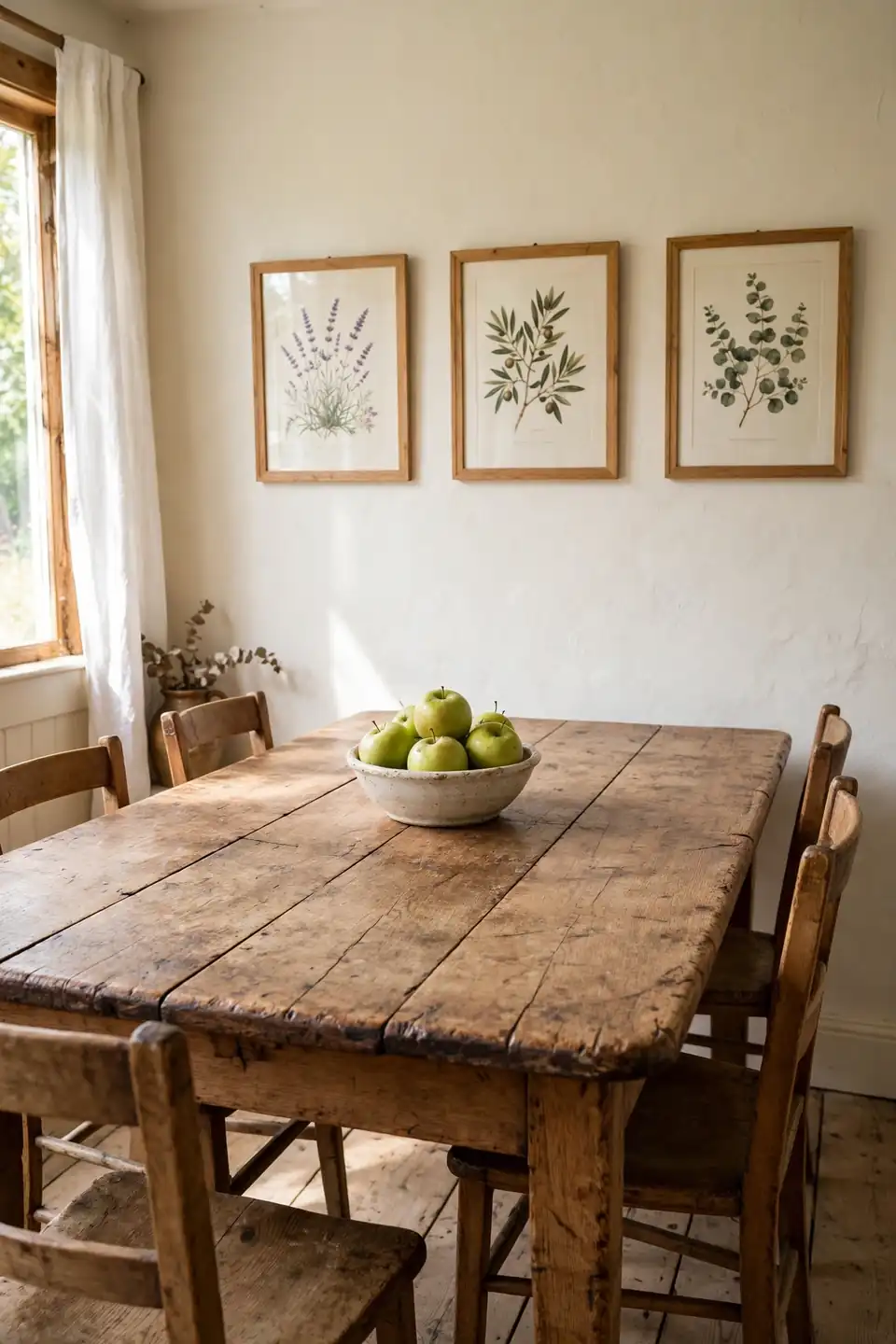
Real age shows in a table’s edges, not its price tag. Look for oak with softened corners, a hand planed top, and honest wear around the seats where generations pulled their chairs in. A waxed finish keeps that history visible while shrugging off daily spills and hot dishes.
Size the table with elbow room in mind: ninety centimetres of width lets centrepiece bowls and serving dishes share the surface. Leave at least seventy five centimetres behind chairs for passing space. I’ve seen this work well in many cases where a slightly smaller, older table served a family better than a vast new one.
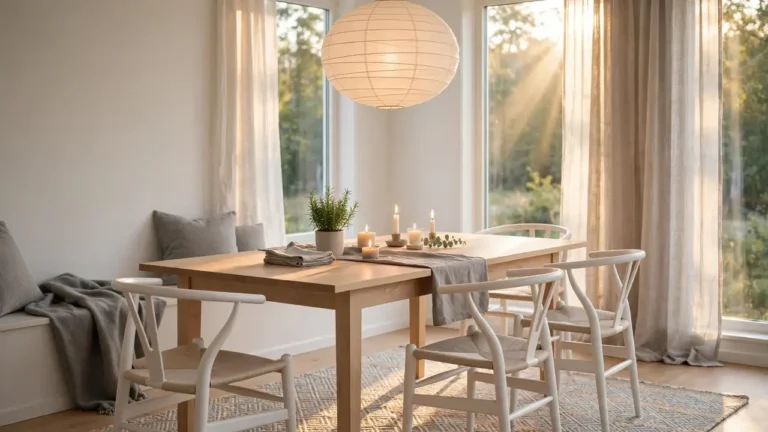
Layered Linen Table Settings

- Start with a washed linen cloth in oatmeal or soft white.
- Layer a narrower runner in sage or faded stripe down the centre.
- Fold napkins loosely and rest them on plates, never under cutlery.
- Mix cream stoneware with one clear glass piece per setting.
- Finish each place with a single herb sprig or dried flower.
Layers work because each one stays simple on its own. The same calm stacking idea sits behind the playful colour confidence of lime green and pink living room ideas: one strong note, then quiet support around it. Press linen the night before, set the table early, and small wrinkles stop mattering once candles and conversation take over.
Brass Candlestick Herb Pairing

Quick Tip: Stand tall brass candlesticks in odd numbers down the table, then tuck small potted herbs between them. Candlelight warms the metal while the green leaves keep the row from feeling formal, and the herbs scent the air as guests brush past. Group them tighter at the centre for drama.
Vary the candlestick heights by a few centimetres so the flames step gently along the table. Cream candles suit the vintage mood better than bright white ones, which can look stark against aged brass. Blow candles out before clearing plates; dripped wax hardens fast on linen and needs an iron and paper to lift.
Dark Corner Garden Glow

BEFORE: The far corner of the dining room collected shadows all day. A single chair stored there gathered coats, the wall print hung too small to matter, and the whole end of the room felt forgotten by dinner time.
AFTER: A tall potted olive tree now fills the corner, lit softly from a small brass picture light mounted above a larger botanical print. The spare chair moved to the table, and the corner reads as a green focal point instead of storage.
Corners decide whether a dining room feels finished or abandoned. Height is the fix: a tree, a tall print, and light at two levels pull the eye upward and outward. Keep the floor clear around the pot so the corner stays restful, not busy.
Botanical China Cabinet Display
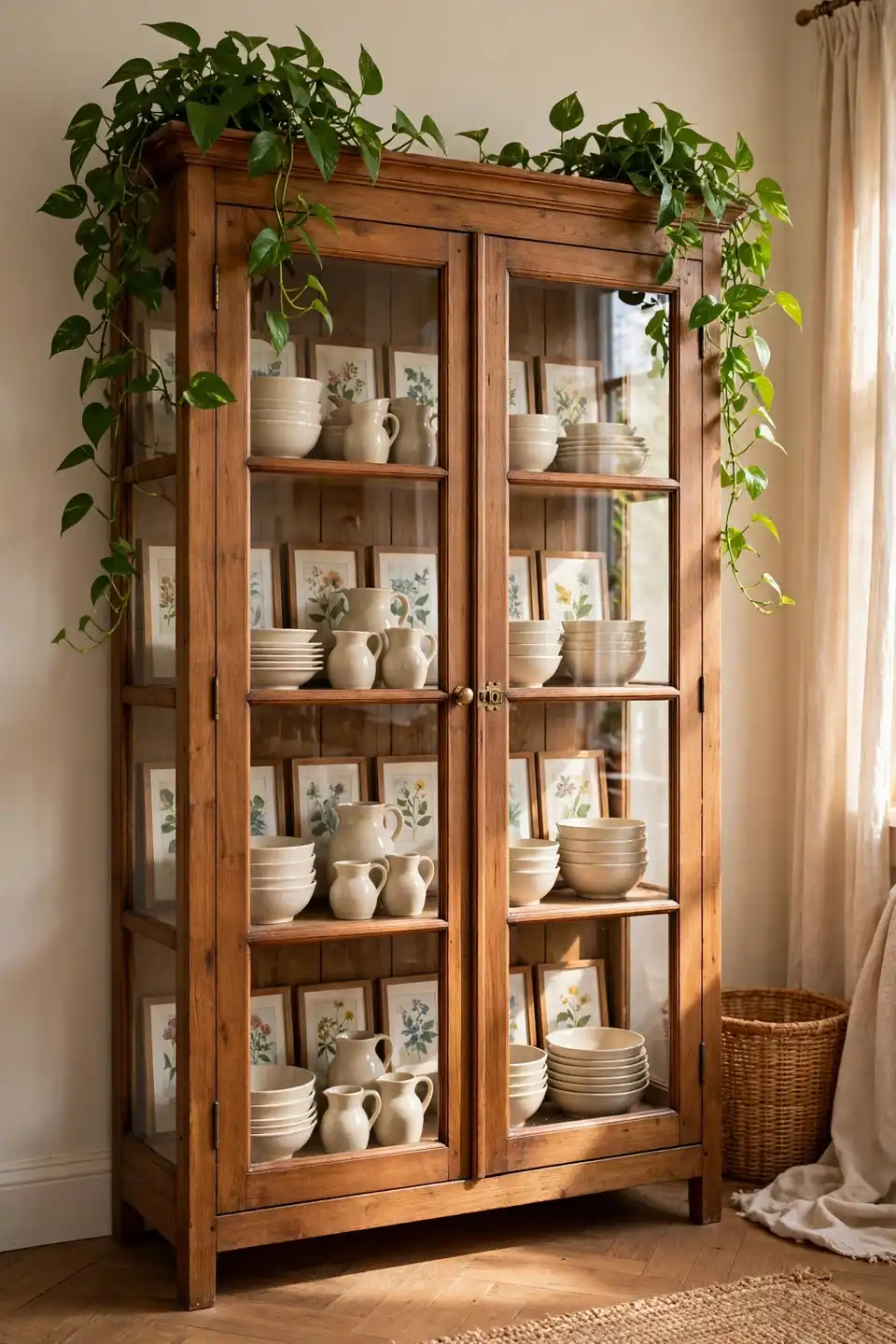
- Empty the cabinet and dust every shelf before styling anything back.
- Stand botanical plates and framed prints along the back wall of each shelf.
- Stack cream bowls and jugs in front, tallest pieces at the sides.
- Leave gaps between groups so each shelf breathes like a gallery.
- Add one trailing plant on top to soften the cabinet’s hard crown.
Glass doors turn storage into display, so treat the cabinet like shelving first and cupboard second. Keep daily dishes on the lowest shelf where hands reach easily, and reserve the eye level row for the prettiest pieces. A cabinet styled this way anchors the room’s whole botanical theme.
Wicker Versus Cane Chairs

| Woven Wicker Chairs | Cane Webbing Chairs |
|---|---|
| Softens echoes in hard rooms | Keeps a crisp, tailored line |
| Bulky frames eat floor space | Slim frames suit small rooms |
| Needs cushions for long dinners | Comfortable with a thin pad |
| Repairs take patience and skill | Webbing panels replace fairly easily |
Chair choice shapes the room more than the table does, because chairs carry the eye line. Wicker brings cottage softness and suits rooms with stone, beams, or busy prints nearby. Cane keeps a lighter outline, which helps small dining rooms hold more seats without feeling crowded. Try one style at the table ends and the other along the sides if commitment feels hard.
Table Runner Styling Rules

Do:
- Let the runner drop twenty centimetres over each table end.
- Choose washed linen or cotton in a faded botanical print.
- Centre a low arrangement so guests see across the table.
Don’t:
- Never use a runner wider than half the table’s width.
- Avoid shiny fabrics that fight the room’s aged finishes.
- Do not let candles drip directly onto unprotected cloth.
A runner is the cheapest full table transformation available, costing less than a single chair cushion. Keep two in rotation, one pale for summer lunches and one deeper green for winter evenings. Washed and stored flat, each one lasts for years and changes the room’s mood in under a minute.
Vintage Print Shopping Facts
Cost: Low to moderate | Time: A few weekends | Skill Level: Beginner | Best For: Patient collectors
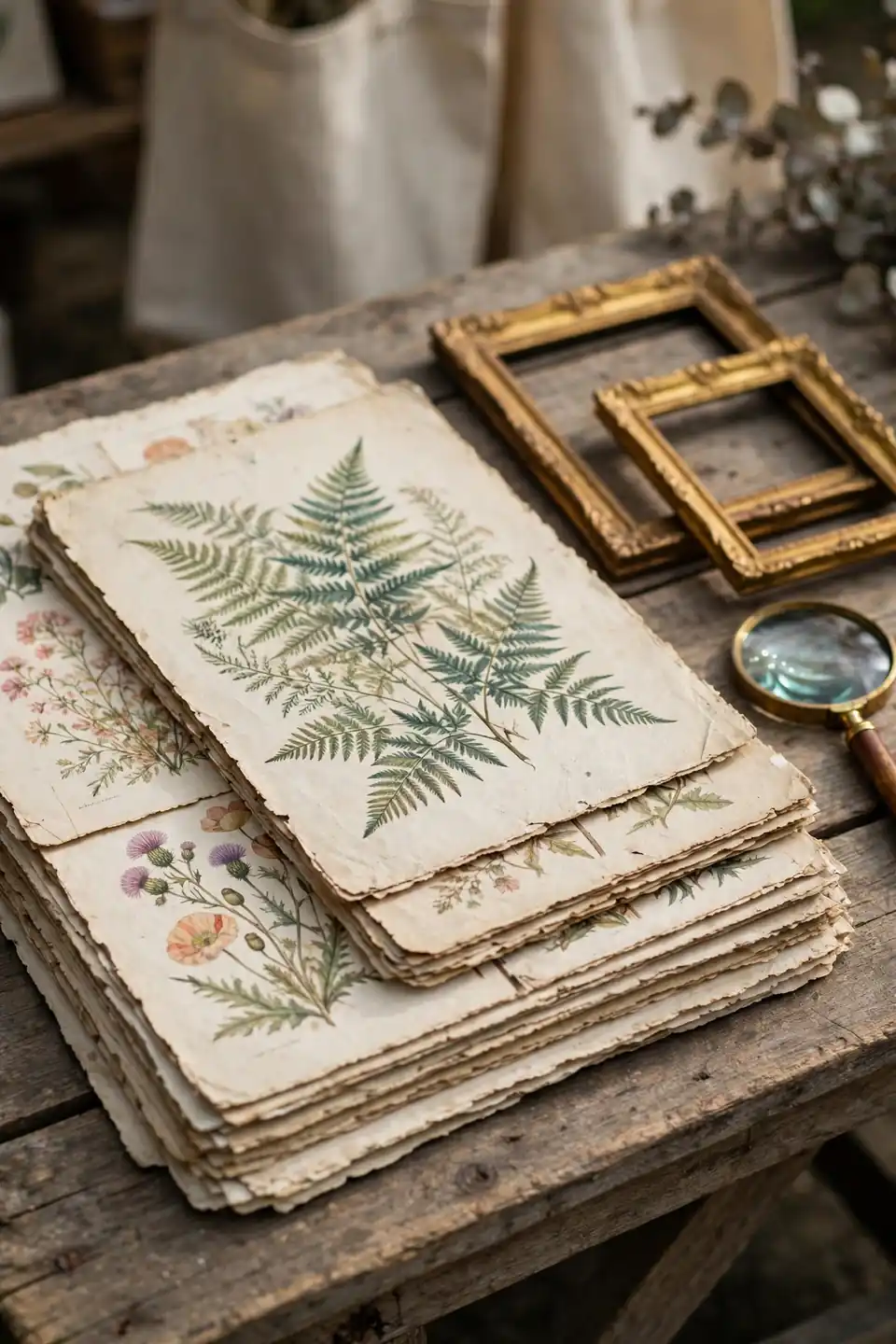
Good prints hide in flea market boxes, estate sale stacks, and the back shelves of charity shops. Judge a print by its paper first: thick, cream, slightly rough stock usually means real age. Faded colour is fine and often prettier, but walk away from foxing spots that reach the image centre. This slow hunt is the heart of vintage botanical dining room inspiration, because every framed piece arrives with a story. Buy singles that share a paper tone, and a set builds itself over a season of weekends.
Eucalyptus Garland Table Swag
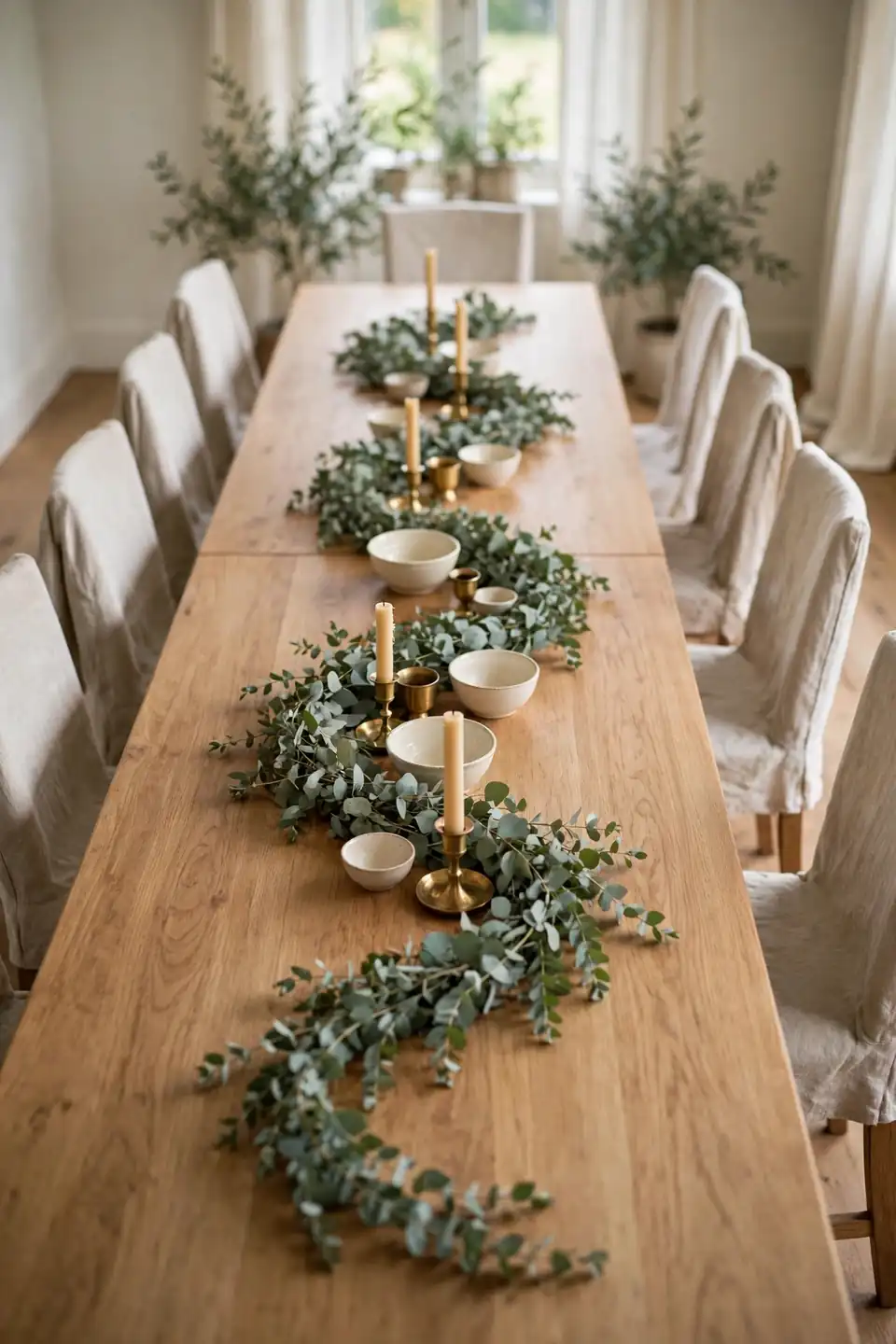
A loose eucalyptus garland down the table centre gives instant garden softness without a florist bill. Lay two garlands in a gentle S curve, tucking the stems under small bowls and candle holders so the line stays put. Silver green leaves flatter both cream linen and bare wood. Guests notice the scent first.
Fresh eucalyptus dries gracefully, so one garland can serve three weekends of dinners before it turns crisp. Mist it lightly before guests arrive to lift the scent. Keep the swag narrow, under twenty centimetres wide, so plates and elbows keep their space and the table never feels crowded.
Terracotta Pot Herb Cluster
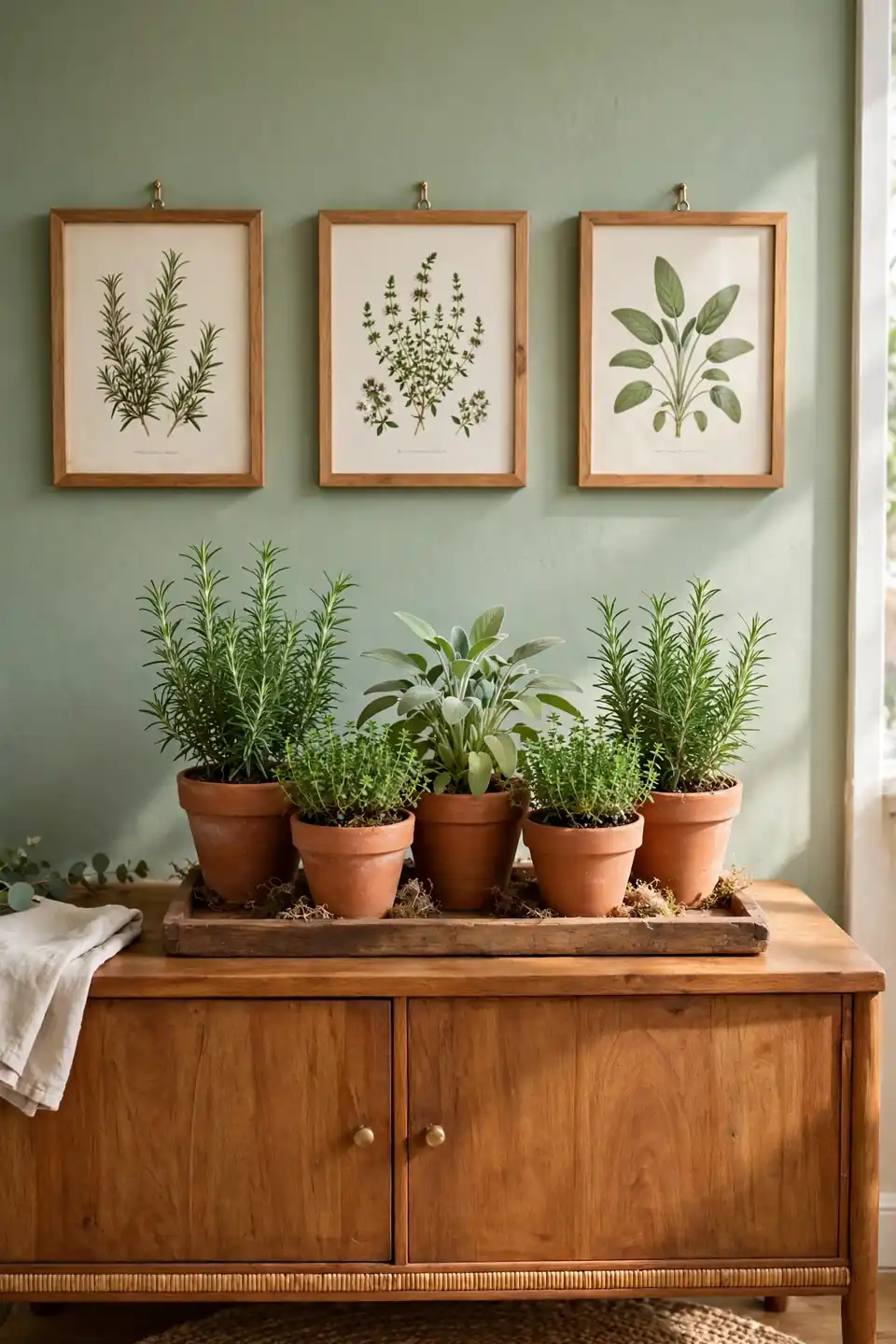
- Group three to five terracotta pots on a sideboard or deep windowsill.
- Mix heights: one tall rosemary, lower thyme and sage around it.
- Stand pots on a single tray to protect wood from water rings.
- Keep saucers dry so the aged clay colour stays rich and even.
- Rotate the cluster weekly toward the light for balanced growth.
Terracotta brings the warm, sun baked note that sage and cream schemes need. The clay breathes, which herbs love, and its colour deepens with age and watering. A cluster near the dining table doubles as a living centrepiece that guests can pinch for garnish, practical and pretty at once.
Botanical Motif Rug Layering
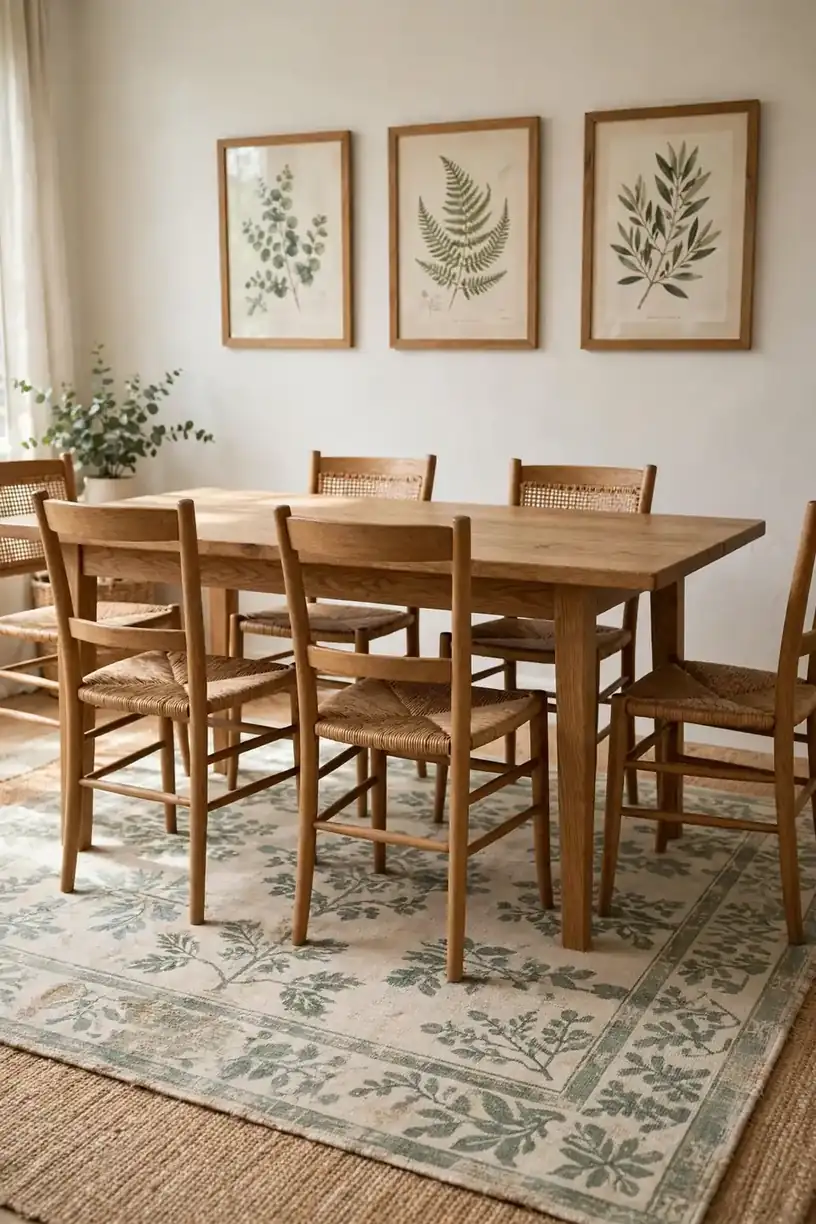
Quick Tip: Anchor the table with a flatweave rug printed in faded botanical motifs, then layer a smaller plain jute rug beneath the table only. The double layer quiets chair noise and frames the setting like a picture mount.
Rugs under dining tables need flat weaves, since chair legs drag constantly. Choose motifs in the same faded tones as the wall prints so floor and walls agree. Size up generously: every chair leg should stay on the rug even when pulled out for dessert, or the layering looks accidental. Vacuum both layers weekly to keep grit from grinding the weave.
Dull Room Fern Revival
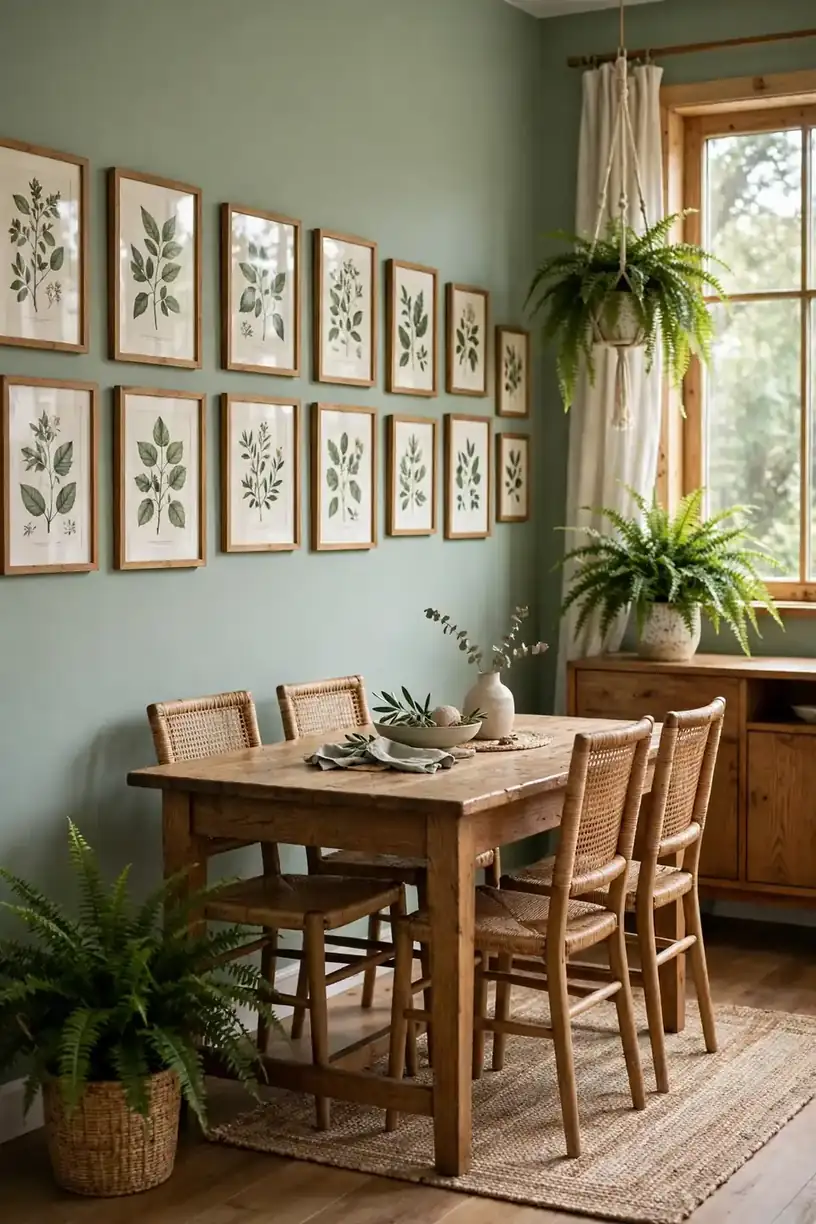
BEFORE: Grey light, plain walls, and a laminate table made the dining room feel like a waiting area. Meals happened fast, nobody lingered, and the space collected paperwork between rare uses.
AFTER: Sage paint, a secondhand oak table, and ferns on every surface changed the temperature of the room. Botanical prints filled the long wall, linen softened the chairs, and dinners now stretch past dessert without anyone checking a phone.
Ferns did the heavy lifting here, because one plant repeated at three heights reads as a design, not an accident. Start with a floor fern, add one on the sideboard, finish with a hanging pot. The room greens up in a single afternoon.
Hanging Botanical Plate Wall
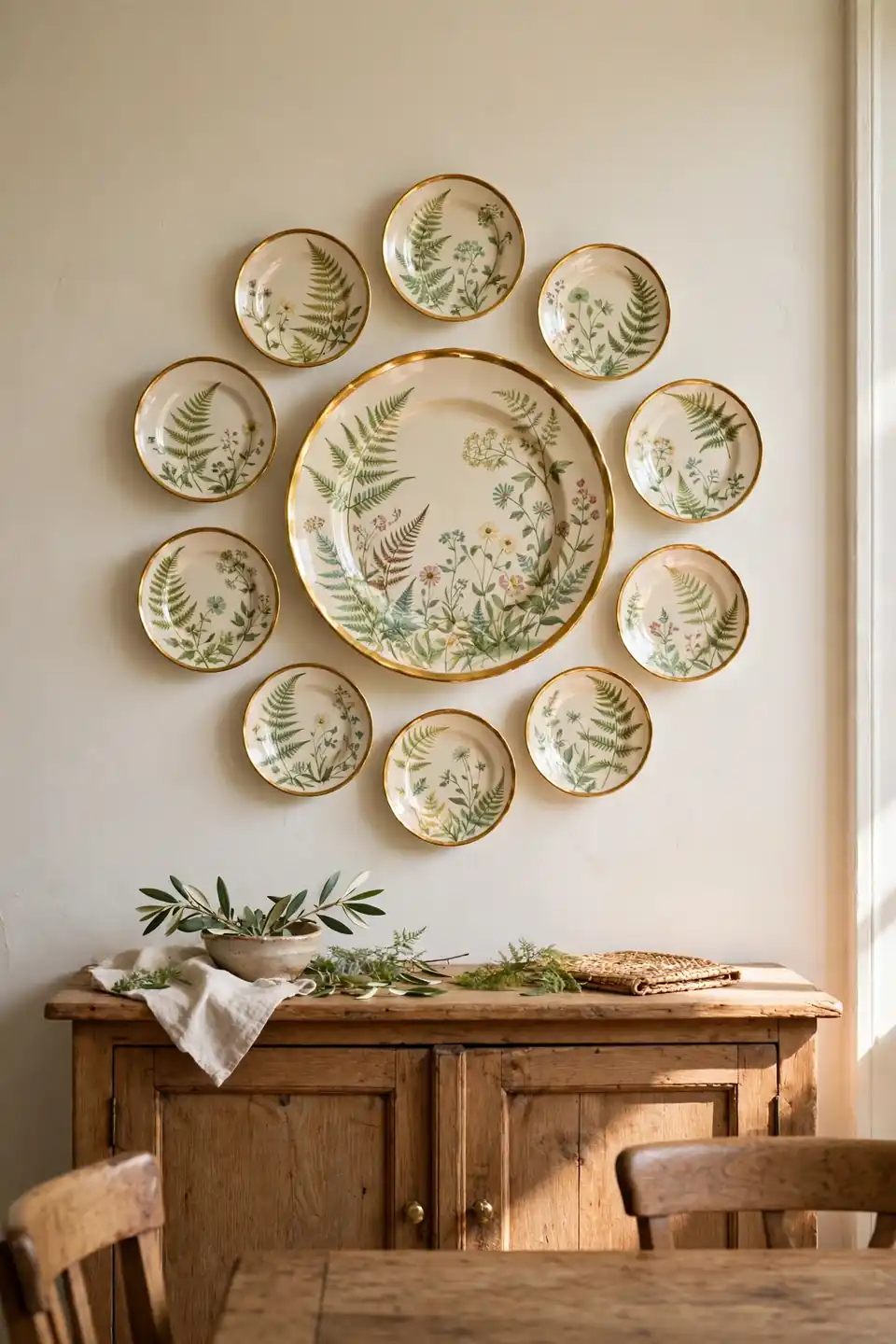
- Collect plates painted with leaves, ferns, or garden flowers in cream and green.
- Arrange the plates on the floor in a loose oval above sideboard height.
- Fit each plate with a secure wire hanger rated for its weight.
- Hang the largest plate first, then fill outward keeping gaps even.
- Step back often and adjust one plate at a time.
Plates bring pattern to the wall without more frames, and their round shapes soften a room full of straight lines. Keep the arrangement’s centre at seated eye level so it joins the table conversation. Odd numbers of plates group more naturally than even ones across a wide wall.
Natural Versus Painted Wood
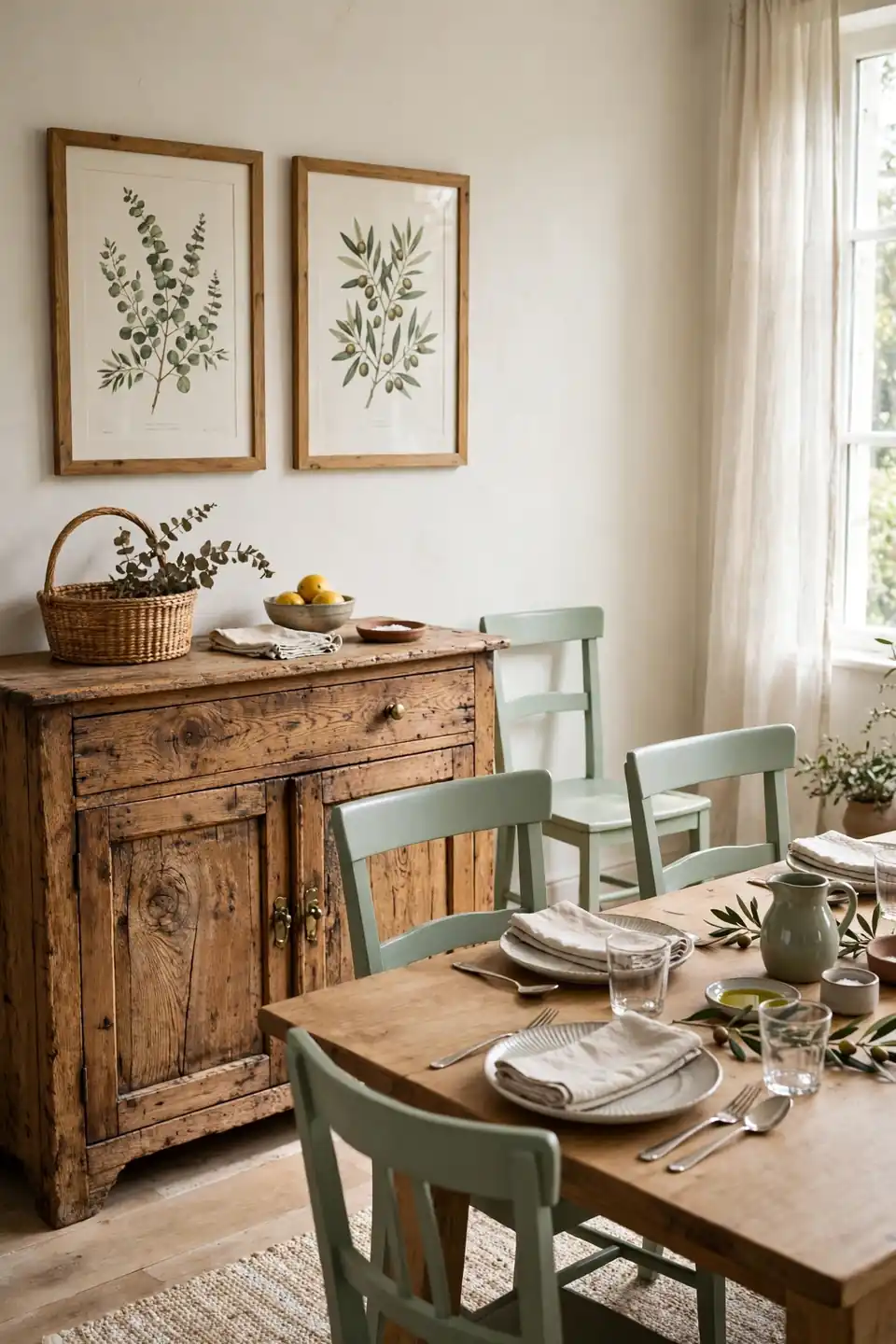
| Natural Aged Wood | Painted Wood Finishes |
|---|---|
| Shows grain and honest wear | Hides flaws under fresh colour |
| Warms rooms with cool light | Brightens dark, low rooms |
| Needs wax or oil yearly | Needs touch ups after chips |
| Suits print heavy schemes | Suits plant heavy schemes |
Neither finish belongs everywhere, and most vintage rooms mix both happily. Natural wood suits the hero pieces, the table and sideboard, where grain earns attention. Painted wood rescues tired chairs and mismatched finds, tying them into one family with a single colour. That’s why many experts recommend painting the pieces you like least; colour forgives shape, while grain deserves the spotlight only when it is genuinely beautiful.
Window Herb Garden Rules
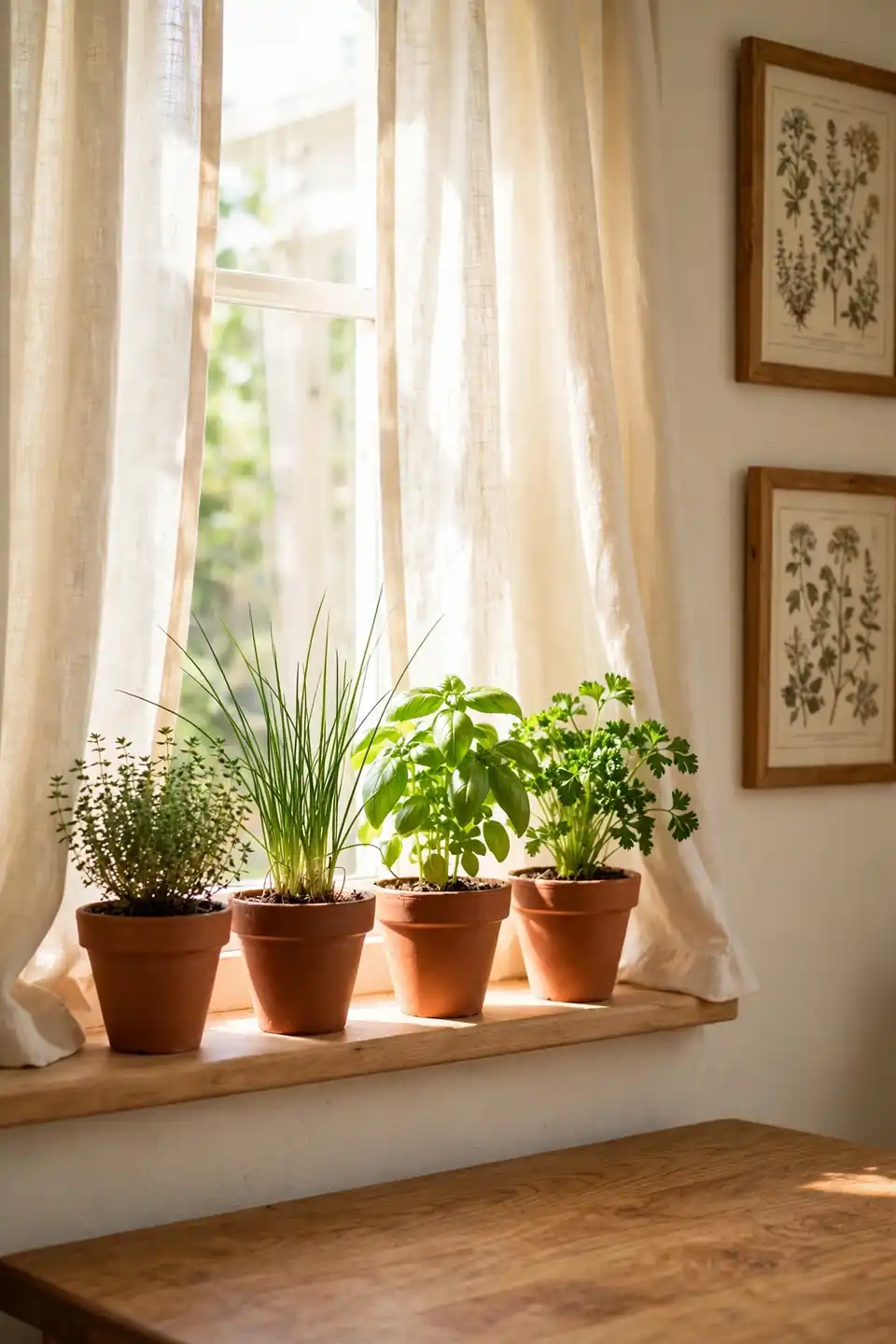
Do:
- Give herbs the sunniest sill, at least five hours of direct light.
- Choose compact varieties: thyme, chives, dwarf basil, and curly parsley.
- Water from the bottom so leaves stay dry and mildew free.
Don’t:
- Never crowd pots so tightly that air cannot move between them.
- Avoid heavy curtains that steal morning light from the leaves.
- Do not harvest more than a third of any plant at once.
A window herb garden feeds both the kitchen and the room’s mood. Snipping garnish at the table feels like a small ceremony, and the scent carries through dinner. Start with three pots, master their watering rhythm for a month, then expand along the sill slowly.
Seasonal Botanical Swap Facts
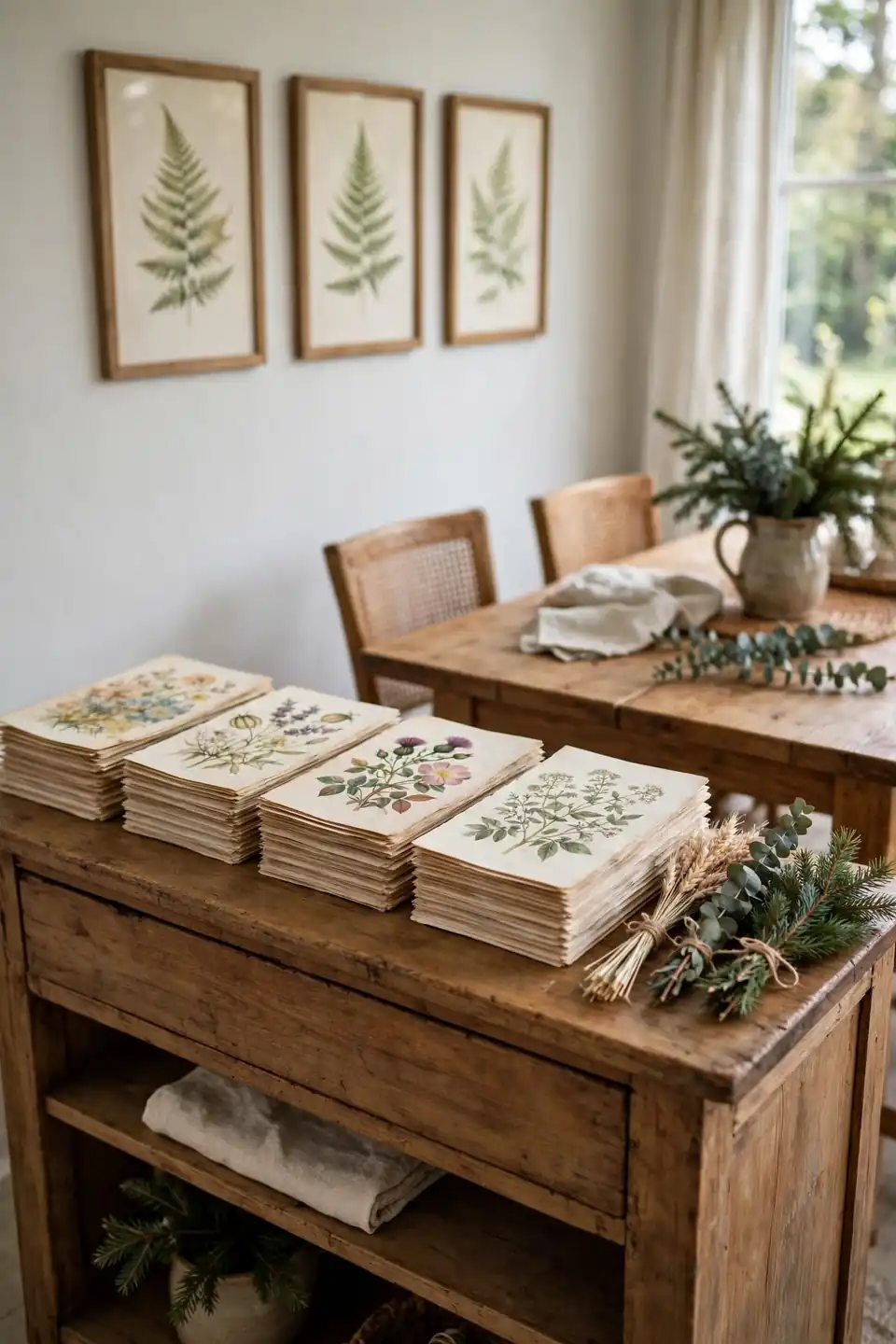
Cost: Very low | Time: One afternoon | Skill Level: Beginner | Best For: Print collectors
A botanical scheme stays fresh when a quarter of it changes with the seasons. Spring brings fern prints and fresh green plants to the front, while summer favours herb studies and lighter linen. Autumn swaps in seed head prints, dried grasses, and deeper green cushions, and winter leans on evergreen cuttings with brass to catch candlelight. Store off season prints flat between sheets of plain paper, never rolled, and label each stack by month. The table, walls, and chairs stay constant, so each swap takes one afternoon and the room still feels like itself, only dressed for the weather outside.
Conclusion
A room built on prints, plants, and patient collecting never really dates, because gardens never go out of style. Start with one wall of frames or a single table centrepiece, then let vintage botanical dining room inspiration grow piece by piece as finds appear. Save these ideas to your Pinterest boards before your next market trip, and share a photo when your first gallery wall goes up. I’ve seen how small changes like these can completely shift the way a space feels, and dining rooms reward the effort fastest of all.