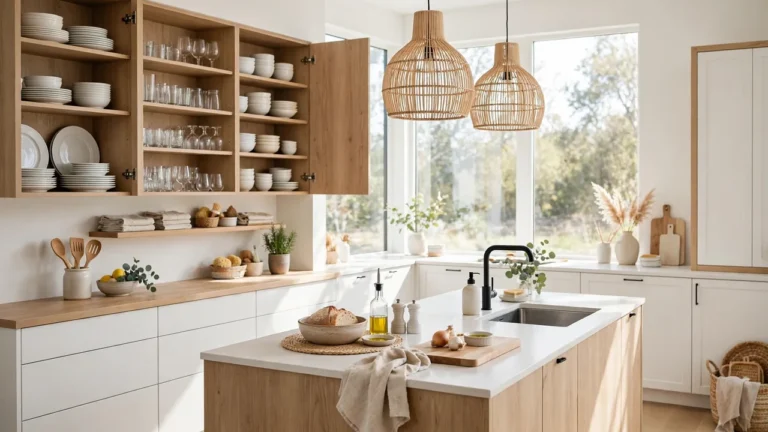
How to Make a Narrow Kitchen Feel More Open
Learning how to make a narrow kitchen feel more open changes how your whole home feels. A slim galley kitchen can read like a hallway when counters overflow and walls press inward. Small shifts in color, light, and layout open that feeling up fast, without any renovation.
This guide walks you through ten practical steps that make a slim kitchen look wider and brighter. Work through them in order, starting with the easiest wins. Many of the same ideas help in other tight rooms, like how to decorate a bedroom with no space for nightstands, so the whole home starts to feel calm and spacious.
Why Narrow Kitchens Feel Closed In

A narrow kitchen feels closed in for reasons that have little to do with its actual size. Dark upper cabinets loom over the walkway, heavy curtains block window light, and full counters erase every bit of breathing room. Your eye reads all of that as pressure from both sides.
The good news is that perception works both ways. When light bounces freely and sightlines stay clear, the same floor plan feels generous. Understanding this is the foundation for every fix below, because each step targets one thing your eye reads as cramped.
Clear Every Countertop First
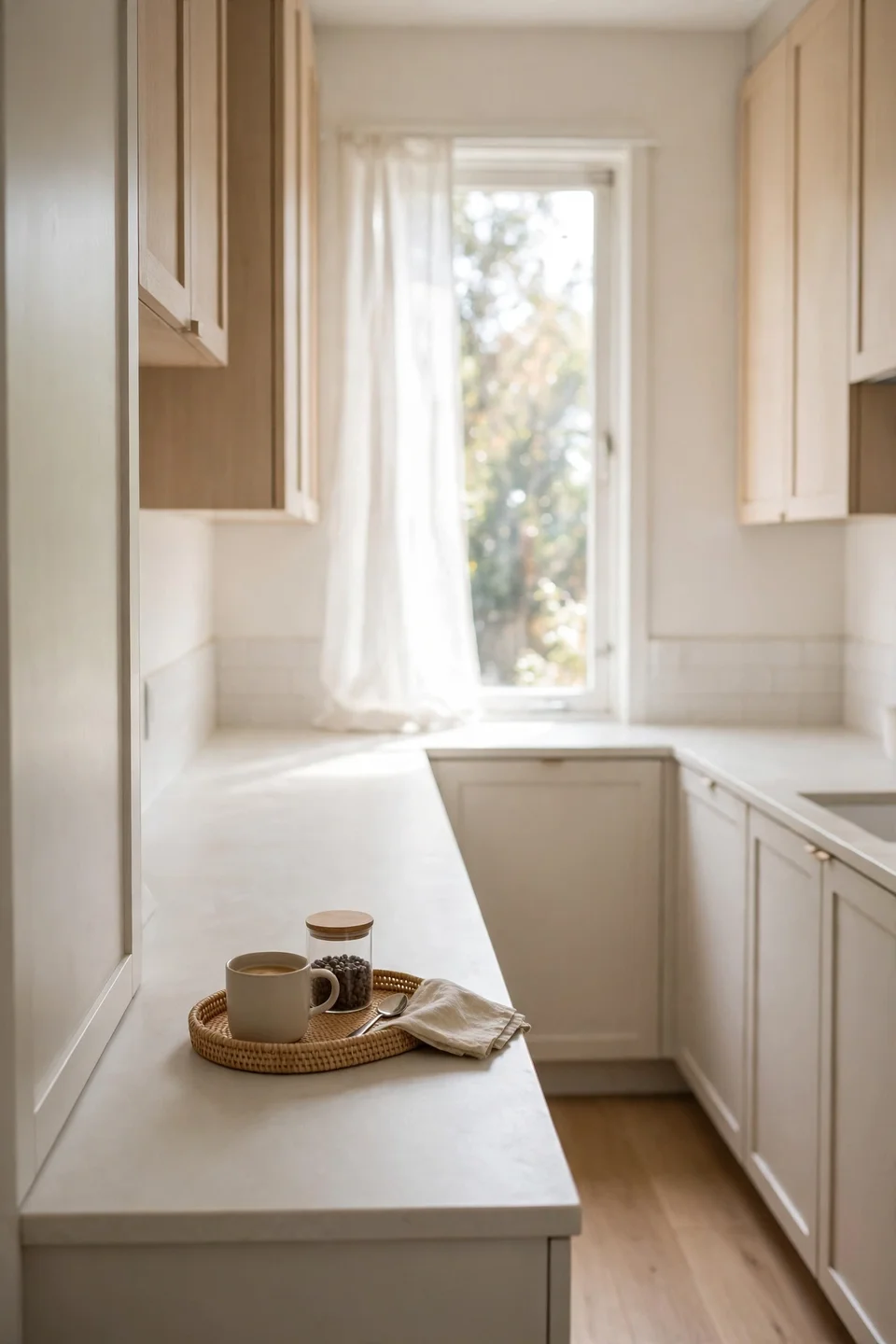
Counters collect more than they should in a small kitchen. Appliances, mail, jars, and gadgets all compete for the same strip of space, leaving no room to breathe. Give every item a home off the counter, and the room instantly feels wider.
- Move small appliances you use weekly, not daily, into a cabinet or pantry shelf.
- Corral daily items like coffee gear onto one small tray so the rest of the counter stays bare.
- File or toss the paper pile; kitchens collect mail faster than any other room.
- Leave at least one full stretch of counter completely empty as a visual breather.
Lighten Up the Walls and Cabinets
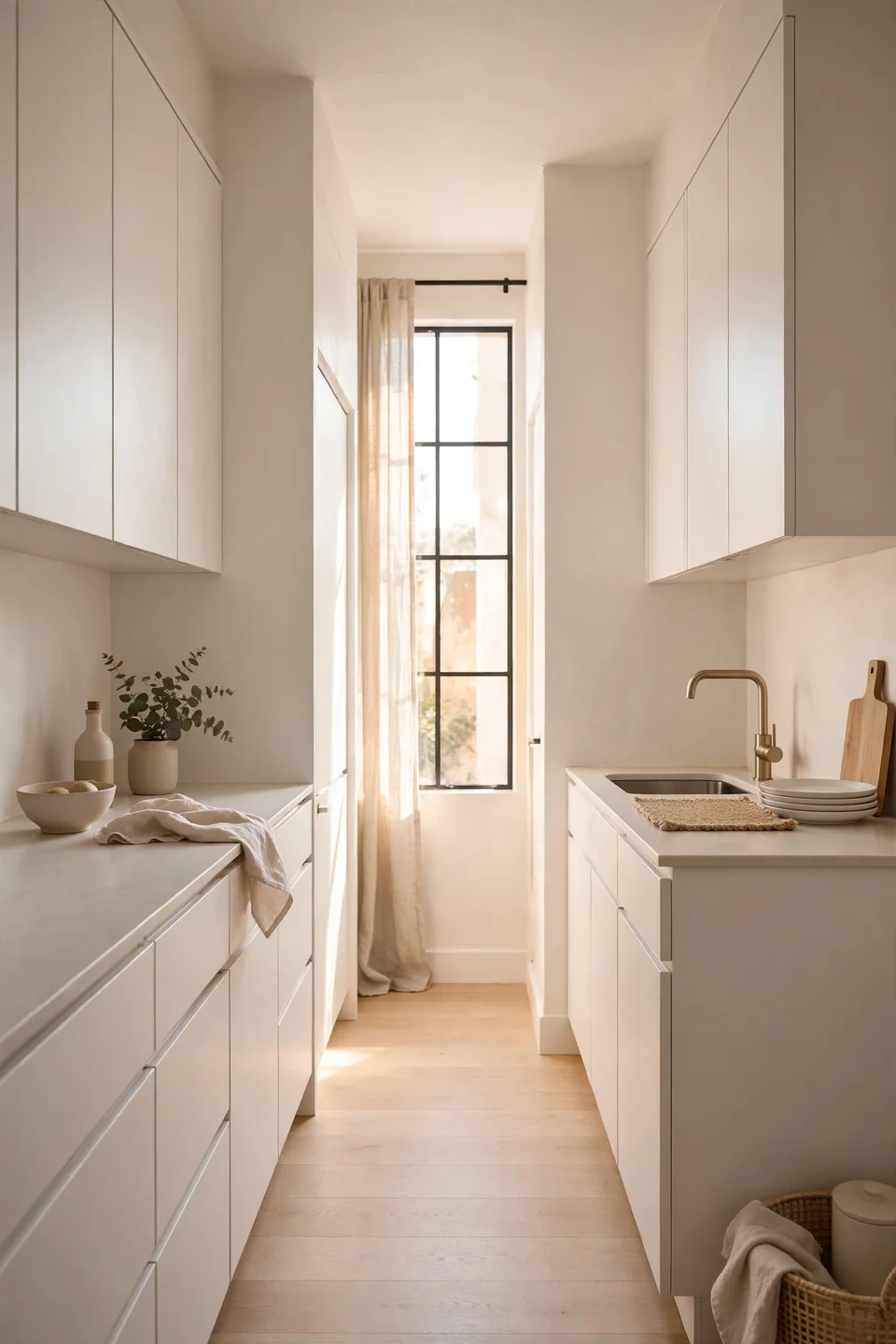
Quick Tip: Paint is the cheapest way to widen a room. One gallon of warm white can change a dark galley overnight.
Light colors reflect light instead of absorbing it, which pushes walls visually outward. If painting cabinets feels like too much, start with the walls and the ceiling. A bright ceiling alone can lift the whole room, and peel-and-stick options exist for renters who cannot paint at all.
The Overhead Lighting Mistake
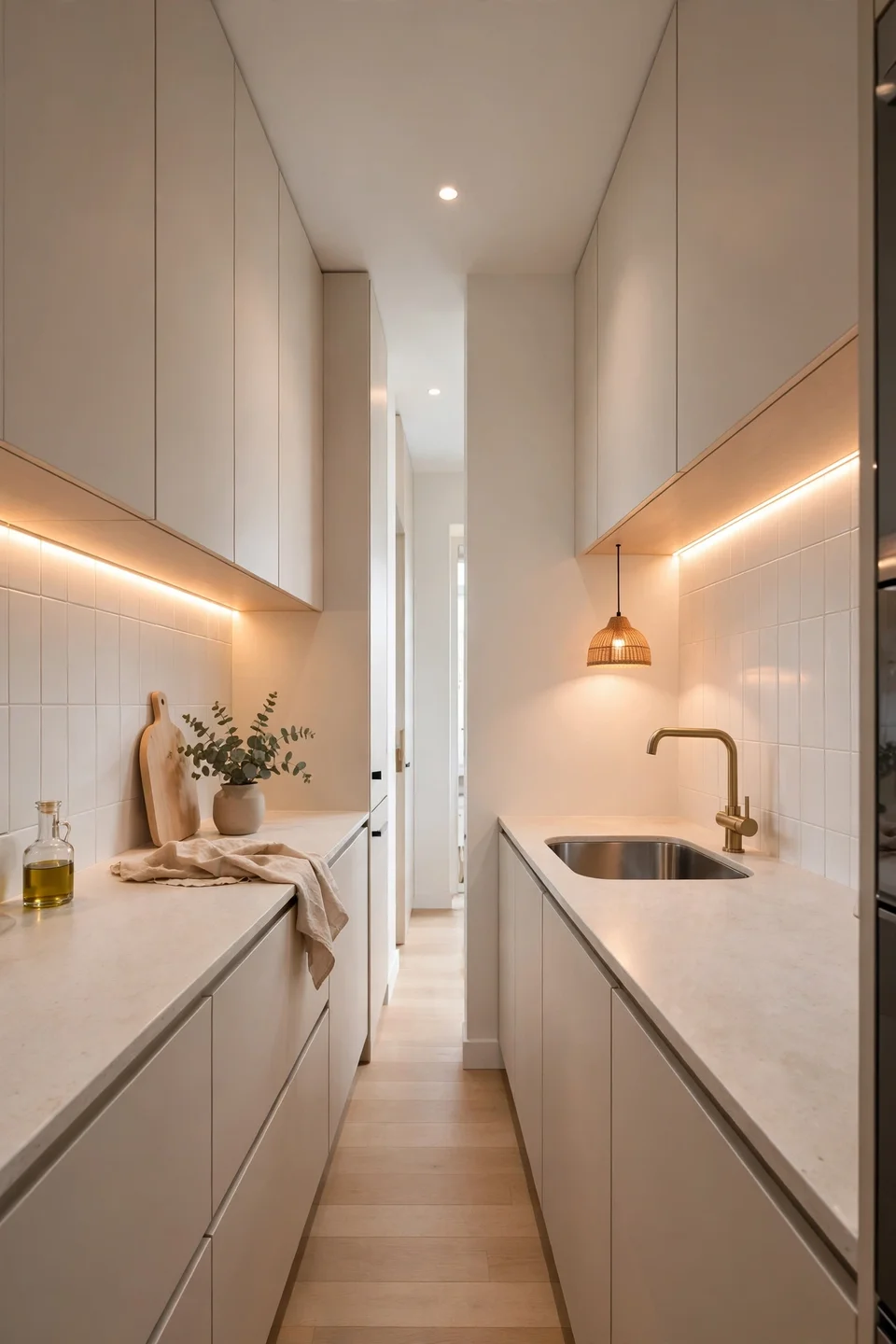
Common Mistake: Relying on one dim ceiling fixture in the middle of the room. It throws harsh shadows into the corners, which makes the walls feel even closer together.
The Fix: Layer two or three light sources instead. Under-cabinet strips, a pendant over the sink, and a small lamp on the counter each fill in shadows. Even light from several points reads as space.
Brightness matters as much as placement. Choose bulbs in a warm white tone and keep every shade or cover clean, since dusty fixtures dim more than you expect. Walk through the kitchen at night and look for dark pockets; each one is a spot that asks for another small light.
Tools That Open Up a Narrow Kitchen

What You Need:
- A slim rolling cart that tucks between the fridge and the wall
- Clear storage jars that show contents without labels shouting at you
- Under-cabinet LED strip lights with a warm white glow
- A light-colored runner rug that draws the eye down the room
- Peel-and-stick backsplash tiles in a glossy light finish
None of these cost much, and each one earns its place by doing double duty. The cart adds storage and a work surface. The jars cut visual noise. Light strips and glossy tile bounce light around. Pick the two that fit your budget first, then add the rest over time as the room opens up.
Before and After: A Galley That Breathes

BEFORE: Dark wood cabinets, a cluttered counter, and a single yellow bulb made this galley feel like a tunnel. The far end disappeared into shadow, and cooking here felt cramped no matter how tidy things were.
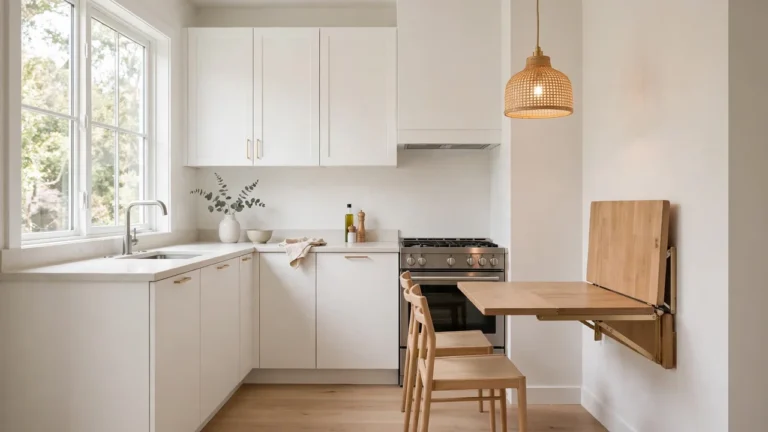
AFTER: White upper cabinets, a clear counter with one tray of daily items, and layered lighting changed everything. Light reaches the far wall now, and the runner rug pulls the eye straight through. The same room feels twice as wide, much like the effect of taller windows in how to hang curtains to make windows look taller.
Notice that nothing structural changed. The floor plan, the appliances, and the window stayed exactly where they were. What changed was light, color, and clutter, which are the three levers you control in any narrow kitchen. Pull all three and the room feels completely different.
Choices That Work Against Choices That Close Things Off

Do This:
- Keep the floor visible; a light rug runner adds warmth without hiding it
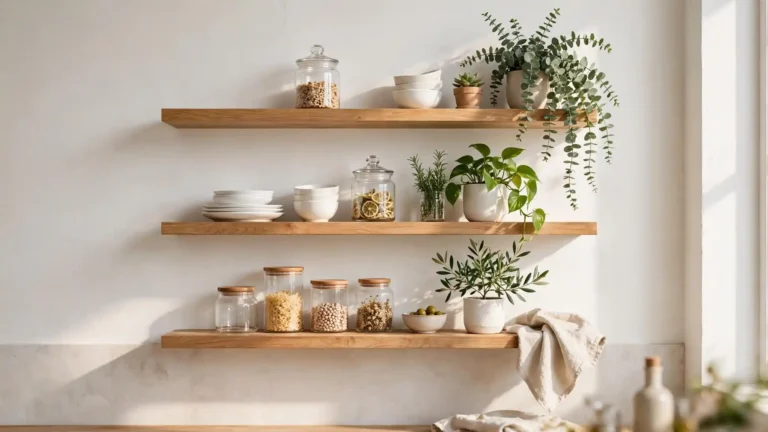
- Choose glass-front or open shelving for one section of uppers
- Match small appliances to your cabinet color so they fade away
- Hang one mirror or glossy art piece to bounce light
Avoid This:
- Dark, heavy window treatments that eat natural light
- Bulky bar stools that block the walkway
- Open clutter on the fridge covered in magnets and papers
- Patterned flooring that chops the room into pieces
Every choice either opens sightlines or closes them. When you shop for anything in this kitchen, ask whether it adds light or adds visual weight. Light choices compound, and within a few weeks the room reads as calm instead of crowded. That calm feeling is what makes guests linger longer.
Key Facts About Small Kitchen Layouts
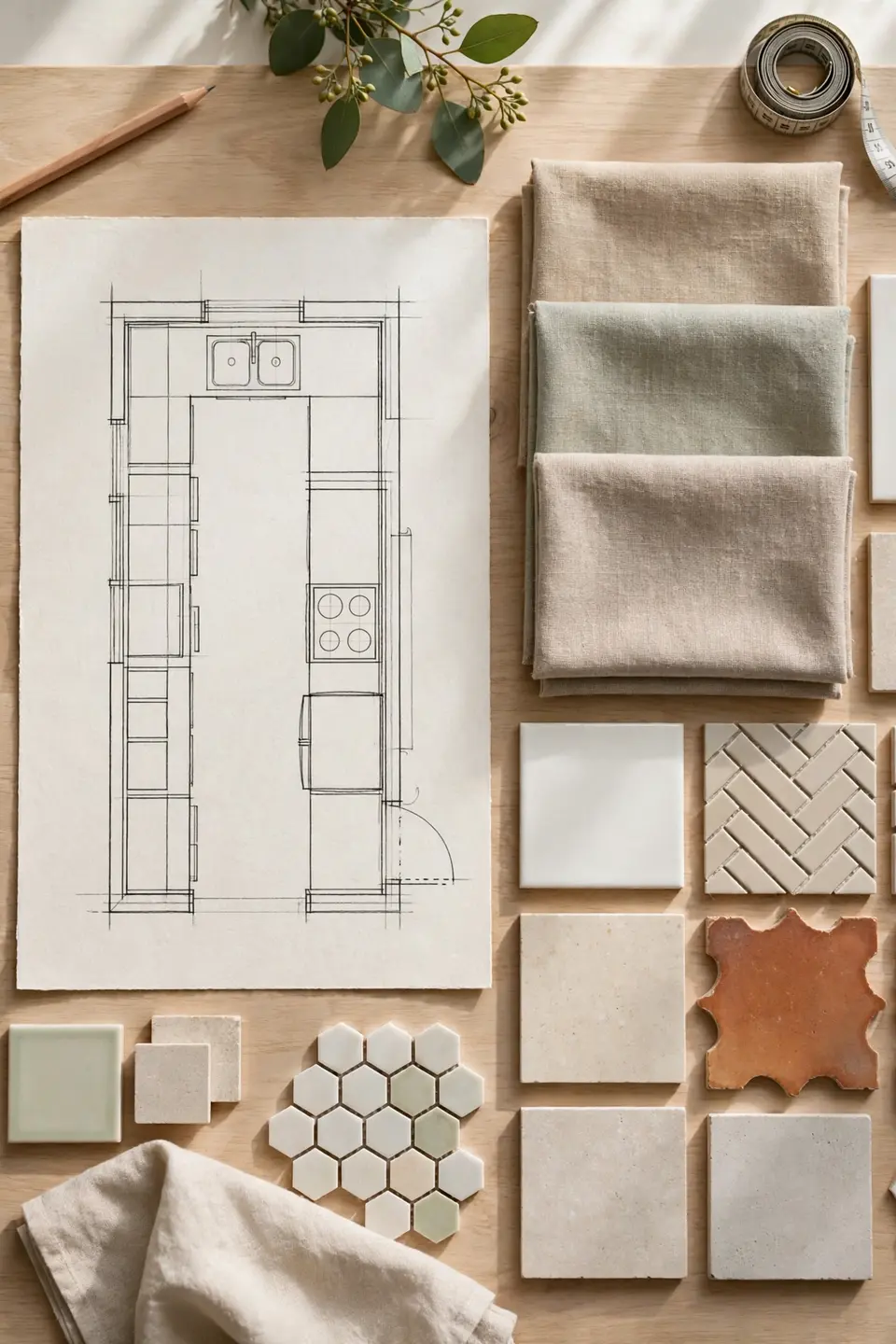
Quick Facts:
- Ideal galley width: 7 to 10 feet gives two people room to pass comfortably.
- Counter depth: standard 25 inches; going shallower on one side frees walkway space.
- Light reflectance: white paint reflects up to 85 percent of light; dark colors reflect under 10 percent.
- Work triangle: keep sink, stove, and fridge within 26 feet total for easy movement.
These numbers explain why small changes matter so much. A few inches of clear walkway, a brighter paint finish, and a tighter work triangle each remove friction. Together they turn a kitchen that fights you into one that flows, even when the square footage stays exactly the same.
Tie It Together With Simple Layers

A finished kitchen has layers that work together: light paint on the walls, warm light from two or three sources, one soft textile underfoot, and a single green plant or bowl of fruit for life. No single layer does the heavy lifting alone.
Stand at the doorway and look down the room. If your eye travels smoothly to the far end without snagging on clutter or dark corners, the layers are working. Tweak whatever catches your eye first, since that is exactly what a guest would notice too, and fix it next.
Keep the Open Feeling Long Term

An open kitchen stays open only if daily habits support it. Clutter creeps back quietly, one item at a time, and undoing it takes far more effort than preventing it. These small routines keep the room feeling spacious for good.
- Do a two-minute counter reset every evening; everything returns to its home.
- Wipe light fixtures monthly so dust never dims your brightness.
- Revisit one cabinet each season and remove what you no longer use.
- Keep the runner rug clean and light; replace it when it darkens with wear.
Conclusion
Once you know how to make a narrow kitchen feel more open, the room stops working against you. Clear counters, light colors, layered lighting, and simple habits each add a little breathing room, and together they change everything. Start with the step that feels easiest today, then add the rest one weekend at a time. Save this guide on Pinterest so you can find it when you are ready for the next project, and enjoy cooking in a kitchen that finally feels like it has room to breathe. Your future self will thank you every single morning.