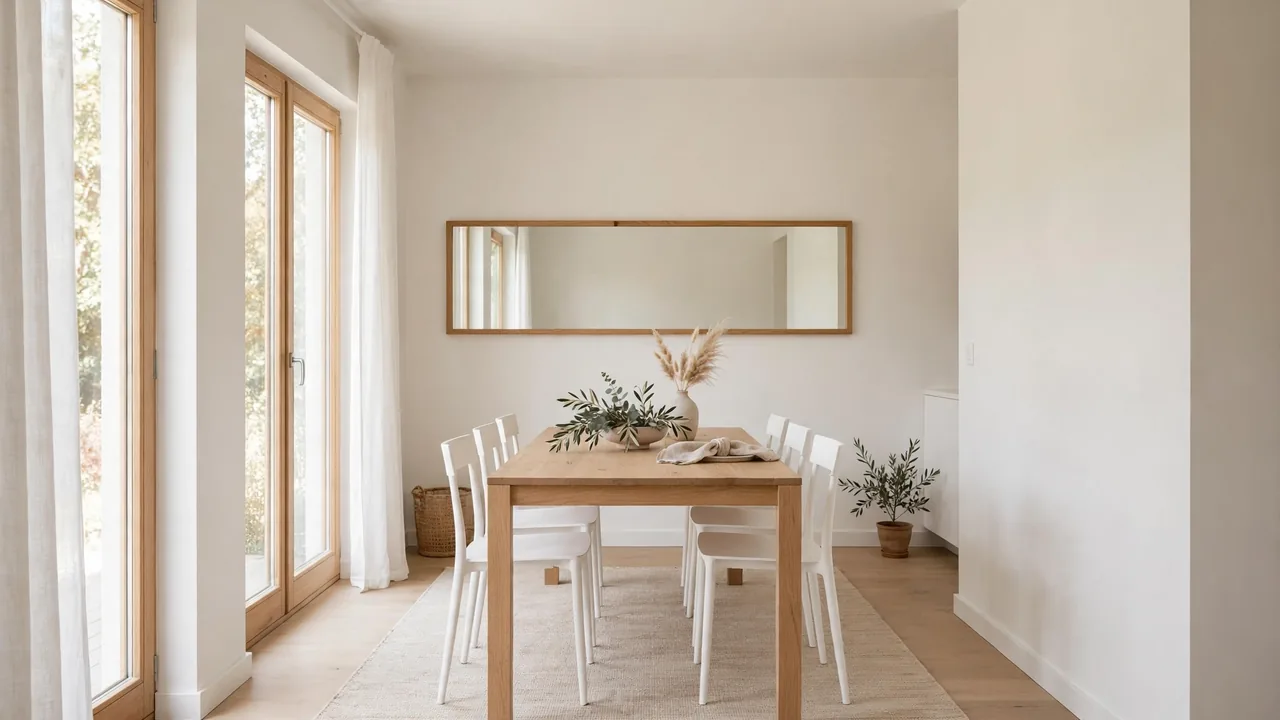
How to Make a Narrow Dining Room Feel More Spacious
A narrow dining room can feel like a hallway with chairs, but it does not have to stay that way. Once you know how to make a narrow dining room feel more spacious, it becomes one of the coziest spots in the house. Guide the eye, lighten the surfaces, and pick furniture that fits.
I’ve noticed most people try to fix the room by removing furniture, which only makes it feel emptier. What works is a set of small visual changes that stack up over time. Each section below gives one clear action you can finish in a weekend.
If tricky layouts show up elsewhere, my guide on how to arrange furniture in a living room with a sliding door shares ideas that transfer well here.
Start With a Clear Visual Center Line

A narrow dining room feels tight when your eye has nowhere to travel. Creating a clear center line down the middle of the room gives the eye a path to follow, which makes the space read longer than it is. Draw this line with a runner rug, a row of ceiling lights, or a long table centered on the room axis.
Stand in the doorway and notice where your eye lands first. If it hits a chair back or a cluttered sideboard, clear that sightline. This one shift sets up every other trick in this guide to work better.
Measure Your Room Before Buying Anything
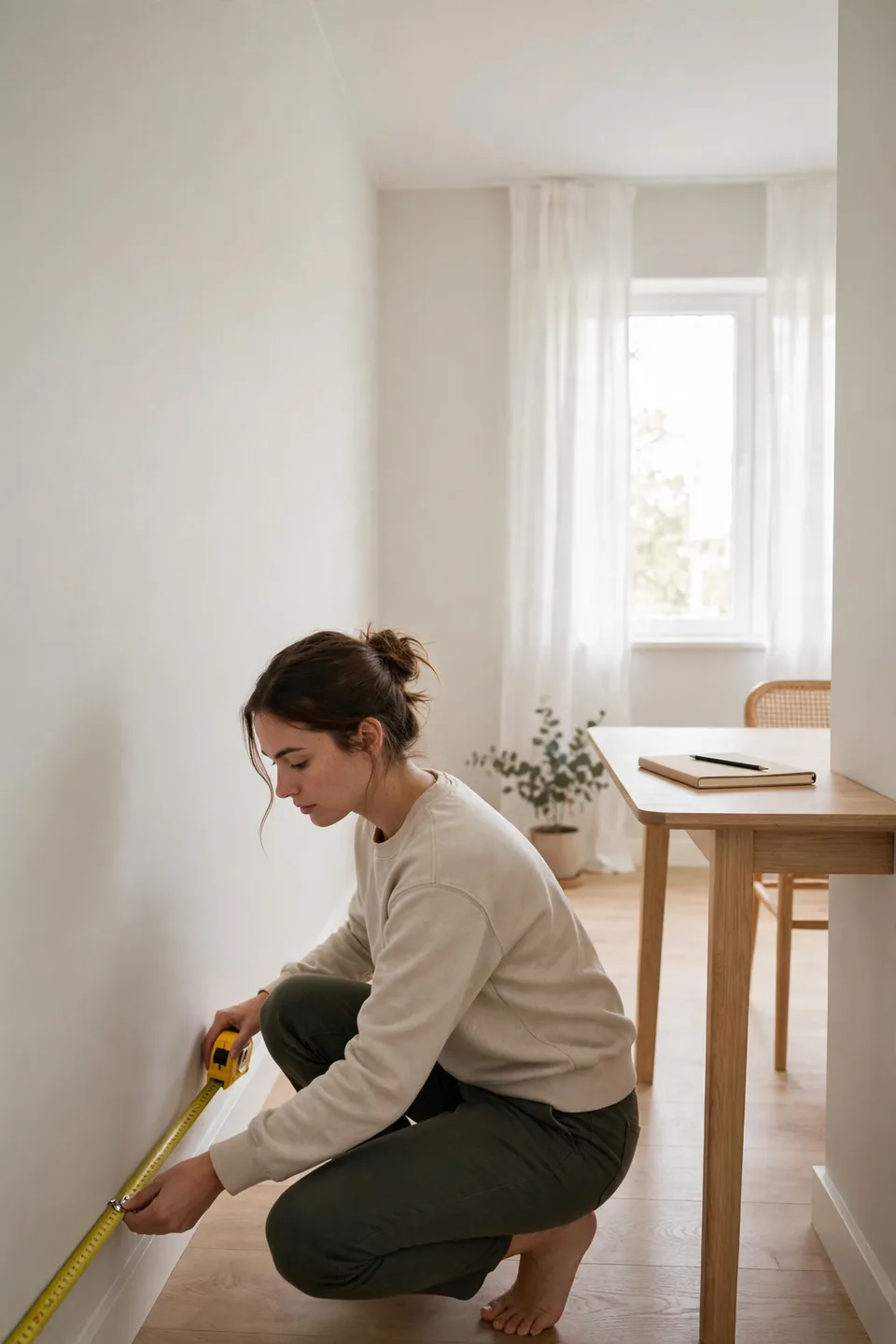
Before you buy a table or chairs, know your real numbers. A narrow room punishes guesswork, and even a few inches decide whether the space feels comfortable or cramped. Grab a tape measure before you shop and write these basics down.
- Measure the length and width of the room at two different spots, since older rooms are rarely perfectly straight.
- Mark 36 inches of clearance around the table so chairs can pull out without hitting walls.
- Note where windows and doors swing so nothing you place blocks them.
Paint Walls and Ceiling in One Light Color
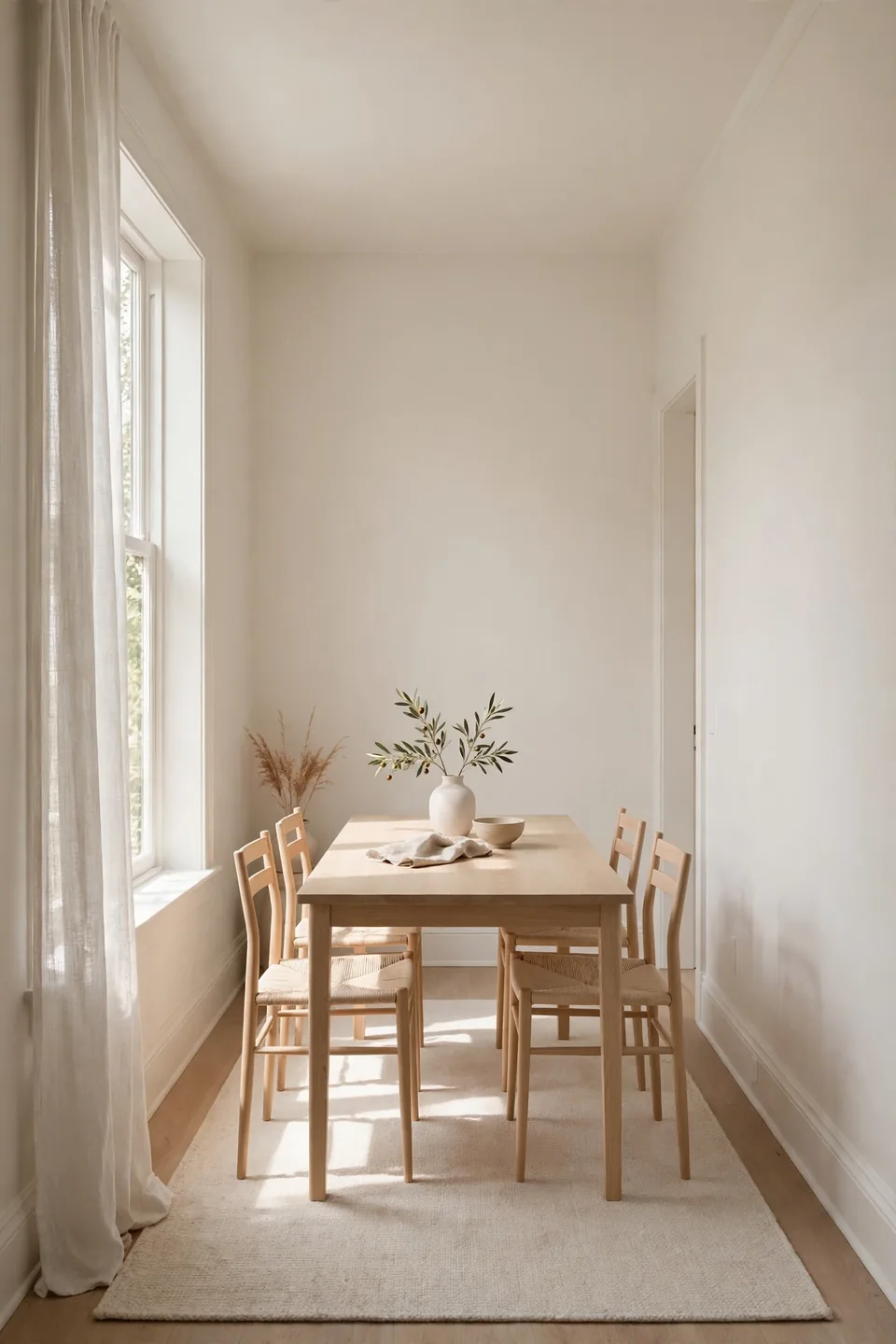
Quick Tip: Use the same warm white or pale neutral on the walls, ceiling, and trim. Erasing the line where the wall ends and the ceiling begins makes the room feel taller and wider at the same time. Choose a flat or matte finish that bounces light softly without glare.
One continuous color keeps the eye moving instead of stopping at every corner. If you want contrast, add it low through the rug or chair cushions rather than up on the walls. This keeps the upper room calm and open. Color does more work here than any furniture swap ever could.
Stop Pushing Every Piece Against the Wall
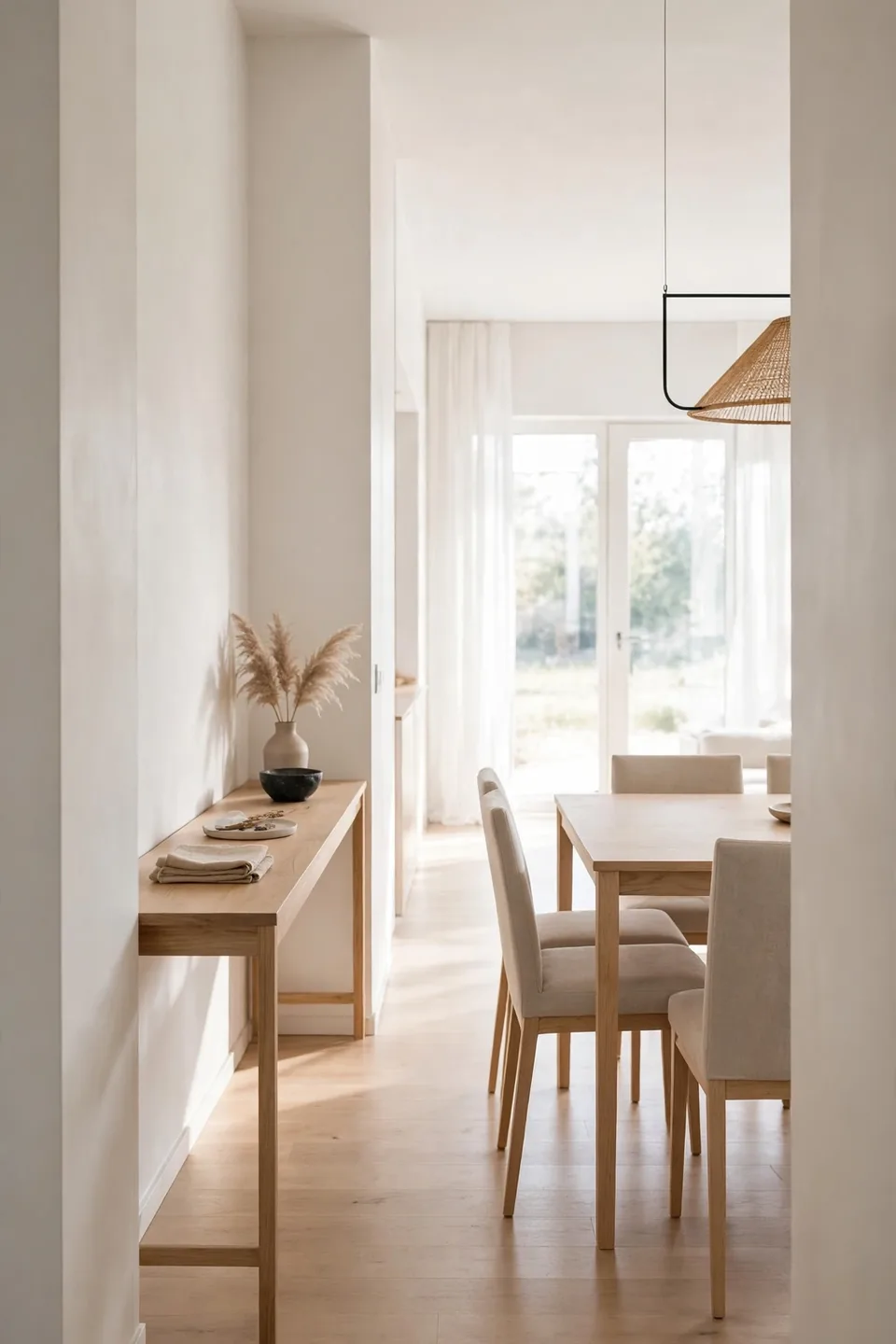
Common Mistake: Most people push the sideboard, the plant, and even the table flat against the walls to save space. This backfires in a narrow room because the middle becomes a long empty tunnel with heavy walls closing in. The room reads longer and thinner, never bigger.
The Fix: Float the table slightly off the wall or set one slim console perpendicular to it. Even four inches of breathing room between furniture and wall breaks the tunnel effect. Walls read farther apart the moment furniture stops hugging them.
Walk around your room and count how many pieces touch a wall. Pull at least one into the open space. It feels wrong at first, but it gives the eye depth to move through instead of a flat wall of furniture. Small shifts like this change the whole feel of the room.
Choose a Table That Fits the Shape
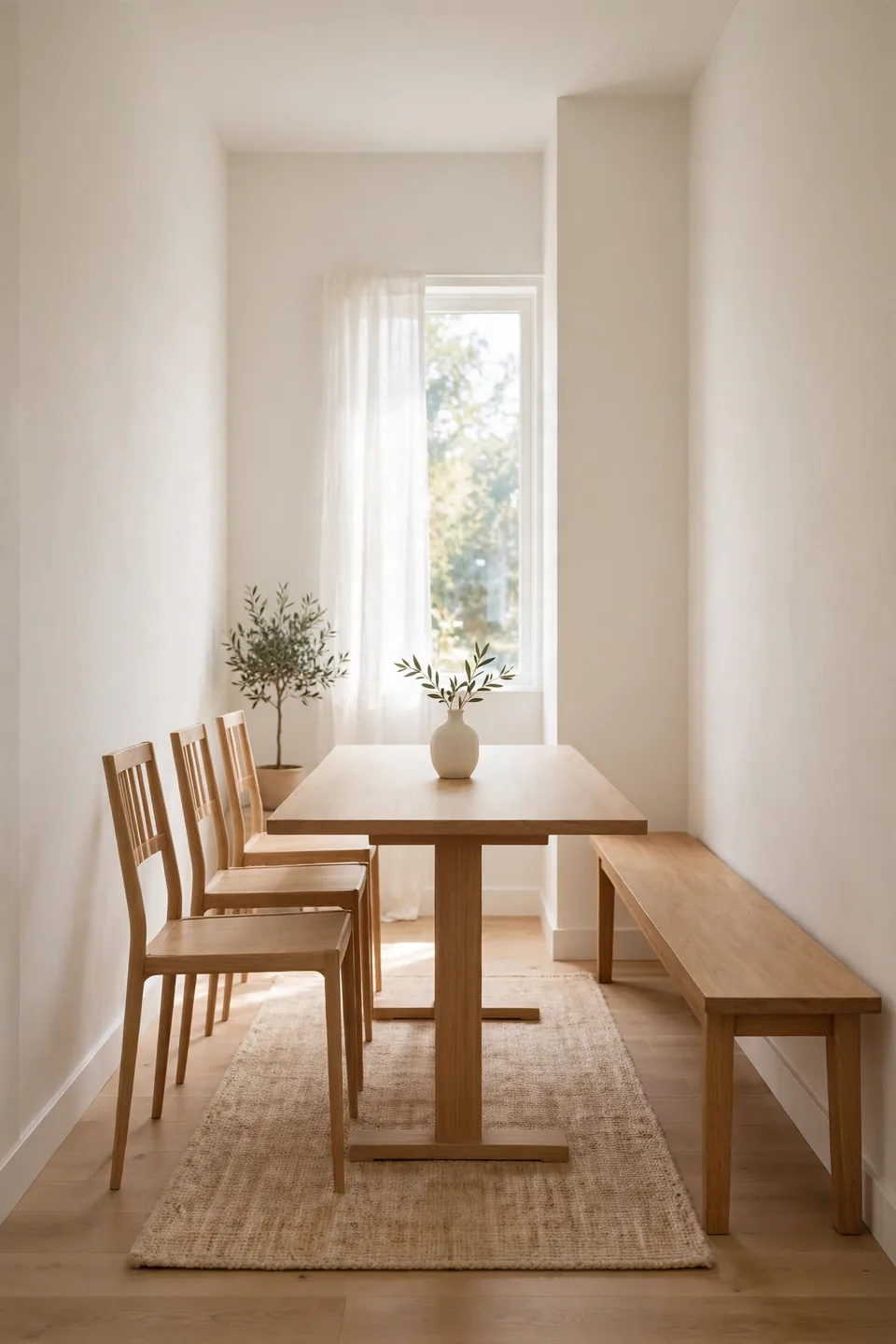
What You Need:
- A rectangular or oval table, 30 to 36 inches wide, that matches the narrow footprint.
- Slim-legged chairs that tuck fully under the table when not in use.
- One bench along a single side to seat more people in less width.
- A pedestal or trestle base so legs never crowd the corners.
- A light-toned or glass top that keeps the visual weight low.
The table is the biggest object in the room, so it sets the whole proportion. Match its shape to the room shape and keep its edges visible instead of buried behind bulky chairs. When the table looks light, the entire room looks lighter. That is why experts always say to start with the table.
Hang One Long Horizontal Mirror

BEFORE: The long wall holds three small frames spaced apart. Each frame chops the wall into pieces, and the eye hops from one to the next without sensing real length. The wall looks choppy, and the room feels narrower with every stop the eye makes.
AFTER: One long mirror or one wide art piece stretches along the wall in a single horizontal line. Light bounces back into the room and the wall reads as one continuous surface. The same wall suddenly looks twice as long, and the room opens up around it.
If a mirror feels like too much, use one oversized canvas with a calm landscape. The key is one horizontal shape, never a gallery grid. Hang it at eye level to pull the gaze sideways. For rooms with windows on several walls, how to decorate a bedroom with windows on two walls shares balancing ideas.
Balance Heavy and Light Pieces

Do This:
- Keep tall storage to one end of the room instead of spreading it along both walls.
- Choose open, leggy chairs that show floor underneath.
- Anchor the room with one long low piece rather than many small ones.
- Repeat one wood tone so every piece feels connected.
Avoid This:
- Do not place a tall hutch directly opposite another tall piece.
- Do not hang heavy dark curtains that swallow the walls.
- Do not crown the table with a centerpiece taller than 12 inches.
- Do not mix three different wood finishes in one narrow space.
Balance matters more in a narrow room because there is no extra width to absorb mistakes. Pair every heavy piece with a lighter one nearby so no side feels loaded down. When visual weight spreads evenly, the room feels calm, steady, and noticeably roomier at once.
Quick Facts for Narrow Dining Rooms
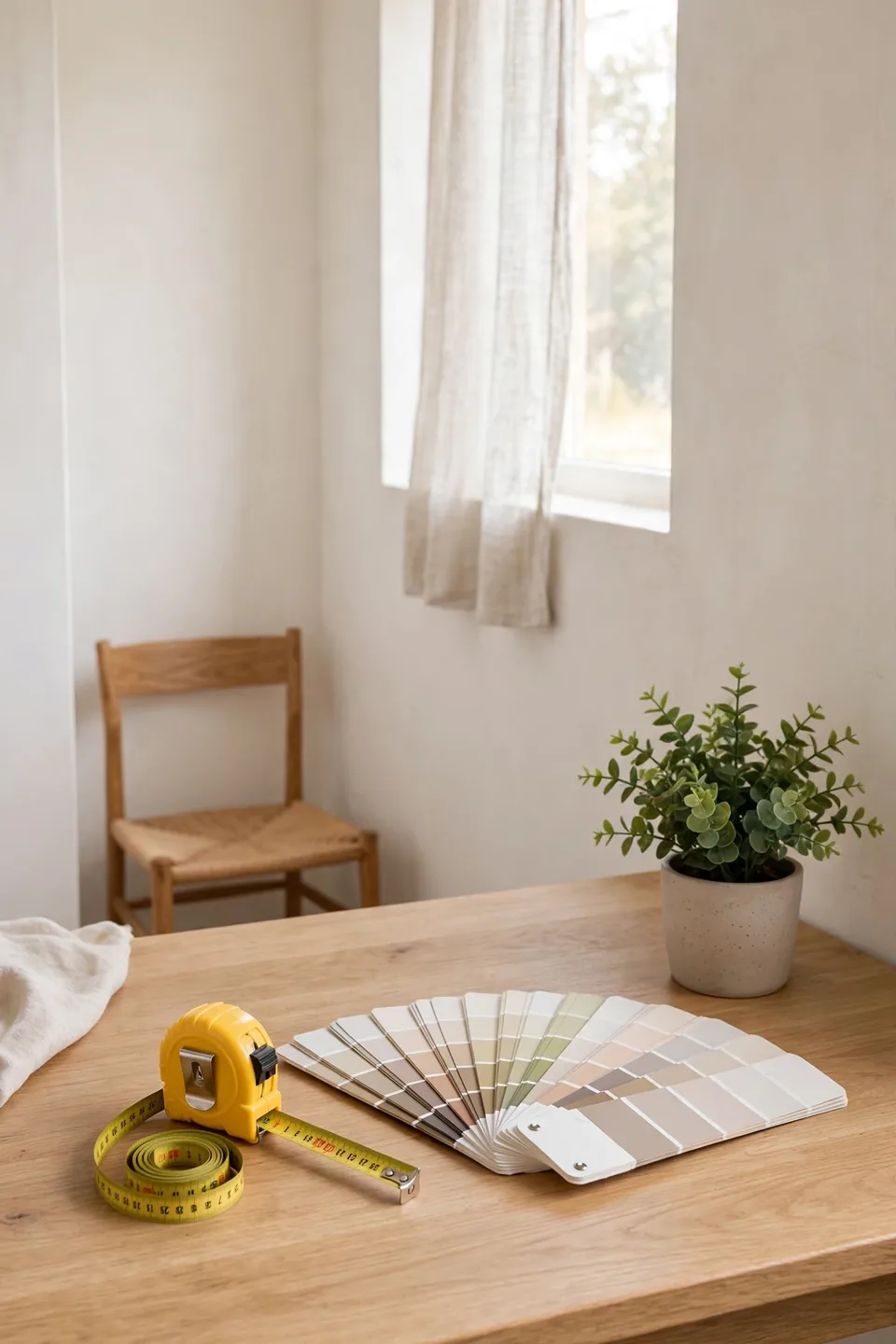
Time Needed: One weekend for paint and layout
Difficulty: Beginner friendly
Cost: Low to moderate, mostly paint and a rug
Best For: Dining rooms under 10 feet wide
Most of these changes cost little and take a single afternoon. Paint and rearrangement do the heaviest work, while the rug and mirror finish the illusion. Work through the steps in order and check the room from the doorway after each change. You will watch the difference build up fast.
Layer Light at Different Heights
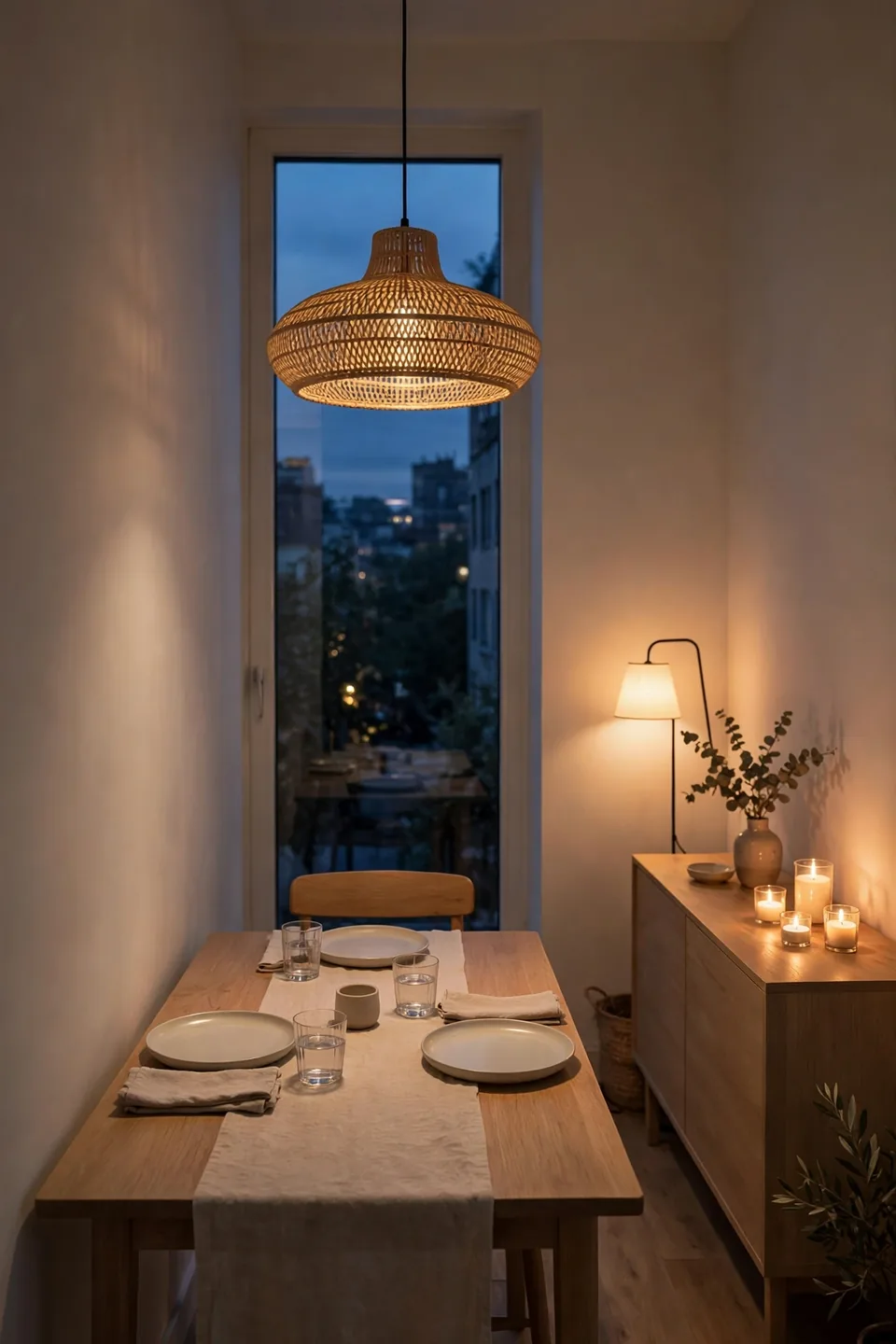
One bright ceiling light throws harsh shadows that chop a narrow room into pieces. Layered light works far better. Hang a low pendant over the table, set a slim floor lamp in the darkest corner, and add candles on the sideboard. Each layer spreads light wider than a single source.
Warm bulbs around 2700K keep the room inviting instead of clinical. Put the main fixture on a dimmer so dinners can soften the mood. When light reaches every corner gently, the walls feel farther away and the room breathes easier. Good lighting is the cheapest square footage you can buy.
Style the Tabletop Without Crowding It

A cluttered tabletop shrinks a narrow dining room fast because the table already fills most of the width. Keep the surface styling low, light, and easy to clear. The table should look ready for dinner, never like a storage shelf.
- Use a low runner or a few placemats instead of a full tablecloth to keep the tabletop visible.
- Pick one centerpiece under 12 inches tall so sightlines stay open across the table.
- Clear everything but the runner between meals so the room resets to calm and open.
Conclusion
Opening up a narrow dining room is about guiding the eye, not adding square footage. Start with one light color, a table that fits, and layered lighting, then refine with a mirror and simple styling. Each change stacks until the room feels calm and generous.
Save this guide to your dining room board on Pinterest so you can work through it one weekend at a time. Follow how to make a narrow dining room feel more spacious step by step, and by Sunday evening you will wonder why the room ever felt small.