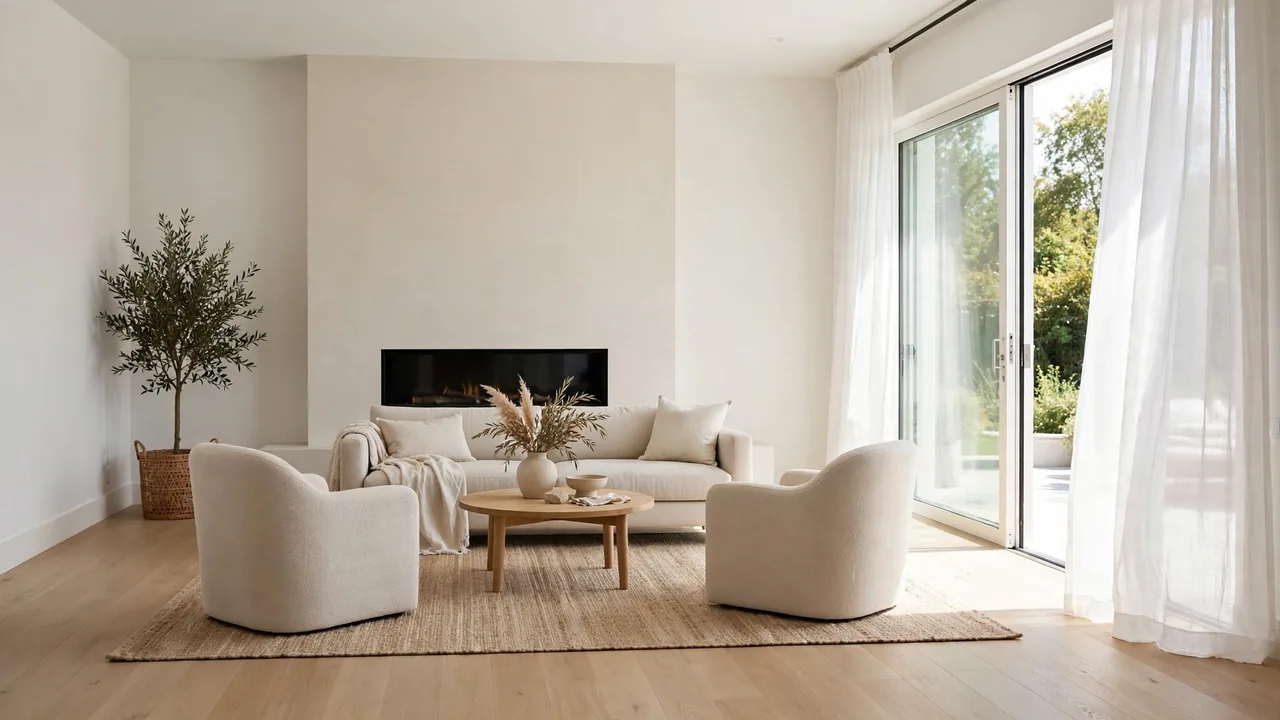
How to Arrange Furniture in a Living Room With a Sliding Door
A sliding door brings wonderful light into a living room, but it also takes a full wall away from your furniture plan. Learning how to arrange furniture in a living room with a sliding door starts with accepting that the glass wall is for movement and views, not for heavy pieces. Plan around it and the room feels bigger.
I have worked with many rooms where the door made every layout feel stuck, and in my experience the fix is the same each time: clear the door zone first, then build your seating around what remains.
Readers with other glass-heavy rooms often borrow the same ideas from how to decorate a bedroom with windows on two walls, since big windows create the same furniture puzzle.
Start by Measuring the Door Clearance

Grab a tape measure before moving a single chair. Note the full width of the door frame, plus at least 24 inches of clear floor in front of it. That space is your walkway, and every piece must respect it. Mark the zone with painter’s tape so the boundary stays visible.
Record the other fixed points too: vents, outlets, and wall-to-door distances. These numbers become your layout rules. People who skip measuring usually nudge a sofa into the door path later, so ten minutes with a tape now saves an afternoon of lifting.
Sketch Two or Three Layout Options
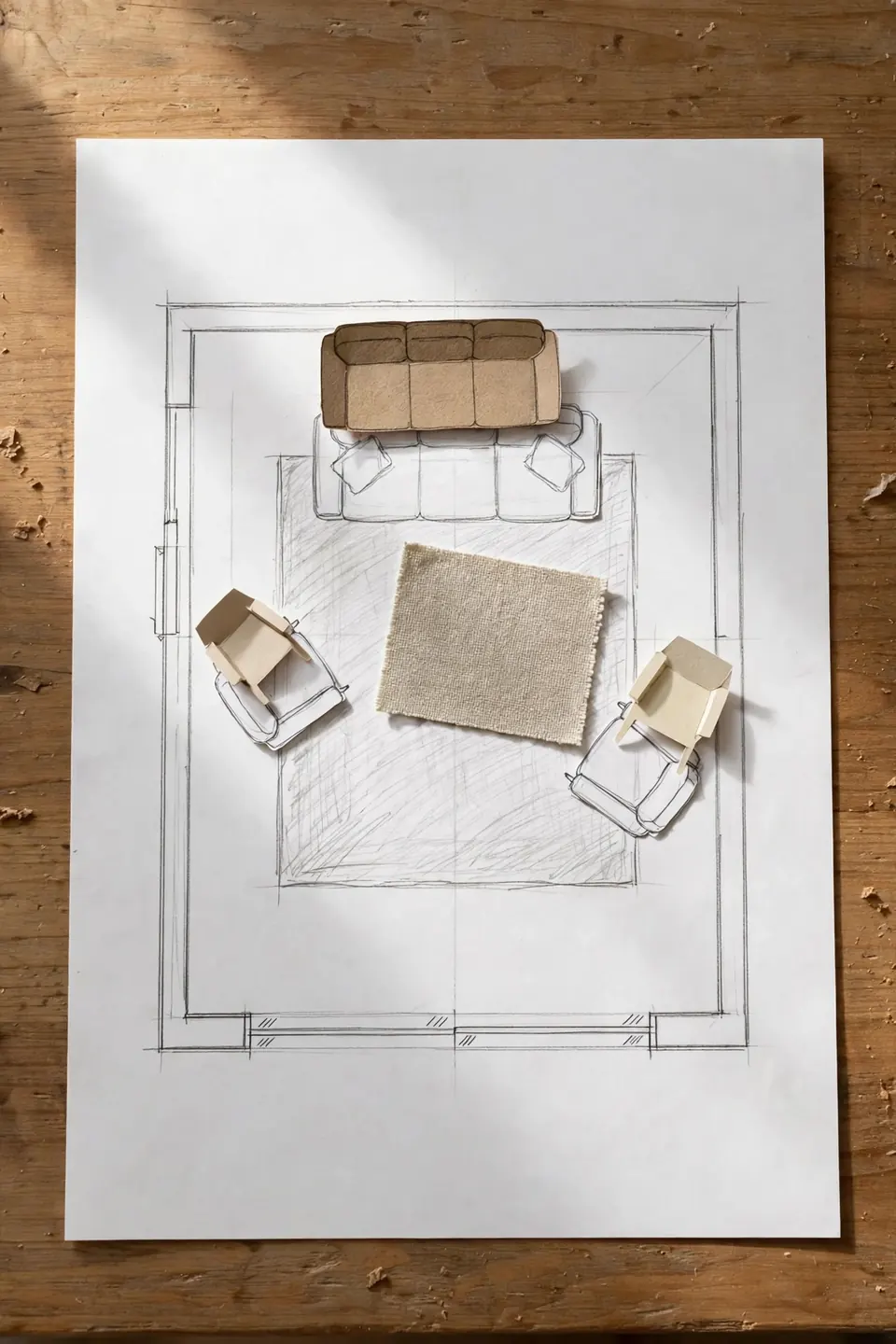
A quick sketch stops you from dragging furniture all afternoon. Draw the room to rough scale on paper, mark the door zone from your measurements, then try the sofa in two or three different spots. Paper forgives mistakes that your back will not.
- Draw one layout with the sofa facing the door wall, so the view and the light stay part of the room.
- Draw a second with the sofa on the wall opposite the door, floating a rug and coffee table between them.
- Draw a third angled option, with the main seating turned toward a fireplace, TV, or window instead.
- Circle the sketch that keeps the door path widest and the seating closest together, then start there.
Choose a Focal Point Away From the Door
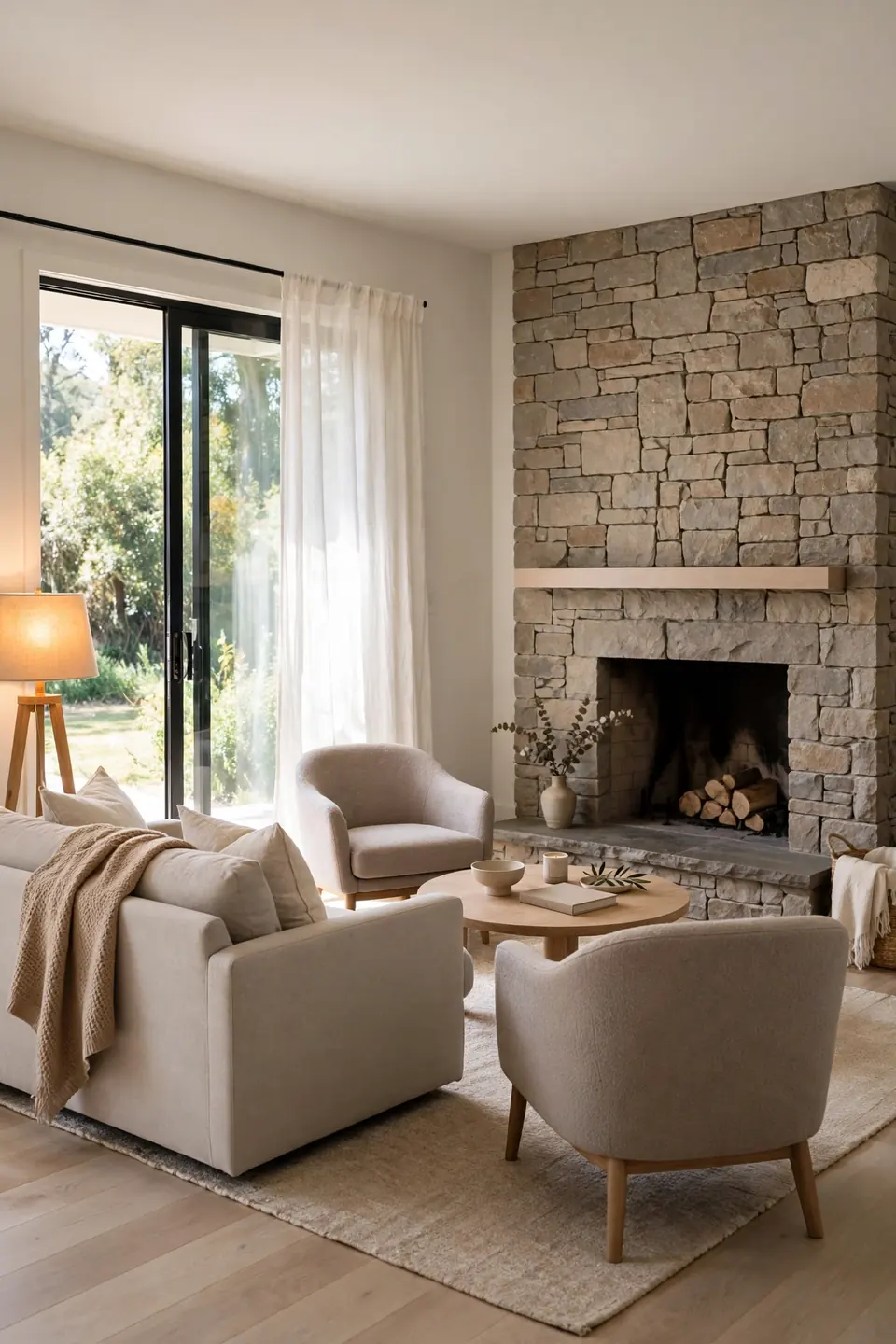
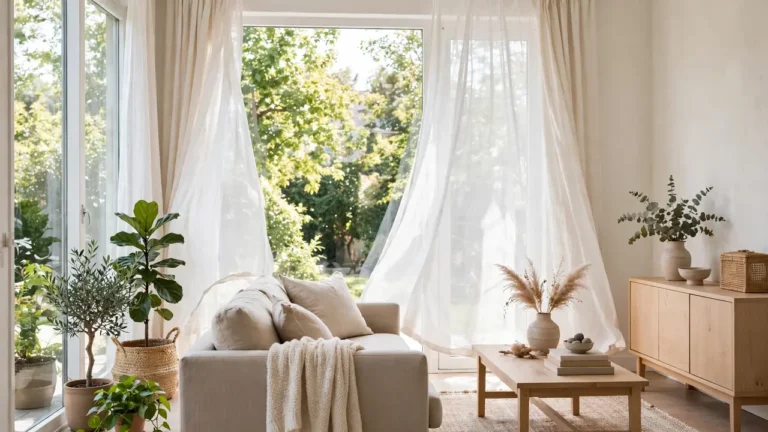
Quick Tip: Angle your main seating toward a fireplace, a TV wall, or a large window instead of the sliding door. The door gives you light and a view for free, so it does not need to be the star. A clear focal point on another wall makes the layout feel settled instead of accidental.
This one choice fixes most awkward sliding door rooms. When every chair faces the glass, the space reads like a waiting area. Give the room a second anchor, a rug, a coffee table, and a main wall, and the door becomes a bright background instead of the whole show.
The Mistake That Blocks the Door Track
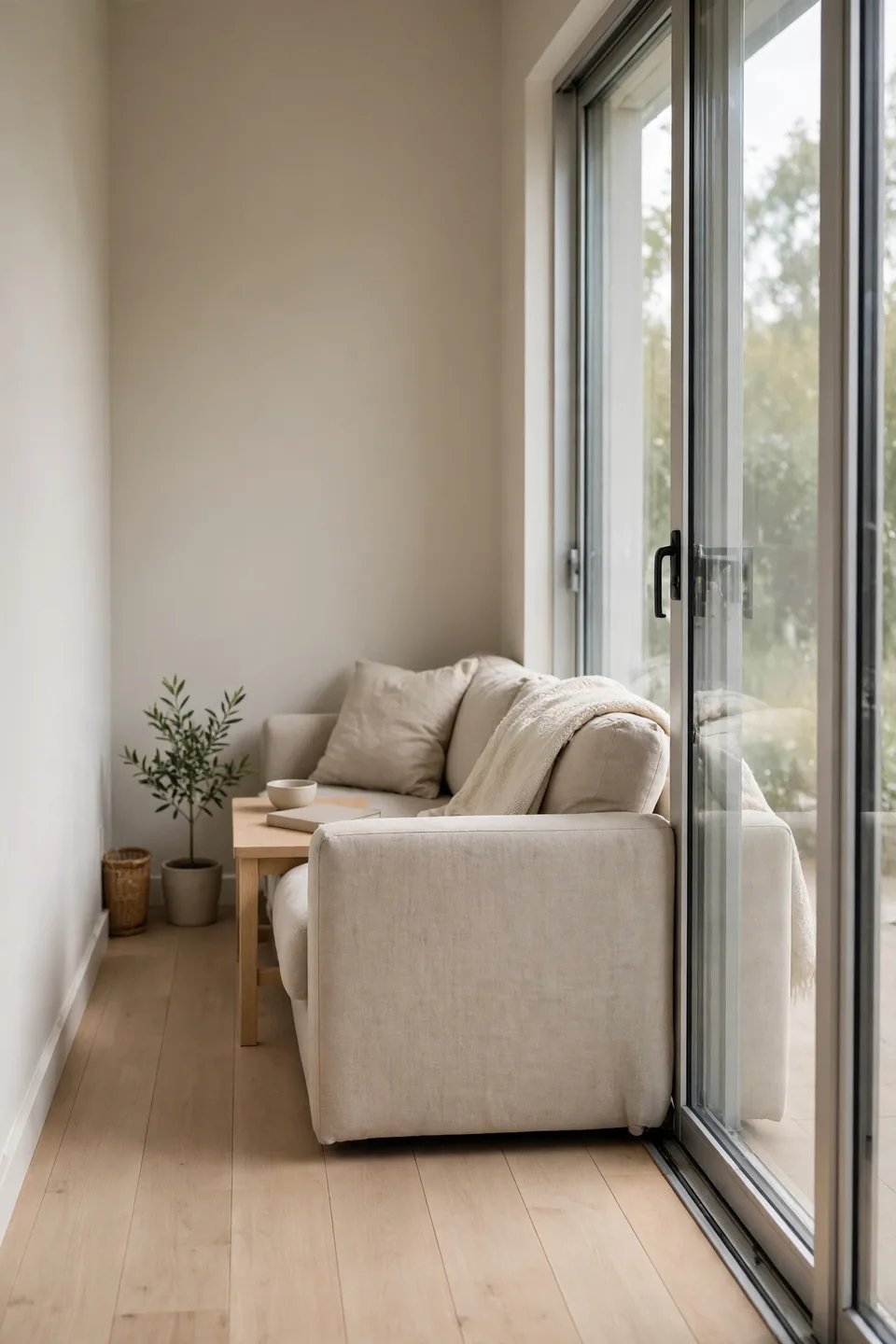
Common Mistake: Most people push the sofa or a bookcase right up against the sliding door wall to save floor space. It looks tidy for a day, until someone has to squeeze past the arm of the couch every time they step outside.
The Fix: Pull every piece at least 24 inches back from the door frame and keep the track area completely clear. If the room is tight, use a slim bench or a low console there instead of anything deep. The door should glide open without touching a single cushion.
Clearance beats coziness at the door wall every single time. A blocked track scratches floors, bumps furniture, and turns the whole room into an obstacle course. I have seen this one fix change a room overnight. Protect that opening and the rest of the layout falls into place.
What You Need for a Sliding-Door-Friendly Layout
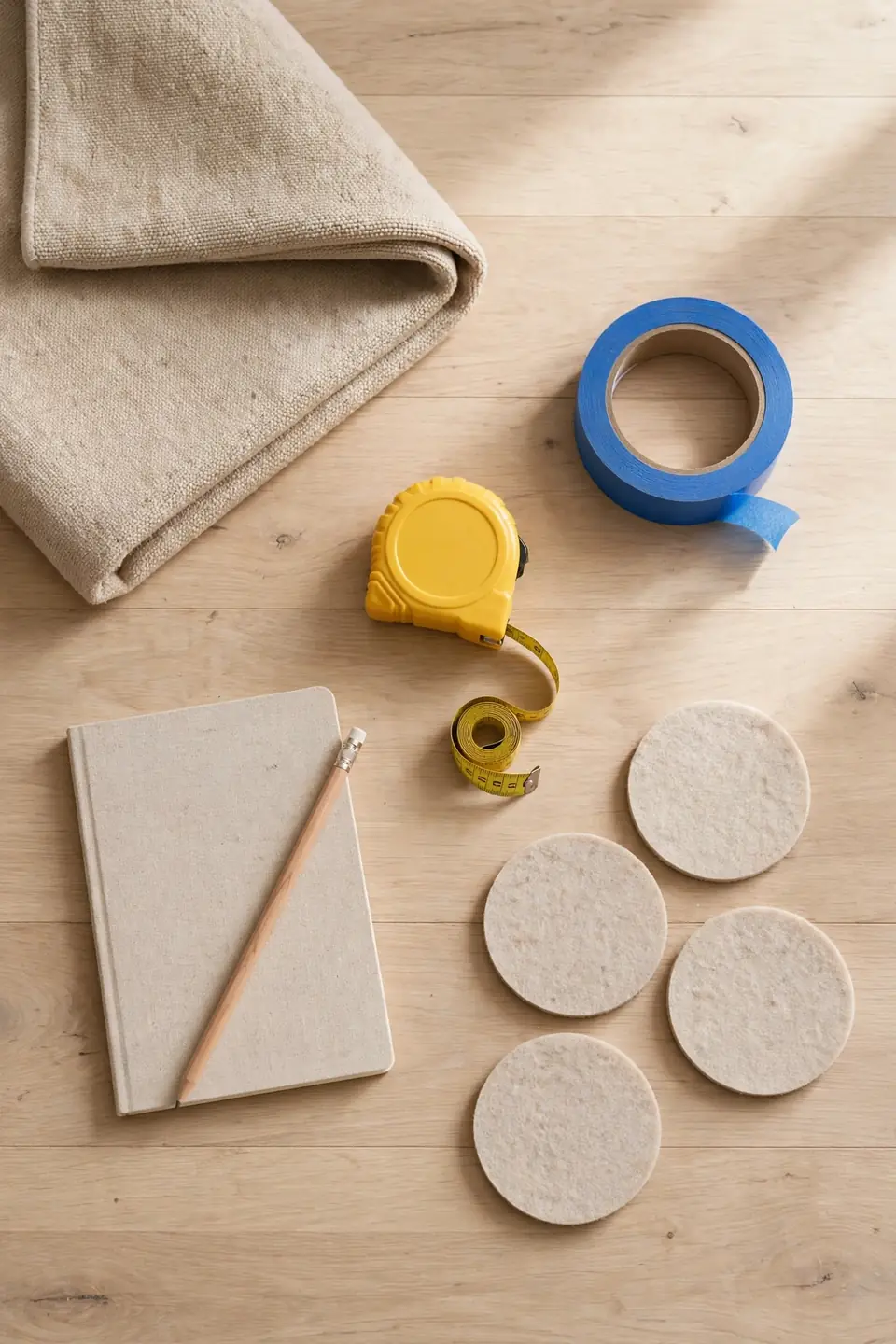
What You Need:
- A tape measure: for the door width and the clear zone in front of it.
- Painter’s tape: to mark the no-furniture zone on the floor.
- A rug: to anchor the seating area away from the door.
- A slim console or bench: the only pieces narrow enough to live near the glass.
- Furniture sliders: so you can test positions without scratching floors.
Gather these before you start moving anything heavy. The tape measure and painter’s tape do the real work, because they turn guesswork into clear lines on the floor. With the zone marked in blue tape, arranging the rest feels straightforward instead of stressful and rushed.
Floating Furniture vs Pushing Everything to Walls
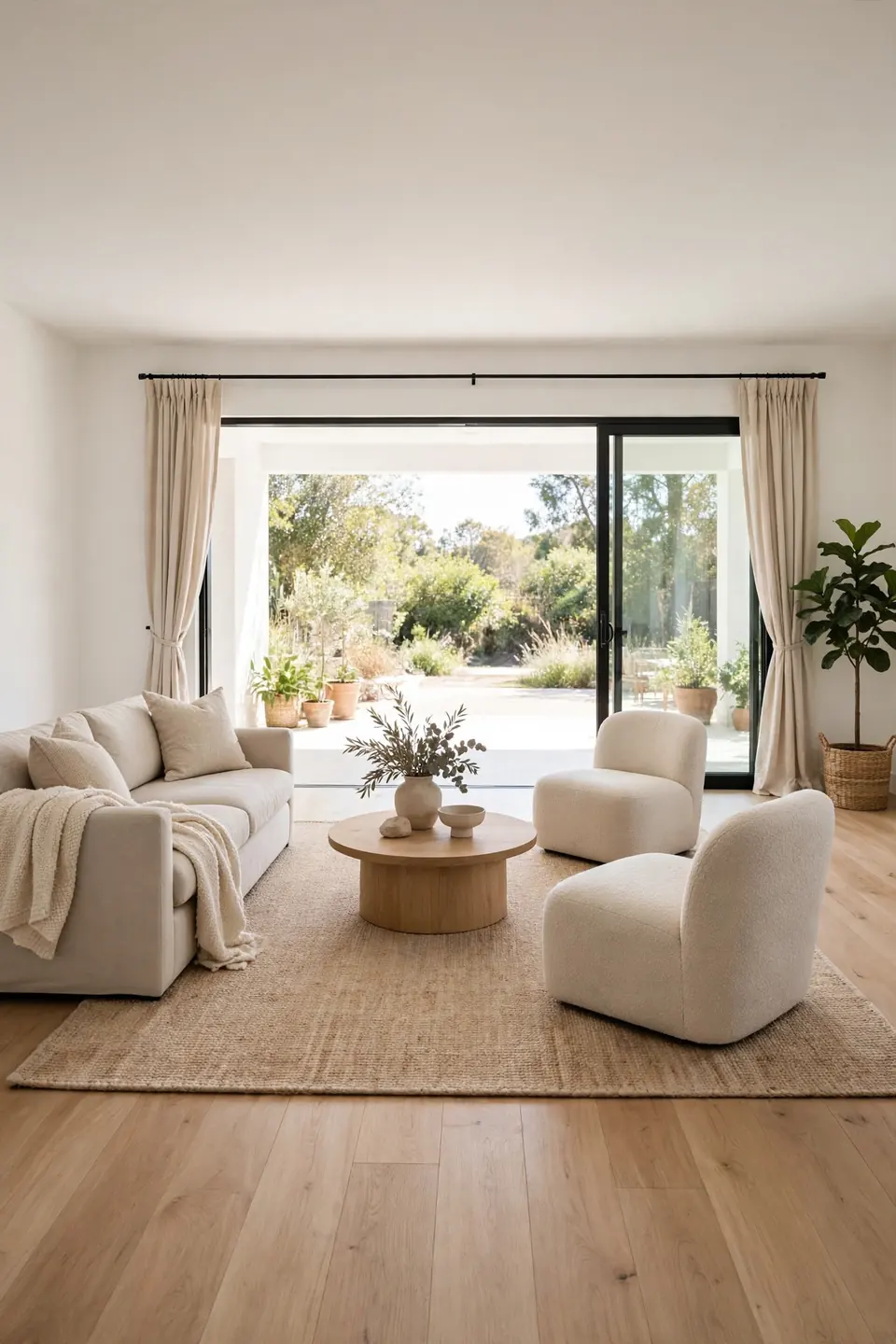
BEFORE: Most sliding door rooms start with every piece shoved against a wall. The sofa hugs one side, chairs line up across from it, and the middle of the room sits empty while the door wall stays blocked. The space feels like a hallway with seating.
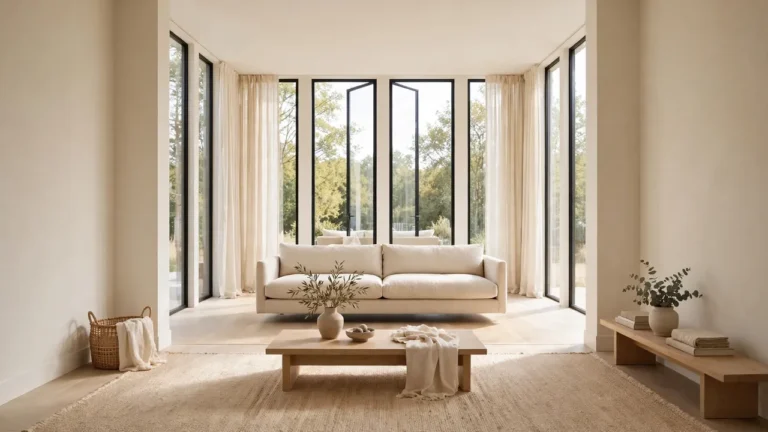
AFTER: Pull the seating into a loose group on a rug, a few feet from the walls. The sofa floats with its back to the door side, chairs angle in, and the door gets its clear path. The same room suddenly feels like a real living room with room to breathe.
Floating works in tight bedrooms too, where the same push-everything-to-walls habit wastes space. The approach in how to fit a king bed into a small master bedroom shows how pulling pieces off the walls opens a room up, and the idea carries straight into a living room with a sliding door.
Place Each Piece With the Door Path in Mind
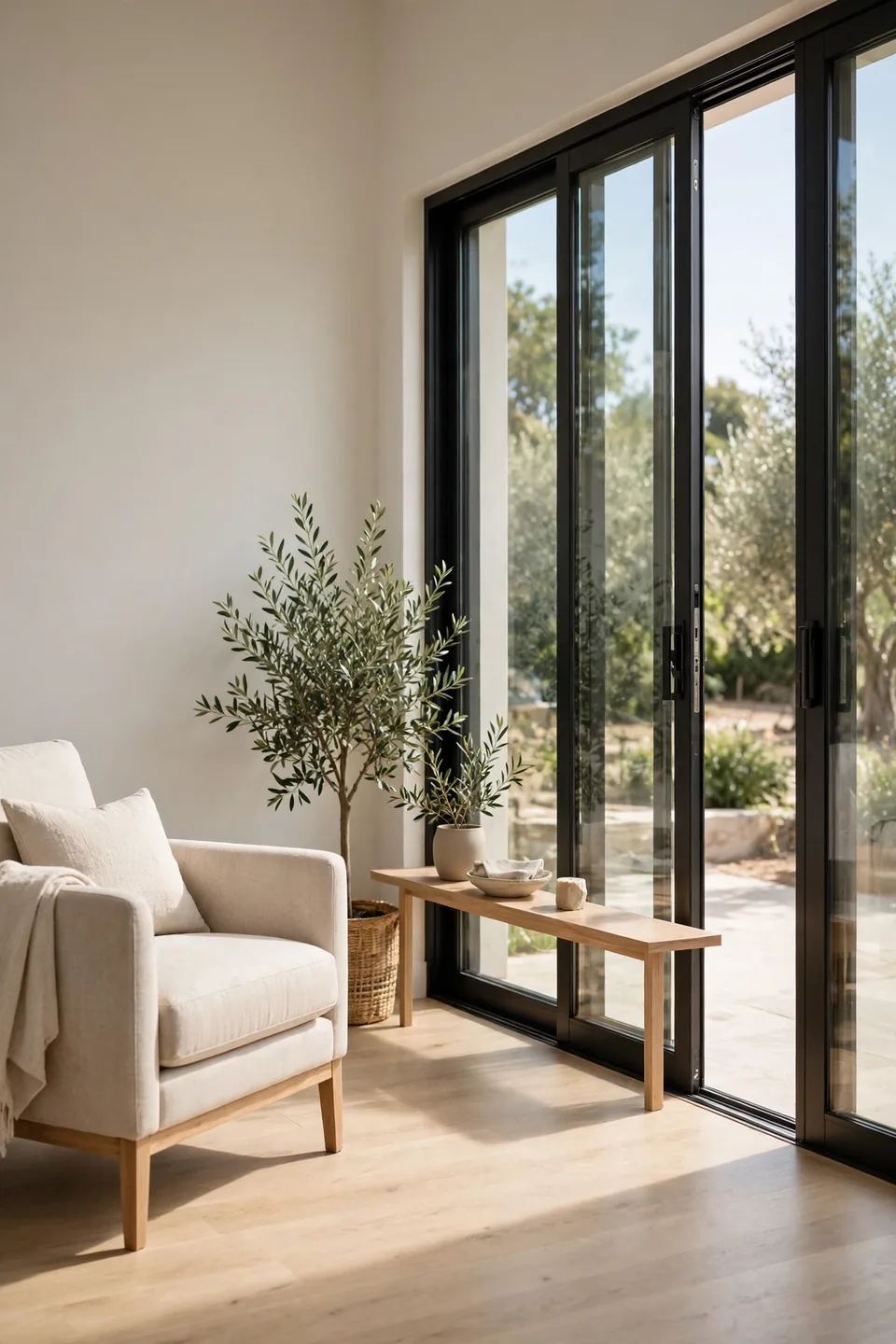
Do This:
- Keep 24 to 36 inches of open floor in front of the full door width.
- Float the rug and coffee table so the seating forms its own zone.
- Use low, narrow pieces near the glass to protect light and views.
- Angle one chair toward both the seating and the door for easy flow.
Avoid This:
- Blocking any part of the track with a sofa arm or table leg.
- Putting a tall bookcase beside the door where it darkens the glass.
- Running a rug under the door path where it can catch the slider.
- Facing every seat at the door with no other focal point.
Think of the door as a hallway that happens to have glass. Nothing should live in that hallway, and everything else can sit comfortably around it. Respect the path and the room stays bright, open, and easy to walk through every single day of the year.
Key Numbers That Shape Your Layout
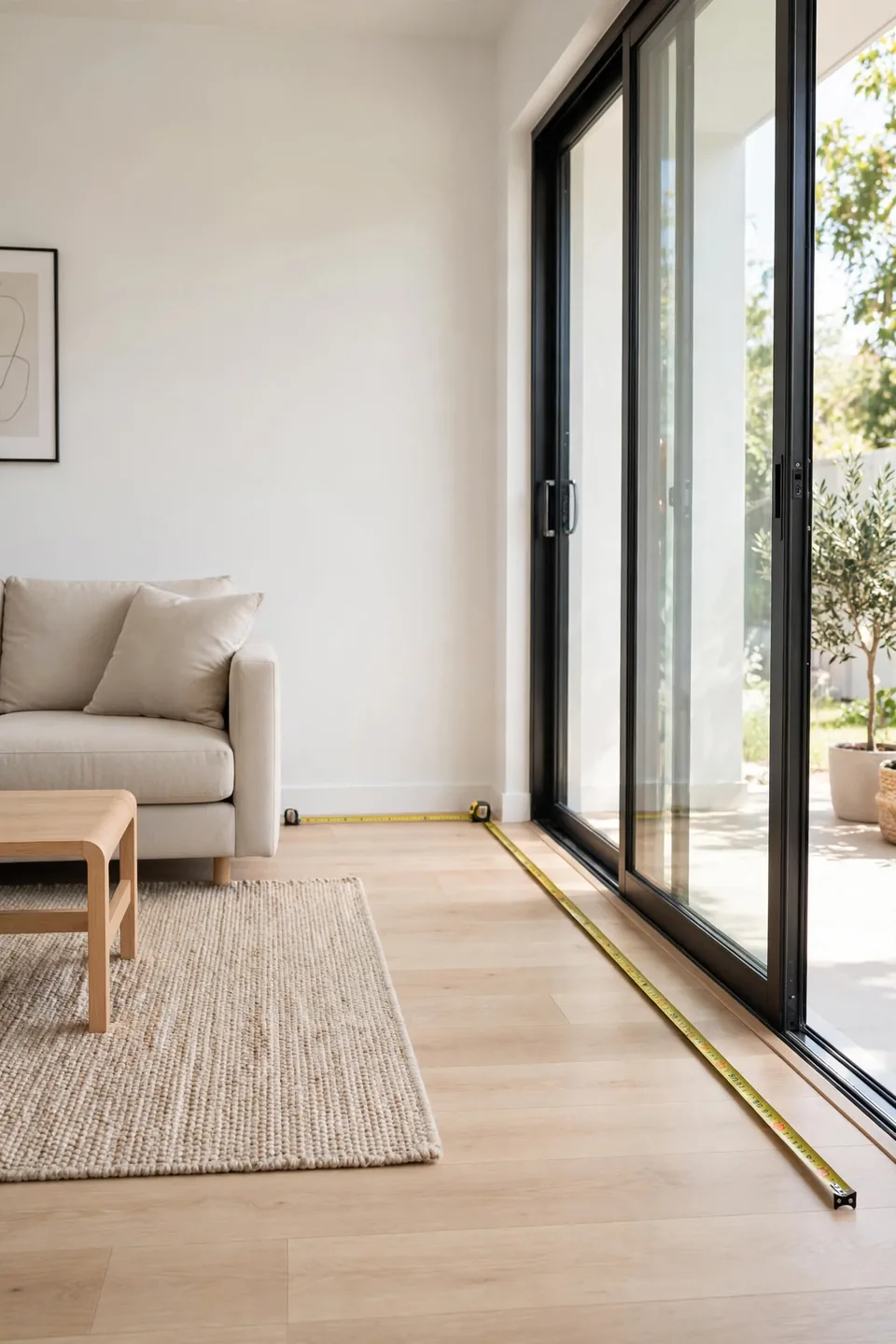
Clearance needed: 24 to 36 inches in front of the door
Ideal rug distance: rug edge at least 12 inches from the door path
Best nearby piece: slim console under 14 inches deep
Test time: live with the layout 3 to 5 days before deciding
These numbers take the guesswork out of the whole plan. Measure once, mark the floor with painter’s tape, and every single decision after that gets easier. Small rooms reward precision, and a sliding door room rewards it more than most other tricky spaces ever will.
Keep Traffic Paths Open to the Door
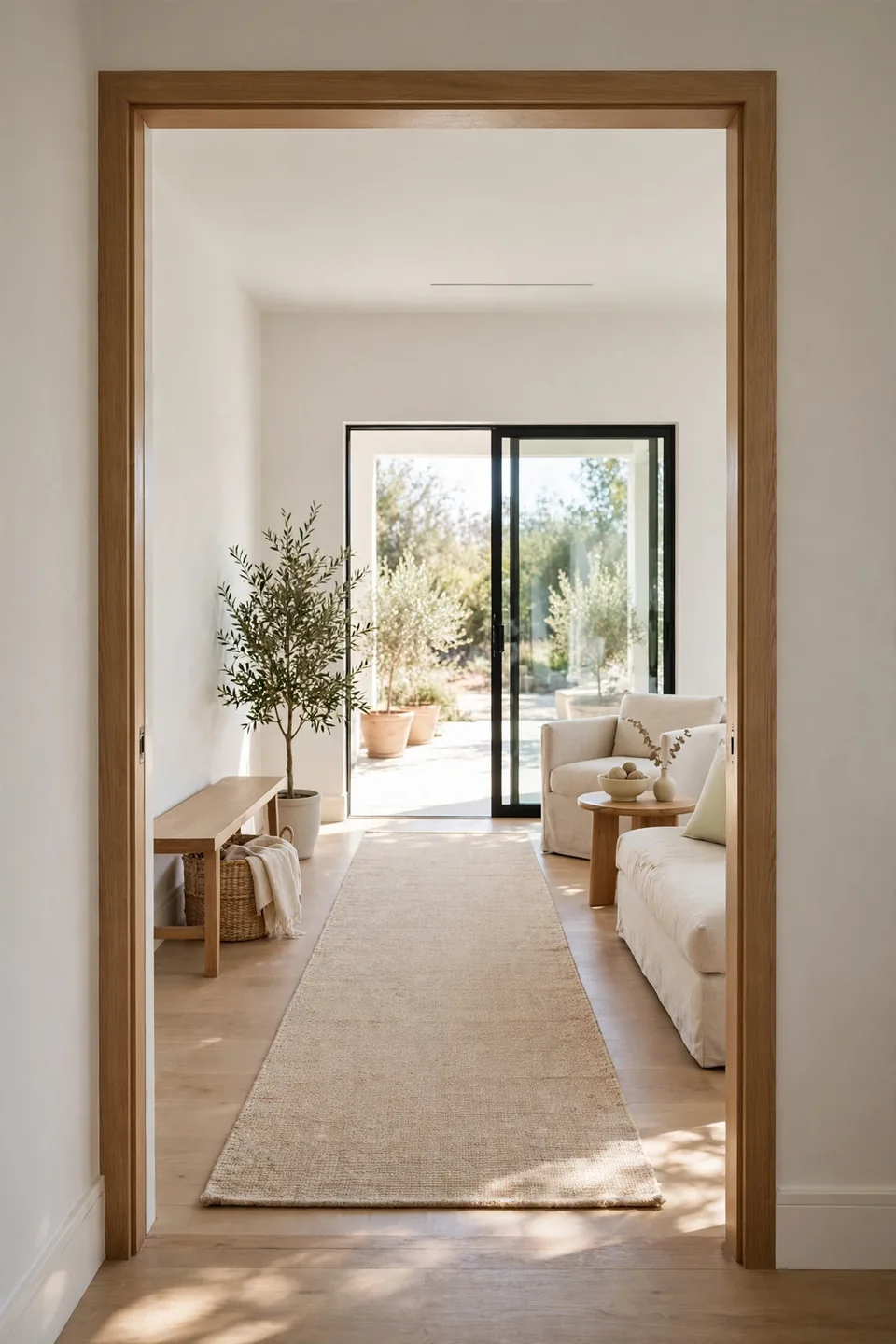
Walk the path yourself before calling the layout done. Move from the room’s entrance to the sliding door the way you naturally would, carrying something, the way real life works. If you brush a chair or shuffle sideways, the path is too tight and something needs to shift.
Good flow also means the door opens fully without hitting anything. Slide it open and closed a few times after each change. A layout that looks perfect but fights the door will annoy you daily, so test the movement, not just the look.
Live With the Layout Before You Commit
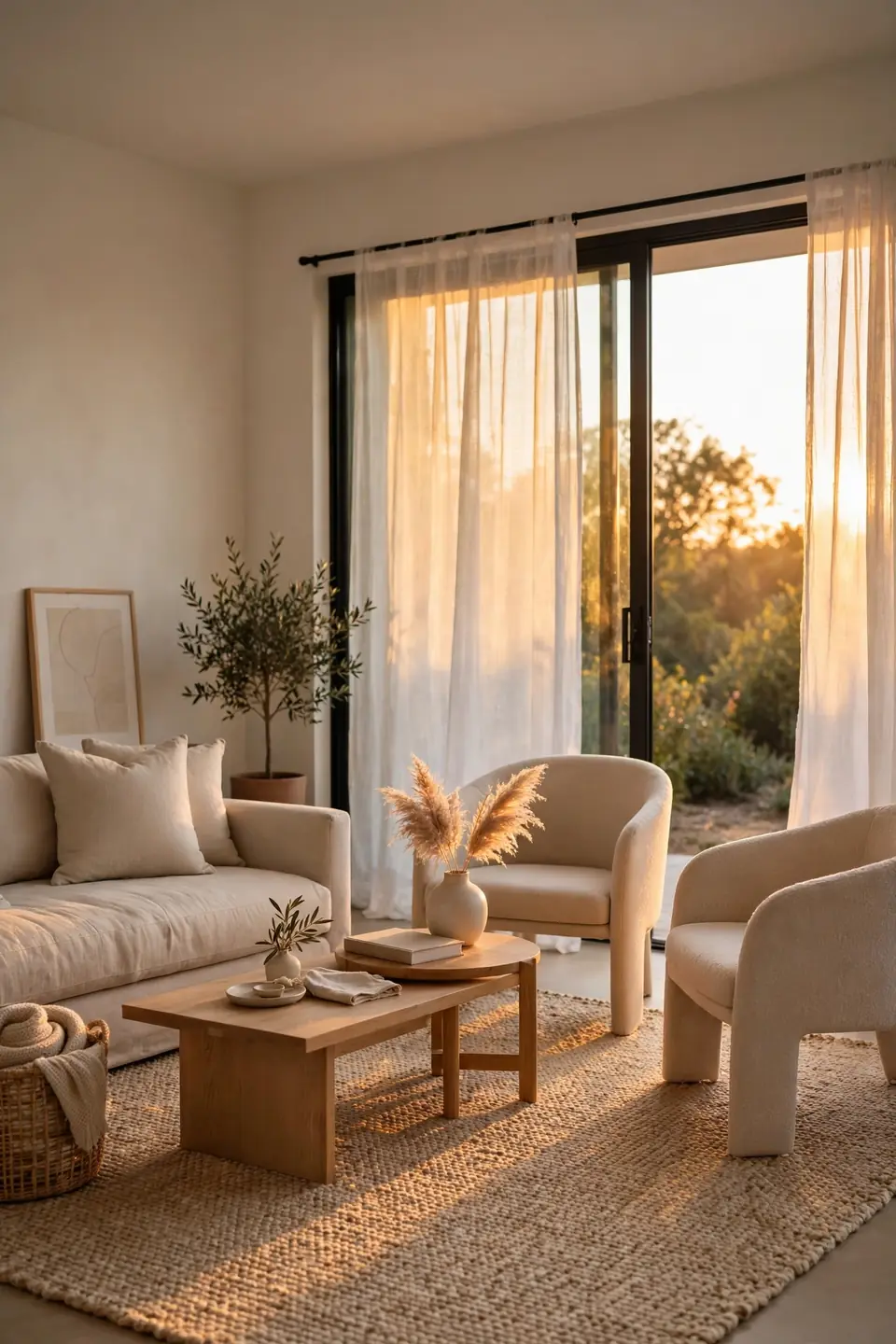
A layout can look right on paper and feel wrong in daily life. Give the new arrangement a few days of normal use before hanging art or buying anything new. Real habits reveal problems that a sketch cannot show you.
- Use the door normally for three days and note every bump, squeeze, or blocked step.
- Sit in each seat at different times of day to check glare, drafts, and comfort.
- Shift anything that annoys you twice, small moves fix most remaining issues.
- Once the flow feels natural, lock the layout in with the rug and final styling.
Conclusion
A sliding door stops being a layout problem the moment it gets its own clear zone. Measure first, float your seating on a rug, pick a focal point on another wall, and keep the track path open, and the room will feel bright and balanced. Learning how to arrange furniture in a living room with a sliding door is really about respecting movement as much as style. Pin this guide to your living room board so the steps are handy when you rearrange, then enjoy a space that finally works as good as it looks.