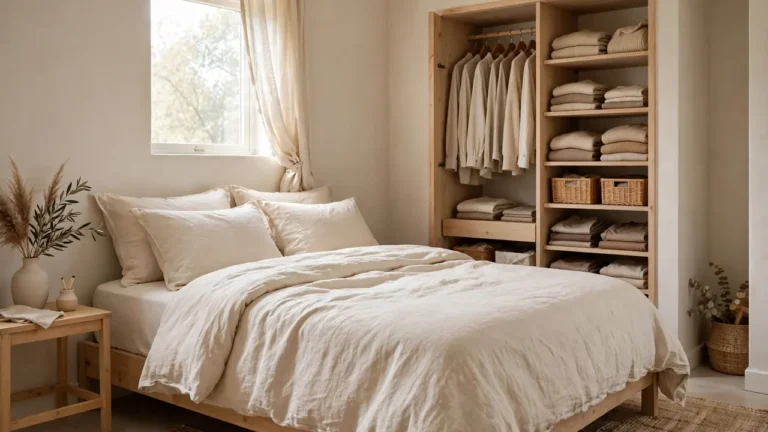
How to Decorate a Bedroom With Windows on Two Walls
A bedroom with windows on two walls can feel like a gift and a puzzle at the same time. Learning how to decorate a bedroom with windows on two walls means working with double the daylight, double the views, and double the design decisions.
The trick is to treat both window walls as features instead of obstacles. Once you plan bed placement, light control, and balance around them, the room feels bright and calm rather than scattered. In my experience, the light alone changes how every color reads.
Start with the same mindset behind how to fit a king bed into a small master bedroom, where smart placement does most of the work. Map the sun first, then build your layout around the bright spots.
Study How Light Moves Through Both Window Walls
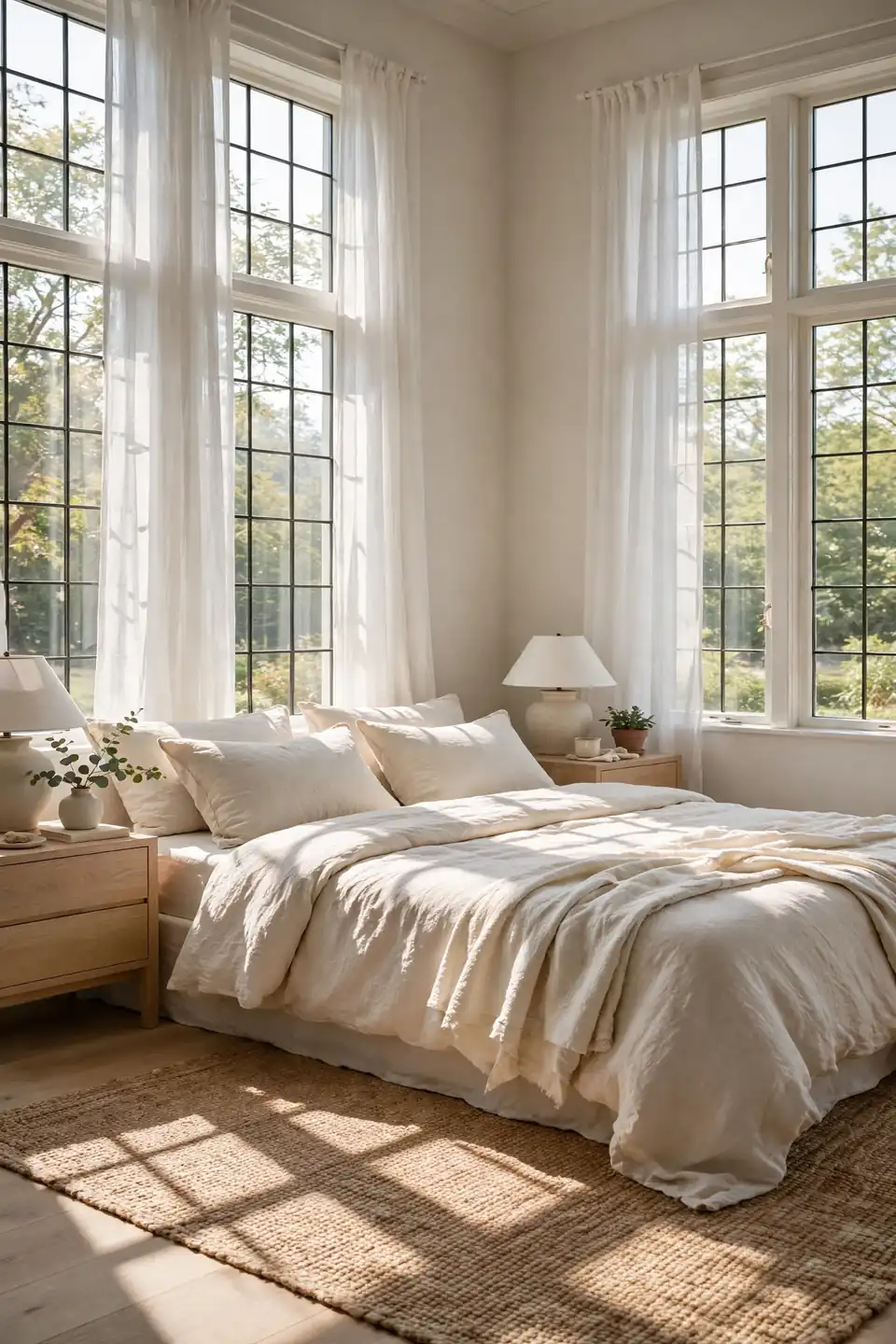
Before moving any furniture, spend one full day quietly watching the light. Morning sun might pour through one wall while the other stays soft until afternoon. These rhythms tell you where to place the bed, where reading light matters, and which corners need warming up.
This habit also stops you from decorating in the dark. Paint swatches and fabric tones shift under different daylight, so noon decisions can look off by evening. I’ve noticed that people who plan around the sun get rooms that feel beautifully calm at every hour.
Anchor Your Bed on the Best Wall
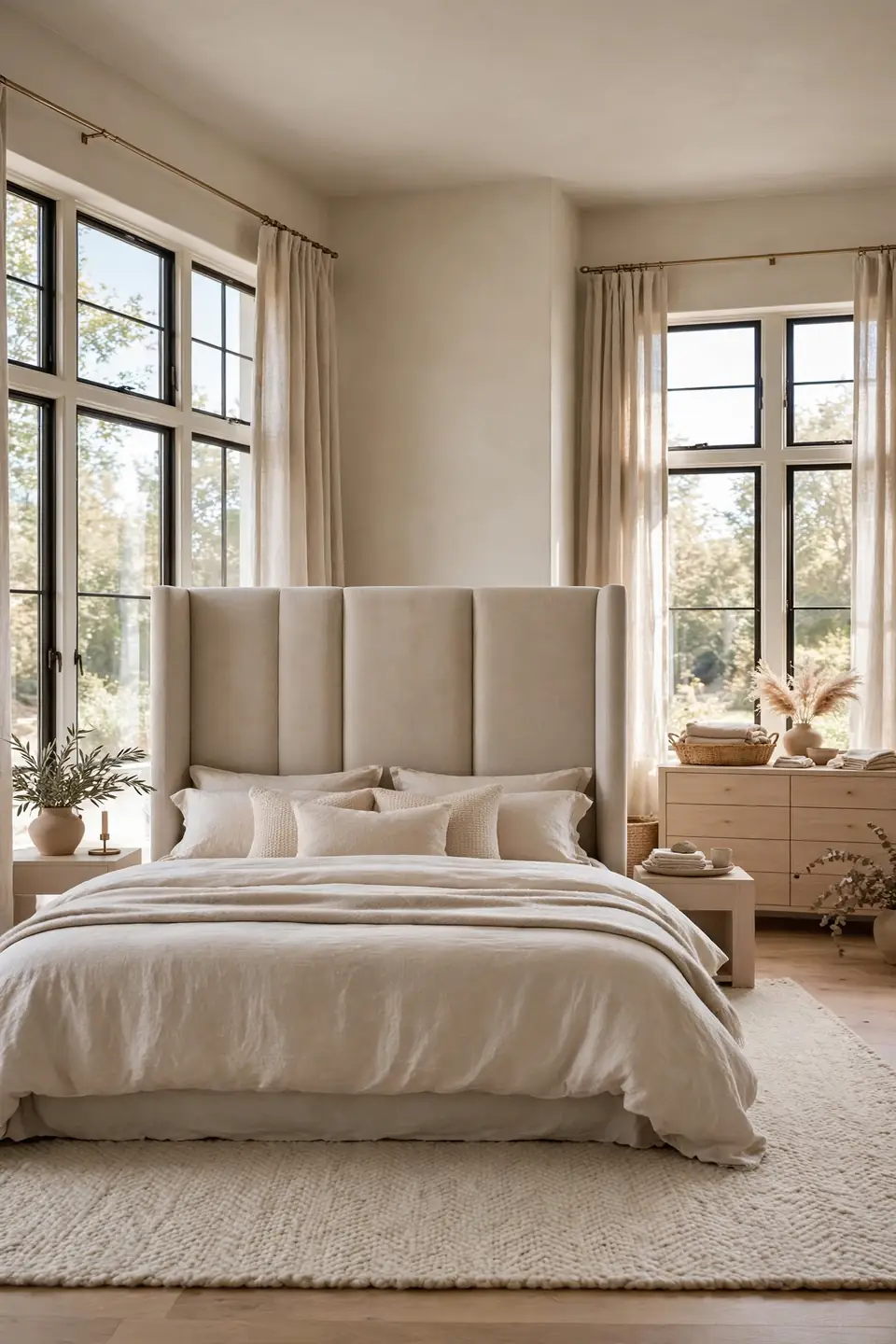
The bed is the largest piece in the room, so its placement shapes everything else. With windows on two walls, you get several strong options. The right choice balances daylight, view, headboard height, and how the room feels when you walk in.
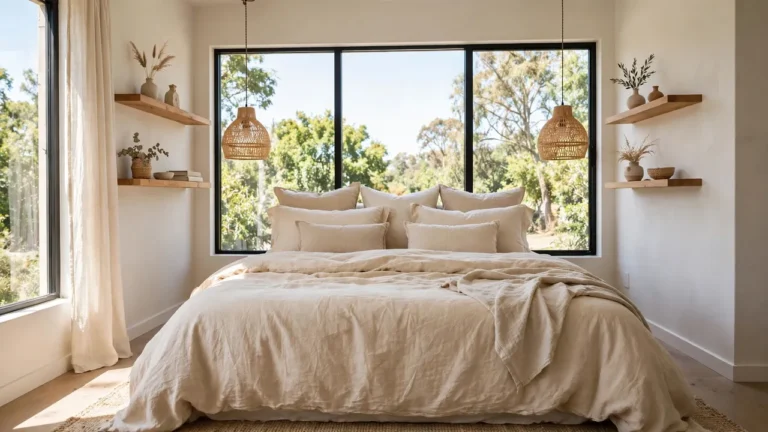
- Put the headboard on the wall between the two windows if one exists; this gives a natural focal point with light on both sides.
- Place the bed under the lower or smaller window when one wall has a tall window; the other wall stays open for art or a dresser.
- Avoid floating the bed in the middle of the room unless the space is large; it often wastes floor area and blocks light paths.
- Test each option by taping the bed footprint on the floor first, then walk the room to check sightlines from the door.
Keep Treatments Matched on Both Window Walls

Quick Tip: Use the same curtain fabric, rod style, and hanging height on both window walls. Matching treatments make mismatched window sizes look intentional and keep the room visually calm.
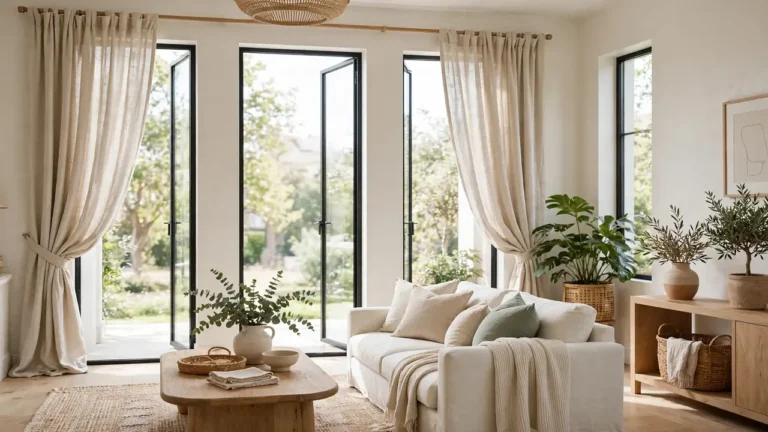
When the two windows differ in size or shape, unity matters more than ever. Identical panels create rhythm and draw the eye across the room instead of stopping at each window. Even simple white linen works if it repeats. This one move can pull a scattered room together faster than anything else.
Mistake: Blocking One Window Wall Completely
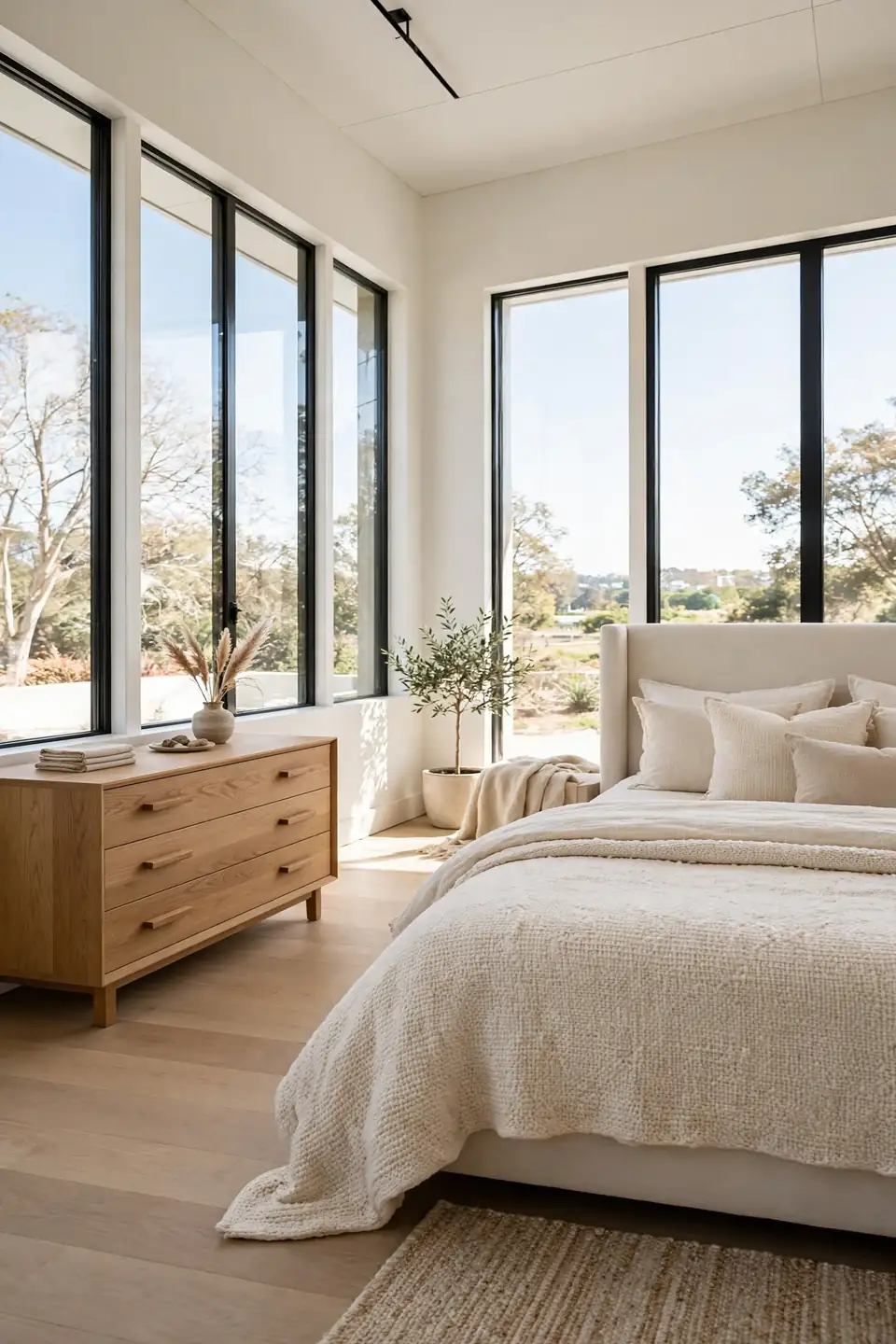
Common Mistake: Pushing a tall dresser or bookshelf in front of the second window because the first wall feels like the main one. This kills half the natural light and makes the room feel lopsided.
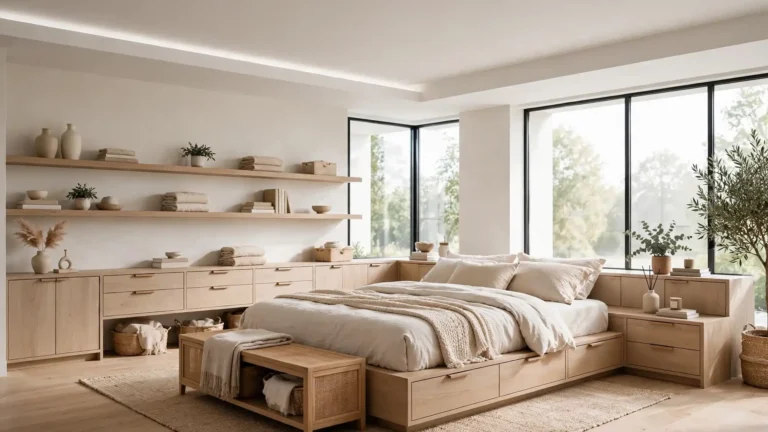
The Fix: Keep furniture below the sill line on both window walls. Use low dressers, open shelving, or a bench so daylight still flows over them and both windows stay visible.
Both windows earn their place in the design, so treat them as equals. Low-profile pieces give you storage without stealing light, and they keep sightlines open from the bed to each view. Once both walls breathe freely, the whole bedroom feels larger and beautifully balanced.
Gather Light-Friendly Layers and Textiles
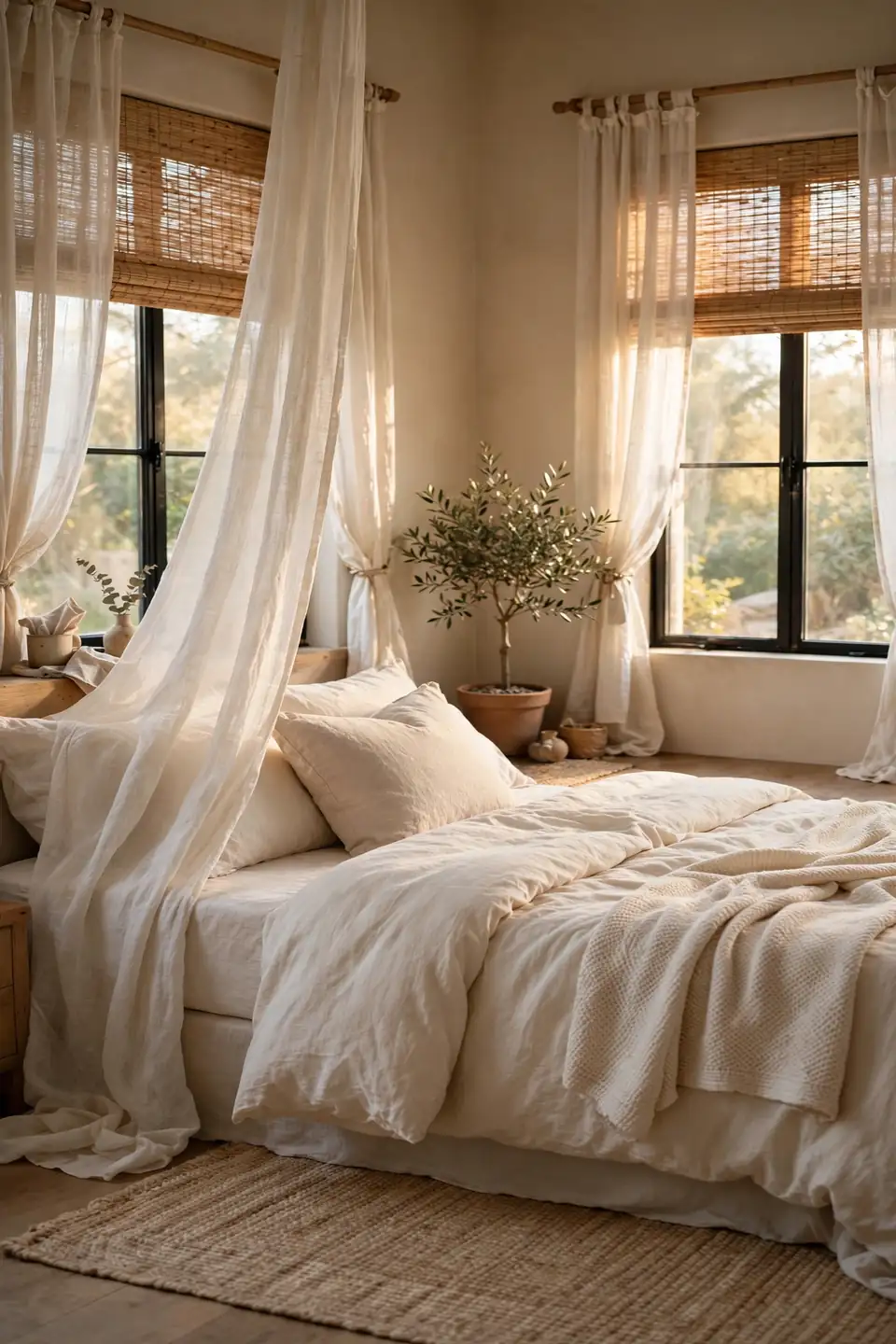
What You Need:
- Sheer linen panels: soften strong daylight while keeping the room bright.
- Blackout lining or shades: give you full darkness for sleeping when needed.
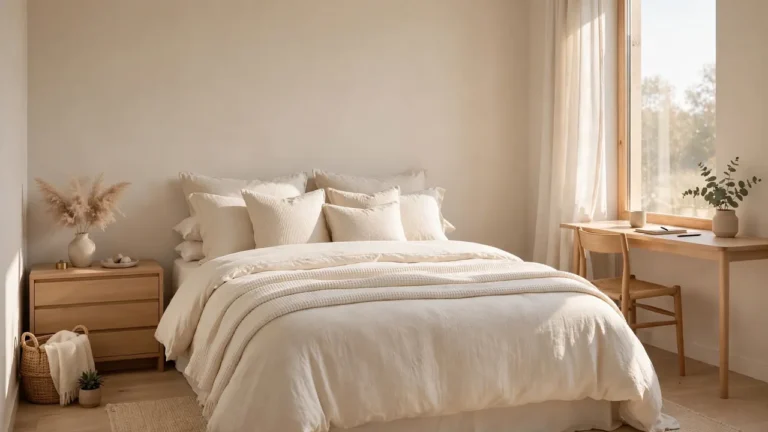
- A light rug: anchors the bed and balances the brightness from two directions.
- Low nightstands: sit below the sill line so they never block window light.
- One large plant: fills the corner where the two window walls meet beautifully.
These pieces work as a system rather than separate buys. Sheers and blackouts handle light at every hour, while the rug and low furniture keep the layout grounded and open. Add the plant last for a soft finishing touch that ties both window walls together naturally.
Before and After: Taming Two Window Walls

BEFORE: Heavy dark curtains covered one window while the other stood bare, so the room felt uneven and gloomy on one side. Furniture crowded the brighter wall, leaving the darker side cold and unused.
AFTER: Matched linen panels dress both windows, the bed sits between them, and low storage floats under each sill. Light now wraps the room evenly, and every corner feels warm and usable.
The real shift comes from treating the room as one connected space, much like the thoughtful zoning approach in how to decorate a living room with a split-level floor. When every corner shares the same soft light and warm palette, the bedroom stops feeling split in two and finally starts feeling whole, calm, and restful.
Balance Furniture Across the Two Window Walls
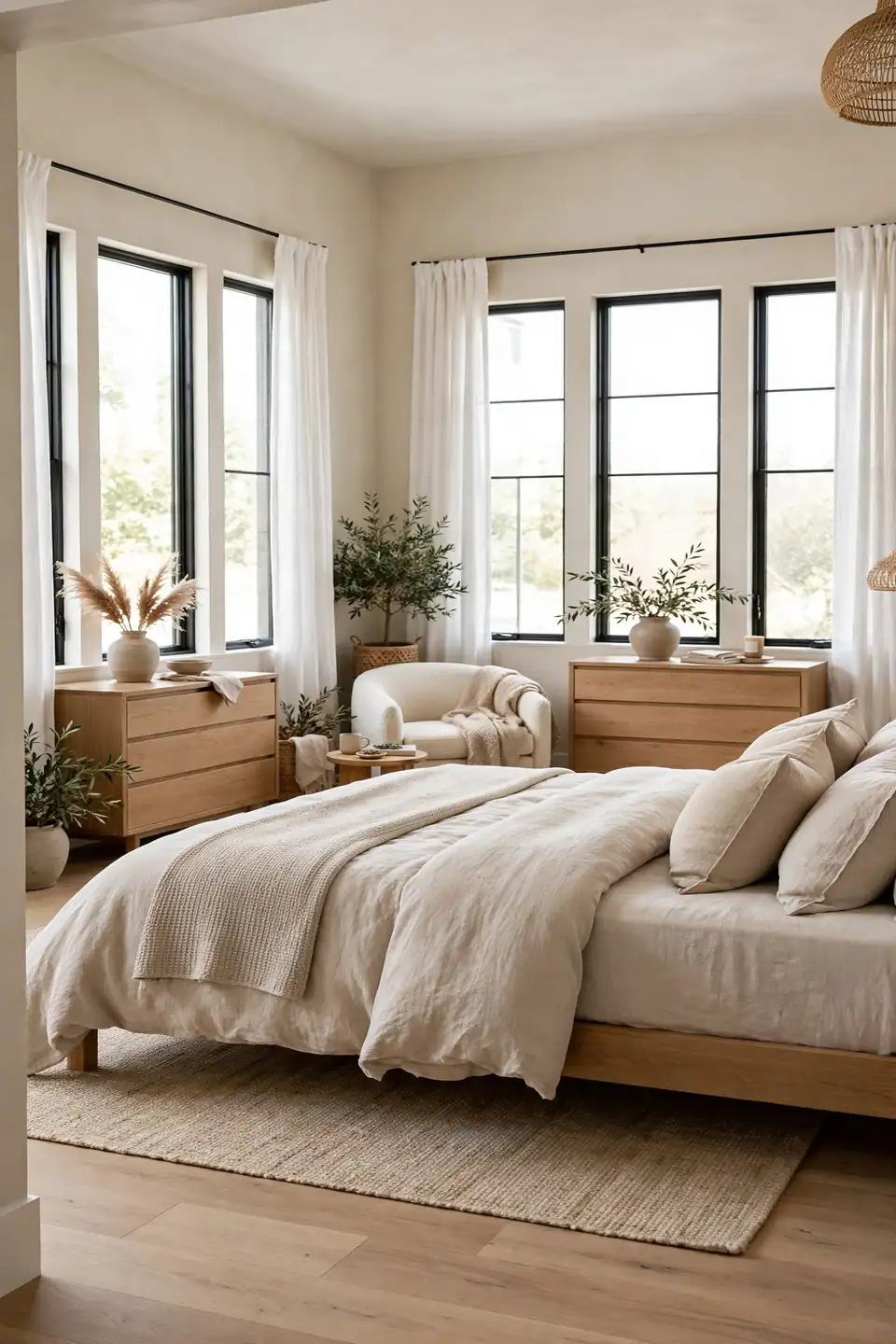
Do This:
- Mirror low furniture on both walls to keep the layout visually even.
- Let the taller window wall hold the bed if headboard height allows.
- Use the corner between windows for a plant or reading chair.
Avoid This:
- Do not push tall bookcases against either window wall.
- Skip heavy drapes that close off one side completely.
- Avoid placing the TV where glare from two directions hits the screen.
Balance is really about visual weight. When both window walls carry similar amounts of furniture and light, the eye moves smoothly around the room instead of getting stuck. I’ve seen this approach make even small bedrooms feel open, because nothing fights the natural flow of daylight.
Quick Facts: Light, Privacy, and Glare Control
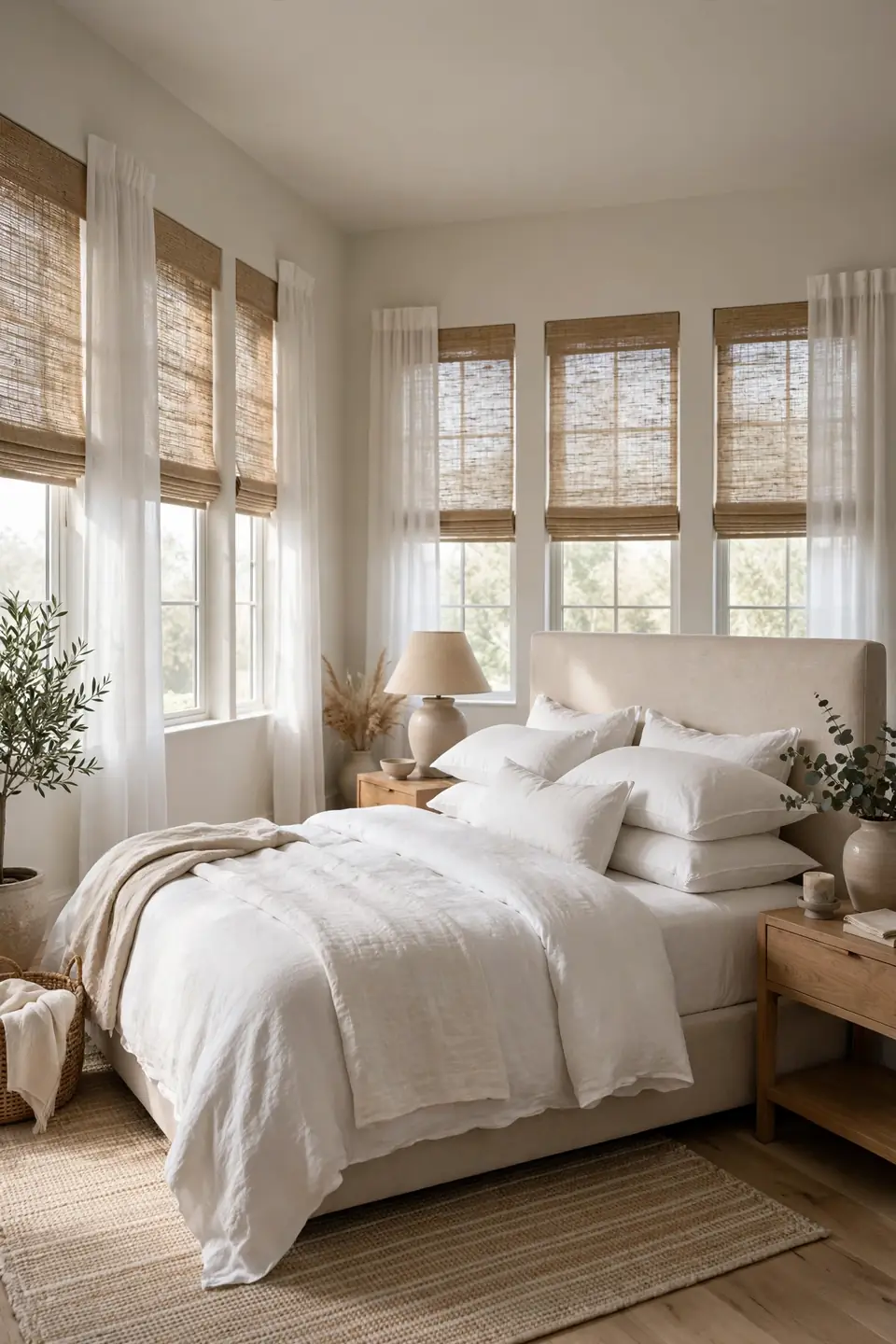
Best light control: layered sheers plus blackout shades
Hardest glare hour: late afternoon on west-facing walls
Privacy fix: top-down bottom-up shades for street-level rooms
Budget tip: match ready-made panels instead of custom drapes
Two window walls mean twice the glare and twice the exposure, so plan for both early. Layered treatments let you tune each wall separately as the sun moves. Get this right and the room stays comfortable from the first morning ray to the last evening glow.
Let the Corner Where Walls Meet Shine
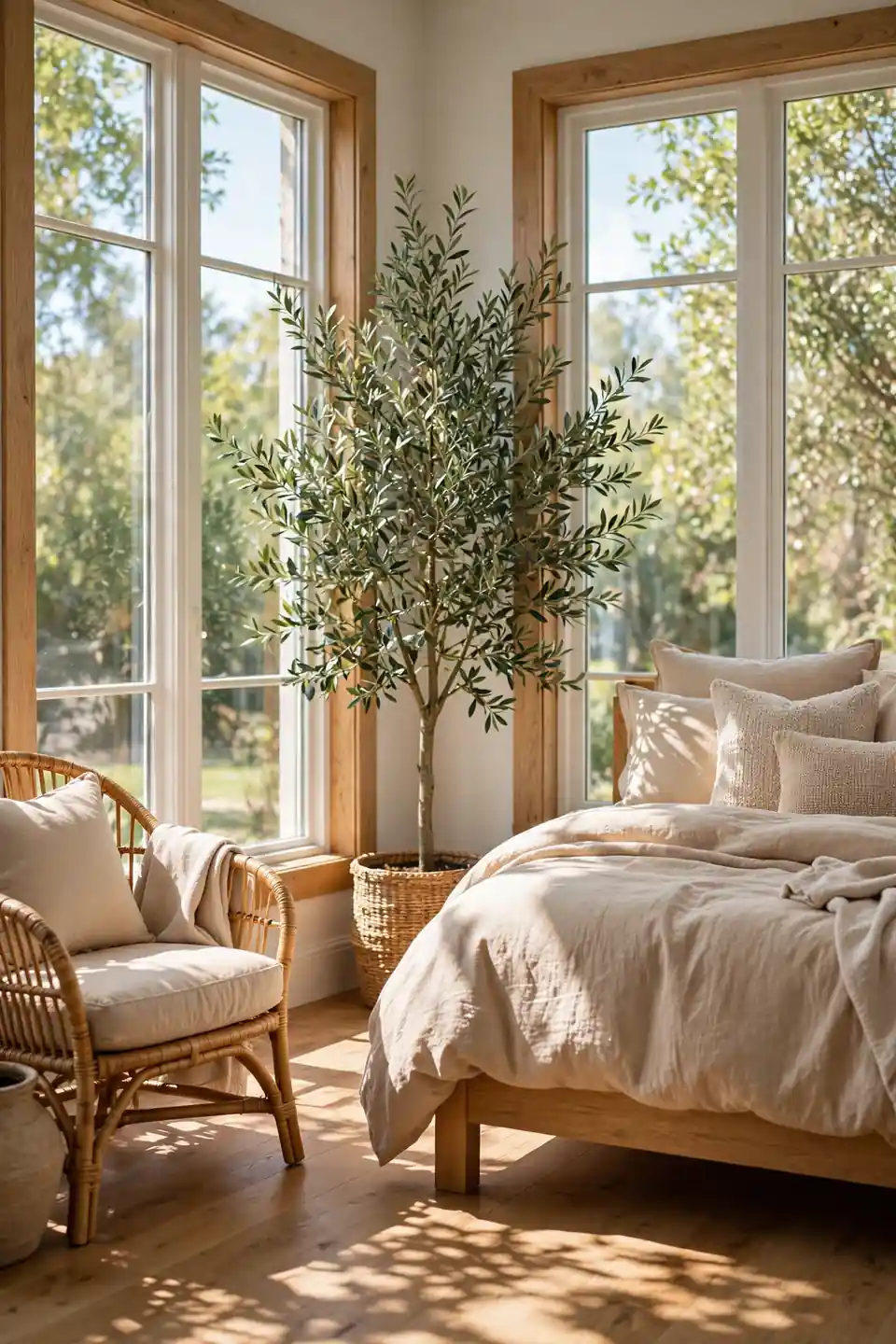
The corner where your two window walls meet is often the brightest spot in the room, yet most people leave it empty. This is the perfect place for a statement moment, like a tall plant, a cozy reading chair, or a small accent table with a candle.
Keep the styling simple so the light stays the star. One strong piece beats a cluttered cluster and gives the eye a resting point between the windows. I’ve noticed that a single olive tree can make the whole corner feel designed without trying hard.
Pull the Whole Room Together in Five Moves
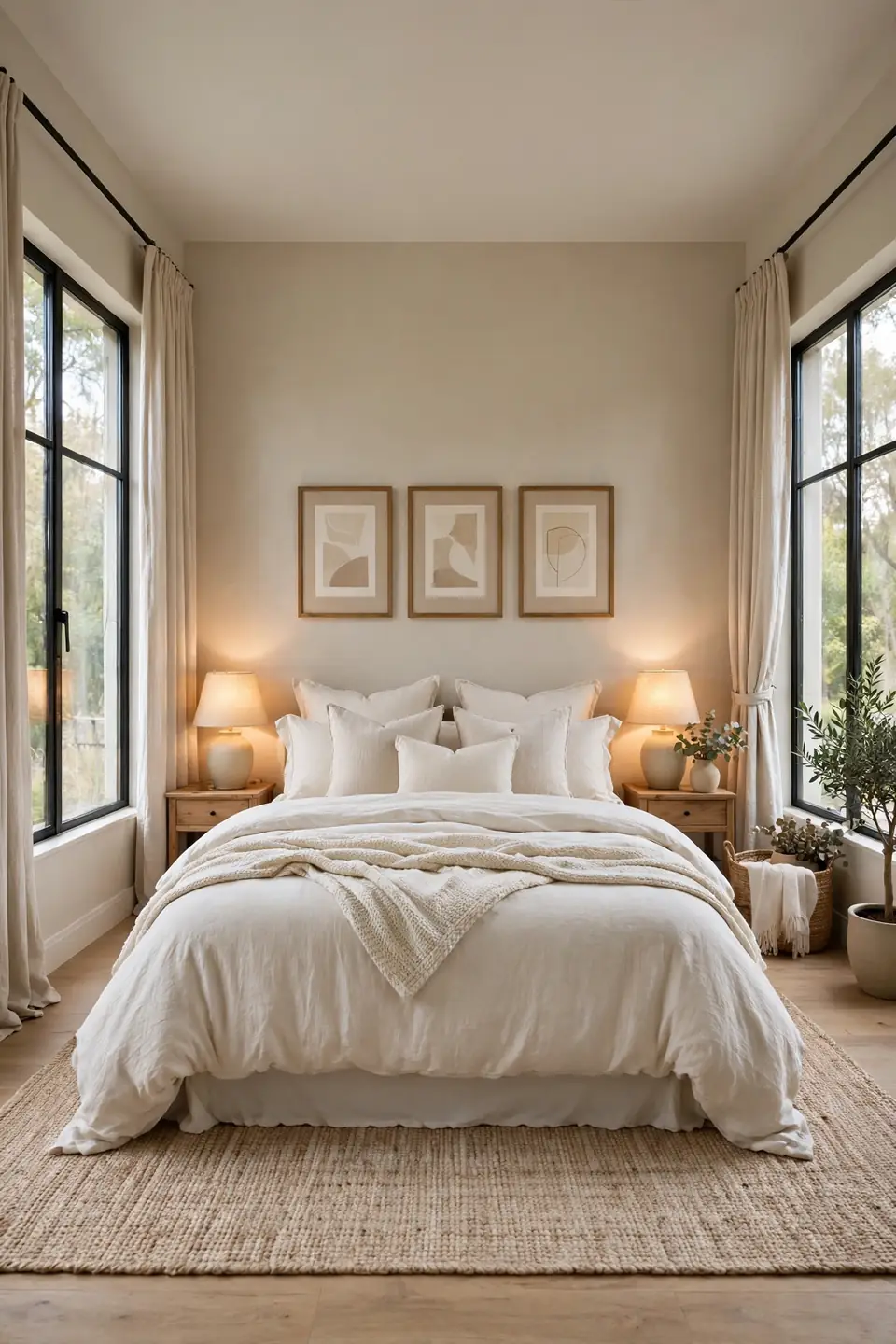
You have carefully studied the light, placed the bed wisely, and balanced both window walls with real care. These final finishing moves tie everything together into one calm, cohesive bedroom that shows off your double windows beautifully every single day.
- Hang art on the solid wall opposite the windows to give the eye a landing spot.
- Add matching lamps on both nightstands for warm, even evening light.
- Layer one throw and two extra pillows on the bed for a finished look.
- Step back to the doorway and check that both window walls feel equally dressed.
Conclusion
Decorating around two window walls gets easier once you stop fighting the light and start designing with it. When you plan bed placement, match your treatments, and balance furniture across both walls, how to decorate a bedroom with windows on two walls becomes second nature. The room stays bright by day and cozy by night. Save this guide to your bedroom board on Pinterest so you can revisit each step while you style. I’ve seen how making these small, thoughtful changes can completely shift how a room feels. Your sunniest bedroom is waiting.