How to Choose Furniture for a Narrow Living Room
A long, skinny living room can feel impossible to furnish, but how to choose furniture for a narrow living room comes down to a few smart decisions. The wrong sofa or an oversized coffee table can turn the whole space into an obstacle course.
If your kitchen feels tight too, our guide on how to make a small kitchen feel less crowded covers similar space-saving thinking. Here, you will learn to measure first, pick slimmer profiles, and arrange pieces so the room breathes.
In my experience, most narrow rooms fail because of one oversized piece, not the room itself. Follow these ten steps and the layout will finally click.
Measure Before You Shop a Single Piece
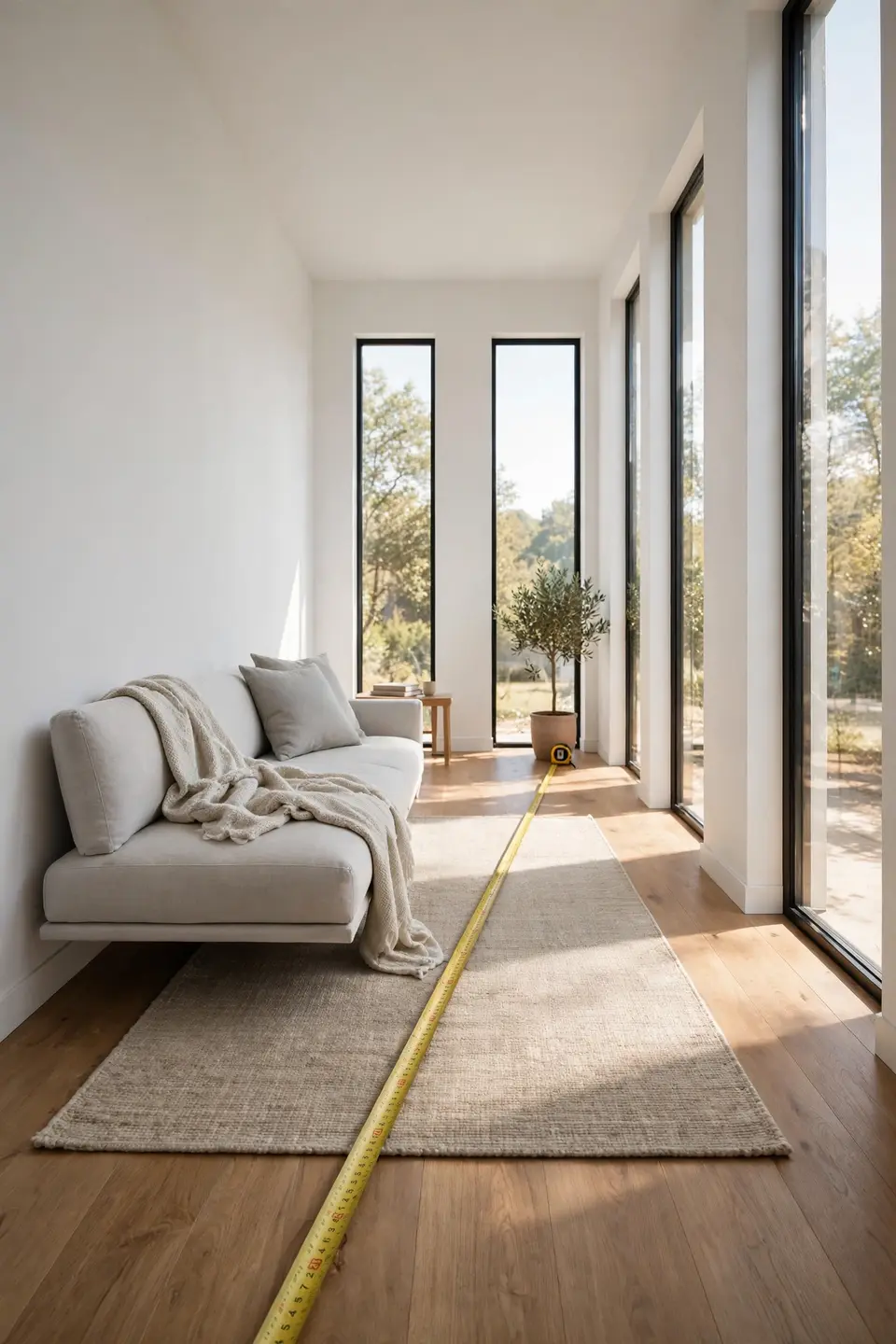
Grab a tape measure and write down the length, width, and doorway clearances before you fall in love with anything. Note the walking paths too, since a narrow room needs at least 30 inches of clear passage to feel comfortable. Bring these numbers on your phone so every showroom visit stays honest.
I’ve noticed shoppers skip this step and guess, then wonder why delivery day turns into a puzzle. Measure the sofa wall, the TV wall, and the space between windows. Those three numbers decide almost every furniture choice ahead.
Start With the Right Sofa Shape
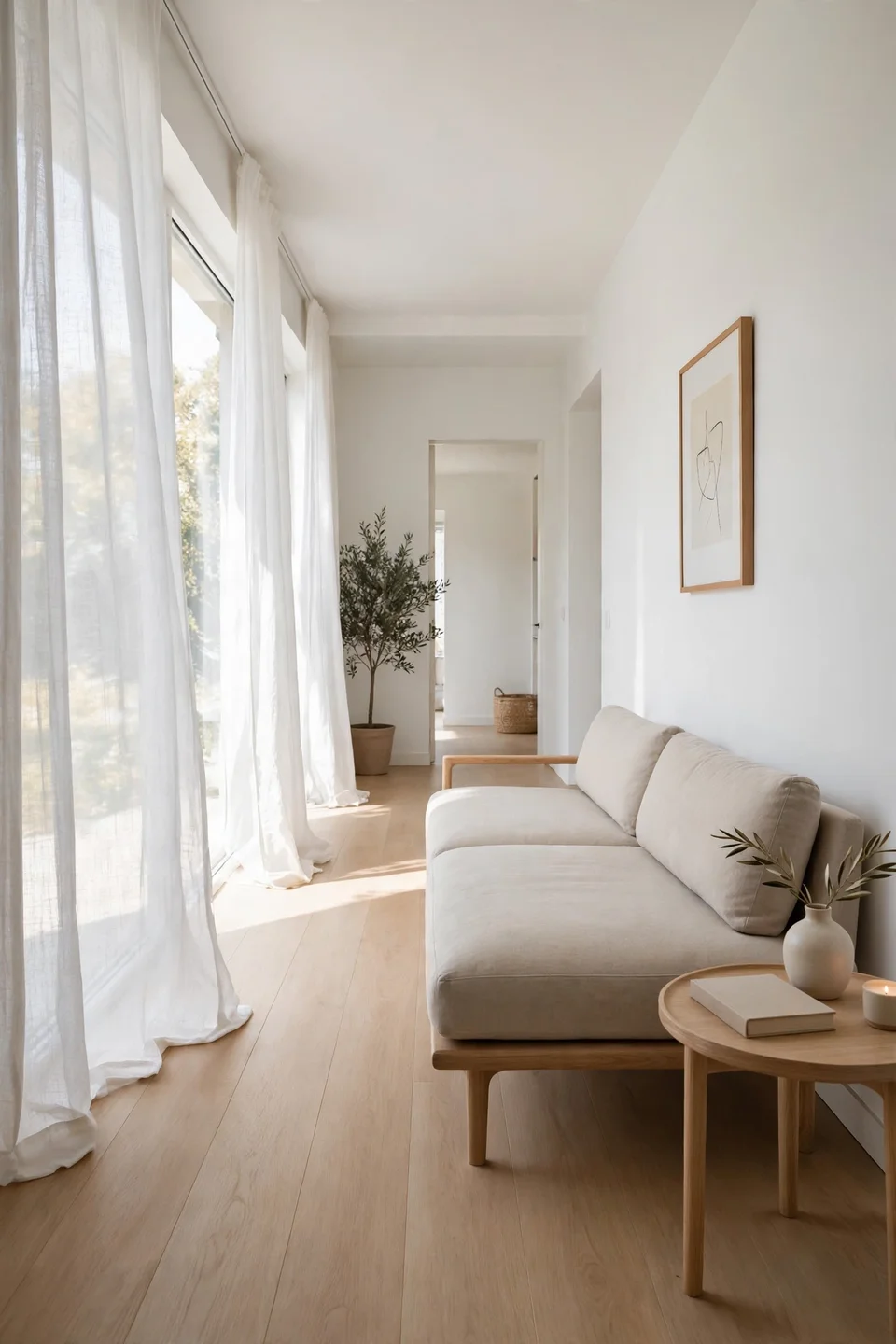
The sofa sets the tone for the whole room, so choose its shape first and build everything else around it. A slim-profile sofa with raised legs keeps the floor visible underneath, which tricks the eye into seeing a wider, airier space.
- Pick a sofa no deeper than 36 inches so it leaves real walking room behind and in front of it.
- Choose tight-back or low-back styles instead of overstuffed cushions that eat up inches.
- Go for raised legs over a skirted base, since visible floor makes the room feel wider.
- Keep the arms slim or skip them entirely with an armless loveseat for the tightest rooms.
Keep the Sightlines Clear
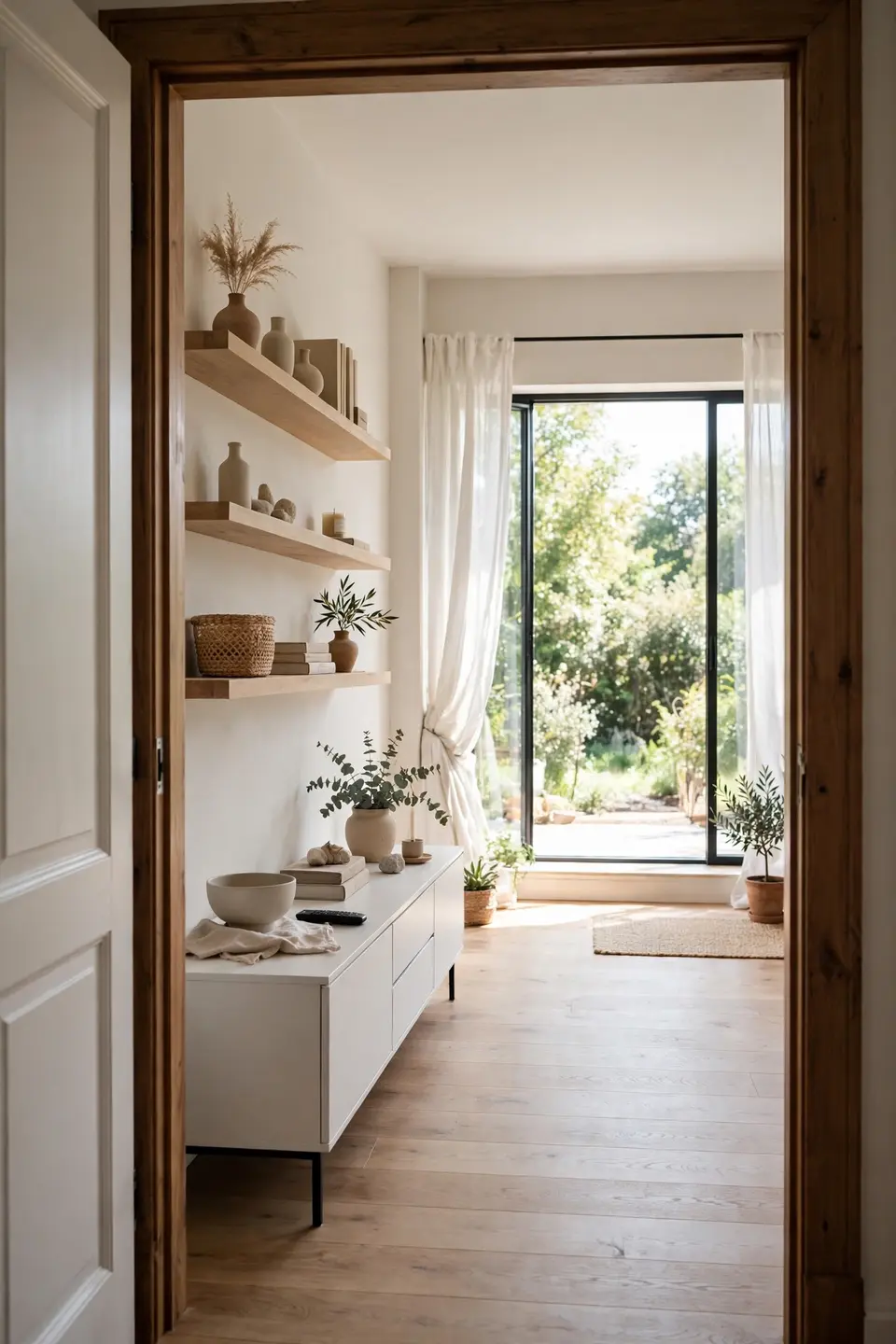
Quick Tip: Stand at the room’s entrance and sight straight through to the far end. Anything tall blocking that view is shrinking your room visually.
Low-profile furniture along the walls keeps your eye traveling the full length of the space. Swap tall bookcases for floating shelves, and choose a media console that sits below window-sill height. When every sightline stays open, even a ten-foot-wide room reads as generous and calm rather than cramped.
When the Sofa Swallows the Walkway
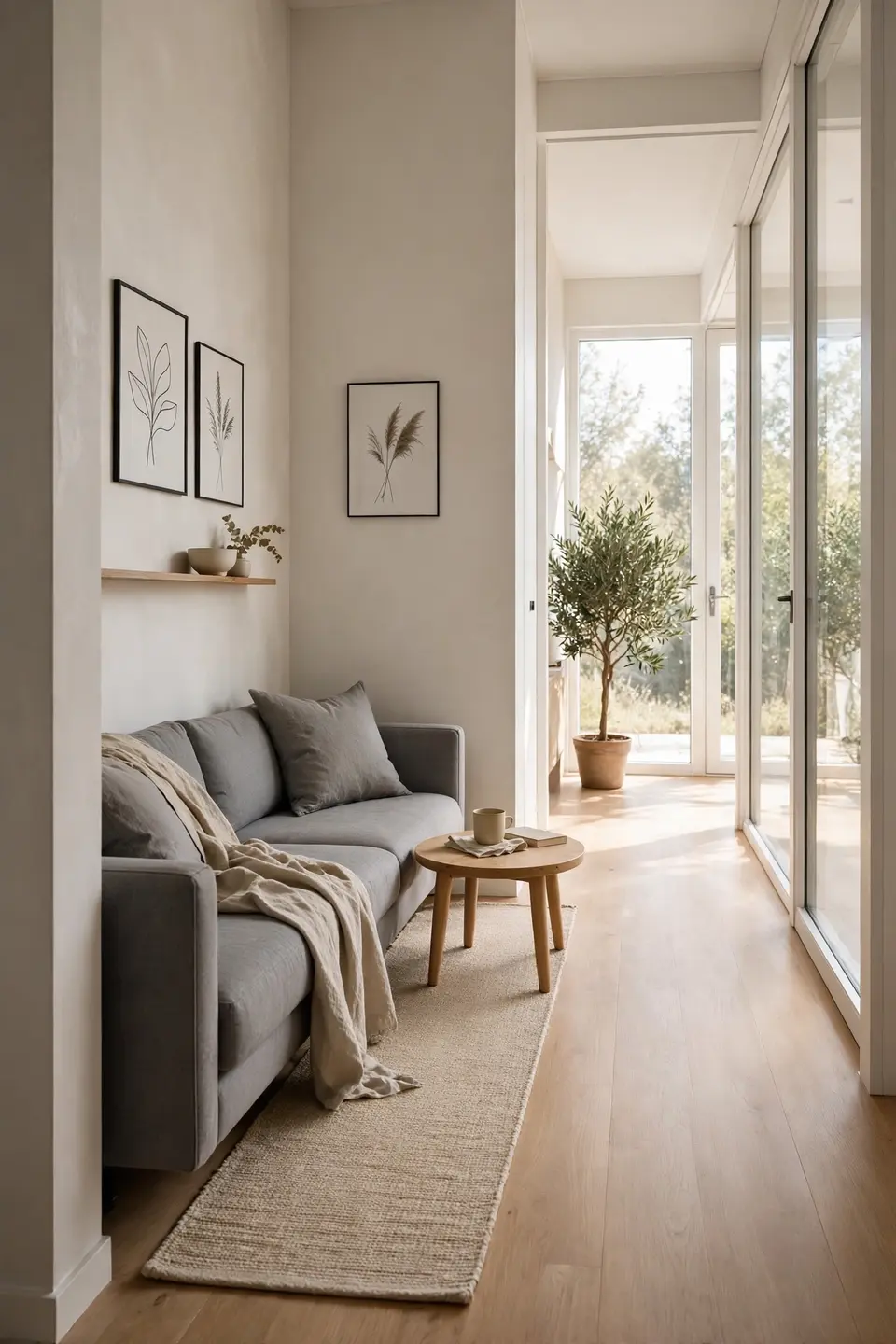
Common Mistake: Pushing a deep, oversized sofa against the long wall and leaving only a sliver of path on the other side. Everyone ends up shuffling sideways, and the room feels like a hallway with cushions.
The Fix: Float a slimmer sofa a few inches off the wall and give the walkway at least 30 inches. The room instantly feels like a living space again instead of a corridor.
Walkways decide whether a narrow room works or fails, so protect them first. Tape the path on your floor before buying anything, then choose pieces that respect those lines. A room you can move through easily always looks bigger than one where furniture fights the traffic.
Pieces That Pull Double Duty
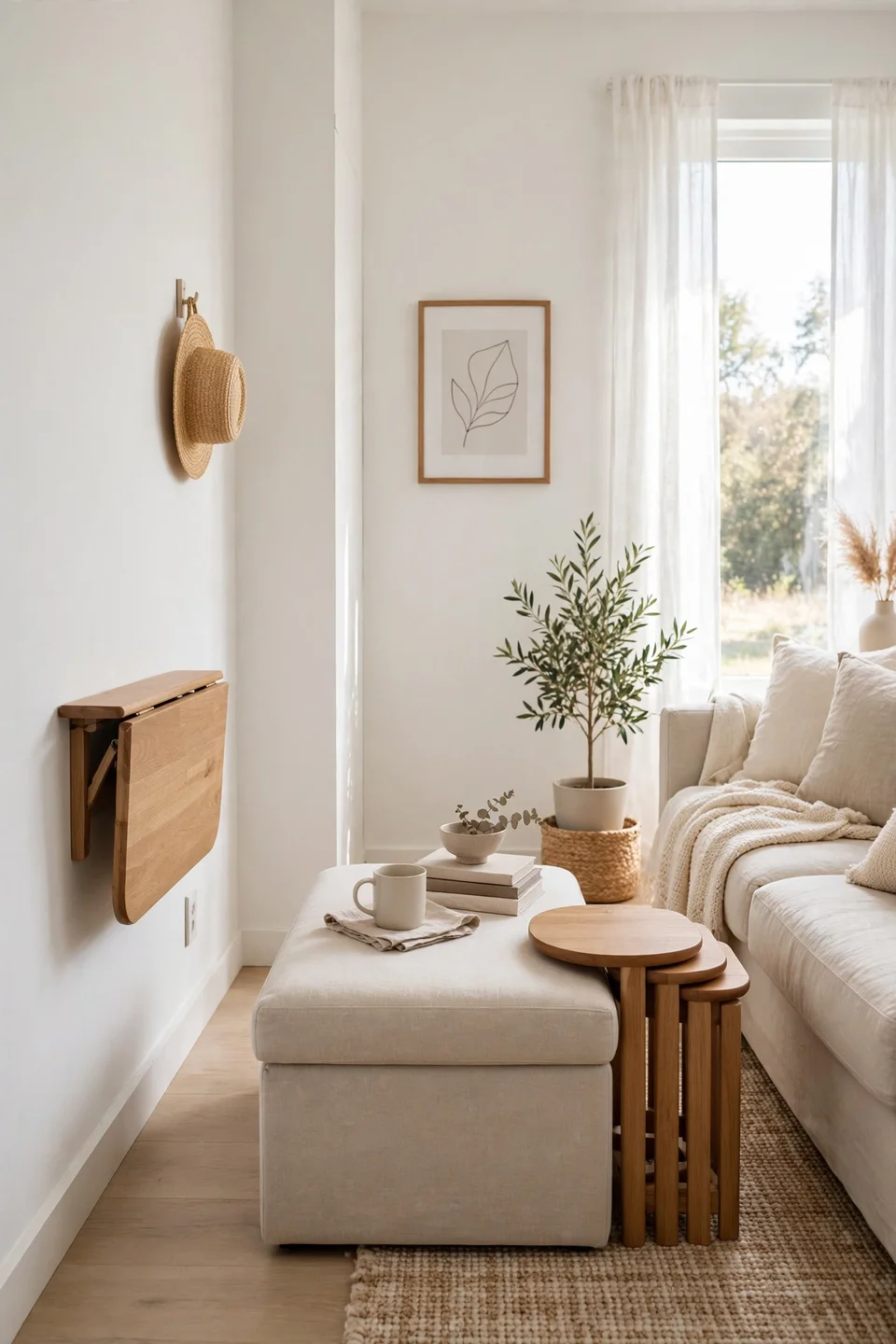
What You Need:
- A storage ottoman that works as a coffee table, footrest, and hidden blanket box.
- A drop-leaf side table that folds flat against the wall when guests leave.
- Nesting tables that tuck together and pull apart only when you need surfaces.
- A sofa with built-in storage under the chaise for throws and remotes.
- Wall-mounted sconces that free up the side tables lamps would occupy.
Every piece in a narrow room should earn its footprint twice over, so ask what else it can do besides its main job. Dual-purpose furniture cuts the total piece count fast, and fewer pieces automatically mean more open floor. Start with the ottoman and side tables, since those swaps deliver the biggest visual payoff.
From Bulky to Balanced: The Coffee Table Swap
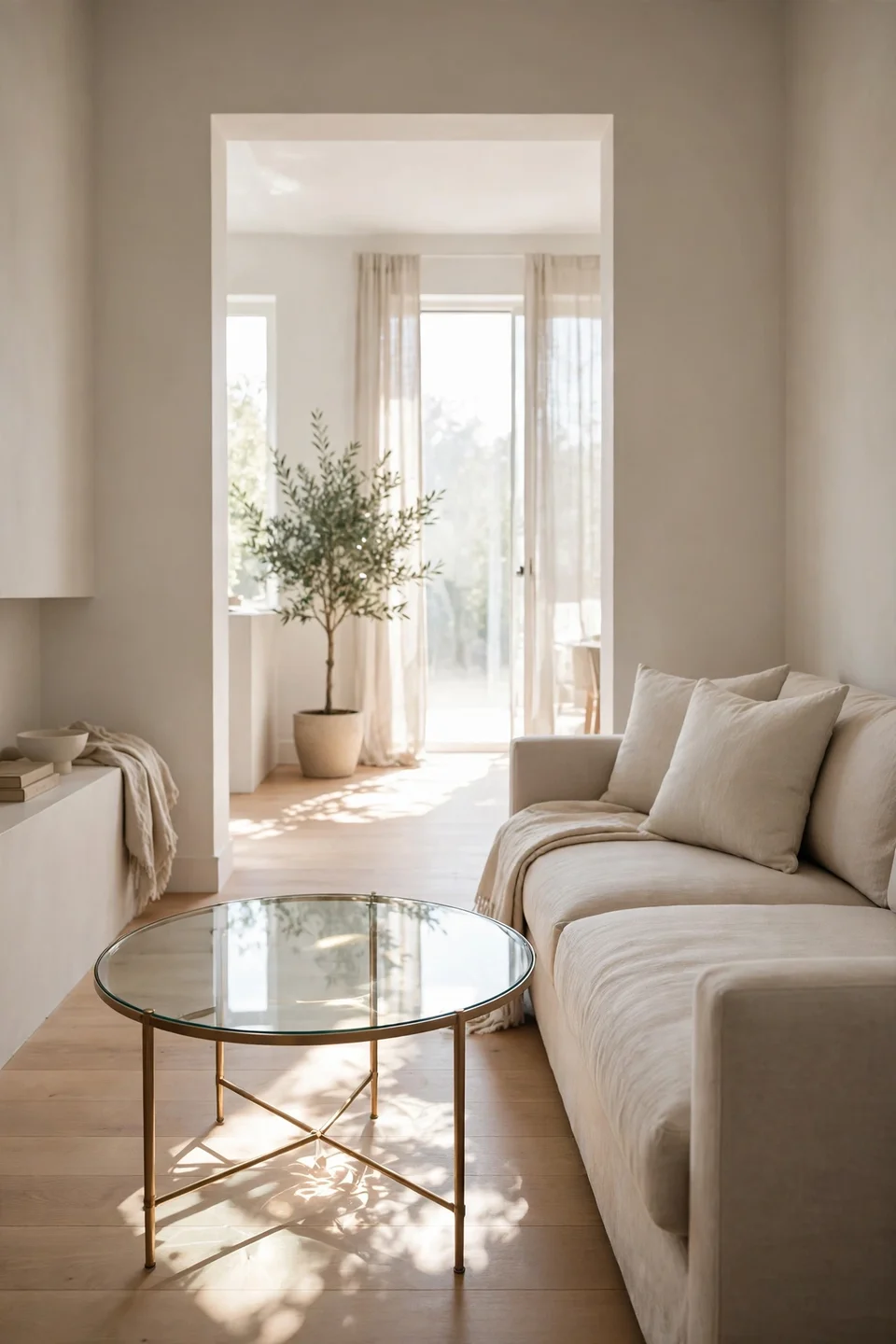
BEFORE: A heavy rectangular coffee table filled the center of the room, leaving barely two feet to squeeze around it. The dark wood block stopped the eye cold and made the whole space feel chopped in half.
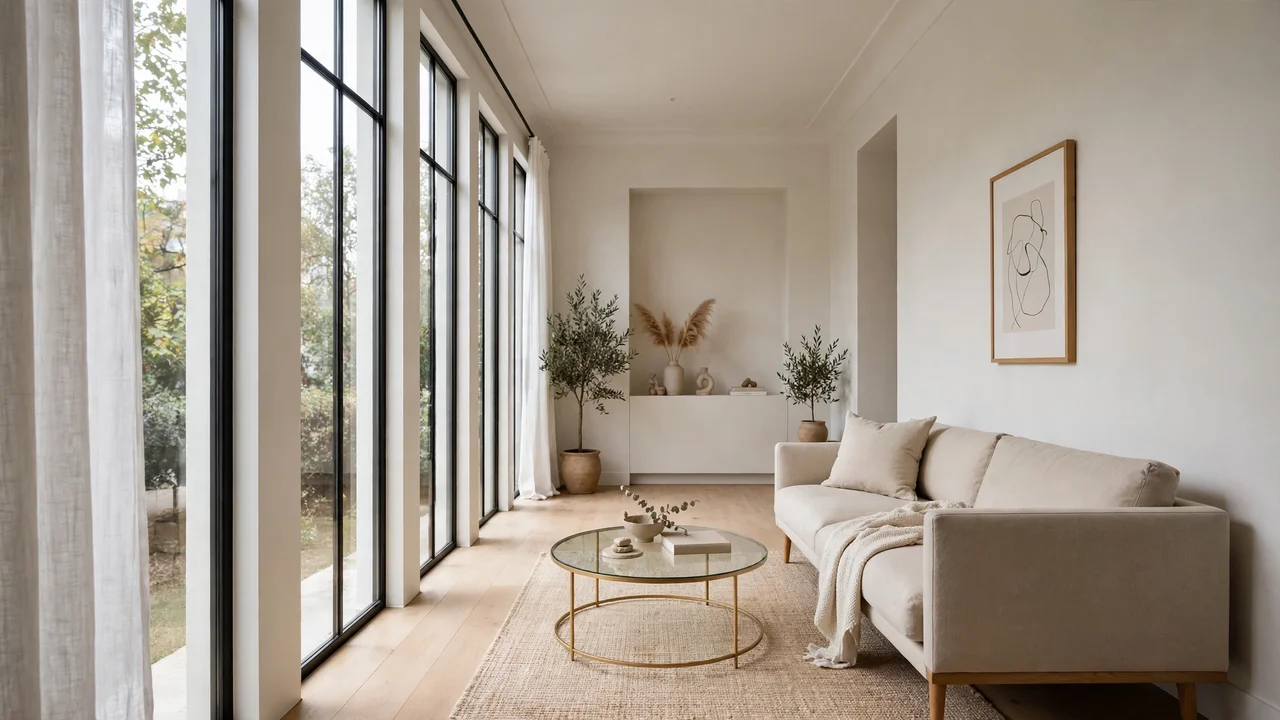
AFTER: A round glass-top table on slim legs opened the middle of the room completely. Light passes through it, legs stay visible underneath, and walking around it feels natural instead of cramped.
Round shapes and transparent materials are the narrow room’s best friends for center tables. If your bedroom has its own awkward layout, see how to decorate a bedroom with an off-center bed for similar balance tricks. Keep the table diameter under 36 inches so it never dominates.
Comfort Without the Bulk
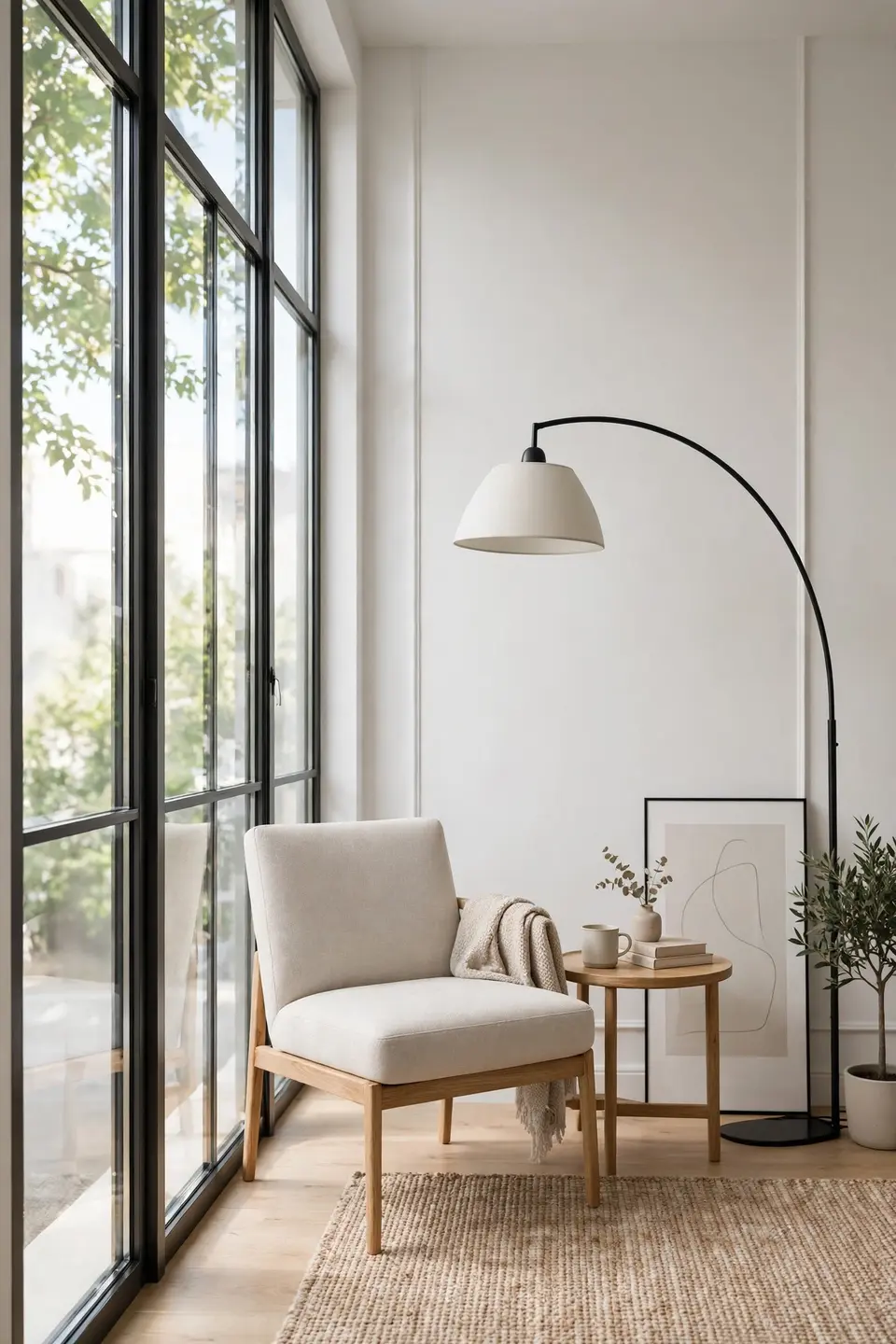
Do This:
- Choose armless chairs or slim-track arms that save six inches per side.
- Pick light, neutral upholstery that blends with the walls.
- Use one statement piece and keep everything else quiet and simple.
Avoid This:
- Recliners and oversized sectionals that swallow the floor plan.
- Dark, heavy fabrics that visually chop the room into pieces.
- Matching bulky sets where every piece fights for attention.
Comfort does not require bulk, and narrow rooms prove it faster than any other space. A well-shaped slim chair with supportive cushions beats a saggy oversized one every single time. Choose clean lines and real support, and the room stays both genuinely cozy and visually open.
Quick Facts: Narrow Room Furniture Numbers
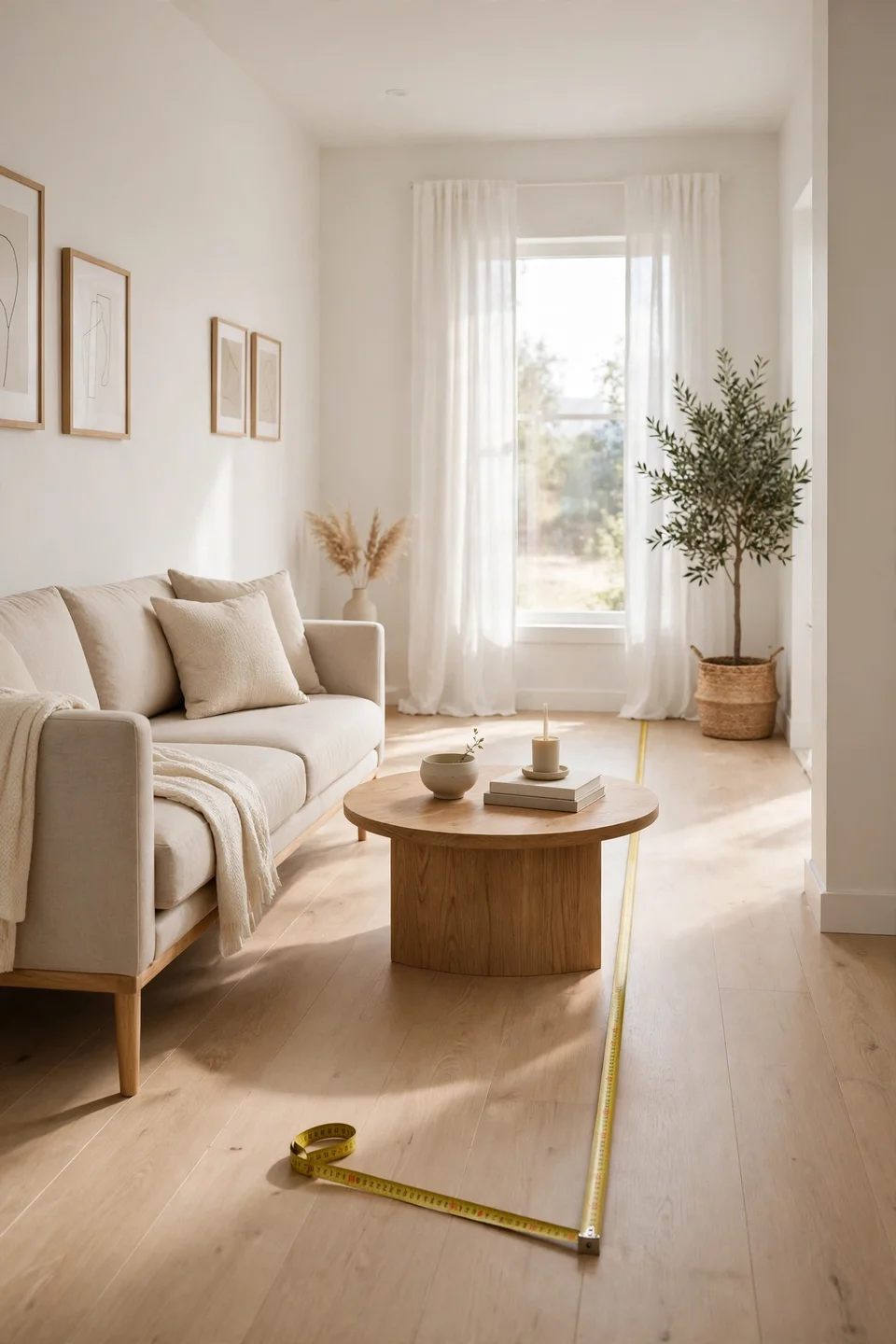
Ideal Sofa Depth: 34 to 36 inches
Minimum Walkway: 30 inches of clear passage
Coffee Table Clearance: 14 to 18 inches from the sofa
Best Rug Size: Large enough for front legs of all seating
Keep these numbers saved on your phone while shopping and let them veto anything that does not fit. Measurements remove the guesswork that leads to costly returns and delivery-day regret. When every single piece respects the room’s real dimensions, the whole layout almost arranges itself without a struggle.
Go Vertical to Free the Floor
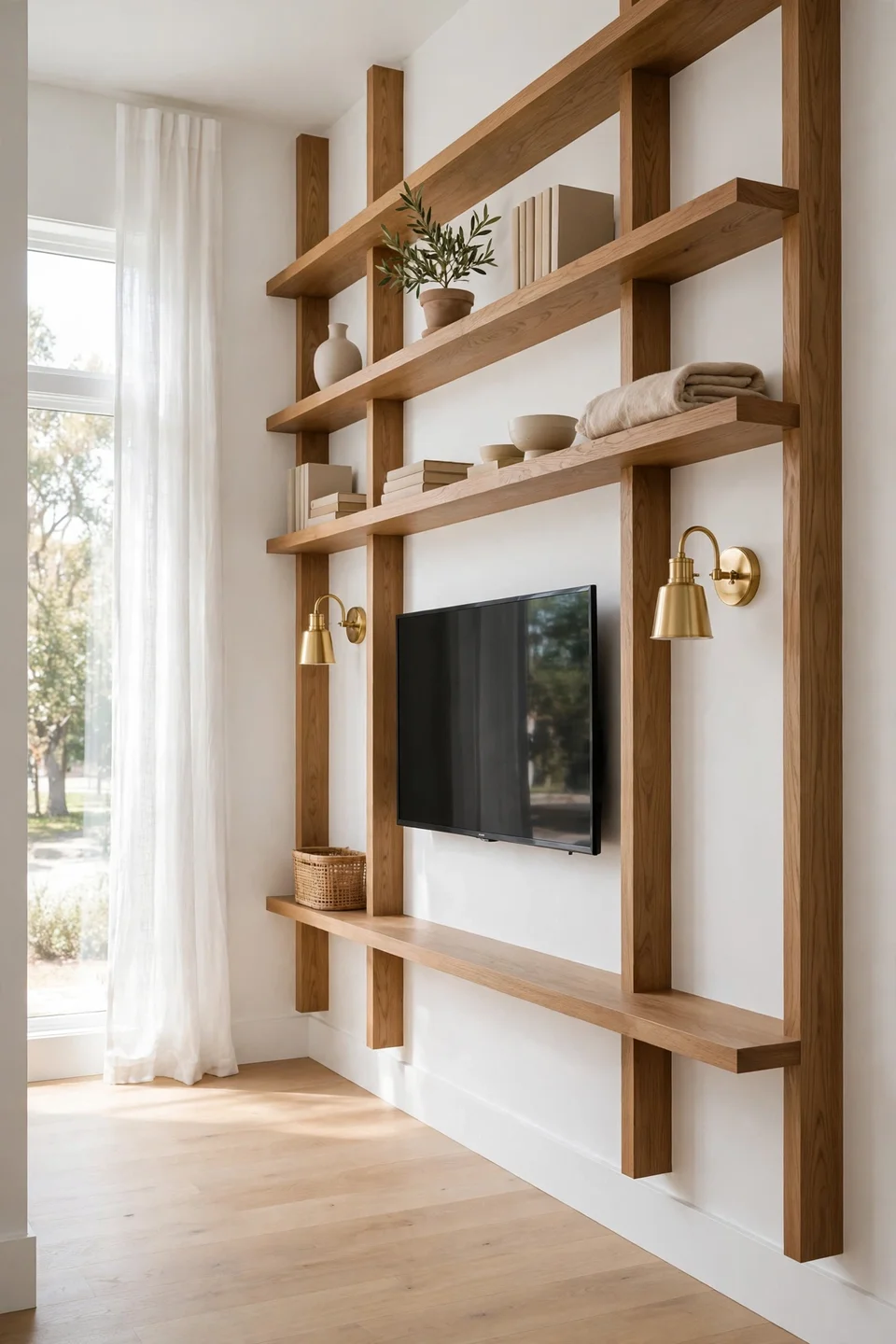
When the floor is tight, the walls become your best storage ally in a narrow living room. Floating shelves, tall narrow bookcases, and wall-mounted lighting pull function upward and leave the precious floor area completely open. This single shift can free up the footprint of an entire side table or cabinet.
I’ve seen this work wonders in galley-style living rooms where every inch matters. Mount the TV instead of using a console, hang sconces instead of table lamps, and let shelves hold the decor. The floor stays clear, and the room breathes.
Put It All Together: The Final Layout
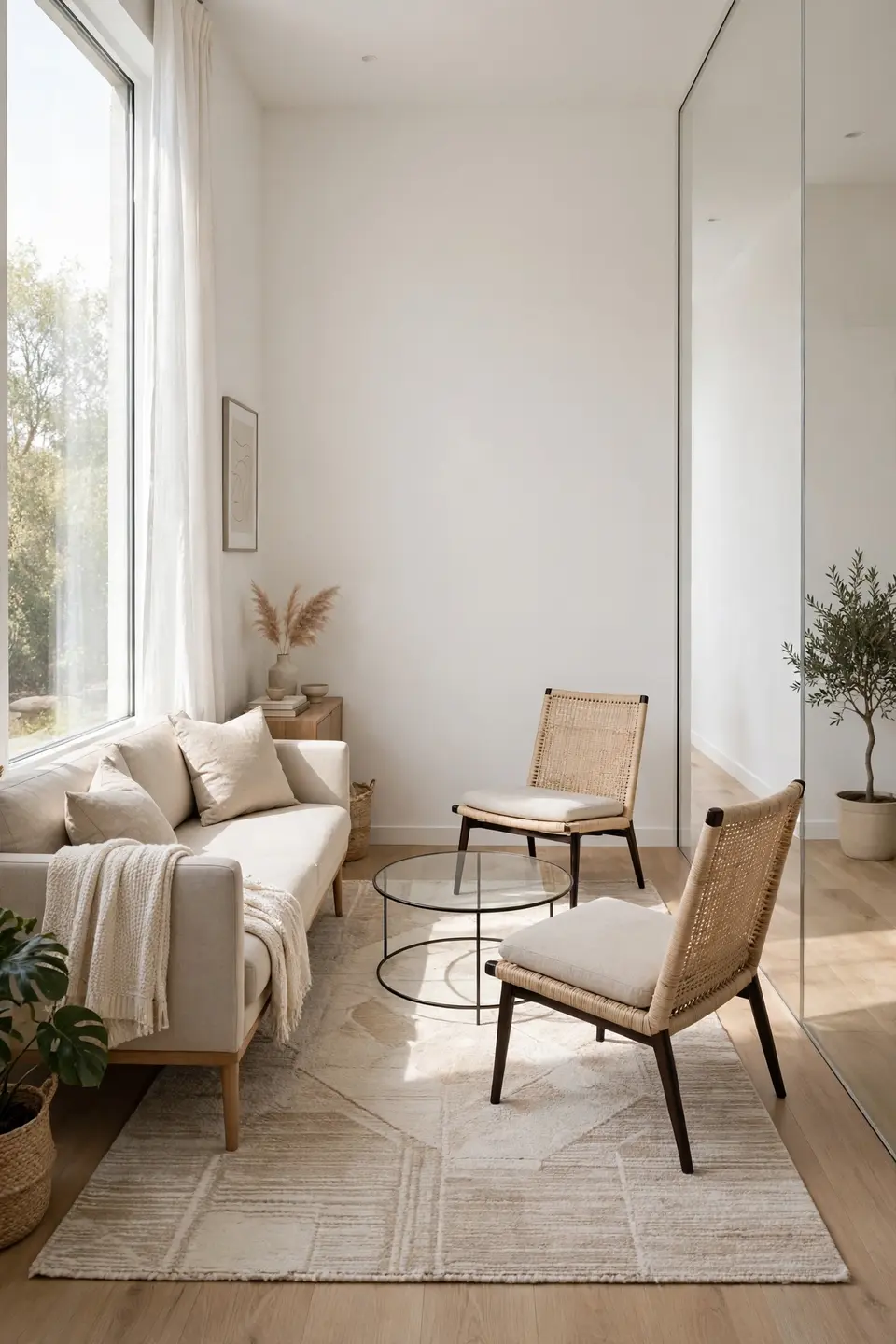
With the right pieces chosen, the last step is placing them so the whole room flows naturally. Anchor the largest piece first, then layer smaller items around it while guarding the walkway. Test the layout by walking it before anything gets fully unwrapped.
- Place the sofa along the longest wall, floating it two inches out for air.
- Set chairs opposite or angled, keeping at least 30 inches for the main path.
- Center the coffee table 14 to 18 inches from the sofa front.
- Add lighting and side tables last, tucking them into leftover corners.
- Lay the rug so front legs of every seat rest on it, unifying the zone.
Conclusion
A narrow living room stops feeling like a problem the moment every piece truly earns its place. Measure first, choose slimmer profiles, protect the walkway, and let vertical storage do the heavy lifting. Learning how to choose furniture for a narrow living room is really about editing ruthlessly and placing each item with intention. Save this guide on Pinterest so your measurements and key numbers stay handy when you shop. Then walk your room once more tonight, move one single piece, and enjoy how much bigger everything feels right away. I’ve seen one thoughtful swap change the entire mood of a room.