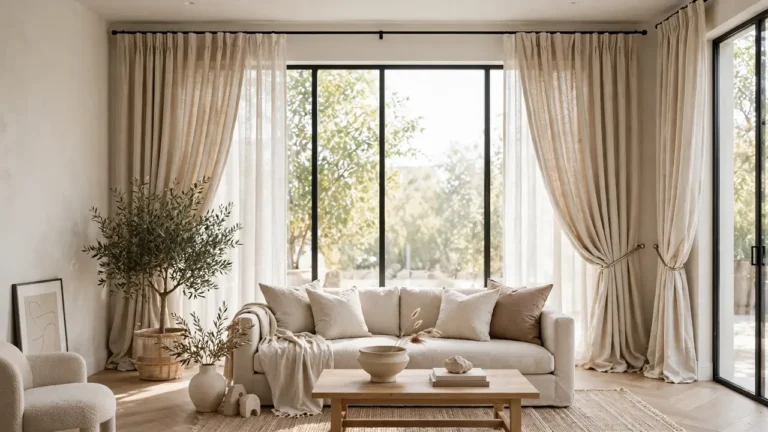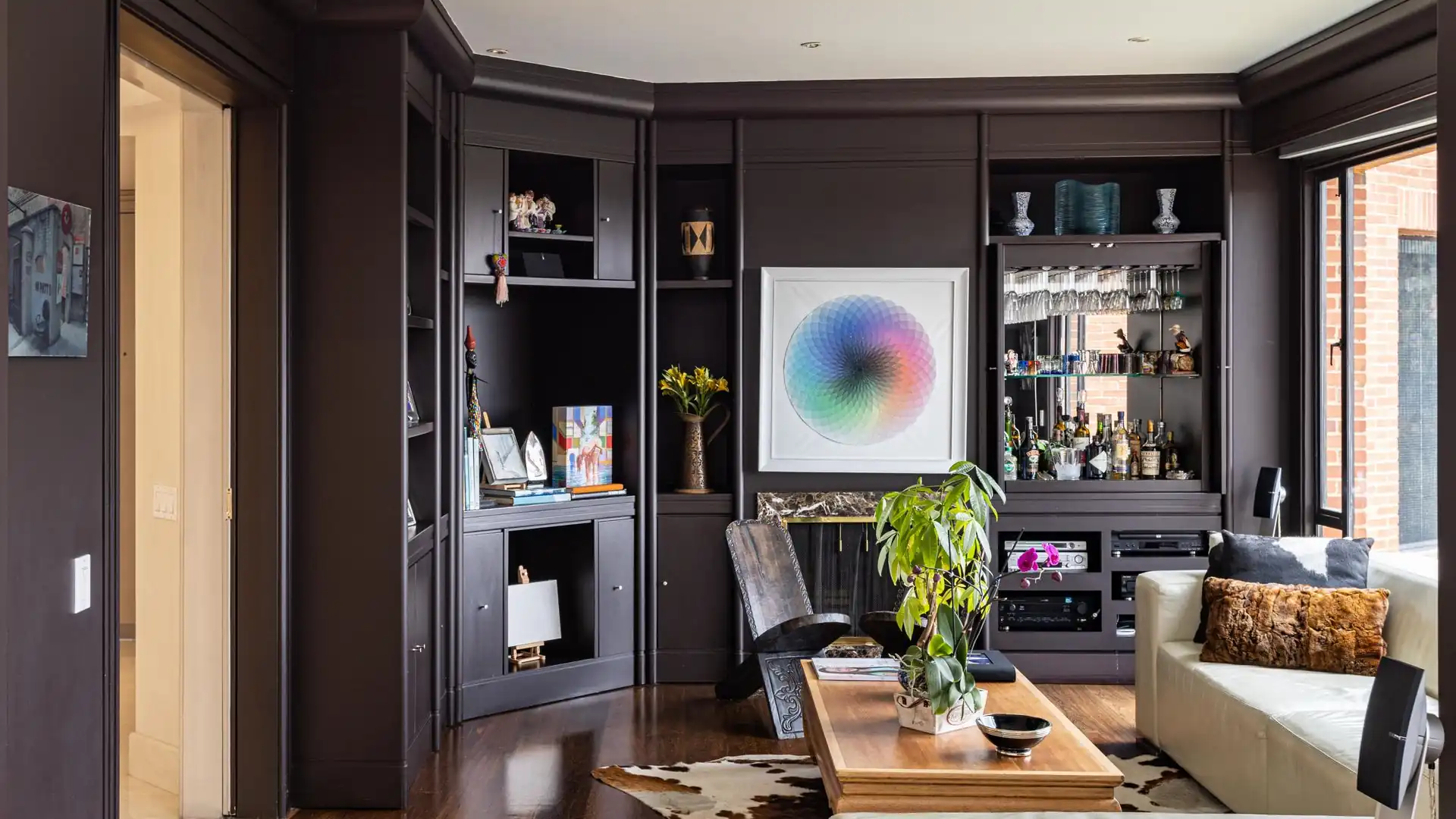
23 Dark Wood Furniture Living Room Ideas for Rich, Cozy Elegance
Dark wood has a way of making a living room feel settled and warm the moment you walk in. The best dark wood furniture living room ideas pair those deep walnut and mahogany tones with soft textiles, warm light and breathing room, so the space feels rich instead of heavy. Scale matters too, and the styling behind oversized wall art above sofa arrangements shows how one bold piece can balance a weighty wood frame below it.
Every idea ahead uses real rooms and honest materials, from a single walnut coffee table to full height shelving. In my experience, one strong wood piece per zone is enough, and the rest is layering. Start with the section that matches your room, save your favorites, and build slowly.
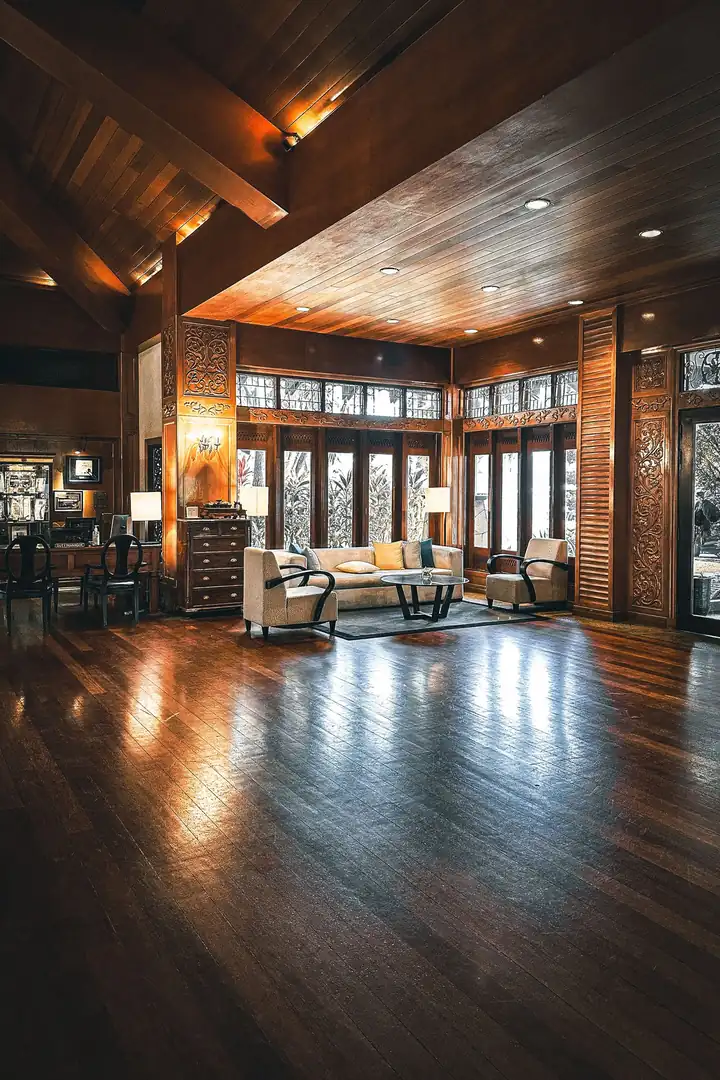
Walnut Lounge Anchor
Credit : Azli Nawawi
A substantial walnut piece gives the whole seating zone a calm center of gravity. A low sofa with a walnut frame, or a deep toned loveseat beside a walnut side table, sets the palette before a single cushion lands. Everything else in the room then takes its cue from that anchor.
Keep the supporting pieces lighter so the anchor reads clearly. Linen cushions, a pale wool throw and one brass lamp hold the balance without competing. I’ve noticed rooms feel most settled when the darkest tone sits low, at seat height or below, and the walls stay soft above it.
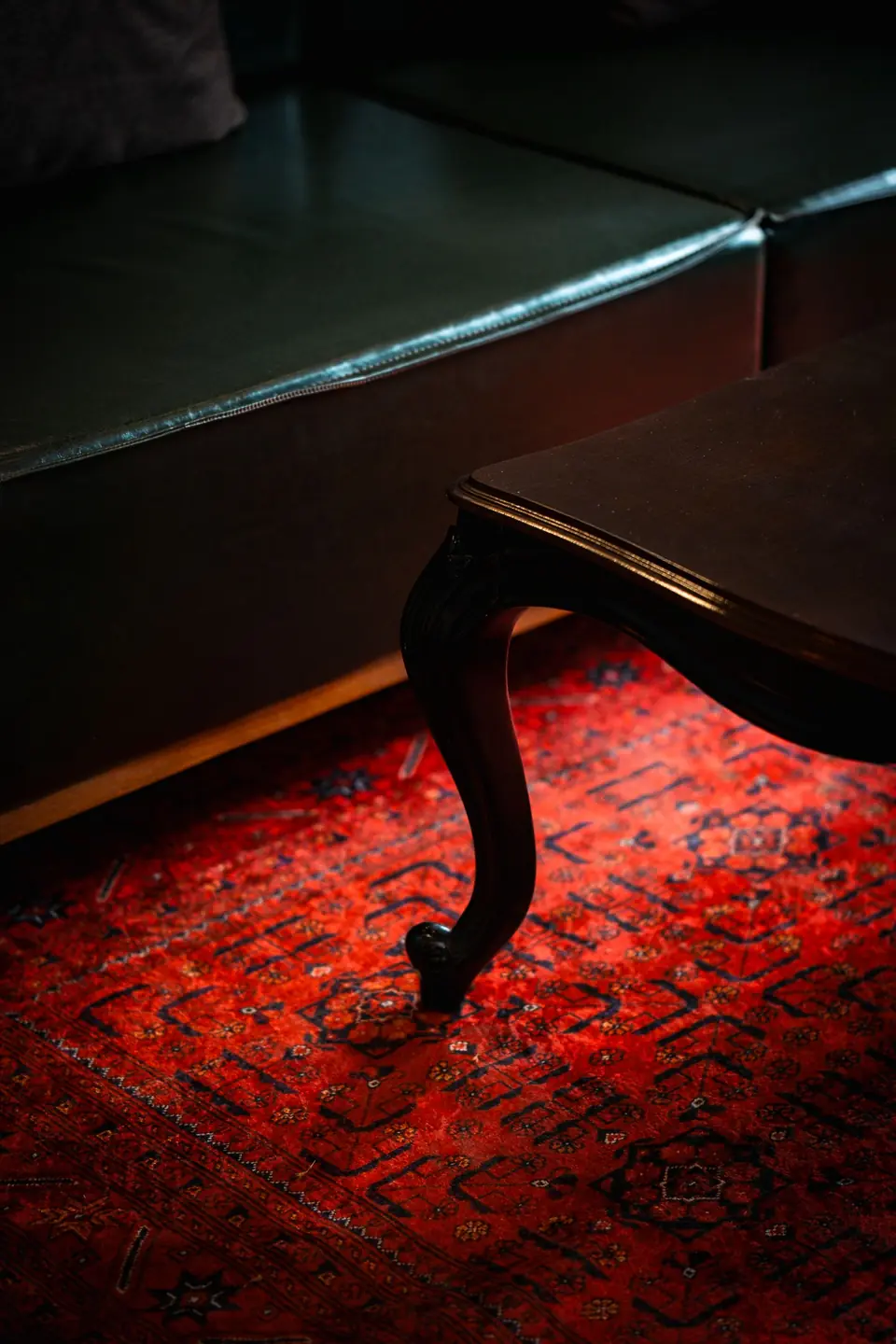
Mahogany Coffee Table Moment
Credit : Kağan Karatay
- Choose a table with visual weight. Thick legs or a low shelf underneath keep mahogany from looking delicate against a sofa.
- Leave the surface mostly open. One stack of two books and a small ceramic bowl show the grain better than a crowded tray.
- Match the rug to the red tones. A faded Persian style rug picks up mahogany’s warmth and hides scuffs between the legs.
- Repeat the tone once nearby. A mahogany framed print or side stool ties the table into the room without a matching set.
Coffee tables earn their keep at the center of the room, so finish matters more than shape. Satin reflects lamp light softly and shows fewer fingerprints than high gloss. Wax it twice a year and the color deepens with age.
Floor To Ceiling Bookshelves
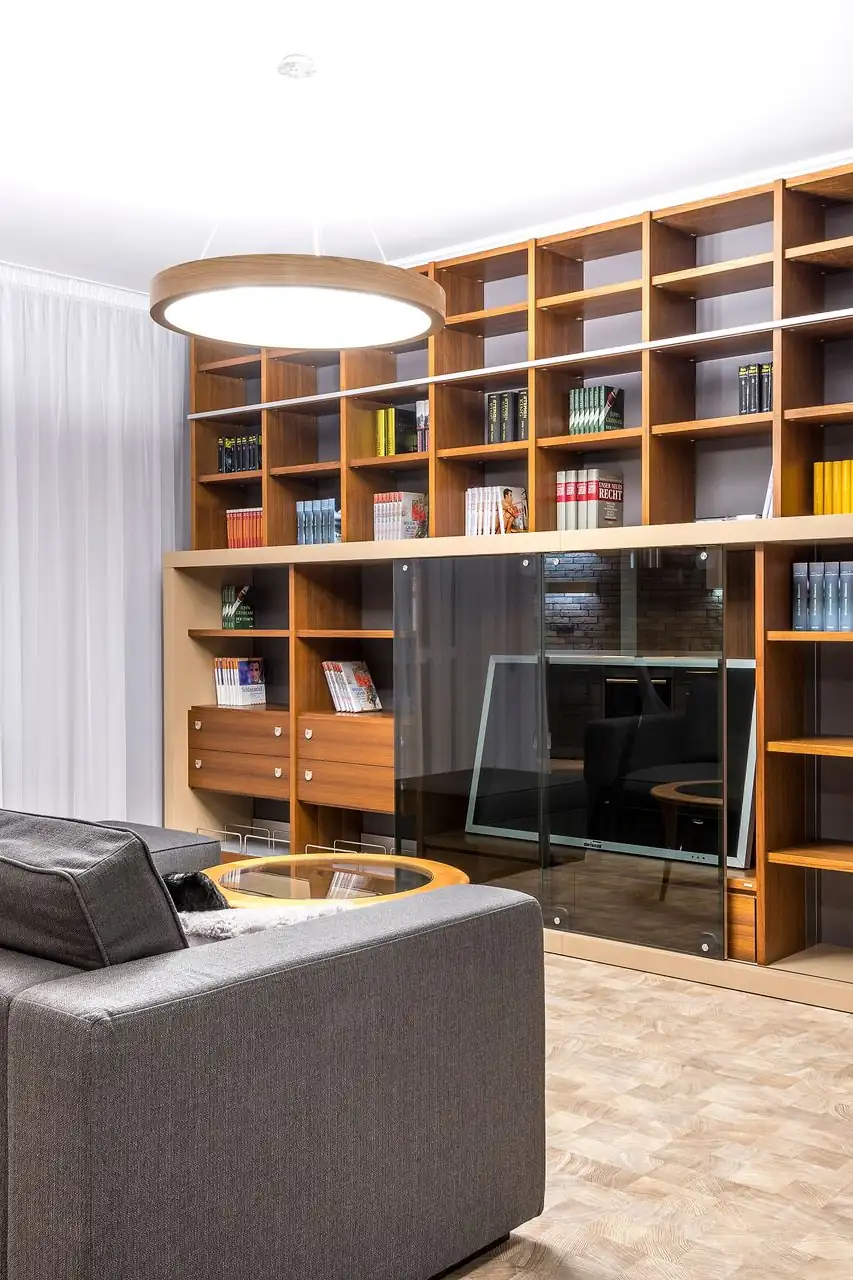
Credit : Max Vakhtbovych
Quick Tip: Paint the wall behind open shelves a shade deeper than the wood. The shadow gap makes walnut uprights look richer and hides the dust line that pale walls show within a week of cleaning. It also lets lighter book spines glow against the dark backdrop.
Full height shelving turns storage into architecture. Leave the middle shelves at eye level for art and plants, and push the heaviest books low where the frame is strongest. Styling in odd numbered groups keeps long runs from looking like a warehouse wall. A small reading chair angled at the end of the run turns the whole wall into a destination instead of a backdrop.
Worn Sideboard Revival
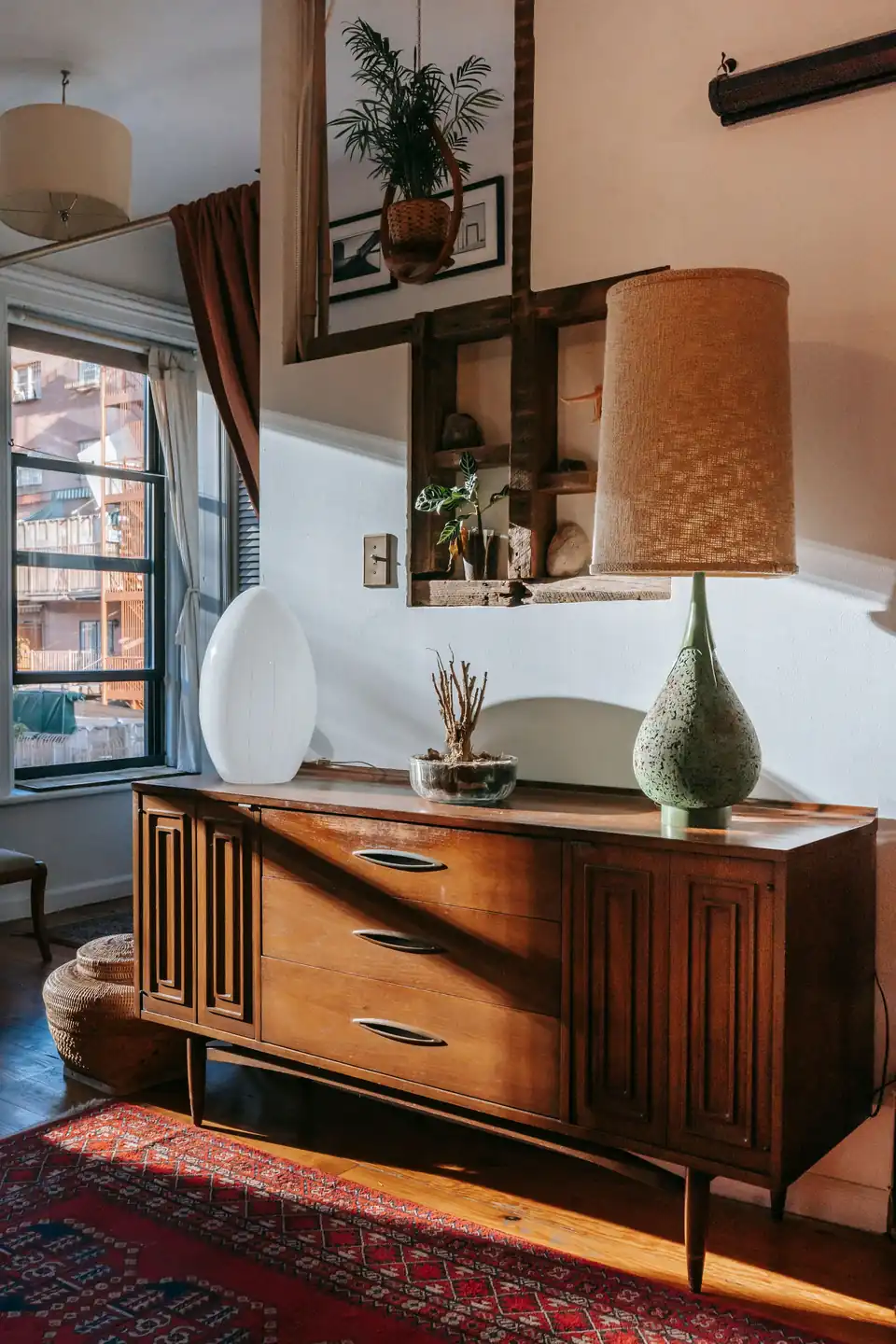
Credit : Charlotte May
BEFORE: The old sideboard sat dull and orange toned, its top ringed with cup marks and one drawer sticking every winter. It held the good plates, so it could not leave, but it dragged the whole wall down.
AFTER: A weekend of sanding, walnut stain and beeswax brought the grain back to life. New brass pulls replaced the broken knobs, and a linen runner now protects the top while the drawer glides on a rub of candle wax.
Reviving one honest piece beats buying three flat packed ones. The cost is mostly time, and the result carries a story no showroom can copy. Start underneath with a test patch of stain before committing to the whole top.
Layering Three Wood Tones
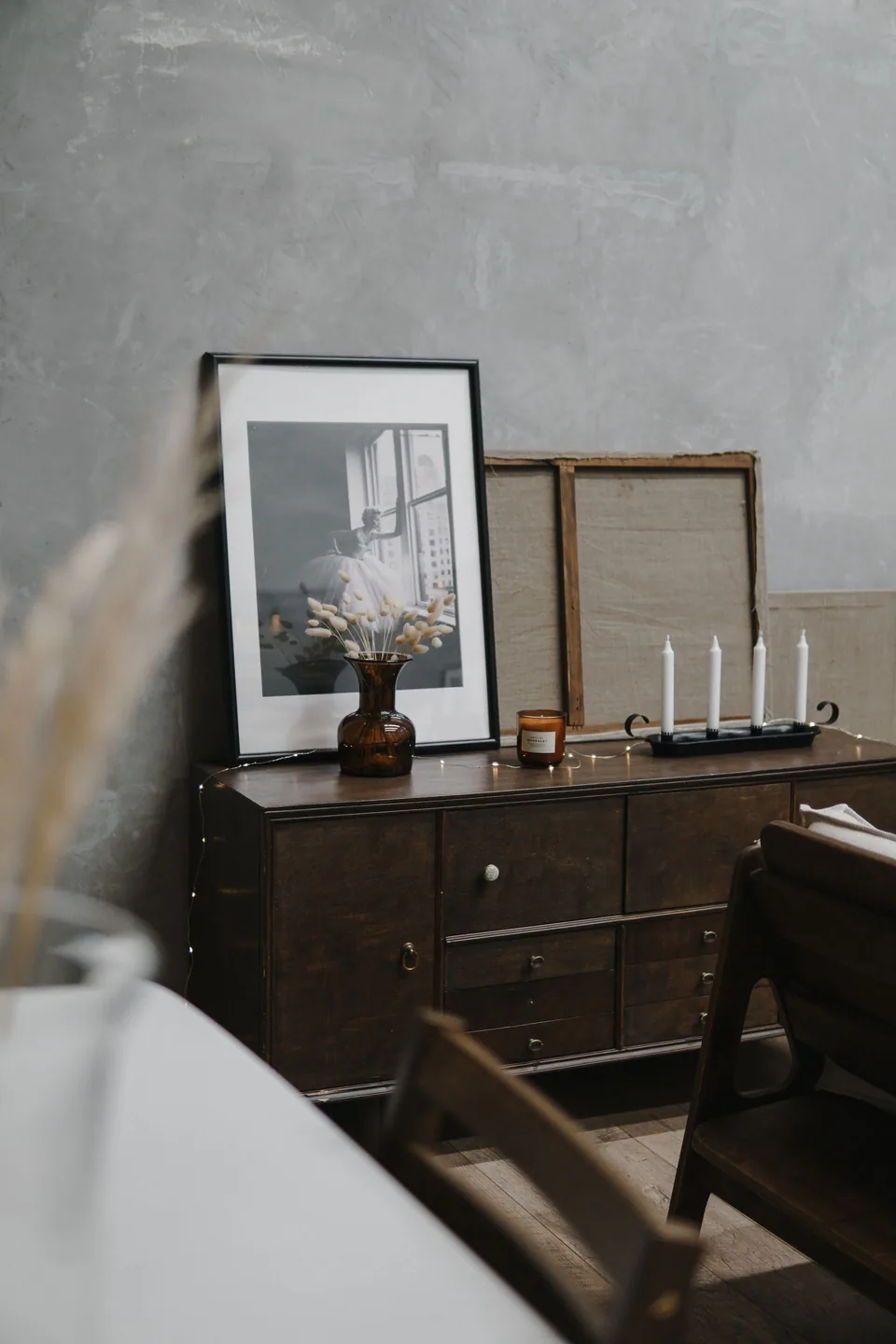
Credit : Pauline Raw
- Pick the dominant tone first. The largest piece, usually the sofa frame or media unit, sets the base note for the room.
- Add a second tone two shades lighter. A honey oak side table beside a walnut sofa keeps the pairing calm and related.
- Drop the third tone in small doses. Ebony stained frames, a dark tray or lamp bases give depth without another big commitment.
- Repeat each tone at least twice. Single appearances look accidental, while a repeated tone reads as a deliberate choice.
Three tones are the sweet spot for most rooms. Fewer can feel flat, and more start to fight each other across the space. Stand at the doorway and squint; the tones should melt into one warm family at a glance.
Walnut Versus Mahogany Choice
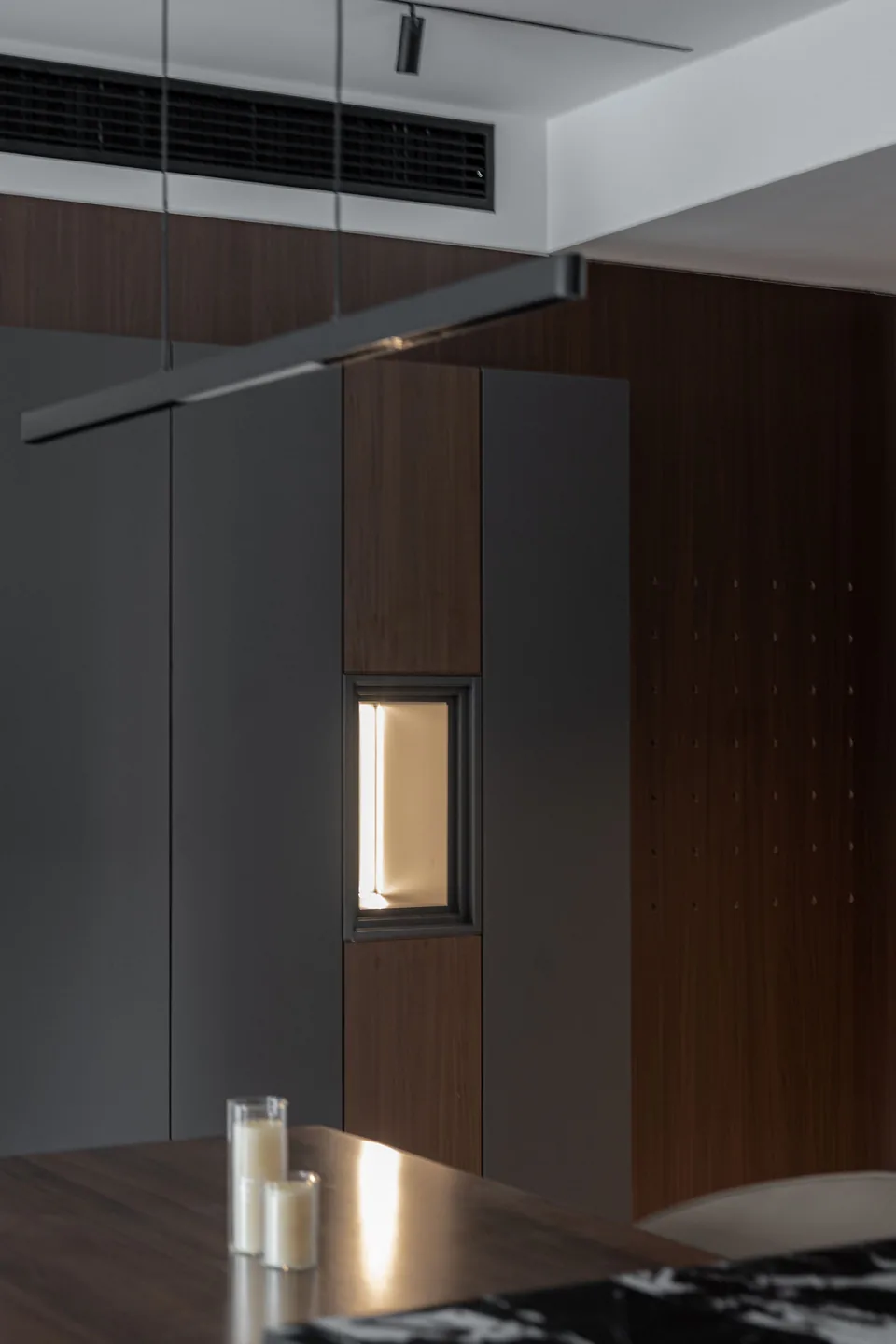
Credit : Liuuu _61
| Feature | Walnut | Mahogany |
|---|---|---|
| Color | Cool chocolate brown | Warm red brown |
| Grain | Straight, calm lines | Ribbon like, shifting sheen |
| Care | Oil finish, yearly top up | Polish builds glow over time |
| Price | Mid range boards | Often higher, slower grown |
| Best For | Modern, calm rooms | Classic, formal rooms |
Both woods reward a close look before buying. Walnut forgives dust and pairs with cool grays, while mahogany glows beside creams and brass. In my experience, the right pick is the one that matches the light your room already gets. Order sample boards of both and live with them on the sofa for a week before deciding, because showroom light lies. Both age gracefully and hold their value at resale.
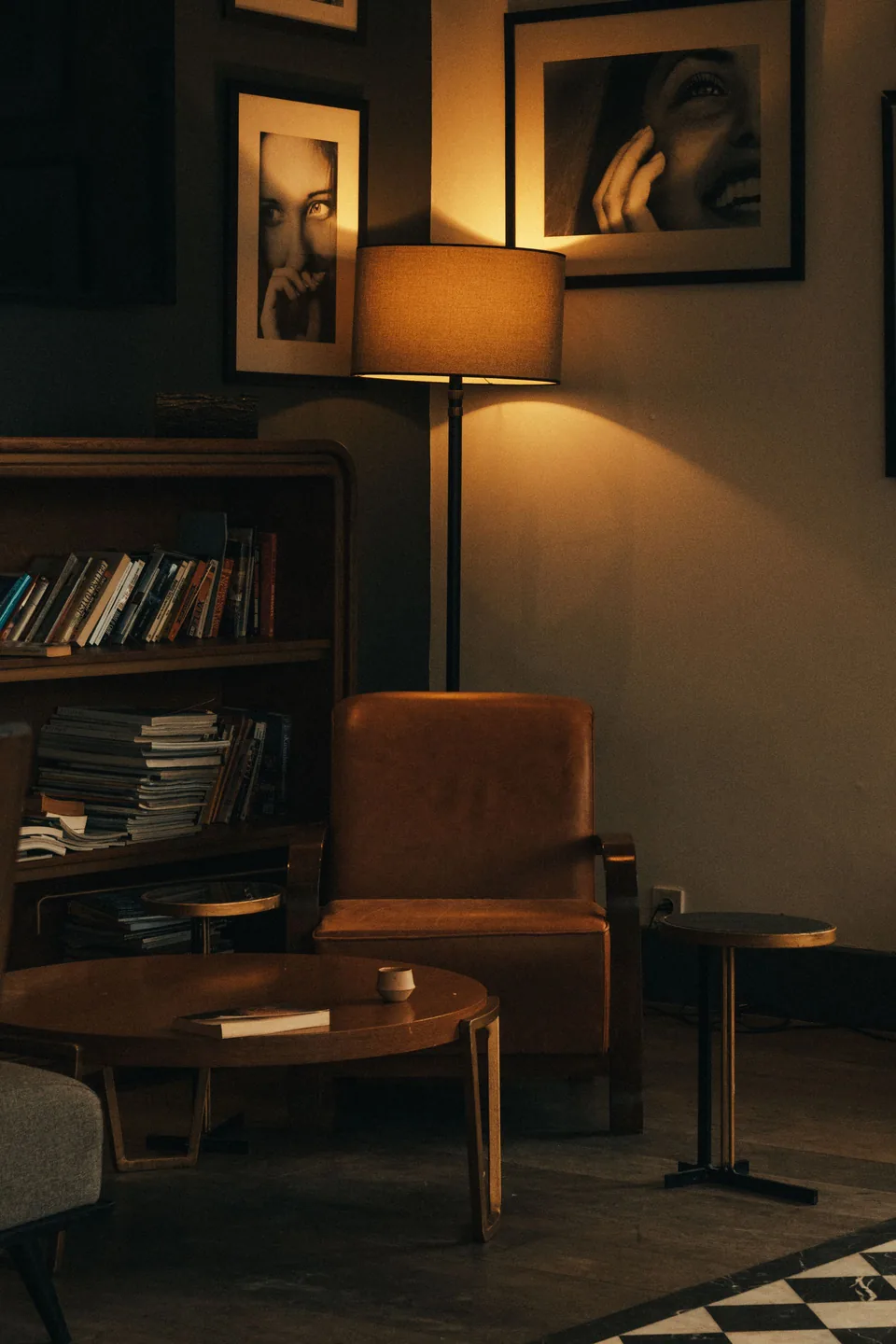
Dark Wood Reading Nook
Credit : Sami Aksu
Do:
- Angle the chair toward window light so pages stay bright and wood glows.
- Keep a small side table within reach for tea, glasses and the next book.
- Fold a soft throw over the chair arm to soften the dark frame.
Don’t:
- Do not push the chair flat against the wall; a floating angle feels welcoming.
- Do not rely on one overhead light, which leaves pages in your shadow.
- Do not stack books on the floor where feet find them first.
A nook works when everything sits within arm’s reach and nothing needs fetching mid chapter. Dark wood holds the corner visually while the lamp does the talking, and the seat becomes the one everyone quietly claims first.
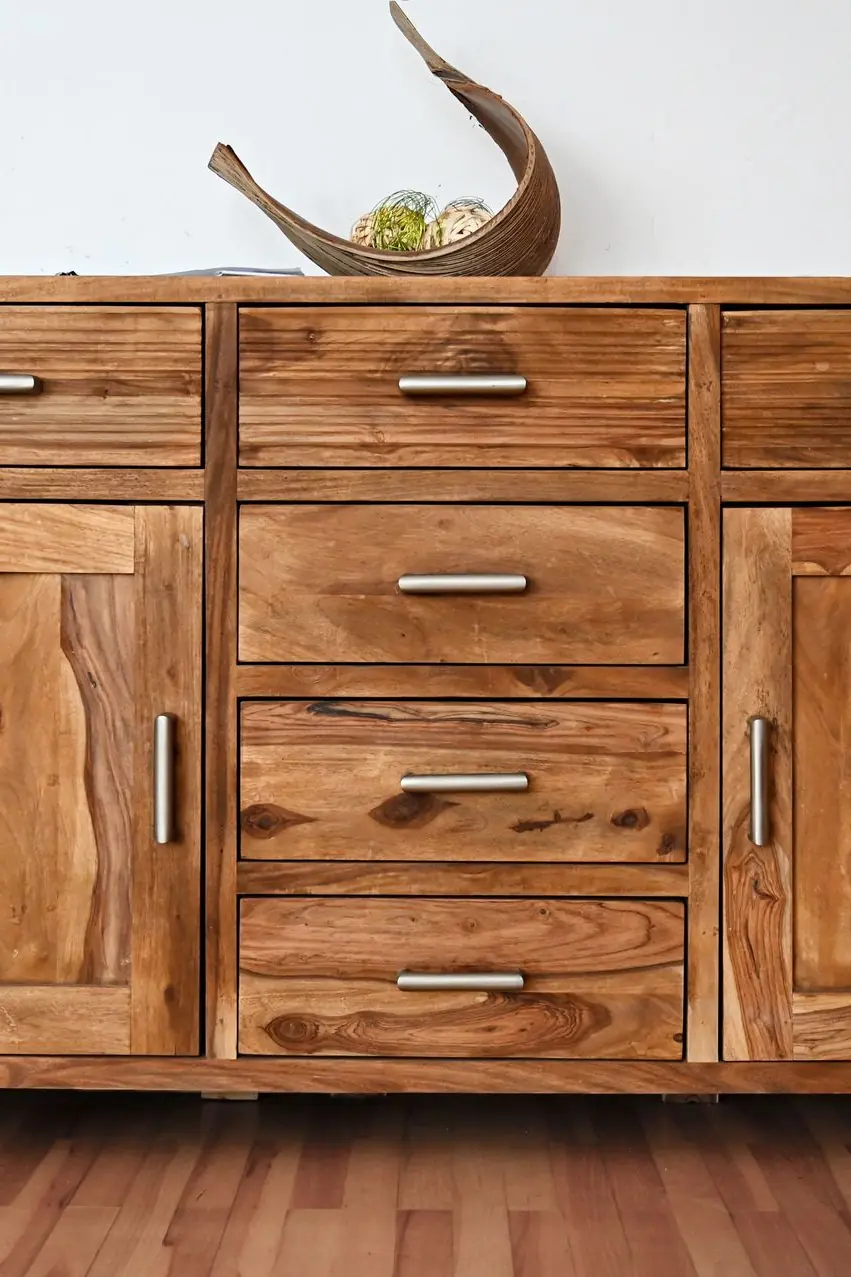
Antique Cabinet Buying Facts
Credit : adrian vieriu
Cost: Solid antique cabinets run 300 to 900 dollars at estate sales, less than most new solid wood equivalents.
Time: Budget one afternoon for inspection, transport and a thorough clean before it enters the room.
Skill Level: Beginner. A tape measure, flashlight and nose for musty smells cover most checks.
Best For: Rooms needing one storied piece that hides clutter behind honest doors and drawers.
Run a hand along the back boards and inside the drawers before money moves. Solid backs, dovetailed drawers and a faint beeswax smell signal honest age. Veneer bubbles and fresh glue lines mean patience will serve better than hope. I’ve seen this work well in many cases where one antique outperformed a wall of new units.
Leather And Walnut Pairing
Credit : Lupita Moreno
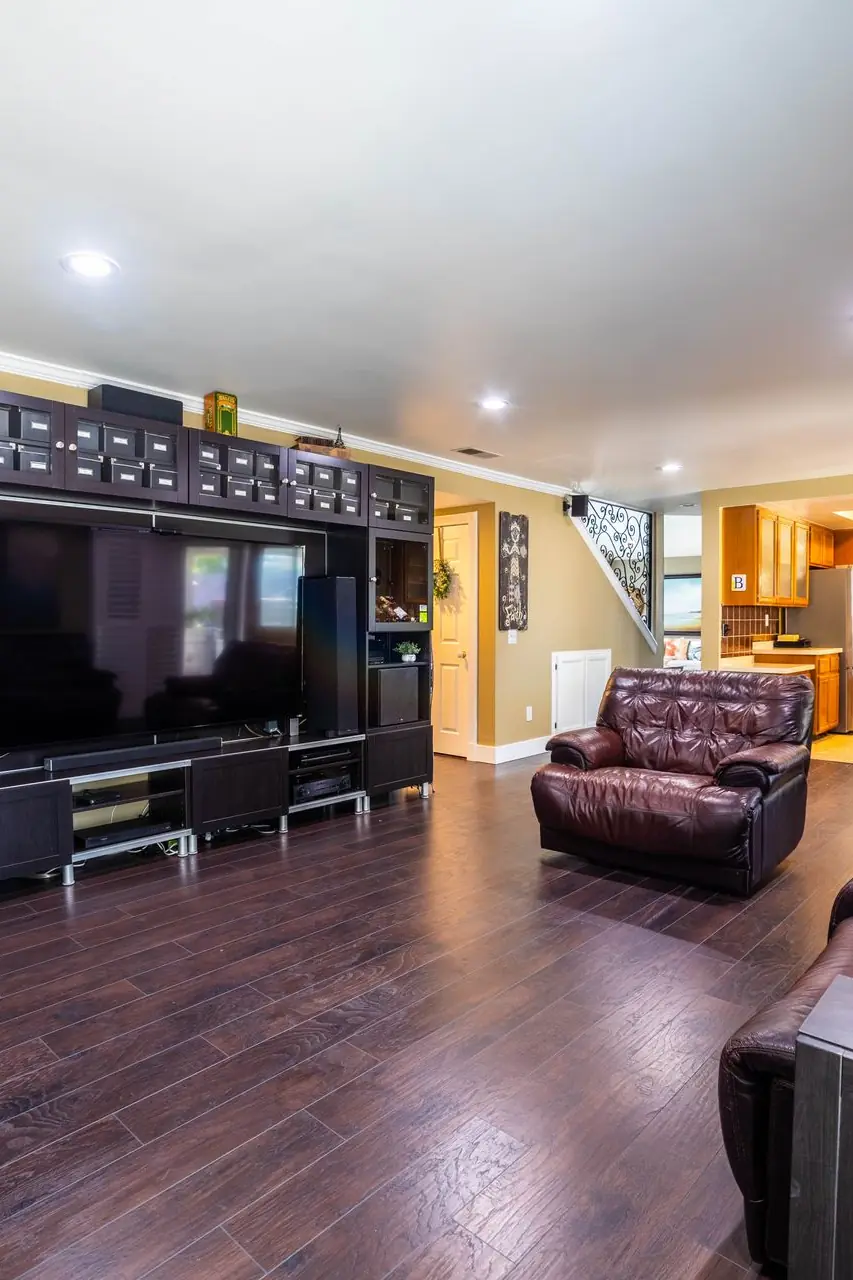
Cognac leather and walnut share the same warm undertone, so they settle beside each other without a fight. A leather recliner or sofa throws a soft sheen against the wood’s matte grain, and both materials age in the same direction, gaining character instead of looking tired.
Break the pairing with one cool note so the warmth stays interesting. A black metal floor lamp, stone side table or the graphic contrast used in large wall art living room ideas keeps the scheme from turning syrupy. Condition the leather twice a year and it will repay the effort for decades. Brush crumbs from the seams while you work.
Vinyl Console Styling
Credit : Alina Vilchenko
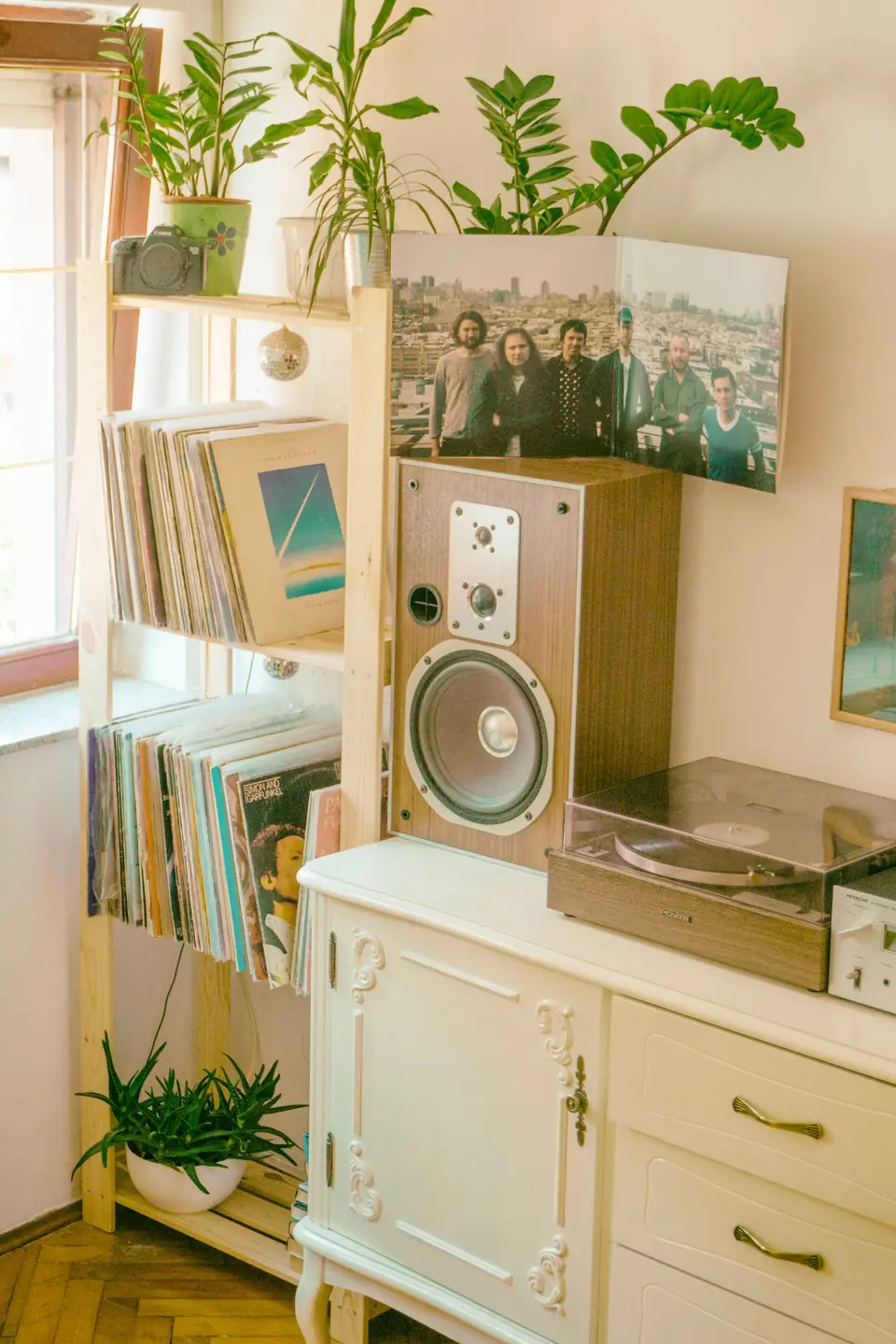
- Set the turntable on the console’s strongest span, usually above a leg, to keep vibration low.
- Stand favorite sleeves upright in a front row; the artwork becomes rotating decor with zero extra cost.
- Give records air. Leave a finger of space at each end of a row so jackets slide without scuffing.
- Park the speaker on a cork mat. Bass stays tight and the wood top escapes ring marks.
A record corner earns daily use when the ritual stays easy. Keep the cleaning brush in the top drawer and a small lamp close for reading liner notes. The console stops being furniture and starts being the room’s evening habit.
Vintage Chair Corner Charm
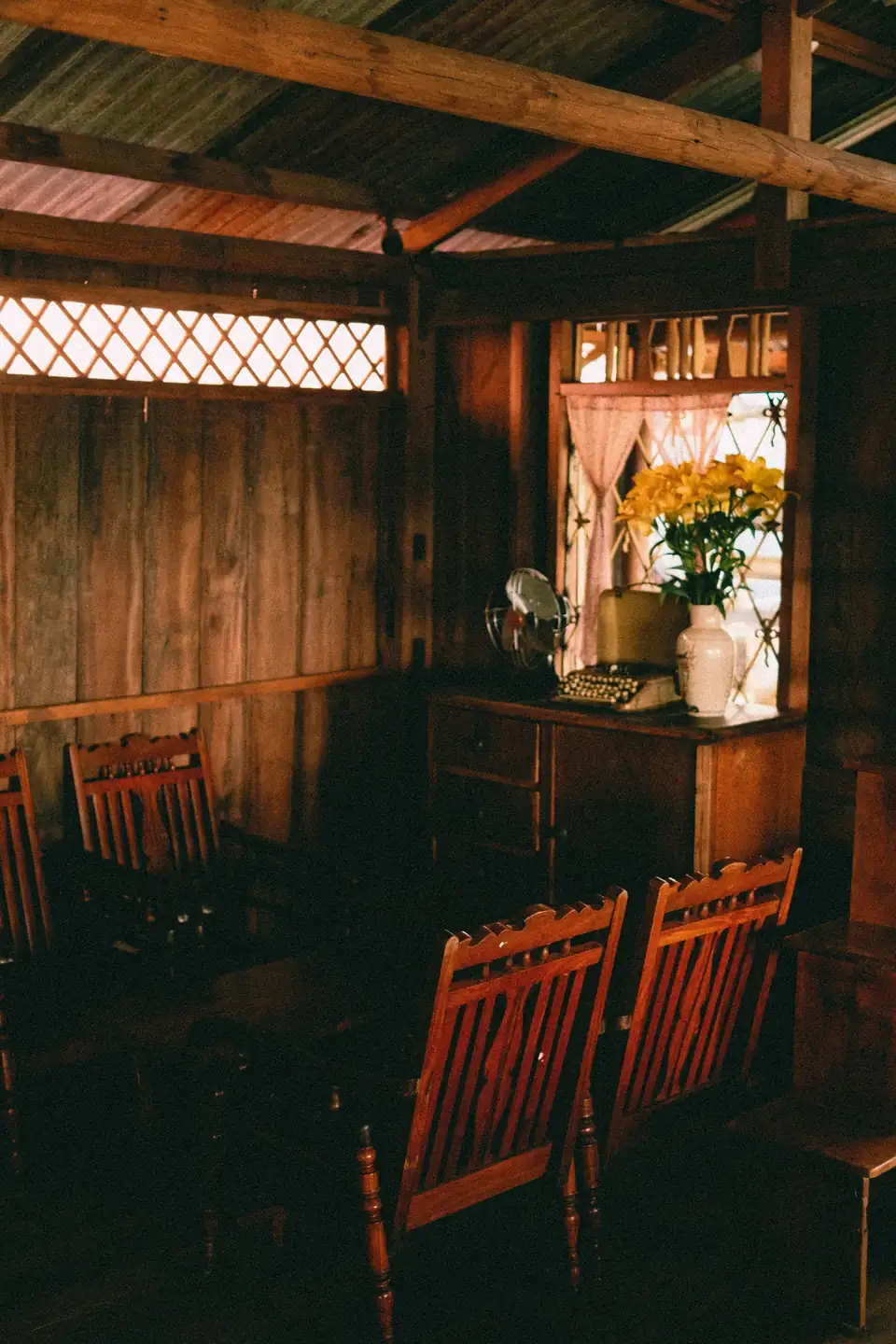
Credit : Thanh Luu
Quick Tip: Test a vintage chair with your full weight and a gentle sideways rock before paying. Quiet joints and even legs mean years of use; a creak at the back posts often means regluing you can do at home in one evening with clamps. Check the underside for a maker’s mark while you are down there.
A single old chair with honest wear anchors a corner better than a matched pair ever could. Drape nothing over it for the first month and let the shape speak. Corners like this collect compliments because they feel found, not decorated. A small stack of art books on the floor beside it finishes the story.
Bare Wall To Shelf Wall

Credit : Thanh Luu
BEFORE: A long wall held nothing but a clock and the echo of the television. Storage bins crowded the floor beneath it, and the room’s best light fell on a blank, wasted stretch of plaster.
AFTER: A run of dark shelving now climbs that wall, holding books, plants and the good ceramics. This is where dark wood furniture living room ideas earn their keep, turning dead space into the hardest working wall in the home.
Measure the wall three times and sketch the shelf spacing around your tallest books before ordering a single board. Wall studs dictate bracket positions, so let the structure set the rhythm. The wall will look planned because it genuinely was.
Open Shelf Styling Steps
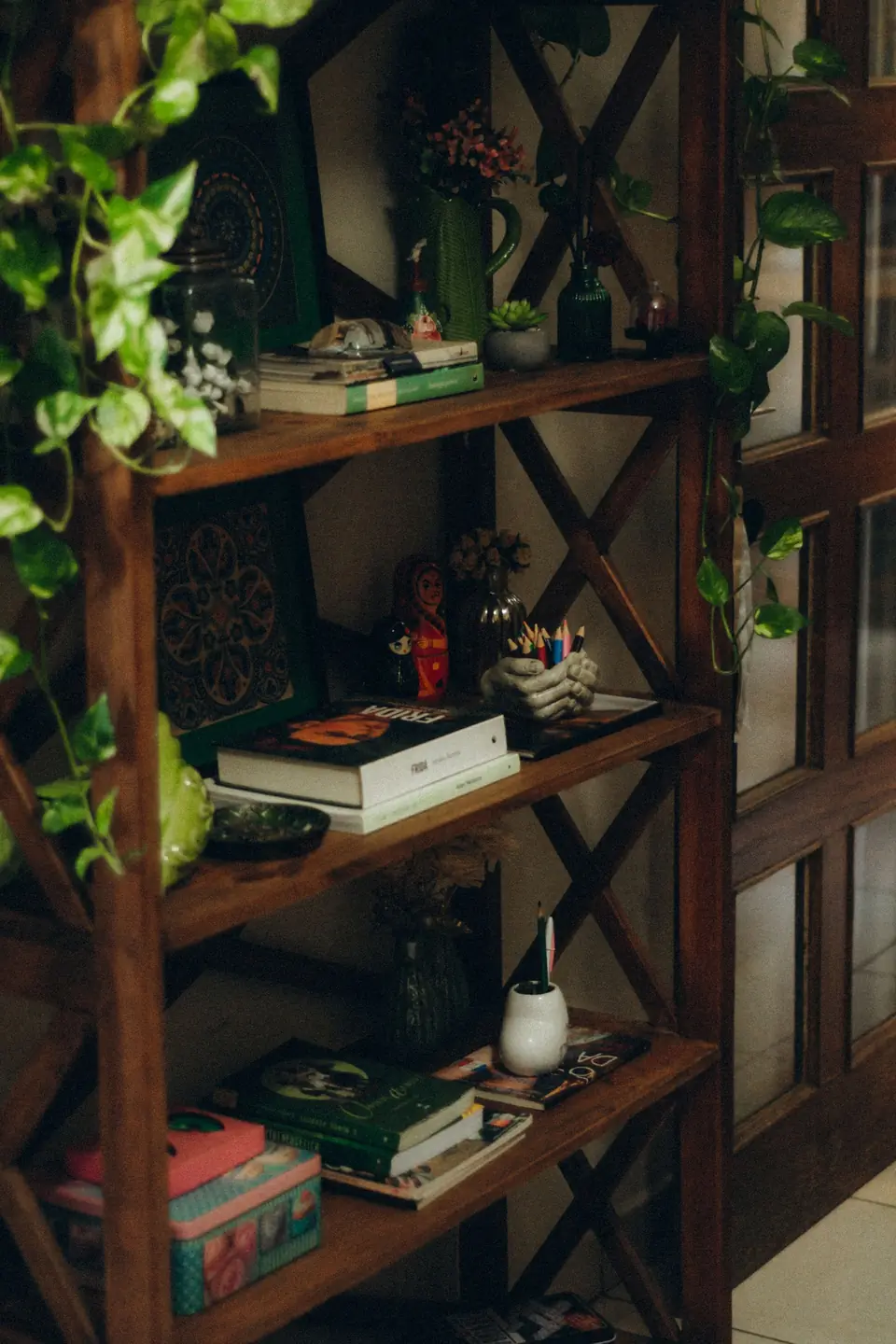
Credit : Diego Bispo
- Empty every shelf and clean the wood before styling anything back onto it.
- Place the biggest items first, one per shelf, staggered so the weight zigzags down the unit.
- Fill gaps with book stacks laid flat, spines facing out, topped with one small object each.
- Step back and remove one item from every shelf. Open space is what makes the rest look chosen.
Shelves styled this way survive real life, because every object has a reason and a home. Dust weekly with a dry cloth and the dark wood keeps its depth. Restyle one shelf each season rather than the whole unit at once.
Dark Versus Light Flooring
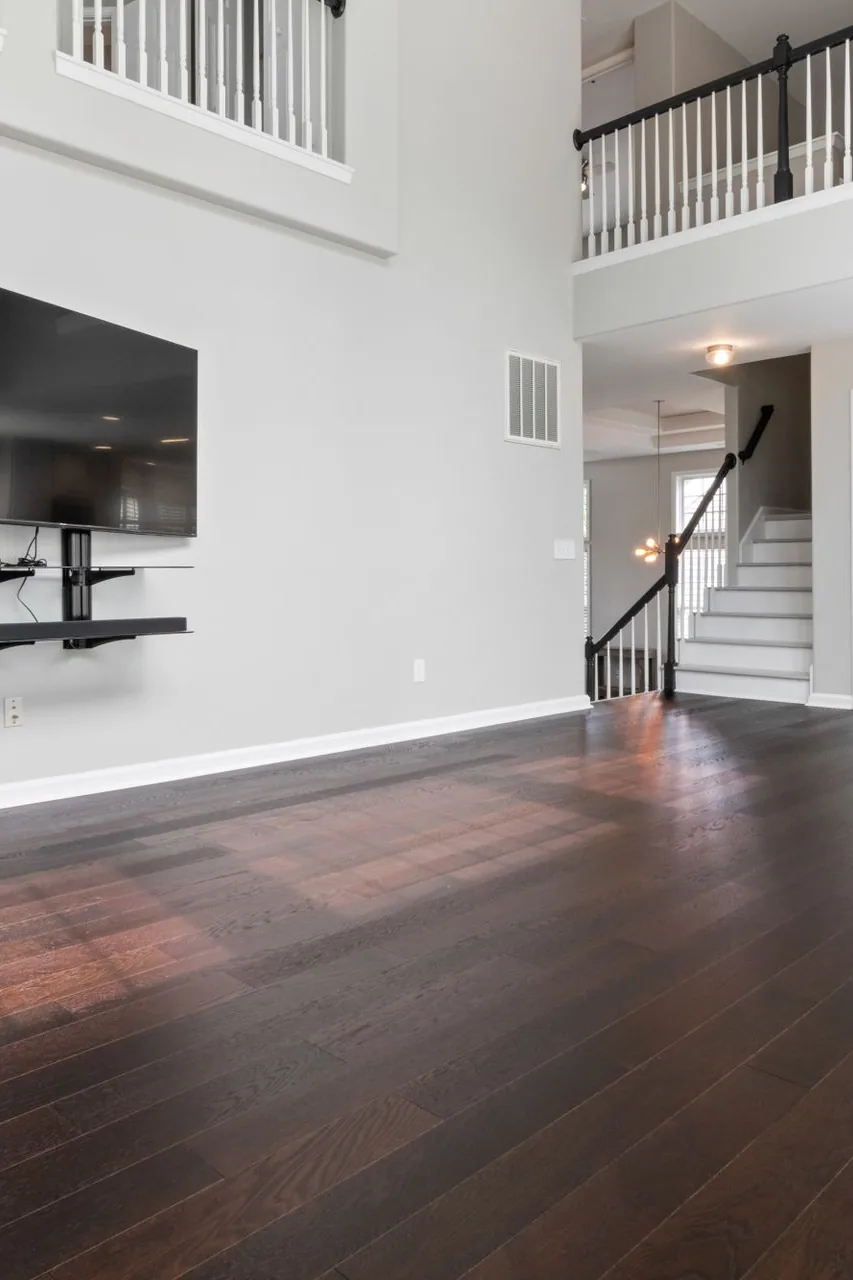
Credit : Curtis Adams
| Feature | Dark Floors | Light Floors |
|---|---|---|
| Mood | Grounded, intimate evenings | Airy, Scandinavian calm |
| Upkeep | Shows dust, hides stains | Hides dust, shows stains |
| Light Effect | Drinks light, needs lamps | Bounces light around |
| Best Pairing | Cream sofas, brass accents | Walnut pieces, black details |
| Resale | Timeless in classic homes | Broad modern appeal |
Neither floor wins outright, because the right answer follows your light and your tolerance for sweeping. North facing rooms often suit lighter boards, while sun flooded spaces can carry the drama of dark planks. Choose with a sample underfoot for a week. I’ve noticed dark floors make pale furniture look more expensive than it is. Renters can fake the look with a deep toned rug.
Sideboard Art Led Vignette
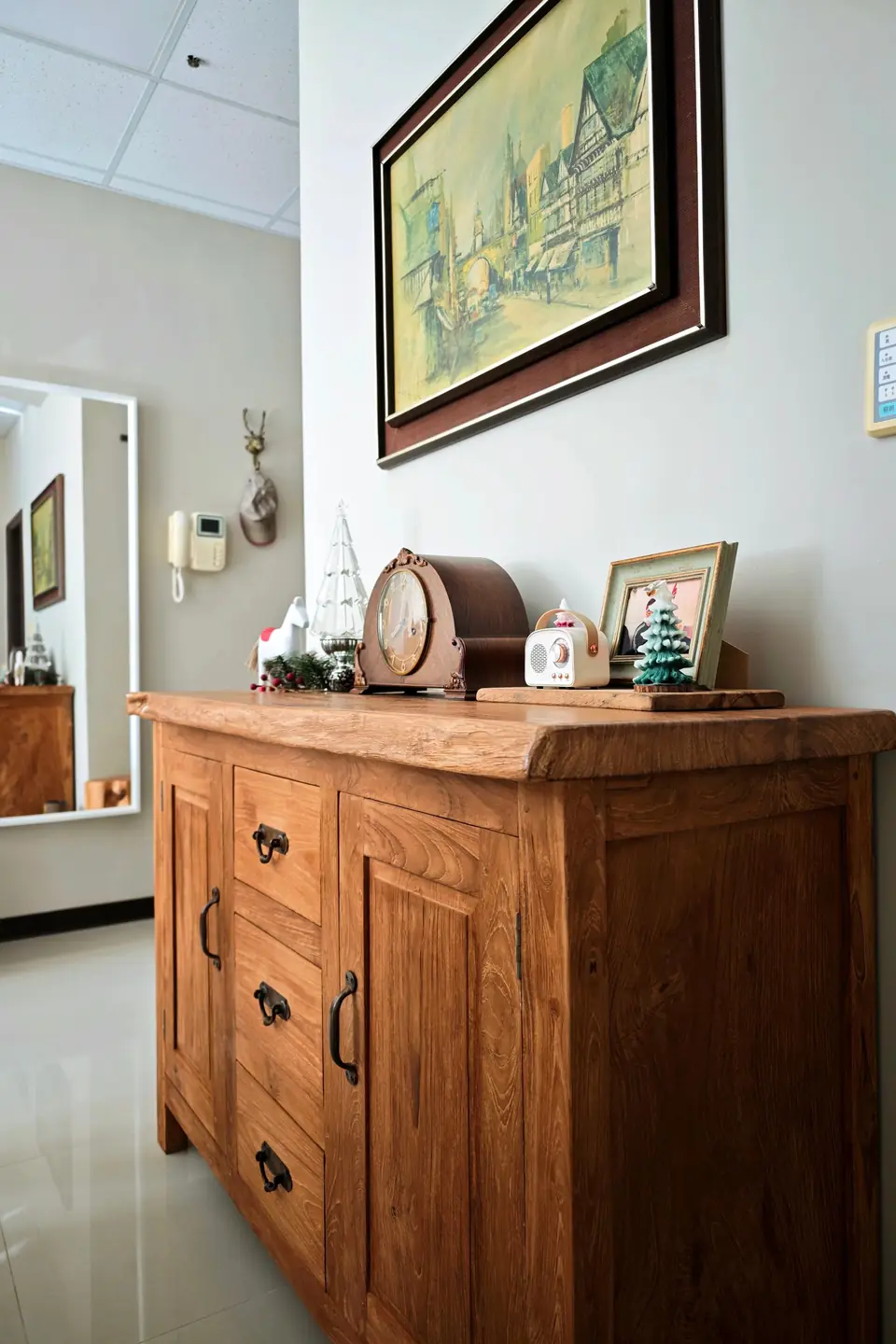
Credit : Daven Hsu
Do:
- Hang the art first, centered on the sideboard, then build the objects up to meet it.
- Work in threes: one tall piece, one medium stack, one low dish to ground the group.
- Leave a hand’s width of bare wood at each end so the arrangement can breathe.
Don’t:
- Do not line objects in a straight row like a shop shelf awaiting customers.
- Do not lean art so far back that it slides and scars the wall paint.
- Do not match every object to the art’s colors; echo one tone and stop.
An art led vignette gives the sideboard a finished, gallery calm. Stand across the room and adjust until the group reads as one shape rather than separate things. Guests will drift toward it without knowing why.
Floor Tone Mixing Facts
Credit : Curtis Adams
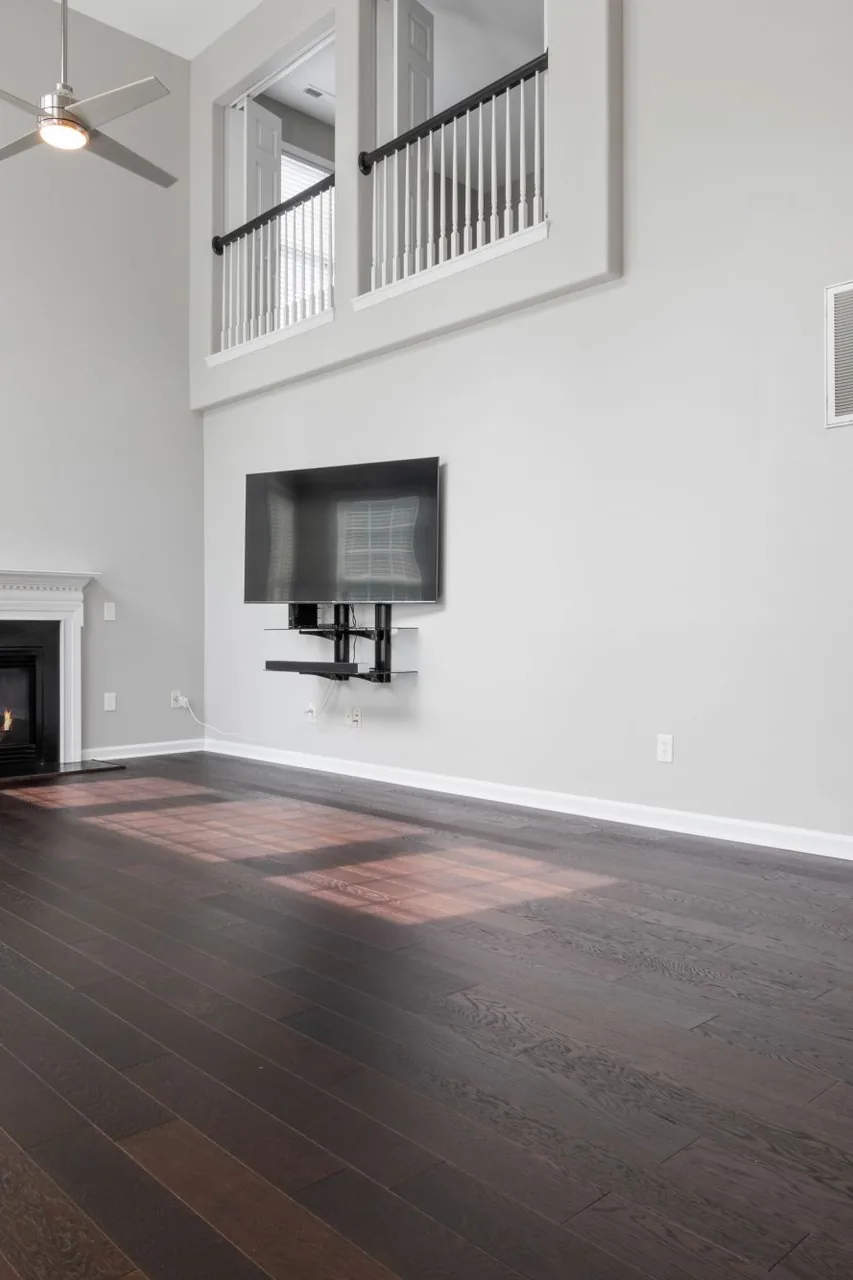
Cost: Sampling stain on offcuts costs under twenty dollars and saves a whole floor of regret.
Time: One weekend covers testing tones, taping samples and checking them in morning and evening light.
Skill Level: Beginner. The skill is patience, not technique, and every sample board teaches the next.
Best For: Open plan rooms where floor, furniture and cabinetry tones meet in one sightline.
A floor one or two shades darker than the largest furniture piece grounds a room without a visible border. Matching exactly can look flat, while clashing undertones read as a mistake. The safe move is repeating the floor tone once at eye level.
Cream Textiles Brighten Wood
Credit : Curtis Adams
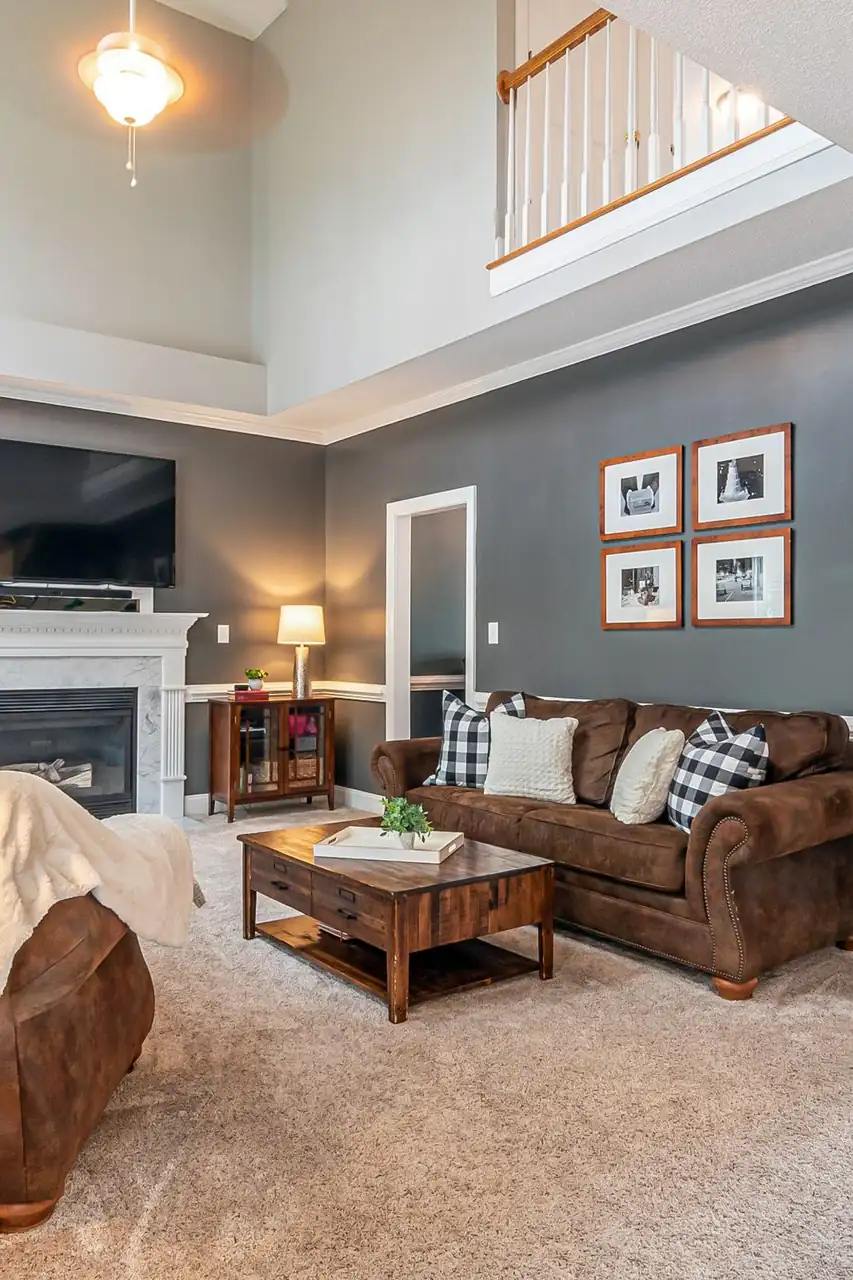
Cream is dark wood’s oldest friend. A pale sofa throw, unbleached linen cushions and a light wool rug lift walnut and mahogany out of shadow, and the wood returns the favor by making every cream tone look richer and warmer than it would against white paint. The contrast also photographs beautifully, which is why these rooms fill saved boards.
Keep the creams varied so the softness has texture. Nubby weaves beside smooth cotton, a stripe beside a plain, and one patterned cushion to catch the eye. Washable covers are the honest choice where children, dogs or red wine live nearby.
Dark Wood Ceiling Beams
Credit : Derwin Edwards
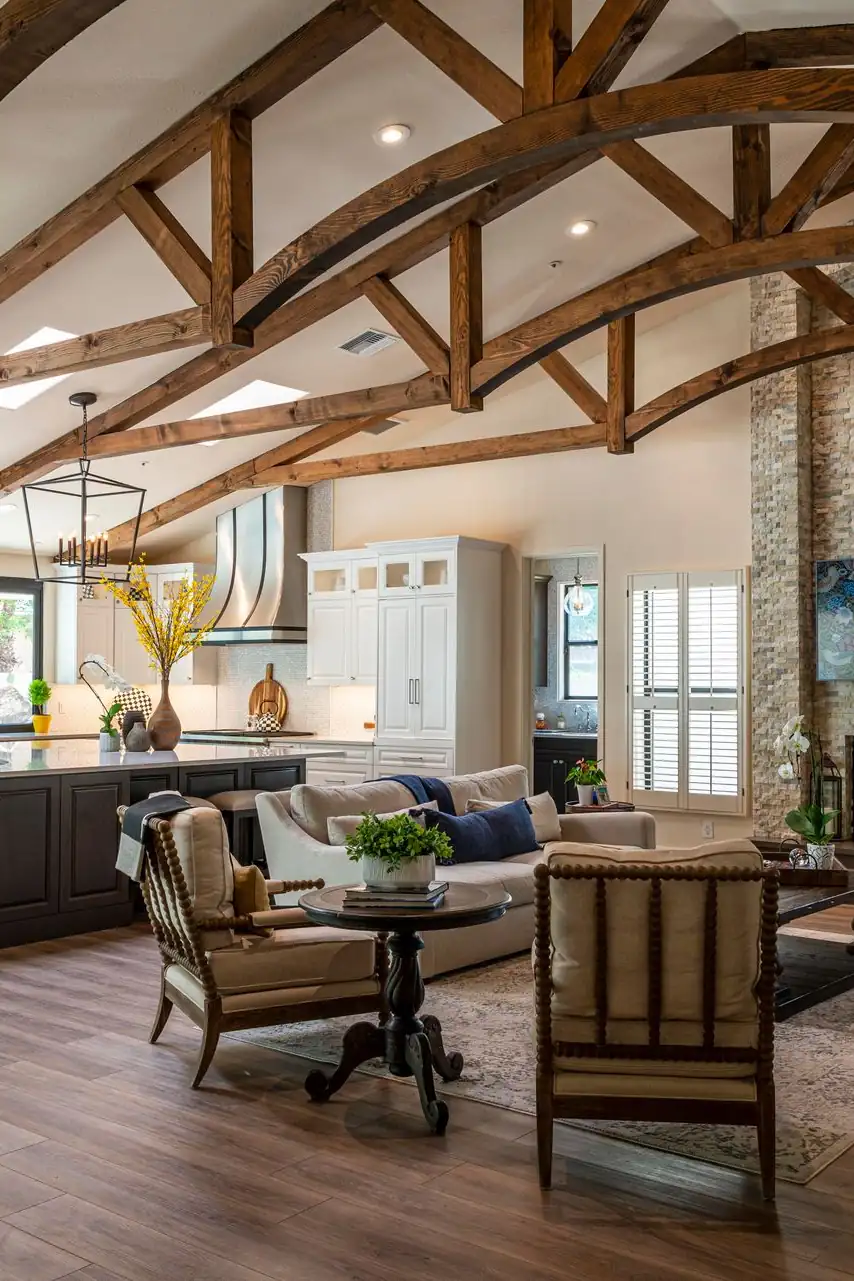
- Check the ceiling height first. Beams earn their drama above eight feet; lower rooms suit slimmer profiles.
- Run beams across the shorter span. The room reads wider and the timber lengths stay affordable.
- Stain samples belong on the actual beam wood, since ceiling light shifts every tone cooler.
- Space beams evenly with the lighting plan, so pendants hang between timbers, never through them.
Beams change how a room sounds as much as how it looks, softening echoes in tall spaces. Faux hollow beams carry the look at a fraction of the weight where structure forbids solid timber. Either way, the ceiling finally joins the conversation.
Mirror Above Sideboard Glow
Credit : İlknur Çelik
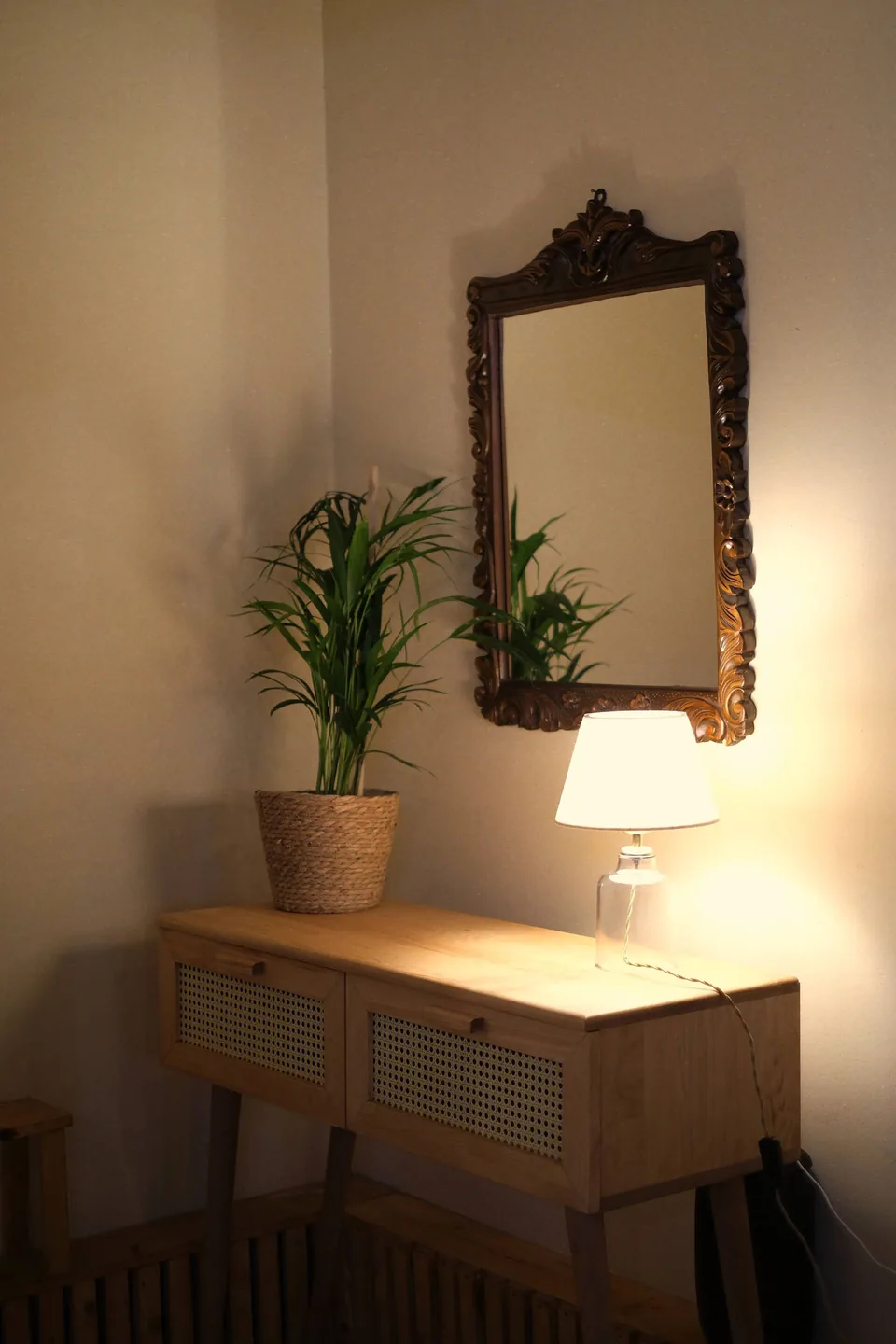
Quick Tip: Hang the mirror so its center sits at eye level when standing, then tilt it down a finger’s width. The slight angle catches lamplight and throws it across the sideboard instead of flashing the ceiling at everyone who walks past. Test the angle with painter’s tape before drilling.
A mirror doubles the work of every candle and lamp on the wood below it. Dark frames echo the sideboard tone, while a thin brass edge adds one bright note. The pairing flatters evening rooms especially, when the glass turns amber. It also makes a narrow room feel twice its width on the darkest wall.
Dim Corner Lamp Fix
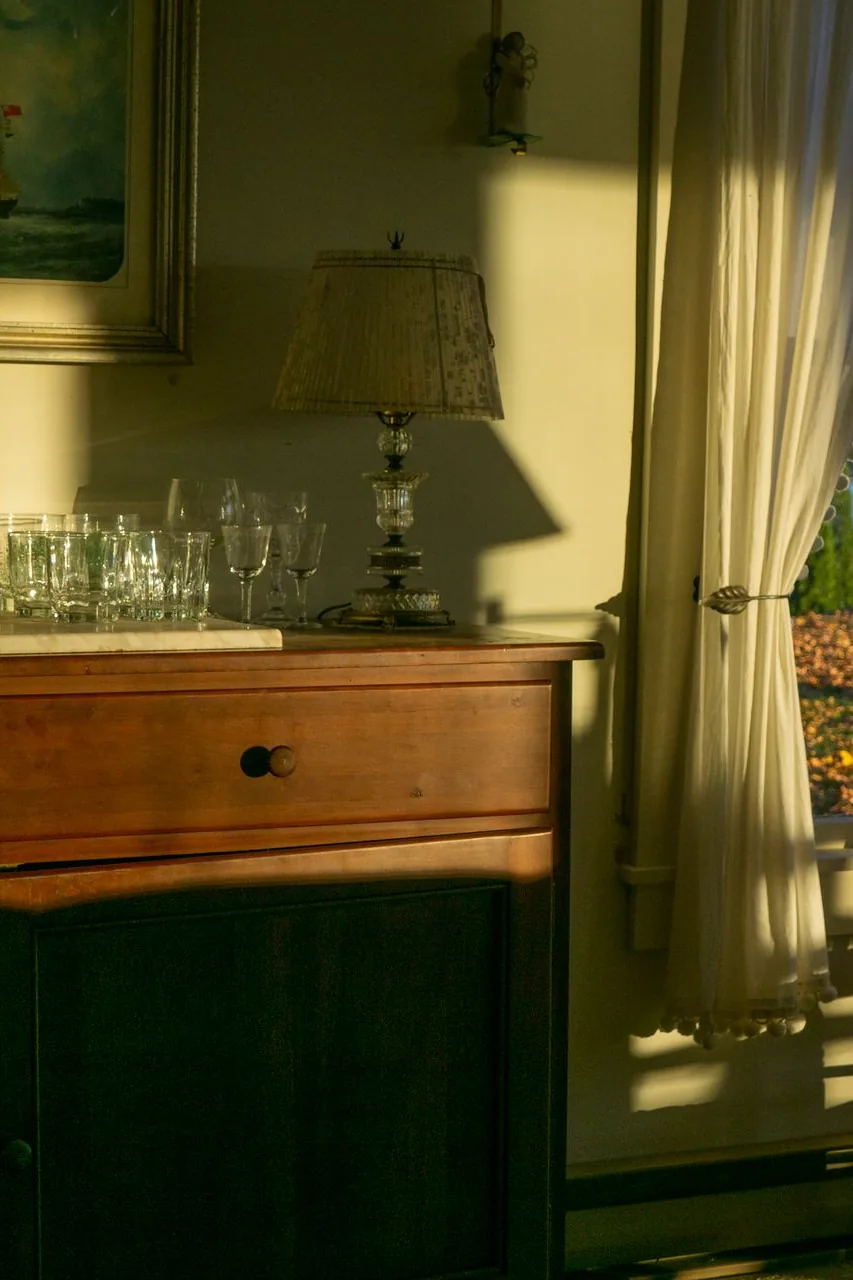
Credit : Matt Barnard
BEFORE: The corner beside the sofa swallowed light whole. The sideboard there sat in permanent dusk, its grain invisible, and nobody chose the seat beside it after six in the evening.
AFTER: One table lamp with a warm bulb and a linen shade moved onto the sideboard, and the corner woke up. Wood grain glows again, the seat is claimed nightly, and the lamp’s reflection doubles the effect in the window glass.
Light placed at seated eye level flatters both people and timber. Keep bulbs warm, between 2700 and 3000 kelvin, and let one lamp serve one corner fully rather than sprinkling weak light everywhere. Depth returns the moment shadows have something to push against.
Mantel Styling Step By Step
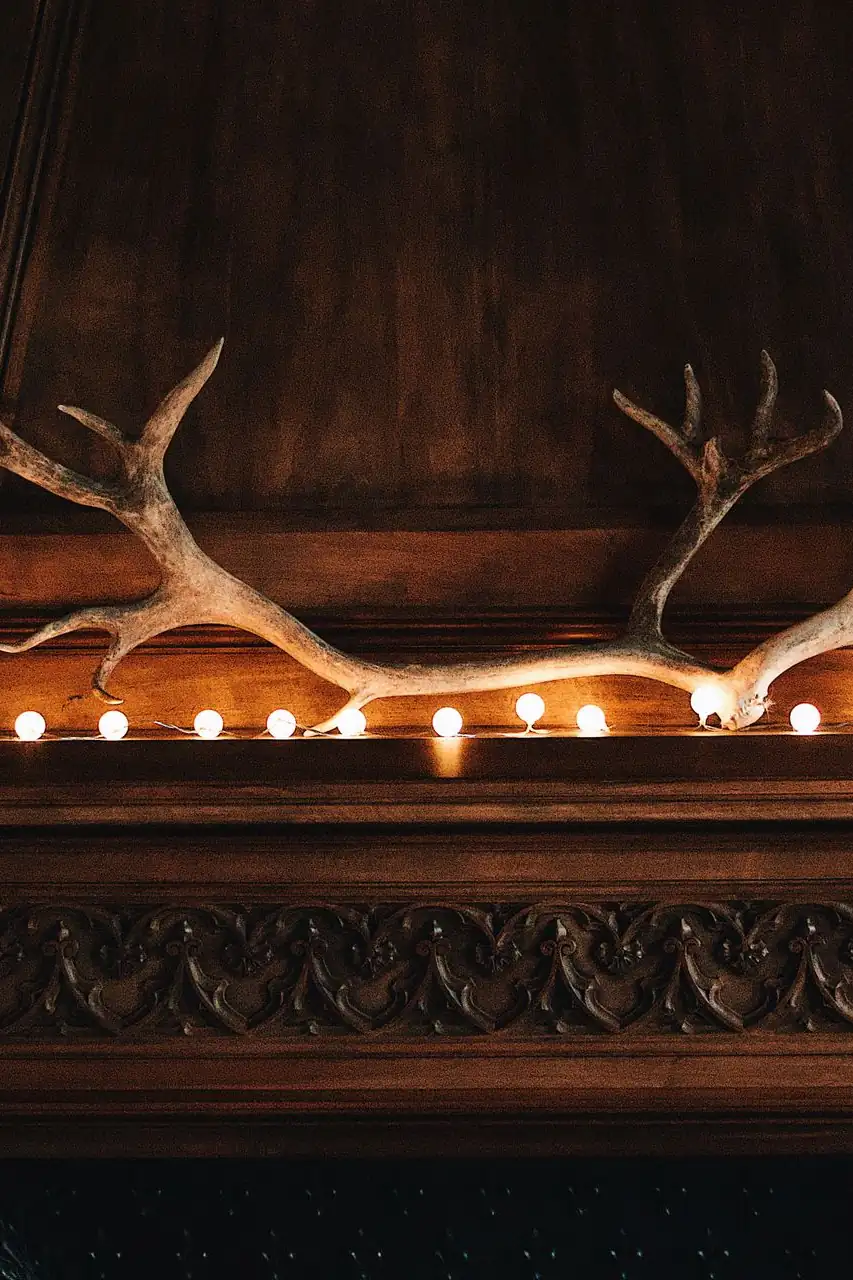
Credit : Maël BALLAND
- Clear the mantel fully and dust the wood before a single object returns to it.
- Set one tall anchor at one end, a branch, candlesticks or a leaning framed print.
- Run a low line along the middle: garland, a row of small candles or stacked books.
- Finish with one personal piece at the other end to balance the anchor’s weight.
A mantel styled in layers reads finished from across the room and interesting up close. Keep anything flammable a safe distance from the firebox opening, and swap the middle layer with the seasons. The dark wood shelf itself never needs to change.
Sideboard Versus Console Table
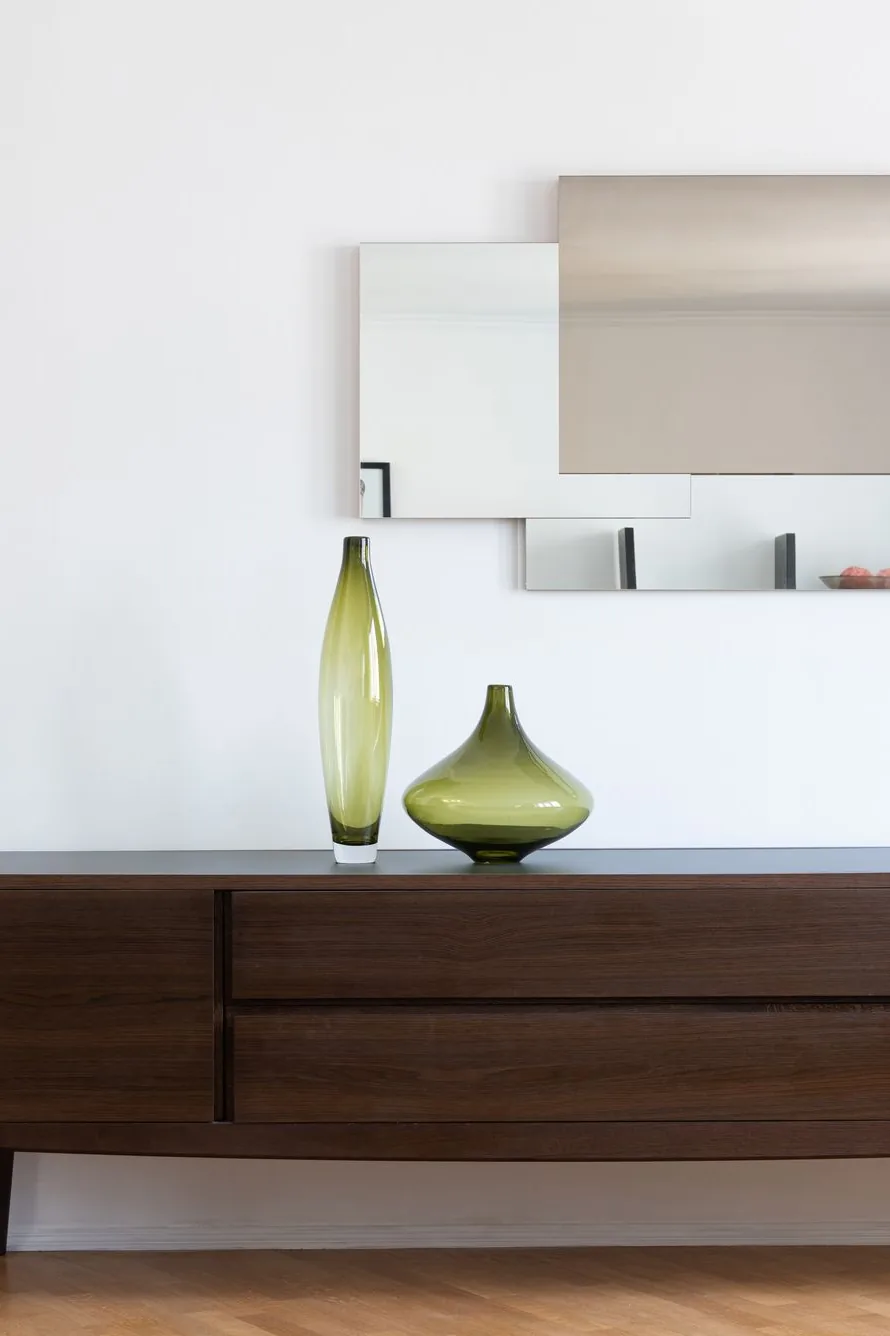
Credit : Max Vakhtbovych
| Feature | Sideboard | Console Table |
|---|---|---|
| Height | Low, below window sills | Tall, near hip height |
| Storage | Cupboards and drawers | Open shelf or none |
| Footprint | Deep, holds serving ware | Slim, suits hallways |
| Best Job | Dining storage plus display | Entry and sofa back styling |
| Cost | Higher, more timber | Lower, lighter build |
The right choice follows the wall it serves. Storage hungry rooms gain more from a sideboard’s closed doors, while narrow spaces breathe easier under a console’s open legs. Both wear dark wood beautifully, so let the job decide rather than the showroom. In my experience, households use closed storage daily and open shelves mostly for show. Measure the wall before falling for either. Dark finishes hide the scuffs both pieces collect in busy homes.
Dark Wood Care Rules
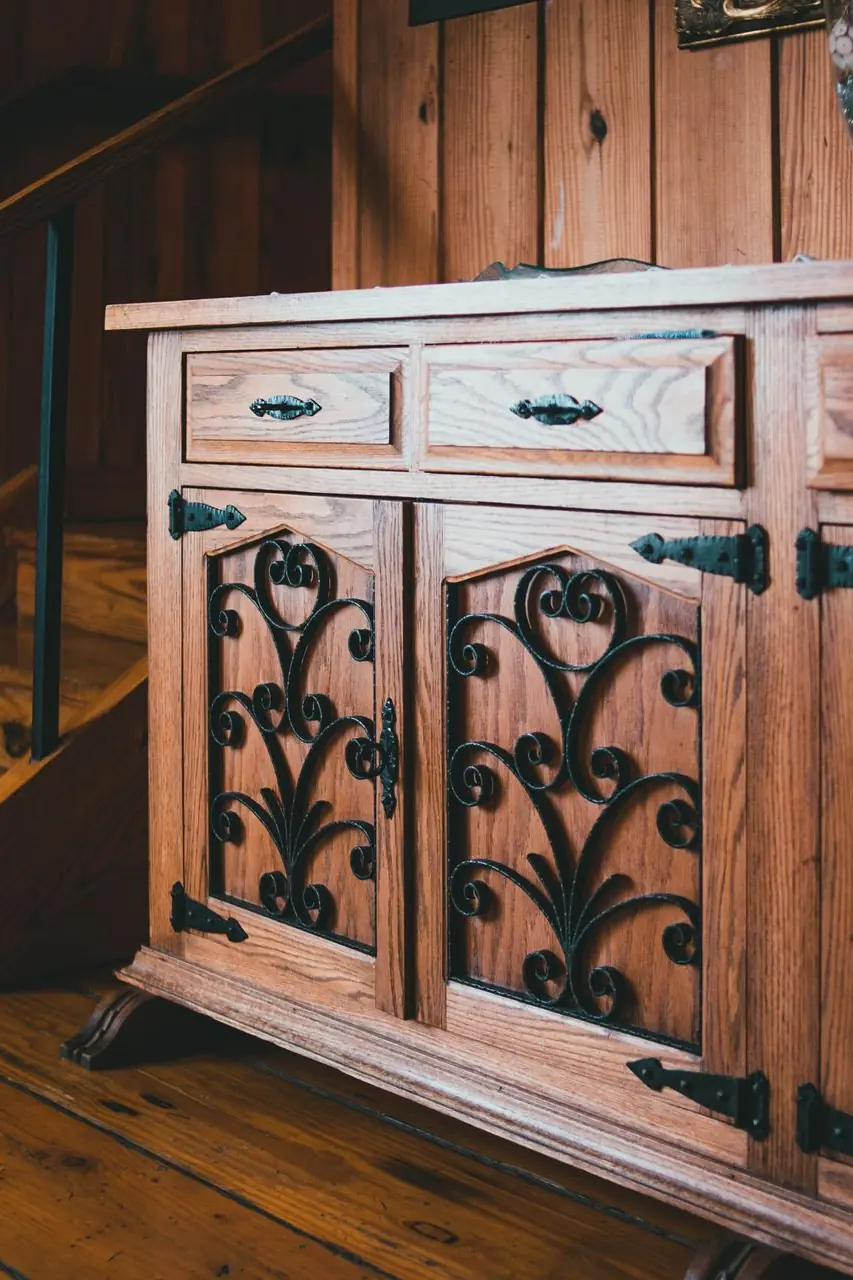
Credit : Erik Mclean
Do:
- Dust with a dry microfiber cloth weekly, following the grain so grit never grinds in.
- Set coasters and felt pads under everything that lives on the surface full time.
- Feed the wood with oil or wax twice a year, before the driest season starts.
Don’t:
- Do not spray silicone polish, which builds a cloudy film that dulls the grain.
- Do not park pieces in direct sun all day; rotate smaller items so fading stays even.
- Do not soak the surface when cleaning, since standing water lifts most finishes.
Care this simple takes minutes and pays back decades. Dark wood hides minor sins gracefully, but steady small habits keep the depth that made you choose it. The grain you protect now becomes the heirloom finish later.
Conclusion
Dark wood rewards patience. Start with one honest piece, balance it with cream textiles and warm light, and let the room deepen at its own pace. These dark wood furniture living room ideas are built to layer slowly, one shelf, one table, one revived sideboard at a time. I’ve seen how small changes like these can completely shift the way a space feels, from flat and forgettable to settled and rich. Save this guide to your Pinterest board before you shop, try the idea that fits your room first, and share the corner that changes most. Take a photo before you begin, so the progress stays visible.