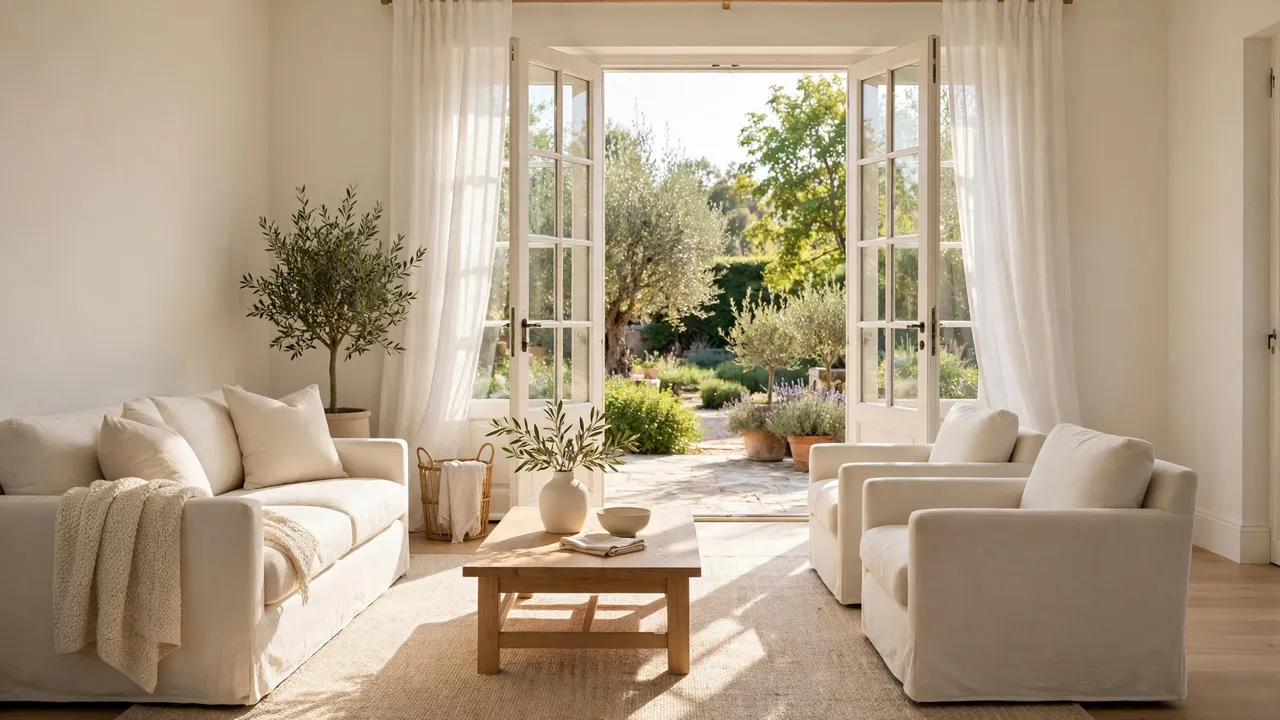
How to Arrange Furniture in a Room With French Doors
French doors bring light and charm into any room, but they can make the layout tricky. Learning how to arrange furniture in a room with french doors starts with treating the doors as the brightest feature instead of an obstacle. Every piece should earn its spot without blocking the swing or the view.
Walk the room with fresh eyes before you move anything. Notice where sunlight falls through the glass at different hours, which way the doors open, and where feet naturally travel. I have noticed that a quick floor plan sketch saves hours of heavy lifting later. Readers planning tight bedrooms may also like ideas from how to make a small bedroom work with a desk and dresser for fitting function into small corners.
Map the Door Swing and Traffic Paths First
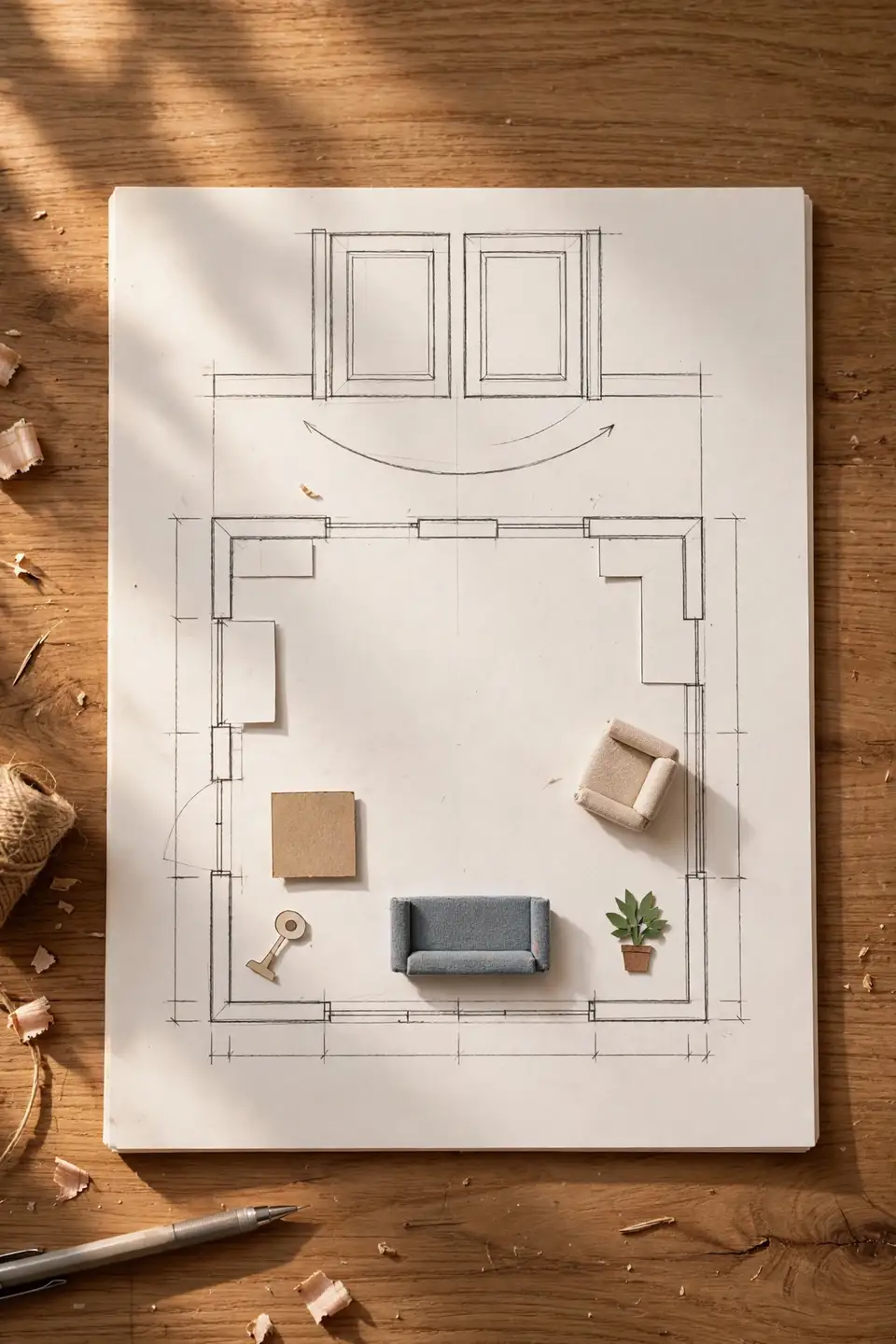
Start by taping the floor where the French doors swing open. Swing the doors wide so you can see exactly how much space they need. Measure from the door edge to the nearest wall and jot the number down. This simple map becomes your layout guide.
Next, mark the natural traffic paths with painter’s tape. Walk from the main entrance to the doors, keeping about 30 inches of clear passage. Furniture outside the tape lines will never block the swing. This one step prevents almost every French door layout problem I have seen.
Anchor Seating Around the Doors as a Focal Point
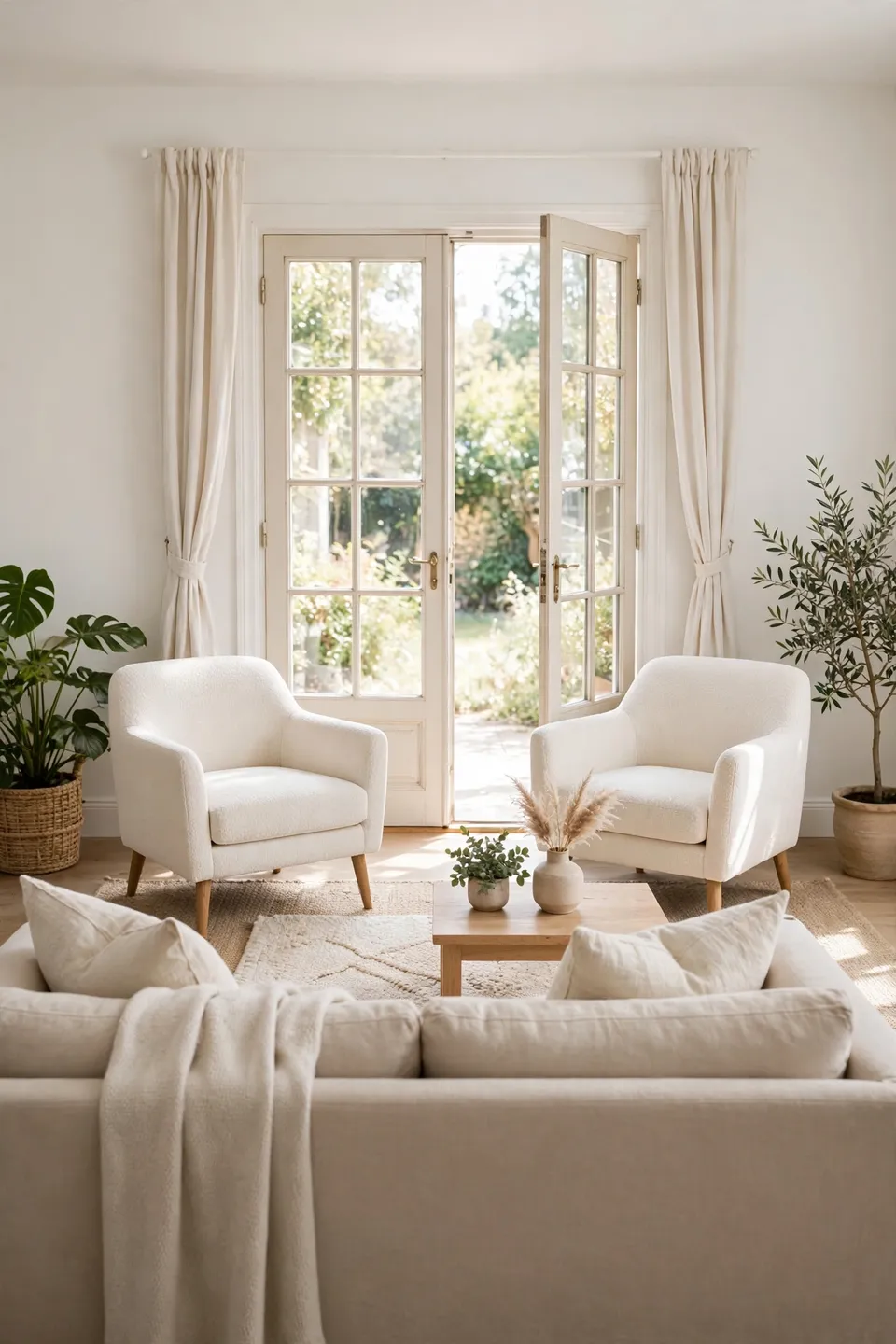
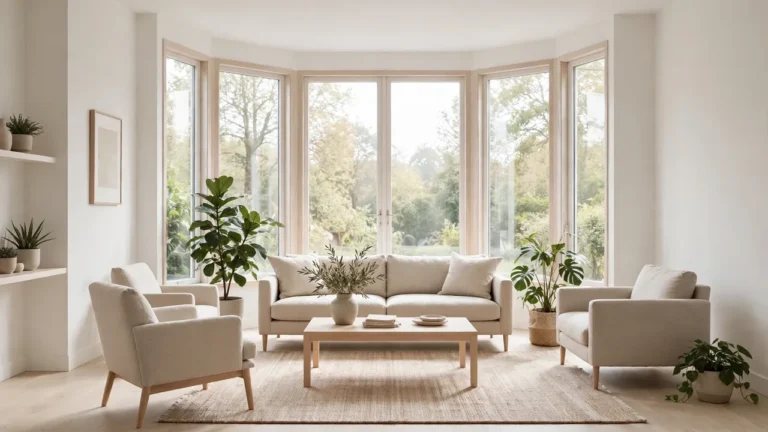
French doors deserve to be the visual star, so let your seating face or frame them. When chairs angle toward the glass, the room feels open and the light becomes part of the decor. This works in living rooms, bedrooms, and dining spaces alike.
- Place the largest piece, like a sofa, opposite or perpendicular to the doors, never blocking them.
- Angle two chairs or a loveseat so they catch the daylight and frame the doorway.
- Keep low pieces, such as ottomans or coffee tables, at least two feet from the swing arc.
- Center a rug under the main seating group to anchor the arrangement visually.
The result is a layout where the doors pull the eye and the seating supports the view. Guests naturally gravitate toward the light, and the room feels larger because sight lines stay long and clear through the glass panes. Even small rooms gain a sense of airiness when the brightest wall becomes the anchor.
Keep Furniture Clear of the Swing Zone
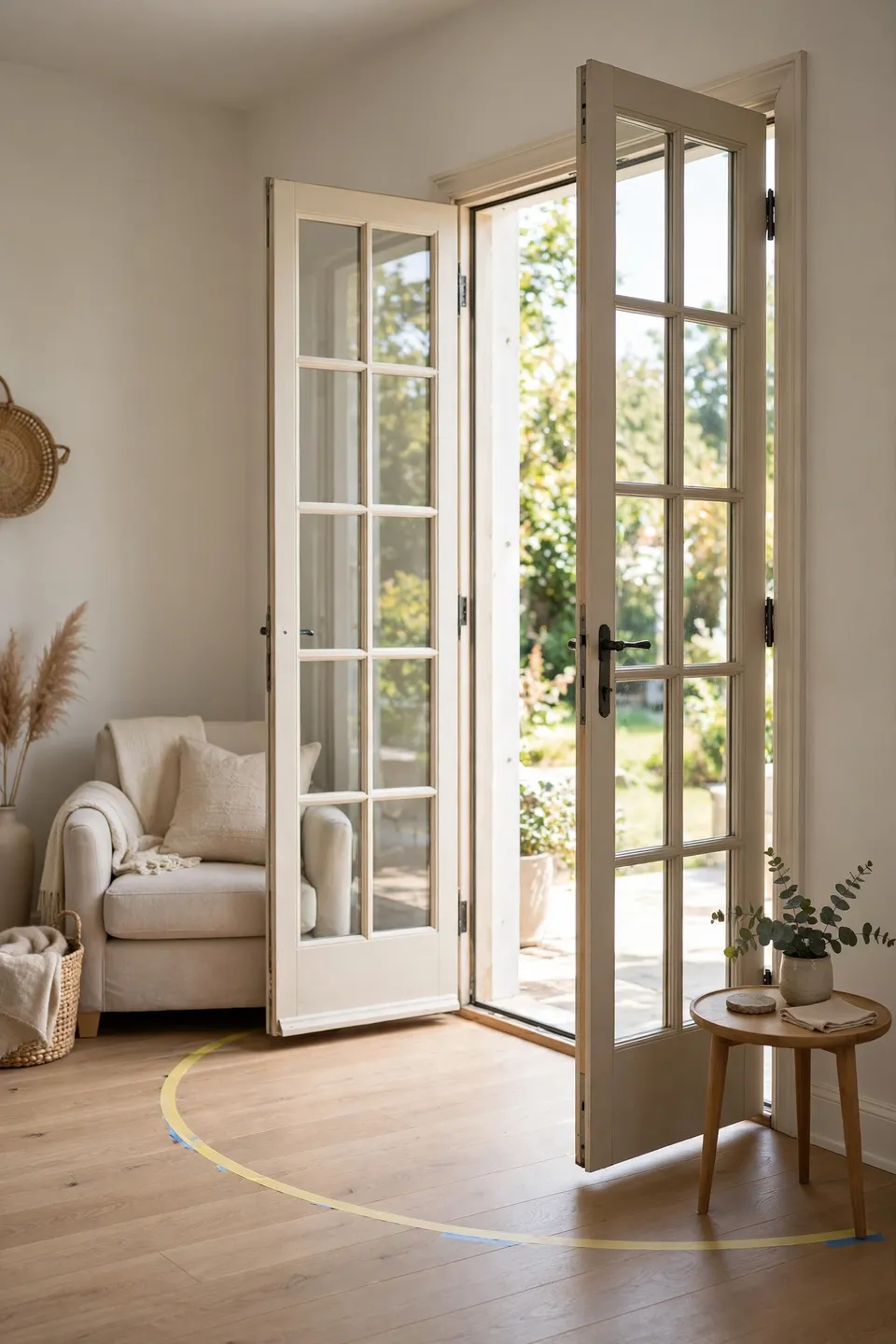
Quick Tip: Leave a full door width of empty floor in front of each panel, plus six extra inches. Furniture that sits just outside the arc still feels close, but the doors open freely and nothing gets scraped.
This rule protects both your furniture and the doors. Bookcases, consoles, and tall plants placed inside the swing zone get hit every time the doors move. Keep the arc clean and choose low, movable pieces nearby instead. A small stool or basket can fill the space without risking damage.
The Most Common French Door Layout Mistake

Common Mistake: Pushing a bookcase or dresser against the wall right beside the doors, then finding the doors cannot open past 90 degrees. The room feels cramped, the light gets cut in half, and the doors lose their purpose.
The Fix: Move tall storage to an adjacent solid wall at least one door width away from the frame. Replace it with a low console or a pair of slim plants that sit below the sight line. The doors swing freely and the light floods the room again.
I have seen this mistake in more homes than any other. Tall furniture belongs on windowless walls or beside solid doors, not crowding the glass. Once the swing zone breathes, the whole room feels calmer and brighter, and the French doors finally earn their keep.
What You Need Before Moving Anything
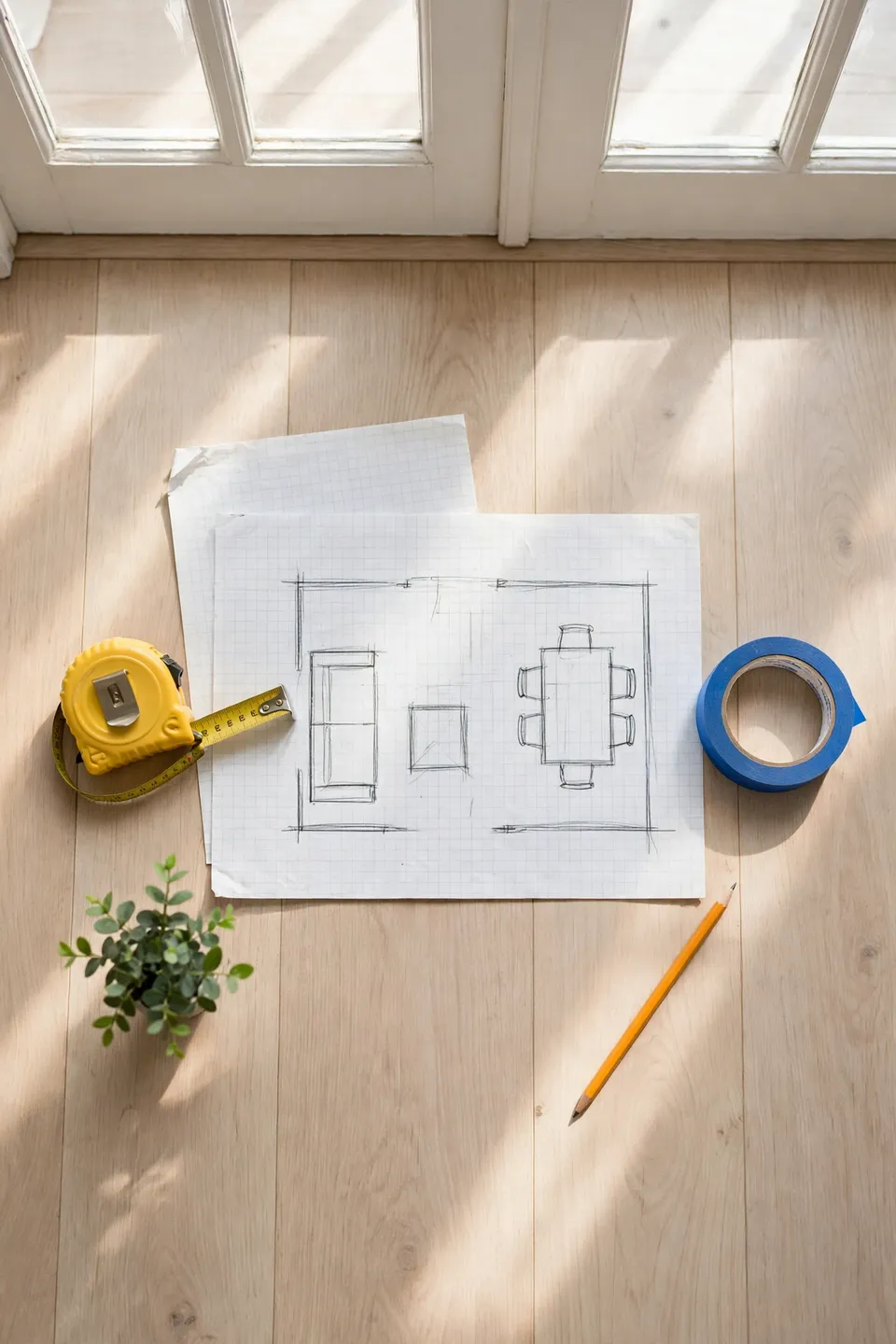
What You Need:
- Tape measure: to record the door width, swing depth, and wall lengths accurately.
- Painter’s tape: to mark swing arcs and traffic paths directly on the floor.
- Graph paper or a simple app: to sketch two or three layout options before lifting furniture.
- Furniture sliders: to test arrangements quickly without scratching floors.
- A helper: an extra pair of hands makes moving sofas and bookcases far easier.
Gather these before you start and the whole project takes an afternoon instead of a weekend. Testing layouts with tape first means you only move heavy pieces once, which saves both energy and floors. I always recommend photographing each option so you can compare them later with fresh eyes.
From Blocked Doorway to Bright Gateway

BEFORE: A sectional crowded the French doors, leaving them half open behind the sofa. The room felt dark in the corners, traffic squeezed past the coffee table, and the doors read as a wall instead of a feature.
AFTER: The sectional moved to the opposite wall, two chairs now angle toward the open doors, and daylight washes across the rug. The same room feels twice as large, and the doors became the favorite spot in the house. For rooms with an angled fireplace as a second feature, ideas from how to decorate a living room with an angled fireplace show how to balance two focal points.
The transformation cost nothing but an afternoon of rearranging. No new furniture, no paint, just respect for the swing zone and the clear sight line through the glass. Once furniture stops blocking the doors, beautiful natural light does most of the decorating work for you.
Do This and Avoid This With French Door Layouts
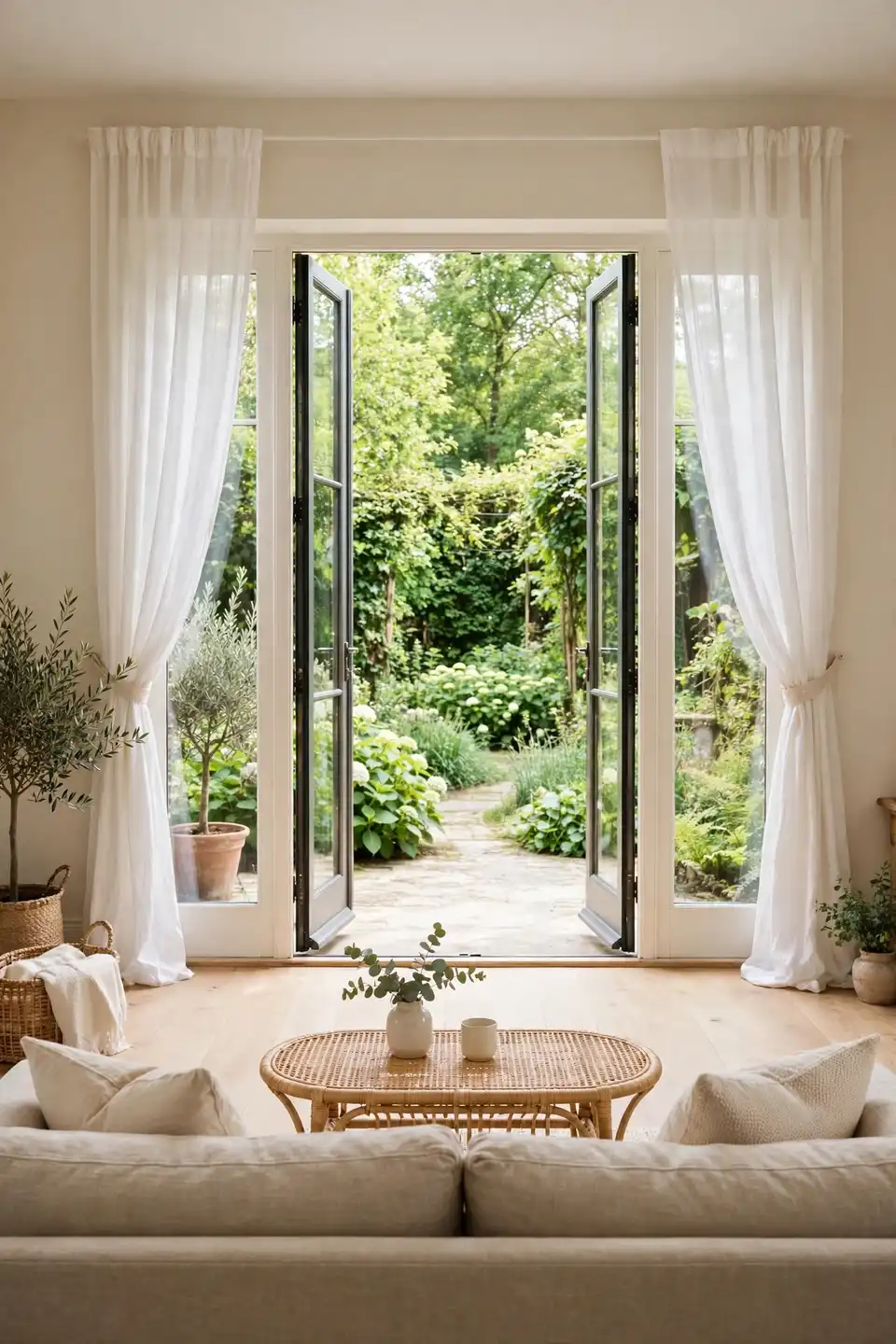
Do This:
- Float the sofa or chairs so sight lines run straight to the glass.
- Use sheer curtains that frame the doors without hiding the light.
- Place a low bench or ottoman in the middle of the room to keep flow open.
- Echo the door color or trim on one furniture piece for a pulled together look.
Avoid This:
- Do not put tall bookcases within a door width of the frame.
- Do not center heavy furniture directly in front of closed doors.
- Do not use dark, heavy drapes that swallow the daylight.
- Do not route the main walkway through the swing arc.
These small choices add up to a room that feels intentional and calm. The doors stay fully functional, the daylight stays generous, and every single piece has a clear reason for where it sits. With glass doors in the mix, simplicity always wins over crowding.
Quick Facts About French Door Furniture Layouts
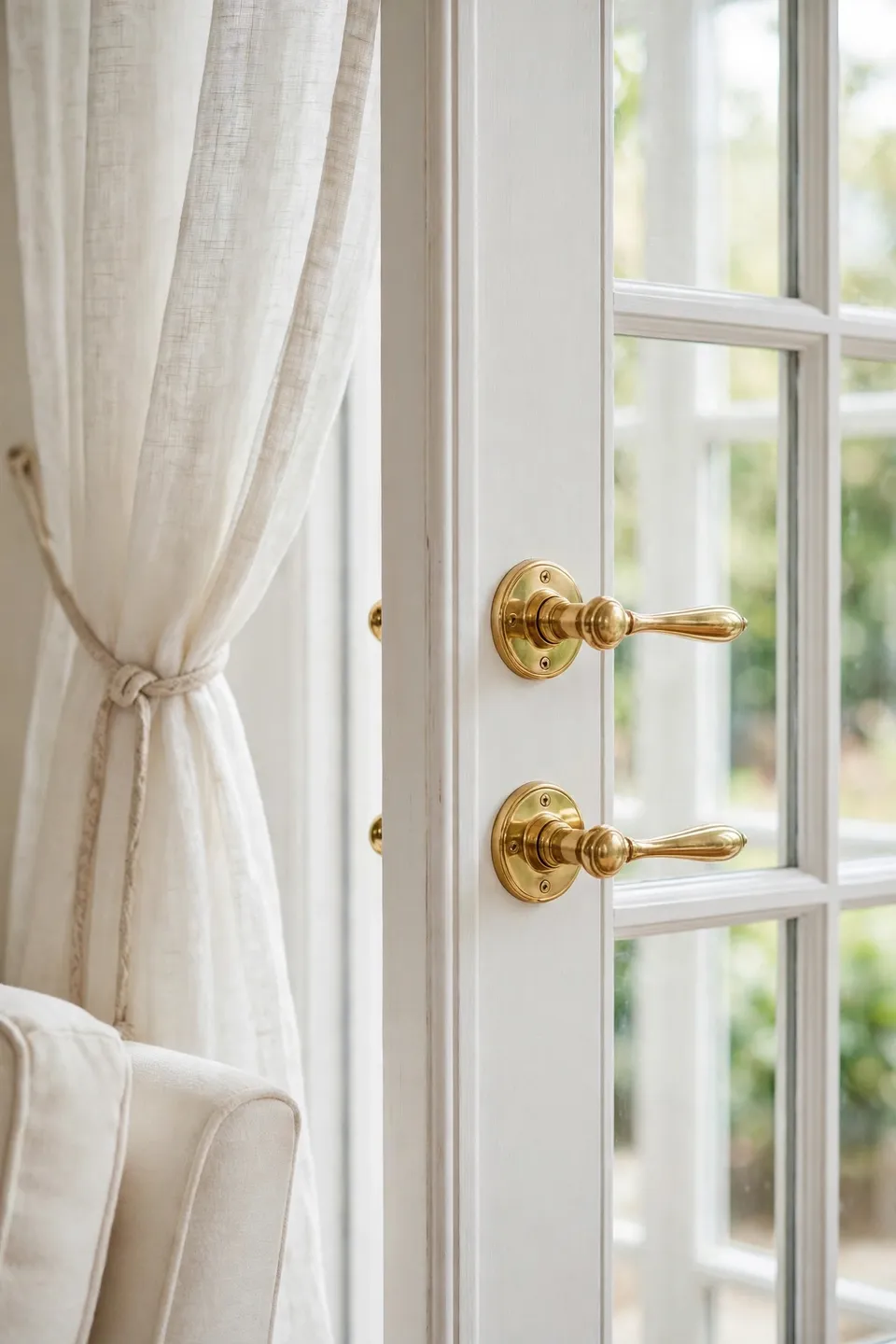
Best Starting Point: the swing arc taped on the floor
Effort Level: easy, one afternoon
Budget: free if you only rearrange
Biggest Win: more daylight and a room that feels larger
These facts make the project approachable for any beginner. You need no special skills, only patience to test a few different arrangements with tape first. The payoff is instant: brighter rooms, smoother traffic flow, and doors that finally work the way they were designed to.
Create Zones That Frame the Doors Beautifully
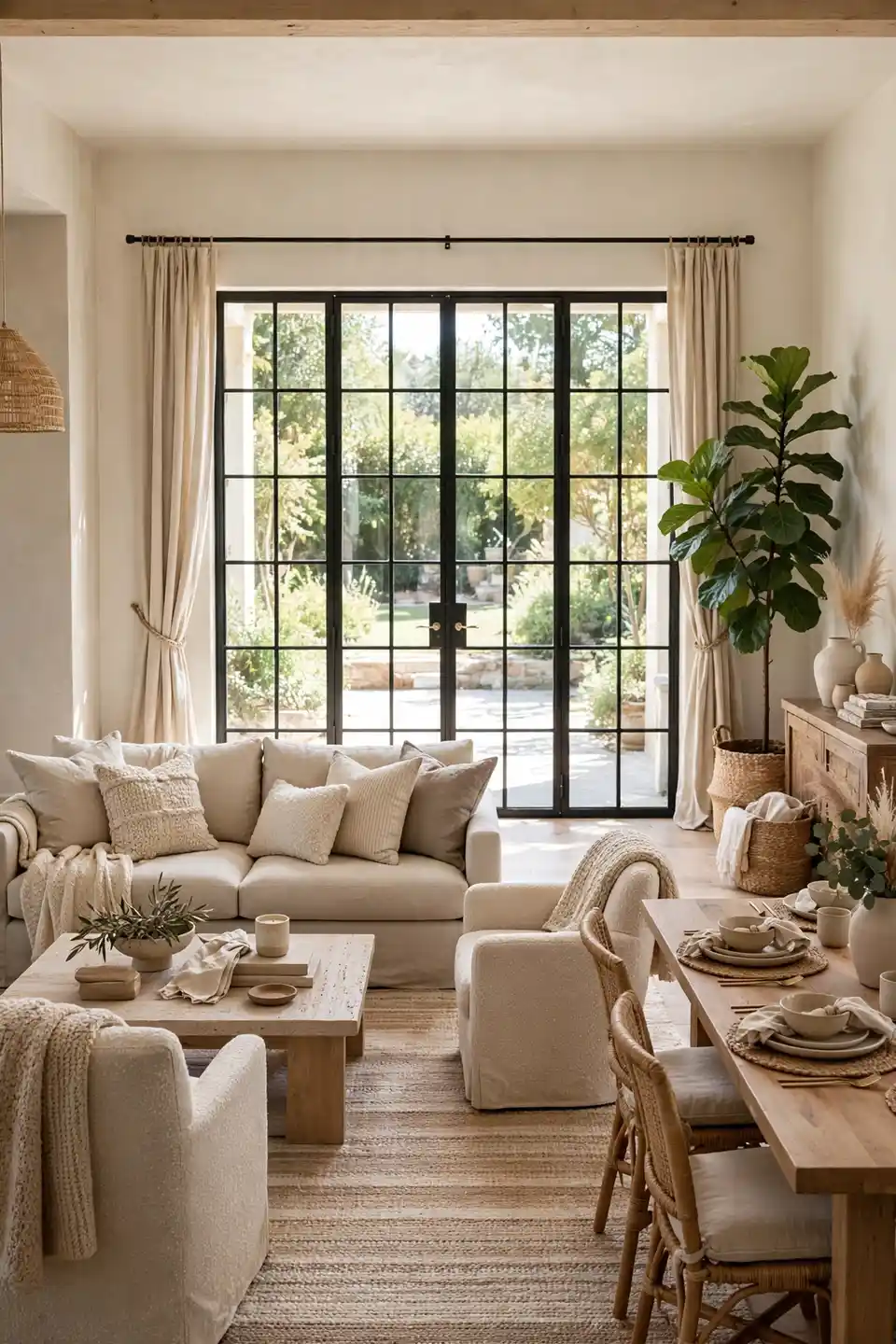
Use rugs, lighting, and furniture groupings to build zones around the doors instead of one crowded space. A rug under the seating group tells the eye where conversation happens, while the dining table claims its own corner. The doors become the shared backdrop for both zones.
Repeat one material, like warm oak or woven texture, in each zone to tie them together. Keep the area directly in front of the glass open so both zones share the view. This trick makes open plans feel organized without walls, and the French doors give the whole space a natural center.
Do a Final Walk-Through and Fine-Tune the Flow

The last step is a slow walk-through with fresh eyes. Open both door panels fully, then stroll every path a guest would take. Notice anything that brushes your shoulder or forces a detour, and nudge those pieces an inch or two until the flow feels natural.
- Open both doors wide and confirm nothing blocks the swing.
- Walk the main paths and check for tight squeezes.
- Sit in each seat and confirm the view through the glass feels pleasant.
- Adjust rug edges and small tables so nothing wobbles or slides.
Small tweaks make a big difference at this final stage. Once the walk-through feels smooth and nothing catches, take a photo from the main doorway. That image is your proof of a layout where the French doors shine and every furniture piece supports them perfectly.
Conclusion
Arranging furniture around French doors is really about honoring light and movement. Once the swing zone stays clear and seating frames the glass, the whole room lifts. I have seen how making this one change can completely shift the result from cramped to calm.
Try one section at a time and trust your eyes. Save this guide on Pinterest so you can revisit each step while you rearrange, and share it with anyone whose beautiful doors are hiding behind the sofa. Mastering how to arrange furniture in a room with french doors gives you brighter days and easier evenings in a room that finally feels finished.