21 Curtains for Kitchen Windows for a Fresh, Charming Look
Sunlight does half the decorating in a good kitchen, and the right curtains for kitchen windows decide how that light behaves. Short panels soften glare over the sink, filter the view from the street and add the one layer of fabric a hard surfaced room usually lacks.
Start by matching the curtain to the job: privacy near the street, full light over a breakfast nook, or a simple frame for a pretty garden view. Small choices like rod height and fabric weight change how tall the room feels. That layered thinking also shapes laundry room decor ideas, where soft finishes balance hardworking machines. The twenty one ideas ahead cover cafe panels, roman shades, valances and blinds, most of them renter friendly and washable.
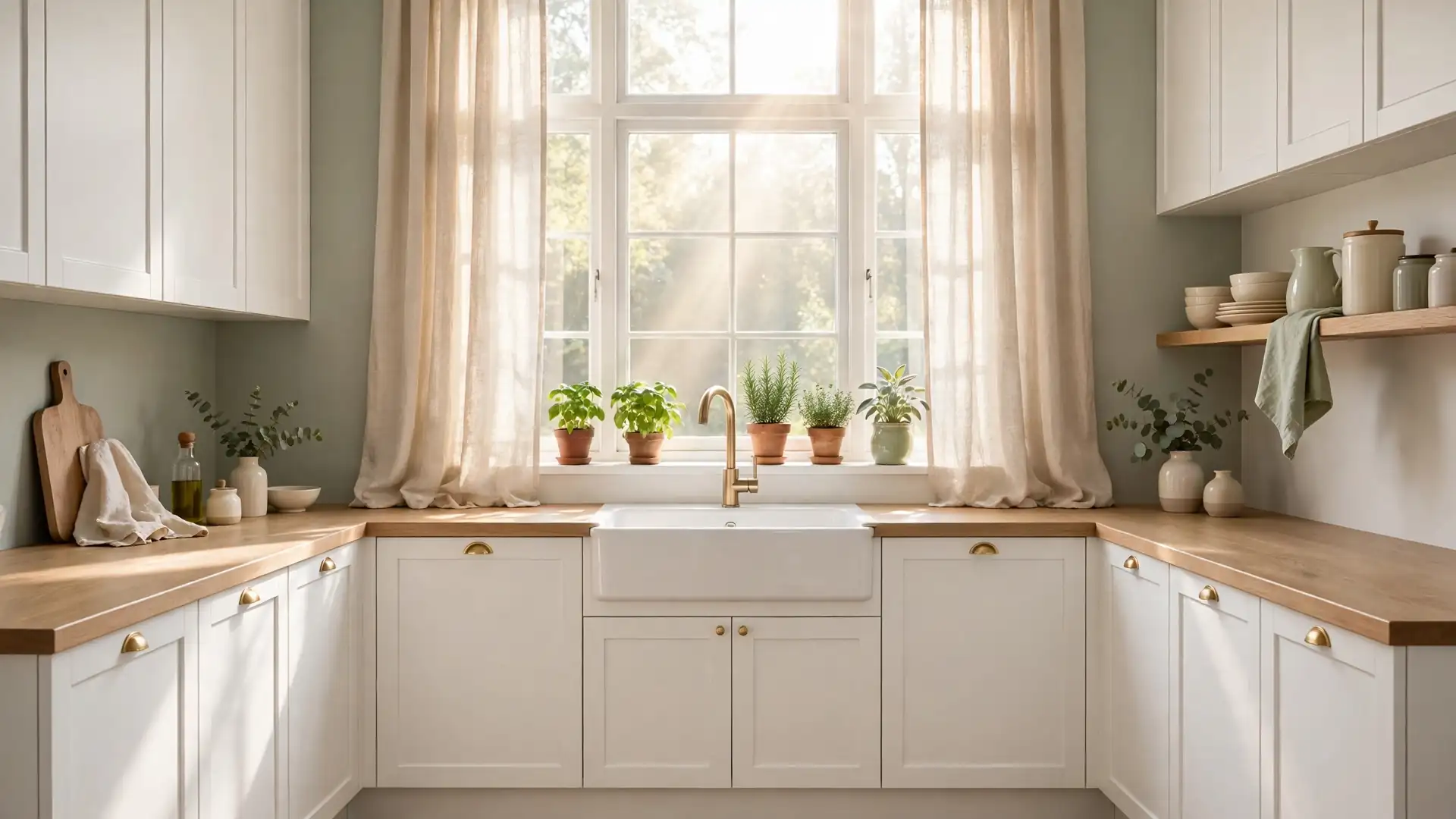
Classic Linen Cafe Curtains

Half length linen panels on a slim rod bring instant calm to a sink window. The fabric stops at the sill, so splashes stay on the counter side, while the woven texture filters daylight into a soft, even glow. Natural flax tones sit happily beside white cabinets, oak shelves and stainless steel alike.
Hang the rod just above the glass midpoint for the classic cafe line. In my experience, unlined linen dries fastest after a steamy dish session and irons back to crisp in two minutes. Choose a slightly deeper tone than the wall paint and the window gains a tailored frame without any extra trim work.
Gingham Check Charm
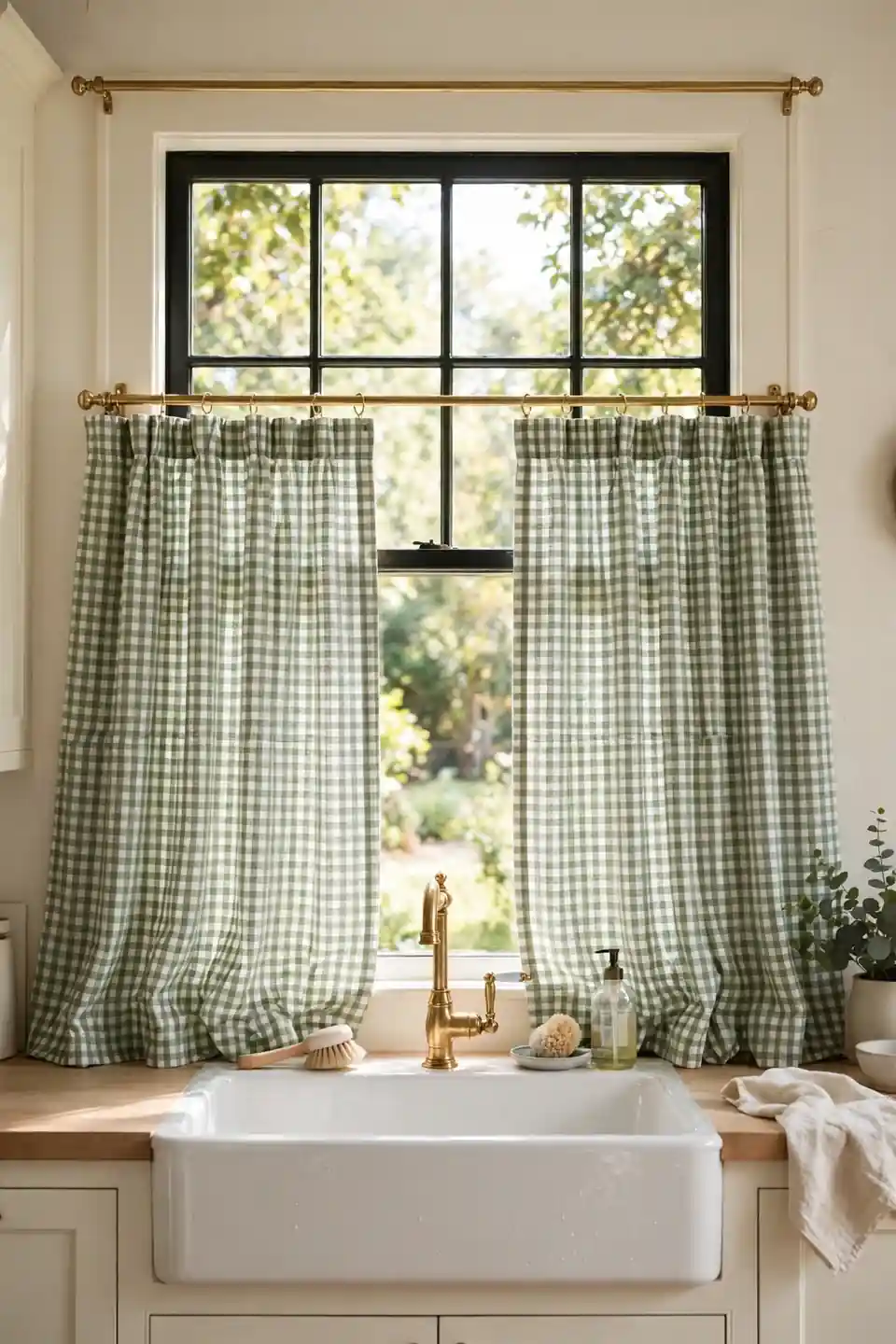
- Pick a small scale check in sage, red or navy for a true farmhouse rhythm.
- Match the check size to the window: tiny panes love tiny checks.
- Pair gingham with plain linen on nearby chair cushions to avoid pattern overload.
- Finish the hem with a simple stitch and let the fabric hang in soft folds.
- Wash in cool water so the woven colors stay true season after season.
Gingham reads friendly from the street and cozy from the stove, which is a rare double win. The pattern also hides the odd splash mark between washes better than plain cloth. Keep the rest of the window dressing plain and the check becomes the room’s small, cheerful signature.
Sheer White Sink Panels
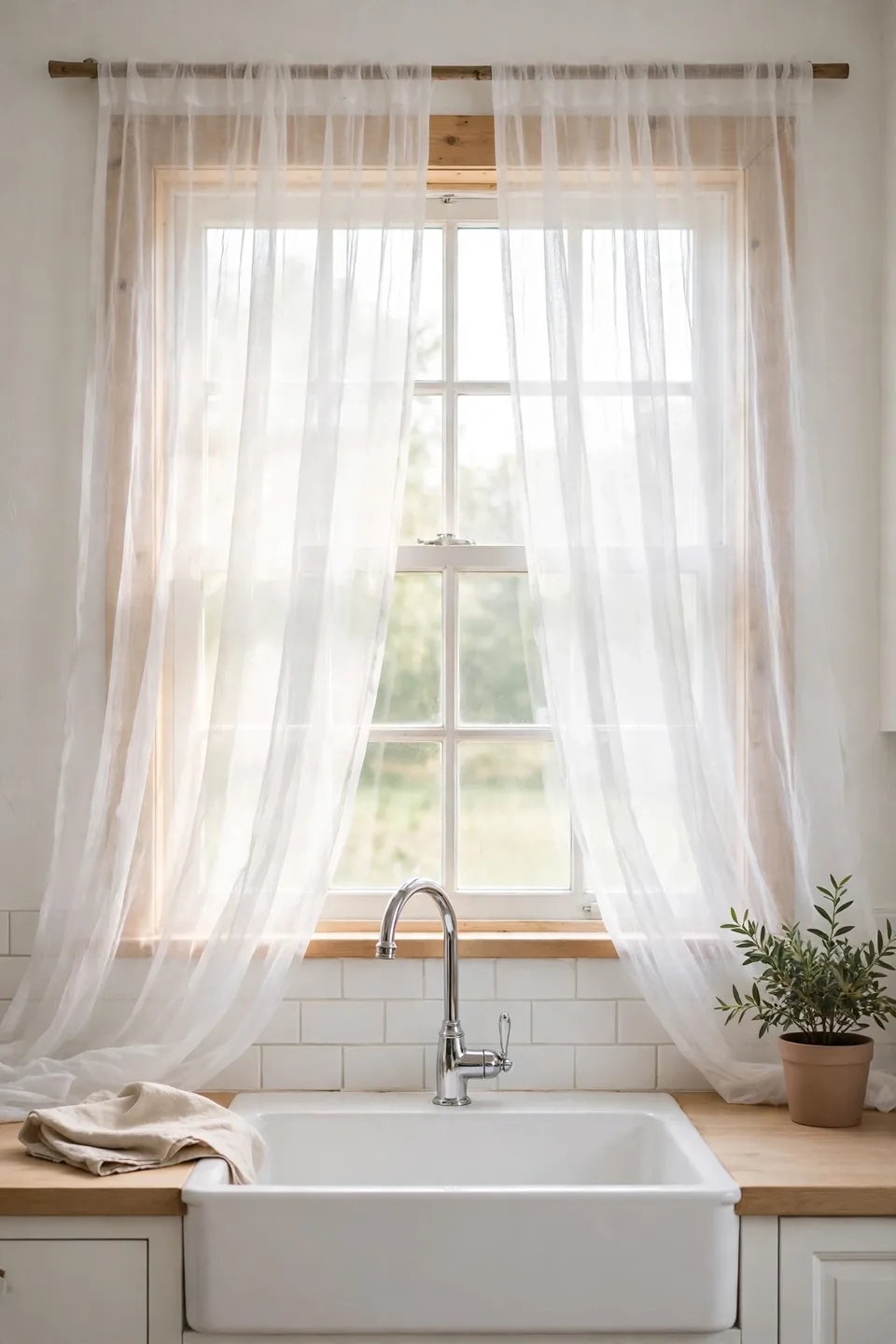
Quick Tip: Mount sheer panels on a tension rod inside the window frame. They stay clear of the faucet swing, need no drilling, and come down in seconds for the wash.
Sheers trade a sharp view for a soft one, and over a working sink that trade pays off every morning. Dishes feel less like a chore when the glass glows instead of glaring. Choose a dense weave if the window faces a neighbor, a loose weave where the garden is the picture. White reads cleanest, though warm ivory flatters cream cabinets and aged brass better. Hang two panels per window so one slides aside on cleaning day and the light stays even.
Natural Linen Roman Shades
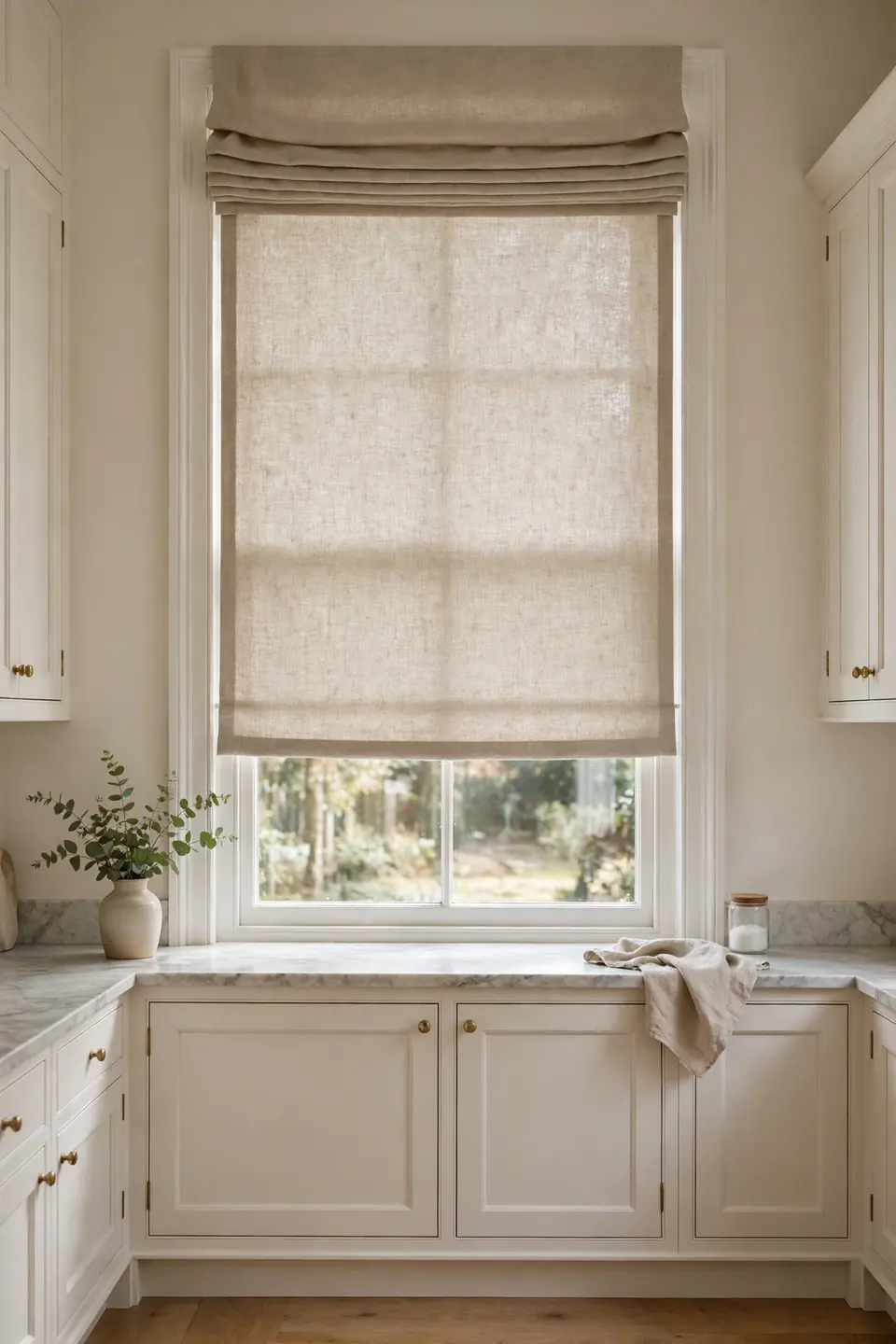
BEFORE: Bare glass left the kitchen feeling exposed after dark, and midday sun threw a hard stripe across the counter where chopping happened.
AFTER: A flat roman shade in natural linen, lowered to two thirds, softens the light, keeps the room private at night and stacks into a neat band that frames the view.
Roman shades suit windows where curtains would swing into a faucet or a fruit bowl. The flat fold reads tailored, almost architectural, next to shaker cabinets. Order the shade a half inch wider than the frame on both sides and light leaks vanish along the edges. A short valance above the shade can soften the line when the window feels too plain.
Tiered Curtains For Privacy
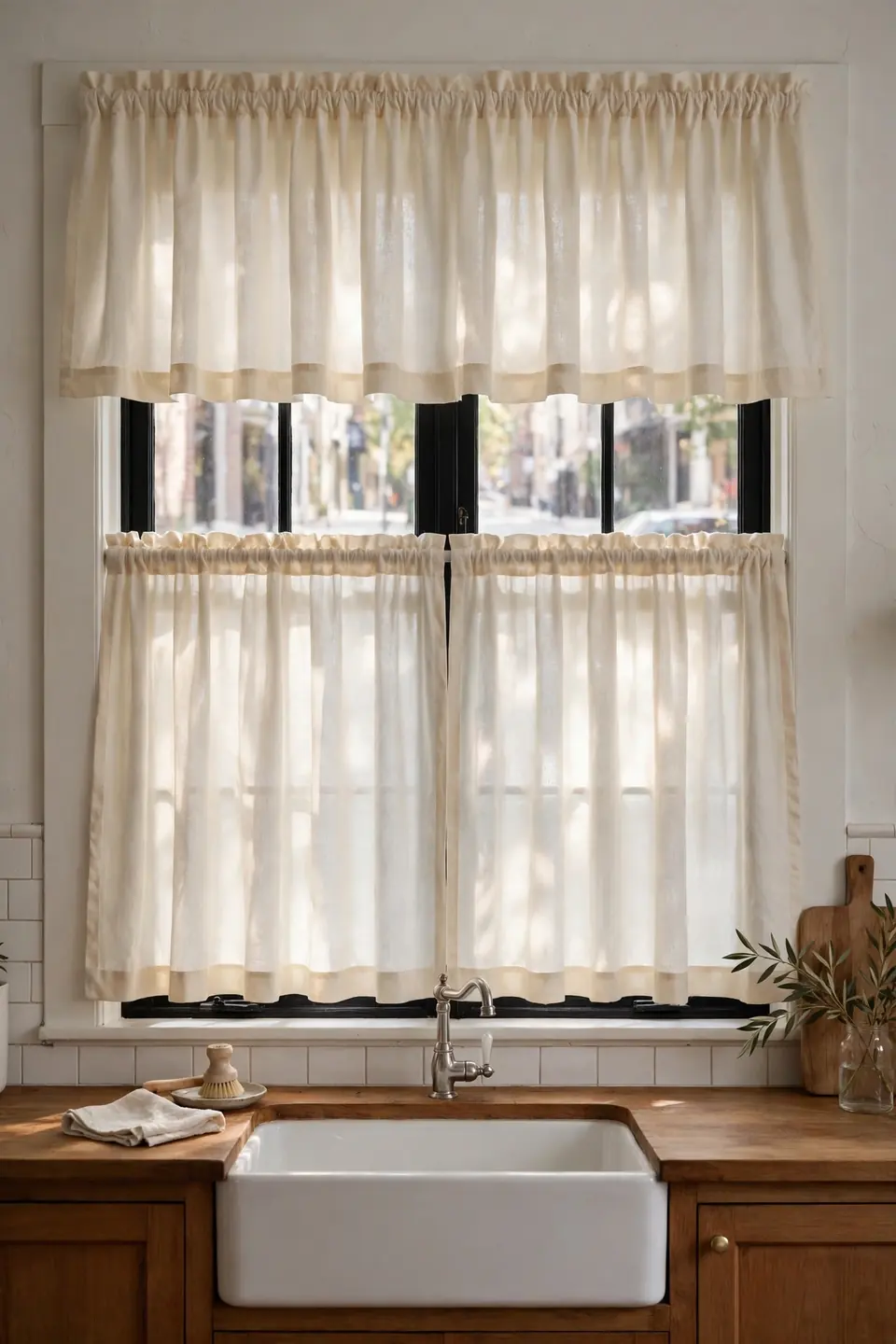
- Measure the window and split it into two tiers, one third above and two thirds below.
- Hang the lower tier first on a cafe rod at the split line, checking the hem clears the sill.
- Mount the upper tier as a short panel that overlaps the lower one by two inches.
- Slide both tiers open in the middle on bright days and draw them closed at dusk.
- Steam the hems once hung so both layers fall in matching folds.
Tiered sets are the old farmhouse answer to a street facing kitchen, and they still solve the problem well. The top tier keeps the sky and light, the bottom tier blocks the passing view at counter height. Matched fabric across both layers keeps the effect calm instead of busy.
Valance Or Cafe Curtain

| Feature | Valance | Cafe Curtain |
|---|---|---|
| Coverage | Top band only, view stays open | Lower half covered, private at counter level |
| Light | Full daylight pours under it | Filtered light, gentler on worktops |
| Splash Zone | Stays clear of sink spray | Hem may catch splashes near faucets |
| Upkeep | Launders with the weekly towels | Washes monthly, dries on the rod |
| Best For | Tall windows and garden views | Street facing sinks and small windows |
Both styles share the same hardware and the same ten minute swap, so the choice is about light, not effort. Short windows over sinks lean cafe, tall windows beside a nook lean valance. Some kitchens run a valance above and a cafe panel below on the same glass, which settles the debate by taking both.
Bamboo Blinds Linen Layers
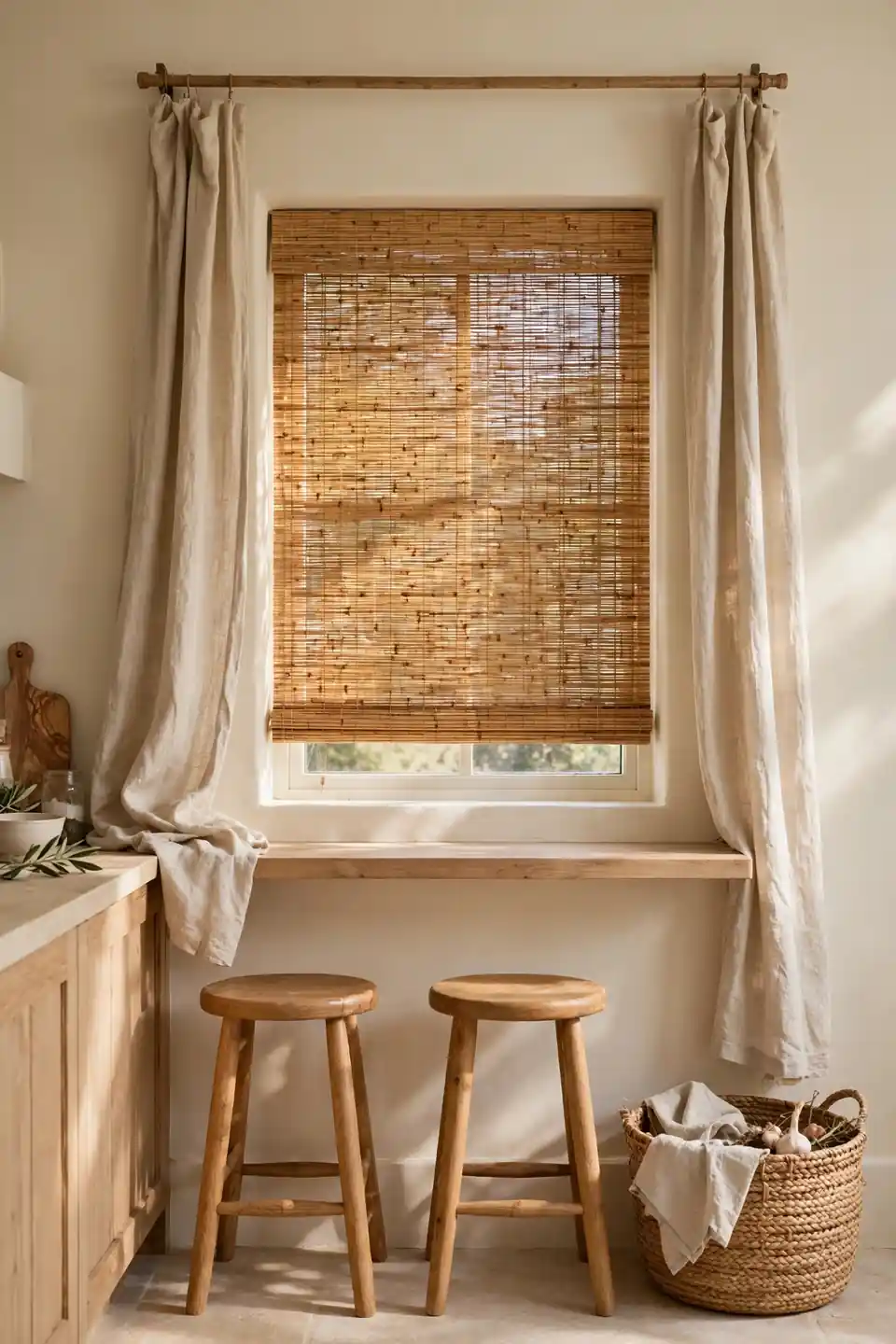
Do:
- Layer a woven bamboo blind under loose linen side panels for depth.
- Let the blind do the daily light work and keep panels purely decorative.
- Choose bamboo tones close to your floor or shelf wood.
Don’t:
- Hang panels where they can brush a gas hob or toaster.
- Mix more than two textures at one window.
- Let blind cords pool on the counter; fit a cleat instead.
The pairing works because each layer has one job: the blind handles glare and privacy, the linen handles softness. I’ve noticed kitchens feel calmer when window layers echo materials already in the room, like oak stools or woven baskets. Keep both layers washable or vacuum friendly and the look survives real cooking.
Herb Sill Window Styling
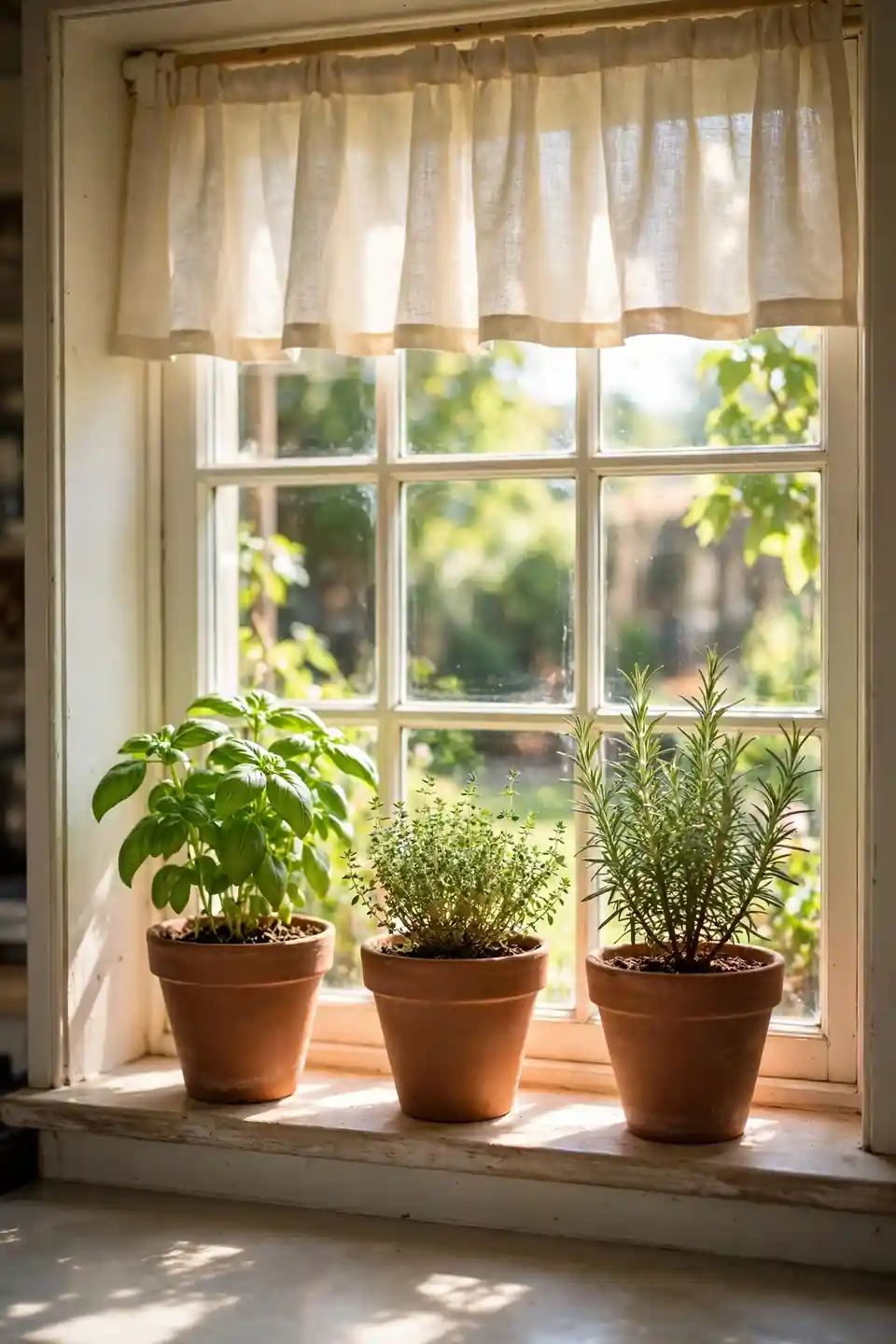
Cost: Low, since pots and a narrow tray are the only buys
Time: One slow morning to set and level
Skill Level: Beginner, simple hooks and a drill
Best For: Sunny sills over sinks with daily watering habits
A row of herbs turns the curtain question into a framing question, because the plants become the show. Short cafe panels or a rolled linen shade keep the glass clear for light hungry basil and thyme. Terracotta pots echo warm wood tones, while white ceramic reads crisp against green leaves. Water with a small can fitted with a narrow spout and the sill stays dry through the week.
Soft Floral Print Valance
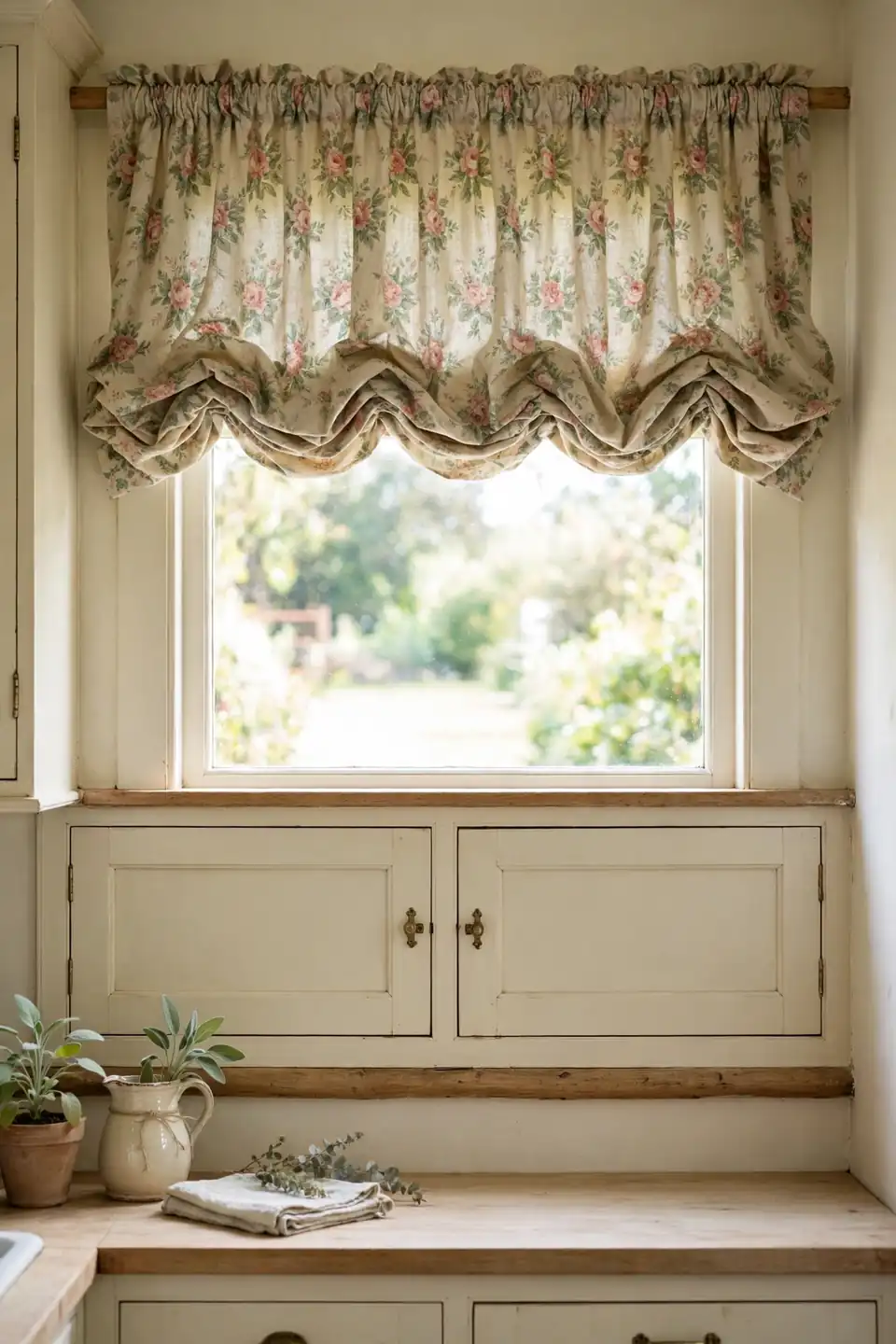
A short valance in a faded floral print gives a plain window the charm of a country cottage without blocking the light. The gathered top adds gentle fullness, and the print pulls colors from nearby tea towels, crockery and chair cushions into one quiet theme. A rod pocket keeps the look soft, while clip rings make the same valance read crisper.
Keep the background of the print pale so the window still reads bright at breakfast. Small scale flowers suit small kitchens, while a bigger bloom needs a taller window to breathe. Line the valance in plain cotton and the colors stay rich after many sunny months above the sink.
Striped Cotton Cafe Panels

- Vertical stripes draw the eye up and make a low window feel taller.
- Ticking stripe in blue and white is the classic kitchen pairing.
- Match stripe width to panel width so the pattern never looks chopped.
- Hem panels to brush the sill, never to puddle near a sink.
- Face the stripes outward on both panels so the rhythm reads from the street.
Stripes bring order to a busy room because the lines repeat calmly. Cotton ticking washes well, irons sharp and costs little, so a second set for winter is an easy luxury. I’ve seen this work well in many cases where plain panels felt unfinished beside patterned tile.
No Sew Hem Fix

Quick Tip: Shorten ready made panels with iron on hem tape instead of a sewing machine. Fold, press, and the tape bonds in ten seconds per side, leaving a clean edge that survives washing.
Ready made curtains rarely match a kitchen window, since most glass here is shorter and wider than bedroom panes. Hem tape closes that gap in one afternoon with tools already in the drawer. Measure with the panel hung, not flat, because rods and rings add drop you cannot see on a table. Mark the fold with pins, press a crease, then bond the tape inside the fold. Keep a spare roll in the drawer for the day a new set arrives.
Full Sheers Nook Windows

BEFORE: The breakfast nook windows stood bare, and morning sun bounced off the table so hard that sunglasses felt reasonable at coffee.
AFTER: Floor skimming sheers on a ceiling track now blur the glare, pool a little softness at the floor and make the nook feel like a small cafe corner.
Among all the curtains for kitchen windows in this list, full sheers carry the biggest mood shift per dollar. They ask for one long track and a generous width of fabric, at least twice the window span, so folds stay deep. Choose warm white over bright white and the light turns honeyed rather than blue on tiled walls.
Measure Once Hang Right

- Measure the glass width, then add ten centimeters on each side so panels clear the frame when open.
- Decide the drop: sill length for sink windows, apron length for nook windows beside seating.
- Mark the rod line with painter tape and live with it for a day before drilling.
- Fit the rod, hang one panel, and check the hem against the sill with a level.
- Steam panels in place and adjust the folds by hand for an even rhythm.
Most curtain regrets trace back to one skipped measurement, usually the drop. A panel that ends mid frame looks accidental, while sill and apron lengths look planned. Write the numbers on the painter tape itself, and the second window goes up in half the time.
Linen Versus Cotton Panels

| Feature | Linen | Cotton |
|---|---|---|
| Texture | Open weave, soft filtered glow | Tighter weave, crisper finish |
| Light | Glows when backlit by sun | Blocks more light at noon |
| Washing | Softens with every wash | Holds a sharp press longer |
| Fading | Slows with a plain lining | Needs lining in strong sun |
| Cost | Higher, but lasts for years | Lower, easy to replace seasonally |
| Best For | Calm neutral schemes | Checks, stripes and prints |
Neither fabric wins outright; the room decides. Linen suits kitchens that lean calm and plain, cotton suits kitchens that carry pattern elsewhere. Steam both before the first hang and measure after, since natural fibers relax once warm kitchen air reaches them over the first week.
Vintage Lace Panel Glow
Do:
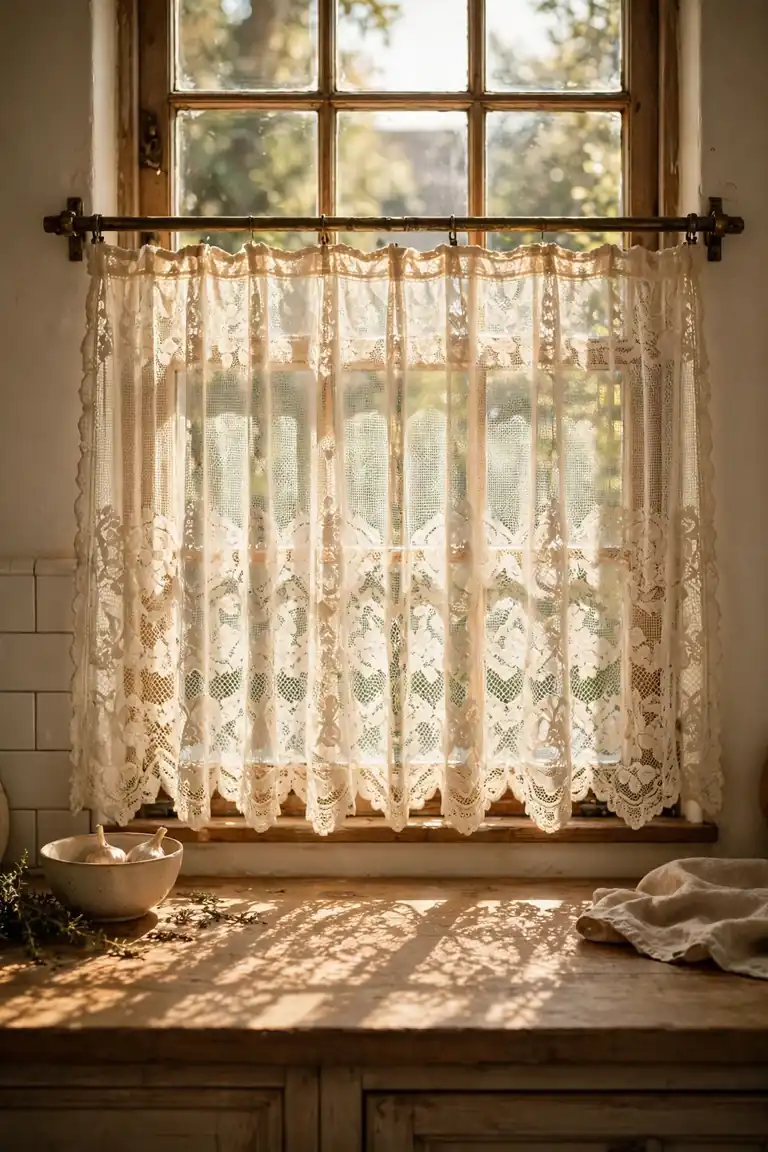
- Hang lace panels on the lower half where their pattern shadows show.
- Back lace with a plain sheer when the street sits close.
- Choose cream lace over bright white beside older wood.
Don’t:
- Cover the whole window in lace in a dark kitchen.
- Pair lace with heavy drapes; the contrast turns fussy.
- Skip the wash; kitchen grease dulls lace faster than dust.
Lace throws patterned shadows across counters on sunny mornings, a small daily pleasure that plain glass never gives. Old panels turn up in charity shops for very little, and a gentle soak restores most of them. Keep the pattern small and the effect reads delicate, not dated beside modern appliances.
Brass Rod Finial Details

Cost: Moderate, since brass hardware outlasts several curtain sets
Time: Under an hour to swap rods and finials
Skill Level: Beginner with a drill and a level
Best For: Traditional kitchens with brass taps and handles
Hardware is the jewelry of a window, and brass earns its keep by echoing taps, handles and light fittings across the room. Slim rods keep the focus on fabric, while a ball or acorn finial adds a finished stop to the line. Unlacquered brass deepens in color with steam and touch, which suits a working kitchen better than a perfect shine. Measure rod diameter against ring size before ordering either piece.
Pattern Mixing Made Simple

Two patterns at one window can work beautifully when they share a color and differ in scale. A small check cafe panel under a wider stripe valance reads layered rather than loud, because the eye sorts them by size before it notices there are two. Repeat one color from the patterns in a nearby towel or rug.
Keep one fabric plain as the peacemaker, usually the larger piece. Stand in the doorway and squint: if the window still reads calm, the mix is balanced. Swap the valance seasonally and the same panels feel new twice a year without buying a full set.
Cafe Curtains With Tiebacks

- Fit small holdback hooks at the outer frame edge, level with the sill.
- Sweep each panel to its side in a soft diagonal curve.
- Match tieback fabric to the panel for a quiet, tailored line.
- Release the panels at night for full privacy and insulation.
- Angle the sweep higher on the side where the view is best.
Tiebacks give cafe panels a second mood: open and sculptural by day, closed and cozy after dark. The diagonal sweep also shows off a pretty sill or a row of pots. The same open and closed layering guides small bathroom decorating ideas, where one window often does every job at once.
Washable Fabrics That Last
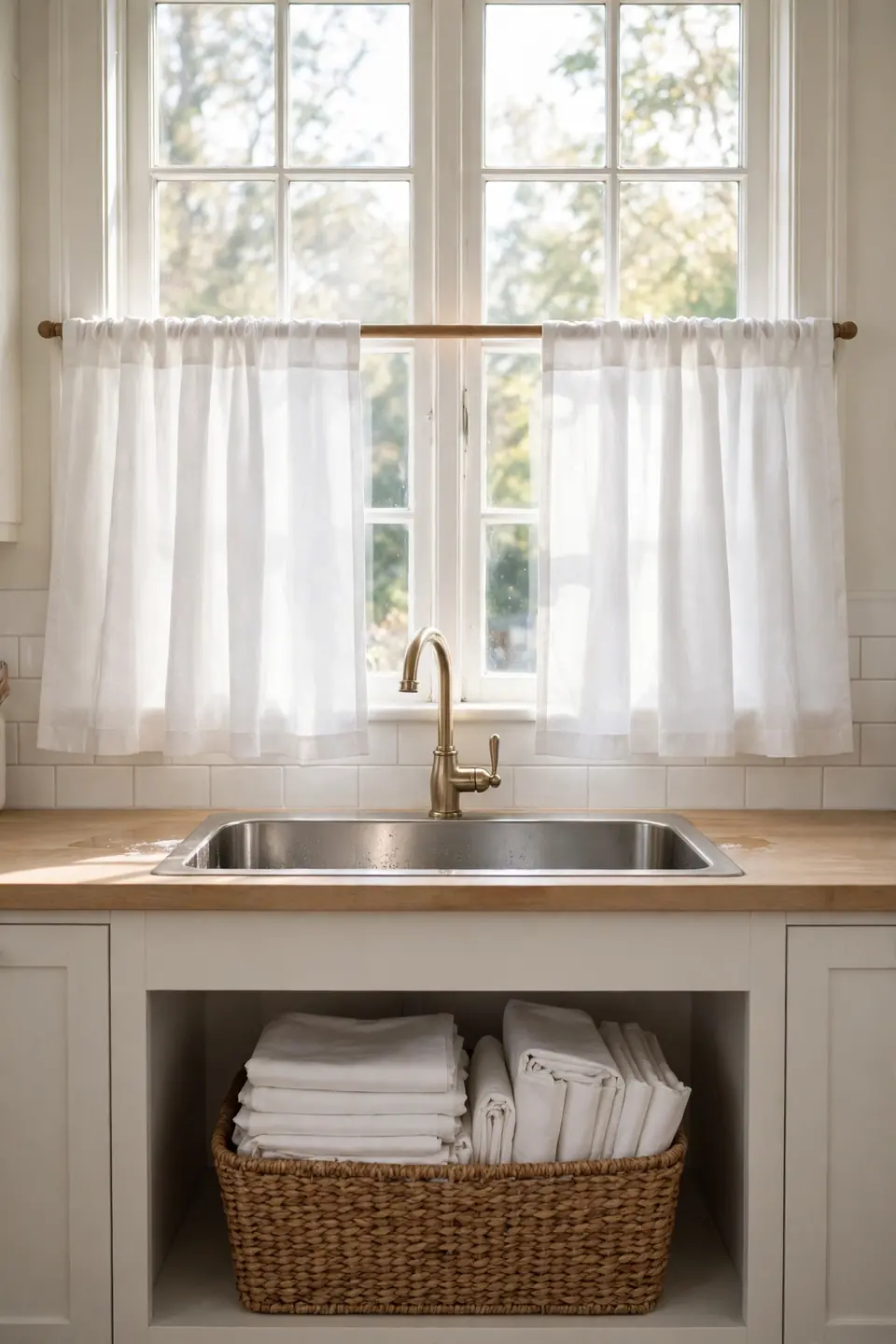
Quick Tip: Test washability before hanging: soak a cut corner in warm soapy water for ten minutes. If the water stays clear and the weave holds, the full panel is safe for the machine.
Kitchen curtains live in steam, grease and tomato splashes, so the fabric label matters more here than anywhere else in the house. Cotton, linen blends and polyester sheers all survive regular washing, while dry clean only silk fades and spots near a hob. Buy one extra panel at the start; when a stain wins, the spare keeps the window dressed while the casualty soaks. Wash curtains on the same day as the tea towels so the set never waits.
Window Seat Curtain Frame

BEFORE: The window seat corner read as leftover space, with plain glass and a cushion that matched nothing in the room.
AFTER: Side panels in warm white linen now frame the seat like a small stage, and the corner has become the most claimed spot in the house.
Long panels beside a seat window should stop at the cushion, not puddle onto it, so the seat stays usable. A short rod each side, rather than one long span, keeps the middle glass and light fully open. Add a cushion in the accent color of the curtains and the corner ties itself together. The fabric edge also hides an uneven old frame kindly.
Seasonal Swap Color Pops
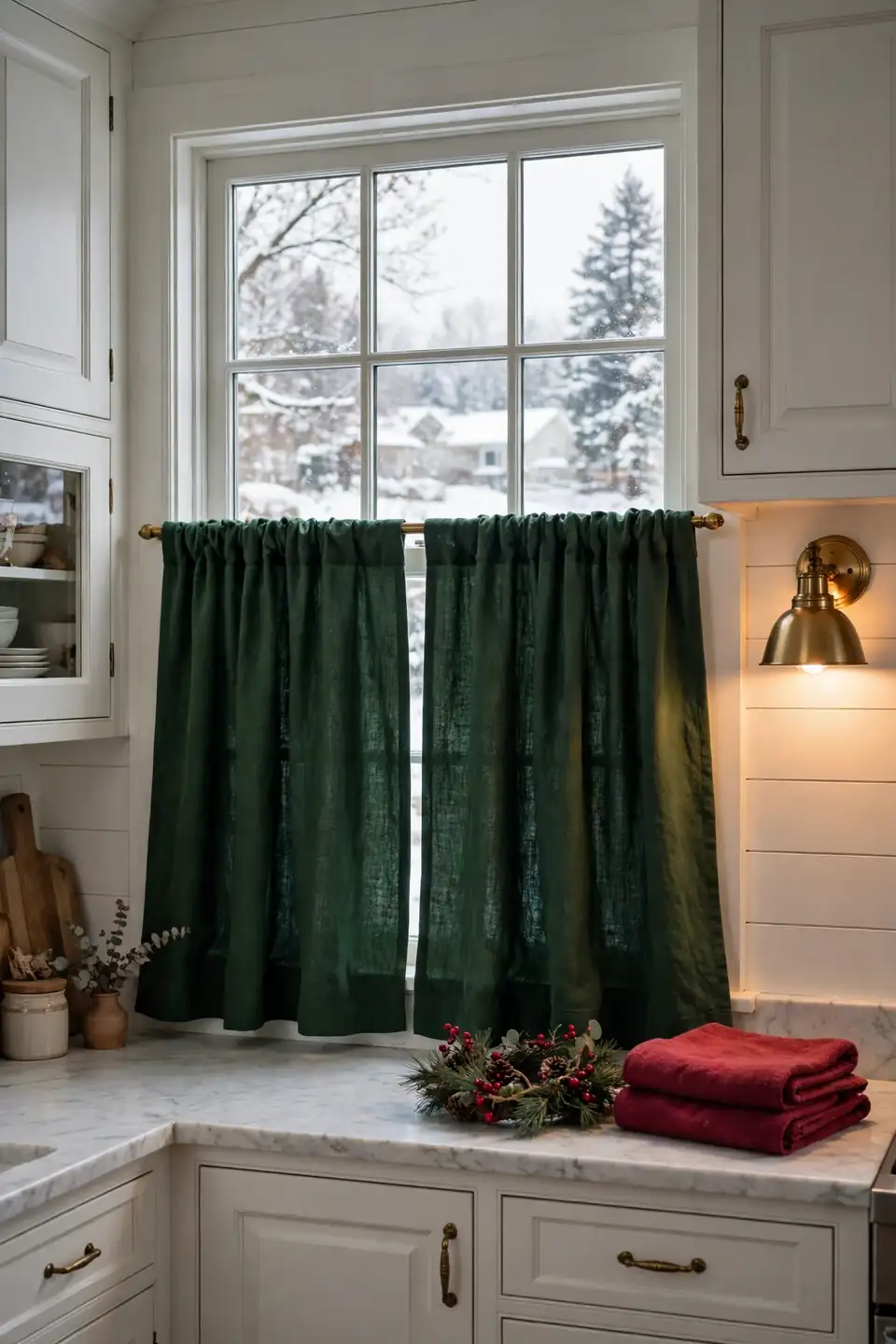
- Build a neutral base set in linen or white cotton that stays up all year.
- Add one colored set for winter, deep green or cranberry, cut to the same drop.
- Store the off season set folded with tissue so creases stay soft.
- Swap sets when the clocks change, washing the stored set first.
- Echo the new color in one towel and one plant pot to settle it in.
A second set of panels costs little because kitchen windows are small, yet the swap refreshes the whole room twice a year. Keep rods, rings and hems identical between sets and the changeover takes ten minutes. In my experience, the winter set earns the most compliments per dollar of anything in the kitchen.
Conclusion
A dressed kitchen window changes how the whole room feels at breakfast, at dish time and at dusk. Start with the window you face most, measure it honestly, and pick one style from these curtains for kitchen windows to live with for a season. I’ve seen plain rentals turn personal with nothing more than linen and a brass rod. Save this pin before your next fabric shop trip, try one idea on one window, and share a photo with a friend planning a kitchen refresh. Small fabric, big shift: that is the quiet promise of a well chosen curtain.