24 Blue Toile Kitchen Decorating Ideas for Classic French Charm
A cream kitchen with good bones can still feel unfinished, like a sentence waiting for its final word. That word is often pattern, and few patterns carry French country charm as gracefully as blue toile kitchen decorating inspiration drawn from classic toile de Jouy scenes. Soft pastoral prints in blue and white bring story, softness and history to hardworking cabinets, tiles and counters.
Below are twenty-four ways to use the print at every scale, from a full wallpaper panel to a single tea towel, each with honest notes on cost and care. The same shaped light that flatters pattern in these sculptural wall sconce living room ideas works in a kitchen too, washing prints with a warm glow. In my experience, toile succeeds when blue stays the only loud voice, so keep partners quiet: cream paint, pale wood, marble and unlacquered brass. Start with one surface, live with it a week, then decide where the story continues.
Toile Curtains Frame Windows

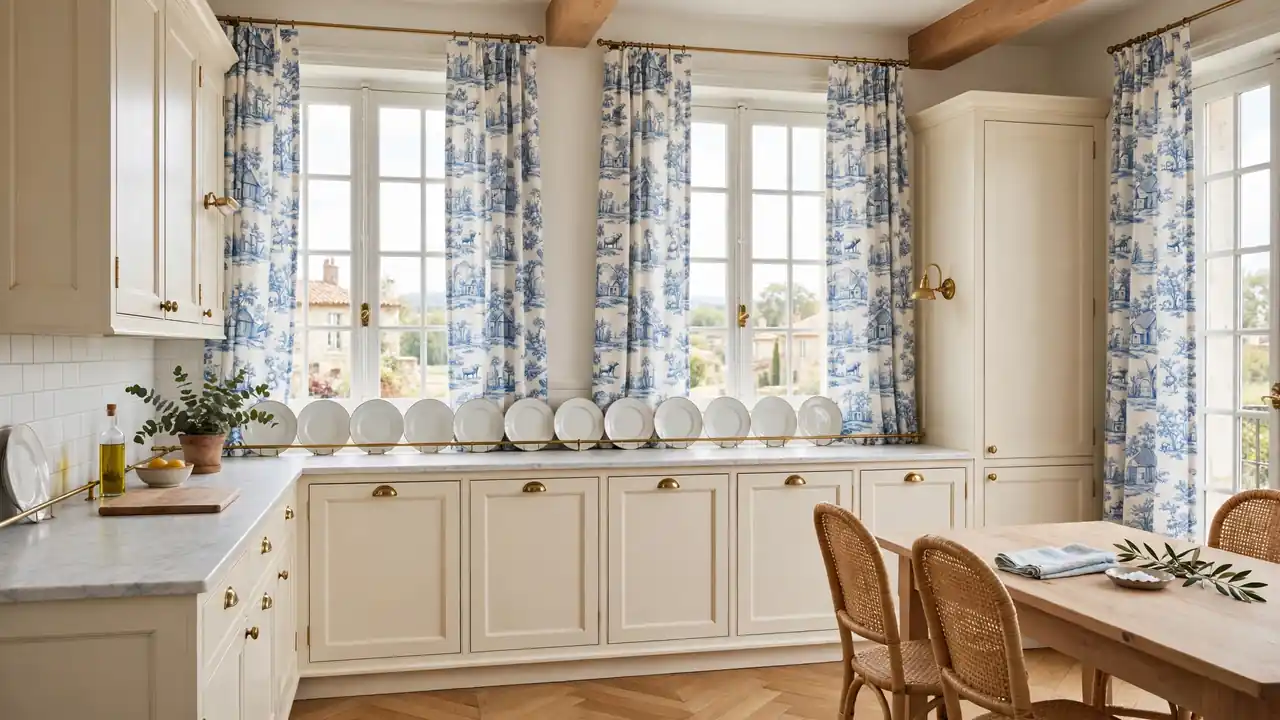
Long toile curtains turn a plain kitchen window into the room’s framed painting. The pastoral scenes repeat down each drop, so the eye travels slowly and the whole wall feels taller. Hang the rod close to the ceiling and let the fabric break just at the sill or puddle slightly on a deep windowsill.
Lined curtains hold their shape and block the harsh glare that fades counters at noon. Choose a rod in aged brass or black iron, since shiny chrome fights the print’s old soul. I’ve noticed unlined cafe panels suit small windows better, giving privacy at the lower half while daylight pours over the top half freely all day.
Wallpaper Panel Feature Wall
- Paper one wall only, ideally the wall the door opens toward.
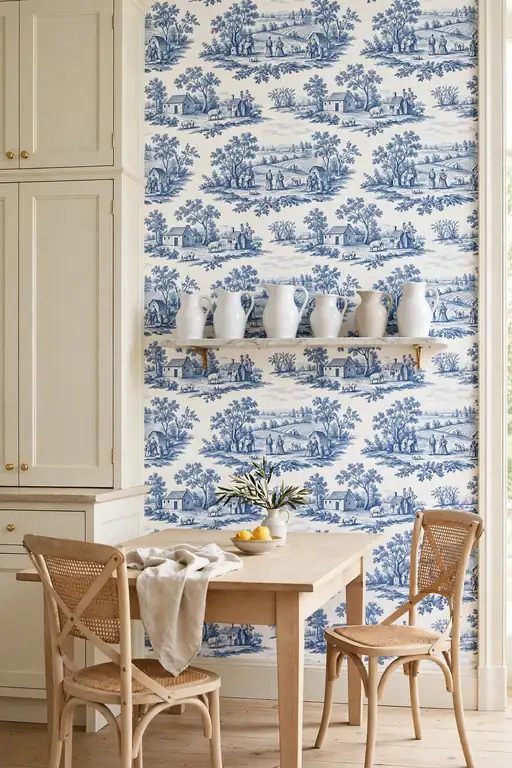
- Pick a large repeat, since small motifs blur into noise across a wide wall.
- Match the blue to your cabinet hardware’s coolest tone for a calm link.
- Seal kitchen wallpaper with a clear matt varnish rated for steam and splashes.
- Stop the paper at a picture rail or shelf line for a deliberate edge.
One papered wall gives the kitchen a focal point that tile alone rarely achieves. The print reads as artwork at distance and as detail up close, rewarding both the cook and the guest. Keep the other three walls in warm cream, pulled from the paper’s own background, so the room breathes around its single patterned moment.
Toile Cushions Breakfast Nook
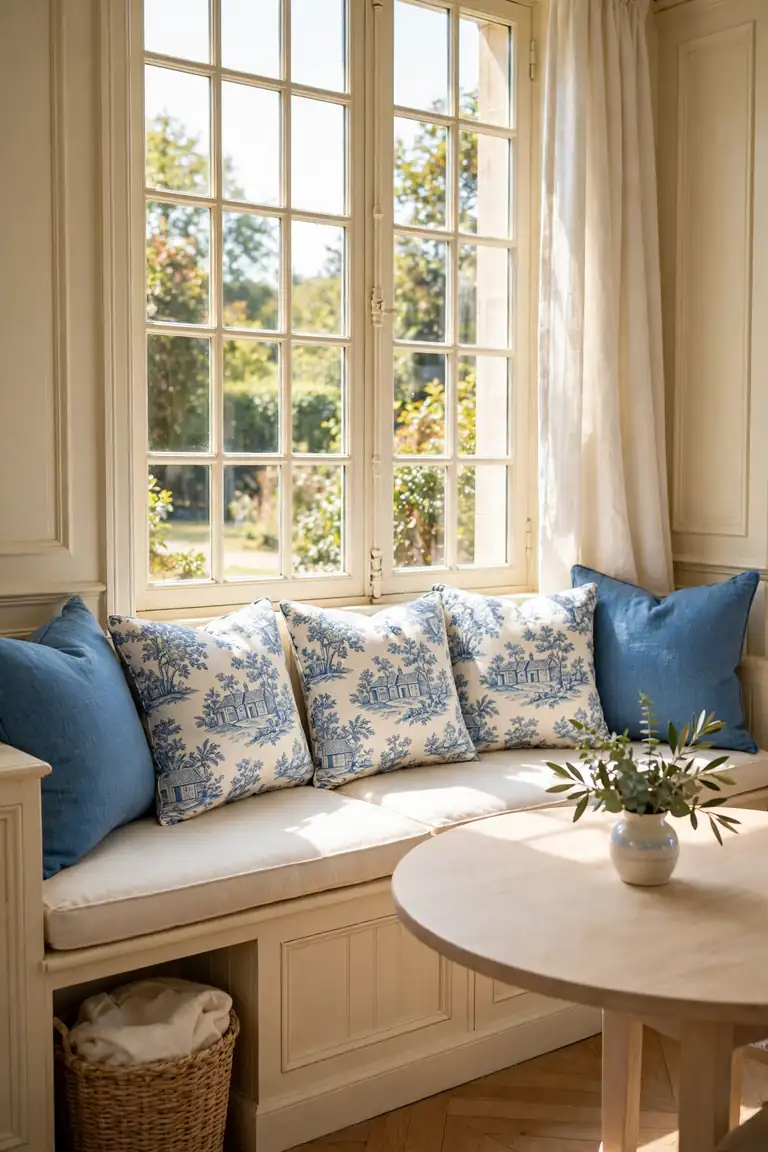
Quick Tip: Order cushion covers with zips, not buttons. Toile in a breakfast nook meets jam, coffee and small elbows daily, so covers that slip off for a cool wash keep the print crisp instead of grubby by spring.
A built-in bench dressed in toile cushions becomes the seat everyone claims first. Pair the print with plain cream seat pads so the pattern sits on backs, not under plates and crumbs. Add one solid blue pillow per bench end to bookend the scene, and match the bench paint to the print’s background cream. Rotate two cover sets through the year if the nook faces strong afternoon sun.
Blue Plate Wall Display

BEFORE: The wall above the sideboard held one small clock and a lot of empty plaster. Plates lived stacked in a cupboard, seen only at holidays, while the kitchen’s blue accents floated without anything tying them together.
AFTER: Twelve blue and white plates now climb the wall in a loose oval, their scenes echoing the curtains. A slim brass rail beneath the lowest row keeps everyday plates in reach and turns storage into the room’s artwork.
Hang plates with discreet wire hangers, never adhesive discs near steam. Start the arrangement on the floor, photograph it, then transfer the layout with paper templates. Odd numbers and mixed sizes feel collected over years, which is exactly the mood toile belongs to, rather than bought in one matching set.
Painted Toile Backsplash Motifs
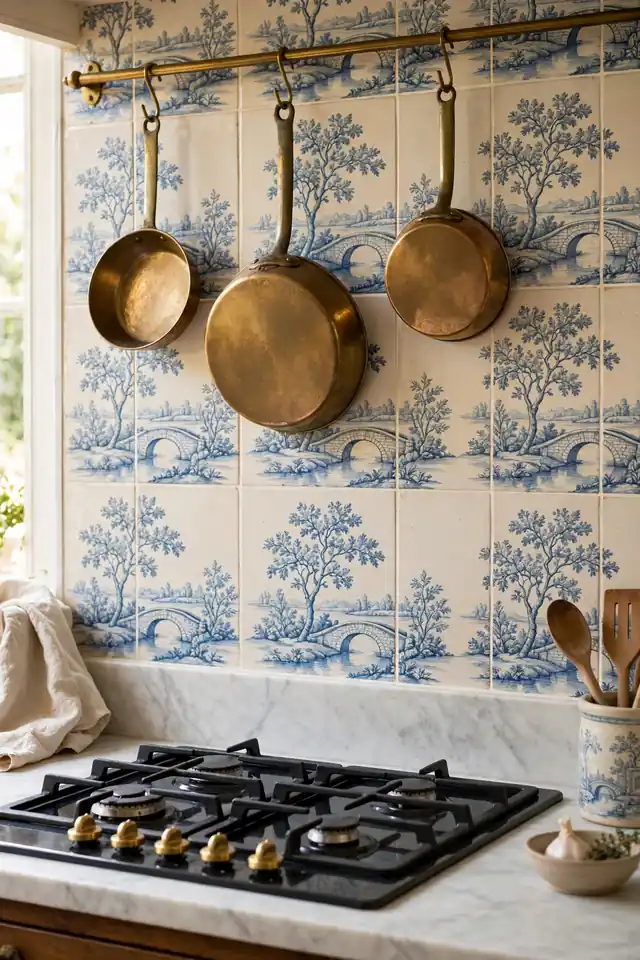
- Choose one motif from your fabric, a shepherdess, a bridge or a single tree.
- Sketch it at tile scale on paper, simplifying lines until it reads at arm’s length.
- Practise on a spare tile with ceramic paint in two blues and one grey.
- Paint a short run of tiles behind the hob only, where eyes gather most.
- Seal each tile with heat-safe clear coat once the paint cures fully.
Hand-painted motifs give a backsplash the one thing printed tile cannot: slight wobble. Tiny imperfections prove a hand was here, which suits a pattern born from hand-engraved copper plates. Keep grout pale so the little scenes sit in a calm grid, and repeat one motif, not five, to avoid a busy quilt effect behind pans.
Toile Fabric or Wallpaper

| Aspect | Fabric Route | Wallpaper Route |
|---|---|---|
| Coverage | Curtains, cushions, shades | Walls and ceiling panels |
| Cost | Lower, bought by metre | Higher, plus paste and labour |
| Care | Machine wash, easy refresh | Wipe clean, patch repairs |
| Commitment | Swap in one afternoon | Semi permanent, slower change |
Neither route wins outright, because kitchens ask different walls to do different work. Fabric wins near sinks and seats, where washing matters; paper wins on the wall nobody touches. Many happy kitchens run both, paper above the rail and fabric below it, the two blues matched once and then left alone. Choose once, and the rest of the room falls into step behind it.
Toile Table Runner Linens

Do:
- Centre the runner down the table’s spine for the full scene.
- Pair with plain cream napkins so the print owns the table.
- Iron on the reverse to keep blue lines sharp.
- Layer over bare wood, never a second busy print.
Don’t:
- Fold it away damp, which mildews natural fibres fast.
- Set hot dishes on printed cotton without a trivet.
- Match tiny items like egg cups, which tips into theme.
- Bleach stains, since chlorine strips blue dye unevenly.
A runner is the cheapest full dose of blue toile kitchen decorating inspiration a table can take, changed in minutes and stored in a drawer. Dress it down with stoneware for weekday suppers and up with brass candlesticks for guests, and the same strip of cloth earns its keep all year.
Full Toile Wall Treatment
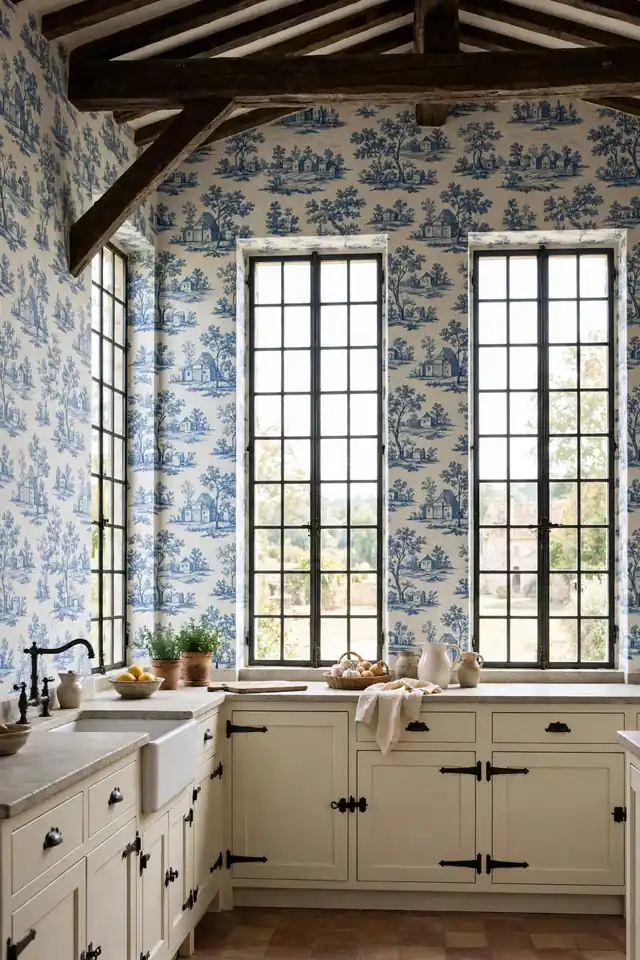
Cost: Higher, paper plus hanging across four walls
Time: Two weekends including drying and trimming
Skill Level: Confident, or hire a decorator for seams
Best For: Large kitchens with tall ceilings and calm cabinetry
Paper on all four walls is the boldest toile move, and it works when everything else goes quiet. Plain cream cabinets, unpatterned stone and simple iron hardware let the scenes wrap the room like a storybook. I’ve seen this work well in farmhouse kitchens with beams, where the wood breaks the print into panels. Test one wall first if nerves wobble, and keep the ceiling plain white so the room keeps one quiet surface.
Toile Roman Shade Softness
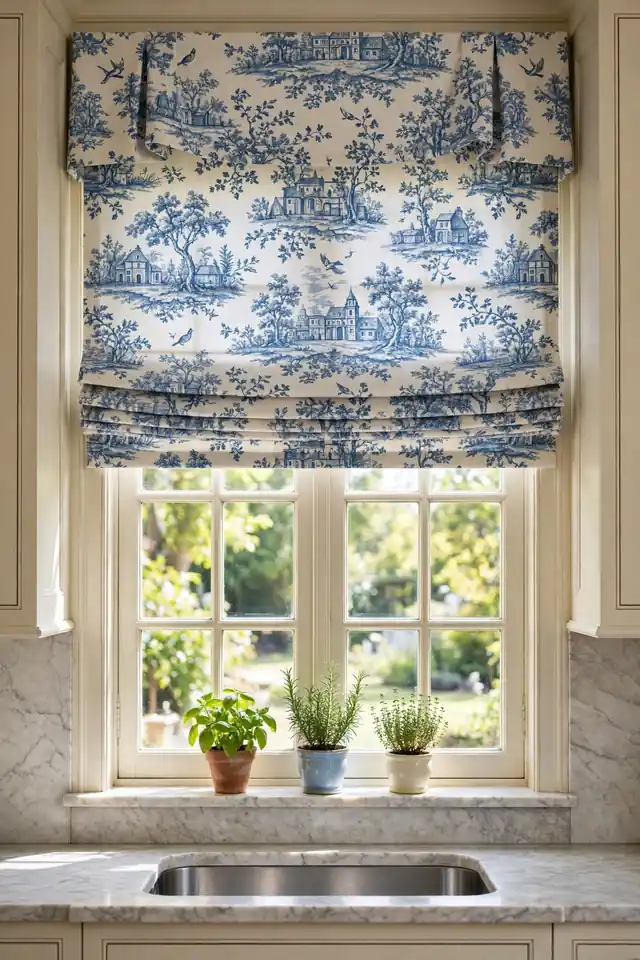
A Roman shade in toile gives the sink window a tailored finish flat blinds cannot match. The folds stack in soft horizontal bands, and when the shade rises, the scene compresses into a valance of pure pattern. Choose a cordless lift in a kitchen, where wet hands and steam meet cords daily.
Mount the shade outside the frame to fake a taller window and hide plain architrave. Interlining adds body, so the print hangs in crisp folds instead of sagging like a bedsheet. A shade also frees the sill for herb pots, which a curtain hem would brush every time the fabric moves.
Toile Cabinet Door Panels

- Stretch toile over thin board cut to fit inside recessed door panels.
- Fix with removable strips, so renters and mind-changers can reverse the job.
- Choose upper doors only, keeping lowers plain for a balanced dose.
- Repeat one motif per door rather than slicing scenes at random.
- Seal fabric edges with fray check before fitting them into frames.
The trick borrows from bedrooms, where fabric panels soften hard furniture, much like the schemes in this vintage chinoiserie bedroom inspiration show with painted screens. On cabinet doors the print reads as inlay, posh at a glance and humble in cost. Keep handles simple, since the doors now carry the decoration.
Toile Lampshade Accent Glow
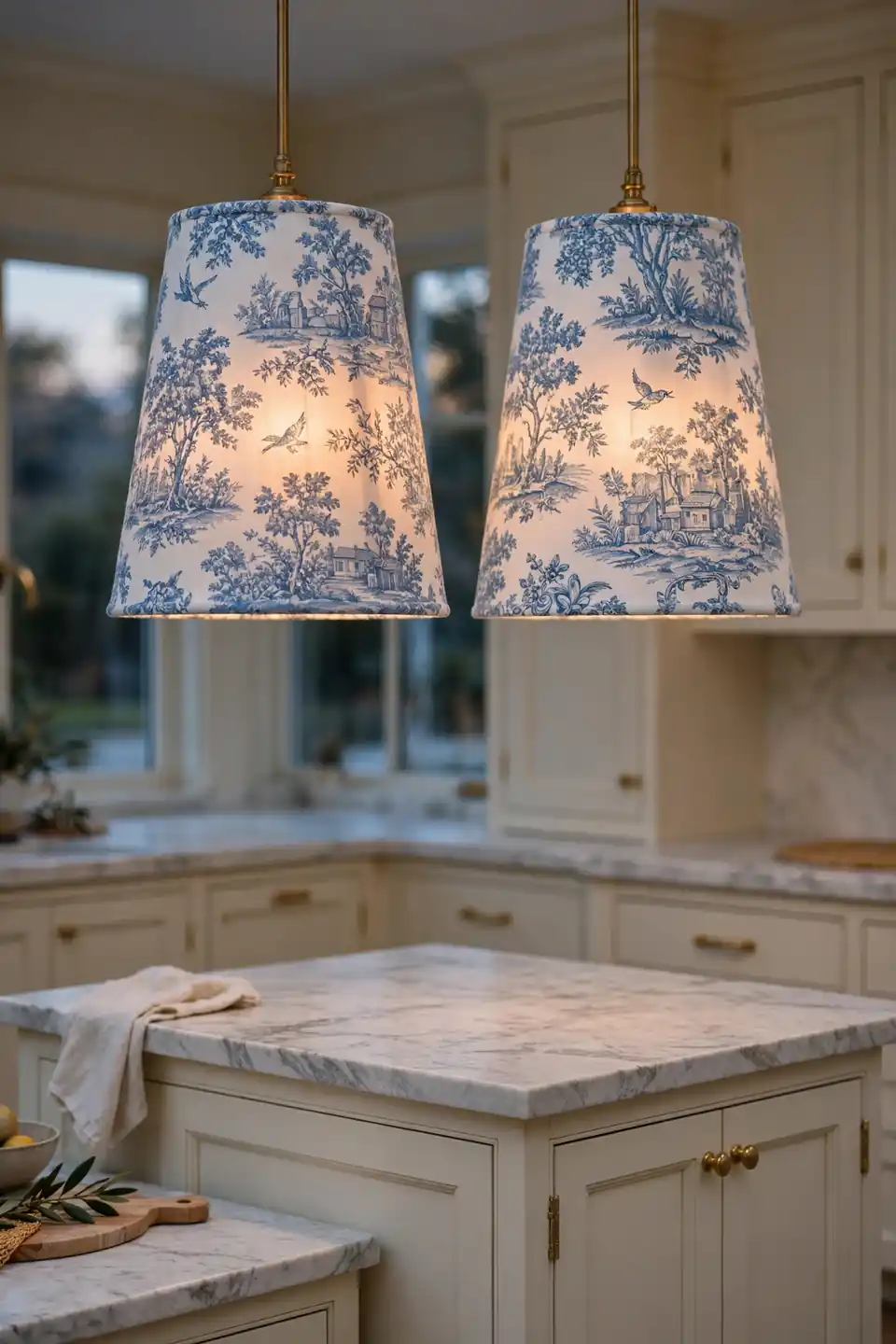
Quick Tip: Test a toile shade with the bulb on before committing. Print that looks gentle in daylight can glow busy at night, and a lining in warm white calms the scene while keeping the blue outline visible. Swap shades seasonally if you keep a plain pair in store.
Two small toile shades on pendant lights pull the pattern up to eye level, where curtains cannot reach. Keep the pendants over the island, spaced wide, so the glow lands on work surfaces instead of diners’ heads. Paper shades suit dry zones only; fabric shades wipe clean and survive kitchen steam far better.
Framed Toile Fabric Art

BEFORE: Offcuts from the curtain project sat folded in a drawer, too pretty to bin and too small to use. The wall beside the door stayed blank, and guests never guessed the kitchen had a theme at all.
AFTER: Three offcuts now hang in slim oak frames, each centred on a full scene: a bridge, a hay cart, a pair of swans. Grouped tightly, they read as a triptych and carry the print to the room’s quietest corner.
Frame fabric behind glass only away from the hob, since steam creeps under any mount. A wide cream mat gives each scene breathing room and stops the frame from crowding the motif. This is the cheapest art a kitchen can own, made from cloth already paid for.
Toile Aprons and Towels

- Start with tea towels, the lowest cost way to test the blue.
- Hang towels on a rail in sight, folded to show one full scene.
- Add a toile apron on a hook by the door as a working accent.
- Rotate two sets, so one washes while the other hangs fresh.
- Retire faded pieces to lining duties before the scenes wash out.
Textiles on hooks behave like soft signage, telling guests the kitchen has a story before a word is said. Cotton toile softens with washing, and the blue mellows toward the tone of old transferware, which many cooks prefer. Keep one plain set for messy jobs like jam making, saving the print for everyday pleasure.
Toile With Checked Pairings

| Aspect | Toile With Gingham | Toile With Stripes |
|---|---|---|
| Mood | Cottage sweet, picnic bright | Sharper, more tailored feel |
| Scale Rule | Small check, large toile scene | Narrow stripe, wide toile repeat |
| Best Spot | Nook cushions and cafe curtains | Shades, runners and valances |
| Risk | Reads twee if overdone | Fights if blues clash |
Pattern mixing works when one print leads and the other whispers. Toile always leads, because scenes demand the eye; checks and stripes should stay smaller in scale and softer in contrast. That’s why many experts recommend matching the partner’s blue to the toile’s lightest line, not its darkest, so the pair blends at distance.
Toile Open Shelf Styling
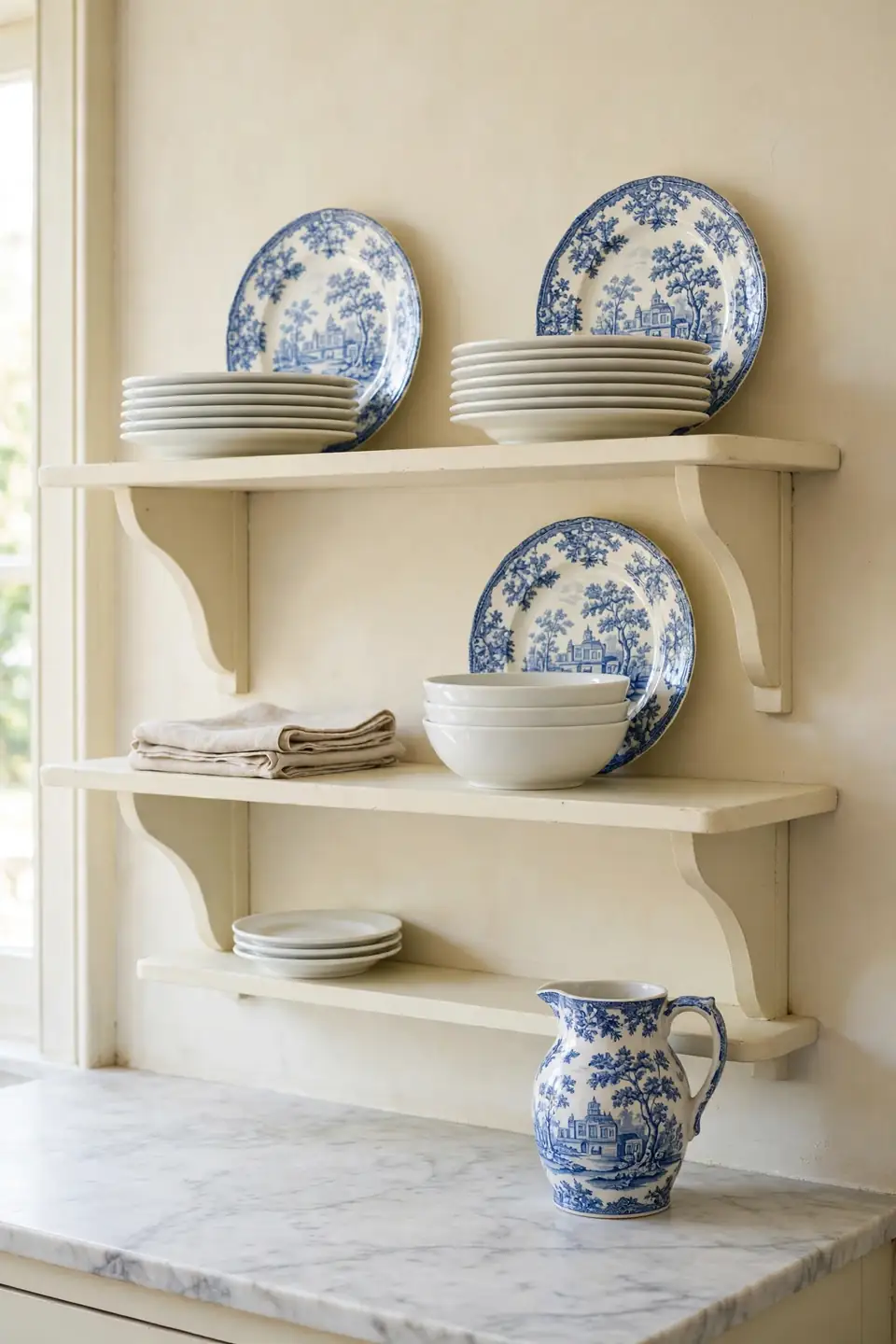
Do:
- Stand one toile plate upright behind plain white dishes.
- Keep shelf runs short, three stacks of crockery at most.
- Repeat the blue once per shelf in a jug or bowl.
- Leave breathing gaps, since open shelves punish clutter.
Don’t:
- Fill every shelf with patterned pieces edge to edge.
- Store oils beside plates, where splashes spot the glaze.
- Mix three blues that almost match but visibly argue.
- Hang a printed cloth over the shelf front permanently.
Shelves styled this way turn storage into a gallery, where the print appears in glimpses between honest white ware. The eye reads the blue as punctuation, not noise. Restyle twice a year, moving the toile pieces to different shelves, and the kitchen feels refreshed without a single purchase or a lick of paint.
Toile Wallpaper Border Strip

Cost: Low, one roll covers most kitchen runs
Time: One afternoon with a helper and ladder
Skill Level: Beginner friendly, seams hide at corners
Best For: Renters and plain kitchens needing one patterned line
A border run at picture rail height draws a blue line around the room, linking curtains to cabinets without papering a full wall. Old houses wore borders for decades, so the detail suits period kitchens especially. Keep the strip’s background matched to the wall paint, and the border reads as drawn on rather than stuck on, which is the finish worth paying for. It also hides the crack lines old plaster loves to grow.
Toile Upholstered Stool Seats
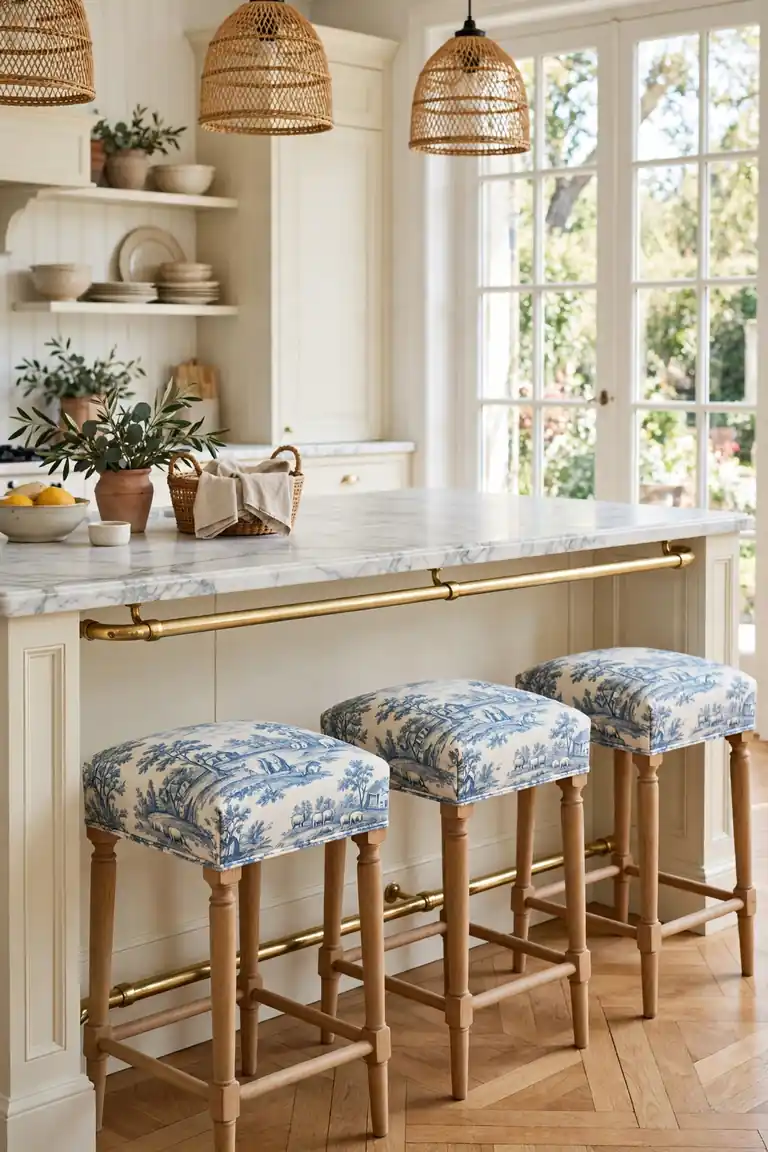
Island stools wear their seats out fast, and re-covering them in toile turns a chore into the kitchen’s smartest refresh. The print hides crumbs and coffee rings between meals, buying busy stools a longer grace period. Staple the fabric over firm foam, pulling scenes upright so figures stand, not lean.
Vinyl over the cotton sounds fussy until the first tomato sauce incident proves it genius. Clear vinyl wipes clean and keeps the print bright for years, though it suits casual stools better than formal ones. Keep one spare seat’s worth of fabric stored, since dye lots shift and a later repair should match its neighbours.
Cafe Curtains in Toile

- Hang cafe curtains at mid window, covering the lower half only.
- Choose a rod slim enough to disappear behind the header tape.
- Let the top half stay bare for light and garden views.
- Match the cafe set to full curtains elsewhere for a layered story.
- Wash monthly in busy kitchens, since low fabric catches cooking film.
Cafe curtains were born in Parisian bistros, and they still solve the same problem: privacy at seated height, daylight above. In a kitchen facing the street they earn their keep daily. The toile scene at eye level gives seated guests something gentle to rest their eyes on between courses and conversation.
Toile Papered Ceiling Surprise
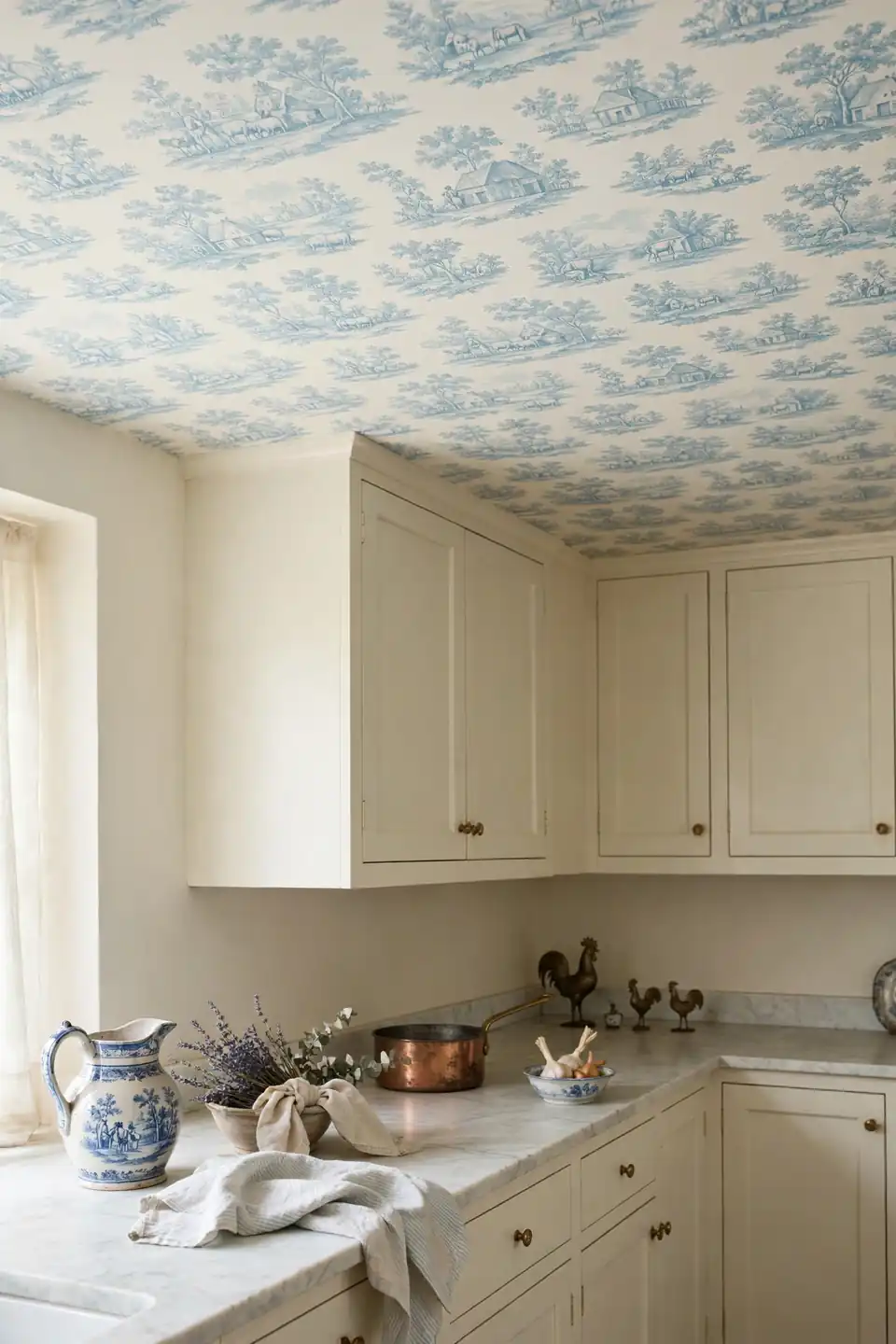
Quick Tip: Paper the ceiling only in a kitchen with plain walls and cabinets. The print belongs overhead like a canopy, and busy walls below would turn the room into a patterned box nobody relaxes in at breakfast. Hire help for hanging day, because ceiling paper punishes solo arms.
A toile ceiling sounds wild until it is seen above cream cabinets, where it behaves like the inside of a porcelain lid. Light bounces softly off the pale background, so the room stays bright. Choose a small, calm scene rather than dramatic hunts or storms, since the ceiling is the one surface seen while leaning back with coffee.
Layered Blue Tone Mixing
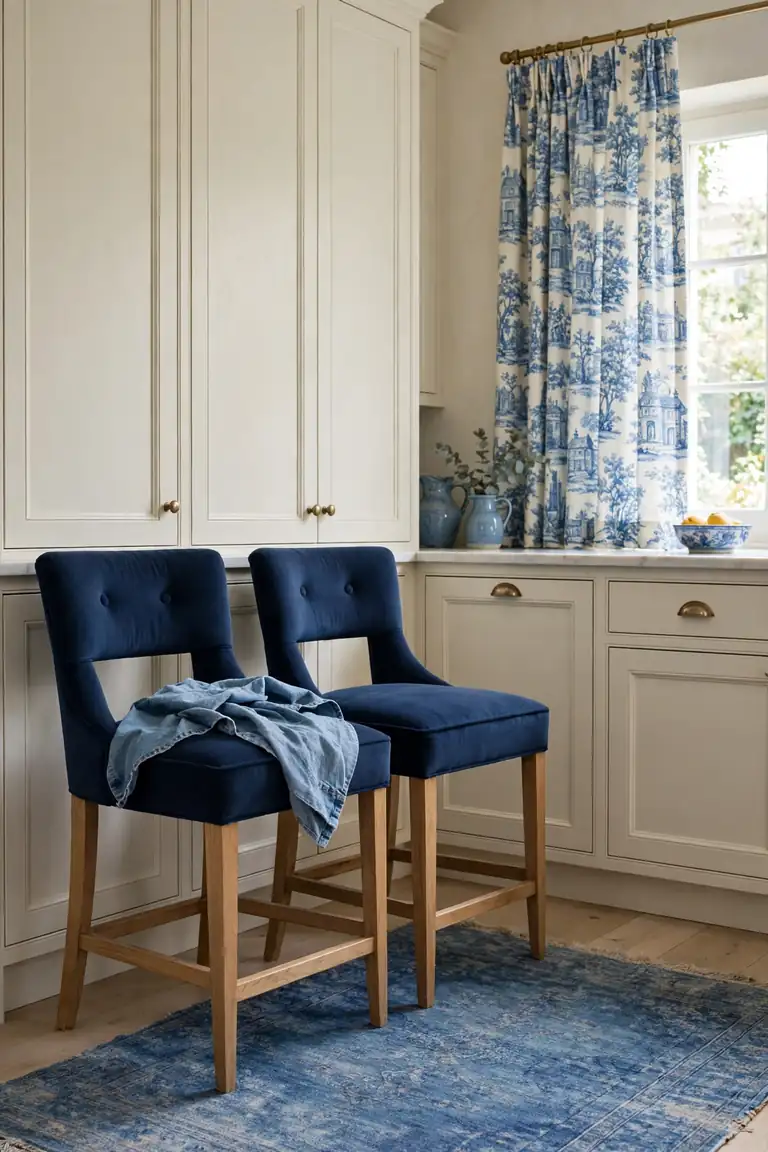
BEFORE: Every blue in the kitchen chased the same navy: towels, stools, a rug and the kettle all matched exactly. The toile curtains looked pasted on, because nothing around them shared their softer, greyer tone at all.
AFTER: The navy stayed on the stools, but towels moved to washed denim and the rug to faded indigo. Now the blues step down in a gradient, and the toile sits in the middle of the family instead of shouting over it.
Three blues in one room read as intentional; seven read as indecision. Anchor the scale with the toile’s own blue, then place one darker and one paler partner nearby. Test partners beside the curtain in morning and evening light, because blue shifts more than any other colour as daylight fades.
Sink Window Toile Valance
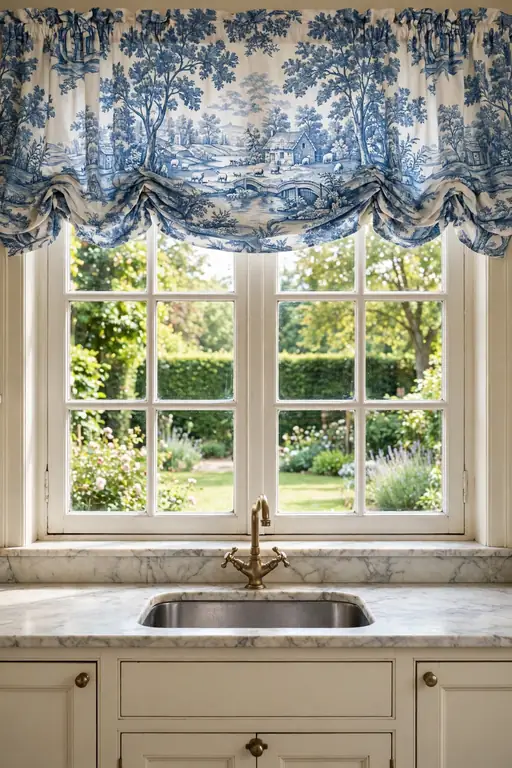
- Measure the window width and add half again for soft gathers.
- Choose a valance depth that covers the blind’s workings, nothing more.
- Centre one full scene across the middle of the finished valance.
- Hang it high, kissing the ceiling line, to stretch the window’s height.
- Steam the gathers gently once hung, never press them flat.
A valance is the polite compromise between bare glass and full curtains, ideal above a sink where hems would meet splashes. It frames the view like a proscenium, turning dishwashing into the best seat in the house. Keep the fabric unlined and light, so the little canopy moves softly when the window breathes.
Toile or Solid Linen

| Aspect | Toile Finish | Solid Linen Finish |
|---|---|---|
| Feel | Storybook, romantic, detailed | Calm, plain, restful |
| Best With | Cream cabinets, marble, brass, pale wood | Bold tile or busy counters |
| Ages As | Mellows like old china | Fades evenly, quietly |
| Verdict | One hero surface per room, chosen first | The faithful supporting act |
The happiest kitchens rarely choose one cloth for everything. Toile takes the hero surface, the window or the feature wall, while solid linen covers the supporting cast of seats, shades and towels. Mixing the two keeps the print special, and special is exactly what a two-hundred-year-old pattern deserves in a modern working room. Start with the hero, and the rest chooses itself.
Everyday Toile Care Habits

Do:
- Wash toile cotton cool, turning printed pieces inside out first.
- Dry in shade, since strong sun bleeds blue fastest.
- Spot clean wallpaper with a barely damp sponge only.
- Store spare fabric rolled, not folded, to avoid crease fading.
Don’t:
- Scrub prints with stiff brushes, which roughen the surface lines.
- Iron scenes on high heat directly against the print.
- Hang toile beside the hob, where grease film dulls it.
- Soak colours overnight in detergent, which greys the whites.
Care sounds dull beside decorating, yet the print’s whole charm is its crisp blue line, and crisp lines survive on habits, not luck. Five gentle minutes a month keeps curtains and cushions looking inherited rather than tired, which is the highest compliment toile can earn in a working kitchen.
Small Dose Toile Corners
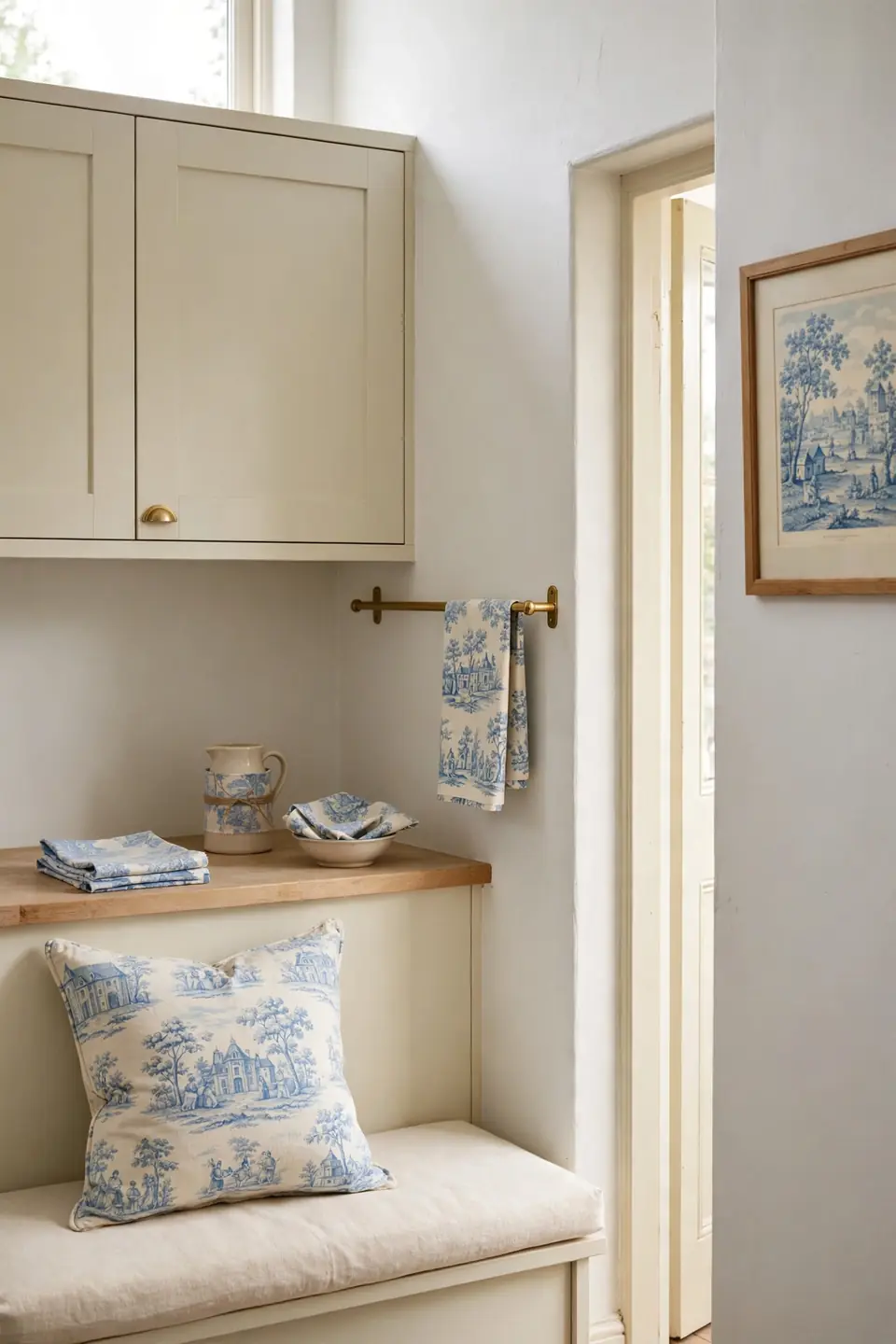
Cost: Tiny, offcuts and single cushion covers
Time: One hour to restyle a corner fully
Skill Level: None needed, just a kind eye
Best For: Sceptics testing the print before committing
Not every kitchen needs a full toile scheme, and a single corner often converts sceptics faster than a whole wall. One cushion on the bench, one framed scene by the door, one towel on the rail: the triangle of small doses lets the eye travel and the print register. Live with the corner for a month, and the next step, bigger or none, chooses itself honestly. Small is not timid when it is placed with intent.
Conclusion
Blue toile has decorated French rooms for over two centuries, and it earns its place in modern kitchens by being both story and softness at once. Whether the print arrives as full curtains or a single towel, these blue toile kitchen decorating inspiration ideas share one rule: let the pattern lead and everything else support it quietly. Save your favourite ideas to Pinterest before shopping, measure twice, and start with the surface your eyes visit most. I’ve seen how one patterned window can change the mood of a whole morning, and yours is ready when you are.