23 Natural Wood and White Kitchen Decor Ideas for Fresh Style
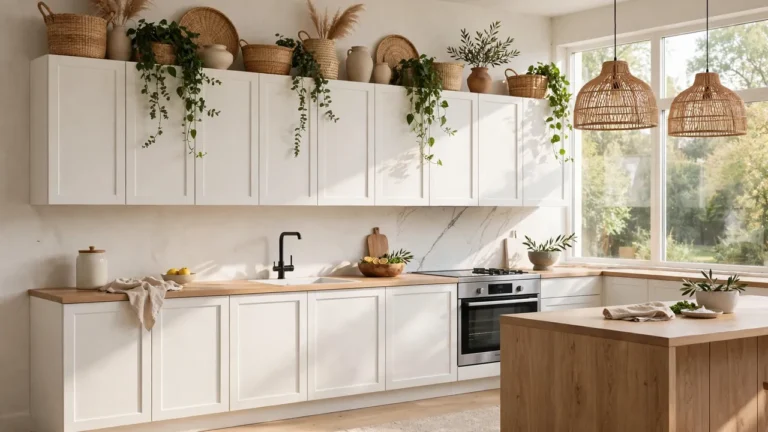
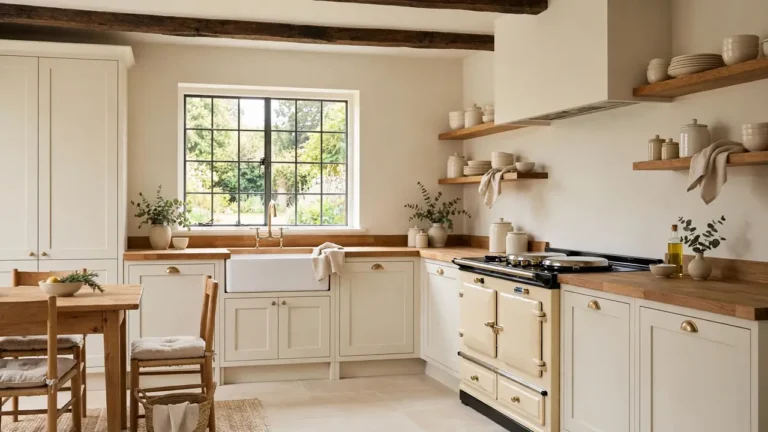
White cabinets keep a kitchen feeling bigger than it is, while timber adds the warmth that pure white rooms often lack. That balance is the heart of natural wood and white kitchen decor: crisp painted surfaces softened by grain, knots and honey tones. Every idea below pairs the two in ways that suit small galley kitchens and generous family spaces alike.
The pairing also travels well between rooms. A kitchen styled this way sits happily beside moody spaces inspired by dark academia home decor inspiration, since both lean on honest materials and deep wood tones. Start with the largest surfaces first, then layer in smaller wooden pieces until the room feels collected rather than matched.
White Oak Cabinets
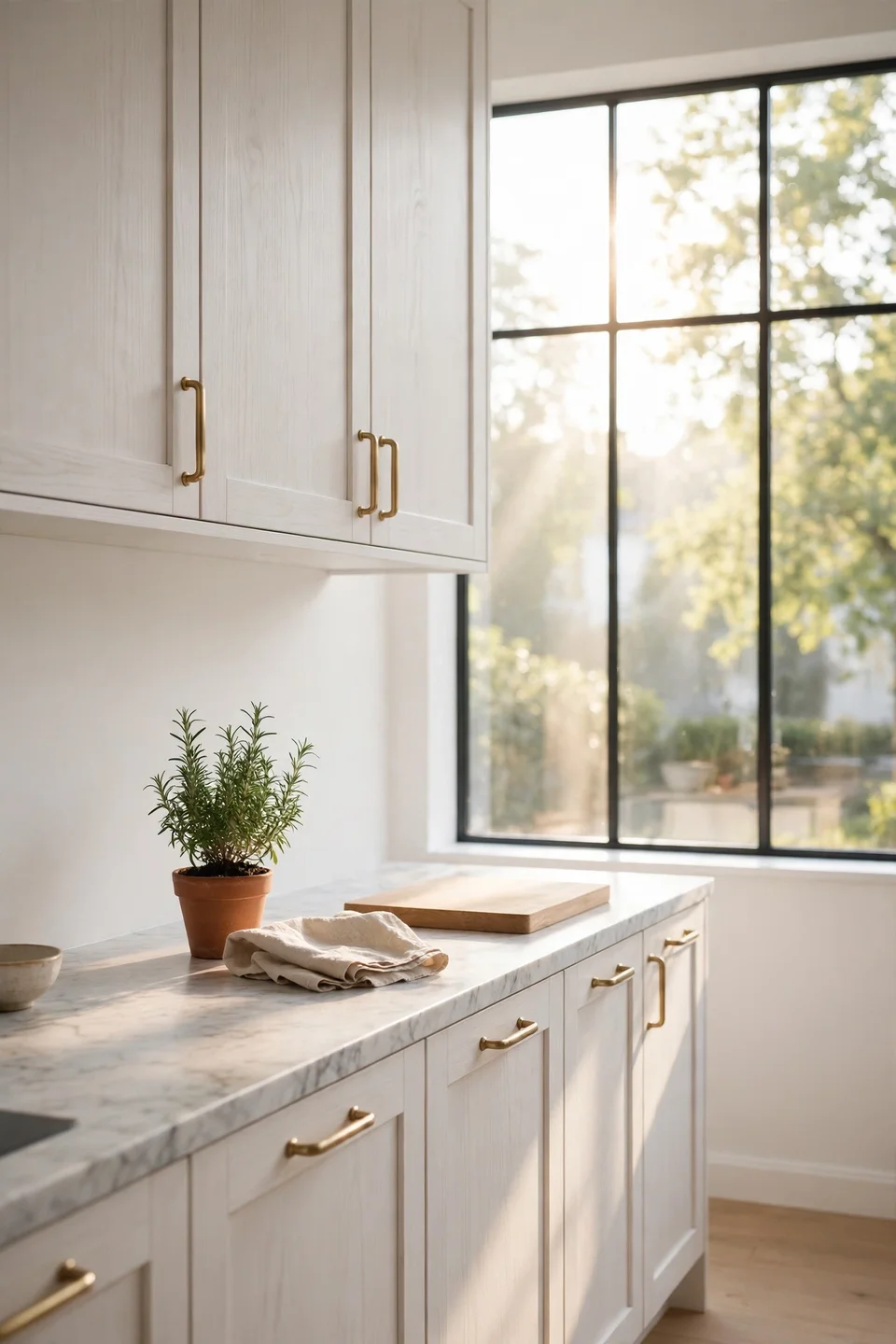
White oak brings soft golden grain to cabinetry without the orange cast of older pine. Flat slab doors keep the look calm and modern, while shaker frames suit traditional rooms. Either way, the pale timber reads light against white walls, so the whole kitchen feels airy rather than boxed in by dark cupboards.
In my experience, oak earns its keep over time. Small dents blend into the grain, handles in matte black or brushed brass sharpen the finish, and a coat of matte sealer keeps the color true. Pair the cabinets with plain white quartz counters and let the wood carry all the pattern the room needs.
Wooden Open Shelves
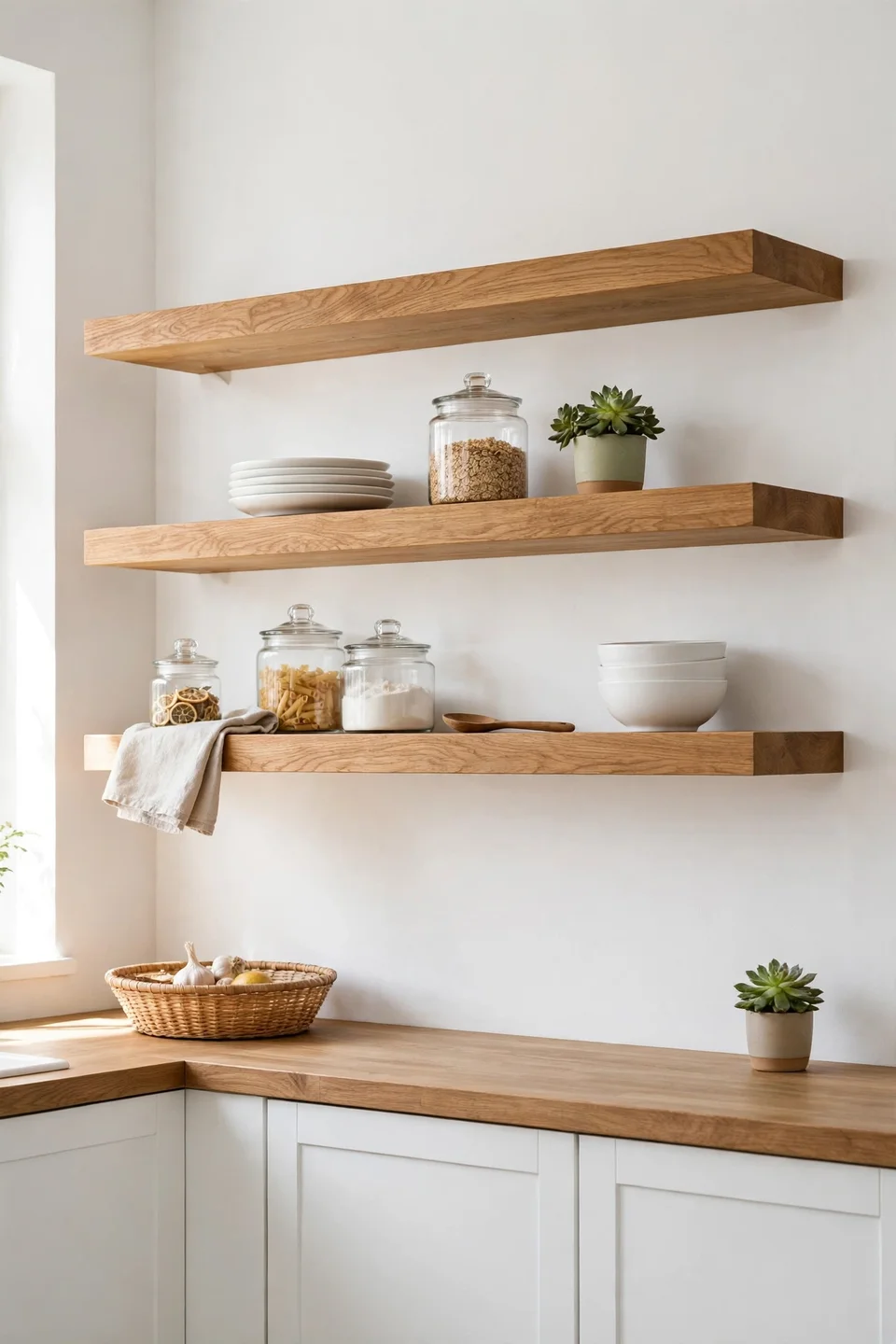
- Thick oak or pine shelves float above counters, holding everyday dishes within easy reach.
- White crockery keeps the display calm, while wood grain adds warmth behind it.
- Brackets in matte black steel give the shelves a quiet modern edge.
- Two shelves suit most kitchens; a third often crowds the wall.
- Glass jars of pasta and grains fill gaps with soft natural color.
Open shelves reward tidy habits and punish clutter, so edit ruthlessly before styling. Group pieces by height and leave breathing room between clusters. I’ve noticed that kitchens with open shelving get wiped down more often, since every crumb shows against the white dishes and pale wood.
Butcher Block Counters
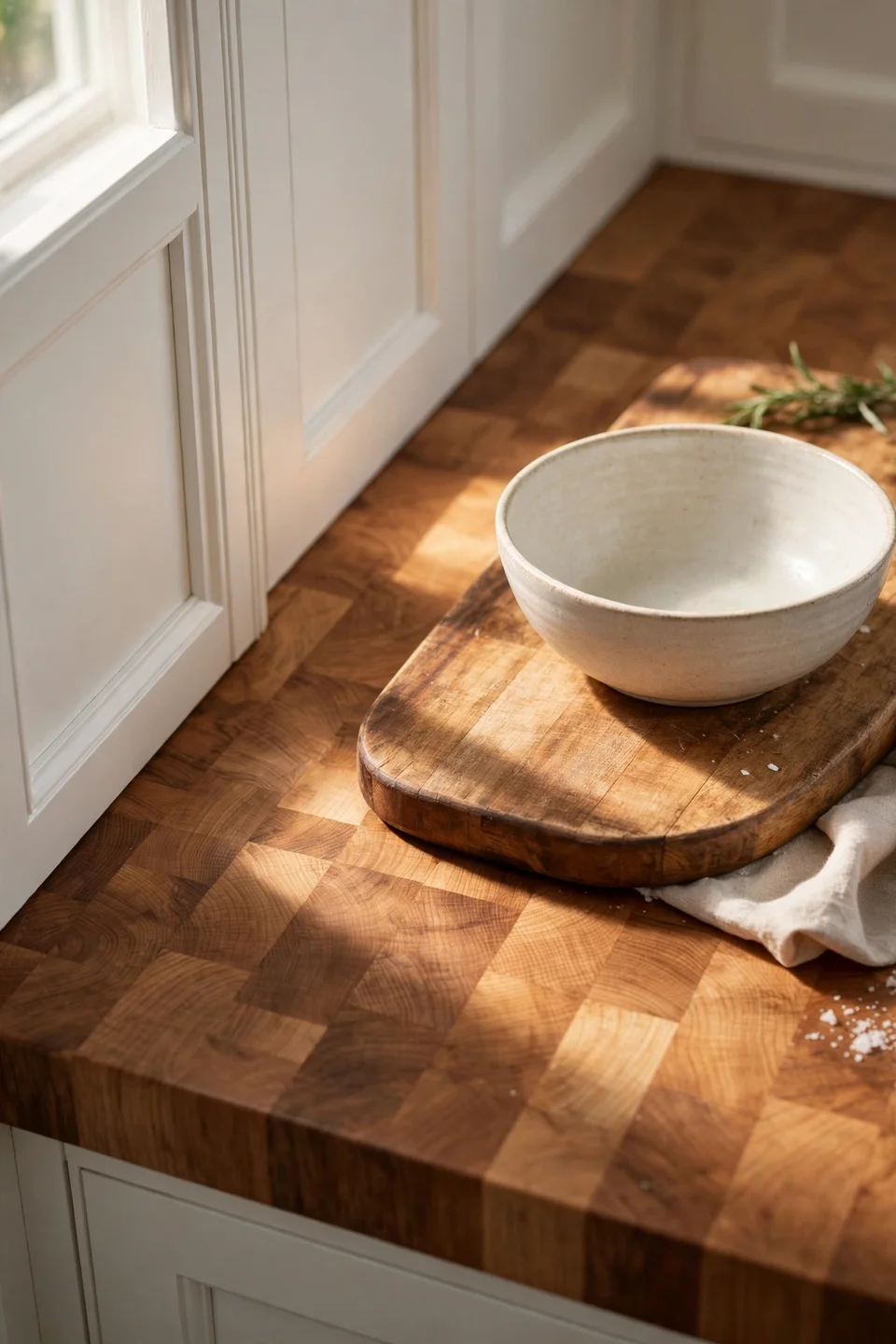
Quick Tip: Seal butcher block with food safe mineral oil every few months, working it in with a soft cloth along the grain. The oil deepens the honey color, beads water off the surface and keeps knife marks from drying the wood out between treatments.
Butcher block softens an all white kitchen instantly, adding the handmade note that stone rarely gives. It suits farmhouse and Scandinavian rooms equally, especially beside white shaker cabinets and simple black hardware. Expect gentle wear near the sink, and treat it as patina rather than damage. A light sanding and a fresh coat of oil refresh tired spots in minutes.
Exposed Wood Beams
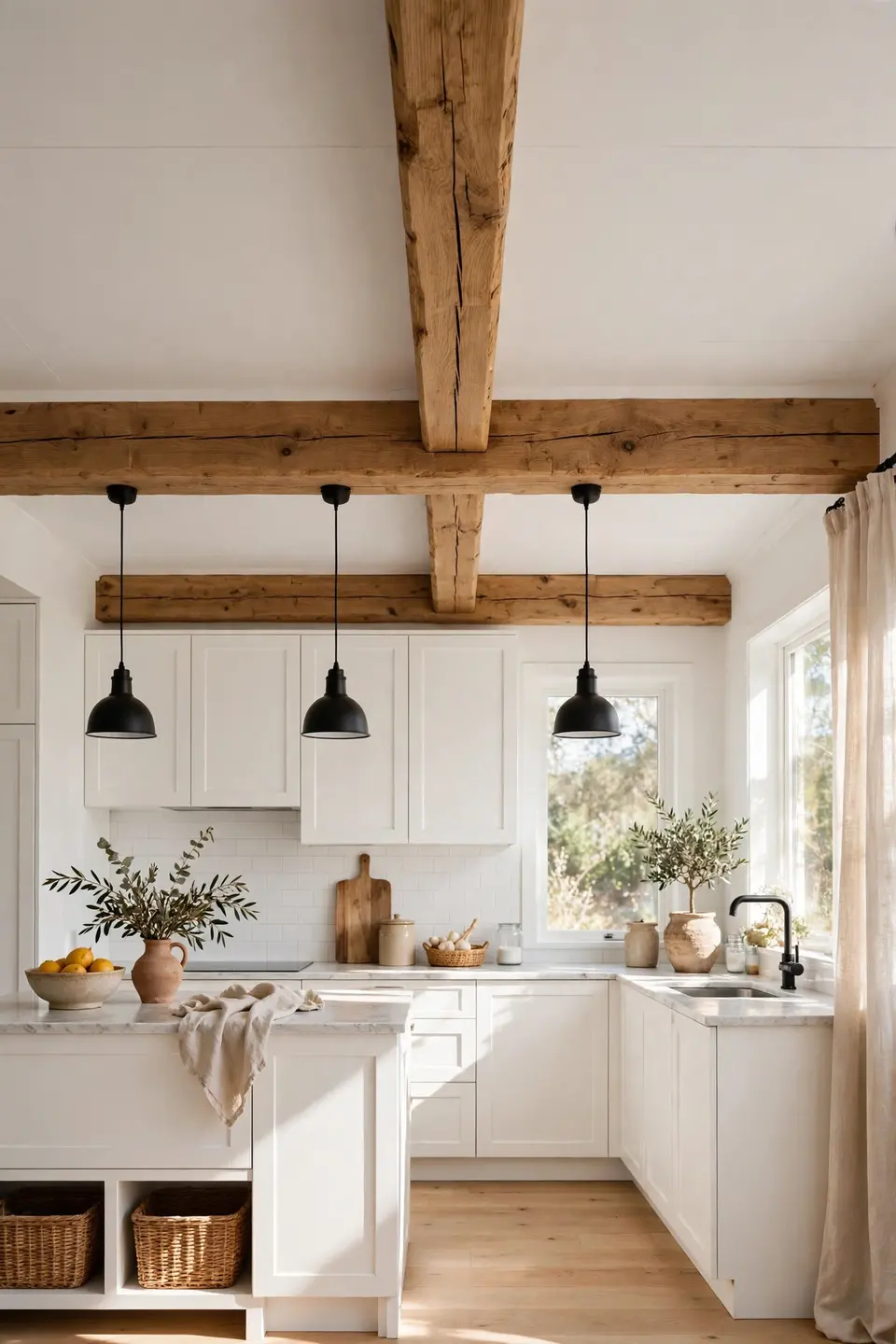
BEFORE: A plain white ceiling stretched over the kitchen like a blank lid, making the room feel taller but colder. Track lighting glared down at the counters, and nothing connected the white cabinets to the warm wood floor below them.
AFTER: Two chunky oak beams now cross the ceiling, stained to match the floorboards. The beams pull the eye along the room, give pendant lights a natural anchor point and lend the white scheme a welcome sense of age and shelter.
Faux beams weigh little and their hollow cores hide wiring, so most rooms gain the look without structural work. Space beams evenly, keep them clear of tall cabinet doors and let one beam align with the island for a deliberate, built in feel.
Layering Wood Tones
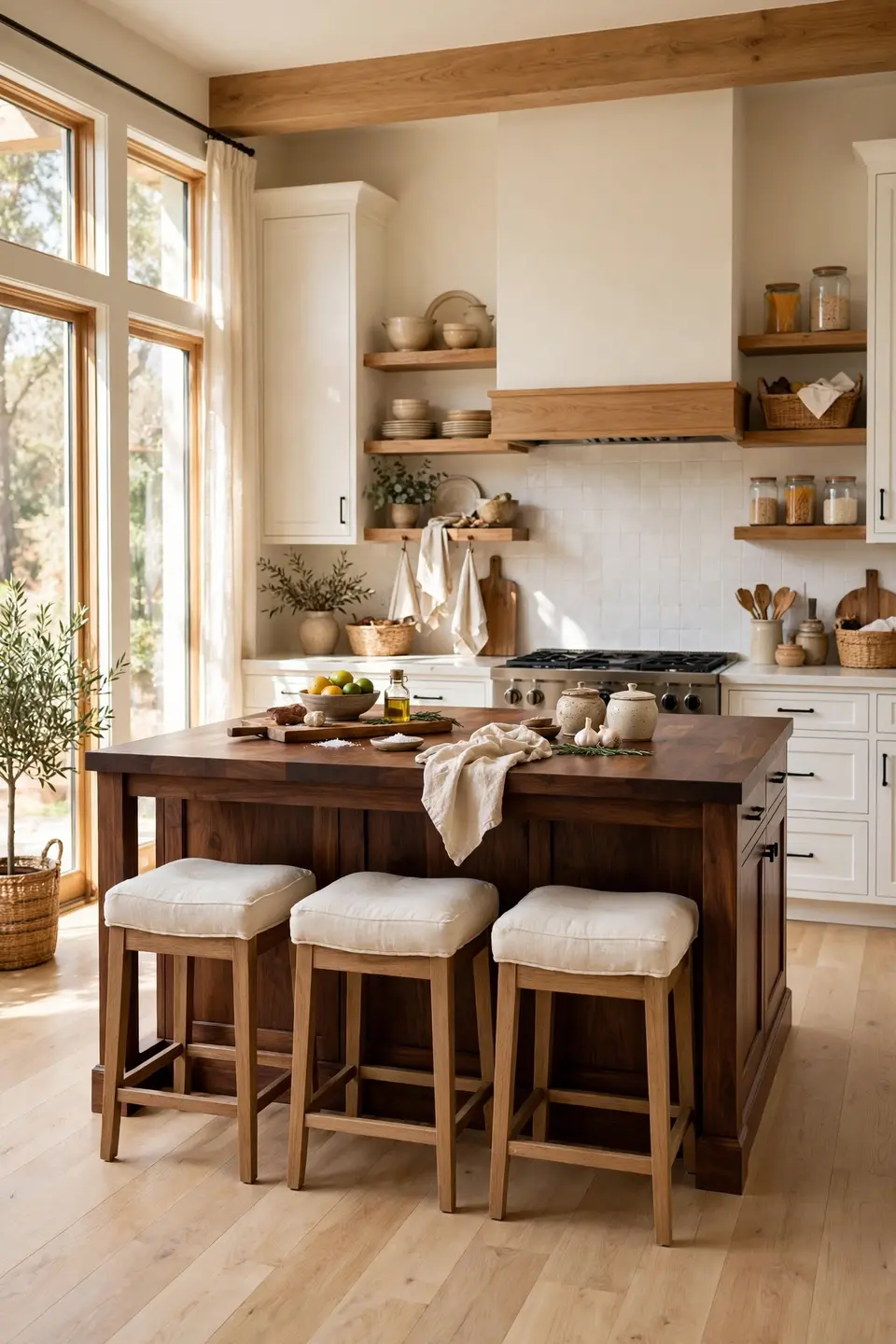
- Choose one hero wood, usually the floor or the island, and note its undertone.
- Add a second tone at least two shades lighter or darker so the contrast reads clearly.
- Repeat each tone at least twice in the room, in stools, boards or shelving.
- Bridge the tones with textiles in cream, flax and soft white.
- Step back and remove any piece whose tone fights the other two.
Mixed woods worry many people, yet kitchens look flat when every surface matches exactly. Contrast between a pale oak floor and a walnut island reads as depth, not disorder. That’s why many experts recommend the two shade rule, since gentle contrast keeps each piece visible instead of blurring into one brown mass.
Marble And Wood Counters
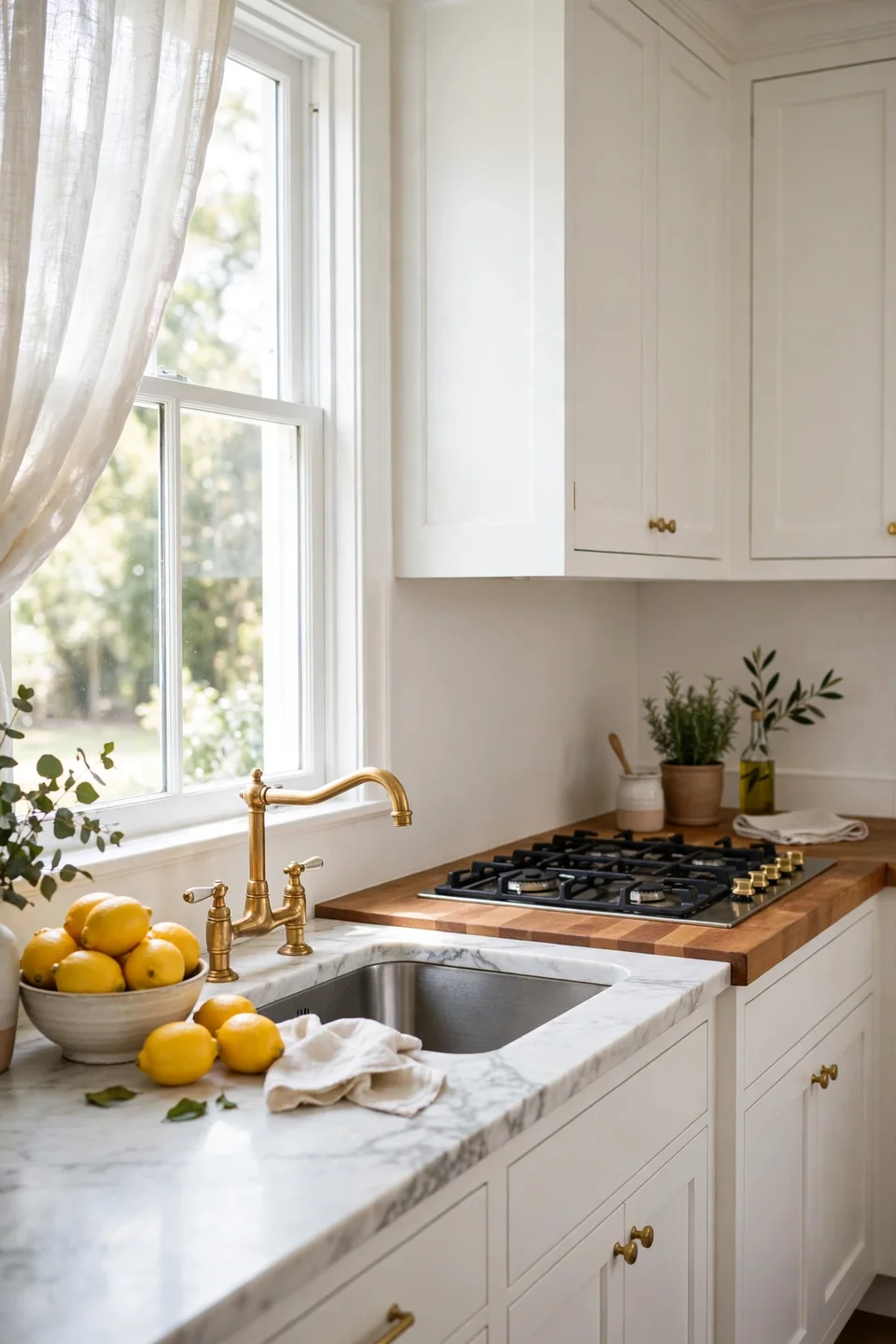
| Feature | White Marble | Butcher Block |
|---|---|---|
| Feel | Cool, smooth and polished | Warm, soft and handmade |
| Care | Seal once a year, wipe spills quickly | Oil every few months along the grain |
| Cost | Higher, priced by the slab | Lower, sold in standard lengths |
| Best For | Baking zones and pastry work | Daily chopping and prep zones |
Marble and wood divide the work of a kitchen beautifully, with stone where heat and pastry rule and timber where knives land. The contrast makes both materials look richer than either would alone. Keep the wood tone close to your floor or island so the pairing feels planned.
Woven Basket Storage
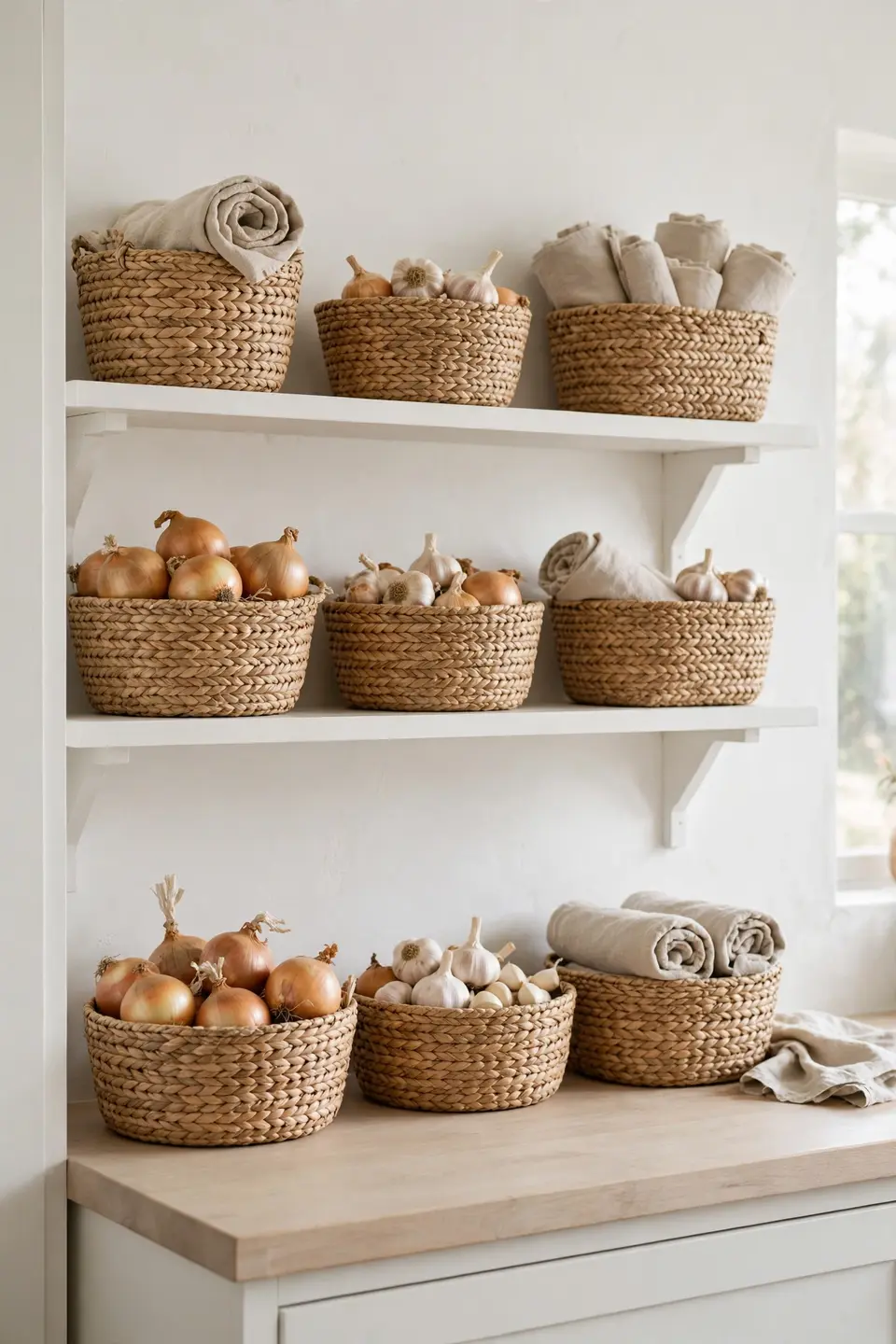
Do:
- Line open shelves with seagrass baskets for onions, garlic and linens.
- Keep basket shapes consistent so the display reads calm against white.
- Use one large basket on the floor for rolled towels or spare boards.
- Choose natural fibers that echo the tones of your woodwork.
Don’t:
- Mix bright plastic tubs into the display and break the natural palette.
- Overfill baskets until contents spill over the rim and look untidy.
- Place baskets where steam from the hob will stain the weave.
Baskets bring the softness of a pantry into kitchens without one, hiding the odd shapes that cabinets struggle to hide. Their woven texture sits happily between smooth white doors and grained wood shelves. Rotate contents seasonally, and the baskets stay useful rather than decorative clutter.
White Subway Tile
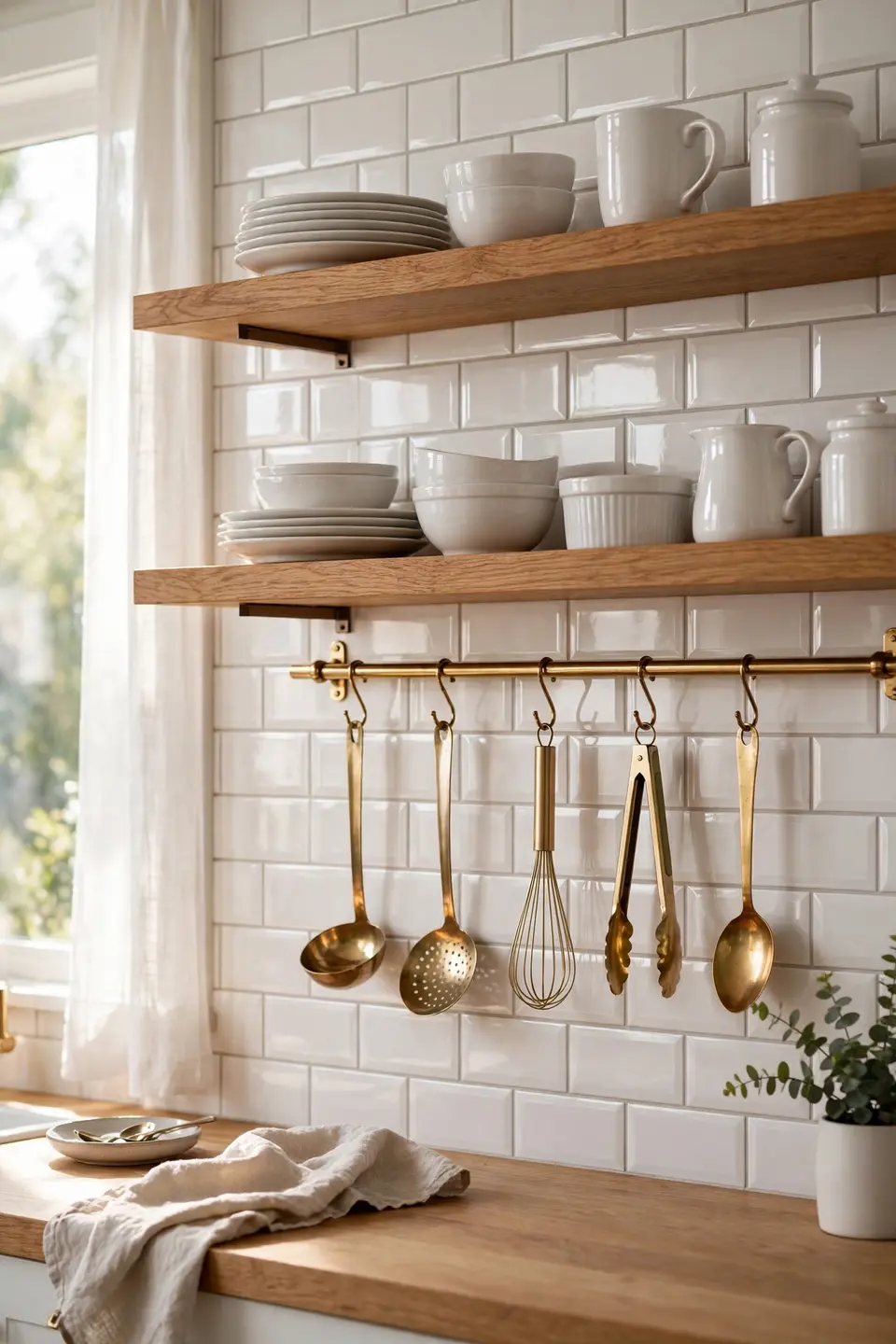
Tile Size: Classic three by six inch tiles suit most splashbacks; larger formats feel calmer.
Grout Color: Soft gray grout outlines each tile gently; white grout gives a seamless wash.
Layout: Brick bond feels traditional, stacked rows feel modern, herringbone adds gentle movement.
Finish: Handmade look tiles with wavy edges soften strict white cabinetry.
Subway tile has survived a century of kitchen fashion because it lets other materials lead. Against wood shelves and oak stools it stays quiet, bouncing light around the room without glare. Choose a warm white tile rather than a blue white, since cooler whites can make natural wood look gray and tired by comparison. A simple pencil trim finishes the top edge neatly.
Oak Island Centerpiece
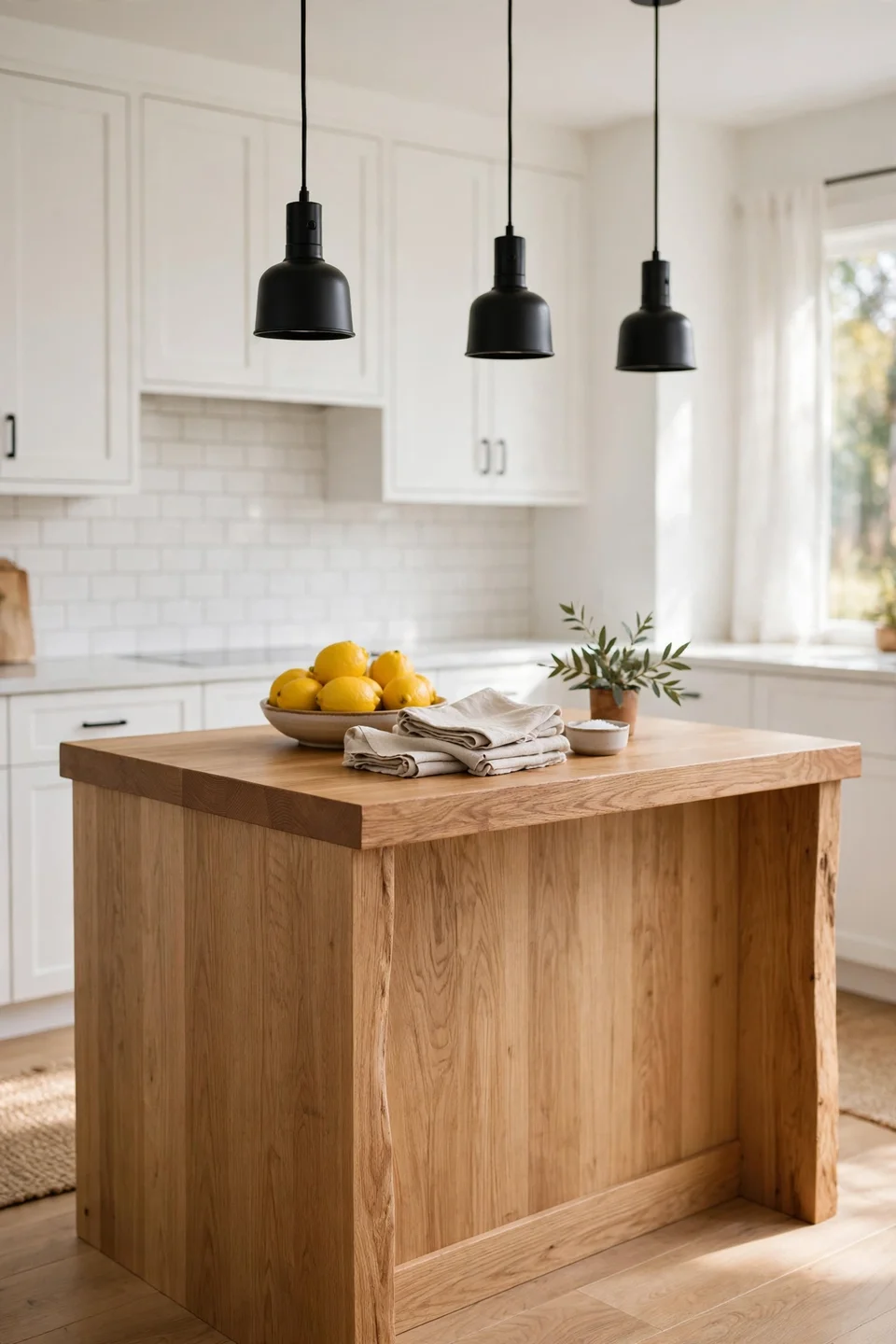
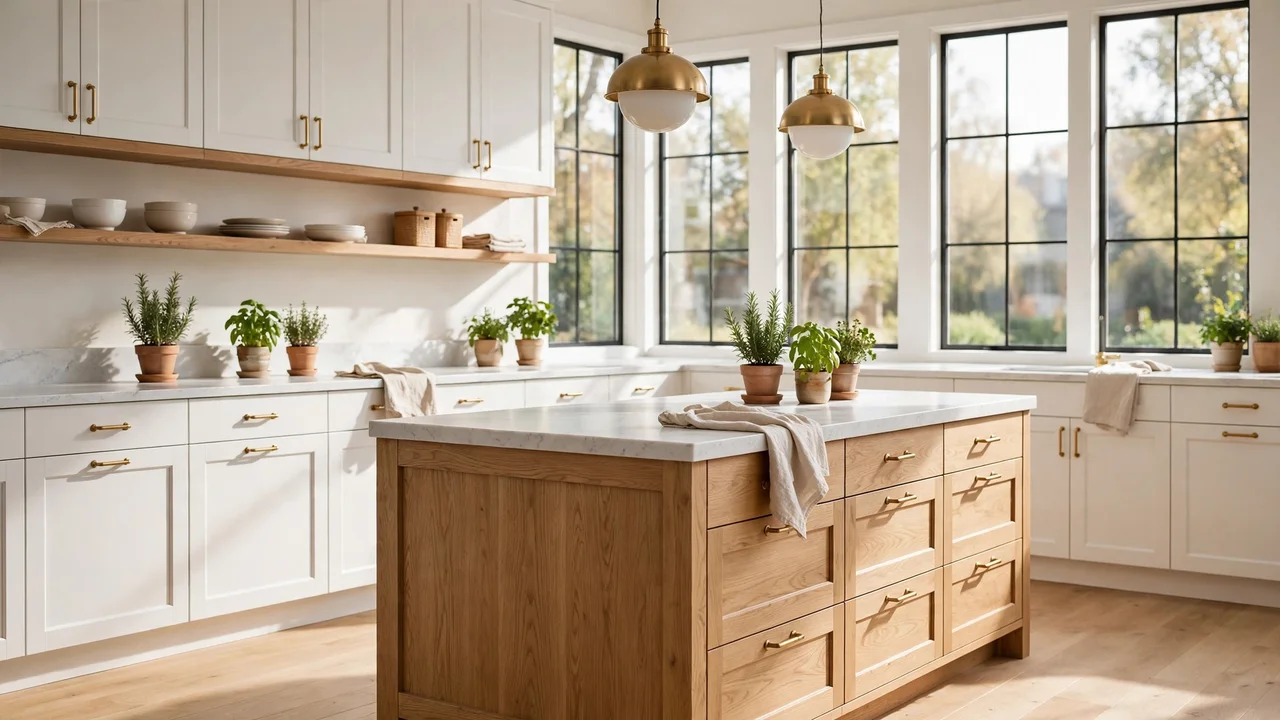
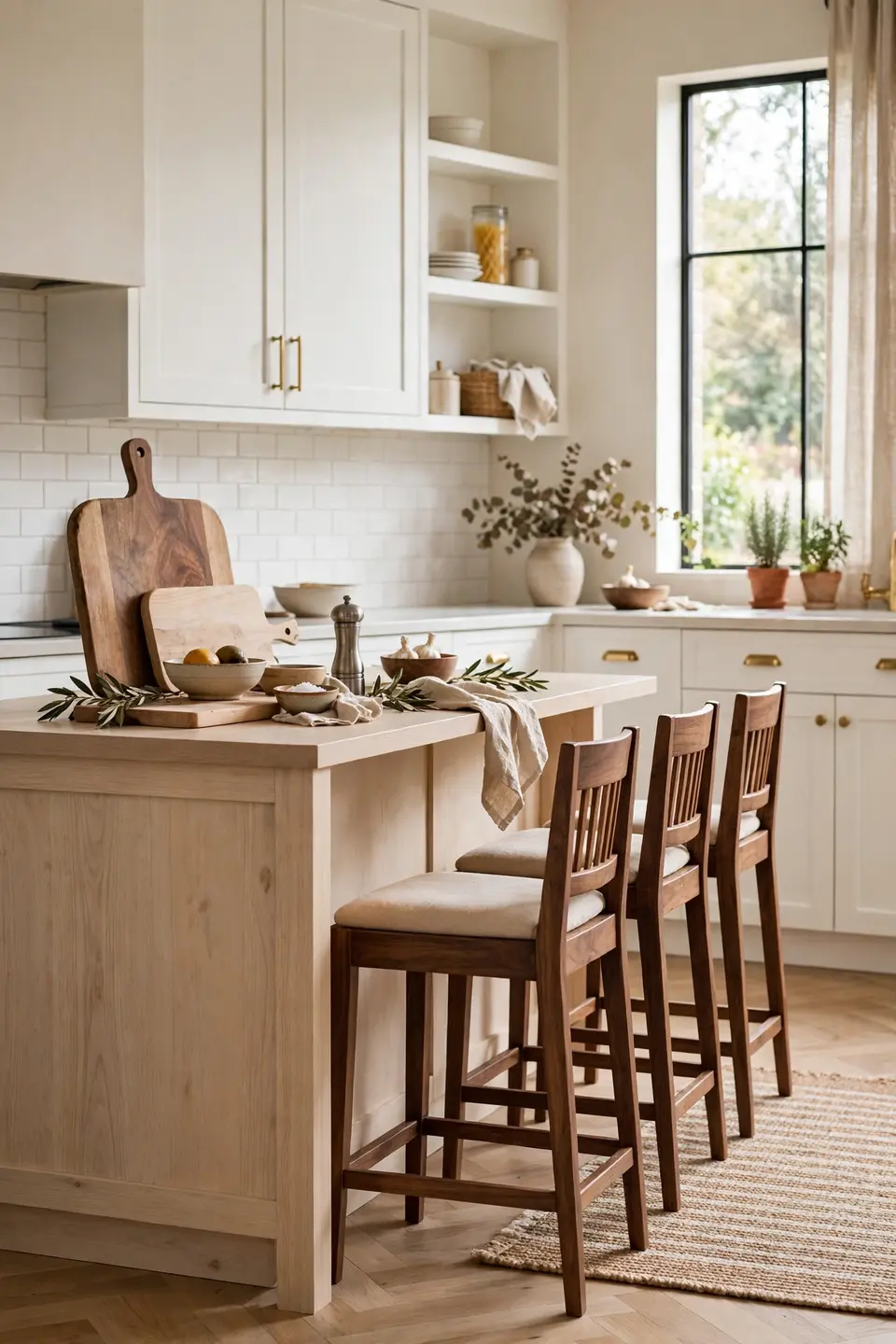
An island in natural oak anchors a white kitchen the way a farmhouse table anchors a dining room. Waterfall edges feel sleek and modern, while a simple slab top with overhang invites stools and conversation. The island becomes the warm center that every other element quietly orbits during busy mornings and slow Sunday cooking alike.
Keep the island styling restrained so the grain stays the star of the room. A bowl of lemons, a stack of linen napkins and one trailing plant are plenty. Pendant lights in black or brass hang above, echoing hardware elsewhere, while the white perimeter cabinets step back and let the timber glow in the middle.
Wooden Bar Stools
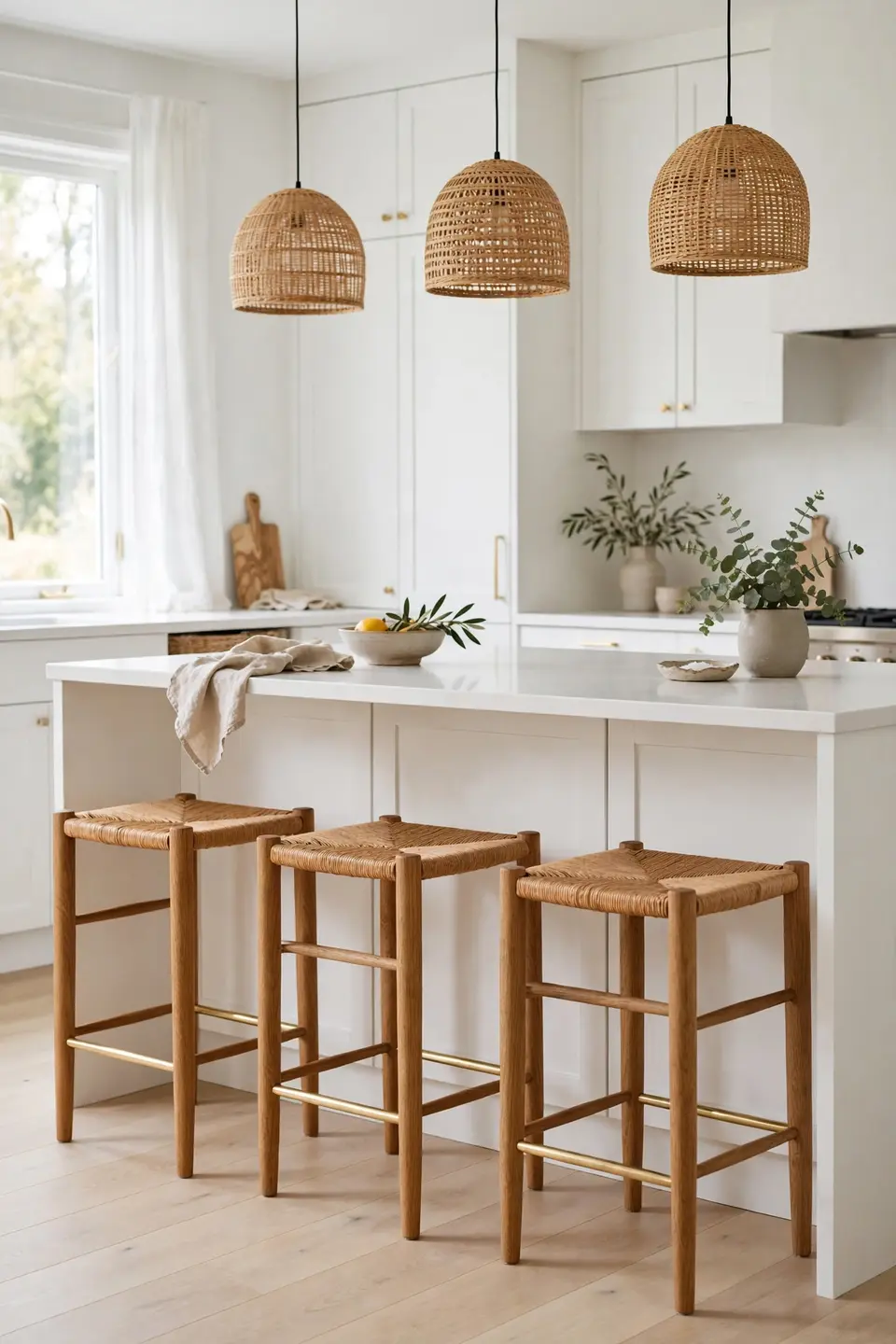
- Backless oak stools tuck fully under the island, keeping walkways clear in small kitchens.
- Low back stools support longer sits during homework, coffee and conversation.
- Woven rush or cane seats repeat the texture of baskets and blinds.
- Black stained stools sharpen the palette without adding another wood tone.
- Foot rails in brass protect the wood from scuffs and add a finished detail.
Stools get dragged, kicked and climbed on daily, so solid timber beats veneer every time. Test the height against your counter before buying a set; knees should clear the overhang comfortably. A felt pad under each leg keeps floors quiet and scratch free for years.
Natural Fiber Runners
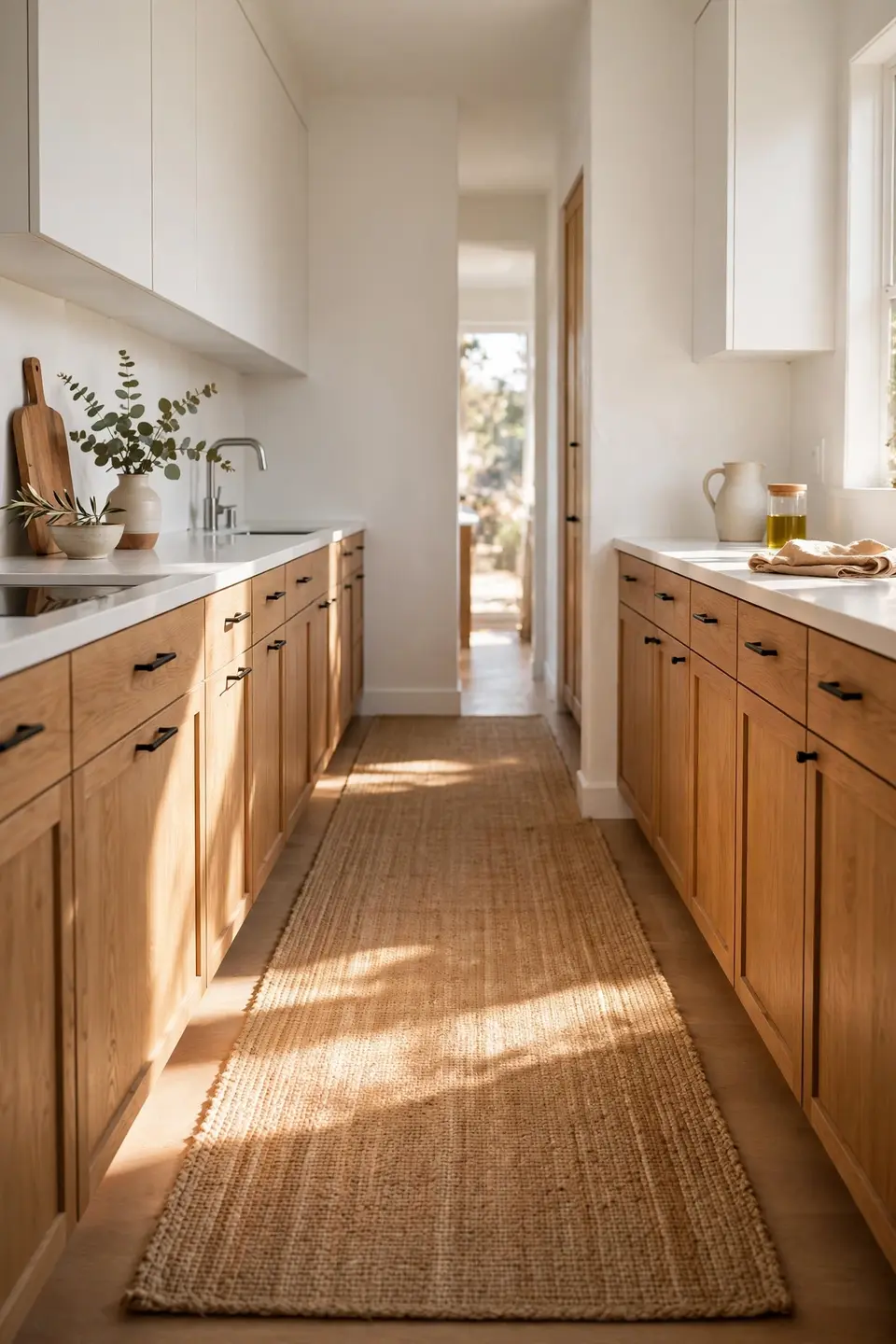
Quick Tip: Choose a flat weave jute or sisal runner for the sink run, since loops and pile trap crumbs and splash marks. A tight weave shakes clean outside or hoses down in summer, and its sandy color hides the daily dust that white floors proudly display.
Runners soften the long straight lines of a galley kitchen and warm bare feet on winter mornings. Their natural fibers mirror the tones of oak shelves and pine stools, tying floor to furniture in one quiet move. Size the runner to leave a border of floor visible on all sides, which keeps the layout feeling generous.
Honey Toned Wood Floors
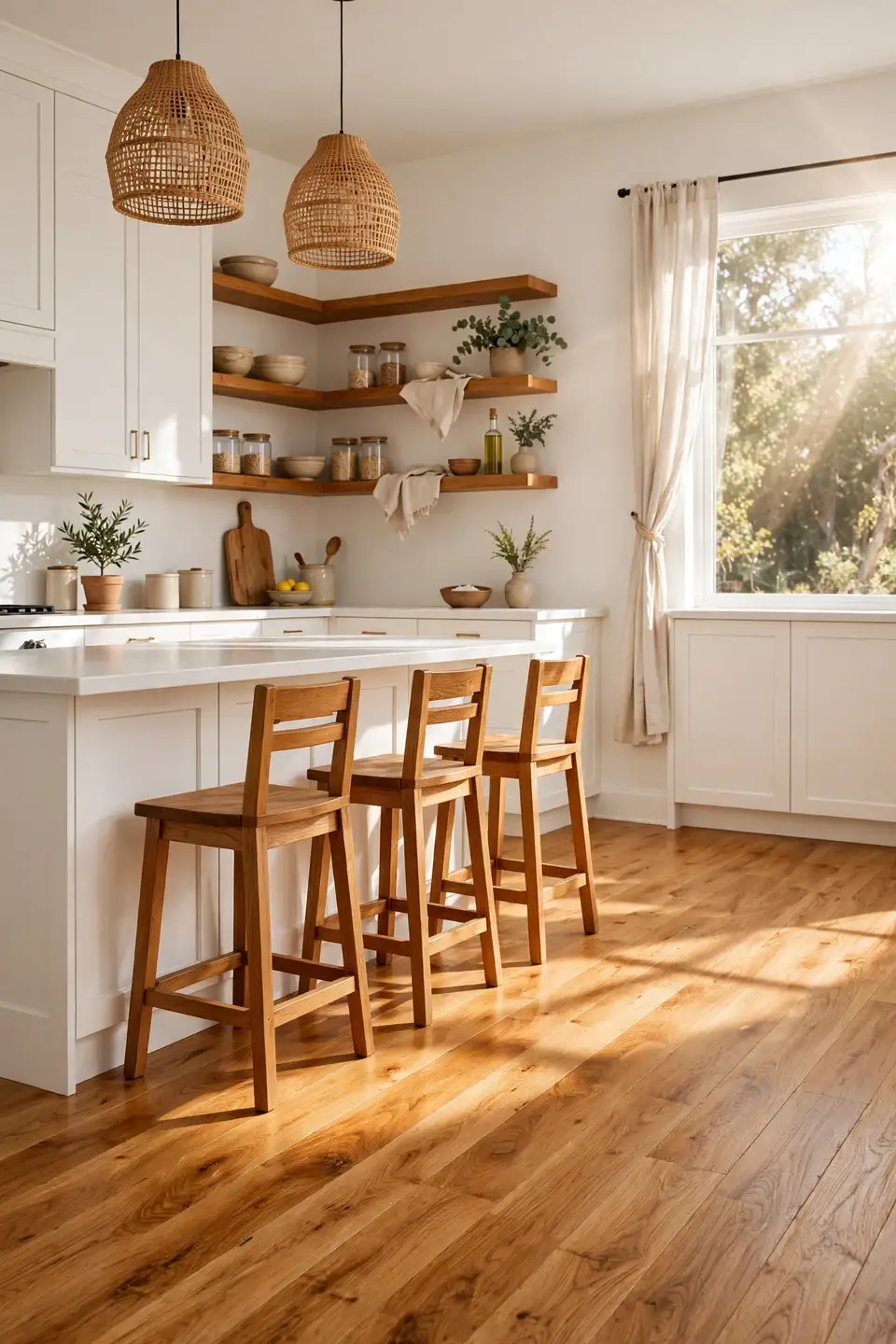
BEFORE: Gray washed laminate ran through the kitchen, fighting the white cabinets and leaving the room feeling cold underfoot. Every wood piece added later, from stools to open shelves, clashed with the ashy gray floor tone.
AFTER: Honey toned oak boards now run wall to wall, their warm grain glowing beside the white units. The floor sets the palette for the whole room, and smaller wood pieces repeat its tone like quiet echoes.
Flooring decides whether natural wood and white kitchen decor feels warm or clinical, so choose the floor before the accents. Warm undertones in the boards forgive crumbs, welcome bare feet and flatter white paint at every hour of daylight.
White Shaker Cabinets
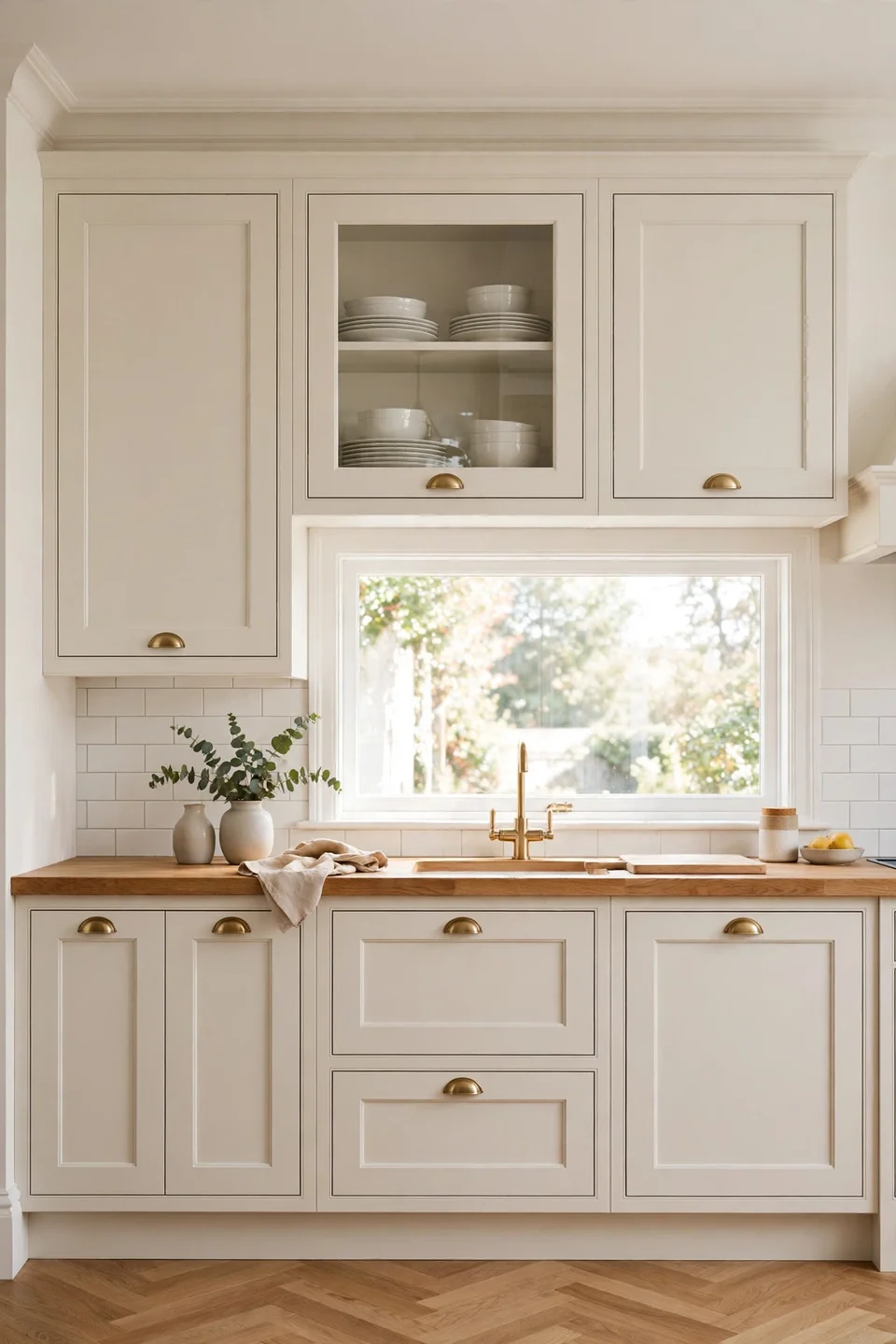
- Paint or choose cabinets in a warm white with the faintest cream base.
- Fit simple cup pulls or knobs in brushed brass, black or aged bronze.
- Add one glass fronted cabinet to break the run of solid doors.
- Crown the uppers with plain cornice that reaches the ceiling.
- Repeat the white on the walls so cabinetry feels built into the room.
Shaker doors suit this palette because their simple frames let materials speak. The recessed panel catches soft shadows, giving white doors depth without decoration. Beside oak worktops or a timber island, the style reads both traditional and current, which is why it anchors so many long lasting kitchen designs.
Wood Cutting Board Displays
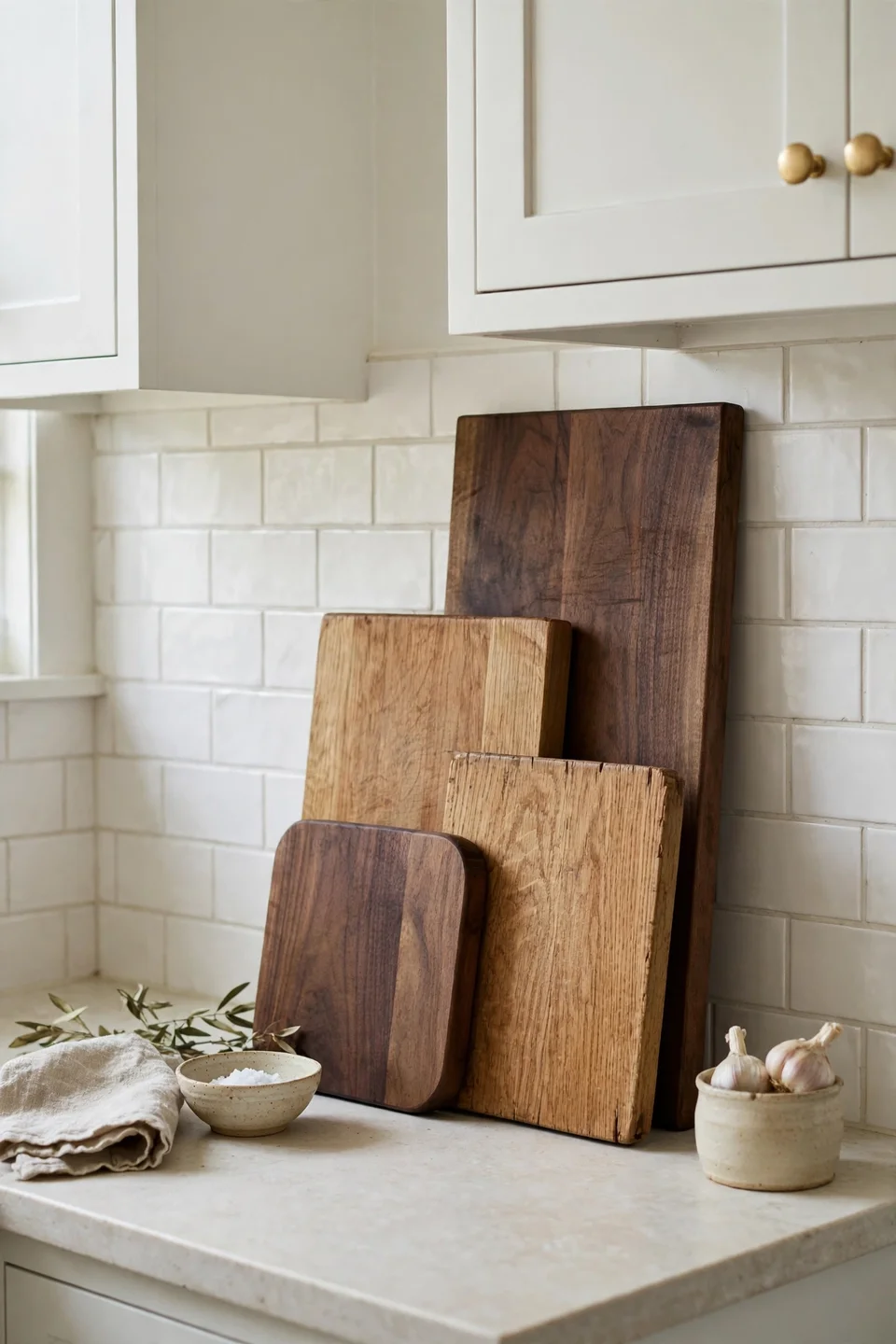
| Feature | Oak Boards | Walnut Boards |
|---|---|---|
| Tone | Pale, honeyed and sunny | Deep chocolate brown and rich |
| Grain | Bold, open and full of character | Smooth, subtle and close grained |
| Best Spot | Leaning against white tile splashbacks | Hanging on hooks beside the hob |
| Care | Oil monthly to stop drying cracks | Oil every few months as needed |
Boards leaning against the splashback are the quickest wood layer a white kitchen can gain. Group three sizes with the tallest at the back, and let the handles vary for a collected feel. The display still works daily, since every board earns its keep at chopping time.
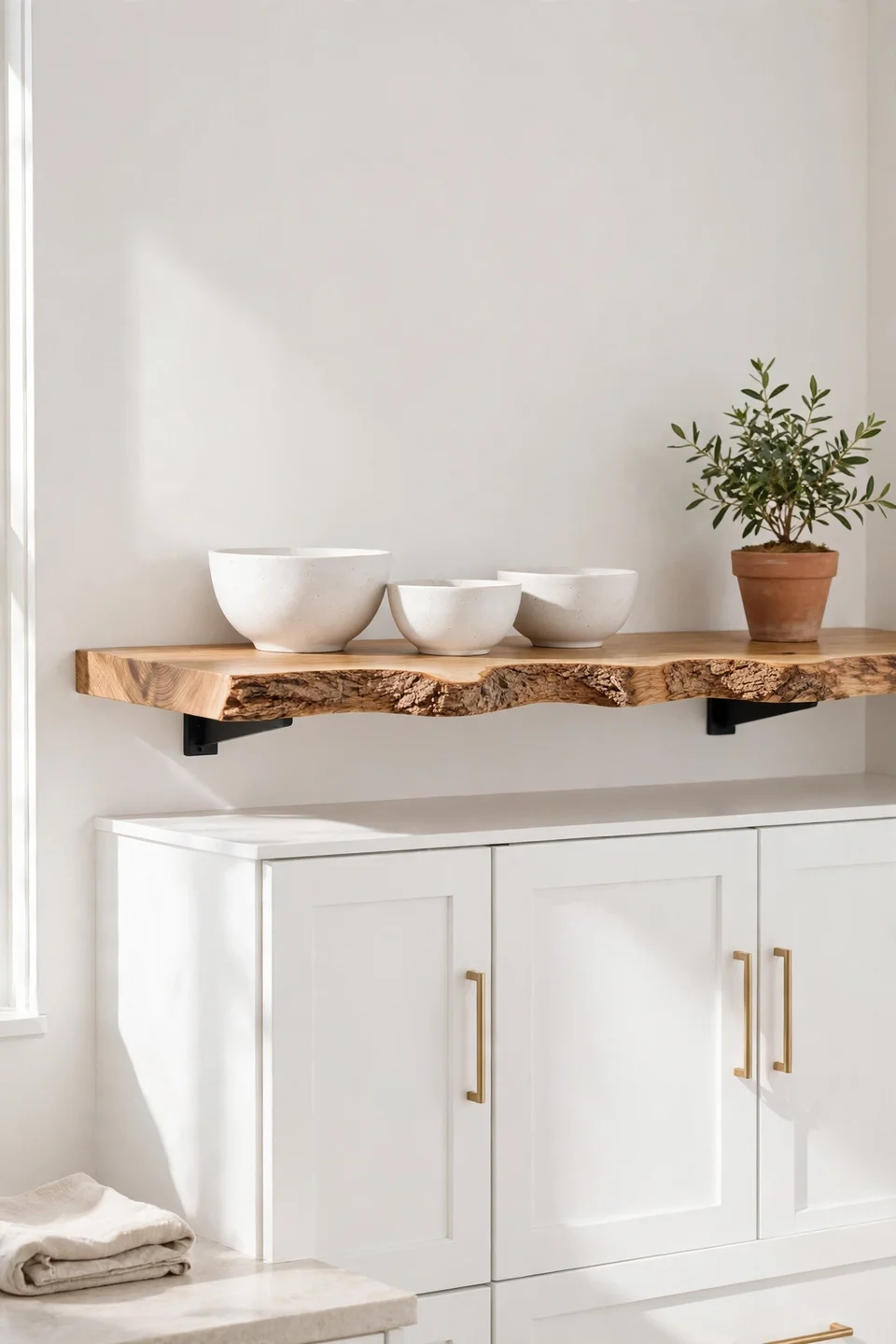
Live Edge Details
Do:
- Choose one live edge piece, such as a shelf or a serving board.
- Let the wavy edge face outward where hands and eyes can enjoy it.
- Sand and oil the edge so the bark line feels smooth.
- Pair the rough edge with crisp white surfaces for contrast.
Don’t:
- Fill the room with rustic edges until the kitchen reads like a cabin.
- Place live edge wood where standing water will darken it.
- Buy pieces with loose bark that sheds into food prep areas.
A single live edge brings the tree back into the room. The wandering line breaks up straight cabinetry and reminds everyone that wood was once alive. Against smooth quartz and painted doors, that small irregularity feels luxurious rather than rough, especially when styling stays calm.
Brass And Wood Pairing
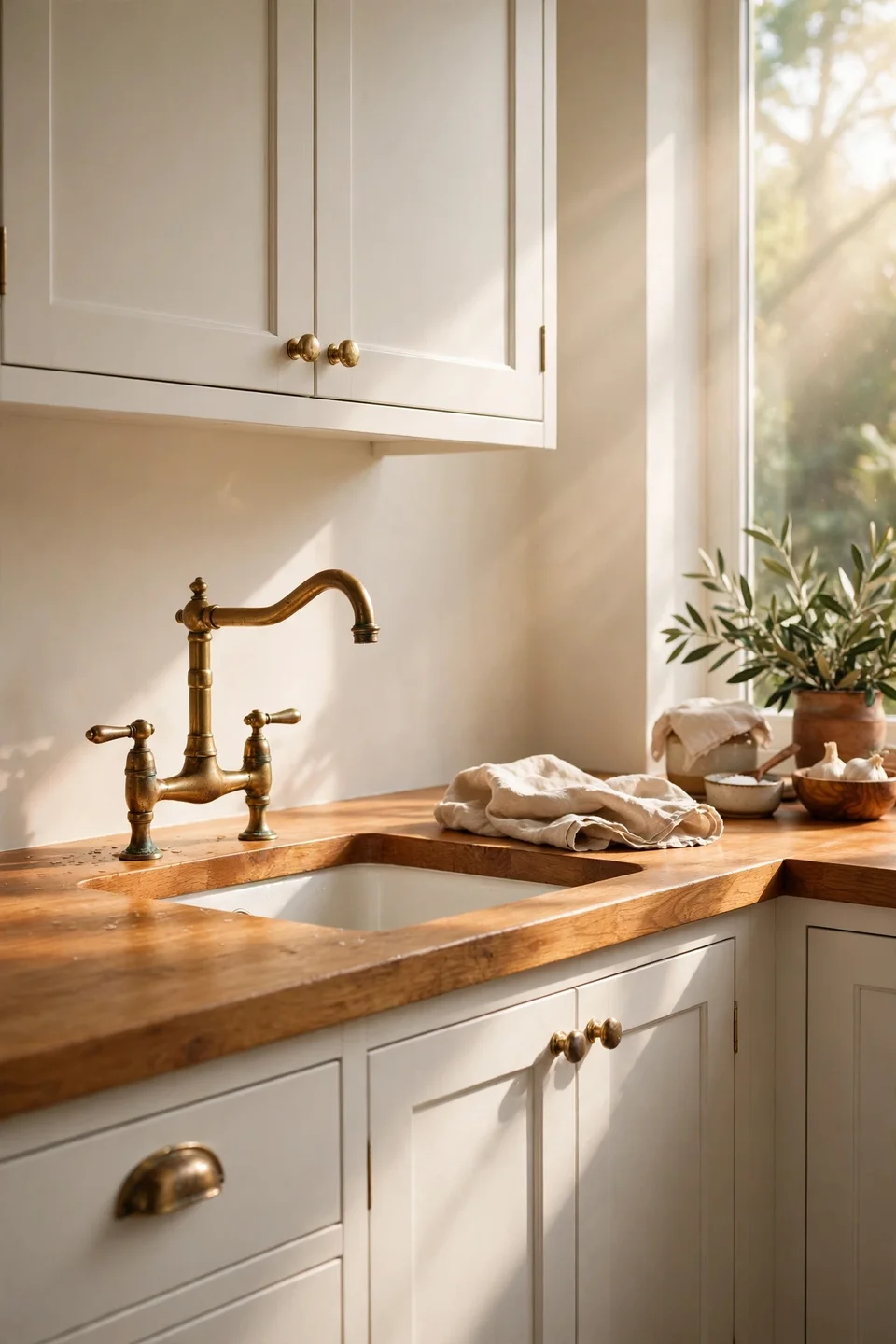
Finish: Unlacquered brass warms and darkens with touch, echoing the aged tones of natural wood.
Placement: Handles, taps, rails and lamp arms carry brass best in a working kitchen.
Balance: Three brass touches on each wall keep the metal feeling deliberate, never scattered.
Care: Polish rarely; a gentle patina suits natural materials and hides fingerprints well.
Brass is the jewelry of a wood and white kitchen, warming both materials with its low golden shine. The metal bridges pale oak and dark walnut equally, so mixed wood rooms gain a common thread running through them. Start with the tap and the handles, then add more only if the room asks for it.
Whitewashed Wood Accents
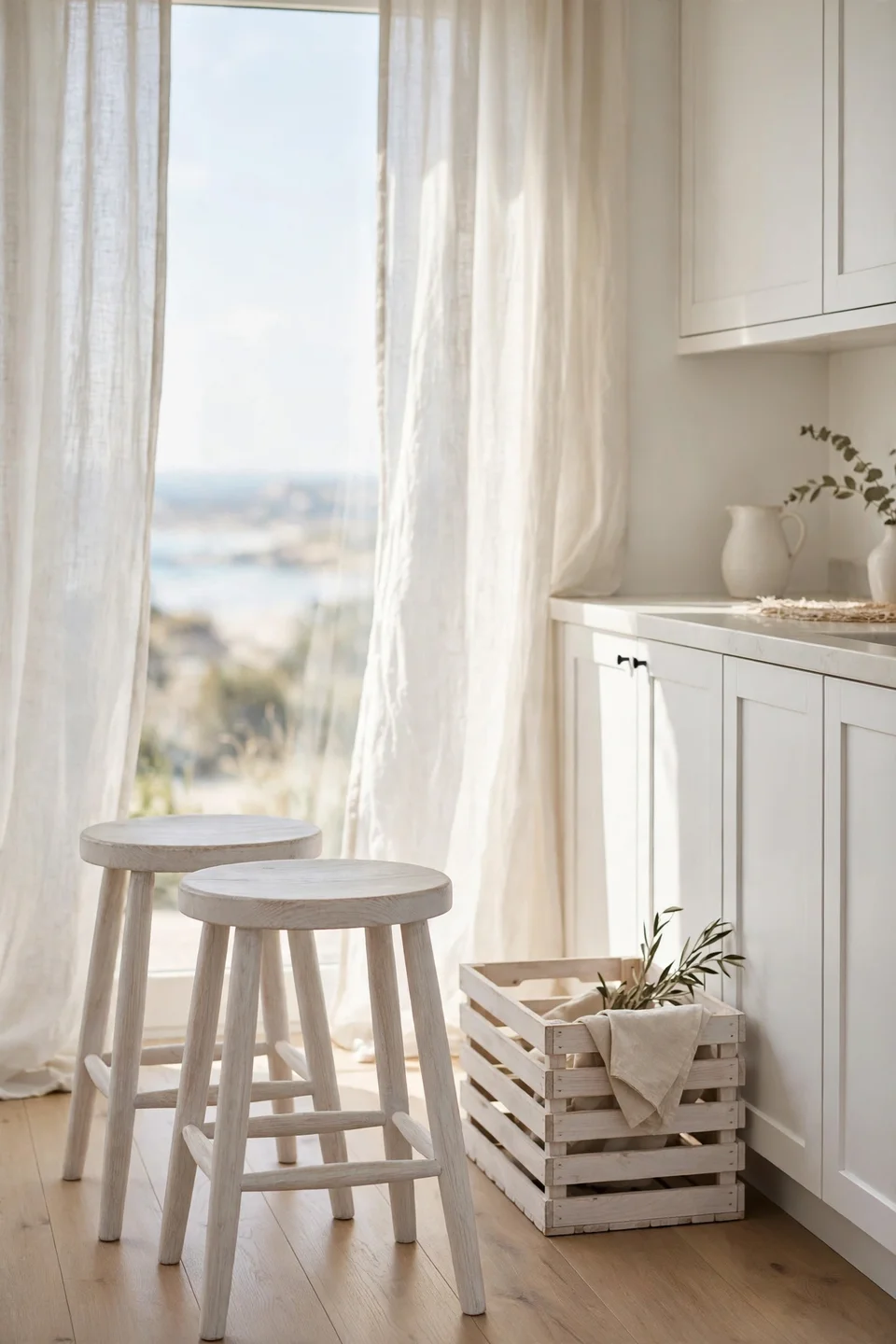
Whitewash lets grain show through a veil of white paint, giving wood a soft, beachy lightness that suits bright kitchens. Whitewashed stools, crates and ceiling boards add texture without darkening the room. The finish loves natural light, where shadows settle into the grain and keep plain surfaces interesting through the day.
The look shares its easy spirit with english cottage living room ideas, where painted wood and soft color keep rooms friendly rather than formal. Keep whitewash to a few pieces, since too much can turn chalky. Surround it with true white paint and one deeper wood tone for balance, and rest a whitewashed tray on the island as a gentle centerpiece base.
Wooden Utensil Crocks
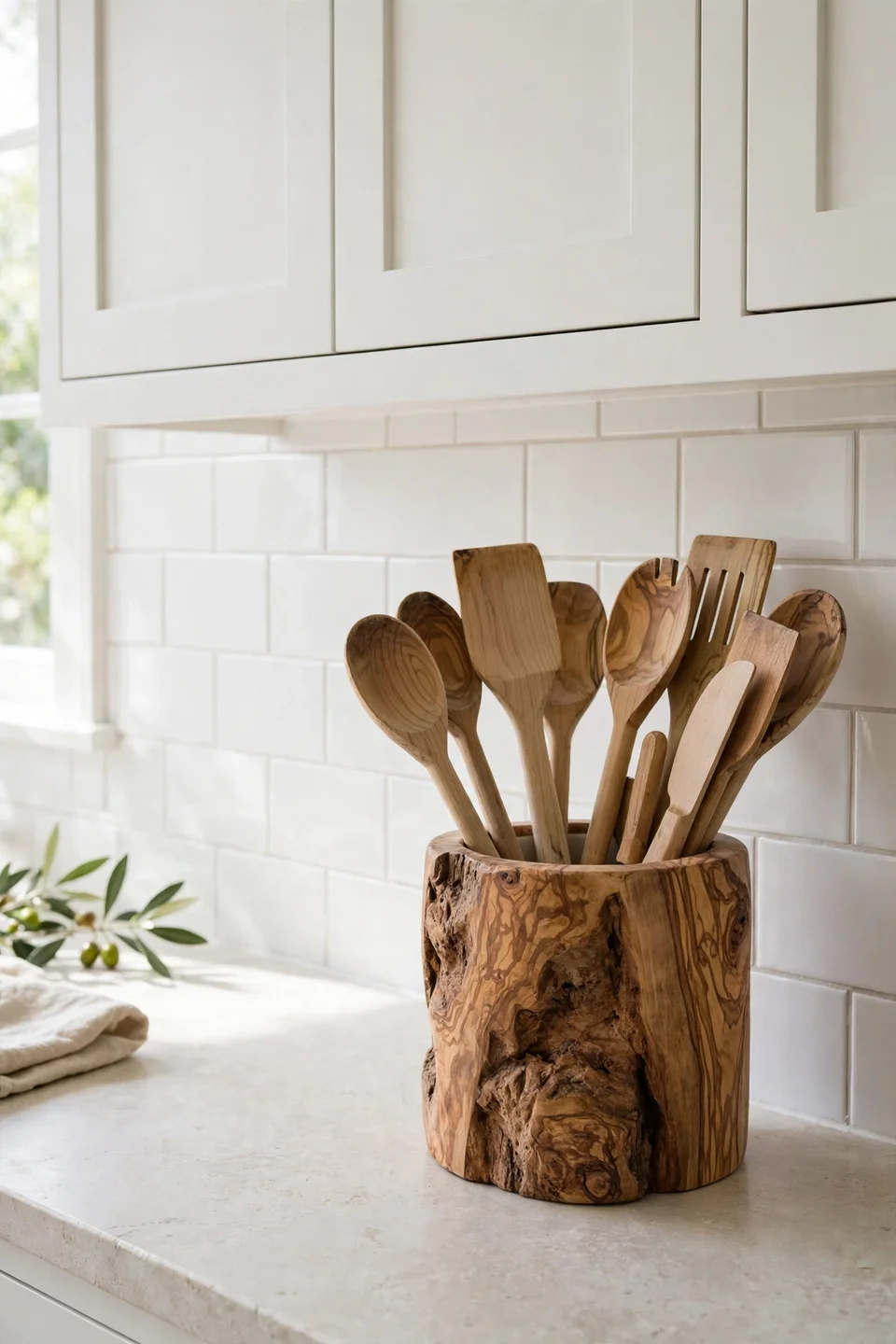
- A chunky olive wood crock by the hob keeps daily tools handsome and handy.
- Turned beech crocks suit pale schemes, while walnut suits deeper wood palettes.
- Fill crocks with wooden spoons and spatulas to repeat the timber theme.
- One crock is plenty for most cooks; two suit busy family kitchens.
- Felt pads under the base protect stone counters from scratches and rings.
Small wooden pieces do quiet work in white kitchens, adding warmth at the exact spots hands reach for. A crock of wooden spoons beside white tiles and a pale counter looks composed rather than cluttered. Wash wood tools by hand and oil them now and then to keep the grain rich.
Warm Under Cabinet Lighting
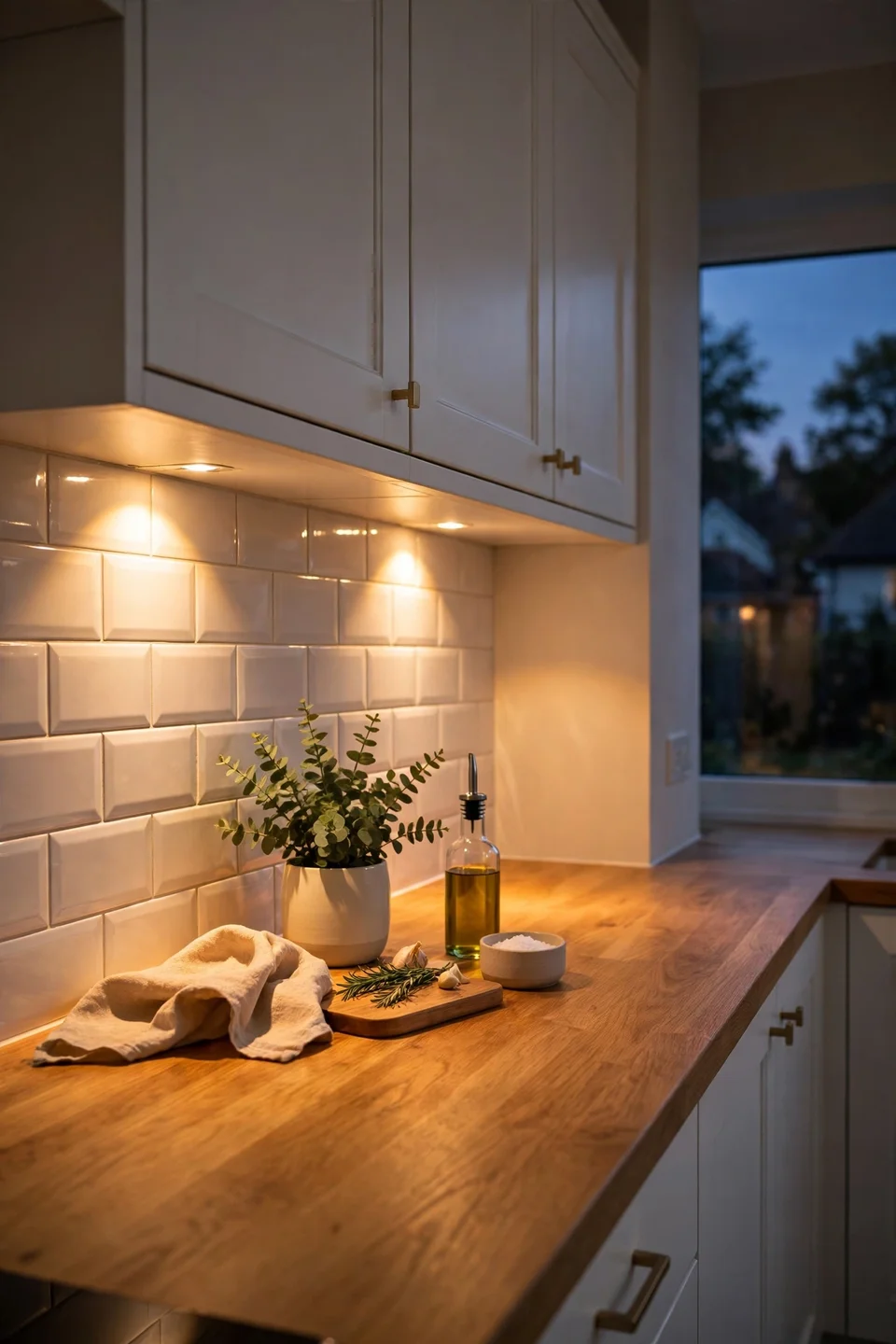
Quick Tip: Choose LED strips rated warm white, around 2700 to 3000 kelvin, so the light flatters oak and pine instead of turning them gray. Stick the strips toward the front lip of the cabinet, angled slightly back, and the counters below glow without visible dots.
Lighting decides whether white cabinets read fresh or stark after sunset. Warm light pools on wood counters, deepens the grain and turns evening cooking into a pleasure rather than a chore under ceiling glare. Add dimmers if you can, since low light suits dinner parties and early mornings alike, when the kitchen doubles as the quietest room in the house.
Wood Range Hood
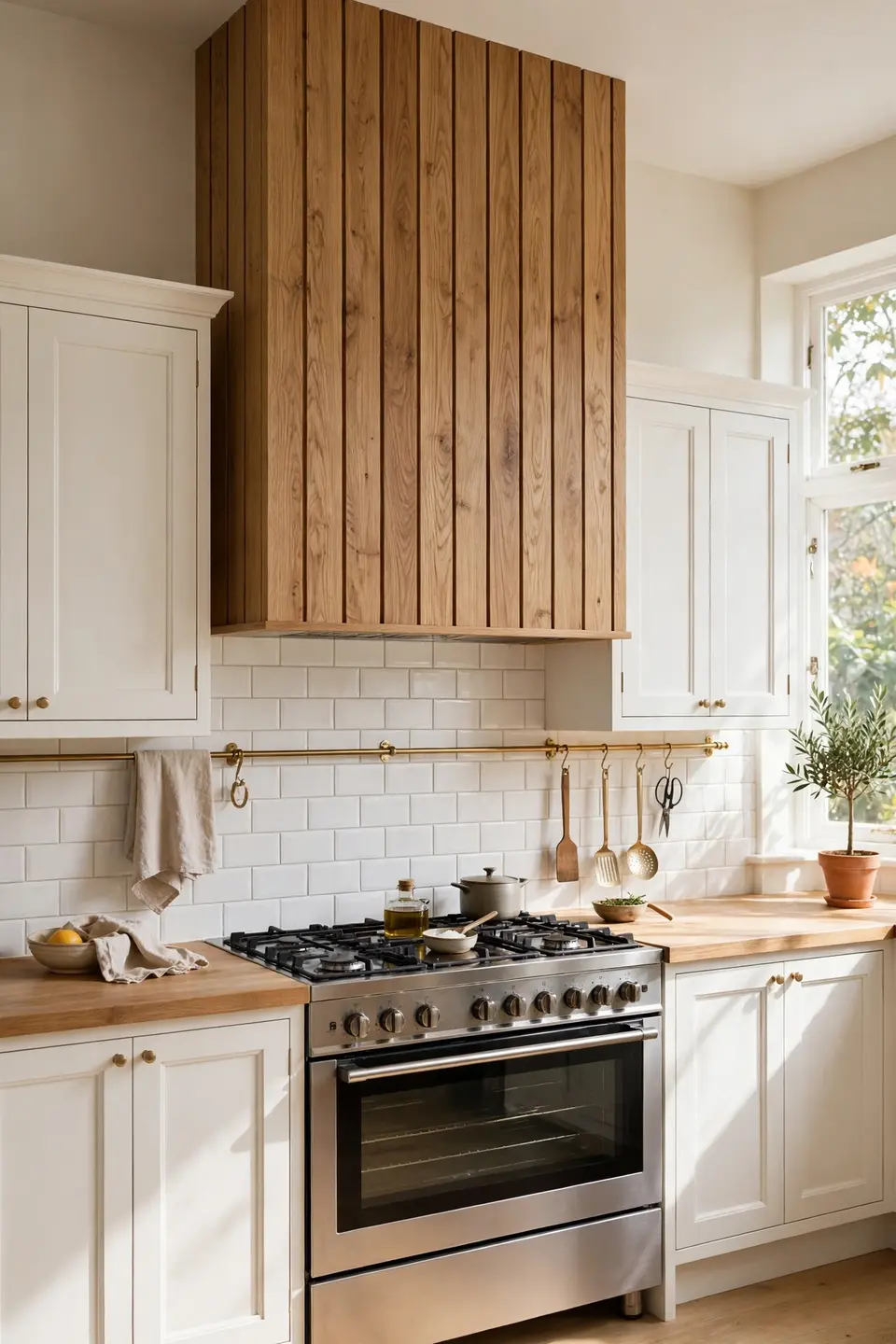
BEFORE: A stainless steel hood boxed over the hob, reflecting ceiling light and clashing with every warm surface around it. The metal pulled the whole wall toward a restaurant feel that the white cabinets could never soften.
AFTER: A simple hood clad in vertical oak boards now rises over the hob, its grain echoing the island and the open shelves. The wall reads as furniture rather than equipment, and the kitchen feels warmer from the doorway.
Cladding an existing hood in tongue and groove boards is a weekend project in many homes, since the boards fix over the old shell. Keep the finish matte and match the stain to a nearby wood tone. The change is large, so let other metal accents stay quiet in black or brass.
Styled Pantry Shelves
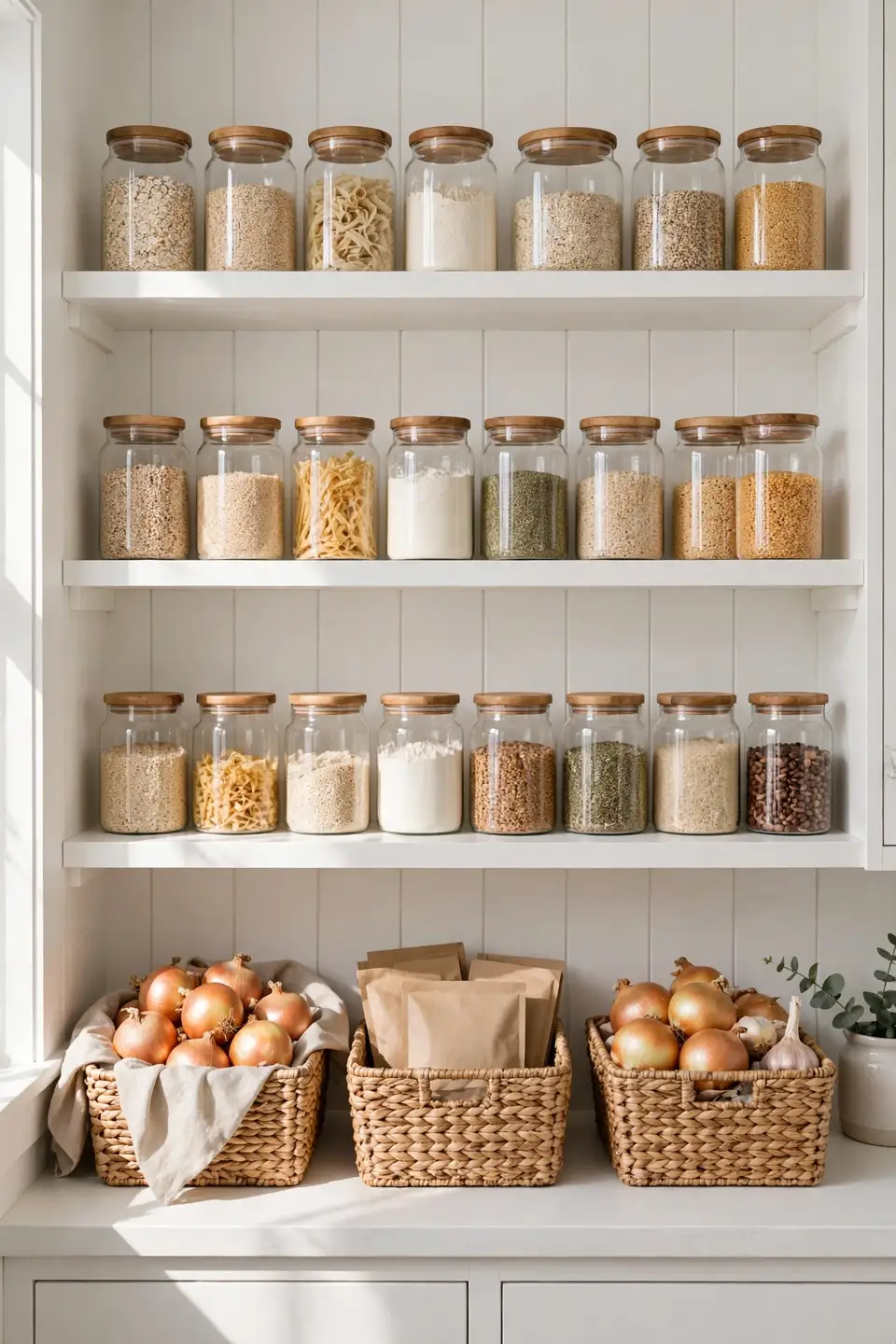
- Empty the shelves fully and wipe every surface back to clean white.
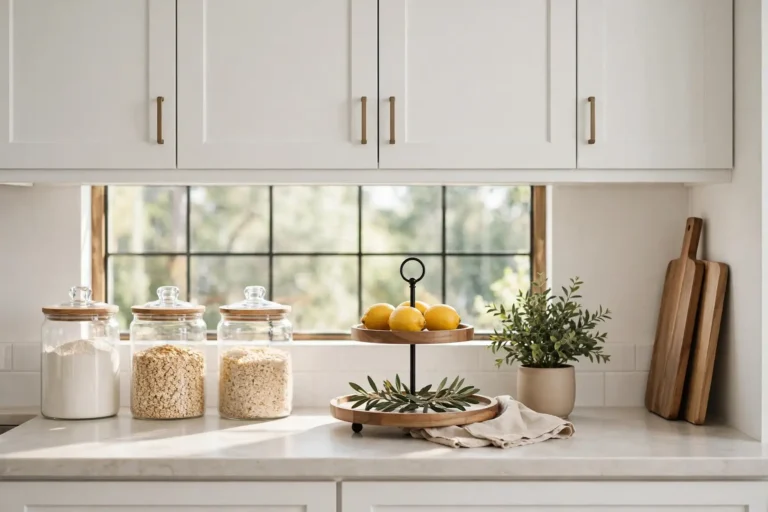
- Decant flour, rice and pasta into glass jars with wooden lids.
- Group jars by height in rows, tallest at the back for visibility.
- Fill baskets below with onions, packets and odd shaped items.
- Leave one shelf half empty so the display has room to breathe.
A styled pantry turns storage into decor, which matters in kitchens where the pantry stands open or sits behind glass doors. Wooden lids and woven baskets repeat the room’s palette, while white shelves keep everything bright and easy to scan. I’ve seen this work well in many cases where labels alone failed, because grouped shapes look tidy even on busy weeks.
Choosing Wood Tones
| Feature | Light Oak | Warm Walnut |
|---|---|---|
| Mood | Fresh, calm and Scandinavian | Rich, deep and traditional |
| Pairs With | White, cream and pale gray surfaces | White, brass and deep green accents |
| Light Effect | Bounces daylight around small rooms | Absorbs light for a cocoon like feel |
| Best For | Islands, floors and open shelving | Accent boards, stools and hood cladding |
Neither tone wins outright; the right choice depends on your light and your nerve. North facing kitchens glow under pale oak, while walnut rewards sunny rooms with depth. Sample both woods beside your white paint in the morning and again at dusk before committing to the large pieces.
Sunny Breakfast Nook
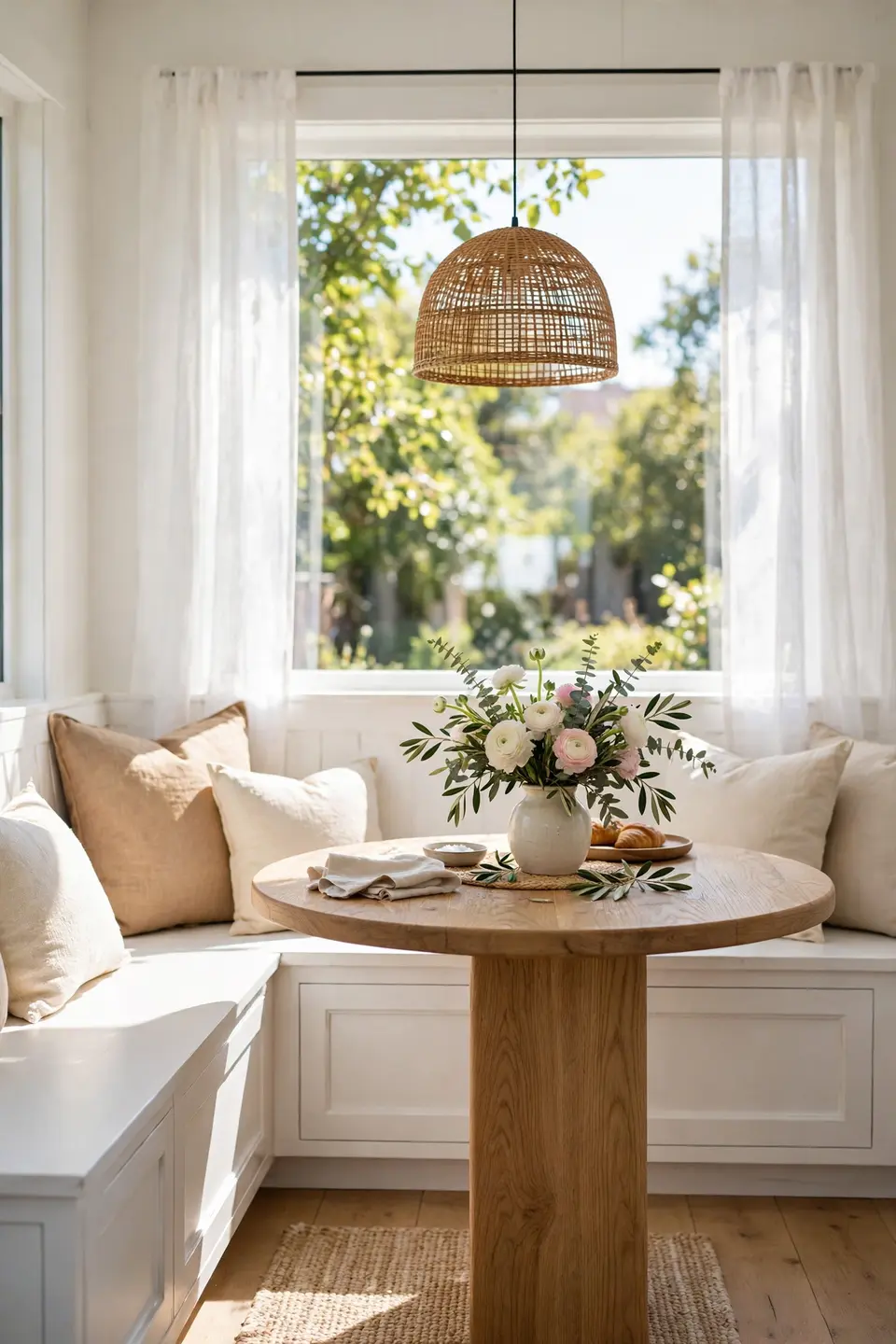
Do:
- Build a banquette in painted white wood with storage hidden beneath the seat.
- Choose a round oak table that keeps corners friendly in tight spaces.
- Layer cushions in cream, flax and one soft pattern for comfort.
- Hang a simple pendant low over the table for evening glow.
Don’t:
- Squeeze in a table so large that chairs scrape the walls daily.
- Use cold white bulbs that flatten the wood tones at breakfast.
- Block the window with tall storage the nook depends on for light.
A breakfast nook is where this palette proves itself daily, hosting coffee, homework and slow weekend plates in morning light. Keep table styling minimal, a small vase or bowl of fruit, so the space always feels ready rather than arranged for show.
Conclusion
Wood and white succeed together because each fixes the other’s weakness: paint brings the light, timber brings the life. Begin with the big surfaces, your floor, cabinets or island, then echo the wood in shelves, stools and small daily pieces until the room feels balanced from every doorway. These natural wood and white kitchen decor ideas suit tiny galleys and wide farmhouse rooms alike, since the palette stretches or deepens with your choices. Save this list on Pinterest before your next hardware store trip, and build your freshest kitchen one warm layer at a time, at a pace that suits your weekends.