20 Rustic French Country Kitchen Decor Ideas for Classic Charm
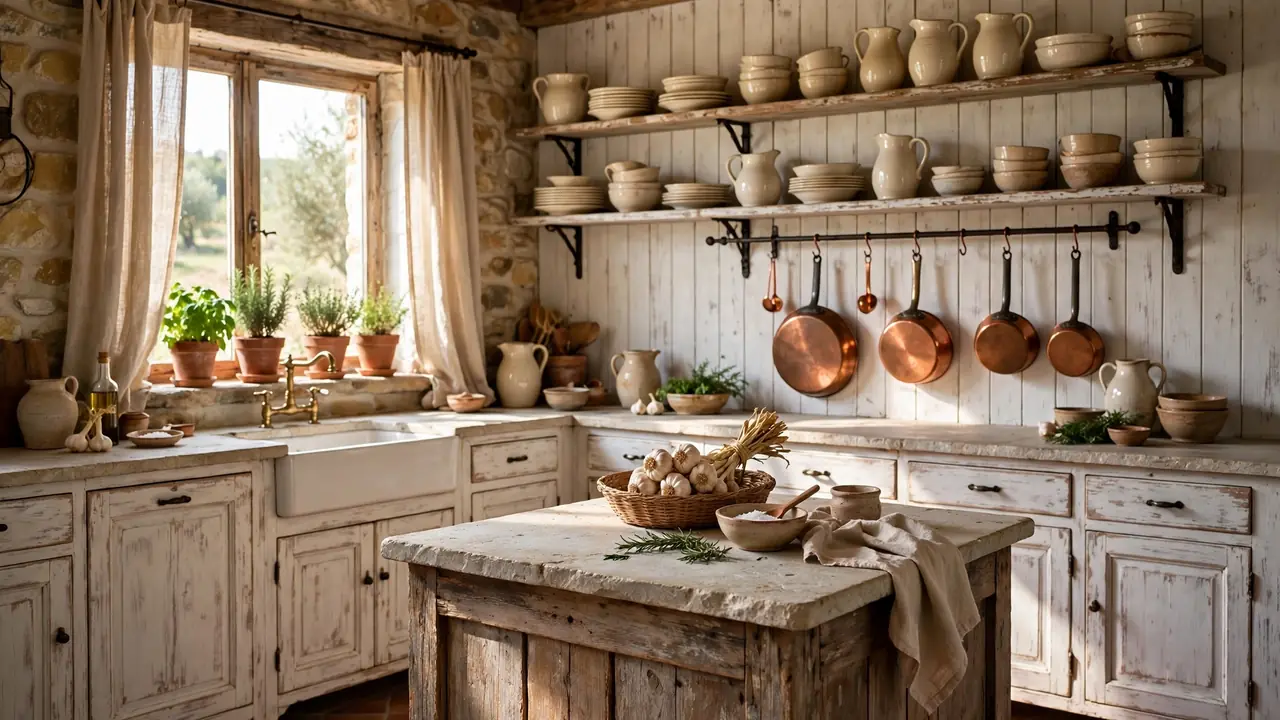
Stone, worn wood, and linen have shaped French farmhouse kitchens for generations, and that honest mix still works beautifully today. These rustic French country kitchen decor looks pair whitewashed cabinets with copper, ceramics, and herbs, building rooms that feel gathered over time rather than bought in one afternoon.
The charm is practical, not precious. Open shelves keep everyday dishes close, butcher block takes daily wear gracefully, and a deep farmhouse sink handles harvest sized loads without complaint. The same love of pattern and color that drives plaid wallpaper bedroom ideas works here too, just translated into ticking stripes, checked linen, and hand thrown pottery. Start with one corner, live with it, and let the room grow at its own pace.
Whitewashed Wood Cabinet Charm
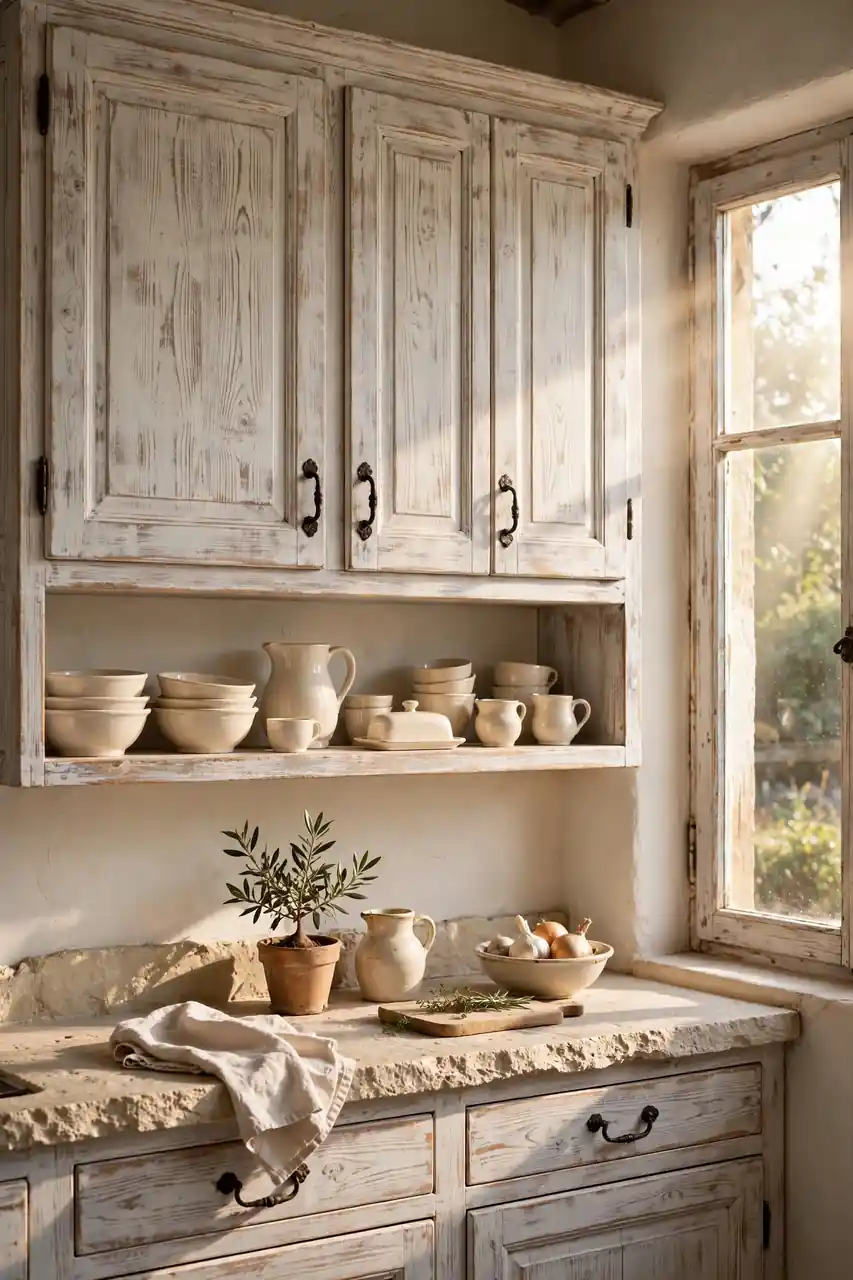
Whitewashed cabinets sit at the heart of this style because they brighten a kitchen without erasing the wood beneath. A thin milk paint or limewash lets grain show through, so every door keeps its knots, dents, and history. The finish feels soft rather than stark, and it flatters stone counters and worn floors instead of competing with them.
Pair the pale cabinets with dark iron handles and one run of open shelving to keep the look grounded. I’ve noticed that whitewash reads warmest under natural light, so test a sample door beside the window before painting the whole run. Small scuffs only improve it over time, which is exactly the point of a working farmhouse kitchen.
Open Shelves Ceramic Display
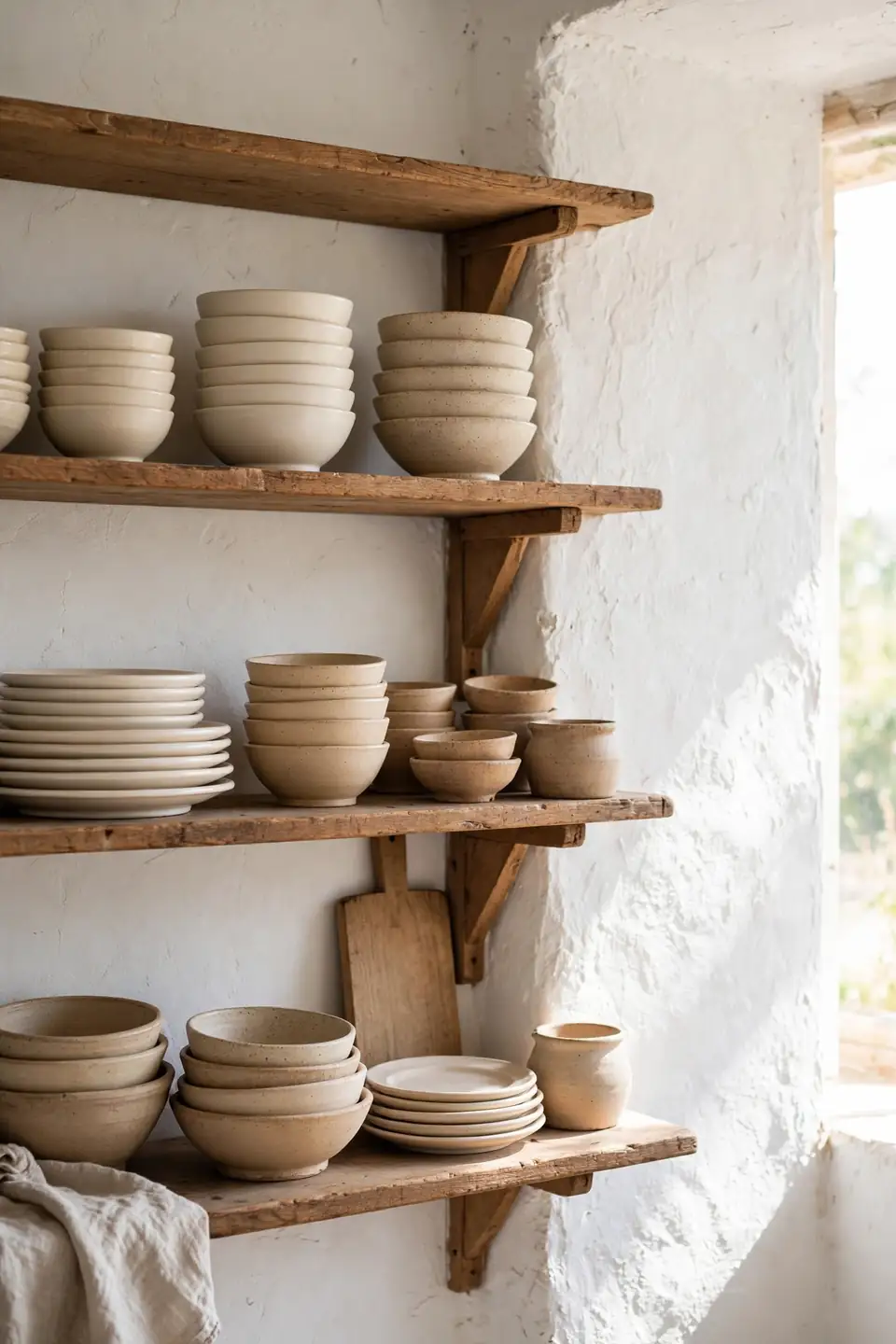
- Stack everyday bowls and plates in short piles so shelves feel useful, not staged.
- Group ceramics by tone: creams together, blues together, one clay piece for warmth.
- Leave gaps between groups; empty space is what keeps open shelving calm.
- Rest a small framed print or cutting board behind stacks for depth.
- Keep daily glasses on the lowest shelf and occasion pieces up high.
Open shelves suit this style because the pottery itself becomes the decoration. Hand thrown pieces carry small irregularities that factory sets never show, and those wobbles catch light beautifully. Rotate pieces with the seasons: heavy stoneware in winter, lighter faience and woven baskets once spring produce arrives at the table.
Copper Pots Hanging Rail
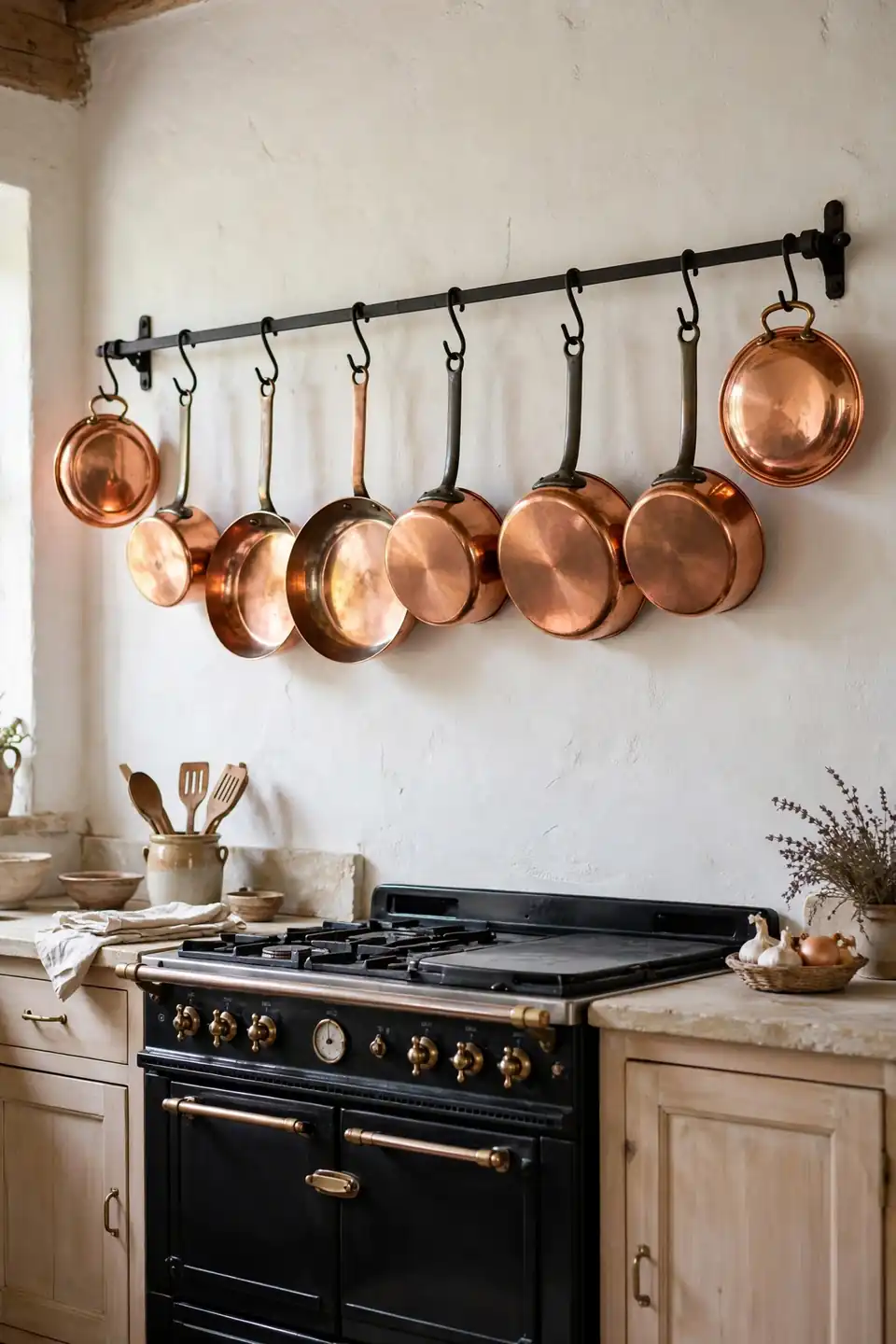
Quick Tip: Hang copper from a simple iron rail above the stove or along a spare wall, heaviest pans in the middle and lids on hooks at the ends. Copper earns its shine through use, so skip the polishing marathon; a rub with lemon and salt now and then keeps the warm glow honest.
A rail of copper changes how a kitchen works, not just how it photographs. Pans stay within reach, counters stay clear, and the metal warms white plaster and pale wood the way candlelight warms a room. Start with two or three good pieces from a market stall and add slowly; a collected rail always looks better than a matched set bought in one trip.
Dated Kitchen Country Makeover
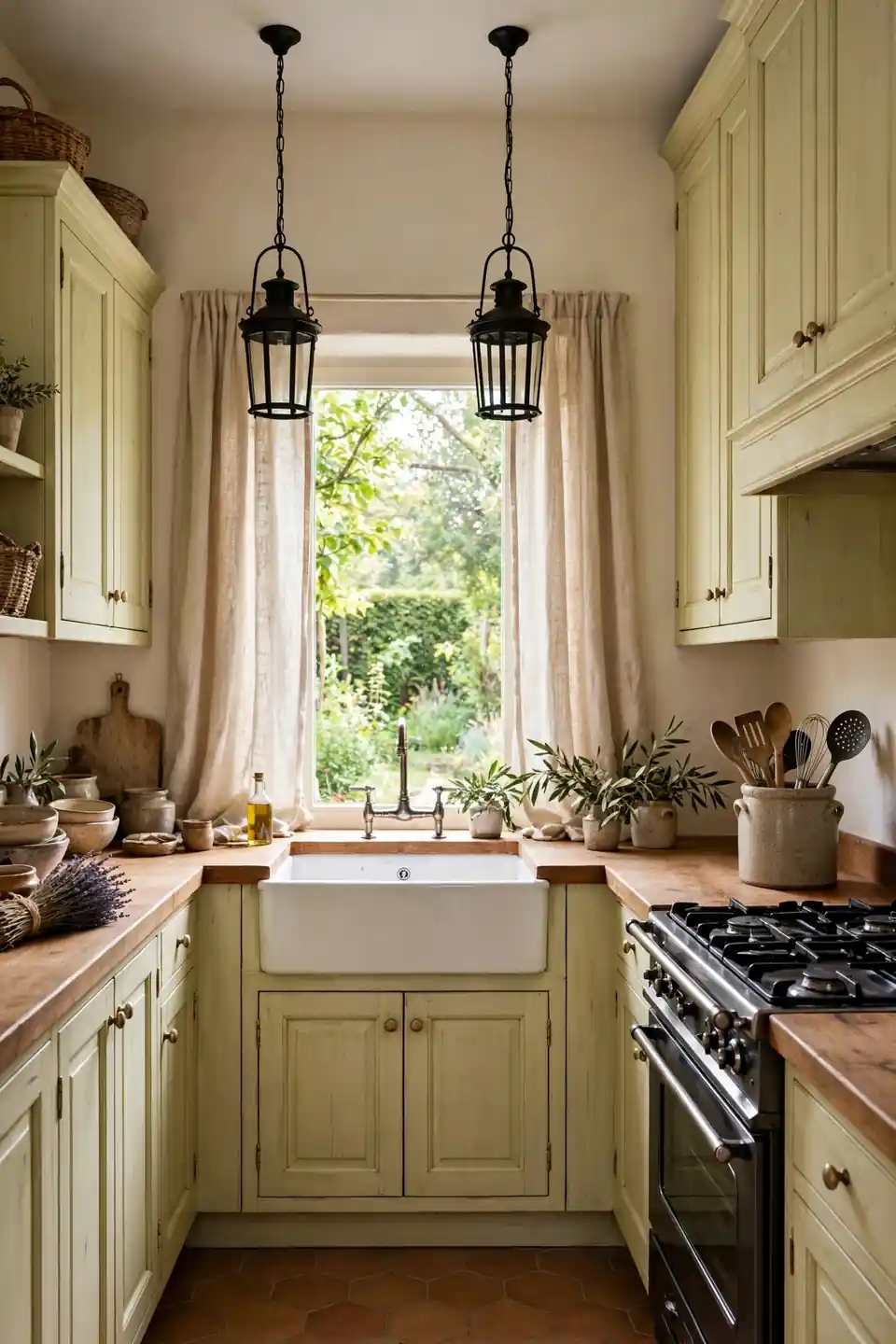
BEFORE: Glossy orange cabinets, a humming fluorescent strip, and plastic handles made the room feel like a rental from another decade. The counters hid under small appliances, and nothing in the space suggested the garden right outside the window.
AFTER: Limewash softened the cabinets to a chalky cream, the strip light gave way to two iron pendants, and wooden handles replaced the plastic. A stoneware crock now holds utensils beside the stove, and linen cafe curtains frame the garden view.
Nothing structural changed here, which is the encouraging part. Paint, lighting, and handles carried the whole transformation for the price of a single new appliance. Work in that order and even a tired kitchen starts behaving like a farmhouse room within one weekend.
Styling A Farmhouse Sink
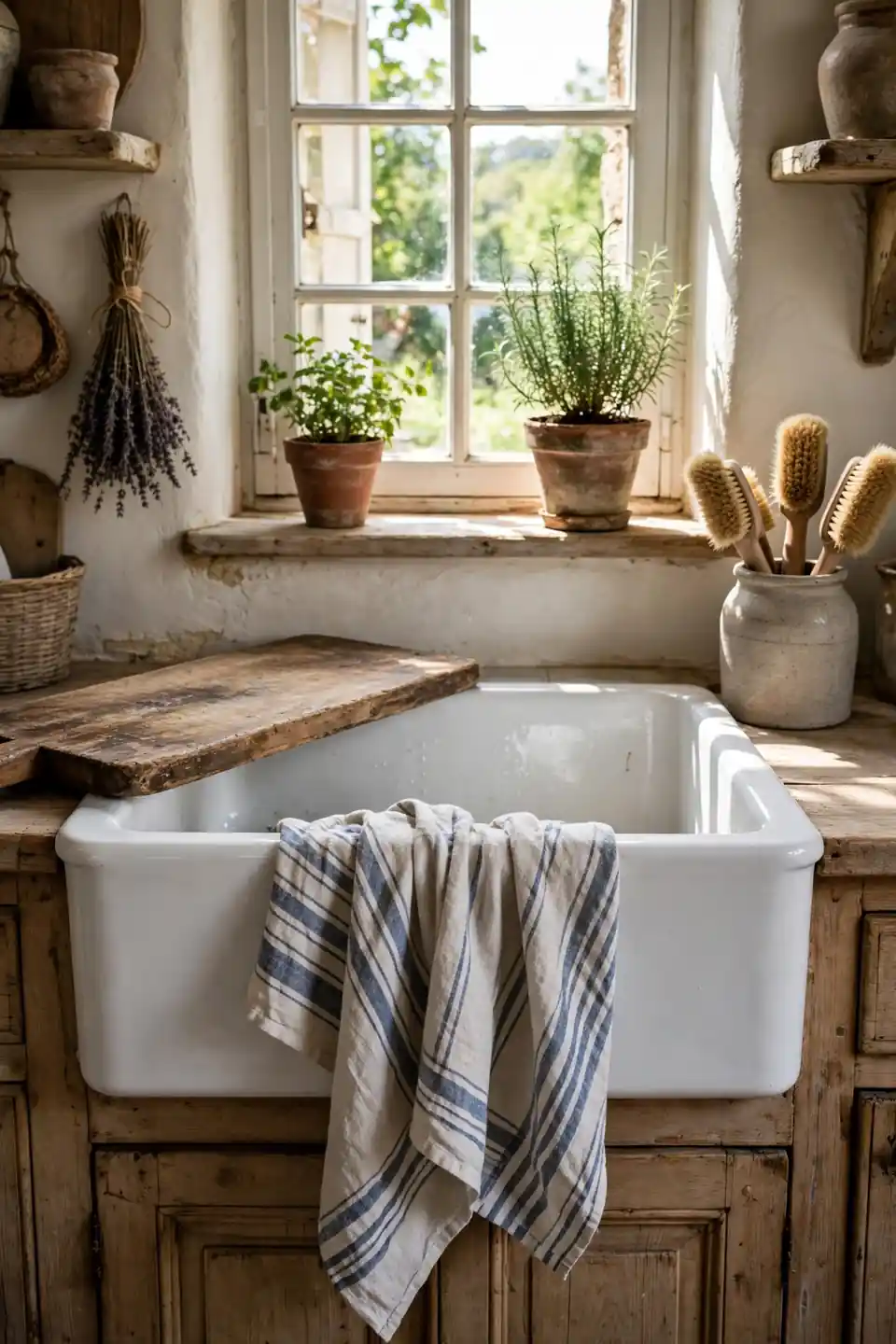
- Set a worn wooden board across one corner of the sink as a landing spot for washed vegetables and hot pans.
- Stand brushes and a natural sponge in a stoneware jar so tools stay tidy and dry between washes.
- Drape a striped linen towel over the apron front, swapping it twice a week for a fresh one.
- Keep a small potted herb on the windowsill above, where splashes give it regular water.
A deep apron front sink works hard, so styling it is really about arranging the tools of the job beautifully. Wood, stoneware, linen, and wicker all tolerate water and age gracefully beside it. Keep the arrangement loose and useful; the moment it looks arranged for a photo, it has gone too far.
Stone Versus Butcher Block
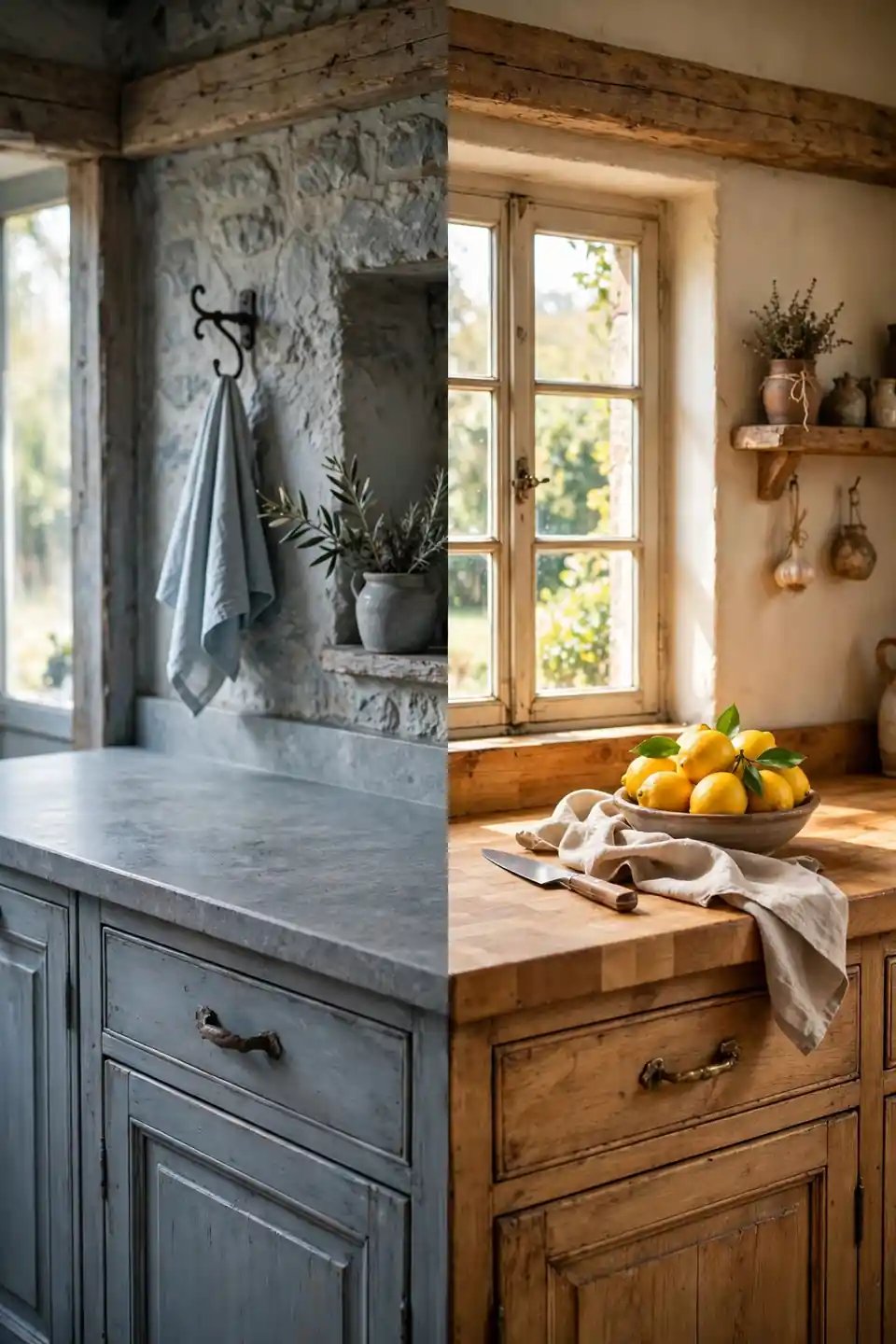
| Feature | Stone Counter | Butcher Block Counter |
|---|---|---|
| Feel | Cool and solid | Warm and soft |
| Care | Seal once a year | Oil every few months |
| Wear | Chips at edges | Knife marks add character |
| Aging | Stains tell stories | Darkens with age |
| Cost | Higher, installed once | Lower, often DIY friendly |
Stone suits kitchens that host big preserving days and hot pans straight off the stove, while wood forgives dropped jars and softens echoing rooms. Many farmhouse kitchens mix both: stone near the range, wood on the island. In my experience, cooks who chop directly on the counter every day settle happiest with wood, while bakers love stone for pastry. Choose by how the room gets used daily, not by photographs alone.
Exposed Beam Styling Rules
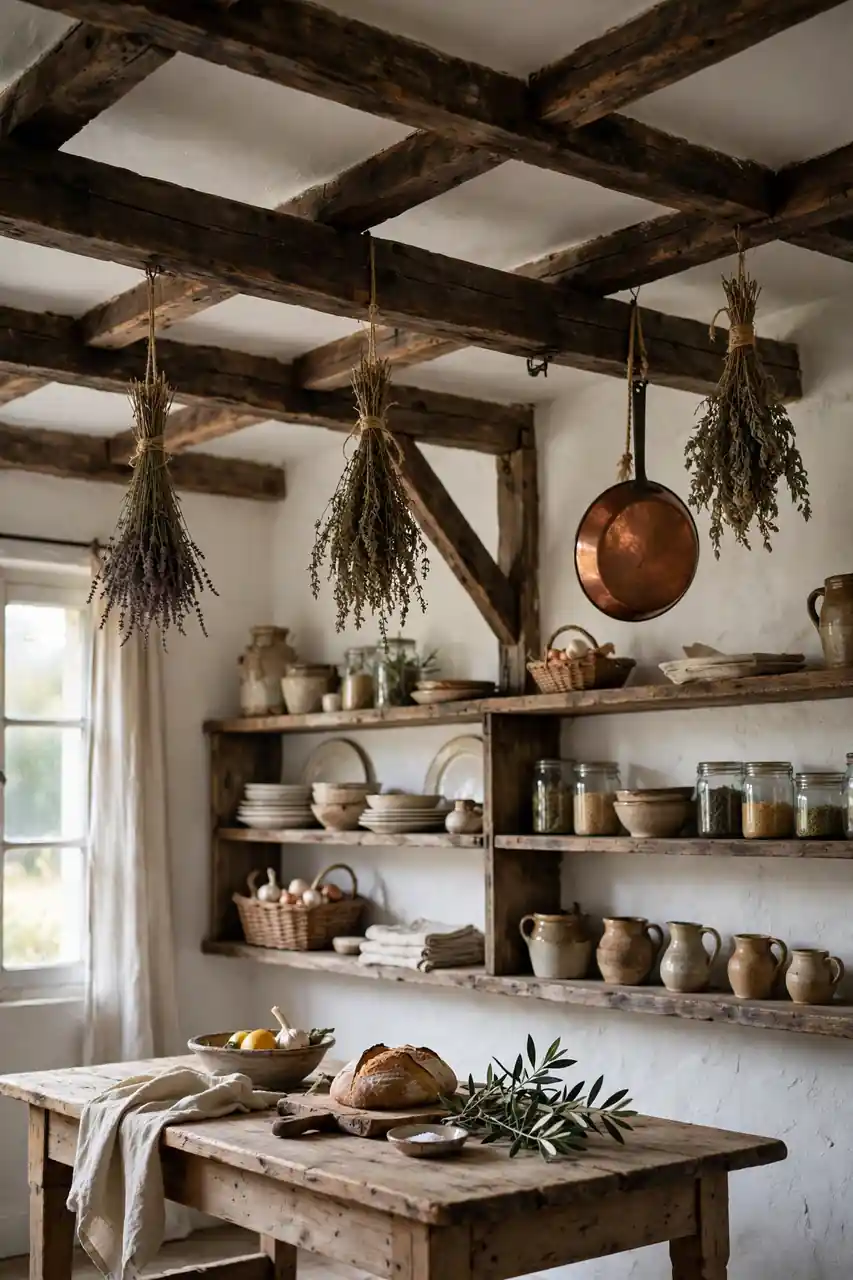
Do:
- Keep beams bare or lightly oiled so grain stays visible.
- Hang a few useful pieces: dried herbs, one pan, lavender.
- Echo the beam tone in shelves or the farmhouse table.
- Brush them clean twice a year instead of painting.
Don’t:
- Never box beams behind plasterboard; the ceiling loses character.
- Skip novelty light strings that fight the honest wood.
- Avoid white paint on beams in low ceiling rooms.
- Do not hang so much that beams disappear.
Beams carry the architecture of an old farmhouse, so the styling job is mostly restraint. A few hanging herbs and one good pan say more than a row of decorations. Rooms lucky enough to keep original beams need little else above eye level.
Herb Pots Windowsill Garden
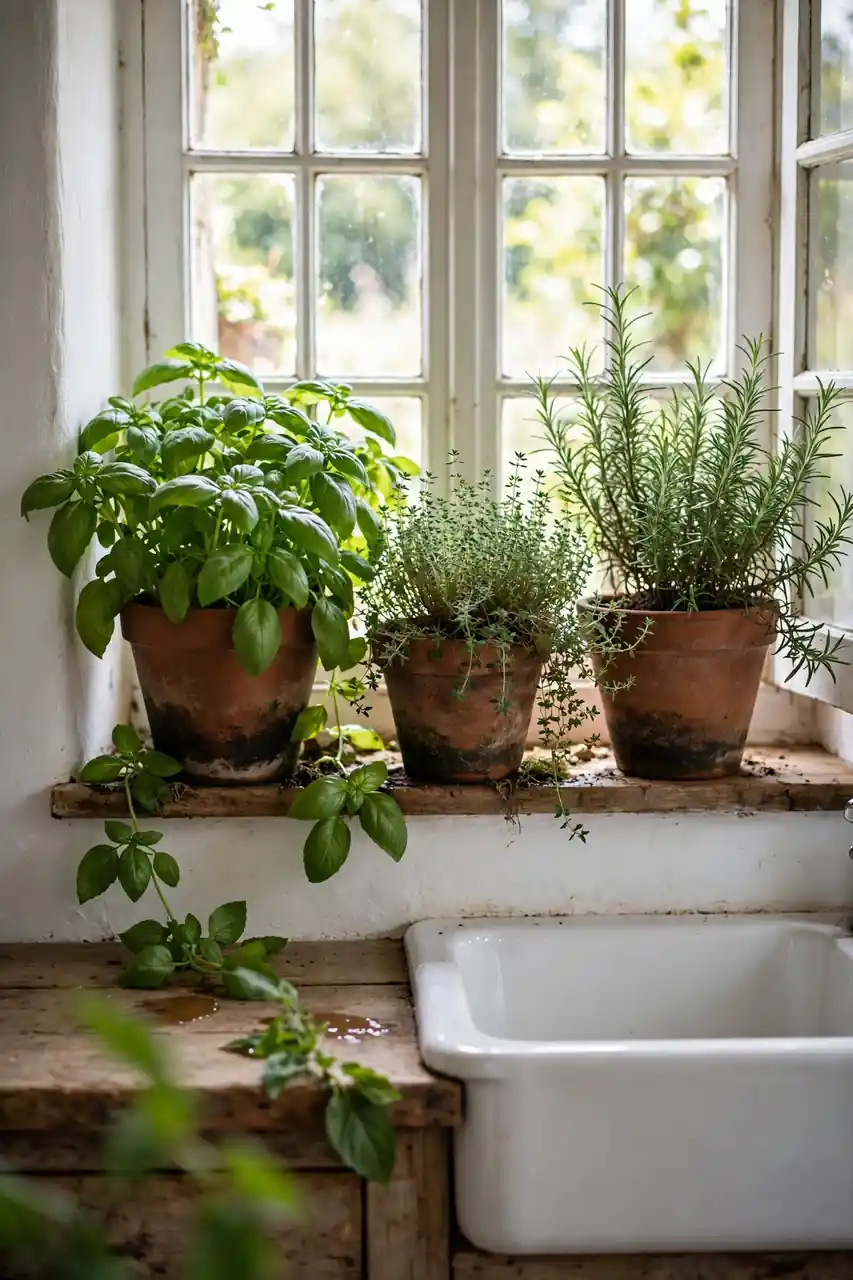
Cost: Low, terracotta pots and seed packets cost very little at markets. Time: One morning to pot and arrange. Skill Level: Beginner, herbs forgive missed waterings. Best For: South or west facing kitchen windows. Works In: Cottages, rentals, and small galley kitchens.
A windowsill of herbs does triple duty in a country kitchen: it perfumes the room, flavors supper, and softens the hard line where wall meets worktop. Basil, thyme, and rosemary suit the style best, in mismatched terracotta that darkens with water and age. Snip from the tallest stems first and the plants stay bushy instead of leggy through the whole season.
Linen Curtains Soft Light
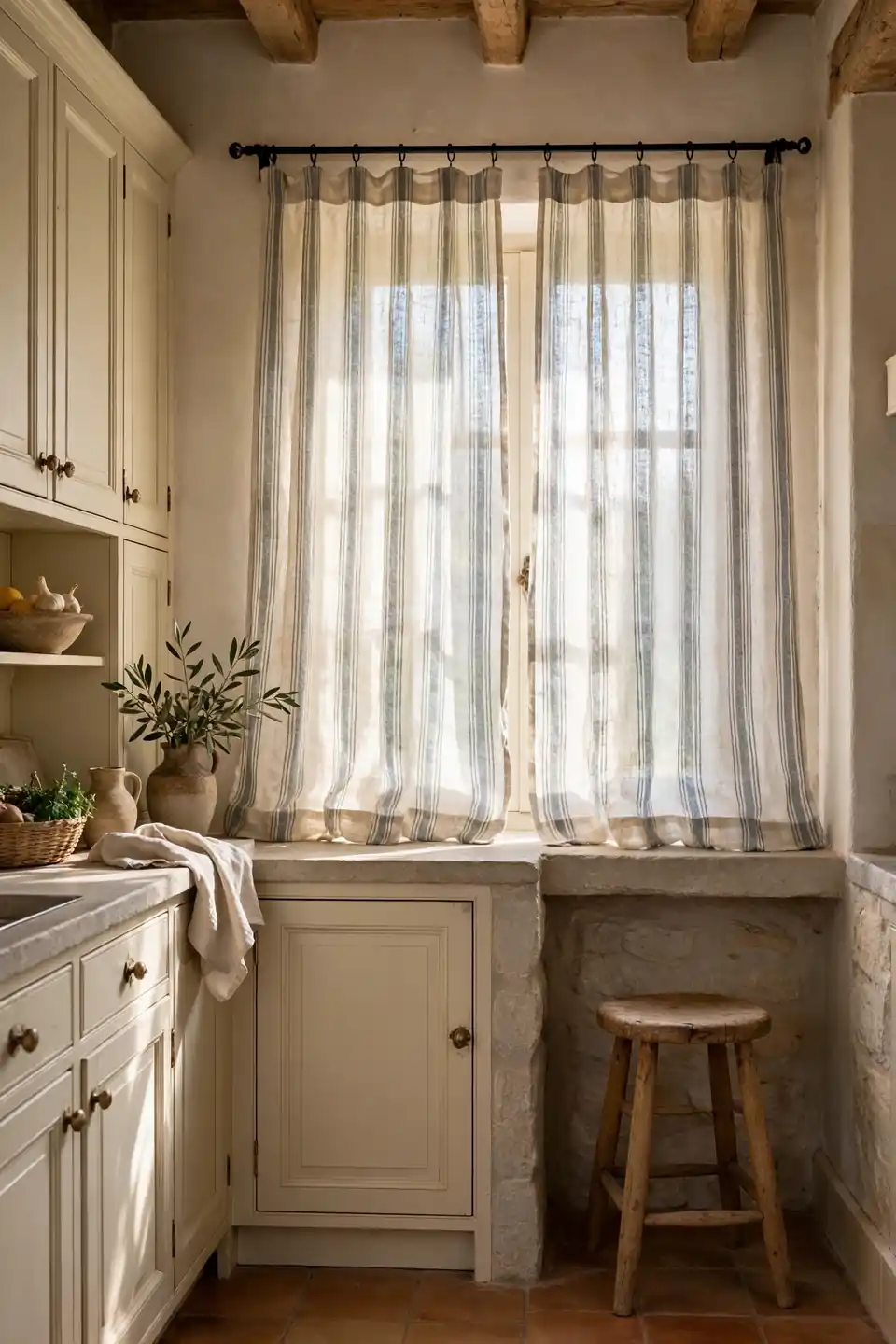
Linen curtains belong in this style because they filter light instead of blocking it, turning harsh midday sun into a soft wash over stone and wood. Natural flax tones, cream, and faded ticking stripes suit farmhouse walls best. Hung from a simple iron rod, the fabric moves gently whenever a window opens, and that small movement makes the whole room feel alive.
The soft light from linen pairs happily with pale color elsewhere in the house; the glow behind butter yellow living room decor ideas works on the same principle. Choose curtains that just kiss the sill rather than puddle on the floor, since kitchen hems gather dust and splashes. Wash them cold, line dry, and skip the ironing: relaxed wrinkles are the correct finish here.
Butcher Block Counter Warmth
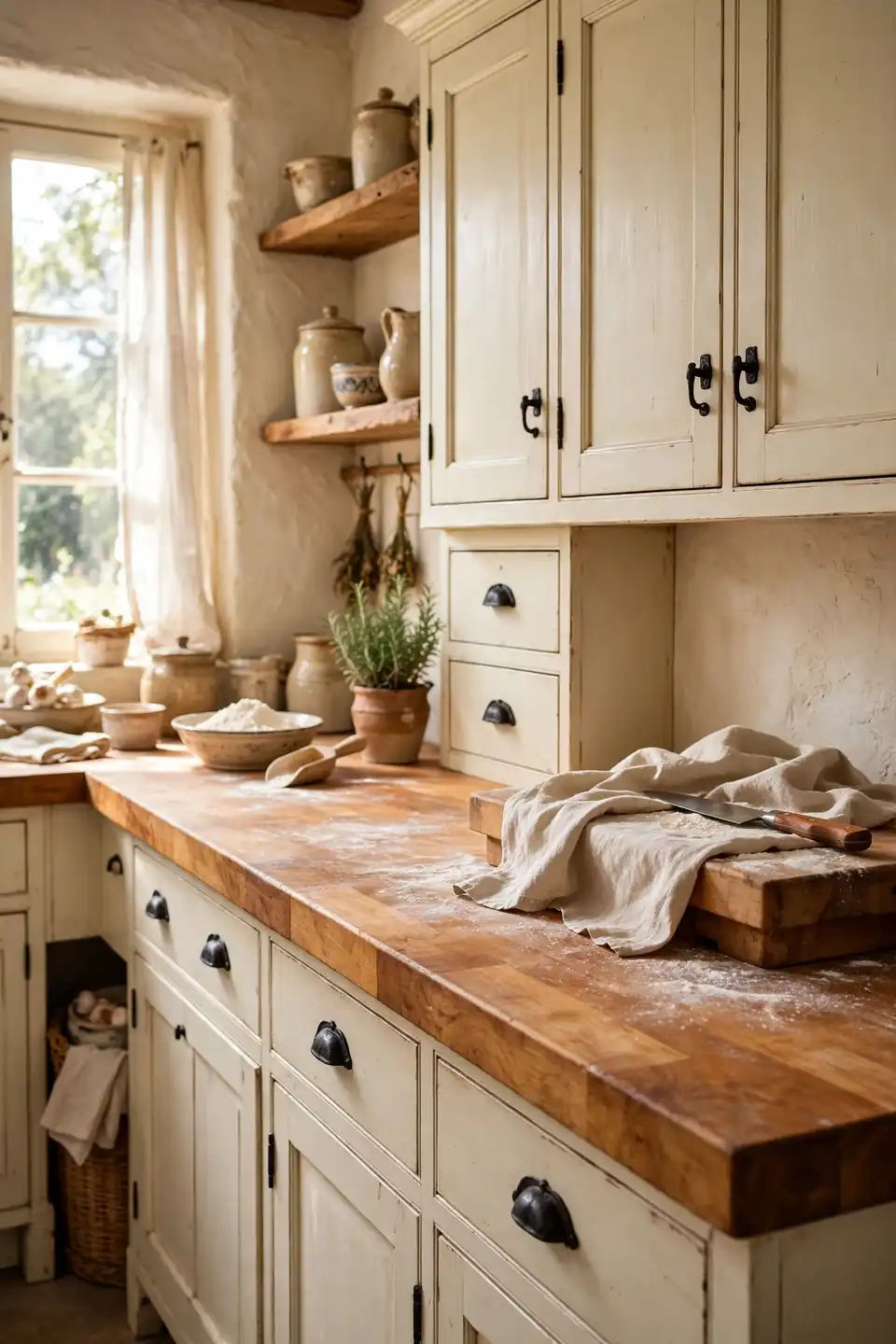
- Oil the surface monthly with food safe mineral oil so it resists stains and water rings.
- Sand small marks out by hand; the wood forgives knives, heat rings, and daily wear.
- Keep one end clear as a dedicated bread and pastry station with a linen covered board.
- Pair the warm wood with cream cabinets and iron hardware for contrast that stays gentle.
Butcher block earns its keep in farmhouse kitchens because it works as surface, cutting board, and serving platter in one. The honey tone warms whitewashed cabinetry the way sunlight warms a room. Expect it to gather marks; each one is a meal the kitchen remembers, and a light sanding resets the story whenever it gets too loud.
Vintage Scale Counter Accent

Quick Tip: Set a vintage balance scale on the counter and actually use it: weighing flour for bread, holding fruit, or coralling the garlic braid. A working antique earns its counter space, while a purely decorative one becomes clutter within a month. Cast iron and brass models hold up best beside a busy stove.
Old scales bring honest weight to a counter full of light ceramics and glass. Their dials and pans carry the patina of market mornings and farmhouse larders, and they pair naturally with stoneware crocks and wooden boards. Hunt for one with a smooth action and all its weights; missing pans turn a bargain into a shelf ornament.
Dark Kitchen Bright Revival
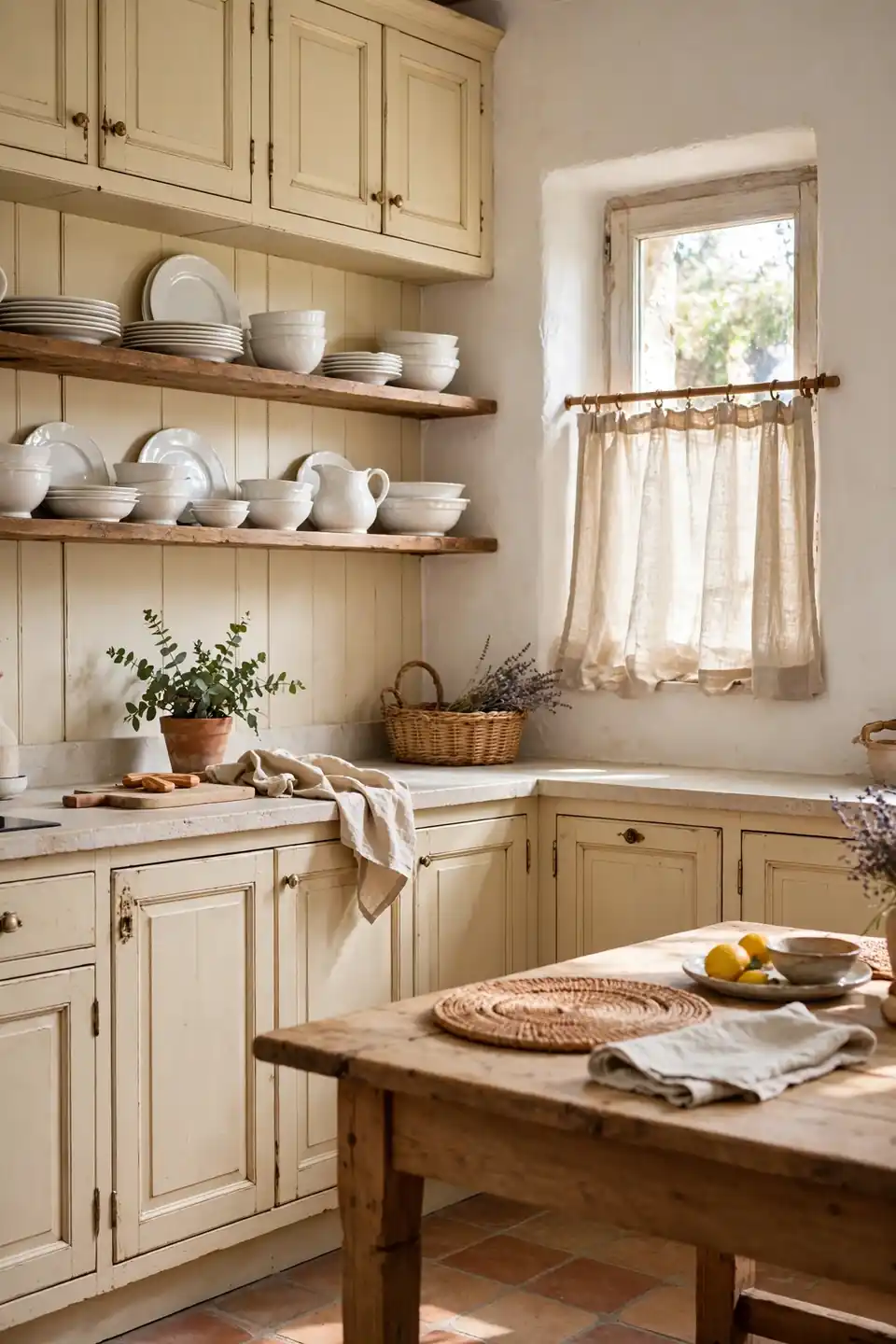
BEFORE: Heavy brown cabinets, one small window dressed in a dark blind, and a black countertop swallowed every scrap of daylight. Cooking after four in the afternoon meant working under a single yellow bulb, and the room felt closed even in summer.
AFTER: The cabinets kept their wood but took a coat of warm cream paint, the blind became a linen half curtain, and a pale stone worktop replaced the black slab. Two open shelves now hold white dishes that bounce light back into the room.
The wood never needed replacing, only lightening. Cream paint over sound cabinets costs a fraction of new joinery, and pale surfaces doubled the daylight the little window delivers. Dark rooms in old farmhouses usually suffer from finishes, not from architecture.
Building Open Shelf Layers

- Start with the tallest pieces at the back: pitchers, a stack of serving boards, one big mixing bowl.
- Build the middle layer from everyday stacks, bowls inside bowls and plates in short, honest piles.
- Finish the front with small useful things: a salt cellar, stacked egg cups, the honey pot.
- Step back and remove one item in three; rustic French country kitchen decor breathes through its empty spaces.
Layering by height keeps shelves practical, because tall pieces anchor the back while daily tools stay within easy reach. Wood boards between ceramic groups warm the arrangement and stop it reading like a shop display. Rearrange twice a year; the shelf restyle costs nothing and freshens the whole room.
Fireclay Versus Stone Sinks
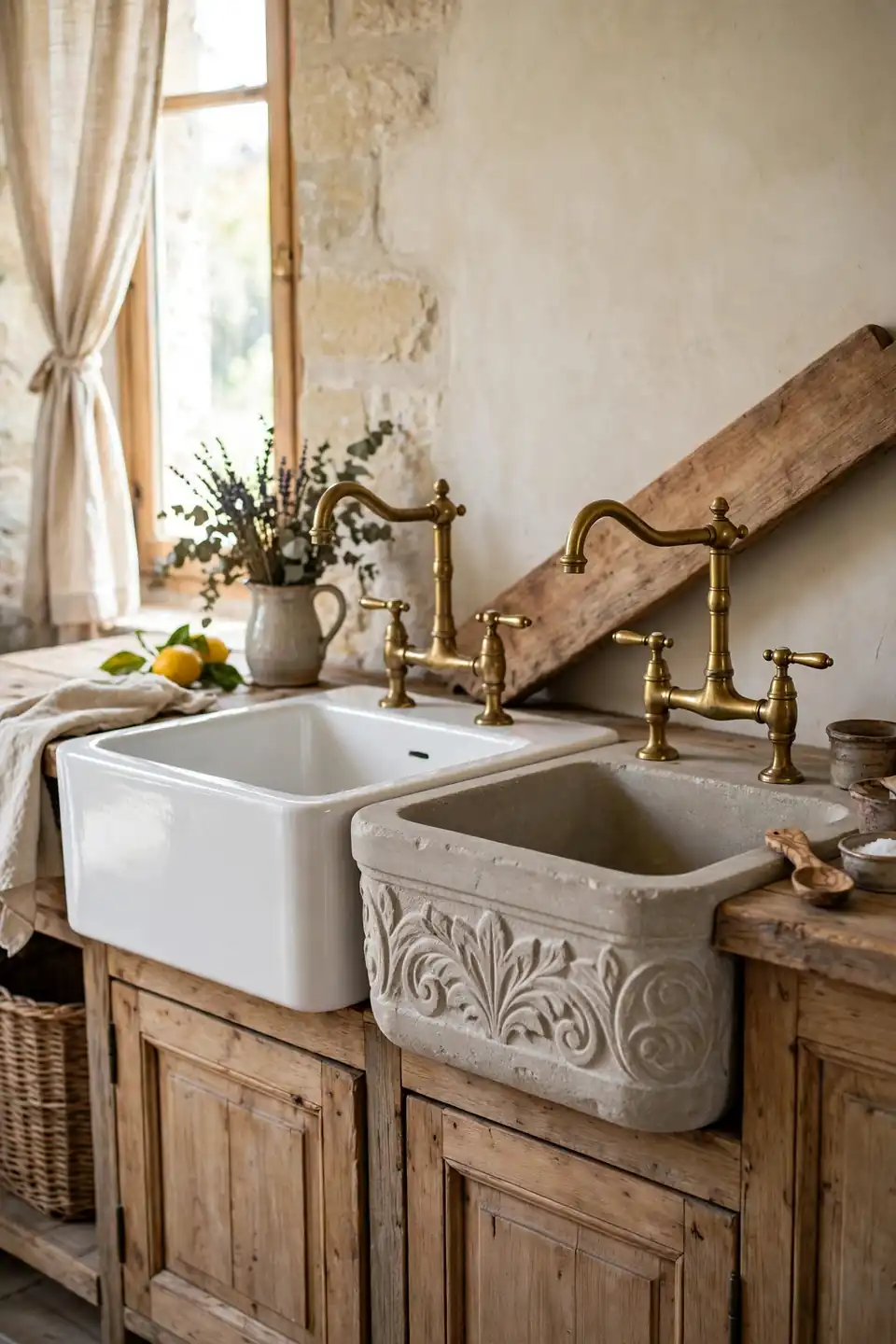
| Feature | Fireclay Sink | Stone Sink |
|---|---|---|
| Look | Smooth, glossy, classic white | Matte, carved, one of a kind |
| Weight | Heavy, needs strong cabinet | Very heavy, needs reinforced base |
| Care | Wipes clean, resists stains | Seal yearly, patinas over time |
| Price | Mid range, widely stocked | Higher, often custom made |
Fireclay suits busy family kitchens that need a sink to shrug off daily knocks, while stone rewards gentler households with a carved, one of a kind basin. Both pair with bridge faucets in aged brass and a wooden board resting across one corner. Stand at each in a showroom and mime washing a big pot; the right depth announces itself quickly.
Linen Textile Layering Rules
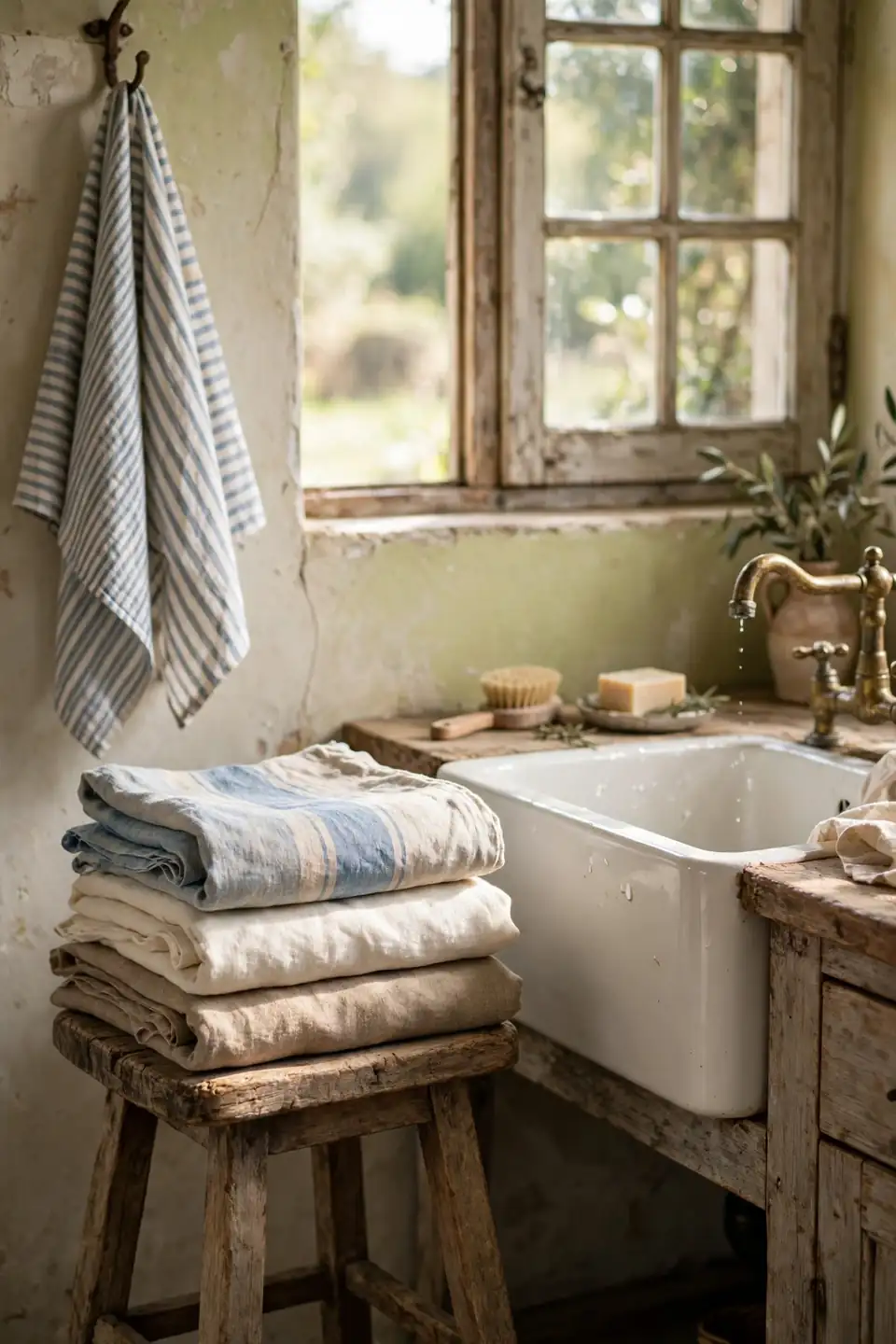
Do:
- Layer ticking stripe towels over plain linen at the sink.
- Choose grain sack cushions; woven stripes suit farmhouse wood.
- Keep colors to flax, cream, and one faded thread line.
- Use linen unironed; wrinkles belong to this style.
Don’t:
- Never mix shiny satin with farmhouse linen.
- Skip bright synthetics that glare beside aged wood.
- Avoid matching every textile; variation looks honest.
- Do not retire faded linen; soft wear is the point.
Textiles soften every hard surface a kitchen depends on, from stone counters to iron handles. Linen does it best because it wrinkles, fades, and drapes like something used daily rather than displayed. A small stack of varied linens near the sink lets the room change mood with a simple swap.
Antique Brass Fixture Facts
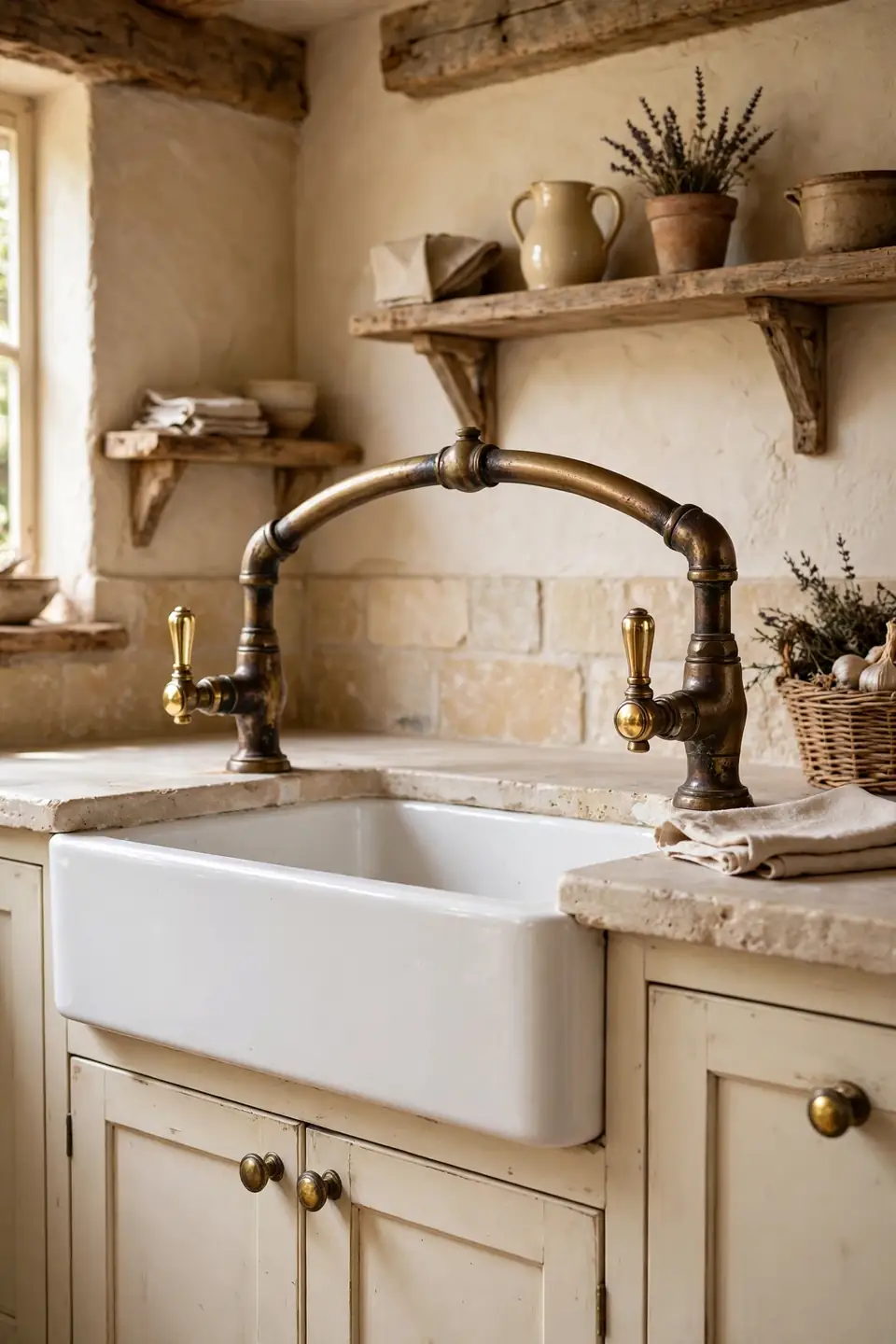
Cost: Mid to high, genuine antique brass holds its value well. Time: One afternoon to swap taps and handles. Skill Level: Moderate, plumbing basics cover most swaps. Best For: Bridge faucets, cabinet knobs, and rail hooks. Result: Warm metal depth against pale wood and stone.
Unlacquered brass changes as hands touch it, brightening at the grip and deepening in the corners, and that living finish suits farmhouse rooms better than any sealed shine. I’ve seen this work well in many cases where chrome felt cold beside whitewash. Keep one metal family per room so fixtures read as close relatives, not strangers.
Weathered Wood Island Centerpiece
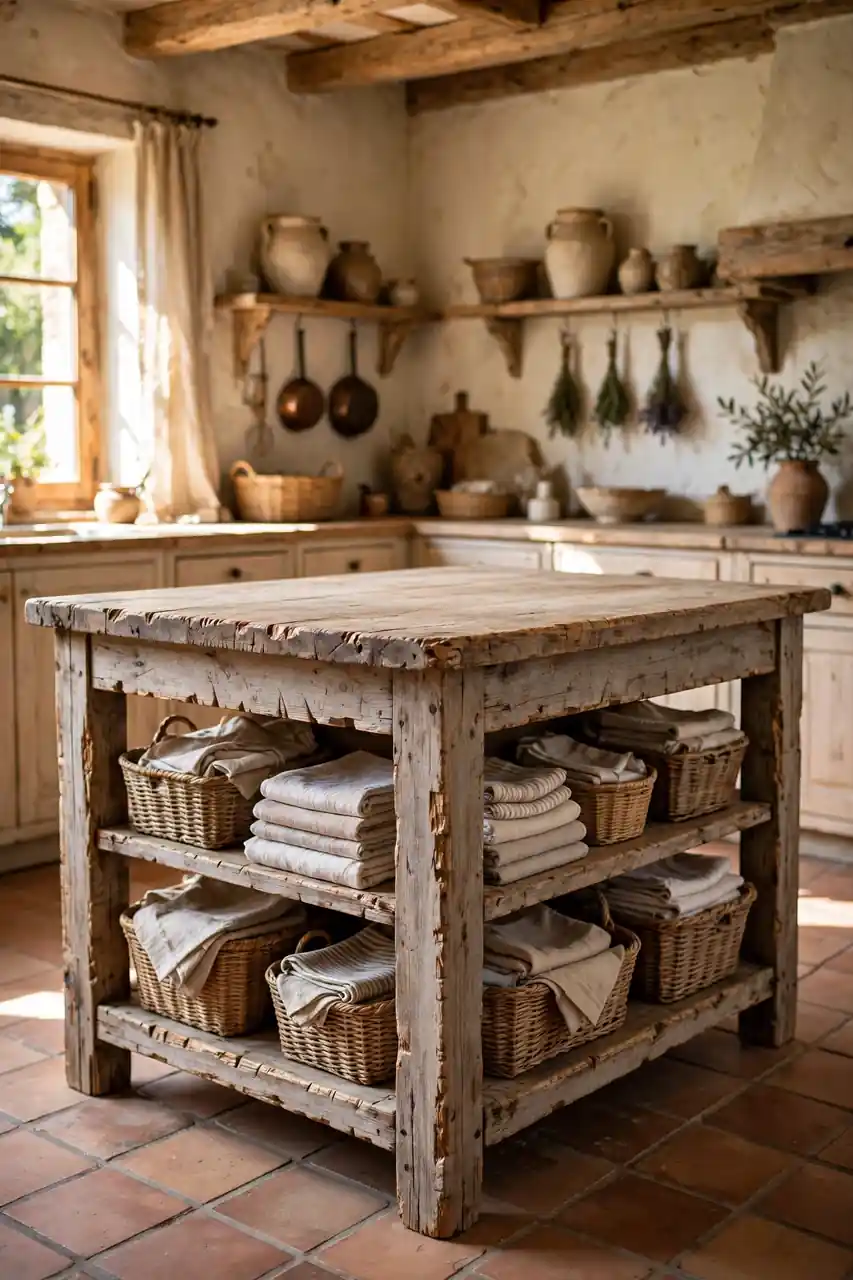
A weathered wood island gives the kitchen a working heart that looks older than the house around it. Old pine, oak, or a converted farm table brings saw marks, stains, and softened edges no new unit can fake. Keep the top bare for prep and let the sides carry baskets, linens, and the bread box.
Size matters more than finish here: leave a full step of walking space on every side so two cooks can pass with hot pans. One drawer or a low shelf keeps knives and boards close without crowding the top. Oil the surface after heavy weeks and the island keeps deepening in color year after year.
Ceramic Crocks Utensil Storage
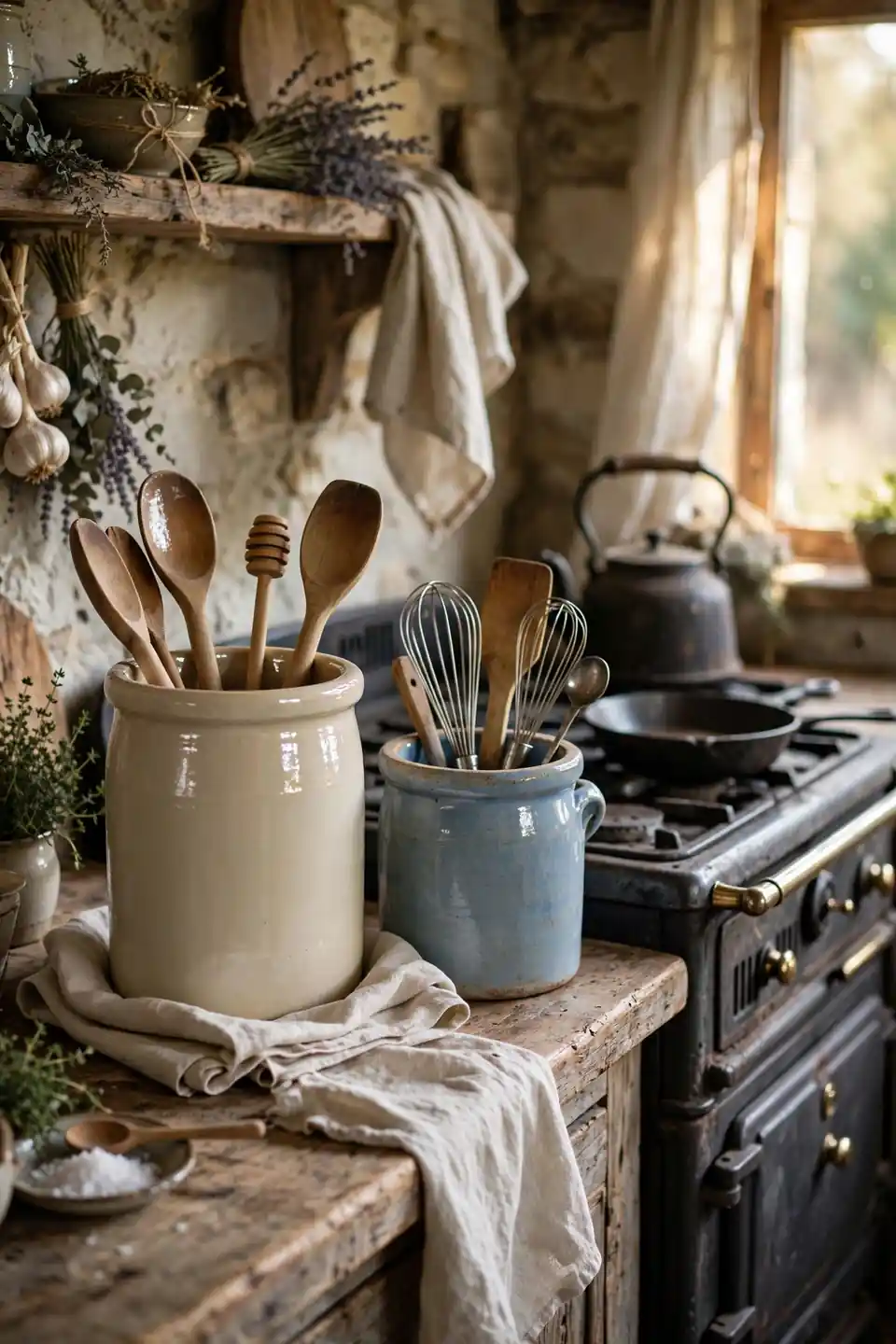
- Stand wooden spoons and whisks in a tall stoneware crock beside the stove.
- Keep a second smaller crock for tasting spoons and the thermometer near the hob.
- Choose crocks in cream, clay, or faded blue to echo the room’s pottery.
- Rest the crock on a folded linen square to catch drips and protect wood.
Crocks beat drawer dividers in a farmhouse kitchen because tools stay visible, grabbable, and honestly part of the room. Stoneware weight keeps tall utensils from tipping, and the glazed interiors rinse clean in seconds. A pair of crocks, one large and one small, handles nearly every tool a daily cook actually reaches for.
Woven Basket Pantry Storage

Quick Tip: Line pantry baskets with plain linen before filling them with onions, garlic, or bread, and shake the liners out weekly. The fabric keeps skins and crumbs out of the weave, so baskets last years longer and the pantry smells like food, not dust. Label each basket with a tied card, never tape.
Woven baskets suit open pantry shelves because they hide the honest mess of daily cooking behind one calm texture. Willow and seagrass both breathe, which keeps roots and bulbs dry longer than sealed plastic ever does. Group baskets by job, baking, roots, bread, and the whole pantry reads tidy at a glance from the doorway.
Rental Kitchen Country Refresh

BEFORE: A standard rental kitchen offered magnolia walls, a steel sink, and one bare bulb behind a plastic shade. Nothing could be painted, drilled, or replaced, and the room felt temporary no matter how good the cooking was.
AFTER: A linen runner warmed the worktop edge, crocks and boards hid the steel sink surround, and a woven shade softened the bulb. Herb pots lined the sill, and the kitchen suddenly felt borrowed from a farmhouse rather than a landlord.
Every change here lifts away in an afternoon, which is exactly why renters should steal this plan. Textiles, crocks, baskets, and plants carry the whole country feeling without touching a single fixture. Photograph the room before starting so the deposit friendly reset stays easy.
Conclusion
Whitewash, stone, copper, and linen: the ingredients repeat through every idea above because they work together without effort or fashion. These rustic French country kitchen decor choices ask for patience more than money, one honest material at a time. Start with the corner used most, the sink or the stove, and let small changes gather into a room that feels inherited rather than decorated. I’ve seen how small changes like these can completely shift the way a space feels. Save this guide on Pinterest, try one shelf or one curtain this week, and share it with a friend who cooks in a kitchen that deserves more love.