22 Cream and Wood Kitchen Design Ideas for Natural Warmth
A cream and wood kitchen feels calm the moment you walk in, and cream and wood kitchen design ideas built on soft cabinetry and honest timber deliver that calm without draining the room of character. Pale doors bounce daylight around, warm grain keeps the palette grounded, and the mix suits cottages, farmhouses, and clean modern homes alike.
In my experience, the secret is restraint: pick one wood tone, repeat it with intention, and let texture do the talking. The twenty two ideas below cover cabinets, counters, shelving, and seating, plus a few styling habits borrowed from modern farmhouse fireplace decor that work just as well around a hearth as they do beside a range.
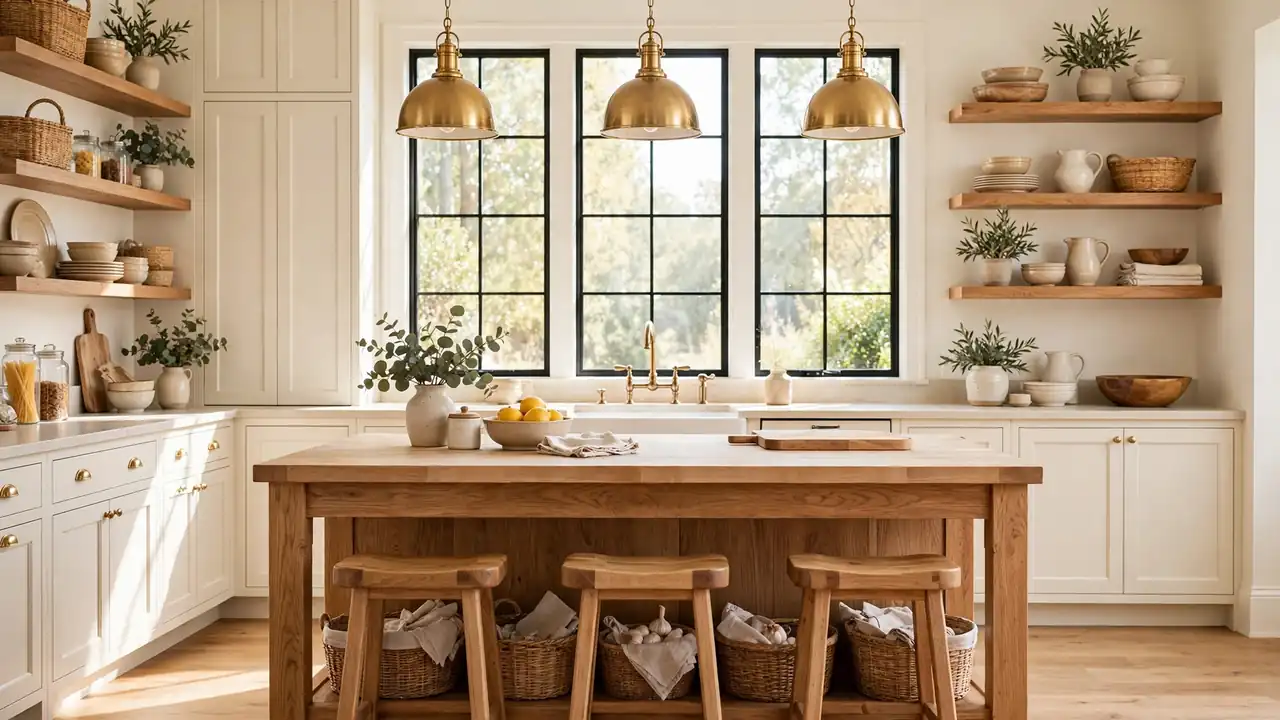
Cream Cabinets Walnut Island

A walnut island grounds a cream kitchen the way an anchor holds a ship steady. Cream cabinets along the walls keep the room bright and calm, while the deep wood island adds the warmth that stops pale cabinetry from feeling cold or flat. The contrast reads tailored rather than busy, and it suits both shaker and flat panel door styles.
Warmth deepens further when the island wood shows real grain, so choose a clear matte finish instead of a heavy stain. Repeat the walnut tone in one or two small places, like stool seats or a serving board, and the whole layout feels planned from the first sketch.
Open Oak Shelving Display
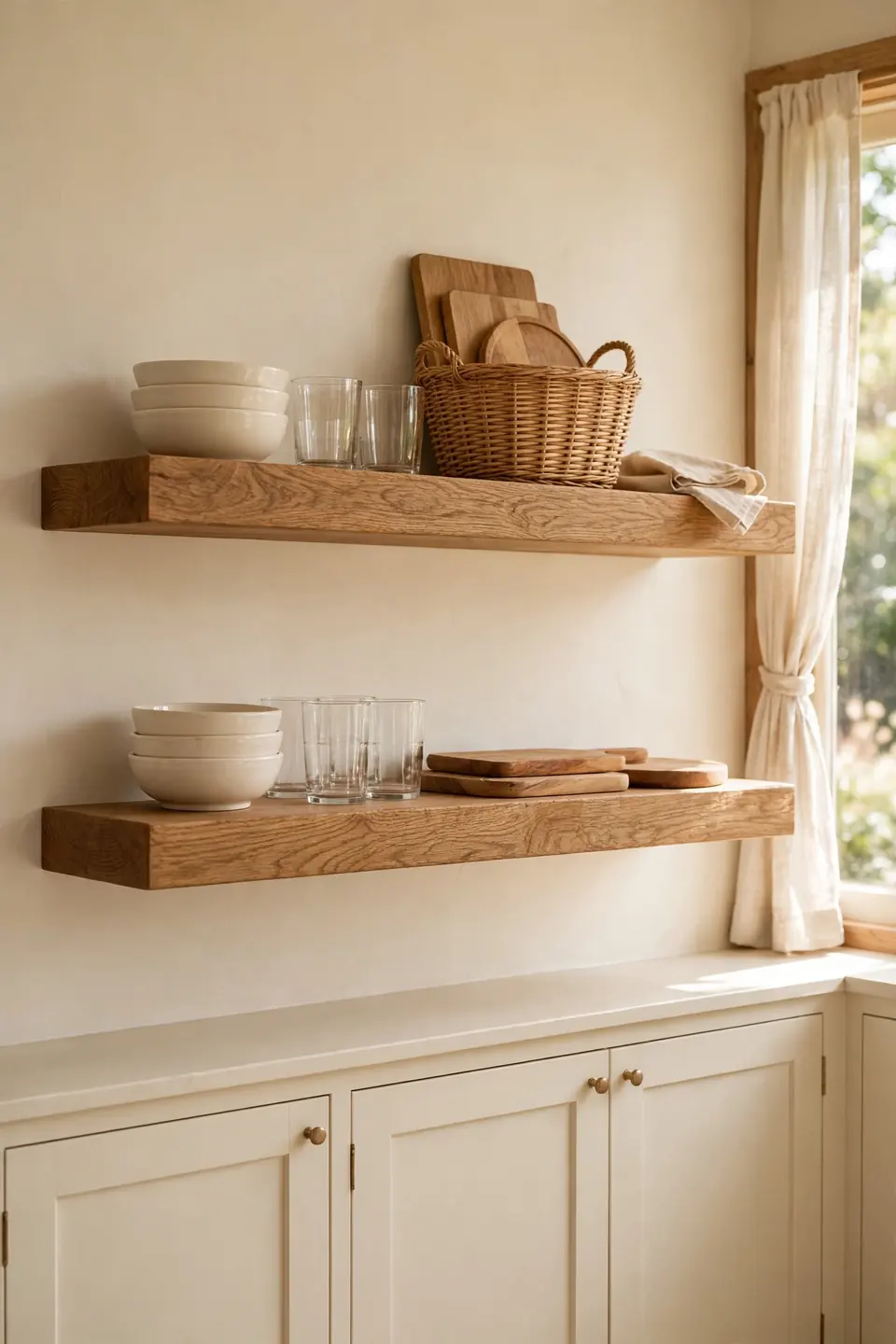
- Stack everyday cream bowls and plates in short piles so shelves look stocked, never sparse.
- Leave the front third of every shelf empty to keep the display light and airy.
- Group glasses by height, tallest at the back, for a calm stepped line across the shelf.
- Add one wooden board or woven basket per shelf to tie back to the island tone.
- Keep colors tight: cream, clear glass, pale wood, and a single green plant for life.
Open shelves earn their keep in a cream kitchen because they break up long runs of cabinetry and let wood grain do the decorating. I’ve noticed shelves styled in odd numbered groups photograph better and feel less staged, so edit each shelf down to three clusters and stop there.
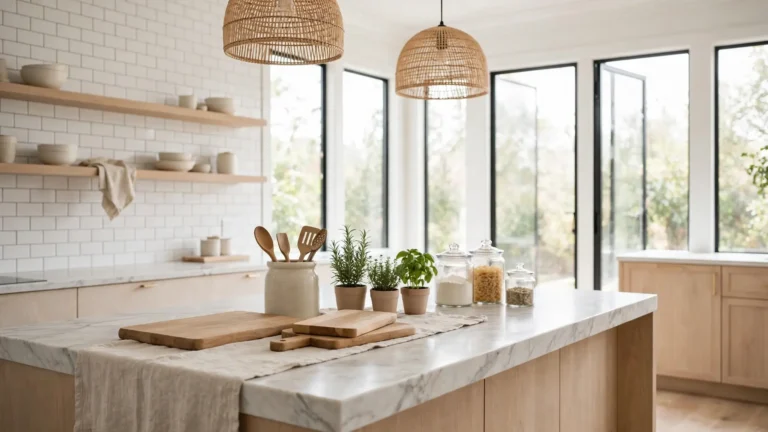
Butcher Block Counter Warmth

Quick Tip: Oil butcher block once a month with food safe mineral oil. Wipe it on with the grain, wait twenty minutes, then buff away the excess. The surface drinks in the oil, sheds water rings, and stays rich beside the sink.
Butcher block earns its place on cream cabinets because no laminate copies that lived in warmth. A pale counter can read chilly on its own, yet wood under cream doors feels like a farmhouse table that has hosted a thousand breakfasts. Sand out knife marks once a year and the surface looks new again. It also hides crumbs far better than glossy stone ever will.
Two Tone Cabinet Balance

BEFORE: Every cabinet wore the same flat cream, and the kitchen read as one long pale blur. The island disappeared into the walls, the counters felt cold, and nothing in the room gave the eye a place to rest.
AFTER: Lower cabinets and the island base switched to warm oak, while uppers stayed cream. The room suddenly had a horizon line, the wood grounded the seating side, and the pale doors above kept everything feeling tall and bright.
Two tone layouts work because the split follows how a kitchen is used: work zones below, light zones above. Keep the wood on the pieces people touch most, like the island and base cabinets, and the scheme stays practical as well as warm.
Wood Beam Ceiling Charm
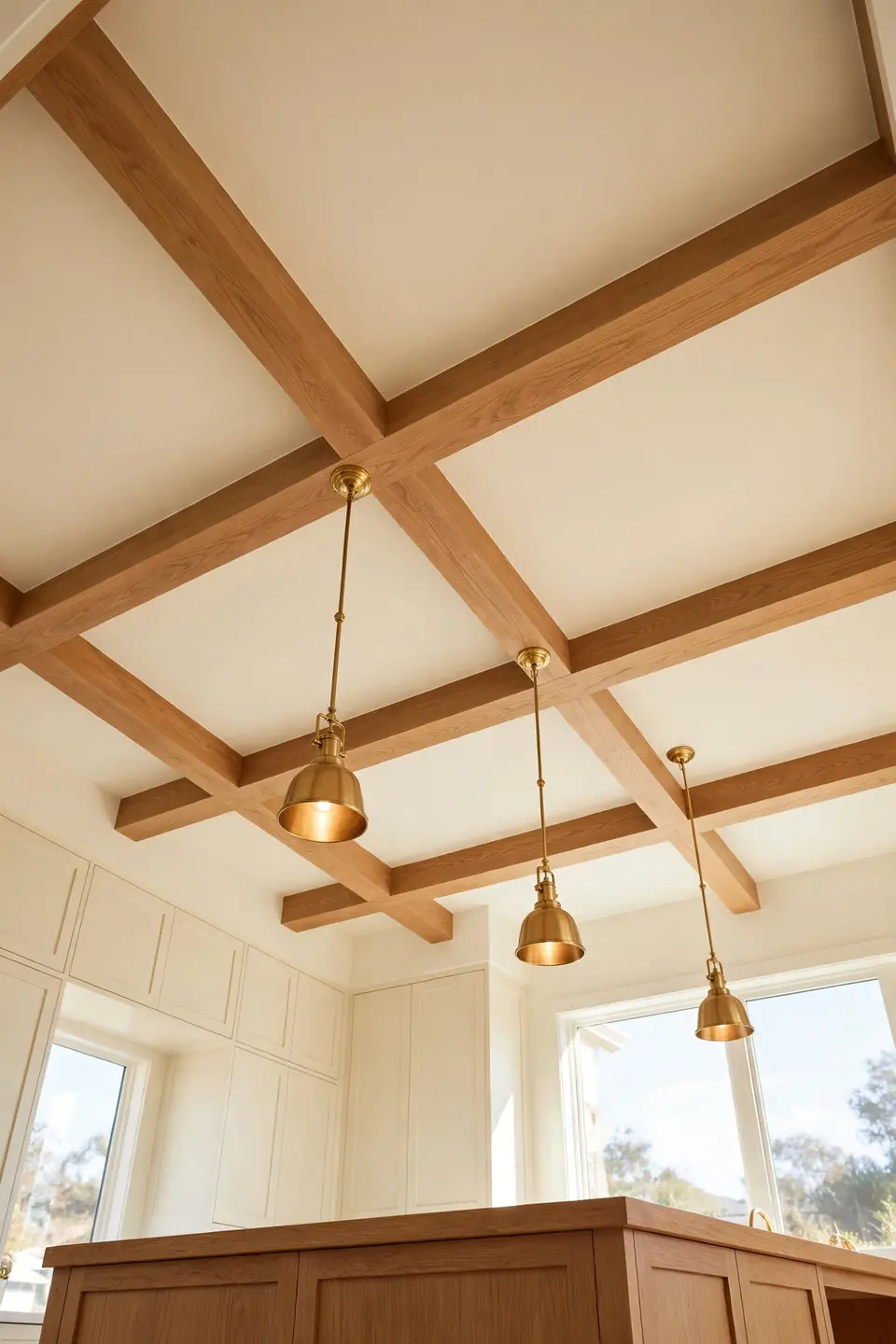
- Measure the ceiling and mark beam lines with painter’s tape before ordering any timber.
- Choose hollow faux beams in oak or pine if real beams would overload the joists.
- Stain the beams one shade deeper than the island wood for gentle contrast overhead.
- Fix mounting blocks to the joists, slide each beam over them, and screw through the sides.
- Caulk the seams, touch up the stain, and step back to check the lines run straight.
Beams change a cream kitchen more than any accessory because they pull the eye upward and give height a purpose. Keep them slim in low rooms, spaced evenly, and matched loosely to the floor tone so the ceiling feels like part of the design.
Oak Versus Walnut Tones

| Tone | White Oak | Walnut |
|---|---|---|
| Color | Pale honey with a soft golden cast | Deep chocolate brown with rich warmth |
| Grain | Straight, fine, and quietly even | Bold waves with strong character |
| Pairs Best With | Cream cabinets and brass hardware | Cream cabinets and matte black |
| Care | Hides crumbs and dust well | Shows dust, needs regular wipes |
Both tones flatter cream, so the choice comes down to mood. Oak keeps the room breezy and Scandinavian, while walnut leans formal and evening ready. Bring home large samples and live with them for a week, since light changes everything. Order extra boards, because batches vary more than paint ever does.
Cream Backsplash Tile Choices
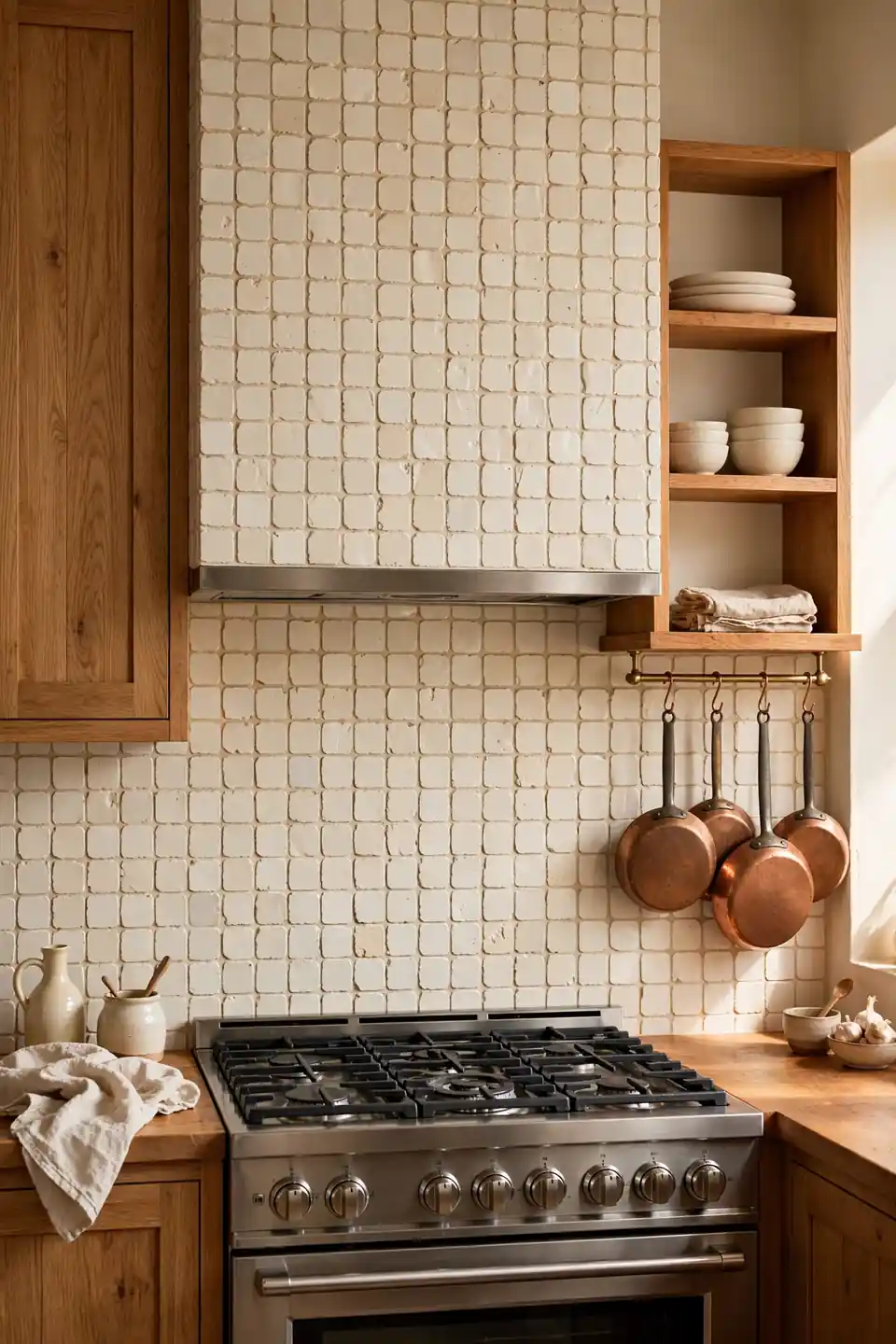
Do:
- Pick handmade look zellige tiles for gentle shine behind the range.
- Run the tile to the ceiling on the cooker wall for a finished backdrop.
- Match grout to the cream tile so the wood stays the star.
Don’t:
- Skip cold grey grout, which turns cream tiles dull and dirty looking.
- Avoid busy mosaic mixes that fight the grain on open shelves.
- Never stop tile mid wall without a trim edge to land on.
A backsplash covers more wall than any other surface, so its tone sets the temperature of the whole room. Cream tile with warm grout keeps wood cabinets glowing, while the slight ripple in handmade tiles adds life that flat paint never could.
Brass Hardware Finishing Touch
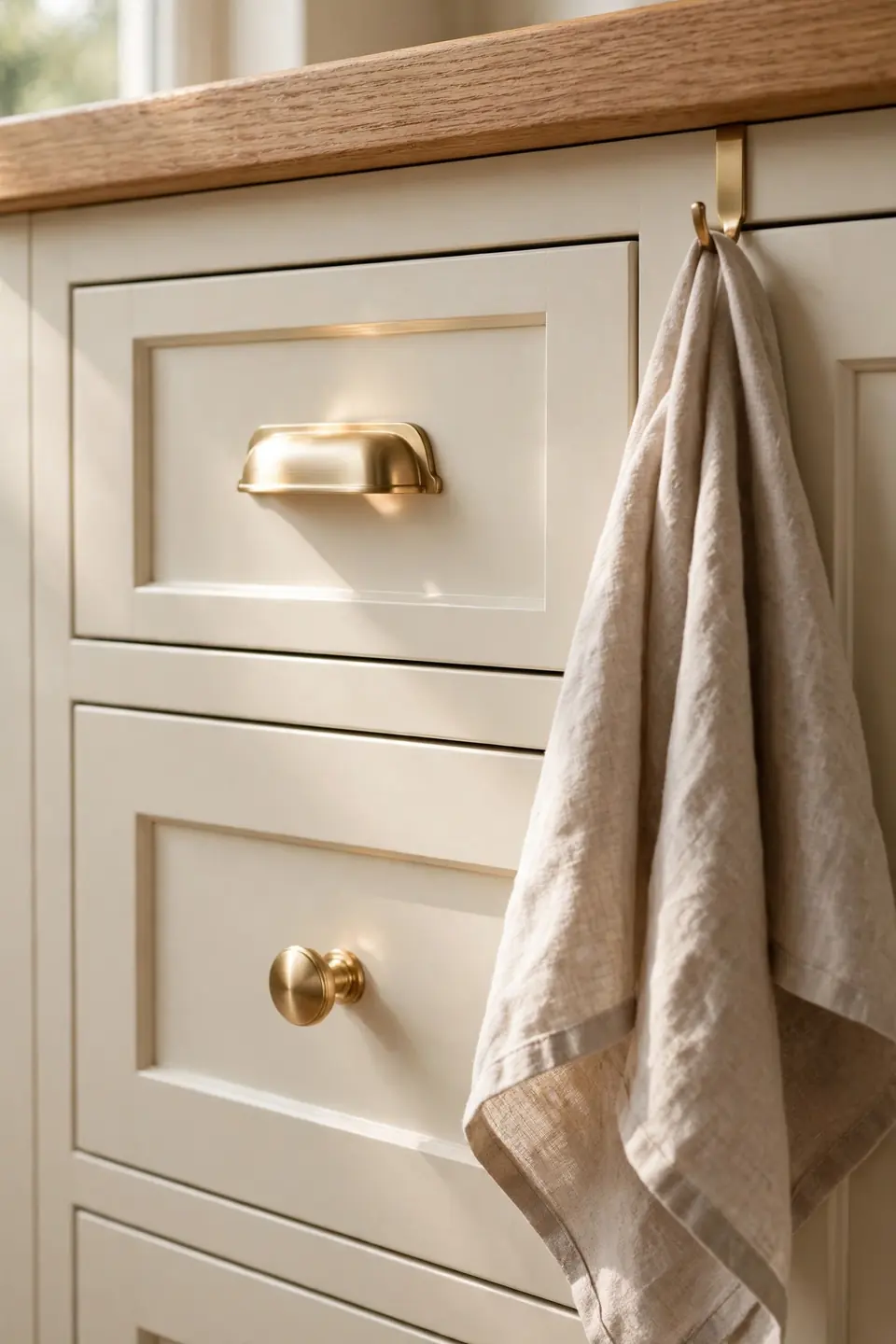
Cost: A full swap of pulls and knobs for most kitchens lands between one hundred and three hundred dollars.
Time: One relaxed afternoon covers measuring, drilling new holes, and fitting every handle in the room.
Skill Level: Beginner friendly, since most swaps reuse existing holes and need only a screwdriver.
Best For: Cream shaker cabinets, oak islands, and any kitchen that feels flat or unfinished.
Brass is the jewelry of a cream and wood kitchen, catching light against pale doors and echoing the warm tones in the grain. Choose unlacquered brass if you enjoy a surface that deepens with touch, and keep every hinge and tap in the same finish family.
Wooden Island Seating Nook
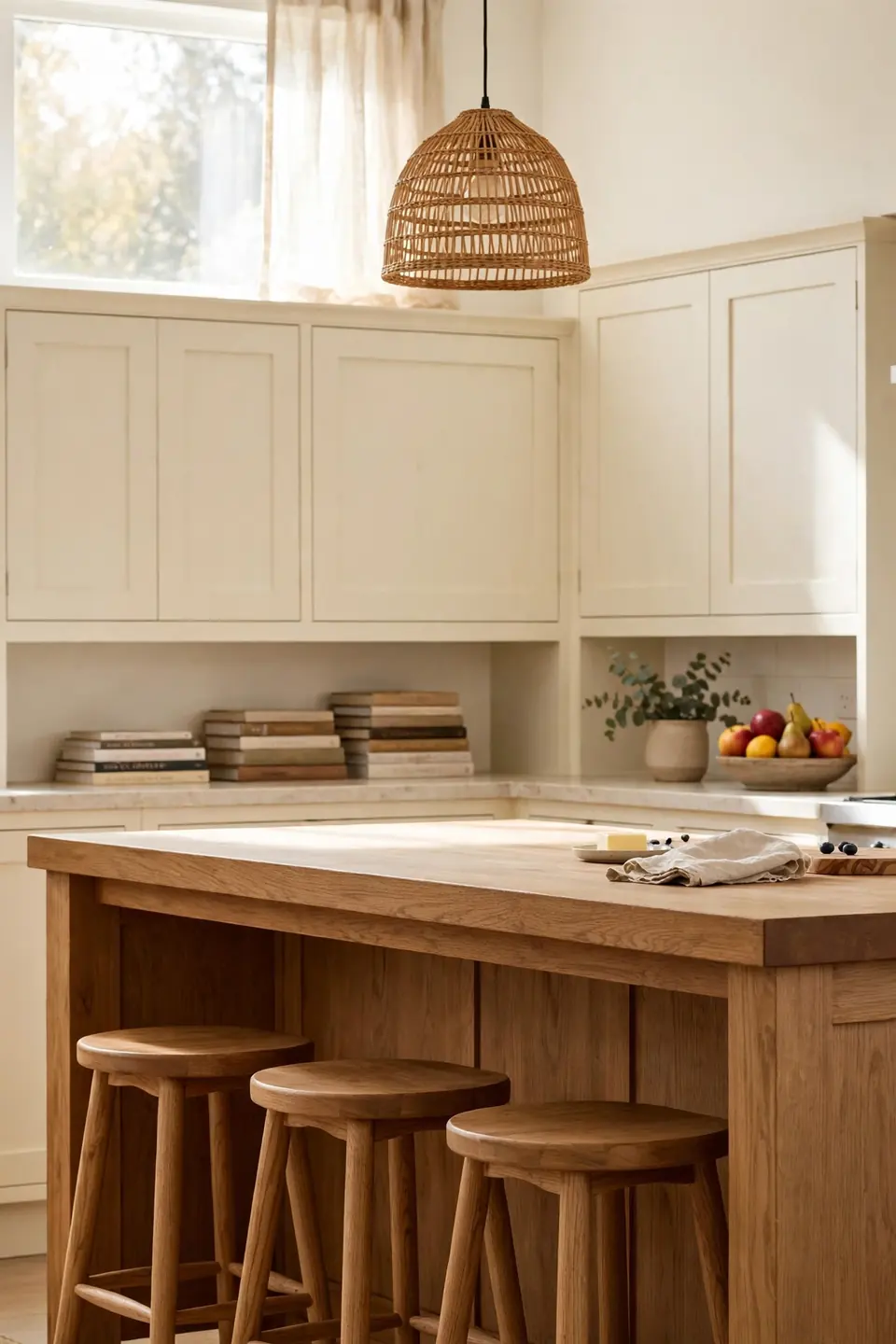
Breakfast tastes better at a wooden island built for lingering. Backless stools tuck fully underneath, a low shelf holds cookbooks and a fruit bowl, and the overhang runs deep enough for crossed legs on slow Sunday mornings. The setup turns a work surface into the most loved seat in the house.
Choose stools in the same wood family as the island but a shade apart, so the set feels gathered rather than matched. A washable runner underfoot softens the sound of stool legs, and a small pendant at seated eye level keeps faces lit kindly after dark. Add cushions in cream linen to echo the cabinets.
Cream Walls Wooden Floors

- Paint walls a warm cream with yellow undertones, never blue, beside oak floors.
- Choose floor stain in the mid range so cream walls and wood both hold their own.
- Carry the floor tone into one furniture piece, like a hutch or bench.
- Lay a flat weave rug in cream and tan to quiet the echo in open rooms.
- Keep skirting boards the same cream as the walls for one calm unbroken line.
Floors do the heavy lifting in this pairing, covering more area than any cabinet run. Mid tone oak under cream walls is the most forgiving of all cream and wood kitchen design ideas for busy family homes, hiding crumbs, paw prints, and the marks of daily life between cleans.
Floating Shelves Styling Trick
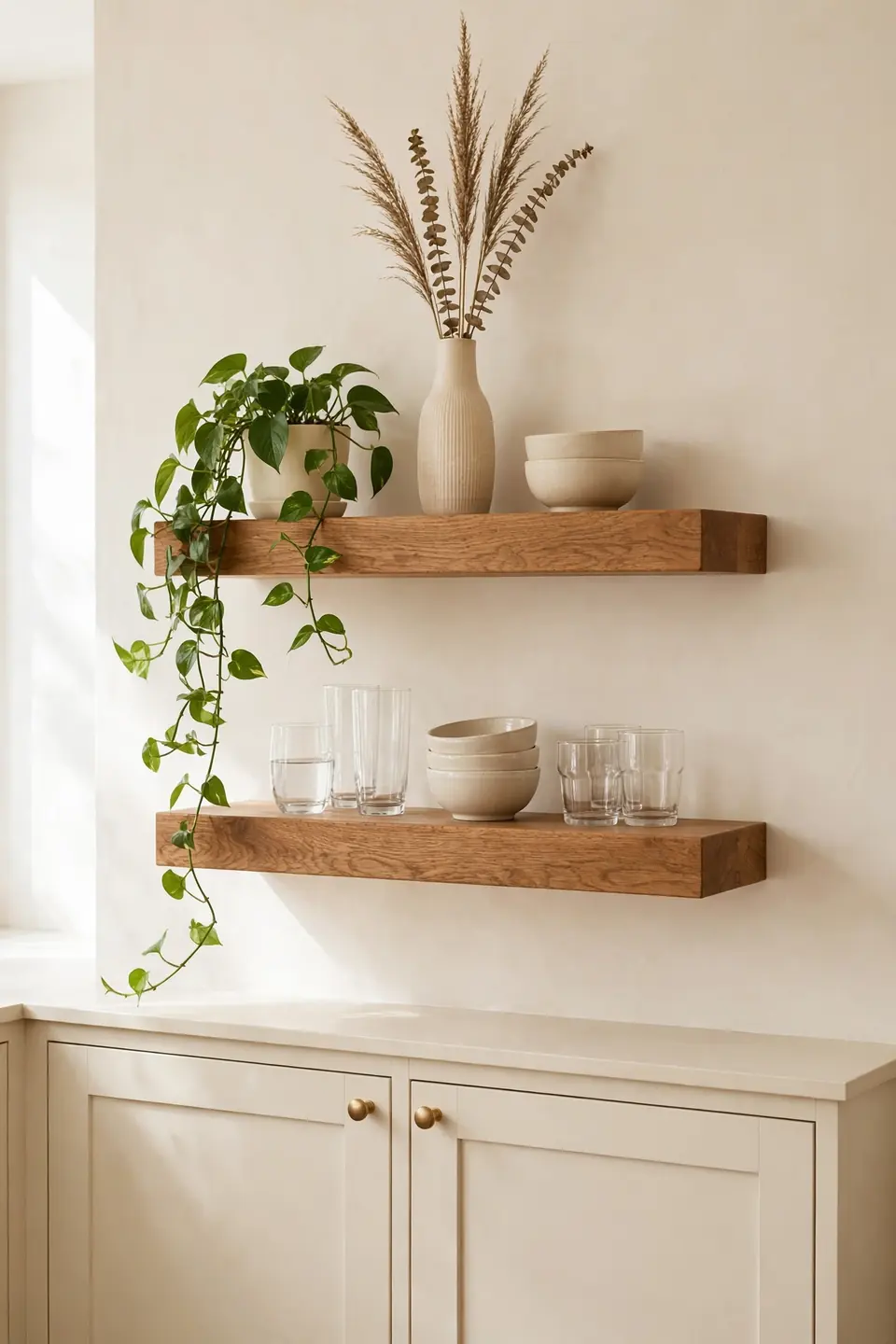
Quick Tip: Style floating shelves in triangles. Place a tall item, a medium item, and a low item in each group, then step back and squint. Groups that still read clearly at a squint are the ones guests remember. Repeat each triangle shape twice per shelf for rhythm.
Chunky oak shelves against cream walls give storage that doubles as art. Keep daily dishes low and pretty pieces high, leave breathing room at both ends, and repeat one material, like clear glass, across every shelf so the wall reads as one calm composition. A trailing plant on the top shelf softens the highest line.
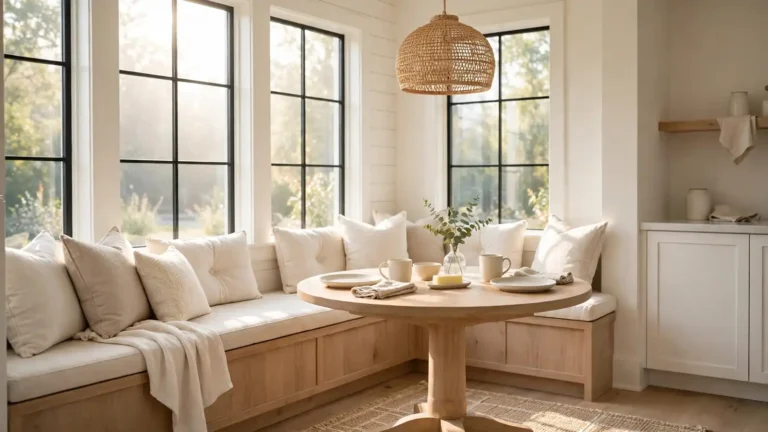
Breakfast Nook Wood Bench

BEFORE: The corner by the window held a wobbly table and four mismatched chairs that scraped the floor. Breakfast felt rushed, the walkway stayed blocked, and the prettiest light in the kitchen went to waste.
AFTER: A built in oak bench with cream cushions now hugs two walls, and a round pedestal table seats six without a single leg in the way. Storage hides inside the bench, and morning coffee finally has a ceremony.
Benches suit kitchen nooks because they hug walls that chairs waste. Build the seat at chair height, add hinged lids for slow cookers and table linens, and finish the oak to match the floor so the nook reads as part of the room.
Layered Lighting Wood Kitchen
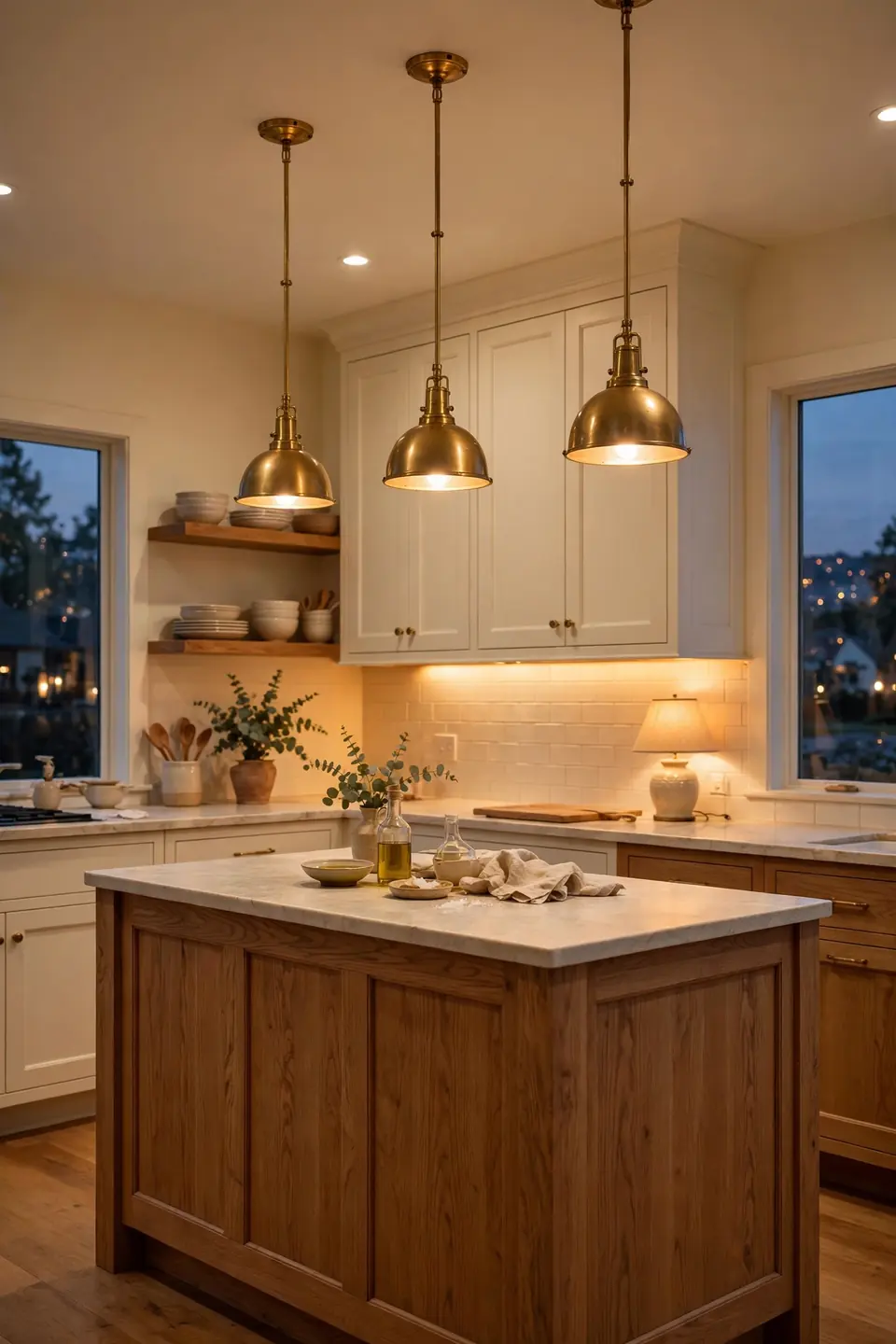
- Fit warm white bulbs in every fixture, matching color temperature across the whole room.
- Hang pendants low over the island so light pools on the wood surface.
- Add under cabinet strips to wash the backsplash and counters in even light.
- Put every circuit on dimmers so evenings can soften without going dark.
- Place one small lamp on the counter corner for a homely evening glow.
Layered light flatters wood grain the way candlelight flatters faces, bringing out depth that a single ceiling light flattens. The same layering habit transforms living spaces too, as these vintage gallery wall living room ideas show with picture lights over frames.
Light Versus Dark Wood
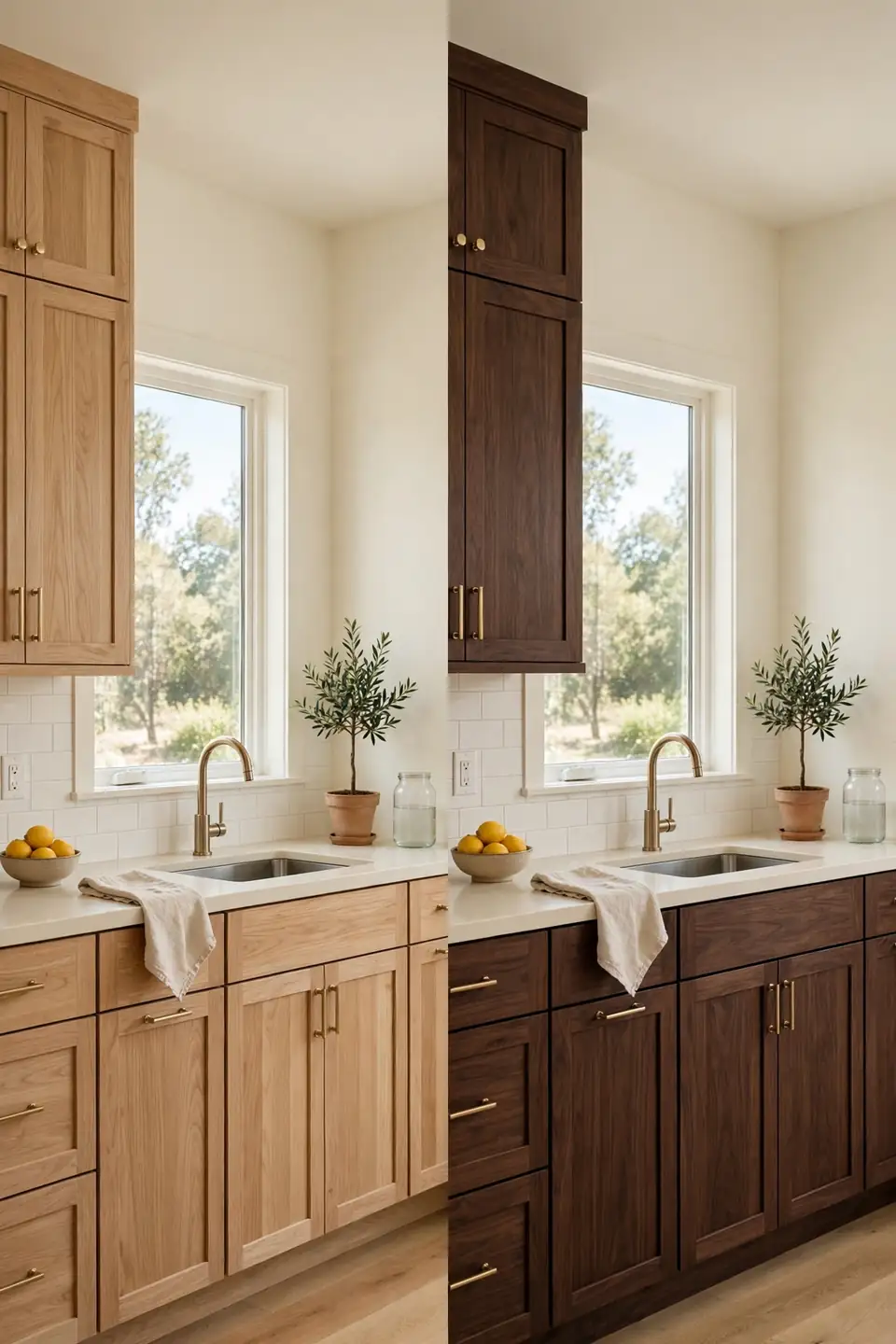
| Factor | Light Wood | Dark Wood |
|---|---|---|
| Mood | Airy, casual, and beachy bright | Rich, moody, and evening warm |
| Shows Wear | Hides scratches and crumbs kindly | Reveals dust and flour quickly |
| Room Size | Makes small kitchens feel larger | Suits wide rooms with tall windows |
| Resale Feel | Reads modern Scandinavian to buyers | Reads classic and tailored to buyers |
Neither family is better, only different in the feelings it brings to cream cabinetry. Light wood keeps mornings cheerful and hides the evidence of baking days, while dark wood makes winter dinners feel like occasions. Test both against your floor before deciding, because the floor anchors the whole choice.
Woven Texture Accent Rules

Do:
- Hang woven pendants over the island to soften hard cabinet lines.
- Line open shelves with seagrass baskets that hide clutter in plain sight.
- Choose rattan stool seats to echo the baskets and pendants in one thread.
Don’t:
- Mix more than two woven materials, or the room turns into a craft fair.
- Place baskets where steam and splashes will stain them within weeks.
- Buy orange toned rattan that clashes with cream paint and oak.
Woven texture is the softener in a cream and wood scheme, adding the handmade note that keeps new cabinets from feeling showroom stiff. Keep the palette natural, the shapes simple, and the count low, and every basket earns its place.
Cream Stone Countertop Choice

Cost: Honed quartz and marble look stones in cream tones sit in the mid range per square foot installed.
Time: Template to fitting usually takes two to three weeks once the stone is chosen.
Skill Level: Professional fitting only, since slabs are heavy, seams are visible, and cuts must be exact.
Best For: Busy family kitchens wanting a pale surface that forgives crumbs and pairs with oak.
Cream stone bridges the gap between pale cabinets and warm wood, giving the eye a middle step instead of a hard jump. Honed finishes suit this palette better than polished ones, since they mute reflections and let the grain nearby stay the focus.
Wooden Range Hood Statement

A wooden range hood turns a workhorse appliance into the room’s crown. Clad a standard insert in oak planks or a smooth walnut shell, and the cooking zone gains the same furniture status as the island across from it. Guests notice it before they notice the stove below. It also gives tall ceilings a natural stopping point.
Keep the hood finish one step lighter than the island so the two wood moments do not compete. A slim brass rail or black strap detail at the base ties the hood to the hardware, and strong extraction stays hidden inside the pretty shell.
Open Plan Cream Kitchen
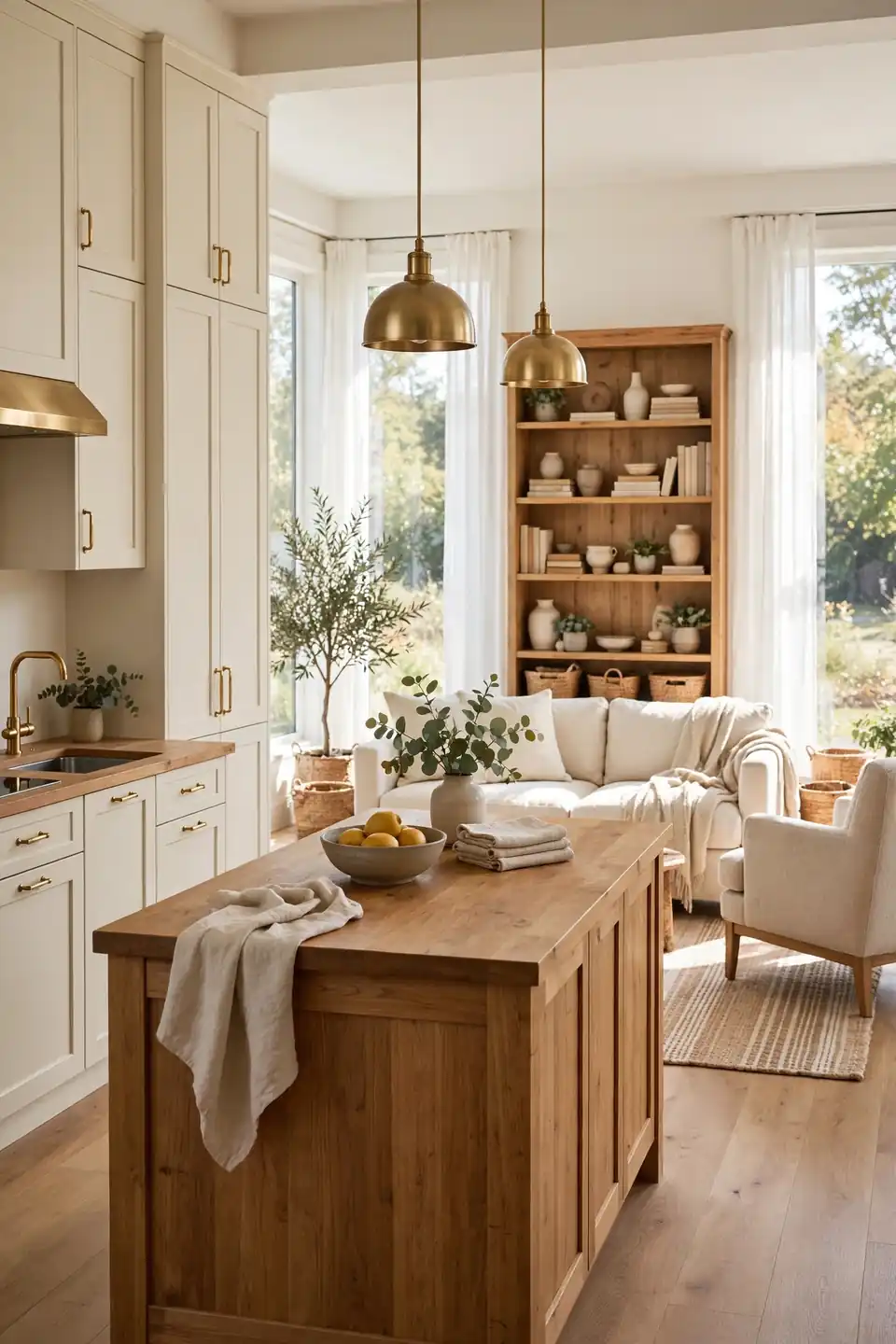
- Repeat the island wood on the living side in a bookshelf or media unit.
- Keep upholstery cream and oatmeal so the kitchen and lounge read as one room.
- Define the kitchen zone with a large flat weave rug under the island stools.
- Use matching black or brass details on lamps, taps, and cabinet pulls throughout.
- Leave one shared sight line clear from sofa to garden door for calm.
Open plan rooms fail when the kitchen looks pasted onto the lounge. Shared wood, shared metal, and a tight cream palette stitch the zones together, so cooking, eating, and resting all happen inside one warm, continuous space.
Pantry Door Wood Upgrade
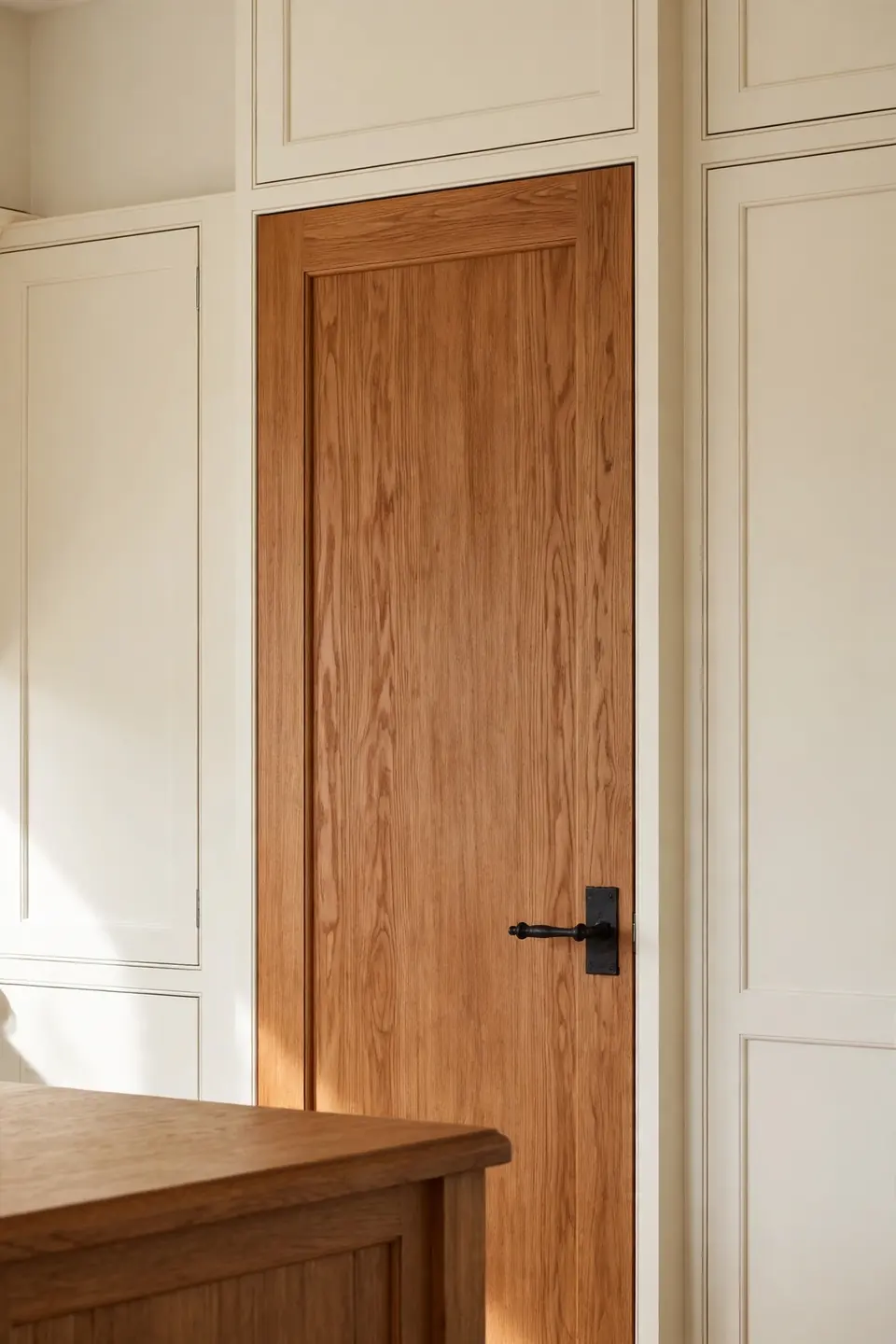
Quick Tip: Test stain on the back of the door first. Pantry doors catch light differently from cabinets, and one test patch saves a full strip and redo if the tone reads too orange. Wipe stain on with a foam brush for an even coat.
A plain pantry door is wasted wall in most kitchens. Staining it to match the island turns a cupboard into a feature, and a black iron handle gives the wood a tailored finish. The change costs one weekend and no dust, yet guests always ask which carpenter built it. It is the cheapest furniture look upgrade in the whole room.
Small Kitchen Cream Makeover

BEFORE: Dark cabinets shrank an already small kitchen, and the counters disappeared under clutter. Mornings felt cramped, cooking felt like a chore, and the single window could not save the mood.
AFTER: Cream doors, a slim oak shelf run, and a pale wood counter lifted the whole room. The window light finally travels wall to wall, prep space doubled, and the kitchen now feels twice its measured size.
Small kitchens gain the most from this palette because pale surfaces return light and wood adds depth without darkness. Keep counters nearly empty, hang the rail for utensils, and let two good materials do all the talking.
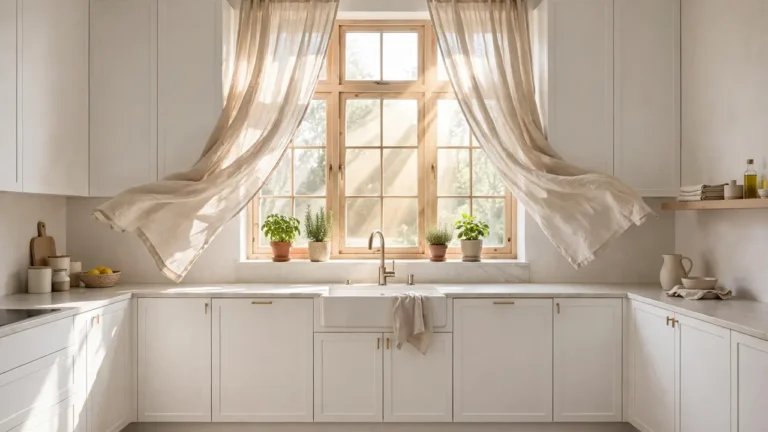
Herb Garden Window Sill
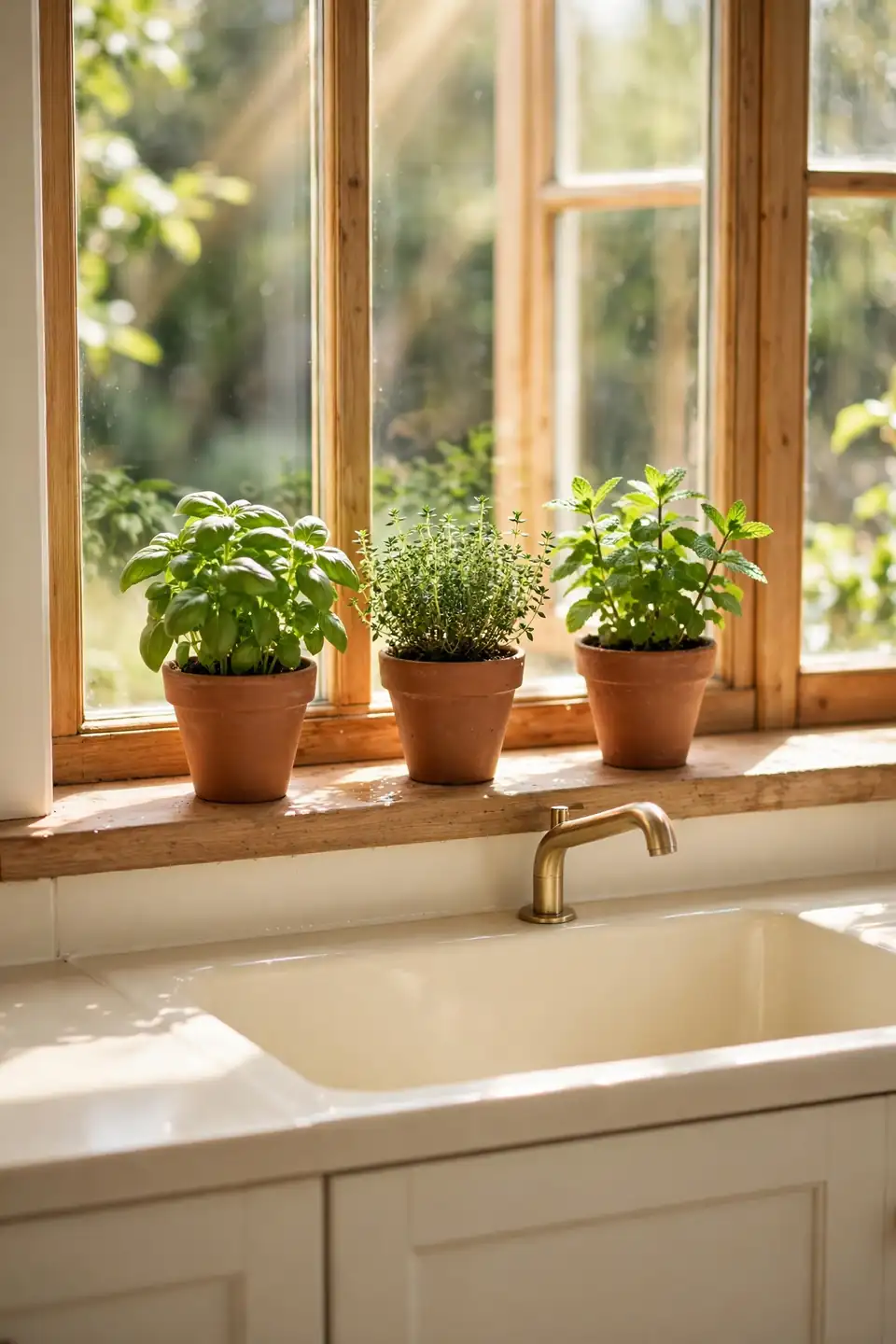
- Choose a sunny sill that gets six hours of light and sits clear of the tap swing.
- Line up small terracotta pots with drainage trays to protect the wood sill below.
- Plant basil, thyme, and mint, keeping mint in its own pot to stop it spreading.
- Water little and often, and turn each pot weekly so growth stays even.
- Snip herbs into meals daily, since regular trimming keeps plants bushy and keen.
A herb sill is the cheapest living decor a kitchen can grow, and it perfumes the room every time the window opens. Green leaves against cream paint and wood trim complete the palette nature started.
Cream Versus White Cabinets
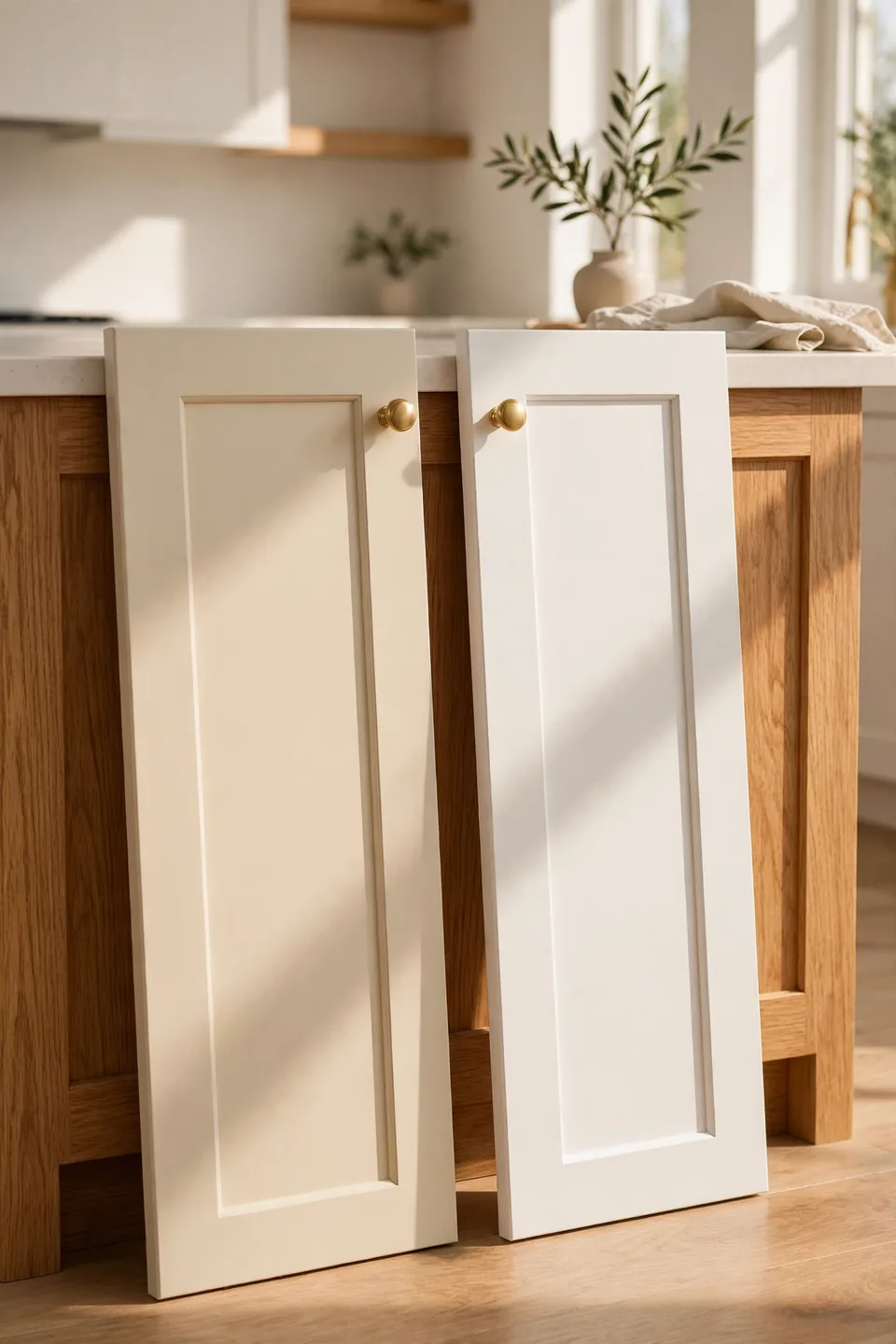
| Factor | Cream Cabinets | White Cabinets |
|---|---|---|
| Warmth | Soft and golden beside wood tones | Crisp and cool beside wood tones |
| Light | Forgives warm bulbs and low sun | Needs daylight to avoid looking grey |
| Upkeep | Hides splashes and fingerprints kindly | Shows every mark within days |
| Style Feel | Cottage, farmhouse, and classic country | Modern, coastal, and gallery clean |
Cream wins in wood heavy kitchens because white can turn stark and chilly next to warm grain. Hold both swatches against your island at breakfast and at dusk, then trust the one that stays kind in both lights. Paint is cheap to change, but regrets are tiresome, so test slowly and decide once.
Conclusion
Warmth is a habit, not a purchase, and these ideas prove how little it takes. Start with one wood moment, let cream carry the light, and repeat your chosen tone until the room feels settled. Save your favorite cream and wood kitchen design ideas to a Pinterest board before you shop, share the board with anyone sharing the work, and begin with the smallest change on the list. I’ve seen how small changes like these can completely shift the way a space feels, and kitchens reward that patience every single day. Morning light will do the rest.