23 Modern Farmhouse Kitchen Decor Ideas for Cozy Elegance
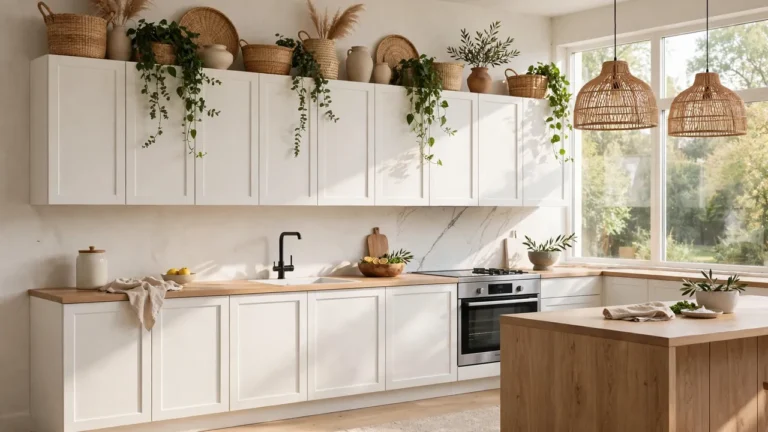
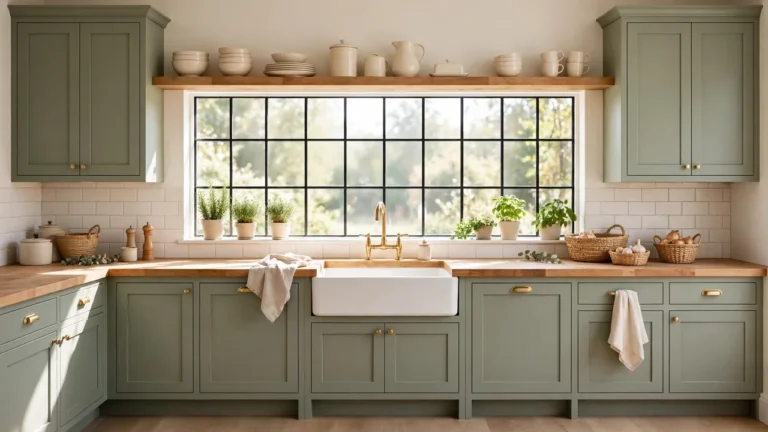
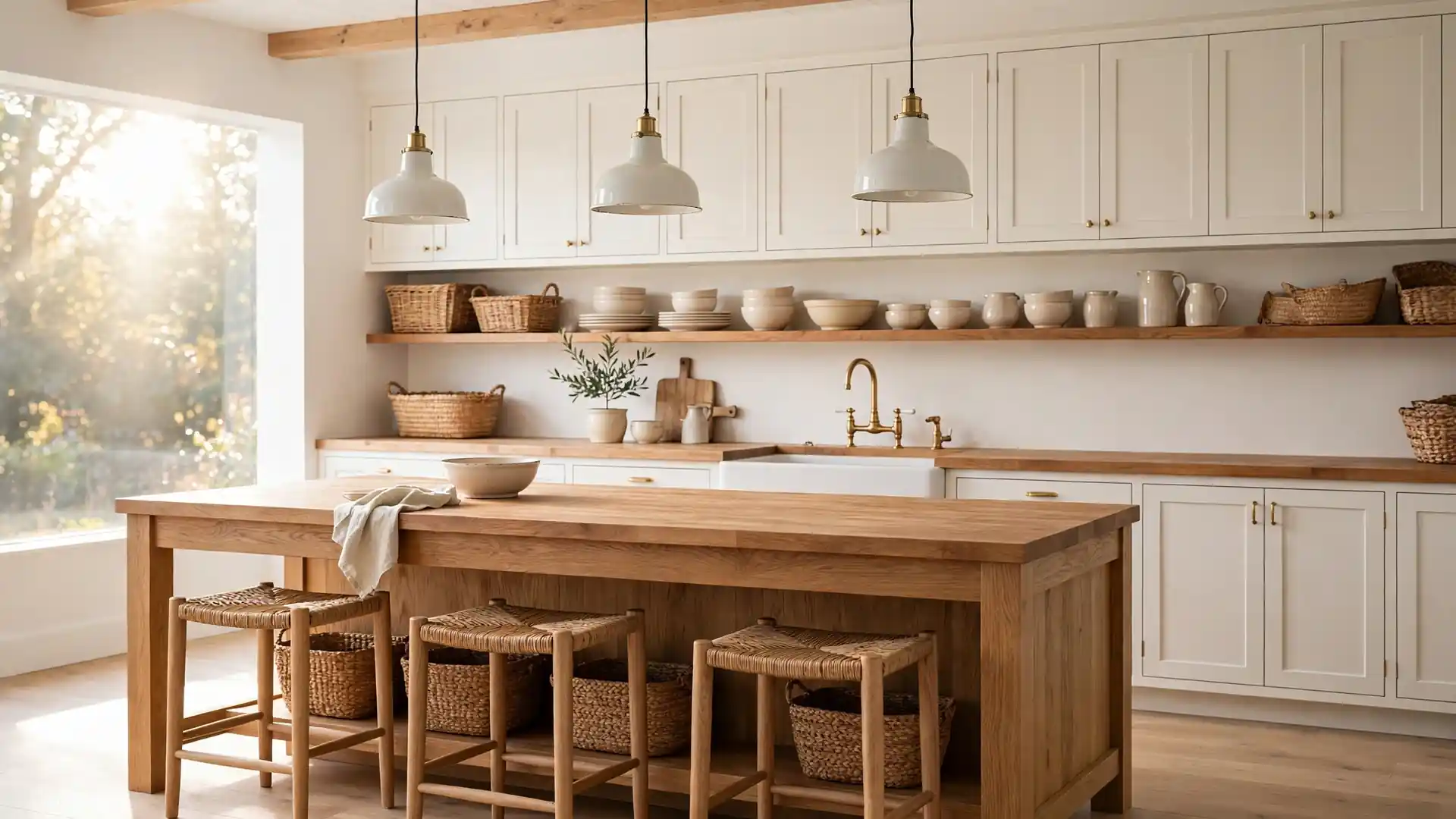
Warmth is the first thing people feel in a farmhouse kitchen, long before they notice a single cabinet. The best modern farmhouse kitchen decor ideas pair clean white cabinetry with worn wood, honest materials and pieces that look collected over time rather than bought in one hurried afternoon.
Start with the bones: shaker doors, an apron sink, open shelves with stoneware. Then layer texture with baskets, linen and aged metal until the room feels lived in, not staged. In my experience, one wood tone repeated three times ties the whole scheme together. The same love of warm wood and uncluttered lines shows up in Japandi living room design ideas, and it works just as well around a stove as it does around a sofa. These twenty three moves build the look piece by piece.
White Shaker Cabinets
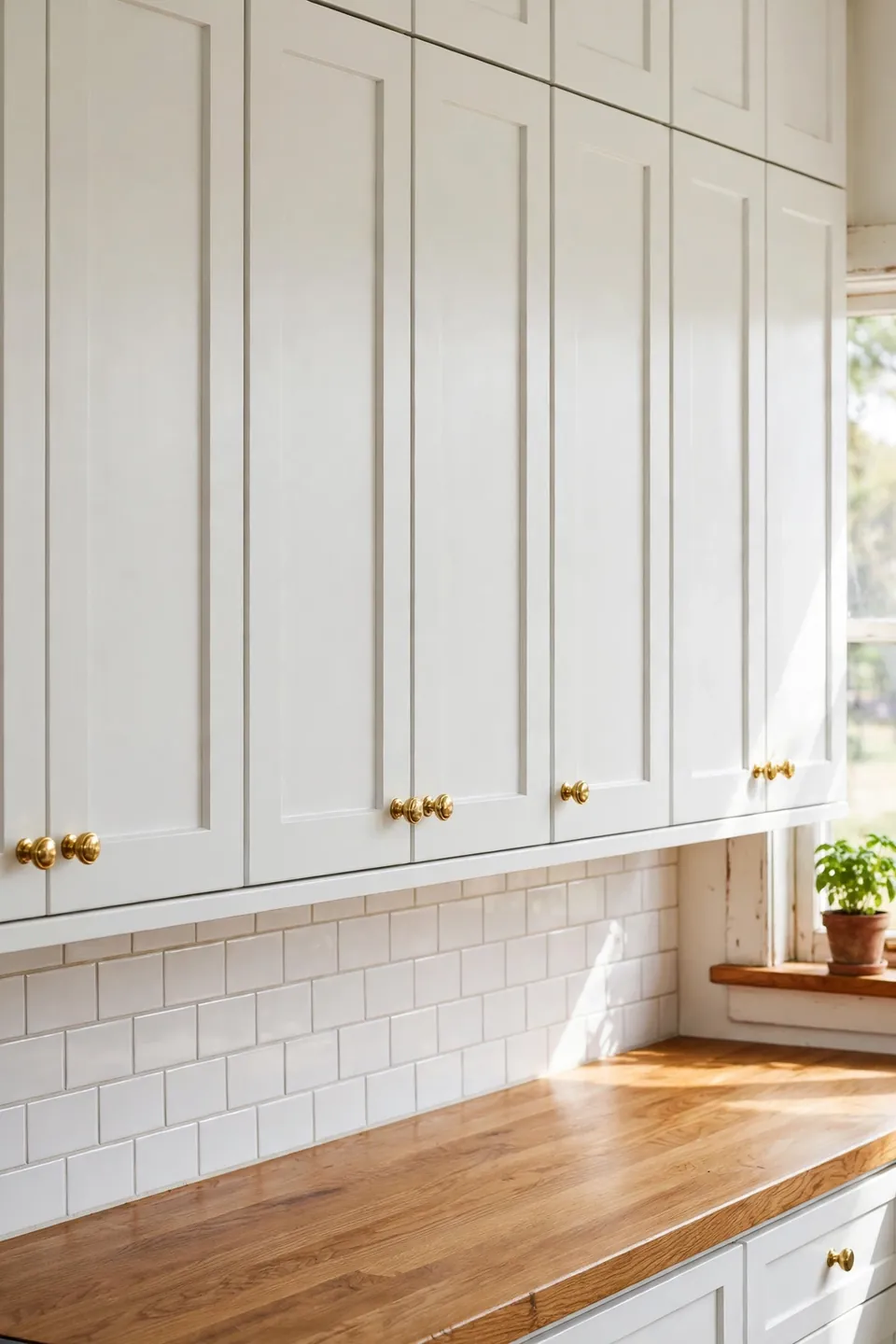
Shaker doors have outlasted every kitchen trend of the last forty years, and the reason is simple geometry. Flat center panels and square frames suit old cottages and new builds alike, and white paint keeps a full wall of cabinetry feeling light even in a small room.
Paint matters more than the door style itself. A warm white with a hint of cream flatters wood counters and brass hardware, while a blue white can turn chilly under north facing windows. In my experience, a satin finish hides fingerprints better than matte and wipes clean after a week of real cooking.
Apron Front Sink
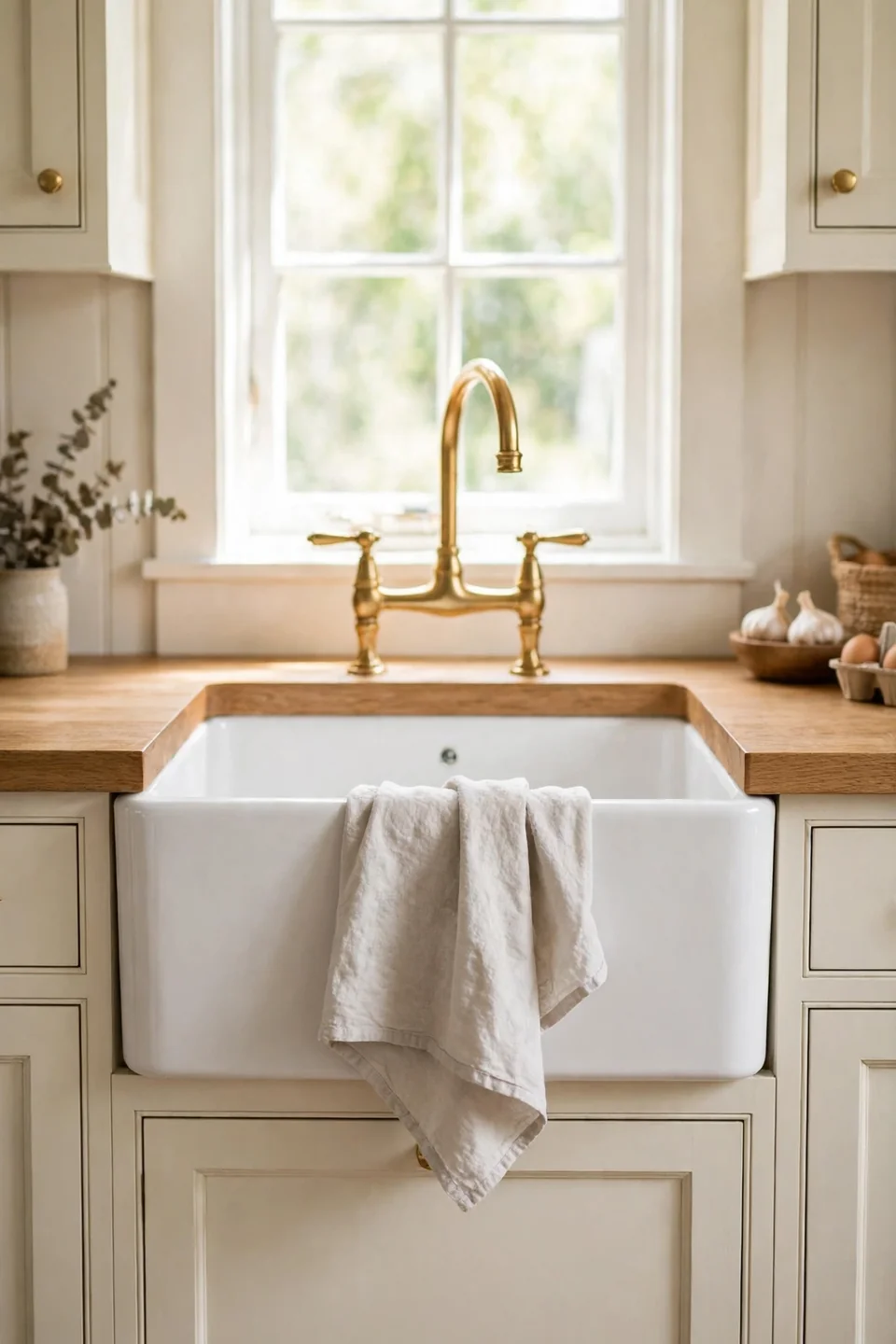
- Choose a fireclay or cast iron front that sits proud of the cabinet line.
- Single deep bowls swallow sheet pans and stockpots without a divider fight.
- Pair the white front with a bridge faucet in brass or matte black.
- A beadboard panel below the sink softens the hard ceramic edge.
- Seal the counter cut carefully; water finds every gap around an apron front.
The apron front does quiet visual work beyond its size. It breaks the long run of cabinet doors with one honest, work ready gesture, and it pulls the whole kitchen toward the farmhouse mood before shelves or rugs even arrive. Guests read it instantly, and cooks love the shorter reach to the faucet on long prep days.
Open Wood Shelving
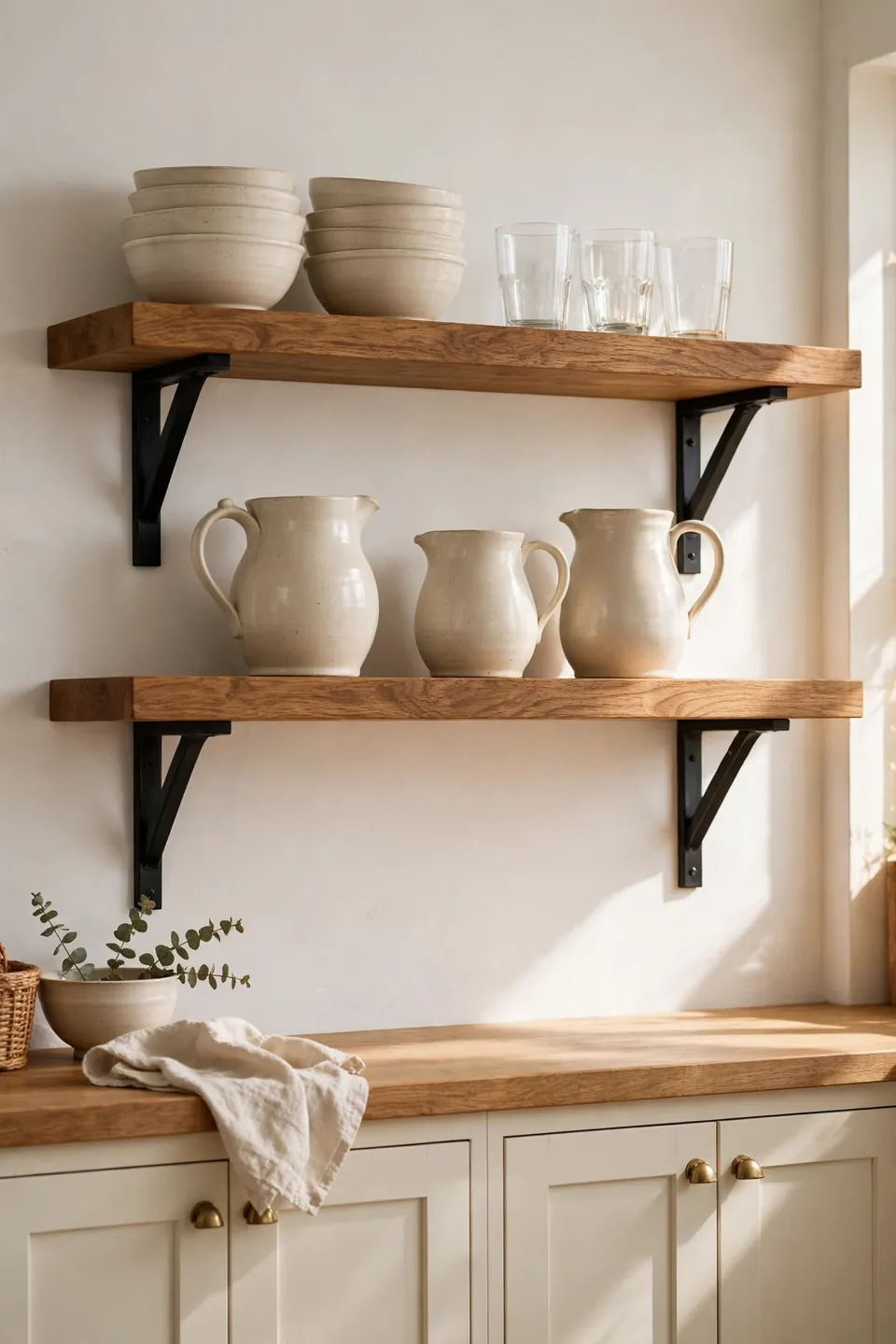
Quick Tip: Keep every day dishes on the lowest shelf and the pretty pieces up high. Daily reach items earn their dust; display pieces stay cleaner longer because nobody handles them, and the shelf styling survives the whole week intact.
Two thick oak shelves on black brackets hold more than most upper cabinets and cost a fraction of the price. Stack stoneware bowls, line up plain glasses, and leave breathing room between groups. The open wall keeps a small kitchen feeling wide, and the wood grain warms white cabinets in a way no paint color quite manages. Guests always ask whether the cabinets came out or the shelves went up.
Butcher Block Counters
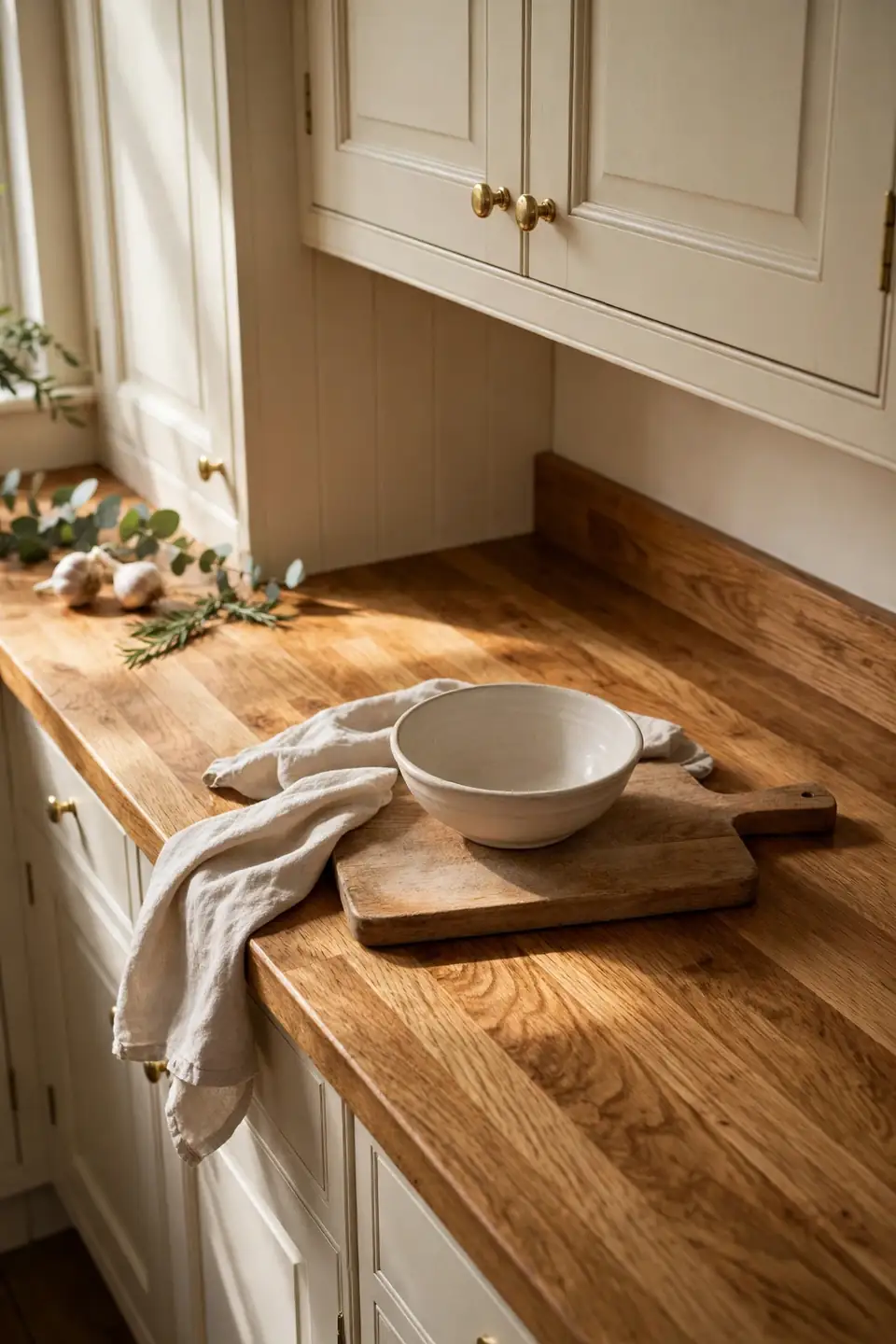
BEFORE: Cold grey laminate ran along every wall, and the surface showed knife marks, water rings and a decade of tired seams. The kitchen worked fine, but nothing about it invited anyone to linger over coffee.
AFTER: Warm oak block now tops the cabinets, its grain running long and its edges softened with a simple round over. Cutting happens right on the surface, and a coat of oil twice a year keeps the wood deep and water resistant.
Butcher block forgives the way real kitchens get used. Scratches sand out, stains fade with sun and oil, and the surface stays quiet under plates where stone rings cold. Seal the sink cutout with extra care, because end grain near water drinks fast.
Farmhouse Island Seating

What You Need: An island or peninsula with clear knee space, two or three sturdy stools, and sixty centimeters of counter for every seat.
- Measure the overhang; thirty centimeters of knee depth keeps adults comfortable.
- Pick backless stools that slide under the counter between meals.
- Match the stool wood to one tone already in the room.
- Add one cushion per seat in washable linen for long sessions.
- Leave the far end open for serving trays and laptop sprawl.
Island seating turns the cook into part of the conversation instead of the catering staff. Kids land there with snacks, guests land there with wine, and the stools earn their floor space every day. Keep the count honest: crowded seating reads as clutter, while two seats read as an invitation.
Shiplap Or Beadboard

| Feature | Shiplap | Beadboard |
|---|---|---|
| Look | Wide planks with soft shadow lines | Narrow grooves, classic cottage rhythm |
| Best Spot | Full walls and island fronts | Cabinet doors and wainscot panels |
| Paint | Warm white, flat or satin | Satin shows the grooves best |
| Effort | Boards lock fast, seams forgive | Sheets need careful groove alignment |
Either board brings flat drywall to life, and the choice mostly follows the scale of the room. Wide planks calm a big wall, while fine grooves suit small stretches where planks would look chopped. Run the boards behind open shelves and the texture doubles as a backdrop for stoneware, jars and stacked bowls.
Woven Basket Storage
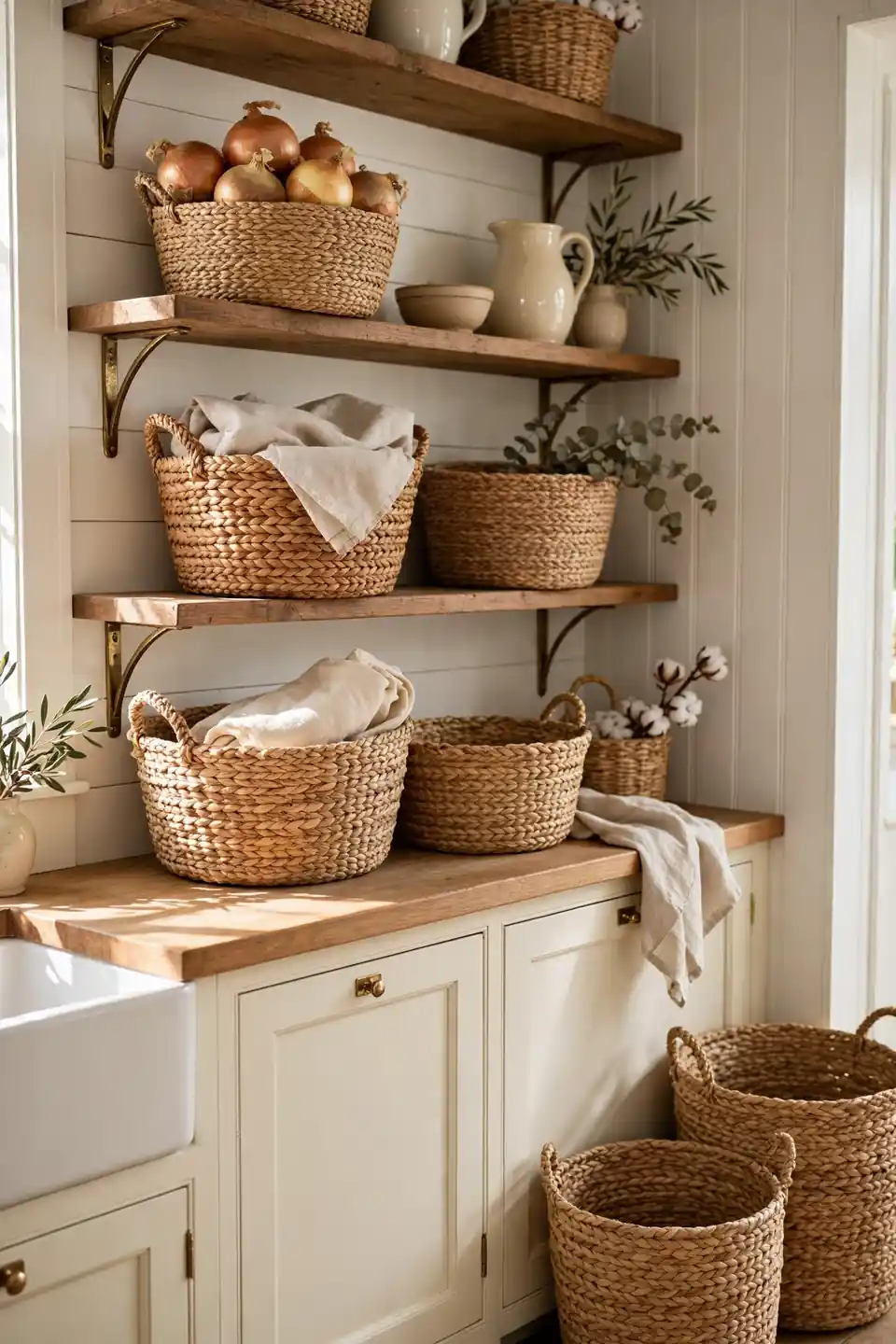
Do:
- Group baskets in odd numbers on shelves and the floor.
- Line produce baskets with a plain linen cloth for washing.
- Choose one weave tone and repeat it across the room.
- Hang one flat basket on the wall as quiet texture.
Don’t:
- Do not mix five different weaves in one small kitchen.
- Skip baskets with printed words or busy dyed patterns.
- Avoid tiny baskets that hold nothing and gather dust.
Baskets hide the visual noise a working kitchen produces: chargers, mail, onions, the odd toy. One large basket beside the island swallows the mess in seconds before guests arrive. Natural fibers also soften the hard edges of tile, stone and steel, and they cost less than almost any other decor in the room.
Matte Black Hardware
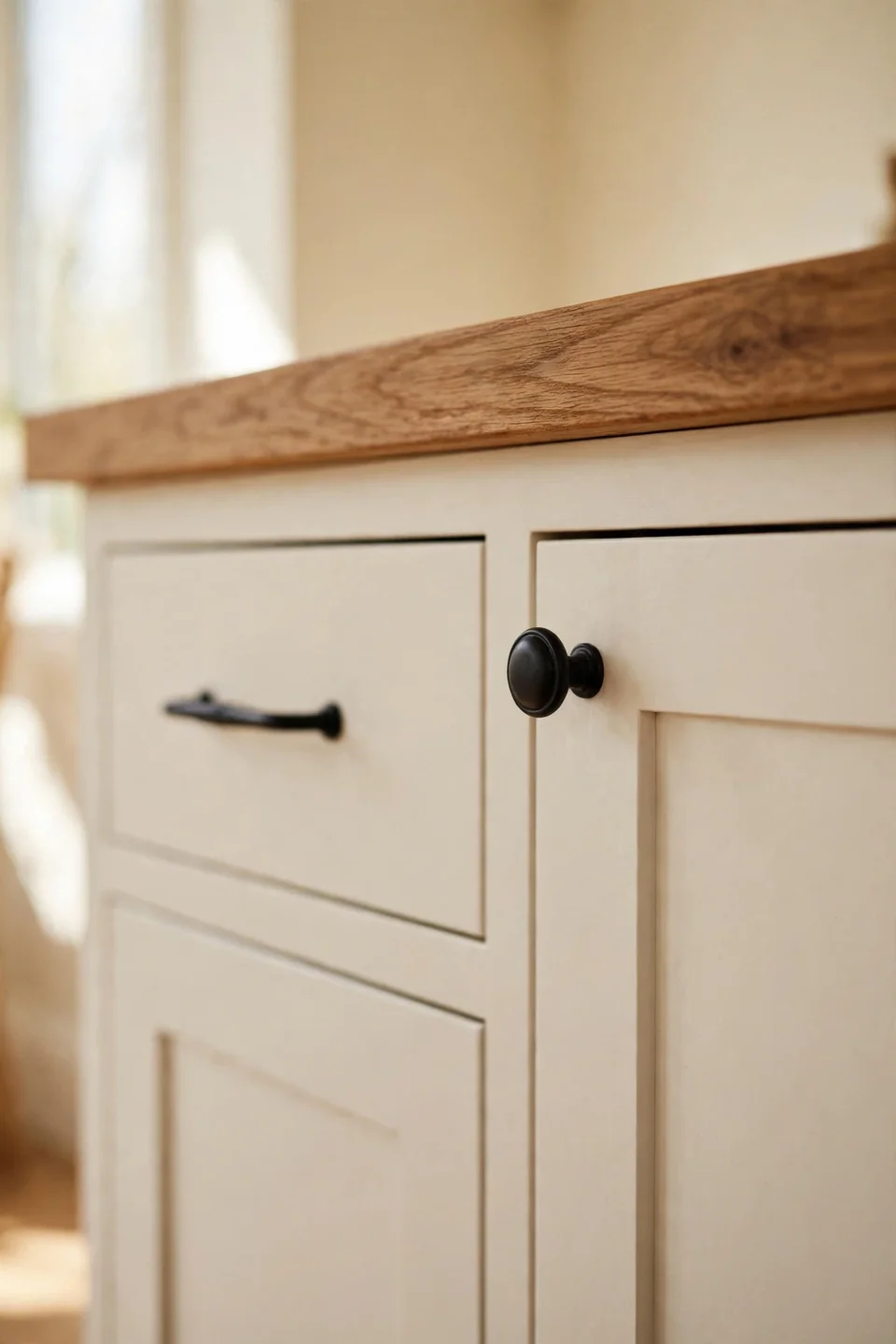
Cost: Modest, a full set stays affordable
Time: One hour with a screwdriver
Skill Level: Beginner
Best For: White and cream cabinetry
Black pulls and knobs give white shaker doors their punctuation. The contrast reads crisp from the doorway and hides the greasy fingerprints that chrome shows by Tuesday. Keep the shapes simple: slim bars on drawers, round knobs on doors, one consistent finish across hinges and rails. If the faucet is brass, let it stand alone as the single warm metal, because a third finish tips the room from collected into confused. I’ve noticed hardware is the swap guests ask about most, even though it is the cheapest change on this entire list.
Stoneware Shelf Displays

Handmade stoneware carries the small irregularities that factory sets iron out, and open shelves show them off at eye level. Speckled glazes in cream, oat and clay tones stack into quiet color stories against white walls, each shelf reading like a still life that changes with the light.
Group by tone rather than by type: bowls with bowls looks like stock, while a shelf where everything is cream reads as a collection. Turn one bowl sideways, lean a plate behind the stack, and stop before the shelf feels full. The empty gaps between groups are what make the pieces look chosen instead of stored.
Vintage Runner Rugs

- Measure the galley run and leave ten centimeters of floor showing.
- Faded reds, indigo and clay tones hide crumbs between vacuums.
- Low pile lets cabinet doors and chairs glide without catching.
- A grippy pad underneath keeps the runner honest on tile.
- Shake it outside weekly; vintage wool forgives almost everything else.
A runner softens the hardest working strip of floor in the house and quiets the echo of tile under morning feet. The worn pattern also bridges old houses and new cabinets, lending age to rooms built only last year. Rotate it end for end every few months so the fade stays even along its length.
Brass Faucet Fixtures

Quick Tip: Choose unlacquered brass if you love patina, and lacquered brass if you do not. Unlacquered metal darkens where hands touch it and tells the story of the kitchen; lacquered stays bright and asks only for a quick wipe.
One warm metal at the sink changes the temperature of the whole room. Brass flatters cream cabinets, oak counters and black hardware without competing with any of them. A bridge style with porcelain lever handles leans classic, while a simple gooseneck keeps the mood current. The fixture sits at the hardest working station in the room, so buy the heaviest casting the budget allows.
Ceramic Pitcher Centerpieces
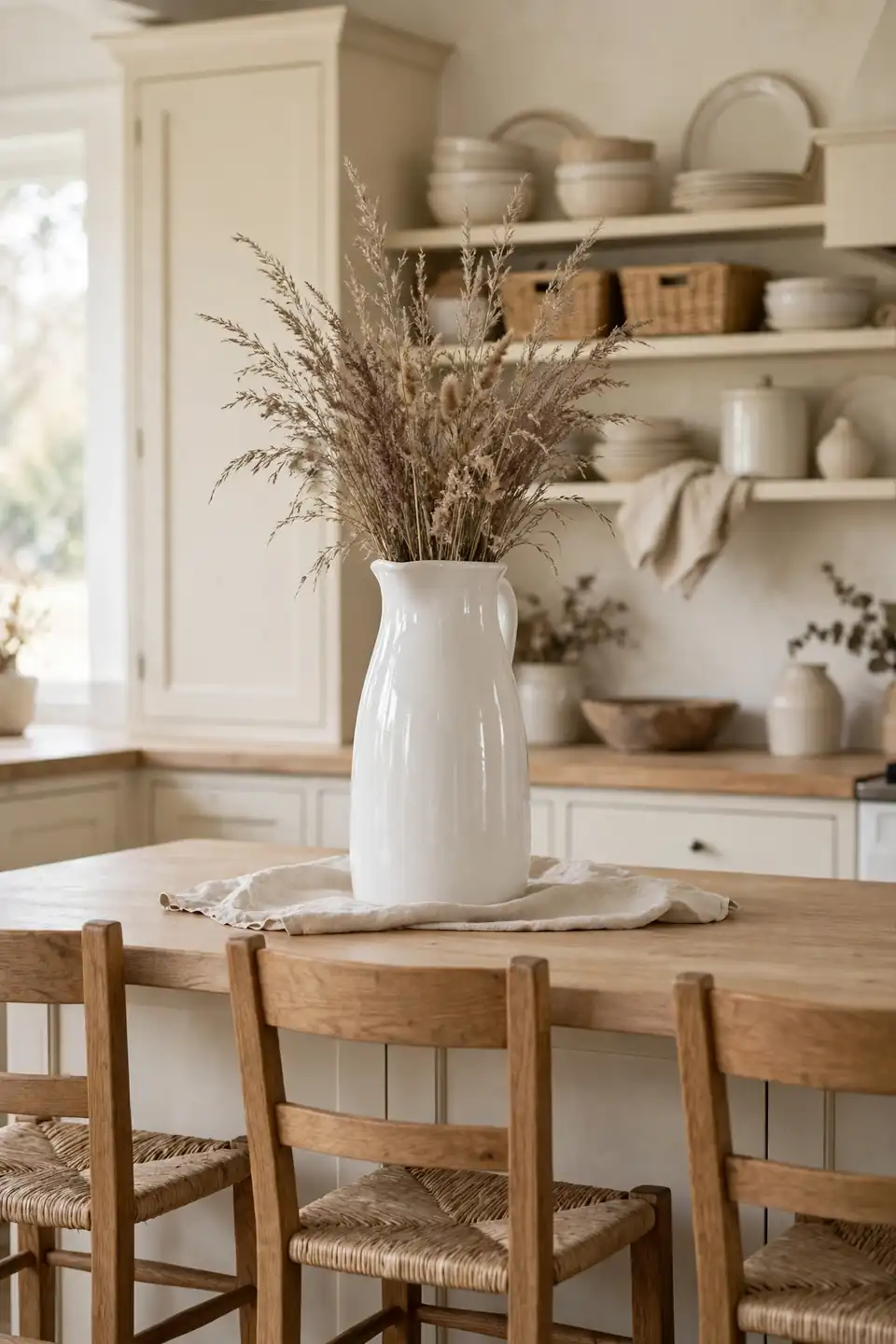
BEFORE: The island center sat empty most days, collecting mail, keys and a fruit bowl that never looked arranged. Every photograph of the kitchen caught the same cluttered patch first, no matter the angle.
AFTER: A tall ceramic pitcher now holds dried grasses in winter and garden herbs in summer, and the island reads styled even on busy weeks. The mail moved to a basket waiting by the door.
A pitcher earns its counter space because it works between bouquets: utensils today, flowers tomorrow, nothing but its own good shape on the days between. Glossy white feels crisp, while a matte clay finish leans rustic. These are the modern farmhouse kitchen decor ideas that stick, the small ones solving a daily annoyance while they decorate.
Beadboard Cabinet Doors
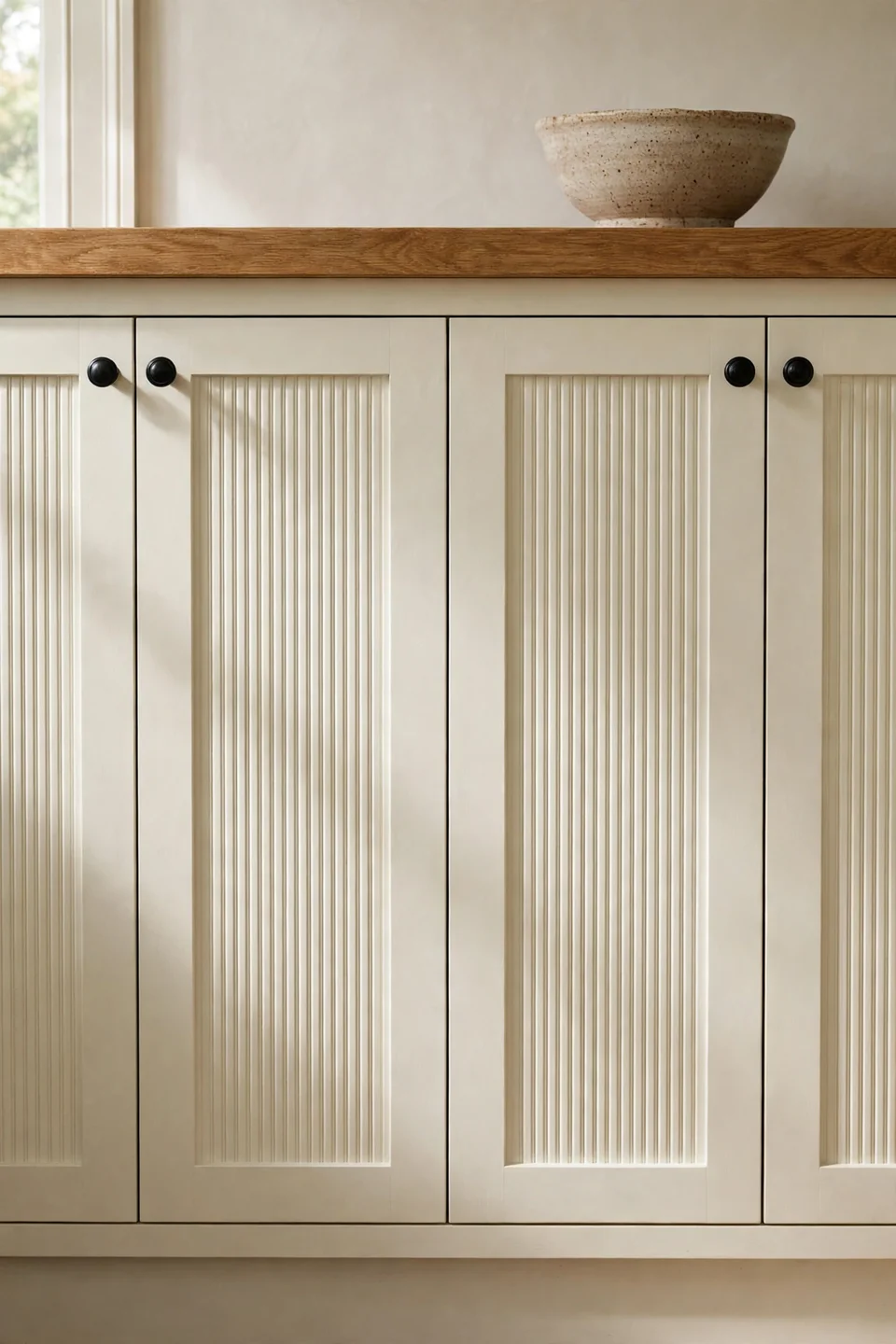
What You Need: Beadboard panels or insert sheets, warm white satin paint, and one weekend of patience while the coats dry properly.
- Remove doors and hardware, and label each door for its cabinet.
- Cut beadboard sheets to fit inside the door frames or panels.
- Glue and pin the inserts, then fill every edge seam smooth.
- Prime once, paint twice, and sand lightly between the coats.
- Rehang on the same hinges so alignment stays true.
Beadboard inserts give flat, rental grade doors a cottage skeleton for the price of a few sheets and paint. The fine grooves catch light and shadow through the day, so plain white doors stop looking plain. Keep the treatment to the island or one bank of cabinets if the full kitchen feels like too much texture.
Marble Counter Pairings
| Feature | Marble | Butcher Block |
|---|---|---|
| Feel | Cool and smooth under palms | Warm with a slight give |
| Stains | Etches with lemon and wine | Sands and oils back clean |
| Cost | High, plus yearly sealing | Low to mid, owner installed |
| Best With | Brass and cream cabinets | Black hardware, white doors |
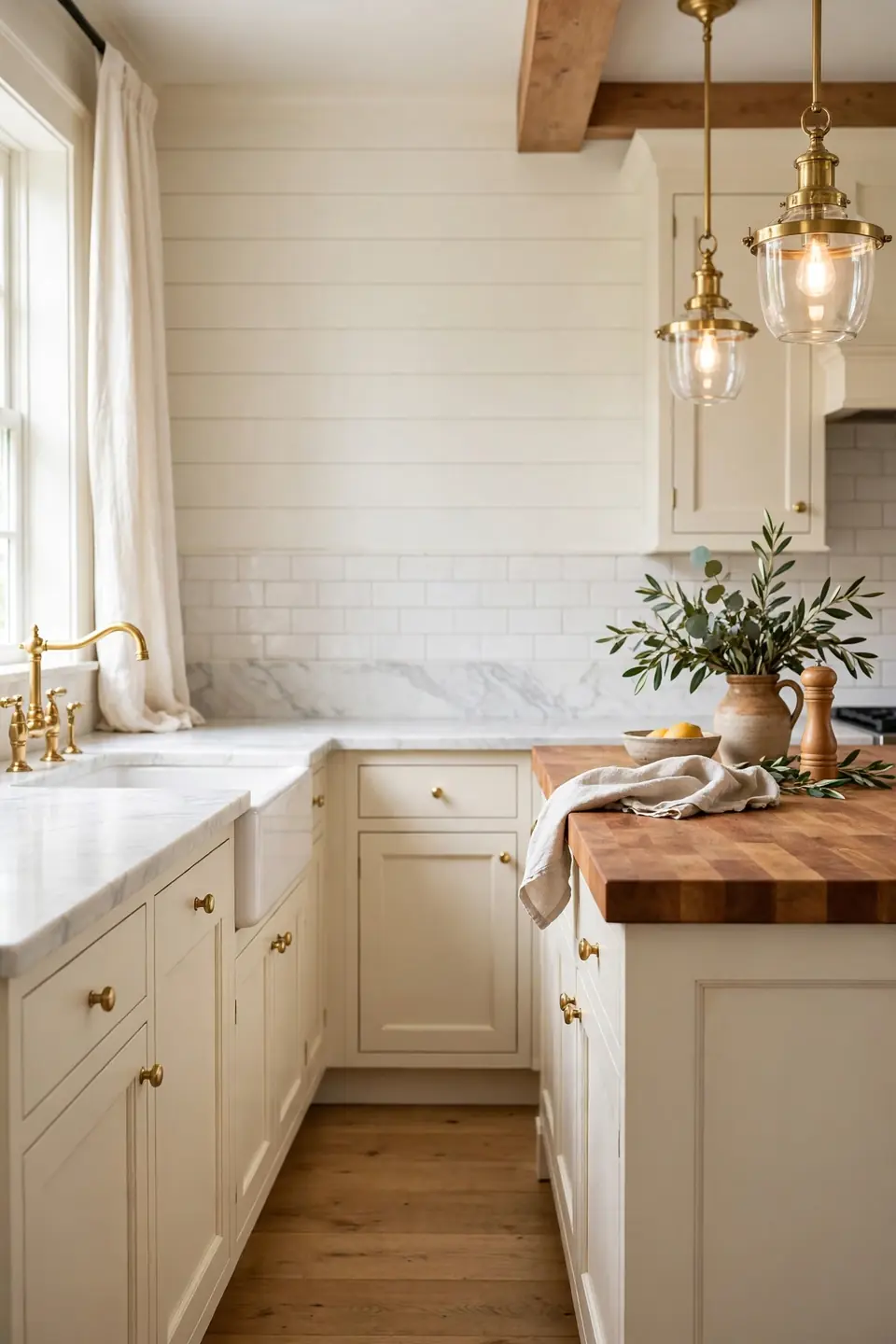
Many farmhouse kitchens run both surfaces: marble on the baking counter where cool dough matters, wood everywhere hands and dishes land daily. The pairing keeps the room from feeling precious, and each surface makes the other look better. Choose one veining tone and echo it in the grout for a quiet link. Both surfaces age honestly and wear their marks with grace.
Glass Jar Pantry Row

Do:
- Decant flour, oats and pasta into matching wide mouth jars.
- Keep the row to one shelf so it reads as a system.
- Plain lids in wood or black keep the look calm.
- Place short jars in front and the tall jars behind.
Don’t:
- Do not keep branded boxes mixed through the jars.
- Skip printed labels with busy fonts and colors.
- Avoid jars too large to lift safely one handed.
A jar row turns open shelving from storage into display, and it speeds up cooking because every staple shows its level at a glance. Glass suits the farmhouse mood better than plastic, and the contents bring their own warm colors. In my experience, the row stays tidy when every jar has a true job and a home position.
Pendant Light Clusters
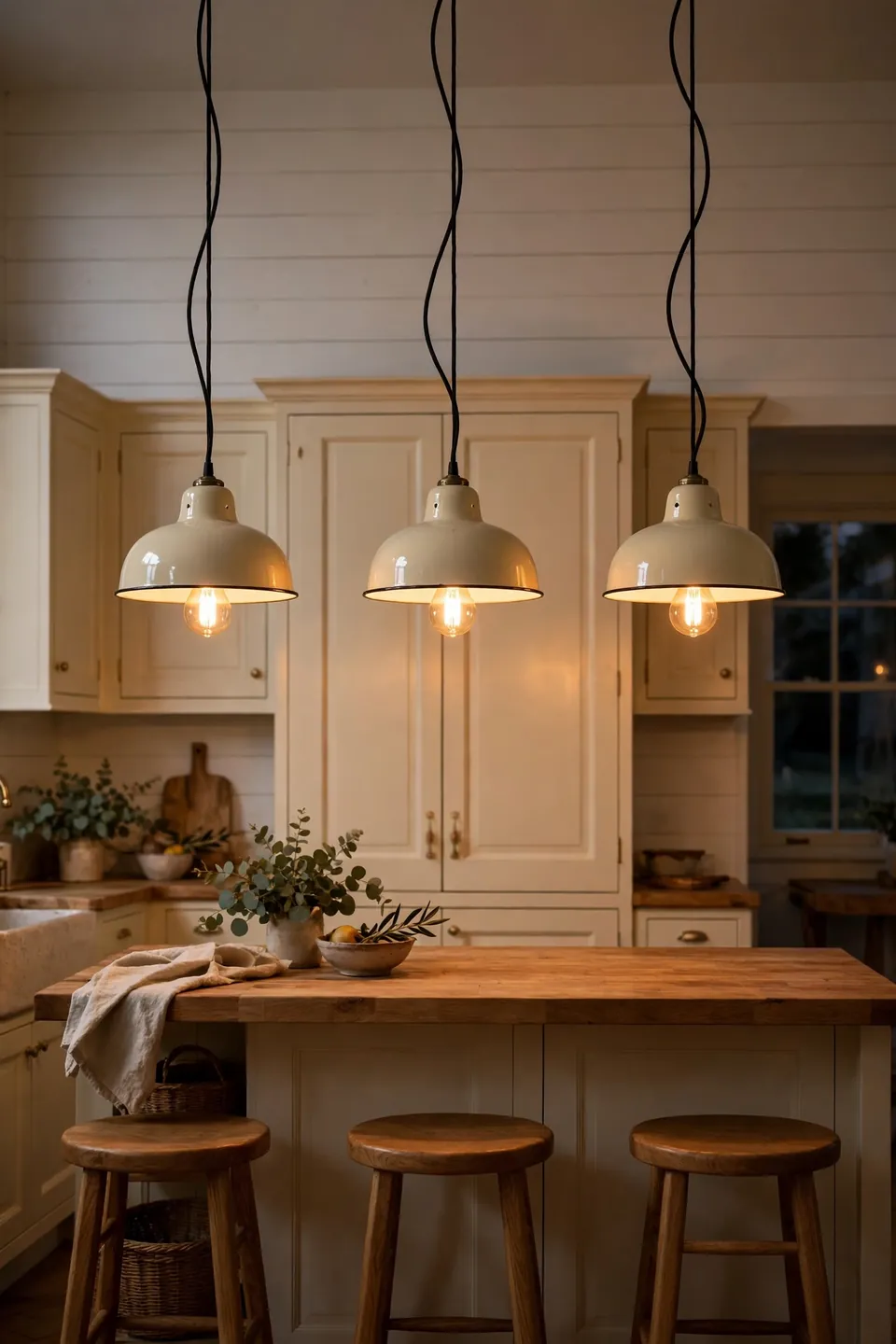
Cost: Mid range, more for real metal shades
Time: One morning with an electrician
Skill Level: Pro wiring, beginner styling
Best For: Islands and dining nooks
Three pendants over an island set the rhythm of the whole room, spacing the eye along the counter like beats in a song. Enamel shades in cream or black lean farmhouse, while clear glass keeps sight lines open in small rooms. Size matters more than style: shades around thirty centimeters wide suit most islands, hung so the lowest point sits about eighty centimeters above the counter. Warm bulbs only, because cool light turns cream cabinets grey and wood counters muddy by dinner time.
Cream And Wood Palette

Cream walls and warm wood form the quiet base that lets every other farmhouse piece speak. The pairing never fights: wood brings the warmth, cream brings the light, and black or brass accents arrive as punctuation rather than noise across the room.
Hold the palette to three wood tones at most, and repeat each tone at least twice so nothing looks accidental. A cream that reads yellow in your light will fight the oak, so test big swatches at breakfast and again at dusk before committing. The restraint pays off every time a colorful bowl or bouquet lands in the room.
Farmhouse Dining Nook
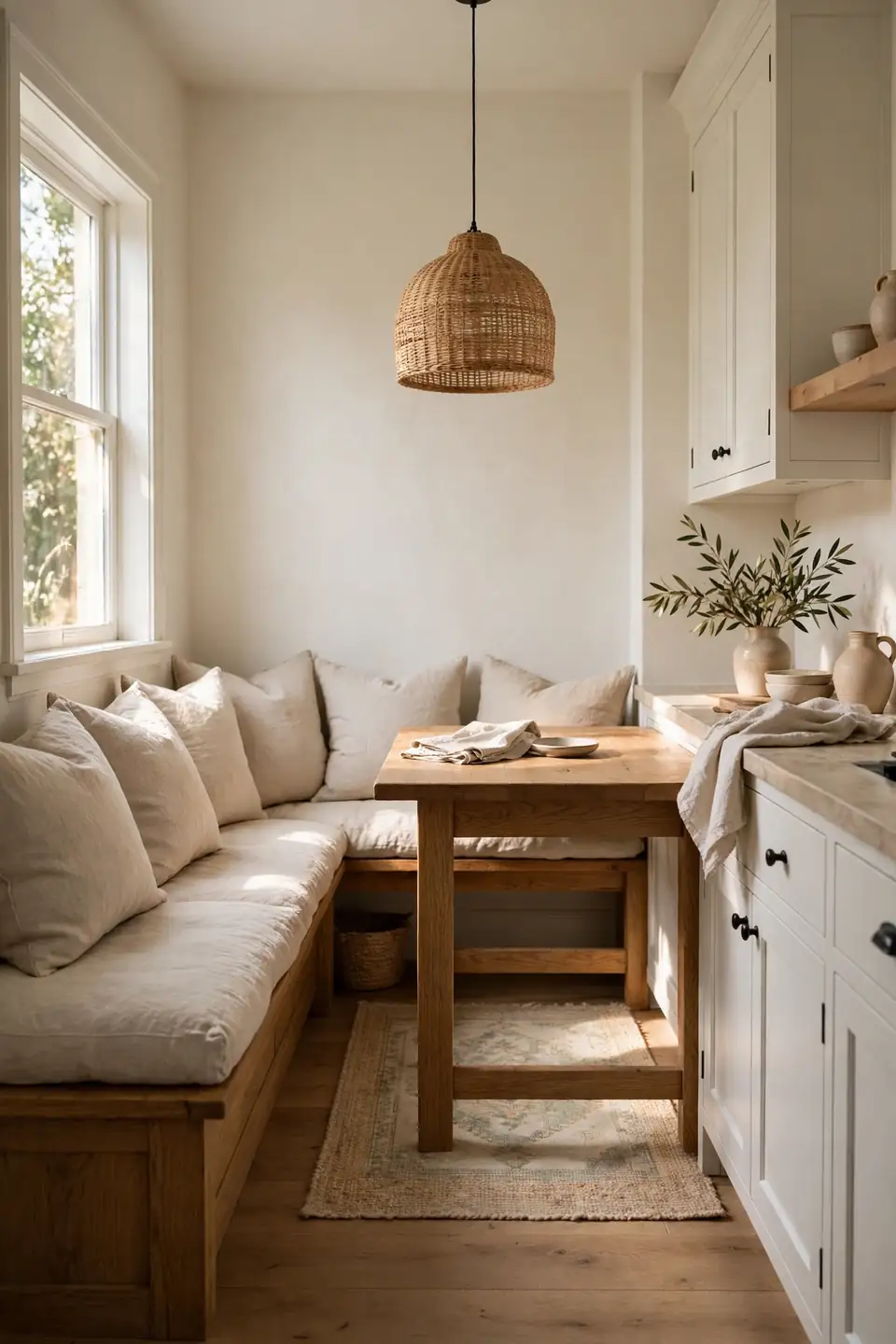
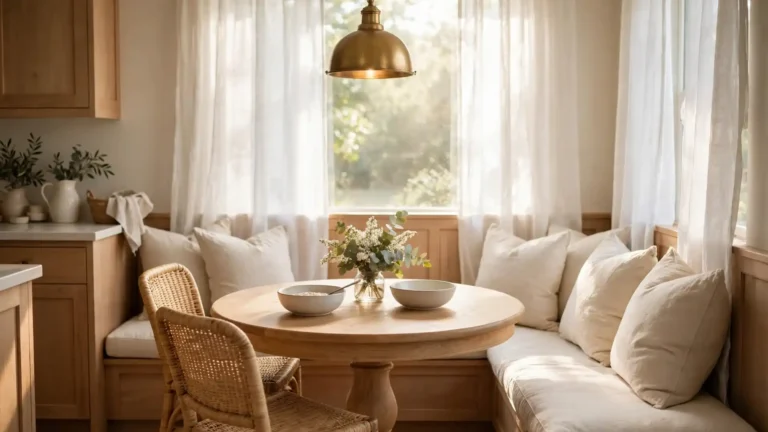
- A bench along the wall seats three where chairs fit two.
- Cushions in washed linen soften the bench for long dinners.
- One pendant centered over the table marks the nook as a room.
- A small rug under the table quiets chairs on wood floors.
- Keep the tabletop clear except one bowl or a pitcher.
A nook gives the kitchen a second job: slow meals, homework, the laptop at dawn. The bench and table formula borrows the low, warm lines found in mid century modern bedroom ideas, and it keeps the dining spot feeling built in rather than parked. Guests drift to the bench side first, every single time.
Enamel Canister Sets

Quick Tip: Buy the set one size larger than your scoops actually need. Hands and measuring cups dip in daily, and a canister that fights back gets left unsealed, which stales flour faster than any storage mistake in the book.
White enamel with a rolled rim and a pale wood lid is the classic farmhouse counter silhouette, and it earns its footprint by hiding the bags and boxes that clutter small counters. Keep the set to three pieces at most: flour, sugar, coffee. Everything else belongs on the pantry shelf, because a counter holding only the daily trio always looks ready for a photograph.
Exposed Ceiling Beams

BEFORE: The flat white ceiling finished the room like a lid, and the tall cabinets nearly touched it, making the whole kitchen feel boxed and low despite good windows on two walls.
AFTER: Two faux oak beams now run the length of the room, breaking the white ceiling into warm bays. The eye reads height instead of a lid, and the pendants hang from the beams like they belong there.
Beams bring the barn reference into the kitchen without a single rooster motif. Faux boxes in stained pine weigh little, hide wiring, and install in a day over finished ceilings. Stain them to match the floor or the shelves, never a brand new tone, and keep the size modest in low rooms.
Pull Out Spice Storage

What You Need: One narrow cabinet near the stove, a pull out frame sized to fit it, and matching small jars for the spices you actually use.
- Empty the cabinet and count the spices worth keeping.
- Measure the height between shelves before ordering the frame.
- Fit the frame and test the glide with full jars loaded.
- Decant spices into one jar size so rows align neatly.
- Cook for a week, then move daily spices to the front.
A pull out turns the deepest, darkest cabinet into the hardest working one. Every jar faces forward at eye level, and nothing expires forgotten at the back behind the baking soda. The upgrade hides completely when closed, which is exactly the farmhouse trick: hard working storage behind a calm, plain face.
Herringbone Tile Backsplash
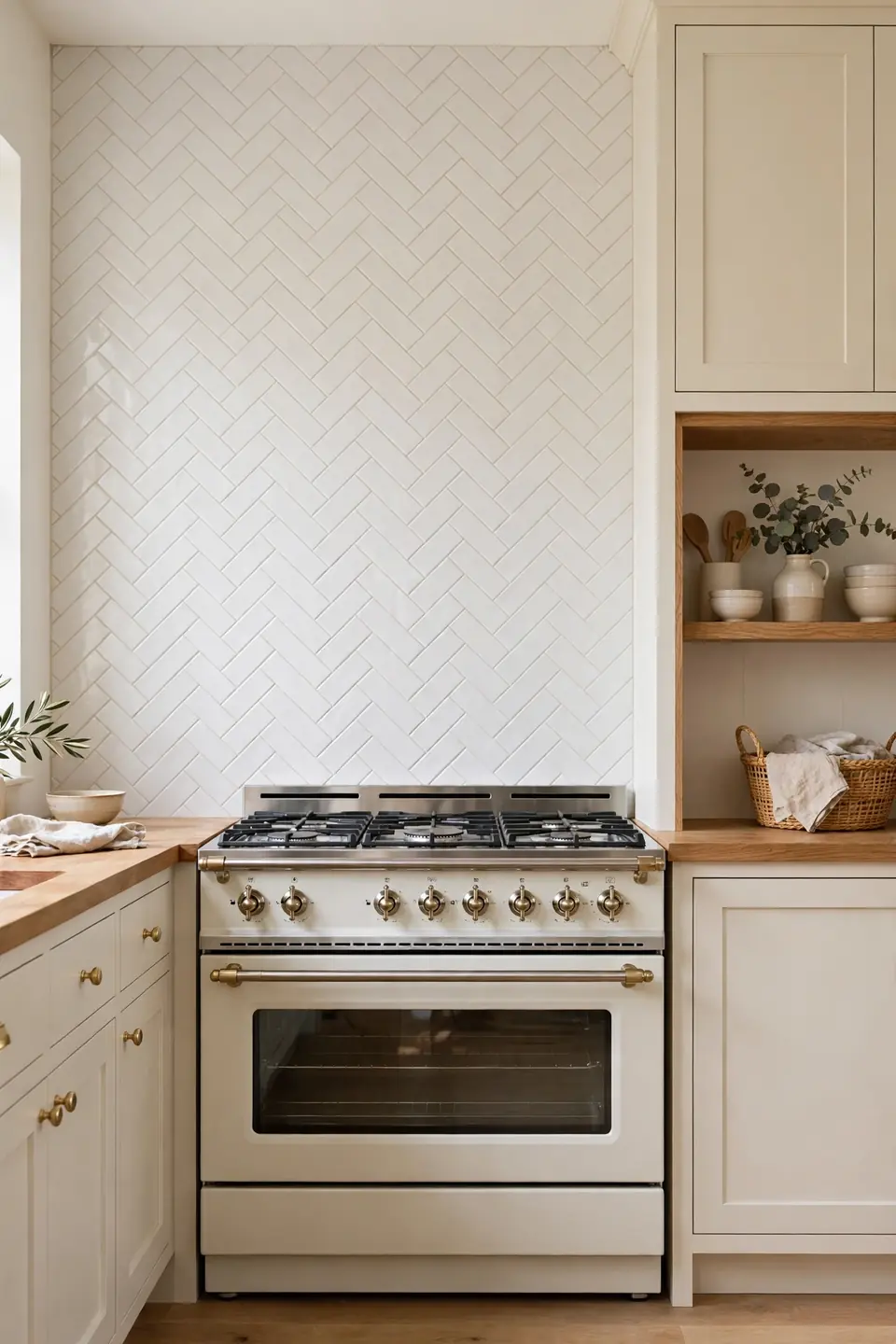
| Feature | Herringbone | Subway |
|---|---|---|
| Pattern | Zigzag at forty five degrees | Straight brick bond rows |
| Cost | More cuts, more labor | Fast, budget friendly install |
| Feel | Tailored, a little formal | Easy, classic farmhouse ease |
| Best With | Plain counters, simple shelves | Patterned rugs, busy counters |
Herringbone in a soft white tile gives plain cabinets a tailored backdrop without adding any color. The zigzag catches light differently across the day, so the wall stays interesting behind open shelves. Keep grout close to the tile tone for a calm read, or go one shade darker when the pattern needs definition. The pattern earns its extra labor every single day.
Linen Window Treatments

Do:
- Hang cafe curtains at mid height over the sink window.
- Choose washed linen in cream or a soft ticking stripe.
- Let hems fall slightly loose for a relaxed, lived in look.
- Match the linen tone to the wall, not the cabinets.
Don’t:
- Do not hang heavy drapes in a steamy cooking zone.
- Skip bright prints that will date the room by spring.
- Avoid rods in a finish used nowhere else in the room.
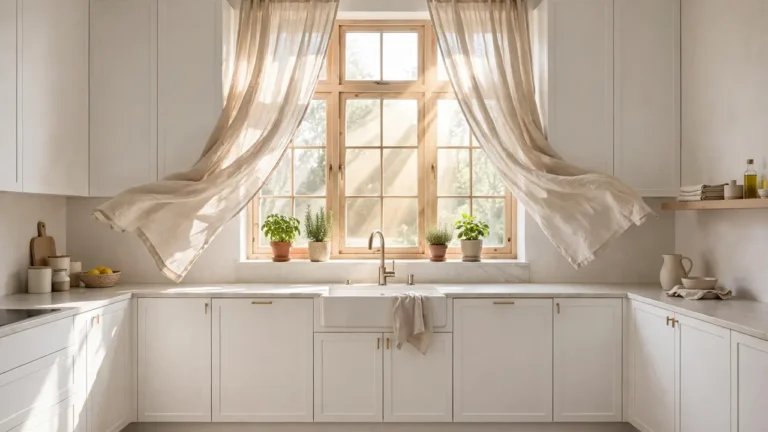
Linen at the window finishes the palette the cabinets started: cream, wood, one soft textile. Cafe length keeps privacy where it matters and leaves the top glass open for light and the view of the yard. Wash the panels on a gentle cycle and hang them damp, and the creases read as texture rather than neglect.
Conclusion
A farmhouse kitchen does not need a full renovation to feel warm and gathered in. Paint the cabinets, swap the hardware, hang two shelves, and the room already leans the right way. The rest follows one piece at a time, at the pace your budget allows. I’ve seen how small changes like these can shift the way a space feels at breakfast and at midnight alike. Save this pin before your next free Saturday, pick the project that excites you most, and share the finished corner with someone who loves a cozy kitchen. These modern farmhouse kitchen decor ideas reward patience, so begin tonight.