24 French Courtyard Design Ideas for Romantic Outdoor Living
A plain backyard becomes something else entirely the moment stone, gravel, and lavender enter the picture. The charm behind French courtyard design inspiration is not size or budget; it is the layering of texture, scent, and soft color against old walls. Even a narrow side yard can hold that quiet Provençal feeling.
Start with the bones: a warm wall, a ground plane of gravel or stone, and one place to sit with coffee. In my experience, the smallest courtyards feel the most romantic, because every pot and shadow counts. The ideas ahead borrow from village squares and farmhouse yards across Provence, scaled for real homes. If your indoor rooms already lean classic, the paneling tricks in decorative wainscoting living room ideas carry that same old soul inside, so the house and garden speak one language.
Stone Walls, Golden Light

Credit : mori dad
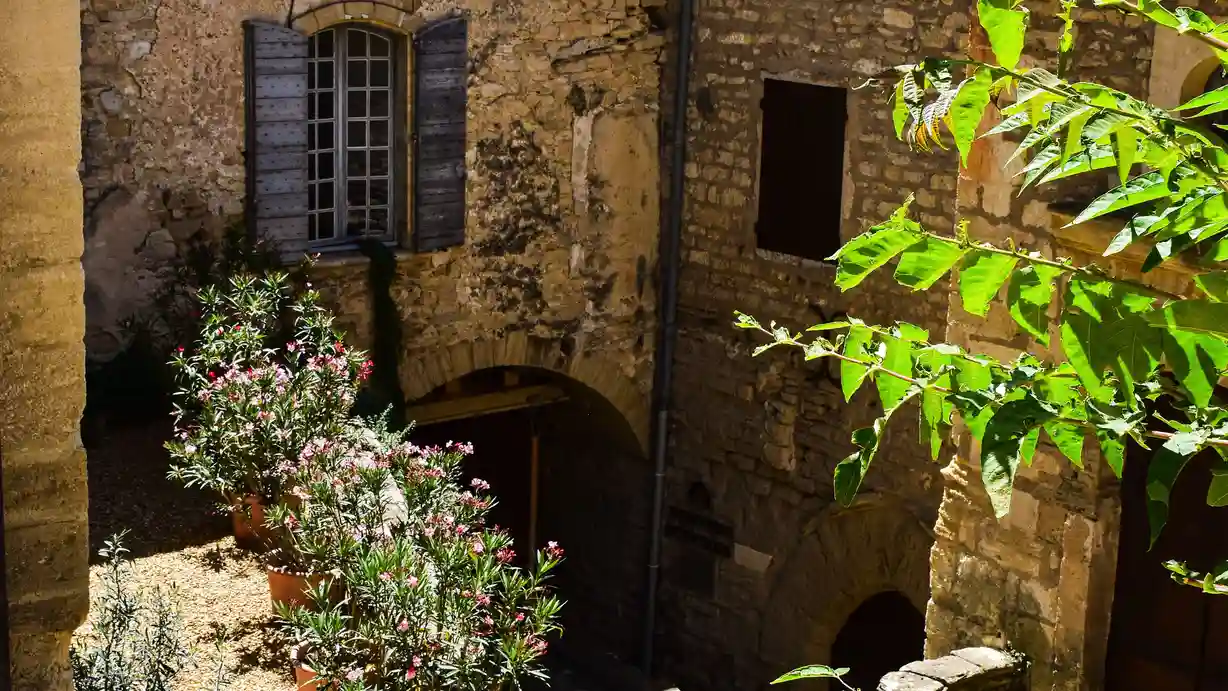
Old stone does something paint never can: it changes color all day long. Morning turns it pale and cool, noon flattens it to cream, and by six in the evening the whole wall glows honey gold. That slow show is the real decoration, and everything placed against the wall borrows the warmth.
Keep planting low and simple so the stonework stays the star. A single olive in a terracotta pot, a bench of weathered wood, and gravel underfoot are honestly enough. In my experience, courtyards fail when owners cover beautiful walls with busy decor; the plainer the dressing, the richer the stone appears at golden hour.
Lavender Lined Gravel Paths
Credit : Natalia Sevruk
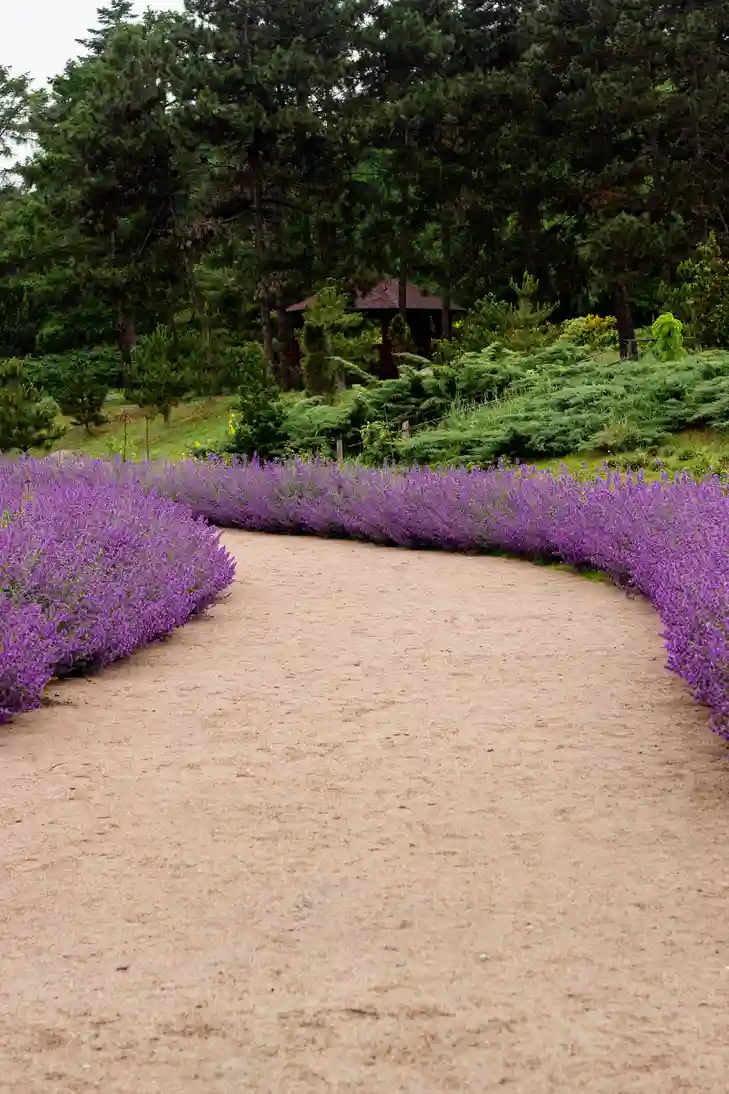
- Fragrance first: brush past the flower spikes and the whole path perfumes the walk to your morning coffee.
- Soft edge: mounded lavender hides the hard line where gravel meets bed, so the path feels settled, not installed.
- Bee traffic: blooms pull in pollinators from June onward, adding gentle movement and sound.
- Dry feet: gravel drains fast after rain, and lavender loves the same sharp drainage at its roots.
- Year round bones: silvery foliage holds its shape through winter, long after the flowers fade.
Plant the row on a slight mound, never in a dip, because lavender sulks in wet winter soil. Space plants eighteen inches apart and they knit into one hedge within two summers. Clip once after flowering and the mounds stay tight, silvery, and generous with scent.
Iron Bistro Table Corner
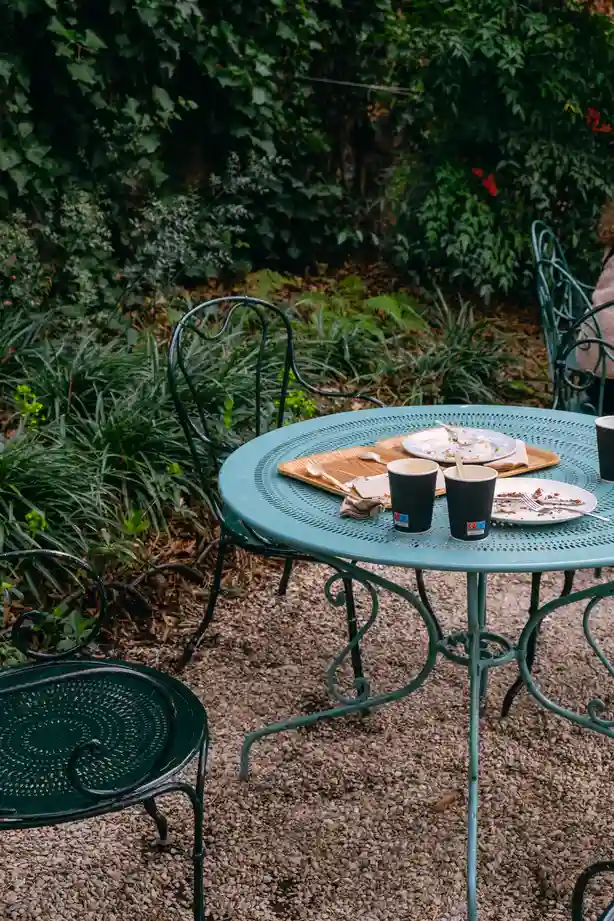
Credit : Annaëlle Quionquion
Quick Tip: choose a folding iron set with a mesh or slatted top. Rain runs straight through, the chairs stack flat in winter, and the whole corner stores in a space no wider than a doorway.
A two seat bistro set turns the deadest corner of a courtyard into the most used room of the house. Angle the table toward the best patch of morning sun and breakfast moves outside by default. Add one cushion per chair in faded stripe linen, a small potted herb at your elbow, and the corner starts behaving like a tiny Parisian terrace that nobody wants to leave.
Bare Yard To Provence

Credit : Ryan Klaus
BEFORE: the yard was a rectangle of cracked concrete and one tired fence. Weeds pushed through the joints, the walls echoed every noise, and nobody lingered outside longer than it took to water a pot.
AFTER: gravel now covers the ground, deep enough to crunch underfoot. Lavender and white roses soften the walls, a small fountain ticks away in the corner, and string lights hum above a bistro table built for two.
The budget went to ground cover and plants, not construction. Nothing was demolished and no concrete was poured; the old slab simply disappeared under gravel and green. That’s why many experts recommend dressing a courtyard before rebuilding one.
Build A Courtyard Fountain
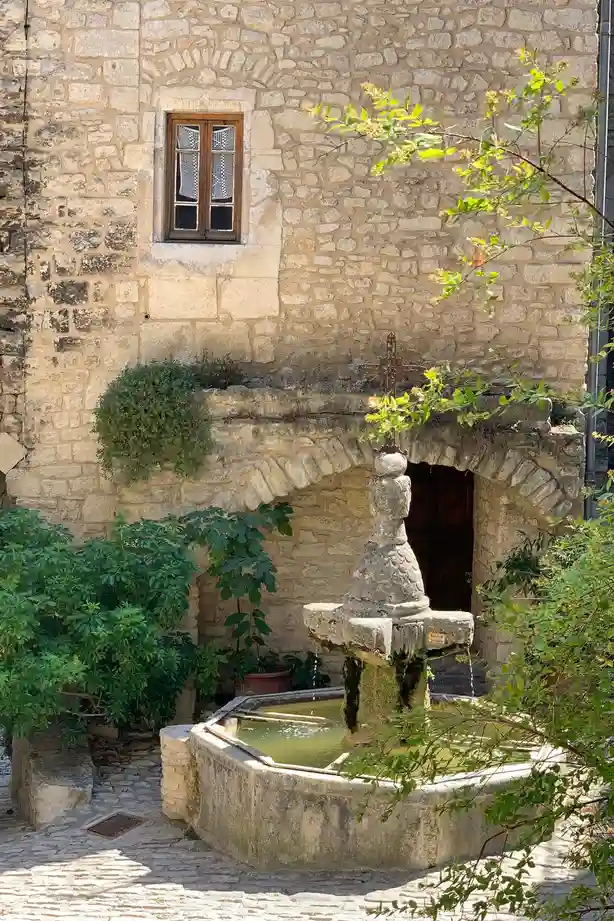
Credit : Nini Wisti
What You Need: a wide stone basin, a small recirculating pump, a level, pea gravel, and an outdoor outlet.
- Set the basin: bed it on compacted pea gravel and check the rim with a level, because water finds every tilt.
- Seat the pump: hide it under an upturned terracotta pot, cord trailing out the back.
- Fill and test: start the pump and adjust the flow until water sheets instead of splashing.
- Disguise the edges: ring the base with stones and low pots so the basin looks settled in, not delivered.
Keep the sound small. A courtyard fountain should murmur at conversation level, the way village fountains do, cooling the air without shouting over dinner. Top up the basin weekly in hot weather and the pump runs quietly for years.
Gravel Versus Stone Flooring
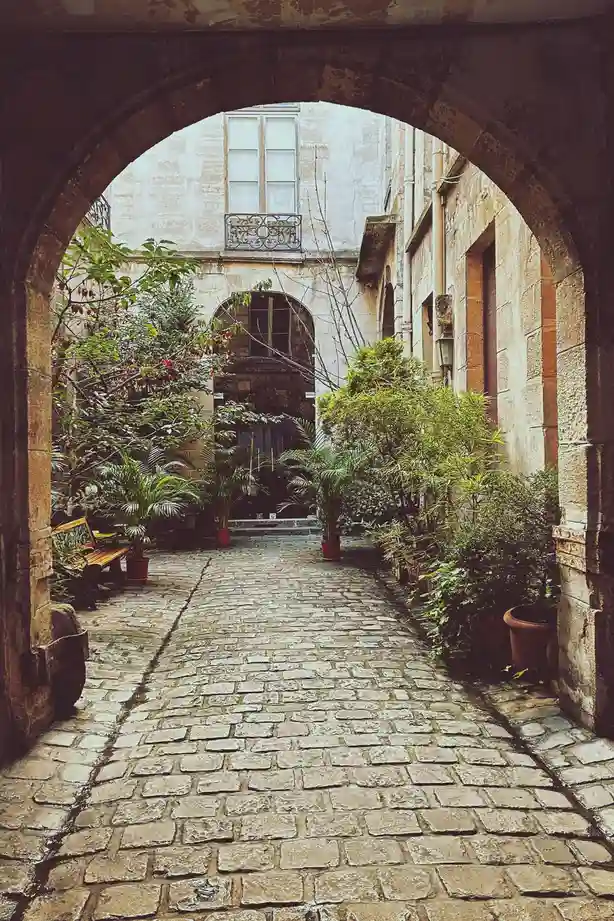
Credit : Karography
| Aspect | Gravel | Cut Stone |
|---|---|---|
| Cost | Pennies per foot, spread by hand | Higher, slabs plus a sand bed |
| Comfort | Soft crunch, kind to bare feet at dawn | Firm and formal, heels stay happy |
| Look | Loose, village lane charm | Tailored, almost indoor polish |
| Upkeep | Rake monthly, top up yearly | Sweep only, weeds rare in tight joints |
Most Provençal courtyards mix the two: stone under the table where chairs slide daily, gravel everywhere else. The blend keeps the budget sane and the ground interesting. Walk both surfaces at a garden center before deciding, because your feet will vote louder than your eyes, and both surfaces only improve as they weather in.
Climbing Roses Done Right
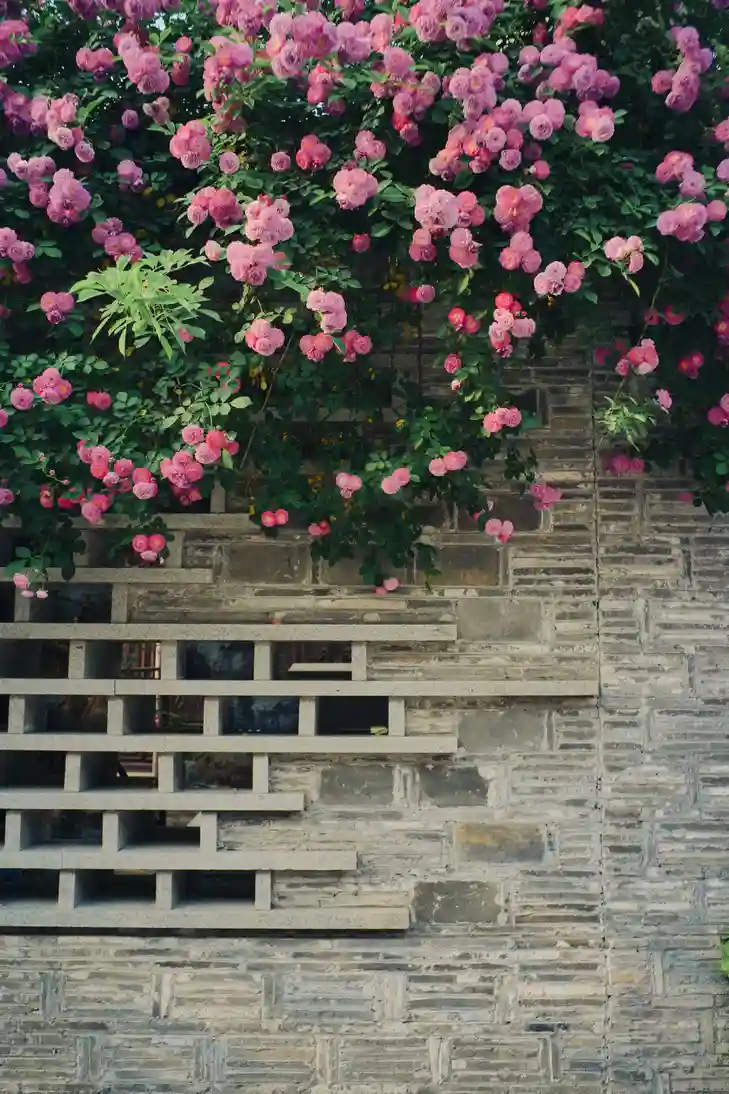
Credit : 余鑫磊
Do:
- Train main stems sideways along wires, since horizontal canes flower along their whole length.
- Tie new growth loosely with soft twine every few weeks through summer.
- Feed in spring and mulch the roots, keeping the crown cool and shaded.
Don’t:
- Let one vertical stem race to the roof; it flowers only at the top and sulks below.
- Wet the foliage at night, because damp leaves invite black spot.
- Prune hard in autumn; wait for late winter and cut with confidence.
A rose needs three honest seasons to cover a wall, and gardeners who accept that pace get the postcard version. In my experience, one well trained climber beats four neglected ones every single year.
Courtyard Garden Quick Facts
Credit : Maria Orlova
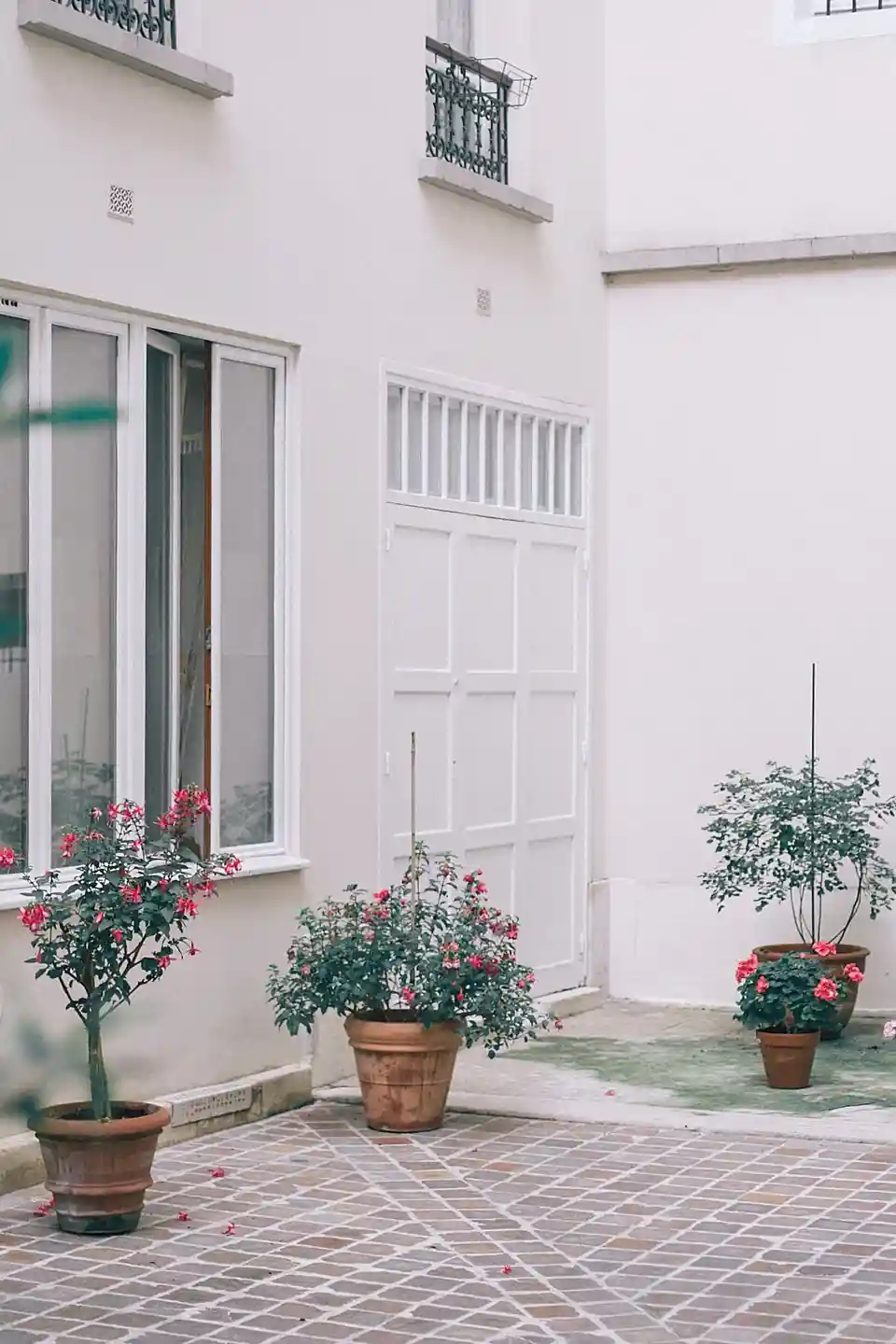
Cost: A gravel base, six lavender plants, and two terracotta pots start under two hundred dollars. Time: One long weekend for the ground work. Skill Level: Beginner, no power tools required. Best For: Small sunny yards and side returns that currently store bins.
The formula scales up or down without breaking. A bigger budget buys stone and a fountain; a smaller one still gets gravel, green, and scent. What matters is the order: ground first, walls second, furniture last. Follow that sequence and even a first attempt lands somewhere charming. Keep a small notebook of what blooms when, and next year’s version gets easier still.
Olive Trees In Terracotta
Credit : ginPhotos
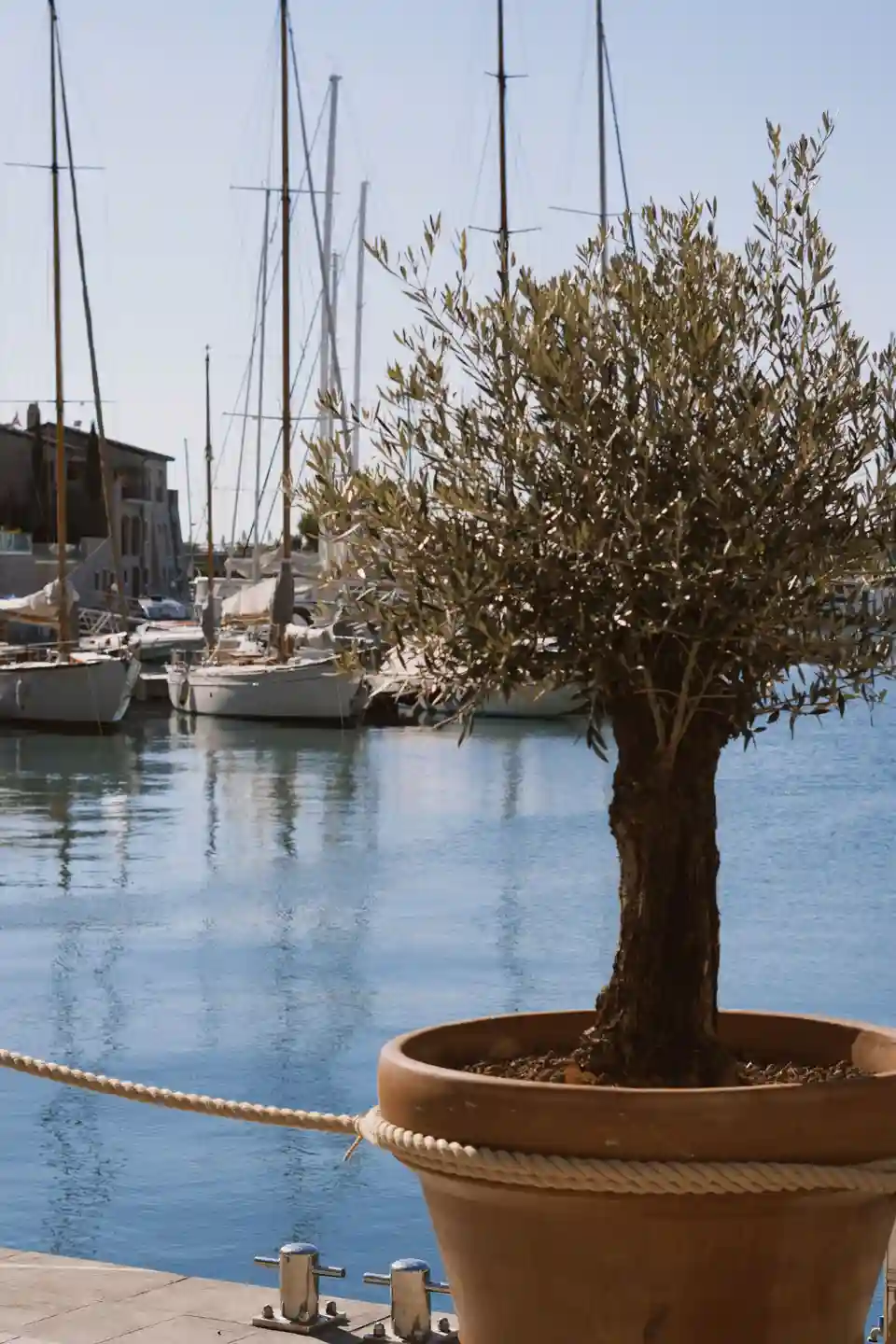
One olive tree in a generous terracotta pot can carry an entire courtyard. The silvery leaves move in the smallest breeze, the gnarled trunk reads like sculpture, and the pot’s warm clay color flatters every stone ever laid. It is the closest thing gardening has to a guarantee.
Size the pot bigger than feels sensible; olives sulk in cramped quarters and reward root room with fast growth. Set the pot where it catches sun for most of the day and turns a quarter every month for even shape. This single gesture sits at the heart of French courtyard design inspiration, because it delivers age, shade, and the Mediterranean in one move.
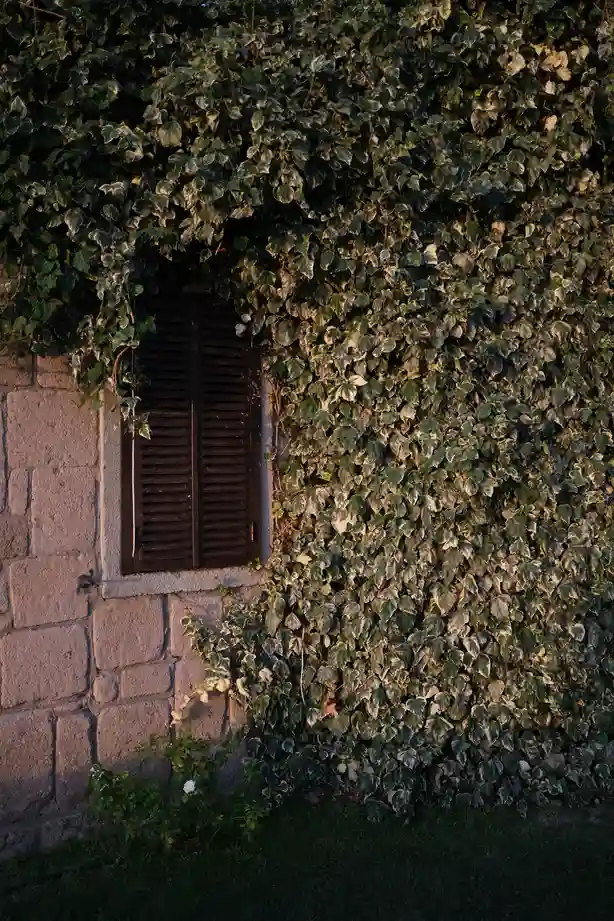
Shuttered Windows, Soft Color
Credit : Ibrahim Yousef
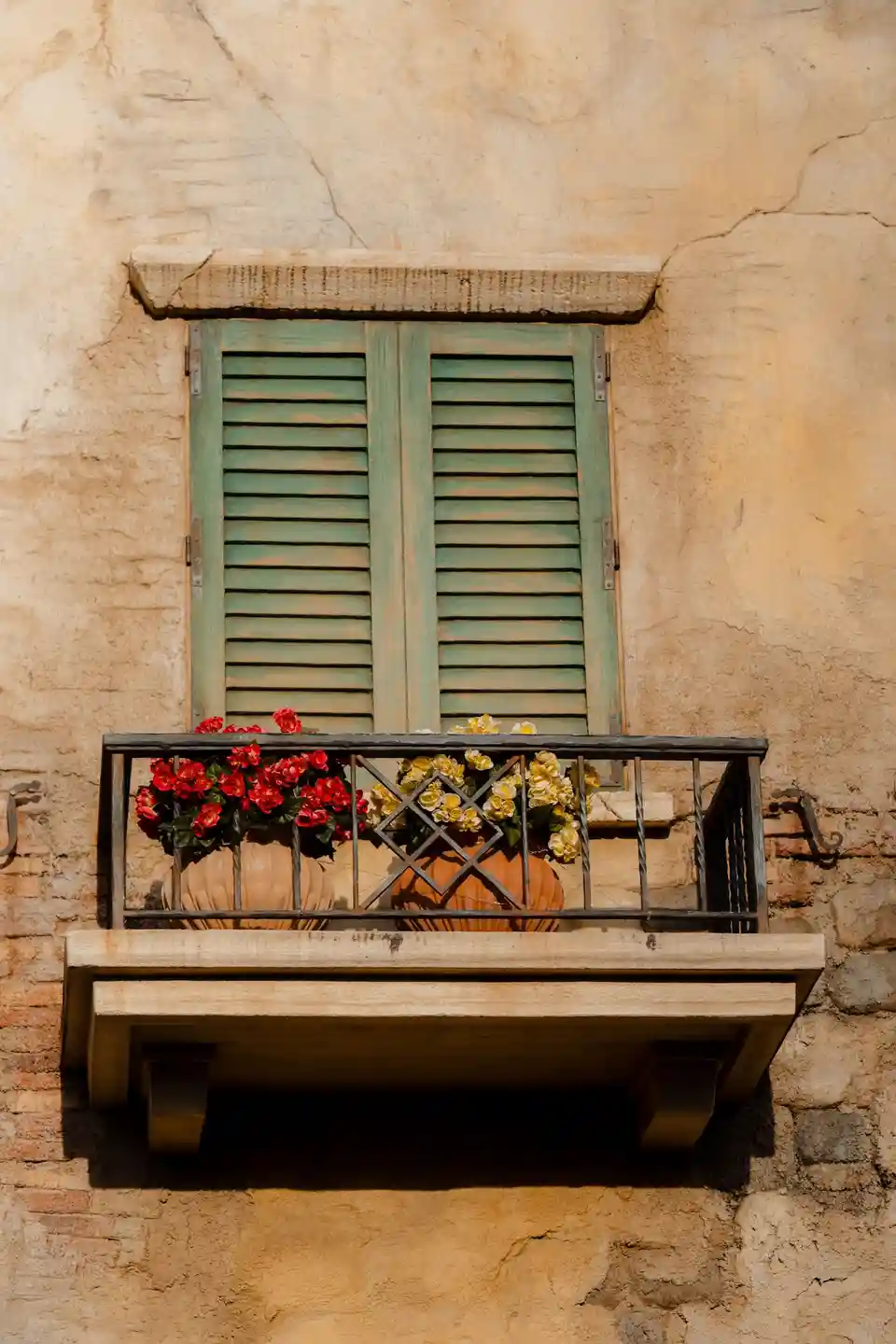
- Faded blue grey: the classic Provençal choice, calm against honey stone and green planting.
- Sage green: blends the window into climbers and herbs, so the wall feels grown rather than built.
- Lavender grey: unusual and lovely at dusk, especially beside white roses on a warm wall.
- Distressed finish: sand edges lightly and let weather do the rest; perfection looks wrong here.
Shutters frame a window the way a mount frames a print, giving plain glass a sense of occasion. Even fixed decorative shutters earn their keep, adding color and shadow lines to flat walls. Paint both sides before hanging, because the backs show every time the wind moves them.
Limestone Patio, Linen Shade
Credit : Natalia Sevruk
Quick Tip: hang natural linen panels from a simple iron rod along the sunny edge. The fabric breathes, filters glare into a soft wash, and moves just enough to make still air feel like a breeze.
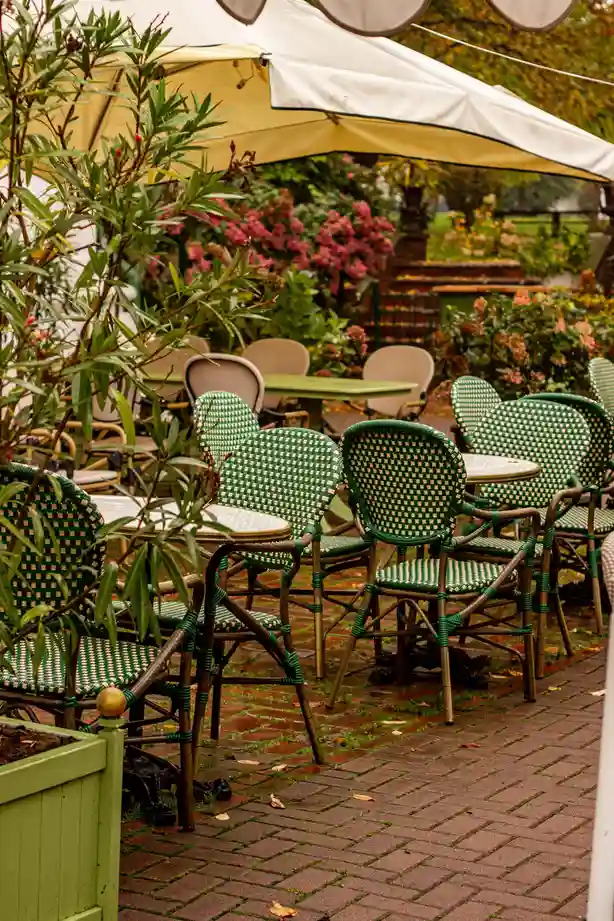
Pale limestone stays cool under bare feet long after terracotta tiles start to bake, which is why village squares in the south gleam almost white. Pair the stone with undyed linen, weathered teak, and one stripe of faded indigo, and the patio reads calm at noon and golden by dinner. Hot courtyards become usable rooms instead of ovens, and long lunches stop migrating indoors by two o’clock.
Concrete Slab To Cottage Court
Credit : Dylan Leagh
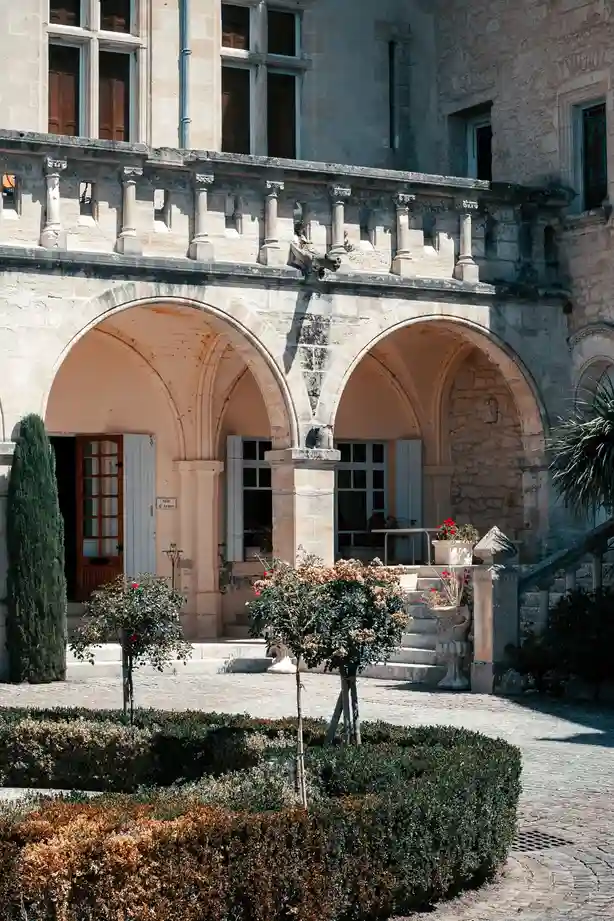
BEFORE: a grey parking pad attitude ruled the space: one slab, one plastic chair, a hose in a permanent tangle. The walls were bare render, the corners collected leaves, and the whole yard felt borrowed from an office park.
AFTER: the slab now sleeps under pale gravel edged with stone. A cottage bench faces a wall of climbing jasmine, terracotta pots cluster by the door, and the hose hides inside a weathered zinc box.
Renters can steal this whole plan, because nothing in it touches the structure. Gravel, pots, and one bench arrive in a weekend and leave in an afternoon. Landlords keep the slab; you keep the summer.
Plant A Lavender Border
Credit : Ejov Igor
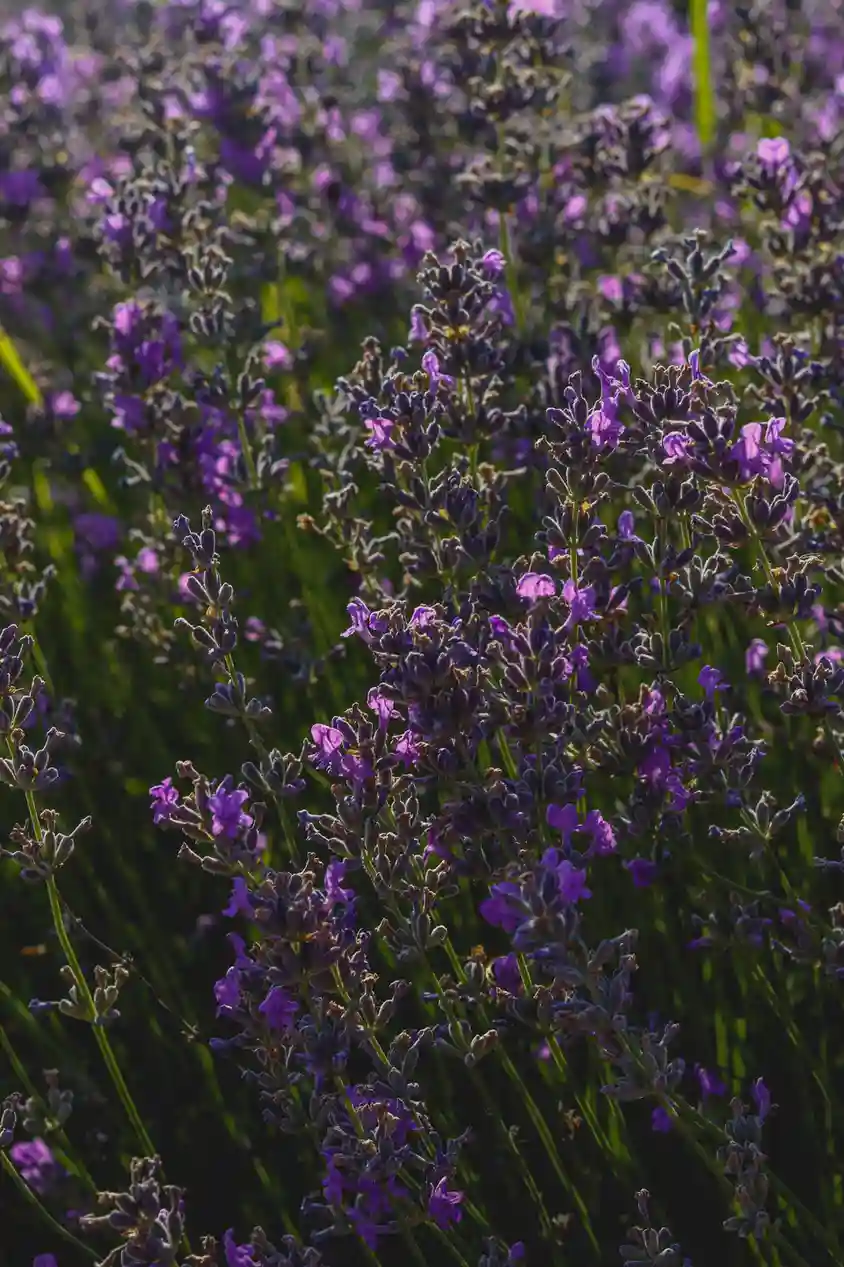
What You Need: young lavender plants, grit or coarse sand, a fork, a hand trowel, and a watering can.
- Open the soil: fork the border strip deeply and work in grit until it feels crumbly, never sticky.
- Set the line: pace out even spacing with pots still on, then step back and judge the rhythm.
- Plant high: sit each rootball slightly proud of the surface so winter rain drains away from the crown.
- Water once, deeply: then leave the border alone; lavender establishes best on a lean, dry diet.
Resist feeding and rich compost, which push soft growth that winter kills. A lavender border should look slightly hungry and smell like a hillside. By the second summer the row closes ranks and the courtyard edge hums with bees.
Iron Versus Wood Furniture
Credit : Arya Bajra
| Aspect | Wrought Iron | Weathered Wood |
|---|---|---|
| Weight | Heavy, stays put in storms | Light, moves with the sun |
| Comfort | Needs cushions for long lunches | Kind bare, warms in the sun |
| Aging | Paint chips, rust freckles charm | Silvers beautifully over seasons |
| Care | Wire brush and paint yearly | Oil once a year, or none |
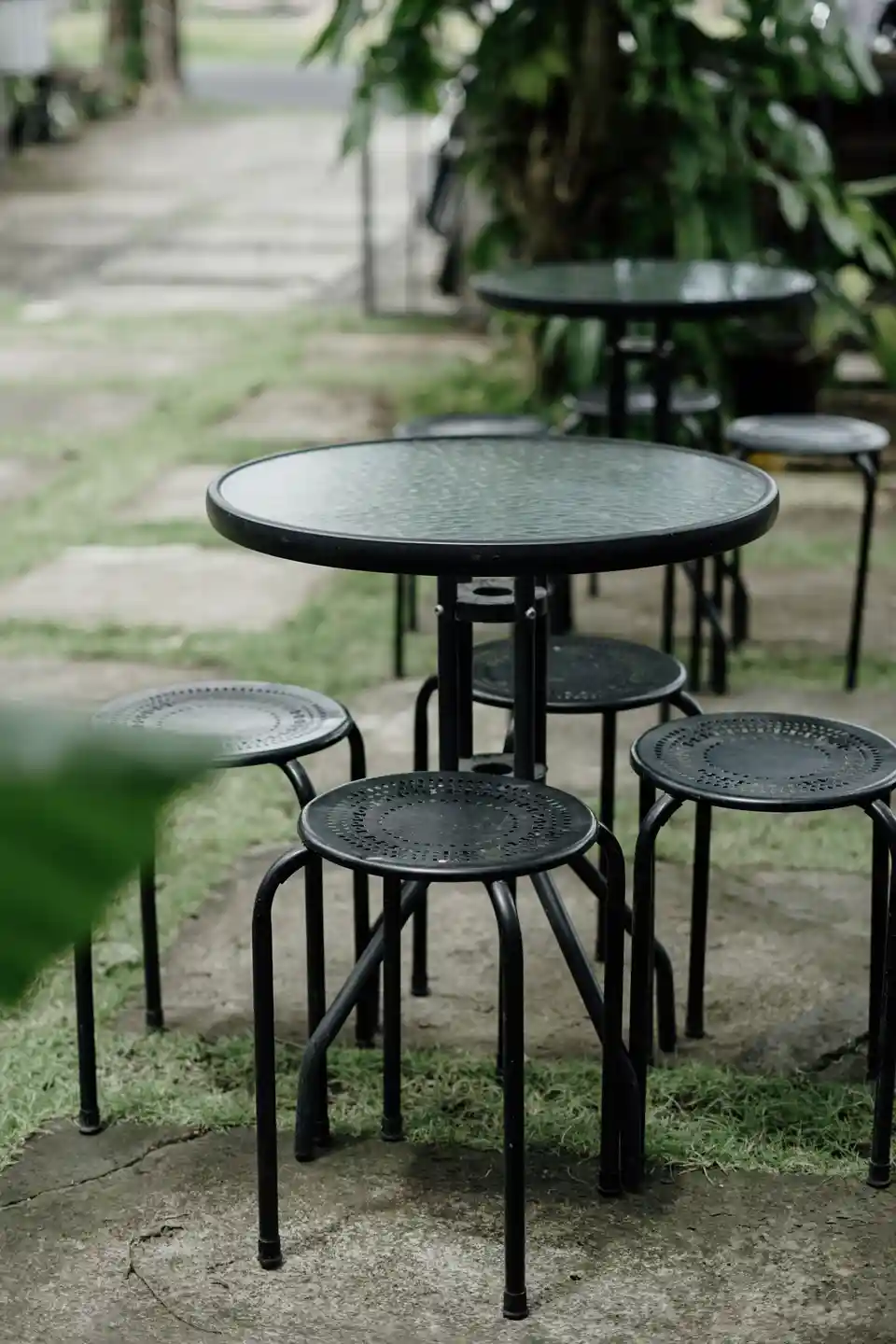
Provence answers this debate by mixing both at one table: iron chairs where guests linger, a wooden bench along the wall for overflow. The contrast keeps either material from feeling like a showroom set. Choose the piece you touch daily first and let the other play support. Buy the best you can once; cheap sets rarely survive a third summer.
Herb Pots Along The Wall
Credit : cottonbro studio
Do:
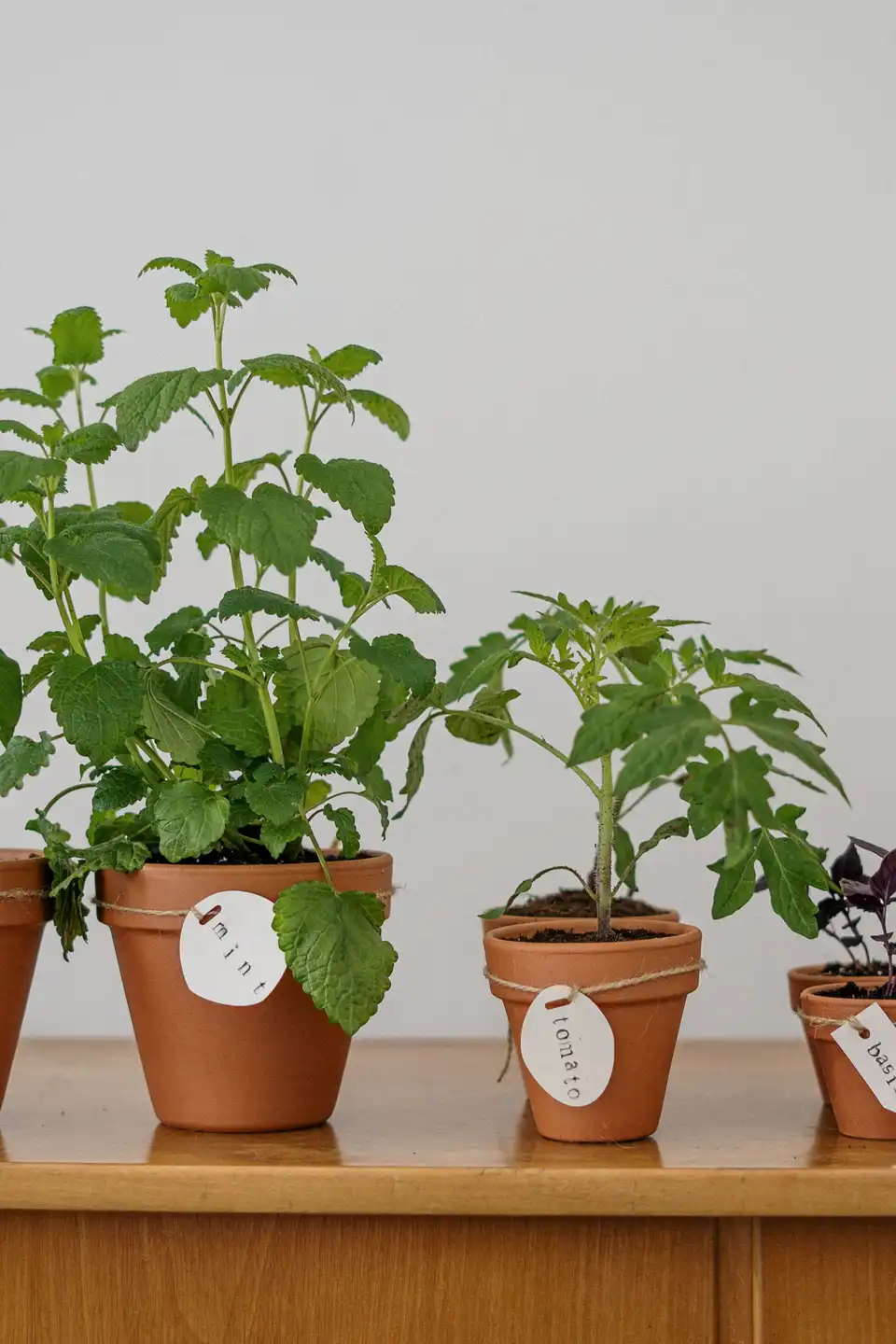
- Group rosemary, thyme, and sage together; they share a thirst for sun and lean soil.
- Stand pots on small feet or bricks so drainage holes stay clear of the paving.
- Snip little and often; regular harvests keep plants bushy instead of woody.
Don’t:
- Park mint in the shared row; its roots bully every neighbor within a season.
- Water herbs on a schedule; check the soil with a finger and water only the dry ones.
- Use rich potting mix; herbs taste stronger grown slightly hungry.
A herb wall earns its space twice, once as greenery and once as the kitchen’s closest shelf. Brush the rosemary as you pass and the courtyard smells like Sunday lunch. I’ve seen this work well wherever a plain wall needed a job.
Small Courtyard Quick Facts
Credit : Mailys Rosello
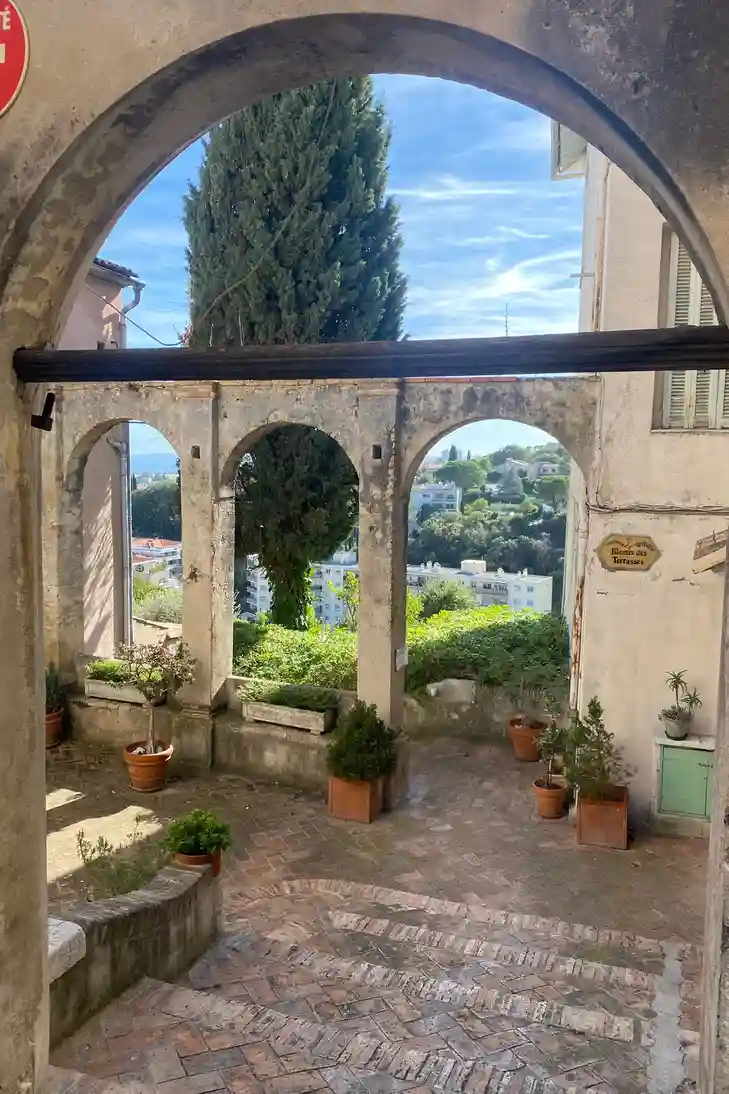
Cost: Mirrors, gravel, and six pots refresh a tiny court for under three hundred dollars. Time: Two weekends at an easy pace. Skill Level: Beginner friendly, mostly carrying and planting. Best For: Townhouse yards, basement wells, and narrow side passages.
Small spaces forgive nothing and reward everything. One mirror doubles the planting, pale gravel bounces light into corners, and a single scented climber perfumes the whole volume of air. Measure twice, buy once, and let the walls do the heavy lifting that floor space cannot. Stack the planting vertically, on walls and rails, and even three square yards start to feel like a garden with rooms.
Strings Of Light Overhead
Credit : Constantine Kim
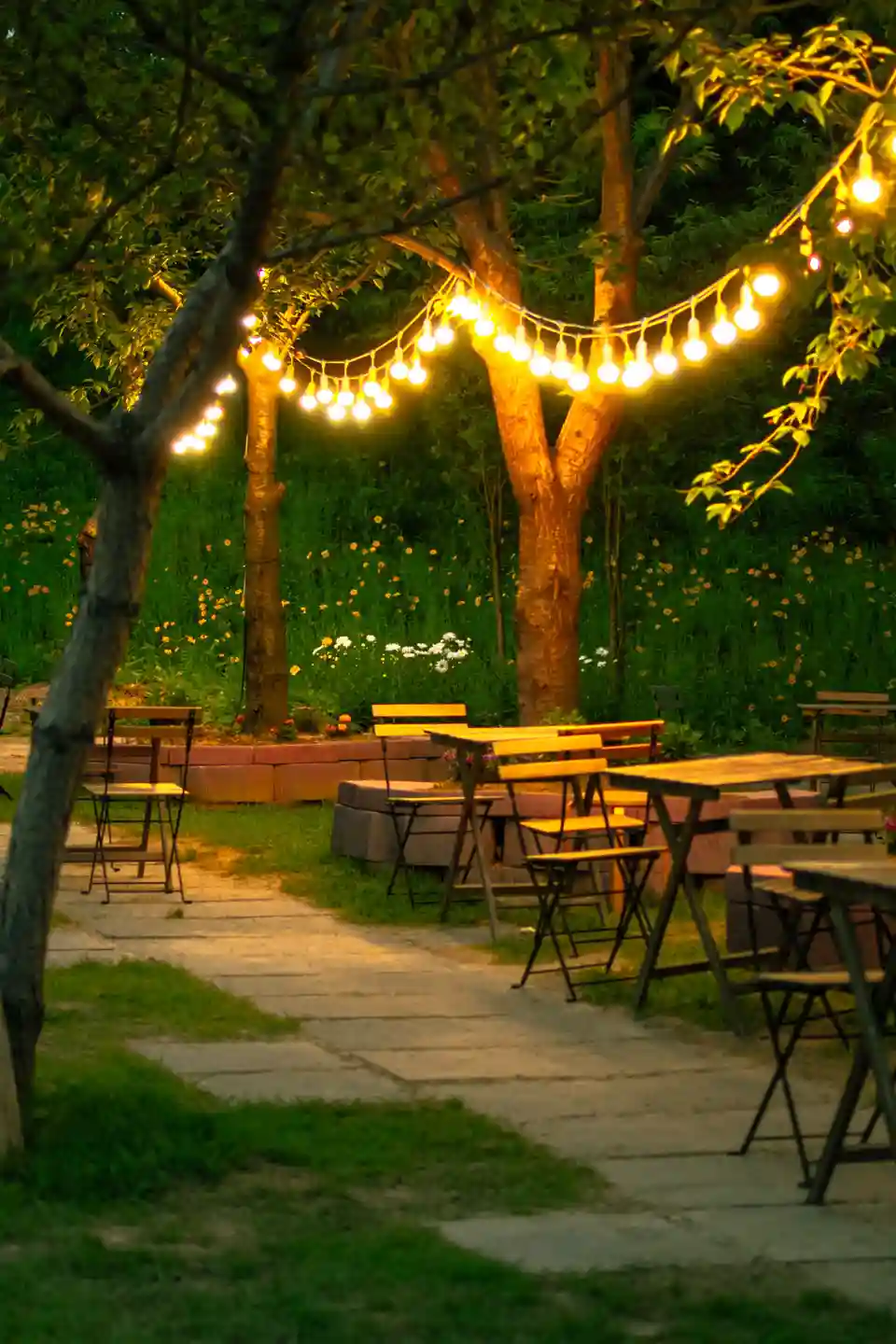
Daylight shows a courtyard’s bones; lamplight shows its heart. A few strands of warm bulbs zigzagged overhead turn Tuesday dinner into an occasion and stretch the usable evening by hours. The glow flatters stone, skin, and food with complete impartiality.
Hang the strands in gentle swags from wall hooks, high enough to clear tall guests and low enough to feel like a ceiling. Choose warm white bulbs and keep them on one dimmer if you can. In my experience, three modest strands beat one blazing rope; the magic lives in the pools of light between them, not in brightness. The compliments will arrive before dessert does.
Weathered Zinc Accents

Credit : Christina & Peter
- Watering cans as planters: drill two holes, fill with trailing thyme, and park by the door.
- Zinc tubs for olives: the grey metal cools terracotta’s warmth and hides drip stains gracefully.
- Old buckets as lanterns: a candle inside turns battered zinc into evening sculpture.
- House numbers and plaques: galvanized metal weathers to a soft matte that suits old stone.
Zinc asks for nothing and ages like it means it. Rain writes grey lace across the surface, dents read as biography, and the whole collection costs less than one new planter. The metal also pairs happily with soft shapes; the same balance drives curved furniture interior design ideas, where rounded silhouettes soften strong architectural lines.
Fountain Corner, Birdsong Included
Credit : Claudia Schmalz
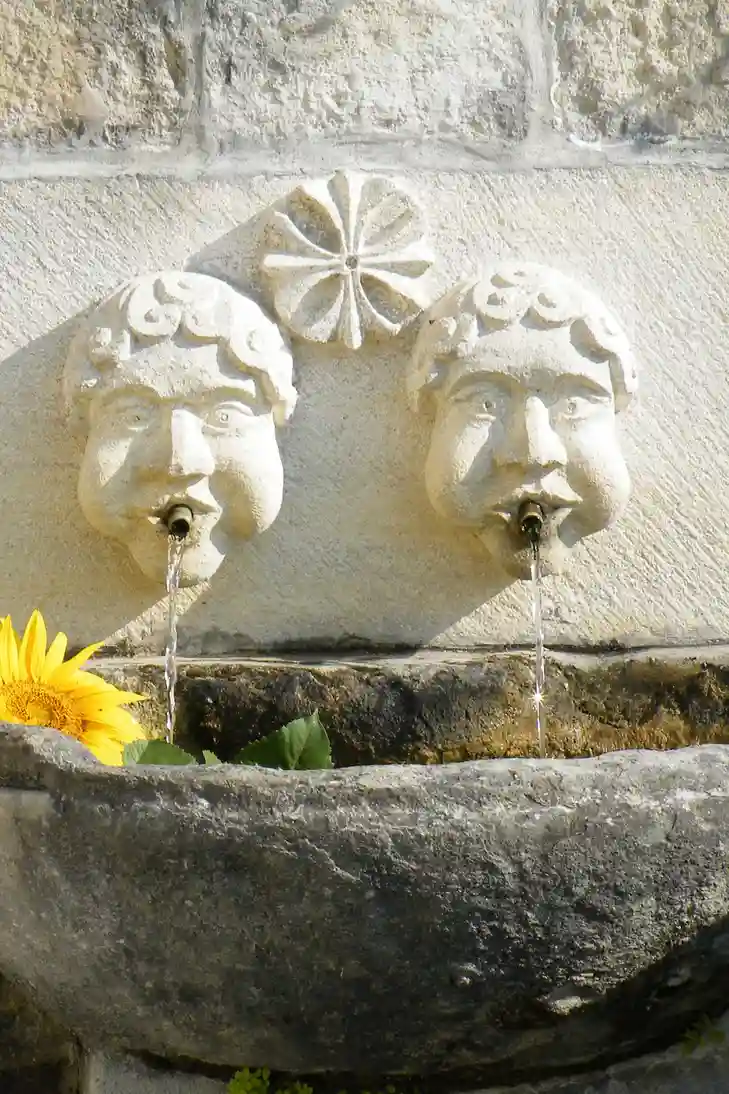
Quick Tip: add a shallow stone saucer beside the fountain and keep it topped up. Birds prefer a quiet bathing dish to a bubbling basin, and they will arrive within days once the water stays reliable.
A fountain earns double wages in a courtyard: its murmur masks street noise while the moving water pulls birds down from the rooftops. Sparrows first, then the bolder blackbirds, until the corner runs on wings as much as water. Keep cats indoors at dawn and the show repeats every morning like a subscription you never paid for. It is the cheapest theatre ticket in the neighborhood.
Shady Corner To Sunny Nook
Credit : Mikita Yo
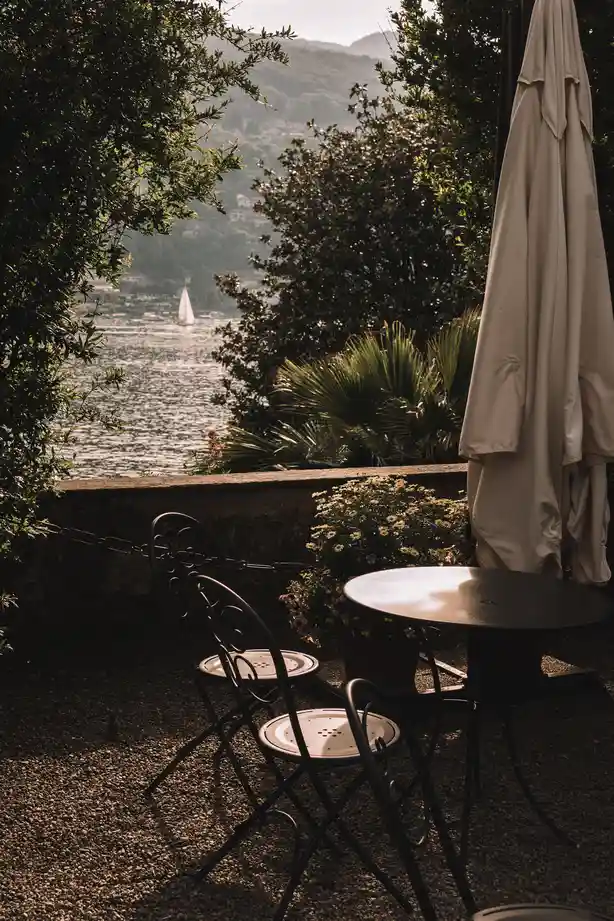
BEFORE: the north corner collected everything the courtyard rejected: cracked pots, a rusting barbecue, shade too deep for grass and too damp for sitting. It was the view from the kitchen window, which made it worse.
AFTER: pale gravel lifted the light, a cream bench angled toward the one hour of direct sun, and shade loving ferns filled tall pots. The corner now hosts morning coffee and the cat, in that order.
Every courtyard owns one awkward corner, and it usually needs light colored ground more than it needs plants. Reflect first, plant second. The bench simply gives you a reason to sit inside the improvement.
Lay A Gravel Path

Credit : Pew Nguyen
What You Need: pea gravel, landscape fabric, metal or stone edging, a wheelbarrow, a rake, and a tamper.
- Mark the route: walk the line with a hose or rope until the curve feels natural from the doorway.
- Strip and level: skim off turf, firm the soil with the tamper, and slope the bed gently away from walls.
- Lay the fabric: pin landscape fabric edge to edge so weeds stay down and gravel stays clean.
- Spread and rake: tip gravel three inches deep, rake level, then walk it a week and top up the dips.
The crunch is not a side effect; it is the point. Gravel announces arrivals, discourages rushing, and makes a short walk feel like a journey. Edge it crisply and the path reads designed instead of spilled.
Terracotta Versus Glazed Pots

Credit : Khoa Le
| Aspect | Terracotta | Glazed |
|---|---|---|
| Water | Breathes, dries fast, suits herbs | Sealed, holds moisture for thirsty plants |
| Weight | Light even when large | Heavy, anchors tall olives in wind |
| Look | Matte clay, warms with age and algae | Deep color, shine that suits doorways |
| Winter | Can crack in hard frost | Tough, shrugs off most winters |
Terracotta owns the Provençal look, but glazed pots rescue the plants that hate dry roots. Mix them in one family of shapes and the blend looks collected, not confused. Salt tide lines on old clay are not damage; they are the patina everyone tries to fake. Count the pots before buying more; courtyards fill faster than cupboards.
Climbing Vines, Trained Well

Credit : SlimMars 13
Do:
- Fix a discreet wire grid before planting, spaced two inches off the wall for air.
- Guide young shoots weekly; five minutes with twine saves an hour of untangling later.
- Water the roots, deeply and rarely, so vines reach down instead of depending on you.
Don’t:
- Let self clinging ivy loose on soft mortar; it pries joints open.
- Plant a vigorous vine in a tiny pot and expect mercy; roots need real soil volume.
- Cut the main leader once it reaches the top; tip it and the sides will fill.
A trained vine turns a boundary wall into the greenest room divider imaginable. Jasmine near the seating adds evening perfume, while a grape over the table makes its own shade and dessert. Patience is the only tool required.
Evening Courtyard Quick Facts
Credit : Berat Yüksel
Cost: Candles, two lanterns, and a string of bulbs set the scene for under one hundred dollars. Time: One hour before guests arrive. Skill Level: None, beyond lighting a match safely. Best For: Courtyards that shine at noon but vanish after dark.
Evenings are when courtyards earn their romance, and the recipe is layers: flame low, bulbs high, one lamp in the window behind you. Keep flames in glass so breezes become flicker instead of failure. The stone gives back the day’s stored warmth, and nobody checks the time. Leave one chair out there permanently; a courtyard that invites sitting gets used, not just admired.
Conclusion
None of this asks for a big garden, a big budget, or a house in Provence. It asks for gravel underfoot, something green against the wall, and one reason to sit down outside. That is the whole secret behind French courtyard design inspiration: ordinary yards, honestly dressed, become the favorite room of the house. Start with a single corner this weekend, save these ideas to your garden board on Pinterest for the next one, and share a photo when the first lavender goes in. I’ve seen tiny paved yards turn into daily holidays with nothing more than patience, pots, and warm light.