22 Linen Wallpaper Living Room Ideas for Soft, Timeless Elegance
A quiet wall can change the whole mood of a sitting room, and linen wallpaper living room ideas start with that calm, woven texture. Real linen and linen look papers soften glare, mute echo, and give plain plaster a tailored finish that paint alone rarely matches. The weave reads gentle from the sofa and rich up close.
Warm neutrals do the heavy lifting here, so beige, oatmeal, and greige rolls pair with cream sofas, pale oak, and brushed brass without a fight. In my experience, one textured wall behind the seating anchors the room better than four patterned ones. The same love of soft relief shows up in wave tile kitchen backsplash ideas, where ripples calm a busy cooking wall. Ahead, twenty two rooms cover real linen, grasscloth, vinyl lookalikes, hanging steps, and honest costs.
Soft Beige Linen Walls

Credit : Hello Pipcke
Pale beige linen paper wraps this room in a hush that flat paint never quite reaches. The weave breaks incoming daylight into a soft grain, so the big abstract canvas and globe pendants glow instead of glare. Low boucle seating keeps the palette quiet and lets the wall texture carry the interest.
Order one roll first and tape a full drop beside the window for two days before committing. Morning sun can warm the beige, while evening lamps may pull it gray. I’ve noticed north facing rooms do better with a hint of cream in the mix, since cool daylight steals warmth from true gray beige blends.
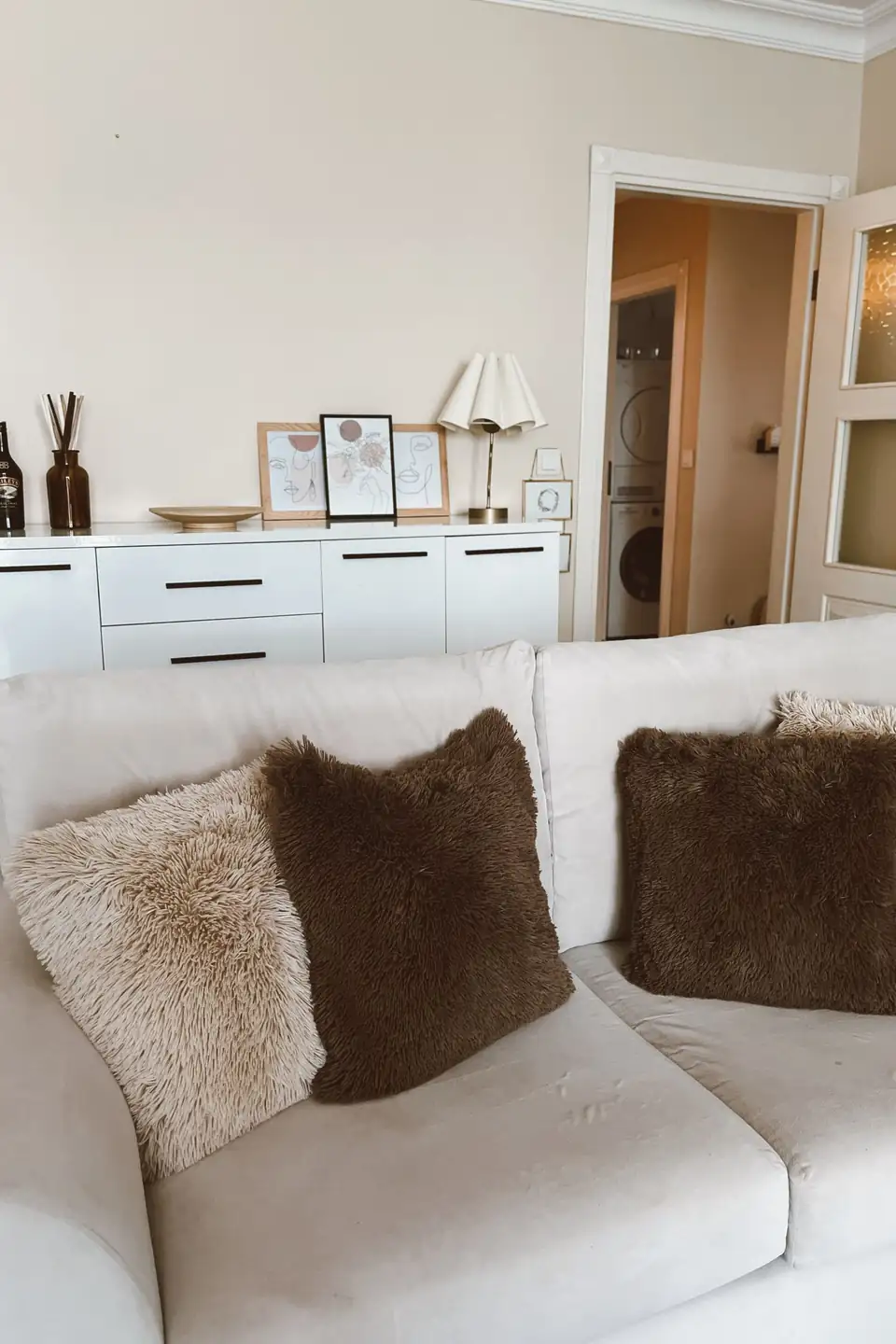
Oatmeal Weave Behind Sofa
Credit : Pexels User
- Oatmeal weave warms the wall without a single drop of color
- Deep brown cushions ground the pale sofa and echo the timber tones
- A shaggy throw pillow mirrors the paper grain at sofa scale
- White storage keeps the backdrop calm and gallery plain
- Natural light rakes across the weave and shows every thread
Loose weave papers forgive small wall flaws better than tight vinyl prints, since the irregular threads scatter shadows. Keep the rest of the scheme in the same warm family, creams, taupes, and soft browns, and the sofa wall feels layered rather than decorated. One framed print at eye level finishes the story.
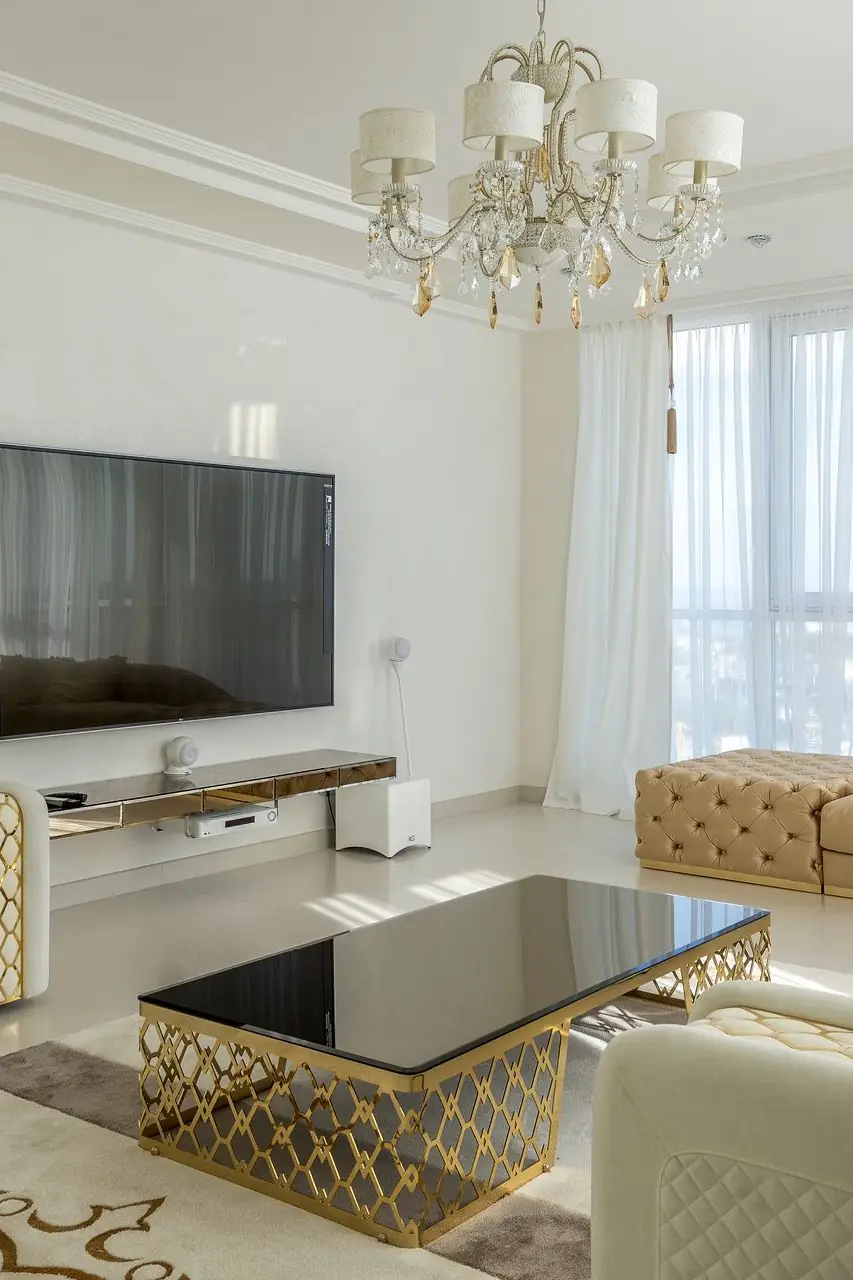
Whitewashed Linen Accent Wall
Credit : Max Vakhtbovych
Quick Tip: Wash whitewashed linen paper with light from the side, not from above. A floor lamp placed near the wall grazes the weave and doubles the texture, while ceiling spots flatten it. Test both after dark before the furniture goes back.
Whitewashed rolls suit bright rooms that feel a touch stark in winter. The pale wash keeps the weave visible yet airy, and it plays well with glass tables, gilt frames, and marble. Keep metals warm, since cool chrome against icy white can tip the room clinical instead of calm. A single woven rug under the coffee table ties the floor to the wall without adding print.
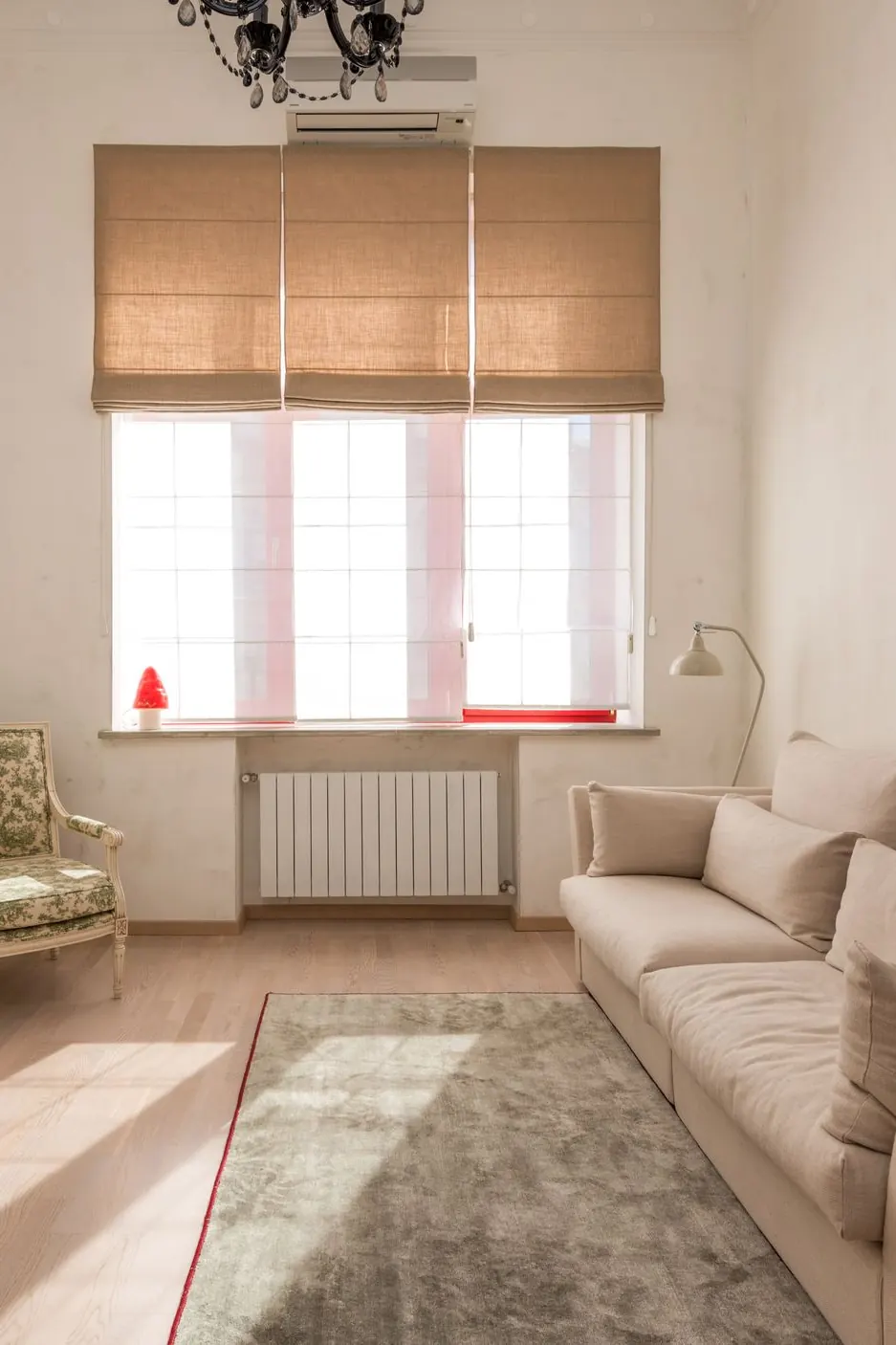
Dull Walls To Woven Warmth
Credit : Max Vakhtbovych
BEFORE: The sitting room wore builder white paint and a tired radiator under the window. Afternoon sun bounced hard off the flat walls, and the beige sofa faded into the background by midday.
AFTER: Woven linen paper in a warm sand shade now lines the window wall, and the light lands softer. A natural roman shade repeats the fiber story, and the sofa finally holds its own against the backdrop.
Radiator heat is safe for most linen papers once the paste cures, though vents should stay clear. Leave a spare half roll in the closet, because dye lots drift between print runs and a later repair patch will show. Photograph the batch number before the wrapper goes in the bin.
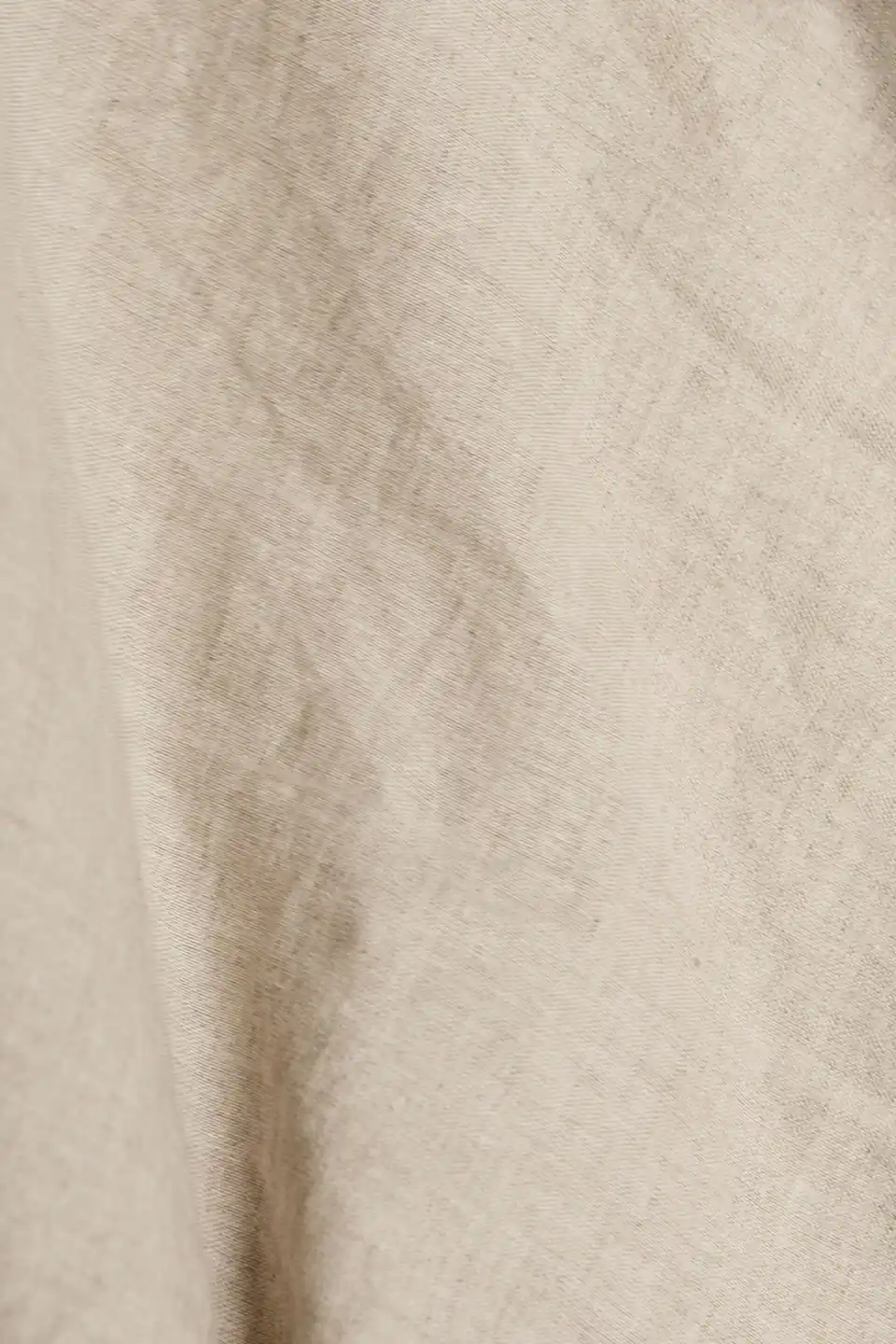
Hang Linen Paper Steps
Credit : Artem Podrez
What You Need: Linen paper rolls, a plumb line, paste, a smoothing brush, a sharp snap blade, a seam roller, and a damp sponge.
- Measure the wall and cut drops two inches long, matching the weave direction on every strip.
- Snap a plumb line one roll width from the corner so the first seam lands straight.
- Paste the wall for non woven backings, or book the paper for traditional linen rolls.
- Smooth from the center outward, roll each seam once, and sponge paste off the face fast.
Linen shows every lump beneath it, so sand ridges and seal stains before the first drop goes up. Work in daylight, since raking light exposes bubbles that ceiling bulbs hide. A slow first wall beats a fast redo.
Real Linen Versus Vinyl
Credit : Moussa Idrissi
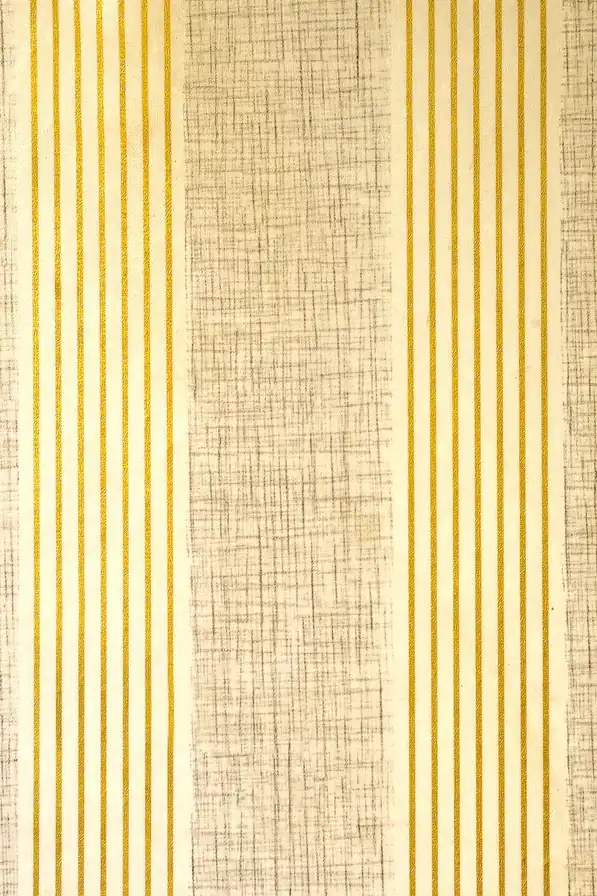
Both rolls promise the woven look, yet the fibers behave very differently once they meet sunlight, steam, and daily knocks at home.
| Feature | Real Linen | Vinyl Linen Look |
|---|---|---|
| Texture | Raised threads, real touch | Printed grain, flat feel |
| Light Play | Matte glow, zero shine | Slight sheen under lamps |
| Cost | Premium price per roll | Budget price per roll |
| Care | Dry cloth dusting only | Wipes clean with water |
Real linen wins on depth and touch, while vinyl wins in homes with toddlers, dogs, and splash zones. Many readers hang real linen behind the sofa and vinyl near the entry door, where wet coats land. The match reads as one scheme from the doorway.
Grasscloth Glow Up Rules

Credit : Arti Kh
Do:
- Hang grasscloth on the wall the sofa faces, so the weave gets long views
- Expect visible seams, since natural fibers never match like printed paper
- Keep one dye lot for the whole room and note the batch number
- Dust with a soft brush instead of water, which can stain raw fibers
Don’t:
- Hang grasscloth in steamy bathrooms where showers run daily
- Trim edges with a dull blade, which tears the loose fibers
- Paint over grasscloth later, since the texture ghosts through
Grasscloth rewards patience. The seams and shade shifts are part of its handmade character, the same way knots belong in oak. Rooms styled around that honesty, with jute rugs and raw timber, feel settled instead of staged.
Linen Paper Cost Facts
Credit : dada _design
Cost: Mid range for linen look vinyl, premium for real flax.
Time: One accent wall takes a slow weekend.
Skill Level: Confident beginner with a patient helper.
Best For: Calm rooms that feel flat in paint.
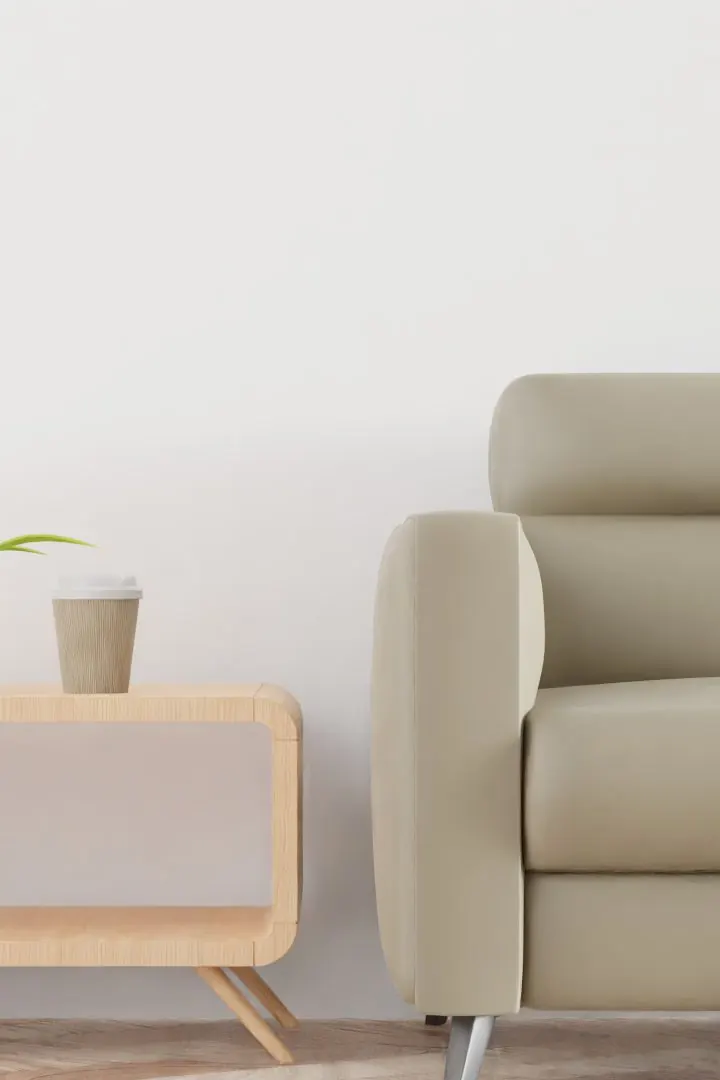
Real linen and grasscloth sit far above vinyl on price, mostly because the fibers are woven, backed, and trimmed by hand. Sales at wallpaper outlets cut that gap each spring, so patient readers stock the closet early. One extra roll always belongs in the order, since dye lots drift. Labor quotes vary by city, though paperhangers charge less for non woven backings that paste straight onto the wall. Ask for the seam plan in writing before work starts, and the weekend stays calm.
Greige Linen Calm Corner
Credit : Beard Kid
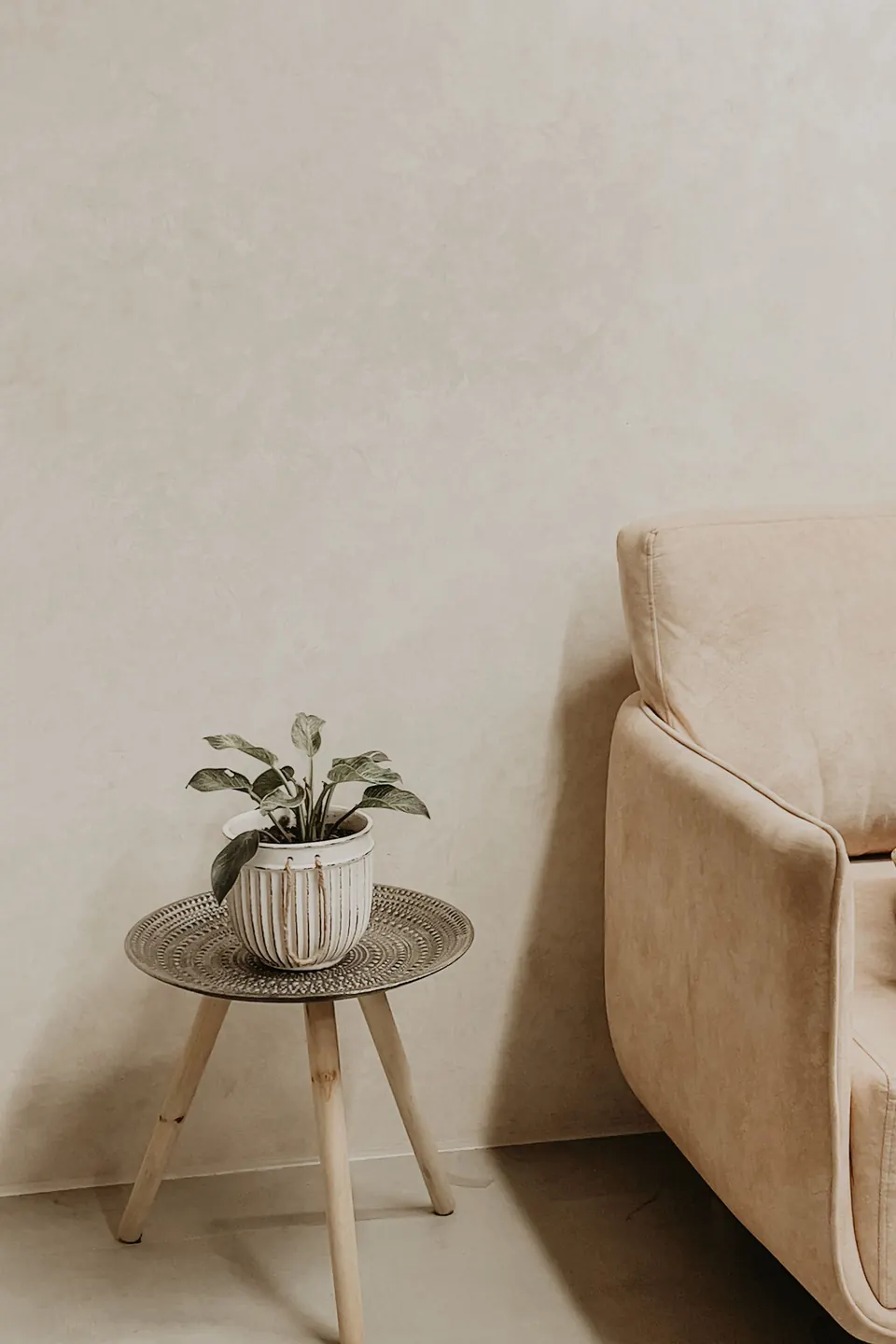
Greige linen paper settles the corner where a chair, a plant, and morning coffee meet. The gray beige blend refuses to fight the plaster tone beside it, so the two finishes read as one calm gradient. A woven stool repeats the fiber at floor level.
Small corners earn their keep when the wall behind them does quiet work. Keep the chair fabric plain, let the paper carry the grain, and add one green plant for contrast. Corners styled this way photograph beautifully for listings, since texture reads as care even in a thumbnail. Swap the plant for a stack of art books in winter and the corner still holds.
Woven Walls Cream Sofa
Credit : Max Vakhtbovych
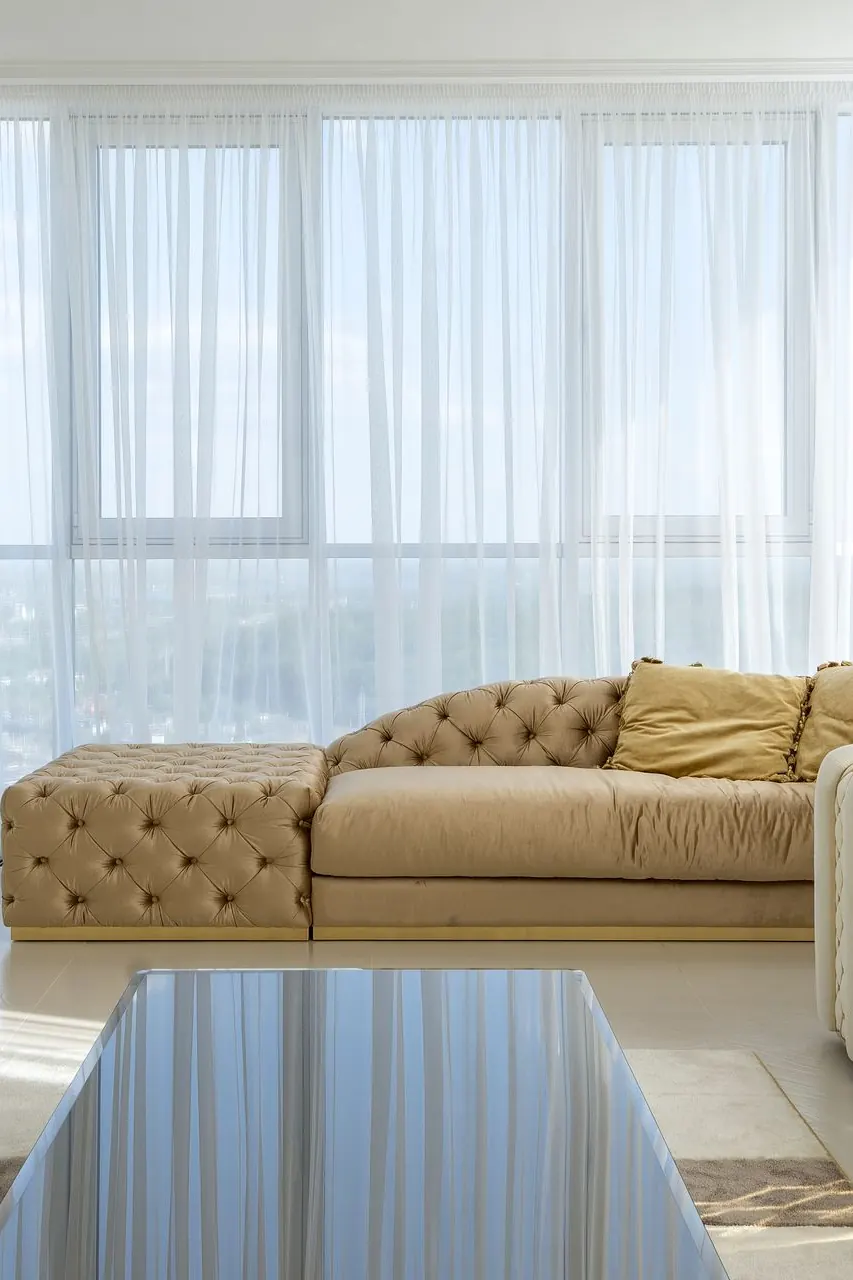
- Tufted cream upholstery echoes the soft geometry of the woven wall
- Sheer curtains filter glare so the weave stays readable at noon
- A glass table keeps sight lines open to the textured backdrop
- Gold cushions warm the cream scheme without adding print
- One dark timber piece anchors the pale layers
Woven walls reward restraint everywhere else in the room. Most linen wallpaper living room ideas that age well keep patterns off the cushions and let fiber, boucle, and timber supply the variety. Sunlight does the decorating as it moves, striping the weave with slow shadows through the afternoon. By dusk the wall reads almost silver.
Natural Flax Reading Nook
Credit : Yulia Goncharuk
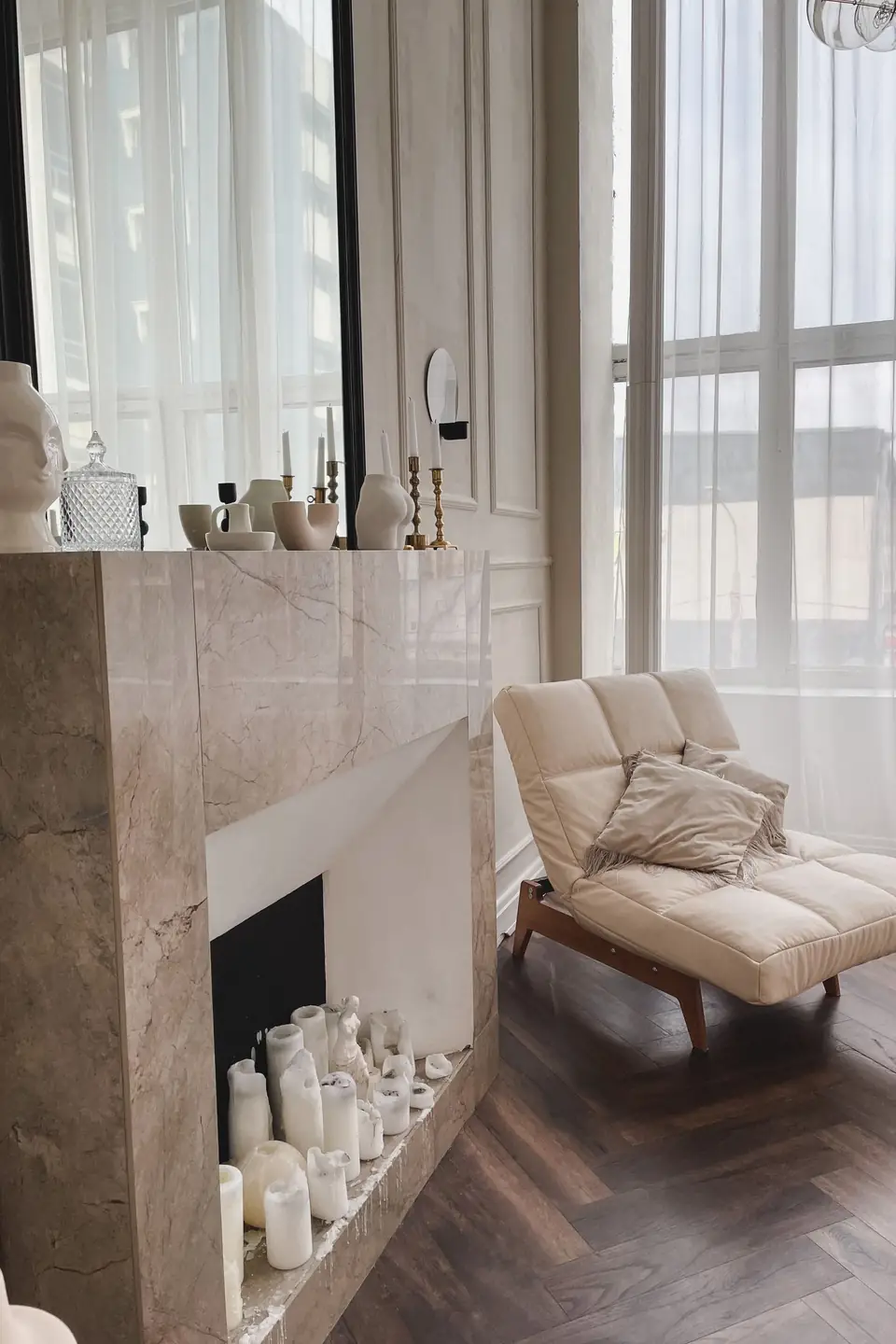
Quick Tip: Reserve the most textured roll for the nook wall behind the reading chair. Close range is where real weave proves itself, since fingertips and lamplight both meet the surface there. Smoother paper can carry the remaining walls.
Stone, flame, and flax belong together. The marble fireplace surround stays cool to the eye, while the linen paper keeps the corner from feeling formal. A chaise in raw cotton, a candle cluster, and one wool throw finish the nook without a single bright color asking for attention. Evening light from the window grazes the paper and shows the slubs honestly.
Flat Paint To Texture
Credit : Алан Албегов
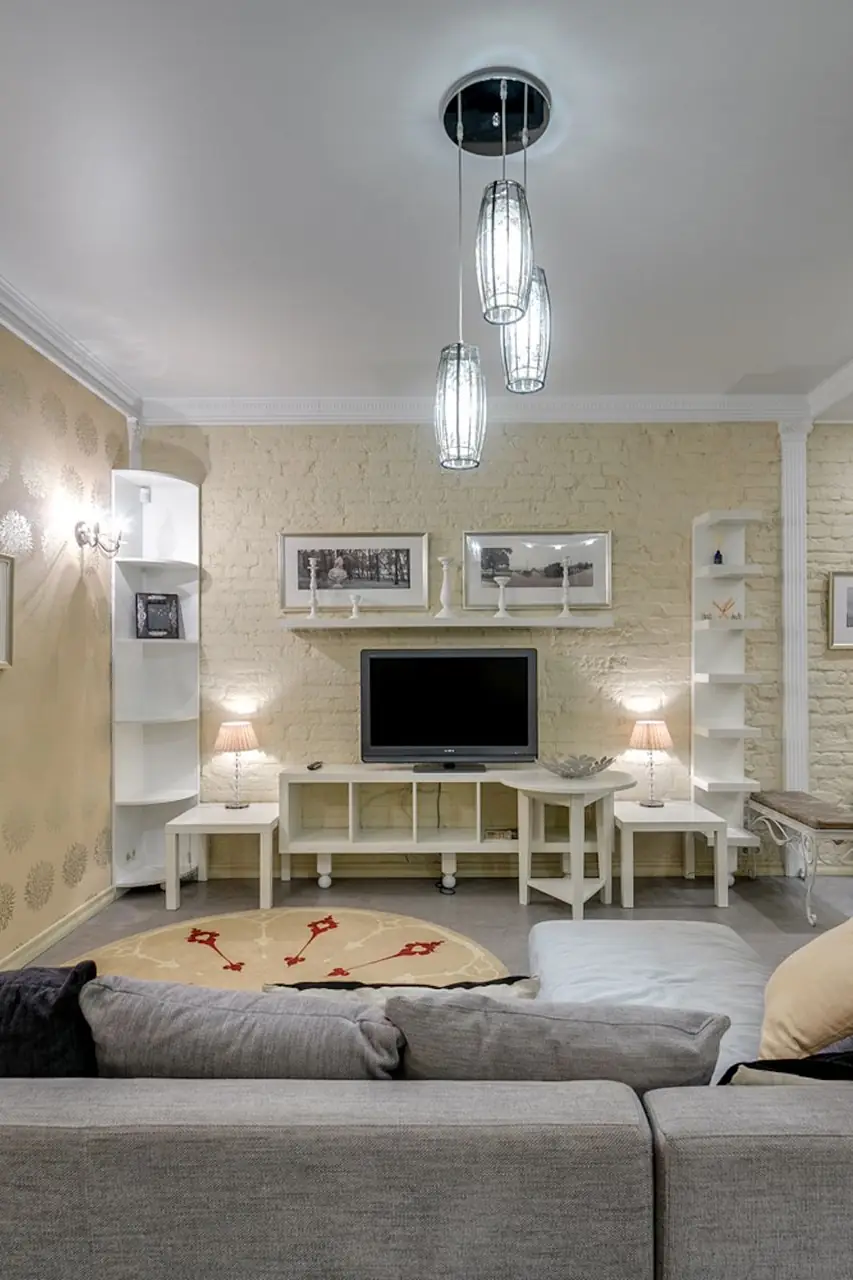
BEFORE: Flat magnolia paint covered every wall, and the television floated on a blank expanse. The room felt rented even after five years, because nothing on the walls caught light or shadow.
AFTER: A muted damask style linen paper now wraps the media wall, and the screen sits inside a pattern with real depth. Low shelves and twin lamps balance the pattern, so the wall reads furnished rather than busy.
Pattern scale matters at viewing distance, so hold samples at sofa length before ordering. Readers chasing a gentler route can borrow the relief idea from scalloped tile bathroom inspiration in wet zones and keep paper for dry walls. Both finishes earn their texture honestly.
Seaming Panels Like A Pro
Credit : Engin Akyurt
What You Need: Cut drops, a level, a seam roller, a snap blade with spare blades, a straight edge, and a soft sponge.
- Butt each new drop against the last without overlap, since linen thickness doubles at a lap.
- Roll the seam once, firmly, then leave it alone while the paste grabs.
- Change blades every two cuts, because dull edges drag the loose weave into fuzz.
- Wipe the face with a barely damp sponge so paste never dries into shine spots.
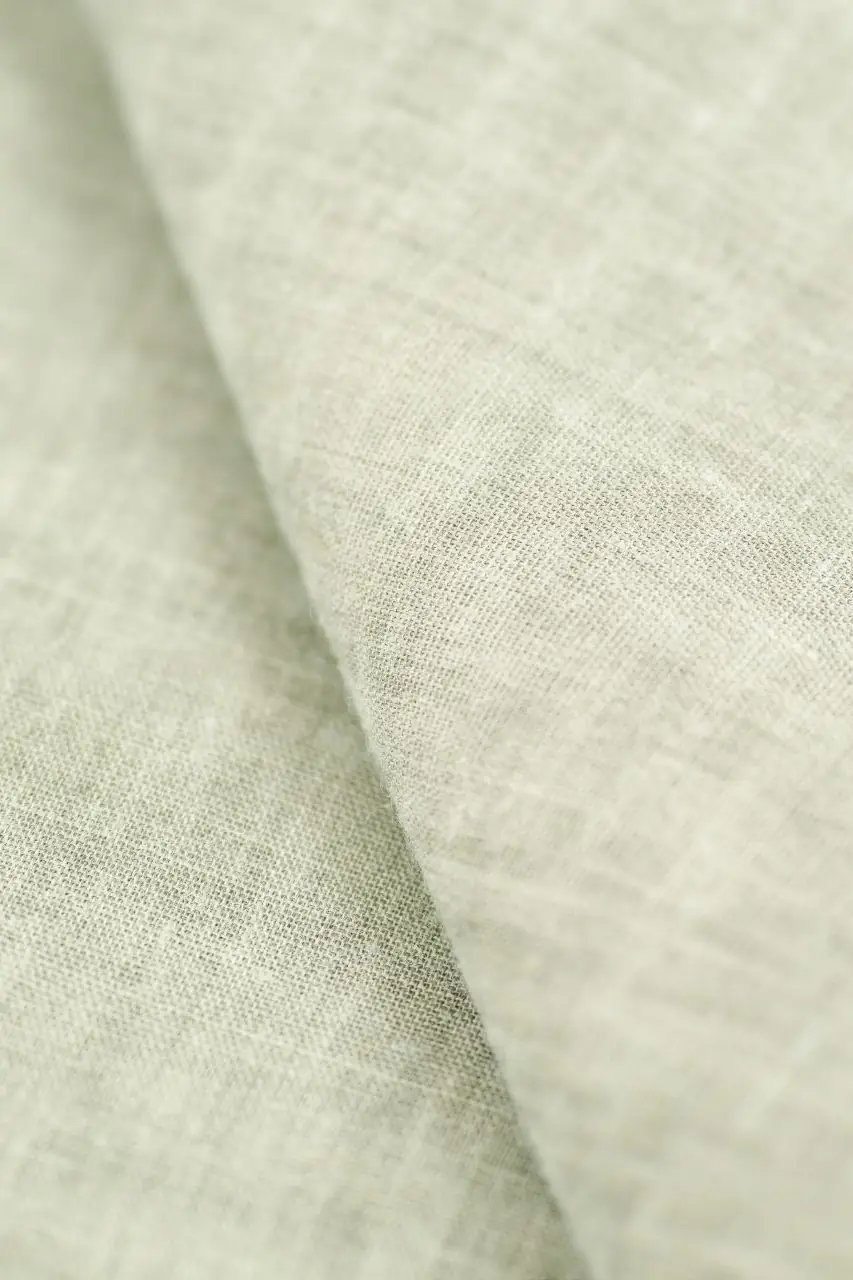
Seams on natural linen will show as fine shadow lines, and that is correct. Chasing invisible seams with extra rolling crushes the fibers flat. Step back three paces and judge the wall as guests will see it, not from six inches away.
Grasscloth Versus Linen Weave

Credit : Clarissa Schwarz
Grasscloth and linen weave papers sit side by side in sample books, yet they suit different walls, budgets, and households at home.
| Feature | Grasscloth | Linen Weave |
|---|---|---|
| Texture | Coarse strands, rustic hand | Fine threads, tailored hand |
| Seams | Always visible, pure charm | Subtle shadow lines only |
| Moisture | Stains easily, dry rooms | Tolerates light splashes |
| Price | Highest, woven by hand | Mid range, wider choice |
Choose grasscloth for drama on one dry wall and linen weave where life happens daily. Households with kids often run linen in the hall and save grasscloth for the sofa wall, where it stays safe. Both dislike steam, so vent bathrooms well either way.
Styling Rules For Texture
Credit : Sonya Gabriela
Do:
- Pair woven walls with other honest fibers like jute, rattan, and raw cotton
- Let one wall carry texture while the rest stay smooth and pale
- Repeat the paper tone in cushions so the scheme feels gathered
Don’t:
- Mix two bold weaves in one sight line, since they argue
- Hang busy art over strong texture, which doubles the noise
- Match the paper to the sofa exactly, a trick that flattens both
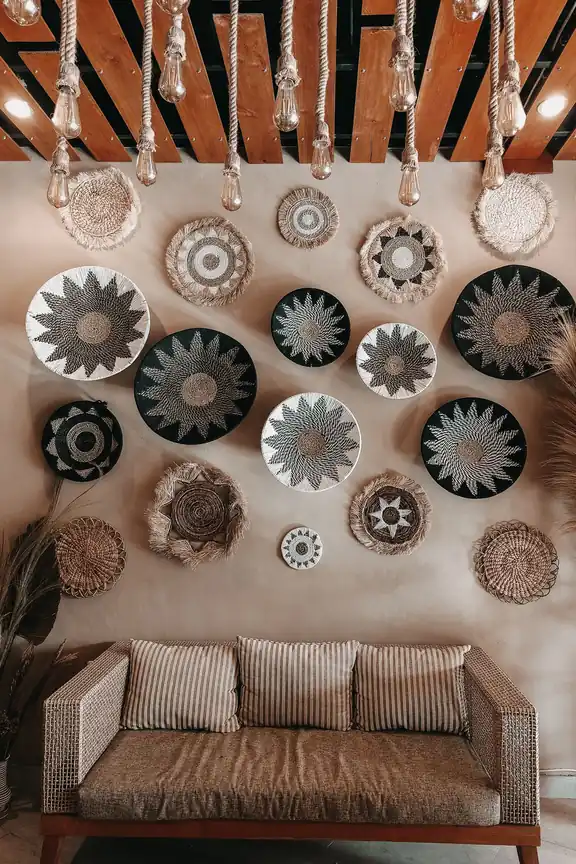
The basket wall above proves the rule: woven circles on smooth plaster, each fiber given room to breathe. Styling around texture is mostly editing. Remove one object per shelf, then stop and live with the quiet for a week before adding anything back.
Durability Quick Facts

Credit : Alan Antony
Cost: Quality rolls repay care with years of wear.
Time: A careful hang lasts a decade or more.
Skill Level: Pro hanging extends the paper life.
Best For: Dry living rooms away from steam.
Sunlight is the main enemy, since ultraviolet fades natural fibers unevenly behind furniture. Rotate art yearly so covered patches never drift far from the exposed field, and let sheer curtains soften noon glare before it reaches the weave. Dust travels down the grain with a soft brush each spring. Scuffs on vinyl lookalikes wipe away, while real linen prefers a dry cloth and patience. Treated gently, a linen wall outlasts two full paint cycles and still looks intentional, which is why careful owners hang it once and simply live with it.
Pale Stone Linen Look
Credit : Max Vakhtbovych
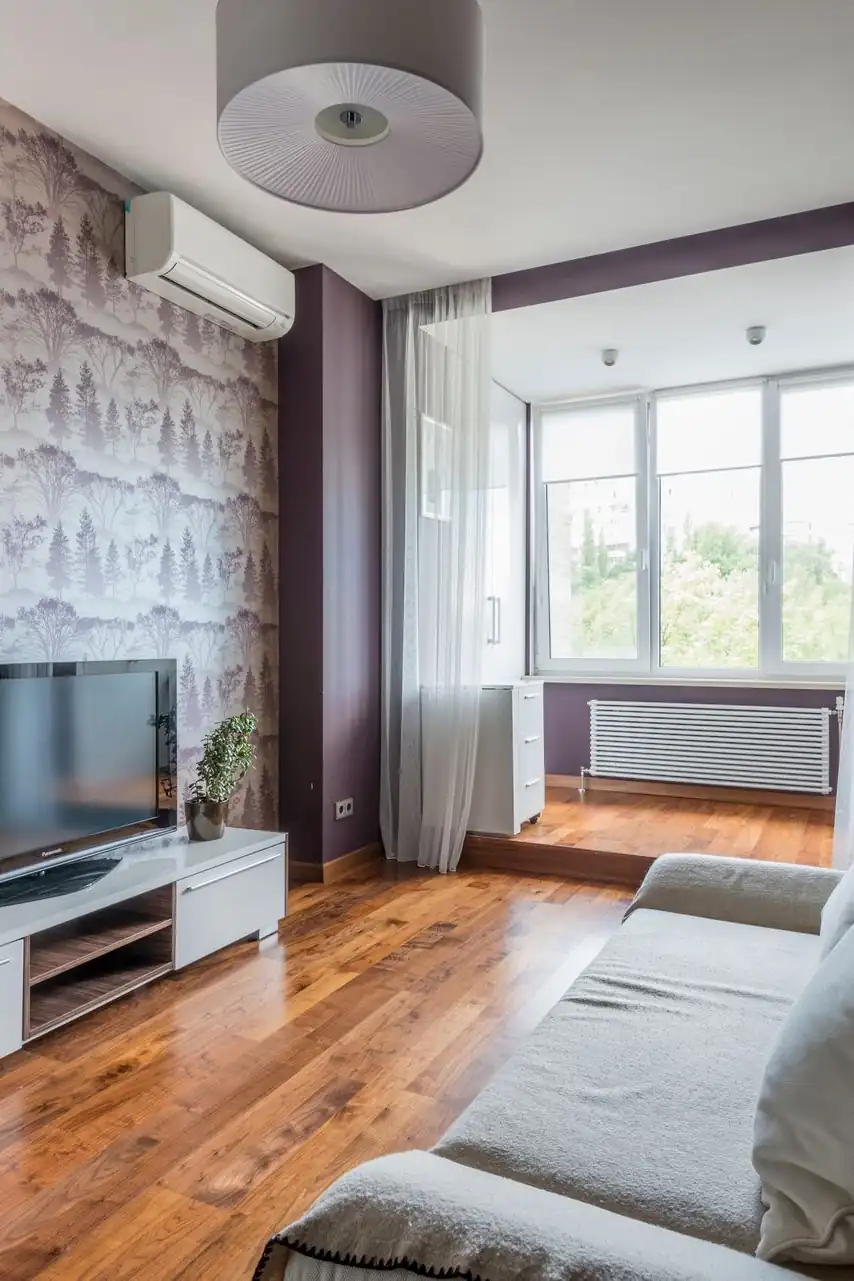
Pale stone tones give linen paper a cooler, gallery calm. The faux stone wall beside the television shows how far texture alone can carry a scheme, yet real linen does the same job with a softer hand and far less weight on the wall.
Keep the floor timber warm to balance the cool wall, and repeat the stone shade in one cushion or throw. I’ve seen this work well in many cases where a room felt cold: the weave adds grain that paint and plaster cannot fake, so the palette warms without changing color. A single brass lamp brings the sunset back indoors.
Layered Neutrals Woven Wall
Credit : Max Vakhtbovych
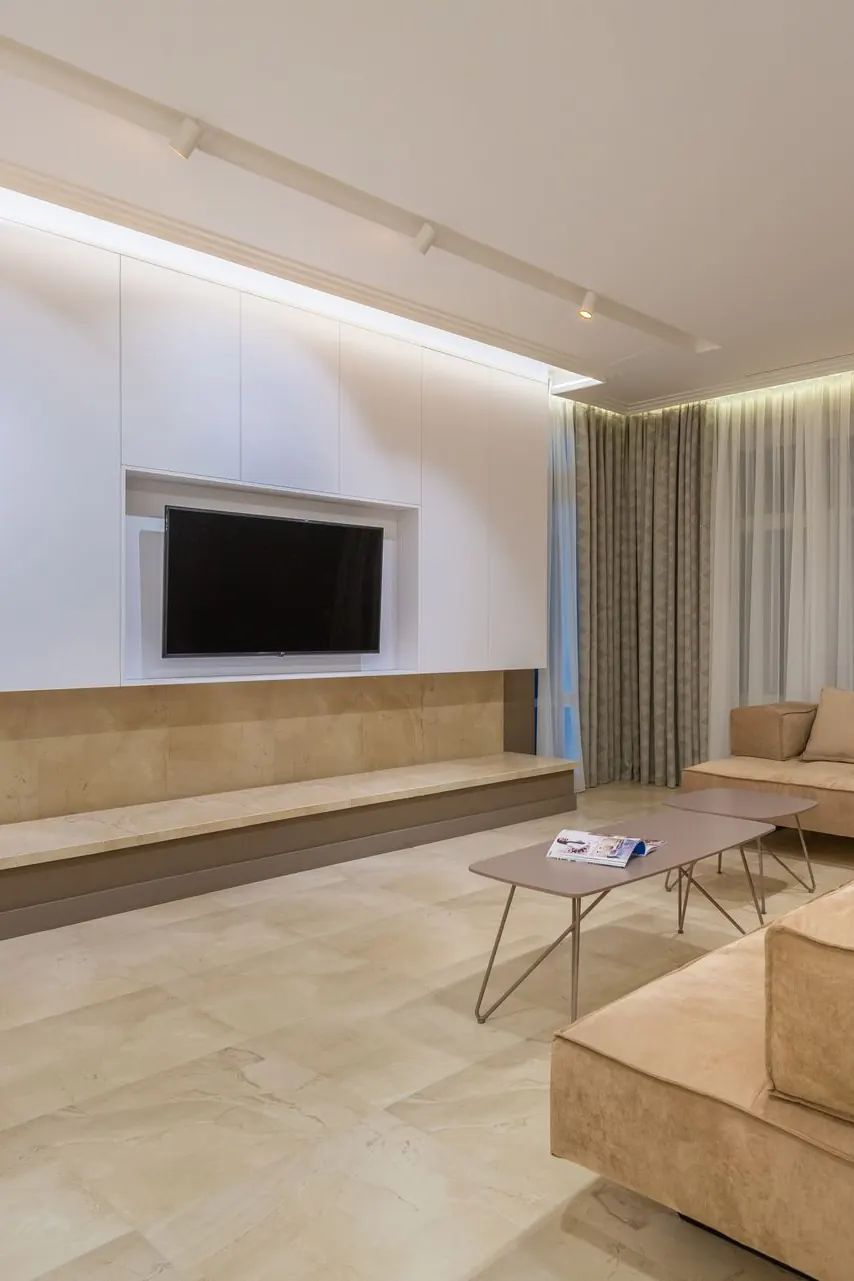
- Layer one: woven paper in warm oatmeal on the longest wall
- Layer two: cream boucle or raw cotton on the main sofa
- Layer three: pale oak and travertine on tables and lamps
- Layer four: a flat weave rug that echoes the wall grain
- Layer five: one living green plant for fresh contrast
Layering neutrals fails when every layer lands at the same depth. Spread the tones from ivory to biscuit so the eye can travel, and keep black to a whisper in picture frames or a single leg. The result feels collected over years, not bought in one afternoon. Texture, not color, does the talking here.
Small Room Soft Weave
Credit : Tuğba Kobal Yılmaz
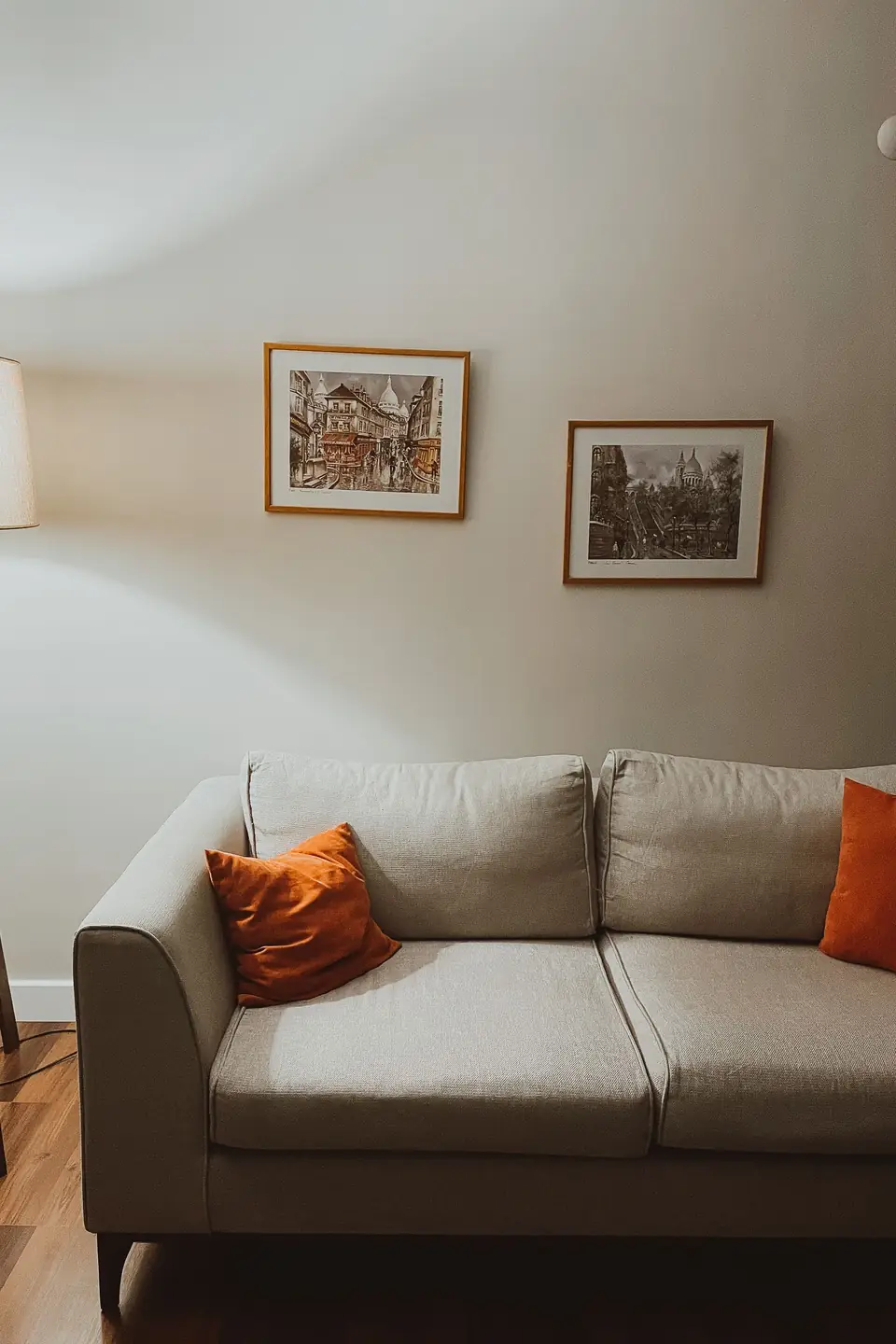
Quick Tip: In a small room, run linen paper on all four walls instead of one accent. A single feature wall shrinks the box by contrast, while a full wrap reads as one soft envelope and the corners disappear. Sample the palest shade first, since small rooms darken every color by a step.
Compact rooms also love the acoustic hush woven walls bring. Television echo drops, conversation softens, and the space feels upholstered. Keep furniture low and legs visible so the floor shows through, and choose the palest roll in the book if windows face north. One mirror doubles the daylight dividend.
Dark Room To Light

Credit : Curtis Adams
BEFORE: The rental living room had one small window and walls the color of wet cardboard. Even at noon the corners stayed gloomy, and guests drifted toward the kitchen where the light felt kinder.
AFTER: Pale linen paper in a warm white now lines the window wall and the two returns. Sheers replaced heavy drapes, the weave catches every stray ray, and the sofa zone finally earns its evenings.
Light colors on paper still need the weave, since flat pale paint would glare near the glass. Choose rolls with a matte finish and test the sample at the darkest hour you use the room. If the sample holds its warmth at dusk, the wall will too.
Panel Planning Steps
Credit : Max Vakhtbovych
What You Need: Wall measurements, the roll width and pattern repeat, a notebook, and the room sketch with doors and windows marked.
- Add each wall width together and divide by the usable roll width for the drop count.
- Divide the wall height by the repeat and round up, so patterns align at the ceiling.
- Order one spare roll from the same dye lot for future repairs and mistakes.
- Mark outlet and switch plates on the sketch before the first cut is made.
Panel planning sounds fussy until the first short drop appears mid wall. Ten minutes with a tape measure protects the whole budget, because reordered rolls rarely match the original dye lot. Pros sketch every wall, even the plain ones behind bookcases.
Timeless Linen Whole Room
Credit : Curtis Adams
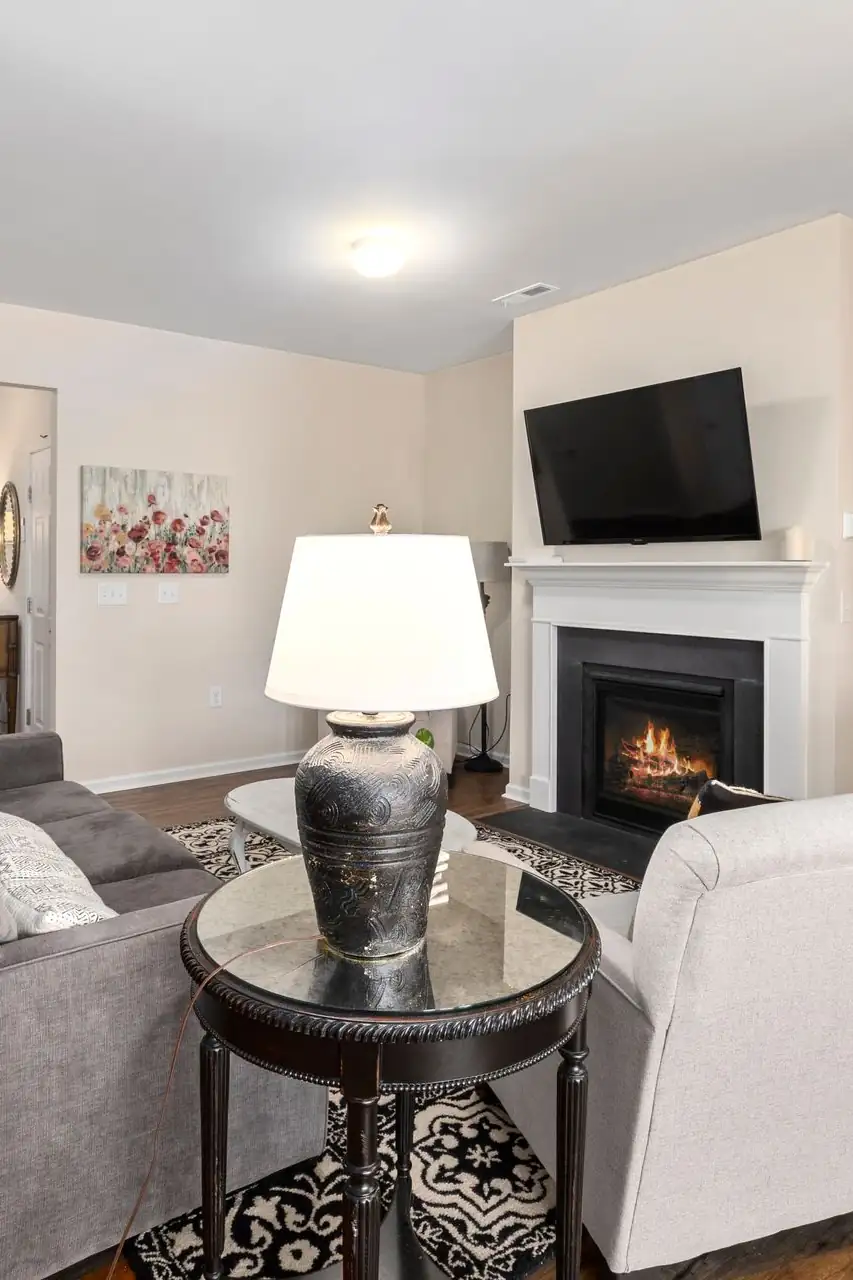
Whole room linen wraps a sitting room the way a good coat fits, quietly and without strain. This fireside corner shows the endgame: one weave on every wall, timber and wool in support, and lamplight pooling where people actually sit. Nothing competes, so everything relaxes. The firelight grazes the fibers and the wall seems to breathe.
Start with the wall you see from the doorway and live with it for a season if the budget asks. Linen schemes grow gracefully, one wall at a time, because the weave never dates the way bold prints do. Ten years on, the room will still feel current.
Conclusion
Softer walls change how a room sounds, lights, and feels at the end of a long day. Beige, oatmeal, greige, or grasscloth, each of these linen wallpaper living room ideas trades flat paint for fiber you can sense from the sofa. Start with one wall, live with the sample, and let daylight make the final call. I’ve seen how small changes like these can completely shift the way a space feels. Save your favorite rooms on Pinterest, order that spare roll, and hang the first drop this weekend. Your future self, coffee in hand, will thank you.