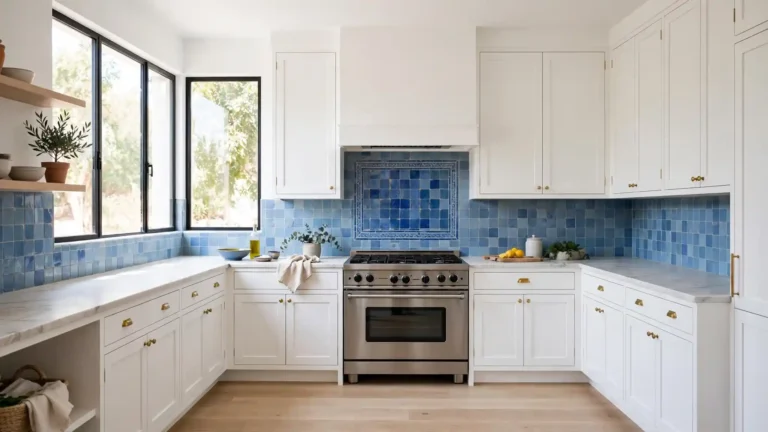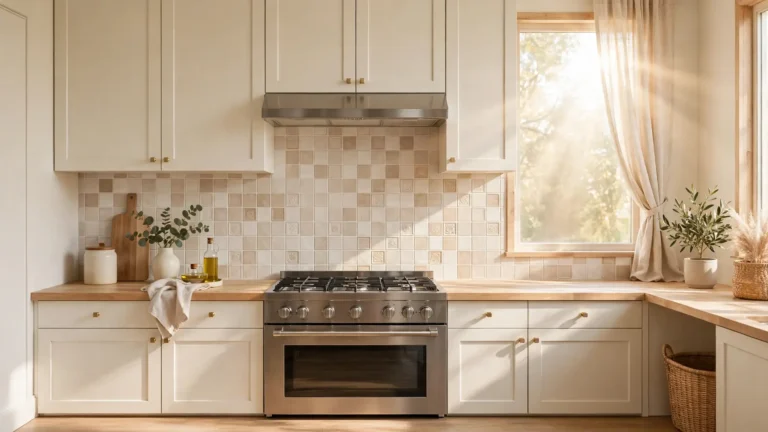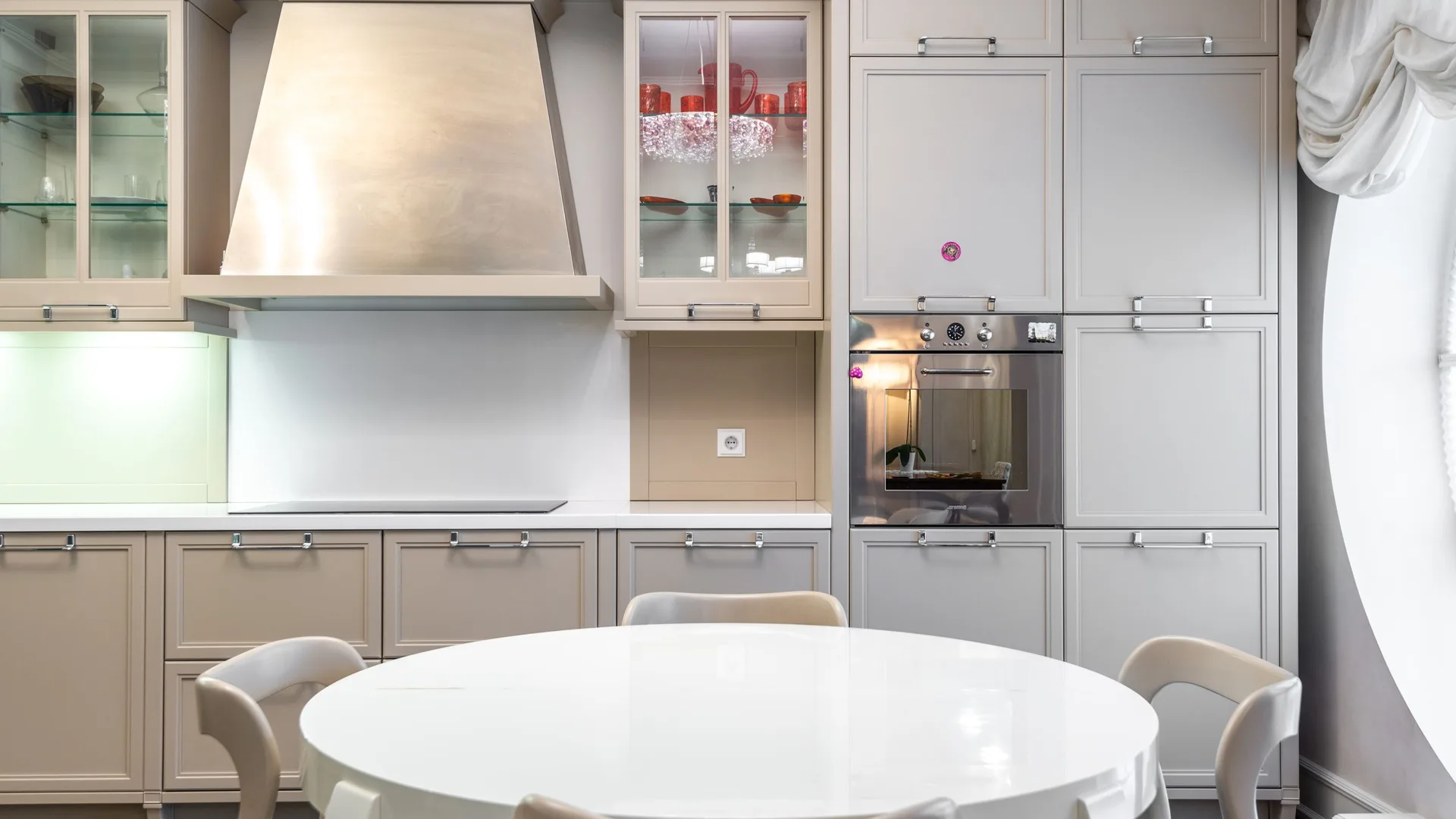
23 Wave Tile Kitchen Backsplash Ideas for a Bold, Modern Look
Renters and renovators keep saving wave tile kitchen backsplash ideas for one simple reason: movement. A rippled surface catches light across its ridges and lets shadows settle in the dips, so even a plain white kitchen gains depth. The relief also hides water spots and cooking splashes far better than flat tile, and one wipe restores the shine. Pair the texture with calm cabinets and let the wall do the talking, the same trick that makes scalloped tile bathroom inspiration feel rich in a small room.
Budget matters too, since many wave tiles now come on mesh sheets that install like standard mosaic. In my experience, the happiest kitchens pick one strong direction, vertical or horizontal waves, and repeat it without mixing patterns. Choose a grout shade close to the tile for a soft ripple, or go darker for bold graphic lines. The twenty three kitchens ahead cover gloss, matte, marble, and peel and stick routes, so one of them will fit your counter, your cabinets, and your weekend.
Glossy White Wave Tiles
Credit : Marina Zvada
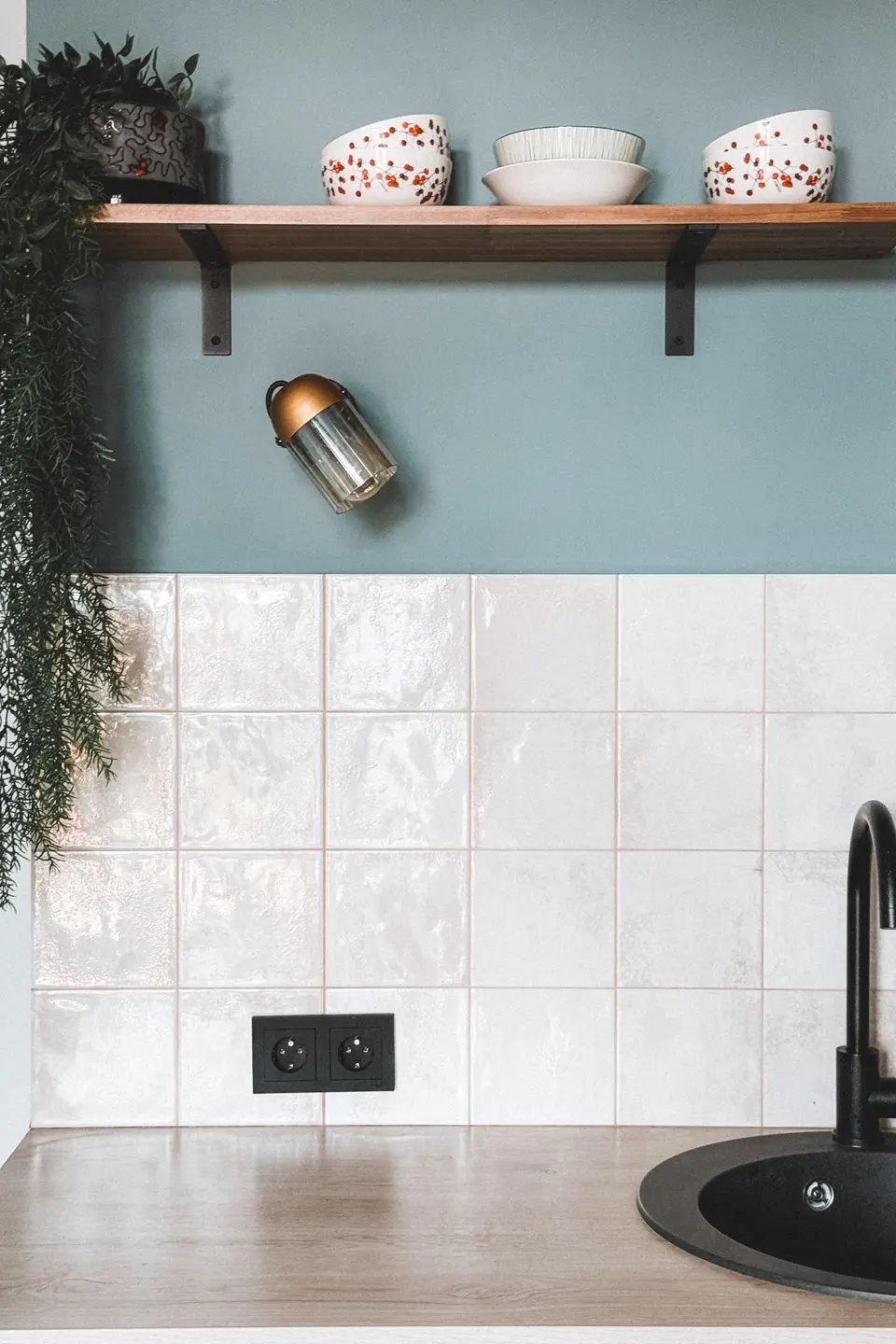
Morning light does half the styling work on a glossy white wave wall. Each ridge catches a highlight, each dip holds a soft shadow, and the surface reads calm from across the room yet rich up close. Wide format waves feel modern, while narrow flutes lean classic and pair well with shaker cabinets and warm wood counters.
Gloss glaze earns its keep behind the stove, since grease lifts off with a damp cloth and mild soap. Keep grout pale for a seamless ripple, or pick light gray to sketch each wave. I’ve noticed white on white schemes photograph best with one dark accent, like matte black handles or a single black faucet.
Seafoam Green Ripples
Credit : Max Vakhtbovych
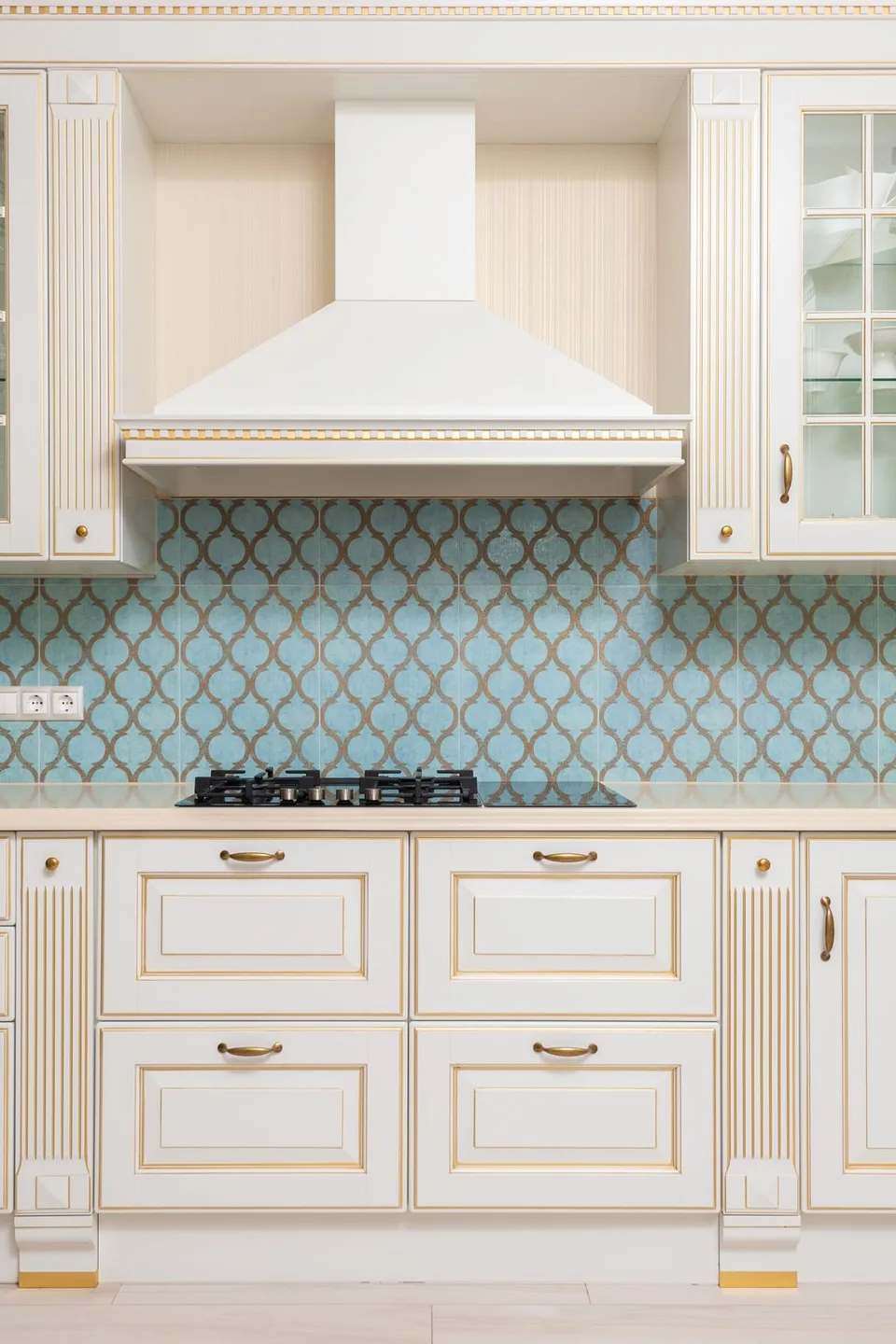
- Soft green glaze shifts from mint to sage as daylight moves across the ridges
- Cream cabinets keep the pastel wall gentle instead of sweet
- Brushed nickel taps echo the cool tone without fighting it
- Open shelves in pale oak warm up the cool palette
- A white stone counter gives the eye a quiet resting place
Seafoam suits north facing kitchens that need borrowed brightness, because the glaze bounces light instead of swallowing it. In my experience, one pastel wall works best when every other finish stays plain. Save the pattern energy for this single surface, and the room feels collected rather than busy.
Deep Navy Wave Tiles

Credit : Andre Moura
Quick Tip: Sample navy waves under your actual bulbs before ordering. Deep blue glaze can read almost black in dim corners, so tape two sheets behind the stove for a full day and check them at breakfast and after dark. Sort the sheets by shade before the first row goes up.
Painted wave patterns like these Portuguese style panels turn a backsplash into wall art. The hand brushed strokes soften the geometry, and the white ground keeps the navy from closing in. Limit the pattern to the stove wall if the full run feels loud, then carry plain navy field tile around the sink. Brass rails and warm wood shelves stop the blue from feeling cold.
Plain Wall To Pattern
Credit : Curtis Adams
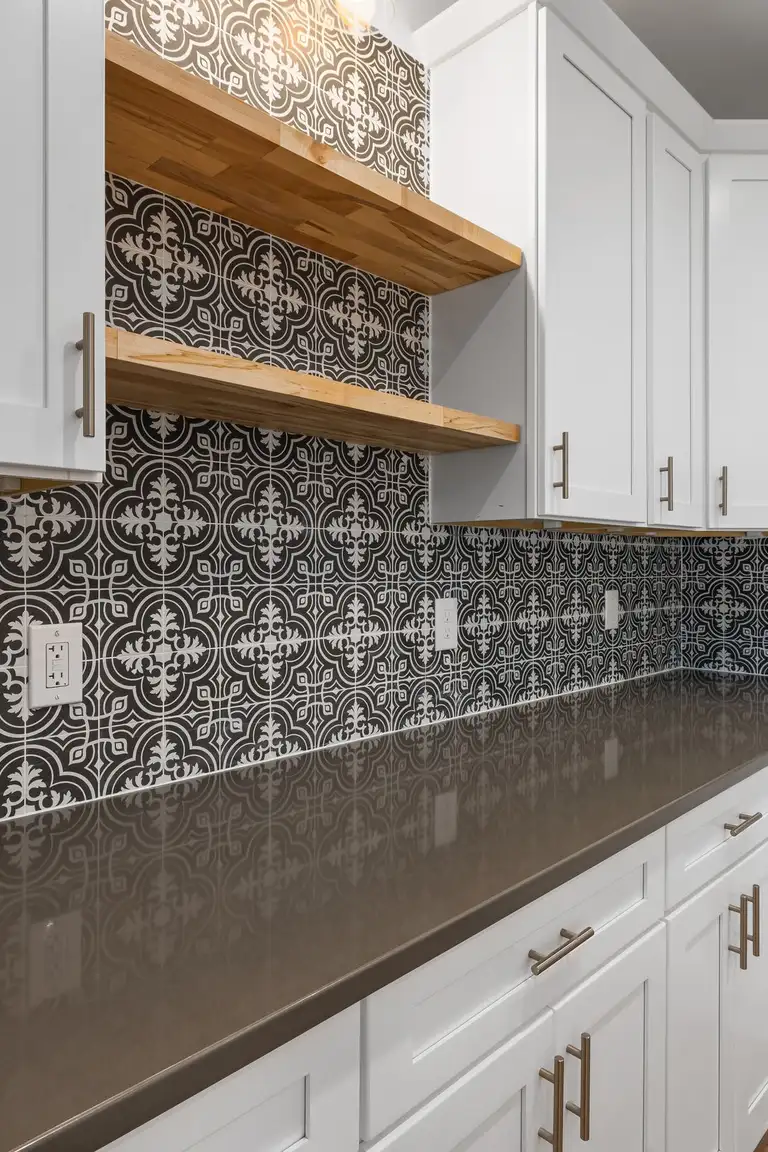
BEFORE: The rental kitchen had painted drywall behind the counters, flat and faintly greasy near the stove. Nothing on the wall earned a second glance, and the white cabinets disappeared into the white paint.
AFTER: Black and white patterned wave tiles now run from counter to cabinet, and the whole wall reads like fabric. Open oak shelves float over the pattern, and the dark stone counter grounds the busy print.
Pattern scale decides whether a wall like this feels tailored or chaotic. Medium motifs suit standard ceiling heights, while tiny prints shimmer and large ones shout. Test one sheet at counter distance before committing, because backsplashes are read from two feet away, not across the room.
Kit Kat Tile Steps
Credit : Derwin Edwards
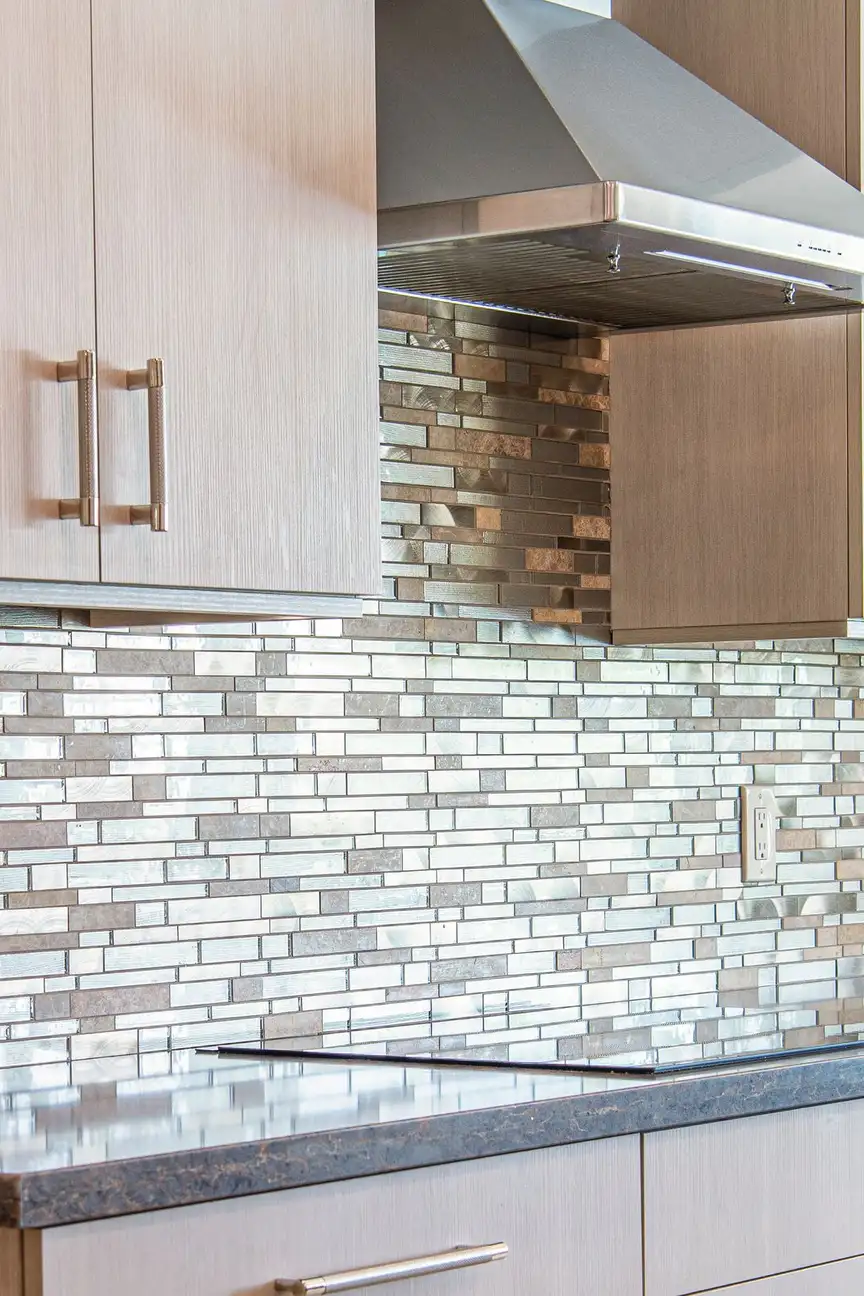
What You Need: Mesh mounted kit kat sheets, a notched trowel, white thinset, a level, tile spacers, and unsanded grout.
- Dry lay three sheets on the counter and mark the outlet cuts first.
- Spread thinset in small sections so the ridges stay visible while you work.
- Press each sheet firmly and check the wave lines with a level every row.
- Grout after a full day of curing, then wipe the haze with a damp sponge.
Slim finger tiles make narrow kitchens feel wider when the sticks run horizontally. Vertical stacks do the opposite and stretch low ceilings. I’ve seen this work well in galley layouts where a full slab would overwhelm the short wall between stove and sink.
Gloss Versus Matte Waves
Credit : Max Vakhtbovych
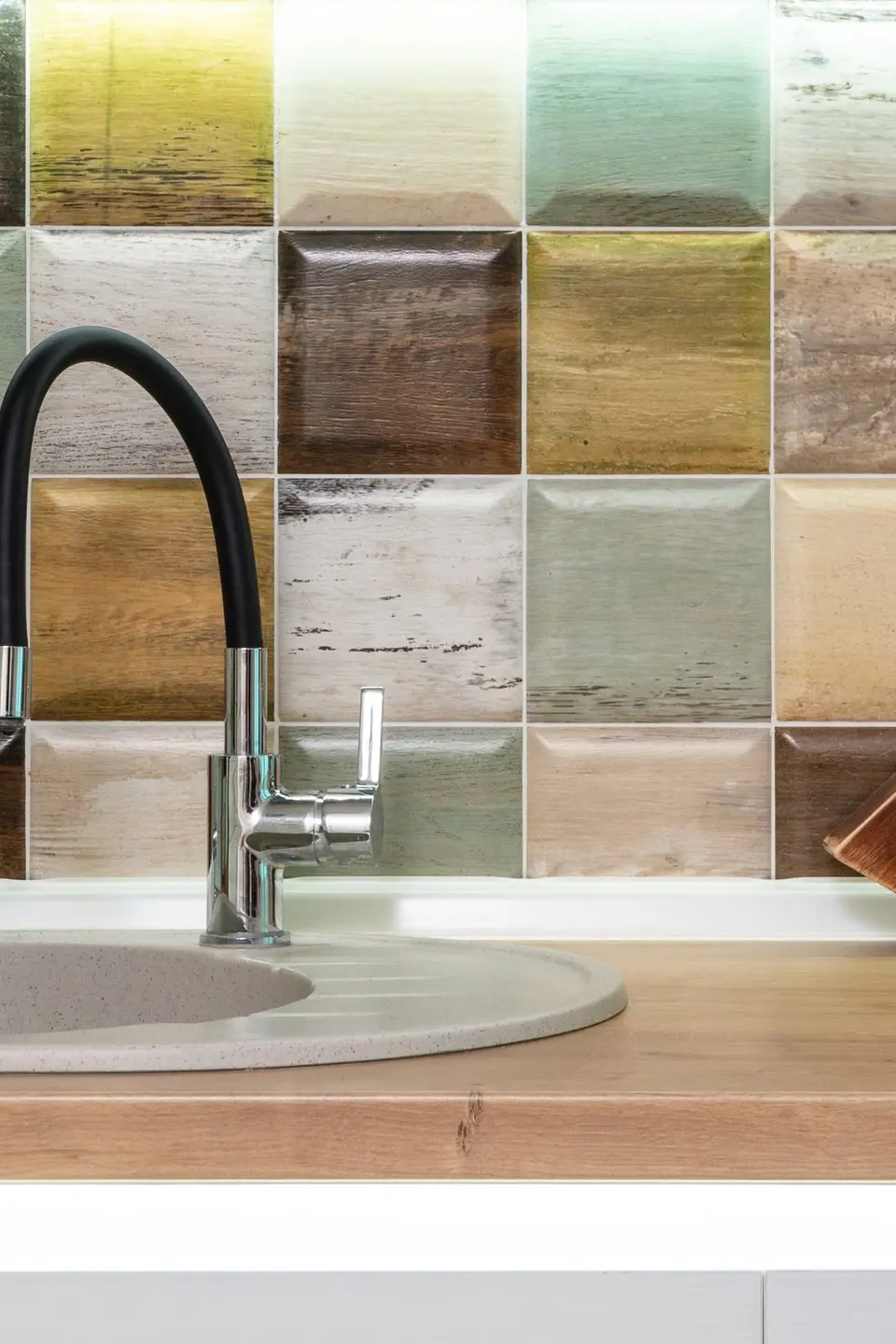
Gloss and matte versions of the same wave tile can change a kitchen more than the color does, and the grout bill stays identical either way.
| Detail | Gloss Wave | Matte Wave |
|---|---|---|
| Light Play | Sparkles and bounces light | Soft and shadowy |
| Cleaning | Wipes clean in seconds | Shows grease sooner |
| Mood | Bright and energetic | Calm and grounded |
Small kitchens usually win with gloss, since every extra bounce of light counts. Matte earns its place in big sunny rooms where glare off the stove wall gets tiring by noon. When budget allows, sample both finishes on the same wall for a week before the full order goes in.
Aqua Glass Wave Tiles
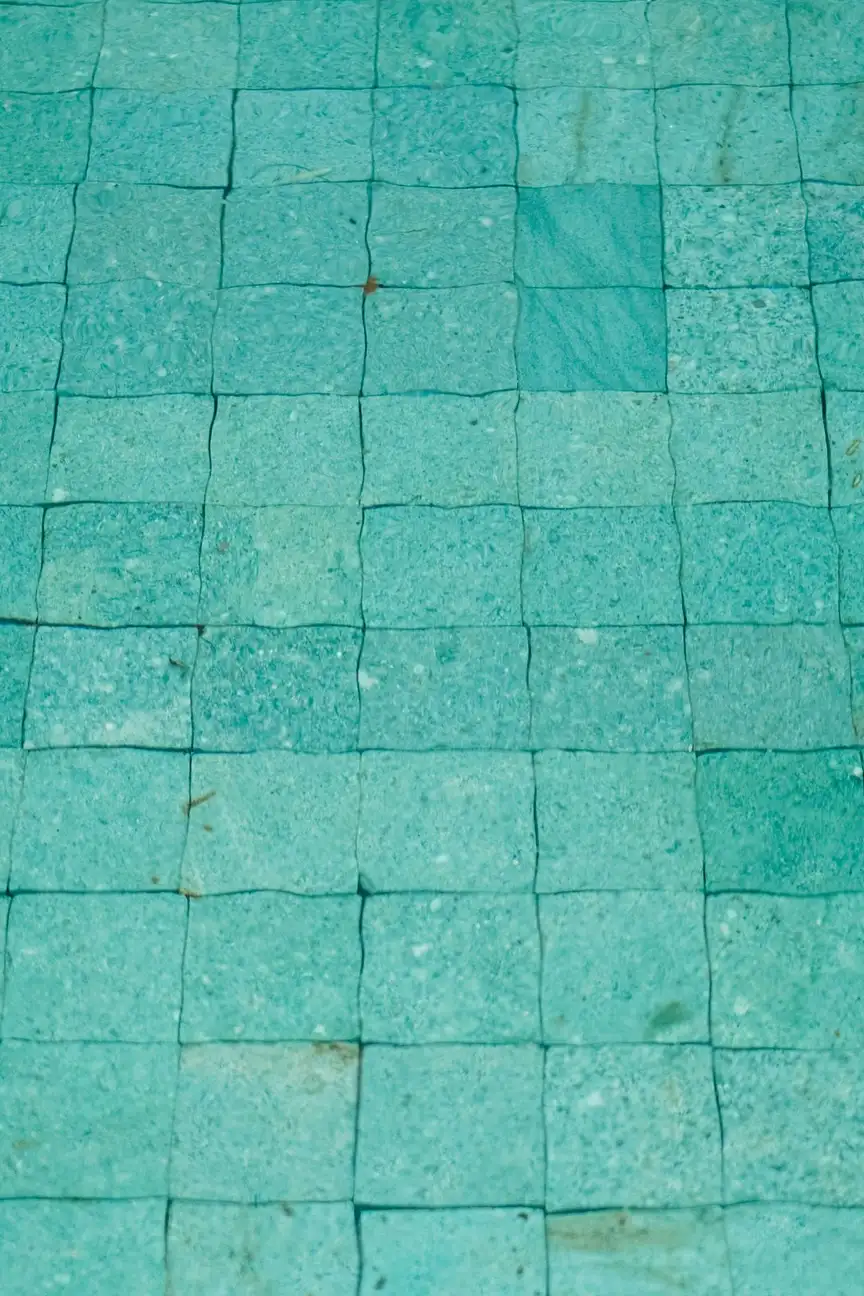
Credit : Agung Pandit Wiguna
Do:
- Choose aqua glass for a sink wall that needs a fresh coastal lift
- Pair the cool tiles with warm wood counters to balance the chill
- Seal the grout lines, since glass shows every splash near the tap
Don’t:
- Mix aqua waves with a second patterned tile on the floor
- Install glass tile with a coarse trowel that scratches the backing
- Skip the expansion gap at the counter edge in sunny rooms
Aqua glass reads clean even on grey days, which is why it keeps showing up in basement and windowless kitchens. The color sits happily beside stainless steel, white stone, and pale grout. Keep the rest of the palette quiet and the small wall glows like pool water.
Cream Zellige Wave Facts
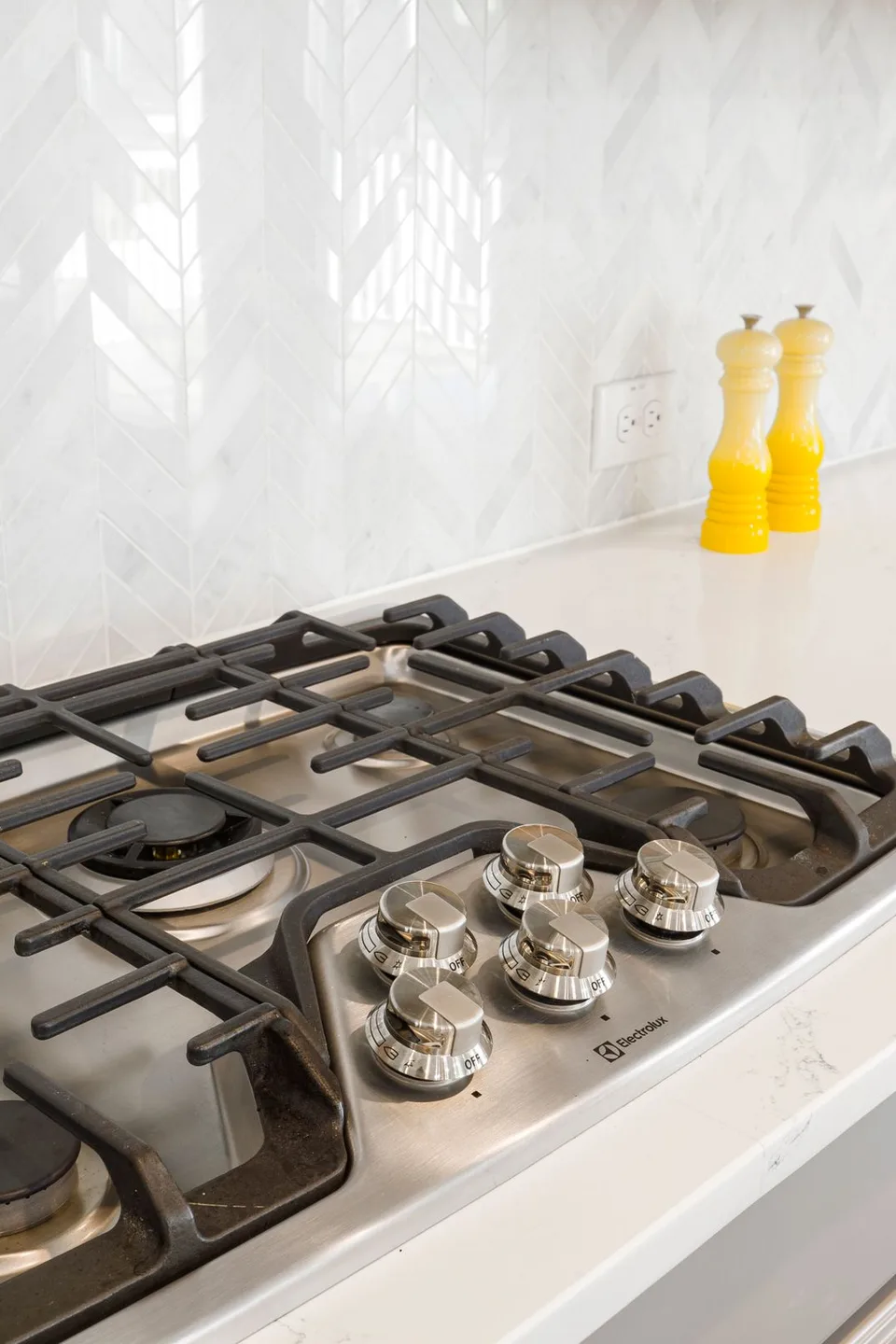
Credit : Curtis Adams
Cost: Mid range, close to handmade look tiles sold by the sheet.
Time: One weekend for a standard stove wall.
Skill Level: Confident beginner with a rented wet saw.
Best For: Warm white kitchens that feel flat and need gentle texture.
Cream zellige style tiles carry tiny ripples in the glaze itself, so the wall moves even where the tile face stays flat. Uneven edges are part of the charm, not a defect to sort out. Pair with aged brass and unlacquered wood for a kitchen that feels collected over years. The warm tone also flatters every skin tone at the counter.
Sage Green Gloss Waves
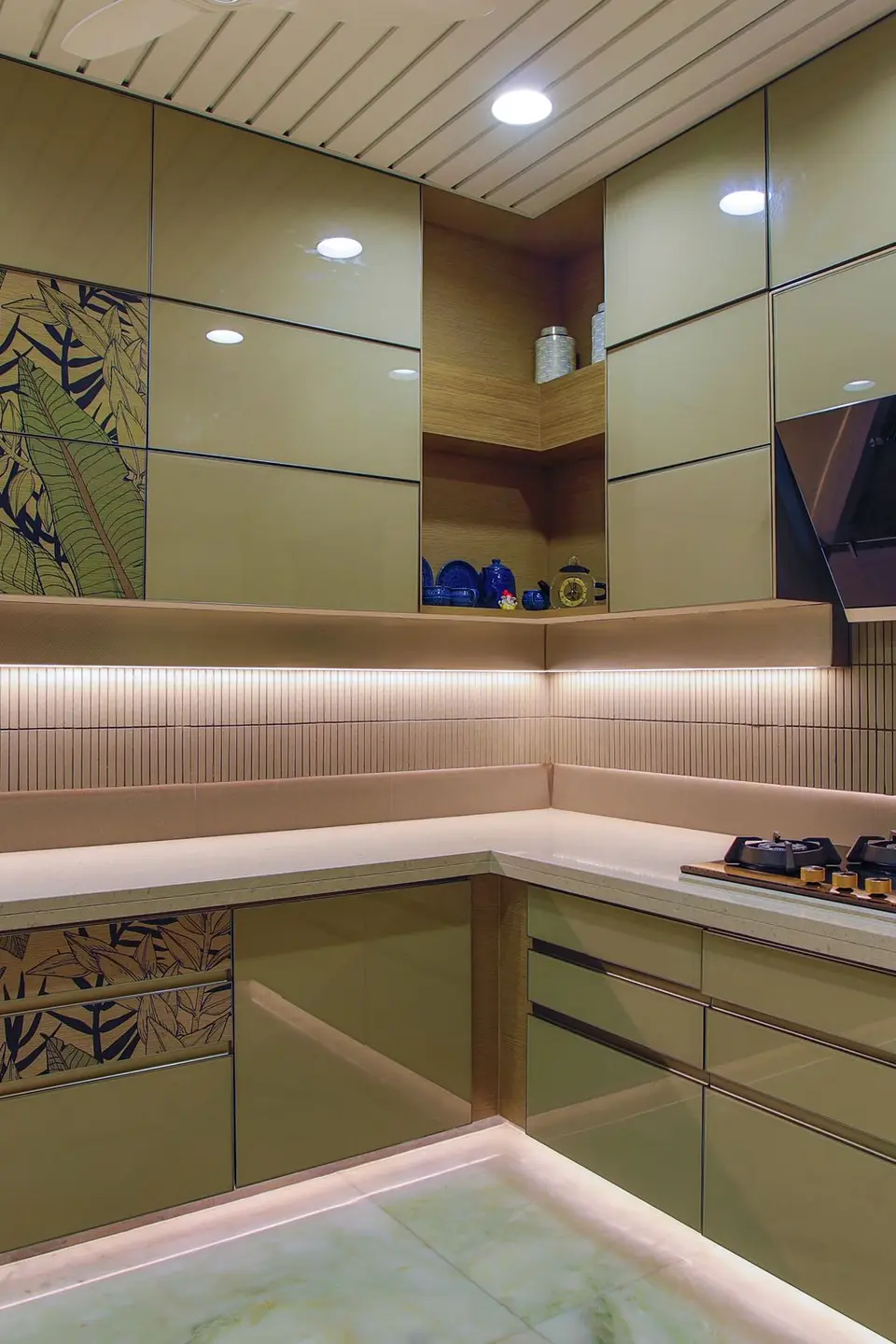
Credit : Roshan Patel
Glossy sage cabinets and a rippled splashback in the same family give this kitchen its calm, layered green. The wave relief keeps the single color story from going flat, because each ridge throws a slightly different shade. Floral glass panels above the stove add one soft note of pattern without a second tile.
Green gloss needs restraint everywhere else. Plain counters, quiet hardware, and one warm metal keep the room serene instead of swampy. In my experience, sage reads most elegant with cream grout and natural light, and it hides herb splashes and oil mist better than any pale neutral.
Charcoal Wave Drama
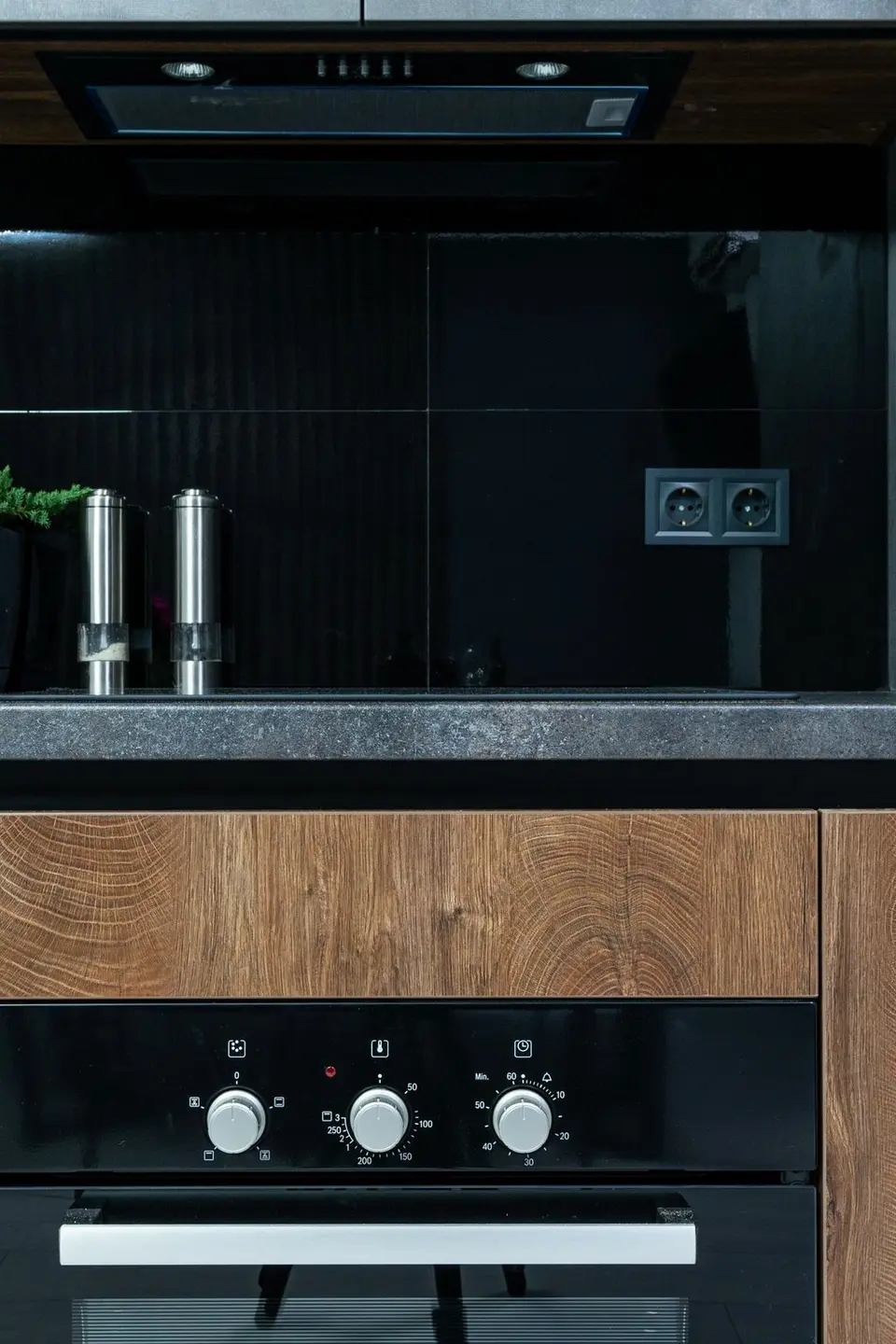
Credit : Max Vakhtbovych
- Black wave tile swallows glare and makes the stove wall feel deep
- Natural wood cabinets stop the dark wall from reading cold
- A single steel kettle or rail becomes the bright accent
- Under cabinet strips trace every ridge with a warm line of light
- Matte black taps disappear into the wall for a seamless run
Charcoal works because wave tile kitchen backsplash ideas rely on shadow play more than color. Each ridge holds a highlight on one side and a shadow on the other, so the wall stays dramatic even at noon. Keep counters light to hold the contrast in balance.
Terracotta Wave Warmth

Credit : Rachel P
Quick Tip: Order terracotta wave tiles from one batch only. Clay glazes shift between firings, and a mixed batch shows banding across the wall once the light hits it. Sort the sheets by shade before the first row goes up.
Retro orange pattern tiles hand the kitchen an instant decade and a lot of warmth. The wavy relief keeps the bold color playful rather than loud, especially beside flat terracotta cabinets. Ground the scheme with a dark worktop and simple steel, and let the wall carry every bit of the personality. Cream grout softens the grid and keeps the pattern friendly.
Dull Kitchen To Shine
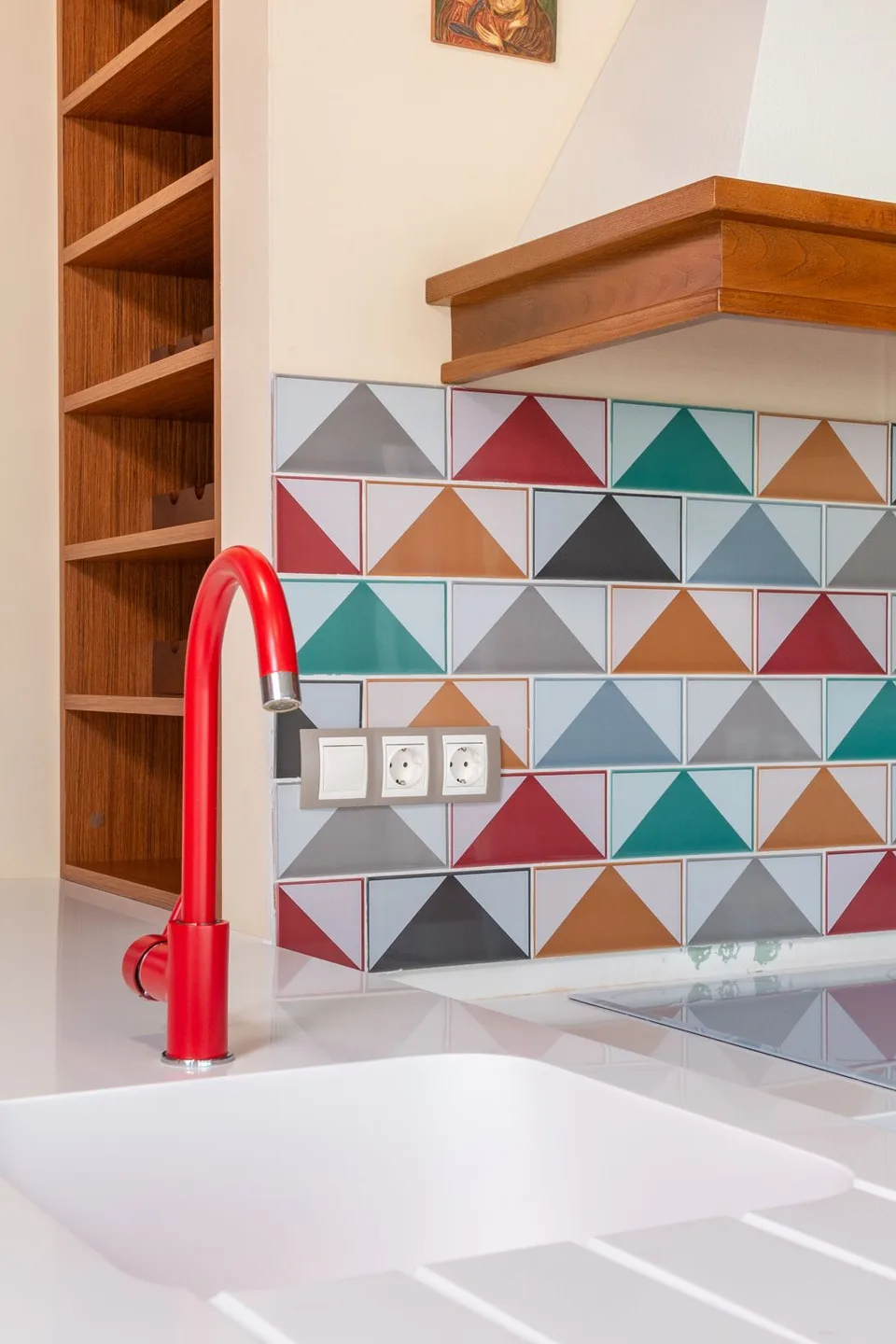
Credit : Max Vakhtbovych
BEFORE: Beige tiles and beige grout made the cooking wall vanish into the cabinets. The room worked fine, yet nothing in it sparked a photo or a compliment.
AFTER: Colorful geometric wave tiles and one red faucet rewired the whole mood. Guests now ask about the backsplash before they ask what is cooking, and the white counters read brighter against the saturated wall.
One brave wall can carry a kitchen that cannot afford new cabinets. The trick is commitment: run the pattern full height between the uppers, keep the counter styling sparse, and repeat one tile color in a small accessory so the choice looks planned.
Vertical Stack Wave Steps
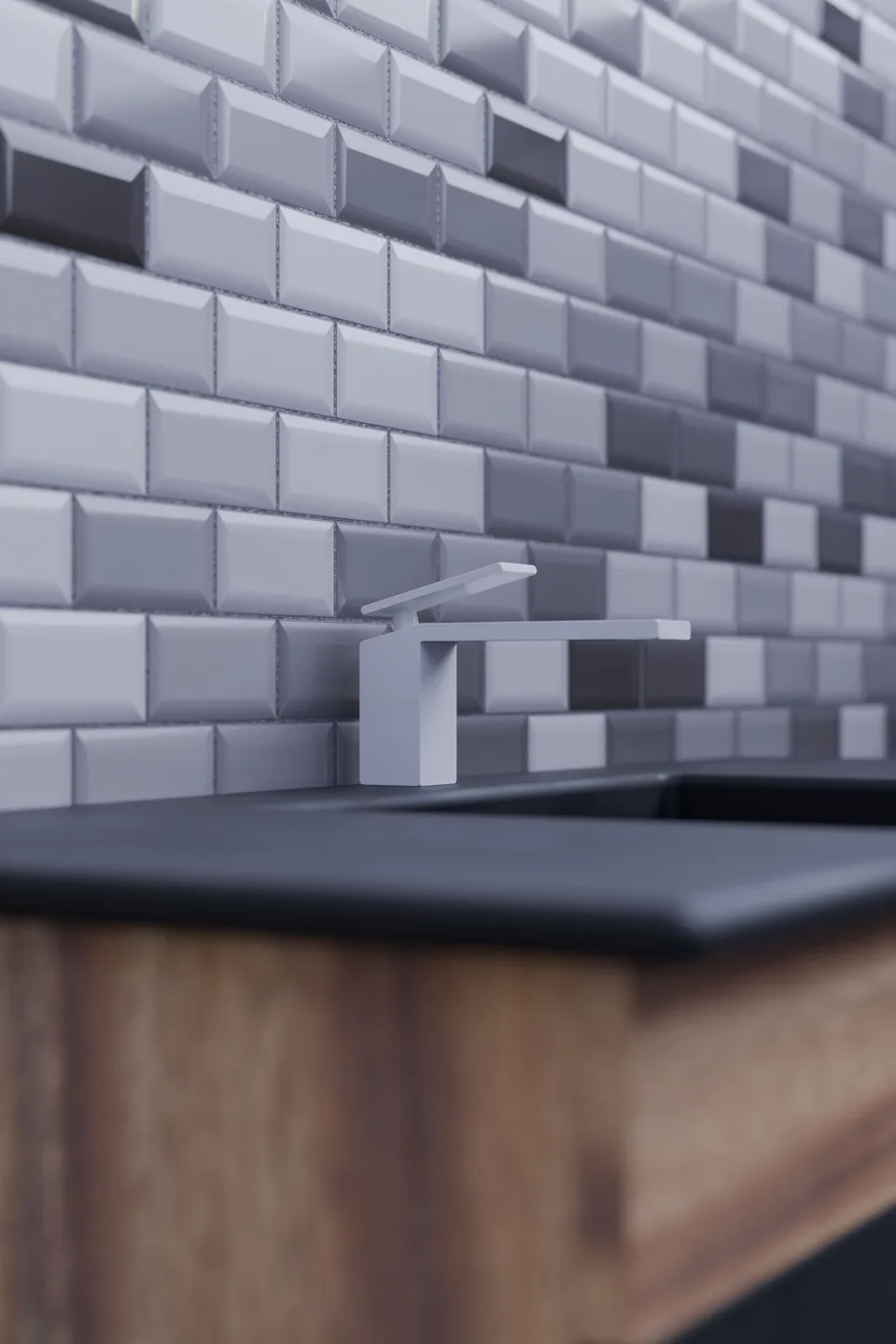
Credit : Pușcaș Adryan
What You Need: Stacked wave tiles, a laser level, thinset, a square notch trowel, spacers, grout, and a caulk gun.
- Snap a plumb line at the wall center and work outward to both corners.
- Butter each tile back so the ridges bond fully along their length.
- Check every third course with the level, since small drifts grow fast.
- Grout in vertical strokes and tool the joints before the haze sets.
Vertical stacks stretch a low ceiling and make a short wall look tailored. Gray on gray keeps the geometry calm, while a walnut counter adds the warmth the cool palette needs. Finish the top edge with a slim metal strip for a clean stop.
Ceramic Versus Glass Waves
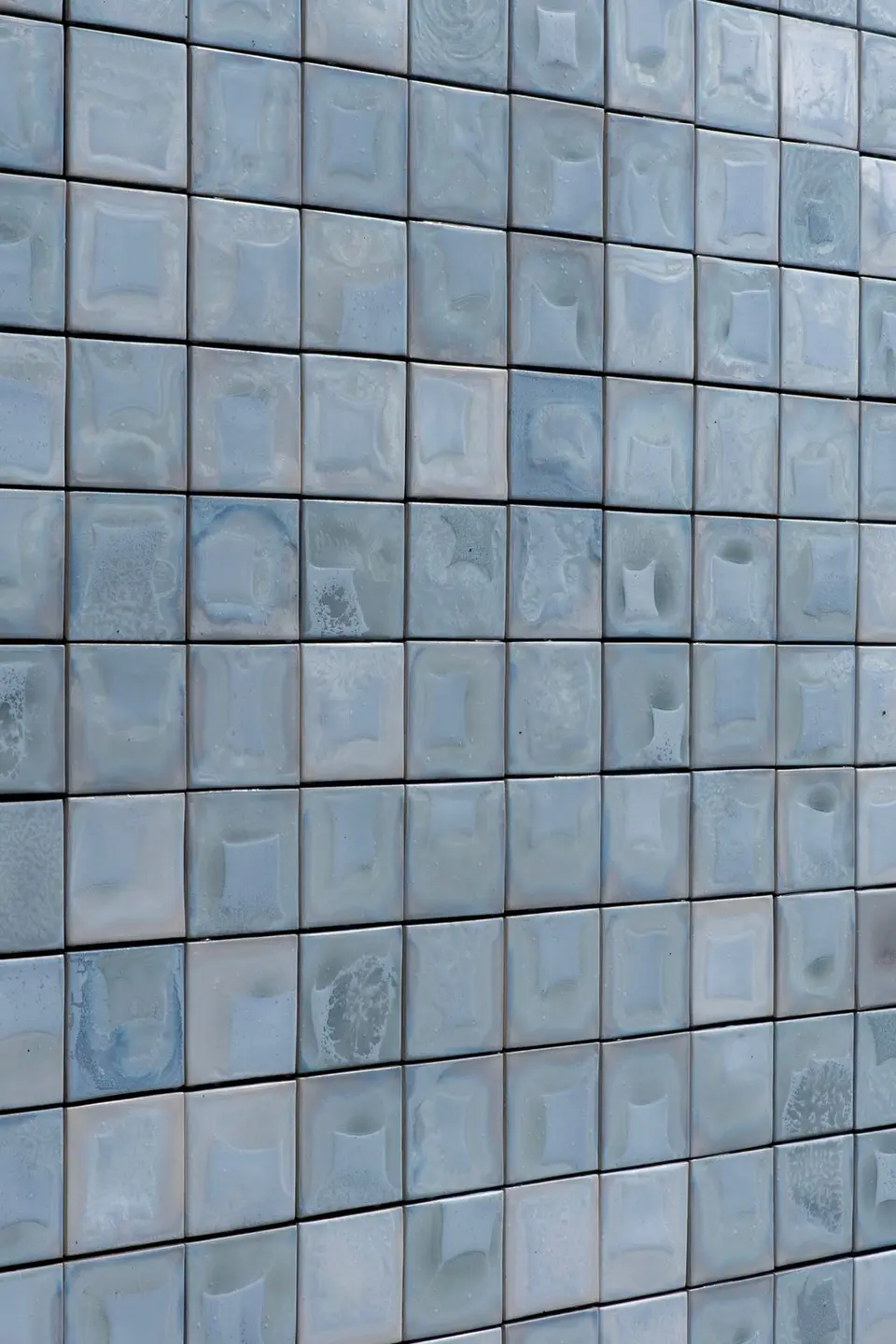
Credit : Jan van der Wolf
Ceramic and glass carry the same wave profile with very different light behavior. The budget gap between them can fund better lighting.
| Detail | Ceramic Wave | Glass Wave |
|---|---|---|
| Surface | Hand glazed, softly uneven | Polished, mirror smooth |
| Light | Gentle glow, hides flaws | Bright sparkle, shows spots |
| Price | Friendly for full walls | Better for feature zones |
Blue ceramic with a crackle glaze gives the relaxed, handmade feel most kitchens want from this trend. Glass earns its higher price near windows, where the sparkle changes all day. I’ve noticed mixed walls rarely work, so commit to one material and let grout shade supply the contrast.
Marble Wave Slab Look
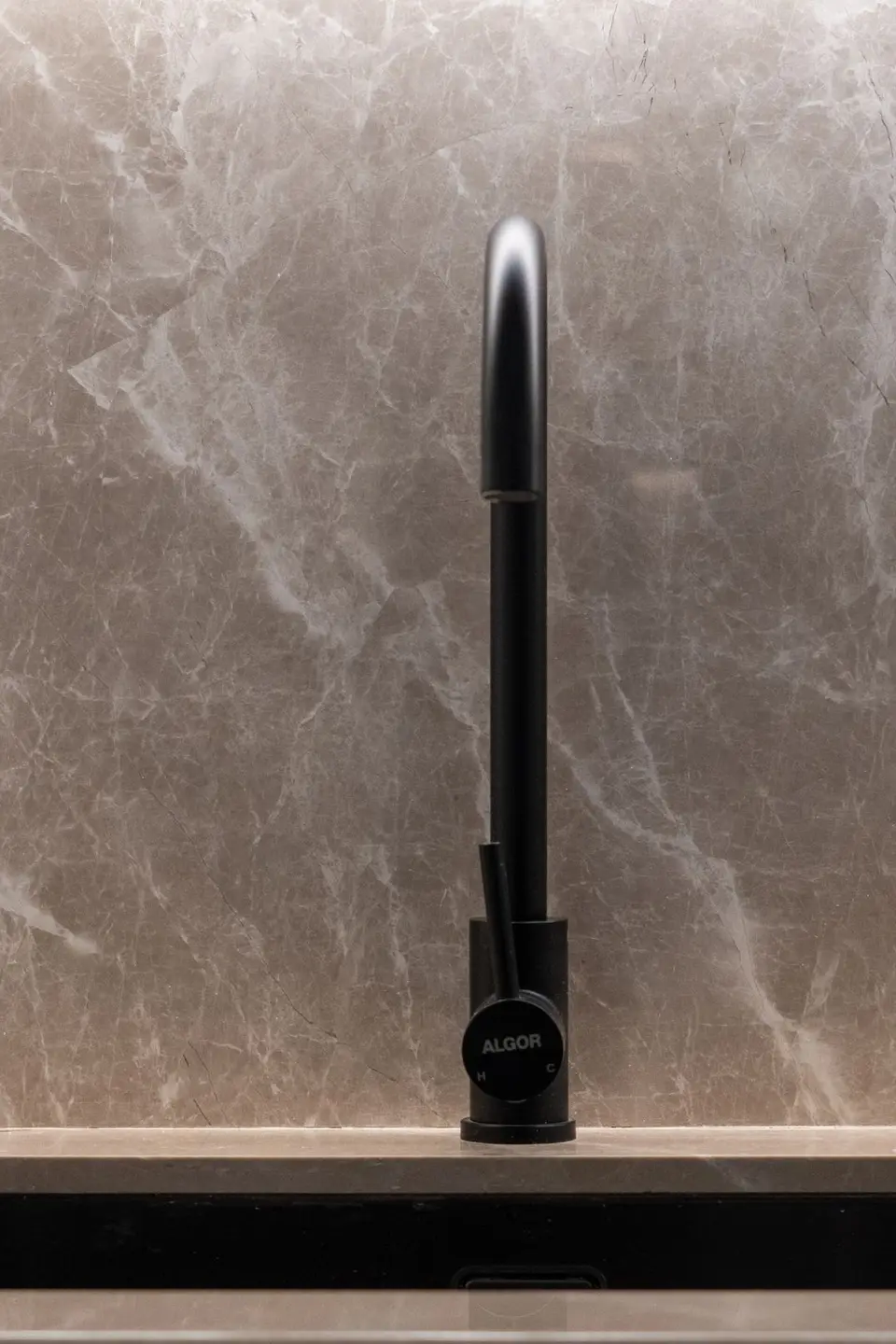
Credit : Waqas ilyas
Do:
- Book match two marble slabs so the veining flows like water
- Keep the faucet matte black for a crisp modern contrast
- Run the slab full height behind open shelves for drama
Don’t:
- Pair busy veining with a patterned counter stone beside it
- Seal marble late, since acids etch the polish within minutes
- Hang heavy shelves into the slab without proper anchors
A marble slab carved with shallow waves gives the luxury of stone and the movement of tile in one surface. Warm gray veining suits the black tap in this kitchen and keeps the wall from feeling cold. Lighting from above grazes the ridges and doubles the effect after dark.
Budget Friendly Wave Facts

Credit : KATRIN BOLOVTSOVA
Cost: Low, since ceramic wave tiles start near plain subway prices.
Time: One weekend for a sink and stove wall.
Skill Level: Beginner friendly with mesh mounted sheets.
Best For: Rental friendly refreshes and first time renovators watching every dollar.
Peel and stick wave panels cut the budget further and come off clean when a lease ends. The honest trade off is heat: keep stick on panels away from open flame burners. Save the real tile for the stove wall and use panels near the sink to stretch the spend. A single accent wall also keeps leftover boxes to one.
Gold Grout Wave Detail
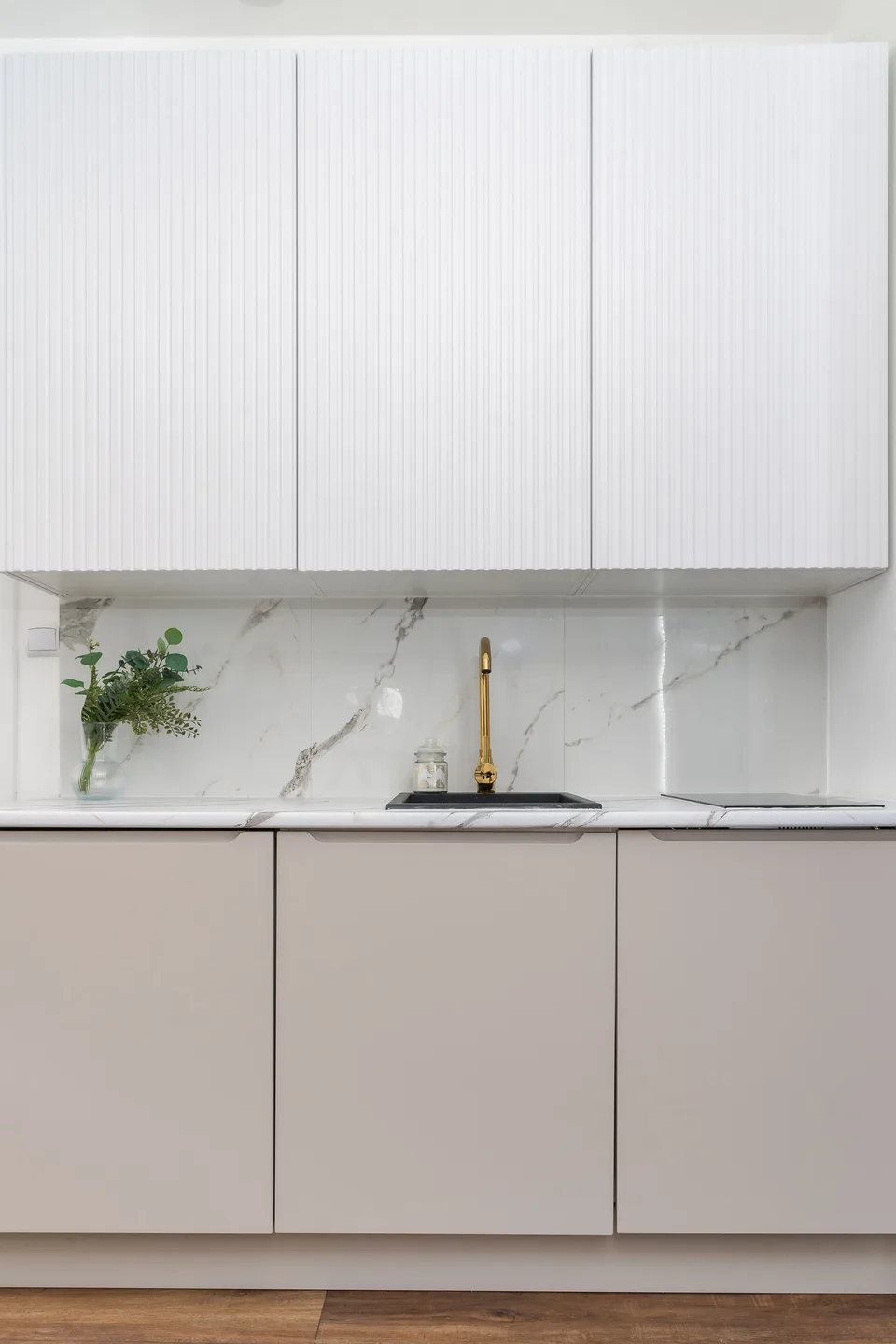
Credit : Mateusz Pielech
Gold grout sounds risky until the light hits it. Thin metallic lines trace every wave on a plain tile and turn a budget field tile into a tailored grid. The effect stays quiet in daylight, then glows under evening pendants when the kitchen shifts into dinner mode. It also hides pale grout stains far better.
Brass taps and handles complete the pairing, and the same warm metal trick flatters rounded kitchen island design ideas with curved fronts. Keep the tile itself pale, since gold lines need a calm ground to read as detail rather than decoration. One metallic thread through the room is always enough.
Ocean Teal Wave Tiles

Credit : Egemen Mutlu
- Leaf shaped scales overlap like roof shingles and shed water fast
- Teal glaze deepens at the edges, so every scale reads dimensional
- Dark grout locks the pattern in and hides cooking splashes
- A single scale wall needs no other art in the room
- Small format sheets curve gently around corners and outlets
Scale tiles borrow their shape from fish and feathers, which is why they feel alive on a wall. Run them behind the sink or the full stove wall, but not both in a small kitchen. I’ve noticed teal pairs best with warm white counters and one brass note, never chrome.
Herringbone Wave Twist
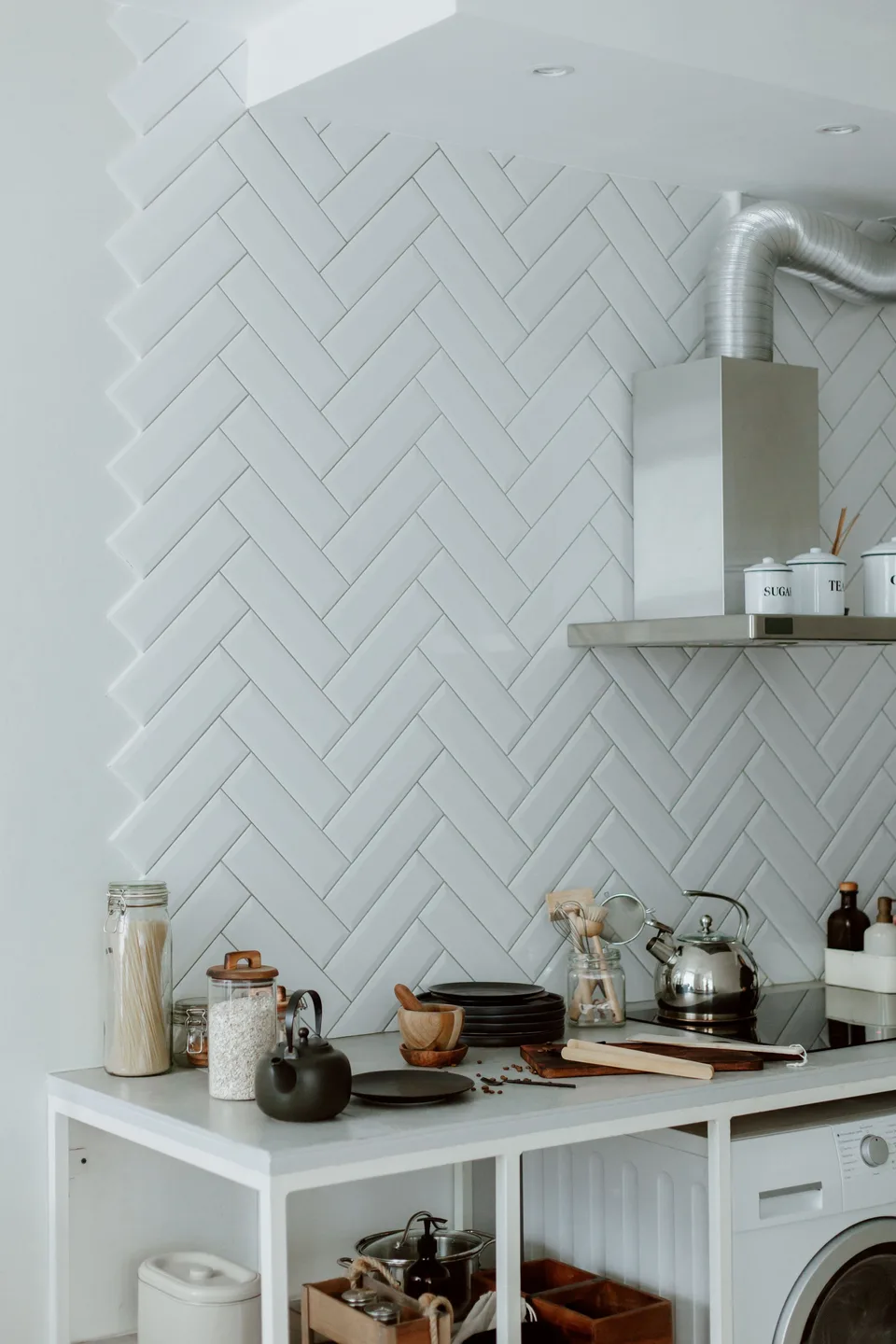
Credit : Ron Lach
Quick Tip: Lay herringbone waves on the counter first and photograph the layout. The zigzag hides small cutting errors, but a drifting center line shows at once in a photo. Start from the center of the stove wall and work outward.
White herringbone with a rippled face gives a classic pattern a second layer of movement. Light breaks across each angled piece, so the wall shimmers without any color at all. The layout suits long walls beside a range, where the chevrons can run uninterrupted from counter to hood. Pale grout keeps the geometry soft and forgiving. It also hides flour dust on baking days.
Tired Tiles To Fresh
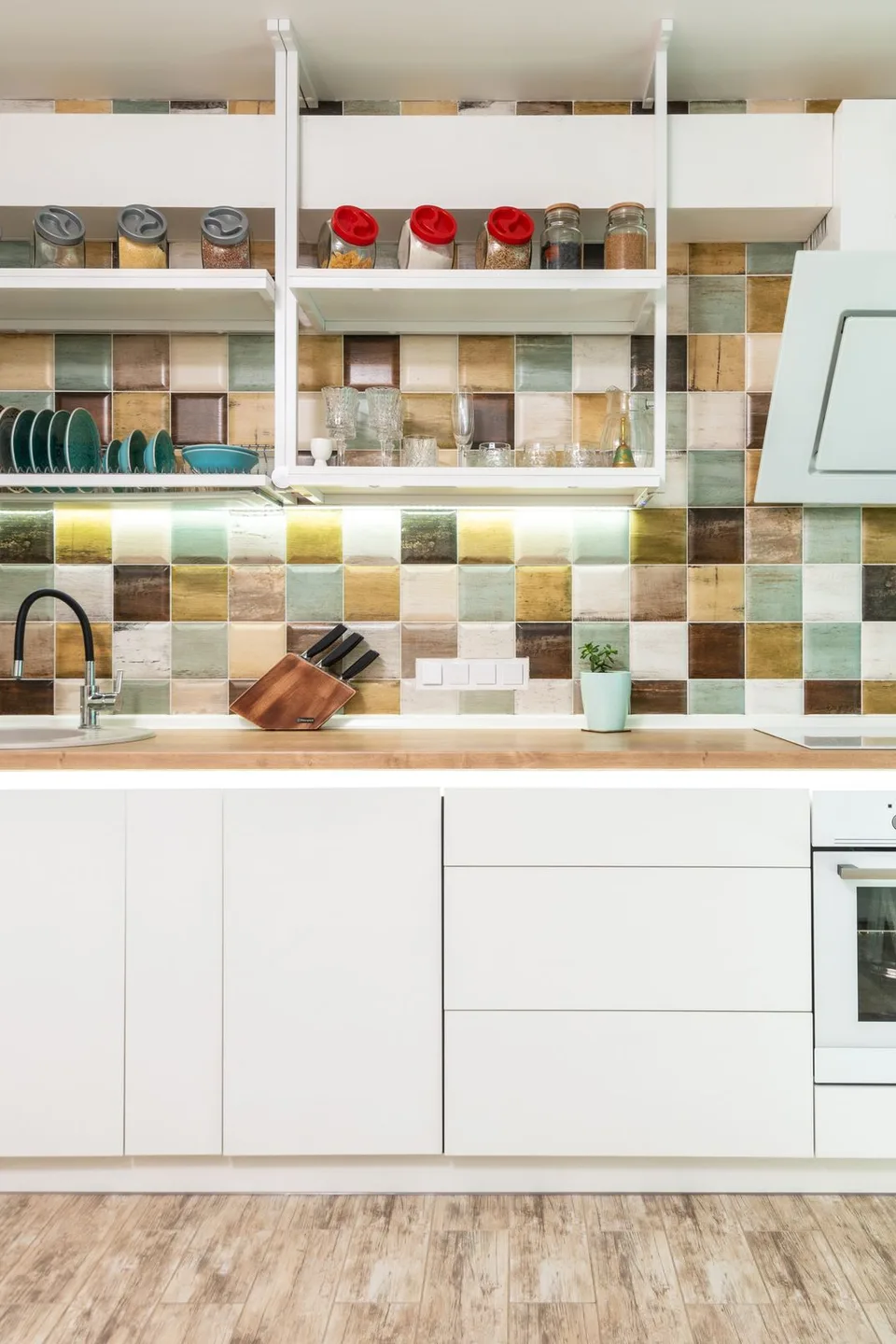
Credit : Max Vakhtbovych
BEFORE: The old kitchen wore small beige squares and dark grout that made every splash look permanent. Open shelves over the sink held clutter that the plain wall did nothing to hide.
AFTER: Larger wave tiles in warm mixed tones now carry the wall, and the shelves hold only daily pieces. The room reads styled even on weekday mornings, with light moving across the ridges from breakfast to supper.
A refresh like this skips demolition when the old tiles sit flat and firm. Skim, prime, and tile over the sound surface, or choose large format waves that cover more area per piece. Either route saves days of dust and a skip hire.
Full Height Wave Steps
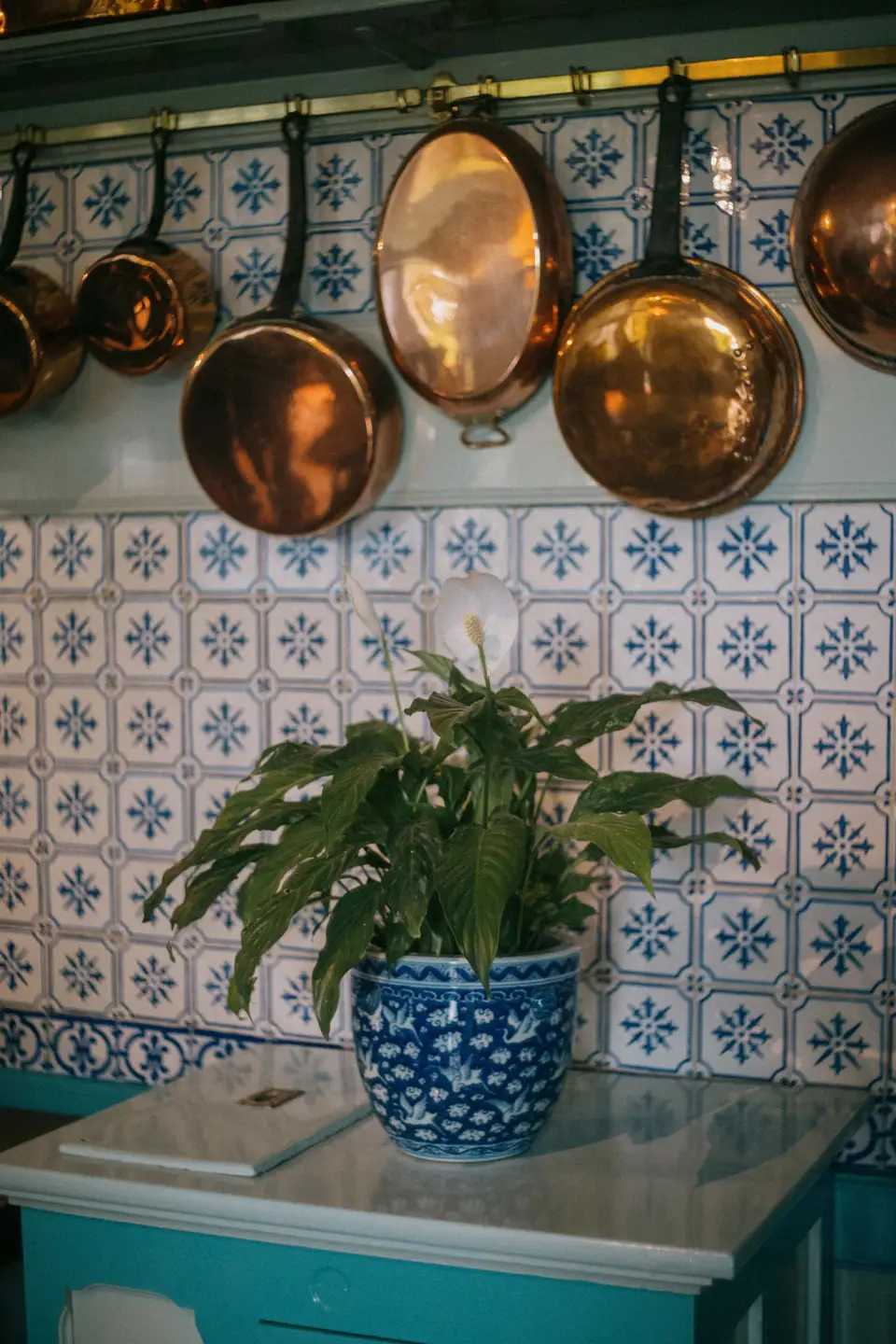
Credit : Clement Couturier
What You Need: Full height wave tiles, thinset, a tall ladder, a laser level, spacers, grout, and edge trim.
- Plan the layout so the top course ends on a full tile at the ceiling.
- Work in waist high bands and let each band grip before climbing higher.
- Hang a brass rail across the tiles for pans, keeping counters clear below.
- Grout from the top down so drips land on finished joints, not fresh ones.
Floor to ceiling tile turns a stove wall into the room’s architecture. Patterned blue tiles with copper pans prove the wall can work hard and still look composed. Choose a washable grout and the full height run stays practical behind daily cooking.
Soft Pink Wave Facts

Credit : KATRIN BOLOVTSOVA
Cost: Friendly, since blush glazes sit in the standard ceramic range.
Time: A weekend for a sink wall with mesh sheets.
Skill Level: Beginner, with patience for the outlet cuts.
Best For: Small kitchens that need warmth without going dark, bold, or gloomy.
Blush wave tiles warm a white kitchen the way candlelight warms a table. The ripple keeps the pink grown up, since shadow does half the talking on the wall. White enamel and pale counters keep the sweetness in check, while one black tap adds the needed edge. The shade flatters morning light especially well. Guests always ask about this wall.
Brass Rail Classic Pairing
Credit : Clement Couturier
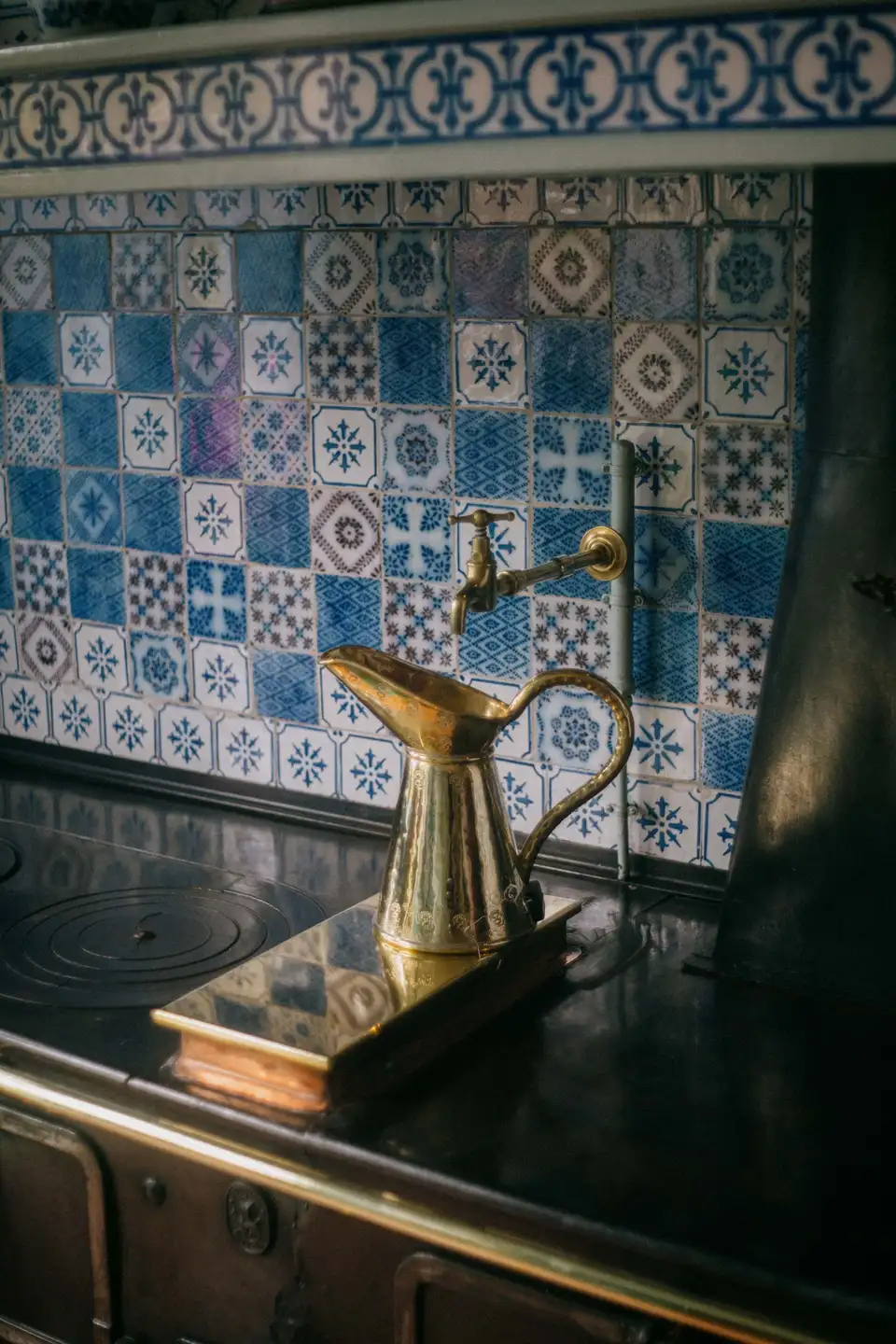
Patterned blue tiles and a brass rail belong to kitchens that cook daily and entertain often. The rail keeps pans off the counters and turns storage into display, while the aged metal warms the cool tile. A dark stove front anchors the pattern so it reads classic, not busy.
Vintage style tiles carry small flaws proudly, and that honesty suits old houses best. In my experience, one heritage wall lets the rest of the kitchen stay simple and modern without a fight. Choose this route when the house has history and the budget has limits. The look ages gracefully alongside the house itself.
Conclusion
Small ridges changed everything in these kitchens, and they can do the same behind your stove. Pick the finish that matches your light, order samples, and live with them for a week before the full run goes up. These wave tile kitchen backsplash ideas reward patience at the planning stage and pay it back every single day. Save this list to your kitchen board on Pinterest for the day the tiles arrive, and send it to a friend who keeps complaining about a flat, tired cooking wall. I’ve seen small changes like these shift the whole feel of a home.