21 Fluted Wood Accent Wall Ideas for a Stunning Interior
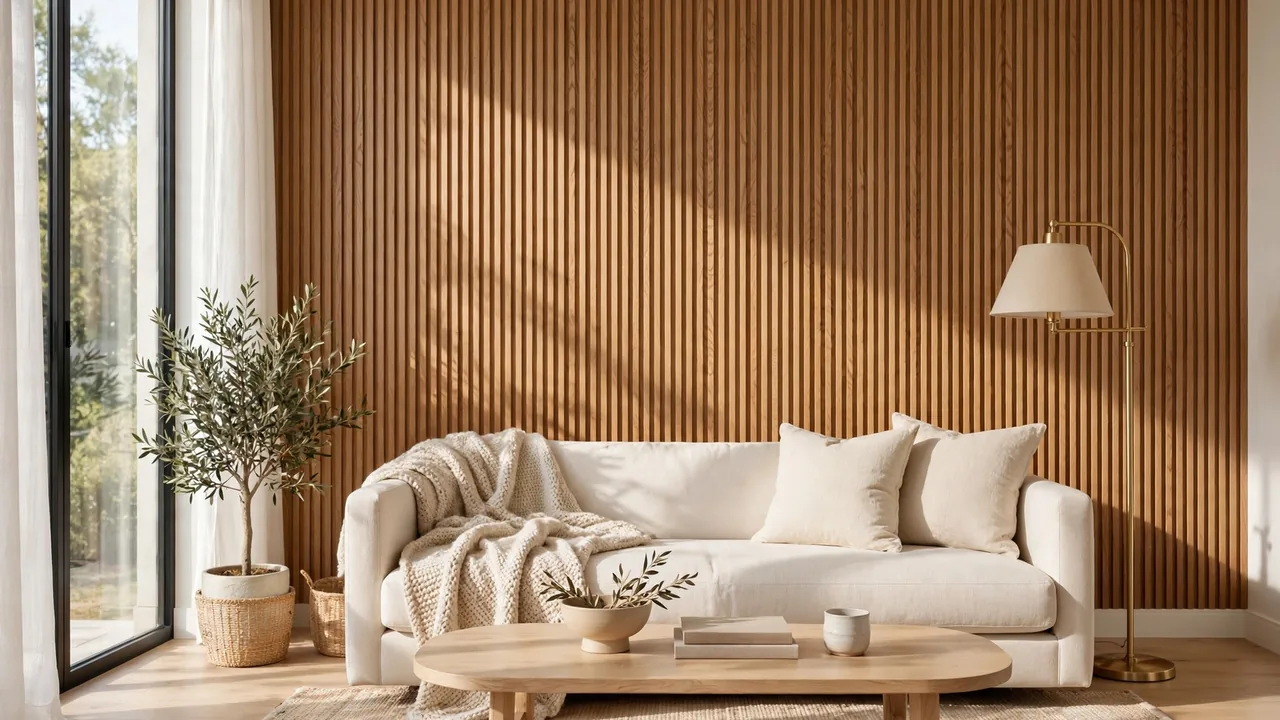
A flat wall asks for texture, and few finishes answer better than fluted wood accent wall ideas built from slim vertical slats. The grooves catch light in soft stripes, so a plain living room gains depth without a single bold color. In my experience, the wall behind the sofa is where this finish earns its keep, because every seat in the room faces it.
The twenty one ideas ahead cover oak and walnut panels, painted finishes, fireplace surrounds, and renter friendly options, each with real costs and steps. Pair the texture with reflective pieces and the room opens up further; the graceful curves in these arched mirror living room decor ideas show how well arches and slats share a wall. Start with the wall your eye visits most, and let the slats do the rest.
Oak Slat Wall Behind Sofa

Light oak slats behind a sofa turn the largest blank surface in the room into quiet architecture. The vertical lines draw the eye upward, so standard ceilings read taller, and the pale wood keeps the wall feeling airy rather than heavy. A linen sofa in front of it gains a tailored backdrop that no cushion pattern can match.
Keep the slats narrow, around one inch wide with a finger width gap, and the rhythm stays calm from across the room. Run the panels from skirting board to ceiling for a built in feel, or stop at picture rail height in older homes. Finish with a clear matte coat so the grain, not the shine, does the talking.
Walnut Panels Rich Warmth

- Choose American walnut for its deep chocolate grain and natural variation from board to board.
- Balance the dark panels with cream upholstery and a pale rug underfoot.
- Repeat walnut in the coffee table or sideboard so the wall feels planned.
- Add brass floor lamps; warm metal lifts the brown tones at night.
- Keep artwork minimal, since the grain itself reads as decoration.
Walnut suits north facing rooms that need warmth without paint. The brown undertones flatter skin tones in lamplight and hide scuffs better than pale woods. I’ve noticed walnut panels age gracefully, deepening slightly each year, so the wall improves instead of dating. Seal with hardwax oil for a low sheen finish that repairs easily.
Fluted TV Media Wall
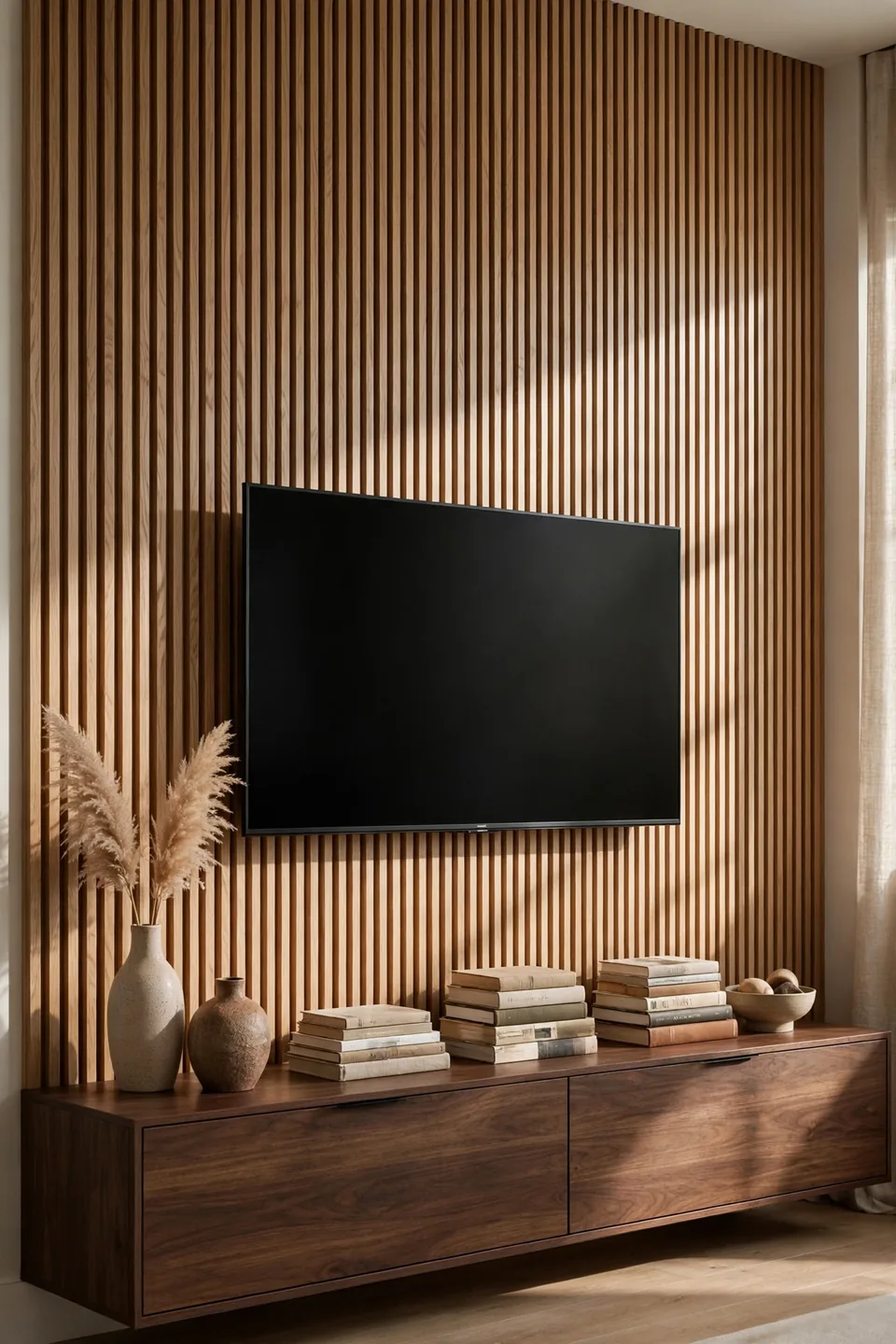
Quick Tip: Mount the television on a slim bracket and leave a two inch shadow gap behind the panel edges. The gap hides cables inside the fluting channels and lets the screen float, so the wood, not the wiring, holds attention.
A fluted media wall solves the ugliest problem in most living rooms: a black screen on a blank wall. Slats run floor to ceiling behind the television, breaking its rectangle into soft vertical stripes. Add a low walnut console beneath and the whole setup reads as furniture, calm and deliberate, even when the screen stays off all evening. Guests notice the wood first.
Bare Wall Fluted Makeover

BEFORE: The wall behind the seating was painted builder white and stopped there. Afternoon sun washed it flat, the sofa floated without an anchor, and every photo of the room showed the same blank rectangle behind people’s heads.
AFTER: Oak fluted panels now run the full width behind the sofa. Shadow lines shift across the grooves all day, the seating zone feels framed like a stage set, and the room finally has a focal point that needs no artwork at all.
A single wall carries the change because fluting adds shadow, and shadow reads as depth. The rest of the room can stay exactly as it was: same sofa, same rug, same lamps. That restraint is the point. One strong surface lets every other piece relax.
Weekend DIY Panel Project

- Measure the wall and order panels with ten percent extra for cuts and mistakes.
- Paint the wall behind in a shade close to the wood tone; gaps will show it.
- Fix a level batten at skirting height and work upward, checking plumb every third slat.
- Glue and pin each panel, then fill pin holes with matching wax.
- Seal the finished wall with matte varnish and let it cure overnight.
Most fluted panel kits arrive pre finished, so a standard living room wall takes one weekend with basic tools. Rent a mitre saw for clean end cuts, and keep a spare blade handy. The job rewards patience at the first panel; every slat after it follows the same rhythm.
Oak Versus Walnut Finishes
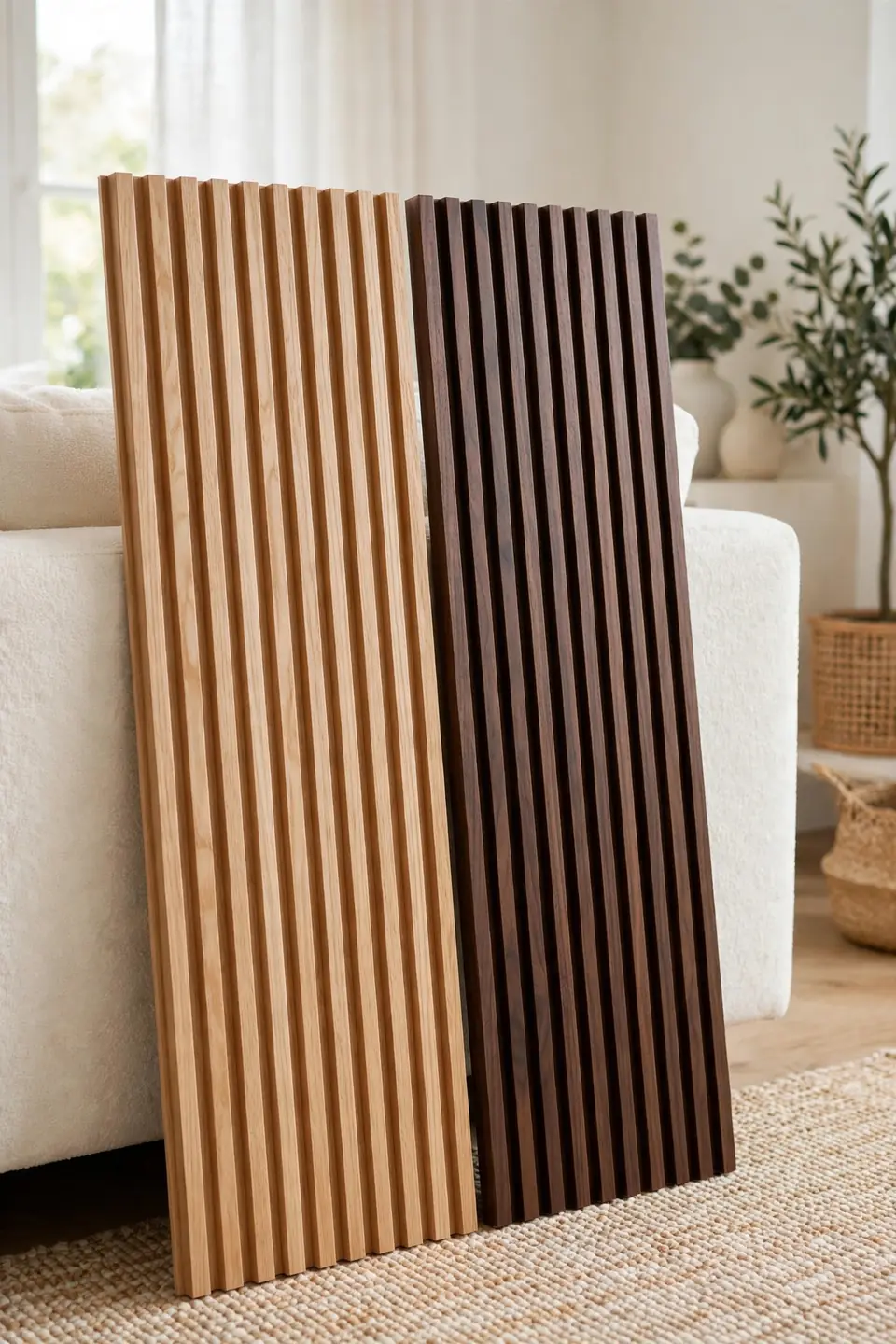
Oak and walnut dominate fluted walls, but they suit very different rooms, light levels, and budgets.
| Feature | Oak | Walnut |
|---|---|---|
| Tone | Pale honey, airy | Deep chocolate, dramatic |
| Grain | Straight, subtle stripes | Rich waves and knots |
| Cost | Lower per panel | Higher per panel |
| Best For | Small, dim rooms | Large, bright rooms |
Oak keeps a compact room open and pairs safely with existing pale floors. Walnut brings evening drama and hides the television better on a media wall. Match the panel tone to the largest wood piece you already own, and the new wall will feel inherited rather than installed. Both take matte oil finishes well and age without yellowing.
Fluted Fireplace Surround Style
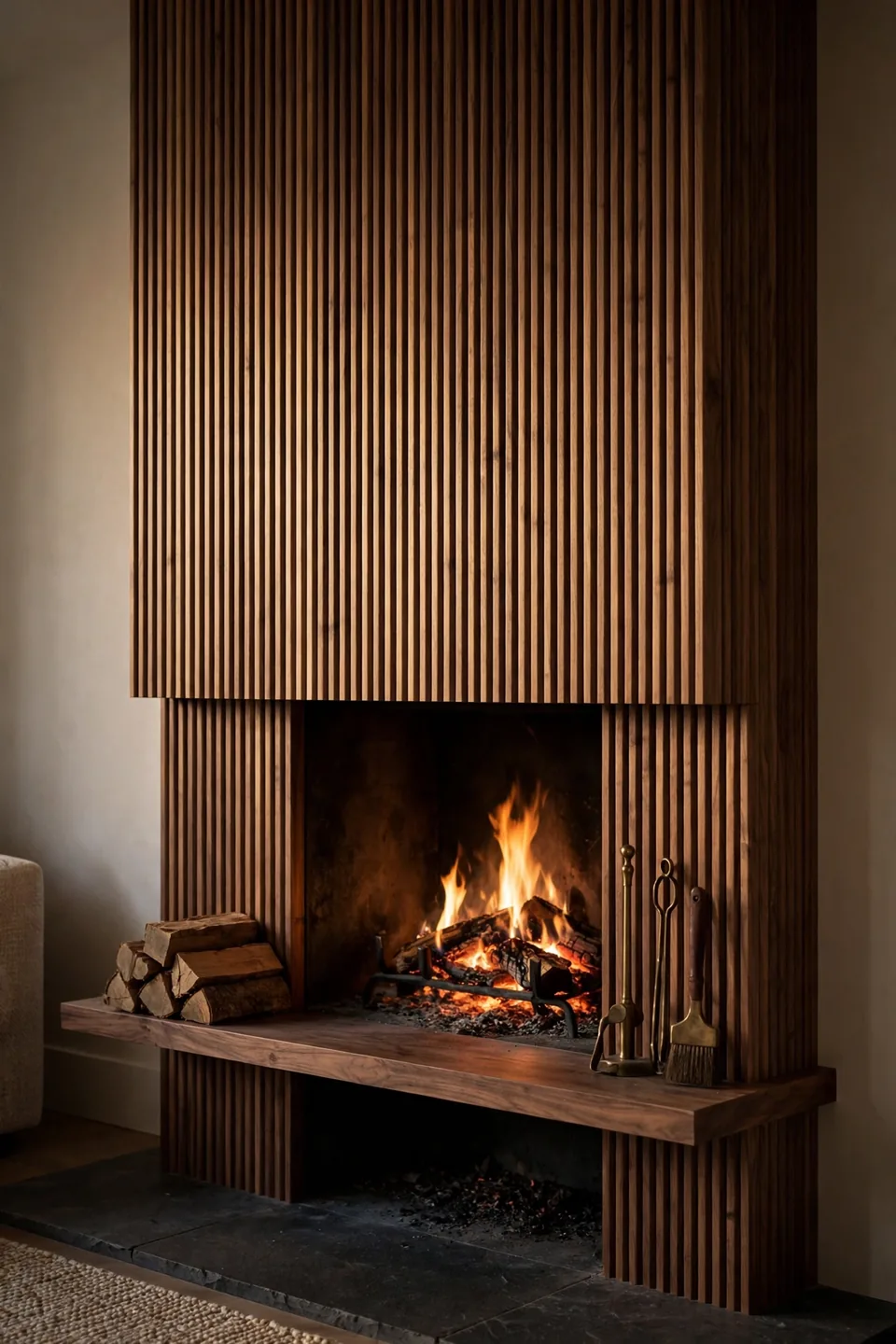
Do:
- Run slats vertically to echo the chimney breast and stretch its height.
- Leave the manufacturer’s clearance gap around the firebox, always.
- Choose heat rated panels or real timber near any working fire.
- Style the mantel shelf spare so the grooves stay the pattern.
Don’t:
- Never fix MDF panels where sparks or embers can reach them.
- Avoid glossy finishes; firelight turns shine into glare.
- Skip busy mantel clutter that fights the vertical lines.
A fluted surround modernises a dated fireplace without touching the firebox itself. The grooves give the chimney breast a tailored finish, and the vertical rhythm makes low Victorian ceilings look taller. Keep the hearth styling simple: one stack of logs, one brass tool set, nothing more.
Budget Fluted Panel Options
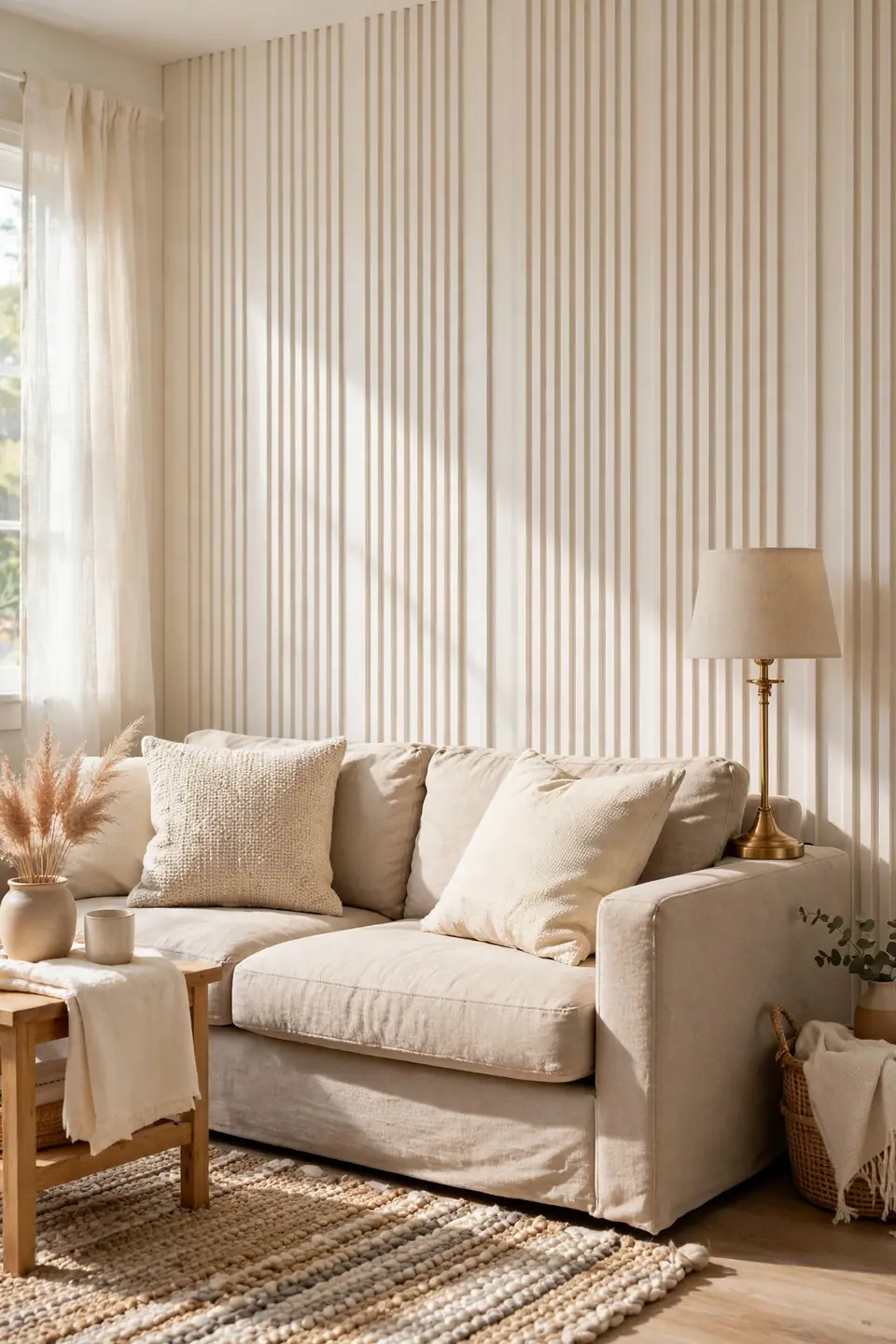
Cost: Foam and MDF kits start near the price of a large rug
Time: One weekend for a standard sofa wall
Skill Level: Beginner friendly with pre cut panels
Best For: Renters testing texture before committing to real timber
Budget panels have closed the gap with real timber faster than most finishes. Peel and stick foam slats mimic the shadow lines convincingly in daylight, and paintable MDF takes any color a room needs. Spend the savings on one quality piece in front of the wall, a good rug or lamp, and the whole setup reads considered rather than cheap. Guests rarely guess the material.
Half Height Fluted Wainscot
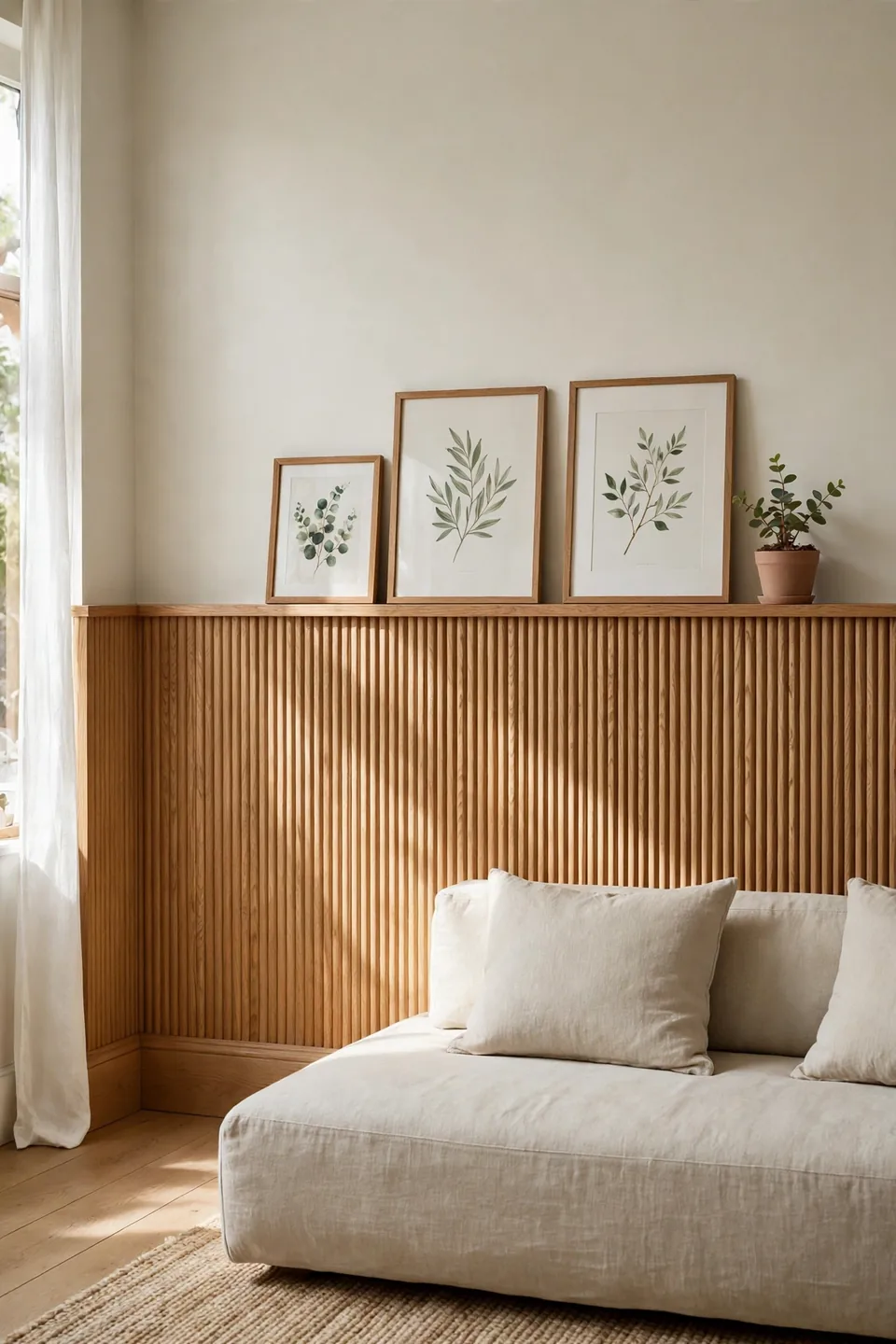
Fluting does not need the full wall to work. A half height run, capped with a slim shelf ledge, gives the lower wall structure while the painted upper half keeps the room light. The ledge itself becomes useful: a resting place for framed prints, small plants, and the evening’s drinks.
Half height suits rooms where full panels would swallow the furniture, especially around low sofas and sideboards. Match the ledge depth to a coffee cup, around four inches, and paint the cap the same tone as the slats. The eye reads one crafted band of wood, and the wall above stays free for art.
Cozy Reading Nook Backdrop

- Angle one comfortable chair toward the window, not the television.
- Add a small round side table within easy reach of the seat.
- Hang a wall lamp at shoulder height for a focused pool of light.
- Keep a folded throw on the chair arm for cold evenings.
- Place a narrow bookcase or basket of books against the slats.
A short run of fluted panels behind a reading chair marks the corner as a destination. The grooves give the small zone a sense of enclosure without a partition, and the wood warms the light from the lamp. Readers settle faster in a corner that looks claimed, and the nook stays tidy because everything in it has one job.
Painted White Fluted Wall
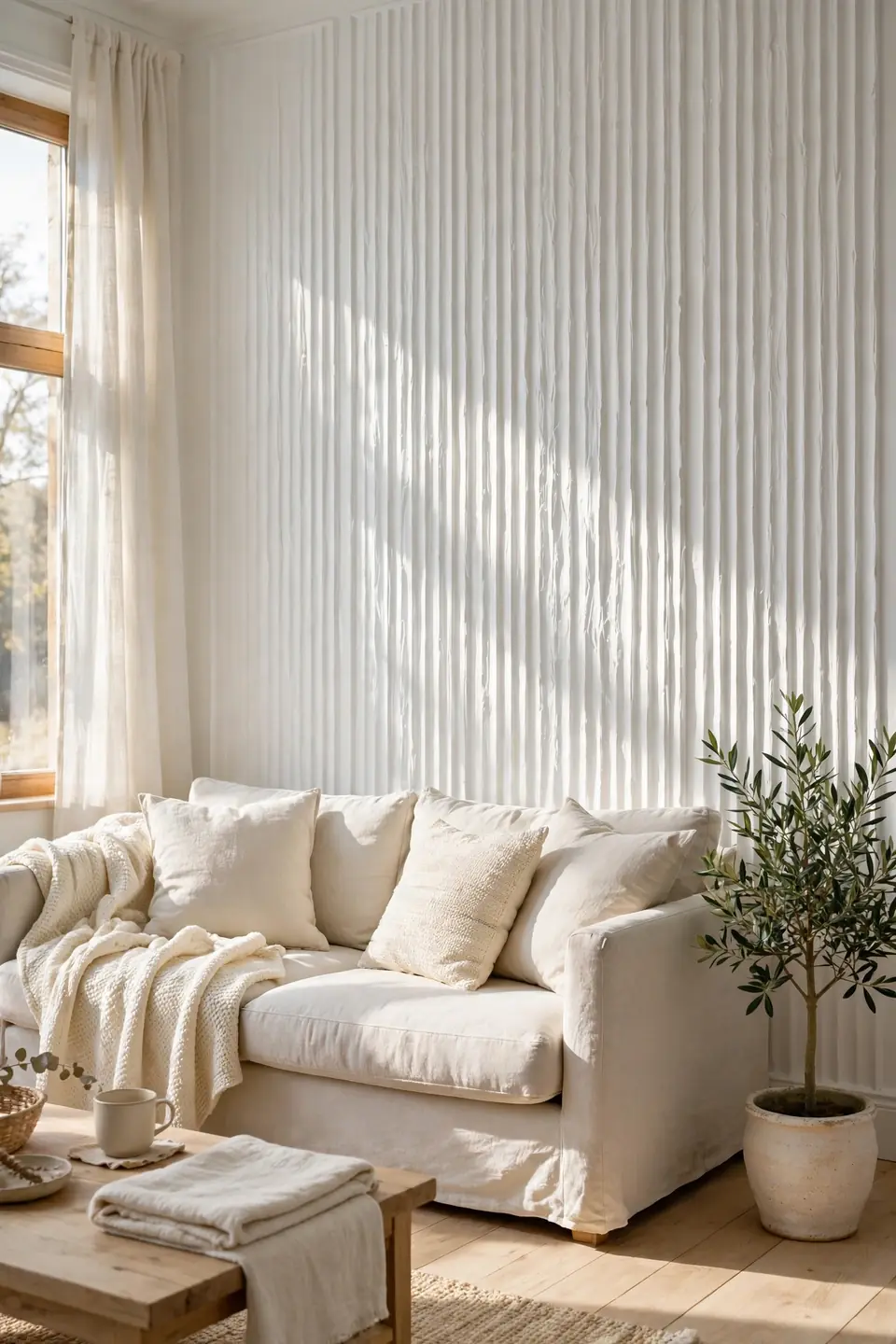
Quick Tip: Prime MDF panels before fixing them, then paint once on the wall with a small roller. The grooves hold paint differently than flat boards, and a second thin coat, not one thick one, keeps the shadow lines crisp.
Painting fluted panels white or soft cream keeps the texture and drops the wood tone entirely. The wall reads calm and architectural, closer to plaster moulding than to timber cladding. This version suits bright coastal and Scandinavian rooms where walnut would feel heavy. Light bounces along the grooves, so the pattern shifts gently from morning to evening without changing color at all.
Compact Room Fluted Upgrade

BEFORE: The small living room felt boxy and temporary. Low ceilings, four flat walls, and furniture pushed against every side left the eye nowhere to rest, and guests always stood instead of settling.
AFTER: One fluted wall behind the sofa changed the geometry. The vertical grooves pull the ceiling upward, the seating gathers into a clear zone, and the room reads deliberate, like a boutique hotel lounge scaled down.
Small rooms gain the most from texture because they cannot gain size. Among fluted wood accent wall ideas, the single wall upgrade suits a tight floor plan best: no furniture moves, no square footage lost, yet the room feels considered. Keep the other three walls plain and pale so the slats stay the only pattern.
Fluted Wall With Shelves
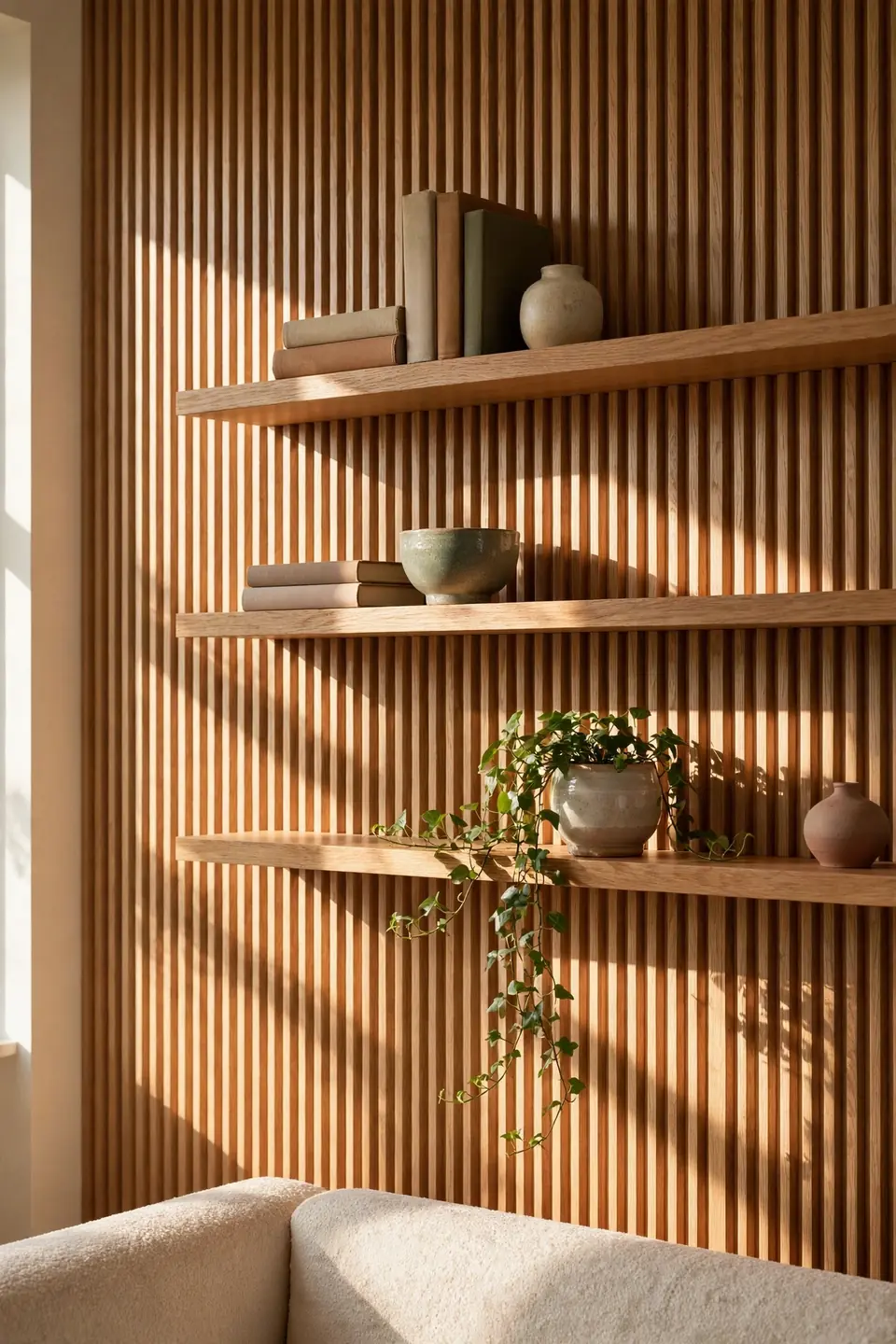
- Mark stud positions and shelf heights on the bare wall before ordering panels.
- Fix panels around the shelf zones, leaving clean gaps where brackets will sit.
- Anchor floating shelves directly into studs, never into the panels alone.
- Style shelves in odd numbered groups, mixing books, ceramics, and one plant.
Shelves turn a fluted wall from backdrop into storage, and the grooves keep even full shelves looking ordered. Keep heavy items low and leave breathing room at the top. The same layered warmth works across the hall; these moody green bedroom decor ideas show how deep tones and texture pair in restful rooms.
MDF Versus Real Wood
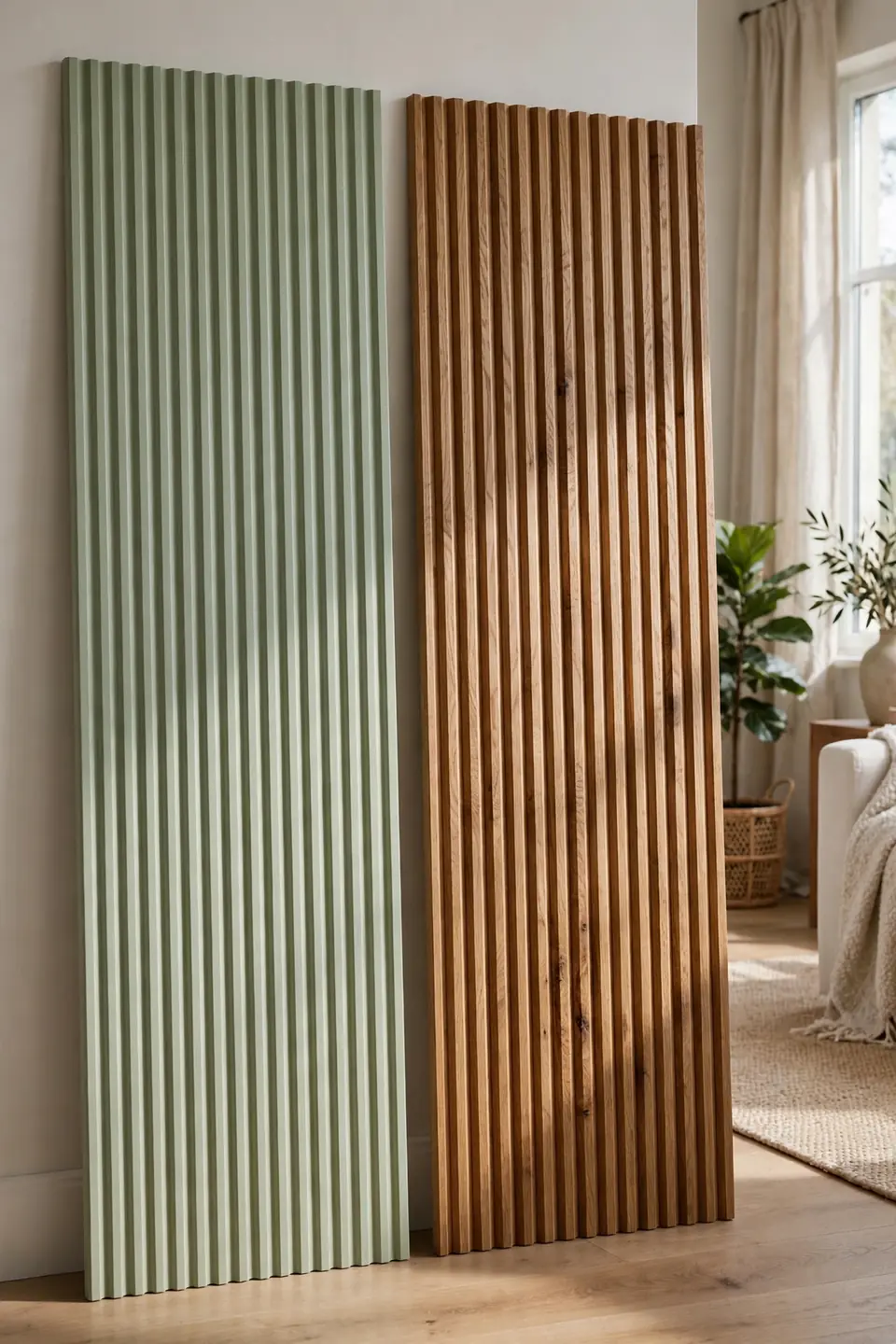
Material decides the budget, the weight, and how the wall ages over the next decade at home.
| Feature | MDF Panels | Real Wood |
|---|---|---|
| Price | Low to mid range | Mid to high range |
| Weight | Light, easy fixing | Heavy, needs battens |
| Finish | Painted any color | Stained or oiled grain |
| Lifespan | Good with care | Decades of service |
MDF wins for painted finishes and tight budgets, and modern boards carve clean, consistent grooves. Real wood wins where hands touch the wall daily, since dents in timber read as character while dents in MDF read as damage. Choose by the room’s traffic, not by the showroom sample.
Fluted Wall Lighting Layers
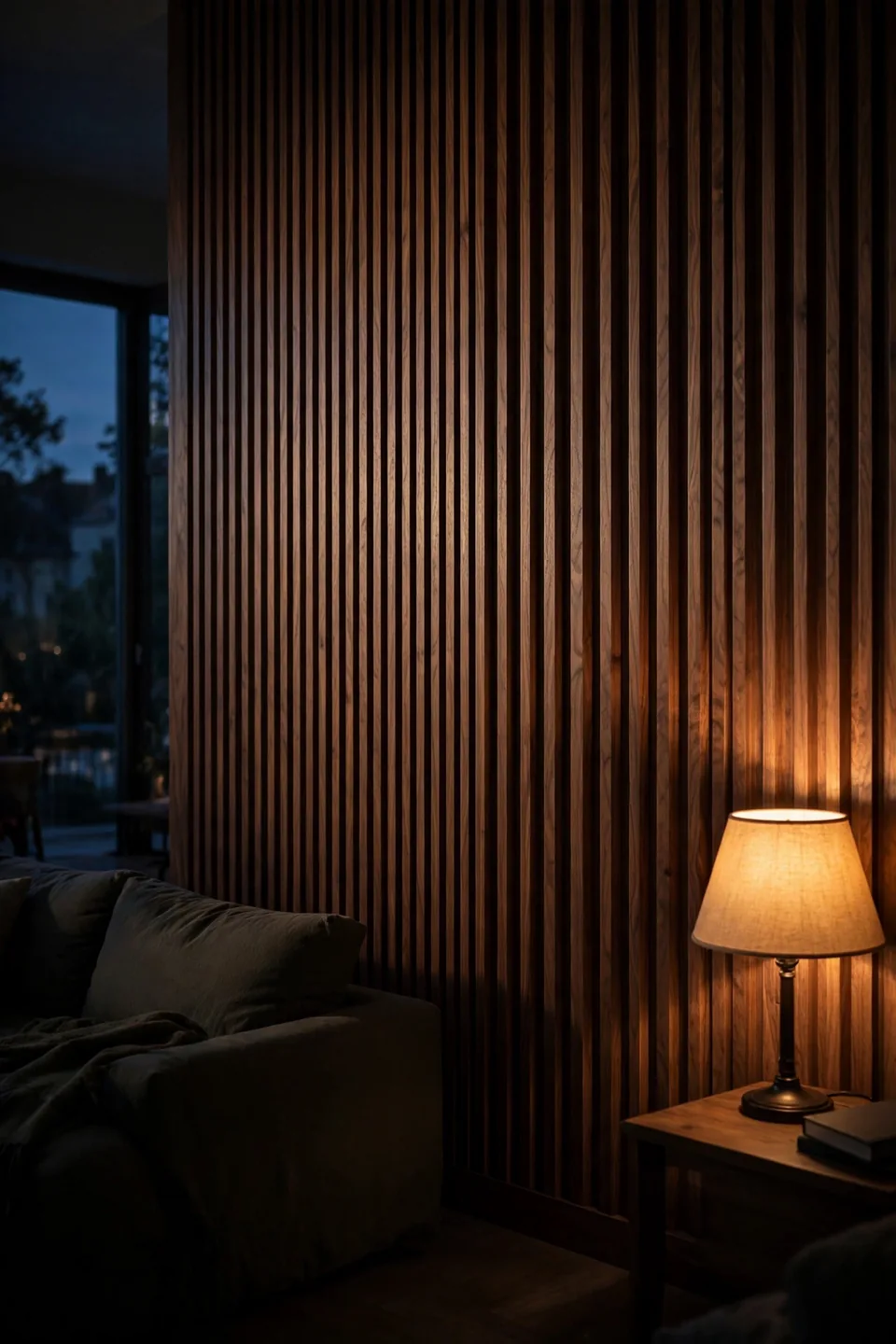
Do:
- Graze light down the grooves with a ceiling spot aimed along the wall.
- Set table lamps close to the panels so shadows deepen at night.
- Choose warm bulbs, 2700K, to keep wood tones rich.
- Dim the main light once lamps take over the evening.
Don’t:
- Avoid flat overhead lighting that erases every shadow line.
- Never aim a bright spot straight at the wall from the front.
- Skip cool white bulbs; they turn warm oak gray.
Fluting is a lighting effect as much as a material. The grooves only appear when light arrives at an angle, raking across the ridges and pooling in the channels. Plan the lamps when you plan the panels, and the wall will perform from breakfast brightness to evening glow.
Fluted Panels Acoustic Comfort
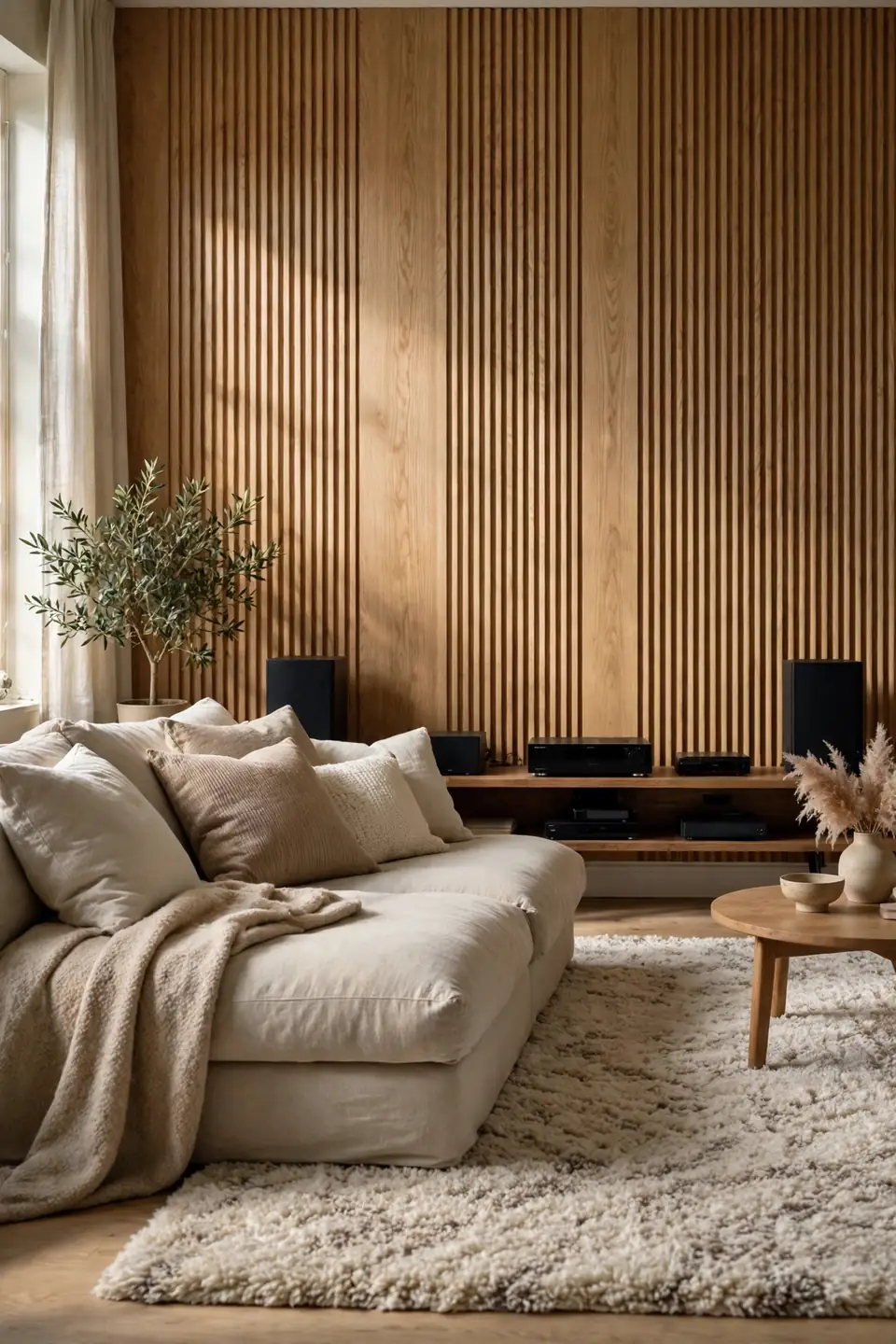
Benefit: Grooves scatter sound instead of reflecting it flat
Best Rooms: Echo prone living rooms with hard floors
Bonus: Panels over insulation deepen the quiet effect
Feel: Conversations sound warmer and less sharp
Bare walls and hard floors bounce conversation around a room until voices feel harsh. Fluted panels break those reflections into smaller, softer pieces, and a fabric sofa plus rug completes the effect. Home cinemas benefit most, since dialogue stays clear at lower volumes. The change is subtle but constant: the room simply feels calmer to sit in, even in silence, and long evenings of music or film leave listeners less tired than the same setup against flat plaster walls.
Entryway Console Fluted Backdrop
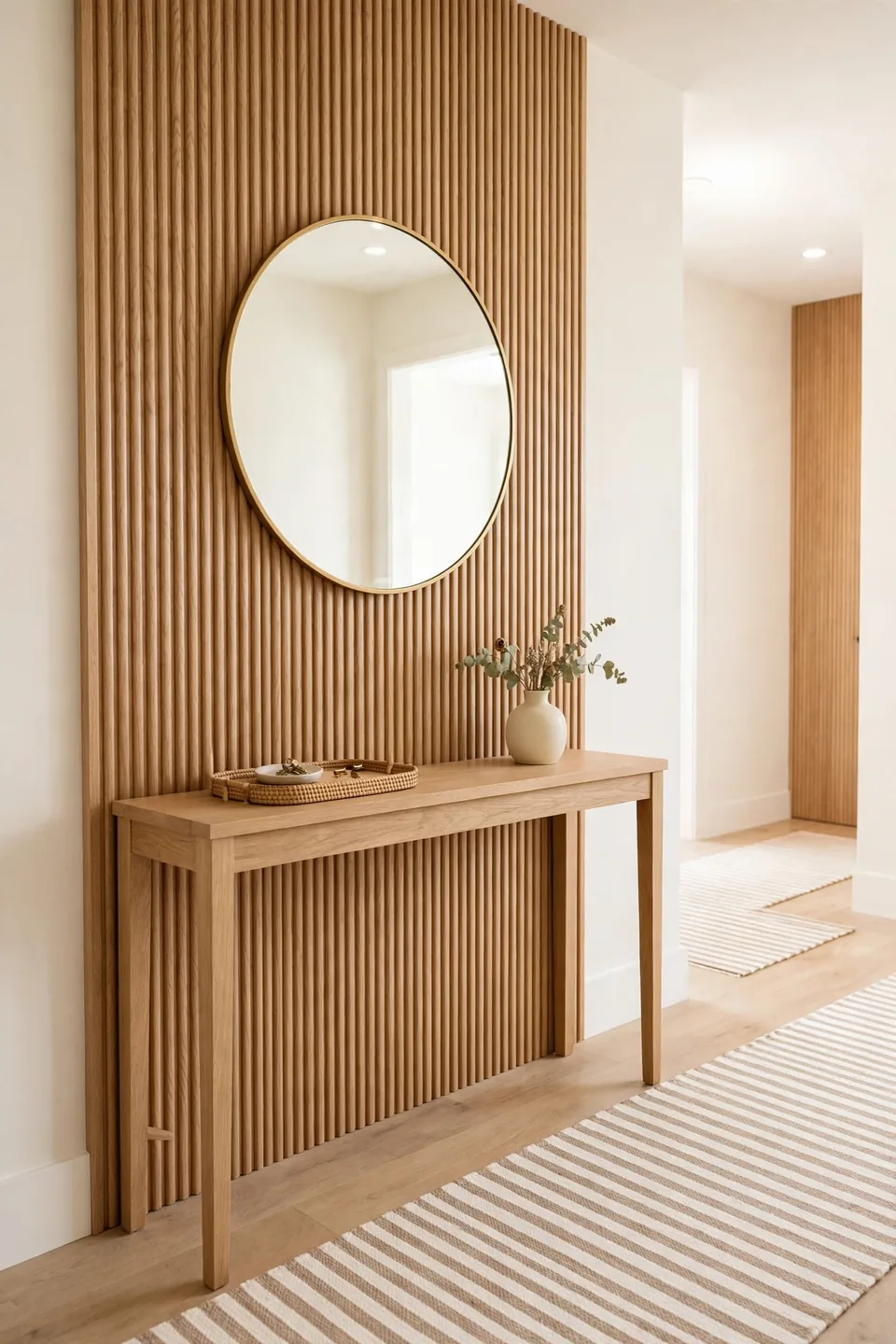
The entryway sets the tone for the whole home, and a fluted panel run behind the console table makes that first view feel designed. Keys land on the table, mail sorts into a tray, and the grooved wall behind turns daily clutter into a styled moment. A round mirror above completes the welcome.
Keep the panel run narrow here, the width of the console plus a hand span each side, so the hallway keeps its breathing room. A washable runner on the floor repeats the stripe rhythm underfoot. Guests read the message instantly: this home pays attention to texture. It costs little.
Brass And Wood Pairing
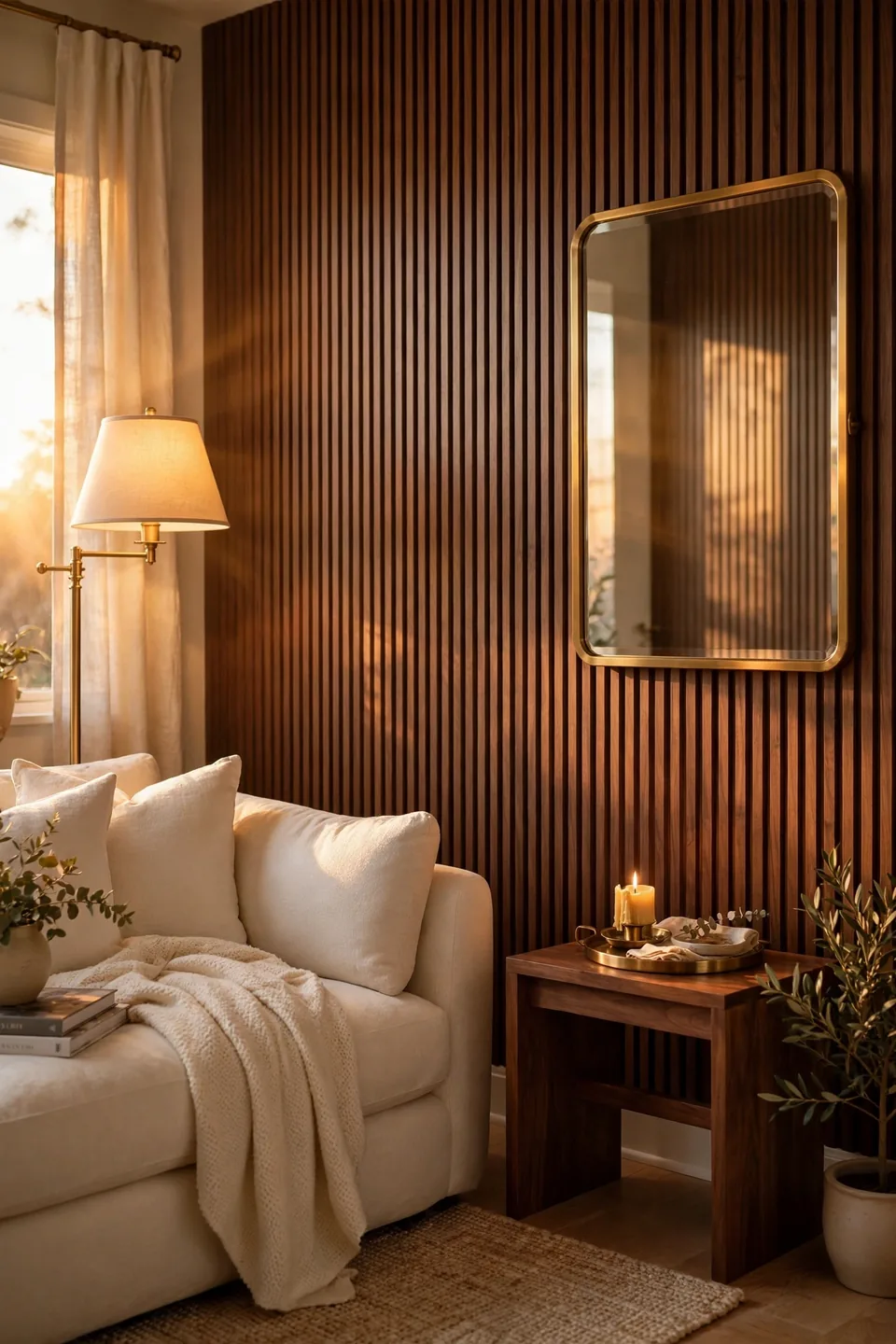
- Pick brushed brass for a soft glow that flatters warm wood.
- Repeat the metal three times: lamp, frame, and one small tray.
- Keep other metals quiet so brass stays the single accent.
- Let one brass framed mirror catch the grooves in reflection.
- Polish rarely; a gentle patina suits timber better than shine.
Brass and fluted wood share the same warm register, so together they read as one decision rather than two. The metal edges the timber like a frame edges a picture. In my experience, this pairing forgives mixed furniture styles, because the eye follows the warm thread from wall to lamp to frame and reads the room as settled.
Fluted Wall Art Display
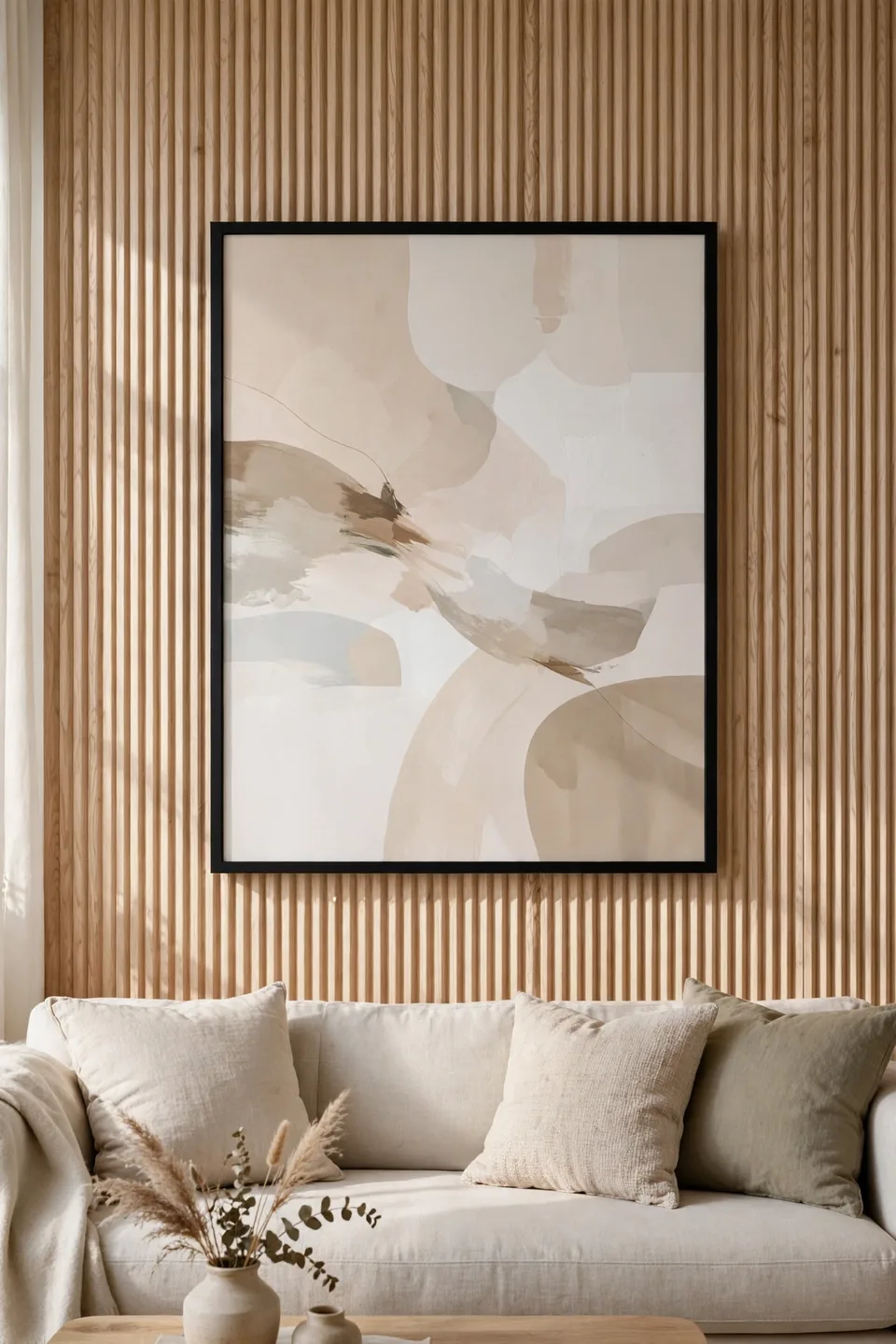
Quick Tip: Hang art from picture rail hooks or fix through the grooves into studs behind. Screws driven into thin slat faces can split the ridges, so always pre drill and let the frame sit flat against the highest points of the fluting.
Artwork over fluted panels gains a built in frame of texture, so simpler pieces work harder. One large print beats a scattered gallery here; the grooves already supply the pattern. Leave a palm width of visible slats around the frame edges, and the composition breathes. Black frames sharpen oak, while pale wood frames soften walnut. Matte glass prevents glare.
Rental Friendly Fluted Panels

BEFORE: The rented living room came with magnolia walls the lease forbade painting. Furniture sat against blank surfaces, the room echoed slightly, and every attempt at style stopped at cushions and throws.
AFTER: Lightweight fluted panels now lean and clip along the sofa wall on removable battens. The grooves bring the texture the lease denied, the room sounds warmer, and the deposit stays safe because nothing pierced the plaster.
Removable systems changed what renters can attempt. Foam and thin MDF panels weigh little, cut with a craft knife, and fix with adhesive strips rated for their weight. Photograph the wall before and after, keep the packaging, and the whole installation reverses in an afternoon when the lease ends.
Fluted Accent Wall Steps

- Choose the wall that furniture already faces; feature walls work where eyes rest.
- Decide slat width and spacing, then mock the rhythm with painter’s tape.
- Order a single sample panel and check its tone in morning and evening light.
- Install from the most visible corner outward so any cut edge hides at the far side.
- Style the finished wall lightly for a week before adding art or shelves.
These steps compress everything the earlier ideas teach into one order of work. Most mistakes happen at the choosing stage, not the fixing stage, so slow down there. A well chosen wall, honestly sampled, installs in a day and satisfies for years, while a rushed choice nags every time the sofa faces it.
Conclusion
A fluted wall asks little and returns a lot: texture, warmth, and a room that finally feels finished. Whether the panels run floor to ceiling behind the sofa or stop at wainscot height by the door, the grooves keep working in every light. Start with one wall, honest materials, and the slats spaced with care. These fluted wood accent wall ideas reward patience more than budget, so take the measuring twice rule seriously. Save this guide on Pinterest before your next hardware store trip, and share it with anyone whose living room still feels flat.