How to Make a Room With White Walls Feel Warmer
White walls can look crisp and clean, yet sometimes they leave a room feeling cold or empty. Learning how to make a room with white walls feel warmer comes down to layering texture, wood, and soft light rather than repainting everything. The good news: small, renter friendly changes can shift the whole mood in a single weekend.
Below you will find ten practical ideas that add warmth without touching the wall color itself. Each one works on its own, and stacked together they turn a stark white box into a space that feels calm and inviting. A related read is how to choose wall colors for rooms with dark floors, which pairs well with these ideas.
Layer Warm Textiles Across the Room
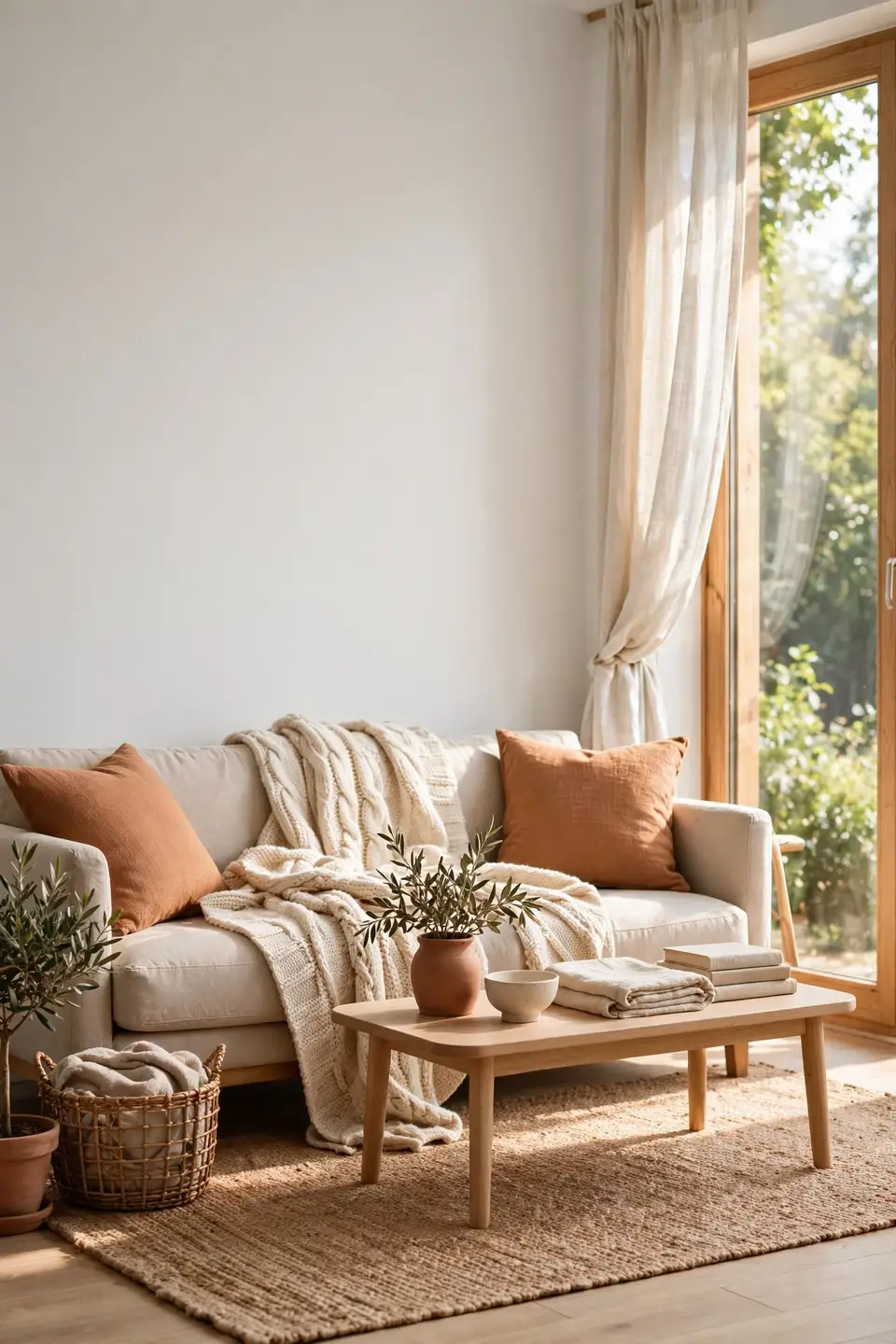
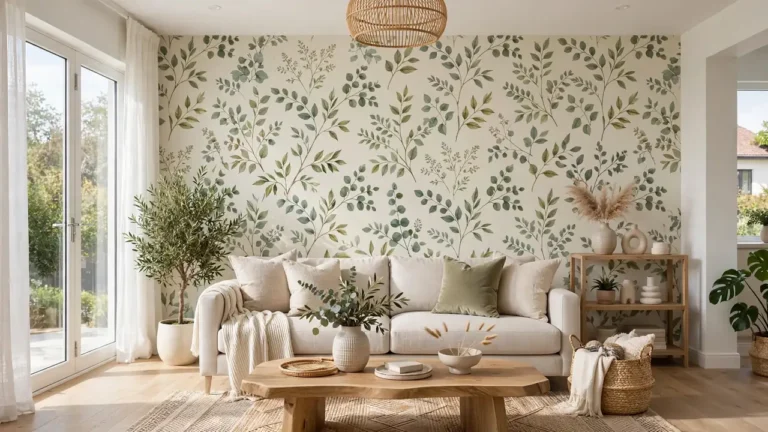
White walls bounce light around, which can read as chilly when every surface stays hard and bare. Thick knit throws, nubby wool cushions, and a plush rug absorb that glare and add visual softness. Choose camel, terracotta, and warm gray tones to build a cozy base layer.
Mix at least three fabric textures so the eye has something to rest on. A linen curtain, a chunky throw, and a jute rug create depth that flat white walls cannot give alone. This one change often makes the biggest difference in how warm a room feels.
Bring In Natural Wood Tones
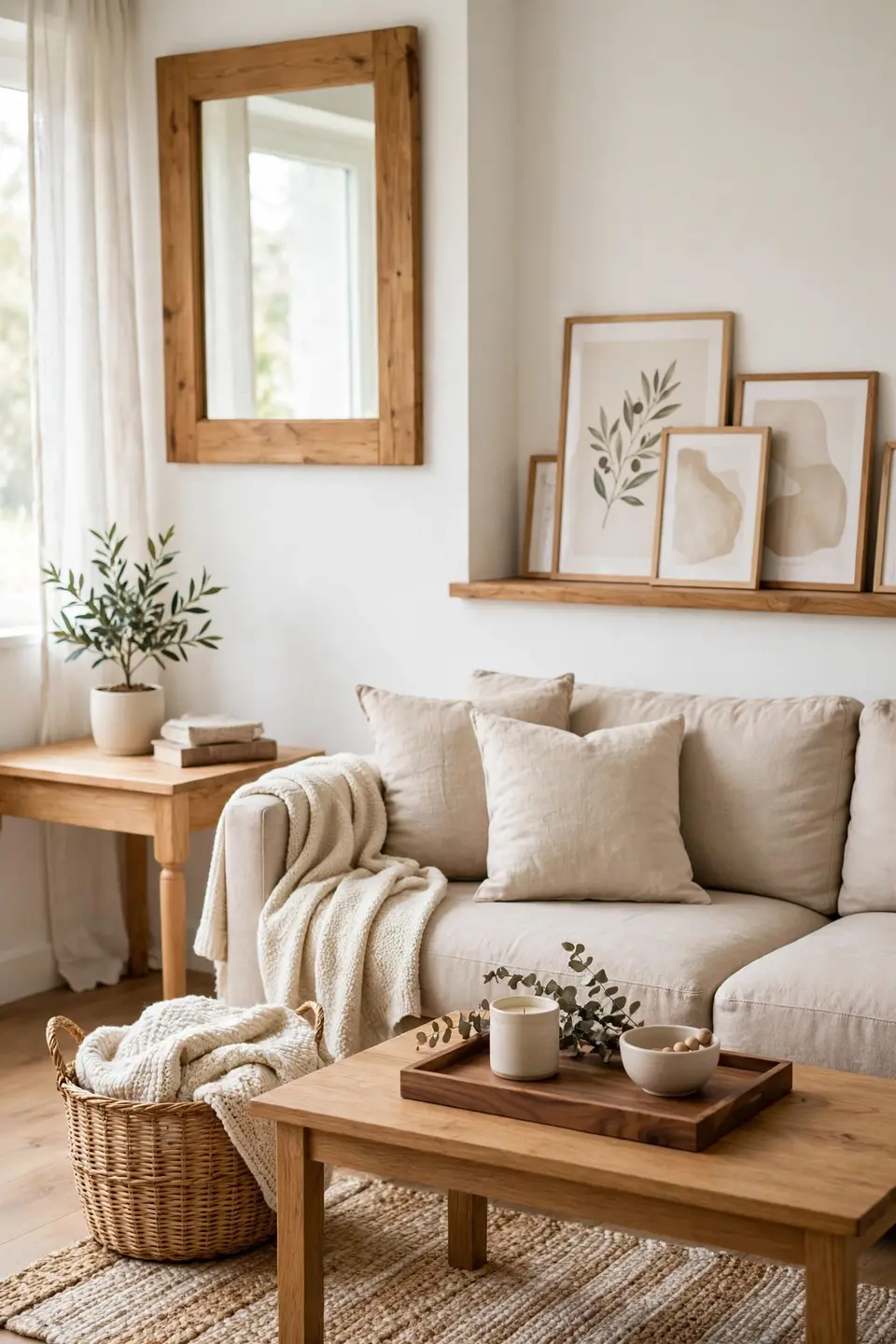
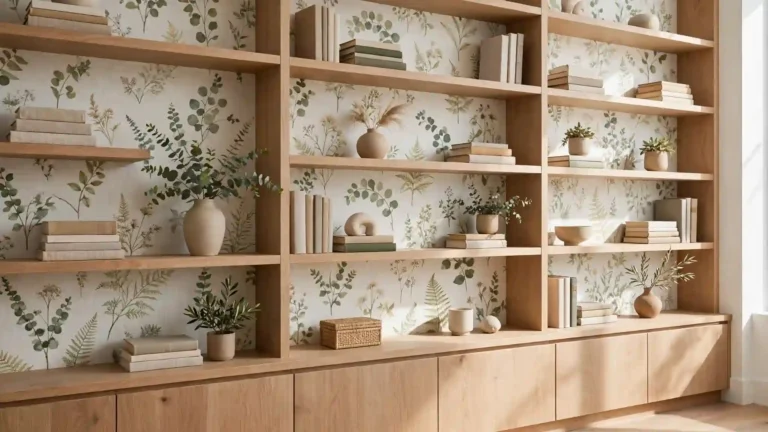
Wood is the fastest way to warm up white walls because its grain adds organic pattern and honeyed color. Even small wooden pieces shift the temperature of a room. Follow these simple steps to add wood without overwhelming the space.
- Start with a light oak side table or walnut tray on the coffee table.
- Add a wooden picture ledge or floating shelf for books and art.
- Choose a rattan basket or woven storage bin for soft texture.
- Finish with a timber-framed mirror to bounce warm light around.
Soften the Light, Warm the Mood
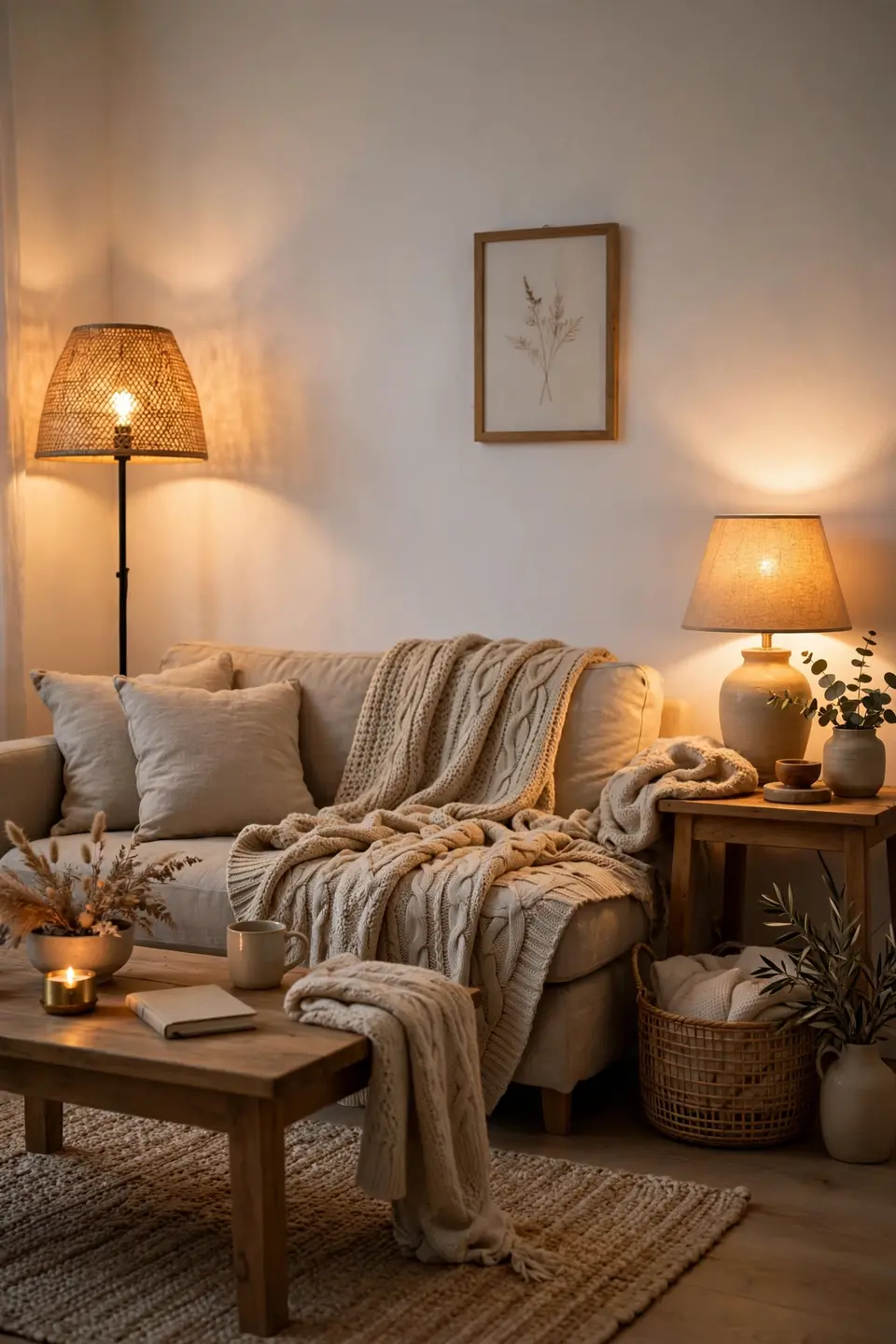
Quick Tip: Swap cool daylight bulbs (5000K+) for warm white bulbs around 2700K.
Harsh overhead lighting makes white walls look clinical, while warm bulbs cast a golden glow that flatters every surface. Table lamps and floor lamps at different heights create pools of light that feel intimate after dark. This small swap changes the entire evening mood of the room.
Avoid an All-White Furniture Scheme
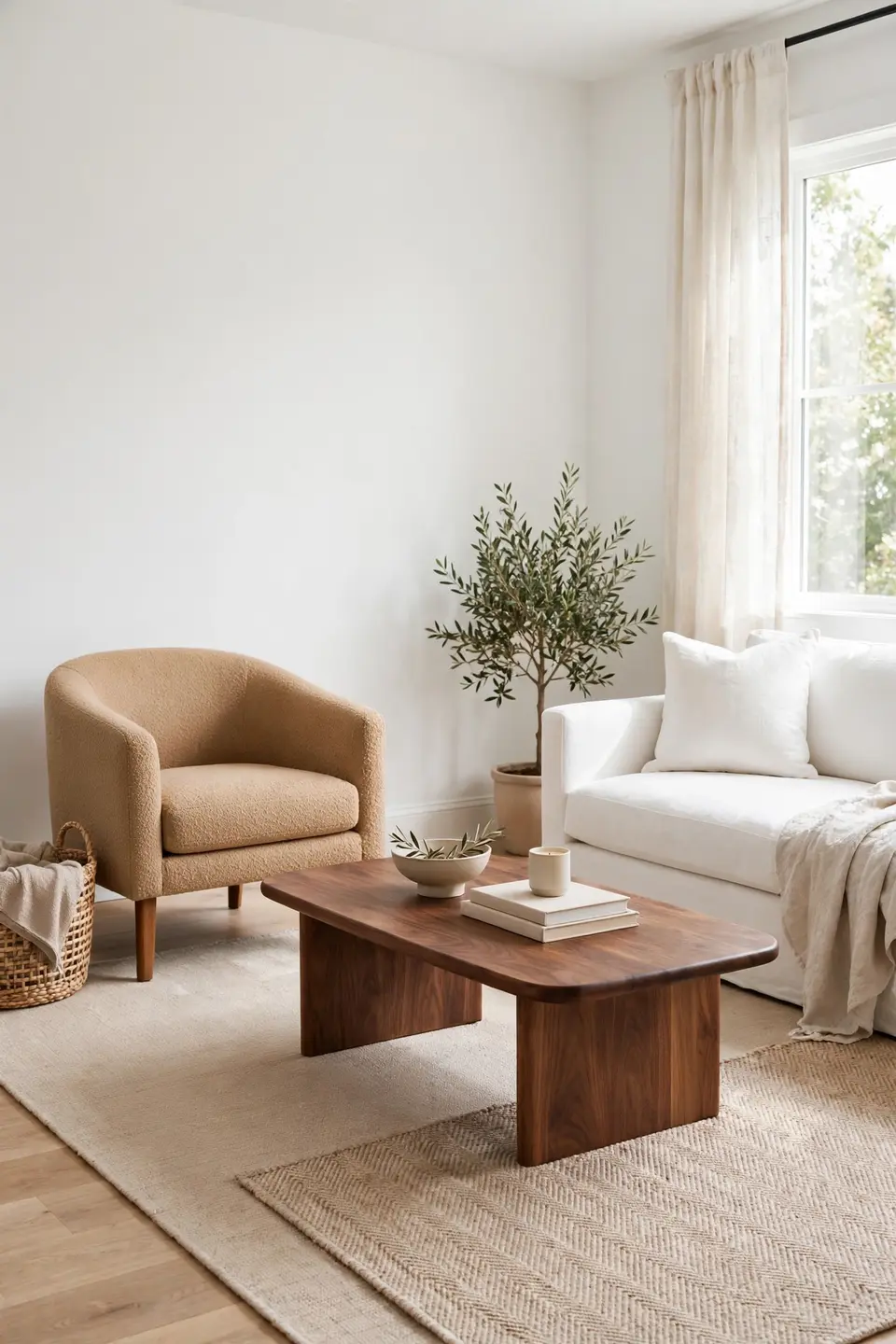
Common Mistake: Pairing white walls with an all-white sofa, white rug, and white curtains.
The Fix: Keep one or two white pieces, then anchor the room with mid-tone furniture in beige, tan, or soft brown.
A fully white room has nowhere for the eye to land, so it reads as cold and unfinished no matter how stylish the pieces are. Introducing contrast through a tan armchair or a walnut coffee table gives the white walls something to play against. Balance is what makes white feel fresh instead of freezing.
Hang Art With Warm Palettes
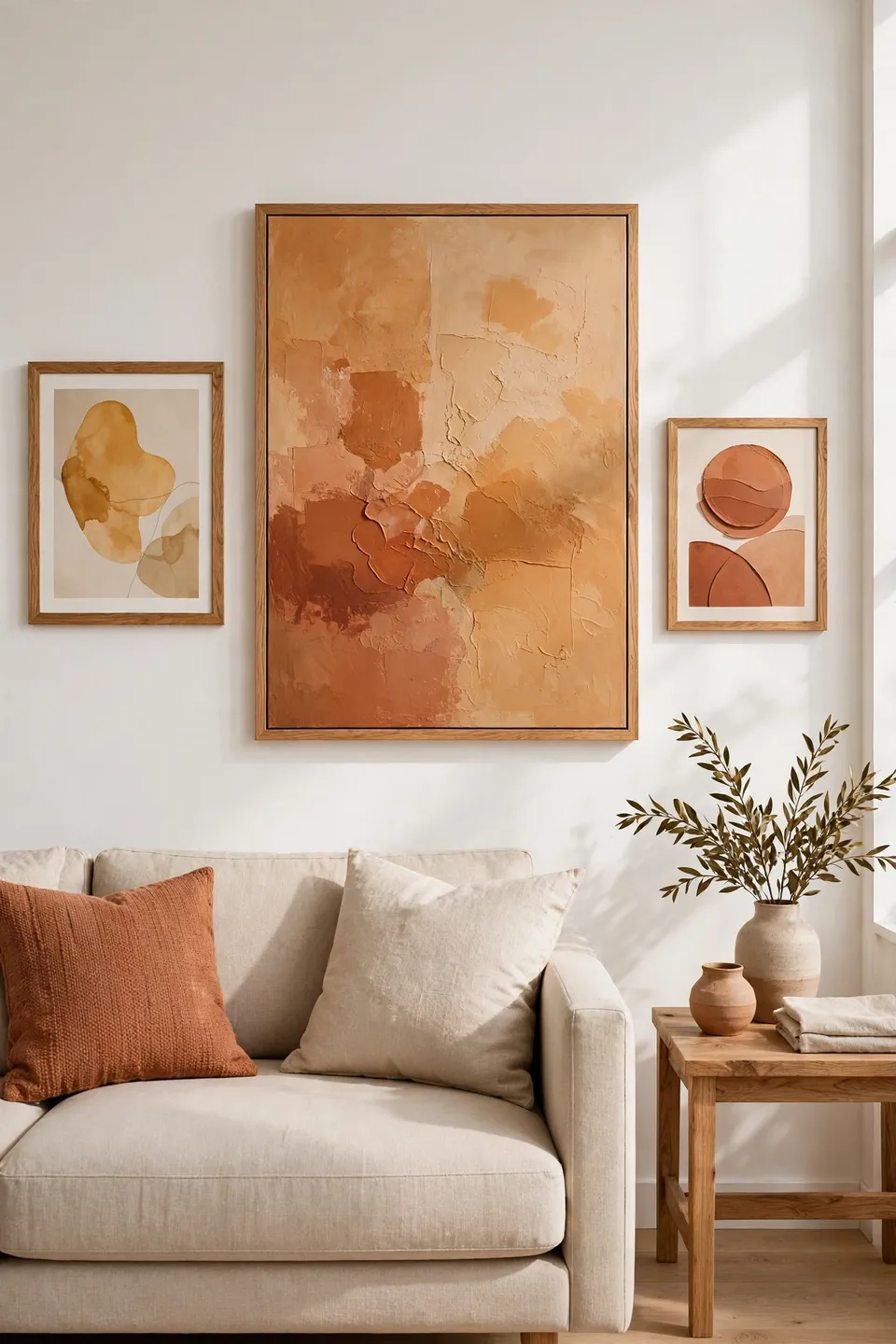
What You Need:
- Two or three large prints in warm tones (ochre, rust, terracotta)
- Simple oak or walnut frames
- A picture ledge or adhesive strips for damage-free hanging
- One oversized canvas as a focal point
- A small level and measuring tape
Bare white walls feel stark, but art in warm hues instantly adds personality and heat. Large-scale pieces work better than clusters of tiny frames, which can look busy against white. Hang the main piece at eye level and let its colors guide your cushion and throw choices.
From Cold Gallery to Cozy Retreat
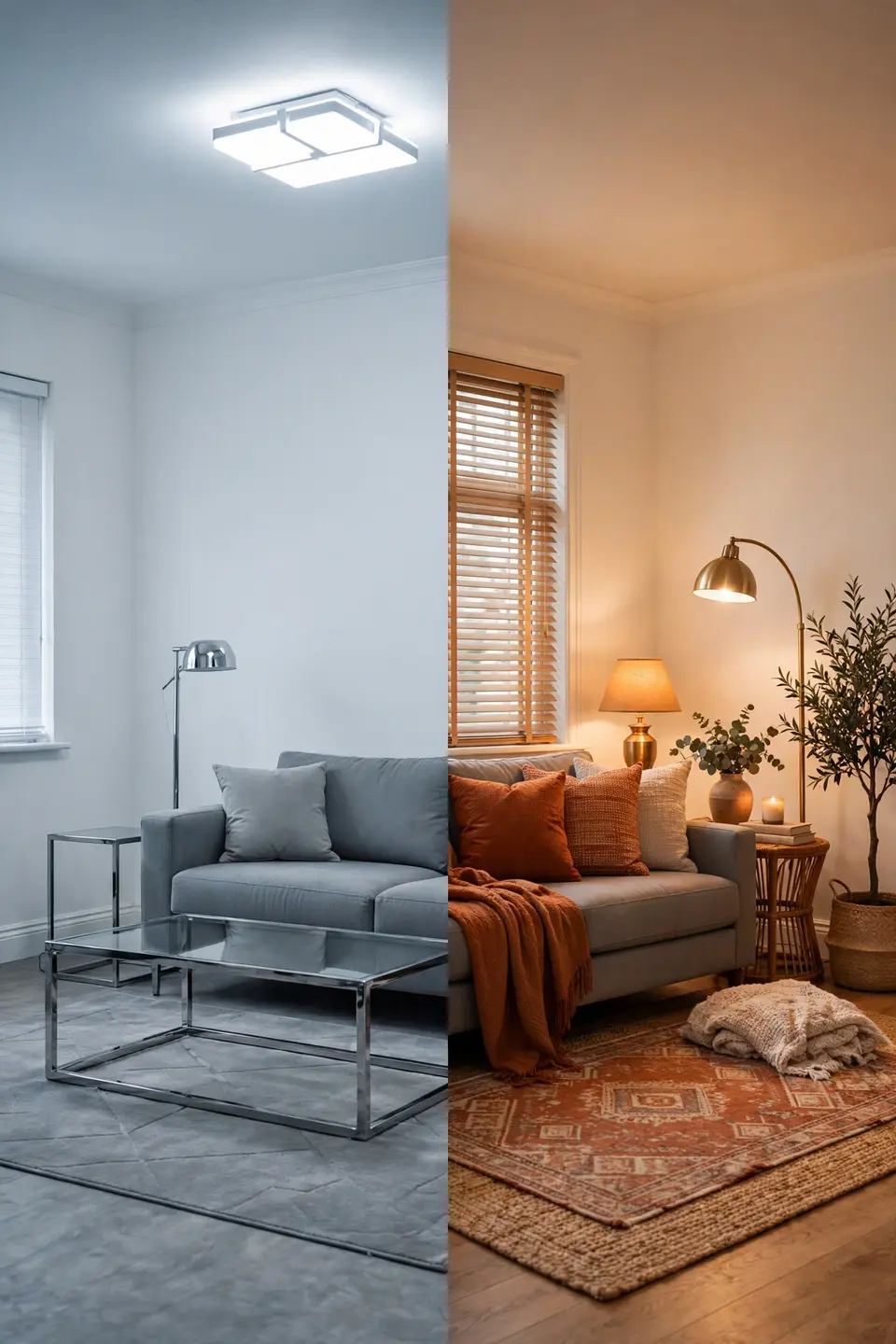
BEFORE: The room had white walls, a gray sofa, chrome-legged furniture, and a single ceiling light. Everything matched, yet the space felt like a waiting room. Guests never lingered, and evenings felt flat despite the tidy layout.
AFTER: Warm wood side tables, a rust-colored throw, brass lamp bases, and layered rugs replaced the cool finishes. The same white walls now glow softly in the lamplight. The room finally feels like somewhere to curl up with a book.
Notice that the walls never changed color at all. Warmth came from swapping cool chrome for brushed brass, adding textured fabrics in earthy tones, and layering light at several heights around the room. Small finish changes like these cost little yet completely reset how a white room feels day and night.
Choose Metals That Glow, Not Glare
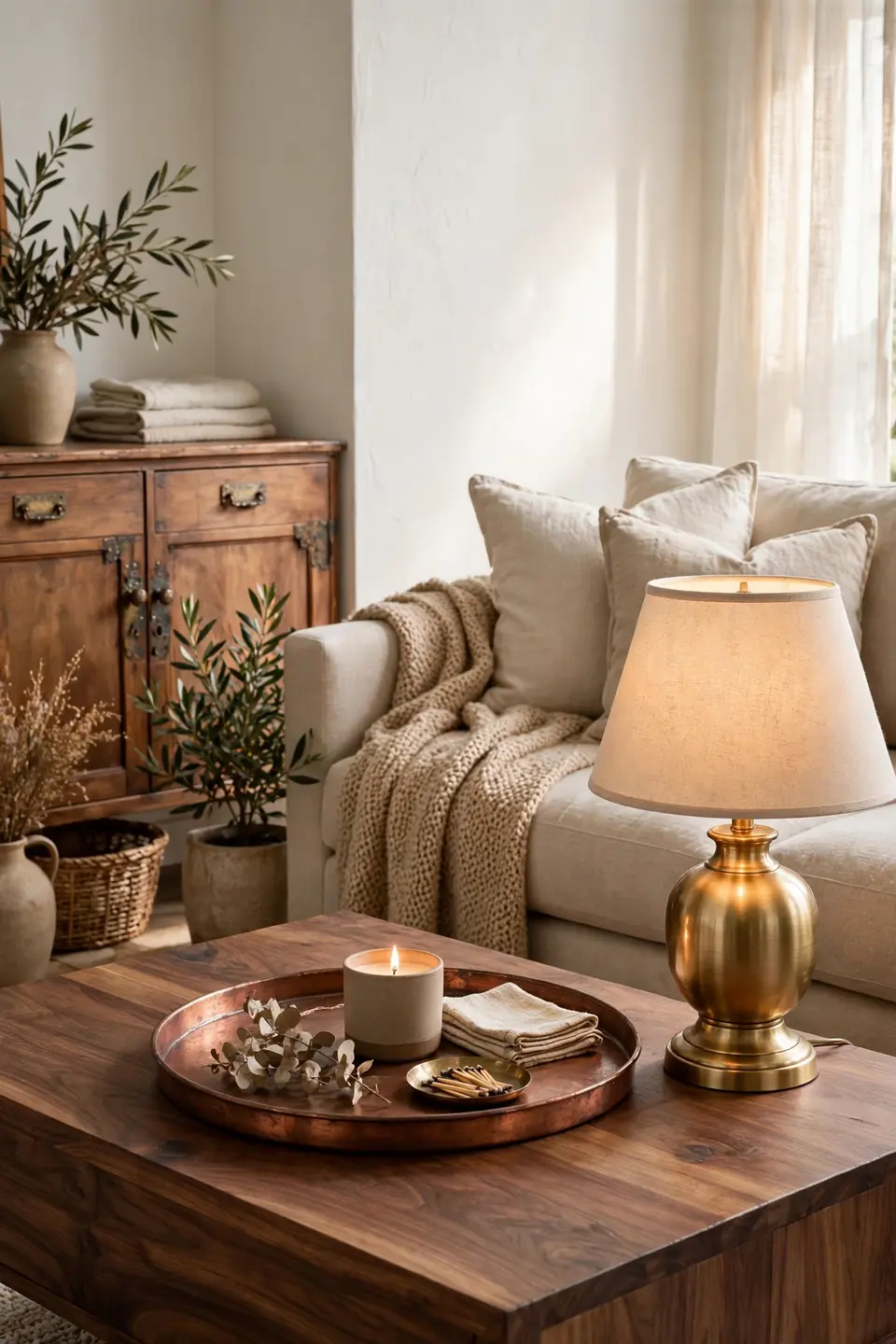
Do This:
- Pick brushed brass or aged bronze for lamps and hardware.
- Use warm-toned picture frames in oak or walnut.
- Add a copper tray or bowl as a small accent.
- Choose fabric lamp shades over bare bulbs.
Avoid This:
- Avoid large expanses of chrome or polished nickel.
- Skip icy blue-gray accent pieces.
- Do not rely on a single overhead light.
Metals set the temperature of a room more than most people expect. Warm metals like brass reflect a golden cast onto white walls, while chrome bounces back a cooler, harsher light. Even swapping cabinet pulls or a lamp base can tip the balance toward cozy. For more ideas, see how to decorate a living room with too much natural light.
Color Temperature Facts That Matter
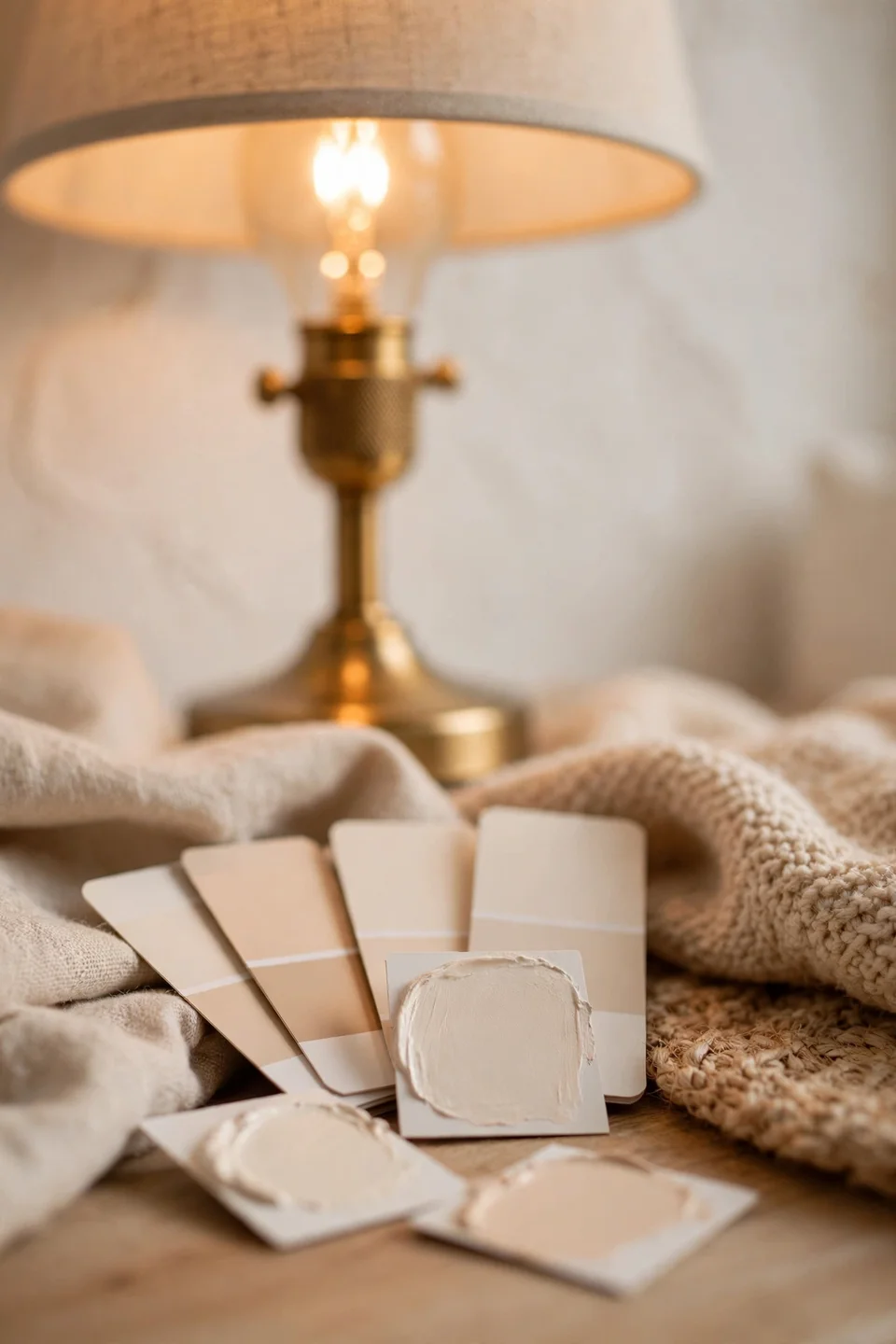
Quick Facts:
- Warm white: 2700K bulbs mimic candlelight and flatter skin tones.
- Daylight: 5000K+ bulbs make white walls look stark and blue.
- Paint undertone: White paint with yellow undertone reads warmer than blue-undertone white.
- Finish: Eggshell reflects softer light than high-gloss, which can glare.
Understanding these numbers takes the guesswork out of warming a white room. Start with the bulbs, since lighting affects every surface at once and costs the least to change. Then check your paint undertone before buying textiles, so the warm layers you add harmonize instead of clashing.
Add Life With Greenery and Texture
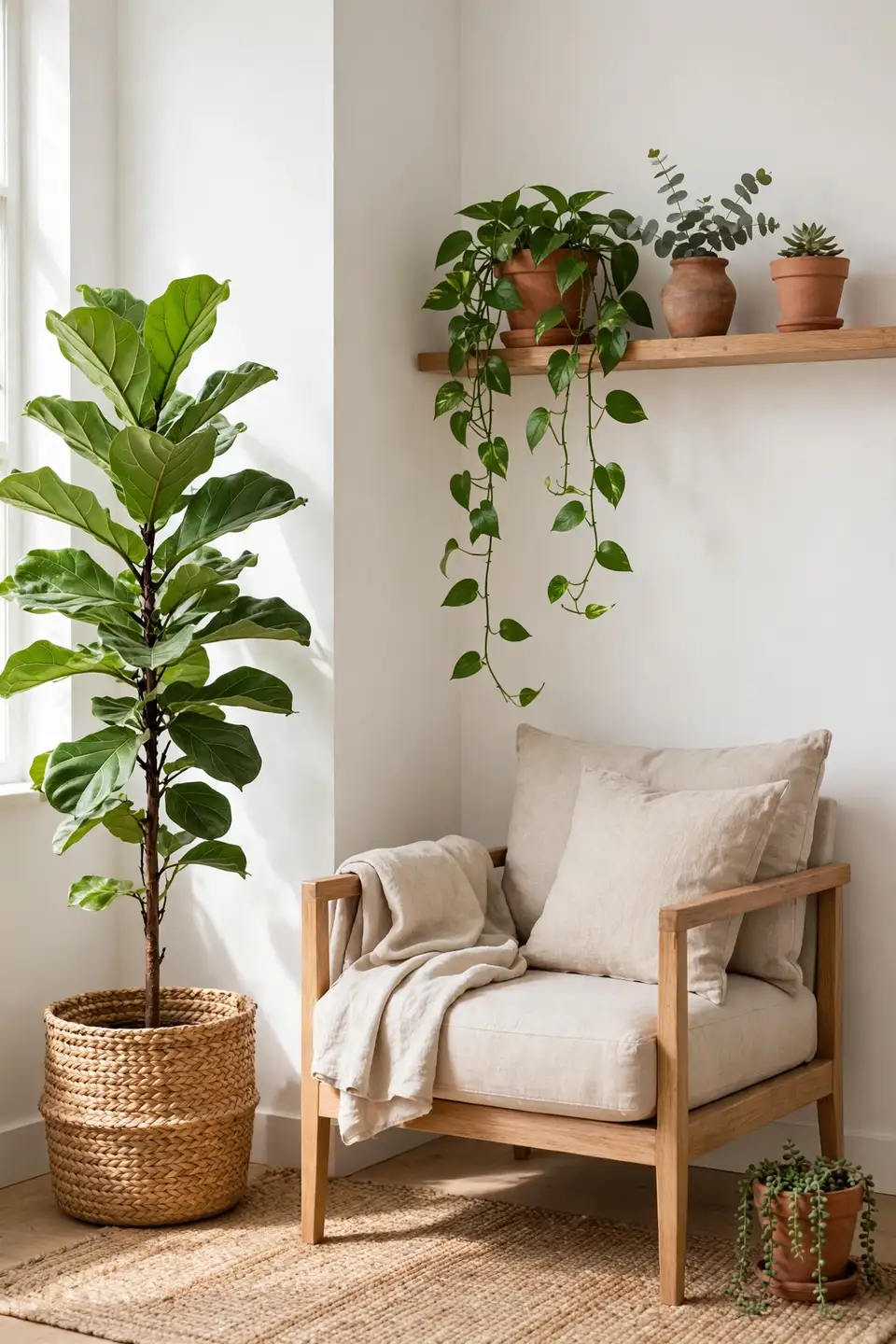
Plants break up flat white expanses with organic shapes and deep green color. A tall fiddle-leaf fig in a woven basket or a trailing pothos on a wooden shelf adds life that no decor object can match. Greenery also softens hard corners where white walls meet.
Pair plants with natural textures like woven baskets, clay pots, and linen cushions. These materials bring earthy warmth that balances the crispness of white paint beautifully. Even two or three well-placed plants can make a stark room feel alive, layered, welcoming, and far less empty.
Finish With Scent and Soft Details
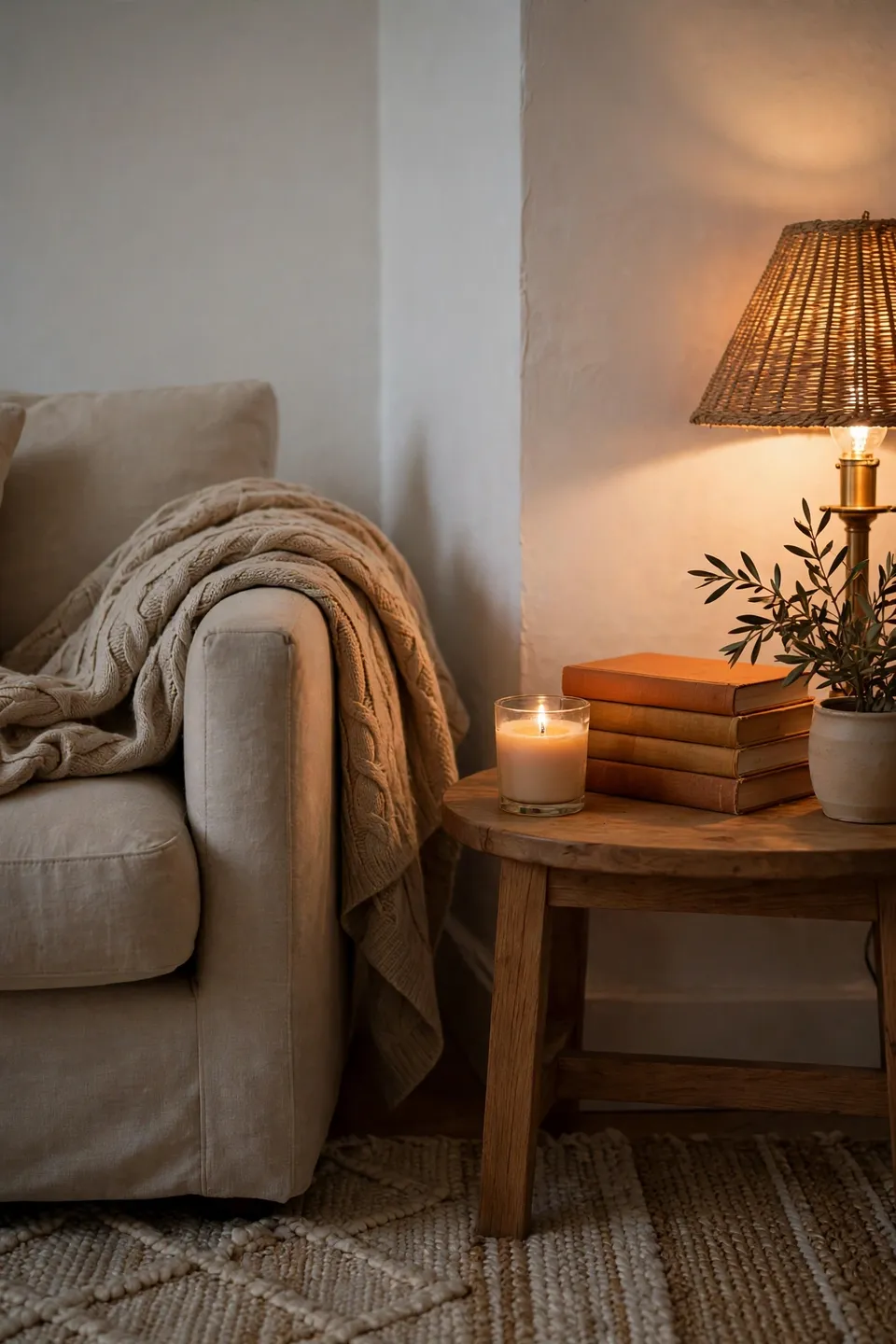
Warmth is not only visual. Scent, sound, and small tactile details tell your senses a room is cozy and lived in. These finishing touches take minutes and make white walls feel like part of a real home, not a showroom.
- Light a cedar or vanilla candle in the evening for warm scent.
- Drape a soft throw over the arm of the sofa within reach.
- Place a small stack of books with warm-colored spines on the coffee table.
- Add a textured rug pad underfoot so floors feel soft and warm.
Conclusion
White walls are a wonderful blank canvas once you know how to make a room with white walls feel warmer. Layer soft textiles, bring in natural wood, soften your lighting, and choose warm metals to shift the mood without ever repainting. Each idea here works on its own, but together they create a space that feels calm, cozy, and truly yours. Start with the quickest wins like bulbs and throws, then build from there. Save this guide to Pinterest so you can revisit these ideas whenever you are ready to warm up your own bright white-walled room.