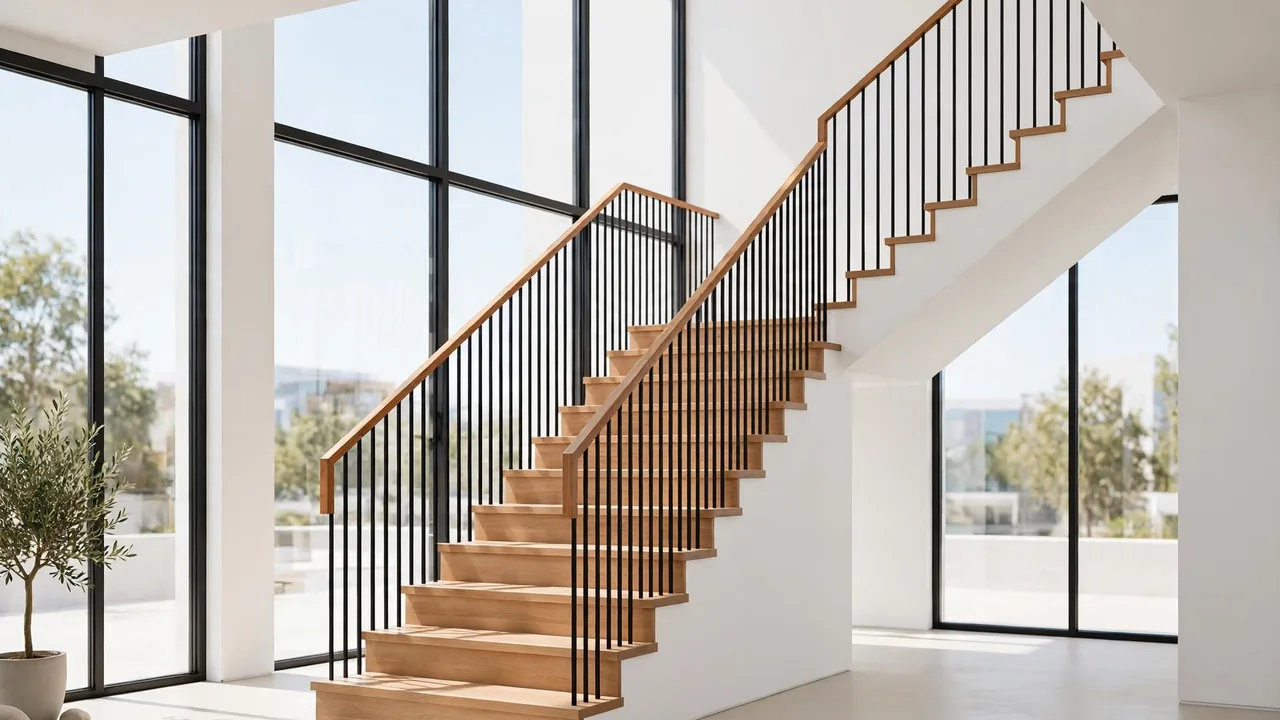
22 Modern Staircase Railing Design Ideas for Sleek Style
If crisp lines and quiet confidence are what you want, modern staircase railing design ideas deserve a long look. The right railing turns a simple stair into the architectural centerpiece of your home, guiding the eye upward while tying every floor together. Whether your taste runs toward glass, steel, warm wood, or a thoughtful mix, a well planned railing makes the whole house feel more intentional.
Start by looking at the big picture: your railing should echo finishes already present in your home, like door hardware, lighting, and furniture legs. A cohesive thread keeps the stair from looking like an afterthought. The same edit-everything mindset works elsewhere too, as these cozy reading corner decor for adults show how small choices shape a whole mood.
Black Metal Balusters
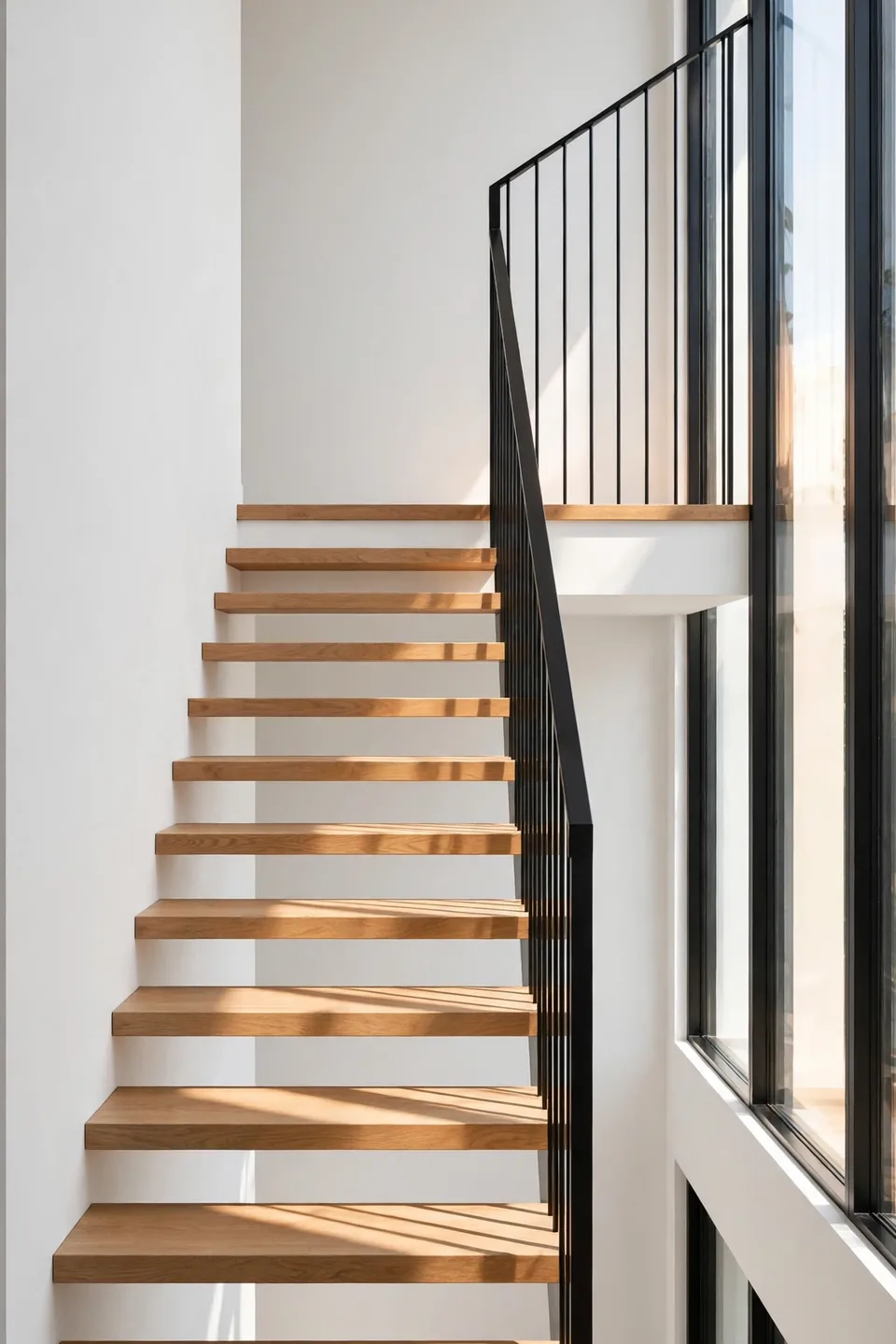
Slim black balusters give a staircase instant backbone. Their vertical lines pull the eye upward, which makes a narrow stairwell feel taller and a grand stair feel sharper. Against pale walls or light oak treads, the contrast reads clean and architectural rather than heavy. This look suits nearly any modern interior, from compact apartments to open plan family homes.
Choose a flat black powder coat rather than gloss, since it hides fingerprints and small scuffs far better over time. Keep spacing tight and consistent, and let the handrail match the balusters so the whole run reads as one continuous line. A crisp black railing also frames the stair as a feature instead of an afterthought, which lifts the entire entryway.
Glass Panel Railings
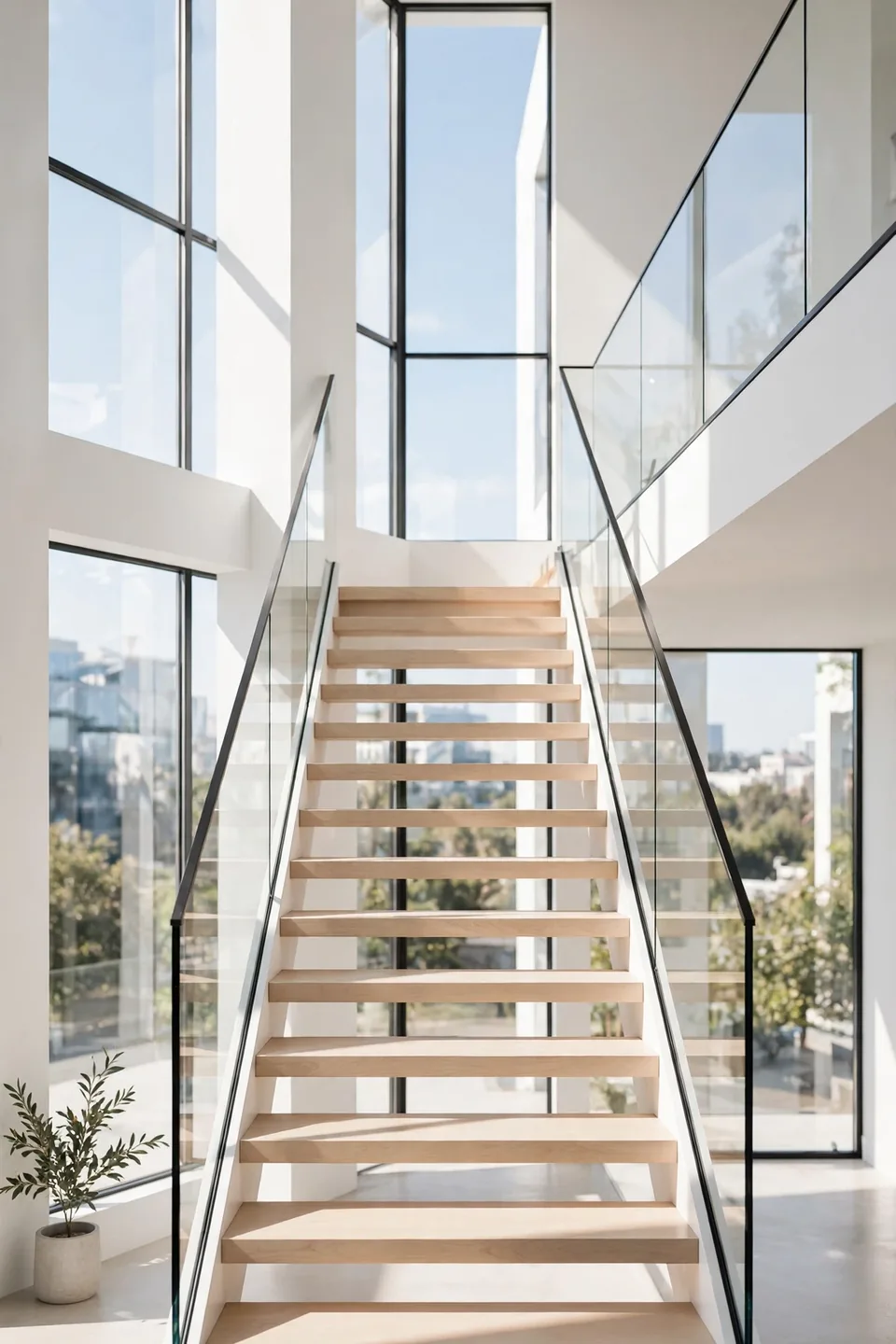
Glass panels vanish visually, so light and sightlines flow straight through the stair. They suit stairs near windows or open living areas best.
- Choose low iron glass to skip the green tint that standard panels show at the edges.
- Channel-set panels give the cleanest look; clamp mounts cost less and still read modern.
- Add a slim handrail on top for grip and a finished edge that keeps the airy feel.
- Use 10 to 12 mm toughened glass for a solid, safe barrier that meets local code.
Frameless glass turns the railing into a quiet frame for the architecture itself. Treads appear to float, daylight reaches deeper into the home, and the stair stops dividing the room. It costs more, but few choices change a space this much.
Slim Cable Runs
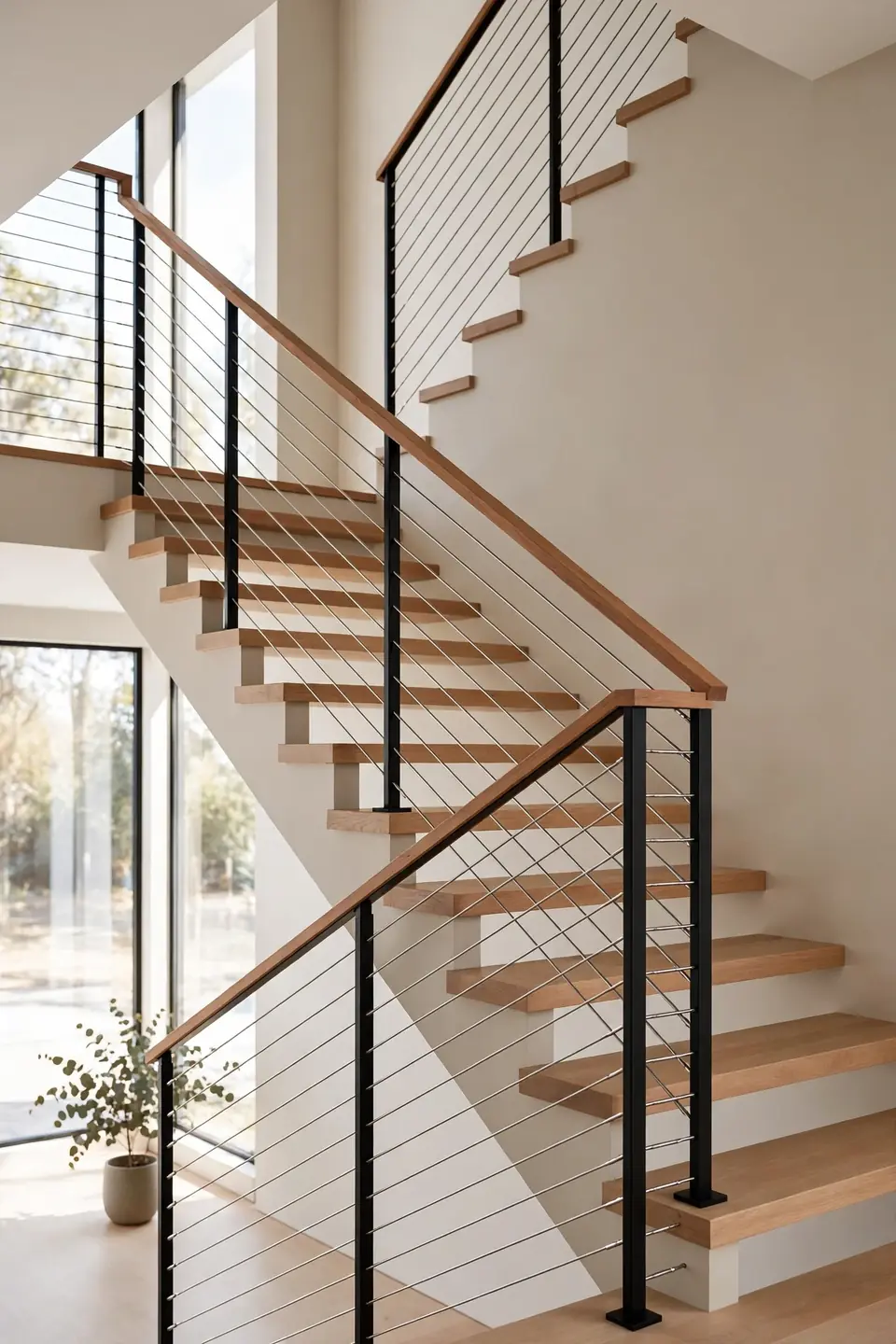
Quick Tip: Keep cable spacing under four inches and tension each run evenly so the lines stay perfectly straight and meet safety codes.
Horizontal stainless cables stretched between slim posts create a railing that feels almost invisible. The fine lines add rhythm without blocking views, which keeps small or dark stairwells feeling open. Pair the cables with a warm wood handrail to soften the industrial edge, and choose marine grade stainless if your home sits near the coast. Wipe the cables with a microfiber cloth a few times a year to keep their shine, and check tension annually since metal relaxes slightly with time.
Warm Wood Handrails
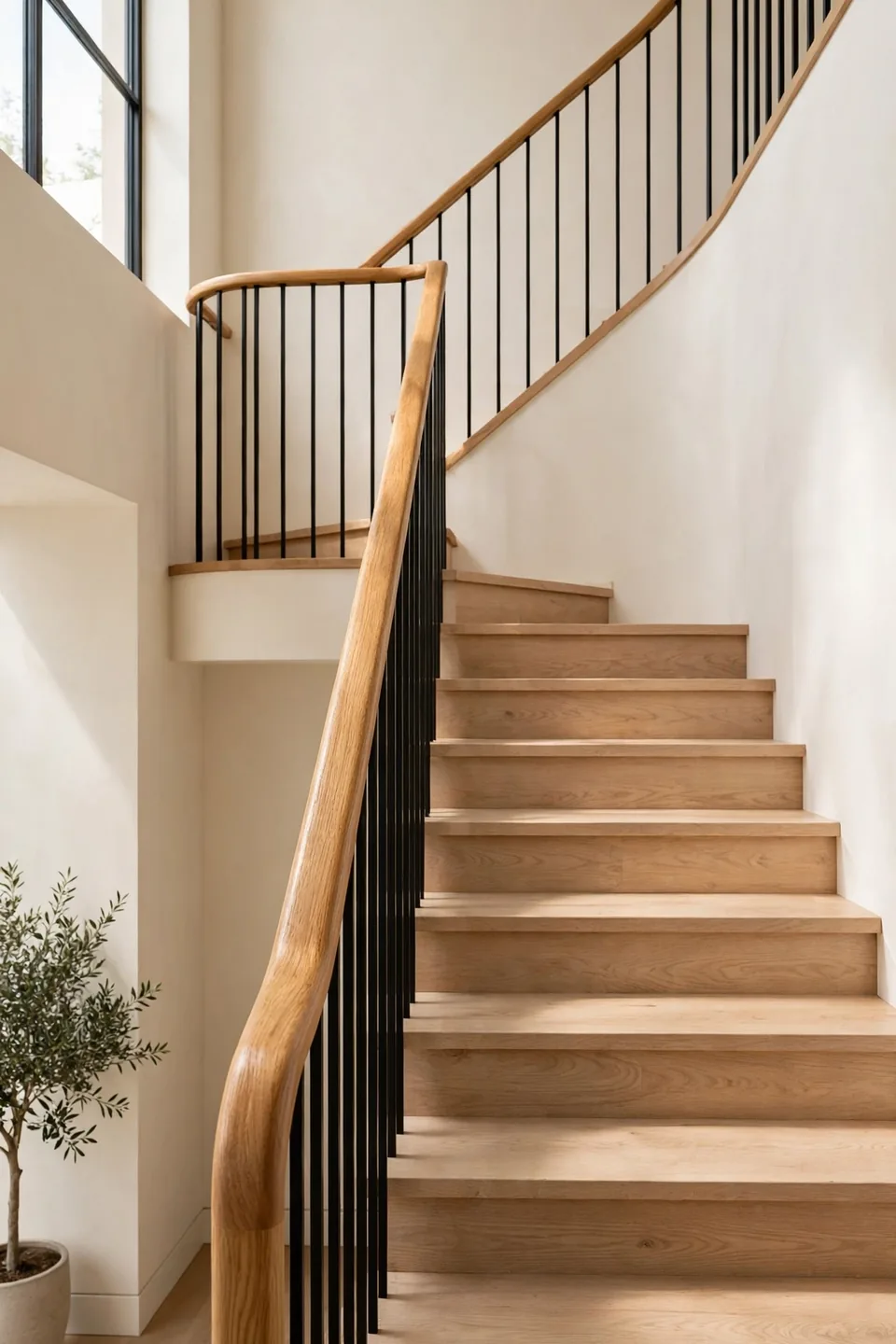
BEFORE: The old rail was a white painted handrail, chipped at every corner and slightly loose at the joints. It looked tired against the dark treads and made the whole stair feel dated, no matter how fresh the walls looked.
AFTER: Now a solid oak handrail runs the full length, sanded smooth and sealed with a clear matte finish. The grain glows warmly under the hall light, the joints feel rock solid, and the stair suddenly looks like a custom feature.
Wood handrails soften hard modern materials like glass, steel, and stone. Oak, walnut, and white oak all take stain beautifully, so you can match floors or create gentle contrast. Keep the profile rounded for comfort, and oil or seal it well since hands touch it every single day.
Brass Stair Details
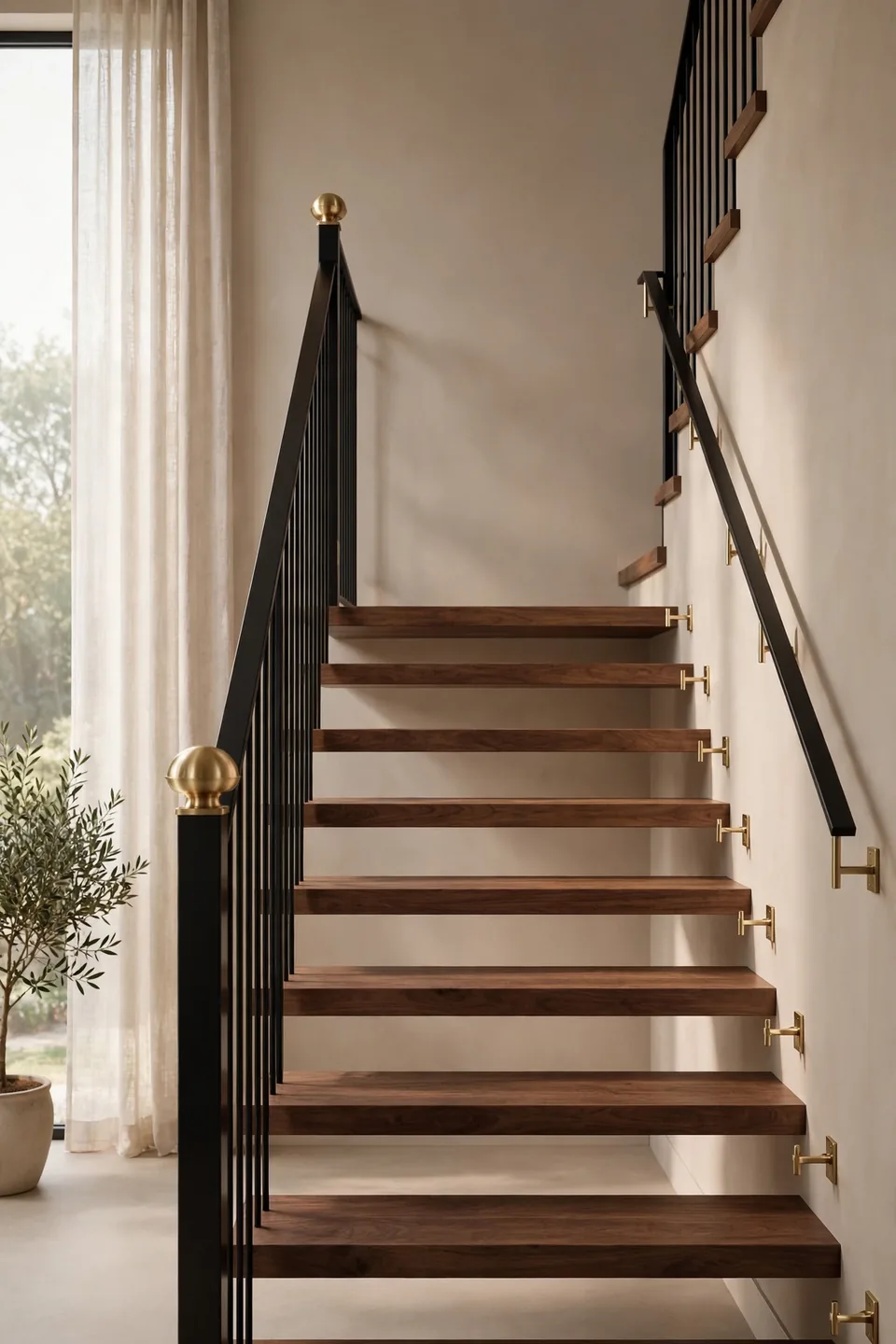
Brass accents bring warmth to modern railings without feeling traditional. A little goes a long way.
- Pick one brass finish, brushed or polished, and use it consistently.
- Limit brass to small moments: newel caps, brackets, or slim inlay strips.
- Echo the finish in nearby lighting or door hardware for cohesion.
- Seal unlacquered brass if you want the shine to stay even over time.
Brass catches light beautifully along a stairwell, adding a jewelry-like detail that lifts the whole run. It pairs especially well with black metal and walnut, a combination that feels both classic and current. Keep the scale small and deliberate, and the brass will read as intentional rather than flashy.
White Horizontal Slats
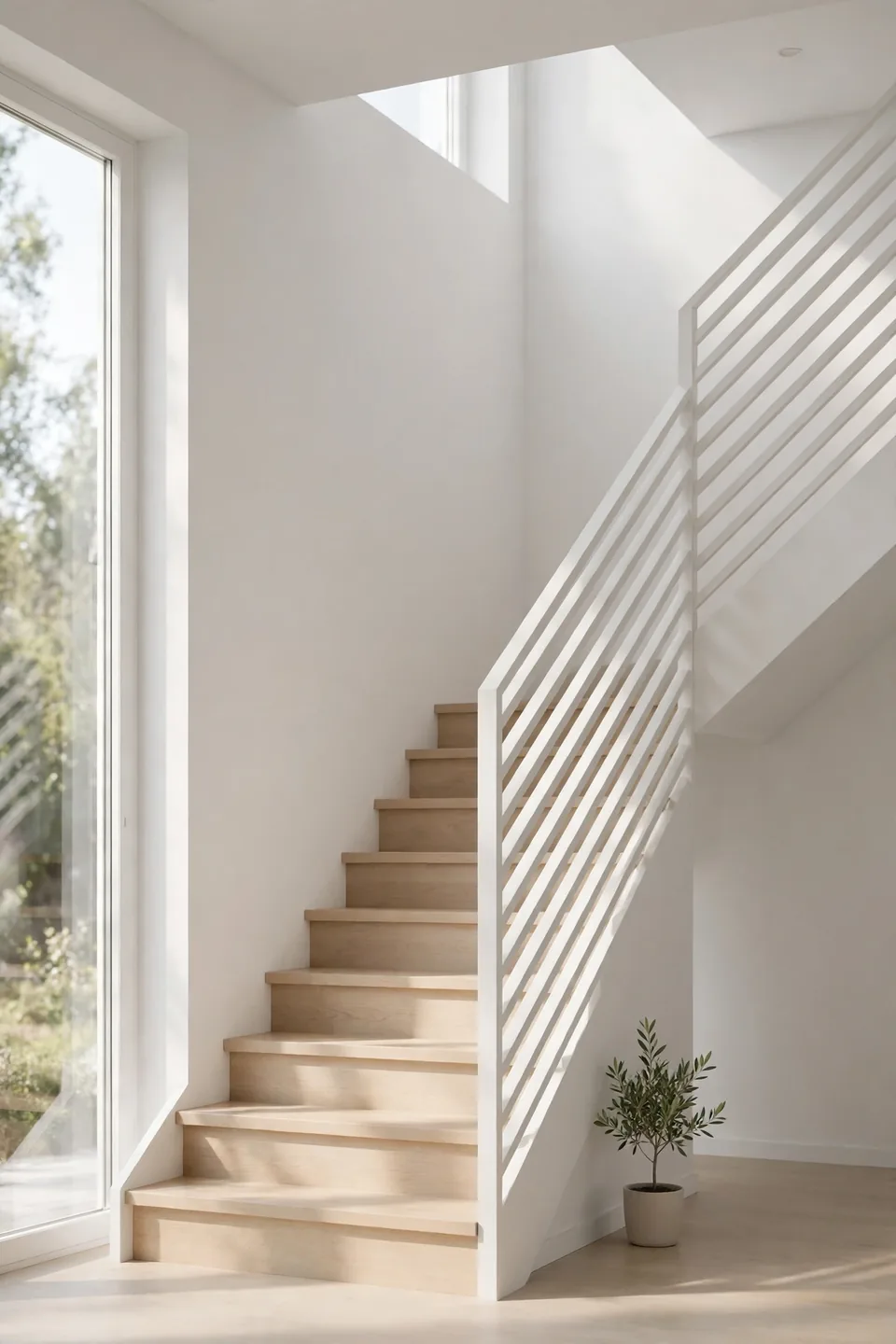
Horizontal slats bring a calm, Scandinavian rhythm to a stair. Spacing changes the mood more than you might expect, so compare options before you build.
| Detail | Wide Slats | Narrow Slats |
|---|---|---|
| Gap width | 3 inches | 1.5 inches |
| Light flow | Bright and open | Soft and filtered |
| Privacy | Minimal | Moderate |
| Overall feel | Airy and bold | Cozy and refined |
Paint the slats the same white as the walls and the stair dissolves into the architecture. This trick works wonders in tight stairwells, since the railing adds texture without visual weight. Use a durable satin paint so the slats wipe clean easily, and keep the gaps even for the calmest look.
Minimal Square Profiles
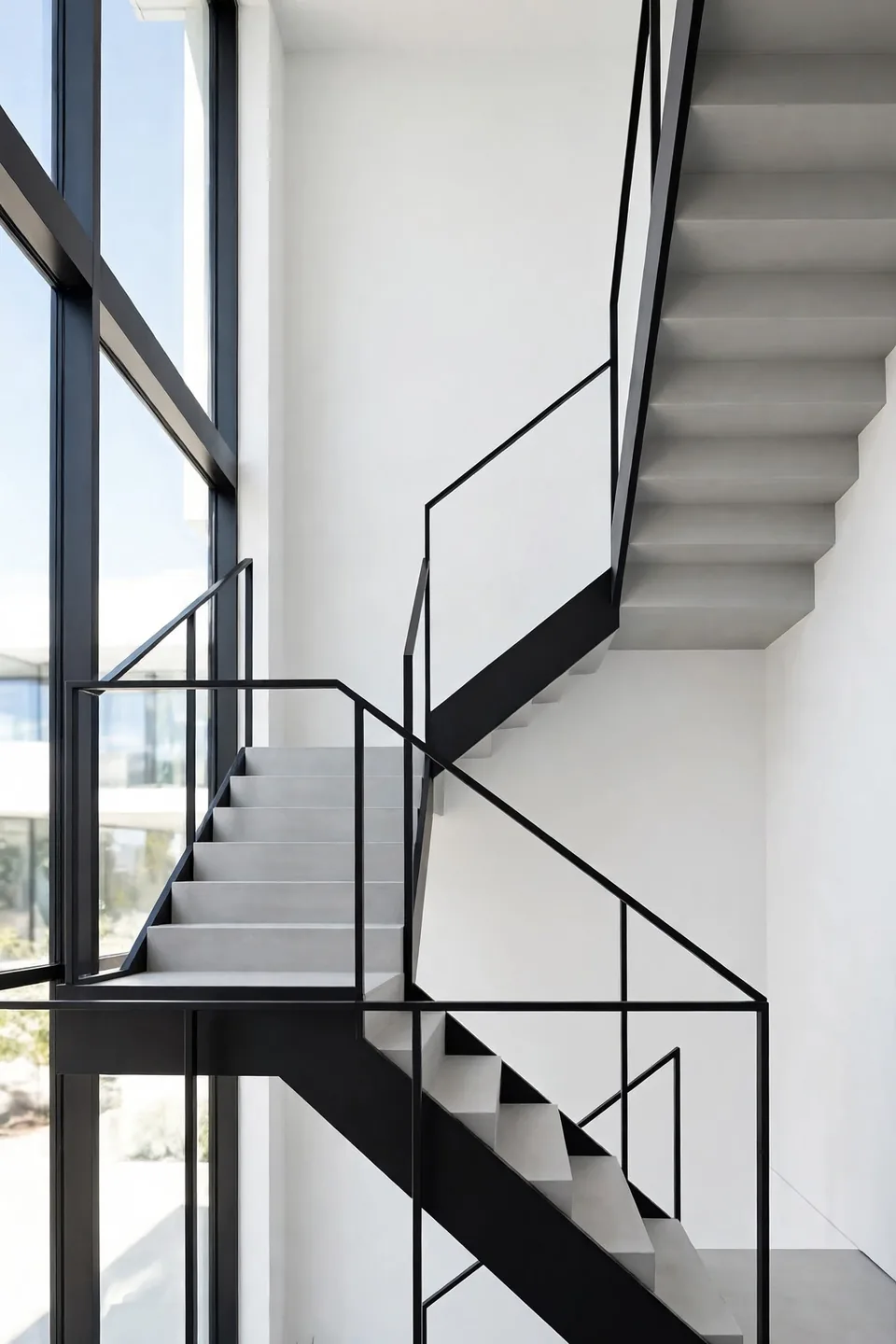
Square tubing and crisp corners give railings a tailored, architectural look. Restraint is the whole game here.
Do:
- Keep the handrail, posts, and base rail in one consistent profile.
- Conceal fasteners with welded joints or hidden brackets.
- Align the rail with door frames and trim for a built-in feel.
Don’t:
- Mix square and round profiles on the same run.
- Add decorative collars or finials that break the clean lines.
- Paint it a bold color that fights the minimal intent.
Minimal square railings shine in homes with flat panel doors and simple trim. Powder coated steel in black, white, or bronze keeps the look sharp for years. When every line stays consistent, even a modest stair reads like a designed architectural moment.
Frosted Glass Inserts
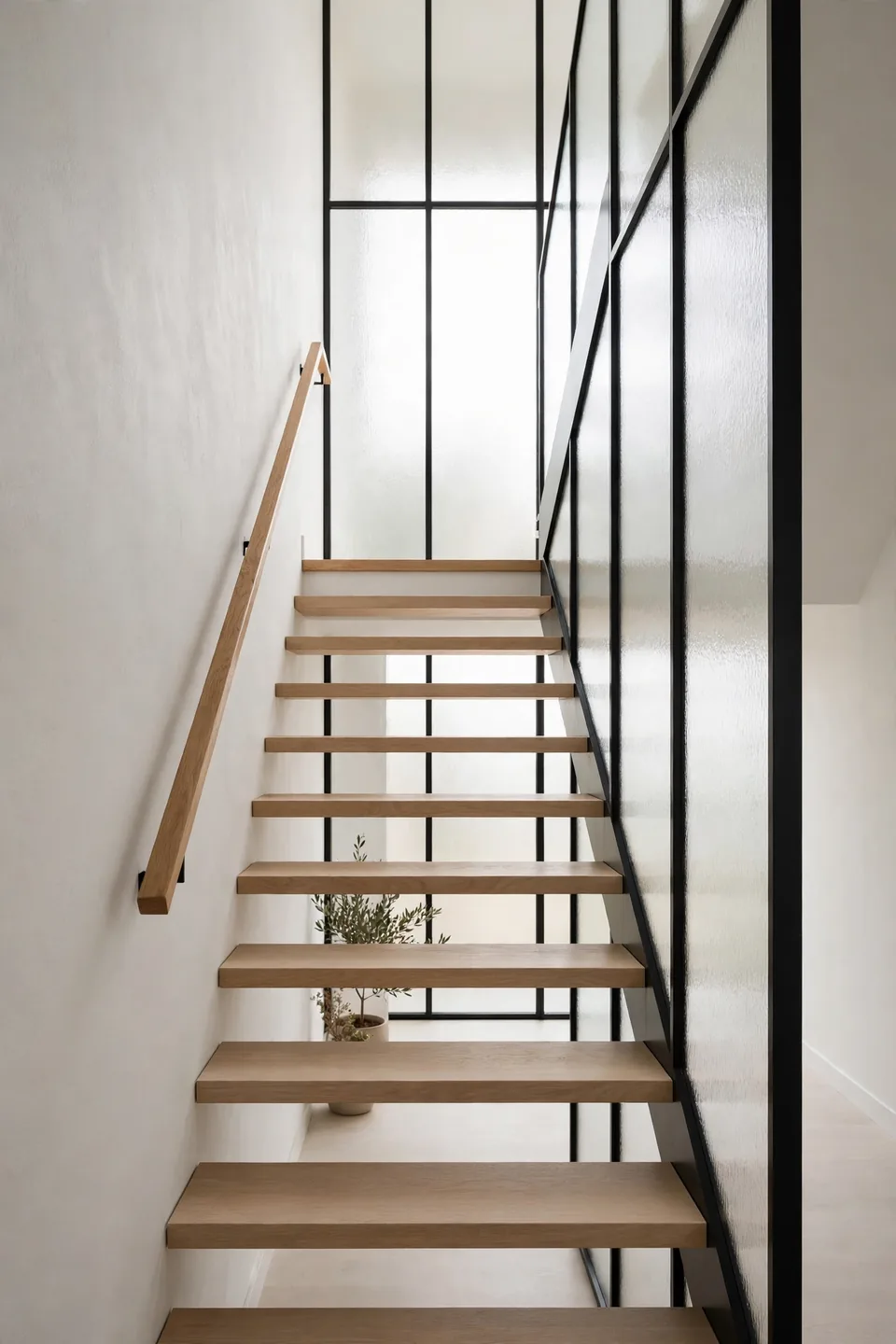
Light diffusion: Softens daylight without darkening the stair.
Privacy: Shields views between floors while staying bright.
Maintenance: Hides fingerprints far better than clear glass.
Best paired with: Warm wood handrails and pale walls.
Frosted panels suit stairs that face bedrooms or bathrooms, where you want light without full exposure. The soft glow they create flatters everything nearby, and the matte surface stays cleaner than polished glass. Frame the panels in slim black or bronze channels for a crisp modern edge. Backlit frosted panels at night turn the stair into a gentle lantern, which adds safety and atmosphere in one move.
Chevron Metal Patterns
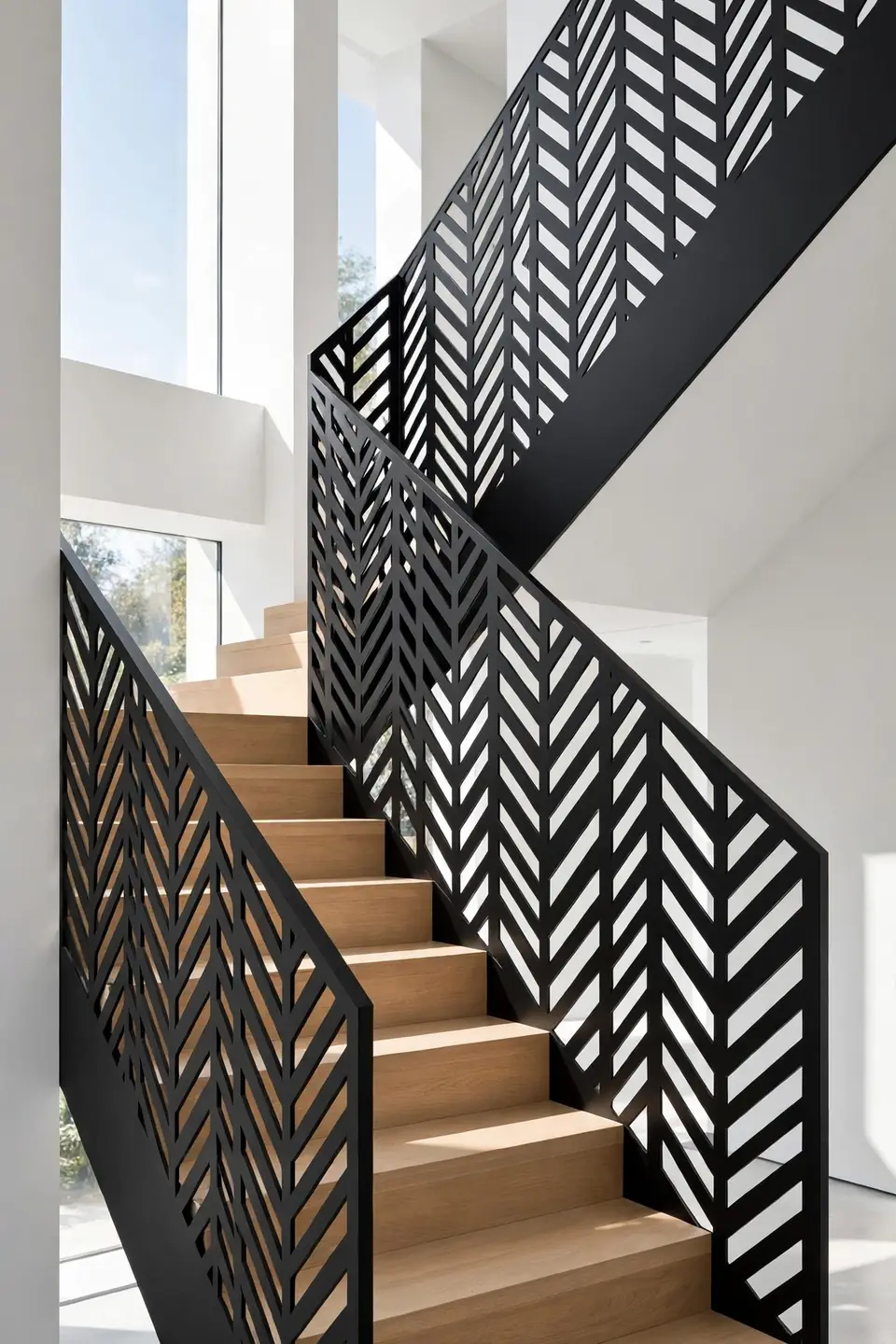
A chevron pattern turns a plain railing into a graphic feature. The repeated V shapes draw the eye along the stair and add energy to a straight run. Laser cut steel panels or welded flat bars both work, and the pattern reads equally well in black, bronze, or white.
Keep the surrounding finishes quiet so the pattern can star. Simple treads and plain walls let the chevrons carry the design. This approach suits entry stairs especially, where guests meet the pattern the moment they walk in. Powder coated steel keeps the pattern crisp for years, and a clear topcoat prevents rust in humid homes.
Leather Wrapped Rails
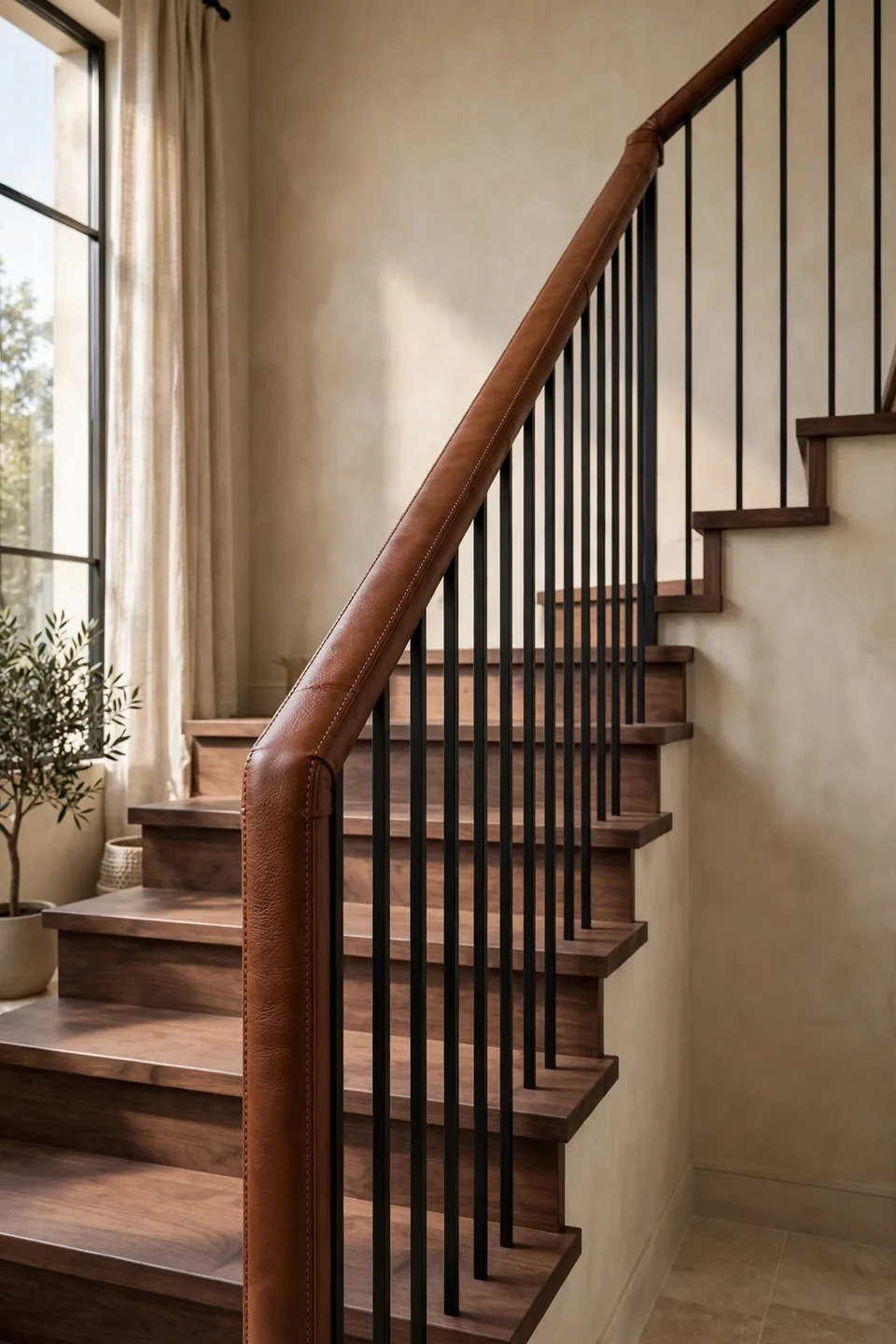
A leather wrapped handrail feels warm and soft under the hand, a small luxury you notice every day.
- Choose full grain leather in cognac, black, or saddle tan for rich color.
- Wrap tightly over a wood or steel core and stitch the seam underneath.
- Condition the leather twice a year to keep it supple and glowing.
- Pair with brass or black metal posts for a tailored finish.
Leather wrapped rails age gracefully, developing a patina that tells the story of your home. They suit studies, libraries, and primary suites where touch matters. The craft detail signals quality without shouting, which is exactly the modern luxury sweet spot.
Floating Stair Rods
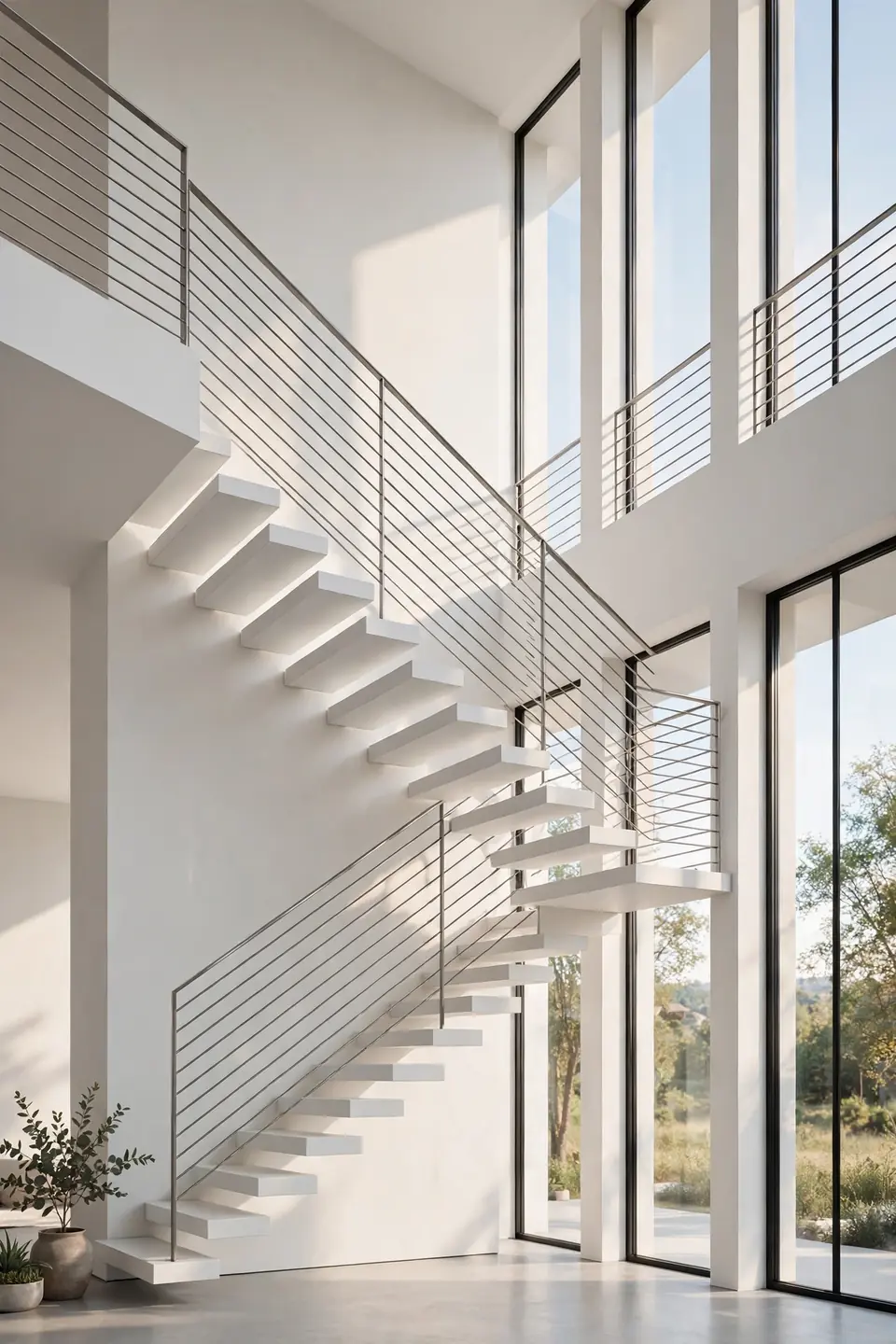
Quick Tip: Anchor rods into solid blocking, not just drywall, so the floating look never wobbles or sags over time.
Slim horizontal rods mounted between hidden wall plates create a railing that seems to hover beside floating treads. The effect is pure modern magic, especially in double height spaces. It is no surprise that modern staircase railing design ideas so often lean toward this minimal language, since it keeps sightlines completely open. A wood cap on the top rod adds warmth and a comfortable grip, while blackened steel keeps the look sharp. Space rods no more than four inches apart to meet code and keep the look refined.
Matte Powder Coating
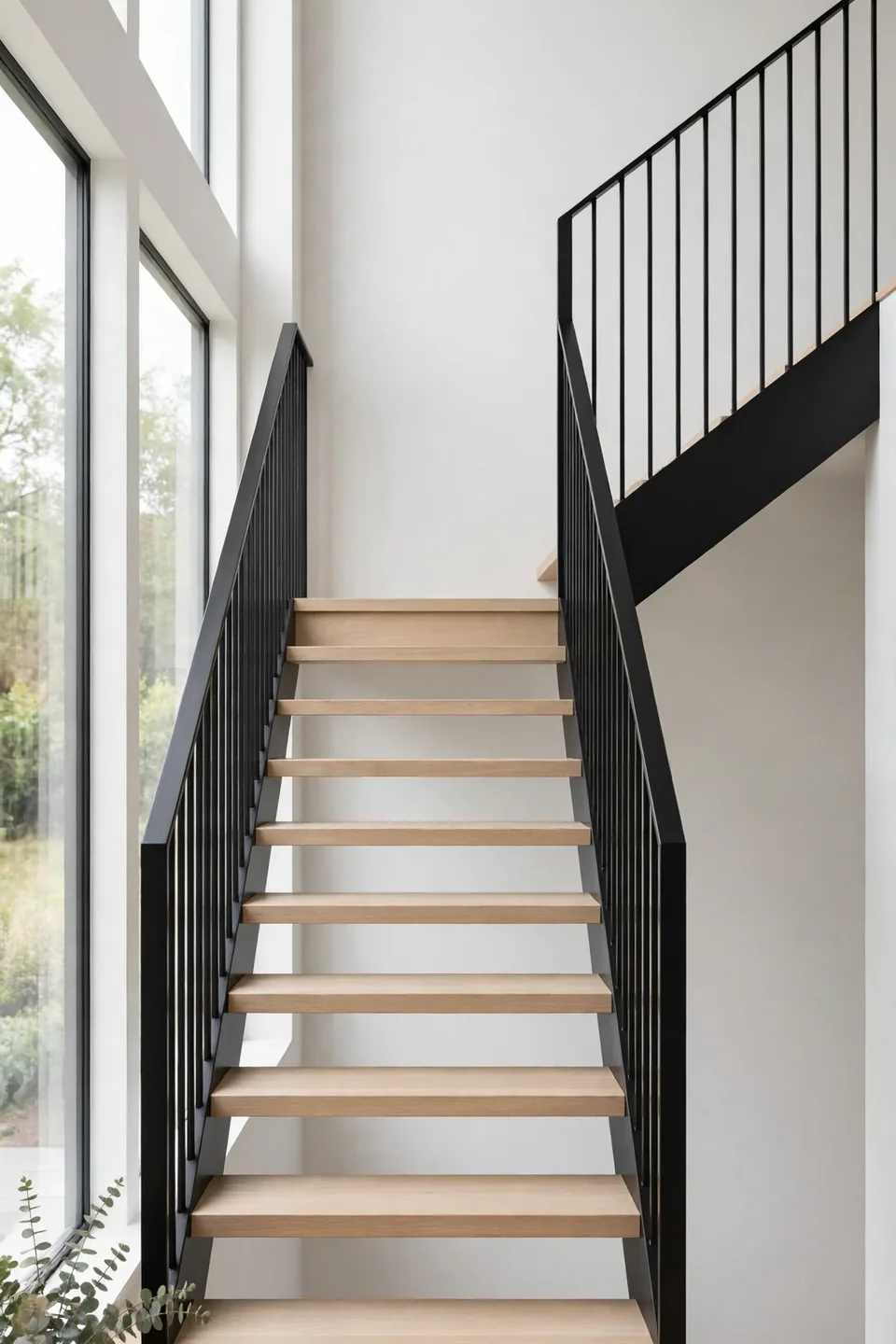
BEFORE: The old chrome railing threw harsh reflections around the stairwell and showed every fingerprint. It felt cold and a little dated, clashing with the warm wood floors.
AFTER: A matte black powder coat now covers every rail and baluster. The finish absorbs light instead of bouncing it, smudges disappear, and the stair feels calm, current, and perfectly matched to the floors.
Powder coating beats paint for railings because it resists chips and scratches far longer. Matte finishes in black, bronze, or deep green hide wear gracefully. Ask your fabricator about outdoor rated powder for extra durability, even indoors. The even, glare free surface also photographs beautifully for listings.
Open Riser Displays
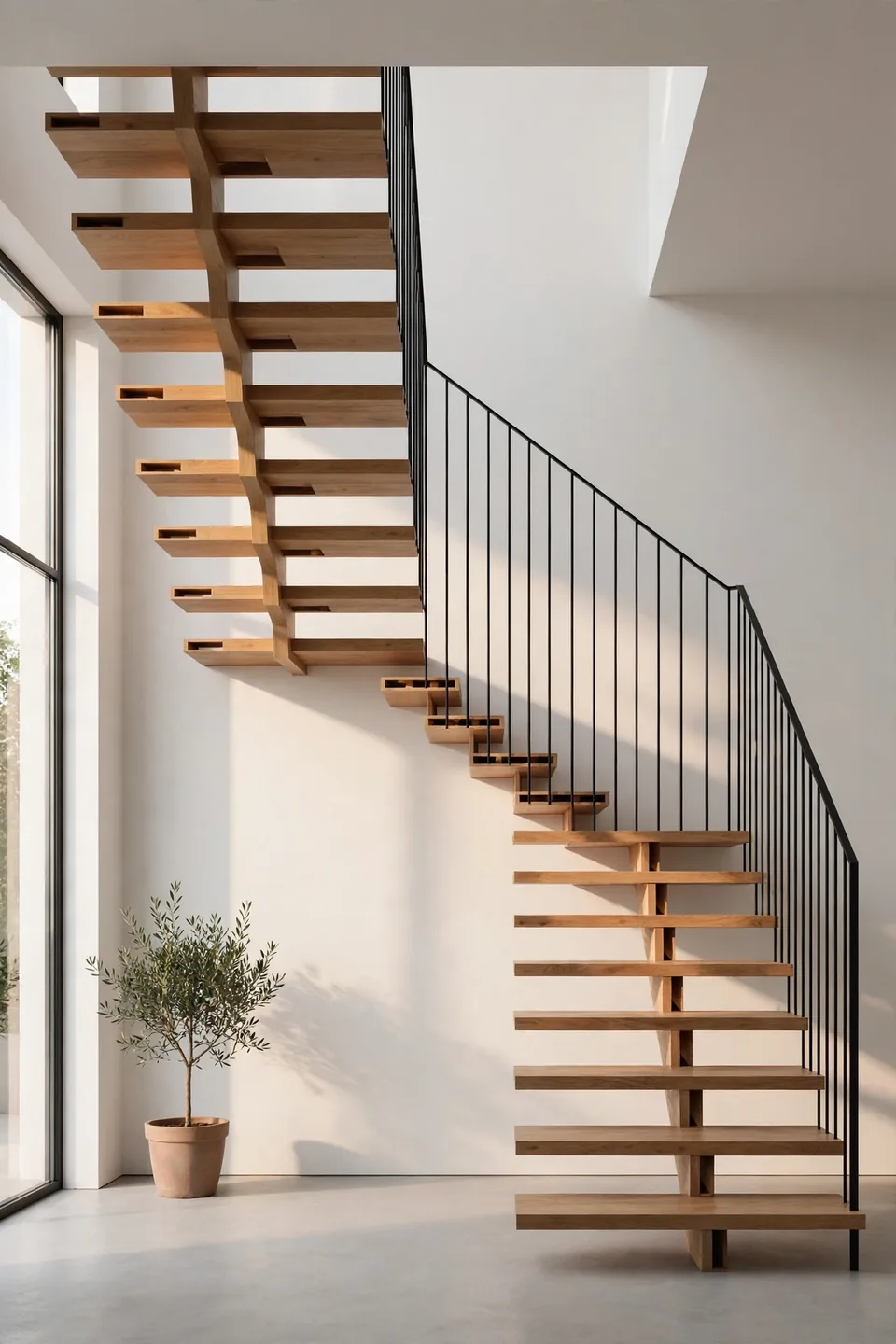
Open risers turn the space between treads into a display moment. The gaps keep the stair light and sculptural.
- Check local code for the maximum allowed gap between treads.
- Keep the wall behind the stair clean so the gaps read as design.
- Light the risers from below or the side for evening drama.
- Style the under stair area simply so it does not clutter the view.
The same edit-everything mindset behind airy stairs helps in small rooms too, which is why these small bedroom wardrobe organization ideas pair so naturally with an open stair. Both prove that removing visual weight makes a home feel larger.
Reclaimed Beam Rails
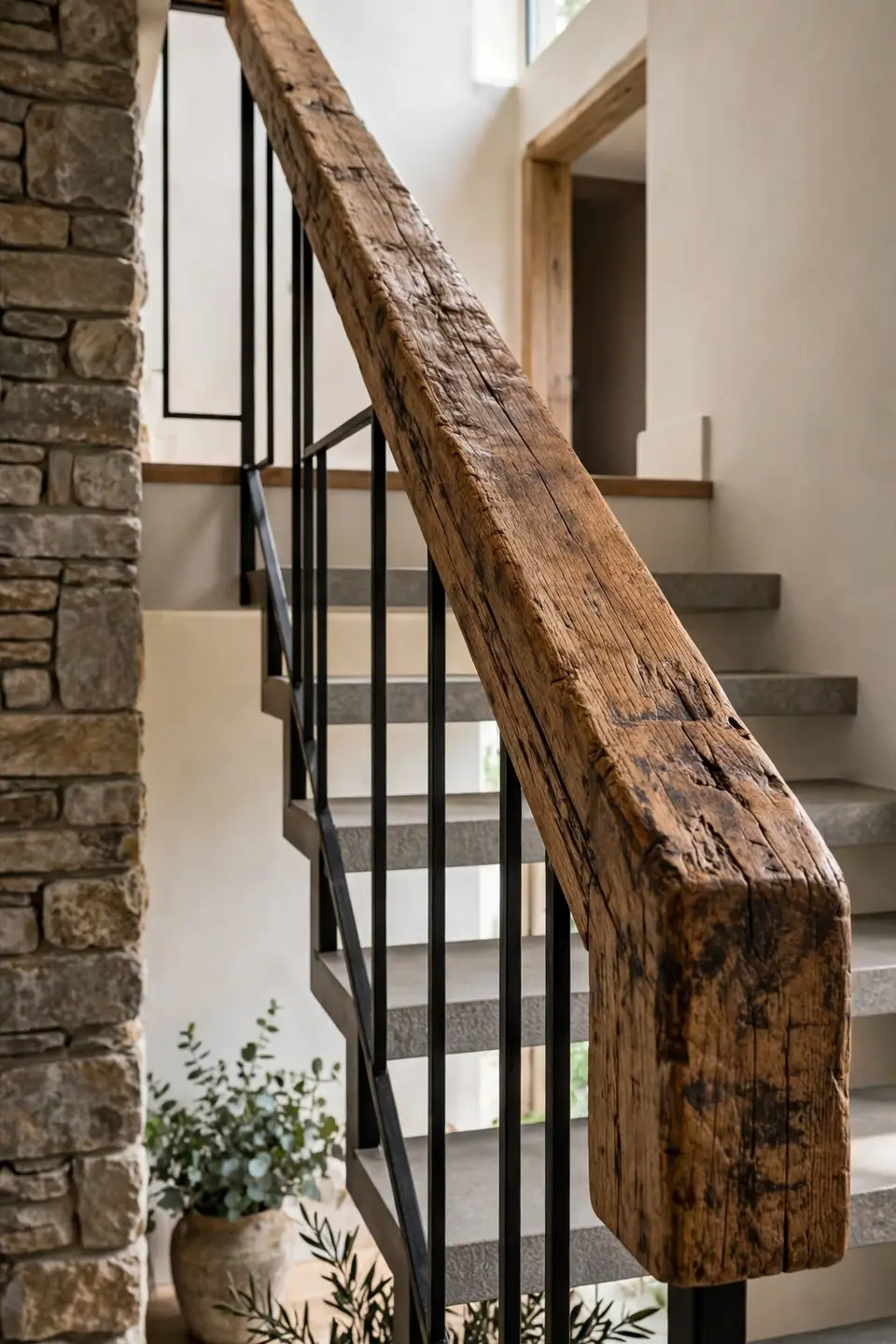
A reclaimed beam handrail brings history and warmth to a modern stair. No two pieces ever look alike, which makes each one special.
| Trait | Reclaimed Oak | Reclaimed Pine |
|---|---|---|
| Character | Deep grain, nail marks | Softer grain, knots |
| Tone | Rich amber | Honey blonde |
| Best with | Black steel, stone | White walls, light oak |
| Sealing | Hardwax oil | Clear matte poly |
Source beams from a reputable yard and check them for hidden metal before milling. A simple clear finish lets the aged character shine. Pair the beam with simple black balusters so it stays the star of the show. This railing becomes the story piece of the stair, grounding sleek modern lines with honest, weathered warmth.
Bronze Accent Posts
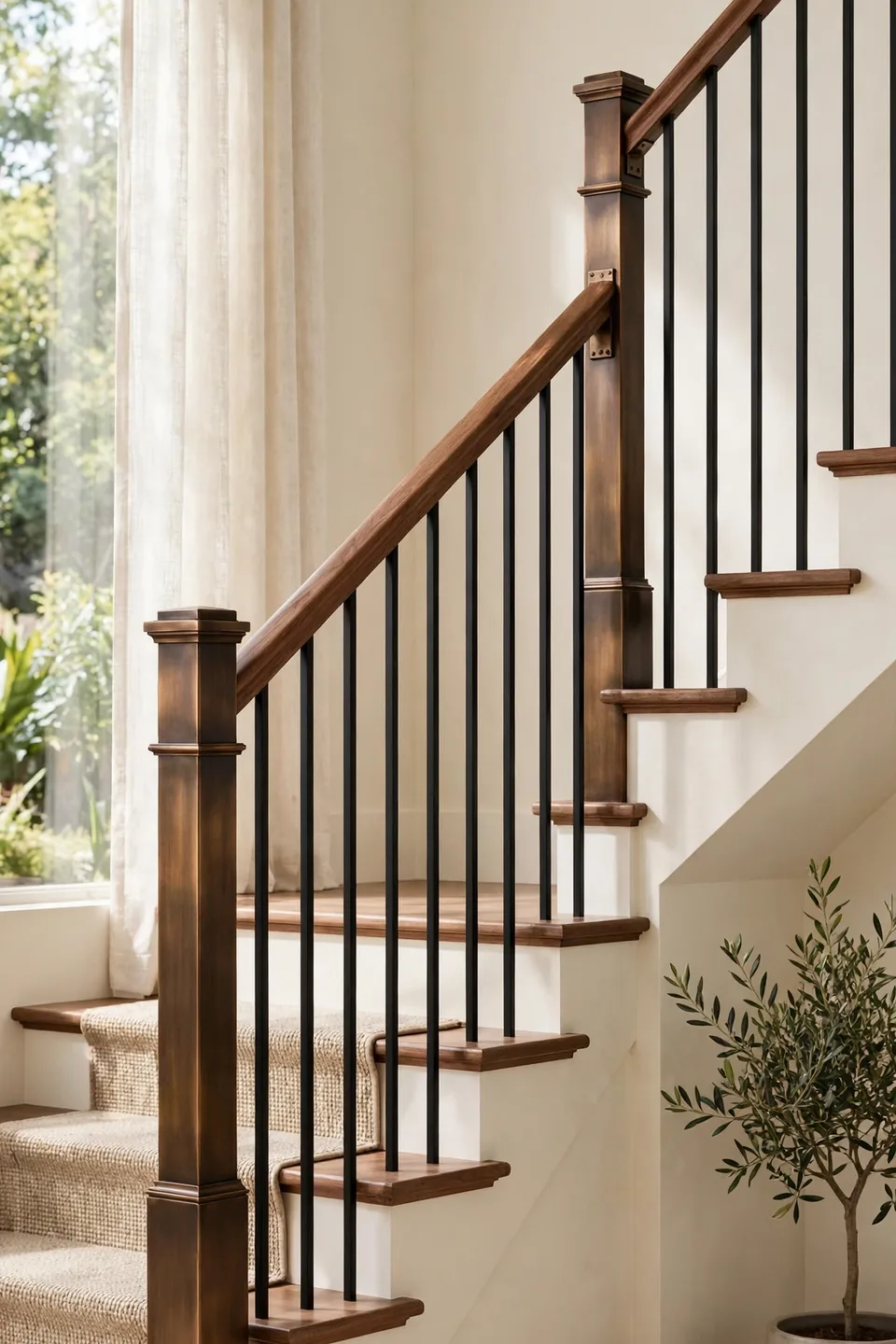
Bronze posts add quiet richness between simpler rails. The finish feels warm without the shine of brass.
Do:
- Use bronze on the newel posts as the anchor points of the design.
- Pair bronze with walnut or white oak for a warm, layered palette.
- Keep the bronze finish consistent across every post on the run.
Don’t:
- Mix bronze with chrome or nickel on the same stair.
- Let bronze touch unsealed wood that can stain it over time.
- Overuse bronze trim until it loses its special quality.
Oil rubbed and aged bronze finishes hide fingerprints well and deepen beautifully with age. They suit transitional and modern homes alike, bridging traditional warmth and contemporary lines. A little bronze goes far, so let it punctuate rather than dominate.
Curved Steel Bends
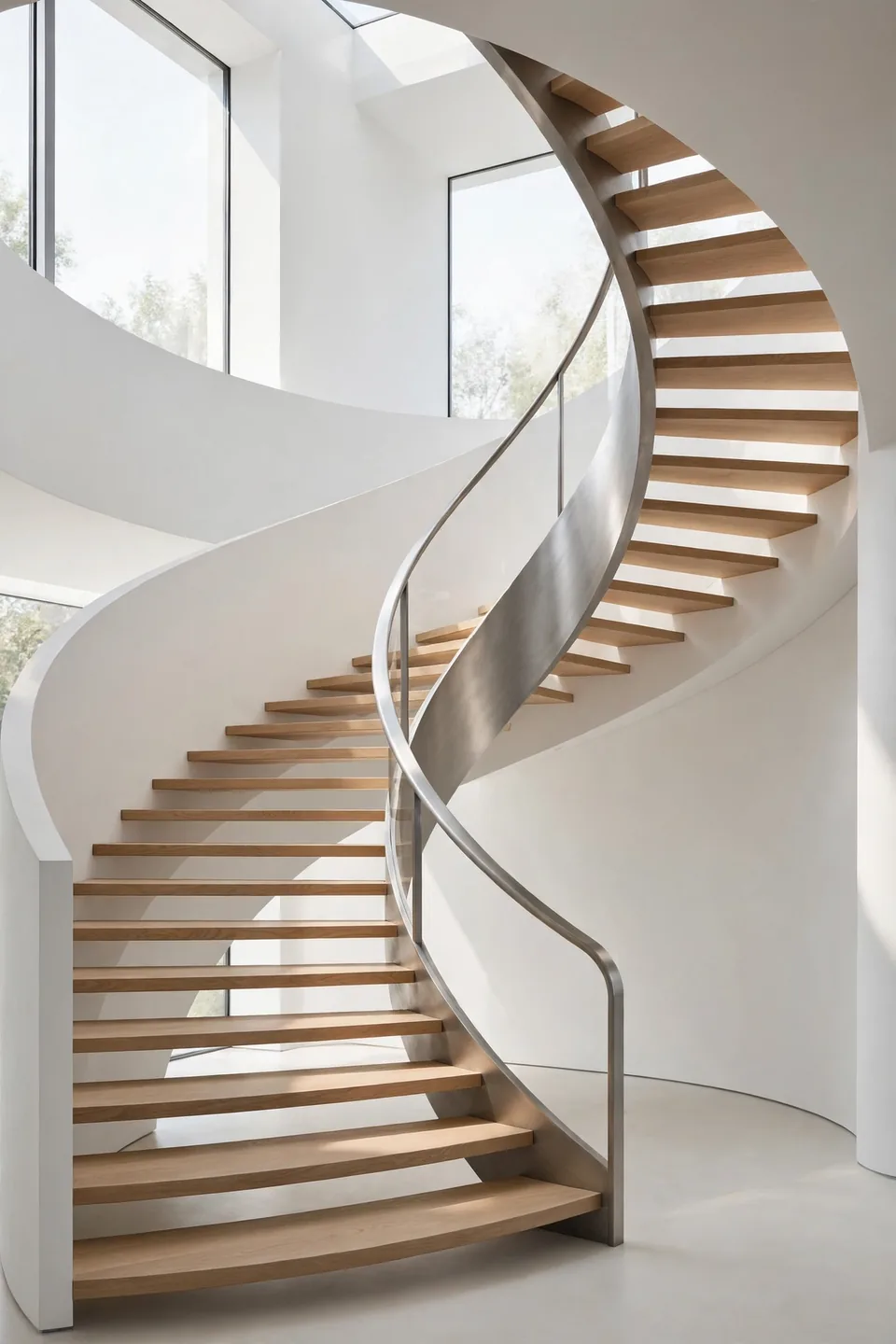
Best for: Curved and spiral stairs where straight rails cannot follow.
Fabrication: Bent from a single steel tube for an unbroken line.
Finishes: Powder coat, brushed metal, or wrapped in leather.
Grip feel: Smooth and continuous, with no joints to catch the hand.
A continuous curved rail feels incredible under the hand, guiding you smoothly around the turn. The unbroken line is the whole point, so avoid joints wherever possible. This detail suits statement stairs in open entries where the curve itself becomes sculpture. Work with a fabricator who specializes in curved metalwork, since the bend quality makes or breaks the result.
Vertical Rod Screens
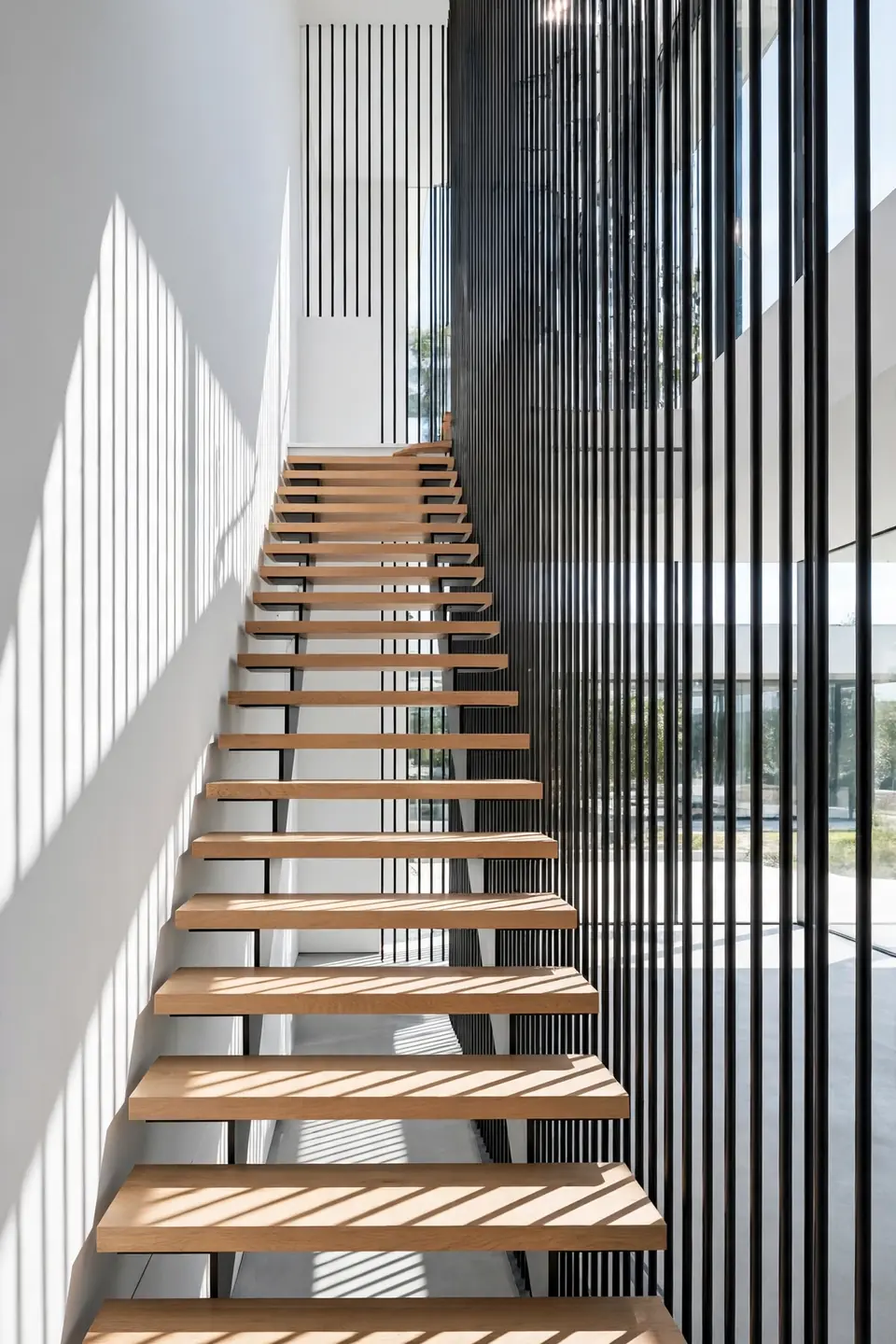
Floor to ceiling vertical rods turn a railing into a screen that filters light and views. The rhythm of slim lines adds texture without closing off the stair. This approach works beautifully beside double height living rooms, where the screen becomes a piece of architecture in itself. Backlighting the rods at night casts dramatic shadows that make the stair glow.
Space the rods evenly and keep them perfectly plumb, since the eye catches any wobble immediately. Blackened steel, brass, or white painted rods each set a different mood. The screen also adds a layer of safety for homes with small children.
Backlit Rail Channels
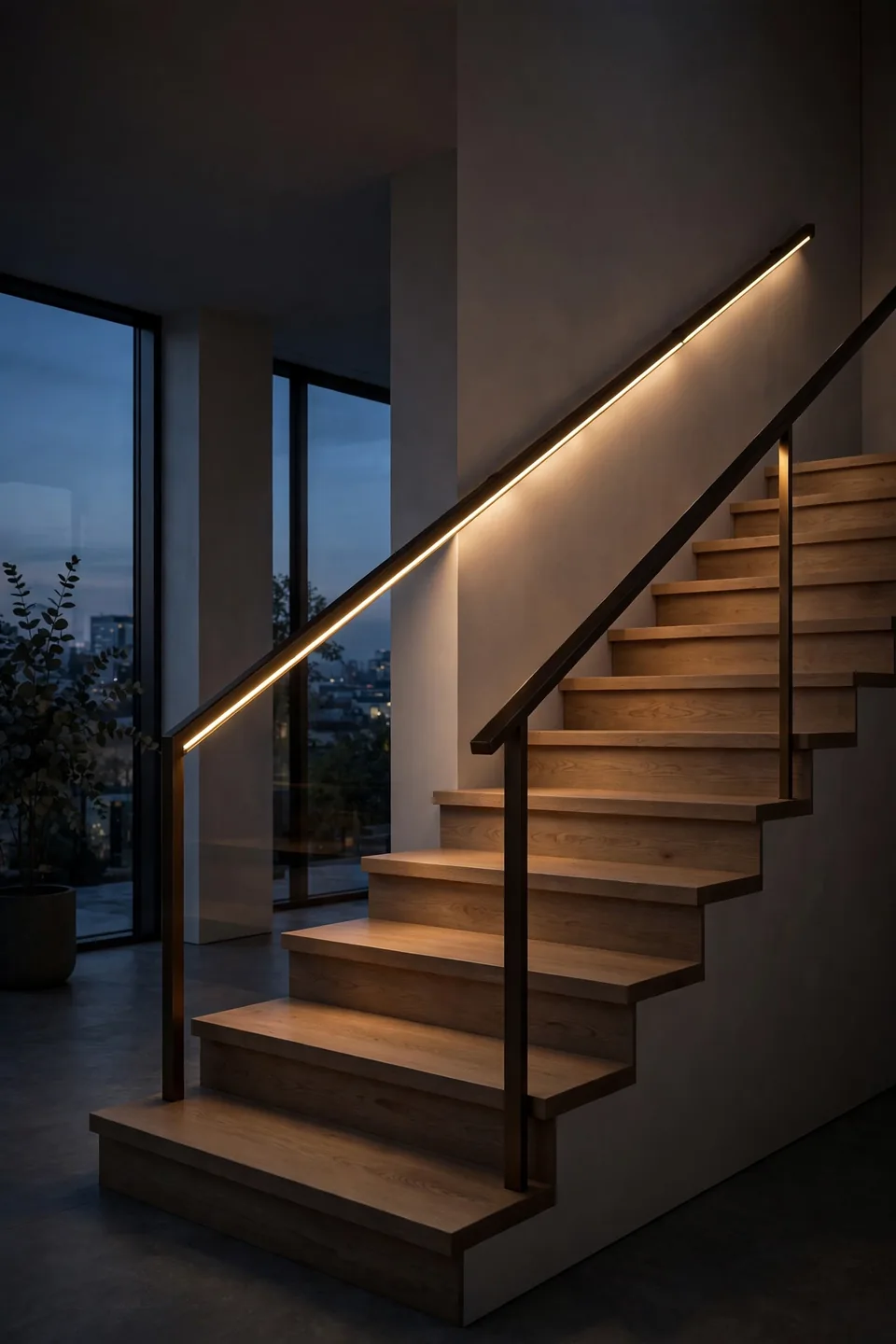
A slim LED channel under the handrail washes the stair in soft light. It adds safety and pure evening drama.
- Choose 2700K warm white LEDs for a cozy, flattering glow.
- Hide the driver in a nearby closet or under the stair for clean access.
- Add a dimmer so the light can shift from bright to ambient.
- Run the channel the full length of the rail for an unbroken line.
Backlit rails guide footsteps safely at night without harsh overhead lights. The glow highlights the texture of treads and walls, turning the stair into a feature after dark. It is a modest cost upgrade with an outsized wow factor.
Concrete Newel Blocks
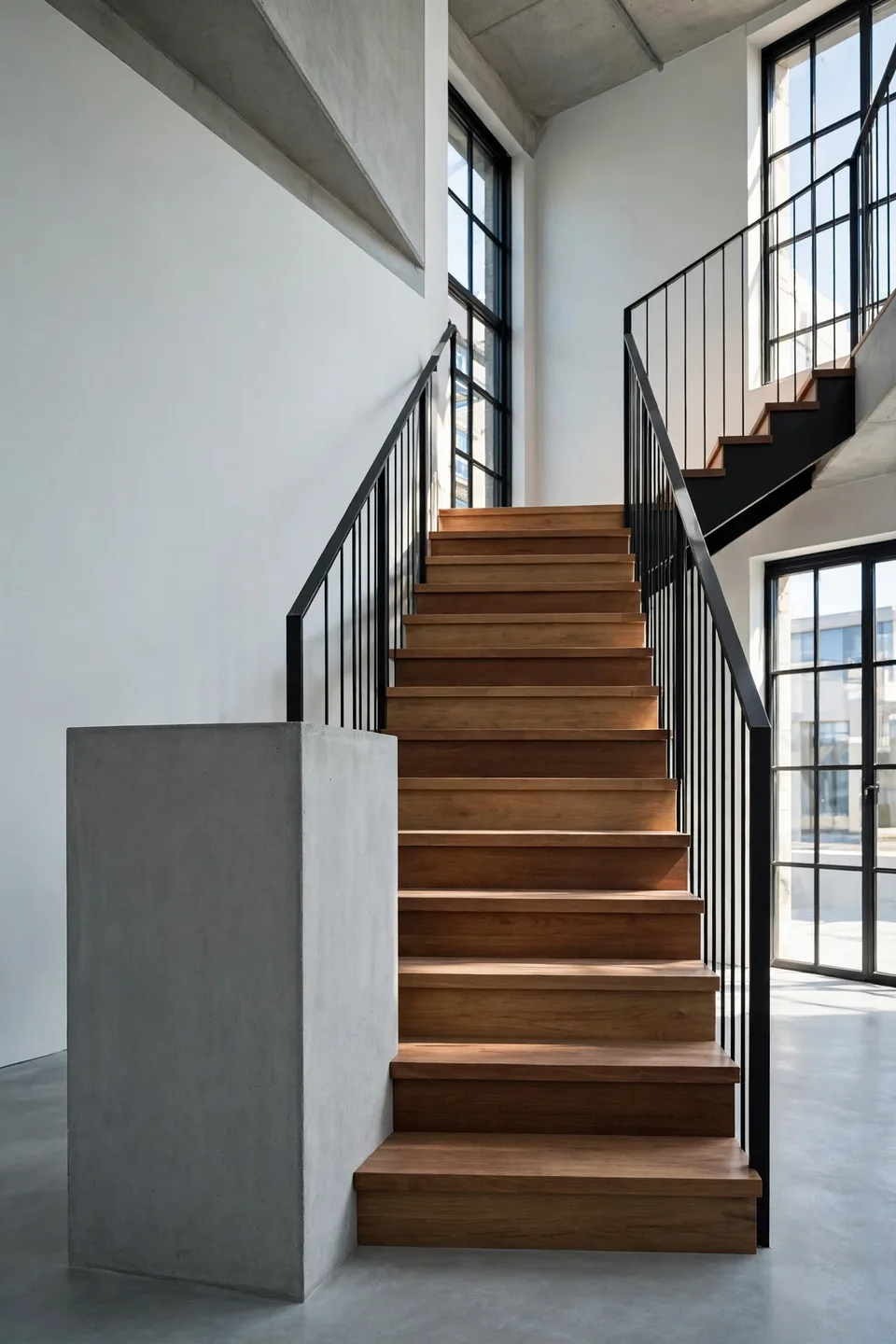
Quick Tip: Seal concrete newels with a penetrating sealer to block stains while keeping the raw, matte look intact.
A solid concrete newel anchors the stair with sculptural weight. Its cool gray tone contrasts beautifully with warm wood treads and black rails. Cast the block with crisp edges and a smooth finish, then let it stand alone without extra trim. Pair the concrete with simple steel balusters and keep surrounding walls pale so the newel reads as art. Keep the surrounding palette restrained so the concrete stays the focal point. A single block at the base often suffices; repeating it at every landing can feel heavy.
Woven Wire Mesh
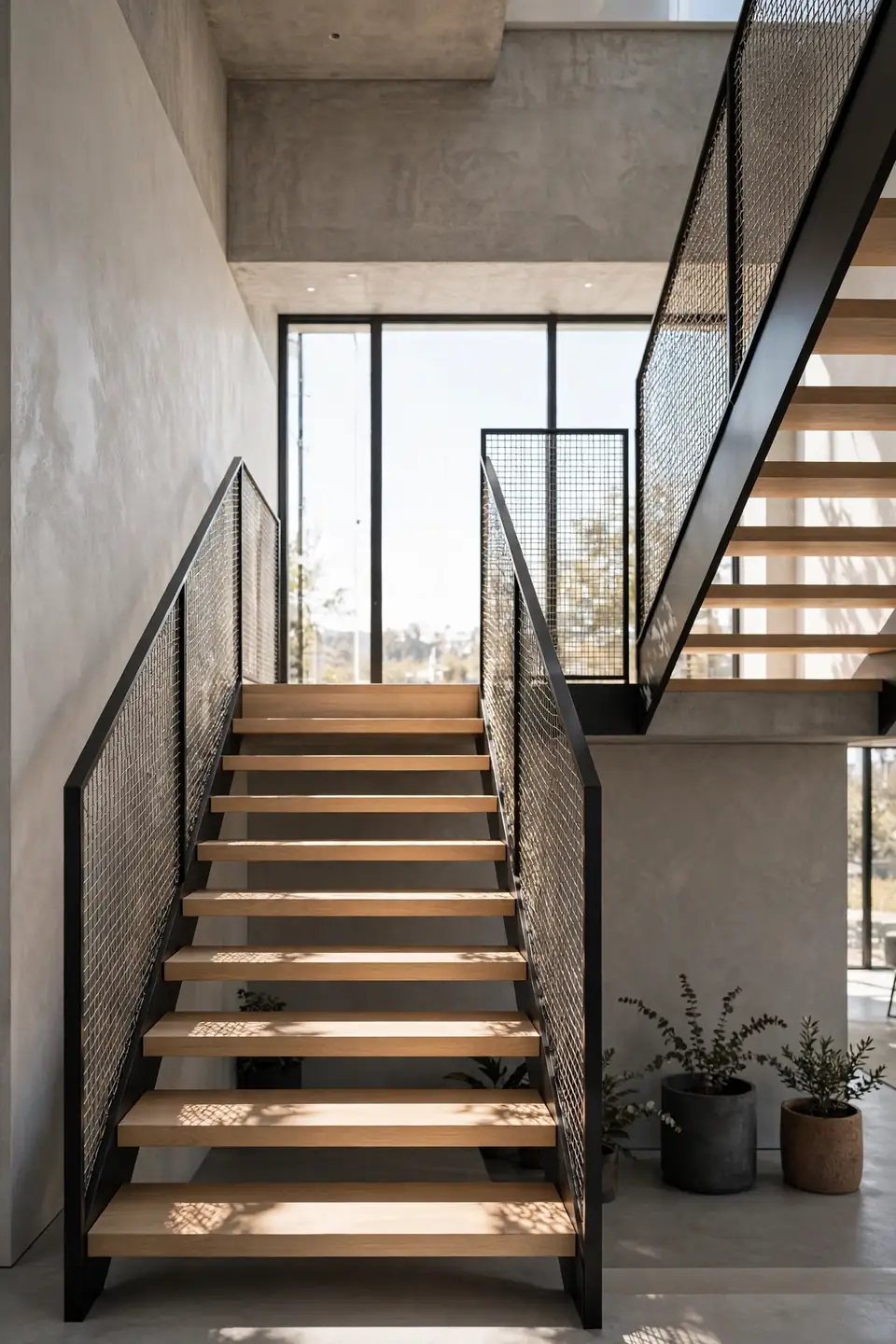
BEFORE: The stair had a solid half wall that blocked light and made the entry feel like a tunnel. The space felt closed in, and the beautiful window at the landing went almost unnoticed.
AFTER: Woven stainless mesh now fills slim black frames between the posts. Light pours through, the window shines, and the stair feels twice as wide. The mesh adds an industrial texture that still feels refined.
Wire mesh infill meets safety needs while staying nearly transparent. Choose a tight weave for homes with kids or pets. The material needs almost no maintenance beyond an occasional wipe, and it pairs well with both wood and metal rails.
Oversized Oak Handrail
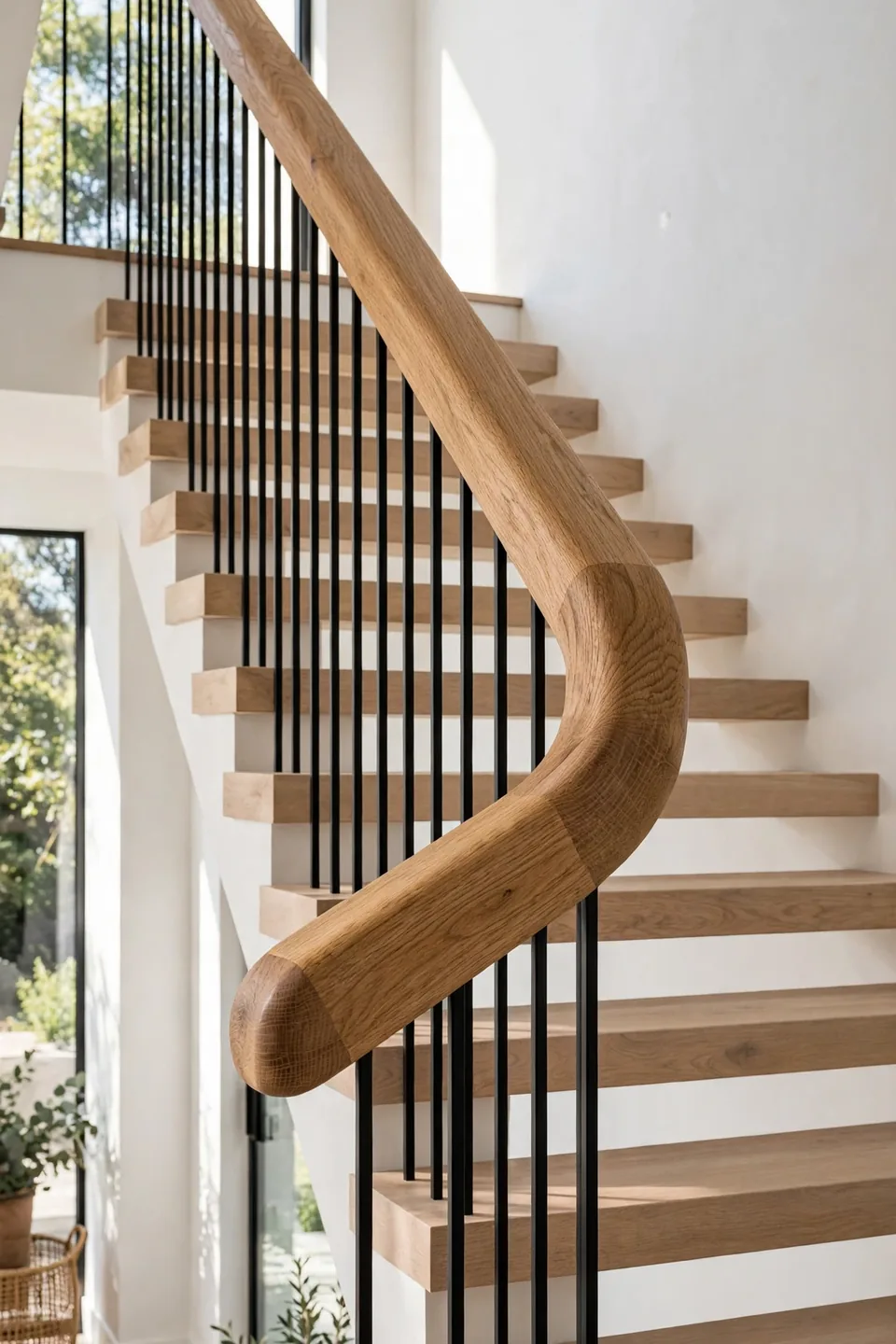
A chunky oak handrail makes a confident statement. Its generous scale feels crafted and substantial in the hand.
- Choose a handrail at least 3 inches wide for true oversized presence.
- Round the edges generously so the large profile stays comfortable.
- Match the oak tone to your floors or go slightly darker for contrast.
- Finish with hardwax oil for a natural feel that resists wear.
Oversized rails suit wide stairs and double height entries where small details would disappear. The bold wood softens minimalist architecture and invites touch. Keep balusters simple and slim so the handrail remains the undisputed hero of the stair. This is a detail guests will comment on, since it breaks the expected scale in the best way.
Dual Tone Railing
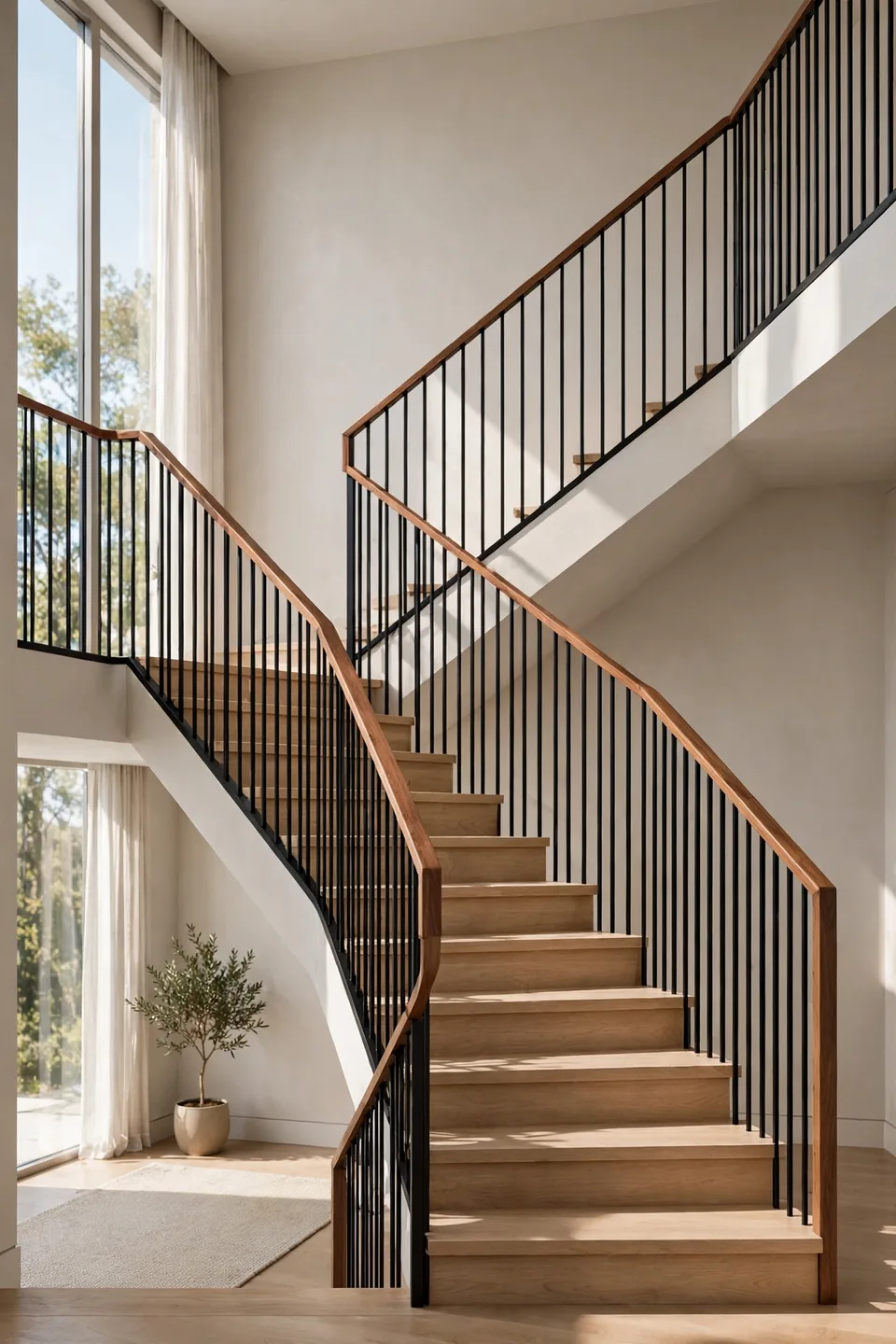
Two finishes on one railing create depth and designer intent. The pairing should feel deliberate, not accidental. Popular pairings mix a dark metal with a warm natural material.
| Trait | Black plus Wood | White plus Brass |
|---|---|---|
| Mood | Bold and grounded | Fresh and elegant |
| Best rooms | Entry, loft | Bedroom hall, bath |
| Upkeep | Wipe metal, oil wood | Polish brass yearly |
| Cost level | Moderate | Higher |
Let one finish dominate roughly seventy percent of the railing and the second finish accent the rest. This ratio keeps the pairing balanced. Dual tone railings bridge styles beautifully, which helps when your home mixes modern and traditional pieces. Test samples together in your actual light before committing.
Conclusion
The right railing does more than keep you safe; it shapes how your whole home feels. Among all these modern staircase railing design ideas, the best choice is the one that echoes your finishes, suits your light, and feels good under your hand every day. Sketch your top three options, compare them against your flooring and hardware, and picture each one in morning light before you commit. Measure twice, sample finishes in your own light, and choose a fabricator whose past work you admire. A thoughtful railing choice pays off daily, quietly elevating every trip up and down the stairs.
One Comment