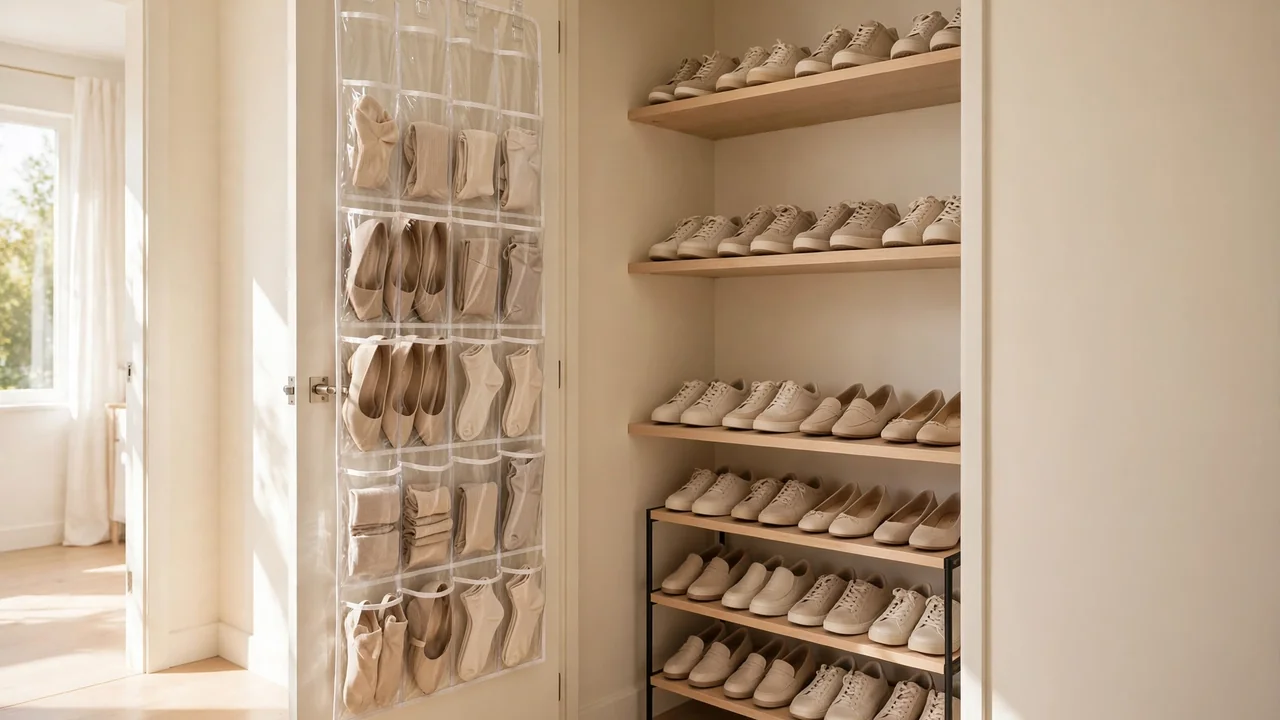
How to Organize Shoes in a Narrow Closet
Shoes seem to multiply overnight, and a narrow closet turns into a tangled mess fast. If you want to know how to organize shoes in a narrow closet, take heart: the slimmest closet can hold your collection neatly. In my experience, matching the storage method to your space changes everything.
Narrow closets give you little room to work with, which is why a plan matters more here than in a walk-in. When every pair has a clear home, mornings get calmer and your shoes last longer because nothing gets crushed.
This guide walks you through ten practical steps, from counting what you own to picking slim storage that fits. For more small-space ideas, see how to create a home office in a closet, then give your shoes a real system.
Why Narrow Closets Feel Impossible

Most narrow closets were built for hanging clothes, not rows of shoes. The shelves are shallow, the floor is tiny, and each pair makes the pile less stable. Shoes end up kicked into corners or lost behind boxes. It feels impossible because the closet was never designed for this job.
The good news is that narrow closets reward a system. One change ripples through the whole closet: a single slim rack clears the floor, and one organizer gives ten pairs a home. Stop treating it like a walk-in and start treating it like the slim space it is.
Count Your Real Shoe Needs
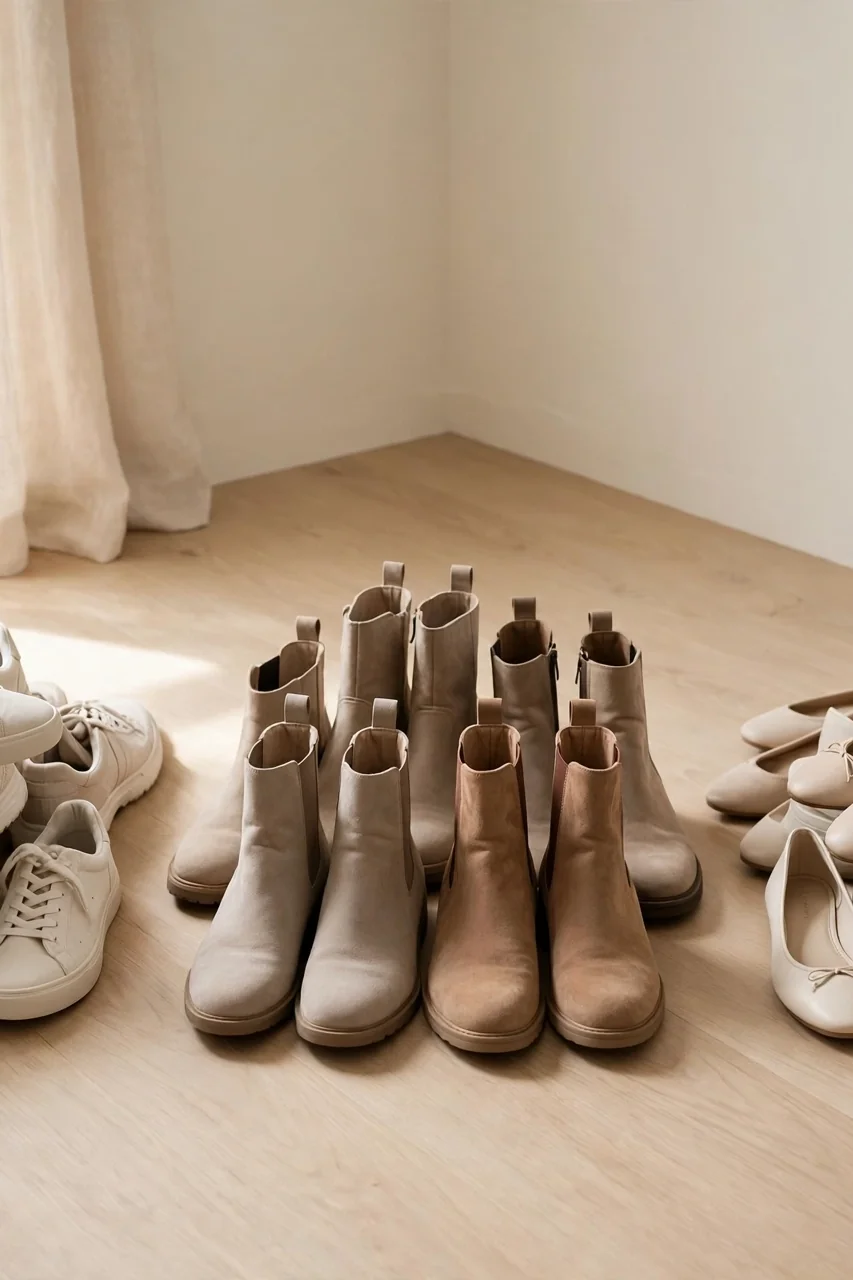
Before you buy a single rack, you need to know what you are storing. Most people own more shoes than they wear, and dead pairs steal space from the ones you actually reach for. A quick count tells you exactly how much storage you need.
- Pull every pair out of the closet and line them up where you can see them all. You cannot organize what you cannot see.
- Sort into three piles: wear weekly, wear seasonally, and never wear. Be honest about that last pile.
- Count the pairs in the first two piles. This number is your real storage target.
- Donate or toss the never-wear pile right away so it stops stealing space.
Use Slim Shoe Racks
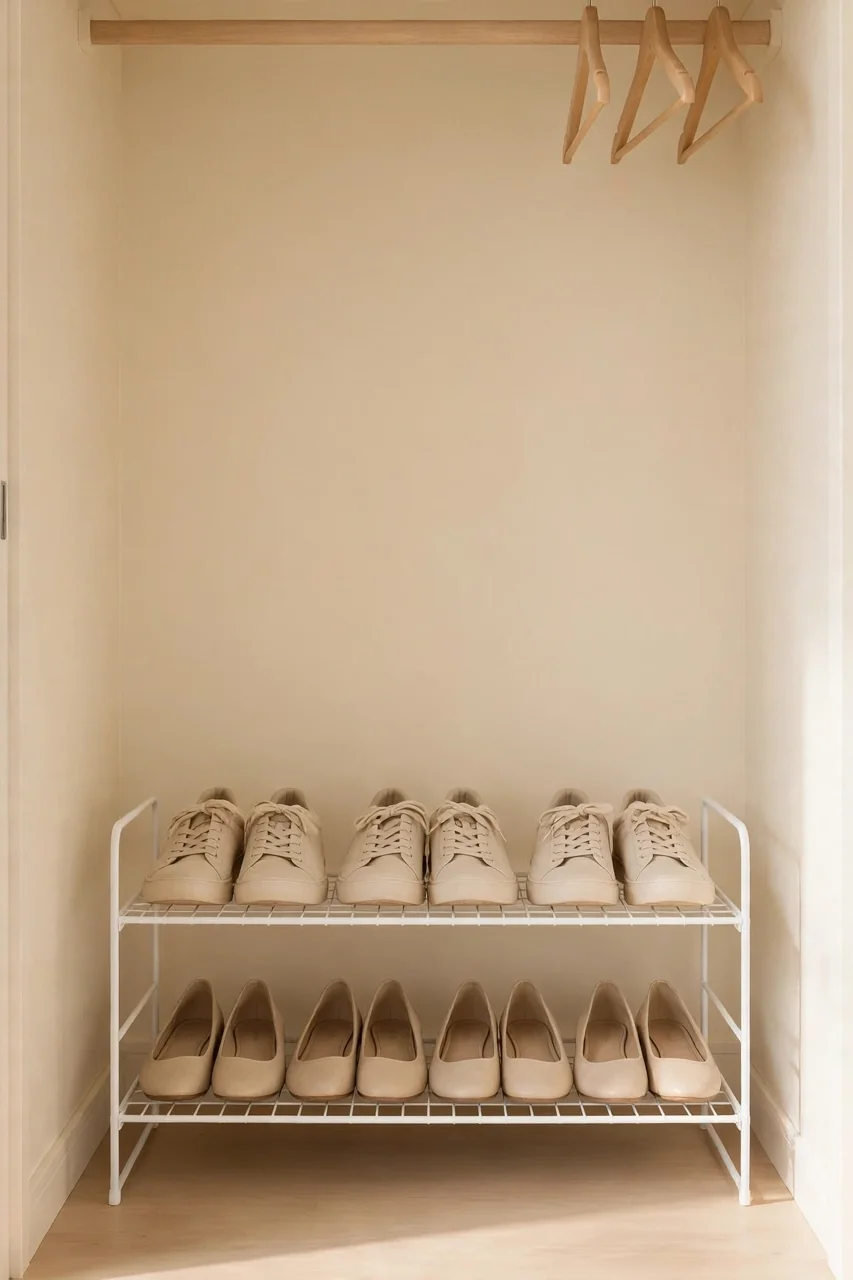
Quick Tip: Measure your closet’s depth before shopping. Most narrow closets fit racks 10 to 12 inches deep, and a rack that sticks out past the door frame will drive you crazy every time you reach in.
Slim stackable racks are the workhorse of narrow closet organization. They hold two or three tiers of shoes in the footprint of one shelf, and many models let you add levels as your collection grows. Choose open-sided designs so every pair stays visible, and place the rack along the back wall.
Try Over-Door Organizers
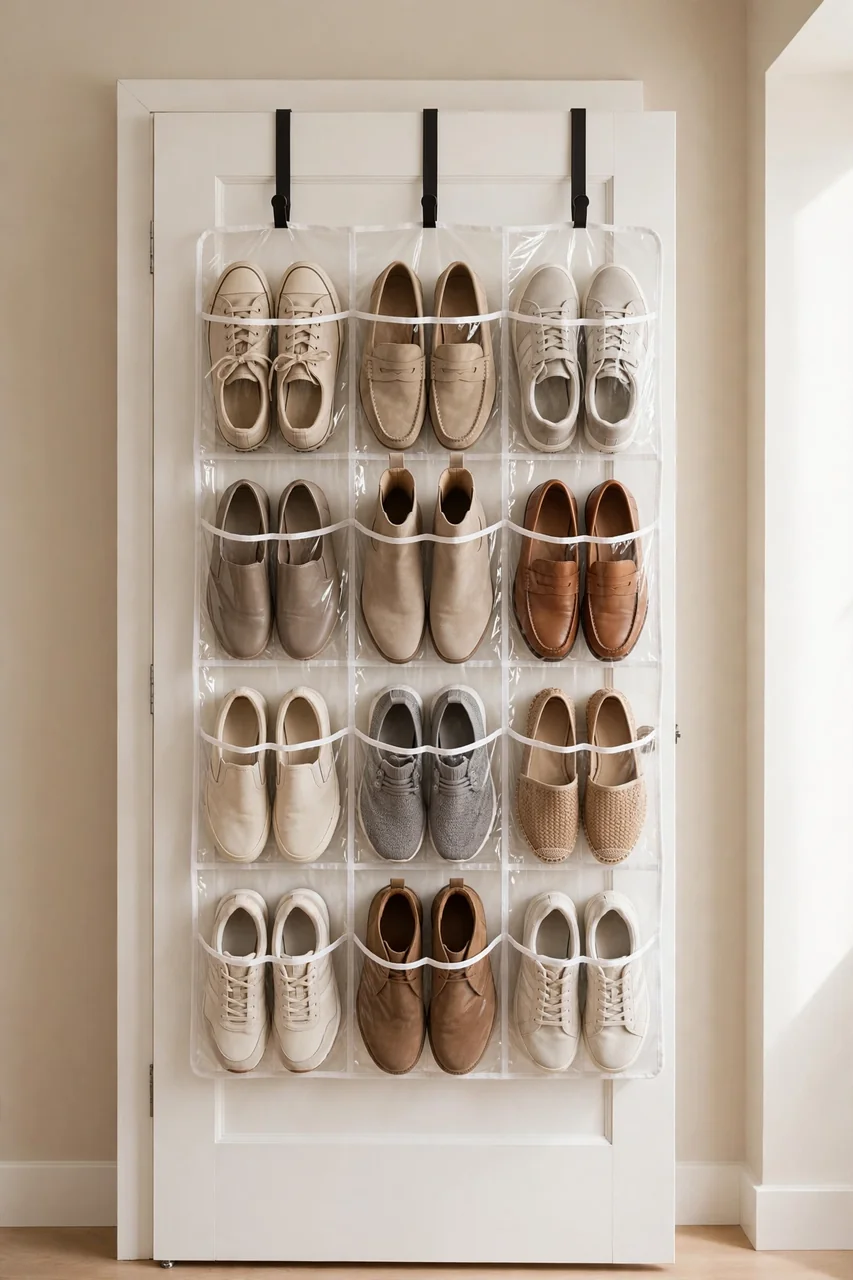
Common Mistake: Most people ignore the back of the closet door completely. That flat surface just sits there doing nothing while shoes pile up on the floor below it.
The Fix: Hang a clear over-the-door shoe organizer on the inside of the closet door. Each pocket holds one pair, so a single organizer can swallow ten to twelve pairs without touching your floor or shelf space.
Over-door organizers work beautifully in narrow closets because they use space that is otherwise wasted. Choose clear pockets so you can spot the pair you want in seconds. Keep heavier boots on lower pockets so the door still closes easily, and reserve this spot for the shoes you grab most often.
Stack With Tiered Shelves
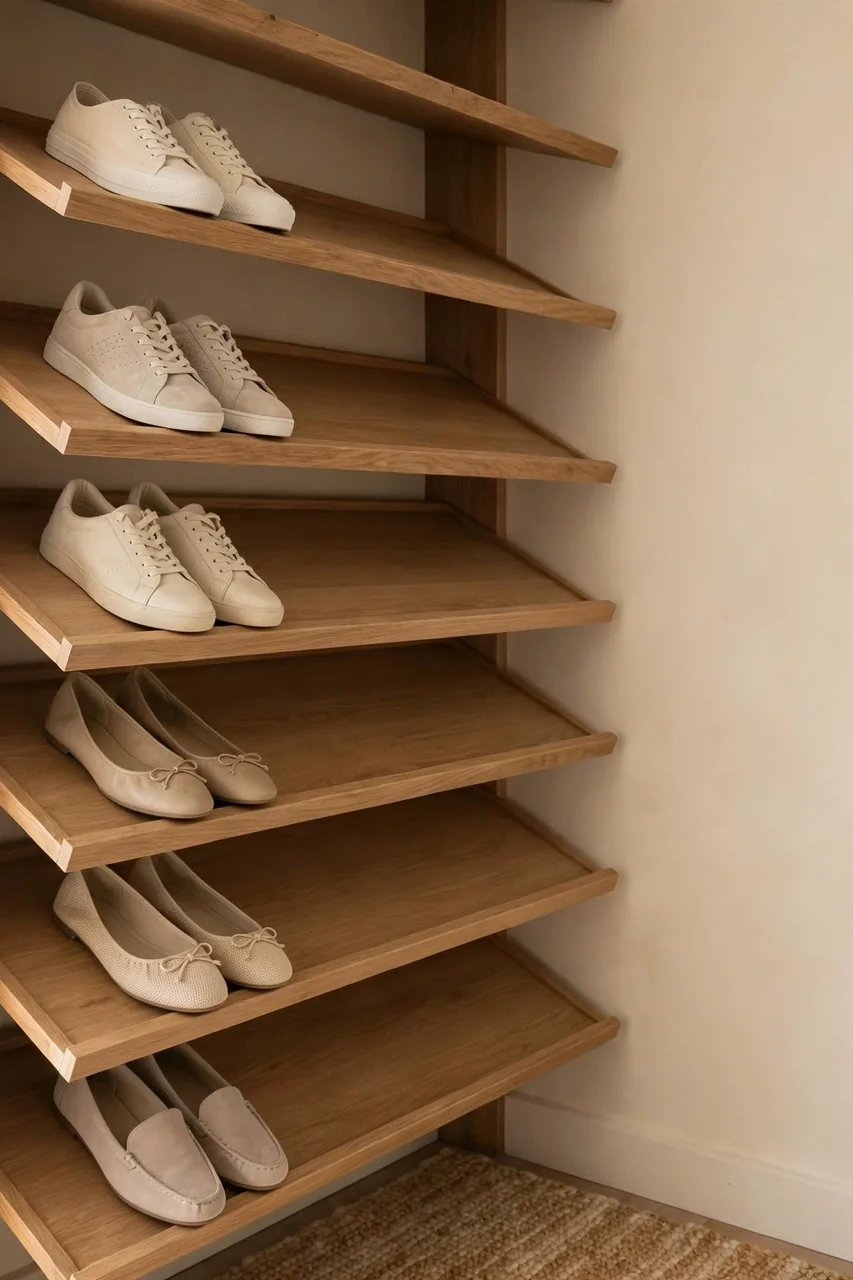
What You Need:
- Adjustable tiered shelf: a 2 or 3 tier unit that fits your closet’s depth, so pairs stack vertically instead of side by side.
- Tape measure: to check the closet’s width and depth before you buy anything.
- Shoe boxes or bins: for pairs you wear rarely, labeled so you can find them.
- Shelf liner: a grippy liner keeps shelves from sliding and protects shoe soles.
- Labels: simple tags on each shelf or bin so everyone in the house keeps the system.
Tiered shelves turn one shelf of space into two or three. The real trick to how to organize shoes in a narrow closet is stacking upward instead of outward, and tiered shelves do exactly that. Angle the shelves slightly so every pair stays visible, and keep everyday shoes at eye level.
Use the Floor Wisely

Before: The closet floor holds a shapeless heap of shoes. Pairs separate, soles get scuffed, and you waste five minutes every morning digging for the right shoe.
After: The floor holds one neat row of your most-worn pairs, each in its spot. You grab and go, and nothing gets crushed because the overflow now lives on racks, shelves, and the door.
Treat the floor as prime real estate for daily shoes only. Line up today’s and tomorrow’s pairs in a single row along the wall, never stacked. When the floor stays reserved for the current rotation, the rest of the system has room to work and the closet never slides back into chaos.
Go Vertical
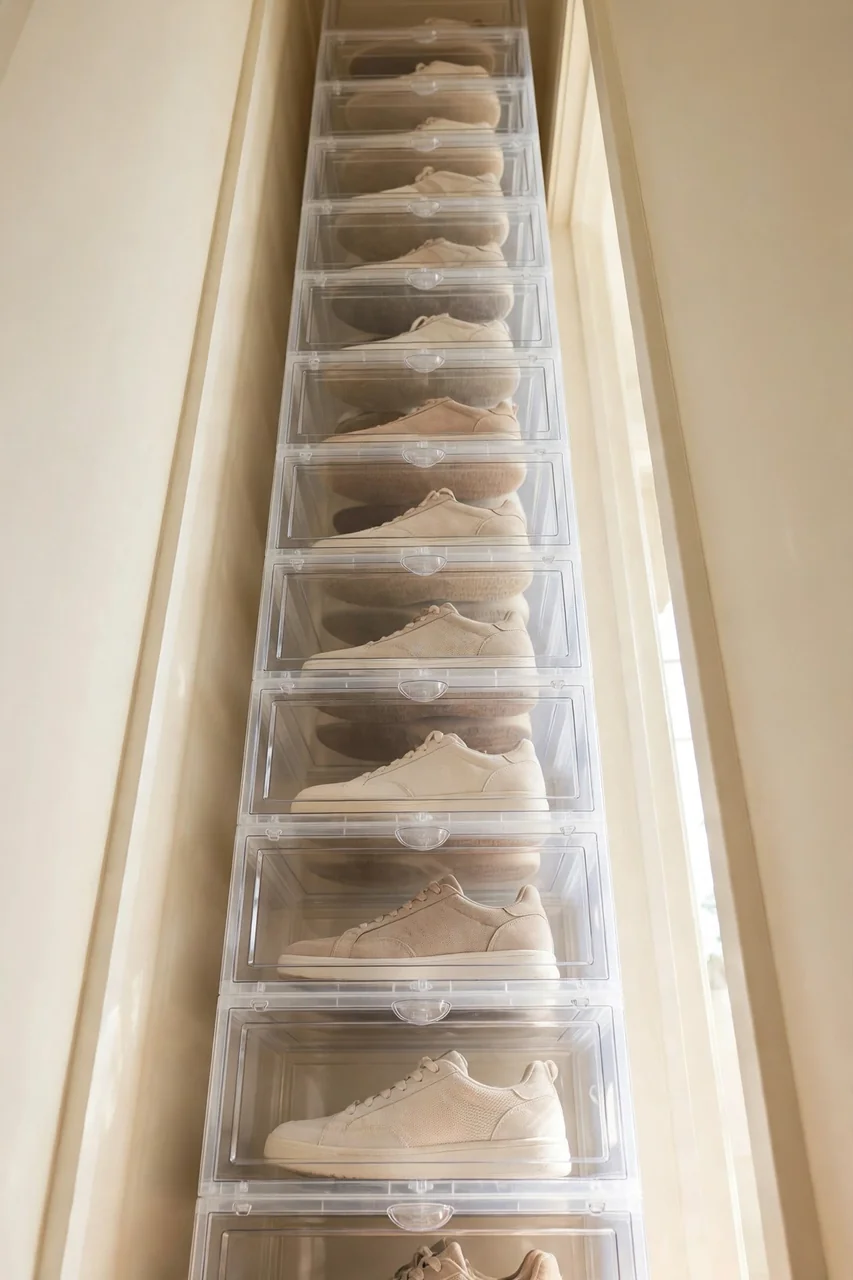
Do This:
- Hang a second rod or shelf above the existing one to double your vertical storage.
- Store tall boots upright with boot shapers so they use height instead of floor space.
- Stack clear shoe boxes floor to ceiling on one side of the closet.
- Mount slim wall hooks for bags and accessories, freeing shelf room for shoes.
Avoid This:
- Do not pile shoes in deep stacks where the bottom pairs get crushed and forgotten.
- Do not block the door swing with tall storage that makes the closet hard to open.
- Do not waste the top shelf on items you never touch while shoes crowd below.
Narrow closets have more height than floor, so vertical storage is your best friend. Look up and claim every inch from the top shelf down to the baseboard. When height does the heavy lifting, even a closet barely wider than your shoulders can hold a full shoe collection comfortably.
For a bigger small-space project, check out how to arrange furniture in a basement living room.
Rotate by Season
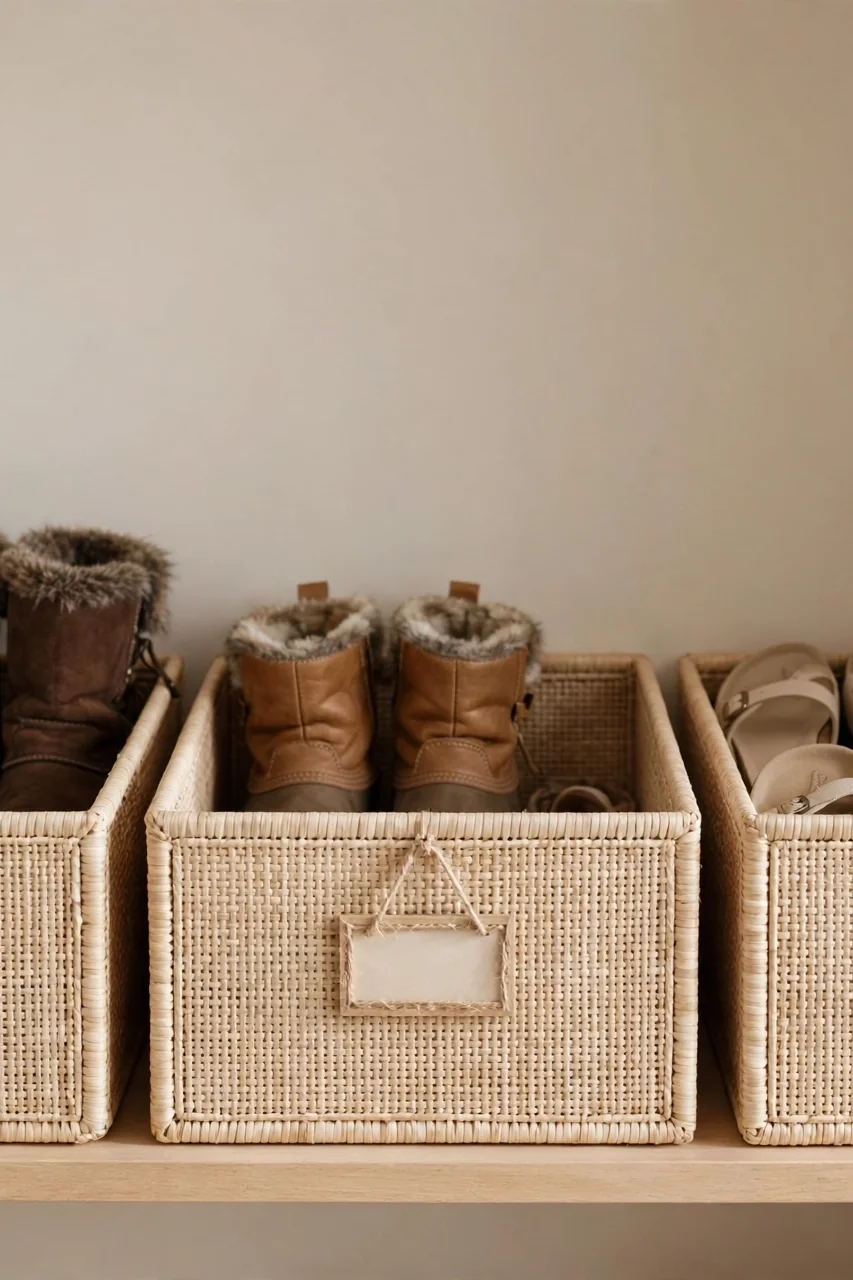
Time Needed: 20 minutes, twice a year | Difficulty: Easy | Cost: Free | Best For: closets bursting with out-of-season shoes
You do not need every pair within reach all year. Pack away heavy boots when summer arrives and stash sandals when winter hits. Store off-season pairs in labeled boxes on the top shelf, and your narrow closet only has to hold half the shoes. Rotation keeps the active collection small enough to stay tidy.
Common Shoe Mistakes

The biggest mistake is buying storage before sorting. A rack sized for twenty pairs will not help when you own forty. Measure your collection first, then shop. Another common slip is keeping shoes you never wear beside daily favorites, which buries the pairs you actually need.
People also forget about the door and the walls, leaving the two most useful surfaces empty. And many skip labels, which means the system collapses the moment someone else puts shoes away. Fix these three habits and your narrow closet will stay organized with almost no effort.
Pro Tips for Tidy Closets
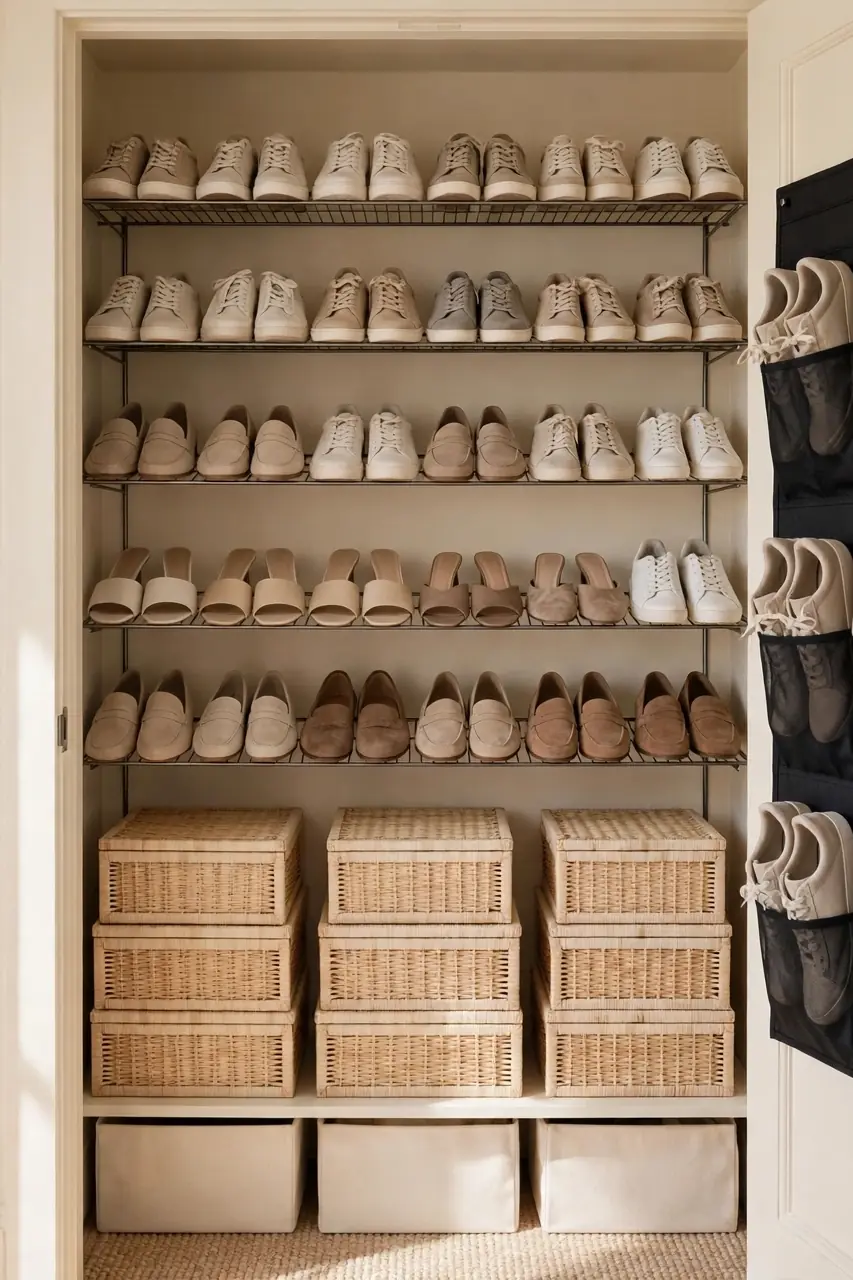
A few small habits keep a narrow closet tidy for good. These pro tips take almost no extra time, and they stop the slow slide back into a shoe pile. Pick the ones that fit your routine and make them automatic starting today.
- Return every pair to its spot the moment you take it off. Ten seconds now saves a ten-minute cleanup later.
- Do a one-minute door check each evening: straighten any pair that drifted out of place.
- Wipe dusty shelves once a month so shoes stay clean and the closet feels fresh.
- Re-count your collection each season and let go of pairs you stopped wearing.
Conclusion
A narrow closet stops feeling like a problem the moment every pair has a place. You have now learned how to organize shoes in a narrow closet step by step, from counting your real needs to stacking upward and rotating by season. The system works because it is built for your space, not against it. Save this guide to Pinterest so you can find it again, then try one change today and feel the difference. I have seen how making this one change can completely shift the result: mornings get calmer, shoes last longer, and that tiny closet finally feels like enough.



2 Comments