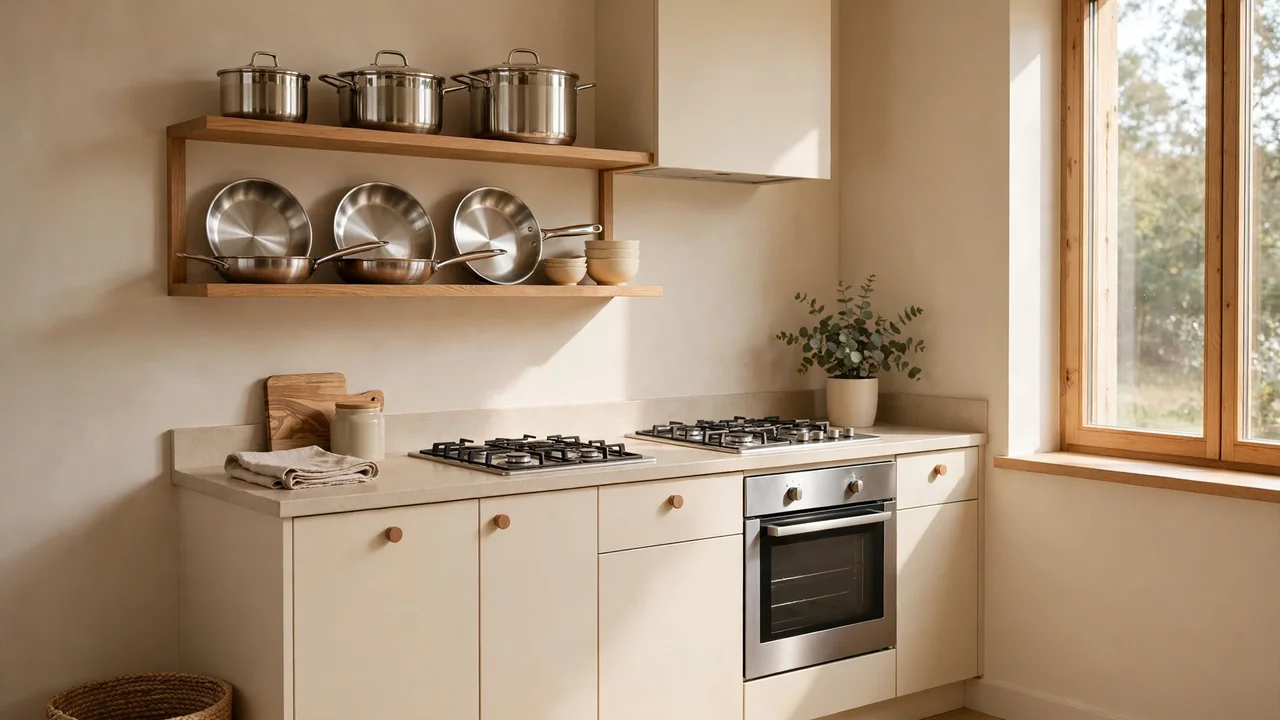
How to Organize Pots and Pans in Small Cabinets
Opening a cabinet should never start an avalanche. If your pots and pans crash out every time you grab a lid, you are not alone. In my experience, learning how to organize pots and pans in small cabinets changes the whole kitchen.
Small cabinets punish clutter because every inch matters. Heavy skillets stack badly, lids slide around, and that warped pan never sits flat. A few smart dividers and simple stacking habits can double your usable space.
Once you see how much room you really have, cooking feels calmer. If entryway chaos is another pain point, here is how to create a drop zone in a small home for later. For now, let us fix the pots and pans step by step.
Why Pots and Pans Pile Up
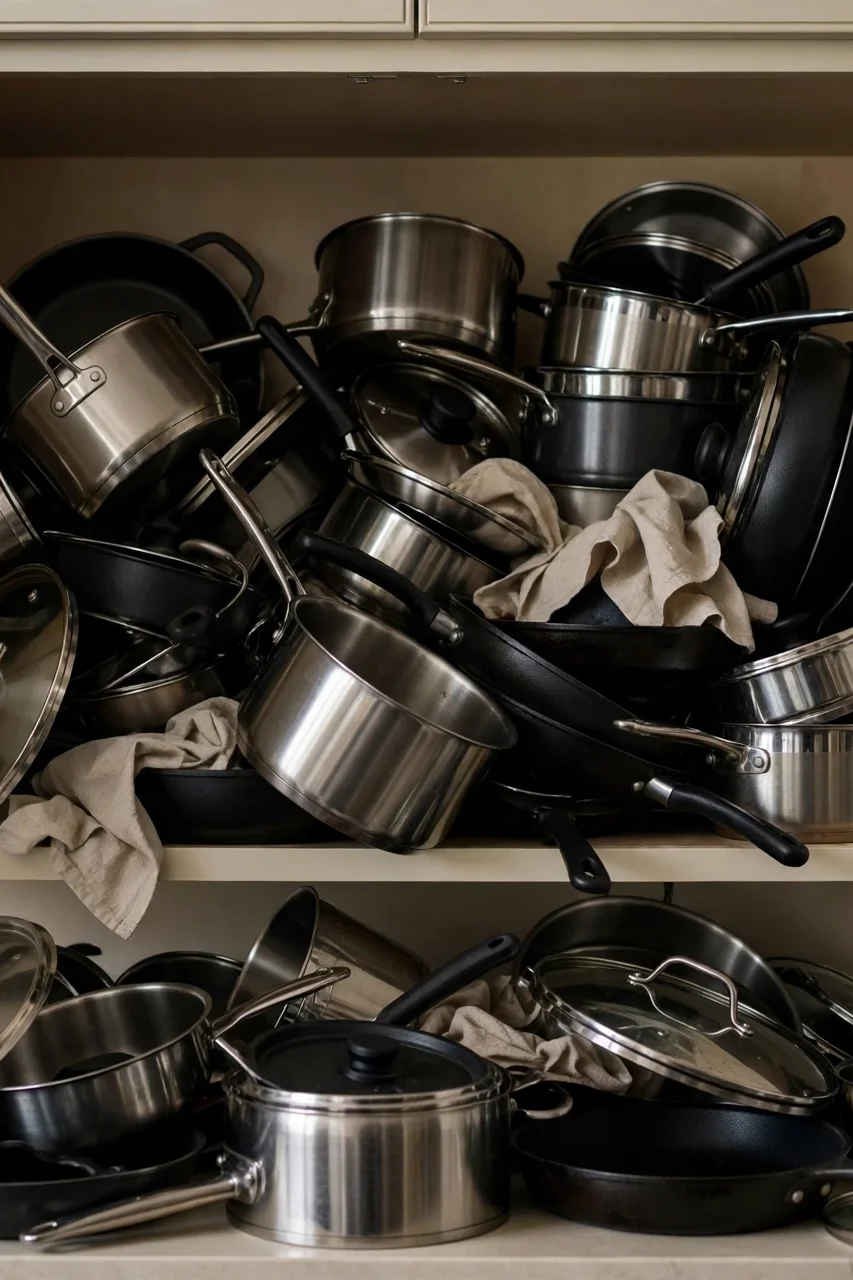
Pots and pans are the bulkiest things most kitchens own. A single 12-inch skillet eats the footprint of six dinner plates, and round shapes leave dead corners that nothing else can fill. Add lids, and suddenly one cabinet holds an awkward tower that fights you every morning.
Cabinets also hide the mess until it is too late. Deep shelves swallow the small saucepan you need, so you buy a duplicate instead of digging. Over time the pile grows while the usable space shrinks, and grabbing one pan means lifting three others first.
Empty and Sort Everything
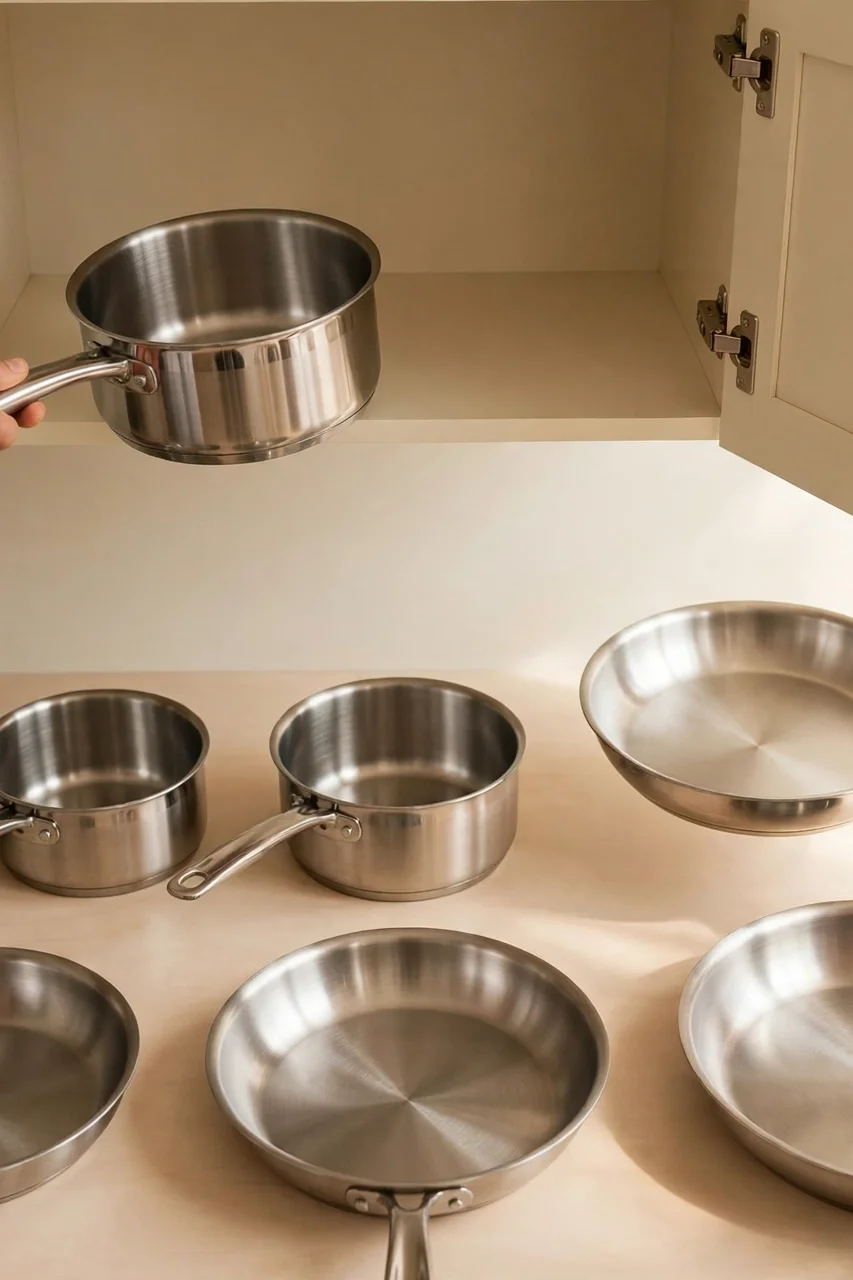
Sorting feels like extra work, but it is the fastest way to see what you actually own. Most people find duplicates and pieces they never touch. Clear the cabinet completely first, then decide what truly earns its place back inside.
- Pull every pot, pan, and lid out of the cabinet and set them on the counter so nothing hides in the back.
- Group them by type: skillets together, saucepans together, lids in their own pile. This shows what you really have.
- Set aside anything warped, scratched, or unused for a year. Donate or toss these so they stop stealing space.
- Measure the cabinet’s height, width, and depth with a tape measure. Write the numbers down for shopping later.
Use Vertical Dividers
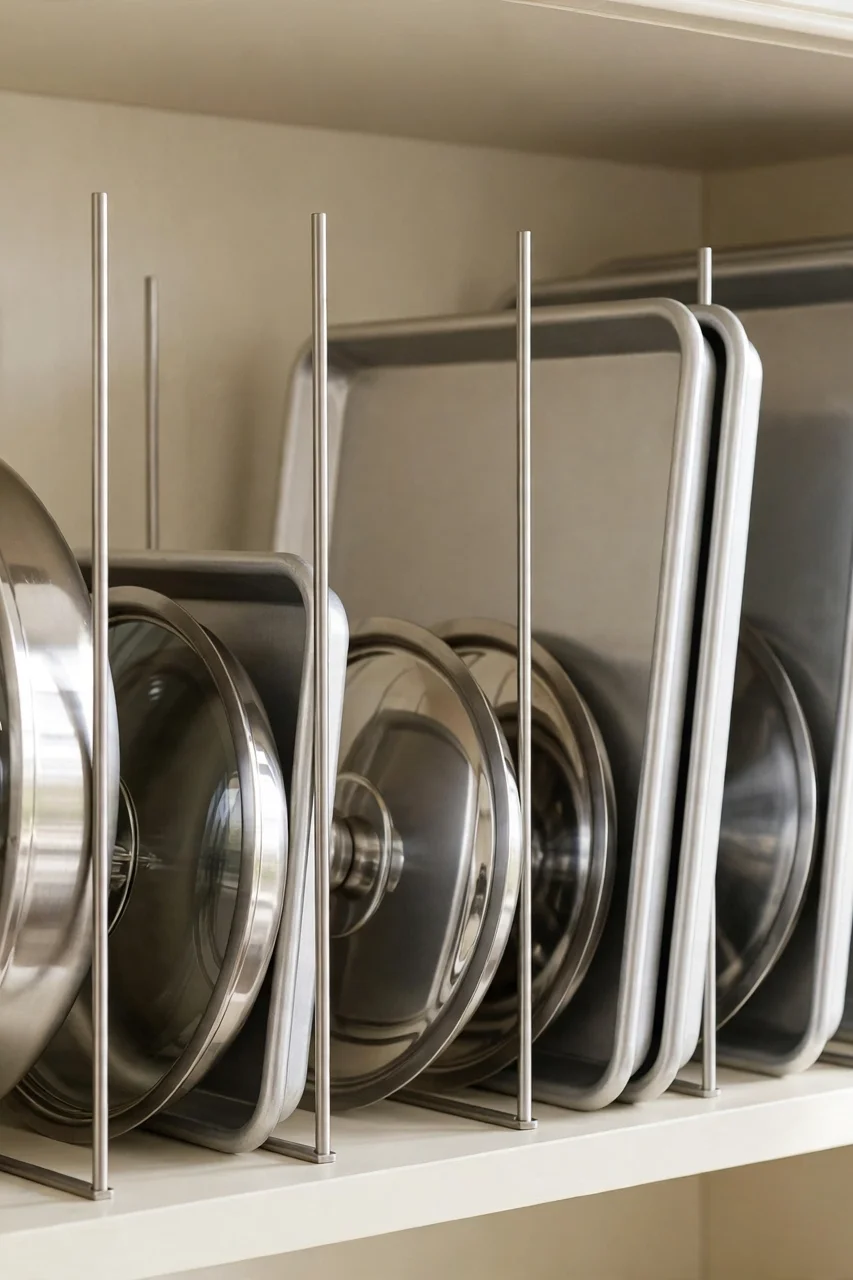
Quick Tip: Store lids and sheet pans upright like books on a shelf. A simple tension rod or a cheap file organizer keeps them separated, so you can grab one without moving the rest. This one change frees up half a cabinet shelf.
Vertical storage works because it matches how cabinets are shaped. Tall, narrow slots use the full height that stacking wastes. Slide baking sheets, cutting boards, and lids between the dividers, and keep the wide flat area below for your heaviest pots where they are easy to lift.
Stack Smartly
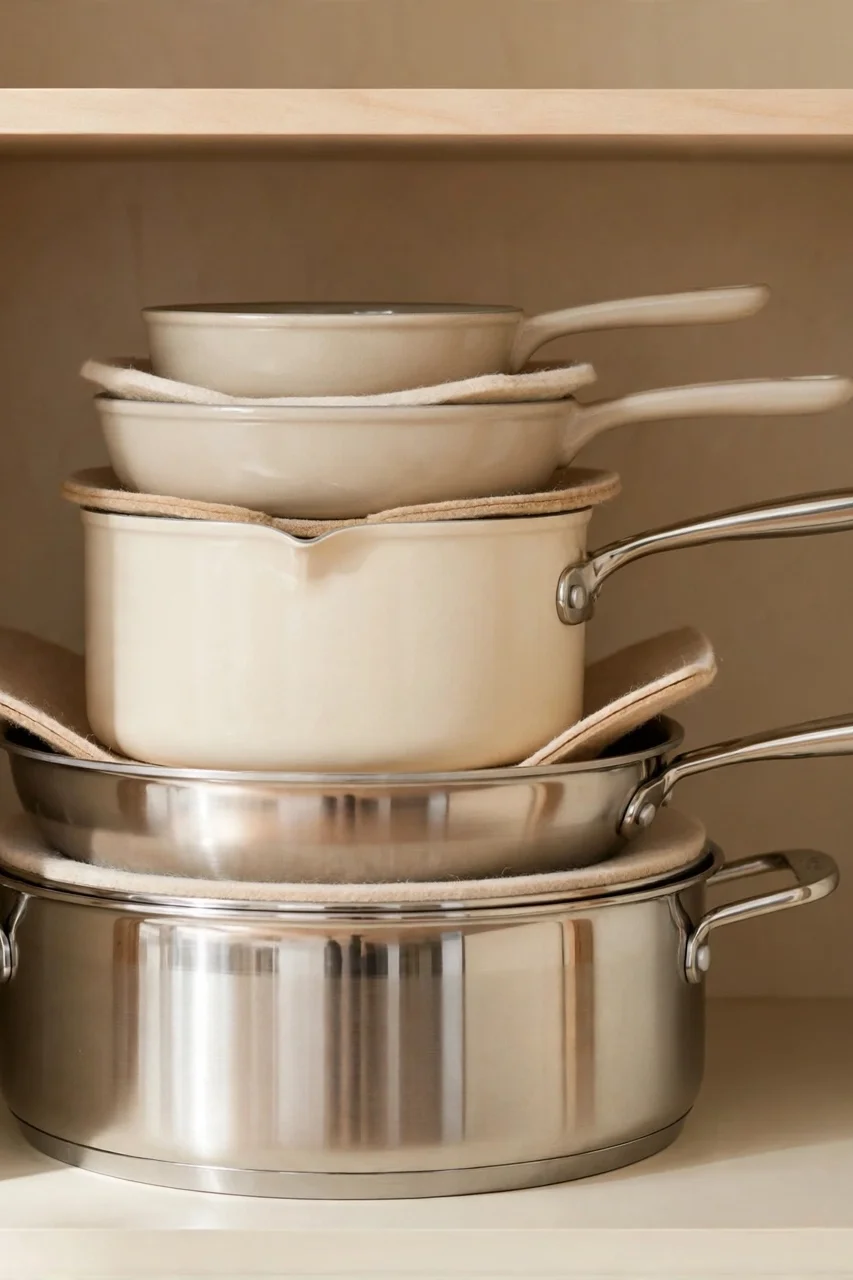
Common Mistake: Most people stack pots directly inside each other with nothing between them. The pieces wedge together, scratch each other’s coatings, and the whole stack becomes too heavy to lift safely.
The Fix: Place a soft liner, a dish towel, or a felt pan protector between every piece. Stack from largest to smallest with lids stored separately. The stack slides apart easily and every coating stays smooth.
Smart stacking turns one cabinet shelf into two or three usable layers. The key is keeping each stack short enough to lift and protecting every surface. Once the pieces stop sticking together, you will reach for the right pan instead of dreading the heavy pile waiting inside.
Hang Them Up
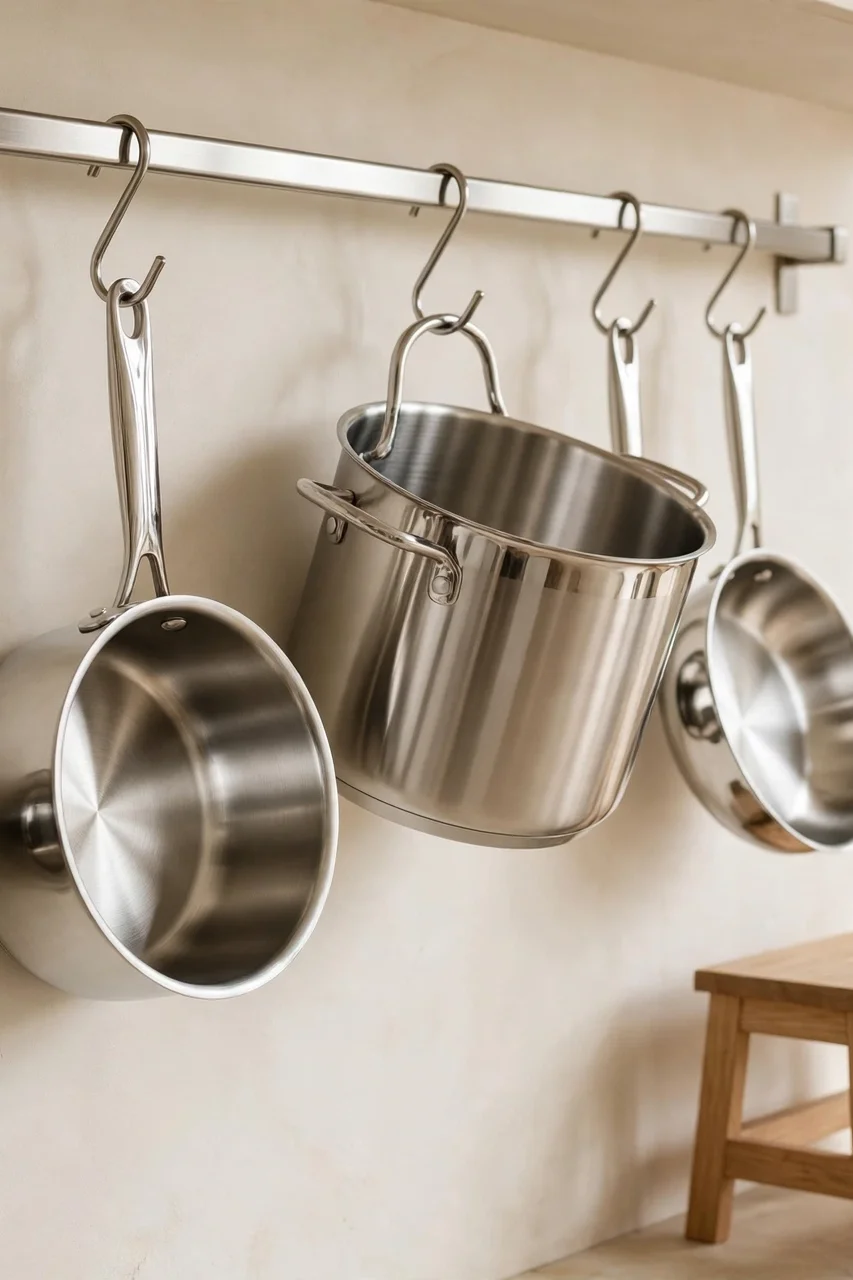
What You Need:
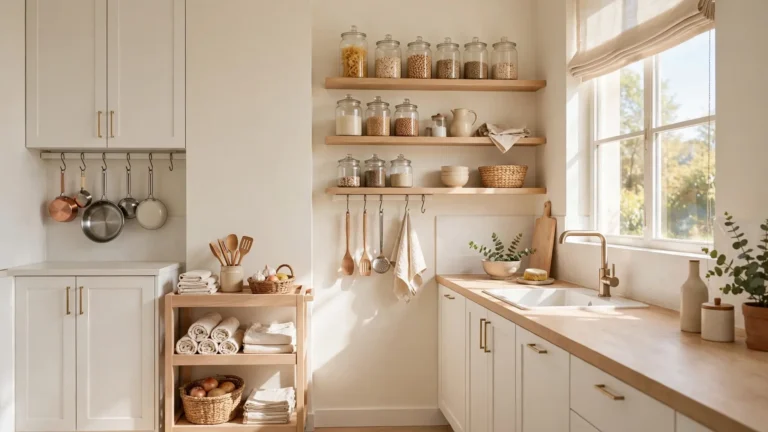
- A sturdy wall-mounted rail: Holds the weight of cast iron without pulling out of drywall.
- S-hooks in two sizes: Small hooks for lids and utensils, large hooks for heavy skillets.
- A stud finder: Locates solid wood behind the wall so the rail never sags.
- A small step stool: Keeps the rail within safe reach if your ceiling runs high.
- Felt pads: Stick on hook contact points to stop metal from clanking.
Hanging frees the entire cabinet for items that truly need enclosed storage. Once you understand how to organize pots and pans in small cabinets, wall space starts counting as storage too. Keep daily pans on the rail and tuck rarely used pieces deep in the cabinet.
Use the Doors
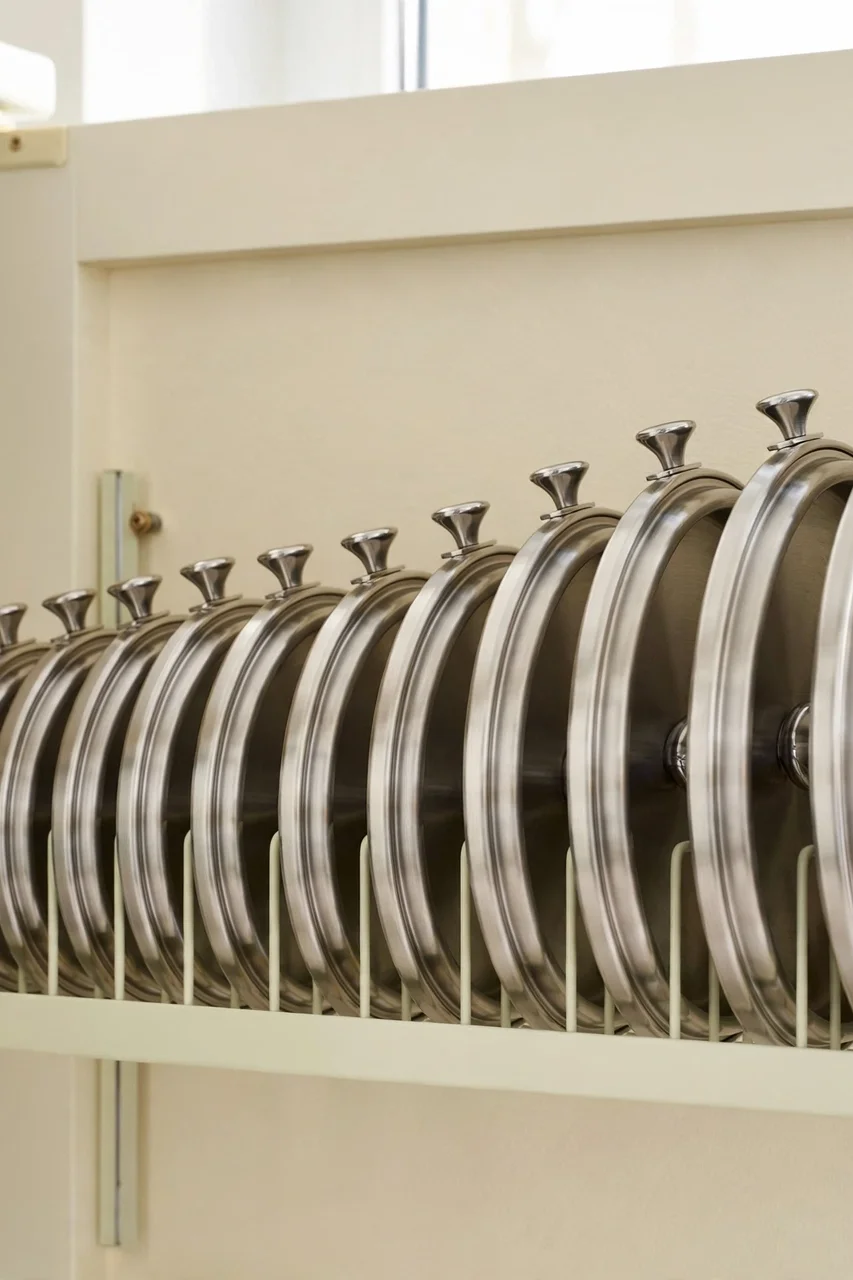
Before: The inside of your cabinet doors sits completely empty while the shelves overflow. Lids lean against pots and slide every time the door swings. Every inch of door space goes to waste.
After: Slim racks on the door backs hold every lid upright and visible. The shelves below stay clear for pots alone. Opening the cabinet feels calm because each piece has a clear home.
Door-mounted storage is the cheapest square footage in your kitchen. It uses space that was doing nothing and keeps lids where you can see them. Measure your door depth first so the racks clear the shelves when the door closes, and pick racks rated for your heaviest lids.
Protect the Surfaces
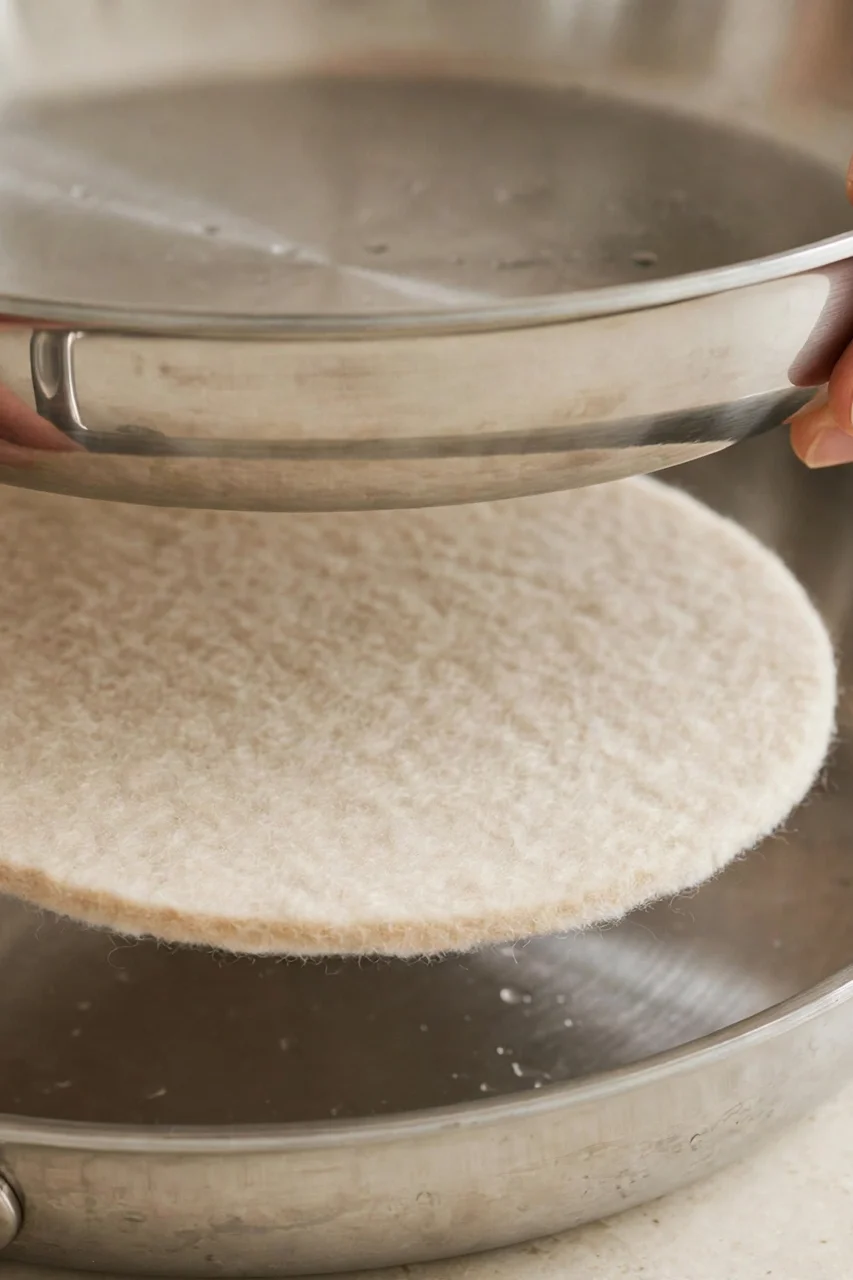
Do This:
- Slip a felt protector or paper towel between stacked pans.
- Hand wash nonstick pieces to keep coatings smooth.
- Dry every pan fully before stacking to stop rust.
- Store sharp-edged lids with the handle facing up.
Avoid This:
- Do not slide a dry pan across another pan’s surface.
- Do not stack cast iron on thin nonstick without padding.
- Do not leave wet lids face-down on shelves.
Protection matters because scratched pans cook worse and die younger. A two-dollar felt pad can save a sixty-dollar skillet. Treat the space between pans as part of the storage plan, not an afterthought, and your favorite cookware will last years longer than an unprotected pile.
Small kitchens reward every smart storage win. For another bright idea, see how to decorate a living room with a large window next.
Keep Lids Together
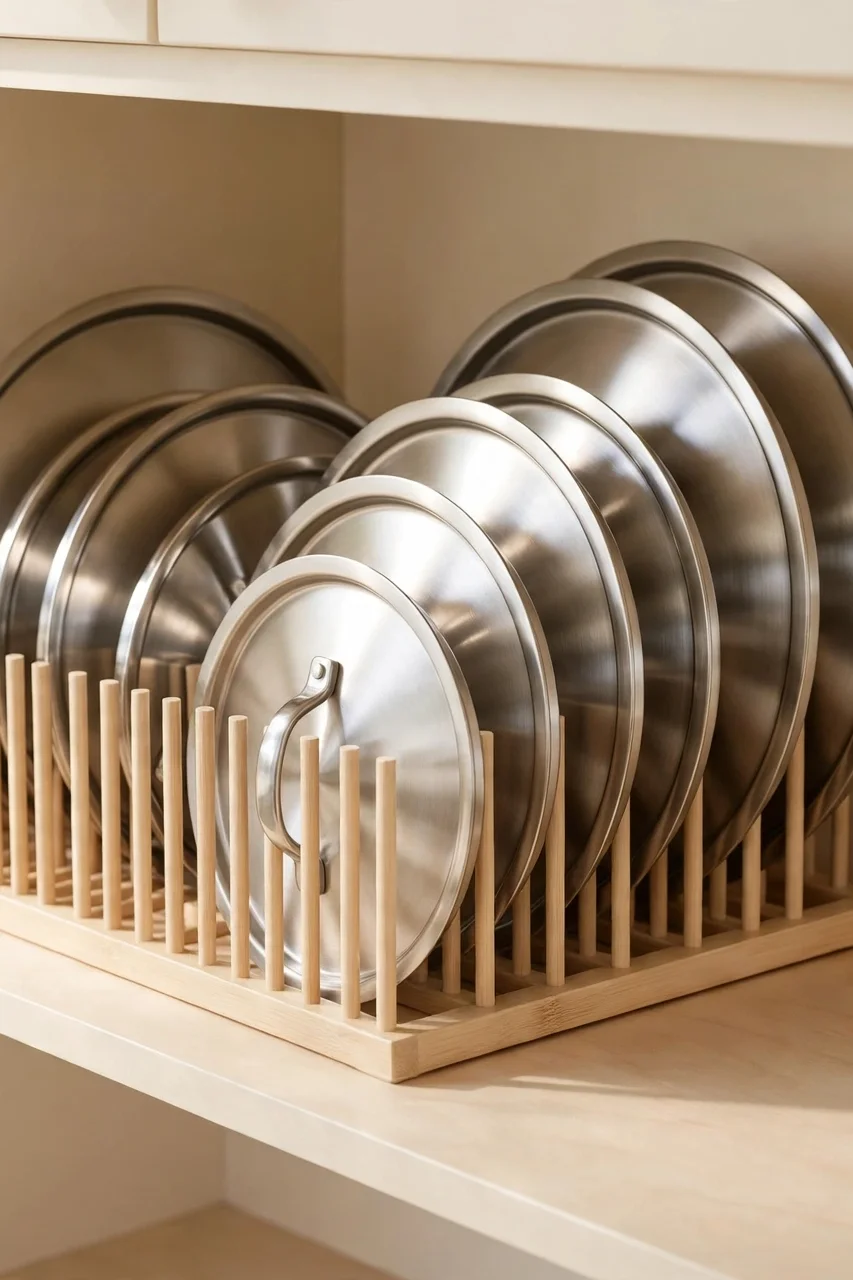
Time Needed: 20 minutes | Difficulty: Easy | Cost: Low
Best For: Cabinets under 24 inches deep | Result: Every lid visible at a glance
Pro Tip: Store each lid with its matching pot when cabinet space allows.
Lids cause most of the clatter because they never nest neatly. Giving them their own zone, whether on a door rack or in a vertical slot, ends the daily hunt. When every lid sits upright and labeled by size, grabbing the right one takes seconds instead of minutes.
Common Pot Mistakes
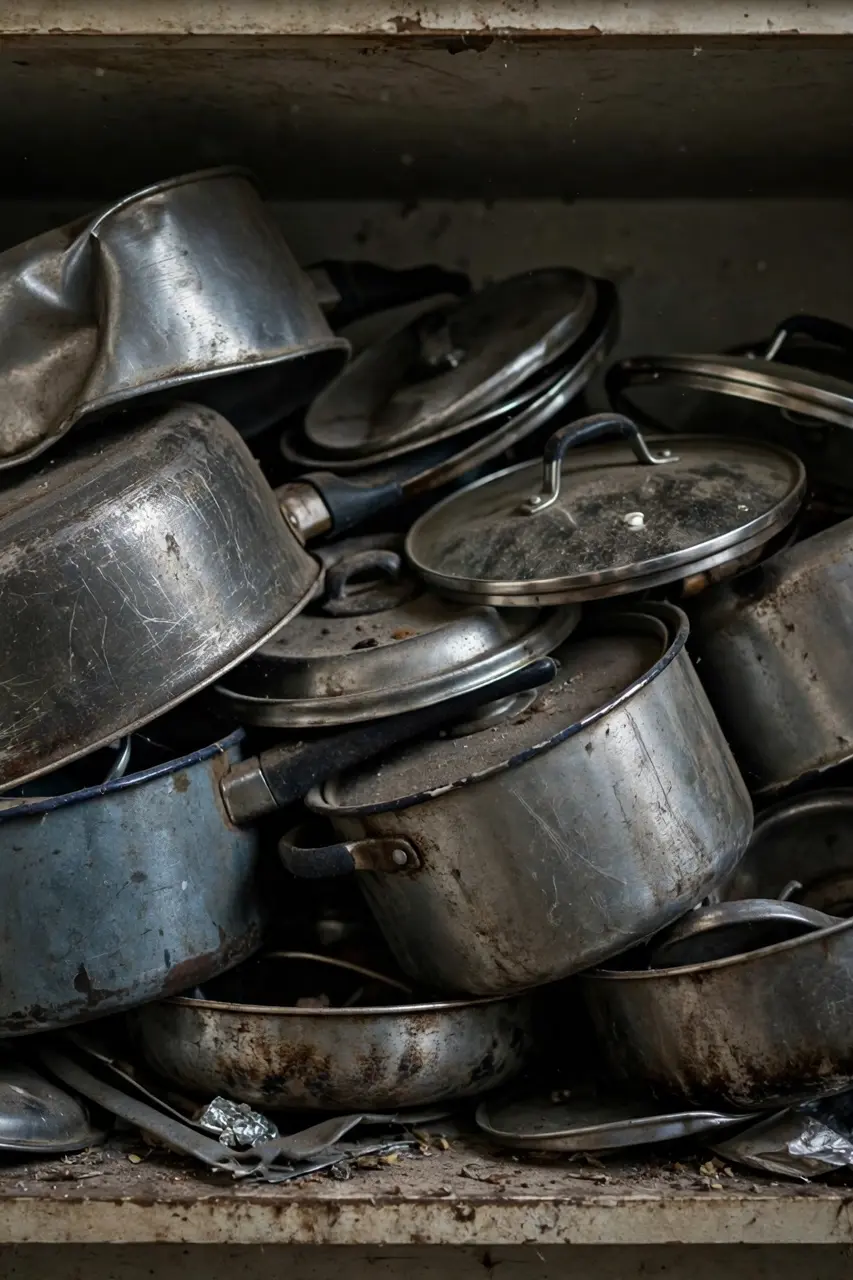
The biggest mistake is keeping every pan you have ever owned. That warped griddle from college and the scratched pot with the loose handle steal space from the pieces you reach for daily. Be honest about what you actually cook, and let the rest go to someone who will use it.
Another common slip is buying organizers before measuring. A divider that is half an inch too tall will not fit under the shelf, and a rack that is too deep blocks the door. Measure first, shop second, and you will avoid the return trip that kills momentum.
Pro Tips for Tidy Cabinets
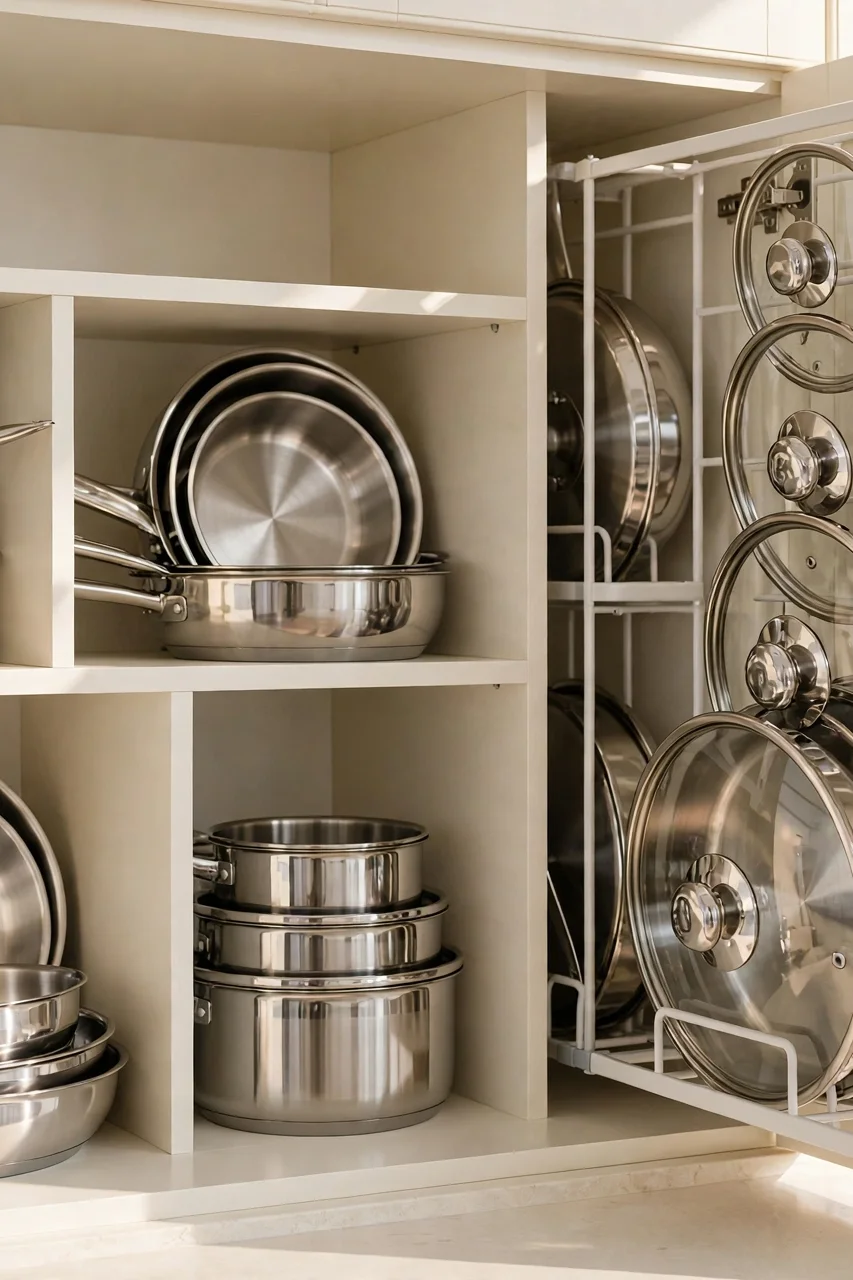
These small habits keep the system working long after the first organize day. Tidy cabinets stay tidy when every piece has a clear home and putting things back takes seconds. Build these tips into your routine and the cabinet will still look good months from now.
- Return each pan to its exact slot right after drying so the system never drifts.
- Do a two-minute lid check every Sunday and re-stack anything that shifted.
- Keep one empty slot free for the pan you use most so grabbing it stays effortless.
- Re-measure once a year and adjust dividers as your cookware collection changes.
Conclusion
A calm cabinet makes cooking feel easier every single day. Once you know how to organize pots and pans in small cabinets, the clatter stops and every piece earns its place. Save this guide on Pinterest so you can find it during your next kitchen reset, and share it with a friend whose cabinets sound like a drum set. I’ve seen how one organized cabinet can make a whole kitchen feel bigger and calmer. Start with the sorting step this weekend, and you will wonder why you waited so long to fix it. Your future self will thank you every time a lid slides out without a fight.
One Comment