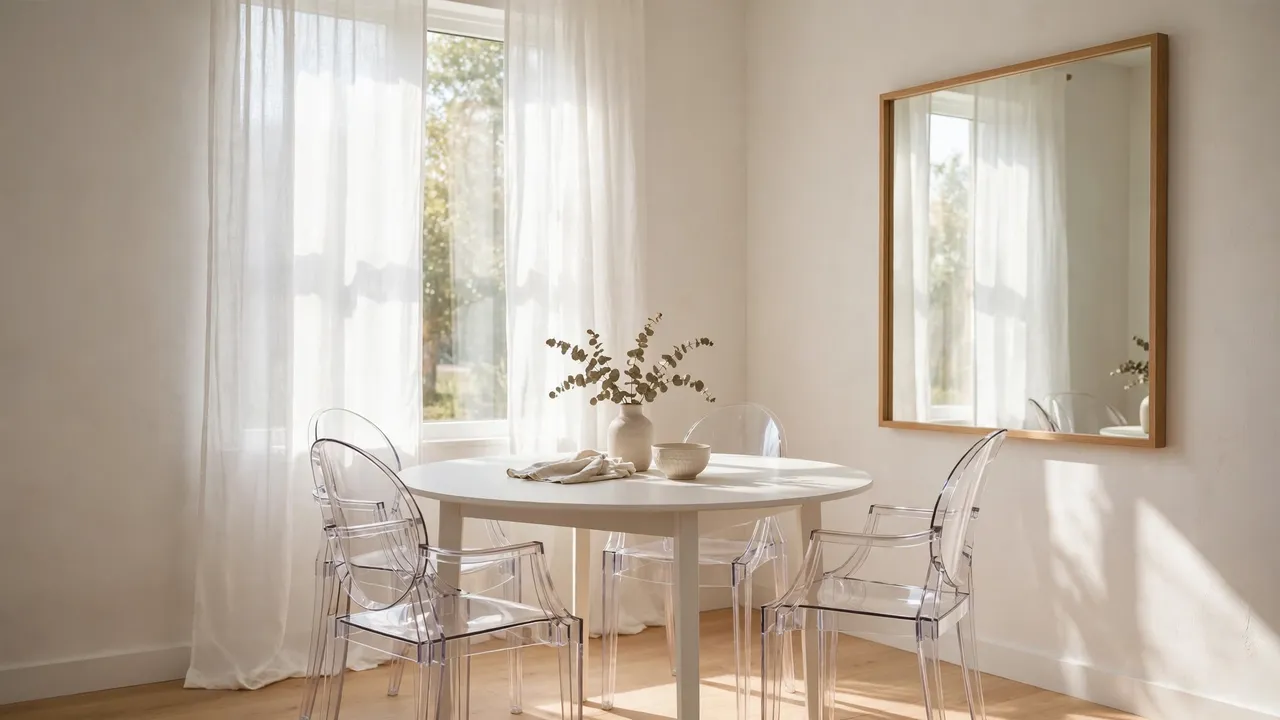
How to Make a Small Dining Room Look Bigger
A tiny dining room can make every meal feel squeezed. The good news is that learning how to make a small dining room look bigger takes smart styling, not a renovation. With the right colors, furniture, and light, even the smallest corner can feel open and welcoming.
In this guide, you will find ten practical ideas that open up tight dining spaces. Each step is beginner friendly and budget conscious. If you enjoyed how to organize a bathroom with no cabinets, you will love these space tricks.
In my experience, small dining rooms fail when every choice fights for attention. Pick a few strong moves and let them work together. By the end, your dining area will feel larger, brighter, and ready for real dinners.
Why Small Dining Rooms Feel Cramped
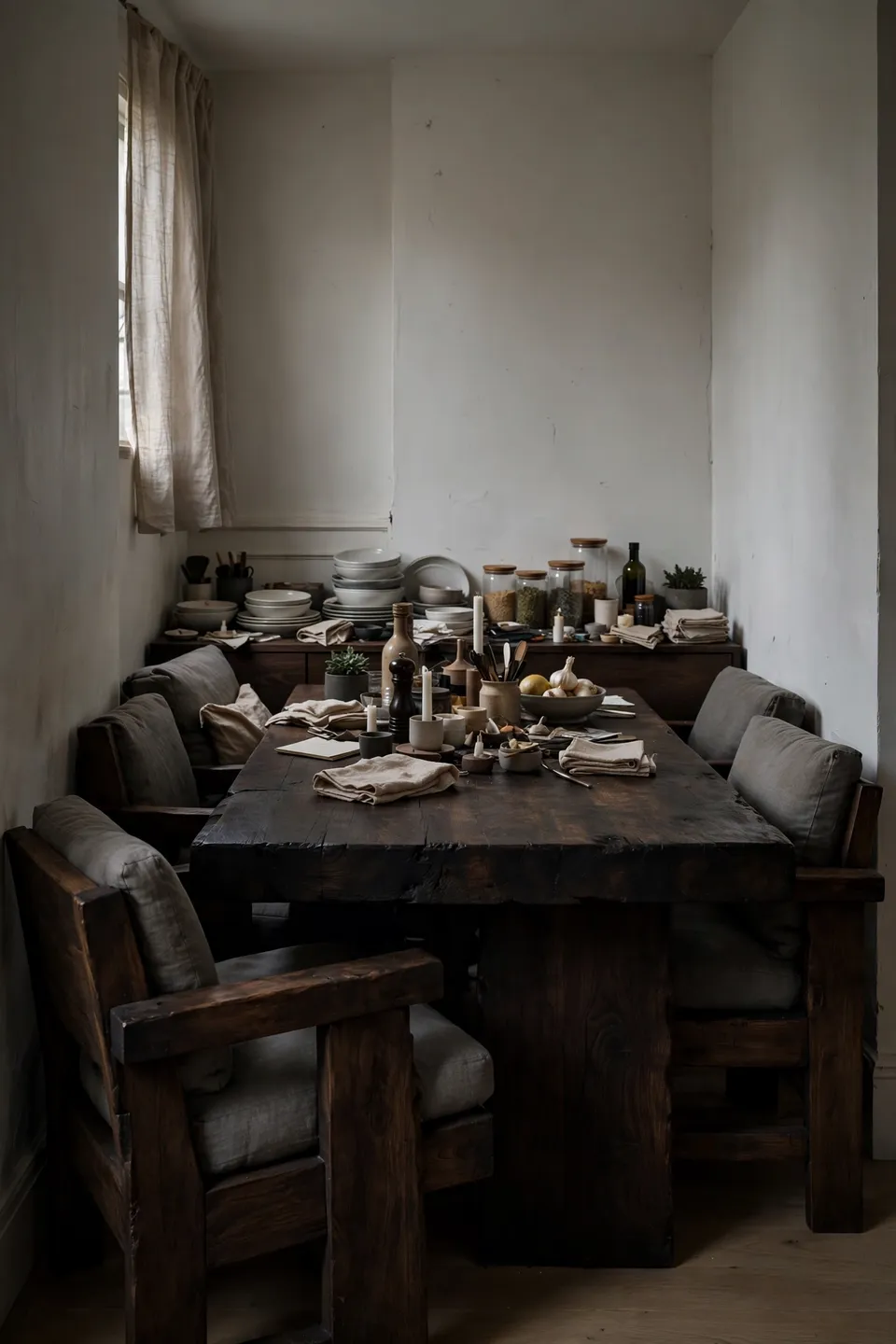
Most small dining rooms feel cramped because the furniture is too large for the space. A bulky table with heavy chairs eats up every inch of floor, leaving no room to breathe. Dark walls and dim lighting make the problem worse, pressing the walls inward and shrinking the mood.
Clutter adds to the squeeze. When sideboards, shelves, and corners hold too much stuff, the eye has nowhere to rest. The good news is that understanding these traps is half the battle. Once you see what shrinks the room, you can pick pieces that truly earn their place.
Lighten the Color Palette
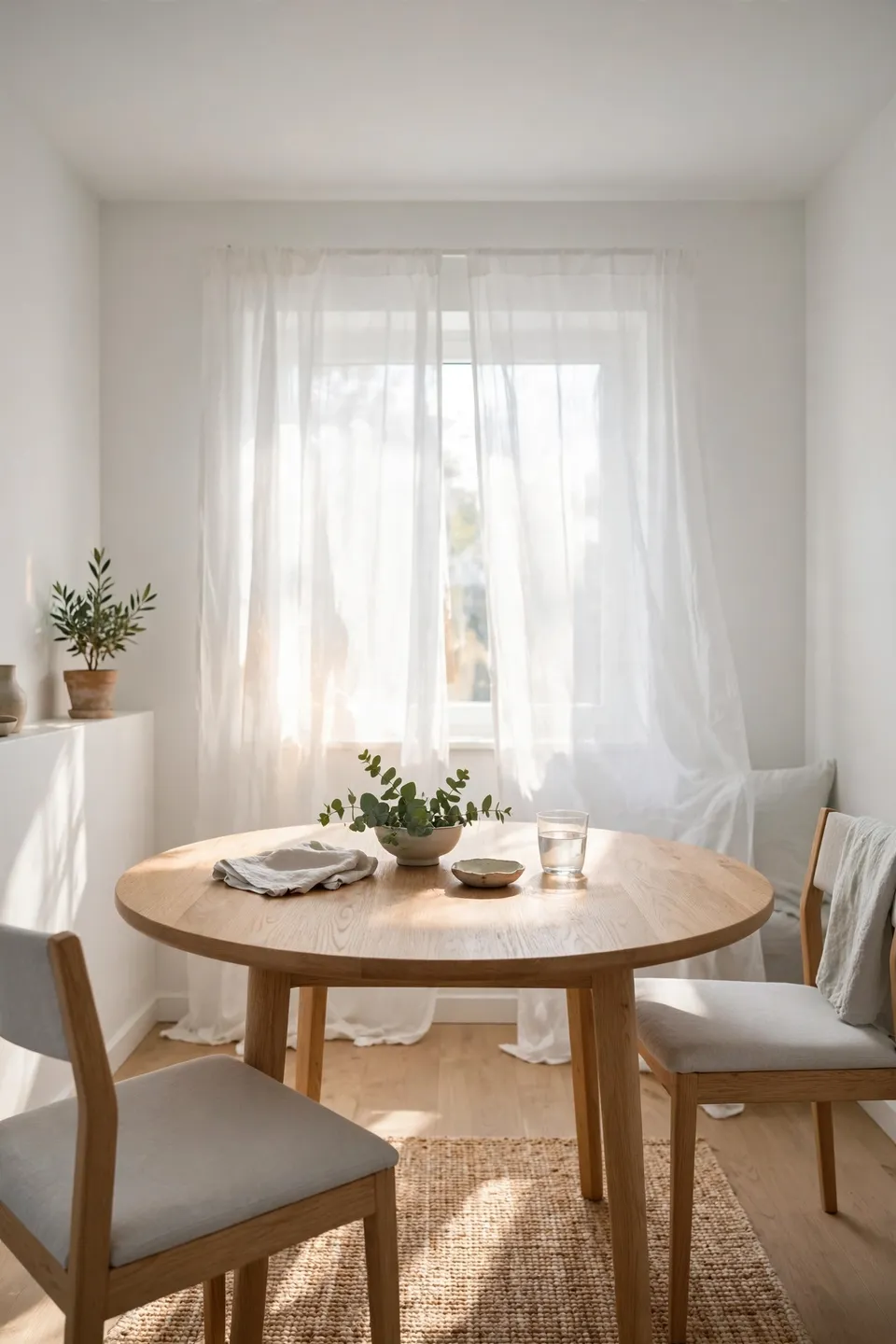
Light colors bounce light around the room instead of soaking it up. When walls, trim, and ceiling share a pale palette, the boundaries blur and the whole space feels larger. Here is how to pick shades that open things up.
- Paint walls in soft whites, warm creams, or pale greys that reflect daylight.
- Keep the ceiling bright white to lift the room visually.
- Choose trim in the same color family as the walls for a seamless flow.
- Add one muted accent, like sage or dusty blue, on a single wall or in textiles.
Choose the Right Table
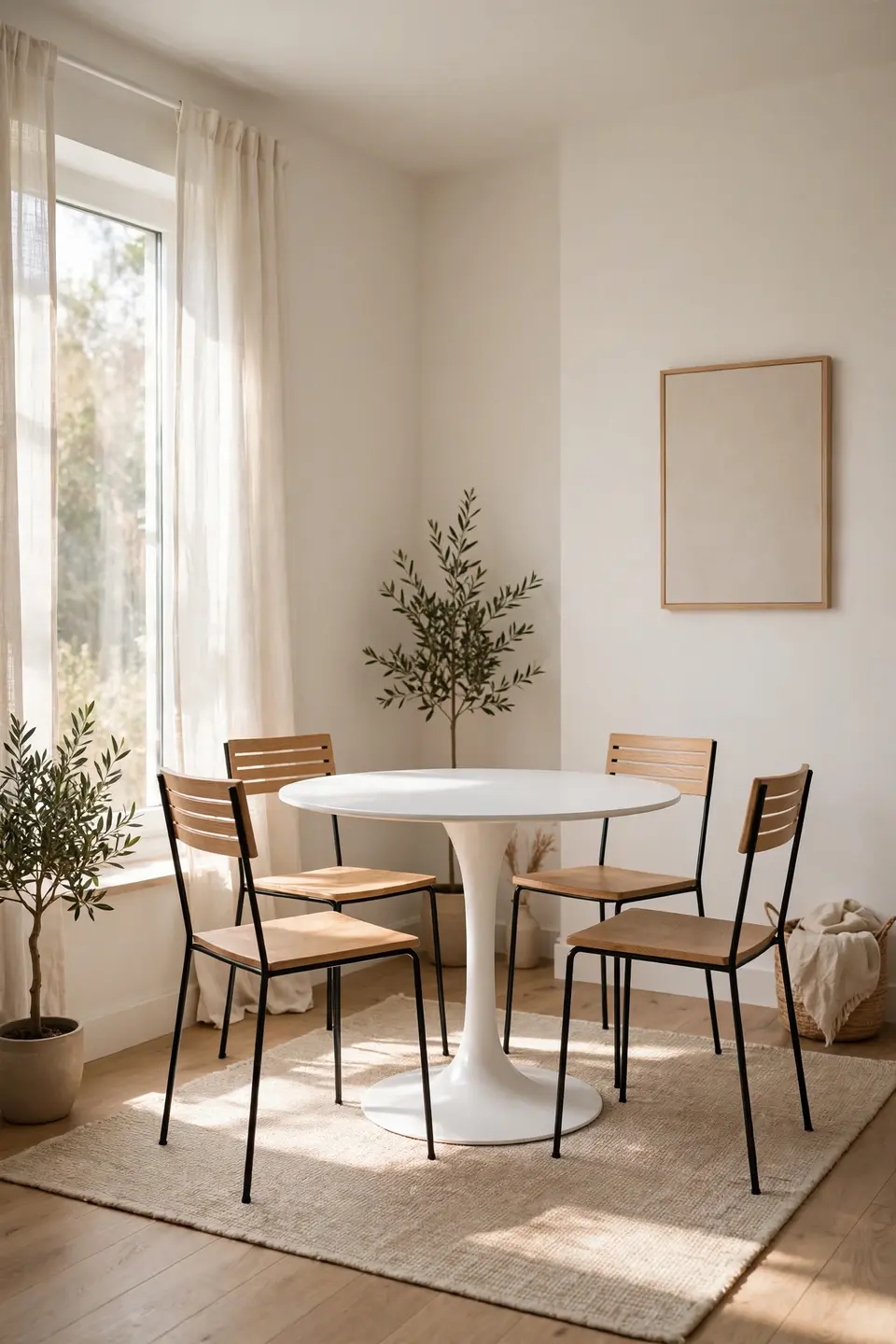
Quick Tip: Round tables beat square ones in tight dining rooms. The curved edges improve traffic flow and eliminate sharp corners that eat visual space. A pedestal base frees up legroom underneath.
Size the table to the room, not the guest list. Leave at least 36 inches around it so chairs pull out comfortably and people can walk past with ease. A drop-leaf or extendable table gives you welcome flexibility for dinner parties without crowding your daily routine at all.
Use Transparent Chairs
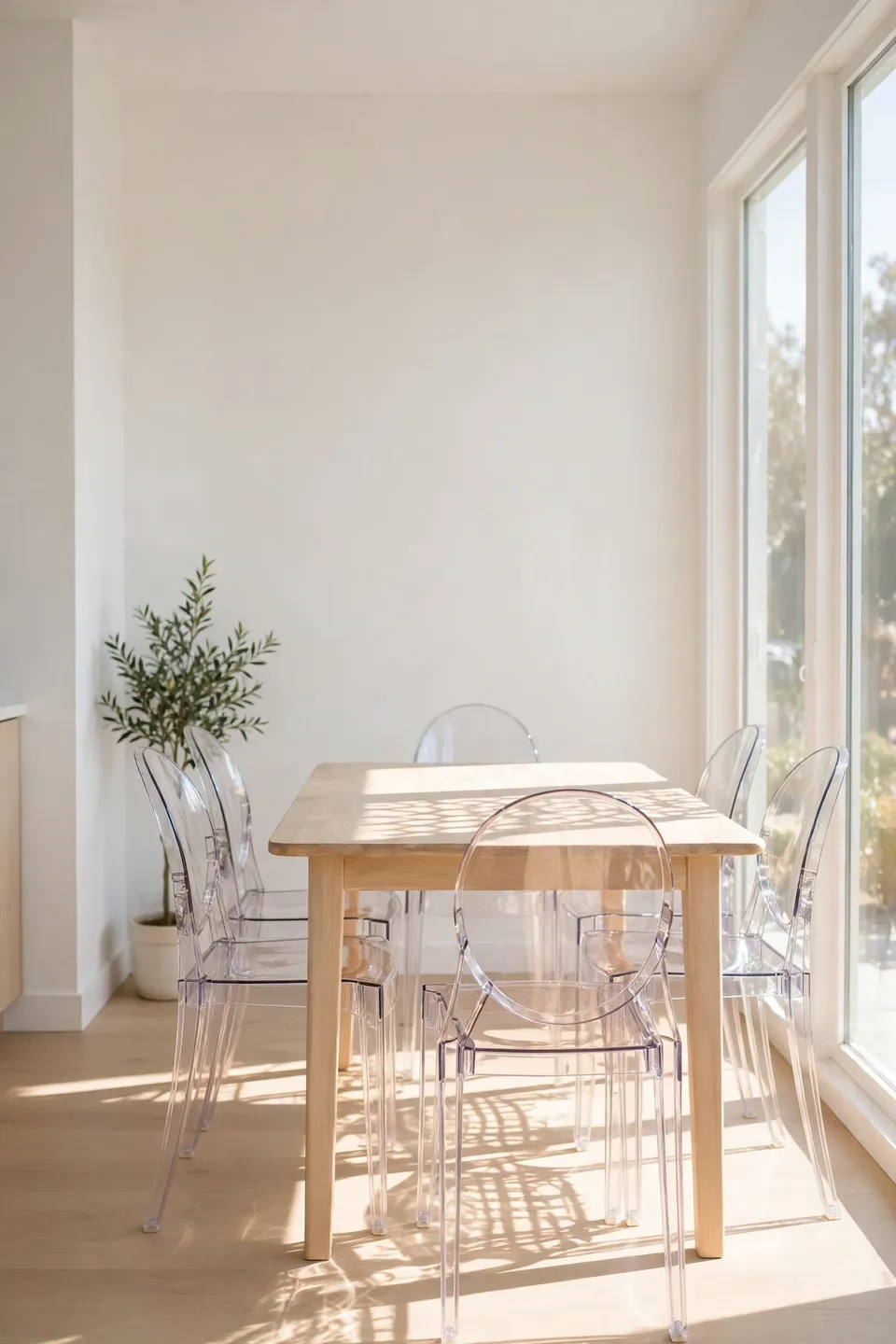
Common Mistake: Many people pick heavy wooden chairs that match a bulky table. These solid blocks stop the eye and make the floor disappear. The room ends up feeling stuffed even when it is tidy.
The Fix: Swap in acrylic, ghost, or open-frame chairs that let light pass through. Because you can see through them, they take up almost no visual weight. The floor stays visible, which tricks the eye into reading more space.
If clear chairs feel too modern for your taste, try slim wooden frames with open backs or woven seats instead. They keep the airy effect while warming up the style considerably. Mix and match with upholstered host chairs for real comfort at the table ends.
Add a Large Mirror
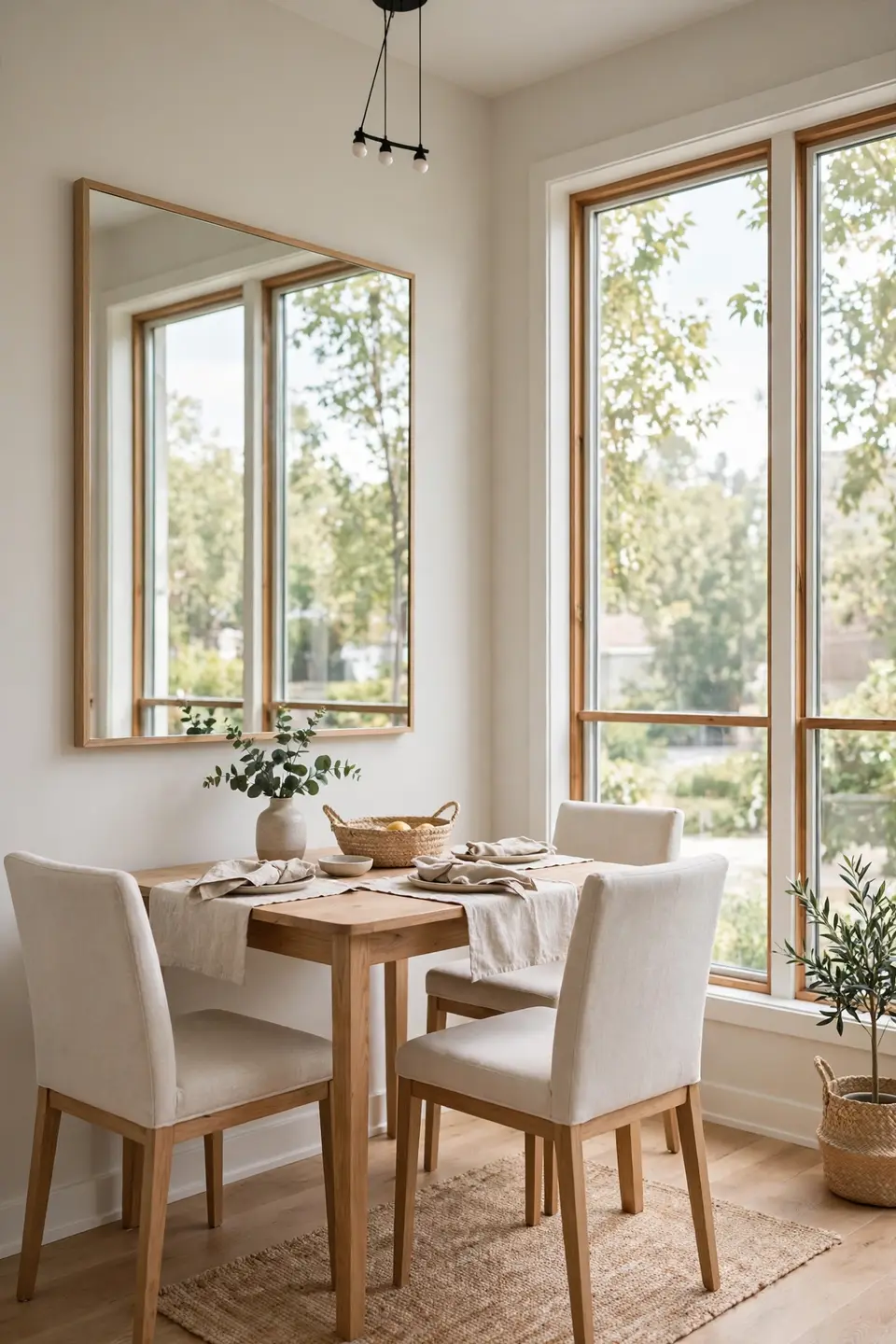
What You Need:
- A large mirror, at least 24 by 36 inches, to reflect light and double the view.
- Secure wall anchors rated for the mirror’s weight so it hangs safely.
- A level and measuring tape to center it at eye height across from a window.
- A simple frame in wood or metal that matches your dining style.
- Soft cloth and glass cleaner to keep the reflection crisp and bright.
Hang the mirror where it catches the best light, usually across from a window or beside a lamp. The reflection adds depth that makes the walls feel farther apart. Once you see how to make a small dining room look bigger with one mirror, you will wonder why you waited.
Maximize Natural Light
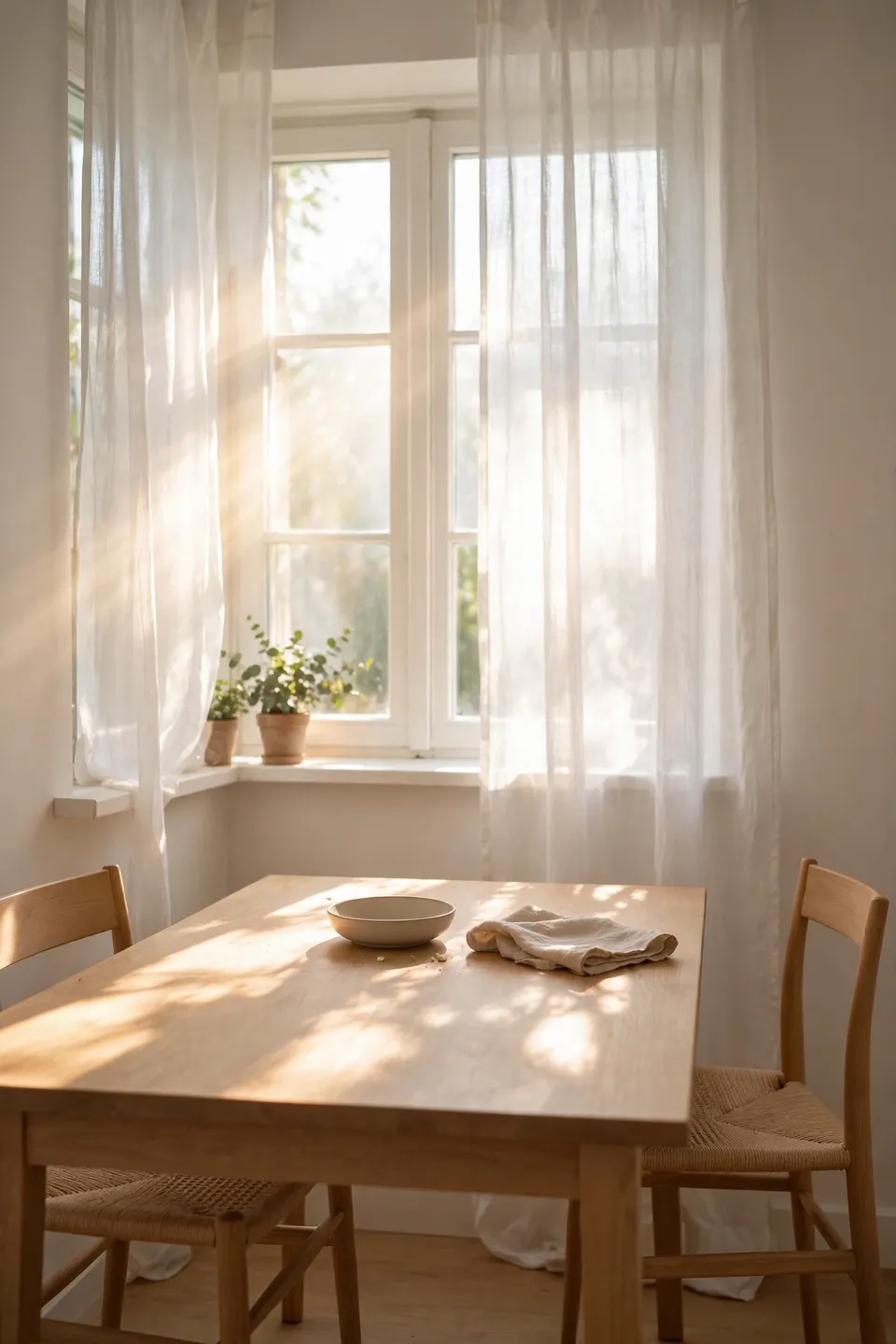
Before: Heavy curtains and cluttered sills block the daylight your dining room needs. The space stays dim even at noon, and dark corners close in. Meals feel gloomy instead of welcoming.
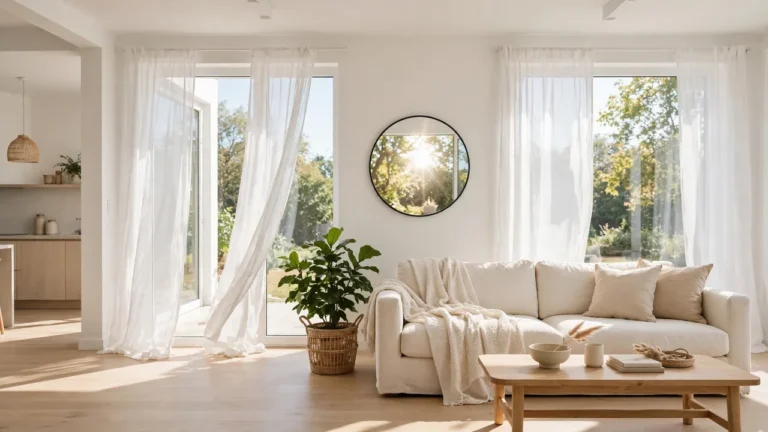
After: Sheer curtains and clear sills let sunlight pour across the table. The room glows during the day and feels twice as large. Even a small window becomes a powerful space maker.
Wash windows inside and out twice a year for maximum brightness and clarity. Trim any outdoor plants or branches that shade the glass during the day. If privacy matters, use top-down blinds that cover the lower half while leaving the top open to the sky.
Keep It Uncluttered
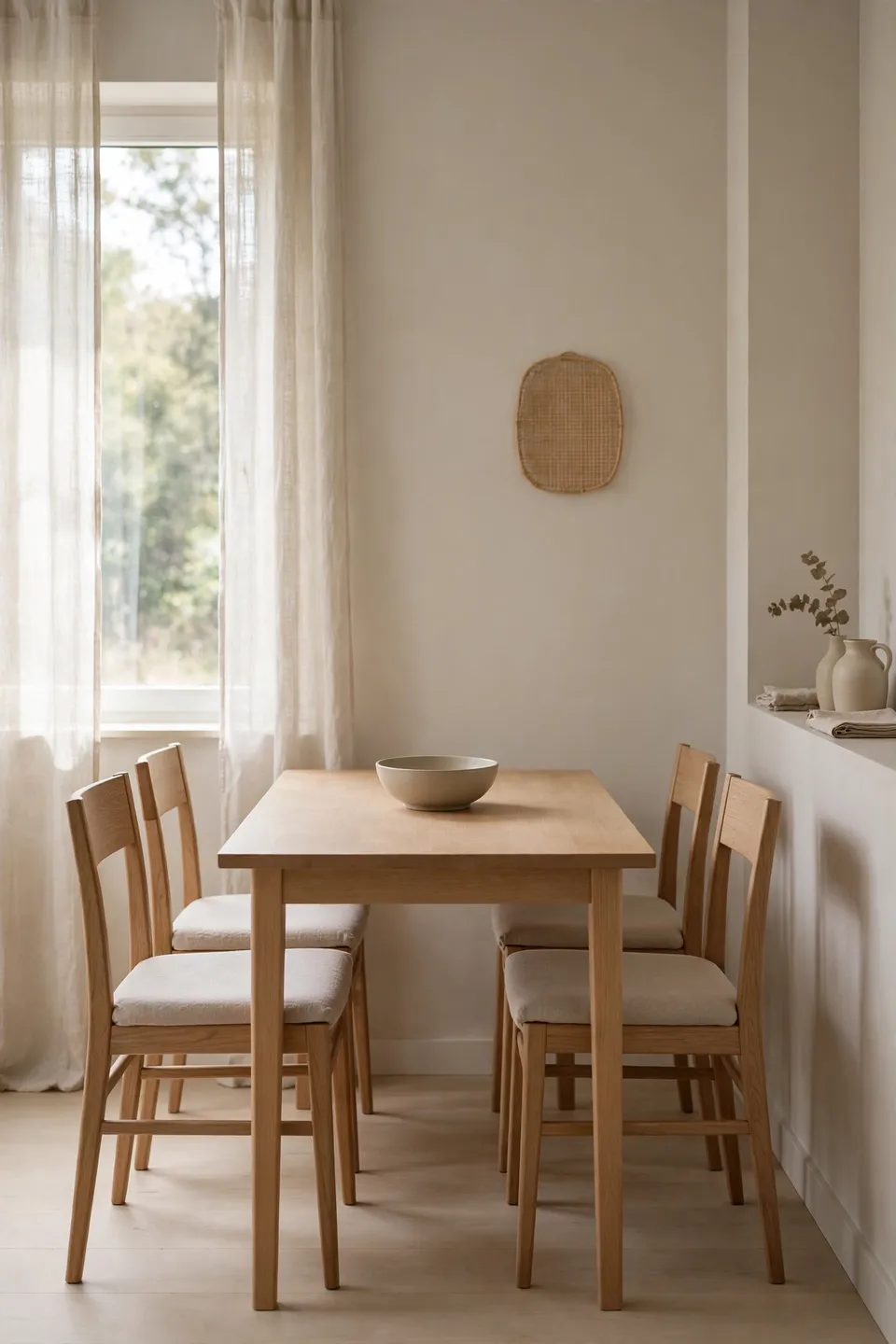
Do This:
- Clear the table completely between meals so it reads as open space.
- Store rarely used serving pieces in another room or a closed cabinet.
- Use one simple centerpiece, like a low bowl or small plant.
- Give every item a home so clutter never piles up.
Avoid This:
- Do not let mail, keys, and chargers live on the dining table.
- Avoid open shelves packed tight with dishes and decor.
- Do not keep broken or unused chairs squeezed around the table.
- Resist filling every wall; blank space is your friend.
A quick five-minute reset each evening keeps the whole room feeling open and spacious for the next day. Wipe the table clean, put stray items back where they belong, and straighten the centerpiece with care. This small daily habit protects all the space-making work you have already done so well.
For more clever storage ideas, see our guide on how to create storage under stairs.
Go Vertical
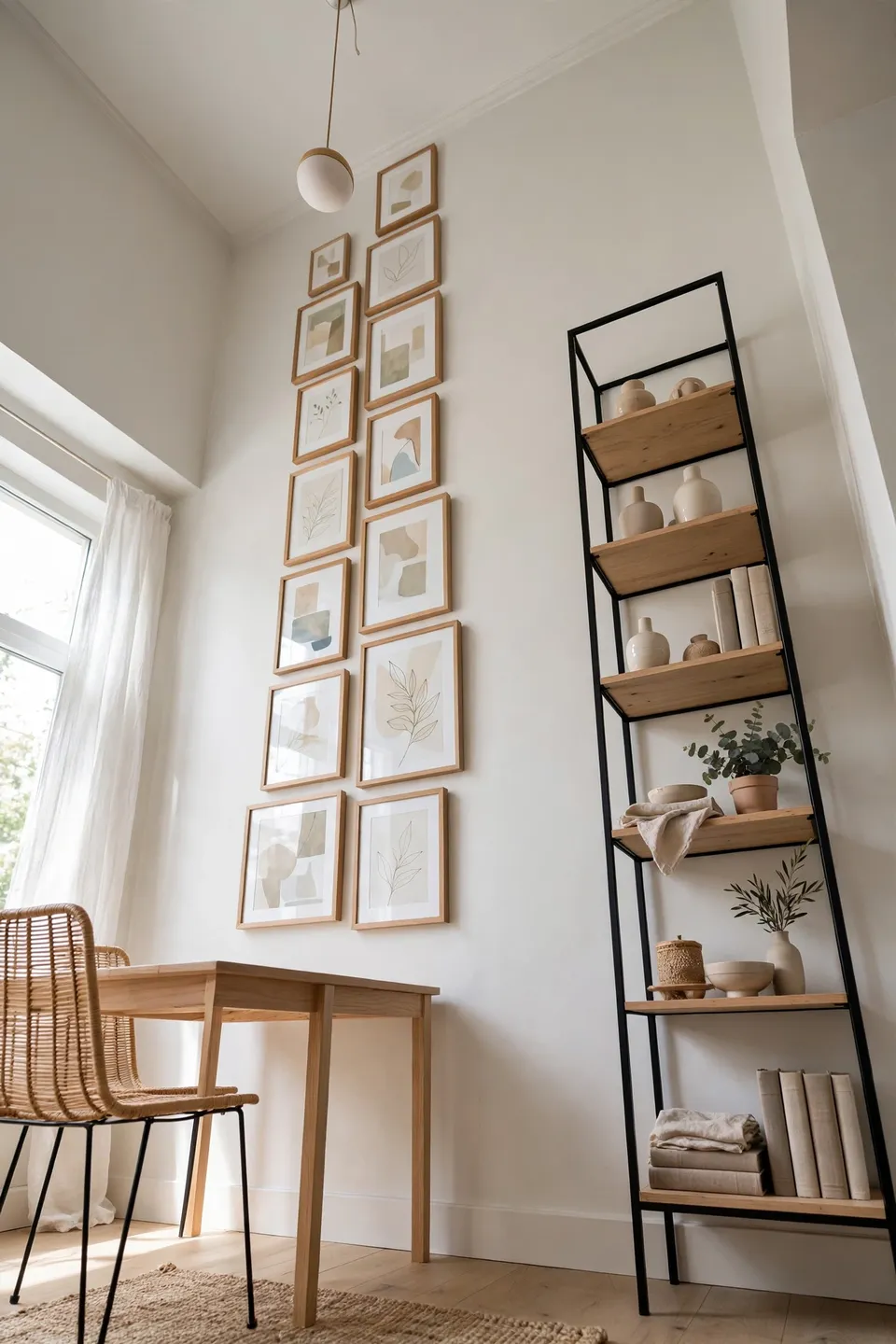
Time Needed: One afternoon | Difficulty: Easy | Cost: Low to medium
Best For: Dining rooms with high ceilings or empty wall space
Result: Eye travels upward, making the room feel taller and larger
Pro Tip: Keep upper shelves sparse so they add height, not clutter
Draw the eye upward with tall, narrow storage pieces or art hung higher than you normally would. A vertical gallery wall or one slim bookcase adds interest without eating precious floor space. Just remember to leave breathing room around each piece so the added height feels airy, not crowded.
Common Space-Shrinking Mistakes
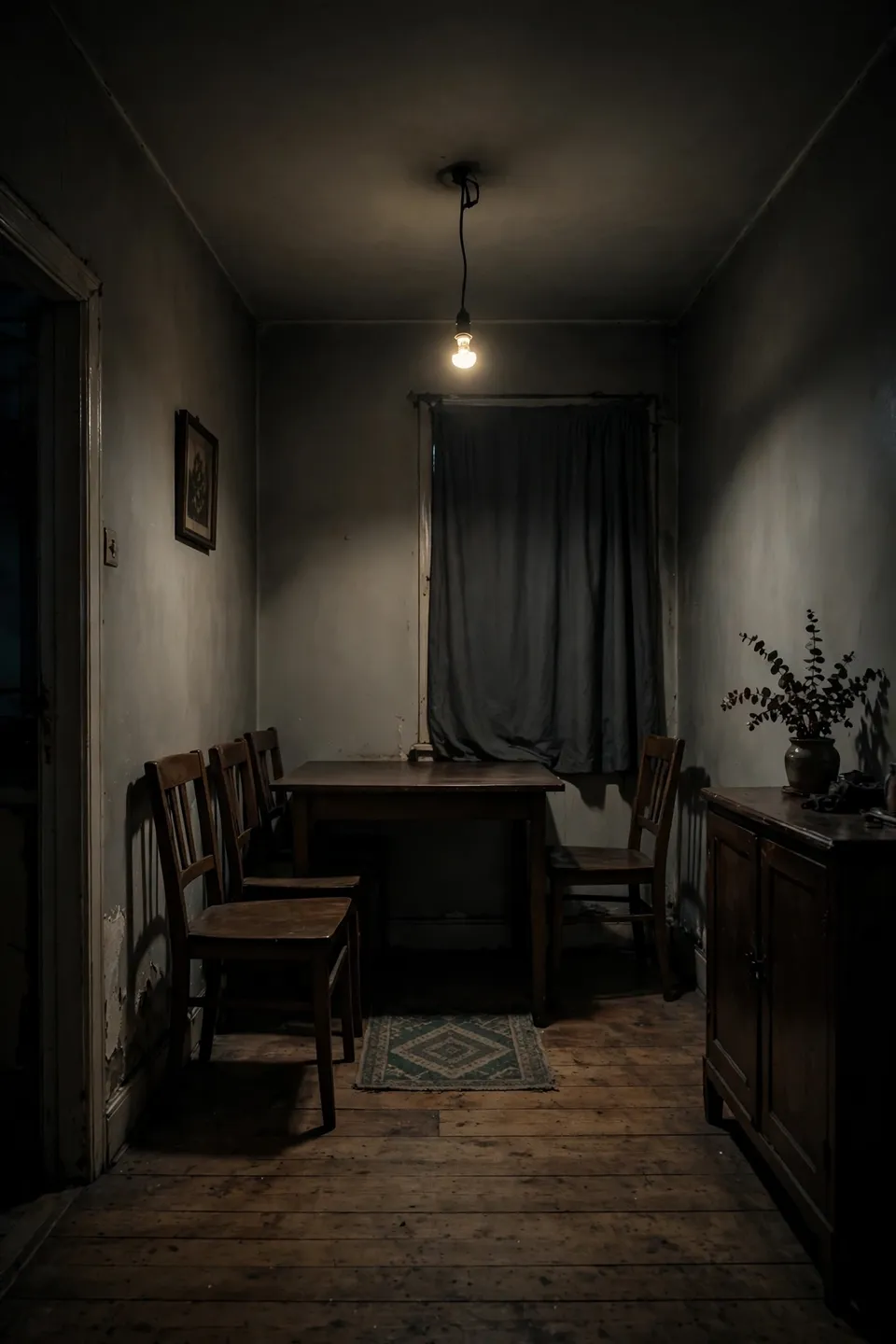
The biggest mistake is pushing all furniture flat against the walls, thinking it frees up the center. In reality, floating the table even slightly creates breathing room on every side. Another common trap is using a rug that is too small, which chops the floor into awkward pieces.
Dark, heavy lighting also shrinks the space fast. One dim overhead bulb casts harsh shadows that close the walls in. Layering table lamps, wall sconces, and candles spreads warm light into every corner and makes the whole room feel generous, welcoming, and open.
Pro Tips for Airy Dining Rooms
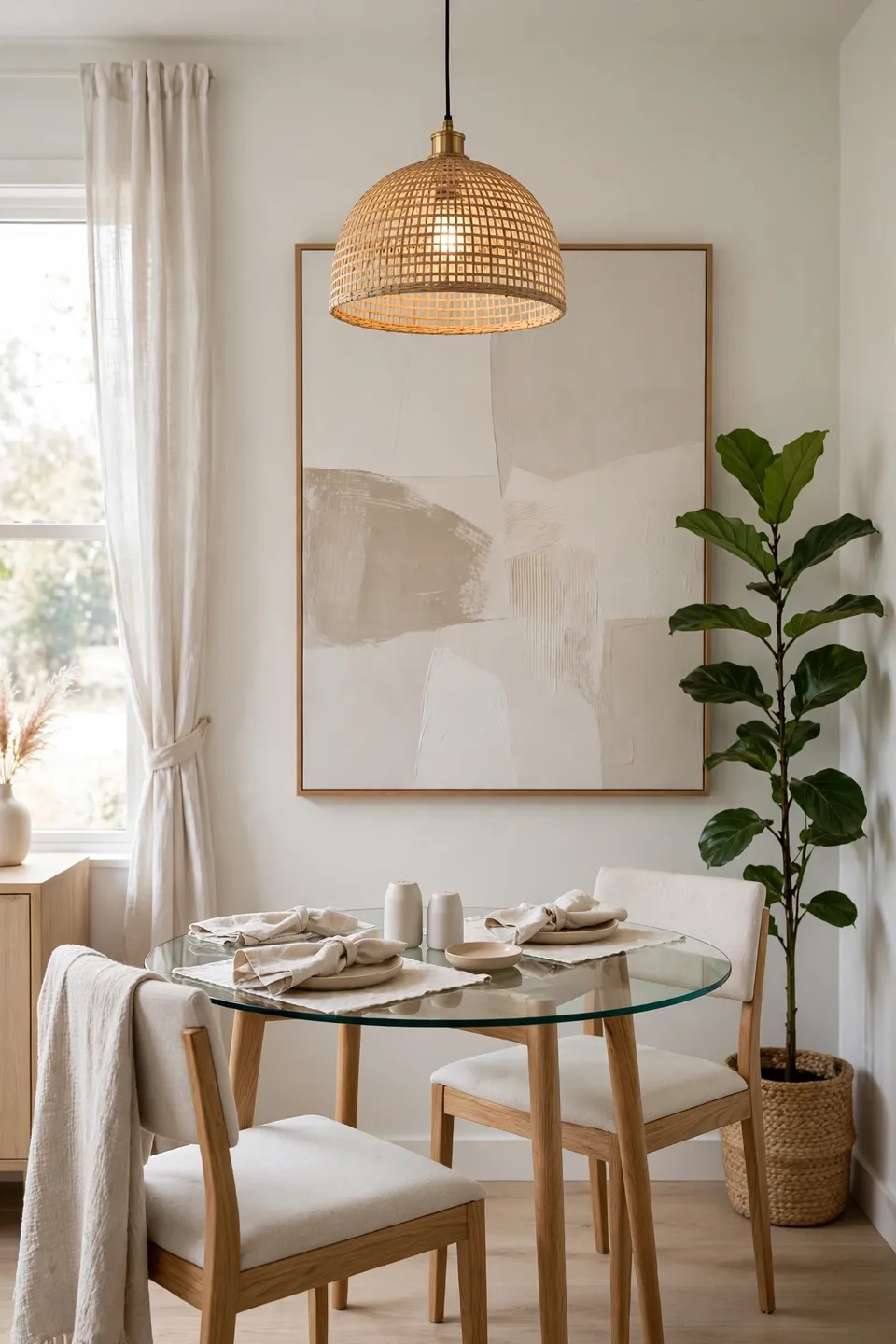
These finishing touches pull the whole look together in the best way. Each one is quick, affordable, and makes a visible difference you will notice right away. Apply them in order for the biggest possible impact on your small dining space.
- Hang one oversized art piece instead of many small frames to keep walls calm.
- Choose a glass or light-wood table that lets light travel underneath.
- Add a dimmer switch so lighting shifts from bright meals to cozy evenings.
- Place a tall plant in the corner to draw the eye up and add life.
Conclusion
Small dining rooms have big potential when you style them with intention. Light colors, the right table, clear chairs, and smart mirrors all work together to open the space. Remember that how to make a small dining room look bigger is really about editing carefully and letting light do the heavy lifting. I have seen how making these small changes can completely shift how a room feels. Save this guide to Pinterest so you can try one idea at a time, and share it with a friend whose dining room needs breathing room.
One Comment